 |
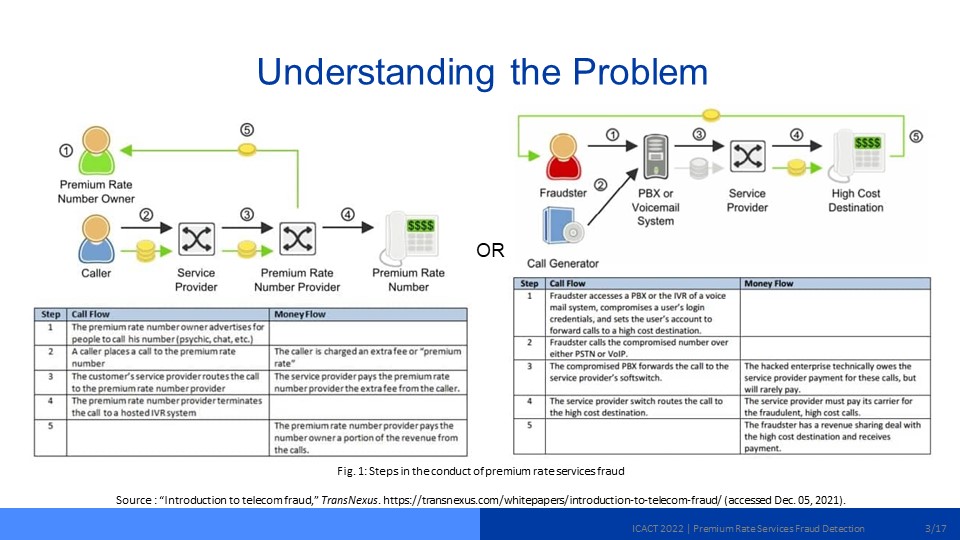
PRS fraud occurs in either of two ways. In the first scenario, a premium rate number owner advertises his number to be called, for instance as a psychic hotline. Calls placed to the premium rate number are routed through the caller¡¯s telecommunication company, but are then terminated on an Interactive Voice Response (IVR) system by a premium rate number provider. Extra ¡°premium¡± charges are paid by the caller to their telecommunication company. These charges are paid to the premium rate number provider, who shares this revenue with the premium rate number owner. Alternatively, the fraudster may compromise a Private Branch Exchange (PBX) or IVR of a voicemail system, arranging for calls to be forwarded to premium rate destinations. The fraudster then places calls to the compromised number via a Public Switched Telephone Network (PSTN) or Voice over Internet Protocol (VOIP), which are routed through the hacked PBX to the high cost destination. The telecommunication company incurs costs to its carrier for these fraudulent calls, and the fraudster partners with the high cost destination to receive a portion of the revenue generated from the company. Thus, through either means, PRS fraud can imply significant loss of revenue for the telecommunication company. |
 IEEE/ICACT20220012 Slide.03
[Big Slide]