 |
There are several uses for emotion recognition to monitor multi-user emotional states simultaneously in real-time.
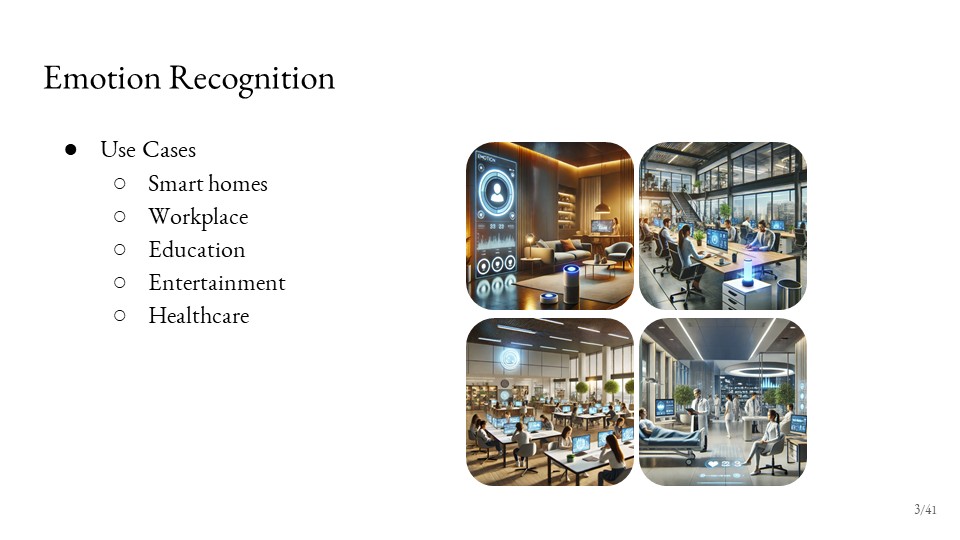
For smart homes, emotion recognition may be integrated to provide automation for family members by modifying lighting, music, and other environmental elements according to the overall emotional states of the households.
In professional environments, emotion recognition systems can optimize productivity, collaboration, and employee well-being. Real-time feedback on employees¡¯ emotional states can help managers allocate tasks better, ensuring individuals work on assignments aligned with their emotional readiness and energy levels.
In educational institutions, emotion recognition can support personalized learning and improve student engagement. Teachers can gain a better understanding of class-wide or individual emotional responses to lessons to tailor their teaching strategies. Emotion detection can aid in identifying students struggling with emotional challenges, so counselors or teachers can provide appropriate support.
In the entertainment industry, real-time emotion recognition can revolutionize user experiences and content delivery. Emotion detection can enable games to adapt their difficulty levels or challenges based on the player¡¯s emotional responses to create an immersive experience. Performers, streamers, or event organizers can use emotion recognition to gauge audience reactions and adjust their performances accordingly.
In the healthcare sector, emotion recognition systems can enhance patient care, monitoring, and therapy outcomes. These systems can continuously track the emotional states of patients to provide real-time insights for diagnosing depression, anxiety, or PTSD. Emotion detection can help medical staff obtain patients¡¯ pain, discomfort, or disgust during treatments to improve patient care and satisfaction. For therapy sessions, emotion recognition can help therapists better understand their patients' progress and emotional responses, leading to more effective treatment plans. |
 IEEE/ICACT20250190 Slide.03
[Big Slide]