 |
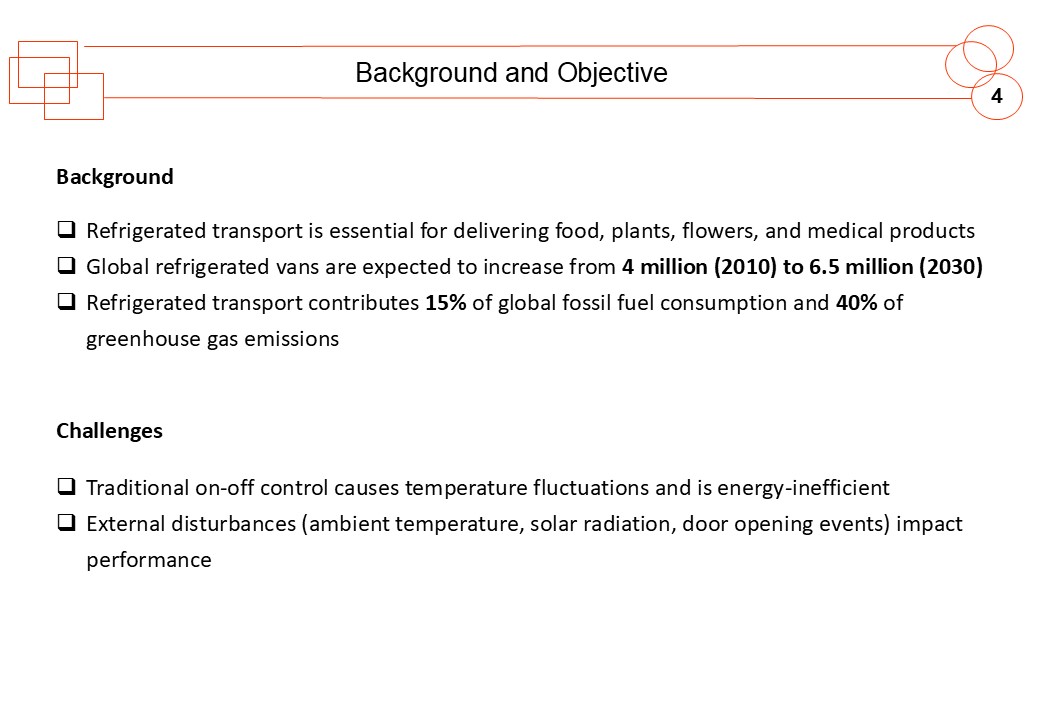
Refrigerated transport is essential for keeping food, plants, flowers, and medical products fresh. According to one study, that the number of refrigerated vans is predicted to grow from 4 million in 2010 to 6.5 million by 2030. However, these vehicles consume a significant amount of energy, accounting for 15% of global fossil fuel use and 40% of greenhouse gas emissions. Currently, one of the major challenges for refrigerated van temperature control is that the classical on-off temperature control system is inefficient, which causes temperature fluctuations and wastes energy. Additionally, external disturbances, such as weather, sunlight, and frequent door opening events make it difficult to maintain stable temperatures while keeping a high energy efficiency. |
 IEEE/ICACT20250244 Slide.04
[Big Slide]