 |
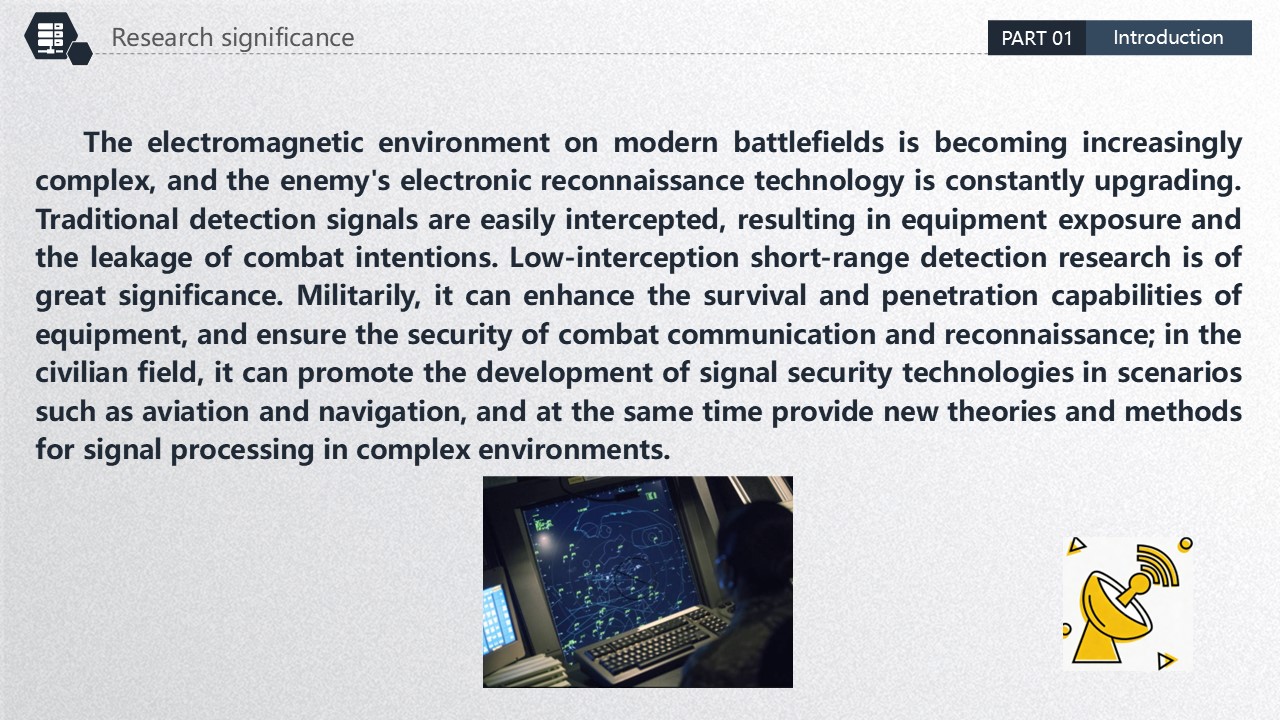
The electromagnetic environment on modern battlefields is becoming increasingly complex, and the enemys electronic reconnaissance technology is constantly upgrading. Traditional detection signals are easily intercepted, resulting in equipment exposure and the leakage of combat intentions. Low-interception short-range detection research is of great significance. Militarily, it can enhance the survival and penetration capabilities of equipment, and ensure the security of combat communication and reconnaissance; in the civilian field, it can promote the development of signal security technologies in scenarios such as aviation and navigation, and at the same time provide new theories and methods for signal processing in complex environments.
|
 IEEE/ICACT20260352 Slide.04
[Big Slide]
[YouTube]