 |
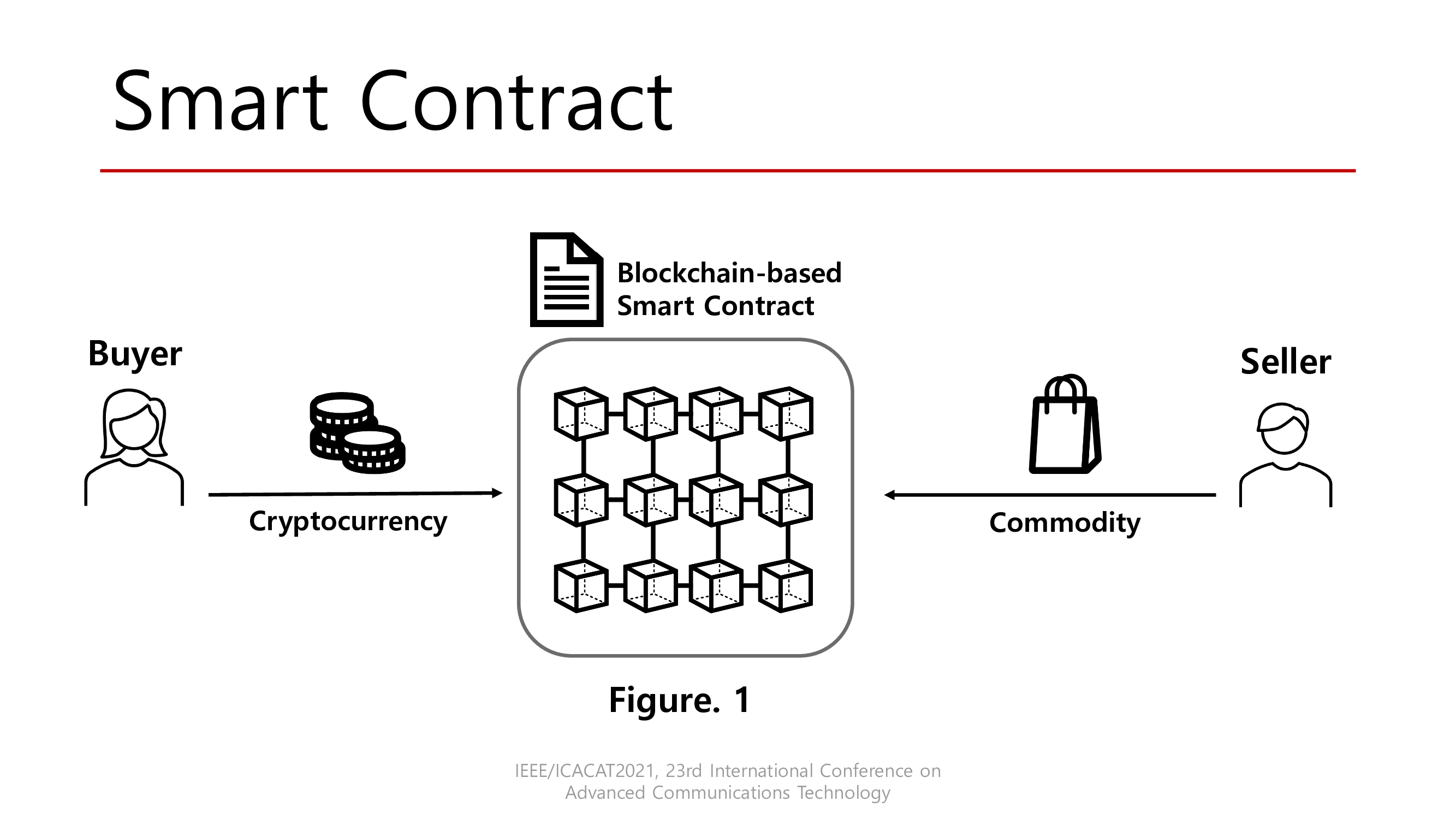
Smart contract, which was first proposed as a concept in 1994 by Nick Szabo, has developed into an environment suitable for practical use with the development of blockchain technology.
In other words, it has increased the possibility of digitally automating the way humans fulfilled terms of contracts, which are traditionally written in writing.
Smart contracts are computer code running on the blockchain according to certain rules and are contracts that are automatically executed when predefined rules are met. Smart contracts provide advantages such as clarity, predictability, surveillance, and ease of execution in contractual relationships.
Therefore, transactions can be made without intermediaries within the blockchain network even with non-trusted parties.
Initial blockchains could only execute smart contracts written for specific domains, but since the advent of Ethereum, various smart contracts can be converted digitally.
Accordingly, various attempts are being made to convert the terms of execution of contracts specified in the existing written form into smart contracts through appropriate analysis in various fields.
|
 IEEE/ICACT20210216 Slide.05
[Big Slide]