 |
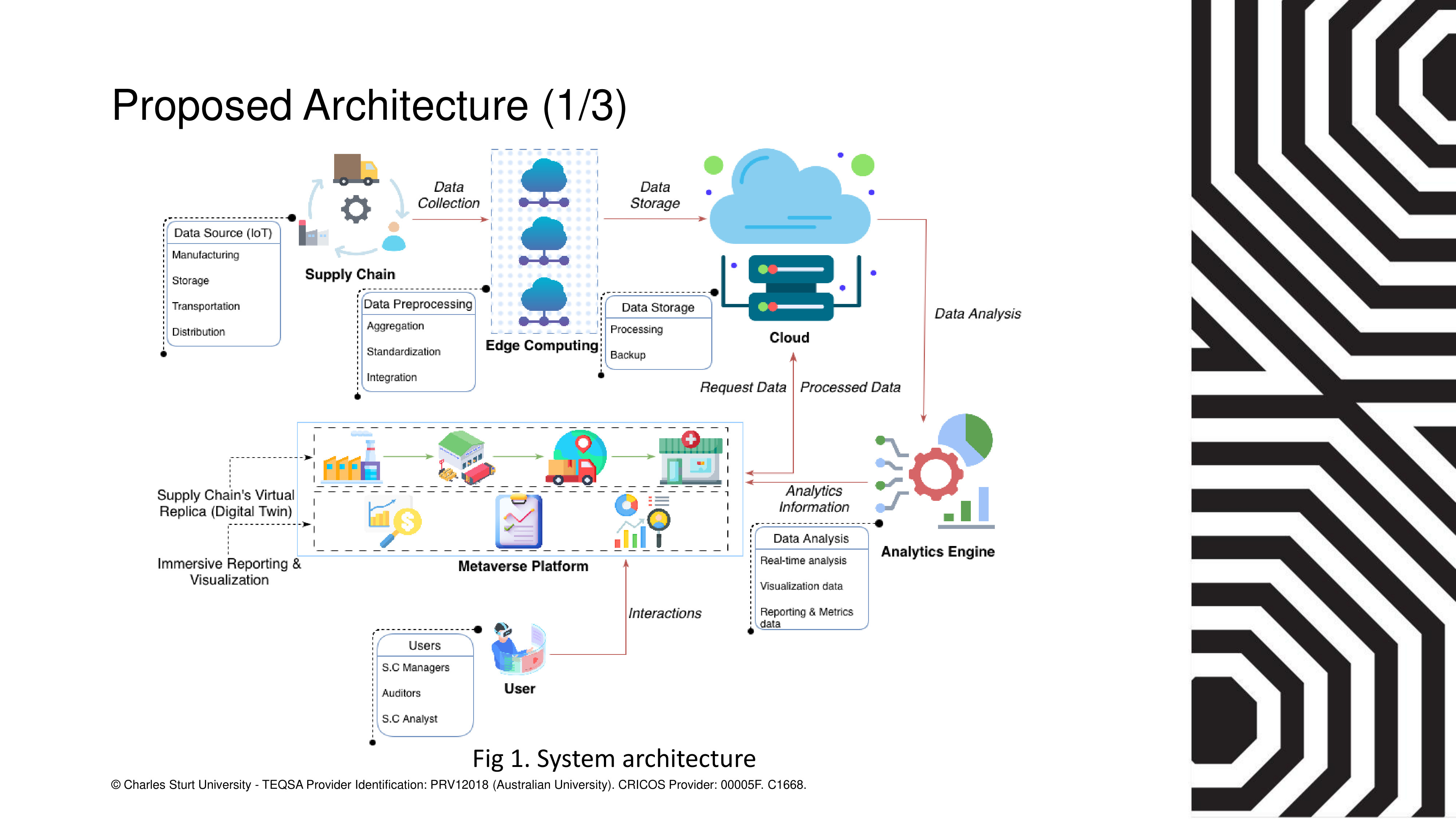
This is the proposed architecture. At the top we have data sources such as the supply chain sensors and operational data.
The edge layer handles continuous capture and early processing to improve reliability and reduce latency.
The cloud layer provides scalable storage, backup, and compute for historical evidence.
Then the analytics engine transforms streams into insights like anomalies and risk indicators.
Finally, the metaverse platform hosts supply chain replica where auditors or inspectors can interact with evidence in context, collaborate, and generate outputs.
Here¡¯s a quick example of why metaverse helps more.�In a warehouse cold room, we sometimes see temperature spikes. A dashboard tells us when it happened and how high it went—but not where or why.
With the metaverse, the inspector opens the cold room¡¯s virtual replica and sees a 3D heatmap of sensor data. The spikes keep appearing near the door corner. Replaying the timeline shows they line up with door openings and forklift traffic.
So we don¡¯t just record a deviation, we find the cause and take action, for example improve airflow, change door policy, or move sensors. That¡¯s the key benefit, context and cause, not just the numbers.
|
 IEEE/ICACT20260305 Slide.07
[Big Slide]