 |
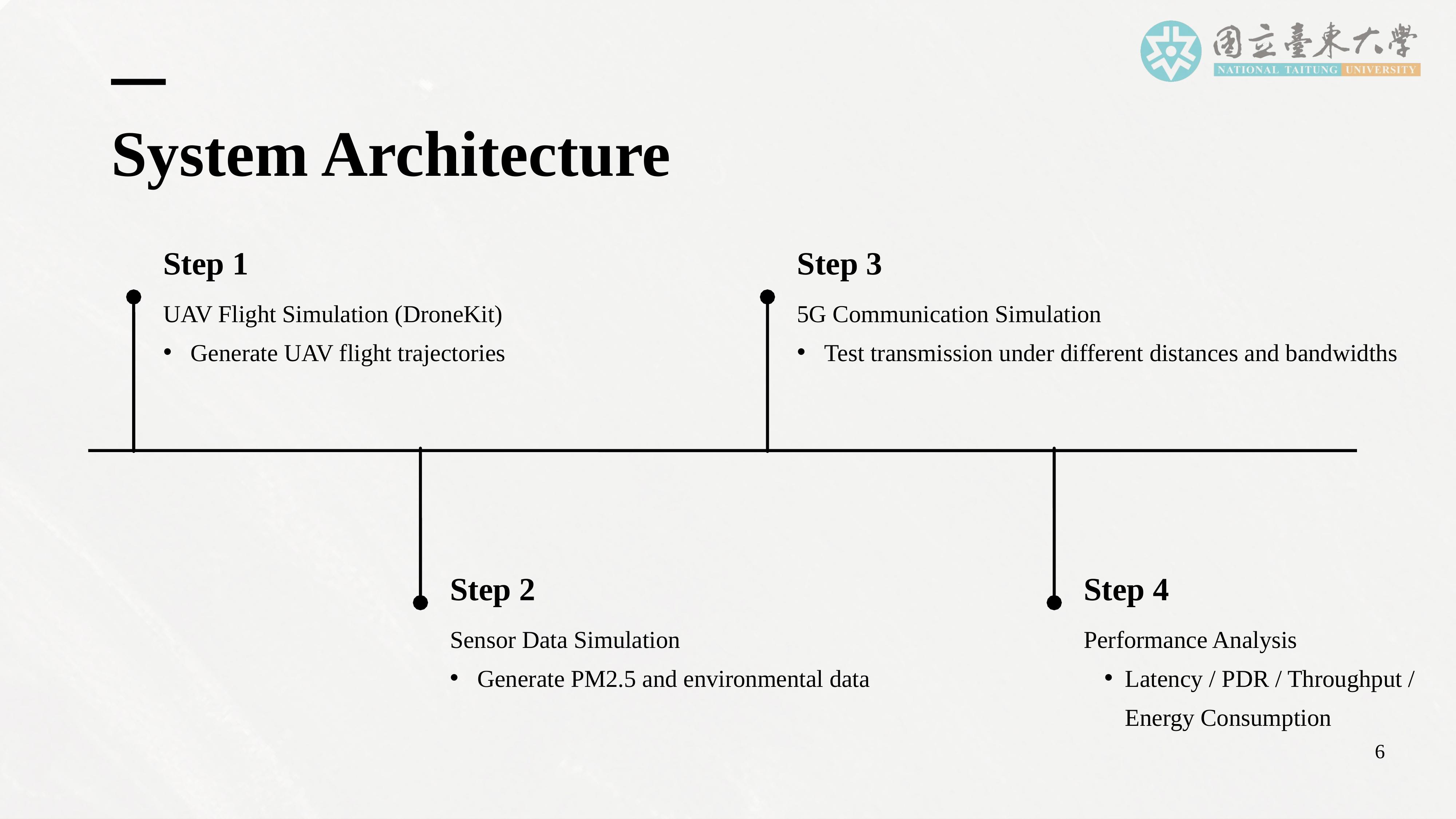
This slide presents the overall system architecture of our proposed framework. The system begins with UAV flight simulation, using DroneKit to generate UAV trajectories from predefined missions and waypoints. These trajectories define the UAV¡¯s movement in space and time.
Next, environmental sensor data, such as PM2.5 concentration values, are generated based on the UAV¡¯s position and time. This simulated sensing data represents realistic environmental measurements collected during flight.
Then, 5G communication simulation is performed using NS-3. This step models the wireless transmission of sensing data between the UAV and the ground base station under different distances and bandwidth configurations.
Finally, performance analysis is conducted by collecting and analyzing key metrics, including latency, throughput, packet delivery ratio, jitter, and energy consumption. Together, these components form an integrated pipeline for evaluating the end-to-end performance of the UAV-ISAC system. |
 IEEE/ICACT20260251 Slide.08
[Big Slide]