 |
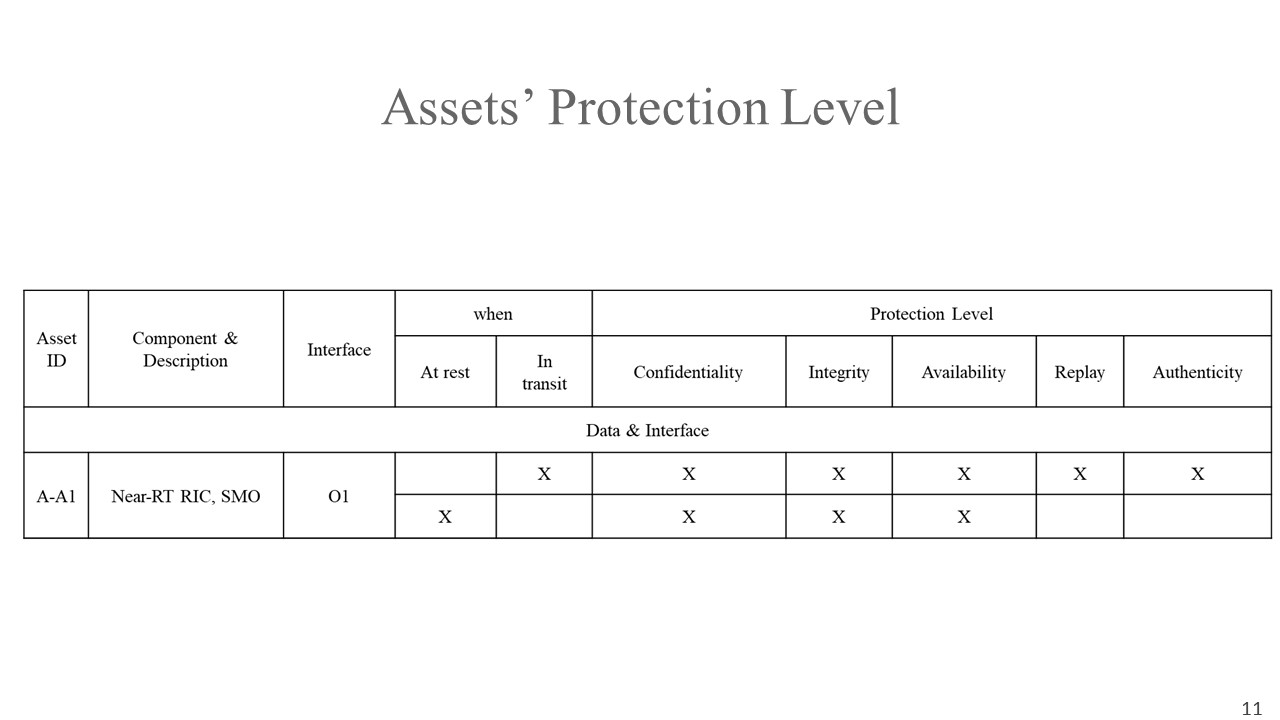
This threat exists in two modes, i.e., ¡°at rest¡± and ¡°in transit,¡± and the security indicators that will be affected in both modes include confidentiality, integrity, and availability. If a person pretends to be an SMO or Near-RT RIC to access resources or after obtaining the resources, he intentionally or unintentionally reveals the content of the data that cause confidential data leakage; hence, the confidentiality of the security indicator will not be preserved. In addition, when an attacker pretends to be an SMO or a Near-RT RIC and tampers with the data that the component is preparing to transmit, the component will receive the wrong data. Consequently, the subsequent processing will be affected, and the integrity of the safety indicators will be compromised. However, a replay attack will cause network service delays and interrupt network services, thereby violating the availability of the security indicators. In the transit mode, the replay and authenticity will be additionally affected. When an attacker pretends to be an SMO or Near-RT RIC, constantly accesses component resources, or delays the transmission of data and hence delays the network service, the replay principle of the security indicators may be violated. In addition, if the other party does not verify the identity of another party before mutually accessing resources, transmitting data, and executing instructions, then the other party accessing resources or transmitting data may be counterfeited by a third party, which may violate the authenticity of the security indicators. The affected assets are shown in Figure 1 and Table 2.
|
 IEEE/ICACT20220039 Slide.11
[Big Slide]
[YouTube]