 |
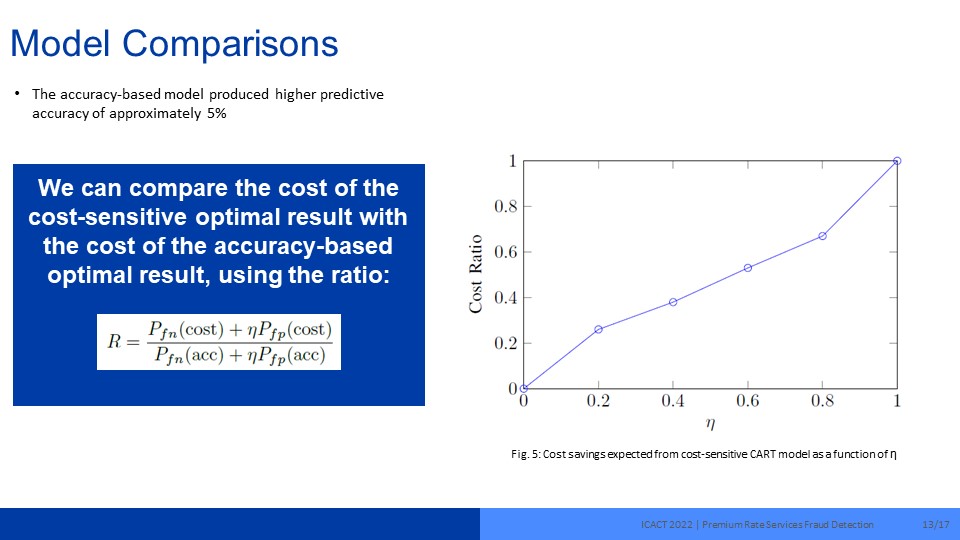
While the accuracy-based model outperformed the cost-sensitive Decision Tree in terms of predictive accuracy by approximately 5%, we compare the cost of optimal results from both models using the cost ratio R, and examine this cost ratio for various values of еч. We note that as error rates increase, it is expected that cost savings will also increase. This can potentially provide the telecommunication company with tangible cost savings when faced with the possibility of prediction errors, and thus presents a major advantage over the traditional approach to predicting fraudulent calls. |
 IEEE/ICACT20220012 Slide.13
[Big Slide]