 |
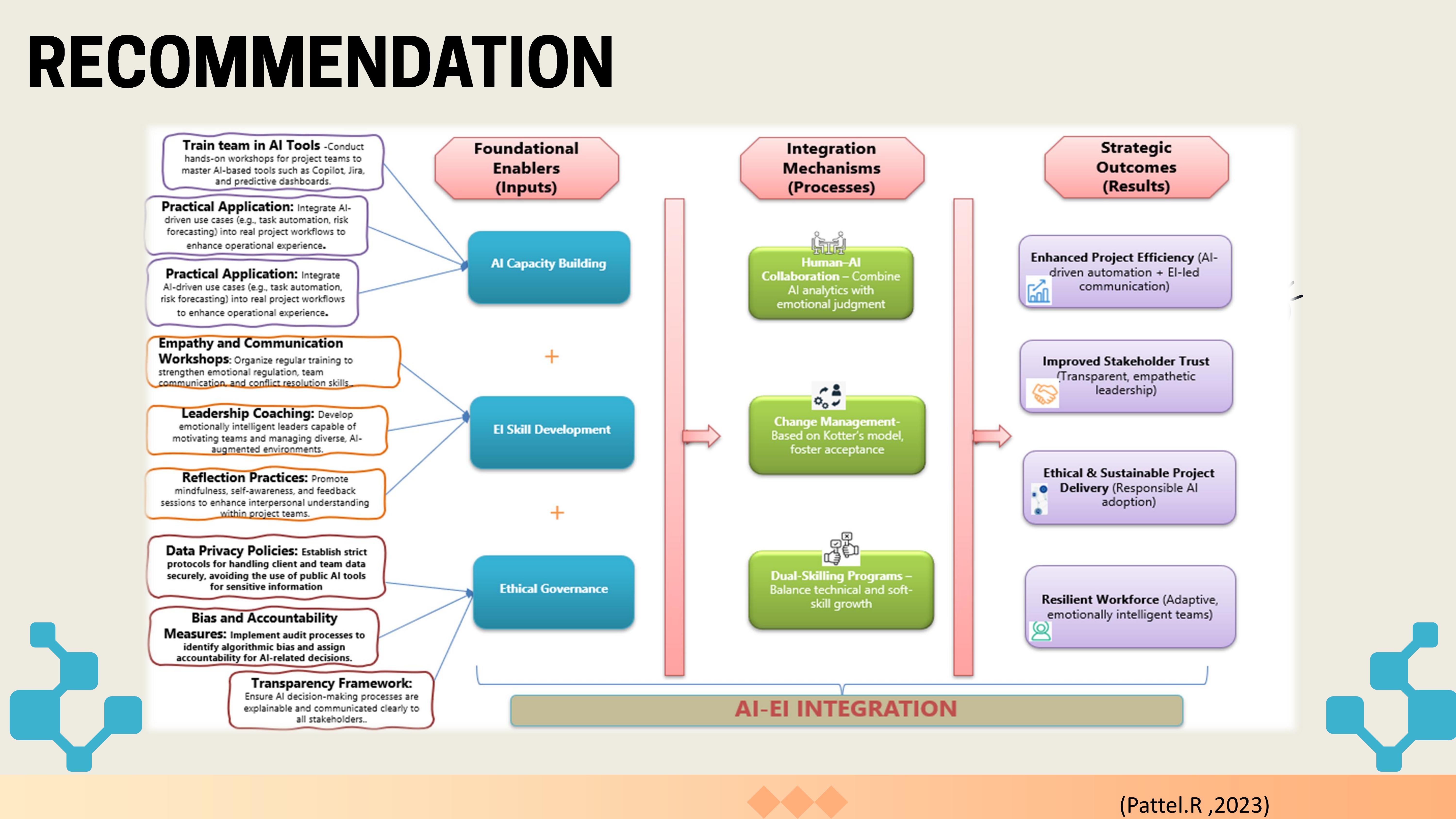
After incorporating the feedback received from the experts. So we came up with this model for the organization and let me go through the model. This diagram tells the journey of AI–EI integration in organizations—from preparation, to implementation, to impact. I will walk through this journey from left to right, showing how each stage contributes to successful project outcomes.
On the left side, we have the foundational enablers, which are the essential inputs for successful integration.
The first is AI capacity building, where project teams are trained to use AI tools such as predictive dashboards, task automation, and risk forecasting in real project workflows. This ensures AI is embedded into daily project activities rather than remaining a standalone technology.
The second input is EI skill development, which focuses on building emotionally intelligent leadership through empathy, communication workshops, leadership coaching, and reflection practices. This is critical because AI-driven decisions still need to be communicated clearly and accepted by human teams.
The third input is ethical governance, which includes data privacy policies, bias and accountability measures, and transparency frameworks. This ensures AI decisions are explainable, ethical, and trusted, with accountability remaining with human leaders.
Together, these inputs ensure organizations are technically, emotionally, and ethically prepared.
In the middle section, the diagram shows the integration mechanisms.
First is human–AI collaboration, where AI provides data-driven insights and emotionally intelligent leaders interpret those insights by considering team wellbeing, stakeholder expectations, and ethical implications.
Second is change management, guided by KotterĄ¯s model, which helps address resistance, build acceptance, and sustain adoption.
Third is dual-skilling, ensuring continuous development of both AI literacy and leadership soft skills.
On the right side, the diagram highlights the strategic outcomes. These include enhanced project efficiency, improved stakeholder trust, ethical and sustainable project delivery, and a resilient workforce capable of adapting to AI-augmented environments.
Overall, this diagram shows that AI–EI integration is not just a technical initiative, but a leadership and organizational transformation that balances technology-driven efficiency with emotionally intelligent leadership for sustainable project success. |
 IEEE/ICACT20260334 Slide.15
[Big Slide]
[YouTube]