 |
Let¡¯s walk through the architecture.
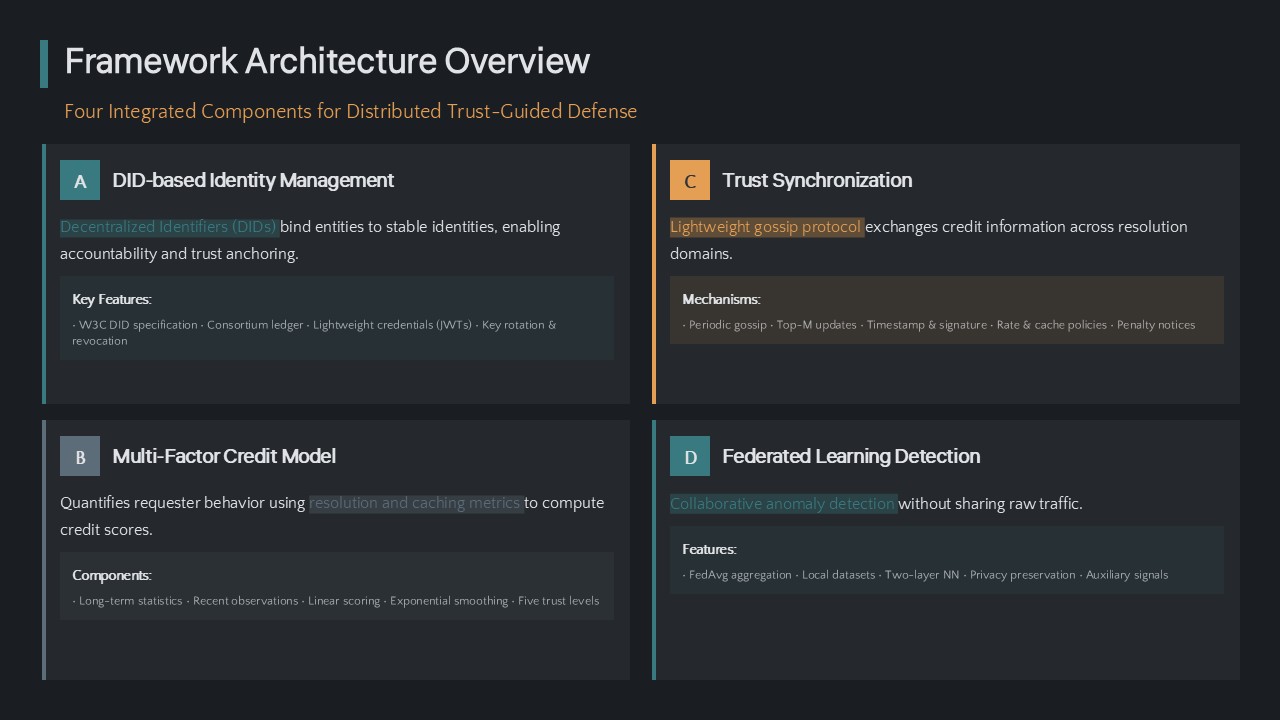
Component A is DID-based identity management, binding each entity to a stable identity to enable accountability.
Component B is a multi-factor credit model computed from resolution and caching behavior.
Component C is trust synchronization via a lightweight gossip protocol, so domains share trust views without a centralized database.
Component D is federated learning detection, enabling collaborative detection of low-rate, cross-domain attacks without sharing raw traffic.
Together, these components form a closed loop: identity and behavior lead to credit; credit guides policies; and federated learning enhances detection and feeds back into credit updates. |
 IEEE/ICACT20260343 Slide.17
[Big Slide]
[YouTube]