 |
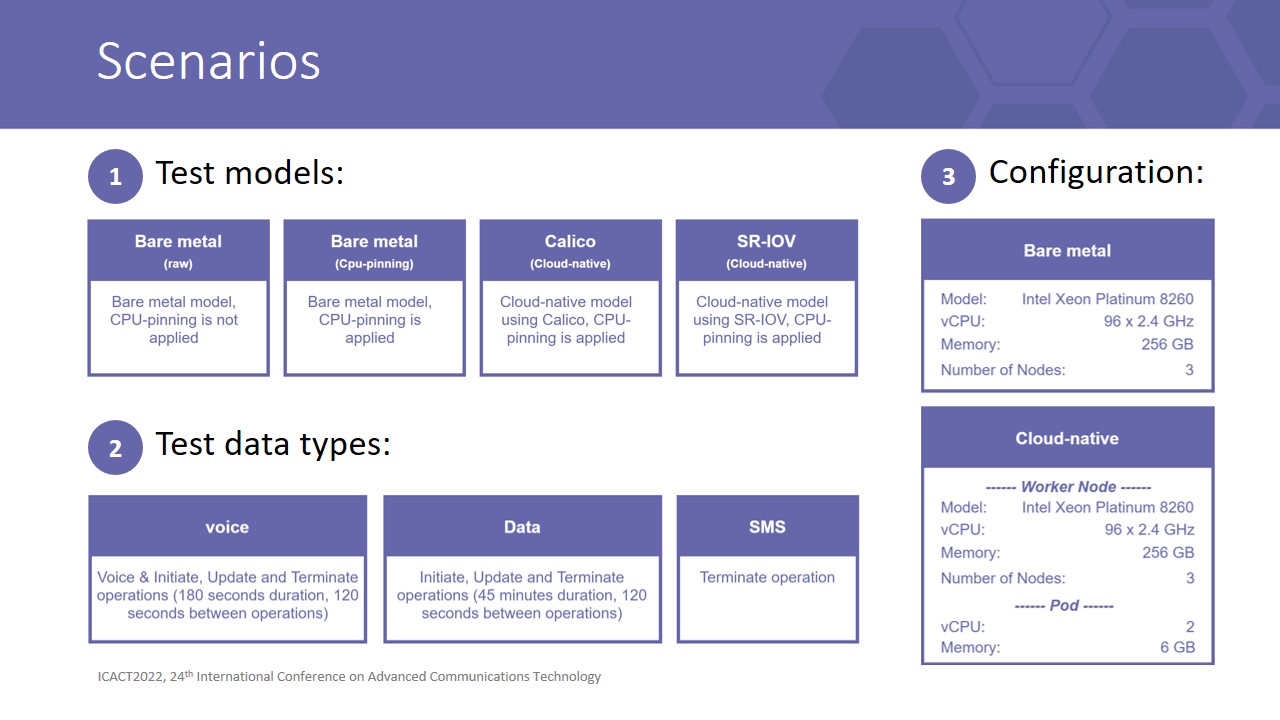
We implemented the CHF with four different network models:
•The bare metal model, CPU-pinning not applied
•The bare metal model, CPU-pinning applied (the evaluation baseline)
•The Cloud-native model using Calico, CPU-pinning applied
•The Cloud-native model using SR-IOV, CPU-pinning applied
All implementations of the CHF followed the same deployment architecture, as shown in Figure 11. The test client generated the charging traffic to the CHF network charging gateway (CGW) pods. The traffic included both balance inquiries and a mixture of initiate, update and terminate charging operations across data, voice as well as messaging services. Containers were run on three physical nodes with Intel 8260, which have ninety-six 2.4GHz threads and 256GB RAM. Each pod used two vCPU and 6GB RAM. Horizontal Pod Autoscaler was used during the entire test. The Kubernetes version was 1.18, and the Aerospike version was 4.13 in all deployments. Twenty million simulated accounts were provisioned over six Aerospike nodes. Three metrics were considered: throughput (in TPS - transaction per seconds), latency (in milliseconds) and CPU utilization (in %).
|
 IEEE/ICACT20220041 Slide.20
[Big Slide]