Now 2489 visitors
Today:0 Yesterday:0
Total: 134102
212S 50P 5R
2026-10-20, Week 43 |
| Member Login |
| TACT Journal Homepage |
| Call for Paper |
| Committee |
| Find My Paper |
| Author Homepage |
| Statistics & History |
| Welcome Message |
| Paper Procedure |
| FAQ |
| Paper Archives |
| Outstanding Papers |
| Author Homepage |
| - Paper Procedure |
| - Journal Procedure |
| - Presentation Tips |
|
| Program & Proceedings |
| Program with Papers |
| Plenary Session |
| Tutorial Session |
|
| Presentation Platform |
| Hotel & Travel Info |
| About Korea |
| Accommodation |
| Transportation |
| VISA |
| Other Infomation |
|
| Photo Gallery |
| Scheduler Login |
| Seminar |
| Archives Login |
|
| Sponsors |

|

|

|

|

|

|

|

|

|

|
|
|
|
|
main_email:shwethahmutt@gmail.com
| Save the slide and description |

|
*** You can edit any slide by selecting the Slide number below***
|
 ICACT20240067 Slide.19
[Big slide for presentation] |
Chrome Text-to-Speach Click!! |
|
ICACT20240067 Slide.18
[Big slide for presentation]
[YouTube] |
Chrome Text-to-Speach Click!! |
 |
Thank you
|
|
ICACT20240067 Slide.17
[Big slide for presentation]
[YouTube] |
Chrome Text-to-Speach Click!! |
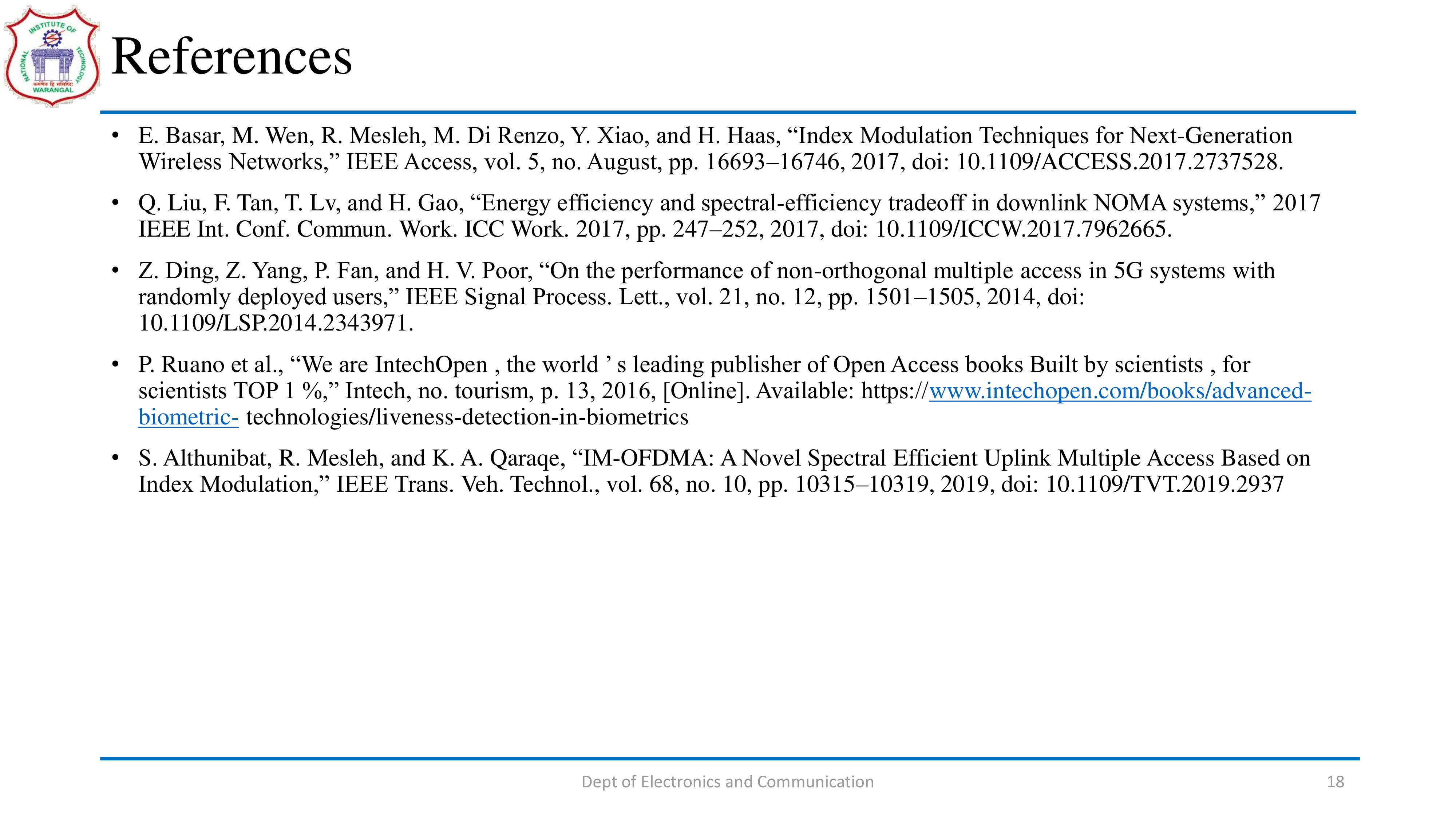 |
E. Basar, M. Wen, R. Mesleh, M. Di Renzo, Y. Xiao, and H. Haas, “Index Modulation Techniques for Next-Generation Wireless Networks,” IEEE Access, vol. 5, no. August, pp. 16693–16746, 2017, doi: 10.1109/ACCESS.2017.2737528.
Q. Liu, F. Tan, T. Lv, and H. Gao, “Energy efficiency and spectral-efficiency tradeoff in downlink NOMA systems,” 2017 IEEE Int. Conf. Commun. Work. ICC Work. 2017, pp. 247–252, 2017, doi: 10.1109/ICCW.2017.7962665.
Z. Ding, Z. Yang, P. Fan, and H. V. Poor, “On the performance of non-orthogonal multiple access in 5G systems with randomly deployed users,” IEEE Signal Process. Lett., vol. 21, no. 12, pp. 1501–1505, 2014, doi: 10.1109/LSP.2014.2343971.
P. Ruano et al., “We are IntechOpen , the world ’ s leading publisher of Open Access books Built by scientists , for scientists TOP 1 %,” Intech, no. tourism, p. 13, 2016, [Online]. Available: https://www.intechopen.com/books/advanced-biometric- technologies/liveness-detection-in-biometrics
S. Althunibat, R. Mesleh, and K. A. Qaraqe, “IM-OFDMA: A Novel Spectral Efficient Uplink Multiple Access Based on Index Modulation,” IEEE Trans. Veh. Technol., vol. 68, no. 10, pp. 10315–10319, 2019, doi: 10.1109/TVT.2019.2937
|
|
ICACT20240067 Slide.16
[Big slide for presentation]
[YouTube] |
Chrome Text-to-Speach Click!! |
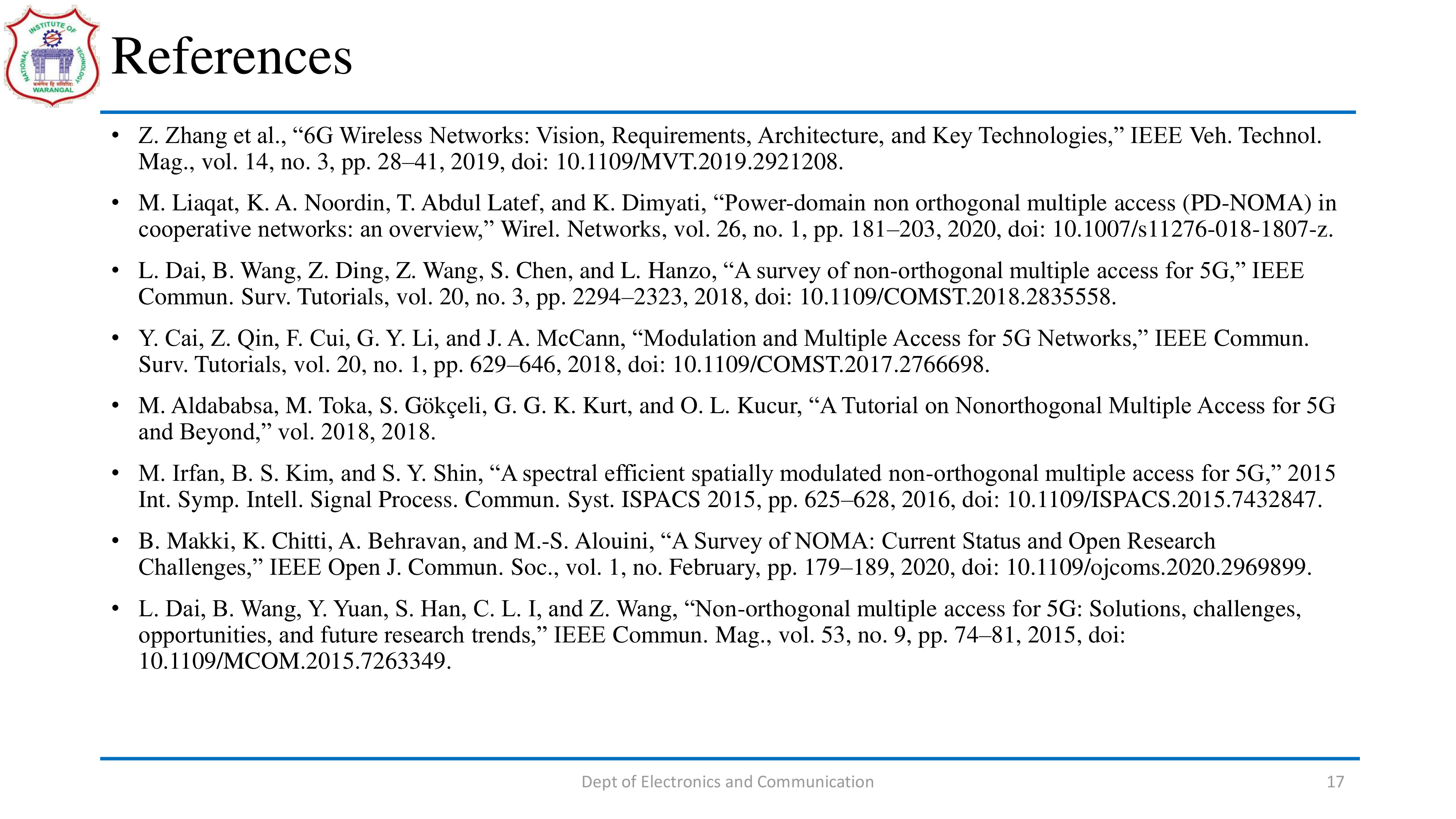 |
References:Z. Zhang et al., “6G Wireless Networks: Vision, Requirements, Architecture, and Key Technologies,” IEEE Veh. Technol. Mag., vol. 14, no. 3, pp. 28–41, 2019, doi: 10.1109/MVT.2019.2921208.
M. Liaqat, K. A. Noordin, T. Abdul Latef, and K. Dimyati, “Power-domain non orthogonal multiple access (PD-NOMA) in cooperative networks: an overview,” Wirel. Networks, vol. 26, no. 1, pp. 181–203, 2020, doi: 10.1007/s11276-018-1807-z.
L. Dai, B. Wang, Z. Ding, Z. Wang, S. Chen, and L. Hanzo, “A survey of non-orthogonal multiple access for 5G,” IEEE Commun. Surv. Tutorials, vol. 20, no. 3, pp. 2294–2323, 2018, doi: 10.1109/COMST.2018.2835558.
Y. Cai, Z. Qin, F. Cui, G. Y. Li, and J. A. McCann, “Modulation and Multiple Access for 5G Networks,” IEEE Commun. Surv. Tutorials, vol. 20, no. 1, pp. 629–646, 2018, doi: 10.1109/COMST.2017.2766698.
M. Aldababsa, M. Toka, S. Gökçeli, G. G. K. Kurt, and O. L. Kucur, “A Tutorial on Nonorthogonal Multiple Access for 5G and Beyond,” vol. 2018, 2018.
M. Irfan, B. S. Kim, and S. Y. Shin, “A spectral efficient spatially modulated non-orthogonal multiple access for 5G,” 2015 Int. Symp. Intell. Signal Process. Commun. Syst. ISPACS 2015, pp. 625–628, 2016, doi: 10.1109/ISPACS.2015.7432847.
B. Makki, K. Chitti, A. Behravan, and M.-S. Alouini, “A Survey of NOMA: Current Status and Open Research Challenges,” IEEE Open J. Commun. Soc., vol. 1, no. February, pp. 179–189, 2020, doi: 10.1109/ojcoms.2020.2969899.
L. Dai, B. Wang, Y. Yuan, S. Han, C. L. I, and Z. Wang, “Non-orthogonal multiple access for 5G: Solutions, challenges, opportunities, and future research trends,” IEEE Commun. Mag., vol. 53, no. 9, pp. 74–81, 2015, doi: 10.1109/MCOM.2015.7263349.
|
|
ICACT20240067 Slide.15
[Big slide for presentation]
[YouTube] |
Chrome Text-to-Speach Click!! |
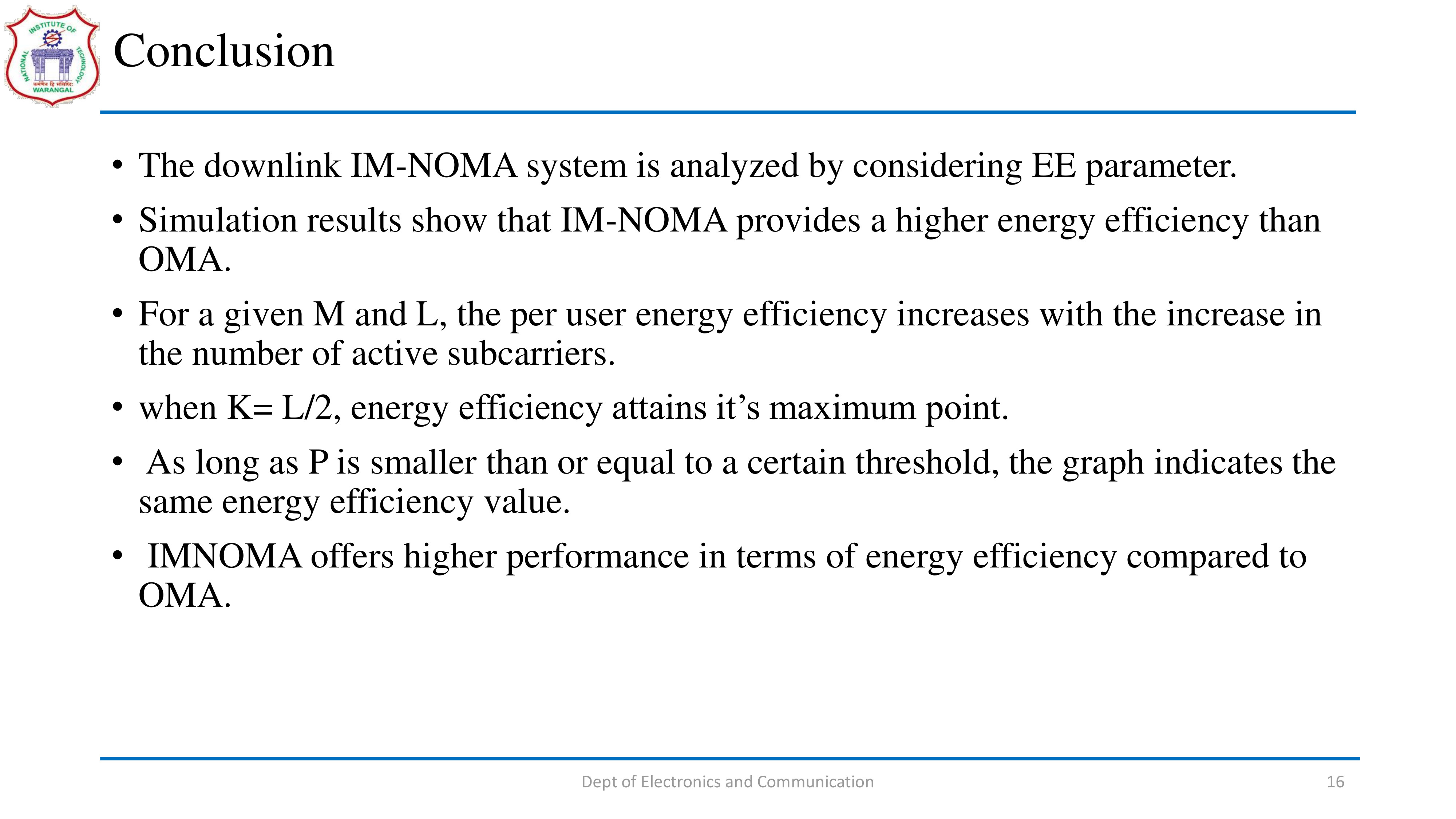 |
Conclusion :The downlink IM-NOMA system is analyzed by considering EE parameter.
Simulation results show that IM-NOMA provides a higher energy efficiency than OMA.
For a given M and L, the per user energy efficiency increases with the increase in the number of active subcarriers.
when K= L/2, energy efficiency attains it’s maximum point.
As long as P is smaller than or equal to a certain threshold, the graph indicates the same energy efficiency value.
IMNOMA offers higher performance in terms of energy efficiency compared to OMA.
|
|
ICACT20240067 Slide.14
[Big slide for presentation]
[YouTube] |
Chrome Text-to-Speach Click!! |
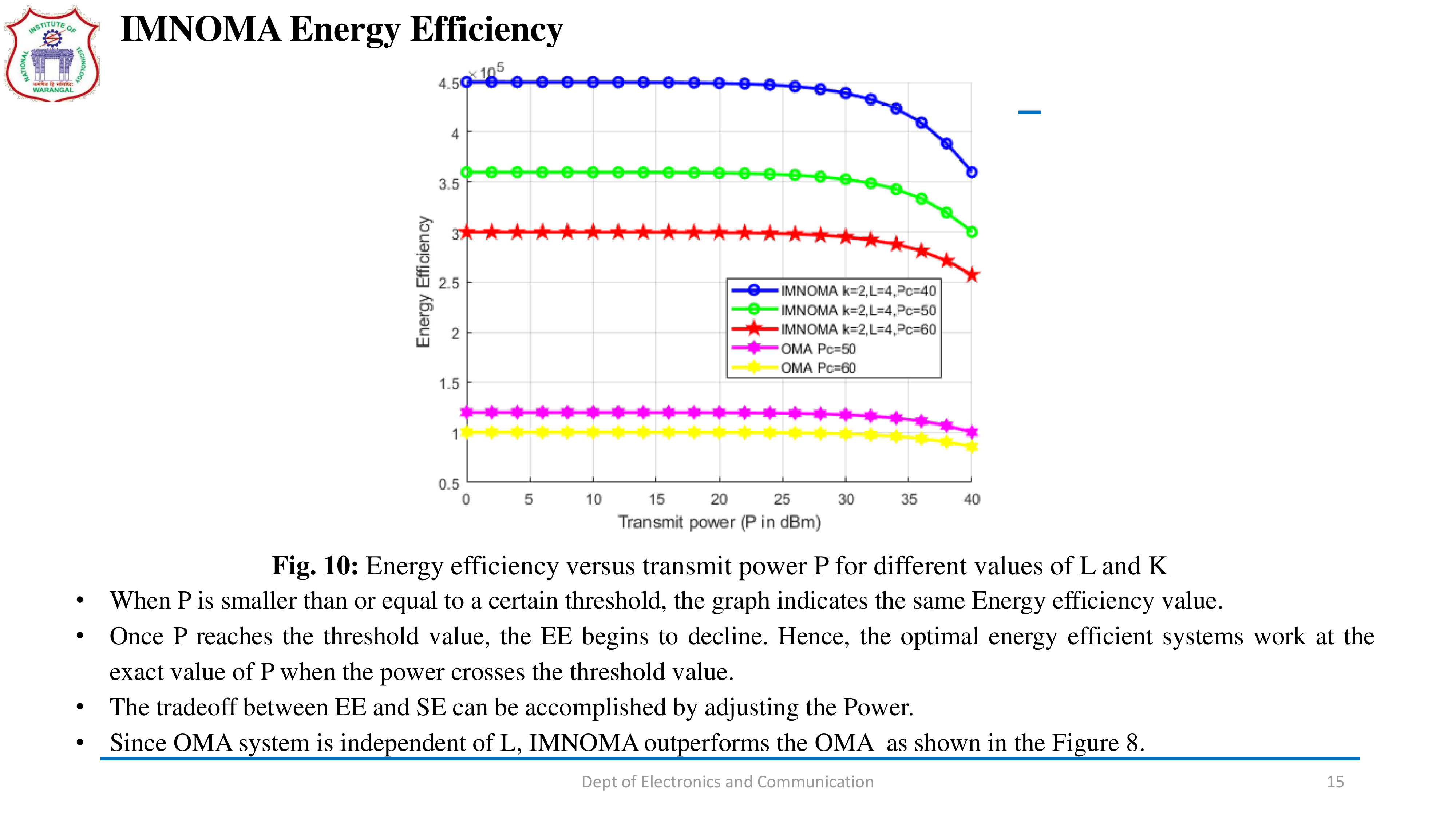 |
Fig. 10 represents the Energy efficiency versus transmit power P for different values of L and K. From the figure 8, we can observe that when P is smaller than or equal to a certain threshold, the graph indicates the same energy efficiency value. Once P reaches the threshold value, the EE begins to decline. Hence, the optimal energy efficient systems work at the exact value of P when the power crosses the threshold value.
|
|
ICACT20240067 Slide.13
[Big slide for presentation]
[YouTube] |
Chrome Text-to-Speach Click!! |
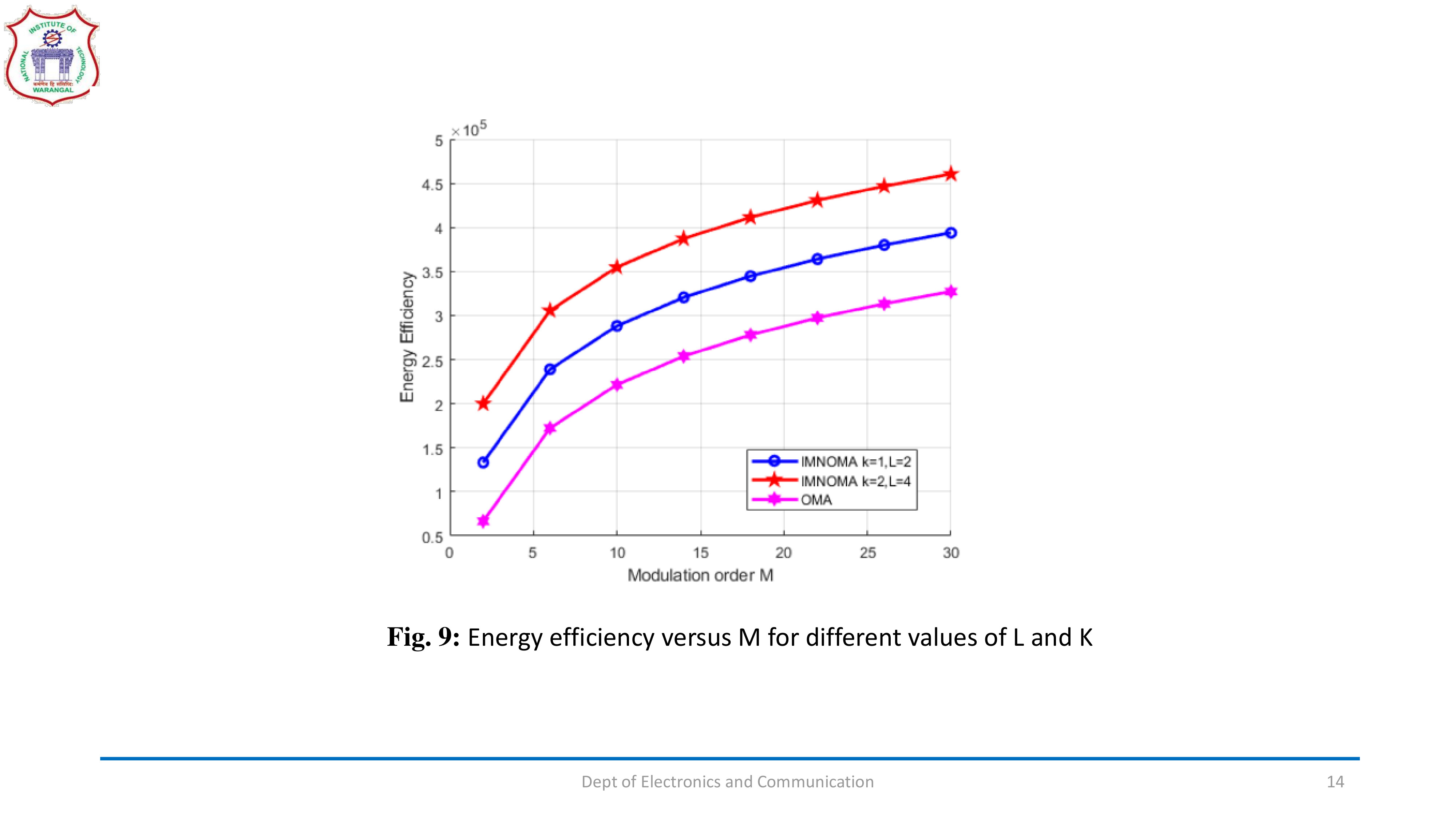 |
Fig. 9 shows the Energy efficiency versus M for different values of L and K. IMNOMA achieves higher EE compared to OMA irrespective of the modulation order.
|
|
ICACT20240067 Slide.12
[Big slide for presentation]
[YouTube] |
Chrome Text-to-Speach Click!! |
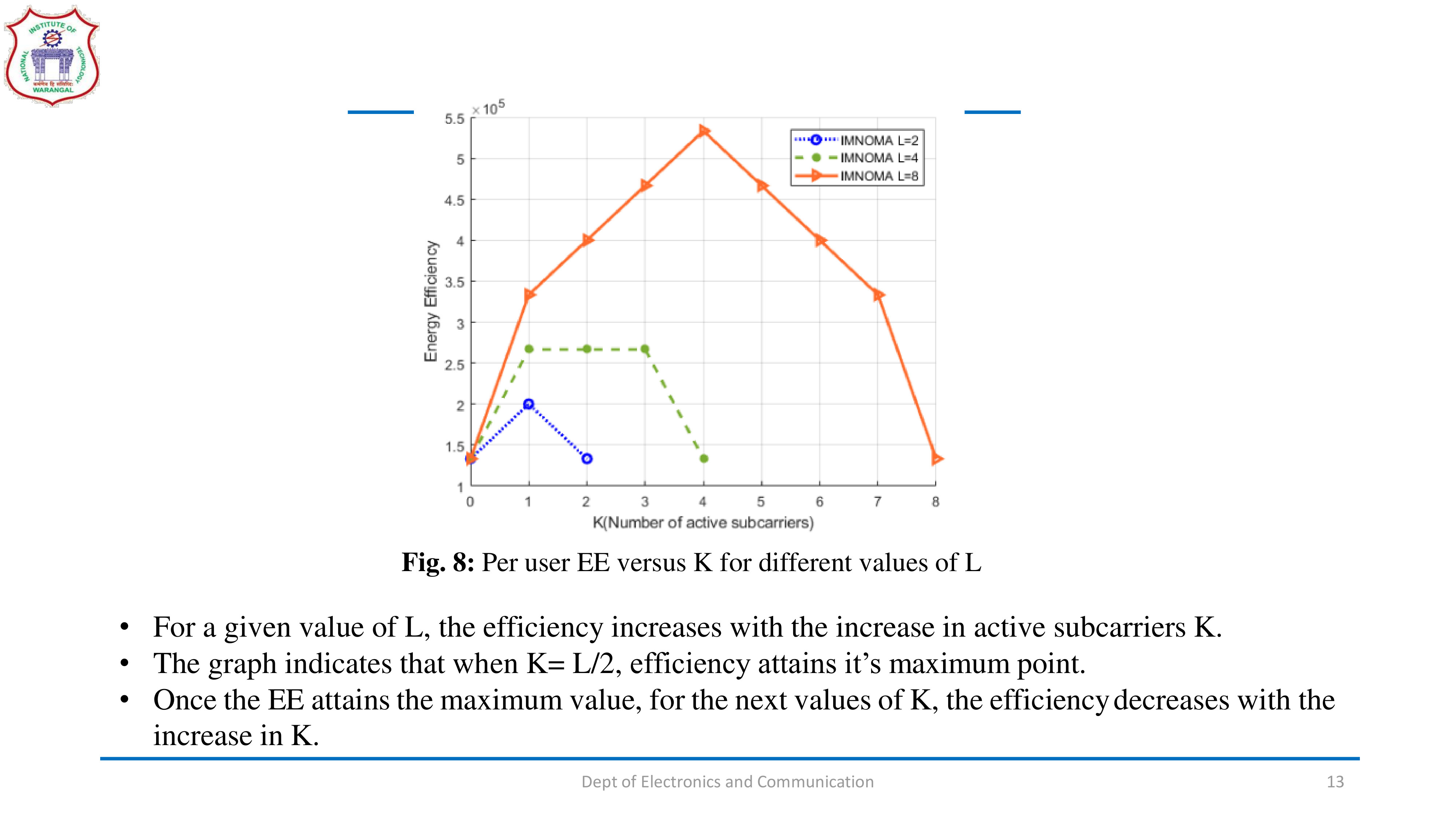 |
Fig. 8 represents the Per user EE versus K for different values of L. For a given value of L, the energy efficiency increases with the increase in active subcarriers K. The graph indicates that when K = L/2, the energy efficiency attains its maximum point.
|
|
ICACT20240067 Slide.11
[Big slide for presentation]
[YouTube] |
Chrome Text-to-Speach Click!! |
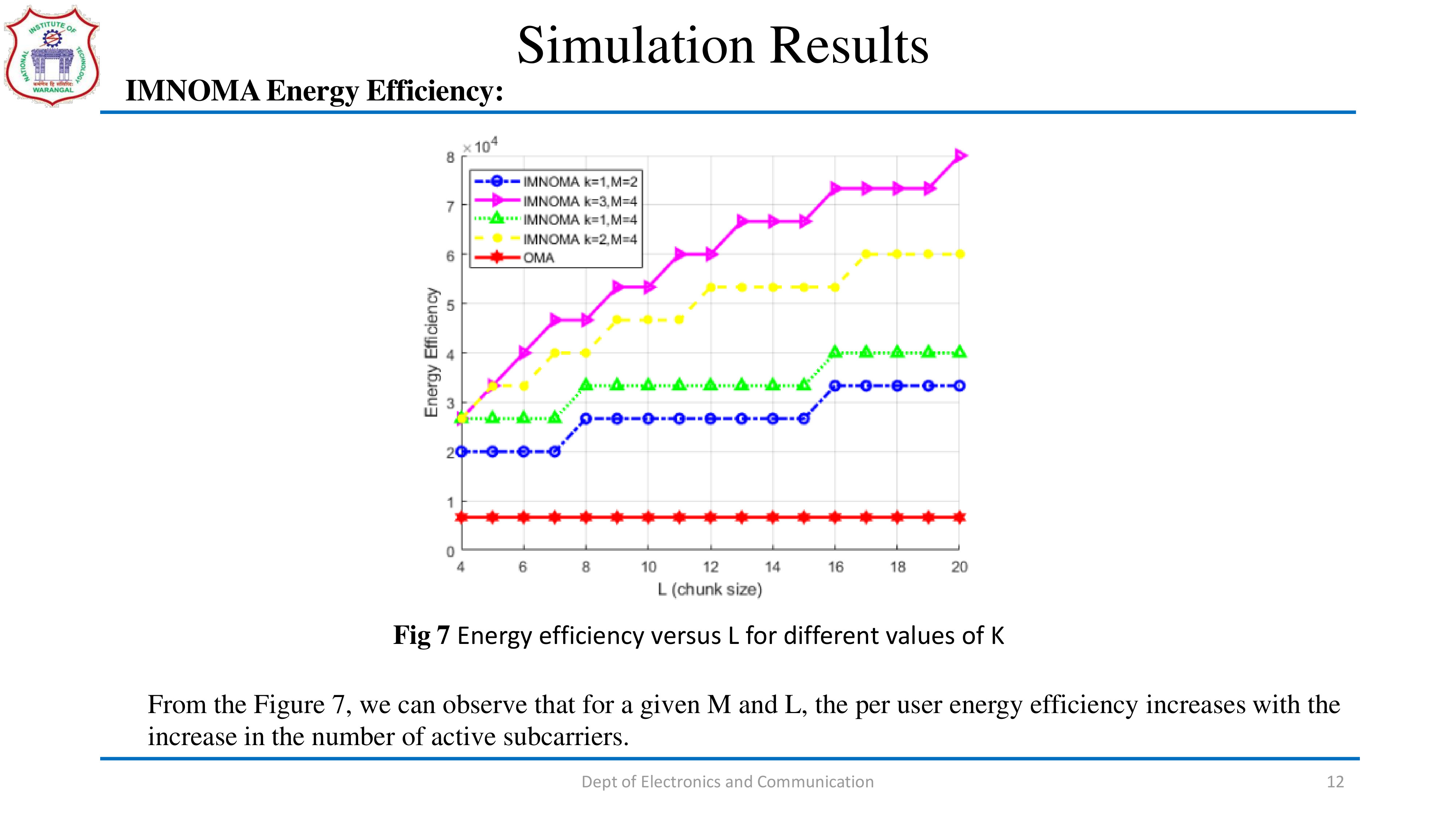 |
Simulation Results: IMNOMA Energy Efficiency:
From the Figure 7, we can observe that for a given M and L, the per user energy efficiency increases with the increase in the number of active subcarriers.
|
|
ICACT20240067 Slide.10
[Big slide for presentation]
[YouTube] |
Chrome Text-to-Speach Click!! |
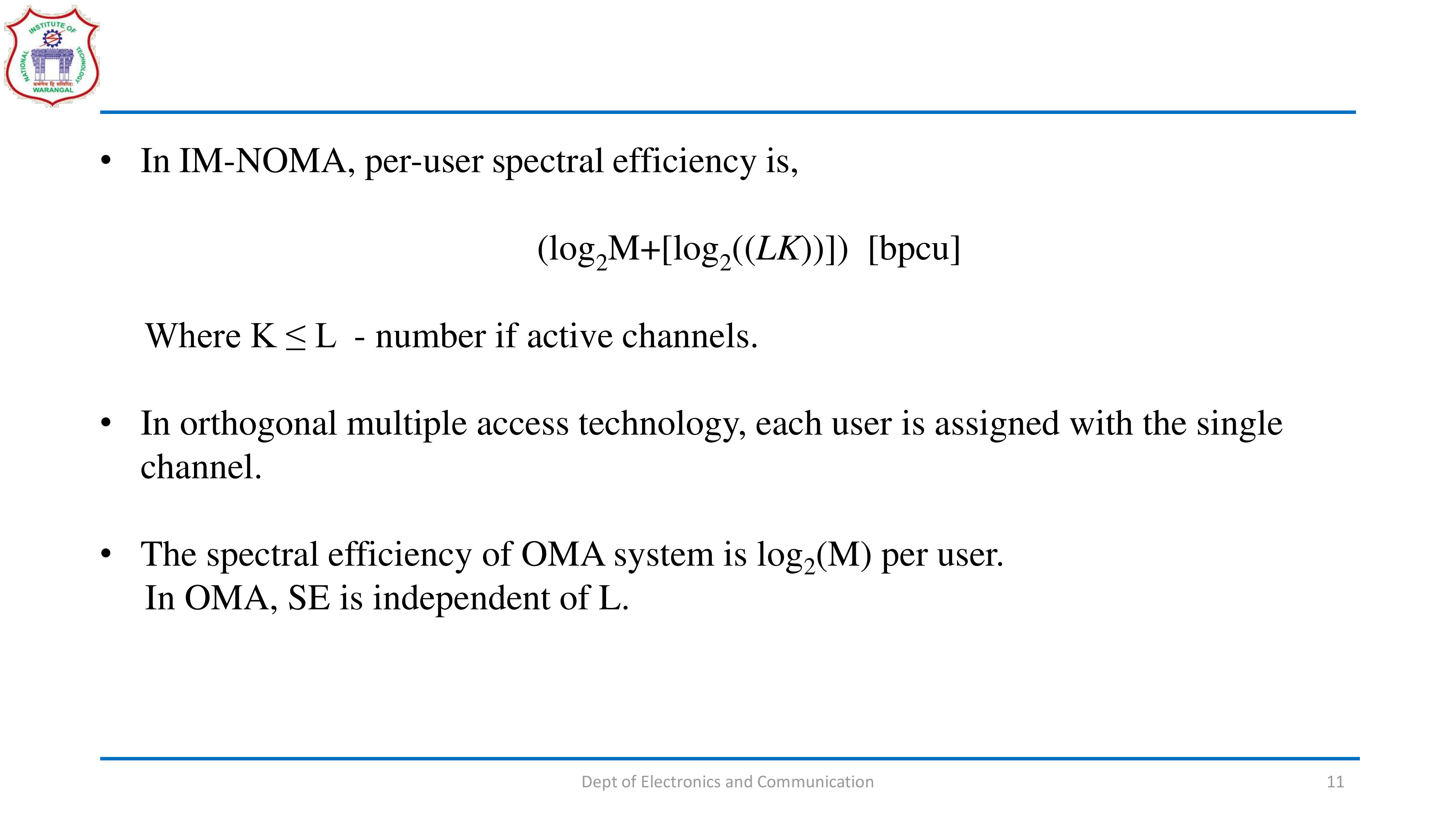 |
In IM-NOMA, per-user spectral efficiency is,
(log2M+[log2((LK))]) [bpcu]
Where K ≤ L - number if active channels.
In orthogonal multiple access technology, each user is assigned with the single channel.
The spectral efficiency of OMA system is log2(M) per user.
In OMA, SE is independent of L.
|
|
ICACT20240067 Slide.09
[Big slide for presentation]
[YouTube] |
Chrome Text-to-Speach Click!! |
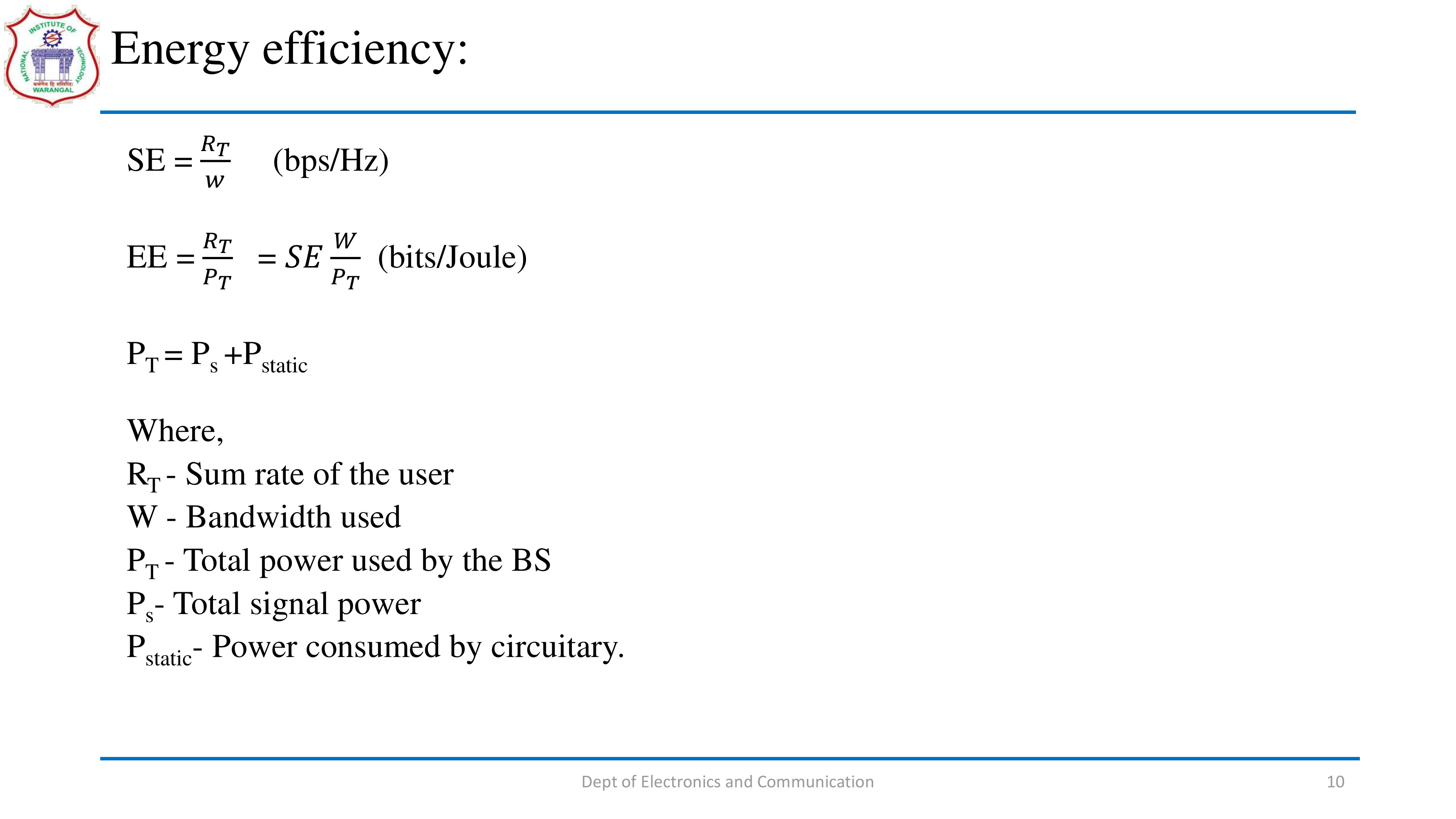 |
Energy efficiency (EE) is the ratio between the sum rates to the base station’s power. The message signal power and the circuit power represent the total power consumption at the transmitting side.
|
|
ICACT20240067 Slide.08
[Big slide for presentation]
[YouTube] |
Chrome Text-to-Speach Click!! |
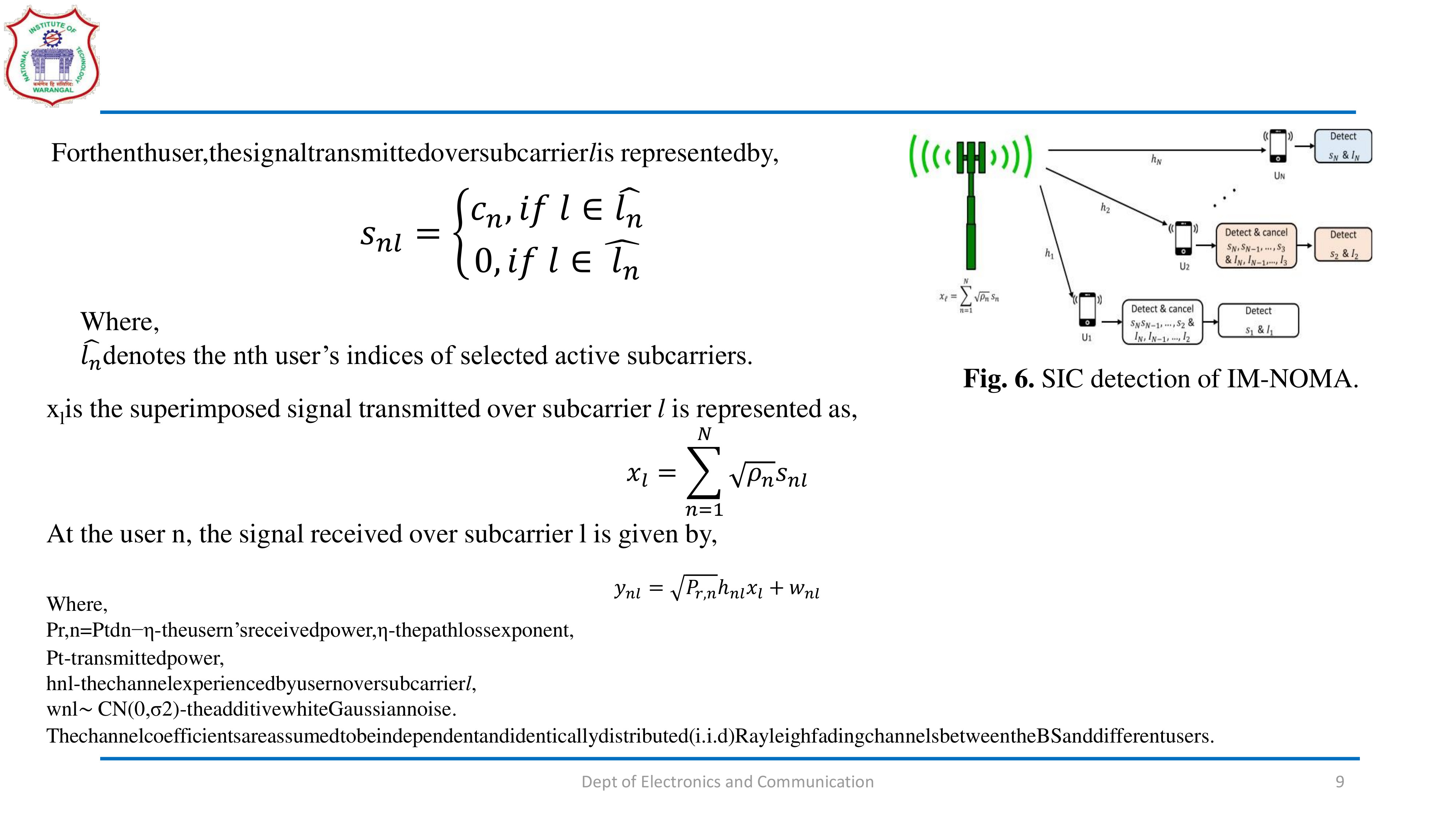 |
SIC detection of IM-NOMA is shown in the figure. In SIC, each user nearer to the Base Station (BS) detects and removes the signals that are far from the BS compared to that user and treats all other user’s signal as noise. The decoded signal will be removed from the received signal, the same process continues till it decodes its own signal.
|
|
ICACT20240067 Slide.07
[Big slide for presentation]
[YouTube] |
Chrome Text-to-Speach Click!! |
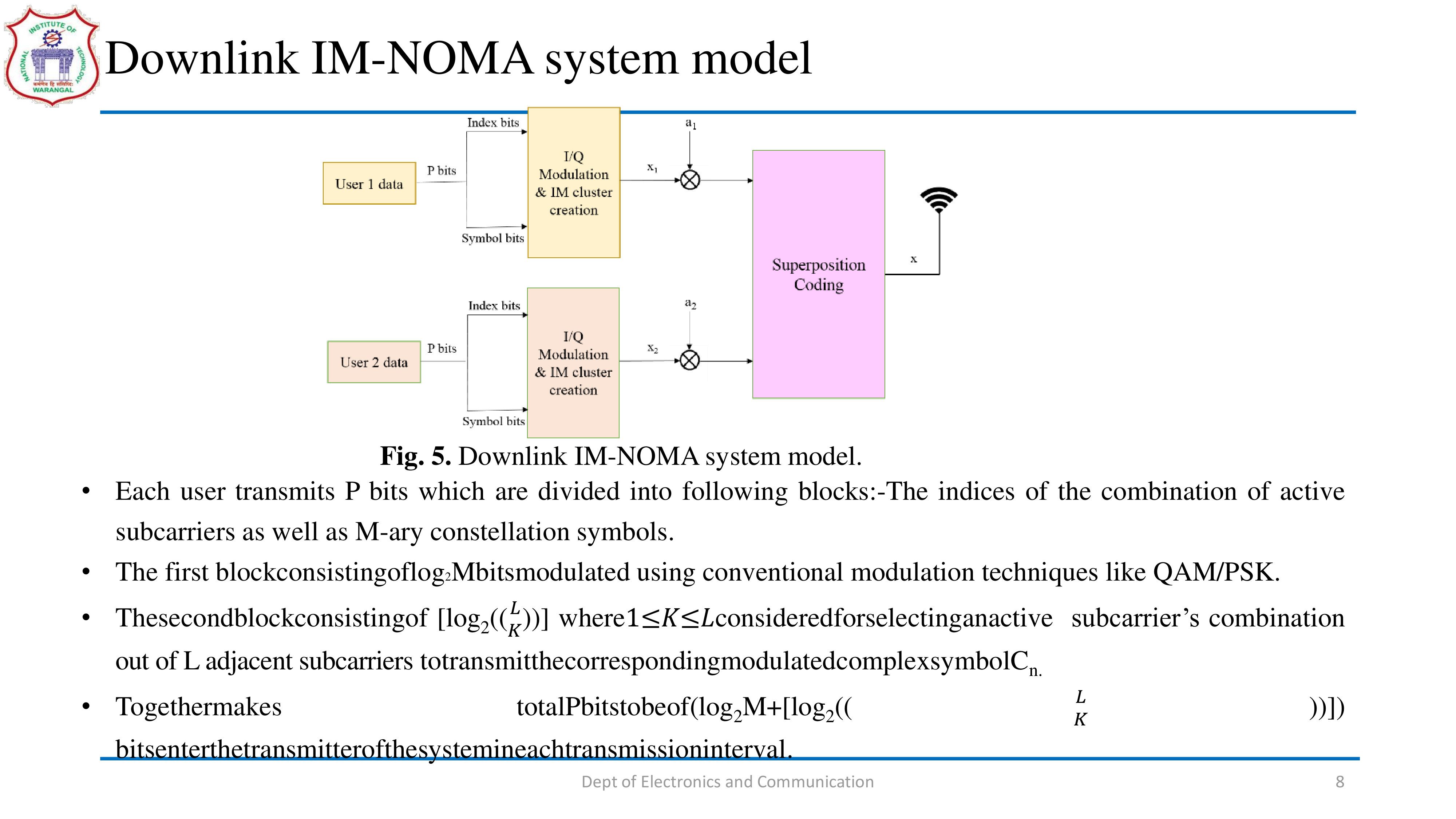 |
Downlink IM-NOMA system model is represented in the figure. NOMA supports high spectral efficiency, massive connectivity because users can use the same frequency and temporal resources as traditional OMA. Index modulation (IM) is a simple but effective digital modulation method that sends extra information bits via the resource indices of a matching communication system. Compared to conventional communication systems, IM offers significant spectrum and energy efficiency, making it a potential approach for the future.
|
|
ICACT20240067 Slide.06
[Big slide for presentation]
[YouTube] |
Chrome Text-to-Speach Click!! |
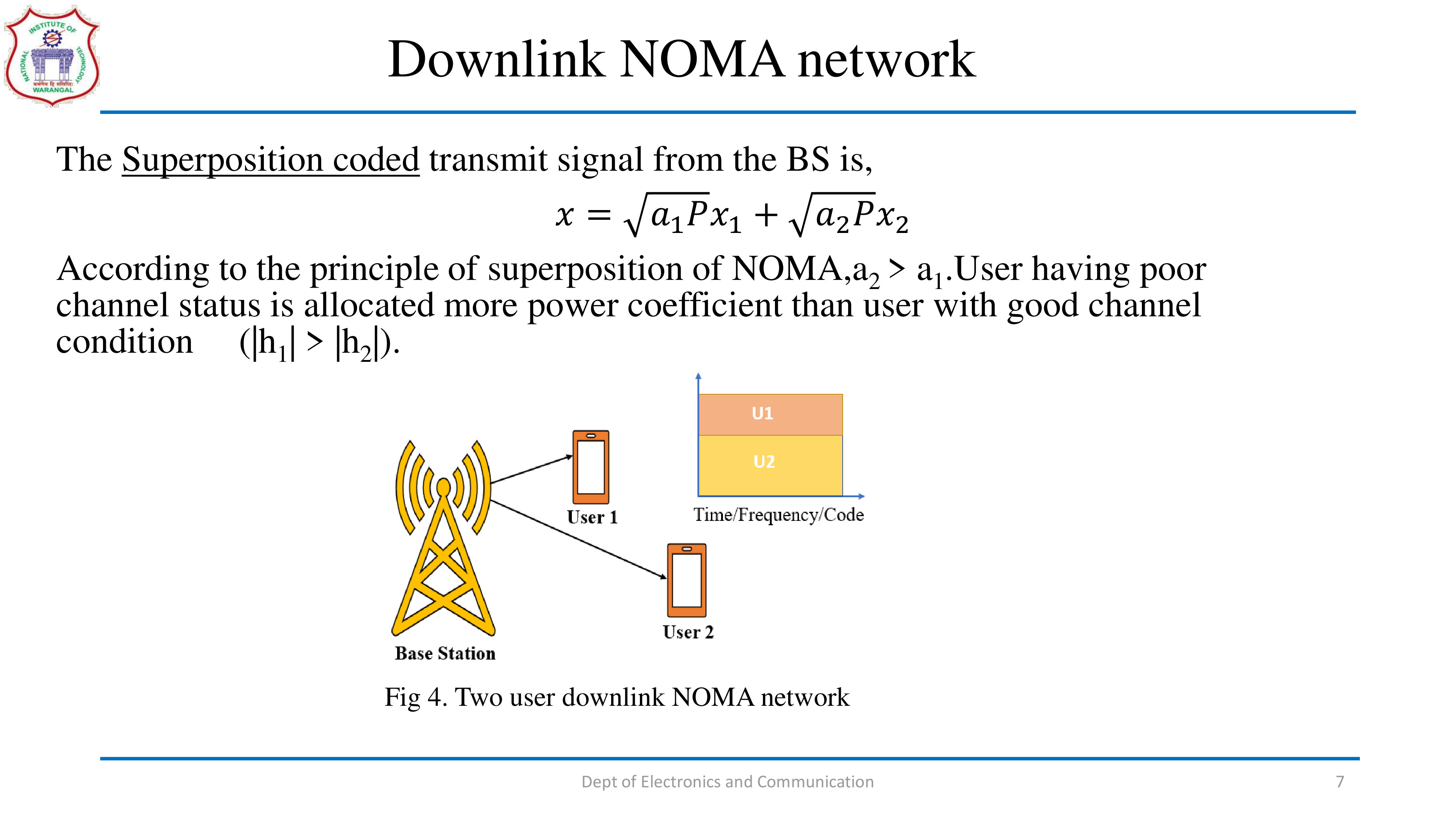 |
Two user downlink NOMA network is shown in the figure. All user’s signals are allotted with power coefficients by the BS according to the SC technique at the transmitter side. SIC detector at the receiver side decodes the signals.
|
|
ICACT20240067 Slide.05
[Big slide for presentation]
[YouTube] |
Chrome Text-to-Speach Click!! |
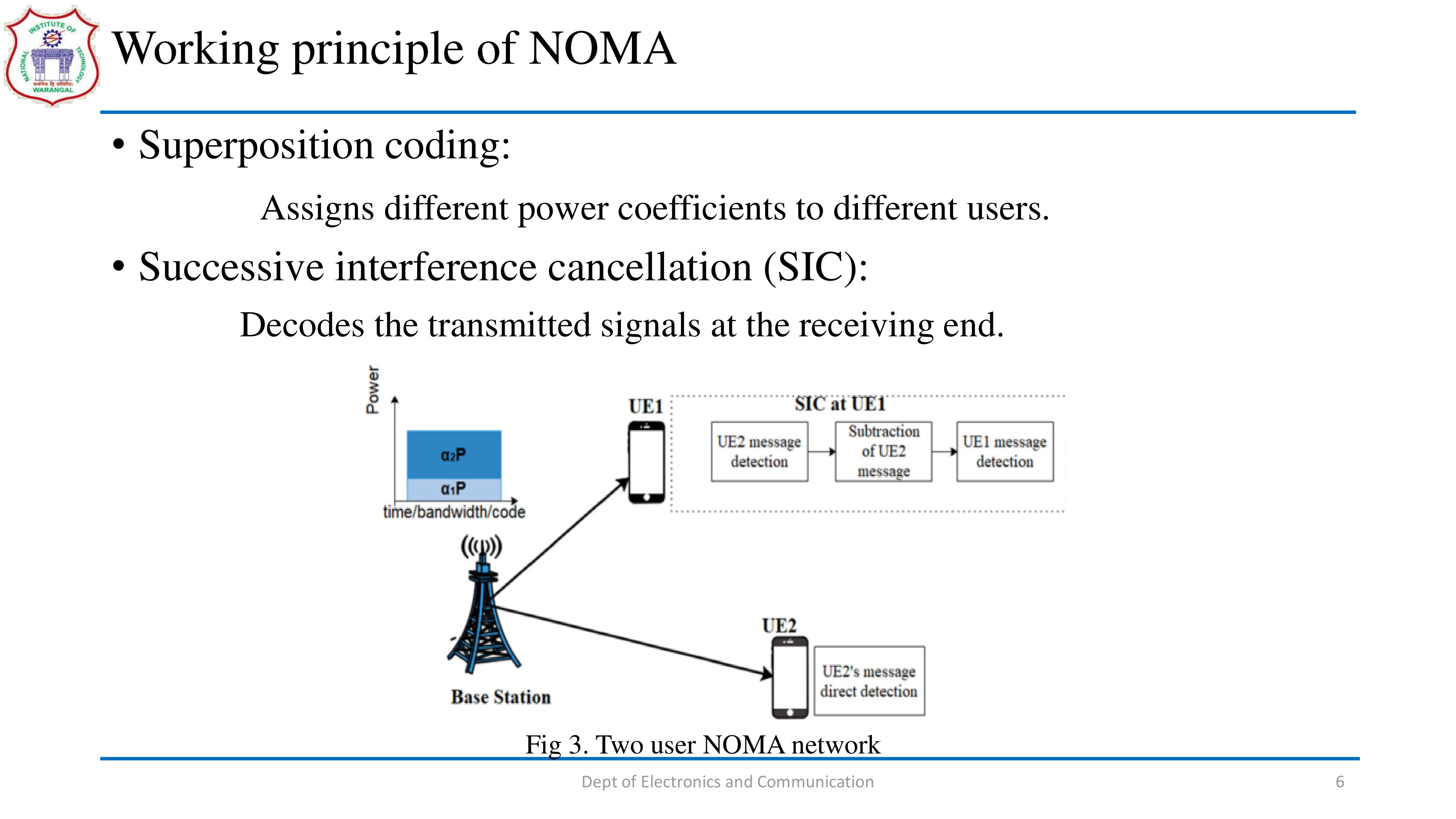 |
Working principle of NOMA includes Superposition coding and Successive interference cancellation (SIC). According to the Superposition Coding, near user with good channel conditions is allotted with less power coefficient than that of far user.
|
|
ICACT20240067 Slide.04
[Big slide for presentation]
[YouTube] |
Chrome Text-to-Speach Click!! |
 |
Objectives: To study the IMNOMA with various active subcarriers.
To improve the energy efficiency by implementing IM-NOMA compared to other existing systems.
To verify IM-NOMA with different modulation orders.
|
|
ICACT20240067 Slide.03
[Big slide for presentation]
[YouTube] |
Chrome Text-to-Speach Click!! |
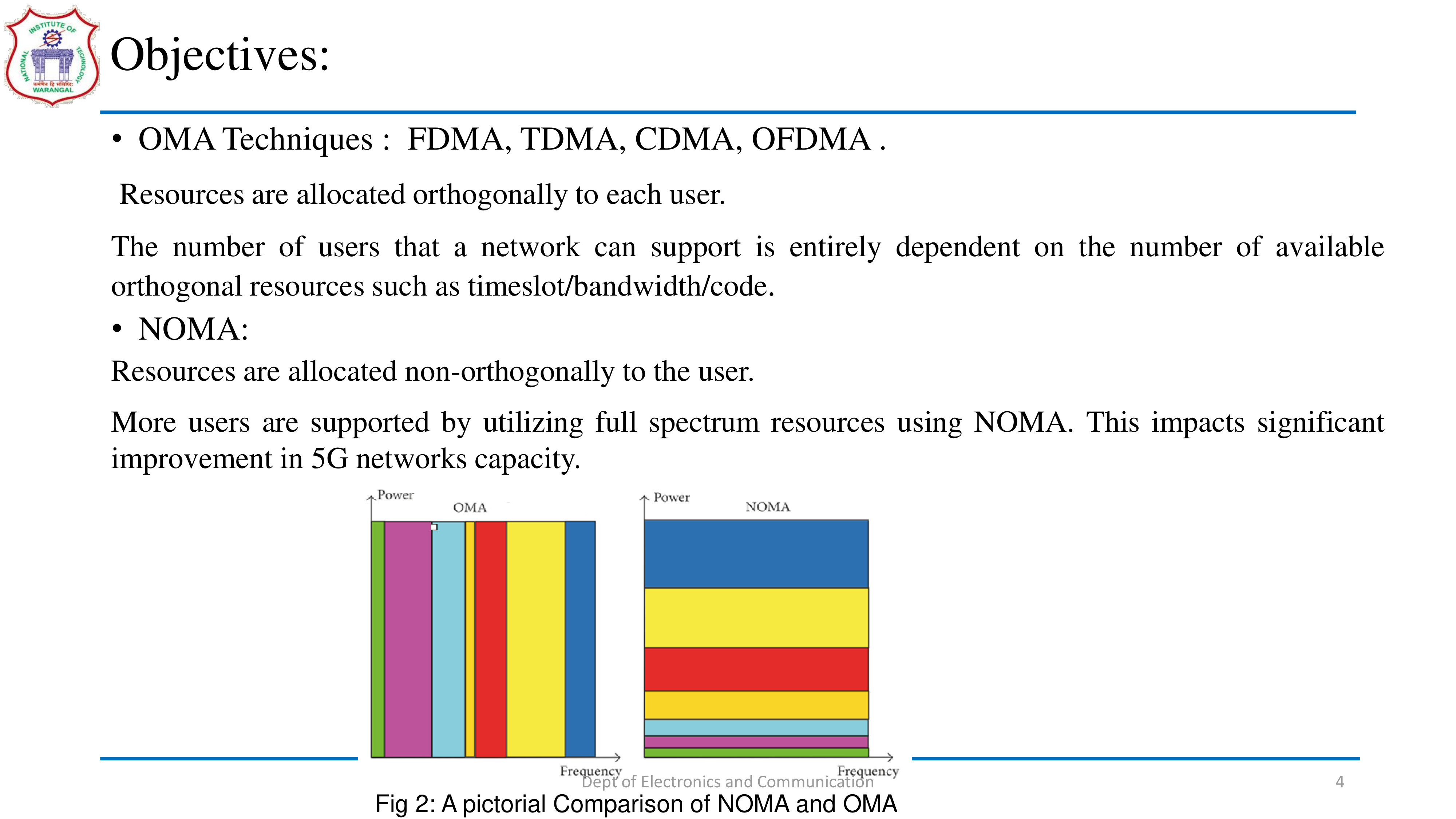 |
Objectives: OMA Techniques : FDMA, TDMA, CDMA, OFDMA .
Resources are allocated orthogonally to each user.
NOMA:
Resources are allocated non-orthogonally to the user.
More users are supported by utilizing full spectrum resources using NOMA. This impacts significant improvement in 5G networks capacity.
|
|
ICACT20240067 Slide.02
[Big slide for presentation]
[YouTube] |
Chrome Text-to-Speach Click!! |
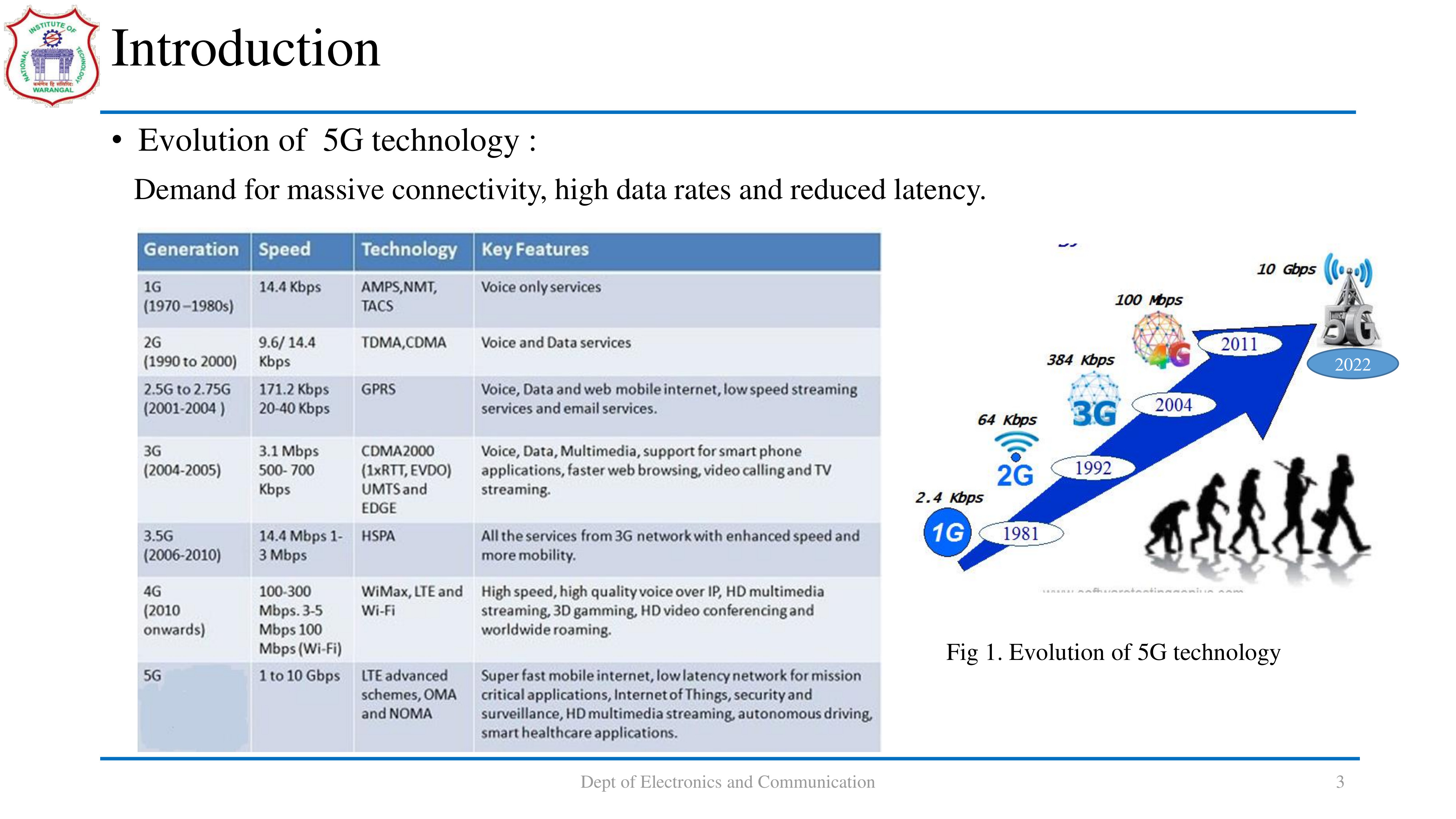 |
Evolution of 5G technology has created the demand for massive connectivity, high data rates and reduced latency. Due to the advancement of wireless technology, massive connectivity and data rates are in high demand. OMA approach includes the multiple access methods used in 1G, 2G, and 3G that use frequency, time, and code, as well as OFDMA in 4G. Resources such as frequency, time, code are orthogonally allotted to each user in OMA. NOMA supports high spectral efficiency, massive connectivity because users can use the same frequency and temporal resources as traditional OMA. techniques. Consider NOMA technology instead of OMA technology to increase 5G network capacity.
|
|
ICACT20240067 Slide.01
[Big slide for presentation]
[YouTube] |
Chrome Text-to-Speach Click!! |
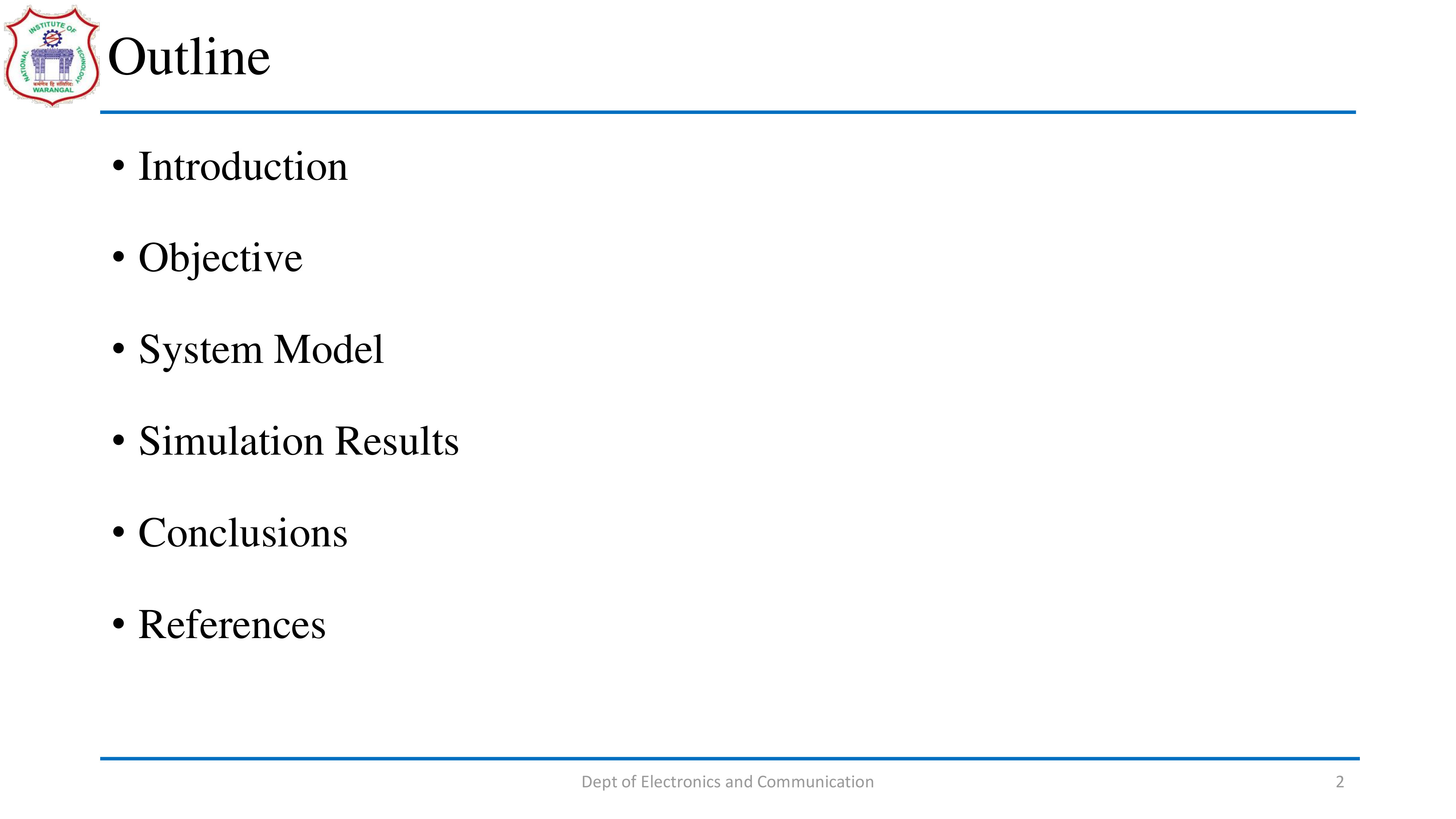 |
Outline: Introduction
Objective
System Model
Simulation Results
Conclusions
References
|
|
ICACT20240067 Slide.00
[Big slide for presentation]
[YouTube] |
Chrome Text-to-Speach Click!! |
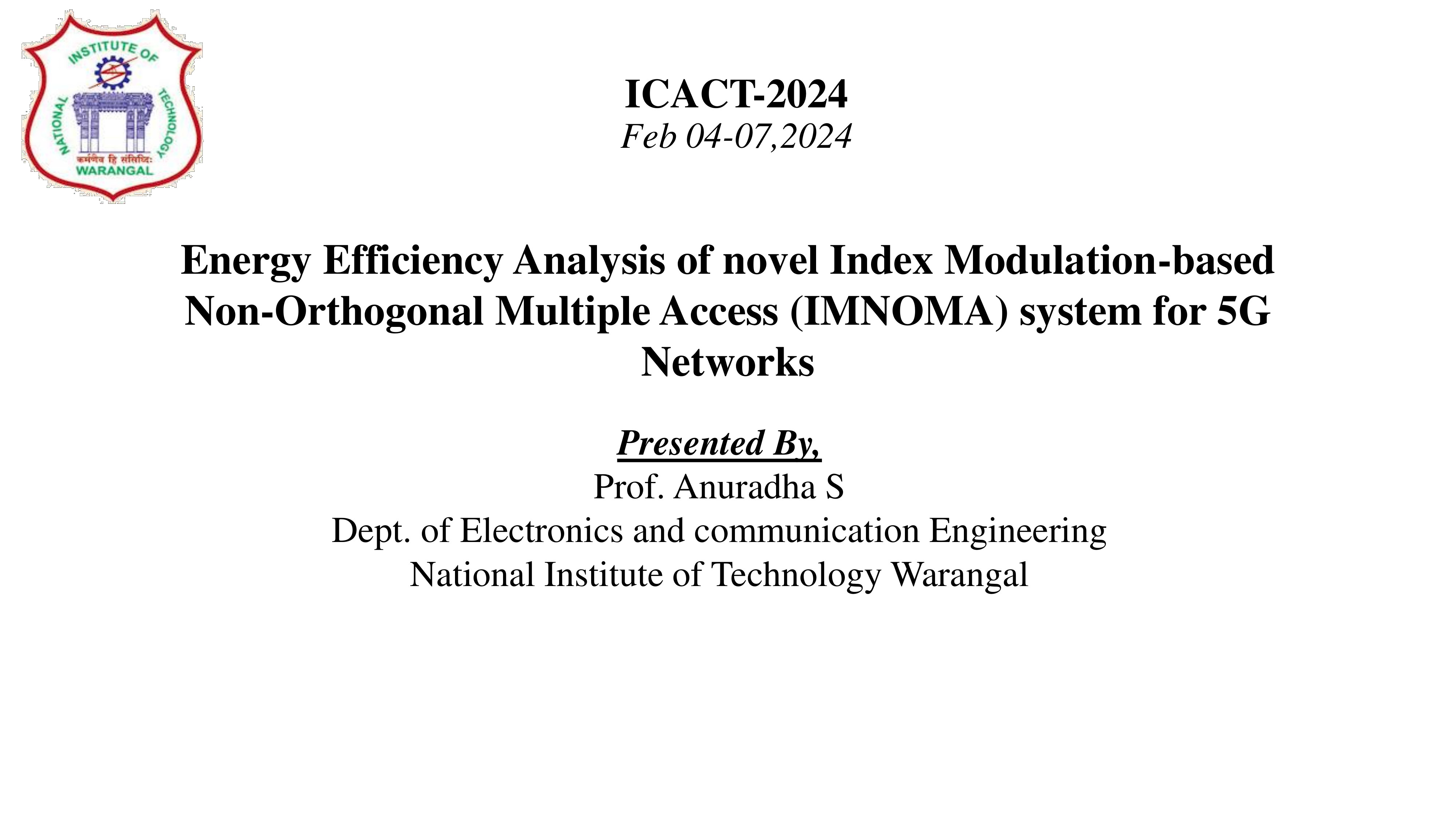 |
Hi everybody, I’m Prof. Anuradha S from Dept of ECE, NIT Warangal presenting a concise analysis of the energy efficiency benefits of the innovative Index Modulation-based Non-Orthogonal Multiple Access (IMNOMA) system for 5G networks.
|
| |