 ICACT20240405 Slide.18
[Big slide for presentation] |
Chrome Text-to-Speach Click!! |
 |
Thank You
|
|
ICACT20240405 Slide.17
[Big slide for presentation]
|
Chrome Text-to-Speach Click!! |
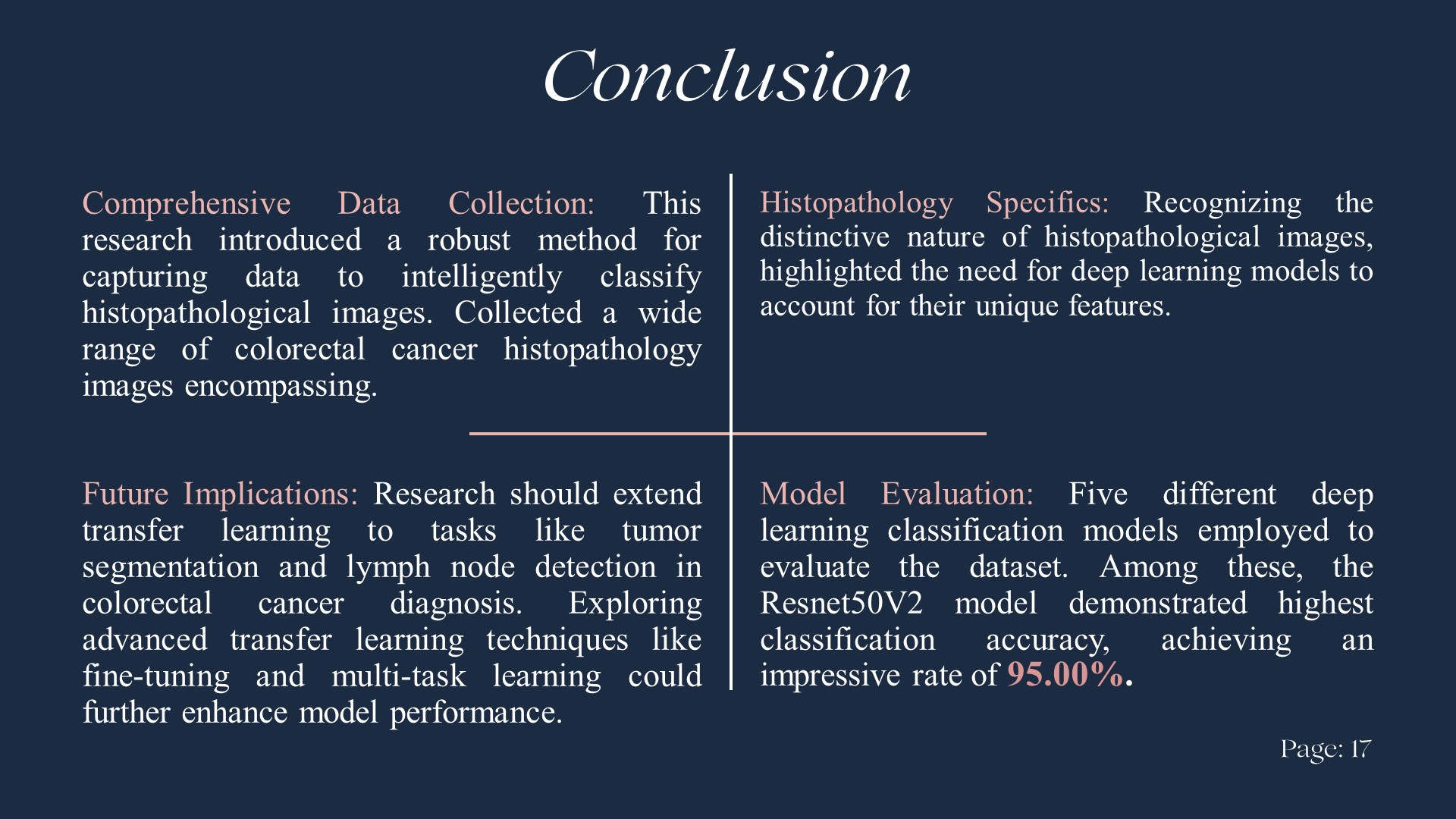 |
Conclusion
=> Comprehensive Data Collection: This research introduced a robust method for capturing data to intelligently classify histopathological images. Collected a wide range of colorectal cancer histopathology images encompassing.
=> Future Implications: Research should extend transfer learning to tasks like tumor segmentation and lymph node detection in colorectal cancer diagnosis. Exploring advanced transfer learning techniques like fine-tuning and multi-task learning could further enhance model performance.
=> Histopathology Specifics: Recognizing the distinctive nature of histopathological images, highlighted the need for deep learning models to account for their unique features.
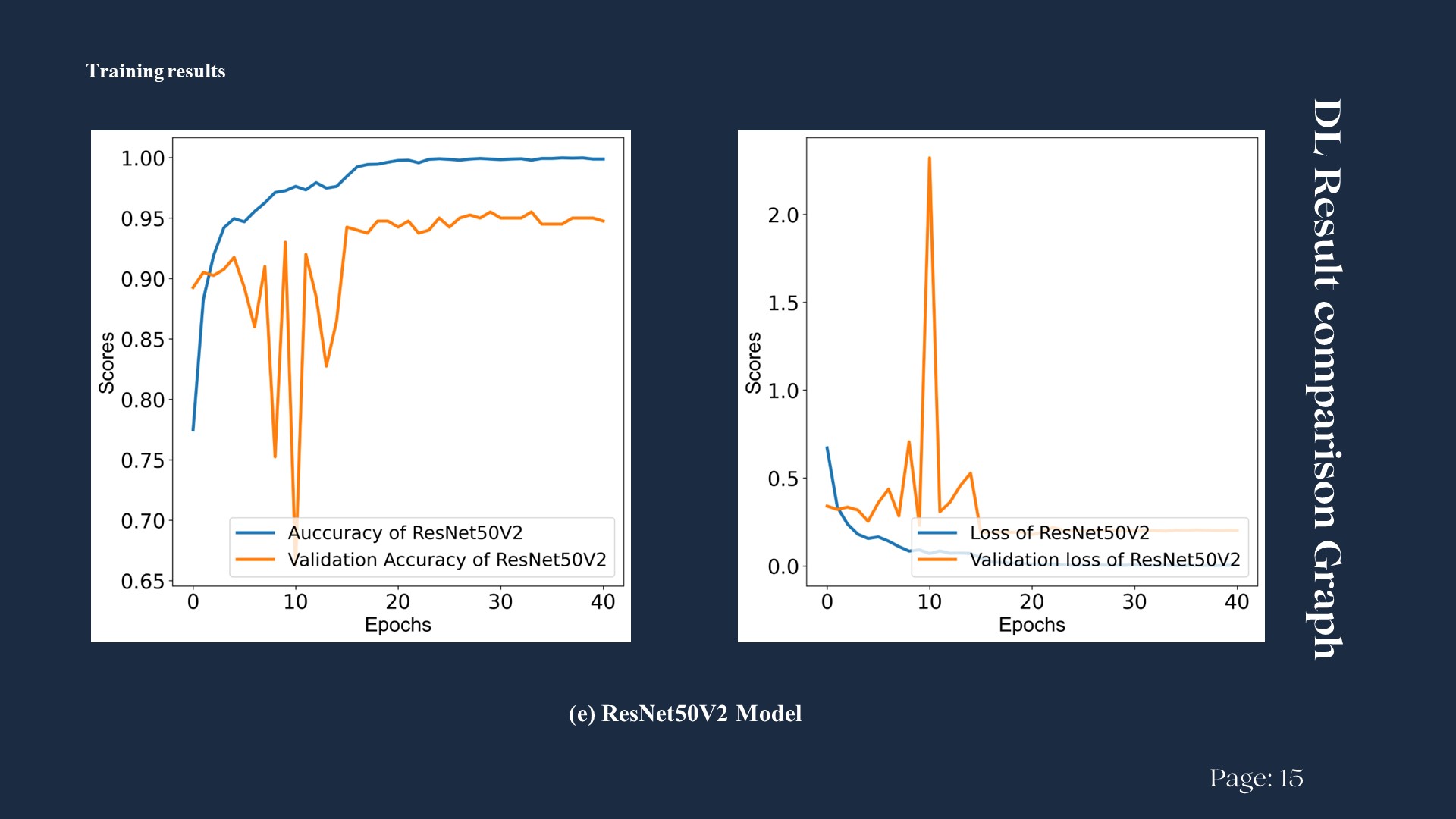
=> Model Evaluation: Five different deep learning classification models employed to evaluate the dataset. Among these, the Resnet50V2 model demonstrated highest classification accuracy, achieving an impressive rate of 95.00%.
|
|
ICACT20240405 Slide.16
[Big slide for presentation]
|
Chrome Text-to-Speach Click!! |
 |
DL Result comparison Graph
|
|
ICACT20240405 Slide.15
[Big slide for presentation]
|
Chrome Text-to-Speach Click!! |
 |
DL Result comparison Graph
|
|
ICACT20240405 Slide.14
[Big slide for presentation]
|
Chrome Text-to-Speach Click!! |
 |
DL Result comparison Graph
|
|
ICACT20240405 Slide.13
[Big slide for presentation]
|
Chrome Text-to-Speach Click!! |
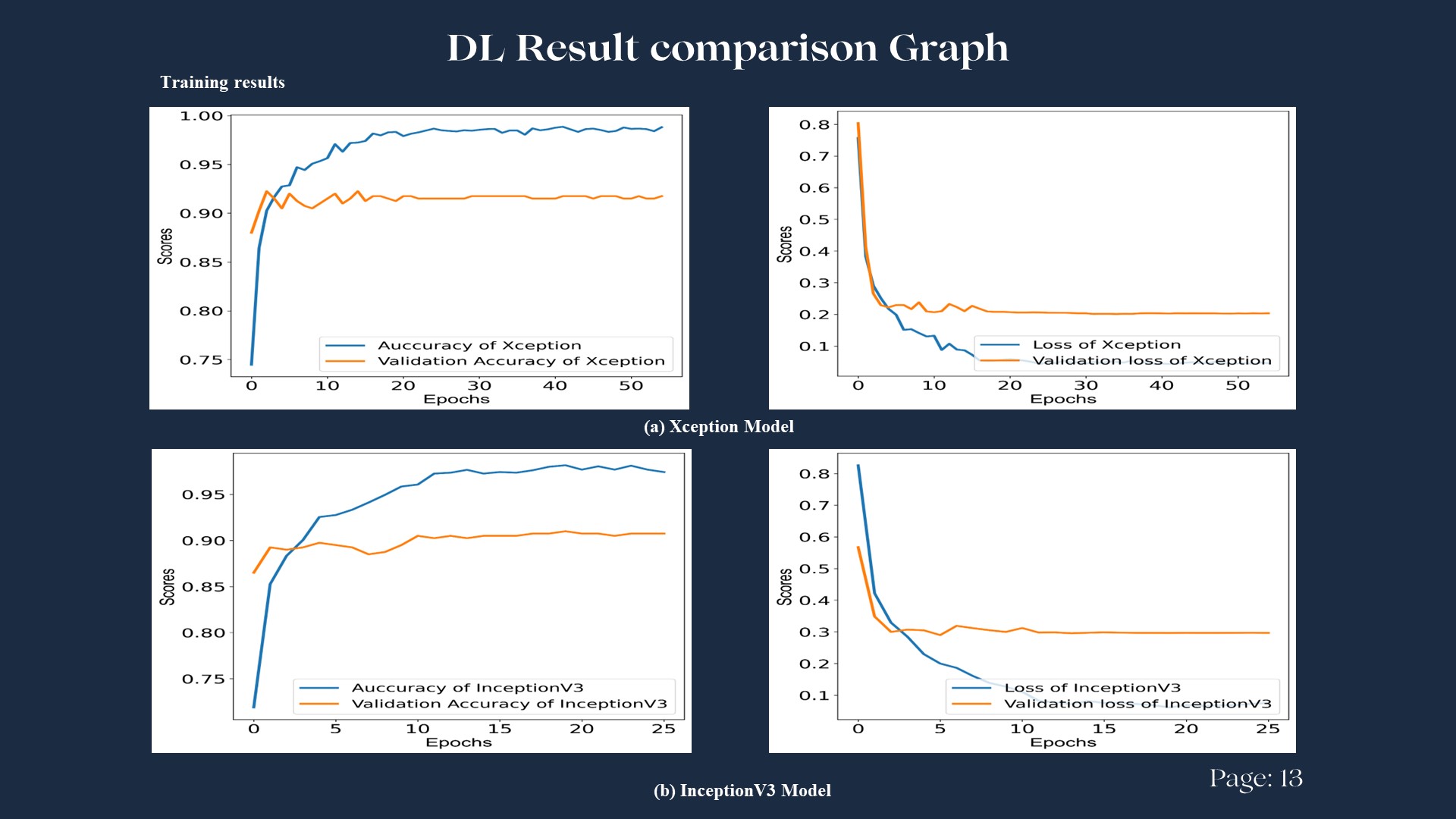 |
DL Result comparison Graph
|
|
ICACT20240405 Slide.12
[Big slide for presentation]
|
Chrome Text-to-Speach Click!! |
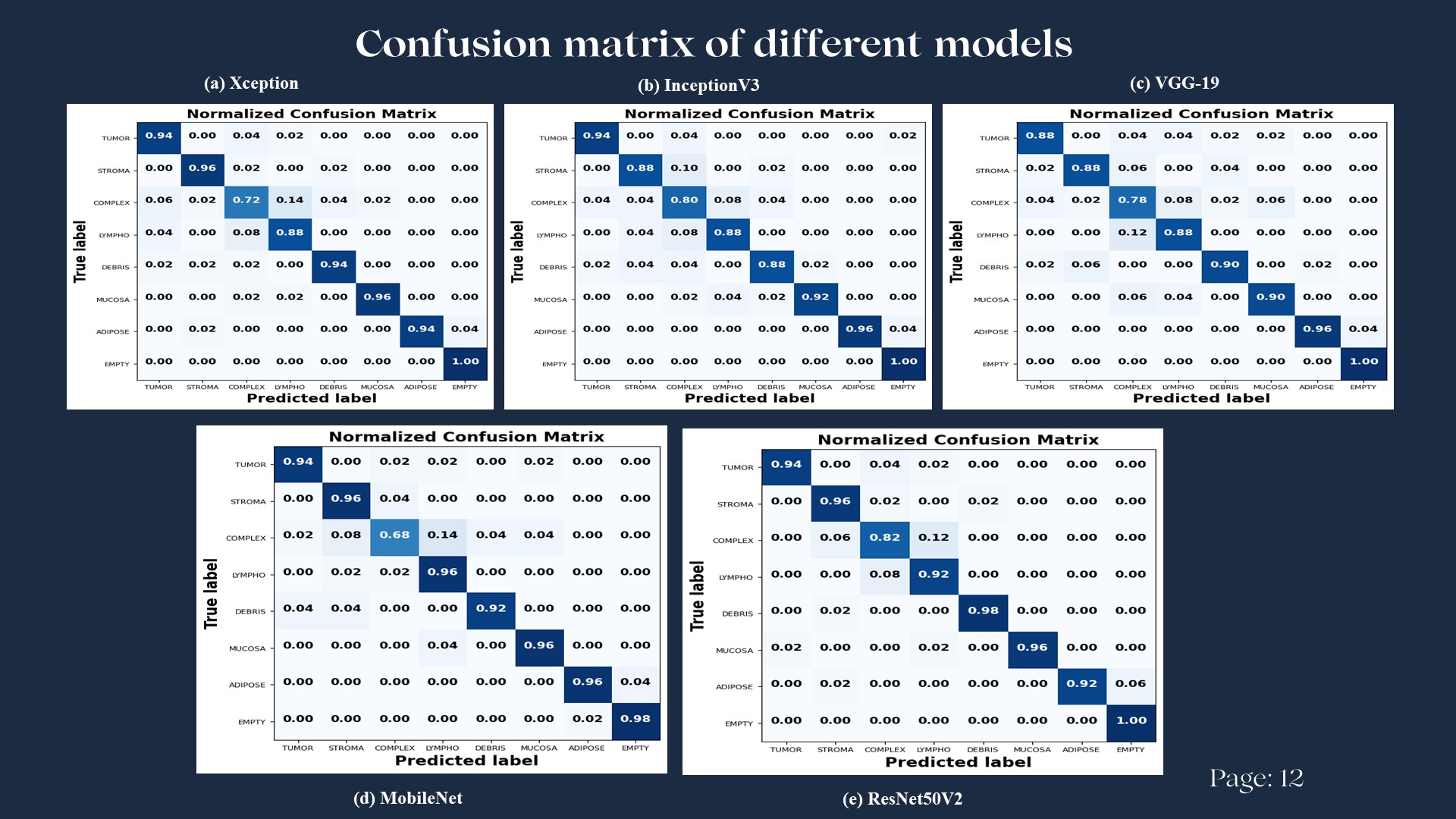 |
Figure
|
|
ICACT20240405 Slide.11
[Big slide for presentation]
|
Chrome Text-to-Speach Click!! |
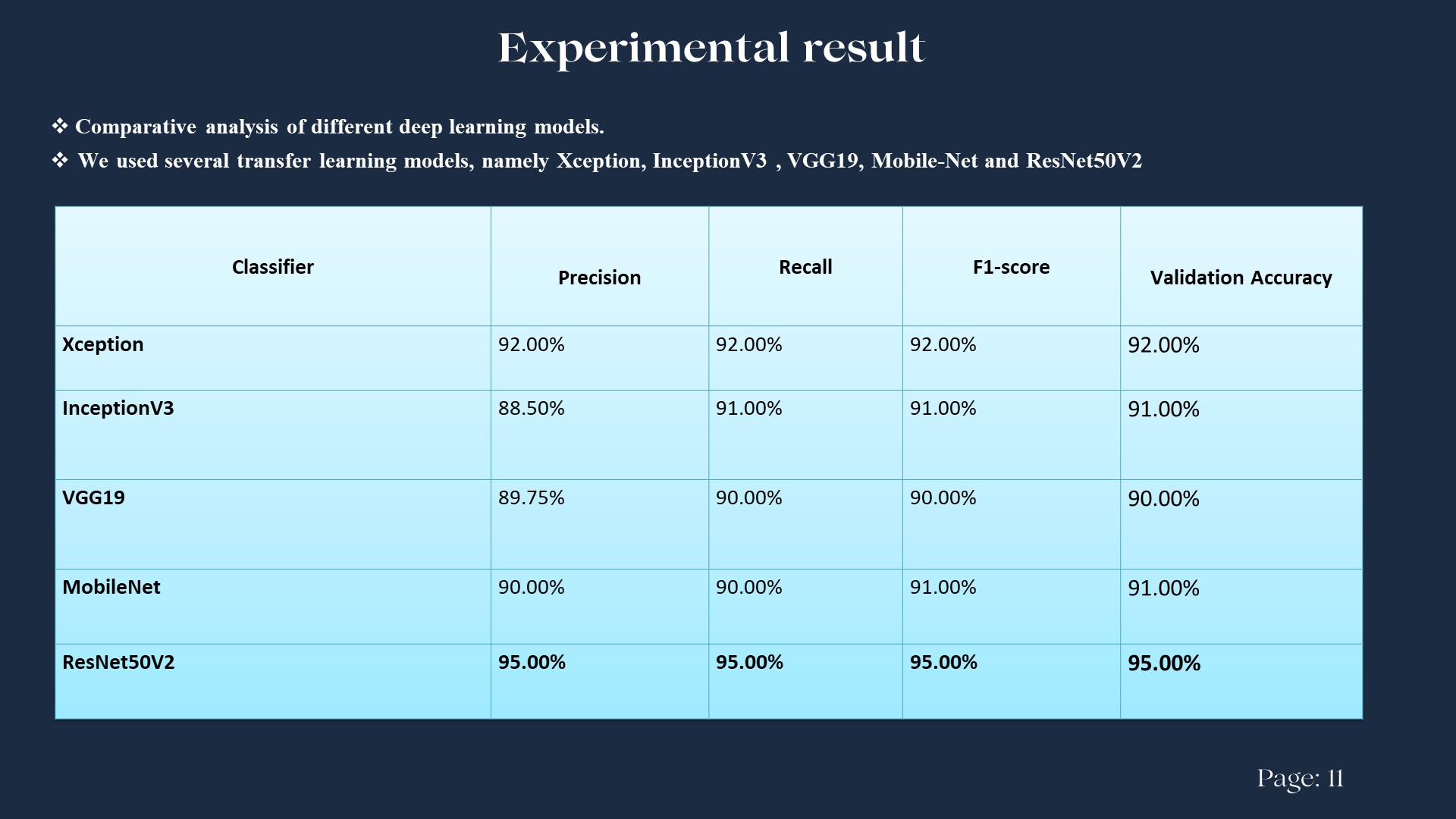 |
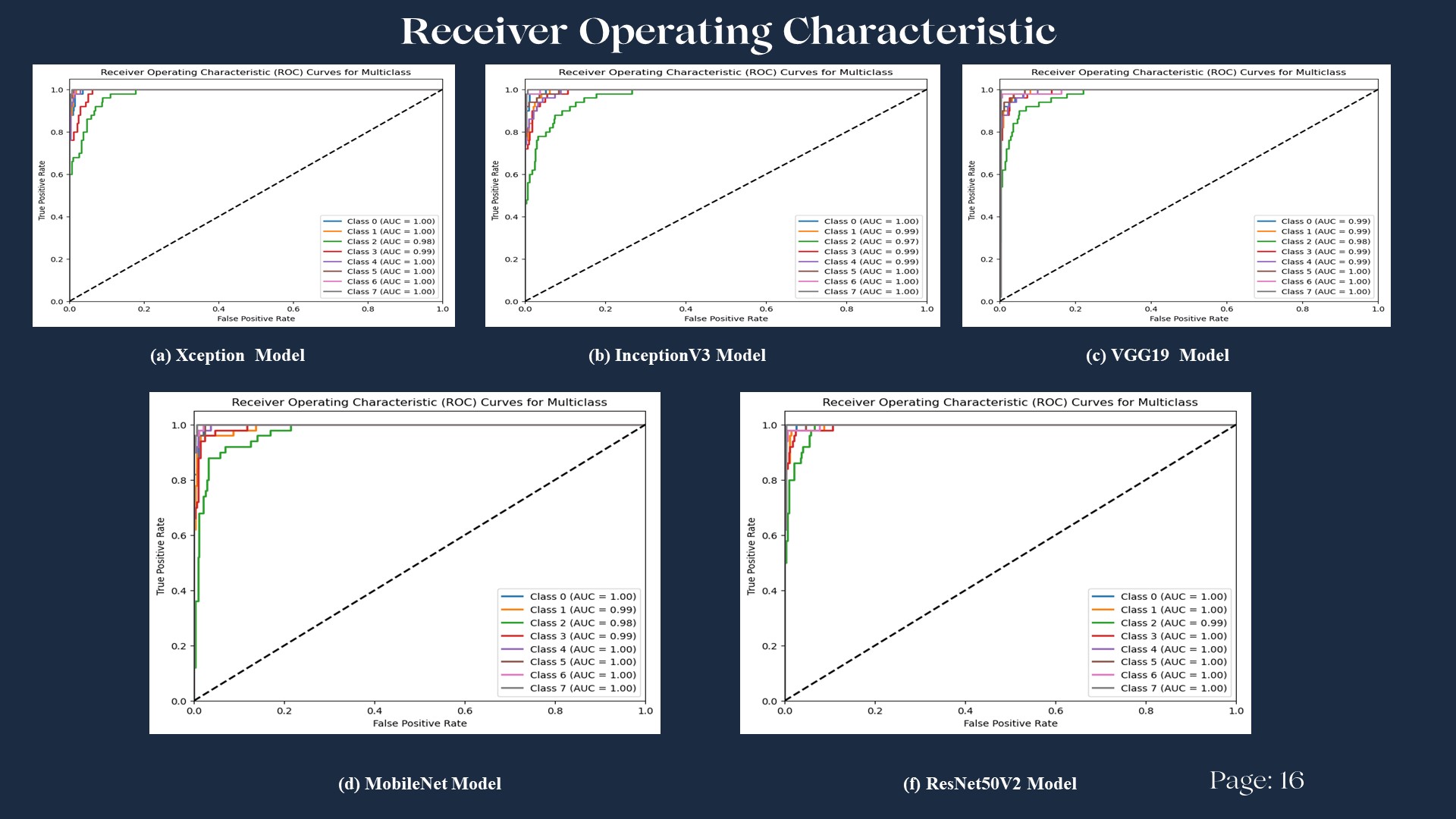
Experimental result (Figure)
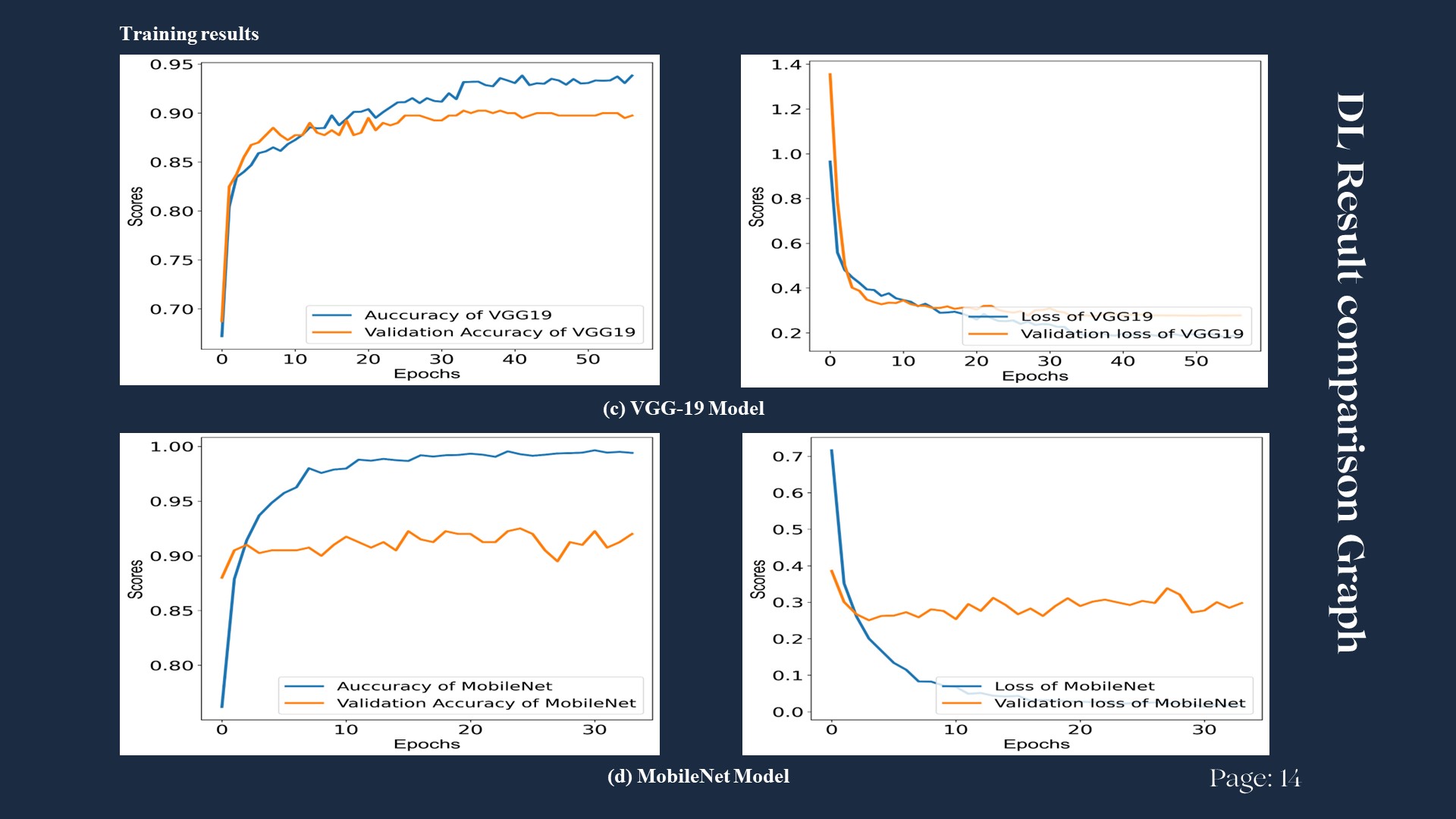
Comparative analysis of different deep learning models.
We used several transfer learning models, namely Xception, InceptionV3 , VGG19, Mobile-Net and ResNet50V2
|
|
ICACT20240405 Slide.10
[Big slide for presentation]
|
Chrome Text-to-Speach Click!! |
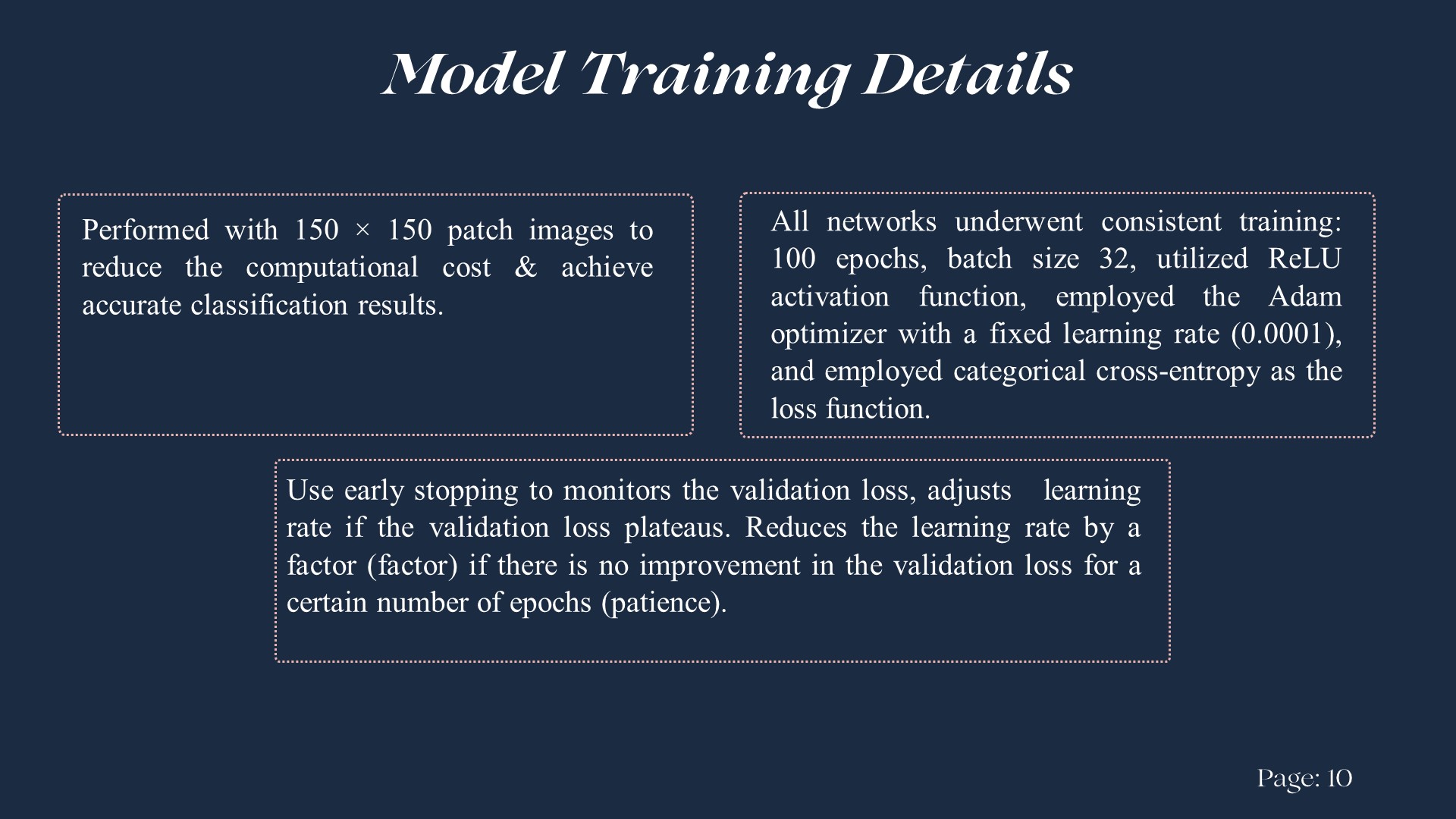 |
Model Training Details
=> Performed with 150 ¡¿ 150 patch images to reduce the computational cost & achieve accurate classification results.
=> All networks underwent consistent training: 100 epochs, batch size 32, utilized ReLU activation function, employed the Adam optimizer with a fixed learning rate (0.0001), and employed categorical cross-entropy as the loss function.
=> Use early stopping to monitor the validation loss, and adjust the learning rate if the validation loss plateaus. Reduces the learning rate by a factor (factor) if there is no improvement in the validation loss for a certain number of epochs (patience).
|
|
ICACT20240405 Slide.09
[Big slide for presentation]
|
Chrome Text-to-Speach Click!! |
 |
Methodology
=> Transfer Learning Approach: Leveraging CNN-based pre-trained models trained on extensive datasets of 5,000 samples, capturing diverse features. Strategic adjustments to parameters expedite convergence and enhance model resilience.
=> Architectural Elements: Core components include convolutional, pooling, and fully connected layers. Stride size and kernel parameters in convolutions extract crucial features. Fully connected layers consolidate outputs while pooling layers reduce model complexity.
=> Exploration of Architectures: The study involves analyzing five deep learning-based architectures for colorectal cancer analysis. The critical investigation includes hyperparameter adjustments, e.g., learning rate (0.0001), batch size (32), 100 epochs, ReLU activation, and Adam optimizer usage.
=> Confusion Matrices: Presented matrices (Xception, InceptionV3, VGG-19, MobileNet, ResNet-50V2) illustrate model performance evaluation.
=> Image Pre-processing: Input images undergo noise reduction, resizing, and normalization tailored to specific architecture requirements. The normalized dataset is split into training and testing sets in an 8:2 ratio for consistency and evaluation.
|
|
ICACT20240405 Slide.08
[Big slide for presentation]
|
Chrome Text-to-Speach Click!! |
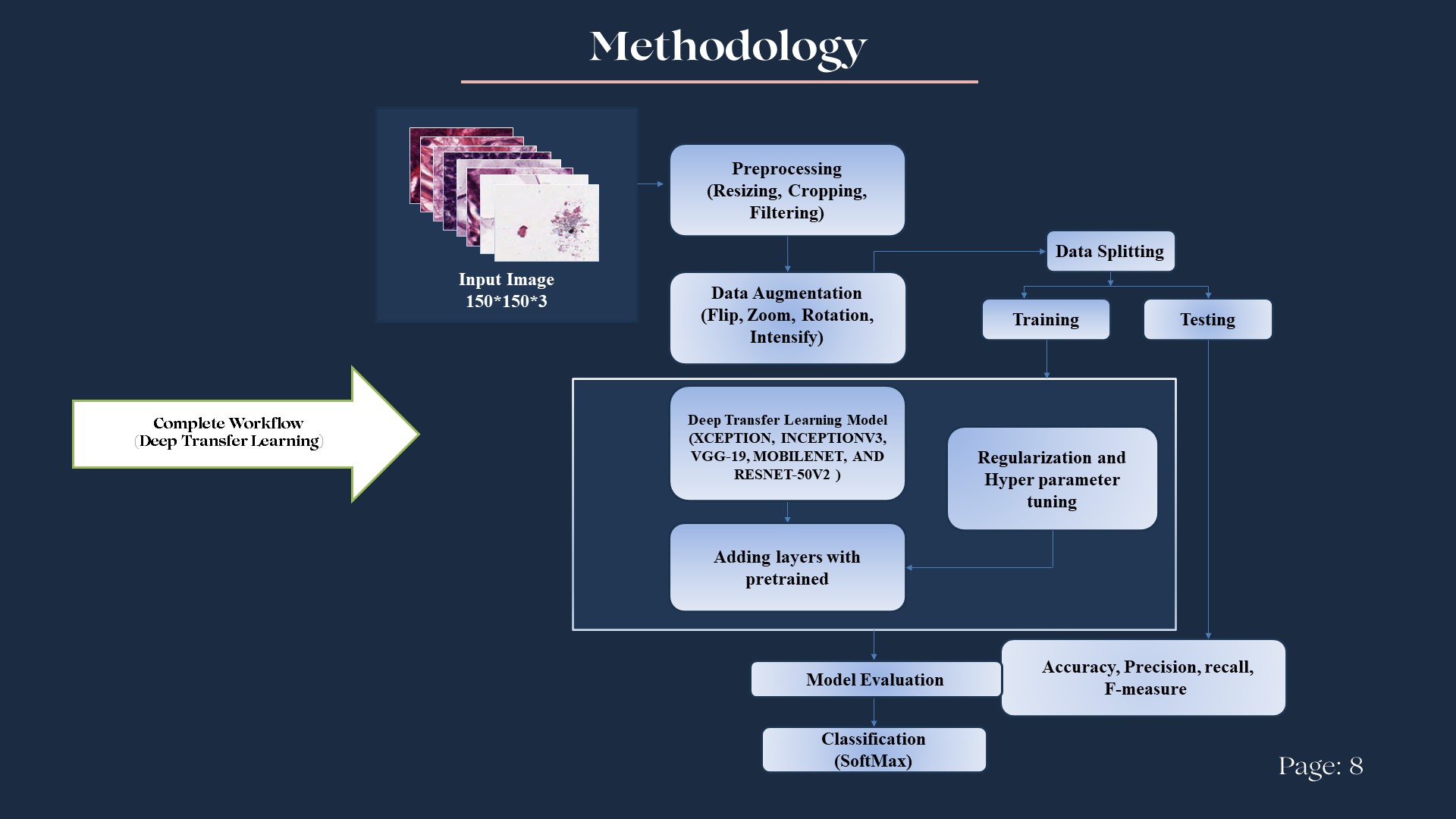 |
Methodology (Figure)
|
|
ICACT20240405 Slide.07
[Big slide for presentation]
|
Chrome Text-to-Speach Click!! |
 |
Materials
The dataset comprises textures present in human colorectal cancer histological images. These images, sized 150x150x3 in RGB format, represent one of eight classes.
Source: Institute of Pathology at the University Medical Center Mannheim, Heidelberg University, Germany.
Consists of a collection of 5,000 images, providing a substantial repository for studying and analyzing textures associated with colorectal adenocarcinomas.
Used histological samples offer insights into various textures and characteristics within colorectal cancer, enabling research and analysis across eight distinct classes represented in the images.
*Eight classes: Tumor, Stroma, Complex, Lympho, Debris, Mucosa, Adipose & Empty
|
|
ICACT20240405 Slide.06
[Big slide for presentation]
|
Chrome Text-to-Speach Click!! |
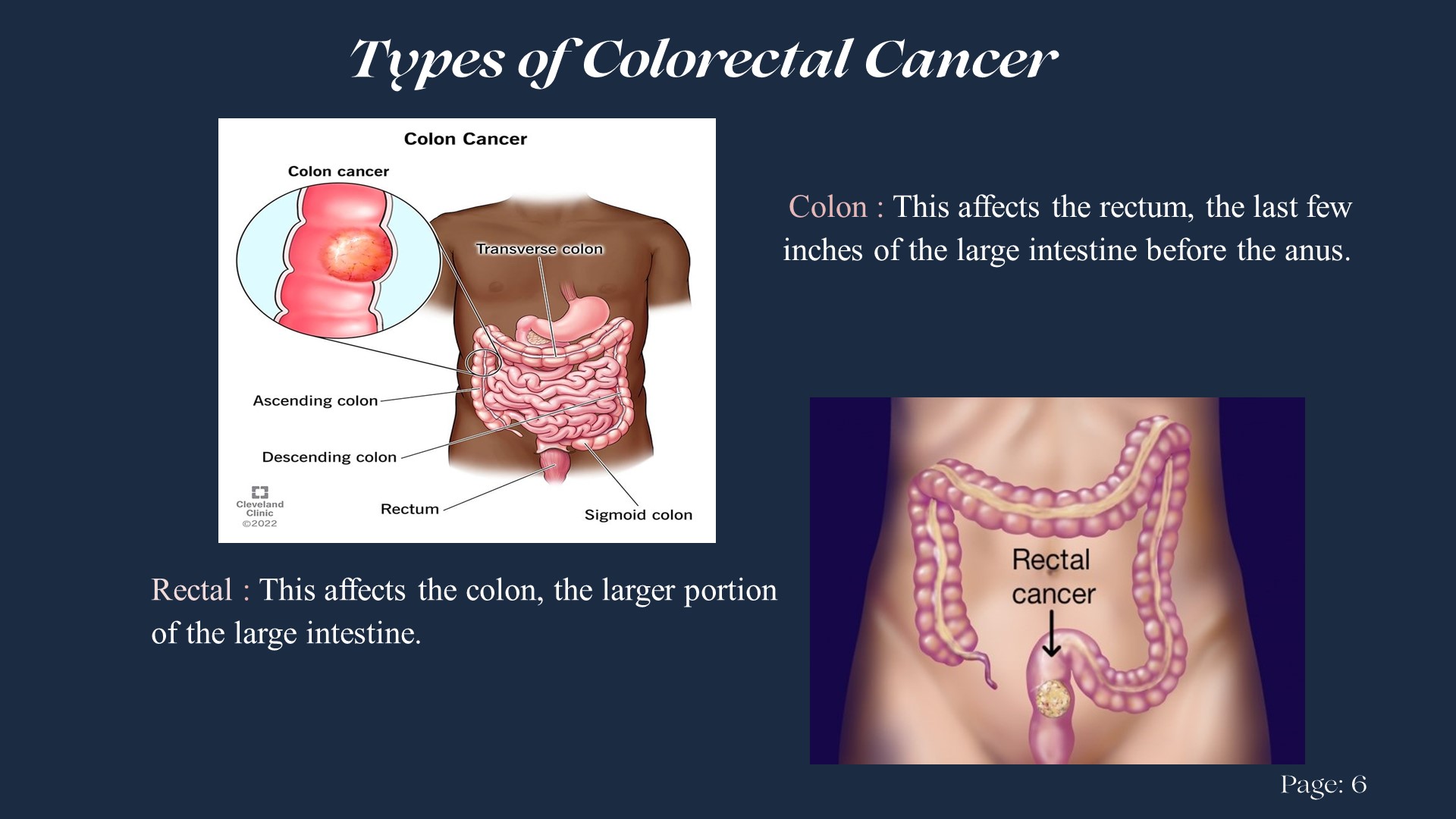 |
Types of Colorectal Cancer
* Colon: This affects the rectum, the last few inches of the large intestine before the anus.
* Rectal : This affects the colon, the larger portion of the large intestine.
|
|
ICACT20240405 Slide.05
[Big slide for presentation]
|
Chrome Text-to-Speach Click!! |
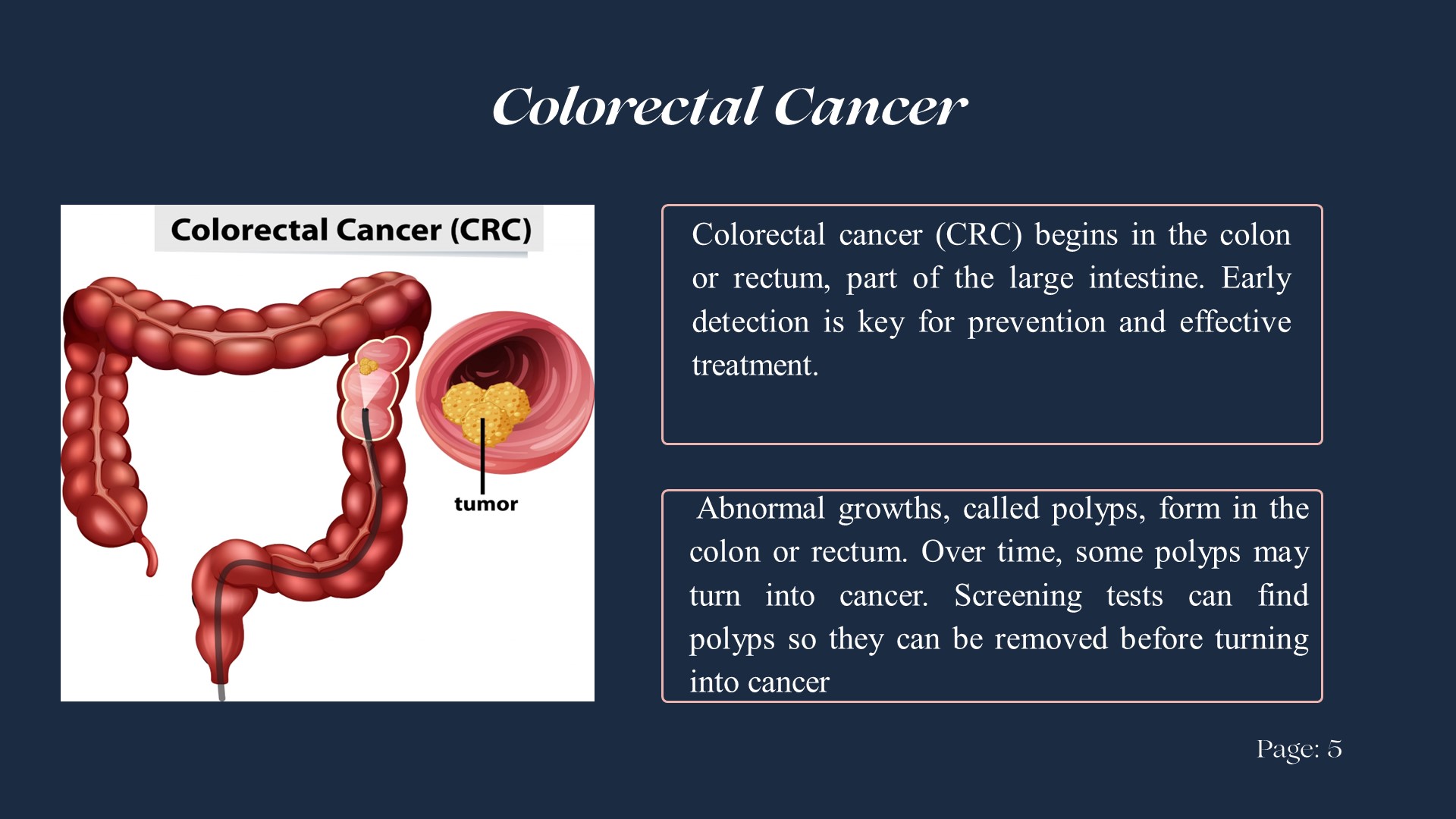 |
Colorectal Cancer
* Colorectal cancer (CRC) begins in the colon or rectum, part of the large intestine. Early detection is key for prevention and effective treatment.
* Abnormal growths, called polyps, form in the colon or rectum. Over time, some polyps may turn into cancer. Screening tests can find polyps so they can be removed before turning into cancer
|
|
ICACT20240405 Slide.04
[Big slide for presentation]
|
Chrome Text-to-Speach Click!! |
 |
Introduction,
Transfer Learning Approach: Deep transfer learning refines a pre-trained model for specific image tasks without starting from scratch, adjusting weights or using its layers for feature extraction.
Development: A supervised deep learning model, trained on pre-labeled data, automatically categorizes image regions in colorectal cancer detection and classification.
Addressing Limitations: Deep transfer learning alleviates healthcare professionals' burden by utilizing image feature extraction, reducing their workload significantly.
Research Goals: It aims to showcase the efficacy of deep transfer learning in automating colorectal cancer detection and accurately characterizing the disease.
|
|
ICACT20240405 Slide.03
[Big slide for presentation]
|
Chrome Text-to-Speach Click!! |
 |
Introduction
=> Significance of Early Diagnosis: to prevent the global growing of Colorectal cancer by early diagnosis
=> Power of Deep Learning: revolutionize medical image analysis, enhancing the accuracy and efficiency of cancer diagnosis
=> Colorectal Cancer Diagnosis: automated detection & characterization of colorectal cancer from histology samples
=> Challenges of Manual Examination: needed more time with high cost and computational complexity
|
|
ICACT20240405 Slide.02
[Big slide for presentation]
|
Chrome Text-to-Speach Click!! |
 |
OBJECTIVE
* Utilize the potential of advanced technology
* To automate tissue classification in colorectal cancer histology samples using deep transfer learning.
* Enhance the capabilities of widely used pre-trained models, such as ResNet50V2, VGG19, Xception, InceptionV3, and MobileNet, by achieving higher classification accuracy
|
|
ICACT20240405 Slide.01
[Big slide for presentation]
|
Chrome Text-to-Speach Click!! |
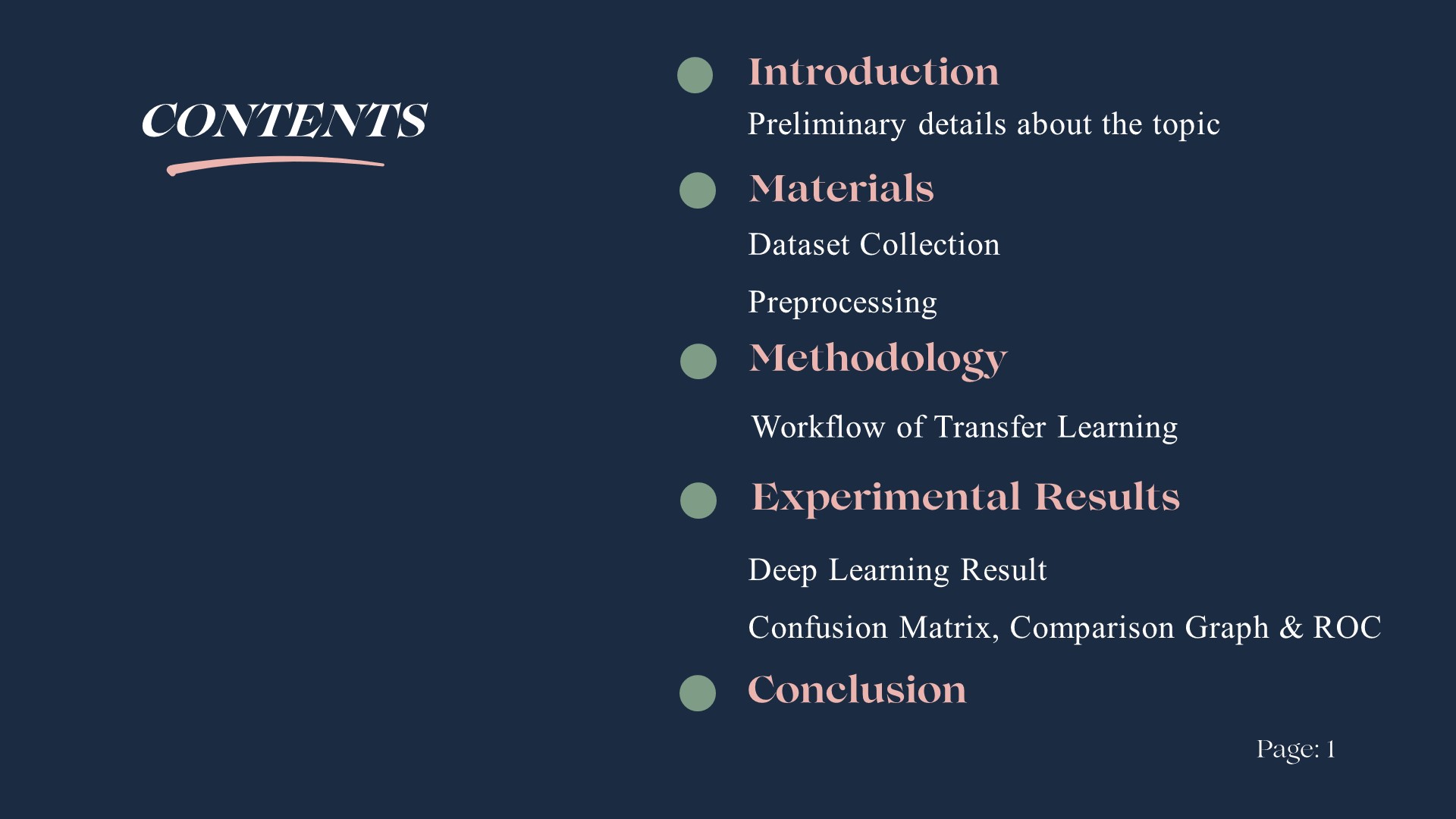 |
CONTENTS
* Introduction
* Materials
* Methodology
* Experimental Results
* Conclusion
|
|
ICACT20240405 Slide.00
[Big slide for presentation]
[YouTube] |
Chrome Text-to-Speach Click!! |
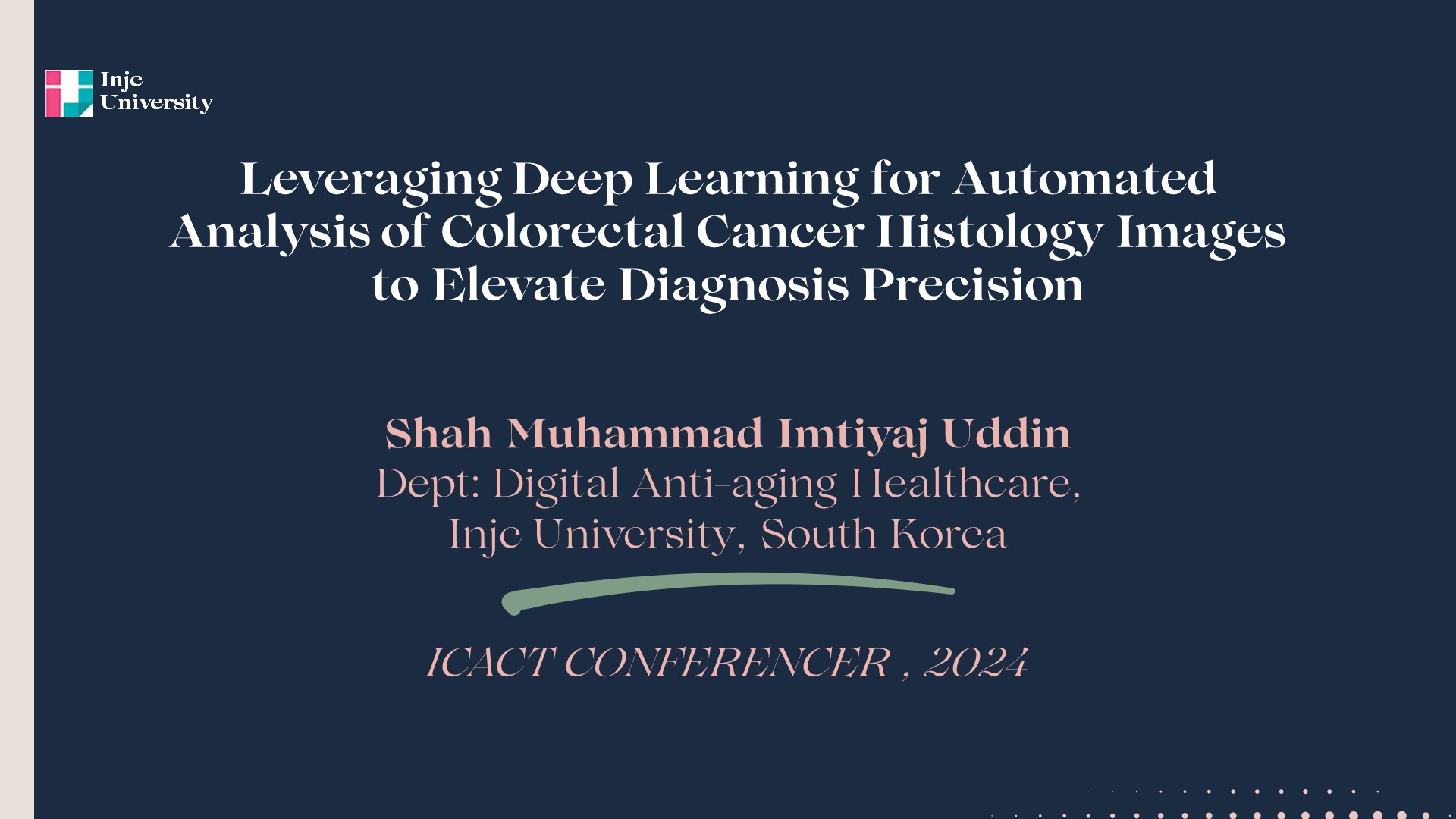 |
Title
|
















