 ICACT20240467 Slide.16
[Big slide for presentation]
[YouTube] |
Chrome Text-to-Speach Click!! |
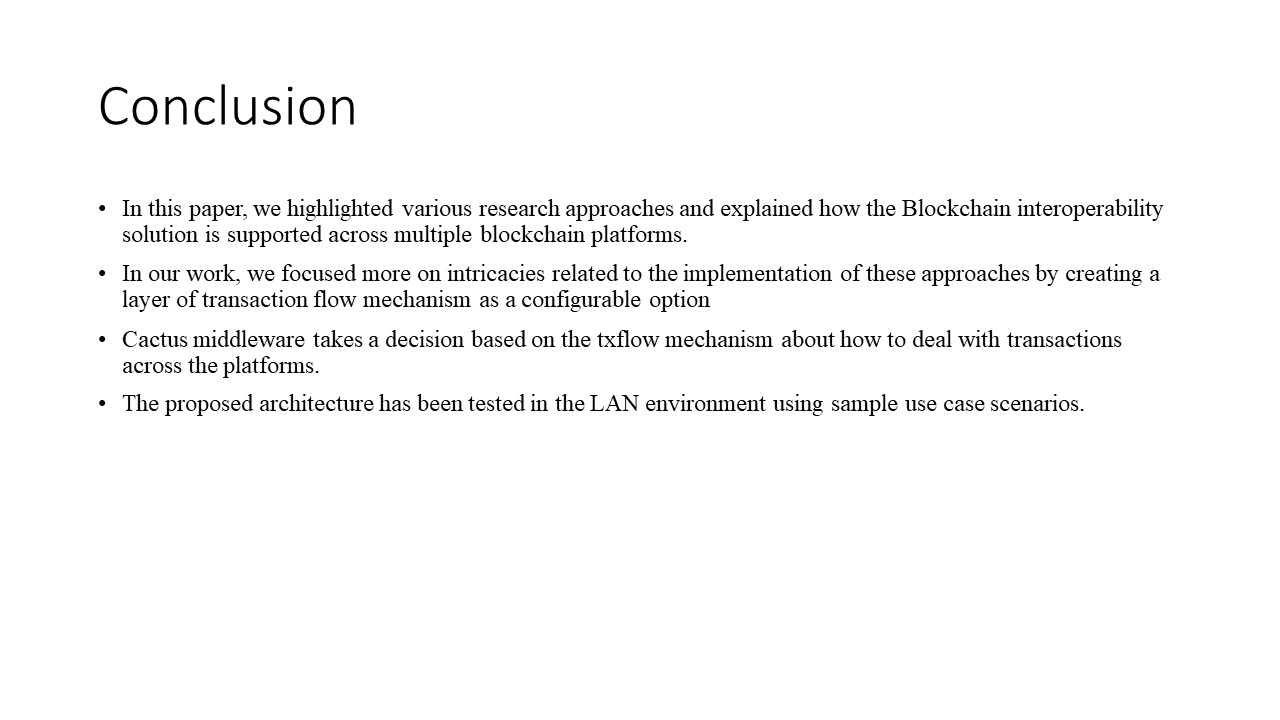 |
In our paper, we have highlighted a range of research approaches and elaborated on how blockchain interoperability solutions are supported across multiple blockchain platforms. Our work primarily focuses on the intricacies involved in the implementation of these approaches. We achieved this by introducing a layer of transaction flow mechanism as a configurable option. This allows Cactus middleware to make informed decisions based on the transaction flow mechanism regarding the handling of transactions across various platforms. Additionally, we have tested the proposed architecture in a LAN environment using sample use-case scenarios, demonstrating its practical applicability and effectiveness.
|
|
ICACT20240467 Slide.15
[Big slide for presentation]
[YouTube] |
Chrome Text-to-Speach Click!! |
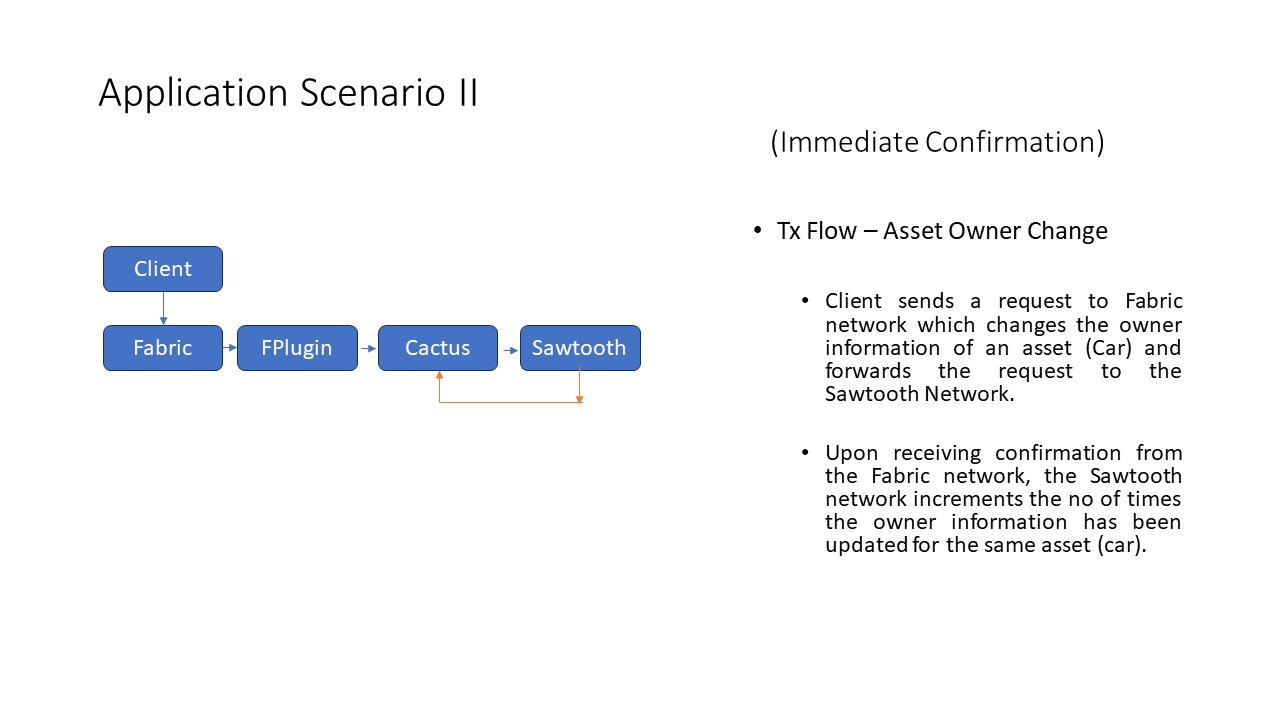 |
In the Asset Owner Change scenarios transaction flow, the process is initiated when a client sends a request to the Fabric network to update the owner information of an asset, such as a car, in its ledger. Once this update is completed, the Fabric network then forwards the request to the Sawtooth Network. Following this, upon receiving confirmation from the Fabric network, the Sawtooth network acts by incrementing the count of how many times the owner information has been updated for that particular asset, ensuring that a comprehensive record of ownership changes is maintained.
|
|
ICACT20240467 Slide.14
[Big slide for presentation]
[YouTube] |
Chrome Text-to-Speach Click!! |
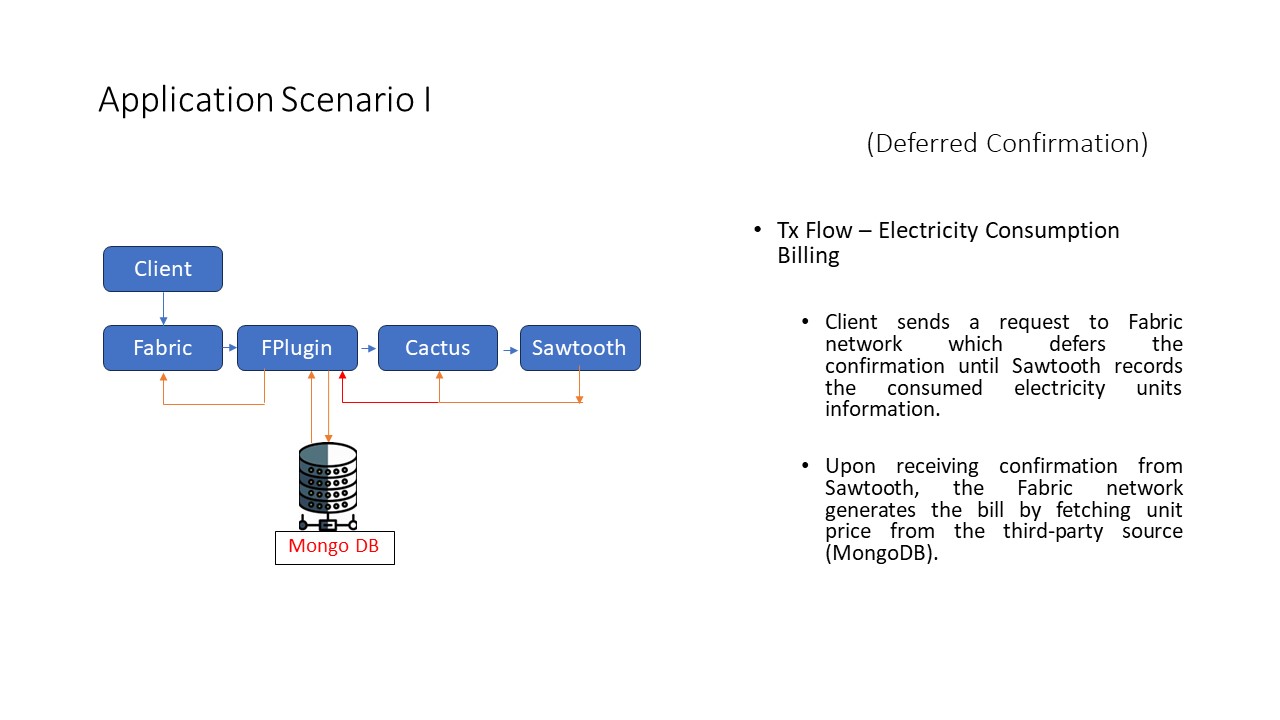 |
In the transaction flow scenario for electricity consumption billing, the process begins with the client sending a request to the Fabric network. This network defers the confirmation of the request until the Sawtooth network records information regarding the consumed electricity units. Once the Sawtooth network provides confirmation of these recorded units, the Fabric network proceeds to generate the bill. This billing process involves fetching the unit price from a third-party source, such as MongoDB, ensuring that the billing is accurate and based on the latest data.
|
|
ICACT20240467 Slide.13
[Big slide for presentation]
[YouTube] |
Chrome Text-to-Speach Click!! |
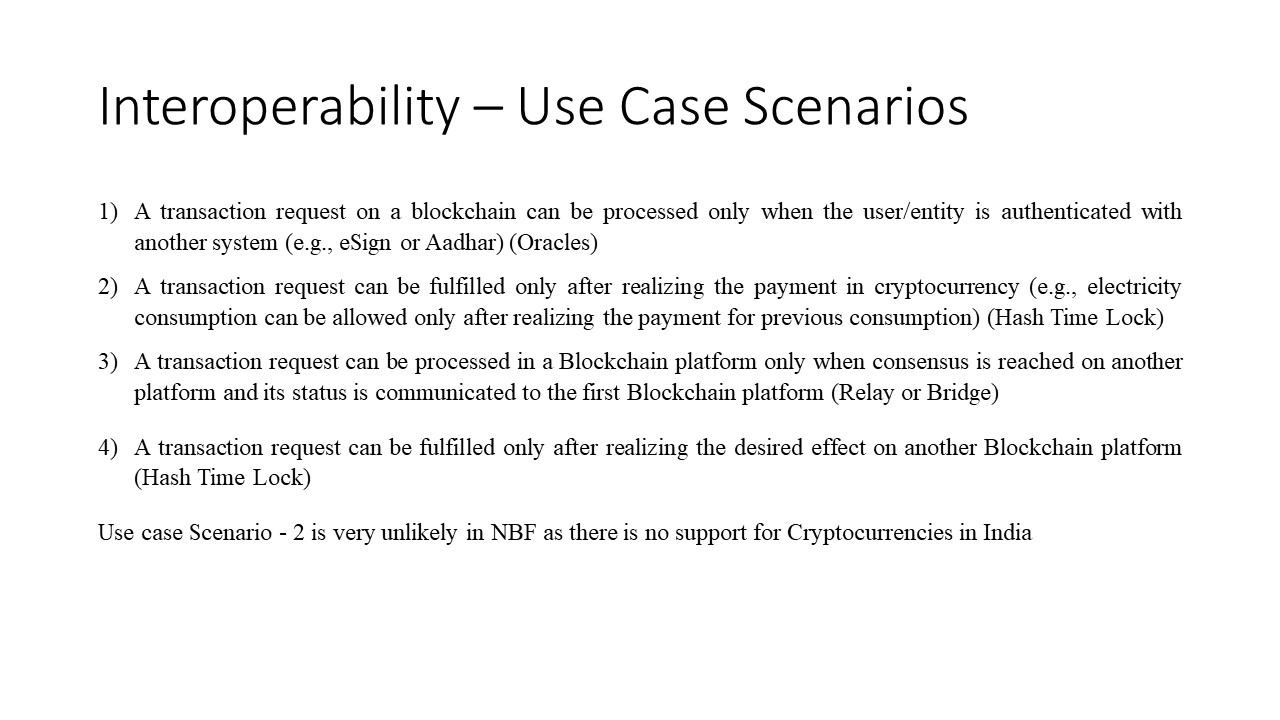 |
Blockchain technology allows for interoperability in various usecase scenarios, such as transaction processing based on authentication with other systems like eSign or Aadhar using Oracles. And the transactions like electricity consumption can only be fulfilled after payment is made in cryptocurrency, governed by Hash Time Lock. The transactions on one blockchain platform may only proceed once consensus is reached on another, communicated through Relay or Bridge. Fulfillment of a transaction request may depend on another blockchain platform, utilizing Hash Time Lock. However, scenarios like cryptocurrency payments are highly unlikely in contexts like the National Blockchain Framework(NBF).
|
|
ICACT20240467 Slide.12
[Big slide for presentation]
[YouTube] |
Chrome Text-to-Speach Click!! |
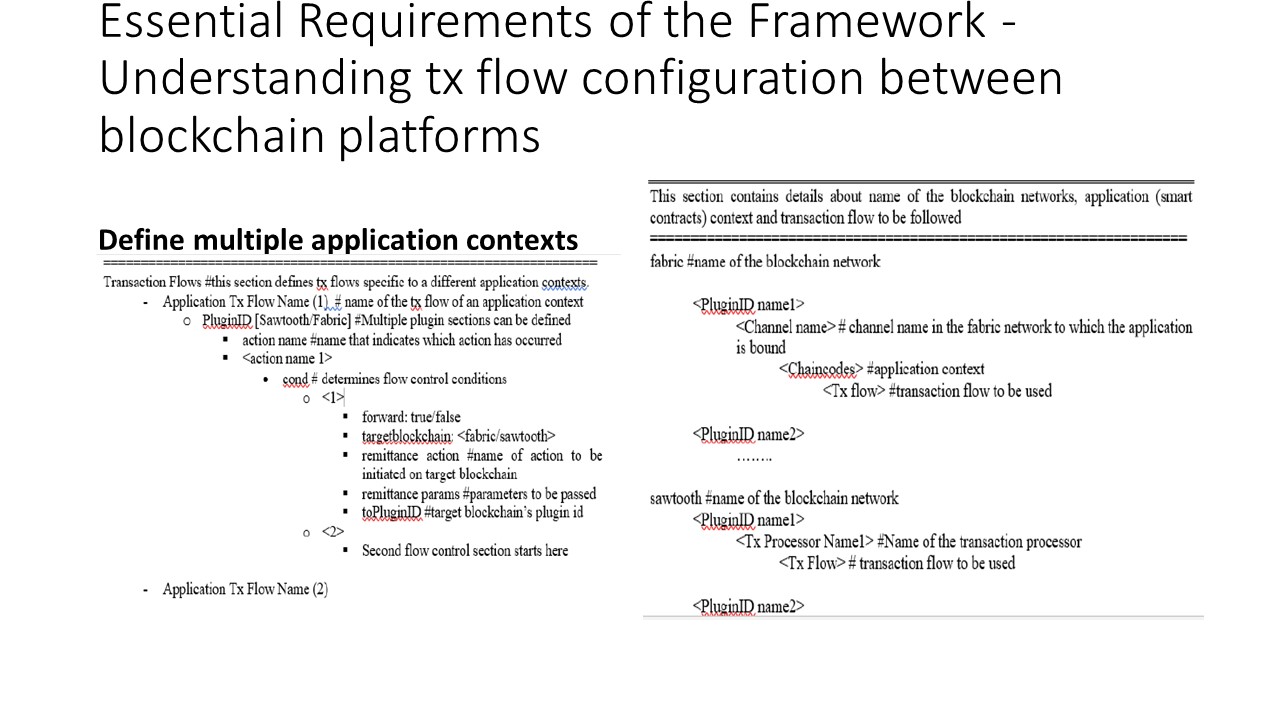 |
While defining multiple application contexts, it's feasible to configure distinct apps and their respective flows using TxFlow configuration. Each blockchain network involved must have its unique plugin ID, relevant smart contracts, and specific flows outlined in TxFlow. Crucially, for every event, a decision must be made on whether to forward it or not. If forwarding is chosen, then the destination blockchain's configuration details need to be furnished. For example, in the context of the Fabric blockchain, this would involve details about the channel, chain code, and the specific function to be invoked. To prevent indirect recursive calls to the same platform it's important to configure the 'nextseq' parameter appropriately to end the flow after a certain number of calls.
|
|
ICACT20240467 Slide.11
[Big slide for presentation]
[YouTube] |
Chrome Text-to-Speach Click!! |
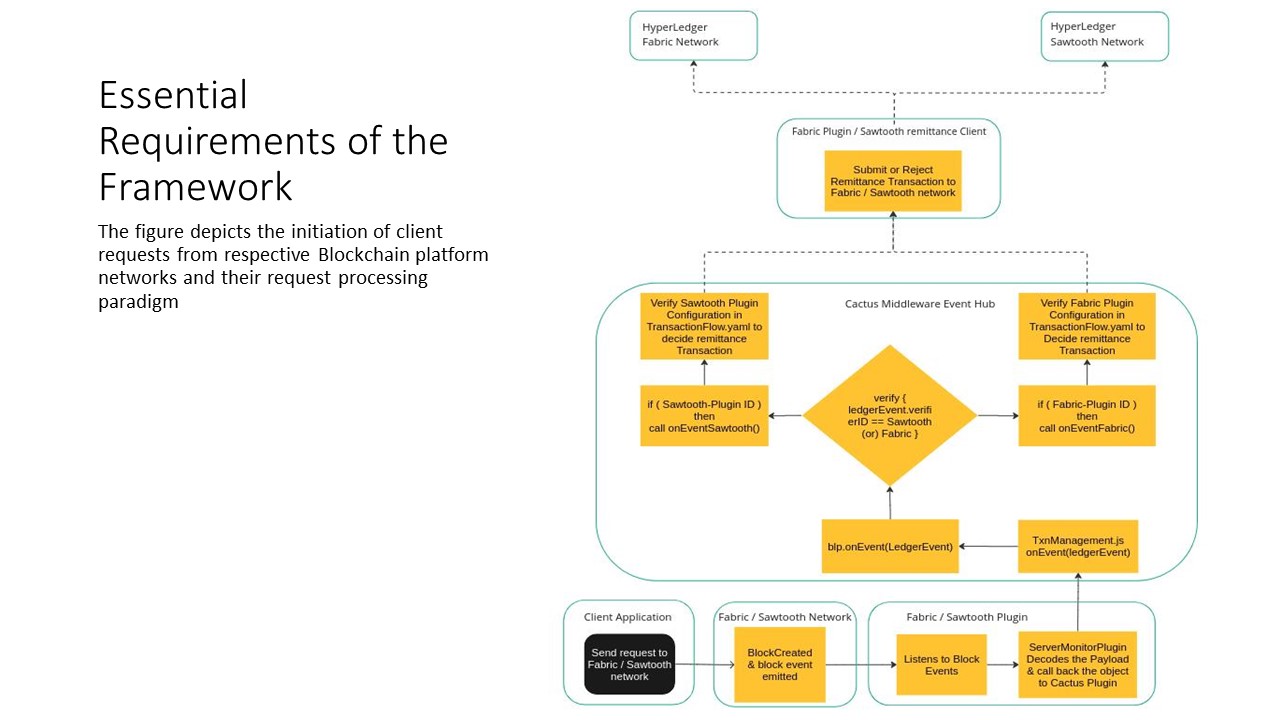 |
The figure provides a depiction of the initiation and processing of client requests within respective blockchain networks. This process begins with a client sending a request to one of the blockchain networks, leading to the creation of a block in that network and the emission of a block event. The corresponding plugin for the blockchain listens to this block event and subsequently notifies the cactus middleware event hub. The cactus middleware then verifies the plugin's authentication and reviews the transaction flow details outlined in TxFlow configuration. Depending on the established transaction flow mechanism, the remittance transaction is then submitted to the destination blockchain platform, in order to complete the process.
|
|
ICACT20240467 Slide.10
[Big slide for presentation]
[YouTube] |
Chrome Text-to-Speach Click!! |
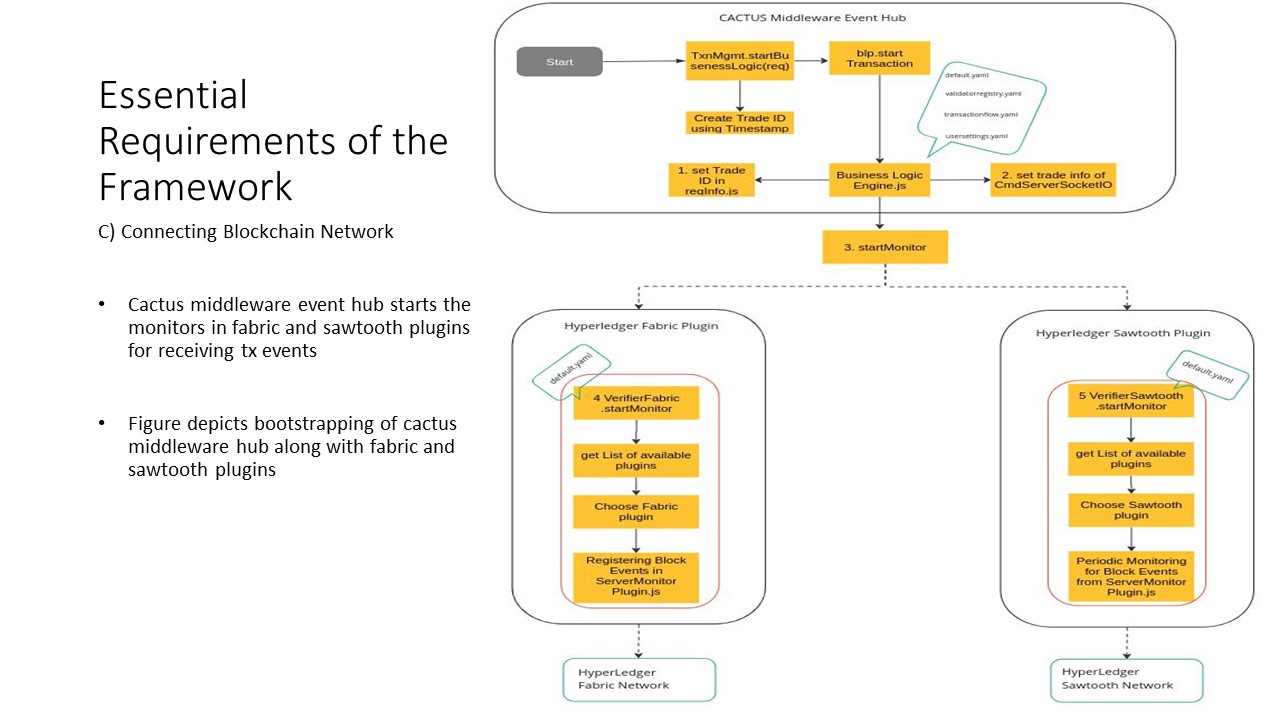 |
In the context of connecting blockchain networks, the illustration demonstrates the bootstrapping process of the cactus middleware event hub along with the fabric and sawtooth plugins. Once initiated, the cactus middleware event hub activates monitors within both the fabric and sawtooth plugins. These monitors are responsible for receiving and processing event information from the respective blockchain networks, thereby facilitating effective communication and synchronization between the different blockchain platforms.
|
|
ICACT20240467 Slide.09
[Big slide for presentation]
[YouTube] |
Chrome Text-to-Speach Click!! |
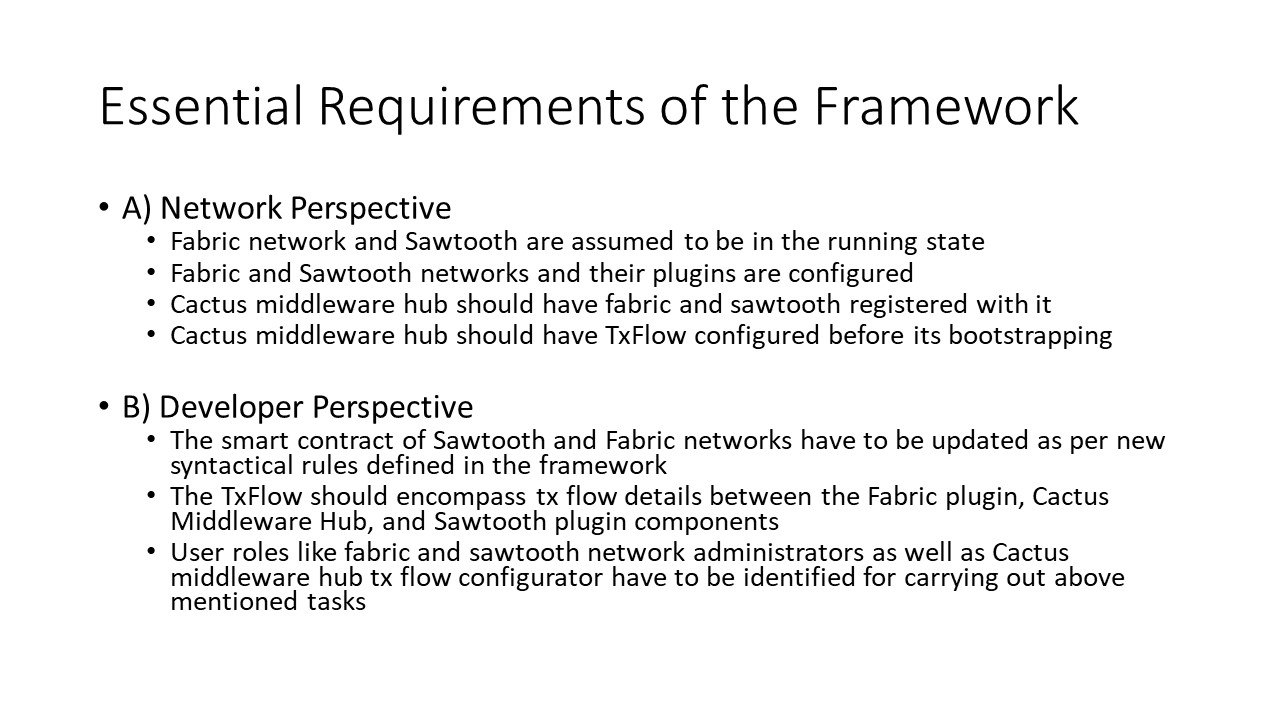 |
From a network perspective, the interoperability setup involves the Fabric and Sawtooth networks, which are assumed to be operational. The respective plugins for these networks are configured to establish connections with their networks and are registered with the Cactus middleware event hub. It's crucial that the Cactus middleware event hub has its Transaction Flow (TxFlow) configured before its bootstrapping process. On the developer side, there are specific requirements to be met. The smart contracts of both the Sawtooth and Fabric networks need to be updated in accordance with the new syntactical rules defined in the framework. The TxFlow must be configured to cover the transactional flow between the Fabric plugin, the Cactus Middleware Hub, and the Sawtooth plugin components
|
|
ICACT20240467 Slide.08
[Big slide for presentation]
[YouTube] |
Chrome Text-to-Speach Click!! |
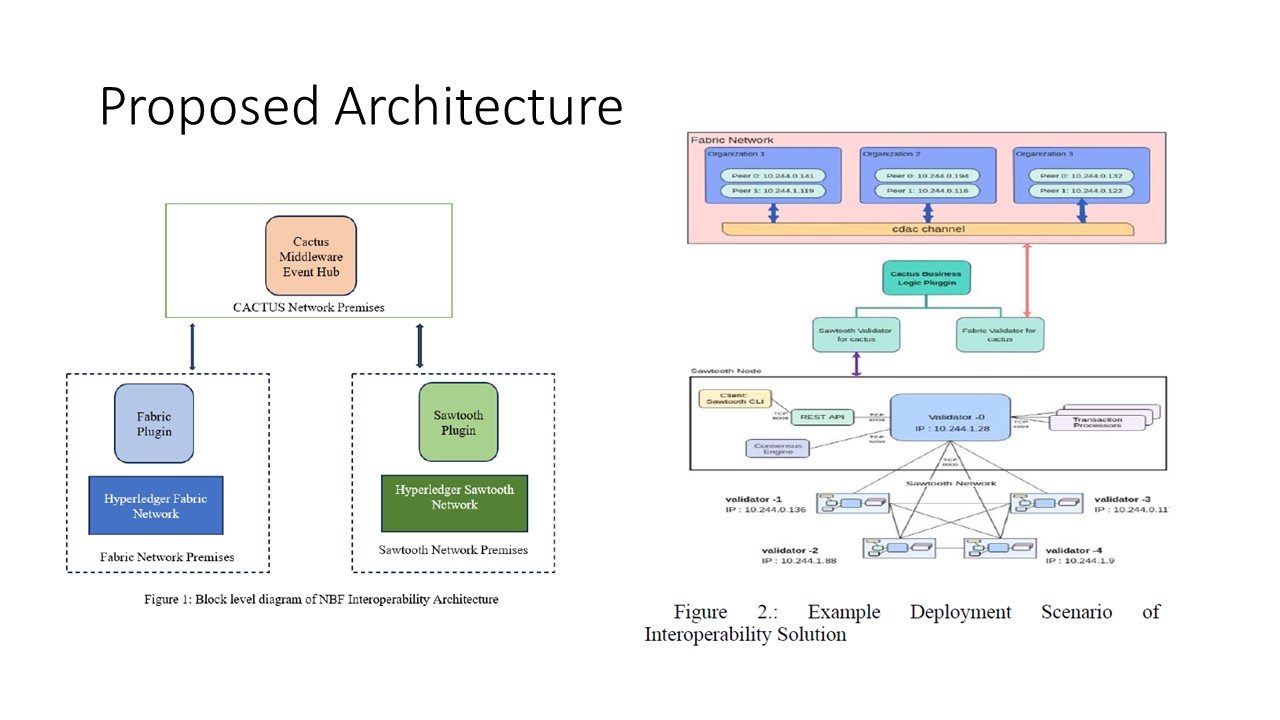 |
Figure 1 illustrates the block-level diagram of the NBF Interoperability solution, outlining its proposed architecture. In this setup, a Fabric network administrator is responsible for deploying the Fabric plugin component on their network, while a Sawtooth network administrator deploys the Sawtooth plugin component on theirs. Additionally, a cactus-based middleware event hub is installed at a location mutually agreed upon by both parties.
Figure 2 presents an example deployment scenario of NBF¡¯s Interoperability solution, specifically between Hyperledger Fabric and Hyperledger Sawtooth networks. The Fabric network in this scenario is composed of three organizations, each with two peers, all configured to use a single channel. In contrast, the Sawtooth network includes five validator nodes, each running on separate machine.
|
|
ICACT20240467 Slide.07
[Big slide for presentation]
[YouTube] |
Chrome Text-to-Speach Click!! |
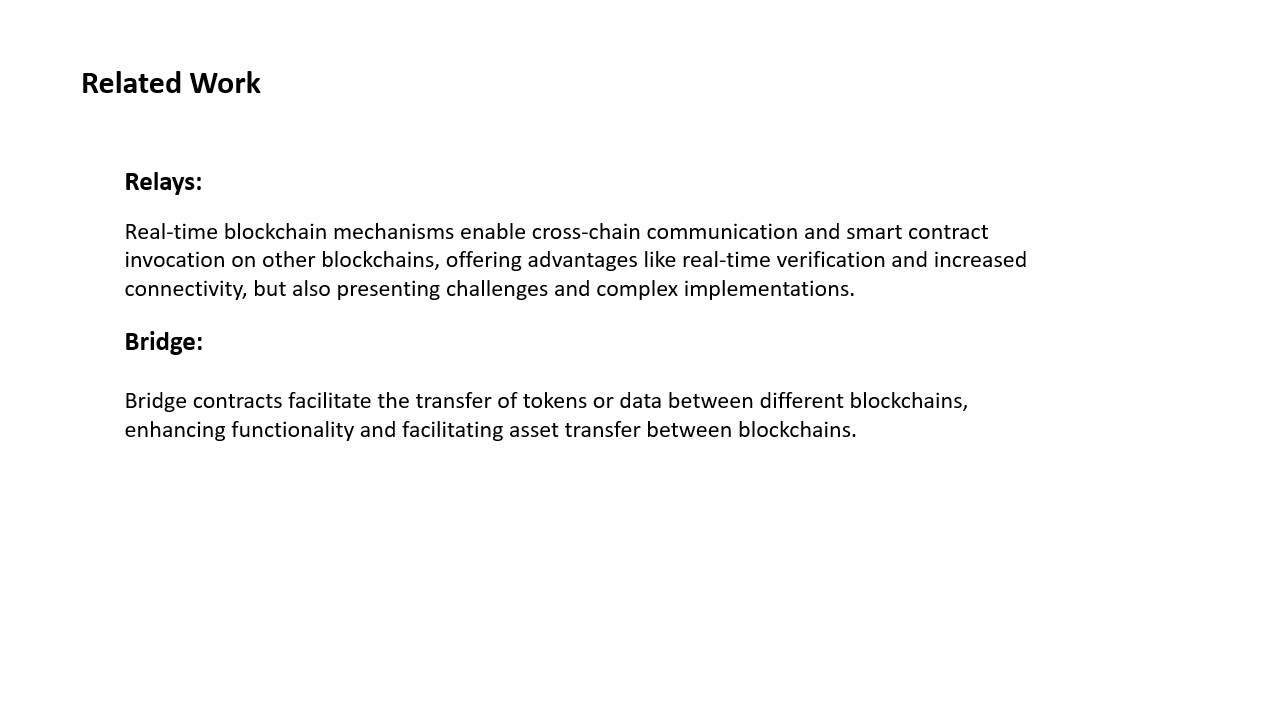 |
Blockchain interoperability involves Relays and Bridges. Relays facilitate real-time communication between different blockchain networks, allowing smart contracts to be executed across chain boundaries. They offer immediate transaction validation and a connected ecosystem. Bridges are specialized contracts that transport tokens or data between isolated blockchains, expanding the capabilities of blockchains. They enrich the blockchain ecosystem with interoperable functionality, paving the way for more integrated applications. However, ensuring security and robustness in these connections is crucial.
|
|
ICACT20240467 Slide.06
[Big slide for presentation]
[YouTube] |
Chrome Text-to-Speach Click!! |
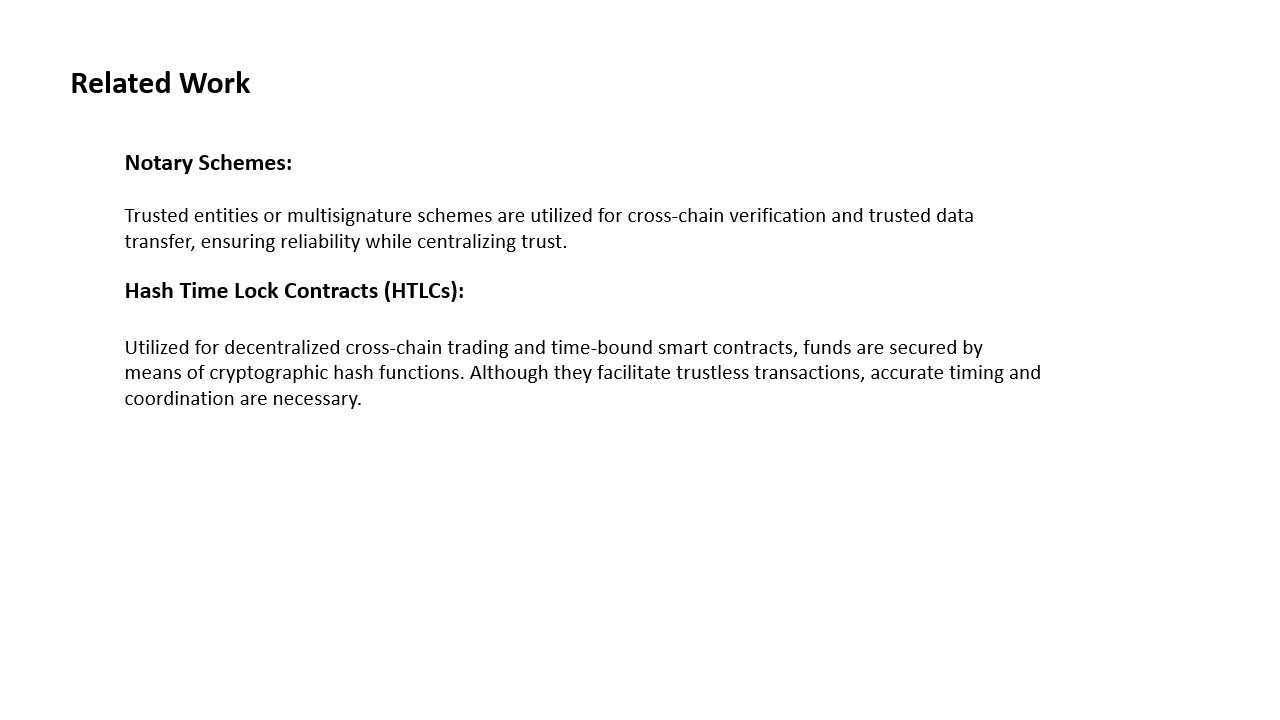 |
Notary Schemes and Hash Time Lock Contracts (HTLCs) are fundamentally linked to blockchain interoperability. Notary systems function as dependable intermediaries for transactions, providing trusted mechanisms for cross-chain verification and data transmission, they implement centralized trust. HTLCs, conversely, serve as the foundation for decentralized inter-chain trading, facilitating the exchange of cryptocurrencies in a secure and trustless manner, lacking of any intermediary structure.
|
|
ICACT20240467 Slide.05
[Big slide for presentation]
[YouTube] |
Chrome Text-to-Speach Click!! |
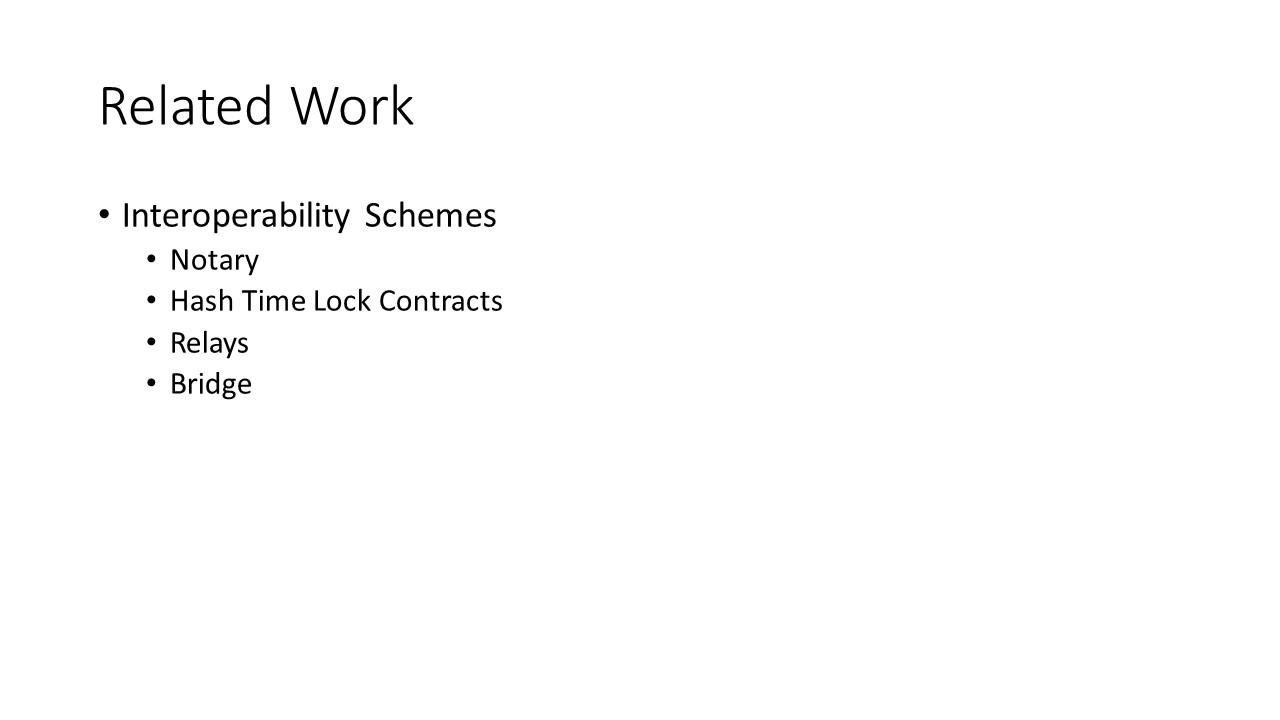 |
This exploration of blockchain technology focuses on the vital interoperability schemes that facilitate seamless communication and transactions across diverse blockchain networks. Notary schemes, acting as trusted entities, ensure secure and reliable transactions between blockchains. Hash Time Lock Contracts (HTLCs) provide a cryptographic means for secure, conditional cross-chain transactions. Relays, crucial for connecting blockchain networks, transmit information and validate transactions, thereby eliminating the need for third-party intermediaries. Bridges, as essential connectors, enable the smooth transfer of data and assets between different blockchain platforms, thereby enhancing the collective functionality and interconnectedness of various blockchain ecosystems.
|
|
ICACT20240467 Slide.04
[Big slide for presentation]
[YouTube] |
Chrome Text-to-Speach Click!! |
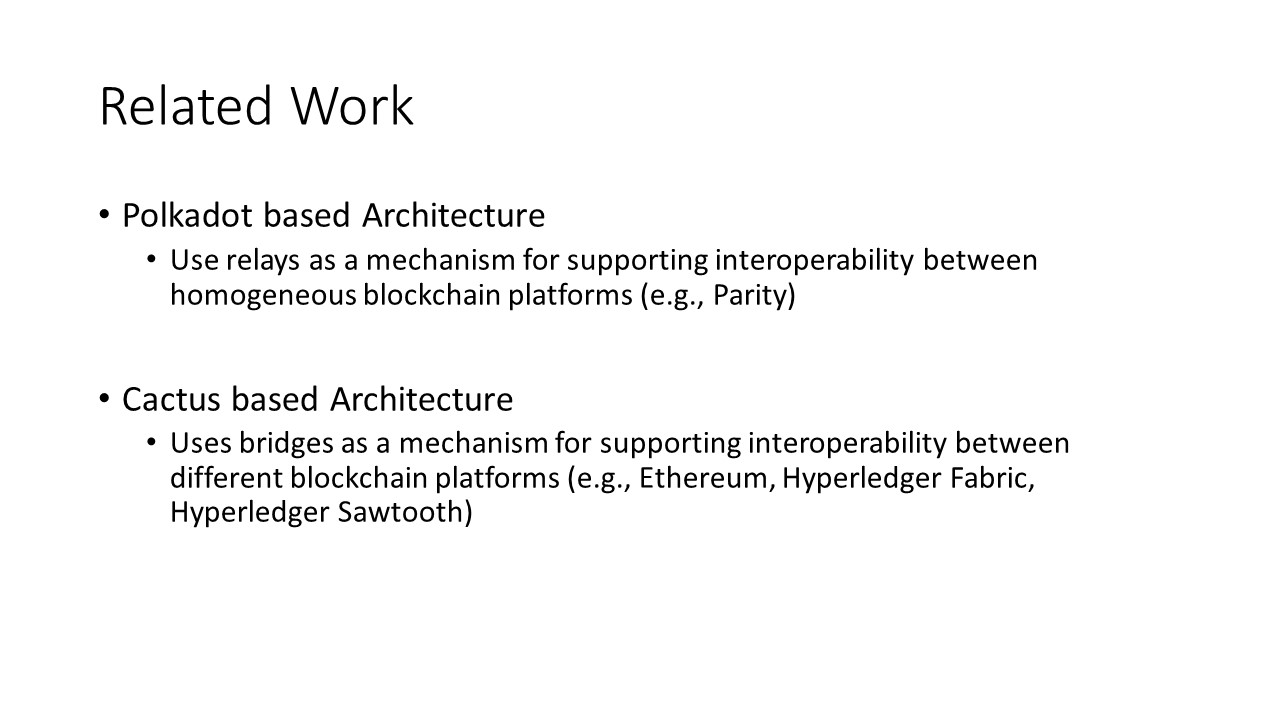 |
The Polkadot-based architectural framework employs relays as a key mechanism to support interoperability among homogeneous blockchain platforms, notably those built on Parity. In contrast, the Cactus Framework aims to achieve interoperability across diverse blockchain platforms such as Ethereum, Hyperledger Fabric, and Hyperledger Sawtooth, by utilizing 'bridges' as its core mechanism. These bridges facilitate seamless interoperability between these varied blockchain environments, showcasing the framework's adaptability to different blockchain architectures.
|
|
ICACT20240467 Slide.03
[Big slide for presentation]
[YouTube] |
Chrome Text-to-Speach Click!! |
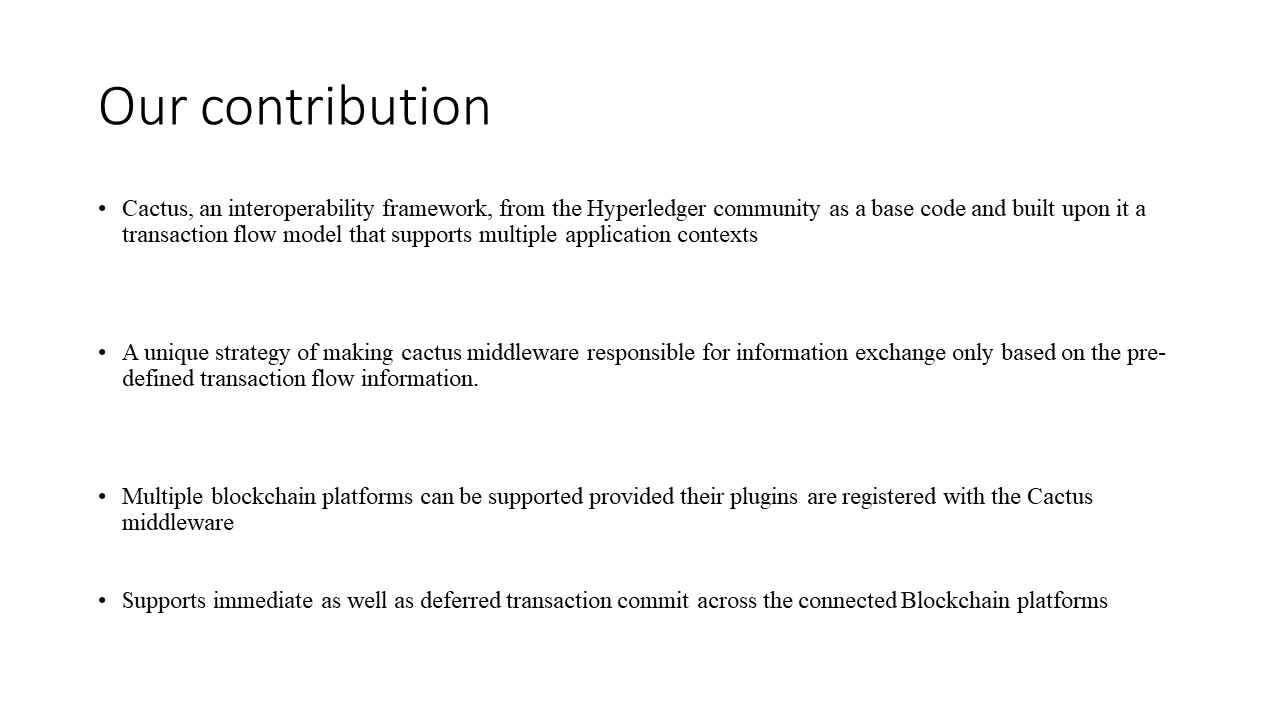 |
Cactus serves as a foundational code upon which we have constructed a versatile transaction flow model supporting a variety of application contexts. This model is specifically designed to enhance the flexibility and efficiency of transactions across different blockchain networks, catering to diverse business needs and scenarios. Our focus is on demonstrating how Cactus bridges the gap between disparate blockchain systems through its transaction flow model, enabling seamless and secure interactions.
The ability to support immediate and deferred transaction commits across blockchain platforms registered with the Catus middleware event hub. This capability enhances transactional flexibility and efficiency in a multi-blockchain environment.
|
|
ICACT20240467 Slide.02
[Big slide for presentation]
[YouTube] |
Chrome Text-to-Speach Click!! |
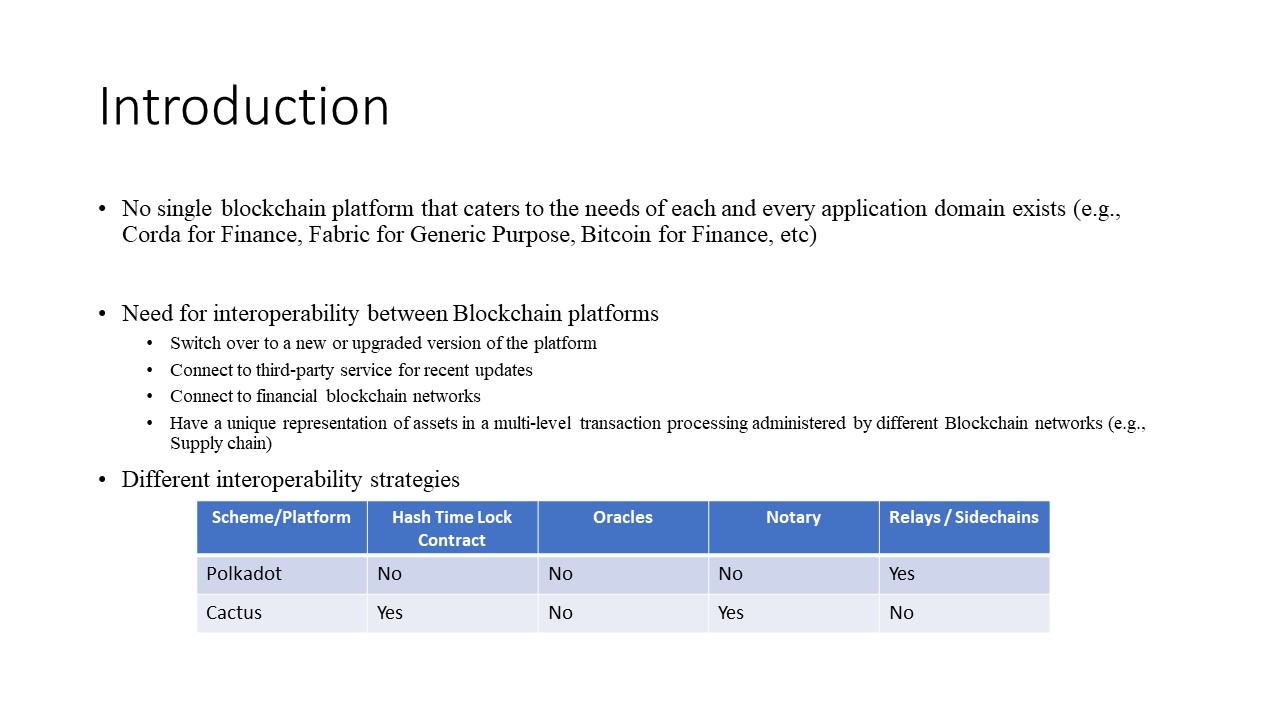 |
Blockchain technology offers various platforms designed for specific domains like finance and supply chain management, but there is a lack of a universal blockchain platform. This highlights the need for interoperability among these platforms, especially as the digital world becomes more interconnected. This analysis examines blockchain interoperability strategies, focusing on Polkadot and Cactus. Polkadot uses Relays and Sidechains for interoperability, unlike Oracles or Hash Time Lock Contracts. Cactus supports Hash Time Lock and Notary Scheme, offers flexibility, and integrates with other blockchain platforms. It is crucial to choose the right interoperability strategy based on specific use cases and requirements.
|
|
ICACT20240467 Slide.01
[Big slide for presentation]
[YouTube] |
Chrome Text-to-Speach Click!! |
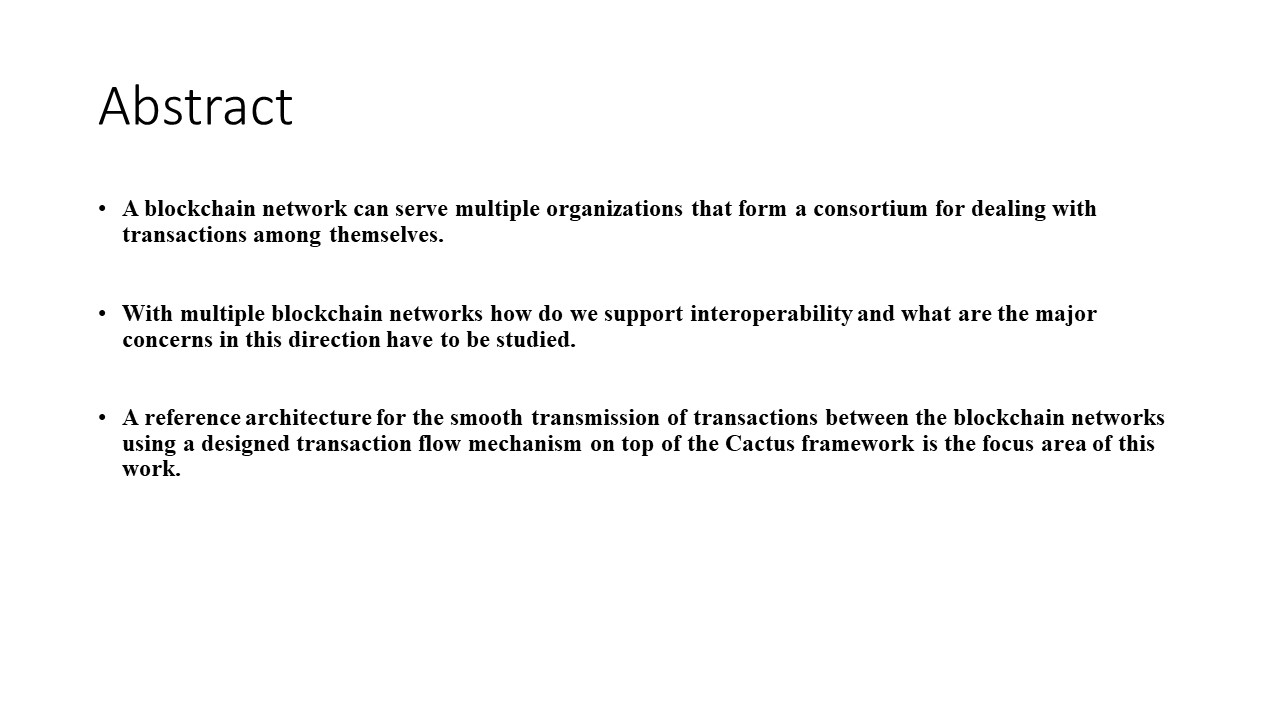 |
This study explores the importance of interoperability in blockchain networks, particularly emphasizing consortiums comprising multiple organizations. Our research offers a new reference design that will enable seamless communication between multiple networks through interoperability. This design provides a distinctive network connection and transaction management method by utilizing the robust Cactus framework from the Linux Foundation.
The primary focus is on how blockchain technology can be harnessed to serve these consortiums, offering an innovative, secure, and efficient means of handling inter-organizational transactions.
The introduction of a novel reference architecture specifically designed to transmit transactions between various blockchain networks efficiently. This architecture is underpinned by a meticulously designed transaction flow mechanism built on the robust Cactus framework.
|
|
ICACT20240467 Slide.00
[Big slide for presentation]
[YouTube] |
Chrome Text-to-Speach Click!! |
 |
Hi~
|
















