 ICACT20250244 Slide.21
[Big slide for presentation] |
Chrome Text-to-Speach Click!! |
 |
Thank you for your attention.
|
|
ICACT20250244 Slide.20
[Big slide for presentation]
|
Chrome Text-to-Speach Click!! |
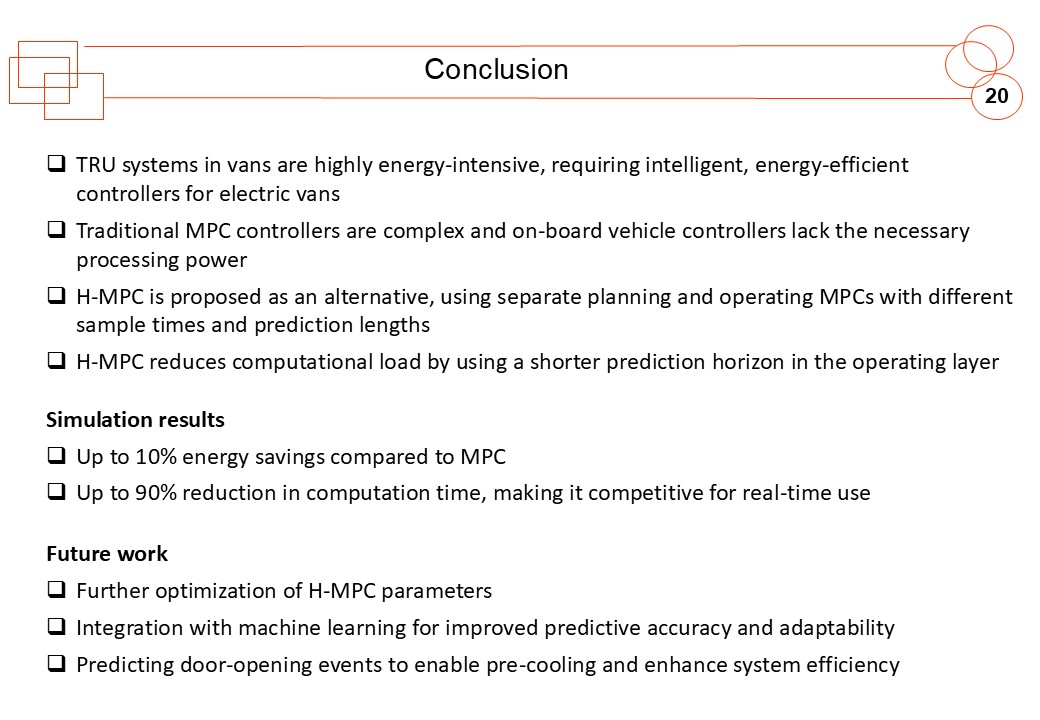 |
Transport Refrigeration Units (TRUs) in vans consume a significant amount of energy, hence an energy-efficient controller is essential. Traditional MPC controllers are computationally demanding, and onboard vehicle controllers often lack the necessary processing power.
To address this, Hierarchical MPC (H-MPC) is proposed, which separates planning and operating control with different sampling times and prediction horizons.
From our simulation results, we found: Up to 10% energy savings compared to traditional MPC. And up to 90% reduction in computation time, making it competitive for real-time applications.
Future work includes further optimizing H-MPC parameters. Integrating machine learning to improve predictive accuracy and adaptability. Predicting door-opening events to enable pre-cooling and enhance system efficiency.
|
|
ICACT20250244 Slide.19
[Big slide for presentation]
|
Chrome Text-to-Speach Click!! |
 |
Finally, let’s conclude.
|
|
ICACT20250244 Slide.18
[Big slide for presentation]
|
Chrome Text-to-Speach Click!! |
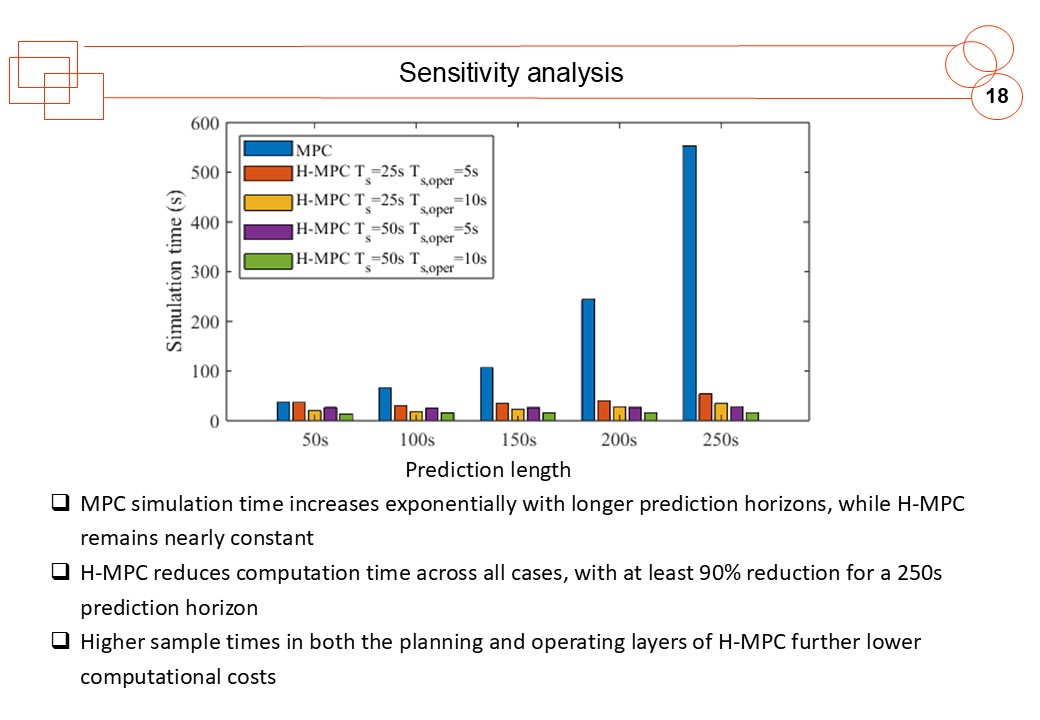 |
Regarding computation time, the MPC simulation time increases significantly with longer prediction horizons, while Hierarchical MPC remains almost constant. Hierarchical MPC consistently reduces computational costs, and using higher sample times in both layers further lowers computation time.
|
|
ICACT20250244 Slide.17
[Big slide for presentation]
|
Chrome Text-to-Speach Click!! |
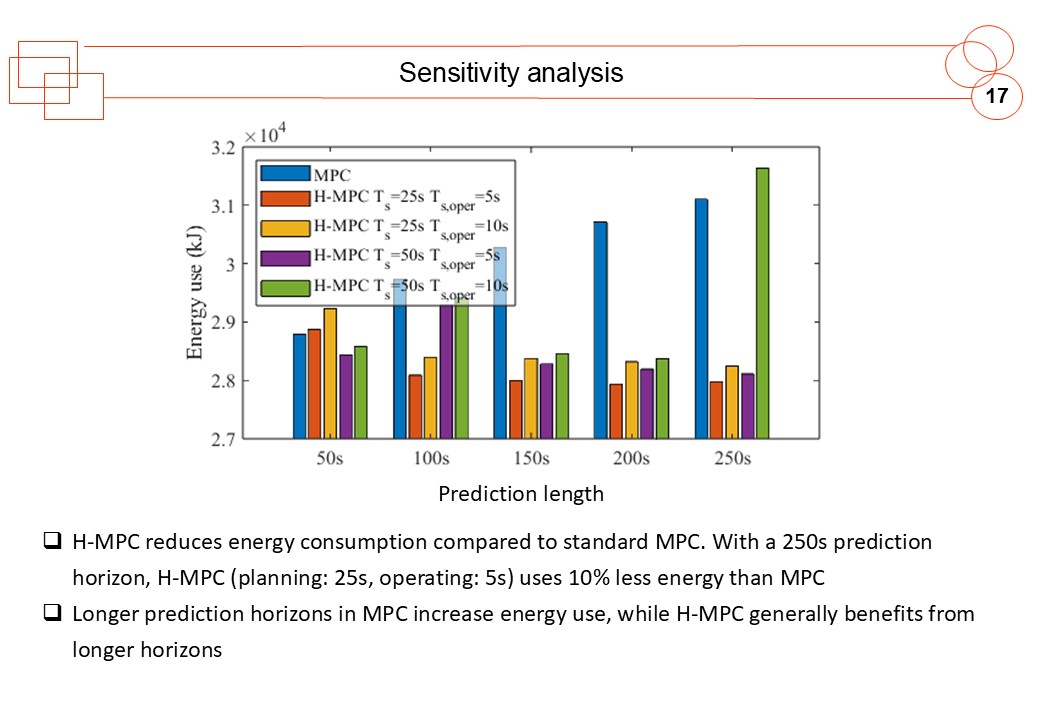 |
Since MPC parameters influence control performance, we conducted a sensitivity analysis. We tested different prediction lengths ranging from 50s to 250s. Within the same prediction length, we also varied the sampling times for the planning and operating layers in Hierarchical MPC.
In terms of energy consumption, Hierarchical MPC is more energy efficient. For example, at a 250s prediction length, energy consumption is reduced by about 10%. Longer prediction horizons in Nonlinear MPC lead to higher energy consumption, whereas Hierarchical MPC generally benefits from longer horizons.
|
|
ICACT20250244 Slide.16
[Big slide for presentation]
|
Chrome Text-to-Speach Click!! |
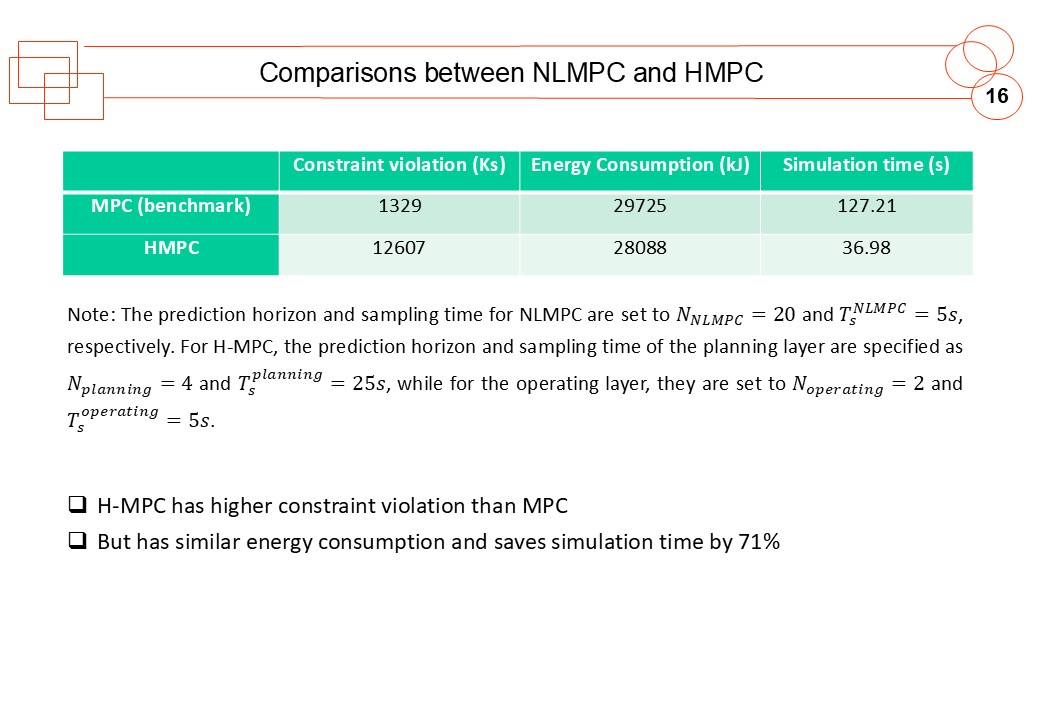 |
This table summarizes the benefits of Hierarchical MPC. It shows that execution time is reduced by about 70% compared to Nonlinear MPC.
|
|
ICACT20250244 Slide.15
[Big slide for presentation]
|
Chrome Text-to-Speach Click!! |
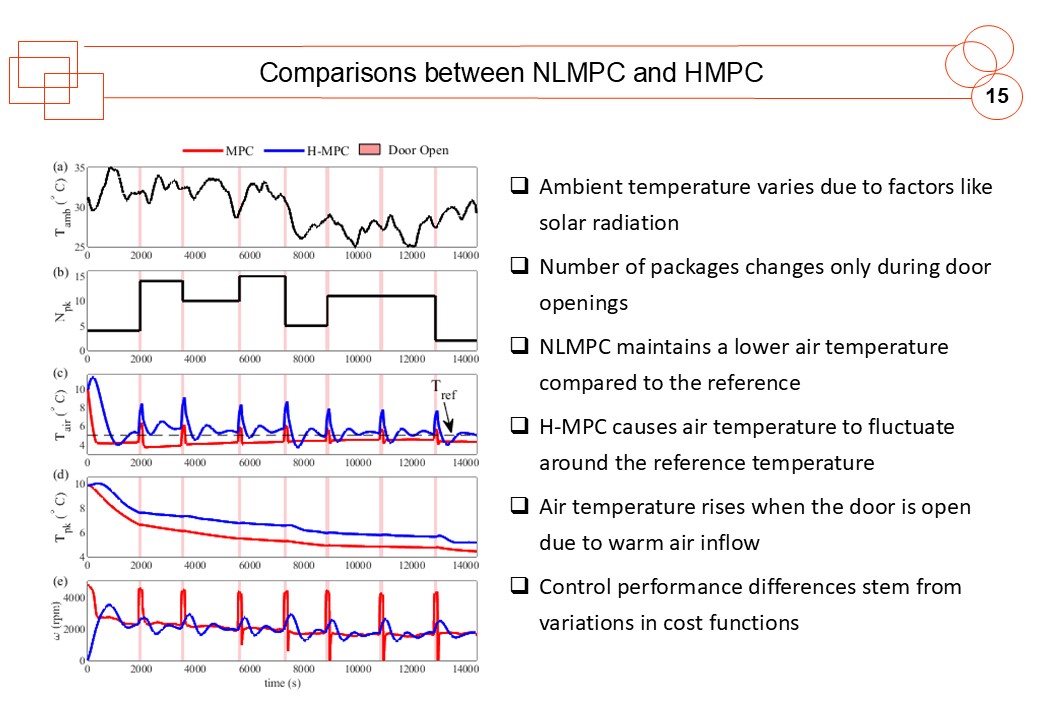 |
In this figure: The first curve represents ambient temperature, which varies between 25–35°C due to solar radiation. The second curve shows the number of packages, which changes when the van doors open. The third curve compares the cargo space temperature under both MPC controllers. We can see that Nonlinear MPC maintains a lower air temperature compared to the reference, whereas Hierarchical MPC allows the cargo space temperature to fluctuate around the reference. These differences come from variations in the cost functions.
|
|
ICACT20250244 Slide.14
[Big slide for presentation]
|
Chrome Text-to-Speach Click!! |
 |
Now, let’s look at the simulation results.
|
|
ICACT20250244 Slide.13
[Big slide for presentation]
|
Chrome Text-to-Speach Click!! |
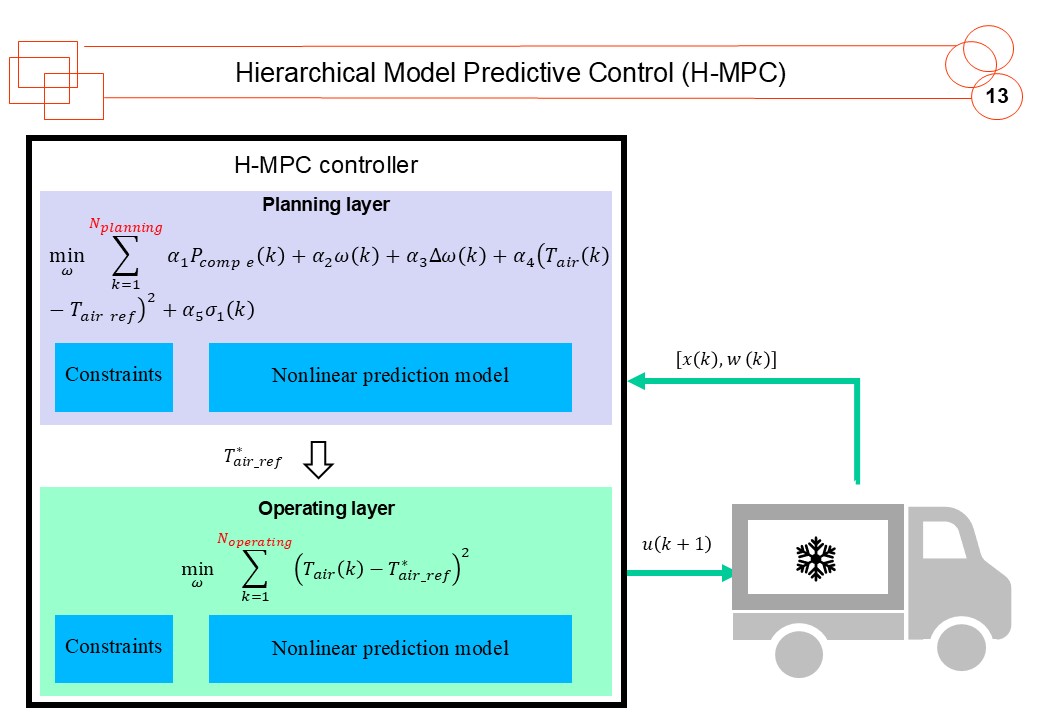 |
The second controller we developed is Hierarchical MPC (H-MPC). In this structure, we use two MPC controllers: one in the planning layer and another in the operating layer. The upper (planning) layer performs long-horizon optimization, prioritizing energy savings. The lower (operating) layer focuses on short-horizon control, tracking the optimal cargo space temperature trajectory, which was produced from the planning layer. The constraints and prediction models in Hierarchical MPC are the same as in Nonlinear MPC. But one very interesting thing is that the two MPC controllers on both layers can use different prediction horizons and sampling times. This can help to reduces computational intensity.
|
|
ICACT20250244 Slide.12
[Big slide for presentation]
|
Chrome Text-to-Speach Click!! |
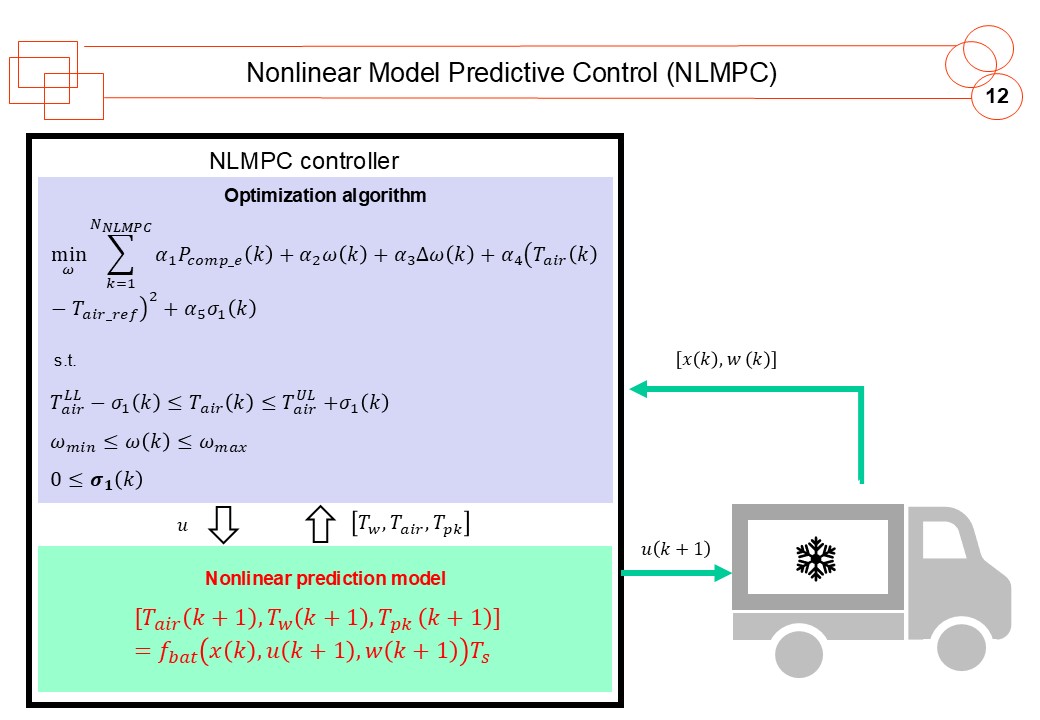 |
In this work, we developed two MPC controllers. The first one is Nonlinear MPC (NLMPC). In MPC, there is an optimization algorithm and a prediction model. The controller takes measurements from the system, and the prediction model estimates future temperature trajectories within a finite prediction horizon. These predicted states are then used to minimize a cost function, and the optimal control action is applied to the plant. This Nonlinear MPC serves as a benchmark for comparison.
|
|
ICACT20250244 Slide.11
[Big slide for presentation]
|
Chrome Text-to-Speach Click!! |
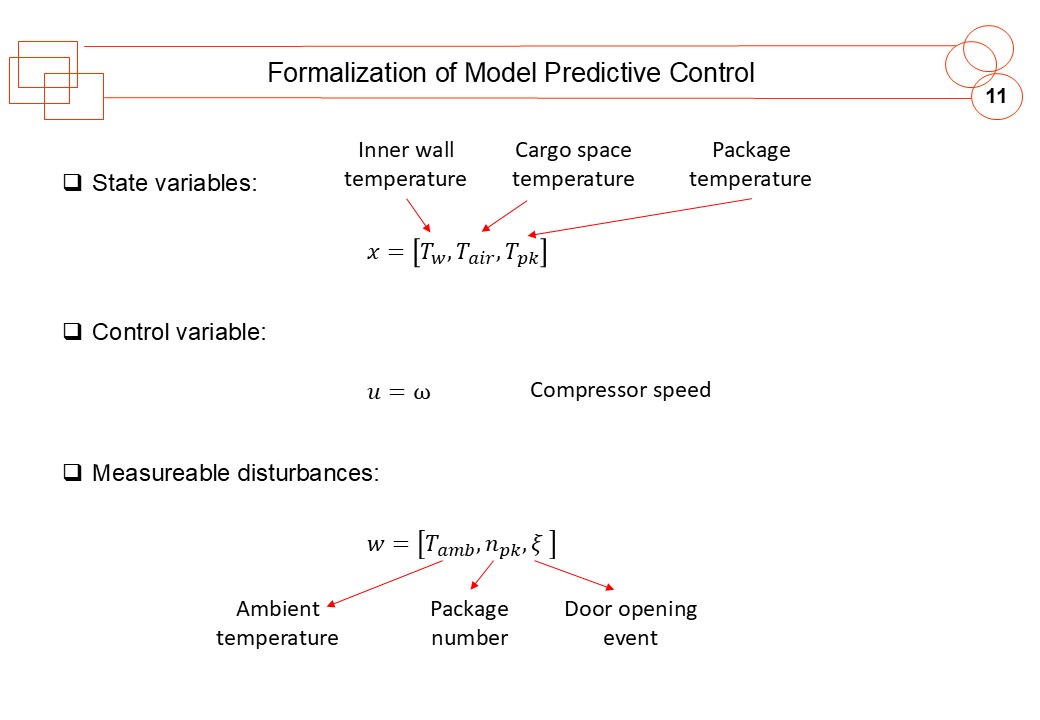 |
In this optimization problem, we consider three states: the inner wall temperature, cargo space temperature, and package temperature. The control variable is the compressor speed, while the disturbances include ambient temperature, the number of packages, and door-opening events.
|
|
ICACT20250244 Slide.10
[Big slide for presentation]
|
Chrome Text-to-Speach Click!! |
 |
Now, let’s move on to Model Predictive Control (MPC).
|
|
ICACT20250244 Slide.09
[Big slide for presentation]
|
Chrome Text-to-Speach Click!! |
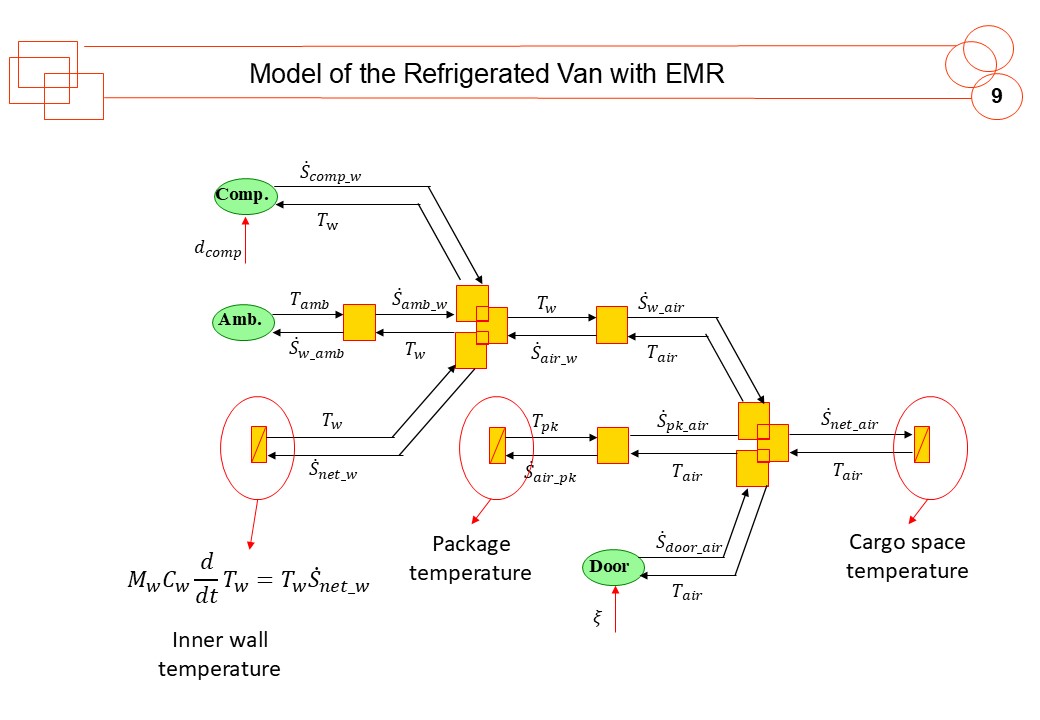 |
This is the EMR-based model of the refrigerated van. Here, the package temperature is influenced by the cargo space temperature. The cargo space temperature is affected by the inner wall temperature and door opening events since packages are loaded and unloaded at certain stops. The inner wall temperature depends on the ambient temperature and the compressor’s operation. In this diagram, each block represents a specific relationship. For example, this block represents the inner wall temperature calculation, where the input is the entropy flow rate, and the output is its integration in time, which is temperature. Due to time constraints, I won’t go into the details of this scheme, but more information can be found in the full paper.
|
|
ICACT20250244 Slide.08
[Big slide for presentation]
|
Chrome Text-to-Speach Click!! |
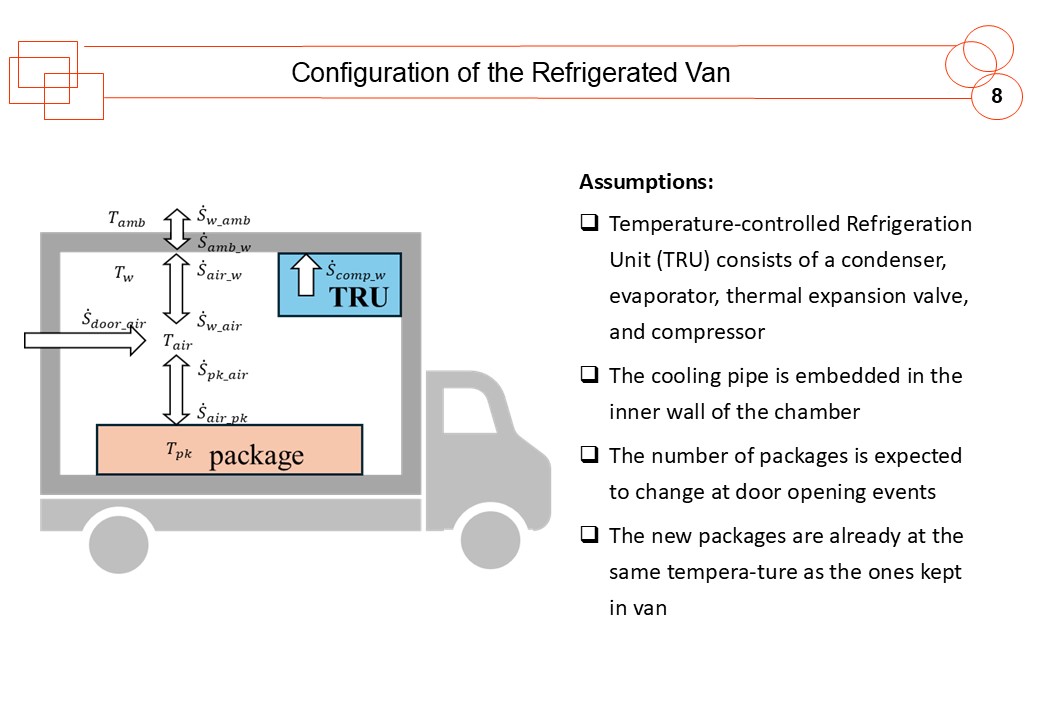 |
This is the configuration of the refrigerated van. We assume that the van’s cargo space is controlled by a transport refrigeration unit (TRU), which consists of a condenser, evaporator, thermal expansion valve, and compressor. The cooling pipe is embedded in the inner wall of the cargo chamber. The number of packages inside the van changes when the doors are opened. However, we assume that new packages are already at the same temperature as those inside the van.
|
|
ICACT20250244 Slide.07
[Big slide for presentation]
|
Chrome Text-to-Speach Click!! |
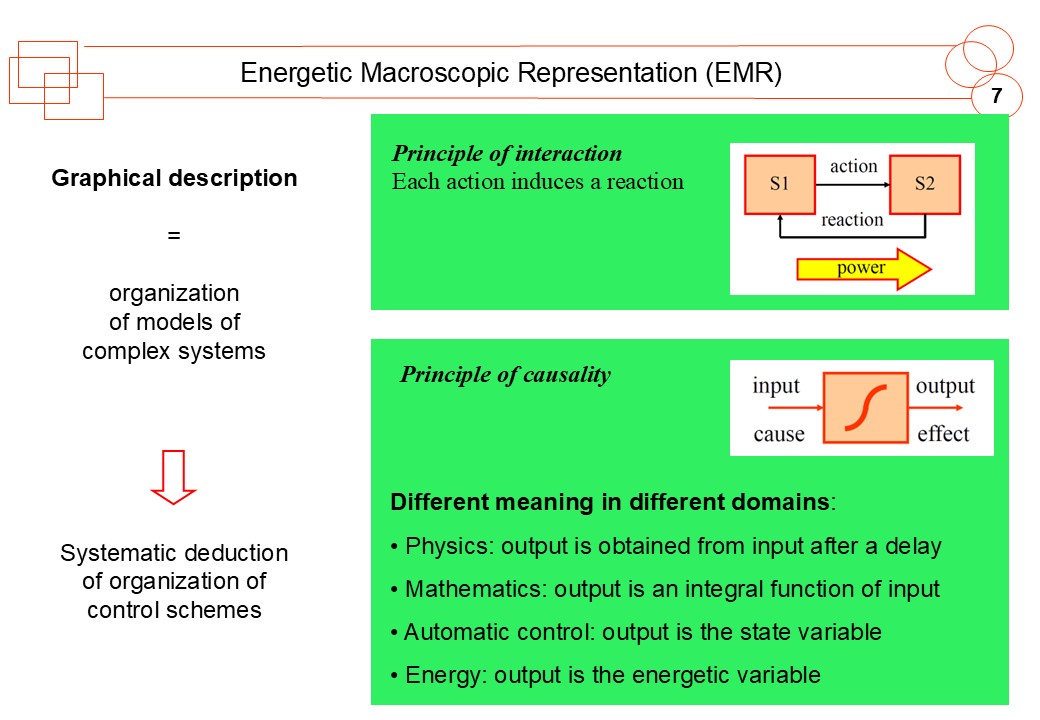 |
In this work, we use Energetic Macroscopic Representation (EMR) to organize the model. EMR is a graphical tool for describing complex multi-physical systems. It can highlight the important couplings that distribute energy and system control can be systematically deduced based on inversion rules. In EMR, two key principles must be followed:
The first one is the interaction principle. Suppose we have two subsystems, S1 and S2. If S1 acts on S2, there must be a reaction from S2 back to S1. The product of action and reaction represents the power exchange between these two subsystems. The second principle is causality, which means the output should be the integration of the input, this always introducing a delay between output and input.
|
|
ICACT20250244 Slide.06
[Big slide for presentation]
|
Chrome Text-to-Speach Click!! |
 |
The second part of this presentation is about modelling of the refrigerated van.
|
|
ICACT20250244 Slide.05
[Big slide for presentation]
|
Chrome Text-to-Speach Click!! |
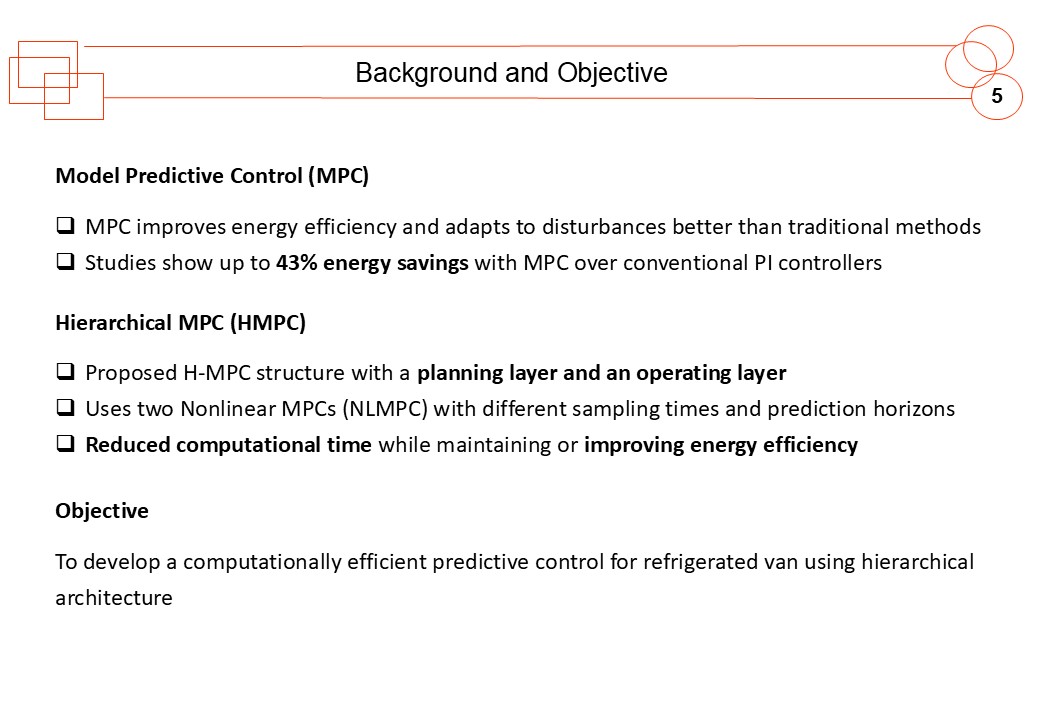 |
To tackle with this challenge, Model Predictive Control provides a promising way. It is powerful to treat the constrained optimization problems that have multi-inputs and multi outputs. It can improve energy efficiency and adapt better to disturbances compared to traditional methods. Studies show that MPC can achieve up to 43% energy savings compared to conventional PI controllers. To further enhance performance, Hierarchical MPC (H-MPC) structure was proposed, which consists of a planning layer and an operating layer. This approach uses two MPC controllers with different sampling times and prediction horizons on both layers. It helps reduce computational time while maintaining or even improving energy efficiency. Our goal is to develop a computationally efficient predictive control system for refrigerated vans using this hierarchical architecture.
|
|
ICACT20250244 Slide.04
[Big slide for presentation]
|
Chrome Text-to-Speach Click!! |
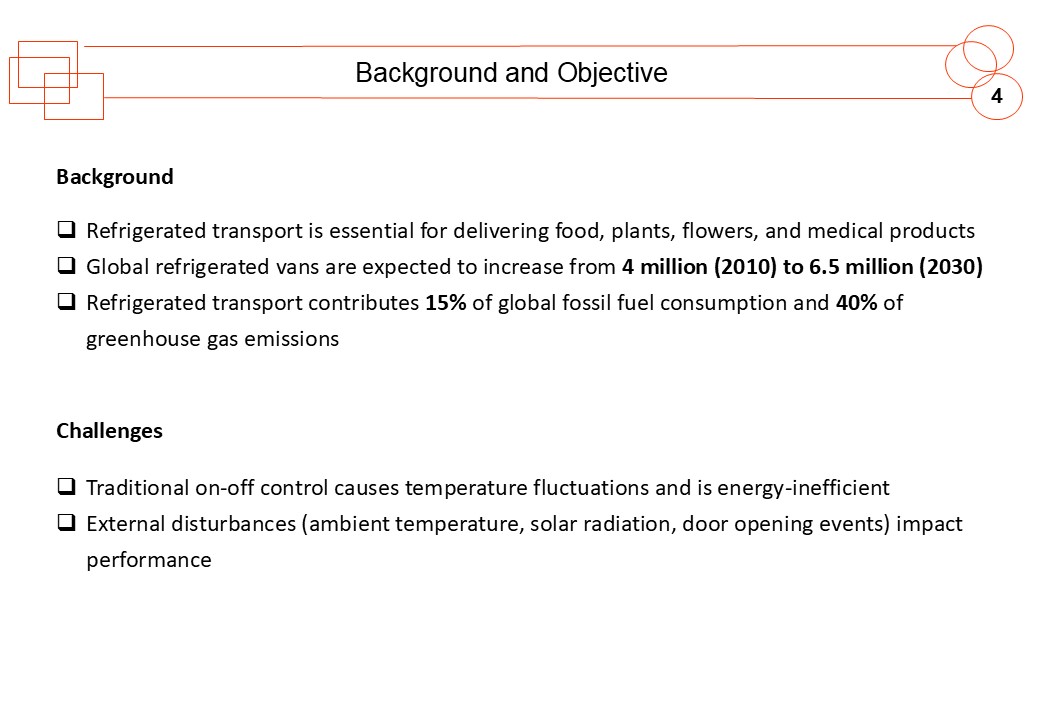 |
Refrigerated transport is essential for keeping food, plants, flowers, and medical products fresh. According to one study, that the number of refrigerated vans is predicted to grow from 4 million in 2010 to 6.5 million by 2030. However, these vehicles consume a significant amount of energy, accounting for 15% of global fossil fuel use and 40% of greenhouse gas emissions. Currently, one of the major challenges for refrigerated van temperature control is that the classical on-off temperature control system is inefficient, which causes temperature fluctuations and wastes energy. Additionally, external disturbances, such as weather, sunlight, and frequent door opening events make it difficult to maintain stable temperatures while keeping a high energy efficiency.
|
|
ICACT20250244 Slide.03
[Big slide for presentation]
|
Chrome Text-to-Speach Click!! |
 |
First, let’s look at the background and objectives.
|
|
ICACT20250244 Slide.02
[Big slide for presentation]
|
Chrome Text-to-Speach Click!! |
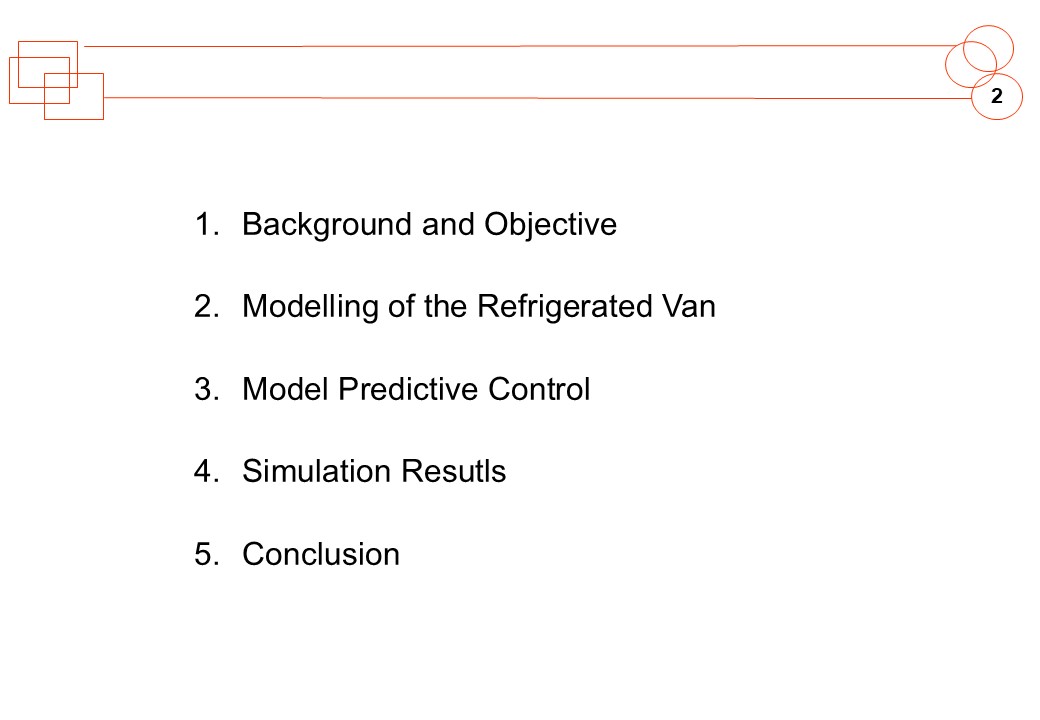 |
Here is the outline of my presentation. First, I’ll explain the background and objectives. Then, I’ll introduce the modelling of the refrigerated van, followed by model predictive control. Finally, I’ll present the simulation results and conclusions.
|
|
ICACT20250244 Slide.01
[Big slide for presentation]
|
Chrome Text-to-Speach Click!! |
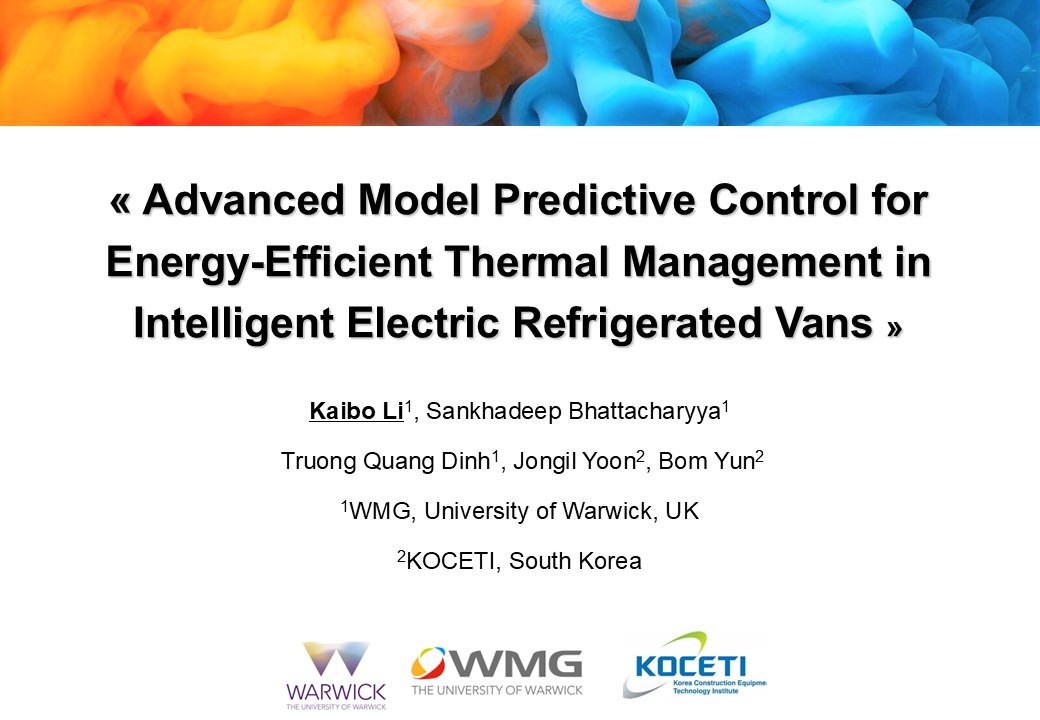 |
Good afternoon, my name is Kaibo Li from the University of Warwick. I’m very happy to present our work on advanced model predictive control for thermal management in refrigerated vans. This research is a collaboration between WMG at the University of Warwick and KOCETI.
|
















