 ICACT20220117 Slide.22
[Big slide for presentation] |
Chrome Text-to-Speach Click!! |
 |
|
|
ICACT20220117 Slide.21
[Big slide for presentation]
|
Chrome Text-to-Speach Click!! |
 |
|
|
ICACT20220117 Slide.20
[Big slide for presentation]
|
Chrome Text-to-Speach Click!! |
 |
|
|
ICACT20220117 Slide.19
[Big slide for presentation]
|
Chrome Text-to-Speach Click!! |
 |
|
|
ICACT20220117 Slide.18
[Big slide for presentation]
|
Chrome Text-to-Speach Click!! |
 |
That's all I have introduced, thank you for listening.
|
|
ICACT20220117 Slide.17
[Big slide for presentation]
|
Chrome Text-to-Speach Click!! |
 |
This study examined PMV and PPD indexes of a user’s temperature tracing voice-controlled movable electrical heating radiator of the different distances between user and radiator. The better distance between user and the traditional heat radiator is 150 to 250 cm. However, the distance might too long in a small space or room. Therefore, we reduce the distance to 50 cm and keep the thermal comfortable by PID control of output heating power of the radiator.
|
|
ICACT20220117 Slide.16
[Big slide for presentation]
|
Chrome Text-to-Speach Click!! |
 |
Conclusion
|
|
ICACT20220117 Slide.15
[Big slide for presentation]
|
Chrome Text-to-Speach Click!! |
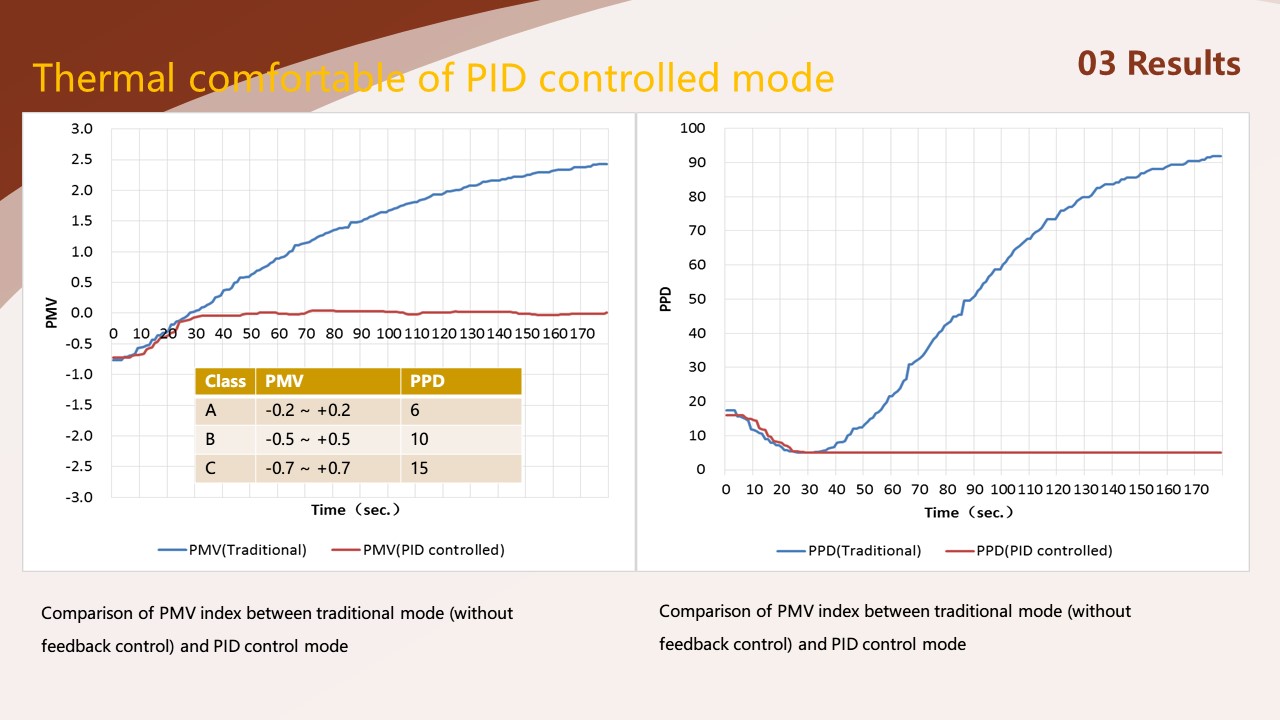 |
The sequence of PPD index of this experiment was presented in Fig. 5. The X axis is time in sec., the left Y axis is the value of PPD index, and the right Y axis d. In the duration of 0 to 2 minutes, the heat radiator turned on, and the PPD index changed from 5% to 95% rapidly. In the duration of 2 to 4 minutes, the value of PPD index was between 30% and 95% when d=100 cm. Consequently, it went to the next 2 minutes. the value of PPD index reduced between 10% and 20% when d=150 cm. In the duration of 6 to 8 minutes, the value of PPD index reduced between 5% and 10% when d=200 cm. Finally, in the duration of 8 to 10 minutes, the value of PPD index was around 5% when d=250 cm.
|
|
ICACT20220117 Slide.14
[Big slide for presentation]
|
Chrome Text-to-Speach Click!! |
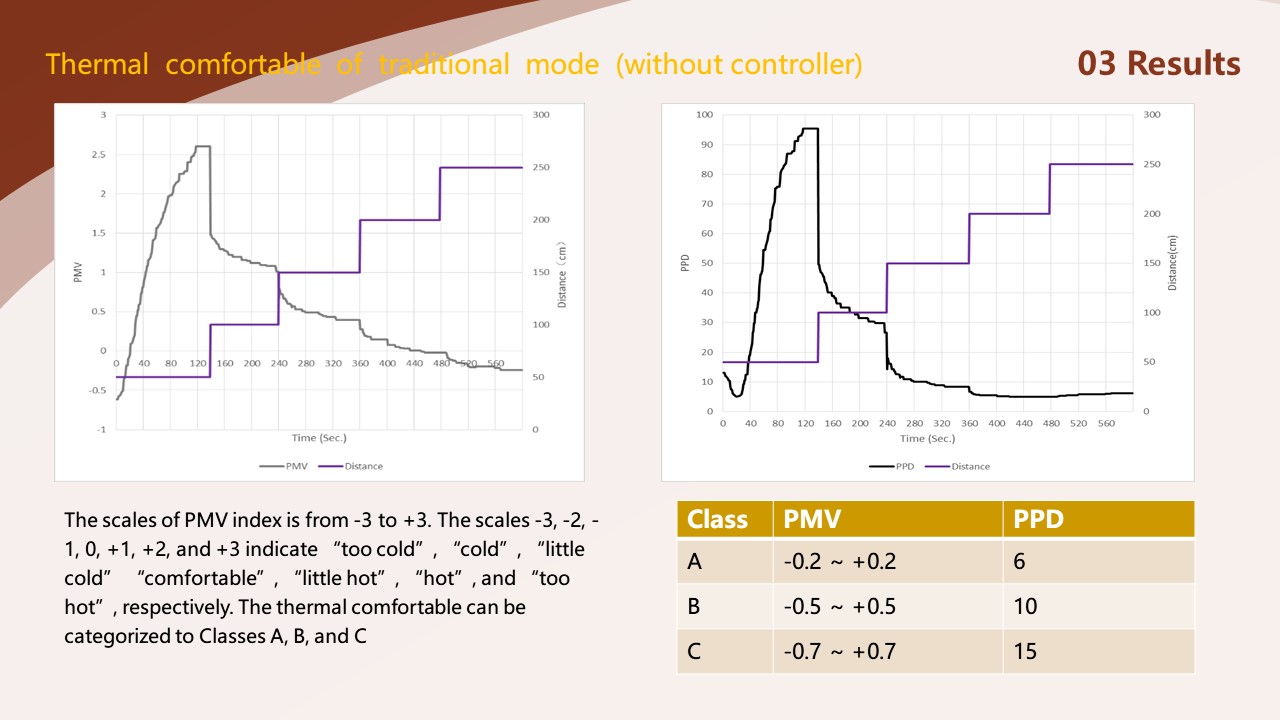 |
The sequence of measured PMV index without output power control radiator (traditional radiator) was presented in Fig. 4. The X axis is time in sec. and left Y axis is the value of PMV index. In addition, the right Y axis is the distance between heat radiator and the subject, i.e. d. Therefore, d was adjusted with the step of 50 cm from d=50 cm to d=250 cm in every 2 minutes. In the duration of 0 to 2 minutes, the heat radiator turned on, and the PMV index changed from -0.5 to +2.5 rapidly. Obviously, d is too small so that the user’s temperature increased very speedy. In the duration of 2 to 4 minutes, the value of PMV index reduced between +1 and +1.5 when d=100 cm. Consequently, it went to the next 2 minutes. the value of PMV index reduced between +0.5 and +1.0 when d=150 cm. In the duration of 6 to 8 minutes, the value of PMV index reduced between 0 and +0.5 when d=200 cm. Finally, in the duration of 8 to 10 minutes, the value of PMV index reduced between -0.5 and 0 when d=250 cm.
|
|
ICACT20220117 Slide.13
[Big slide for presentation]
|
Chrome Text-to-Speach Click!! |
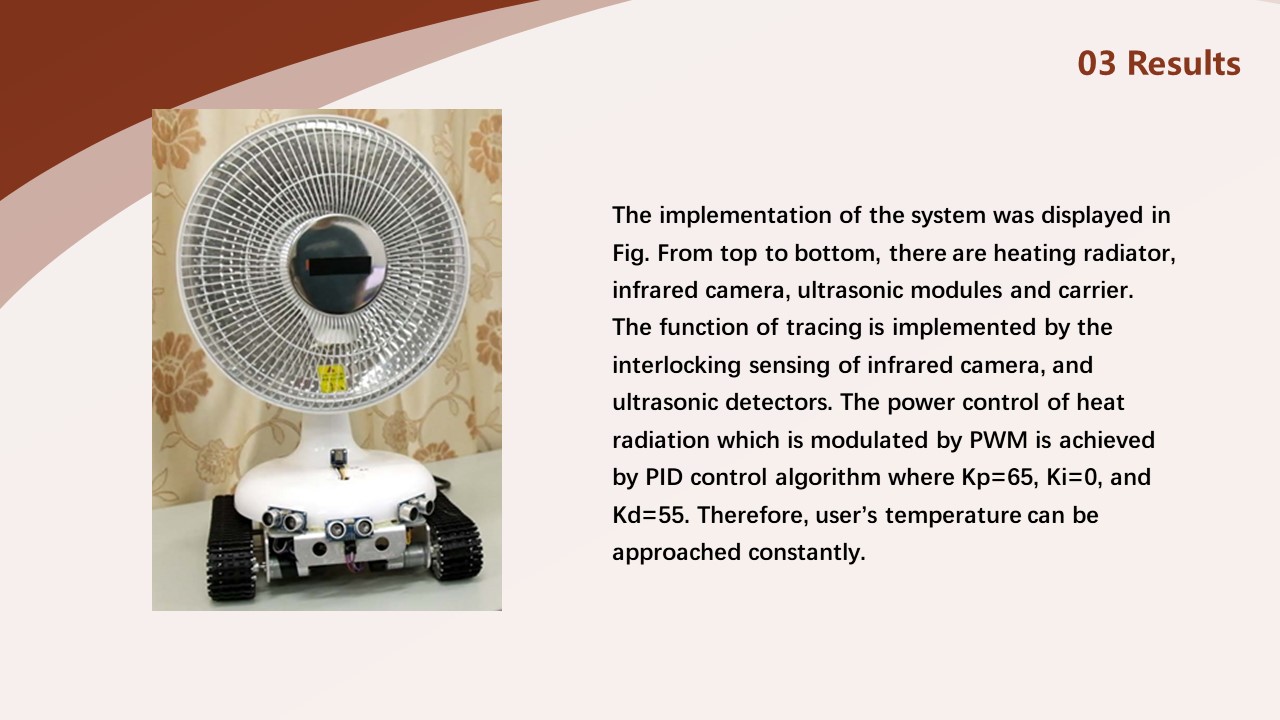 |
The implementation of the system was displayed in Fig. 3. From top to bottom, there are heating radiator, infrared camera, ultrasonic modules and carrier. The function of tracing is implemented by the interlocking sensing of infrared camera, and ultrasonic detectors. The power control of heat radiation which is modulated by PWM is achieved by PID control algorithm where Kp=65, KI=0, and KD=55. Therefore, user’s temperature can be approached constantly.
|
|
ICACT20220117 Slide.12
[Big slide for presentation]
|
Chrome Text-to-Speach Click!! |
 |
Results
|
|
ICACT20220117 Slide.11
[Big slide for presentation]
|
Chrome Text-to-Speach Click!! |
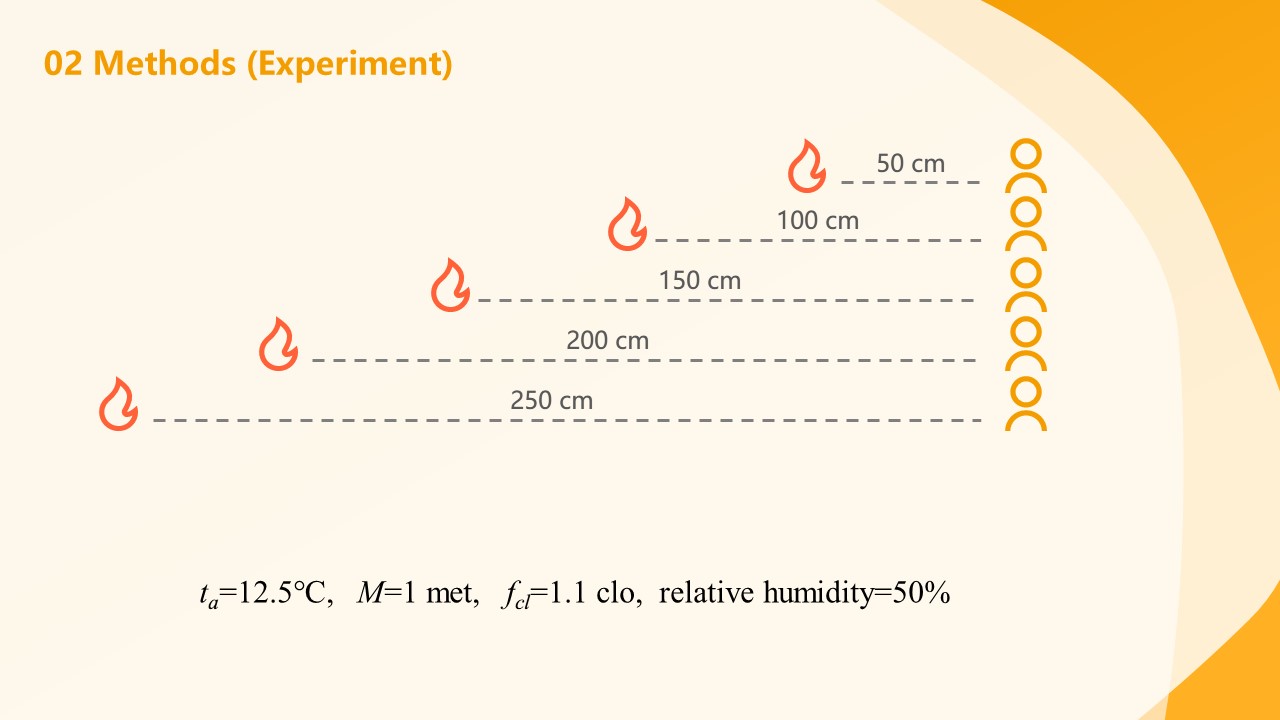 |
For the evaluation the thermal comfortable of the heating radiator, an experiment was designed for measuring the temperature of users to compute PMV and PPD indexes. The distances between the user and the heating radiator were from 50 to 250 cm with the step of 50 cm under the condition of the same output heating power. The moveable radiator stayed at every step for 120 seconds. The conditions were as follows, ta =12.5℃, M=1 met, fcl=1.1 clo, and relative humidity=50%.
|
|
ICACT20220117 Slide.10
[Big slide for presentation]
|
Chrome Text-to-Speach Click!! |
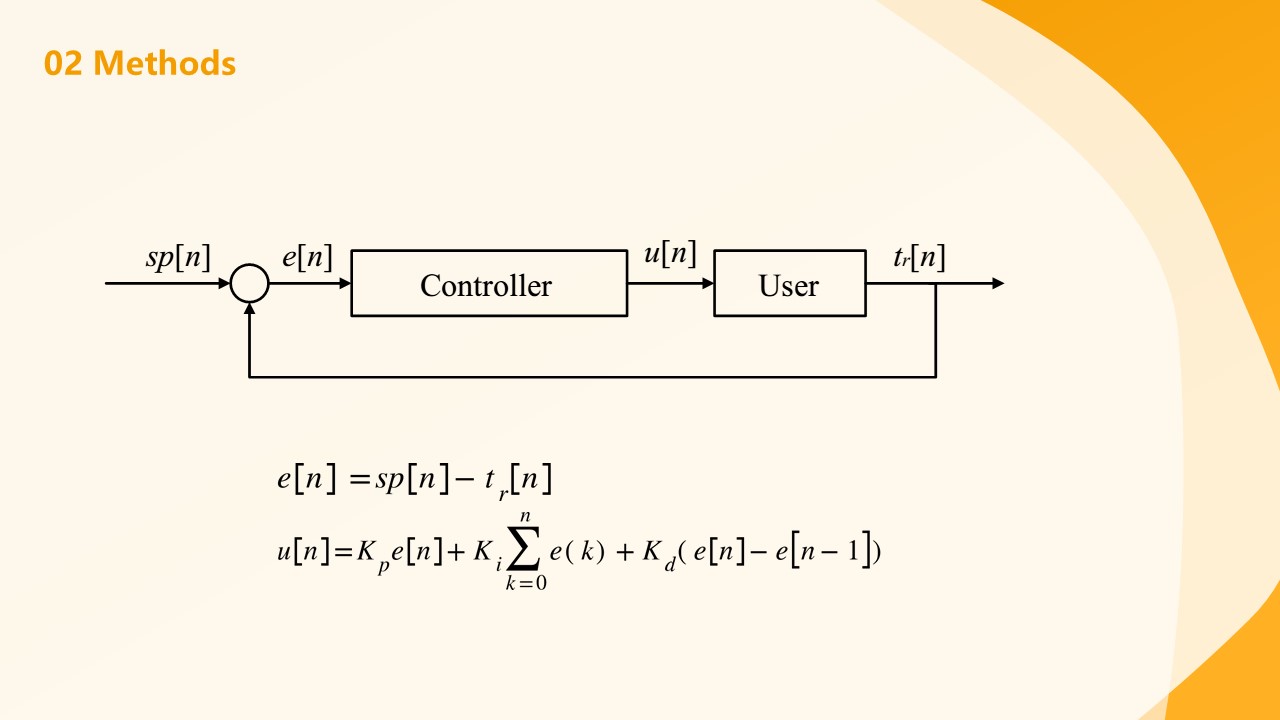 |
The functional block diagram of PID control is presented in Fig. 2. In this figure, sp is the set-point, e is the error, that is (6) u is the output of the PID controller. The PID control algorithm for the temperature control can be described by the following equation: where Kp, Ki, and Kd are the coefficients of proportional, integral, and differential controls, respectively [9, 10].
|
|
ICACT20220117 Slide.09
[Big slide for presentation]
|
Chrome Text-to-Speach Click!! |
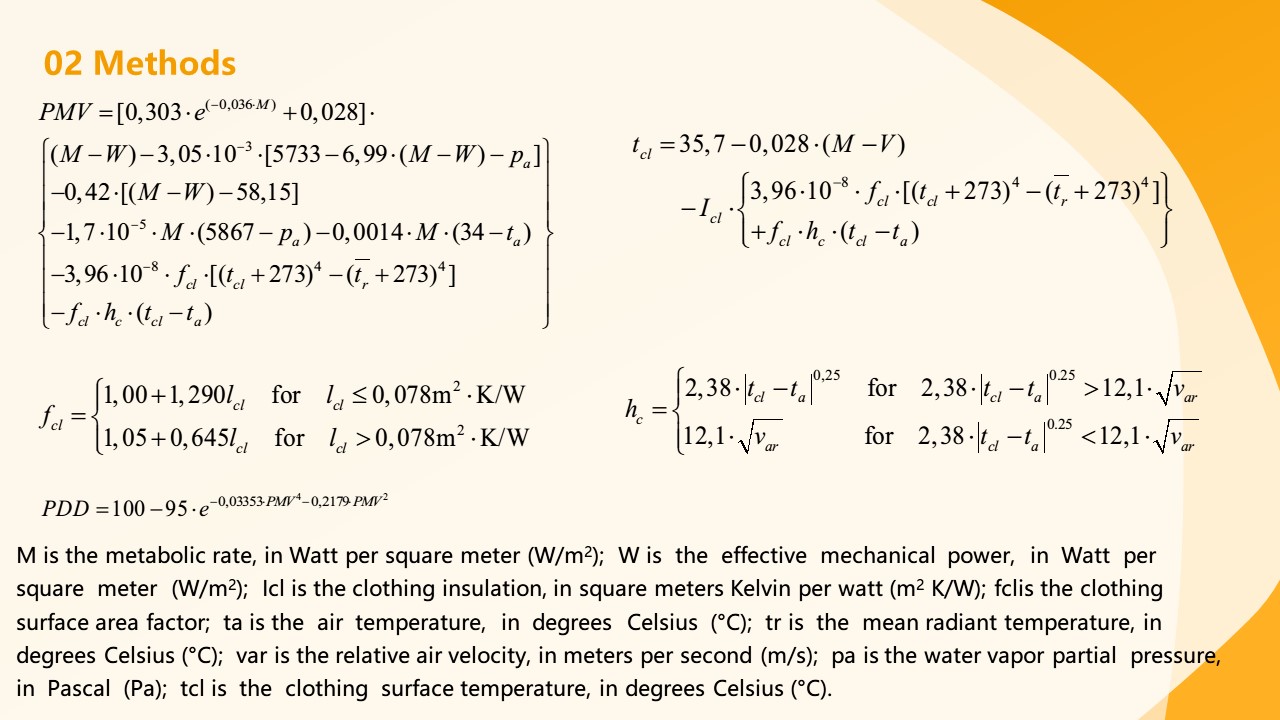 |
PMV can be computed by the following equations,M is the metabolic rate, in Watt per square meter (W/m2 ); W is the effective mechanical power, in Watt per square meter (W/m2); Icl is the clothing insulation, in square meters Kelvin per watt (m2 K/W); fcl is the clothing surface area factor; ta is the air temperature, in degrees Celsius (°C); tr is the mean radiant temperature, in degrees Celsius (°C); var is the relative air velocity, in meters per second (m/s); pa is the water vapor partial pressure, in Pascal (Pa); tcl is the clothing surface temperature, in degrees Celsius (°C).
|
|
ICACT20220117 Slide.08
[Big slide for presentation]
|
Chrome Text-to-Speach Click!! |
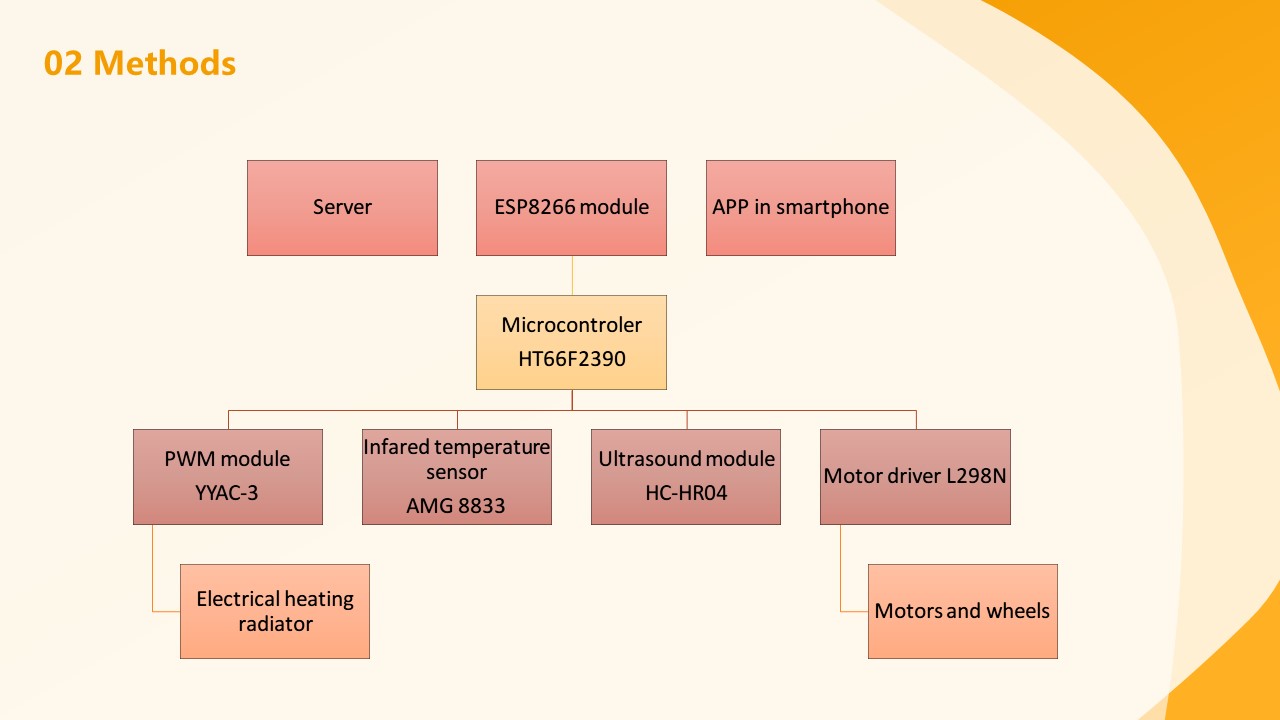 |
The system block diagram is presented in Fig. 1. The microcontroller Holtek HT66F2390 connected with ESP8266 to communicate with the server through the APP in smartphone to interactively transfer user input, and send the status of the system. In addition, the microcontroller connected with 2 sensors and 2 drivers. In the parts of sensors, the infrared temperature imaging sensor (AMG 8833) was employed to sense the temperature distribution of the user’s body. Besides, the ultrasonic distance sensor (HC-HR 04) was used to avoid the collision of the object when the radiator was moving and protect the users when they were almost touching to the radiator. In the parts of drivers, the PWM module (YYAC-3) received the digital values, which were computed by the formulas of thermal comfortable, from microcontroller to modulate the output power of the electrical heating radiator to keep the user’s temperature of the users constantly. In addition, the motor driver (L298N) also received the digital values from microcontroller to control the rotation speeds of the motors that were connected with the wheels. The power supply of the system was 220 V AC which was converted to DC power sources for the operations of the digital system in this radiator.
|
|
ICACT20220117 Slide.07
[Big slide for presentation]
|
Chrome Text-to-Speach Click!! |
 |
Methods
|
|
ICACT20220117 Slide.06
[Big slide for presentation]
|
Chrome Text-to-Speach Click!! |
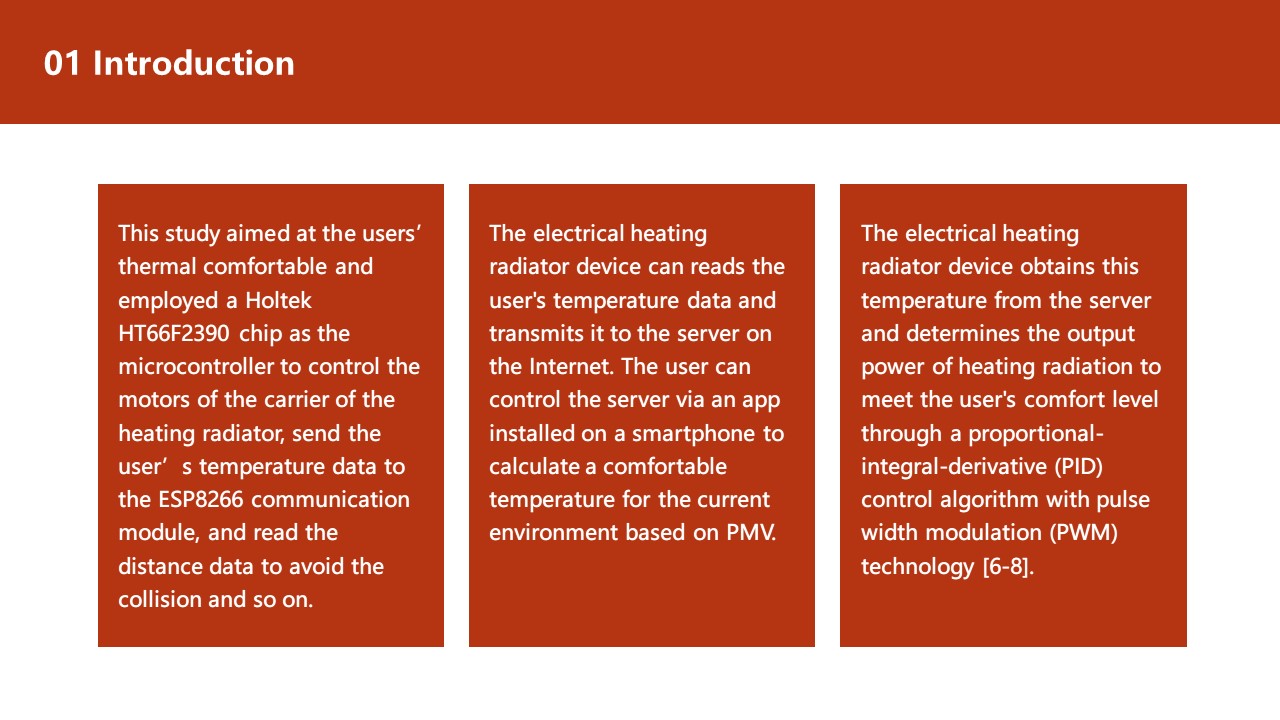 |
This study aimed at the users’ thermal comfortable and employed a Holtek HT66F2390 chip as the microcontroller to control the motors of the carrier of the heating radiator, send the user’s temperature data to the ESP8266 communication module, and read the distance data to avoid the collision and so on. The electrical heating radiator device can reads the user's temperature data and transmits it to the server on the Internet. The user can control the server via an app installed on a smartphone to calculate a comfortable temperature for the current environment based on PMV. The electrical heating radiator device obtains this temperature from the server and determines the output power of heating radiation to meet the user's comfort level through a proportional-integral-derivative (PID) control algorithm with pulse width modulation (PWM) technology.
|
|
ICACT20220117 Slide.05
[Big slide for presentation]
|
Chrome Text-to-Speach Click!! |
 |
However, the comfortability of the user is one of the crucial necessities of the electrical applications. Therefore, the idea of the user’s temperature tracing system has been developed in this study. Originally, the thermal comfortable is defined by Fanger and standardized by ISO 7730. Fanger hypothesized that user’s thermal comfort was intuitively decided by one’s skin temperature and their sweat secretion. The trade-off of the two factors narrowed the comfortability in a little range. Furthermore, ISO 7730 formulized the equations of comfortability. In comfortable conditions, the person almost does not sweat, the physical workload is low, the clothing is light, there is almost no heat radiation, and the air temperature is between 18 and 25 °C. Therefore, thermal comfortable is described by tow indexes. One is the prediction of the mean value of votes of a group of occupants on a seven-point thermal sensation scale (PMV), the other is the index that establishes a quantitative prediction of the percentage of thermally dissatisfied occupants (i.e., too warm or too cold), can be determined (PPD). Fanger established a model of correlation between the subjective human perception, expressed through the vote of comfort on a scale ranging from -3 (very cold) to +3 (very hot), and the difference between the heat generated and the heat released by the human body. The ranges of PMV values from -0,2 to 0,2, -0,5 to 0,5 and -0,7 to 0,7 map to PPD values below 6, 10 and 15%, respectively. The distribution of PMV v.s. PPD displays the thermal comfortable in a form of quantitative analysis which was presented in this study to compare the thermal comfortable between with and without the function of user’s temperature tracing.
|
|
ICACT20220117 Slide.04
[Big slide for presentation]
|
Chrome Text-to-Speach Click!! |
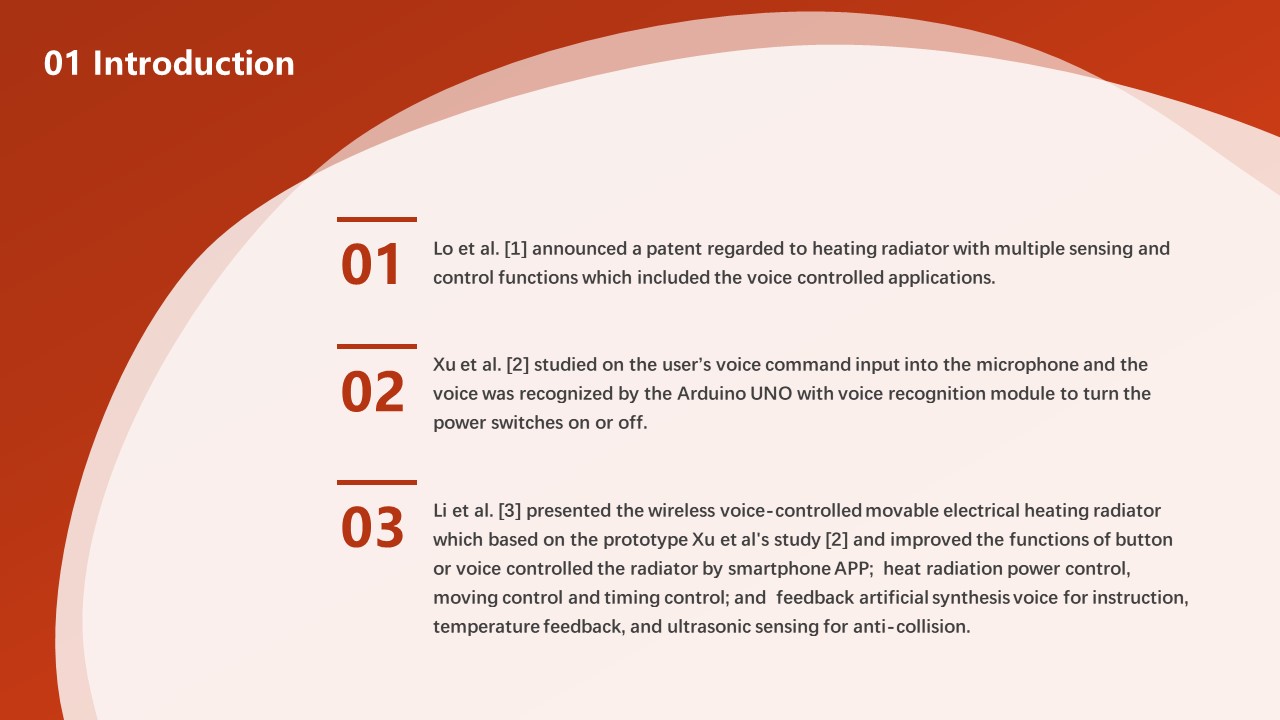 |
Lo et al. announced a patent regarded to heating radiator with multiple sensing and control functions which included the voice controlled applications. Xu et al. studied on the user’s voice command input into the microphone and the voice was recognized by the Arduino UNO with voice recognition module to turn the power switches on or off. Li et al.presented the wireless voice-controlled movable electrical heating radiator which based on the prototype Xu et al’s study and improved the functions of button or voice controlled the radiator by smartphone APP; heat radiation power control, moving control and timing control; and feedback artificial synthesis voice for instruction, temperature feedback, and ultrasonic sensing for anti-collision.
|
|
ICACT20220117 Slide.03
[Big slide for presentation]
|
Chrome Text-to-Speach Click!! |
 |
First, the Introduction.
|
|
ICACT20220117 Slide.02
[Big slide for presentation]
|
Chrome Text-to-Speach Click!! |
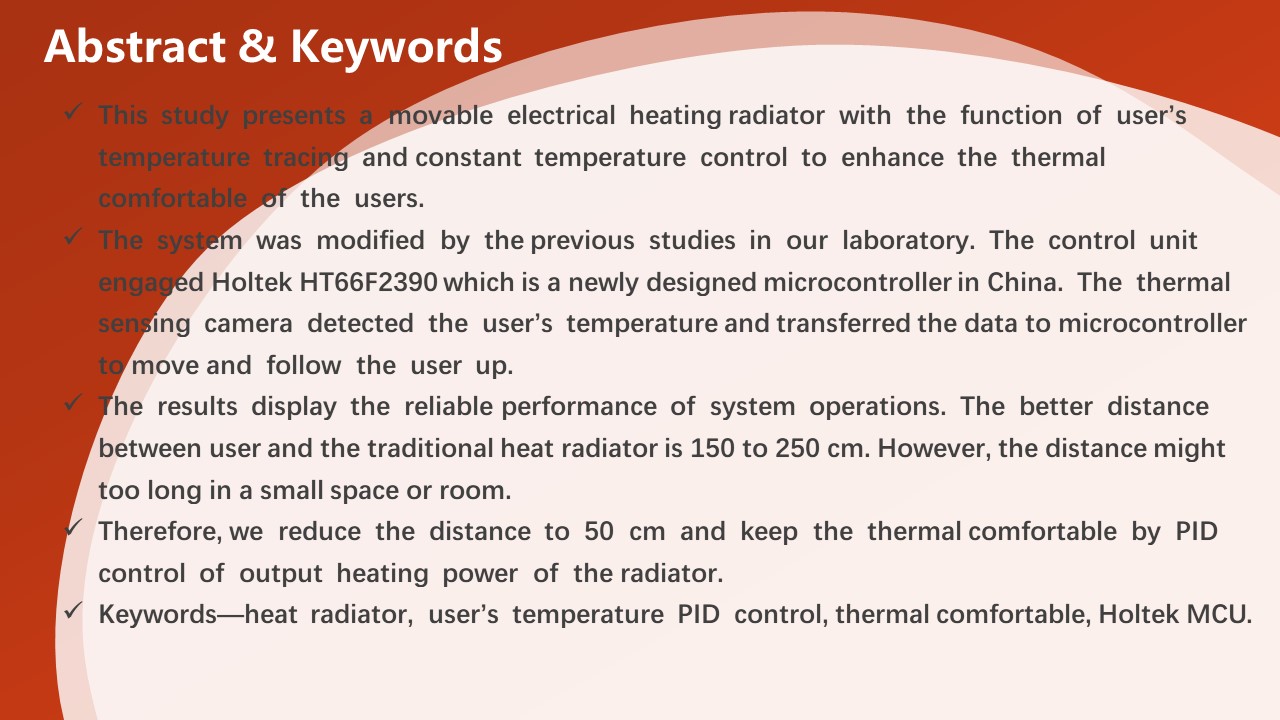 |
This study presents a movable electrical heating radiator with the function of user’s temperature tracing and constant temperature control to enhance the thermal comfortable of the users. The system was modified by the previous studies in our laboratory. The control unit engaged Holtek HT66F2390 which is a newly designed microcontroller in China. The thermal sensing camera detected the user’s temperature and transferred the data to microcontroller to move and follow the user up. The results display the reliable performance of system operations. The better distance between user and the traditional heat radiator is 150 to 250 cm. However, the distance might too long in a small space or room. Therefore, we reduce the distance to 50 cm and keep the thermal comfortable by PID control of output heating power of the radiator.
|
|
ICACT20220117 Slide.01
[Big slide for presentation]
|
Chrome Text-to-Speach Click!! |
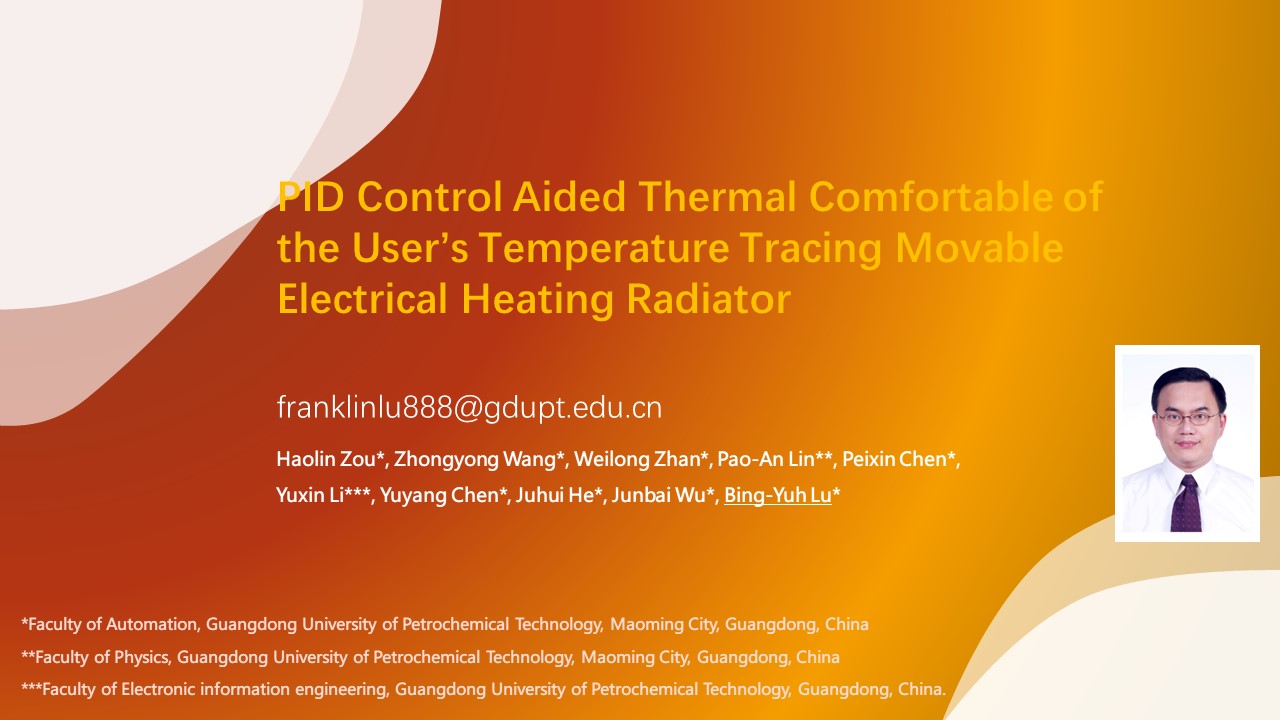 |
Ladies and gentlemen, the topic I want to introduce today is PID Control Aided Thermal Comfortable of the User’s Temperature Tracing Movable Electrical Heating Radiator.
|
















