 ICACT20250010 Slide.30
[Big slide for presentation]
[YouTube] |
Chrome Text-to-Speach Click!! |
 |
Conclusion:
This study proposes a dynamic honeypot deployment solution that combines SDN and AI technologies, achieving efficient capture and response to network attack behaviors.
Future Outlook:
1. Further refine AI model training to enhance prediction accuracy.
2. Expand the application of the system to a broader range of network environments.
3. Explore more collaborative models between SDN controllers to further enhance the system's intelligence.
|
|
ICACT20250010 Slide.29
[Big slide for presentation]
[YouTube] |
Chrome Text-to-Speach Click!! |
 |
Conclusion:
This study proposes a dynamic honeypot deployment solution that combines SDN and AI technologies, achieving efficient capture and response to network attack behaviors.
Future Outlook:
1. Further refine AI model training to enhance prediction accuracy.
2. Expand the application of the system to a broader range of network environments.
3. Explore more collaborative models between SDN controllers to further enhance the system's intelligence.
|
|
ICACT20250010 Slide.28
[Big slide for presentation]
[YouTube] |
Chrome Text-to-Speach Click!! |
 |
Conclusion:
This study proposes a dynamic honeypot deployment solution that combines SDN and AI technologies, achieving efficient capture and response to network attack behaviors.
Future Outlook:
1. Further refine AI model training to enhance prediction accuracy.
2. Expand the application of the system to a broader range of network environments.
3. Explore more collaborative models between SDN controllers to further enhance the system's intelligence.
|
|
ICACT20250010 Slide.27
[Big slide for presentation]
[YouTube] |
Chrome Text-to-Speach Click!! |
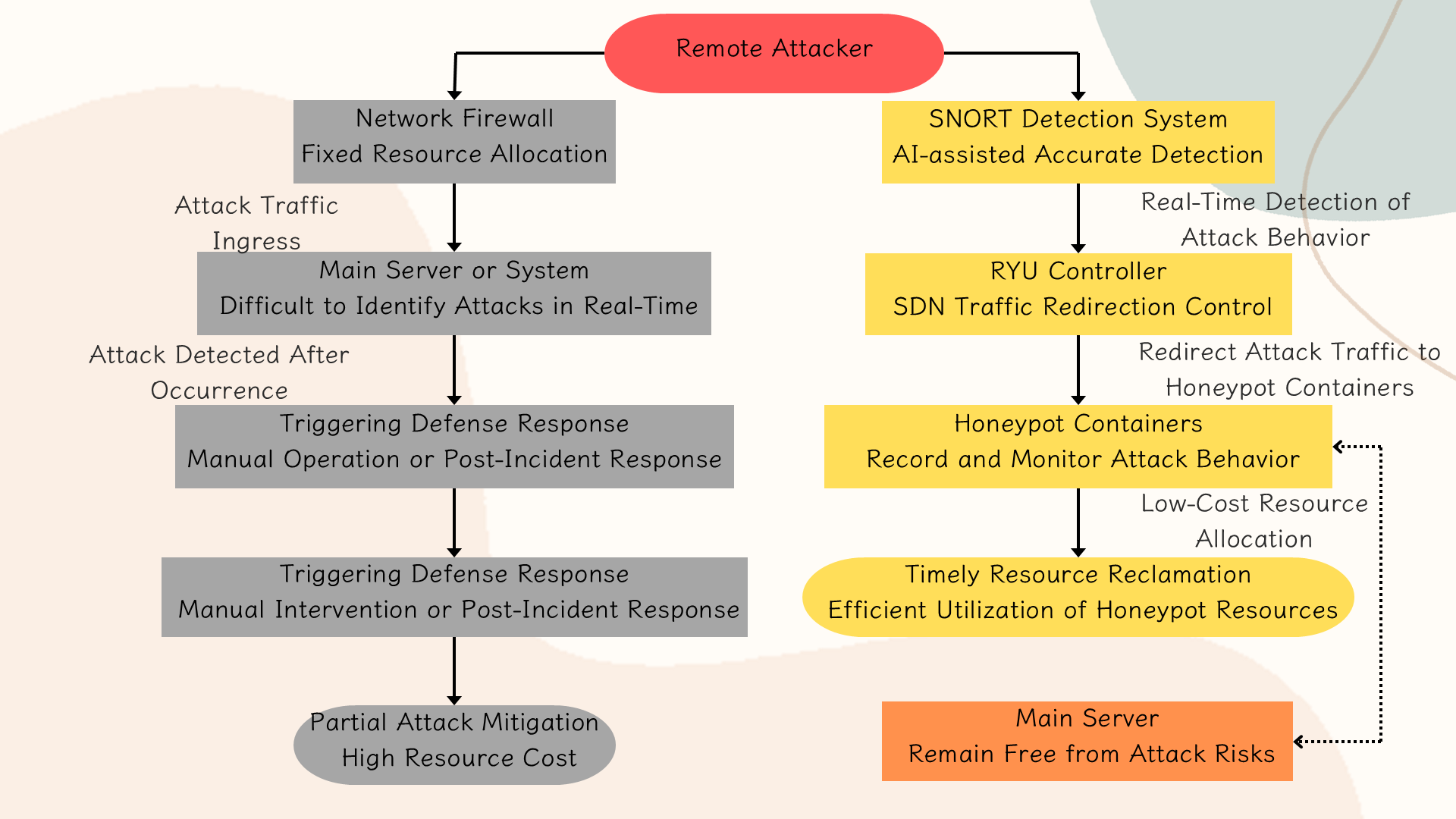 |
System Operation Flow:
1. Incoming attack traffic enters the system and is inspected by SNORT, confirming it as malicious.
2. The traffic is redirected to the corresponding honeypot container.
3. The honeypot container captures behavior data and sends it to the AI for analysis.
Performance Summary:
1. The system achieves efficient attack detection while significantly reducing resource usage costs.
2. Compared to traditional methods, the dynamic deployment speed of honeypot containers is substantially improved.
|
|
ICACT20250010 Slide.26
[Big slide for presentation]
[YouTube] |
Chrome Text-to-Speach Click!! |
 |
System Operation Flow:
1. Incoming attack traffic enters the system and is inspected by SNORT, confirming it as malicious.
2. The traffic is redirected to the corresponding honeypot container.
3. The honeypot container captures behavior data and sends it to the AI for analysis.
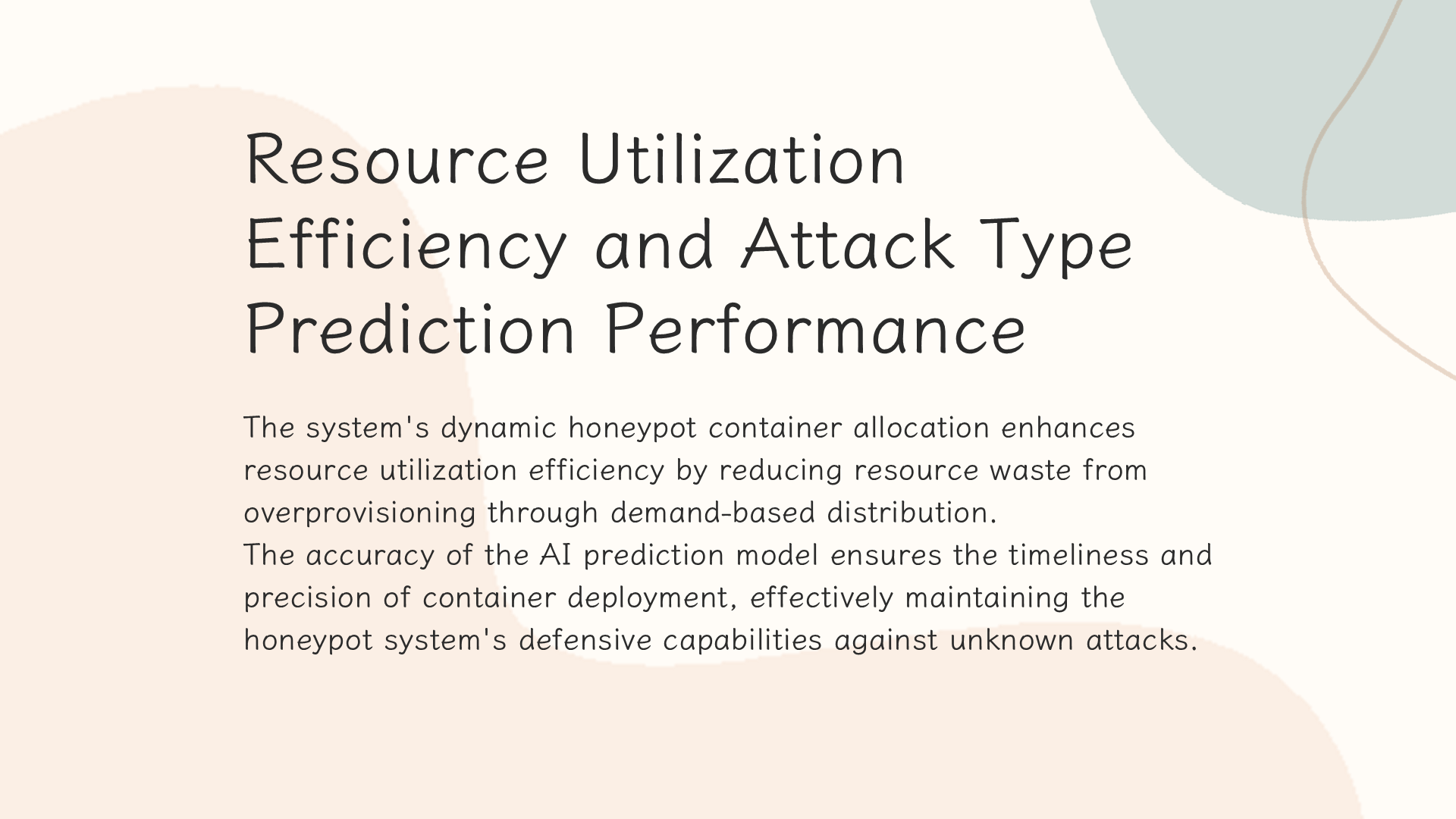
Performance Summary:
1. The system achieves efficient attack detection while significantly reducing resource usage costs.
2. Compared to traditional methods, the dynamic deployment speed of honeypot containers is substantially improved.
|
|
ICACT20250010 Slide.25
[Big slide for presentation]
[YouTube] |
Chrome Text-to-Speach Click!! |
 |
System Operation Flow:
1. Incoming attack traffic enters the system and is inspected by SNORT, confirming it as malicious.
2. The traffic is redirected to the corresponding honeypot container.
3. The honeypot container captures behavior data and sends it to the AI for analysis.
Performance Summary:
1. The system achieves efficient attack detection while significantly reducing resource usage costs.
2. Compared to traditional methods, the dynamic deployment speed of honeypot containers is substantially improved.
|
|
ICACT20250010 Slide.24
[Big slide for presentation]
[YouTube] |
Chrome Text-to-Speach Click!! |
 |
System Operation Flow:
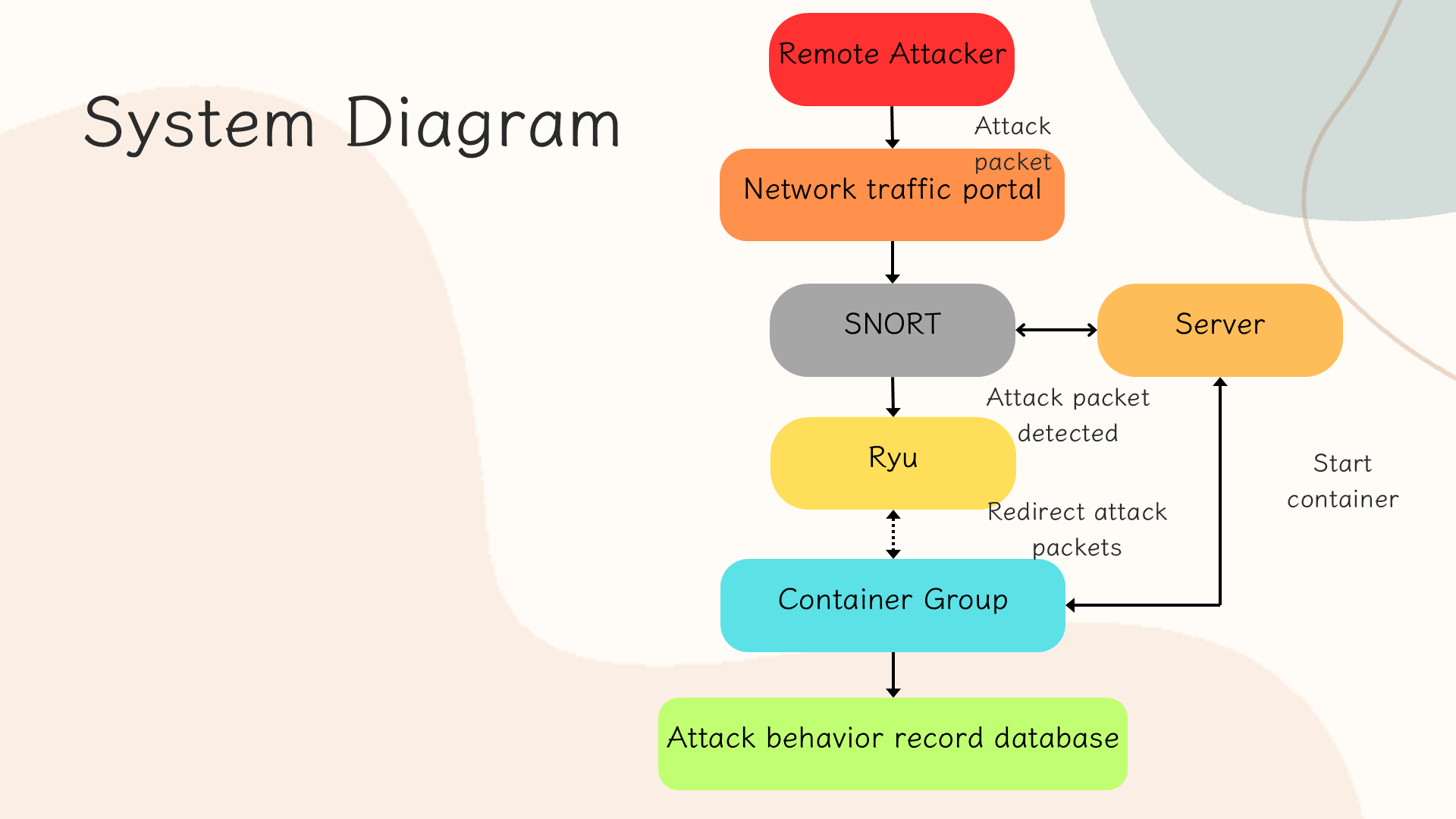
1. Incoming attack traffic enters the system and is inspected by SNORT, confirming it as malicious.
2. The traffic is redirected to the corresponding honeypot container.
3. The honeypot container captures behavior data and sends it to the AI for analysis.
Performance Summary:
1. The system achieves efficient attack detection while significantly reducing resource usage costs.
2. Compared to traditional methods, the dynamic deployment speed of honeypot containers is substantially improved.
|
|
ICACT20250010 Slide.23
[Big slide for presentation]
[YouTube] |
Chrome Text-to-Speach Click!! |
 |
System Operation Flow:
1. Incoming attack traffic enters the system and is inspected by SNORT, confirming it as malicious.
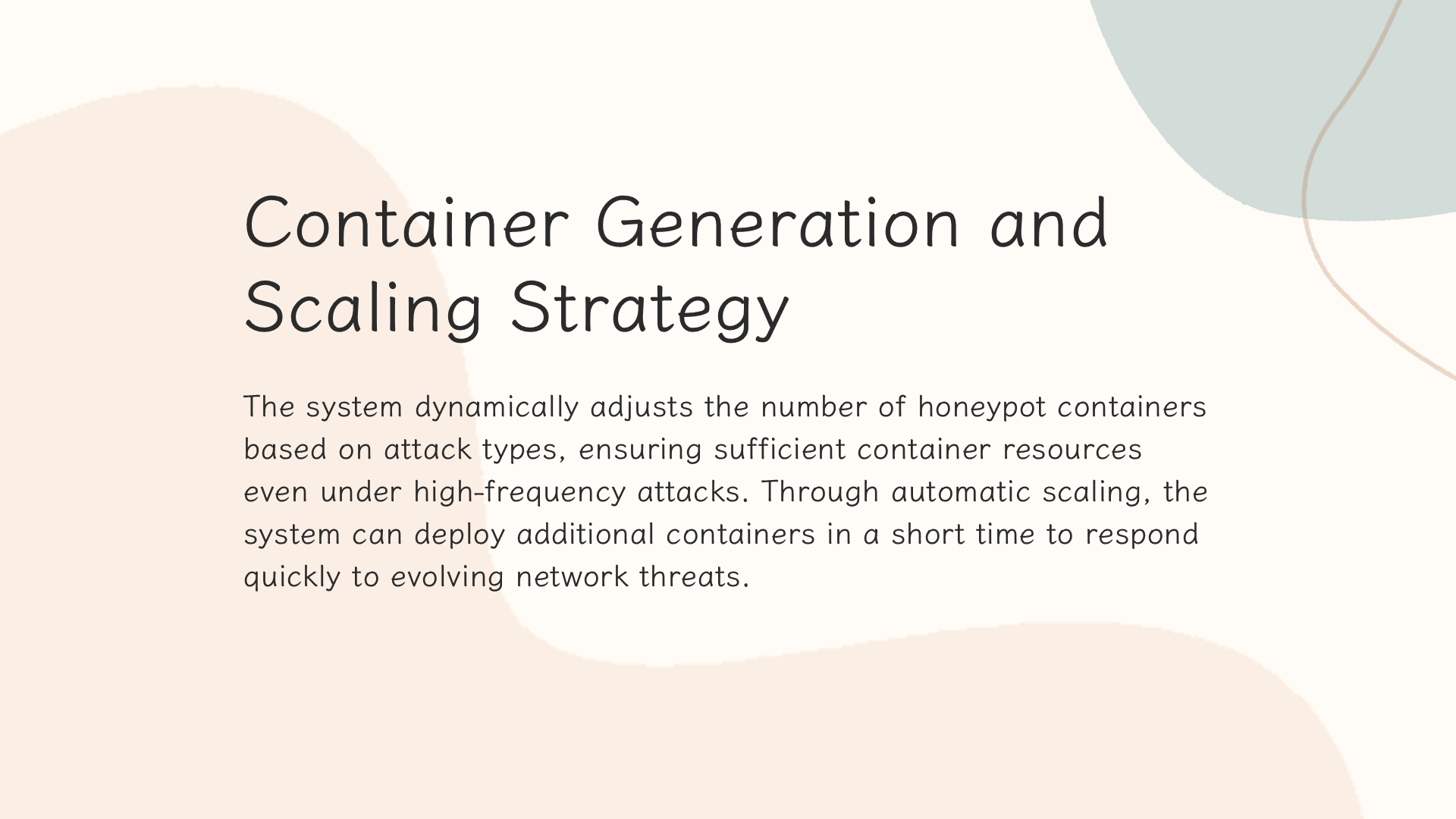
2. The traffic is redirected to the corresponding honeypot container.
3. The honeypot container captures behavior data and sends it to the AI for analysis.
Performance Summary:
1. The system achieves efficient attack detection while significantly reducing resource usage costs.
2. Compared to traditional methods, the dynamic deployment speed of honeypot containers is substantially improved.
|
|
ICACT20250010 Slide.22
[Big slide for presentation]
[YouTube] |
Chrome Text-to-Speach Click!! |
 |
System Operation Flow:
1. Incoming attack traffic enters the system and is inspected by SNORT, confirming it as malicious.
2. The traffic is redirected to the corresponding honeypot container.
3. The honeypot container captures behavior data and sends it to the AI for analysis.
Performance Summary:
1. The system achieves efficient attack detection while significantly reducing resource usage costs.
2. Compared to traditional methods, the dynamic deployment speed of honeypot containers is substantially improved.
|
|
ICACT20250010 Slide.21
[Big slide for presentation]
[YouTube] |
Chrome Text-to-Speach Click!! |
 |
The core functionality of SDN lies in its flexible traffic management:
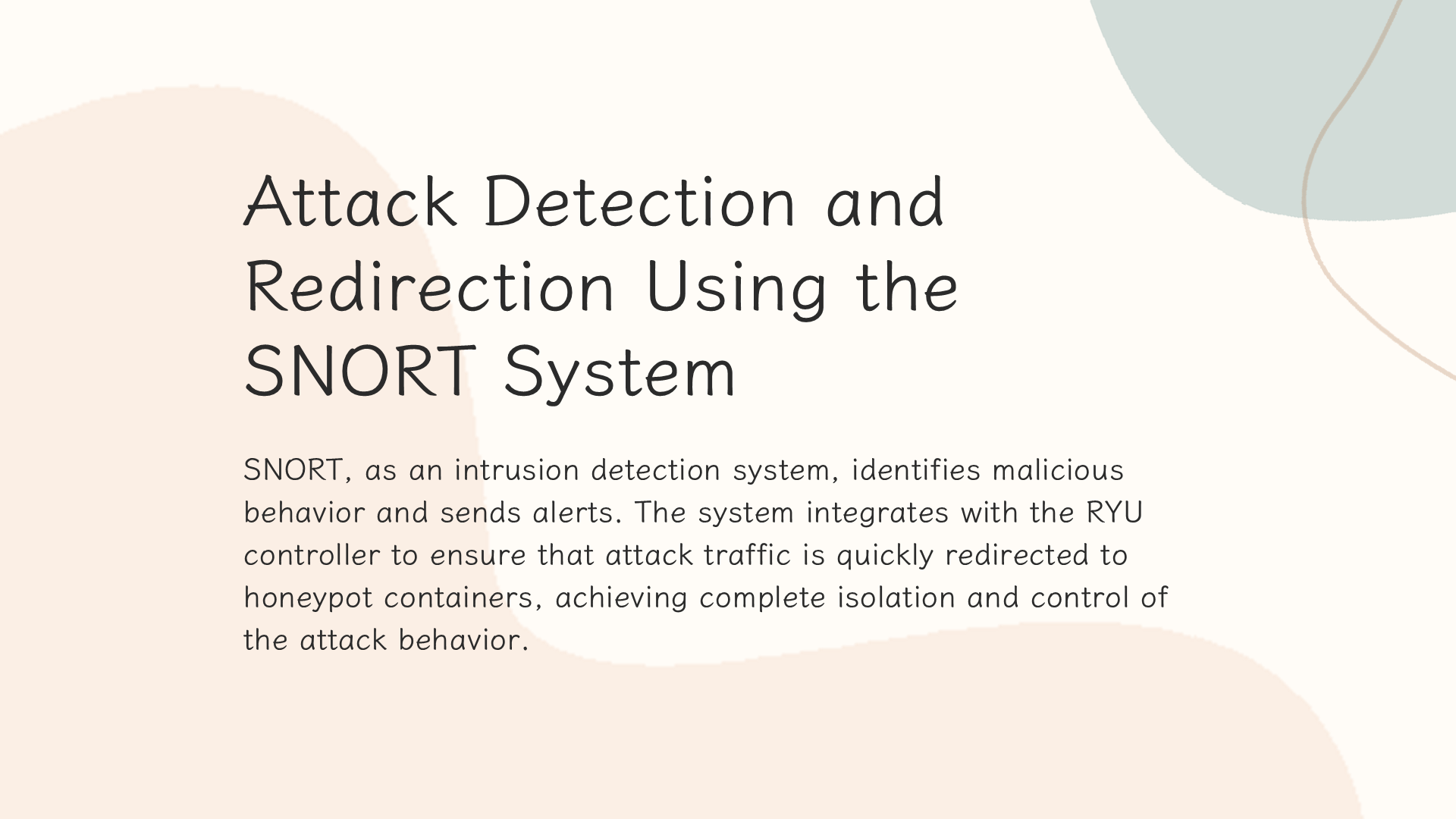
1. RYU Controller: Enables dynamic control and redirection of network traffic.
2. Integration with SNORT: As an intrusion detection system, SNORT filters attack traffic and directs it to the honeypot containers.
|
|
ICACT20250010 Slide.20
[Big slide for presentation]
[YouTube] |
Chrome Text-to-Speach Click!! |
 |
The core functionality of SDN lies in its flexible traffic management:
1. RYU Controller: Enables dynamic control and redirection of network traffic.
2. Integration with SNORT: As an intrusion detection system, SNORT filters attack traffic and directs it to the honeypot containers.
|
|
ICACT20250010 Slide.19
[Big slide for presentation]
[YouTube] |
Chrome Text-to-Speach Click!! |
 |
The core functionality of SDN lies in its flexible traffic management:
1. RYU Controller: Enables dynamic control and redirection of network traffic.
2. Integration with SNORT: As an intrusion detection system, SNORT filters attack traffic and directs it to the honeypot containers.
|
|
ICACT20250010 Slide.18
[Big slide for presentation]
[YouTube] |
Chrome Text-to-Speach Click!! |
 |
1. Application of AI Models:
Using deep learning-based AI models, trained on extensive attack behavior datasets, the system can accurately distinguish between normal and malicious traffic.
2. Dynamic Resource Allocation:
The predictions from the AI model directly influence the generation and scheduling strategies of honeypot containers, ensuring that resources are utilized most effectively where they are needed the most.
|
|
ICACT20250010 Slide.17
[Big slide for presentation]
[YouTube] |
Chrome Text-to-Speach Click!! |
 |
1. Application of AI Models:
Using deep learning-based AI models, trained on extensive attack behavior datasets, the system can accurately distinguish between normal and malicious traffic.
2. Dynamic Resource Allocation:
The predictions from the AI model directly influence the generation and scheduling strategies of honeypot containers, ensuring that resources are utilized most effectively where they are needed the most.
|
|
ICACT20250010 Slide.16
[Big slide for presentation]
[YouTube] |
Chrome Text-to-Speach Click!! |
 |
1. Application of AI Models:
Using deep learning-based AI models, trained on extensive attack behavior datasets, the system can accurately distinguish between normal and malicious traffic.
2. Dynamic Resource Allocation:
The predictions from the AI model directly influence the generation and scheduling strategies of honeypot containers, ensuring that resources are utilized most effectively where they are needed the most.
|
|
ICACT20250010 Slide.15
[Big slide for presentation]
[YouTube] |
Chrome Text-to-Speach Click!! |
 |
Application of Docker Containers:
Docker container technology enables the honeypot system to be deployed rapidly and generate multiple lightweight instances as needed. For example:
• When attacks originate from different IPs, the system can quickly generate multiple corresponding honeypot containers, achieving multi-path defense.
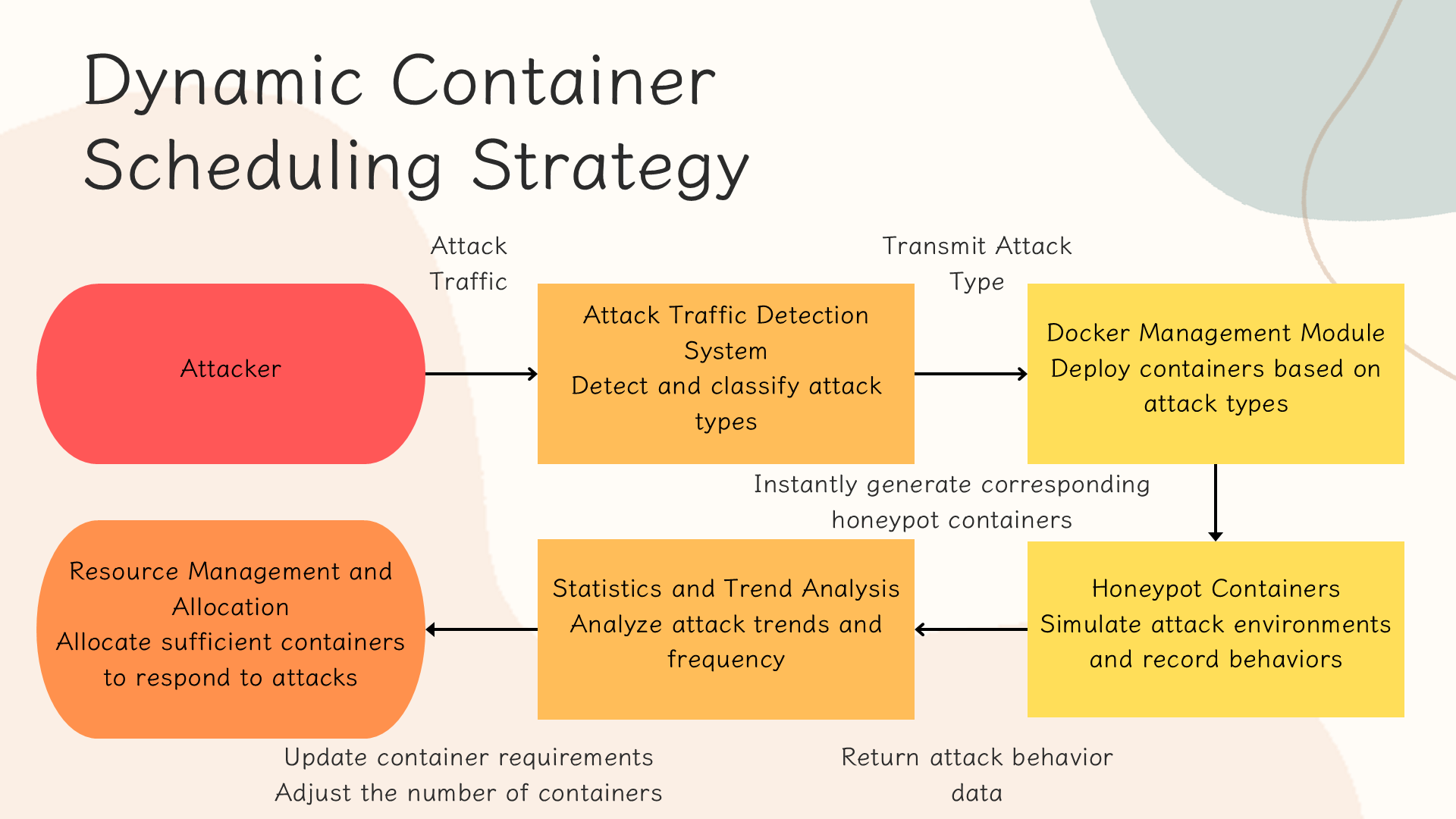
Dynamic Scheduling Strategy:
1. After predicting attack types through AI, the system adjusts the number of honeypots based on the results.
2. During peak traffic periods, it automatically scales up honeypot resources to handle traffic surges.
|
|
ICACT20250010 Slide.14
[Big slide for presentation]
[YouTube] |
Chrome Text-to-Speach Click!! |
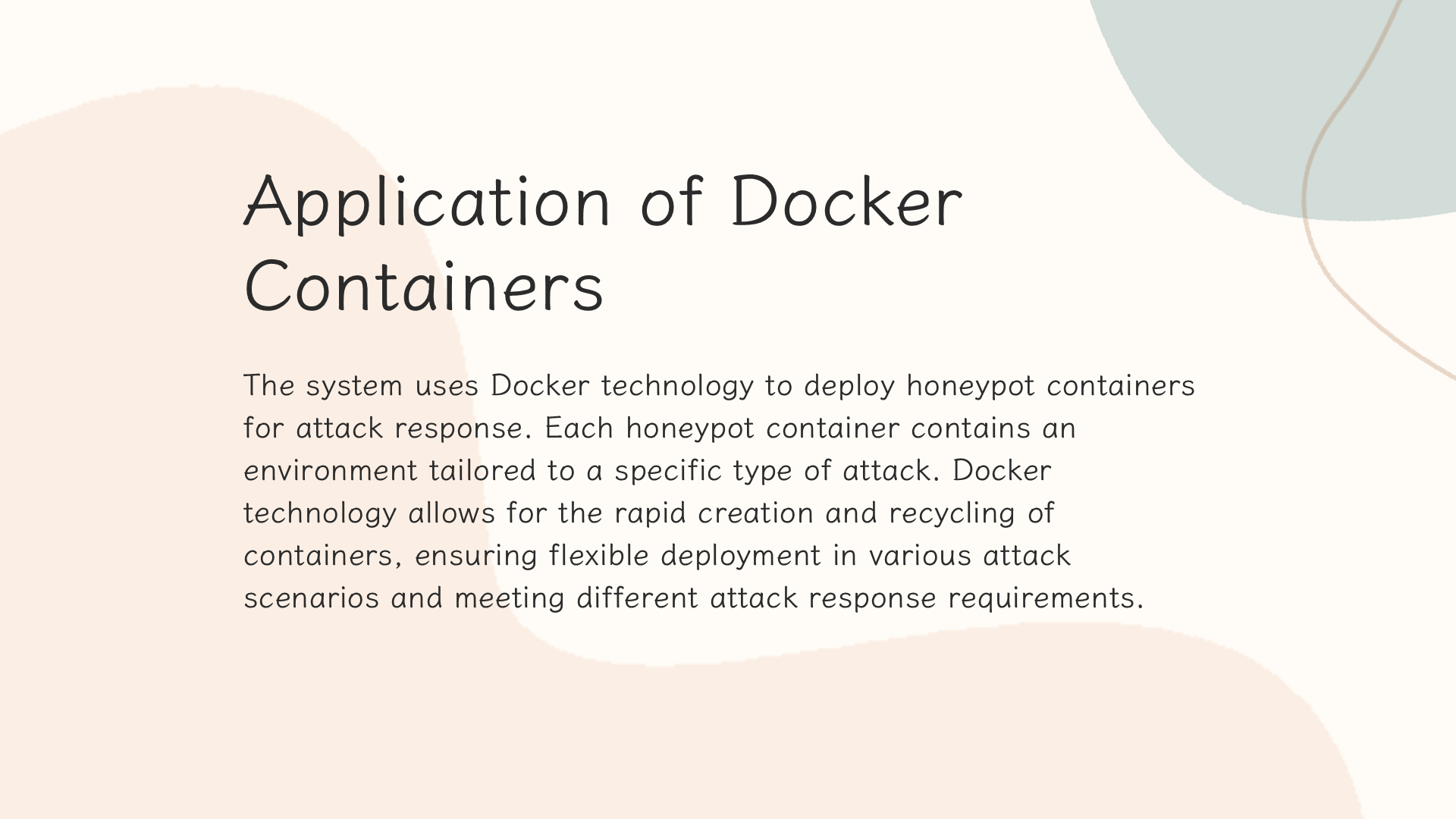 |
Application of Docker Containers:
Docker container technology enables the honeypot system to be deployed rapidly and generate multiple lightweight instances as needed. For example:
• When attacks originate from different IPs, the system can quickly generate multiple corresponding honeypot containers, achieving multi-path defense.
Dynamic Scheduling Strategy:
1. After predicting attack types through AI, the system adjusts the number of honeypots based on the results.
2. During peak traffic periods, it automatically scales up honeypot resources to handle traffic surges.
|
|
ICACT20250010 Slide.13
[Big slide for presentation]
[YouTube] |
Chrome Text-to-Speach Click!! |
 |
Application of Docker Containers:
Docker container technology enables the honeypot system to be deployed rapidly and generate multiple lightweight instances as needed. For example:
• When attacks originate from different IPs, the system can quickly generate multiple corresponding honeypot containers, achieving multi-path defense.
Dynamic Scheduling Strategy:
1. After predicting attack types through AI, the system adjusts the number of honeypots based on the results.
2. During peak traffic periods, it automatically scales up honeypot resources to handle traffic surges.
|
|
ICACT20250010 Slide.12
[Big slide for presentation]
[YouTube] |
Chrome Text-to-Speach Click!! |
 |
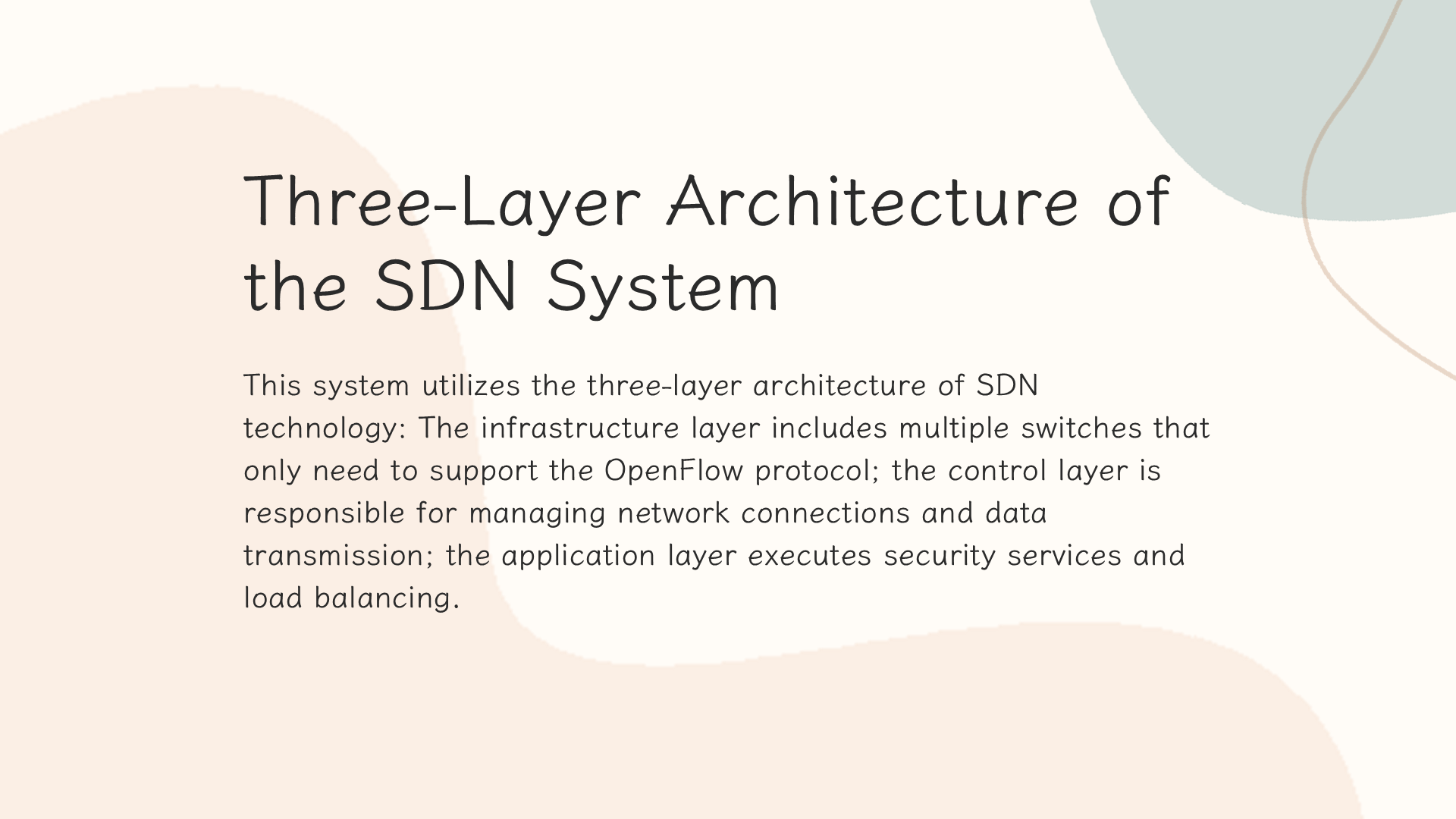
Our technical architecture is divided into three layers:
1. SDN Control Layer: Utilizes the RYU controller for centralized network traffic management, supporting dynamic traffic scheduling.
2. Data Processing Layer: Captures attack traffic and employs AI models for data analysis and prediction.
3. Application Layer: Generates corresponding honeypot containers based on AI predictions to capture and record attack behaviors.
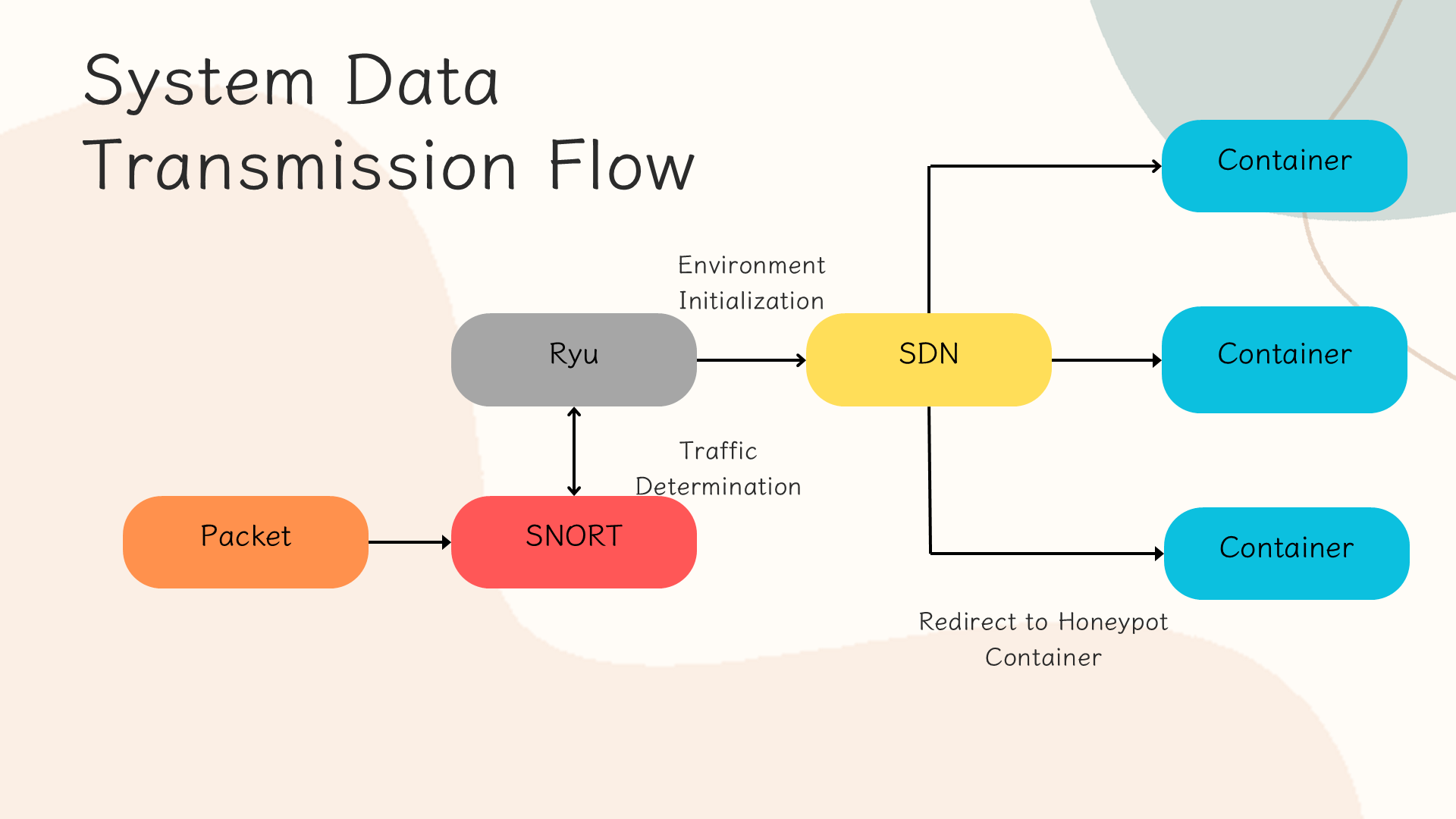
In terms of data flow processing, the system forms an efficient closed loop, from the entry of attack traffic to the generation of containers, data transmission, and AI analysis.
|
|
ICACT20250010 Slide.11
[Big slide for presentation]
[YouTube] |
Chrome Text-to-Speach Click!! |
 |
Our technical architecture is divided into three layers:
1. SDN Control Layer: Utilizes the RYU controller for centralized network traffic management, supporting dynamic traffic scheduling.
2. Data Processing Layer: Captures attack traffic and employs AI models for data analysis and prediction.
3. Application Layer: Generates corresponding honeypot containers based on AI predictions to capture and record attack behaviors.
In terms of data flow processing, the system forms an efficient closed loop, from the entry of attack traffic to the generation of containers, data transmission, and AI analysis.
|
|
ICACT20250010 Slide.10
[Big slide for presentation]
[YouTube] |
Chrome Text-to-Speach Click!! |
 |
Our technical architecture is divided into three layers:
1. SDN Control Layer: Utilizes the RYU controller for centralized network traffic management, supporting dynamic traffic scheduling.
2. Data Processing Layer: Captures attack traffic and employs AI models for data analysis and prediction.
3. Application Layer: Generates corresponding honeypot containers based on AI predictions to capture and record attack behaviors.
In terms of data flow processing, the system forms an efficient closed loop, from the entry of attack traffic to the generation of containers, data transmission, and AI analysis.
|
|
ICACT20250010 Slide.09
[Big slide for presentation]
[YouTube] |
Chrome Text-to-Speach Click!! |
 |
SDN Architecture and Applications:
SDN achieves flexible network traffic management by decoupling the network control layer from the data layer. Its architecture primarily includes:
1. Northbound API: Provides an interface between the control layer and the application layer, enabling the implementation of custom policies.
2. Southbound API: Centers around the OpenFlow protocol to ensure unified control over data layer devices.
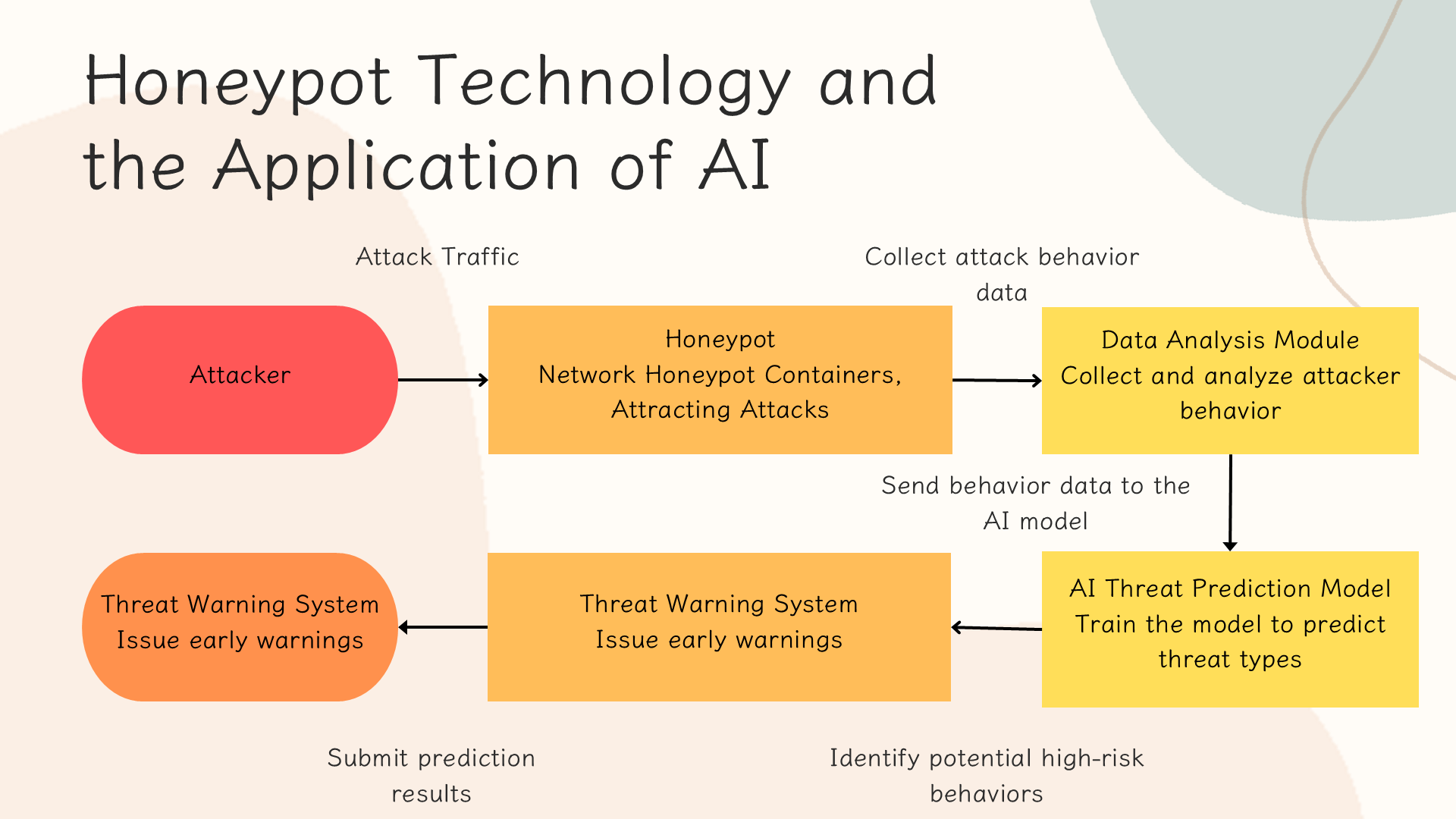
Honeypot Technology and AI Applications:
Honeypot technology is designed to simulate real network environments, luring attackers to execute attacks and collecting their behavior data. The integration of AI technology enables:
1. In-depth analysis of attack data.
2. Accurate prediction of potential future attack patterns.
3. Enhanced intelligence and functionality of honeypots.
|
|
ICACT20250010 Slide.08
[Big slide for presentation]
[YouTube] |
Chrome Text-to-Speach Click!! |
 |
SDN Architecture and Applications:
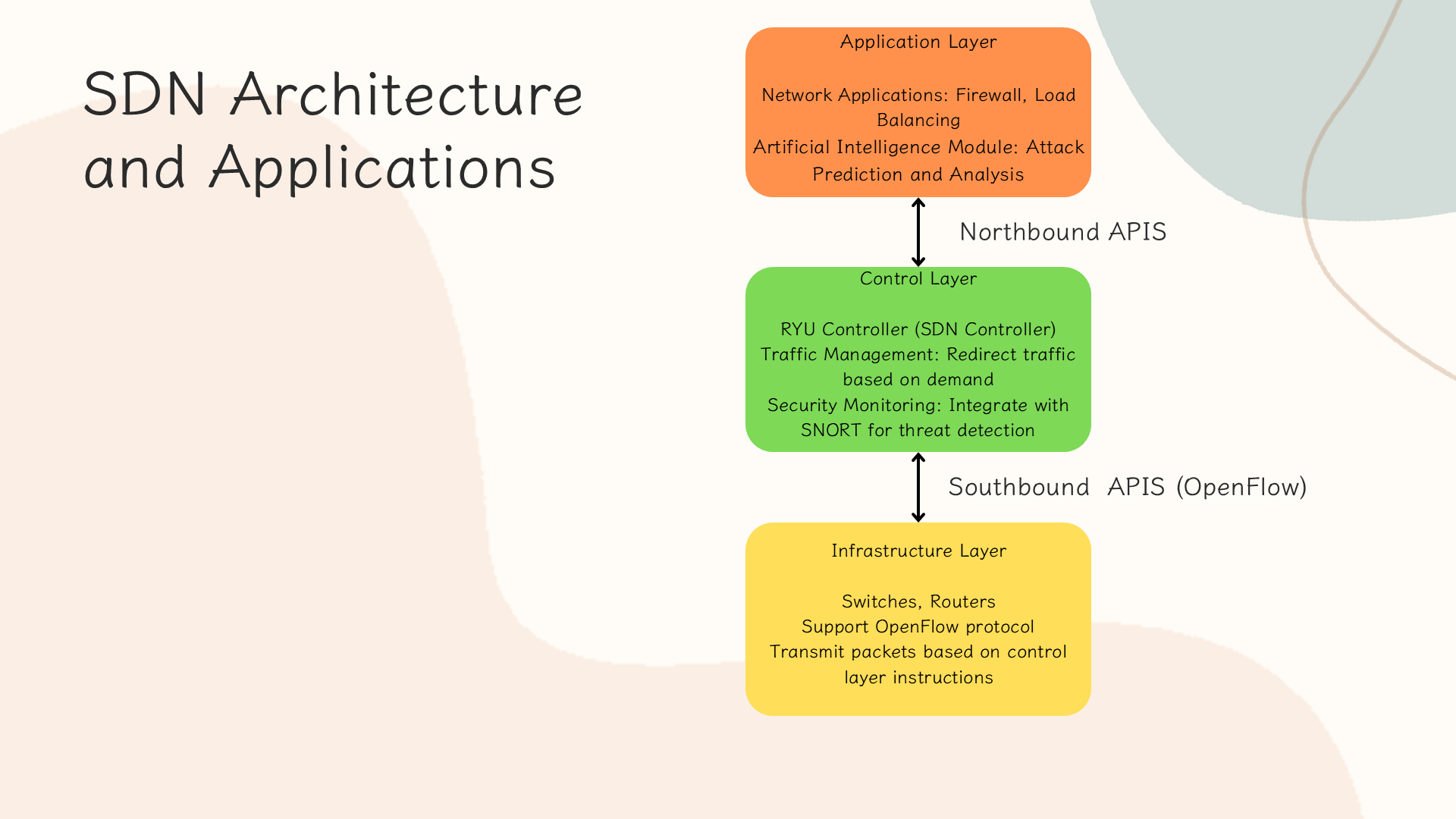
SDN achieves flexible network traffic management by decoupling the network control layer from the data layer. Its architecture primarily includes:
1. Northbound API: Provides an interface between the control layer and the application layer, enabling the implementation of custom policies.
2. Southbound API: Centers around the OpenFlow protocol to ensure unified control over data layer devices.
Honeypot Technology and AI Applications:
Honeypot technology is designed to simulate real network environments, luring attackers to execute attacks and collecting their behavior data. The integration of AI technology enables:
1. In-depth analysis of attack data.
2. Accurate prediction of potential future attack patterns.
3. Enhanced intelligence and functionality of honeypots.
|
|
ICACT20250010 Slide.07
[Big slide for presentation]
[YouTube] |
Chrome Text-to-Speach Click!! |
 |
SDN Architecture and Applications:
SDN achieves flexible network traffic management by decoupling the network control layer from the data layer. Its architecture primarily includes:
1. Northbound API: Provides an interface between the control layer and the application layer, enabling the implementation of custom policies.
2. Southbound API: Centers around the OpenFlow protocol to ensure unified control over data layer devices.
Honeypot Technology and AI Applications:
Honeypot technology is designed to simulate real network environments, luring attackers to execute attacks and collecting their behavior data. The integration of AI technology enables:
1. In-depth analysis of attack data.
2. Accurate prediction of potential future attack patterns.
3. Enhanced intelligence and functionality of honeypots.
|
|
ICACT20250010 Slide.06
[Big slide for presentation]
[YouTube] |
Chrome Text-to-Speach Click!! |
 |
Research Objectives:
1. Design a rapid-response honeypot system capable of capturing and analyzing various types of attack behaviors.
2. Utilize AI models for accurate prediction of attack types, providing a basis for defense strategy formulation.
3. Integrate SDN technology to achieve dynamic traffic management and resource allocation, enhancing system efficiency.
Research Motivation:
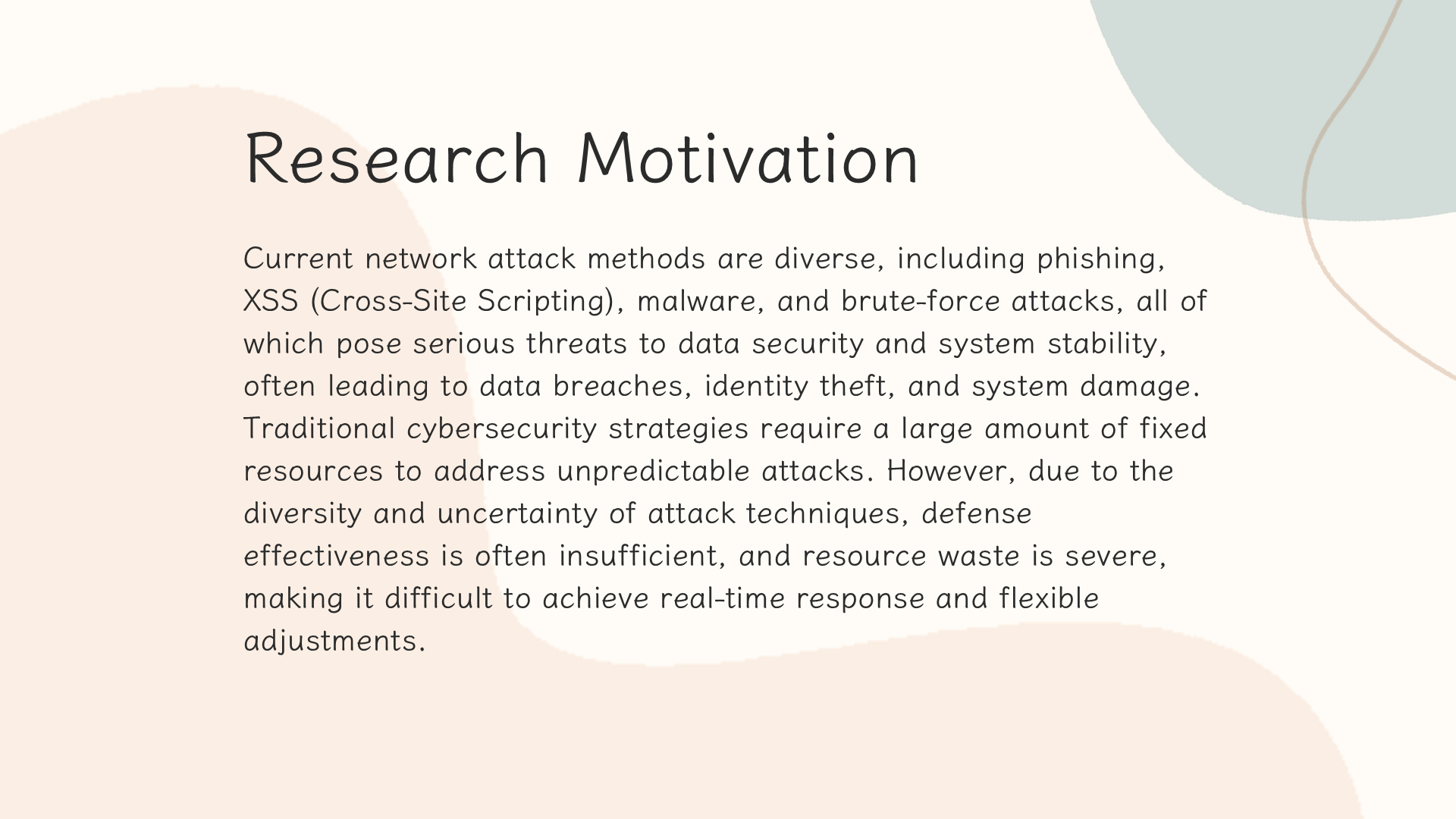
Existing static honeypot systems face challenges such as slow response times, significant resource wastage, and difficulty in addressing dynamic attacks. In contrast, dynamic honeypot systems can quickly generate corresponding defense strategies based on different attack behaviors, greatly improving overall defense effectiveness. This study aims to address these issues by leveraging AI technology to enhance prediction accuracy and combining it with SDN technology to enable dynamic resource allocation.
|
|
ICACT20250010 Slide.05
[Big slide for presentation]
[YouTube] |
Chrome Text-to-Speach Click!! |
 |
Research Objectives:
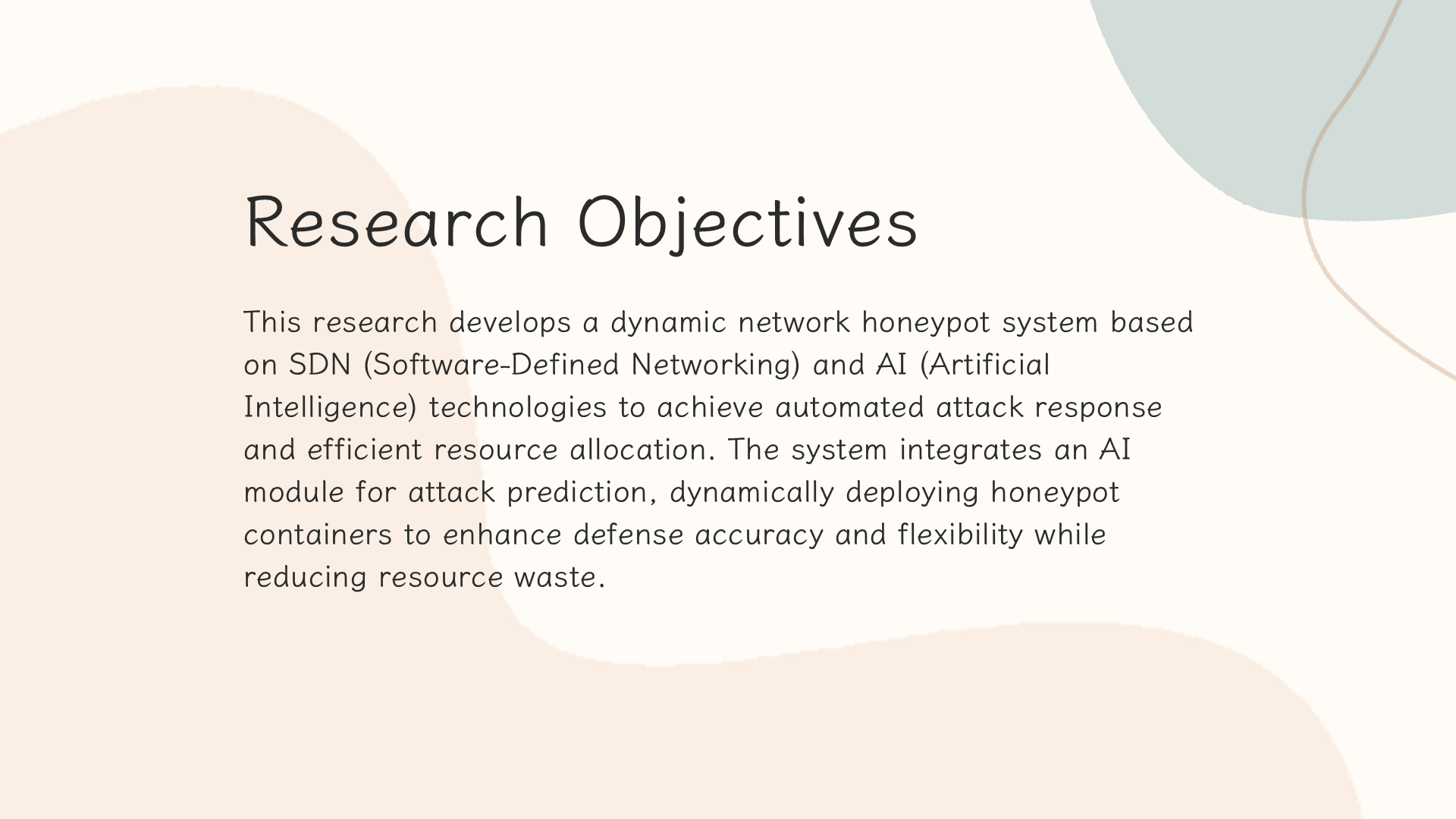
1. Design a rapid-response honeypot system capable of capturing and analyzing various types of attack behaviors.
2. Utilize AI models for accurate prediction of attack types, providing a basis for defense strategy formulation.
3. Integrate SDN technology to achieve dynamic traffic management and resource allocation, enhancing system efficiency.
Research Motivation:
Existing static honeypot systems face challenges such as slow response times, significant resource wastage, and difficulty in addressing dynamic attacks. In contrast, dynamic honeypot systems can quickly generate corresponding defense strategies based on different attack behaviors, greatly improving overall defense effectiveness. This study aims to address these issues by leveraging AI technology to enhance prediction accuracy and combining it with SDN technology to enable dynamic resource allocation.
|
|
ICACT20250010 Slide.04
[Big slide for presentation]
[YouTube] |
Chrome Text-to-Speach Click!! |
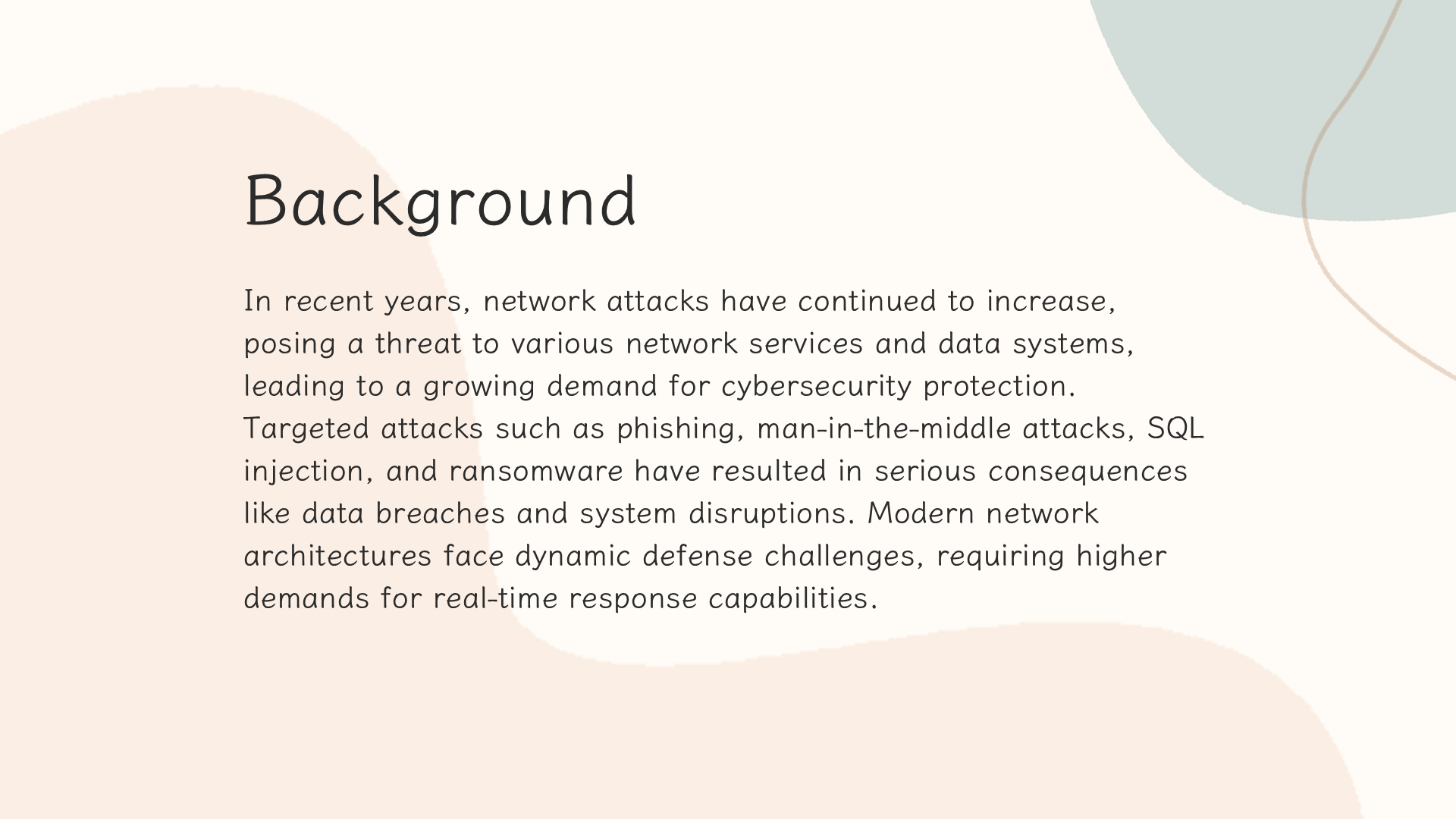 |
With the widespread adoption of data centers and cloud computing technologies, the volume and complexity of network attacks have grown significantly. While traditional security mechanisms, such as firewalls and intrusion detection systems, can filter some attack traffic effectively, they face the following limitations when dealing with complex attacks:
1. Static rules cannot address the dynamic nature of evolving attack behaviors.
2. They fail to capture and analyze novel attack behaviors promptly.
3. A lack of flexibility in resource allocation results in inefficiencies.
Our proposed solution leverages the flexible traffic management capabilities of SDN technology combined with the efficient data analysis and predictive capabilities of AI models. This approach enables adaptive responses to attack behaviors, enhancing network defense capabilities while significantly reducing resource costs.
|
|
ICACT20250010 Slide.03
[Big slide for presentation]
[YouTube] |
Chrome Text-to-Speach Click!! |
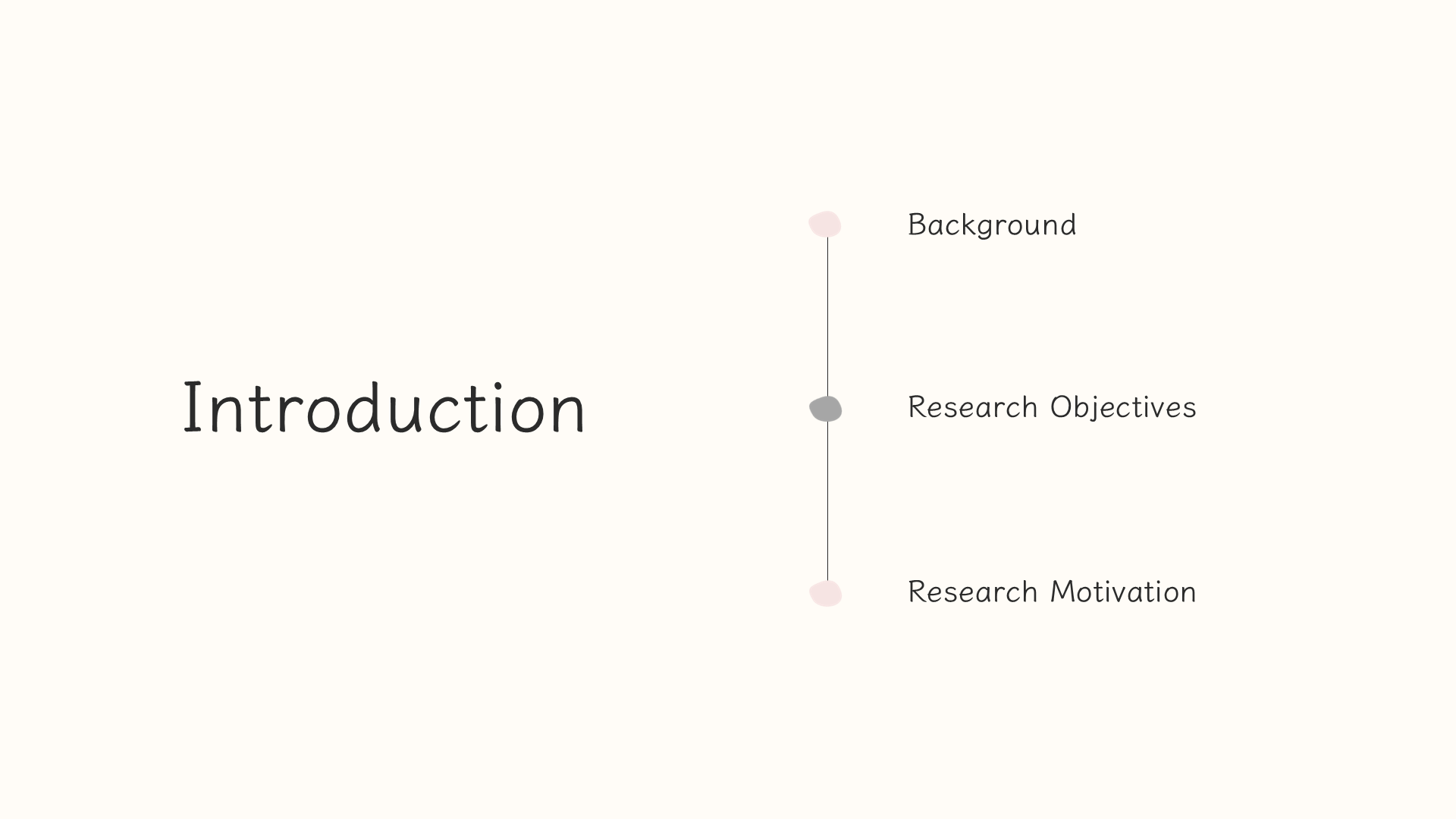 |
Hello, everyone! Today, I will introduce a novel, rapid deployment honeypot mechanism based on SDN and AI strategies. With the increasing severity of network attack threats, efficiently detecting and responding to these threats has become a critical challenge. This study aims to combine the flexibility of SDN with the intelligence of AI to create a dynamic and efficient network security solution. The motivation for this research lies in the diversity and rapid evolution of current network attacks. For instance, enterprise-targeted DDoS attacks and personal ransomware threats demand smarter security mechanisms for effective response. Our system is designed to enable the rapid deployment of honeypots to capture attack behaviors and leverage AI technology for behavior prediction, offering a breakthrough in network security.
|
|
ICACT20250010 Slide.02
[Big slide for presentation]
[YouTube] |
Chrome Text-to-Speach Click!! |
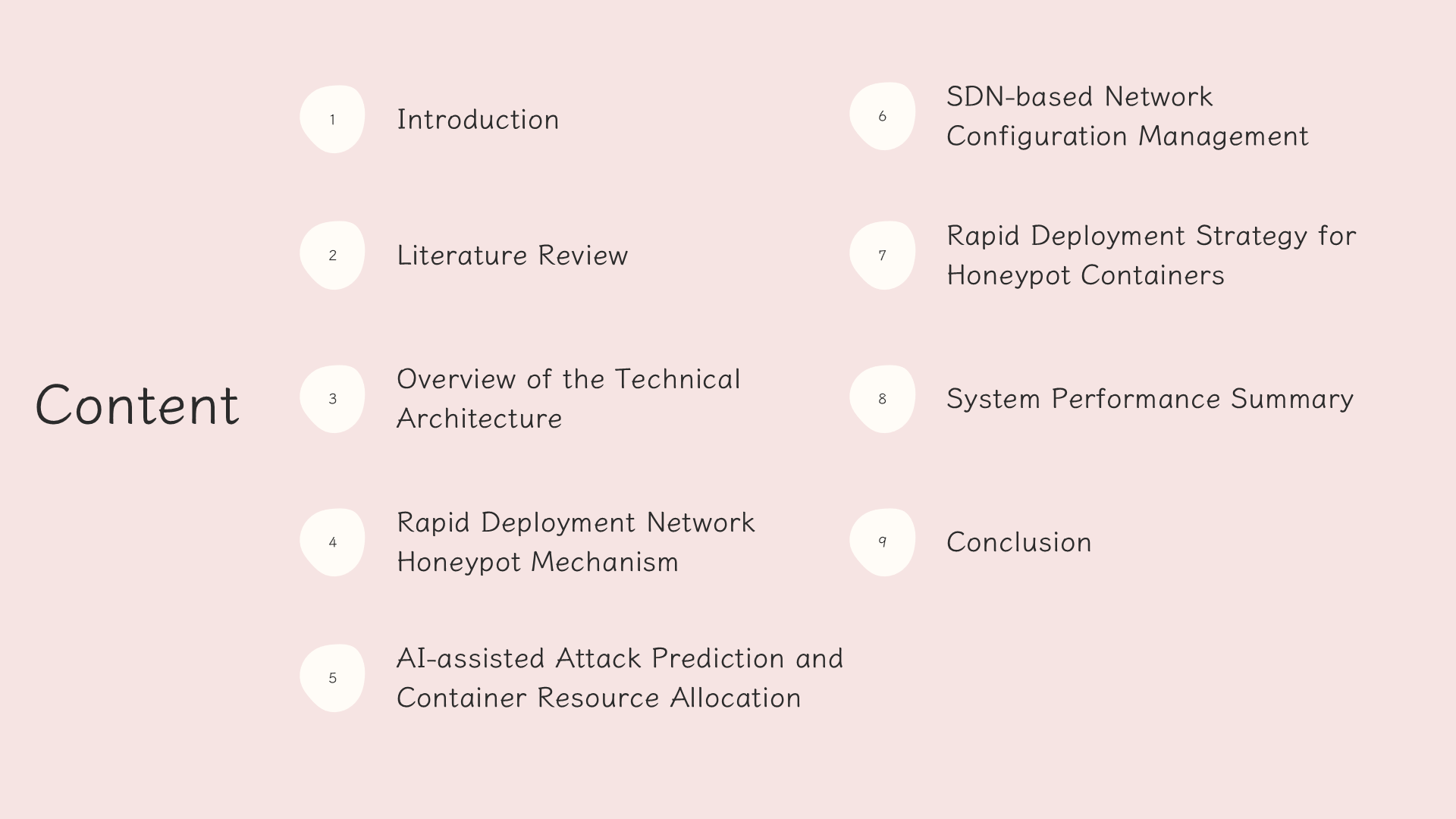 |
Hello, everyone! Today, I will introduce a novel, rapid deployment honeypot mechanism based on SDN and AI strategies. With the increasing severity of network attack threats, efficiently detecting and responding to these threats has become a critical challenge. This study aims to combine the flexibility of SDN with the intelligence of AI to create a dynamic and efficient network security solution. The motivation for this research lies in the diversity and rapid evolution of current network attacks. For instance, enterprise-targeted DDoS attacks and personal ransomware threats demand smarter security mechanisms for effective response. Our system is designed to enable the rapid deployment of honeypots to capture attack behaviors and leverage AI technology for behavior prediction, offering a breakthrough in network security.
|
|
ICACT20250010 Slide.01
[Big slide for presentation]
[YouTube] |
Chrome Text-to-Speach Click!! |
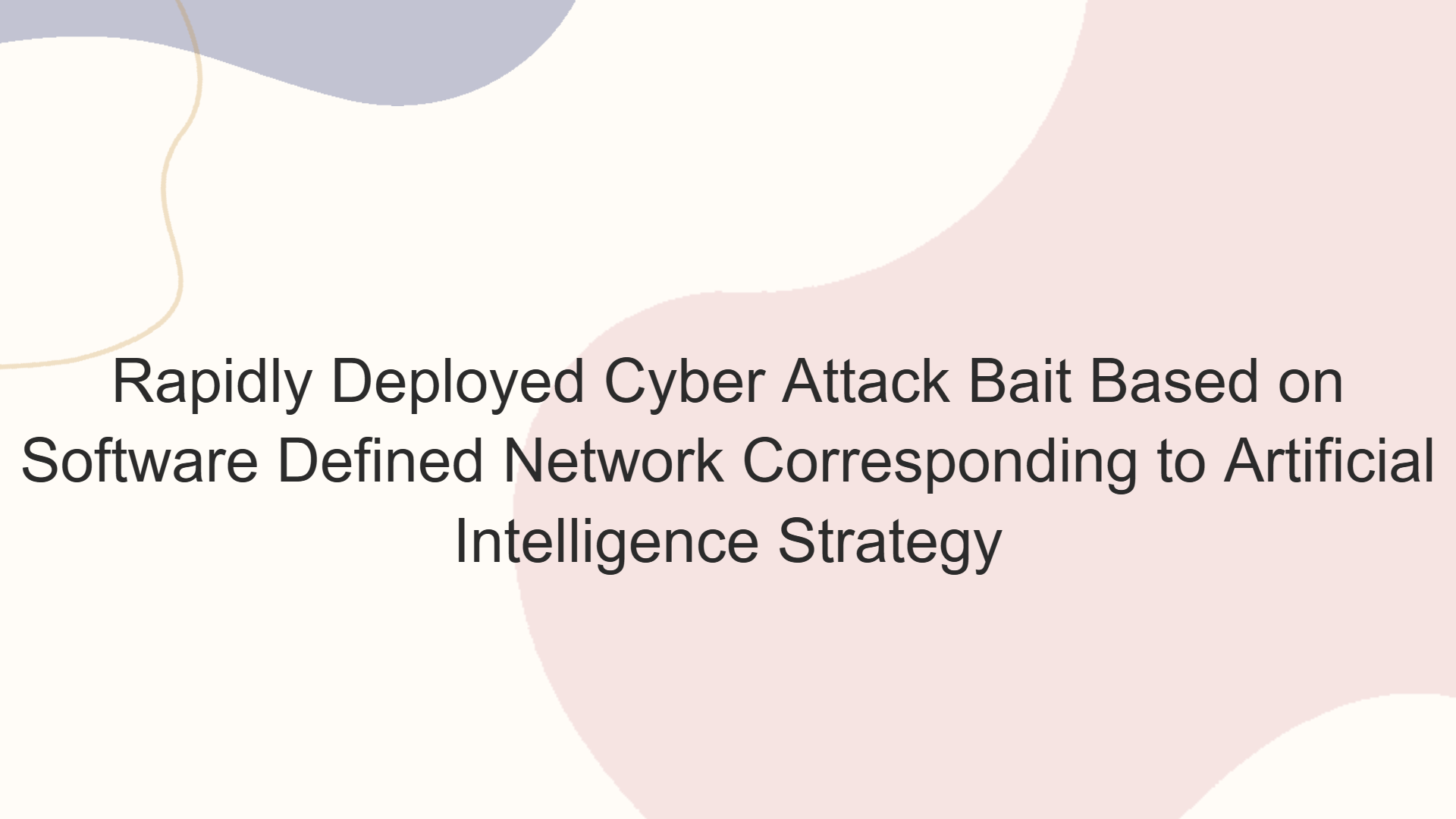 |
Hello, everyone! Today, I will introduce a novel, rapid deployment honeypot mechanism based on SDN and AI strategies. With the increasing severity of network attack threats, efficiently detecting and responding to these threats has become a critical challenge. This study aims to combine the flexibility of SDN with the intelligence of AI to create a dynamic and efficient network security solution. The motivation for this research lies in the diversity and rapid evolution of current network attacks. For instance, enterprise-targeted DDoS attacks and personal ransomware threats demand smarter security mechanisms for effective response. Our system is designed to enable the rapid deployment of honeypots to capture attack behaviors and leverage AI technology for behavior prediction, offering a breakthrough in network security.
|
















