 ICACT20240402 Slide.11
[Big slide for presentation] |
Chrome Text-to-Speach Click!! |
 |
Thank you for your attention. If you have any questions you can ask, please.
|
|
ICACT20240402 Slide.10
[Big slide for presentation]
|
Chrome Text-to-Speach Click!! |
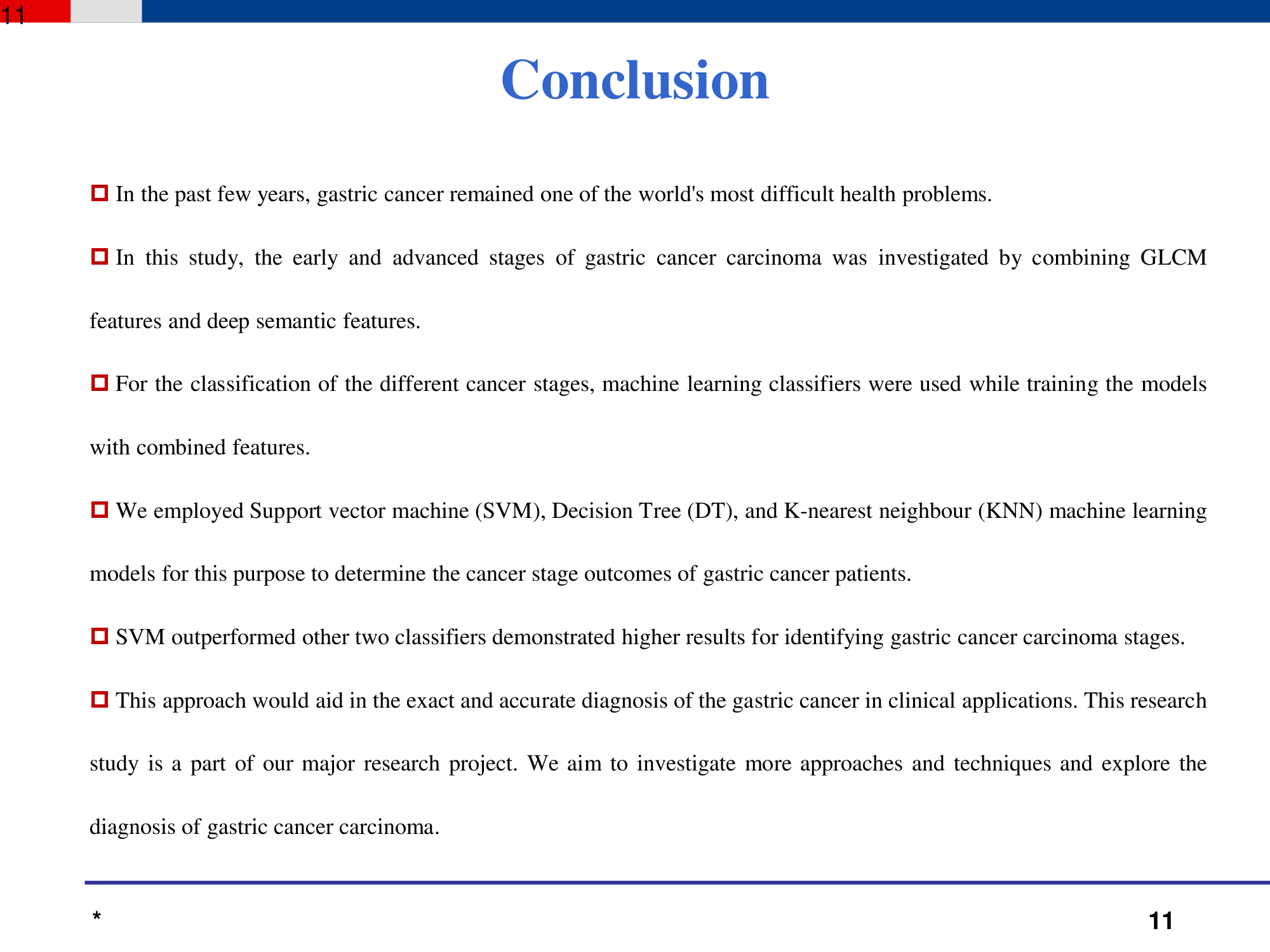 |
Gastric cancer is one of the leading health issues that contributes to cancer related deaths. The significant death rate from gastric cancer highlights the importance of a precise and prompt diagnosis. This paper aims to tackle this problem by proposing an approach to classify the early and advanced stages of gastric cancer. The importance of this study stems from its two-pronged strategy, which provides a deeper understanding of stomach cancer stages using texture analysis and deep learning. We take advantage of the strengths of deep learning features, Gray Level Co-occurrence Matrix (GLCM) features, and machine learning algorithm to create a diagnostic tool that is more precise and accurate. Our method combines the effectiveness of texture features extracted from GLCM combined with deep semantic features and classify the stages with machine learning model. We carefully evaluated Machine learning classifiers namely Support Vector Machine (SVM), Decision Tree (DT), and K-nearest neighbour (KNN) to classify the early and advanced stages. Each classifier was evaluated with different performance measures. The Support Vector Machine (SVM) classifier demonstrated the best performance with an accuracy of 96.93%. This highlights the potential of SVM for diagnosing different cancer stages, which could have positive implications, for clinical practice.
|
|
ICACT20240402 Slide.09
[Big slide for presentation]
|
Chrome Text-to-Speach Click!! |
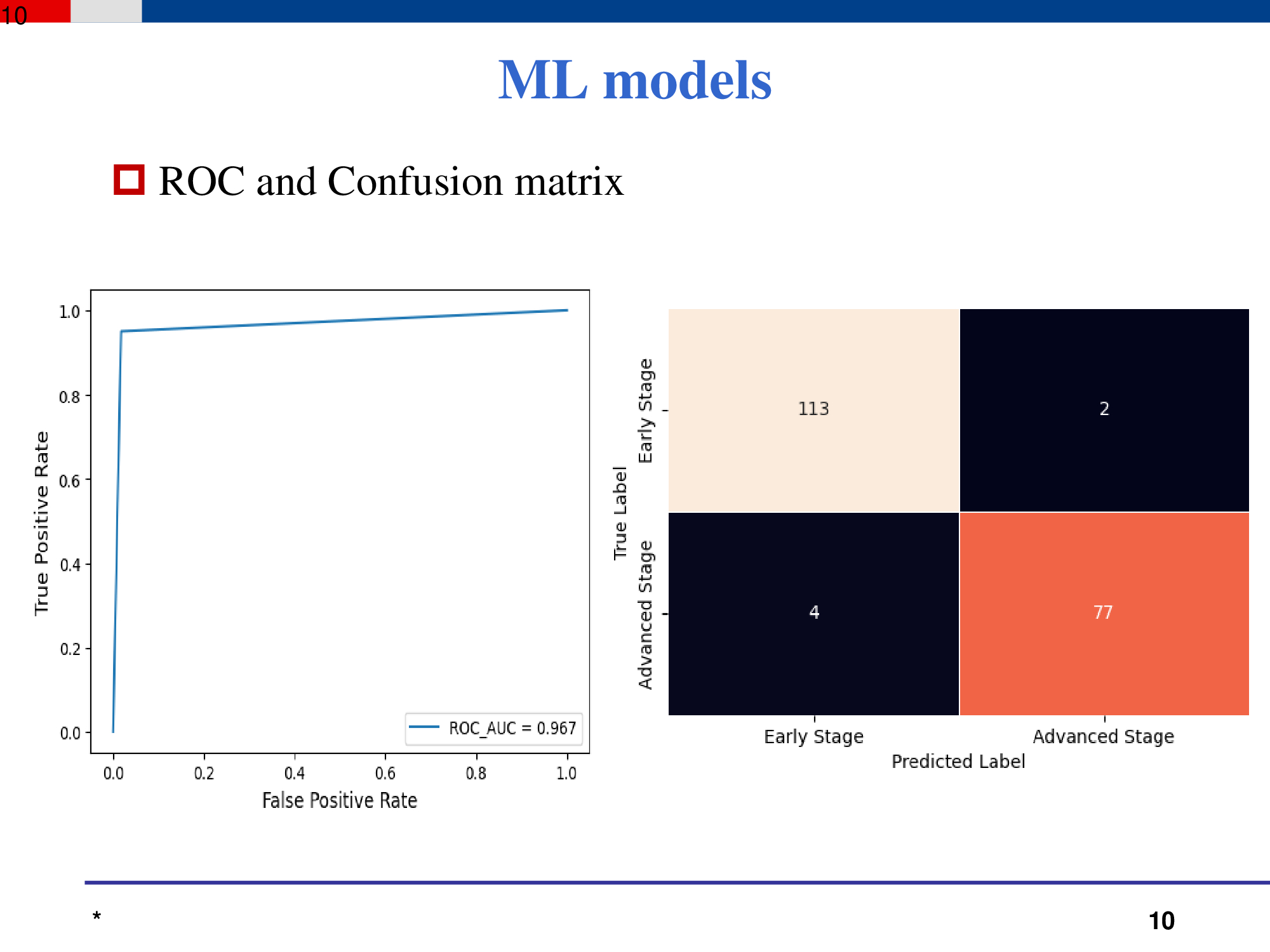 |
There are several metrics for the evaluation of the model.The figures show the ROC curve and confusion matrix. in the second figure the confusion matrix of our model shows the distribution of all the predicted responses to their true classes. Out of 196 test samples, 190 test samples as shown on the diagonal of the confusion matrix are correctly predicted and 6 samples are misclassified by the model. It means the model accuracy is quite encouraging for classifying the stages of gastric cancer carcinoma.
|
|
ICACT20240402 Slide.08
[Big slide for presentation]
|
Chrome Text-to-Speach Click!! |
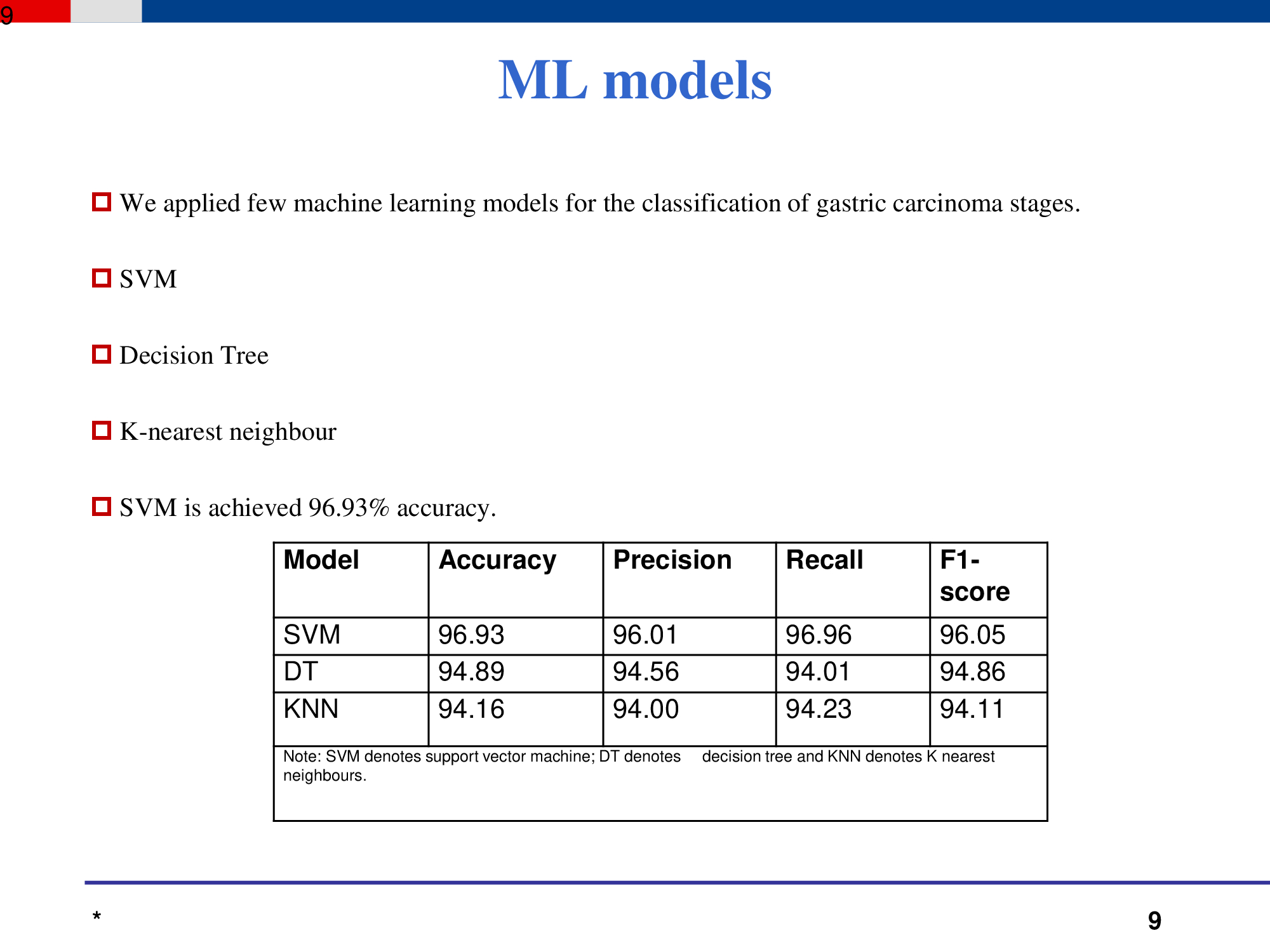 |
Three machine-learning models were employed and we evaluated their performance. Out of those three machine learning classifiers, Support vector machine demonstrated a higher accuracy of 96.93.
|
|
ICACT20240402 Slide.07
[Big slide for presentation]
|
Chrome Text-to-Speach Click!! |
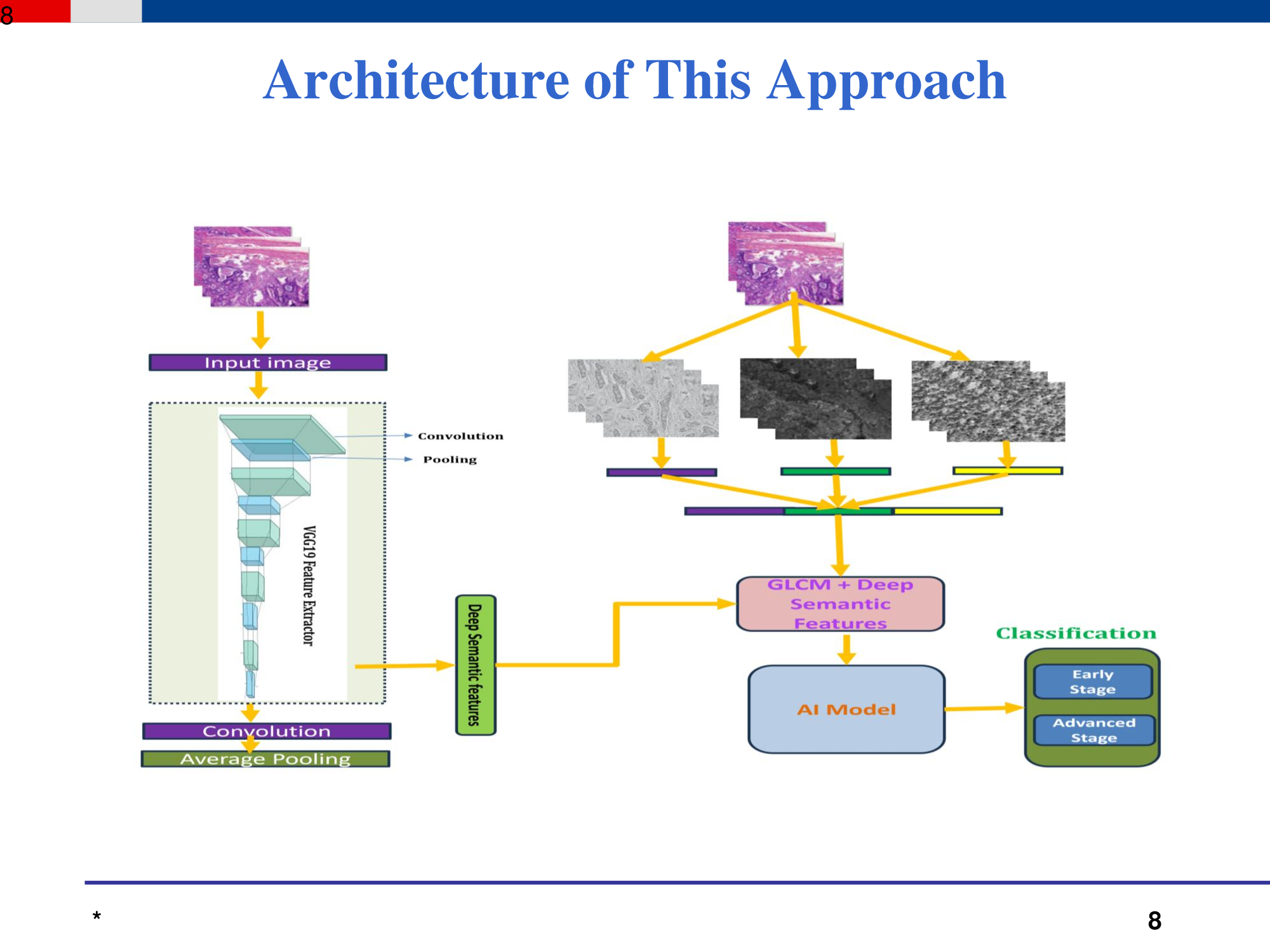 |
This is the architecture of our propose approach by contacting the deep semantic features and the GLCM features.
|
|
ICACT20240402 Slide.06
[Big slide for presentation]
|
Chrome Text-to-Speach Click!! |
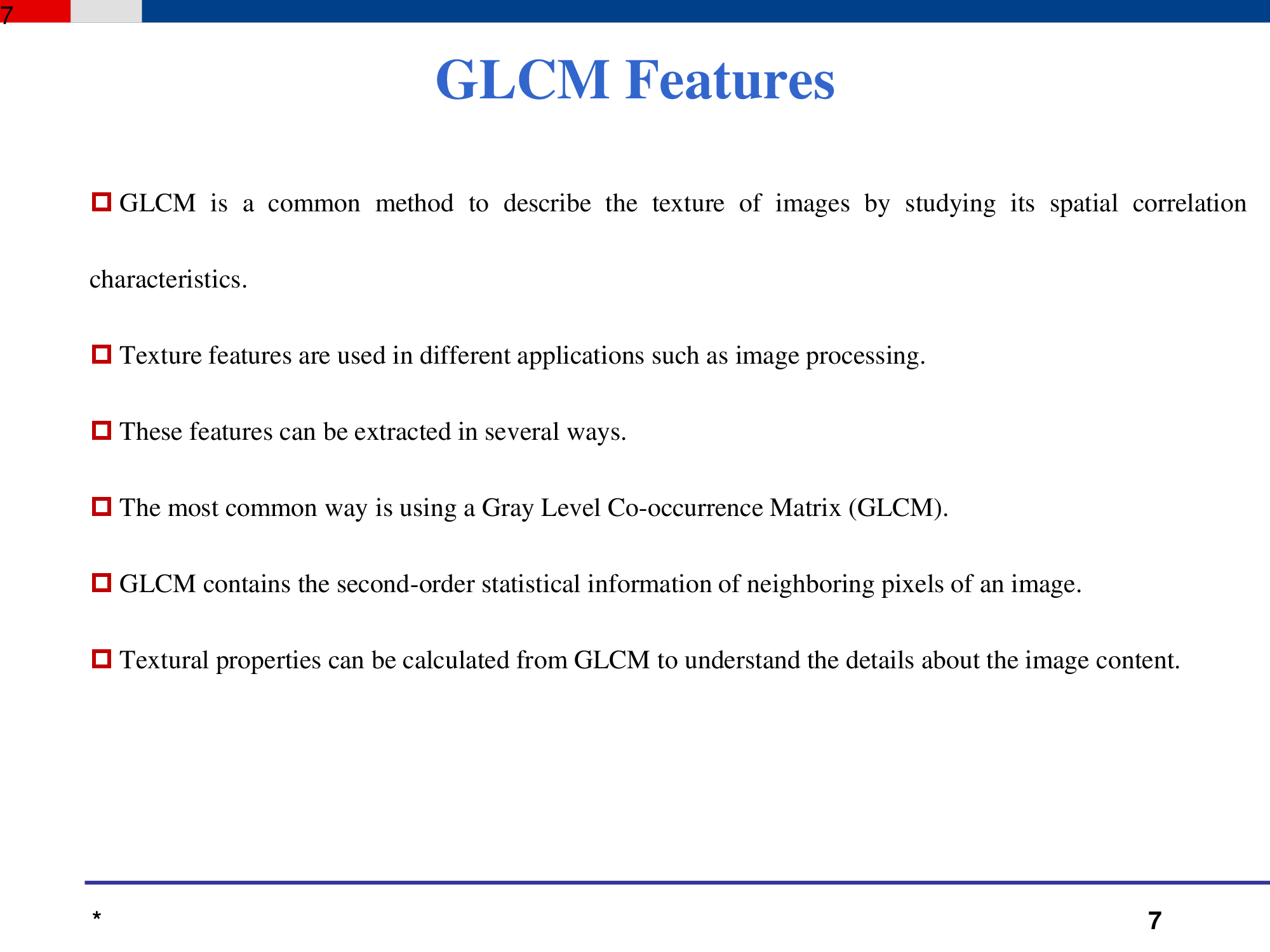 |
In this study, we aim to develop a model by combining the gray level co-occurrence matrix features and deep semantic features. GLCM illustrates the texture of images.
|
|
ICACT20240402 Slide.05
[Big slide for presentation]
|
Chrome Text-to-Speach Click!! |
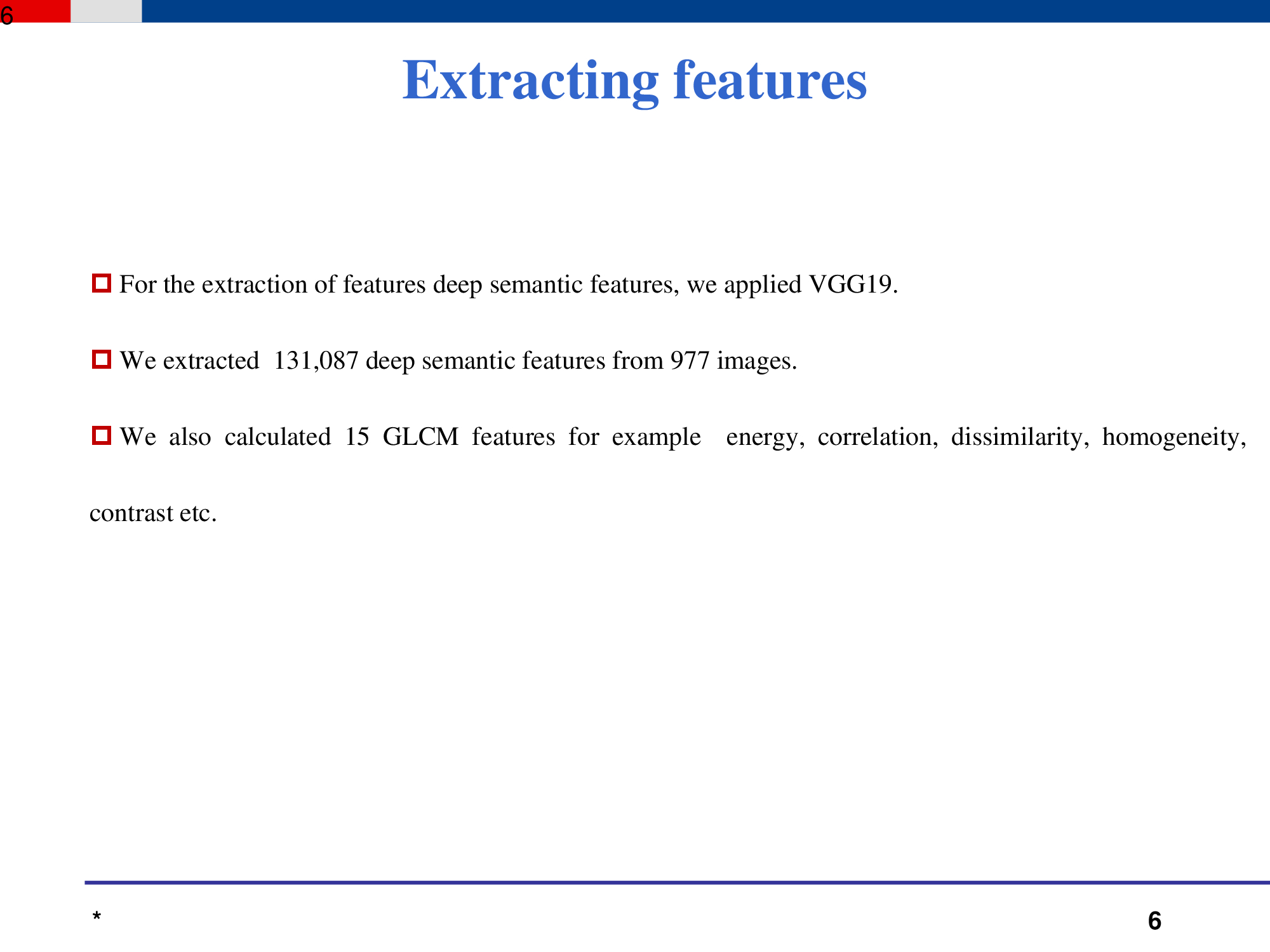 |
We applied CNN based feature extractor on the data and extracted deep semantic features from the data. Then we extracted Gray level co-occurrence Matrix (GLCM).
|
|
ICACT20240402 Slide.04
[Big slide for presentation]
|
Chrome Text-to-Speach Click!! |
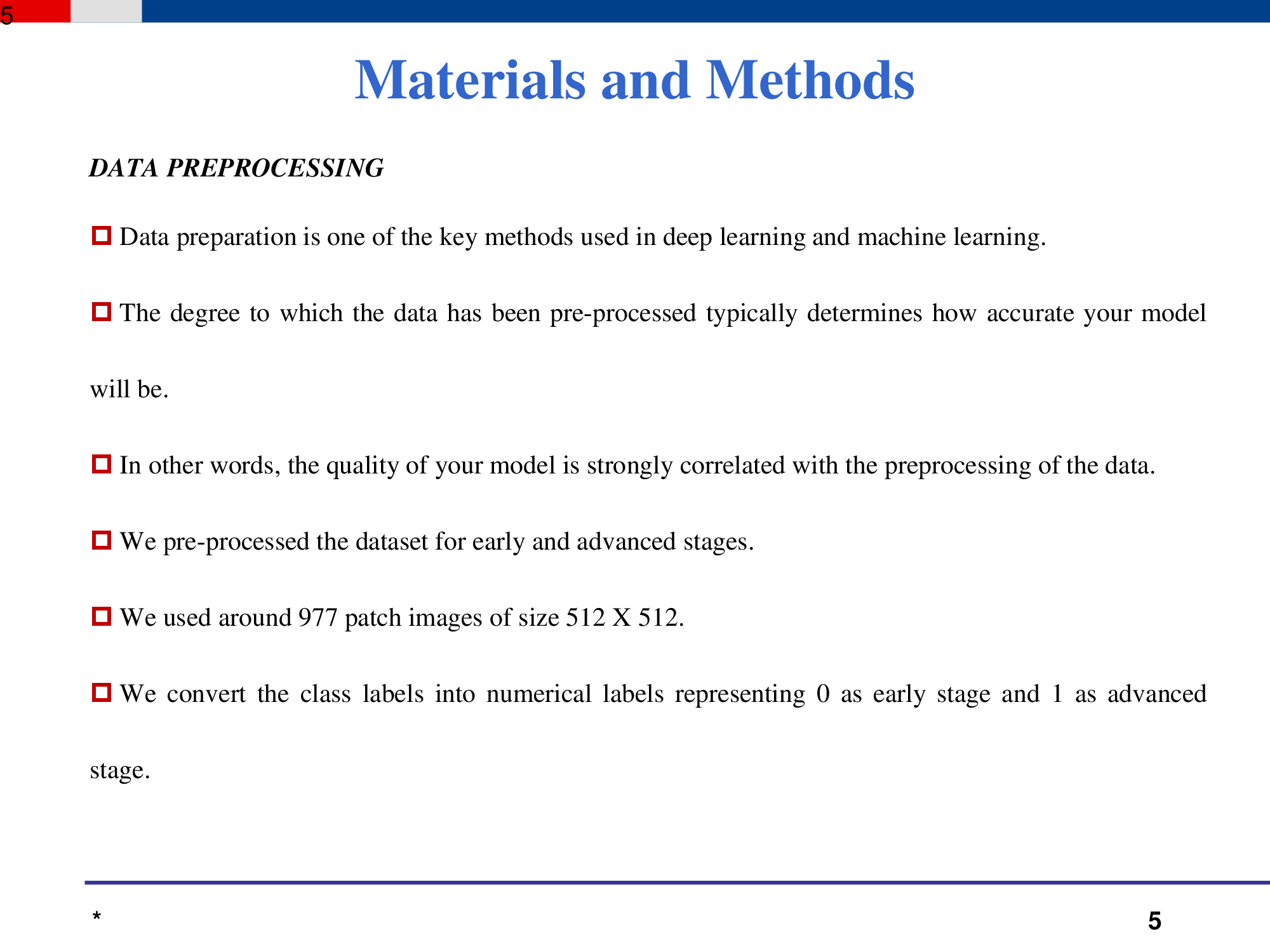 |
Data preparation is one of the key methods used in deep learning and machine learning. The degree to which the data has been pre-processed typically determines how accurate your model will be. In other words, the quality of your model is strongly correlated with the preprocessing of the data. We pre-processed the dataset for early and advanced stages.
|
|
ICACT20240402 Slide.03
[Big slide for presentation]
|
Chrome Text-to-Speach Click!! |
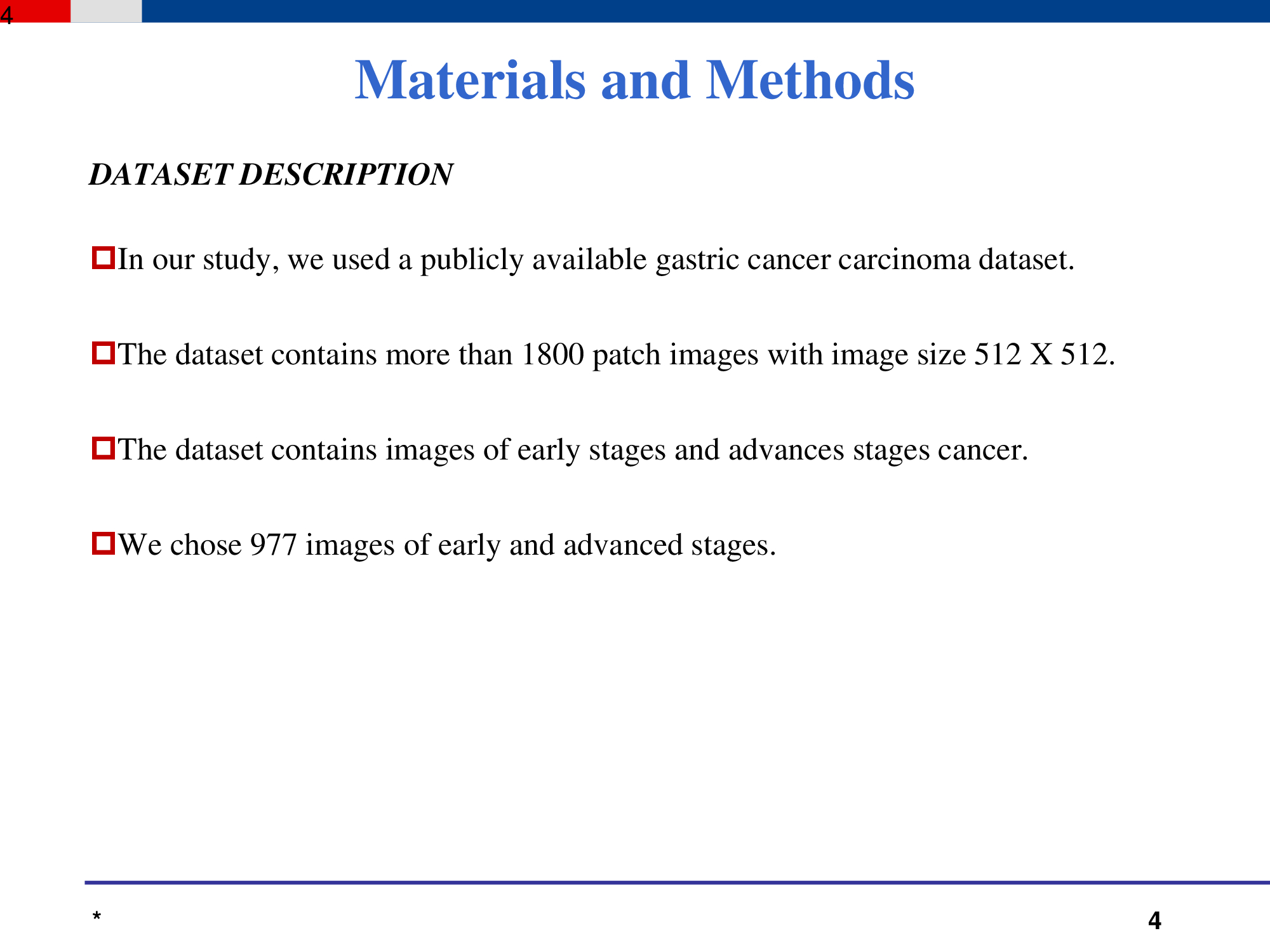 |
We used public dataset for this study. The images are patched based images extracted from WSI images. We choose 977 images of high quality with size 512 X 512.
|
|
ICACT20240402 Slide.02
[Big slide for presentation]
|
Chrome Text-to-Speach Click!! |
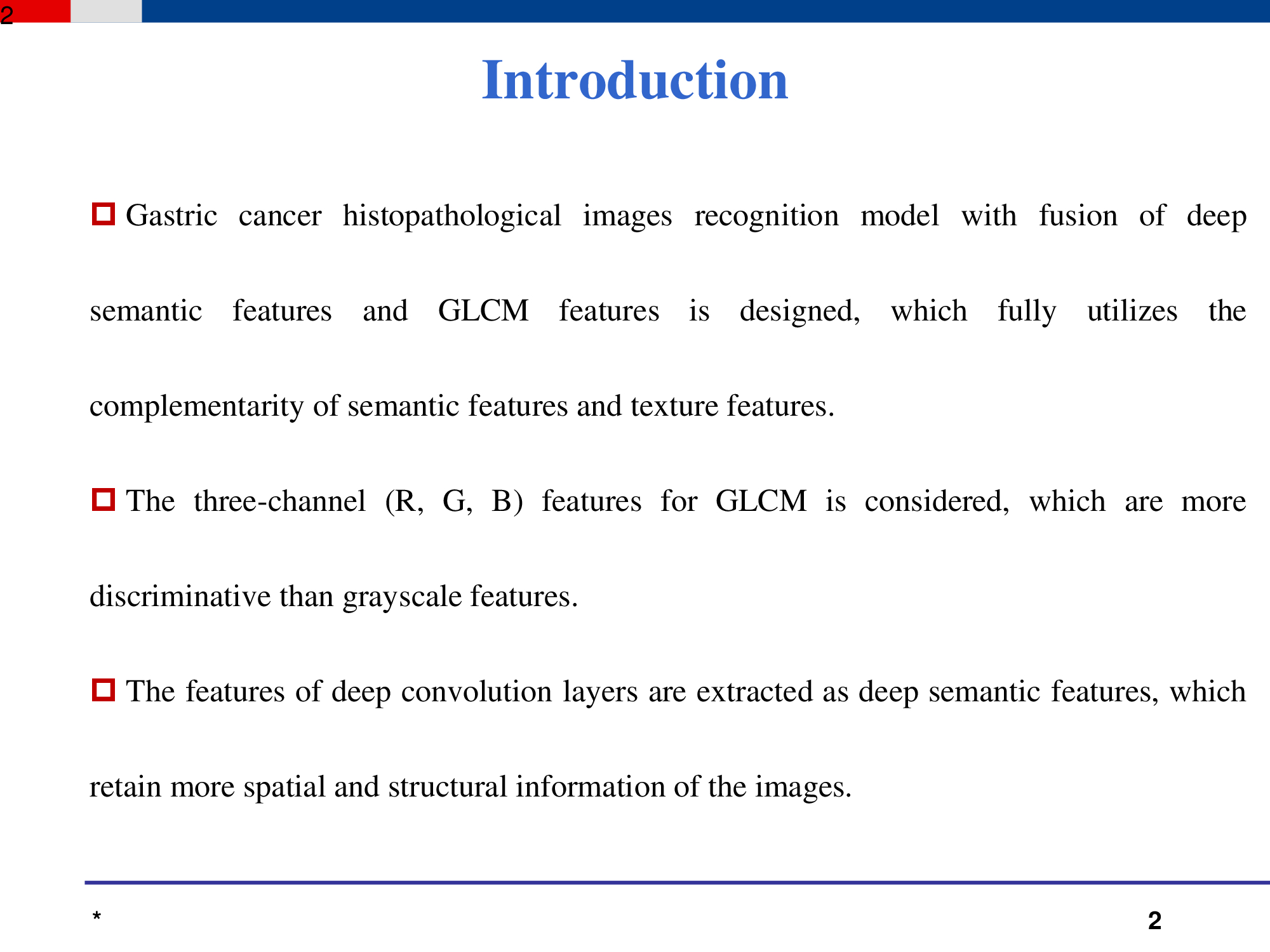 |
Gastric cancer is one of the significant global deaths causing cancer diseases. So in this research study we, develop a model by combining the deep semantic features and GLCM features for the diagnosis of gastric cancer carcinoma stages from histopathological images. Gray Level Co-occurrence Matrix (GLCM) features are also very one of the most prominent features other than deep semantic features. We are aiming to get benefit from both the deep features and texture features of the histopathology images.
|
|
ICACT20240402 Slide.01
[Big slide for presentation]
|
Chrome Text-to-Speach Click!! |
 |
These are the contents of this presentation.
|
|
ICACT20240402 Slide.00
[Big slide for presentation]
|
Chrome Text-to-Speach Click!! |
 |
Hello Everyone! I am Sikandar Ali, a PhD Candidate from Inje University. Today I am presenting our paper and the title of our paper is "Classifying gastric cancer carcinoma stages with deep semantic features and GLCM texture features"
|
















