 ICACT20250073 Slide.22
[Big slide for presentation] |
Chrome Text-to-Speach Click!! |
 |
Acknowledgements: "Supported by the Brain Pool program funded by the Ministry of Science and ICT through the National Research Foundation of Korea.“
|
|
ICACT20250073 Slide.21
[Big slide for presentation]
|
Chrome Text-to-Speach Click!! |
 |
This study underscores the dynamic nature of digital image forensics and the continuous need for innovation to counteract sophisticated anti-forensic methods.
The findings serve as a platform for future research, fostering a collaborative environment among academia, industry, and policymakers.
|
|
ICACT20250073 Slide.20
[Big slide for presentation]
|
Chrome Text-to-Speach Click!! |
 |
Future research should explore more robust methods in neural network applications and cloud computing to enhance forensic capabilities.
Continuous adaptation in forensic methods is necessary to keep pace with rapidly advancing anti-forensic techniques.
|
|
ICACT20250073 Slide.19
[Big slide for presentation]
|
Chrome Text-to-Speach Click!! |
 |
Technical Challenges: Anti-forensic techniques like GANs present new challenges by effectively masking manipulations, complicating detection.
Legal Implications: The legality of forensic evidence is crucial, especially when manipulated images can affect judicial outcomes.
|
|
ICACT20250073 Slide.18
[Big slide for presentation]
|
Chrome Text-to-Speach Click!! |
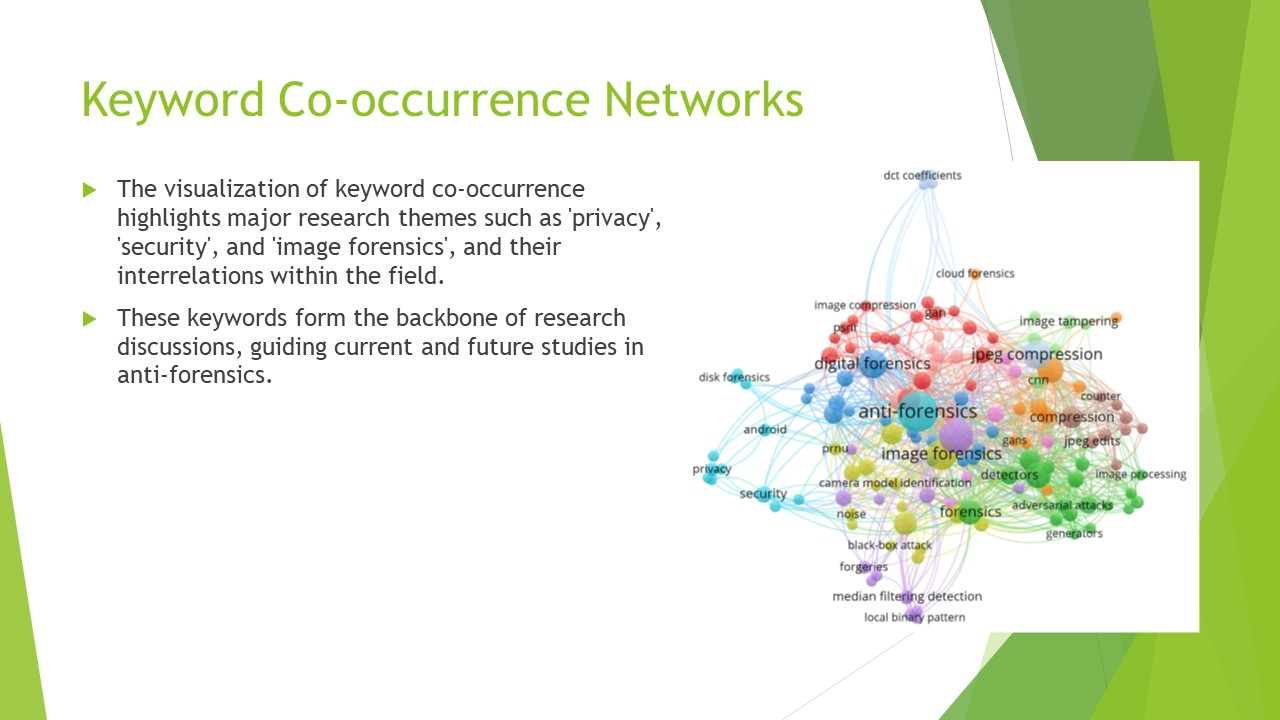 |
The visualization of keyword co-occurrence highlights major research themes such as 'privacy', 'security', and 'image forensics', and their interrelations within the field.
These keywords form the backbone of research discussions, guiding current and future studies in anti-forensics.
|
|
ICACT20250073 Slide.17
[Big slide for presentation]
|
Chrome Text-to-Speach Click!! |
 |
Citation linkages reveal the interconnectedness of research works, identifying seminal articles that have significantly influenced the field.
Documents such as 'Do GANs Leave Artificial Fingerprints?' lead with the highest citations, indicating their foundational role in current anti-forensic methodologies.
|
|
ICACT20250073 Slide.16
[Big slide for presentation]
|
Chrome Text-to-Speach Click!! |
 |
Highlighting contributions from various countries, with notable researchers like Barni, M. from Italy and Stamm, MC from the USA leading in publications
Influential Organizations: Univ Maryland and Beijing Jiaotong Univ, which are pivotal in advancing anti-forensic research.
|
|
ICACT20250073 Slide.15
[Big slide for presentation]
|
Chrome Text-to-Speach Click!! |
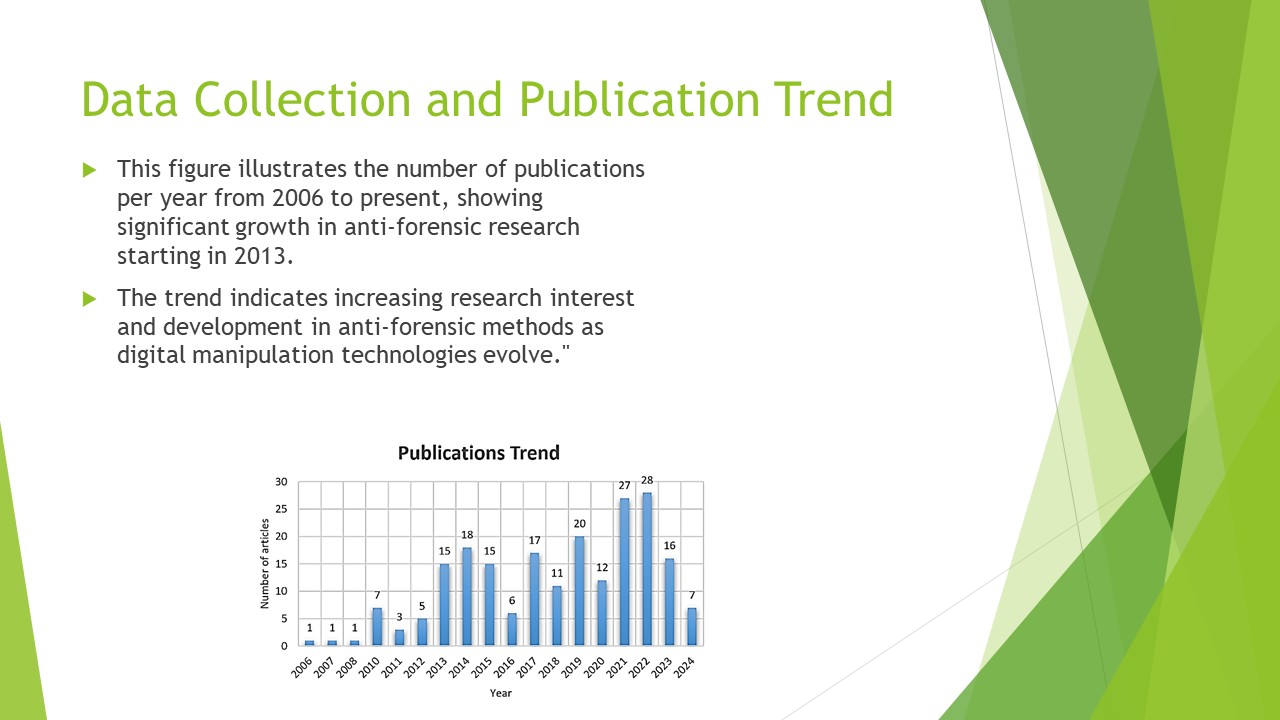 |
This figure illustrates the number of publications per year from 2006 to present, showing significant growth in anti-forensic research starting in 2013.
The trend indicates increasing research interest and development in anti-forensic methods as digital manipulation technologies evolve."
|
|
ICACT20250073 Slide.14
[Big slide for presentation]
|
Chrome Text-to-Speach Click!! |
 |
This analysis quantifies the growth and influence of research in digital image anti-forensics, highlighting key authors, publications, and collaborative networks.
We employed comprehensive data retrieval from Web of Science, using specific keywords and citation analysis to map the research landscape.
|
|
ICACT20250073 Slide.13
[Big slide for presentation]
|
Chrome Text-to-Speach Click!! |
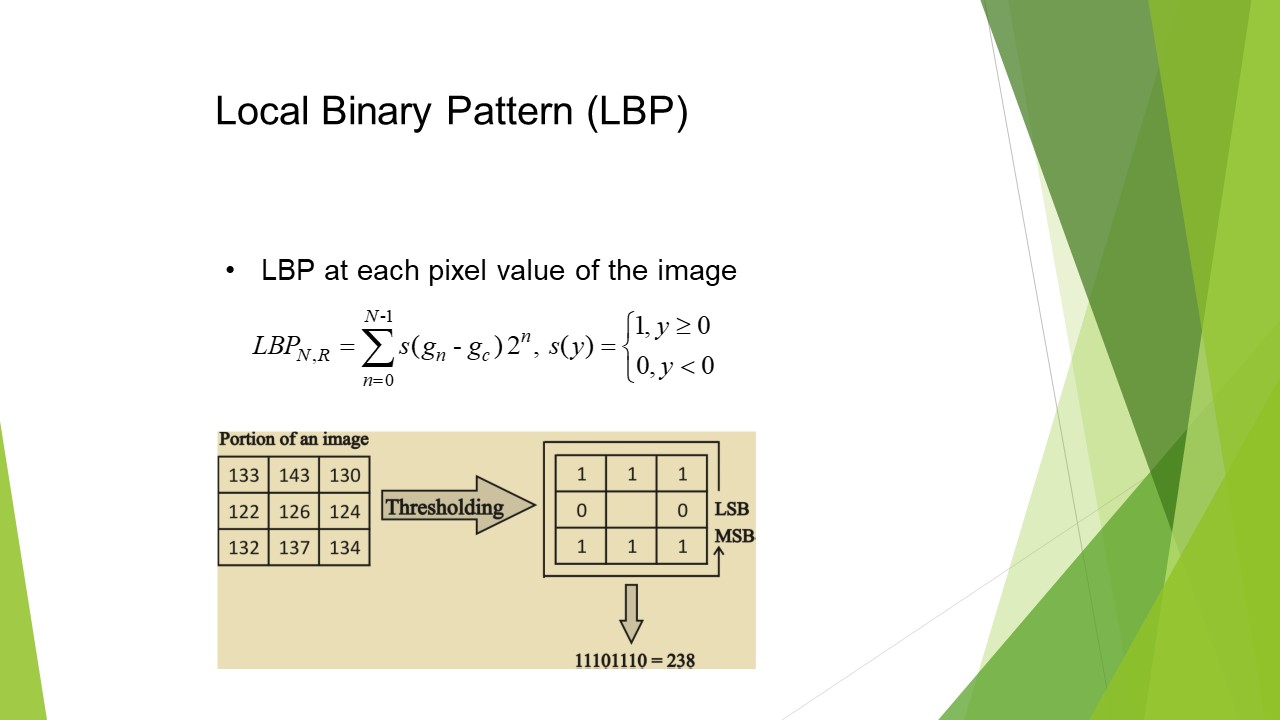 |
Local Binary Pattern (LBP)
|
|
ICACT20250073 Slide.12
[Big slide for presentation]
|
Chrome Text-to-Speach Click!! |
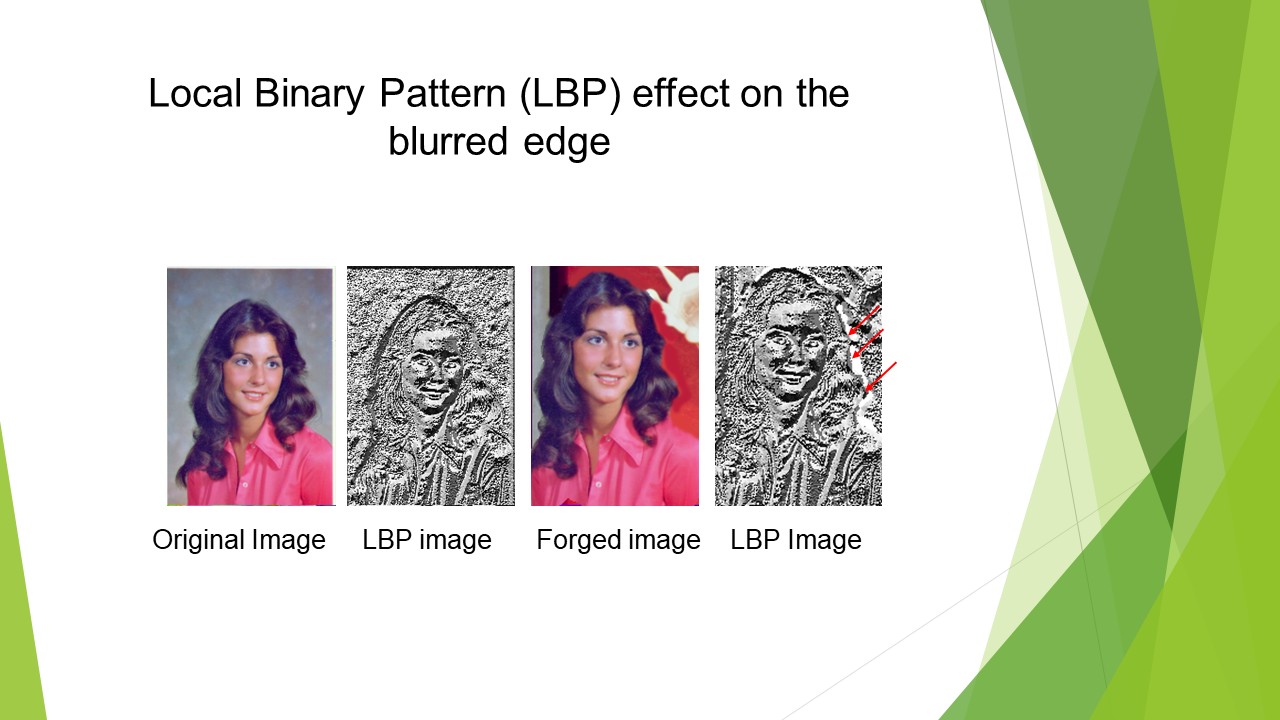 |
Local Binary Pattern (LBP) effect on the blurred edge
|
|
ICACT20250073 Slide.11
[Big slide for presentation]
|
Chrome Text-to-Speach Click!! |
 |
Advanced image manipulation softwares
Easy availability of image manipulation softwares
More computer literate people
Impossible/difficult to visualize image forgery
No universally applicable solution
Some modifications (cropping, adjusting colors and gamma etc.) may or may not be acceptable
|
|
ICACT20250073 Slide.10
[Big slide for presentation]
|
Chrome Text-to-Speach Click!! |
 |
Advanced image manipulation softwares
Easy availability of image manipulation softwares
More computer literate people
Impossible/difficult to visualize image forgery
No universally applicable solution
Some modifications (cropping, adjusting colors and gamma etc.) may or may not be acceptable
|
|
ICACT20250073 Slide.09
[Big slide for presentation]
|
Chrome Text-to-Speach Click!! |
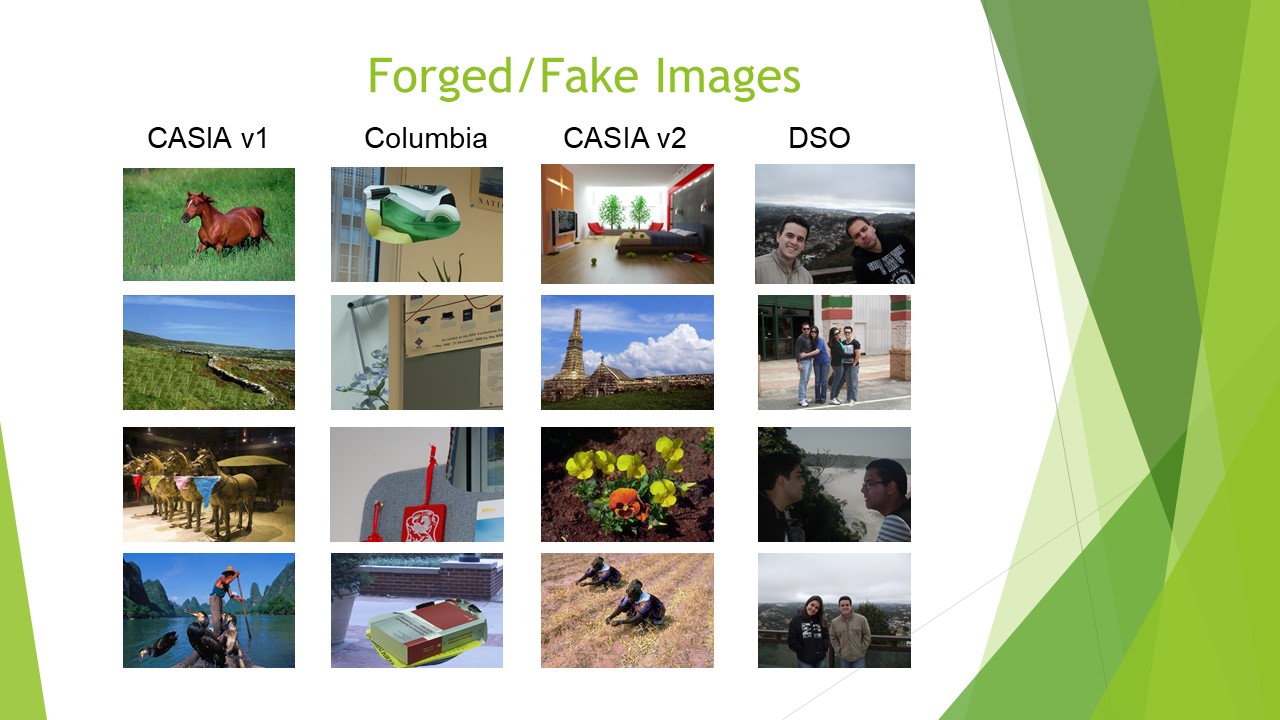 |
Forged/Fake Images
|
|
ICACT20250073 Slide.08
[Big slide for presentation]
|
Chrome Text-to-Speach Click!! |
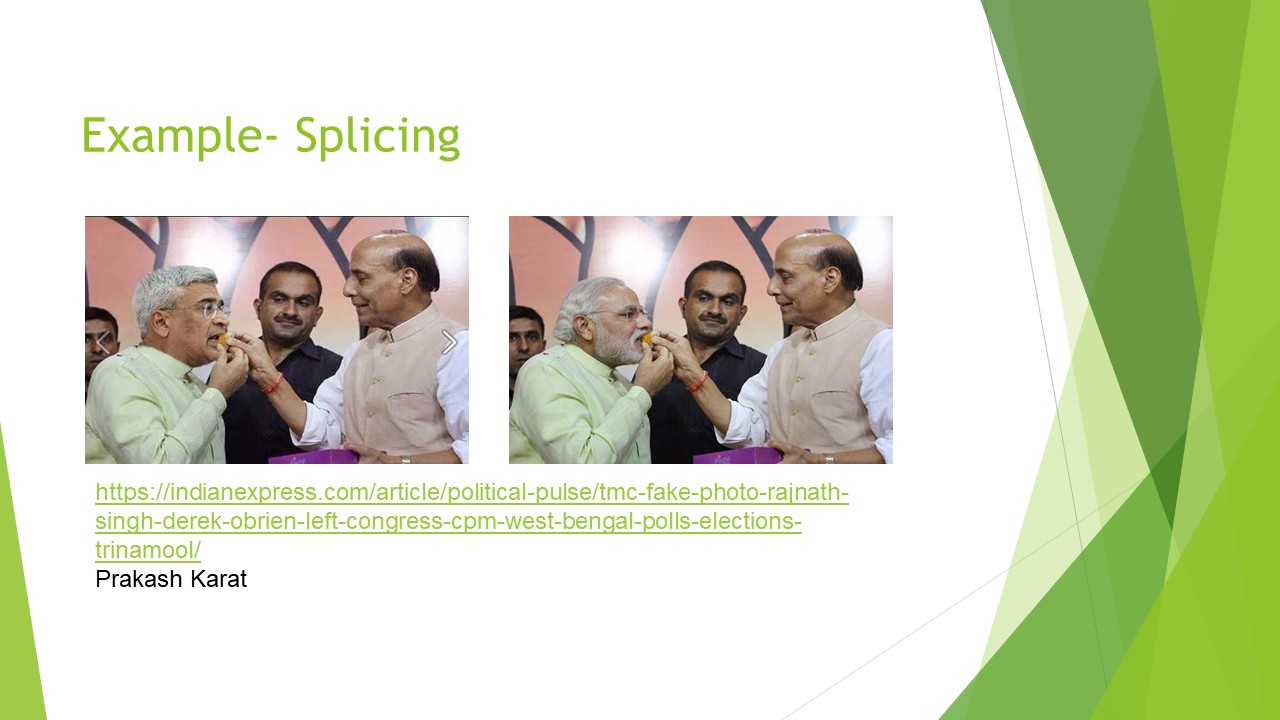 |
Example- Splicing
|
|
ICACT20250073 Slide.07
[Big slide for presentation]
|
Chrome Text-to-Speach Click!! |
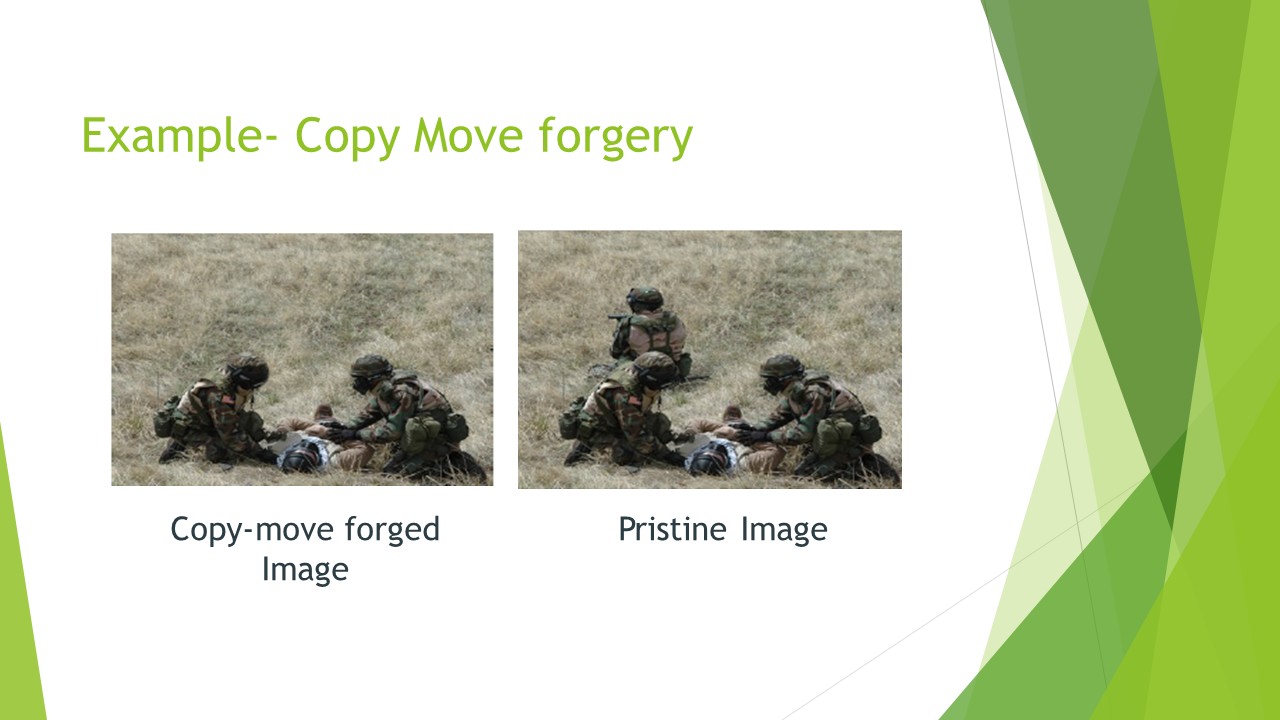 |
Example- Copy Move forgery
|
|
ICACT20250073 Slide.06
[Big slide for presentation]
|
Chrome Text-to-Speach Click!! |
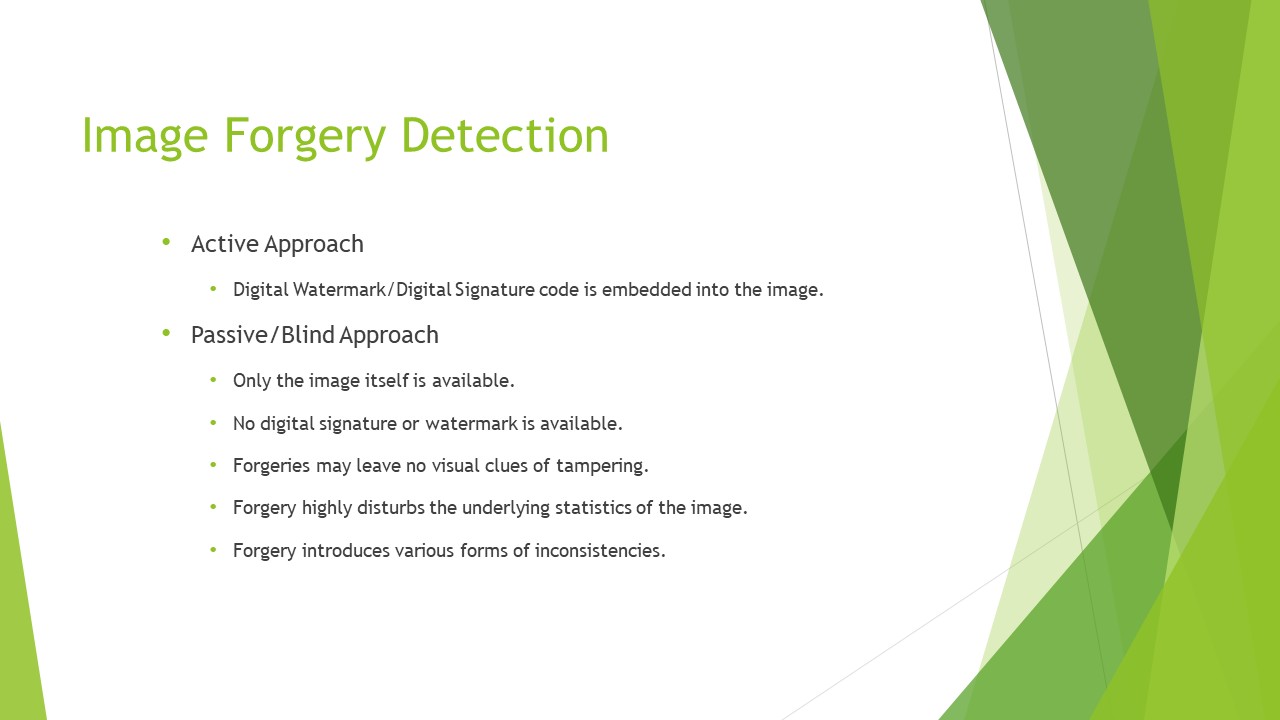 |
Active Approach
Digital Watermark/Digital Signature code is embedded into the image.
Passive/Blind Approach
Only the image itself is available.
No digital signature or watermark is available.
Forgeries may leave no visual clues of tampering.
Forgery highly disturbs the underlying statistics of the image.
Forgery introduces various forms of inconsistencies.
|
|
ICACT20250073 Slide.05
[Big slide for presentation]
|
Chrome Text-to-Speach Click!! |
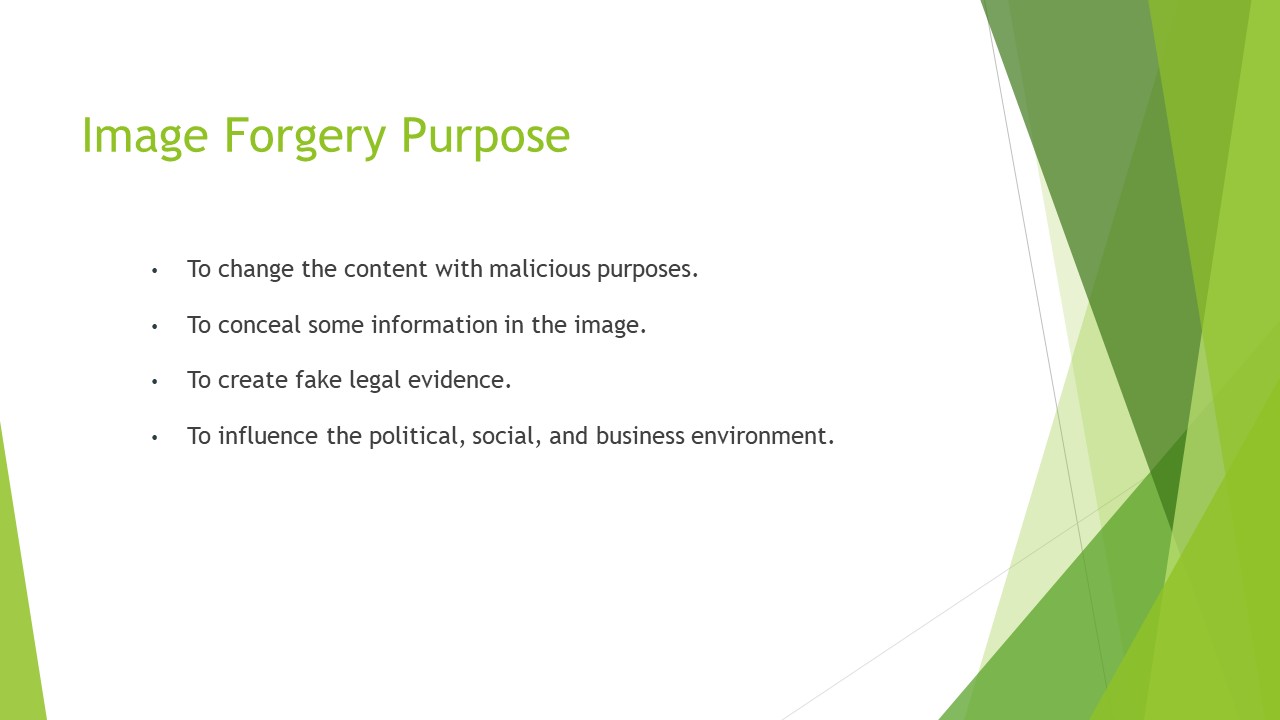 |
To change the content with malicious purposes.
To conceal some information in the image.
To create fake legal evidence.
To influence the political, social, and business environment.
|
|
ICACT20250073 Slide.04
[Big slide for presentation]
|
Chrome Text-to-Speach Click!! |
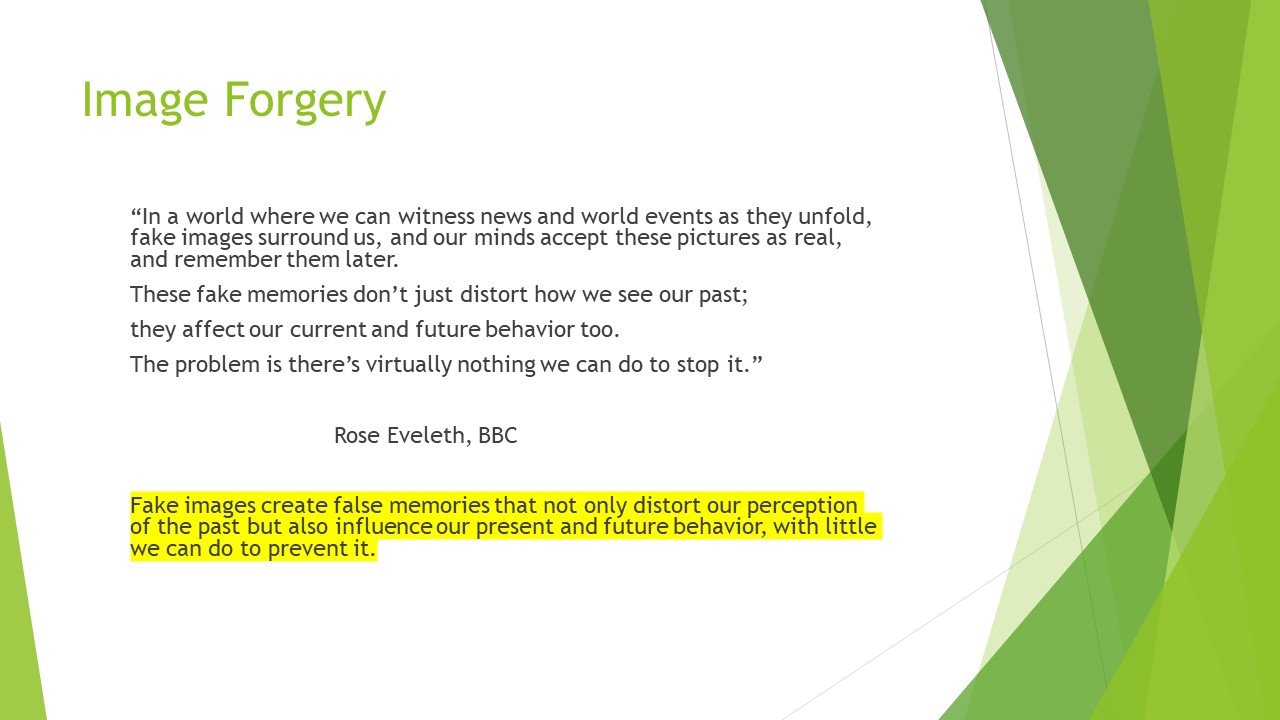 |
“In a world where we can witness news and world events as they unfold, fake images surround us, and our minds accept these pictures as real, and remember them later.
These fake memories don’t just distort how we see our past;
they affect our current and future behavior too.
The problem is there’s virtually nothing we can do to stop it.”
Rose Eveleth, BBC
Fake images create false memories that not only distort our perception of the past but also influence our present and future behavior, with little we can do to prevent it.
|
|
ICACT20250073 Slide.03
[Big slide for presentation]
|
Chrome Text-to-Speach Click!! |
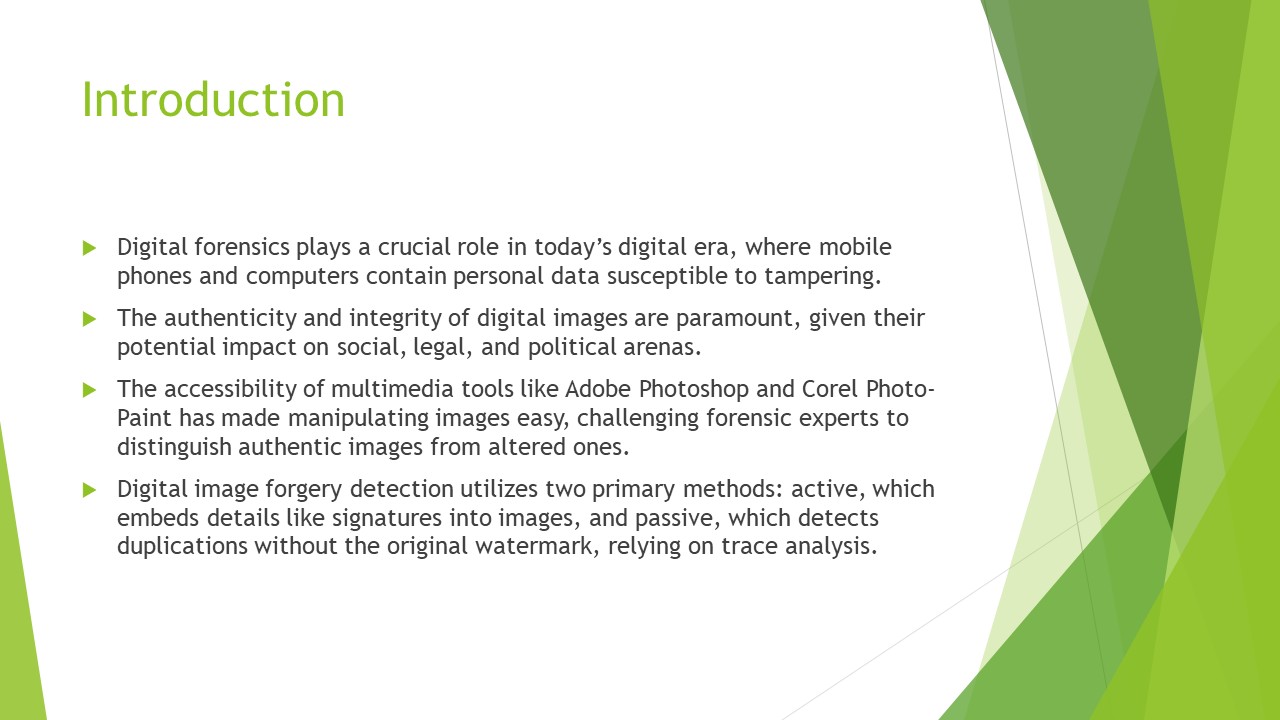 |
Digital forensics plays a crucial role in today’s digital era, where mobile phones and computers contain personal data susceptible to tampering.
The authenticity and integrity of digital images are paramount, given their potential impact on social, legal, and political arenas.
The accessibility of multimedia tools like Adobe Photoshop and Corel Photo-Paint has made manipulating images easy, challenging forensic experts to distinguish authentic images from altered ones.
Digital image forgery detection utilizes two primary methods: active, which embeds details like signatures into images, and passive, which detects duplications without the original watermark, relying on trace analysis.
|
|
ICACT20250073 Slide.02
[Big slide for presentation]
|
Chrome Text-to-Speach Click!! |
 |
The increasing use of digital media has heightened the importance of digital forensics for verifying image authenticity and detecting manipulations.
However, anti-forensic techniques that intentionally hide forensic clues complicate verification processes, driving the need for effective countermeasures.
This study provides a scientometric analysis to understand the evolution of anti-forensics and to identify key contributors, influential works, and knowledge gaps.
|
|
ICACT20250073 Slide.01
[Big slide for presentation]
|
Chrome Text-to-Speach Click!! |
 |
Title
|
















