 ICACT20240040 Slide.18
[Big slide for presentation]
[YouTube] |
Chrome Text-to-Speach Click!! |
 |
Thank you all...
|
|
ICACT20240040 Slide.17
[Big slide for presentation]
[YouTube] |
Chrome Text-to-Speach Click!! |
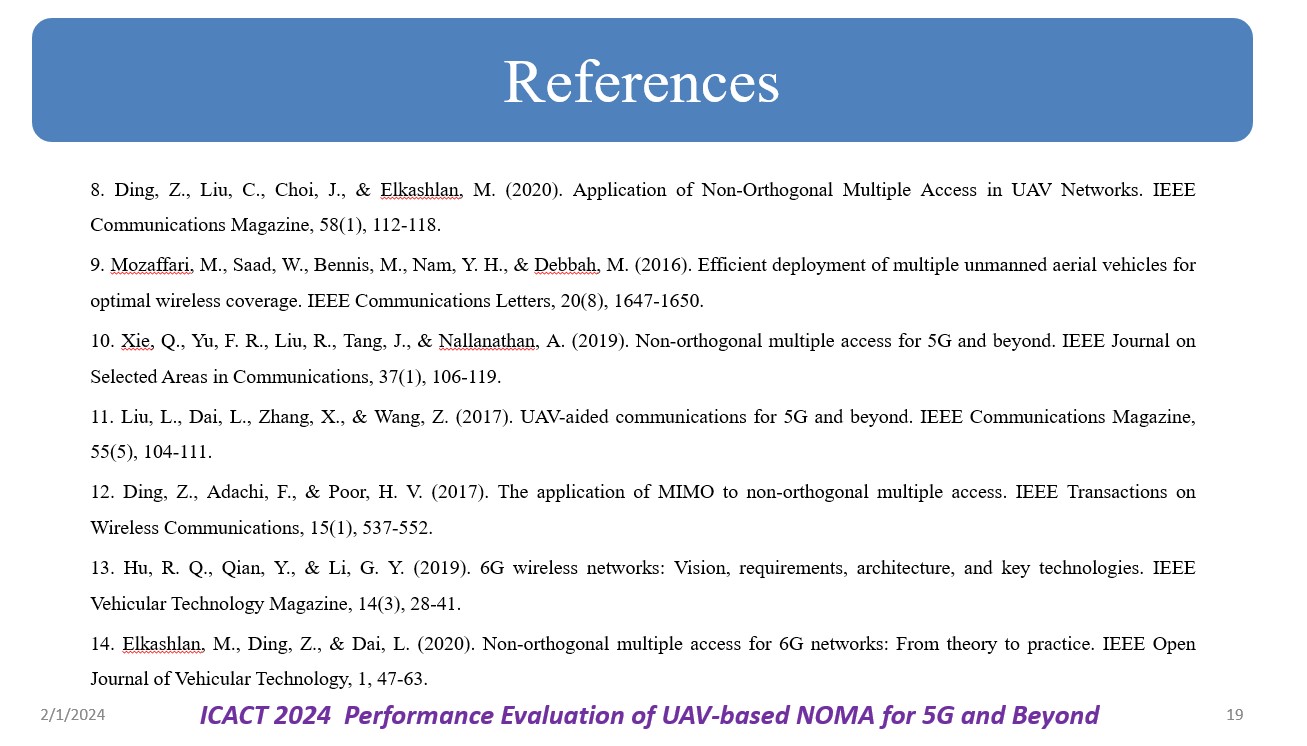 |
These are the references..
|
|
ICACT20240040 Slide.16
[Big slide for presentation]
[YouTube] |
Chrome Text-to-Speach Click!! |
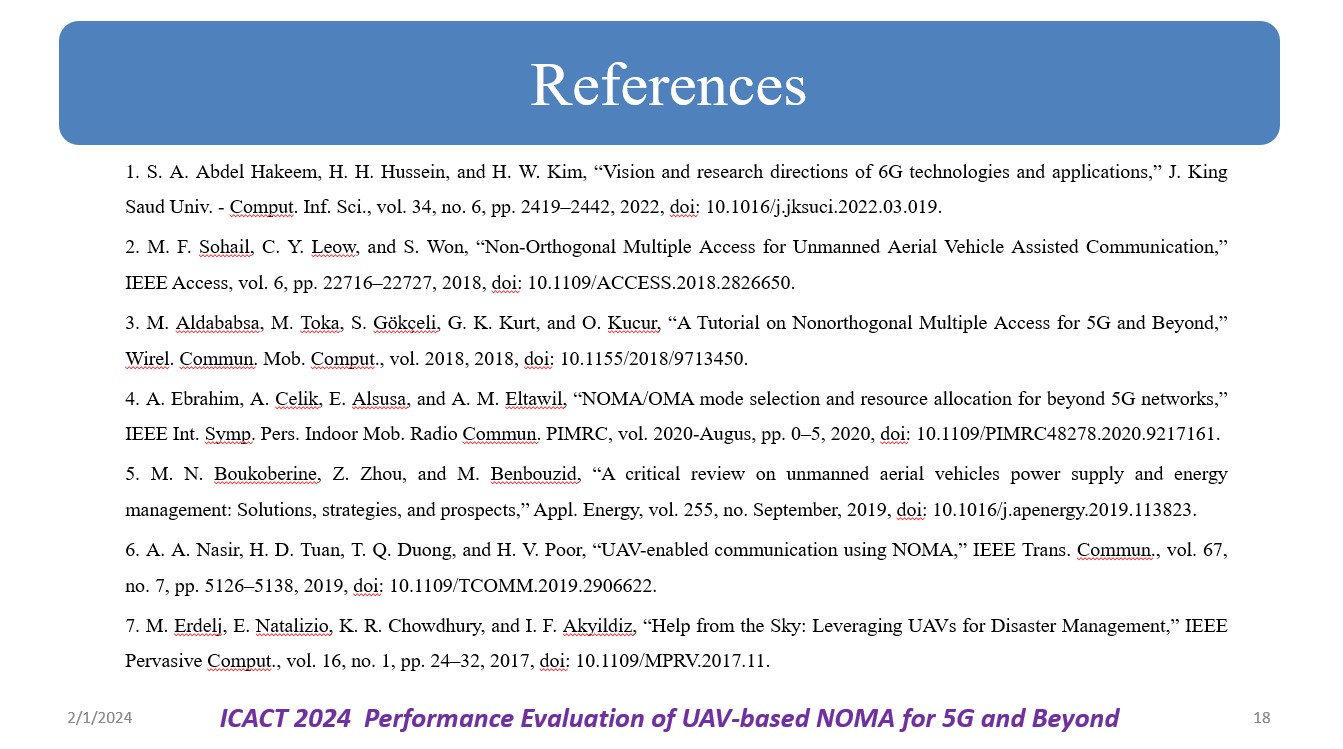 |
These are the references..
|
|
ICACT20240040 Slide.15
[Big slide for presentation]
|
Chrome Text-to-Speach Click!! |
 |
Conclusion:
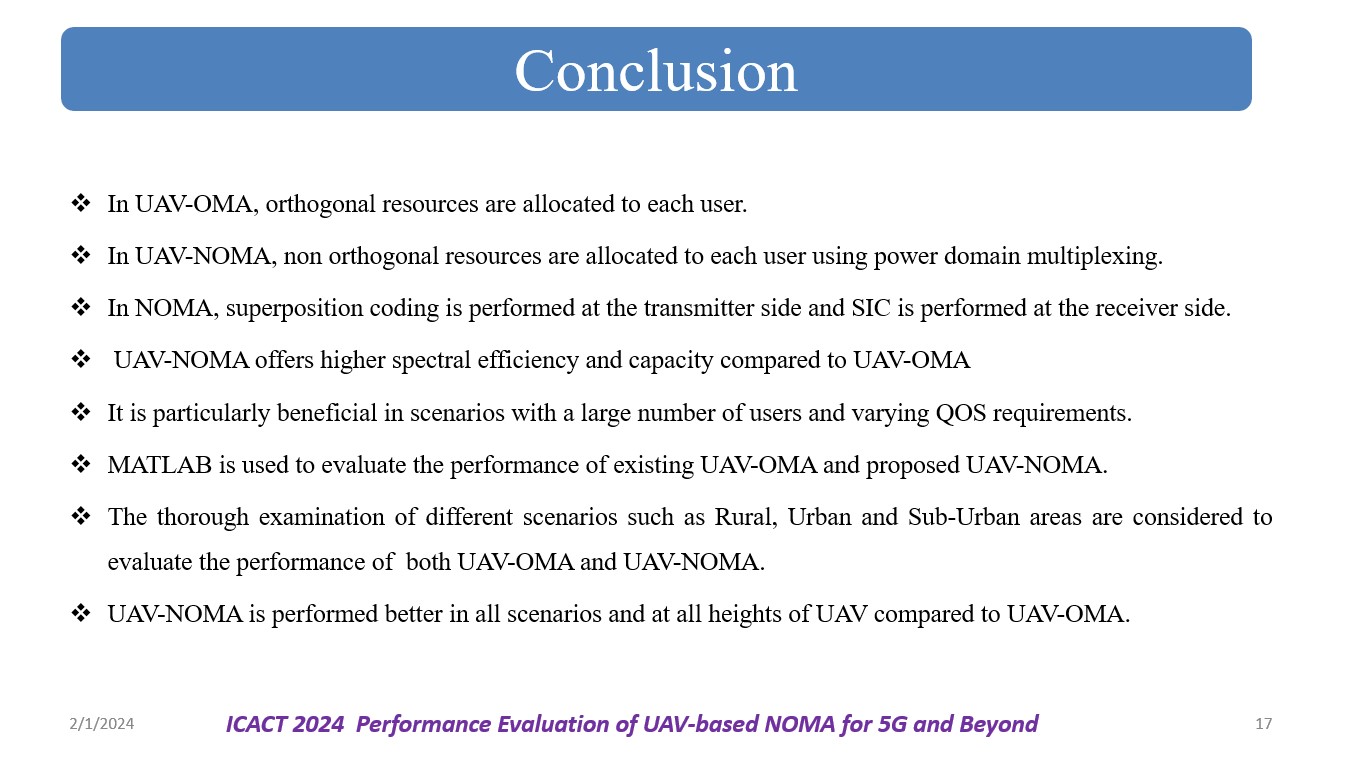
Finally, we can conclude that, in UAV-OMA, orthogonal resources are allocated to each user. And in UAV-NOMA, non-orthogonal resources are allocated to each user using power domain multiplexing.
In NOMA, superposition coding is performed at the transmitter side and SIC is performed at the receiver side.
Proposed UAV-NOMA offers higher spectral efficiency and capacity compared to existing UAV-OMA
It is particularly beneficial in scenarios with a large number of users and varying QOS requirements.
MATLAB is used to evaluate the performance of existing UAV-OMA and proposed UAV-NOMA.
The thorough examination of different scenarios such as Rural, Urban and Sub-Urban areas are considered to evaluate the performance of both existing UAV-OMA and proposed UAV-NOMA.
Proposed UAV-NOMA performs better in all scenarios and at all heights of UAV compared to existing UAV-OMA.
|
|
ICACT20240040 Slide.14
[Big slide for presentation]
[YouTube] |
Chrome Text-to-Speach Click!! |
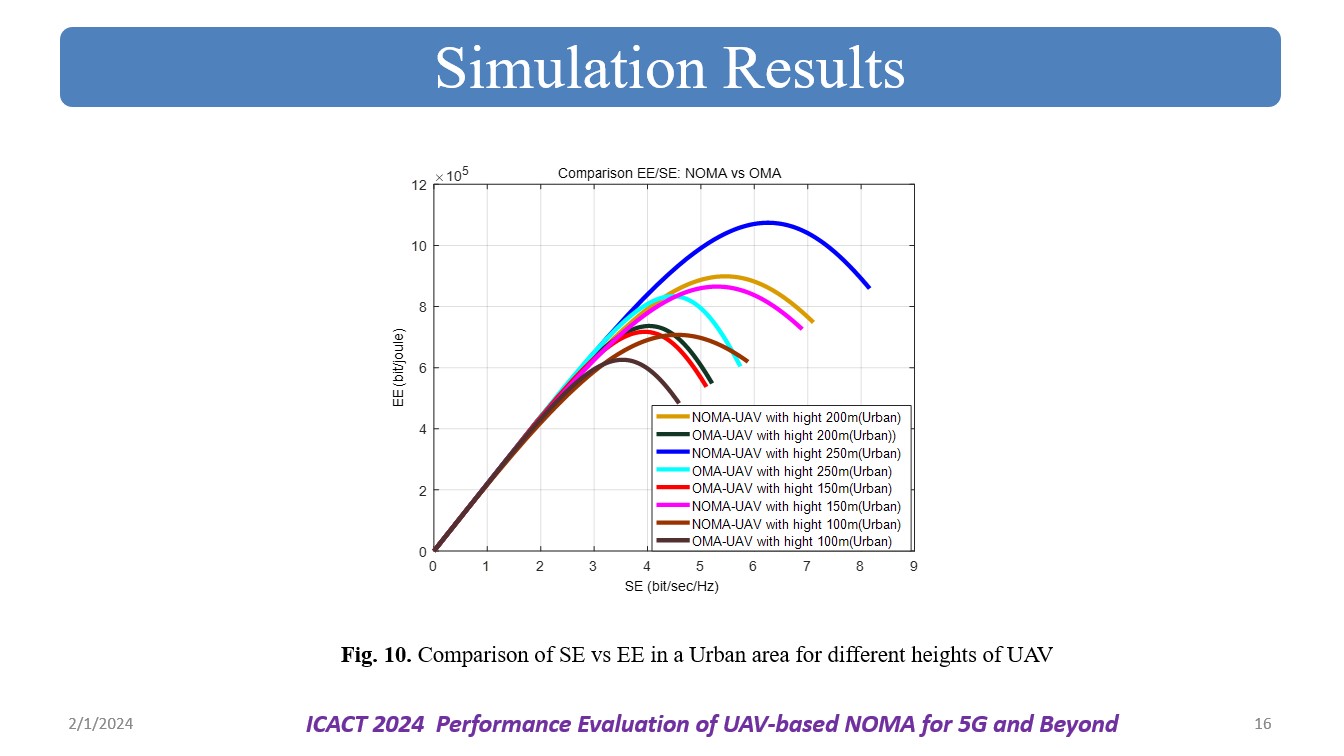 |
The plot "Comparison of SE vs EE in an urban area for different heights of UAV-NOMA" likely presents a graphical representation illustrating how the Spectral Efficiency and Energy Efficiency of an OMA and NOMA systems, deployed using UAVs at different heights, perform in an urban environment. The plot helps in assessing the trade-offs between data transmission capacity and energy consumption for the given scenario in an urban setting. Here also, we can observe that at all the heights of UAV, the proposed NOMA performance is better compared to the exiting OMA system.
|
|
ICACT20240040 Slide.13
[Big slide for presentation]
[YouTube] |
Chrome Text-to-Speach Click!! |
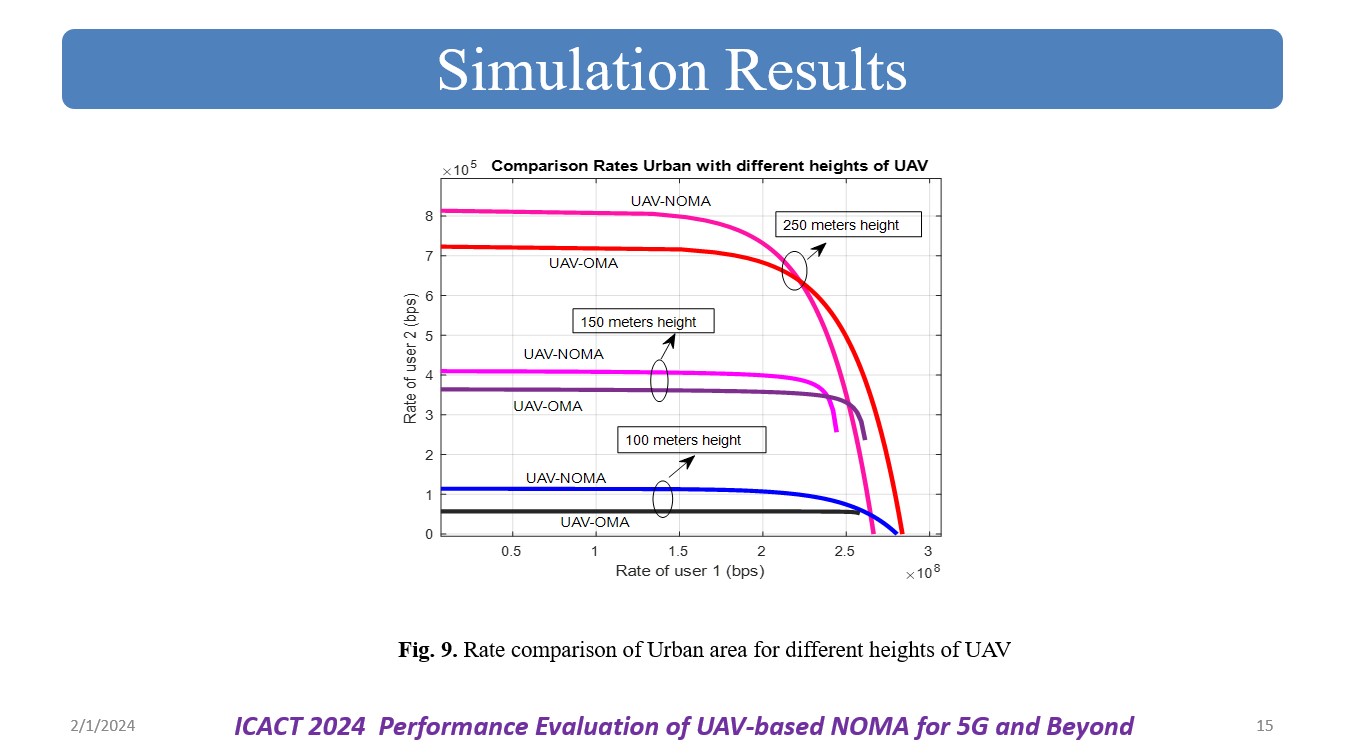 |
The plot "Comparison of Rate of User 1 and Rate of User 2 in an Urban area for different heights of UAV-NOMA" likely refers to a comparison of the data rates achieved by User 1 and User 2 in an existing OMA and proposed NOMA systems deployed using UAVs in an urban environment. The plot helps in analyzing and comparing the achieved data rates for the two users under varying UAV heights in an urban setting.
If we observe here, the rate of user 1 is constant up to 2.1X10^8 bits per second and gradually decreases with the rate of user 2. And also, we can say that at all the heights of UAV, the proposed NOMA performance is better compared to the exiting OMA system.
|
|
ICACT20240040 Slide.12
[Big slide for presentation]
[YouTube] |
Chrome Text-to-Speach Click!! |
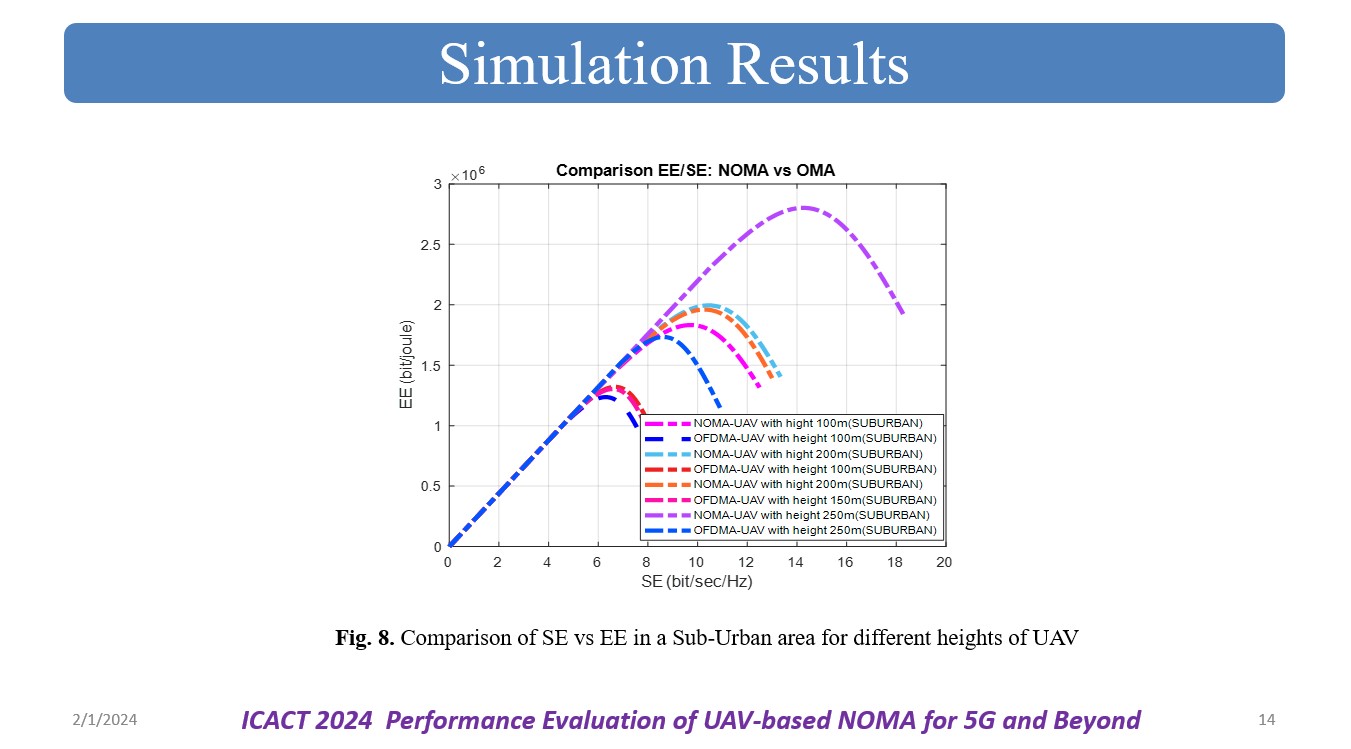 |
The plot "Comparison of SE vs EE in a suburban area for different heights of UAV likely refers to a comparison between the Spectral Efficiency (SE) and Energy Efficiency (EE) of an existing OMA and proposed NOMA systems deployed using UAVs in a suburban environment.
The analysis considers various heights at which the UAVs are deployed. The altitude or height of UAVs can impact the system performance due to factors like path loss, interference, and channel conditions. By examining multiple heights, the plot aims to evaluate how the performance metrics (SE and EE) vary with the positioning of UAVs.
|
|
ICACT20240040 Slide.11
[Big slide for presentation]
[YouTube] |
Chrome Text-to-Speach Click!! |
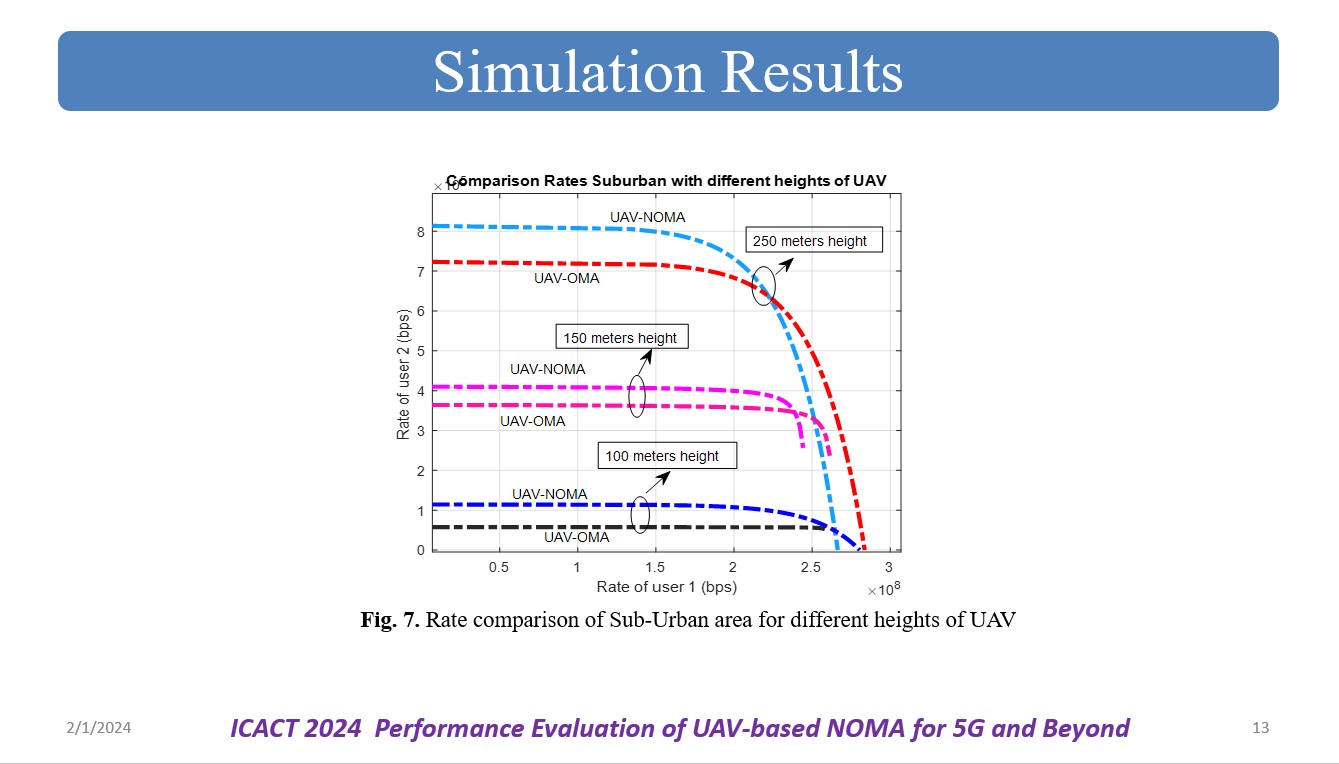 |
The plot compares the data rates achieved by User 1 and User 2 in the existing OMA and proposed NOMA systems. In NOMA, multiple users share the same time-frequency resources, but with different power levels and decoding priorities based on their channel conditions. User 1 and User 2 are likely two different users in the system, and their individual data rates are being analyzed and compared.
This plot shows the comparison of Rate of User 1 and Rate of User 2 in a Suburban area for different heights of UAV. The plot helps in analyzing and comparing the achieved data rates for the two users under varying UAV heights in a suburban environment.
|
|
ICACT20240040 Slide.10
[Big slide for presentation]
[YouTube] |
Chrome Text-to-Speach Click!! |
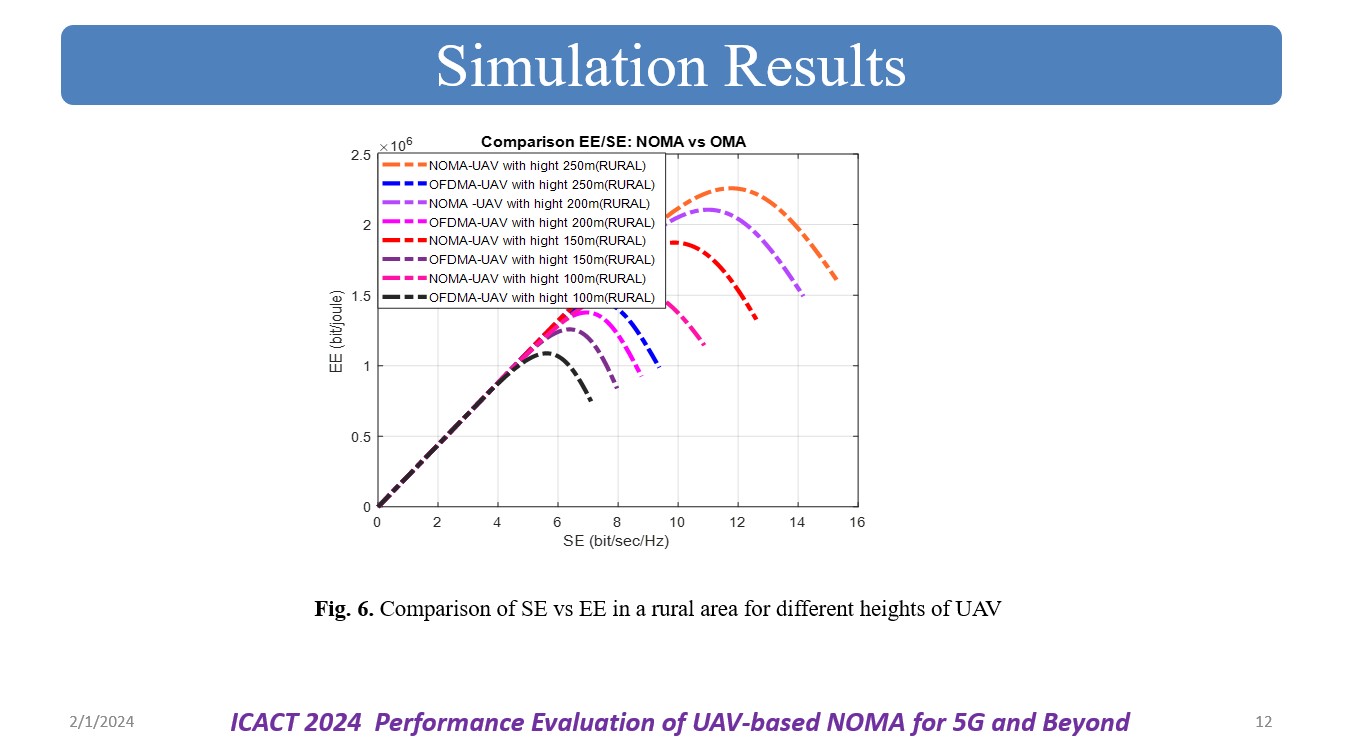 |
The plot "Comparison of SE vs EE in a rural area for different heights of UAV likely presents a graphical representation illustrating how the Spectral Efficiency and Energy Efficiency of an existing OMA and proposed NOMA system, deployed using UAVs at different heights, perform in a rural environment. The plot helps in assessing the trade-offs between data transmission capacity and energy consumption for the given scenario.
|
|
ICACT20240040 Slide.09
[Big slide for presentation]
[YouTube] |
Chrome Text-to-Speach Click!! |
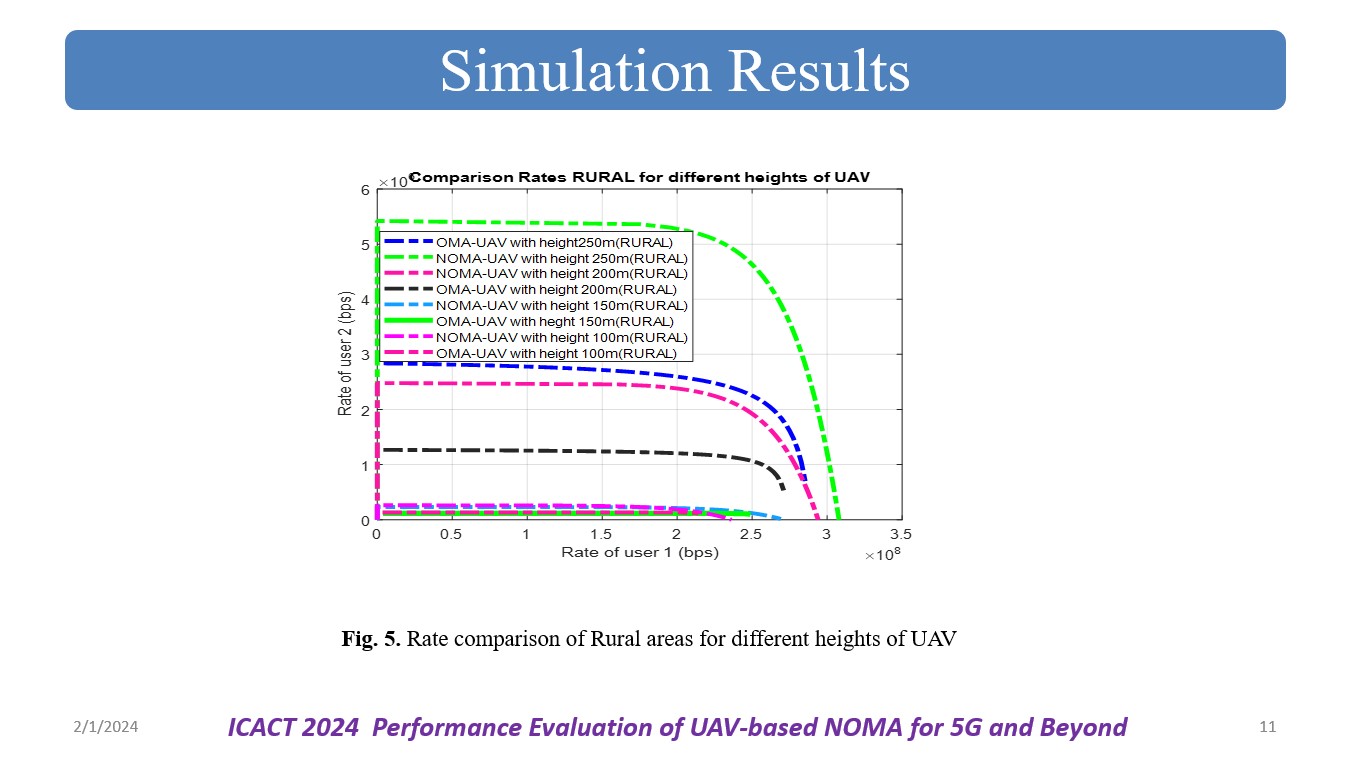 |
The plot "Comparison of Rate of User 1 and Rate of User 2 in a rural area for different heights of UAV likely refers to a comparison of the data rates achieved by User 1 and User 2 for an existing OMA and proposed NOMA systems in a rural environment. Here UAV height is considered as 100metres to 250 meters. If we observe this fissure, the rate of user 1 is constant up to 2.3X10^8 bits/sec. and it decreases with the rate of user 1.
|
|
ICACT20240040 Slide.08
[Big slide for presentation]
[YouTube] |
Chrome Text-to-Speach Click!! |
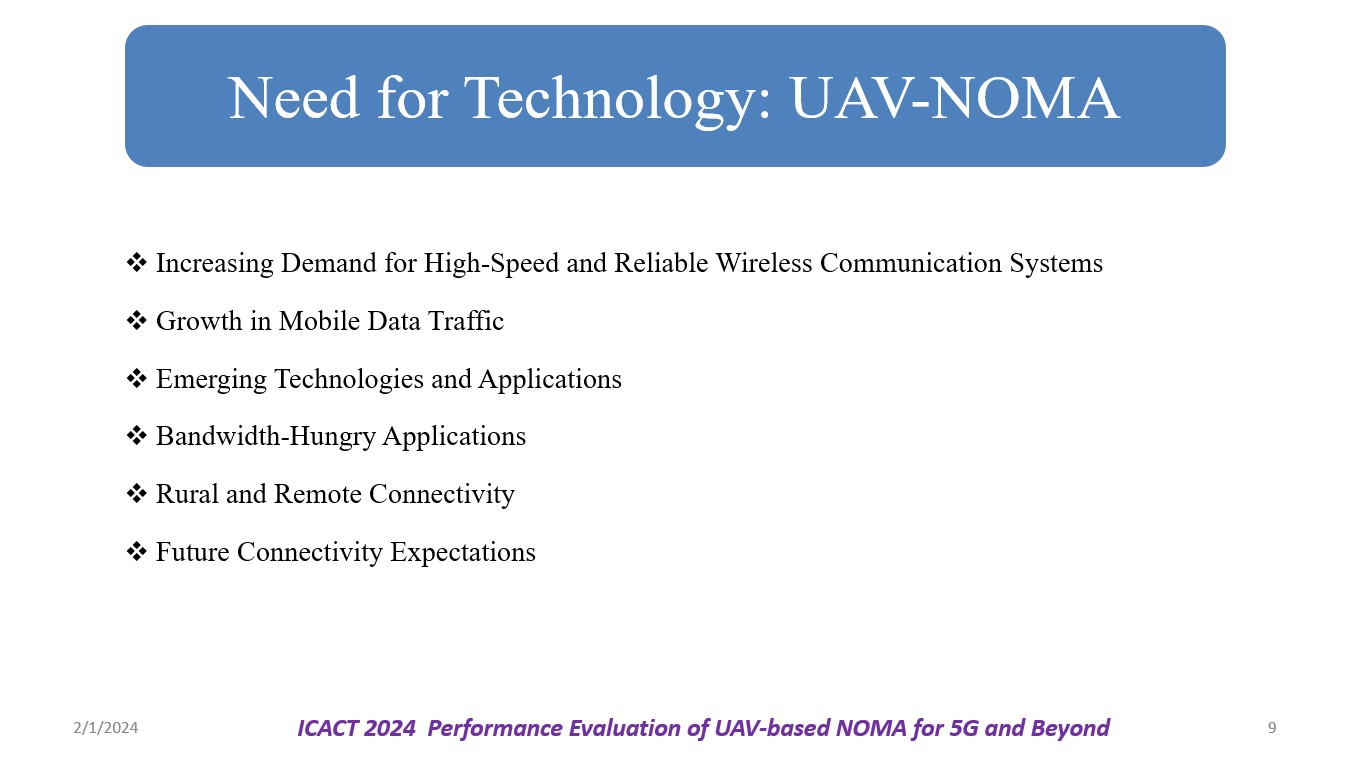 |
Advantages & Need for proposed Technology: UAV-NOMA
1.Increasing Demand for High-Speed and Reliable Wireless Communication Systems
Wireless communication systems have become an integral part of our daily lives, supporting various applications such as voice, data, and multimedia transmission.
The demand for high-speed and reliable wireless communication systems is rapidly increasing due to evolving technologies and user expectations.
Growth in Mobile Data Traffic:
Mobile data usage has experienced exponential growth in recent years, driven by the widespread adoption of smartphones, tablets, and other connected devices.
Streaming videos, social media, online gaming, and cloud services contribute to the flow in mobile data traffic, requiring faster and more robust wireless networks.
Emerging Technologies and Applications:
The emergence of new technologies and applications demands higher data rates and lower latency.
Augmented Reality (AR), Virtual Reality (VR), Internet of Things (IoT), autonomous vehicles, and smart cities require seamless and efficient wireless connectivity.
Bandwidth-Hungry Applications:
Bandwidth-hungry applications, such as high-definition video streaming, video conferencing, and large file transfers, are becoming increasingly prevalent.
Users expect uninterrupted and high-quality experiences, necessitating wireless systems capable of handling the growing bandwidth requirements.
Rural and Remote Connectivity:
Bridging the digital divide and providing connectivity to rural and remote areas is a global priority.
Wireless communication systems play a crucial role in extending connectivity to underserved regions, enabling economic growth and access to essential services.
Future Connectivity Expectations:
As technology continues to advance, future connectivity expectations will soar.
5G networks are being deployed, and 6G networks are on the horizon, promising even higher speeds, ultra-low latency, and support for innovative applications.
|
|
ICACT20240040 Slide.07
[Big slide for presentation]
[YouTube] |
Chrome Text-to-Speach Click!! |
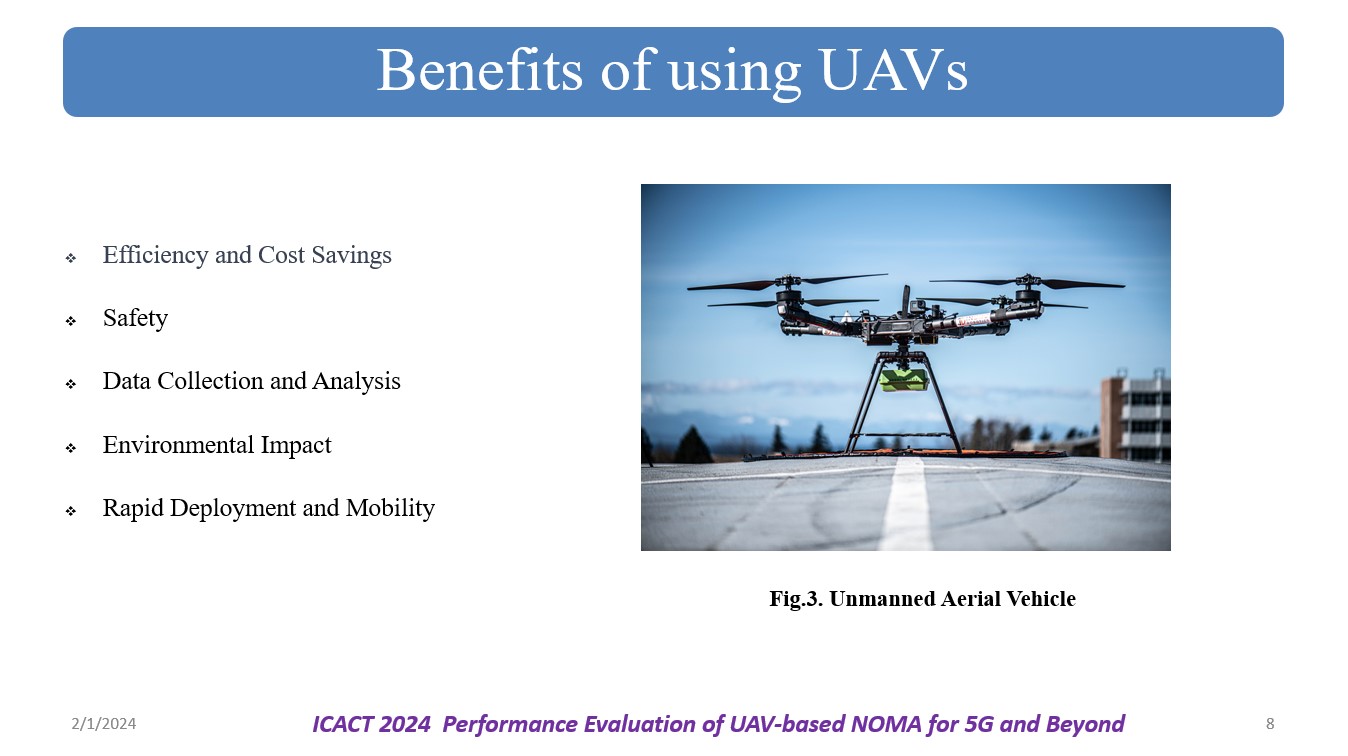 |
Using UAVs (Unmanned Aerial Vehicles) offers numerous benefits across various industries and applications. Here are some of the key advantages:
1. Efficiency and Cost Savings: UAVs can complete tasks more quickly and efficiently than traditional methods. They can cover large areas in a shorter time, reducing the need for manual labor or expensive manned aircraft. This increased efficiency translates into cost savings for businesses and organizations.
2. Safety: UAVs provide a safer alternative for certain tasks by removing the need for humans to be physically present in hazardous or dangerous environments. They can be deployed in situations such as search and rescue operations, disaster response, or inspection of infrastructure that may pose risks to human lives.
3. Data Collection and Analysis: UAVs equipped with cameras, sensors, and other payloads can capture high-resolution imagery, collect data, and gather valuable information from different perspectives. This data can be used for various purposes, such as aerial mapping, land surveying, agriculture monitoring, infrastructure inspection, and scientific research.
4. Environmental Impact: Compared to traditional manned aircraft or ground-based vehicles, UAVs have a smaller environmental footprint. They consume less energy and produce fewer emissions, making them a more environmentally friendly option for aerial tasks and monitoring activities.
5. Rapid Deployment and Mobility: UAVs are relatively compact and portable, enabling rapid deployment and mobility. They can be transported easily to different locations and quickly deployed when needed, providing real-time or on-demand aerial capabilities.
|
|
ICACT20240040 Slide.06
[Big slide for presentation]
[YouTube] |
Chrome Text-to-Speach Click!! |
 |
Coming to the introduction to UAV’s, UAV stands for Unmanned Aerial Vehicle. It is an aircraft that operates without a human pilot on board. UAVs, also known as drones, are either controlled remotely by a human operator or operate autonomously through pre-programmed instructions. They have gained significant popularity and have a wide range of applications in various fields.The advantages of UAVs include their ability to access remote or hazardous areas, their flexibility, and their cost-effectiveness compared to manned aircraft.
|
|
ICACT20240040 Slide.05
[Big slide for presentation]
[YouTube] |
Chrome Text-to-Speach Click!! |
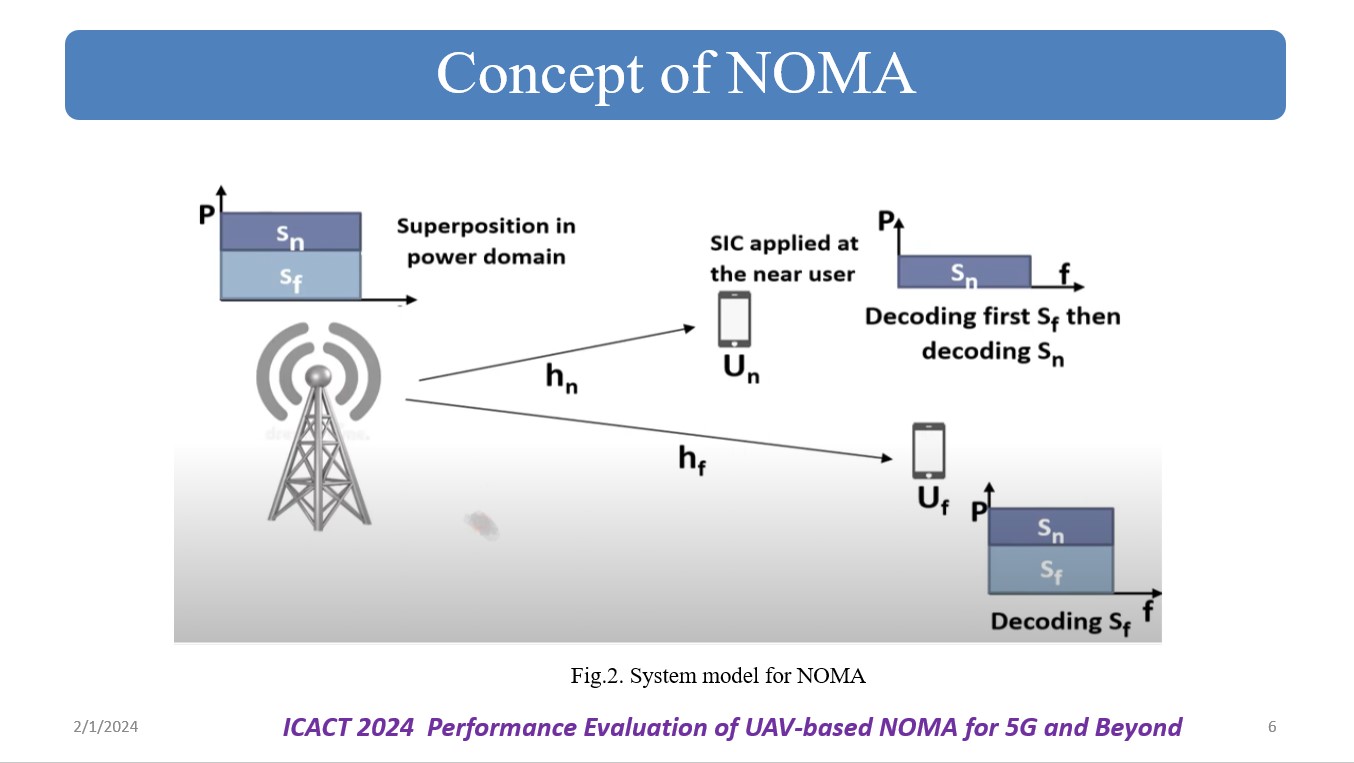 |
The concept of NOMA:
From this figure, we can get an idea on the concept of noma. As we can see here, for simplicity, we have considered only 2 users, 1st user, which is Un, which is located a little bit closer to the base station, that’s why we call it a near user. Whereas we have the far user which is Uf which is located a little bit far from the base station. And we also have hf and hn representing the channel gain of far user and near user. So, we can see here, from the base station, we have 2 signals, which have been encoded using superposition coding in the power domain. Where sn is the signal for the near user and sf is the signal for the far user. Here, the signal for far user sf is encoded with high power when compared to the signal for the near user. And after transmissions, at the near user, we have to apply SIC in order to decode the 1st signal of the far user before decoding its own signal then we will be able to decode its own signal. Whereas for the far user, he can decode his own signal directly and he can treat the signal of near user as noise.
|
|
ICACT20240040 Slide.04
[Big slide for presentation]
|
Chrome Text-to-Speach Click!! |
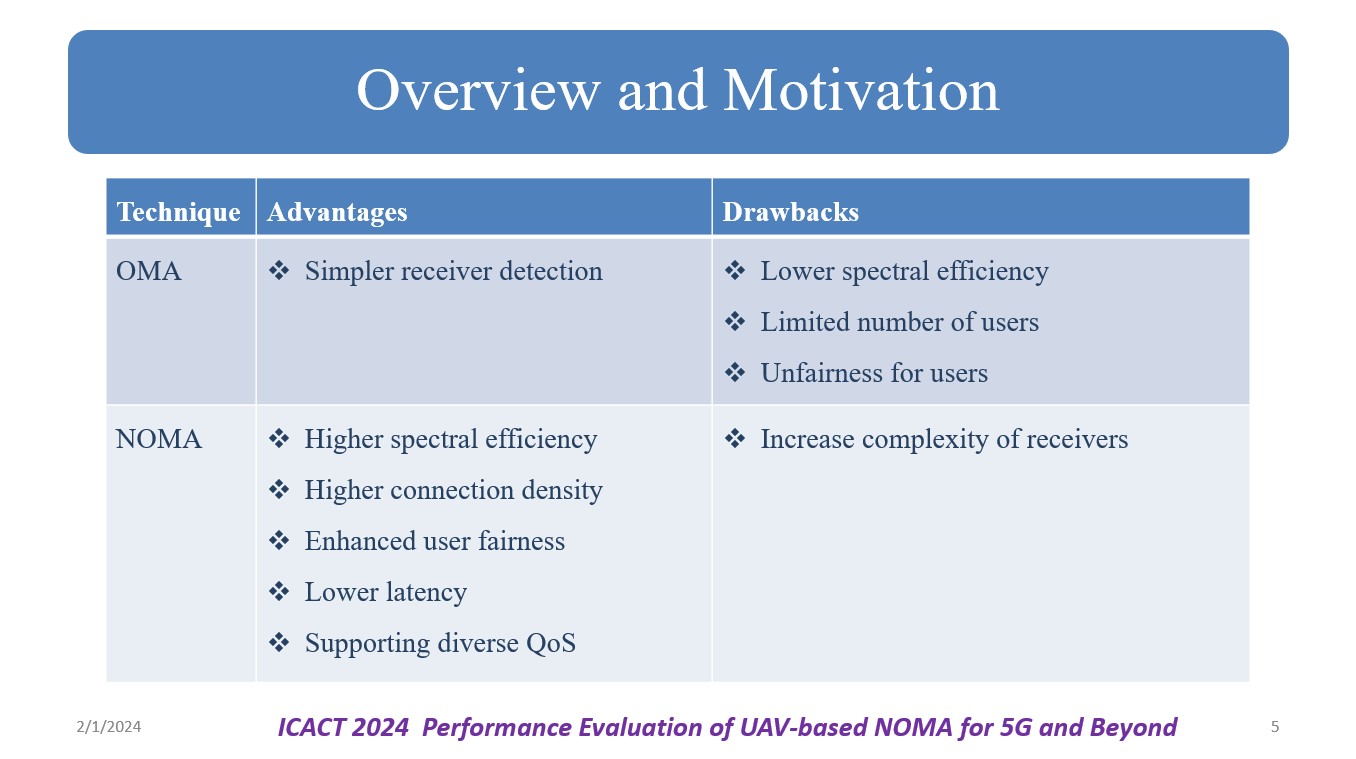 |
Here I have mentioned some of the Advantages & and disadvantages of existing oma & and proposed noma..
The only advantage of using oma is simpler receiver detection because no SIC is required. The disadvantages of oma are Lower spectral efficiency which is the most important problem of using oma, and also, we have a Limited number of users and Unfairness for users.
The advantages of using NOMA are Higher spectral efficiency compared to OMA, Higher connection density, and also there is some Enhancement in user fairness, we have Lower latency and by using NOMA we can Support diverse quality of services. (QoS). The disadvantage of using Noma is it Increases the complexity of receivers especially if we have large number of users.
|
|
ICACT20240040 Slide.03
[Big slide for presentation]
[YouTube] |
Chrome Text-to-Speach Click!! |
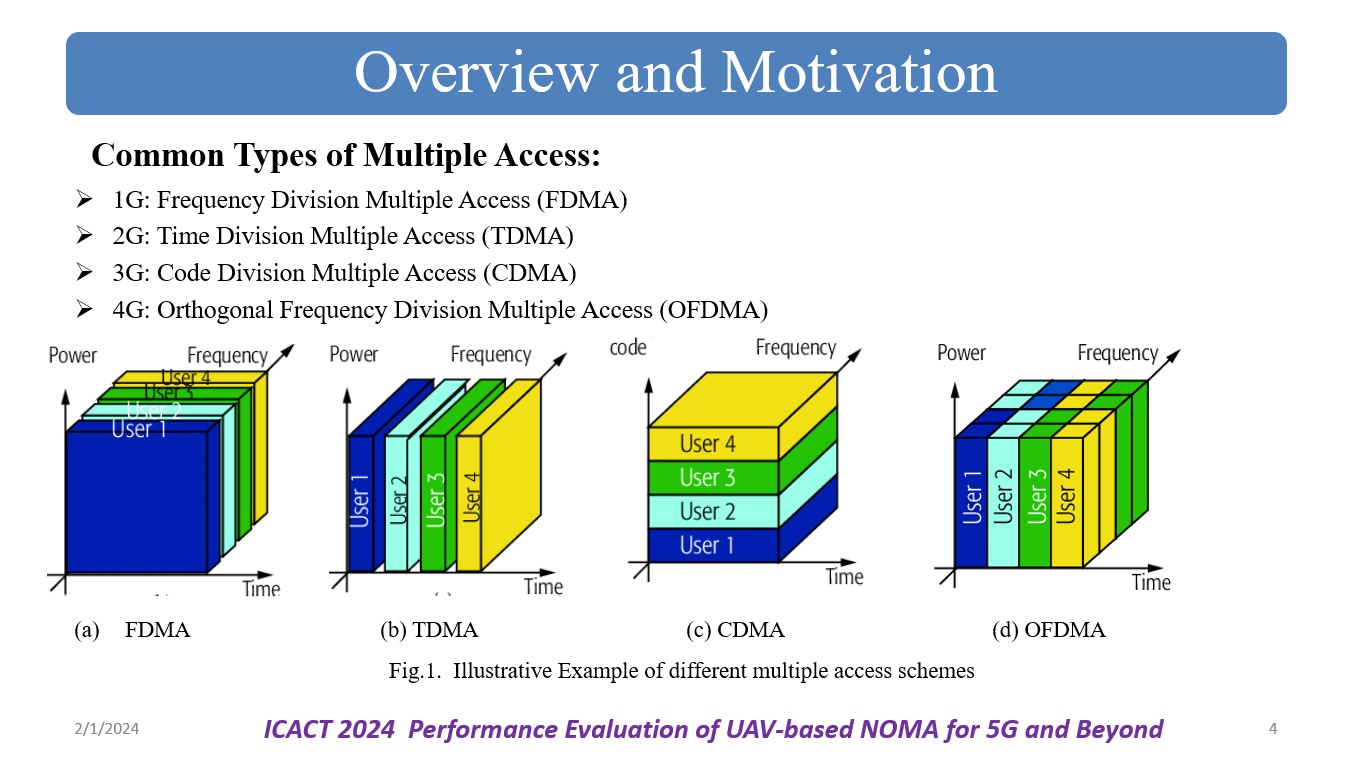 |
These are the common types of multiple access techniques we know FDMA, TDMA, CDMA & OFDMA.
Frequency Division Multiple Access (FDMA) is a technology which is used in 1st generation of wireless communication.
Time Division Multiple Access (TDMA) in 2nd generation
Code Division Multiple Access (CDMA) in 3rd generation
Orthogonal Frequency Division Multiple Access (OFDMA) which is used in 4th generation of wireless communication.
|
|
ICACT20240040 Slide.02
[Big slide for presentation]
[YouTube] |
Chrome Text-to-Speach Click!! |
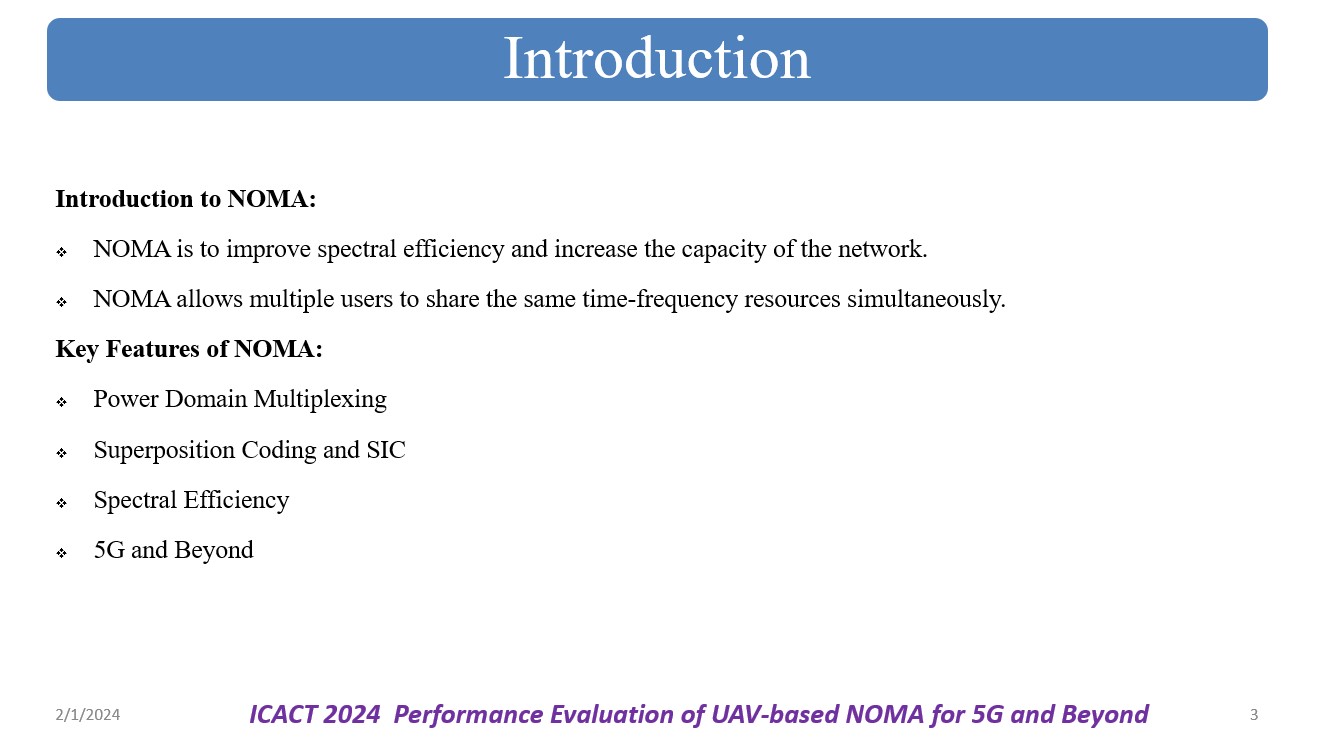 |
Coming to the introduction, Non-Orthogonal Multiple Access is a technology used in wireless communication systems to improve spectral efficiency and increase the capacity of the network. Unlike traditional multiple access techniques where orthogonal resources are allocated to different users, NOMA allows multiple users to share the same time-frequency resources simultaneously by utilizing power domain multiplexing. These are the Key Features of NOMA 1. Power Domain Multiplexing: NOMA allocates different power levels to multiple users in the same time-frequency resource block. Users with weaker channel conditions are assigned higher power levels, while users with stronger channel conditions receive lower power levels. 2. Superposition Coding and Successive Interference Cancellation (SIC): 3. Spectral Efficiency: 4. Improved Connectivity and User Experience: 5. And next, we can use this technology for 5G & BEYOND:
|
|
ICACT20240040 Slide.01
[Big slide for presentation]
|
Chrome Text-to-Speach Click!! |
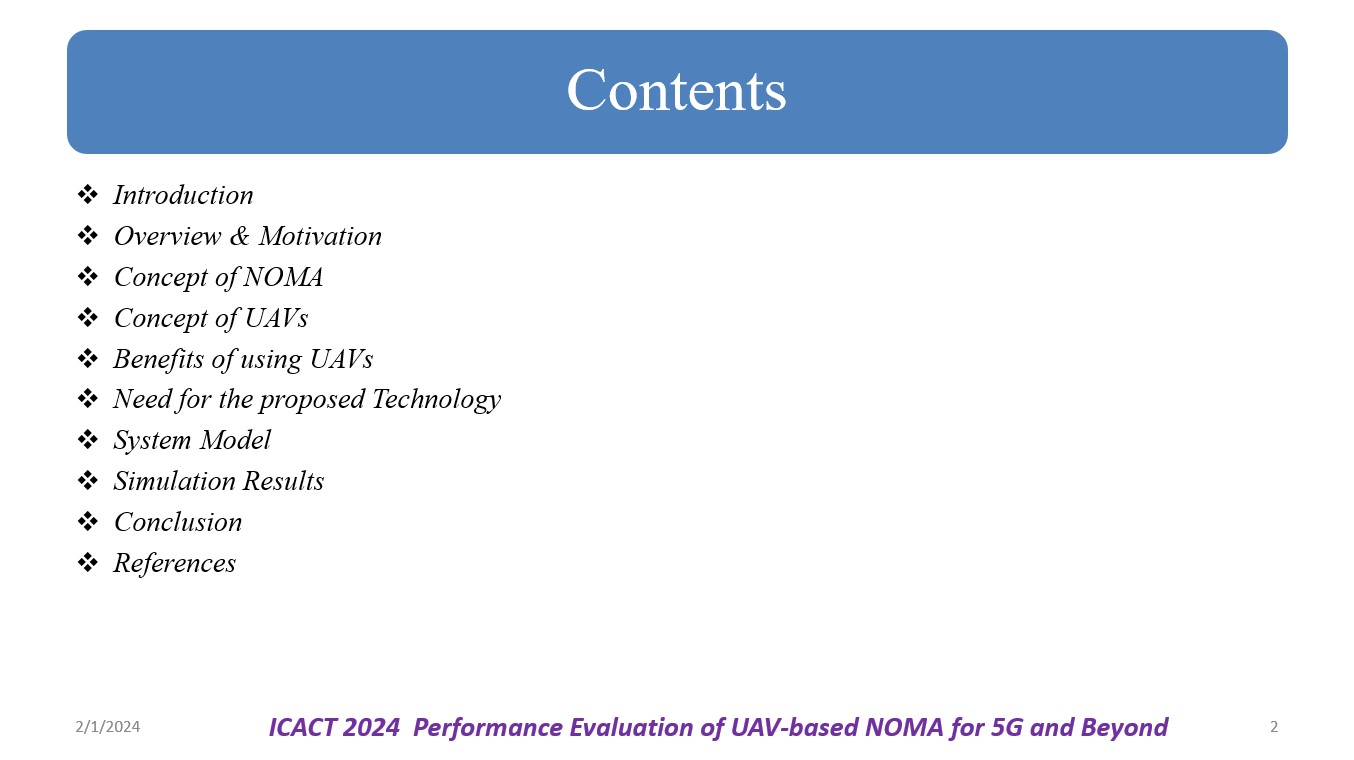 |
These are the contents of my presentation..
Introduction
Overview & Motivation
Concept of NOMA
Concept of UAVs
Benefits of using UAVs
Need for the proposed Technology
System Model
Simulation Results
Conclusion and next
References
|
|
ICACT20240040 Slide.00
[Big slide for presentation]
[YouTube] |
Chrome Text-to-Speach Click!! |
 |
Hello everyone, I am Dr. S Anuradha, a Professor in the Department of Electronics and Communication Engineering at NIT Warangal, India. today I'm excited to present a research paper titled "Performance Evaluation of UAV-based NOMA for 5G and Beyond" with the paper ID 20240040. the paper explores how using UAVs (Unmanned Aerial Vehicles) can improve a technology called NOMA, which helps multiple devices share the same communication resources efficiently. Think of it as making our 5G and future networks smarter and more effective. We're eager to dive into the details and discover how this combination of UAVs and NOMA can shape the future of communication networks. Let's get started!
|
















