 ICACT20220027 Slide.16
[Big slide for presentation] |
Chrome Text-to-Speach Click!! |
 |
Thank you for listening.
Enjoy your day.
|
|
ICACT20220027 Slide.15
[Big slide for presentation]
|
Chrome Text-to-Speach Click!! |
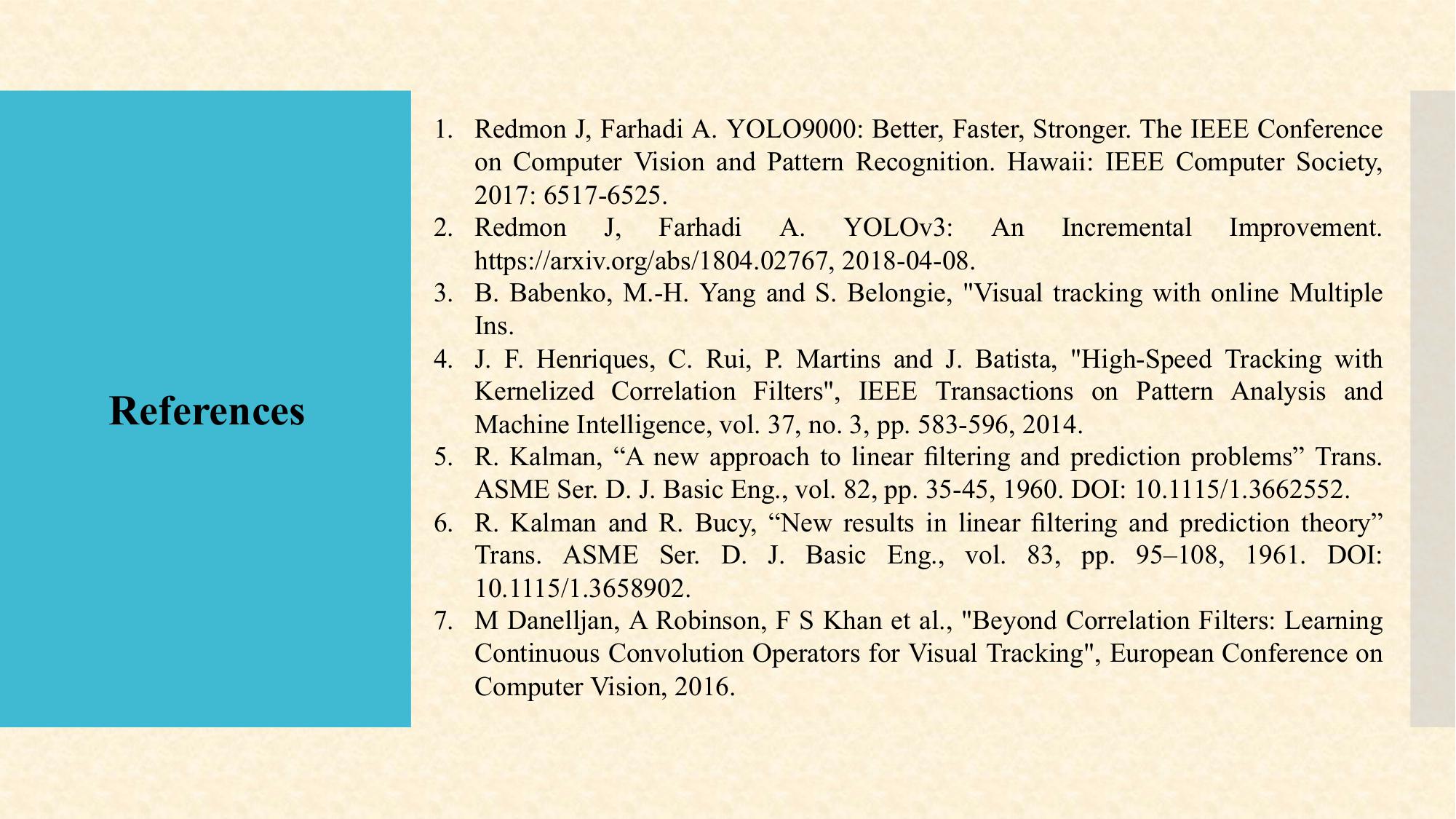 |
Those are the references we use. Those are the references we use.
|
|
ICACT20220027 Slide.14
[Big slide for presentation]
|
Chrome Text-to-Speach Click!! |
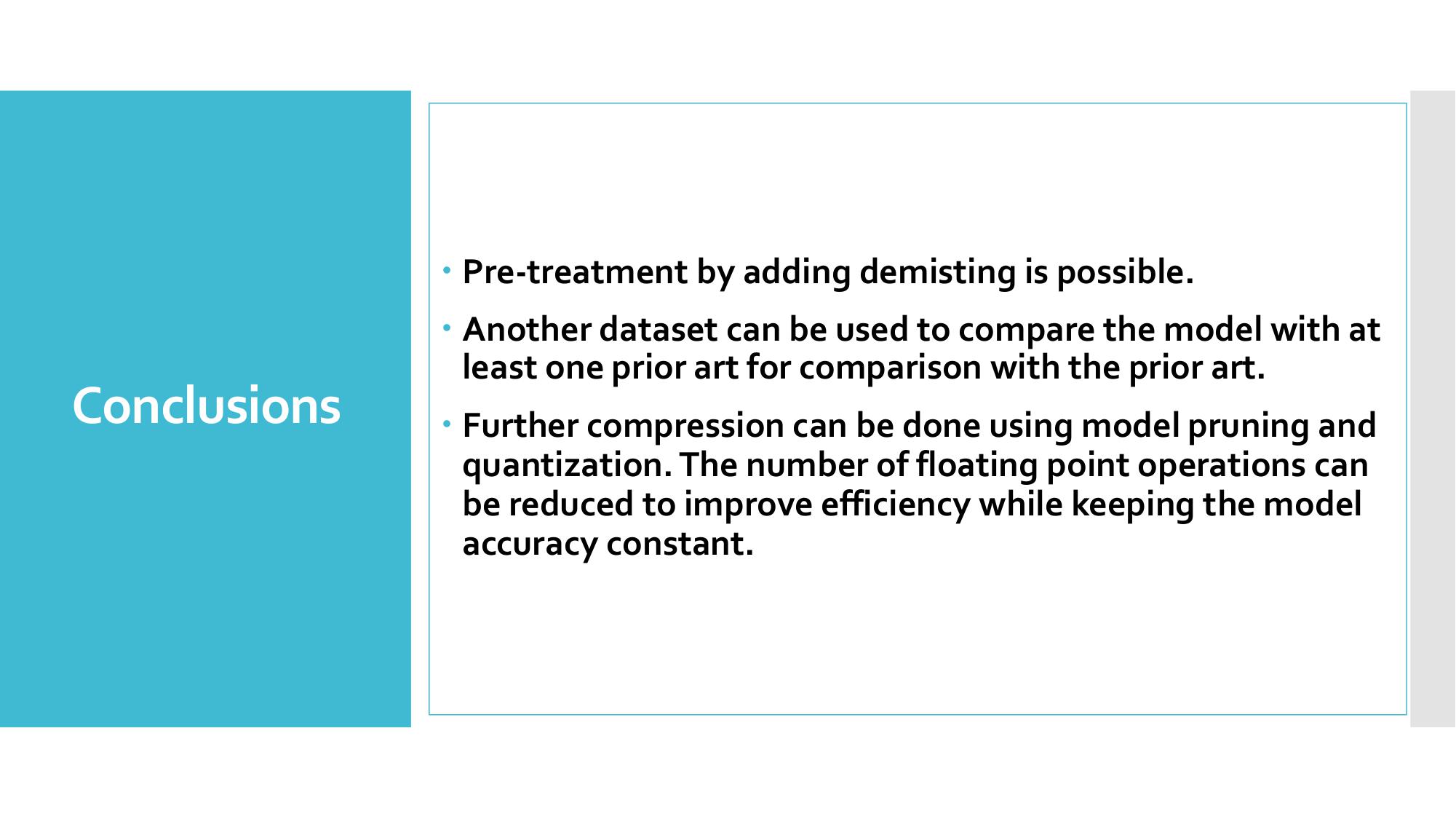 |
Pre-treatment by adding demisting is possible.
Another dataset can be used to compare the model with at least one prior art for comparison with the prior art.
Further compression can be done using model pruning and quantization. The number of floating point operations can be reduced to improve efficiency while keeping the model accuracy constant.
|
|
ICACT20220027 Slide.13
[Big slide for presentation]
|
Chrome Text-to-Speach Click!! |
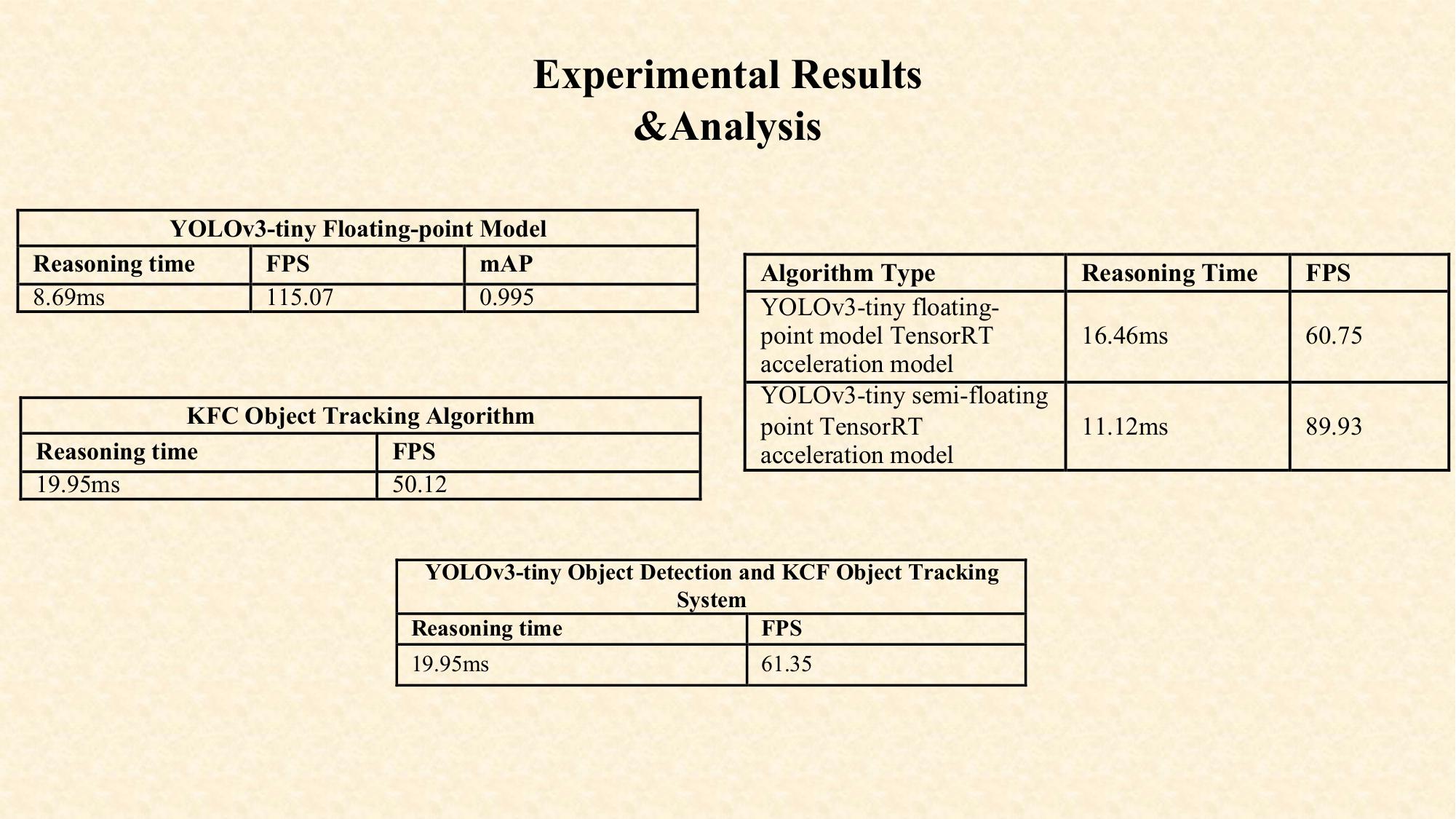 |
The experimental results show that the target detection model for red ball reached 89.93 FPS; the target tracking model for car tracking red ball reached 50.12 FPS; let the YOLOv3-tiny target detection and KCF target tracking system run for one minute and take its average speed, then as shown in Table 4, it shows that the total inference speed of the system on the NX platform has reached 61.35 FPS.
|
|
ICACT20220027 Slide.12
[Big slide for presentation]
|
Chrome Text-to-Speach Click!! |
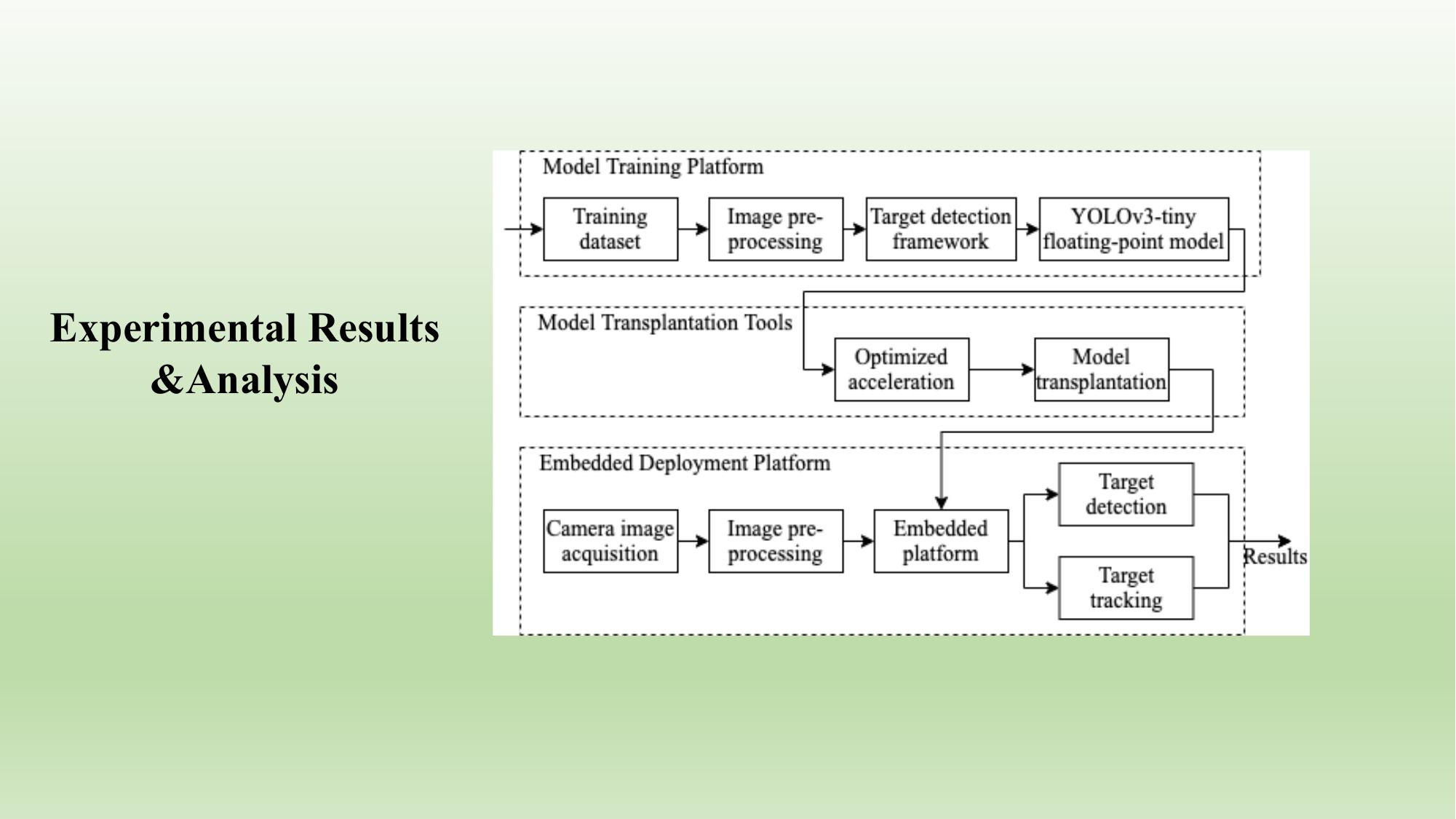 |
The fundamentally purpose of the experiments in this paper is to deploy the YOLOv3-tiny model with KCF algorithm to the embedded the terminal NX. The data flow architecture of the model terminal deployment consists of three modules.
The first module: server-based to complete this part of the experiment. First train the dataset, preprocess the images and input them into the target detection framework to extract features, and then feeding the extracted features into the YOLOv3-tiny floating-point model.
The second module: based on the model migration tool. Using TensorRT to optimize the acceleration of the YOLOv3-tiny floating-point model, and transplant the processed model to the embedded deployment platform.
The third module: based on the embedded deployment platform. The images are captured by the camera, and the input images are preprocessed and transmitted to the NX platform. The location and size of the red ball are found after performing the target detection on the video input by the camera, and then supplemented with target tracking algorithm to track the position of the red ball in real time. NX then communicates with Mecanum wheel car through the UART serial port to control the movement of the car.
|
|
ICACT20220027 Slide.11
[Big slide for presentation]
|
Chrome Text-to-Speach Click!! |
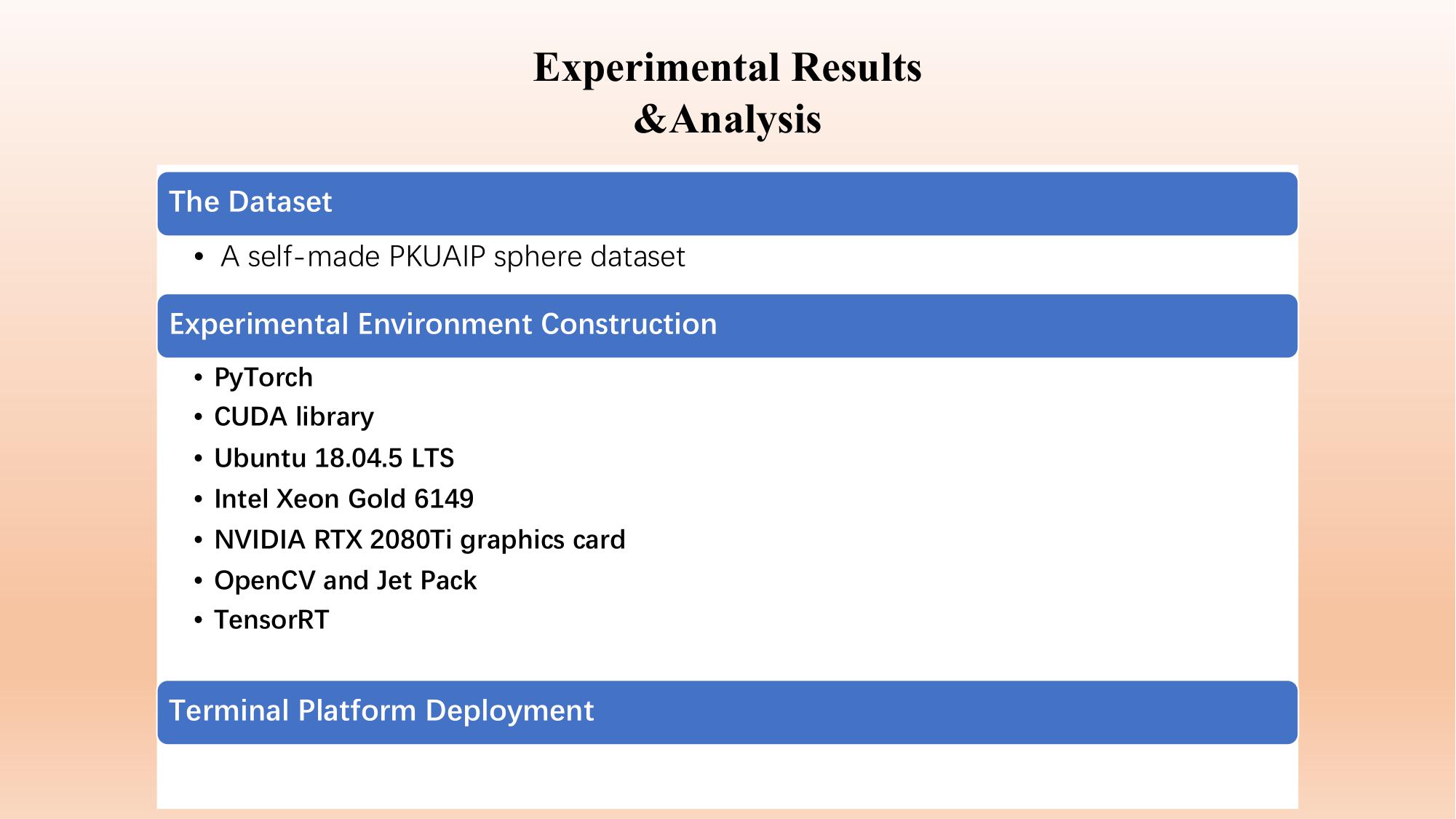 |
A self-made PKUAIP sphere dataset is used.
|
|
ICACT20220027 Slide.10
[Big slide for presentation]
|
Chrome Text-to-Speach Click!! |
 |
The 4th part is the Experimental Results &Analysis.
|
|
ICACT20220027 Slide.09
[Big slide for presentation]
|
Chrome Text-to-Speach Click!! |
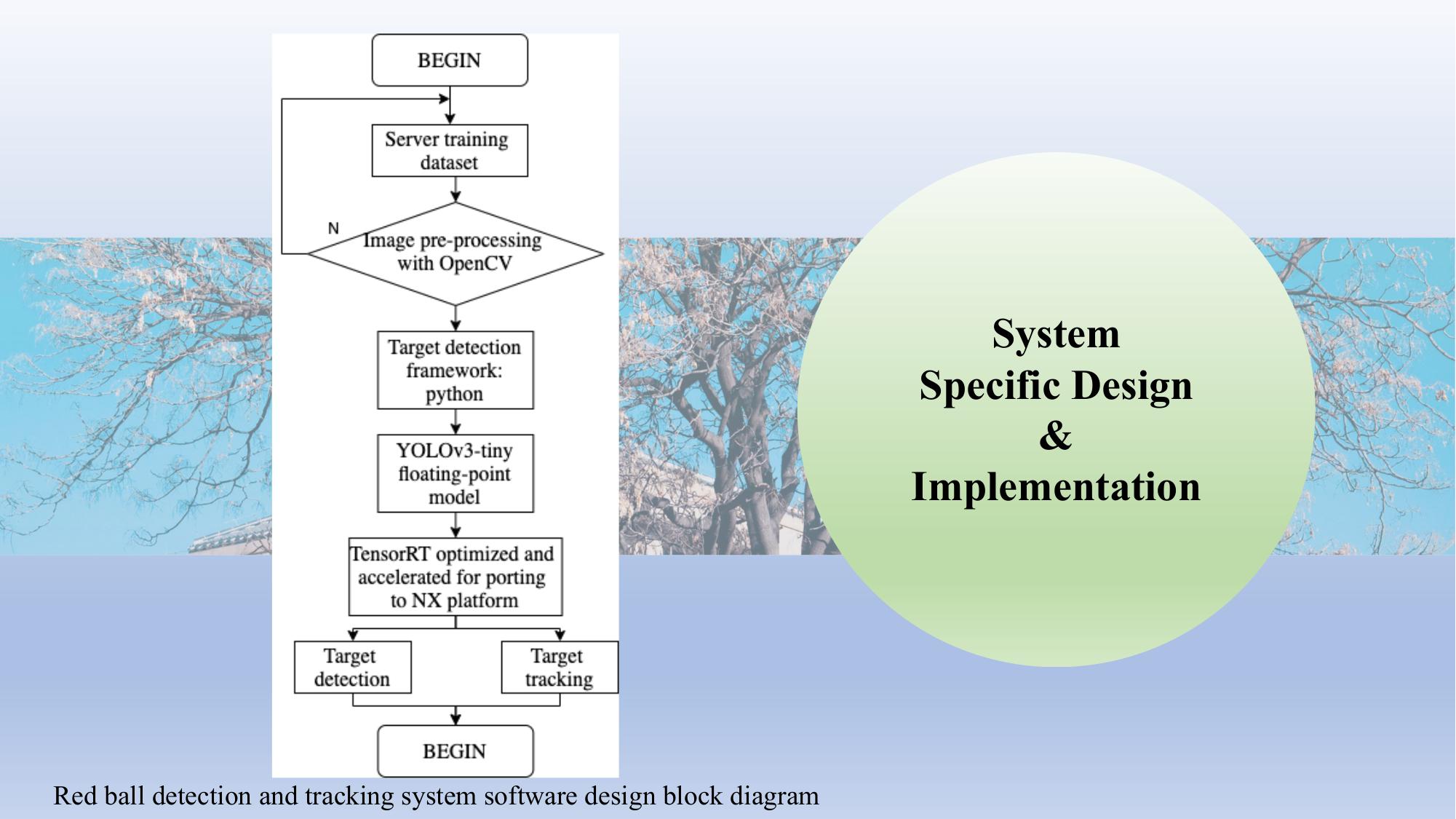 |
The system design is divided into hardware part and software part. The hardware part of the system is designed with a camera、Mecanum wheel car、NX development board、LCD monitor and other devices. The whole system design is based on the embedded deployment platform, through the camera to capture images after the input image preprocessing and transfer to the NX platform, and then the camera input video for target detection, while locating the position and size of the red ball supplemented by target tracking algorithm to track the position of the red ball in real time, finally, the results will be presented on the LCD display. NX through the UART serial port and Mecanum wheel car for communication. The car is controlled to move left/ right/ back/ forward to finally achieve the following motion of the red ball.
The software part of this system contains a software environment using TensorRT to optimize the model for acceleration, an OpenCV library is selected to preprocess the image input from the camera, and the PyTorch framework is chosen for feature extraction.
In this paper, we adopt the frame per second (FPS) of the image processed by the model algorithm as an indicator to measure the performance of the red ball target detection model. The red ball target detection and tracking system is designed with the fundamental goal of achieving the highest possible model representation ability under limited computational complexity, and to increase the actual execution speed of the model. After the preliminary dataset preparation and hardware design, the software part is designed and the overall software flow of the red ball detection and tracking system is shown in Figure.
|
|
ICACT20220027 Slide.08
[Big slide for presentation]
|
Chrome Text-to-Speach Click!! |
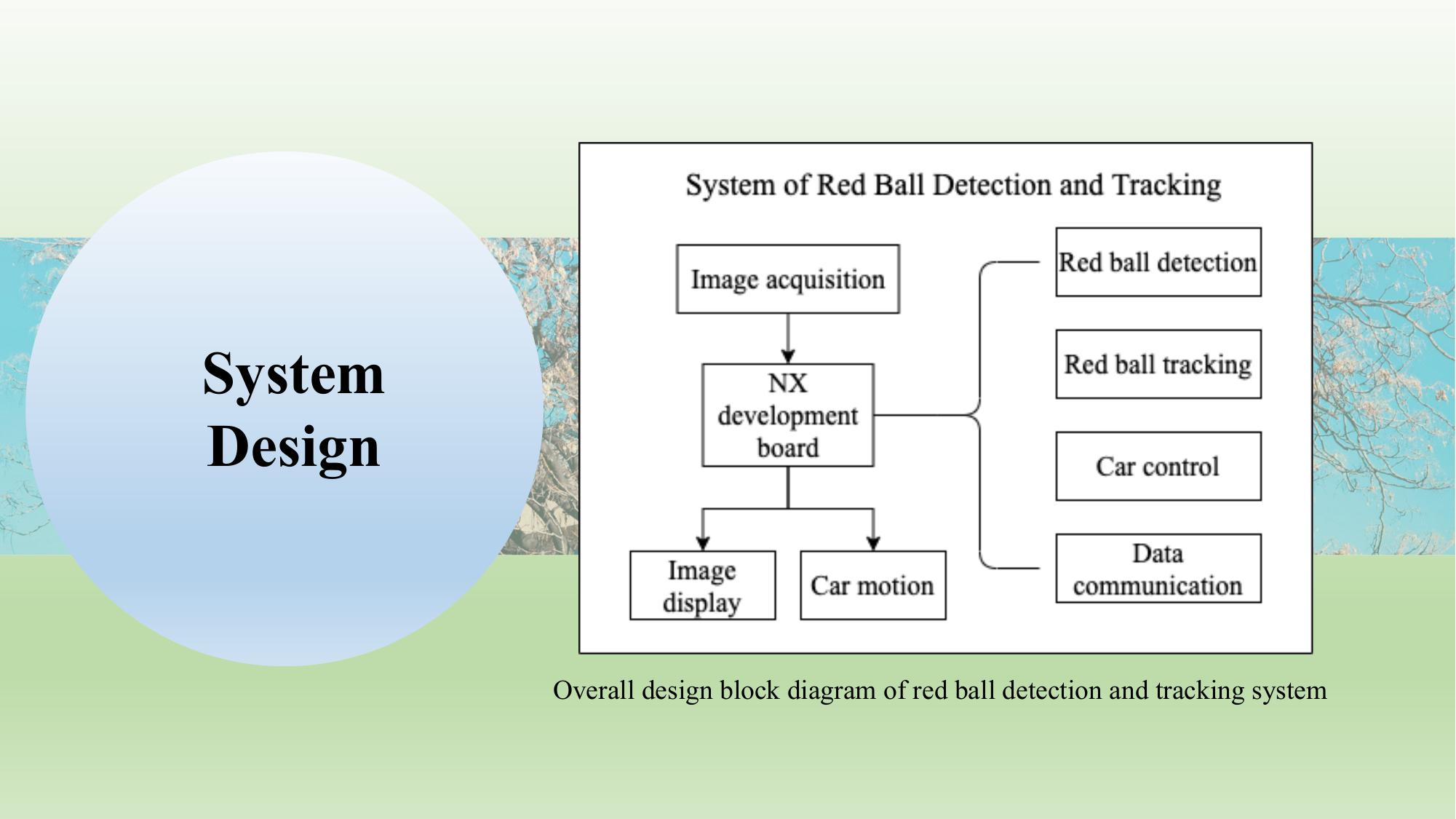 |
NX Development Board: NX is the core part of the entire embedded system.
Image Acquisition Module: This part transmits the acquired image information to the NX platform through the camera.
Image Display Module: The display is connected to the NX via the micro-HDMI interface, and is responsible for displaying the collected images and the red ball detection and tracking results.
Red Ball Detection Module: Target detection based on the YOLOv3-tiny model is used to locate the position and size of the red ball on the camera input video.
Red Ball Tracking Module: This module mainly implements the function of tracking of the red ball position in real time.
Data Communication Module: NX communicates with Mecanum wheel car via UART serial transmission.
Car Control Module: This module controls the car for left/ right/ back/ forward motion.
Car Motion Module: This part realizes the movement of the car following the red ball.
|
|
ICACT20220027 Slide.07
[Big slide for presentation]
|
Chrome Text-to-Speach Click!! |
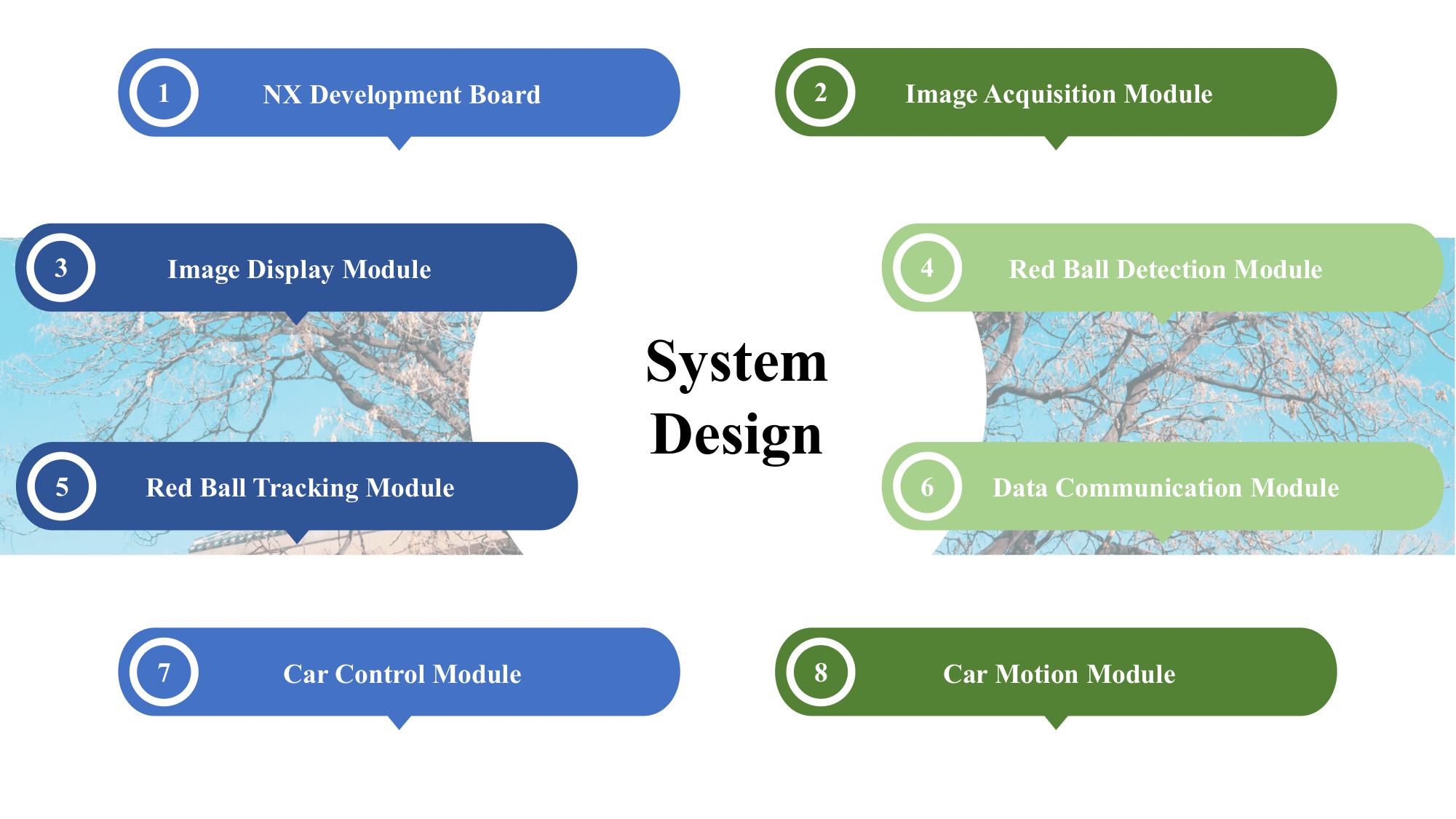 |
The system design is divided into two parts: software design and hardware design for detailed description.
The overall design of the red ball detection and tracking system is shown in Figure 1. The red ball target detection model is trained based on the server. As shown in the figure 1, the NX development board is the core of the whole embedded terminal deployment. The image information is collected by connecting with the camera, and the detection model is ported to the NX development board after accelerating the YOLOv3-tiny model by using TensorRT, which outputs the red ball positioning and size information to the LCD after target detection. NX relies on the UART serial port to communicate with the motion module of the car to control the left/ right/ back/ forward movement of the car. The following key components constitute the entire system.
|
|
ICACT20220027 Slide.06
[Big slide for presentation]
|
Chrome Text-to-Speach Click!! |
 |
The third part is system design.
|
|
ICACT20220027 Slide.05
[Big slide for presentation]
|
Chrome Text-to-Speach Click!! |
 |
As showed before, the YOLOv3-Tiny model is used for high accuracy and robustness in natural scenes, and the KCF target tracking algorithm is characterised by high accuracy and high speed.
|
|
ICACT20220027 Slide.04
[Big slide for presentation]
|
Chrome Text-to-Speach Click!! |
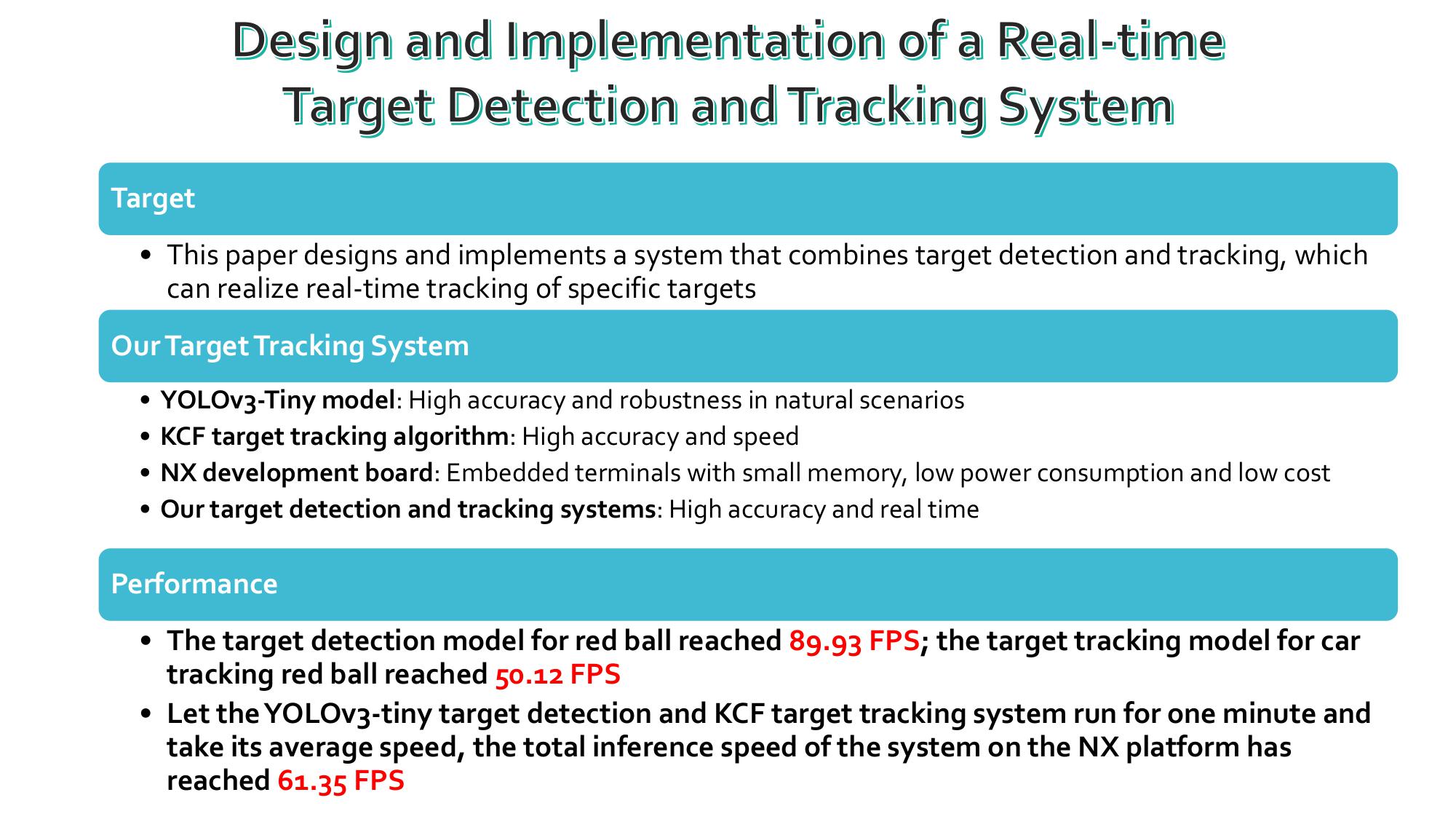 |
This paper designs and implements a combined YOLOv3-Tiny model and the KCF target tracking algorithm which is capable of tracking specific targets in real time. The NX development board we used is an embedded terminal with small memory, low power consumption and low cost.
The target detection model for the red ball is 89.93 FPS; the target tracking model for the car tracking the red ball is 50.12 FPS. Allowing the YOLOv3-Miniature Target Detection and KCF Target Tracking system to run for one minute and taking its average speed, the system achieves a total inference speed of 61.35 FPS on the NX platform.
We used a home-made dataset, and several more datasets will be added in subsequent optimisations for further refinement and comparison.
|
|
ICACT20220027 Slide.03
[Big slide for presentation]
|
Chrome Text-to-Speach Click!! |
 |
First, we gonna give you a brief introduction.
|
|
ICACT20220027 Slide.02
[Big slide for presentation]
|
Chrome Text-to-Speach Click!! |
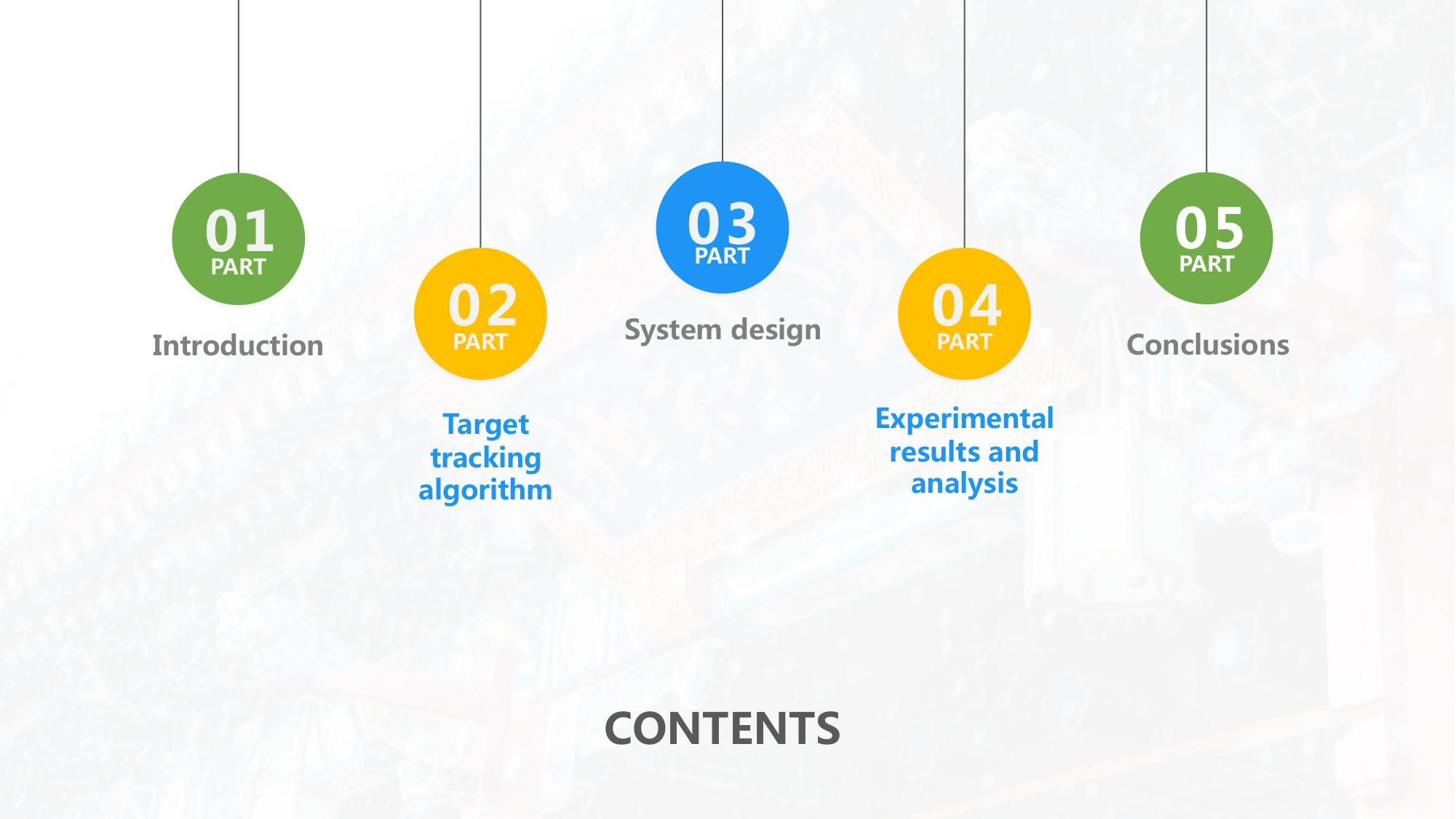 |
The structure of this paper is presented in five parts, firstly a background introduction, secondly an introduction to the target tracking algorithm, thirdly the overall system design, fourthly the results and analysis of the ornamentation, and finally a summary of the whole paper.
|
|
ICACT20220027 Slide.01
[Big slide for presentation]
|
Chrome Text-to-Speach Click!! |
 |
Hi everybody, my name is Cao Xinyan. For ICACT 2022, I have cooperated with a couple partners from Peking University, China. Our presentation today is about the Design and Implementation of a Real-time Object Detection and Tracking System.
|
















