 ICACT20220090 Slide.25
[Big slide for presentation]
[YouTube] |
Chrome Text-to-Speach Click!! |
 |
Thanks
|
|
ICACT20220090 Slide.24
[Big slide for presentation]
[YouTube] |
Chrome Text-to-Speach Click!! |
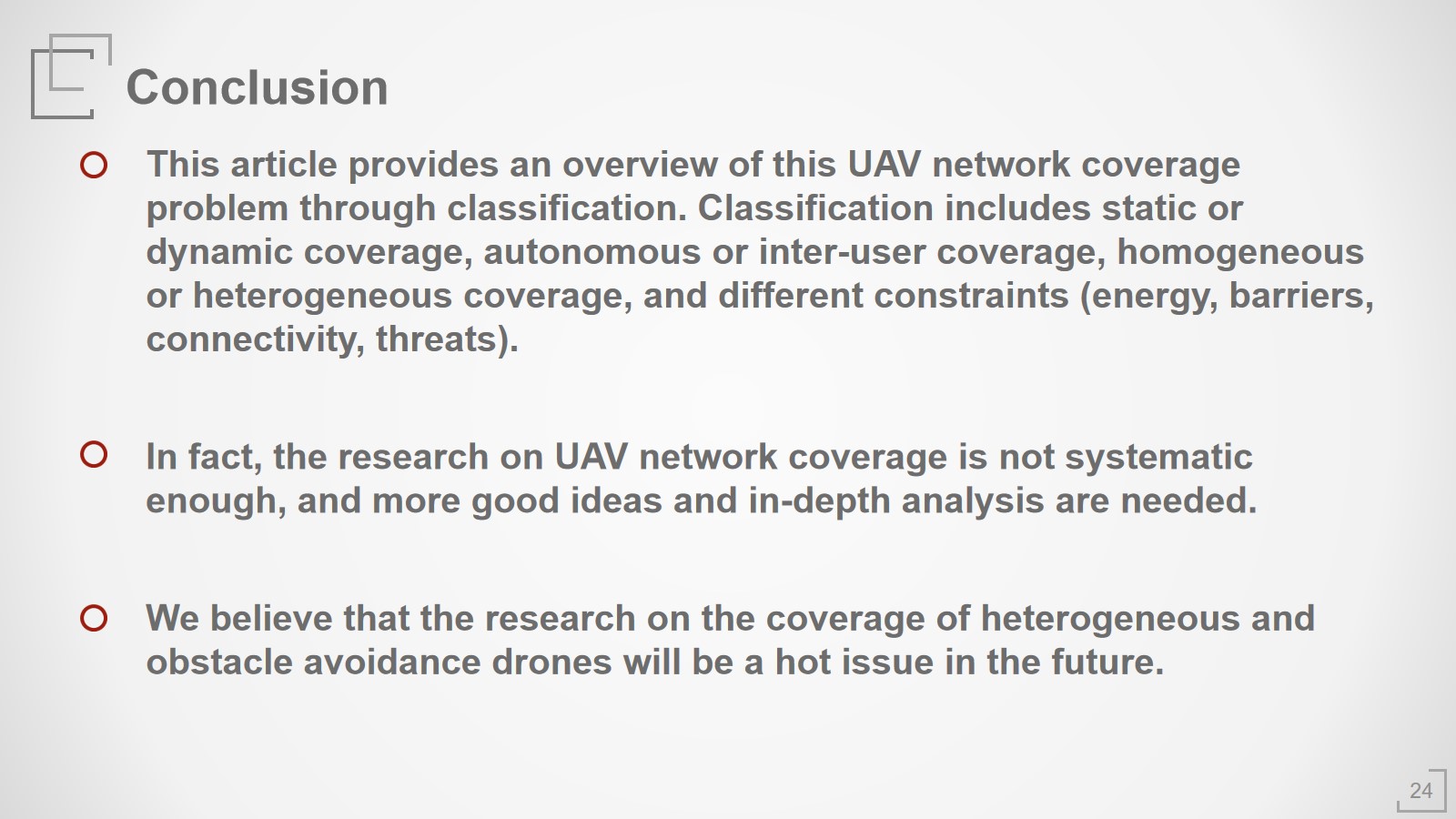 |
This article provides an overview of this UAV network coverage problem through classification. Classification includes static or dynamic coverage, autonomous or inter-user coverage, homogeneous or heterogeneous coverage, and different constraints (energy, barriers, connectivity, threats).
In fact, the research on UAV network coverage is not systematic enough, and more good ideas and in-depth analysis are needed.
We believe that the research on the coverage of heterogeneous and obstacle avoidance drones will be a hot issue in the future.
|
|
ICACT20220090 Slide.23
[Big slide for presentation]
[YouTube] |
Chrome Text-to-Speach Click!! |
 |
Conclusion
|
|
ICACT20220090 Slide.22
[Big slide for presentation]
[YouTube] |
Chrome Text-to-Speach Click!! |
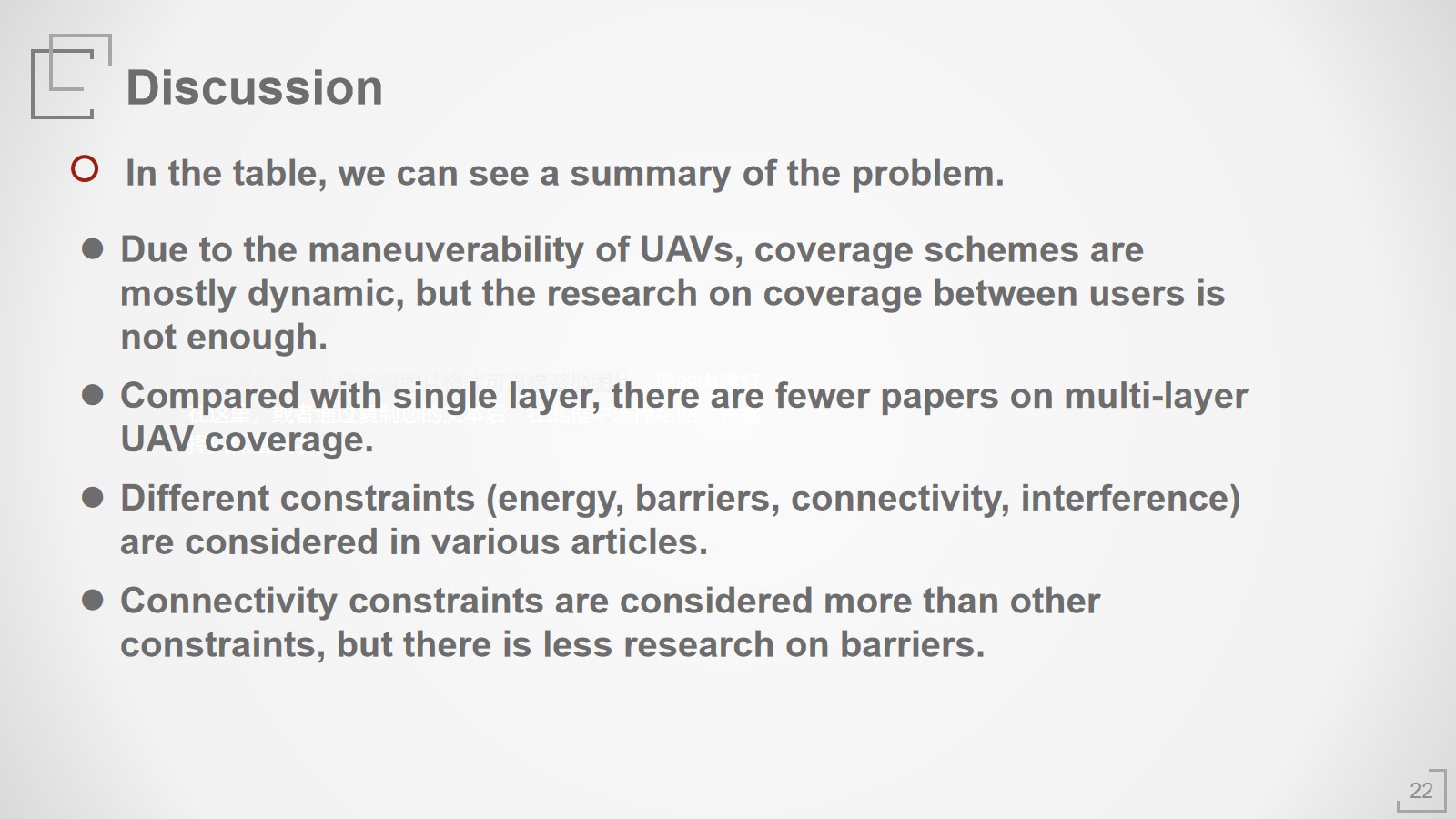 |
From the table, it can be seen that due to the mobility of UAVs, coverage schemes are mostly dynamic, but inter-user coverage has not been studied enough. Fewer papers have been reported on multi-layer UAV coverage than on single layer. Different constraints (e.g. energy, obstacles, connectivity, interference) are considered in various articles, and the connectivity constraint is considered more than other constraints, but the environment with obstacles is less studied.
|
|
ICACT20220090 Slide.21
[Big slide for presentation]
[YouTube] |
Chrome Text-to-Speach Click!! |
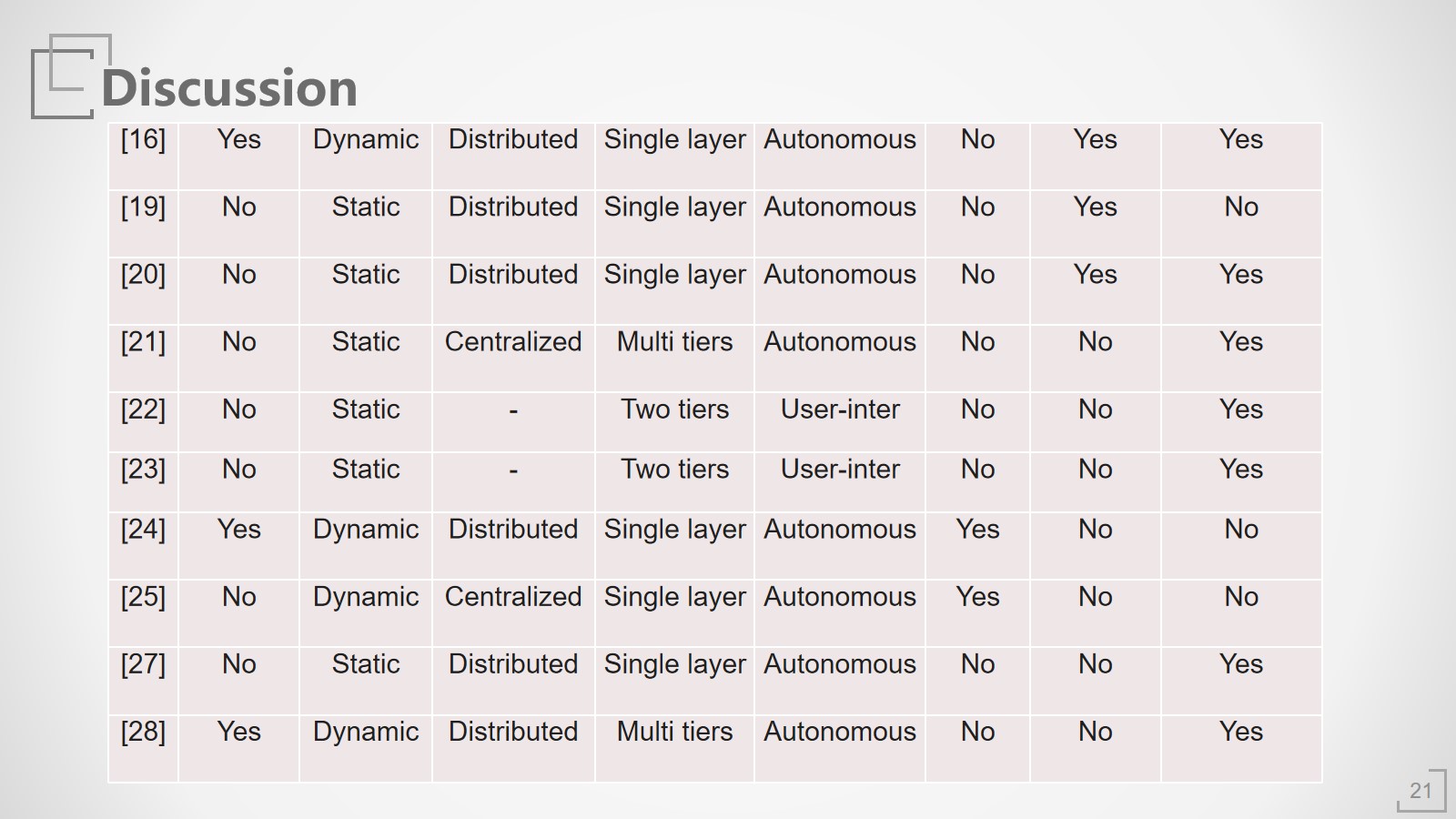 |
In Table 1, we can see the issue summary. The columns represent the factors considered and the considered rows represent the papers cited.
|
|
ICACT20220090 Slide.20
[Big slide for presentation]
[YouTube] |
Chrome Text-to-Speach Click!! |
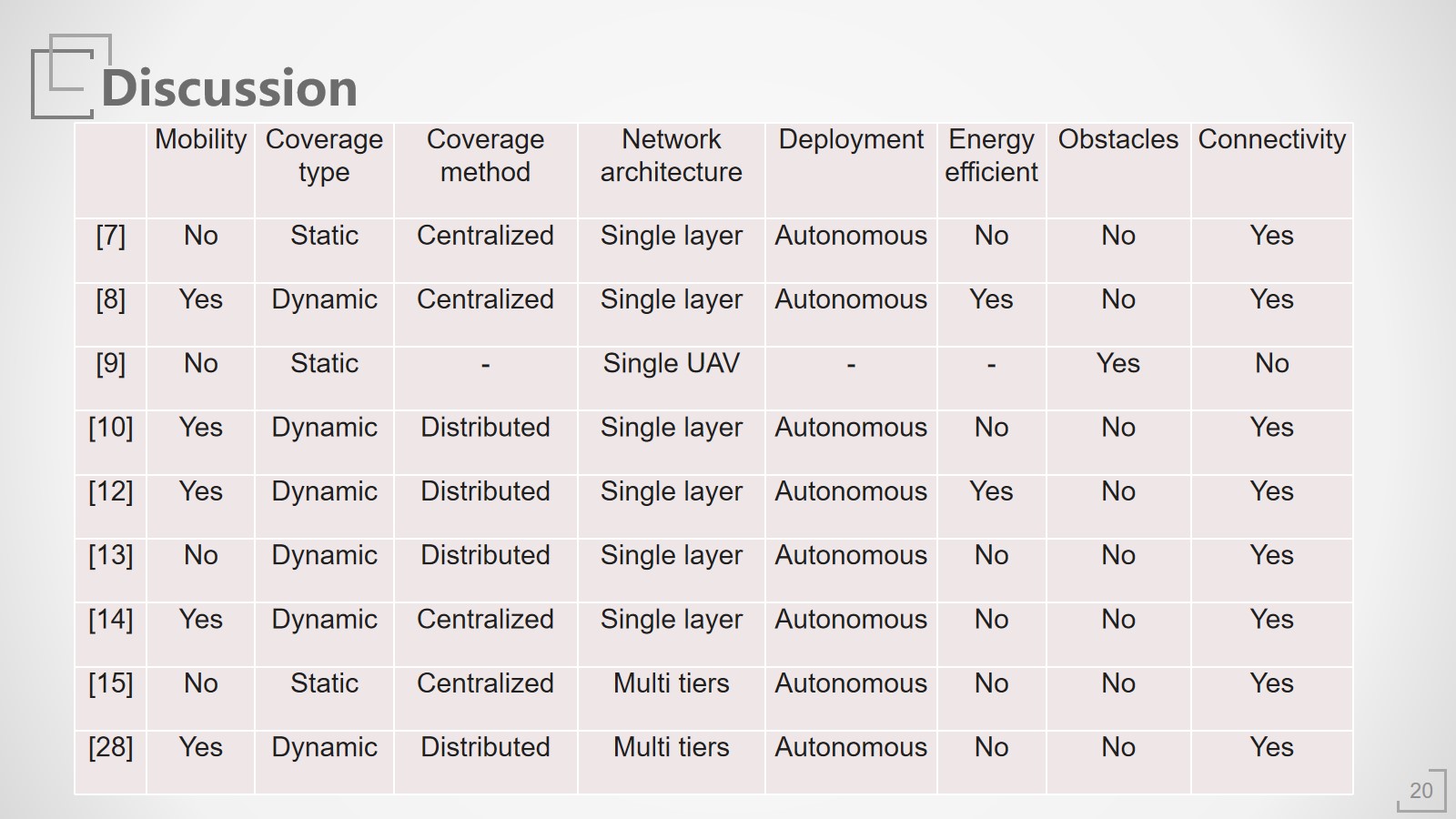 |
In this survey, we summarize the different classifications of UAV network coverage problems. In fact, many studies have considered several factors. In the classification, we present only some of them, so we can just provide a reference for the reader.
|
|
ICACT20220090 Slide.19
[Big slide for presentation]
[YouTube] |
Chrome Text-to-Speach Click!! |
 |
discussion
|
|
ICACT20220090 Slide.18
[Big slide for presentation]
[YouTube] |
Chrome Text-to-Speach Click!! |
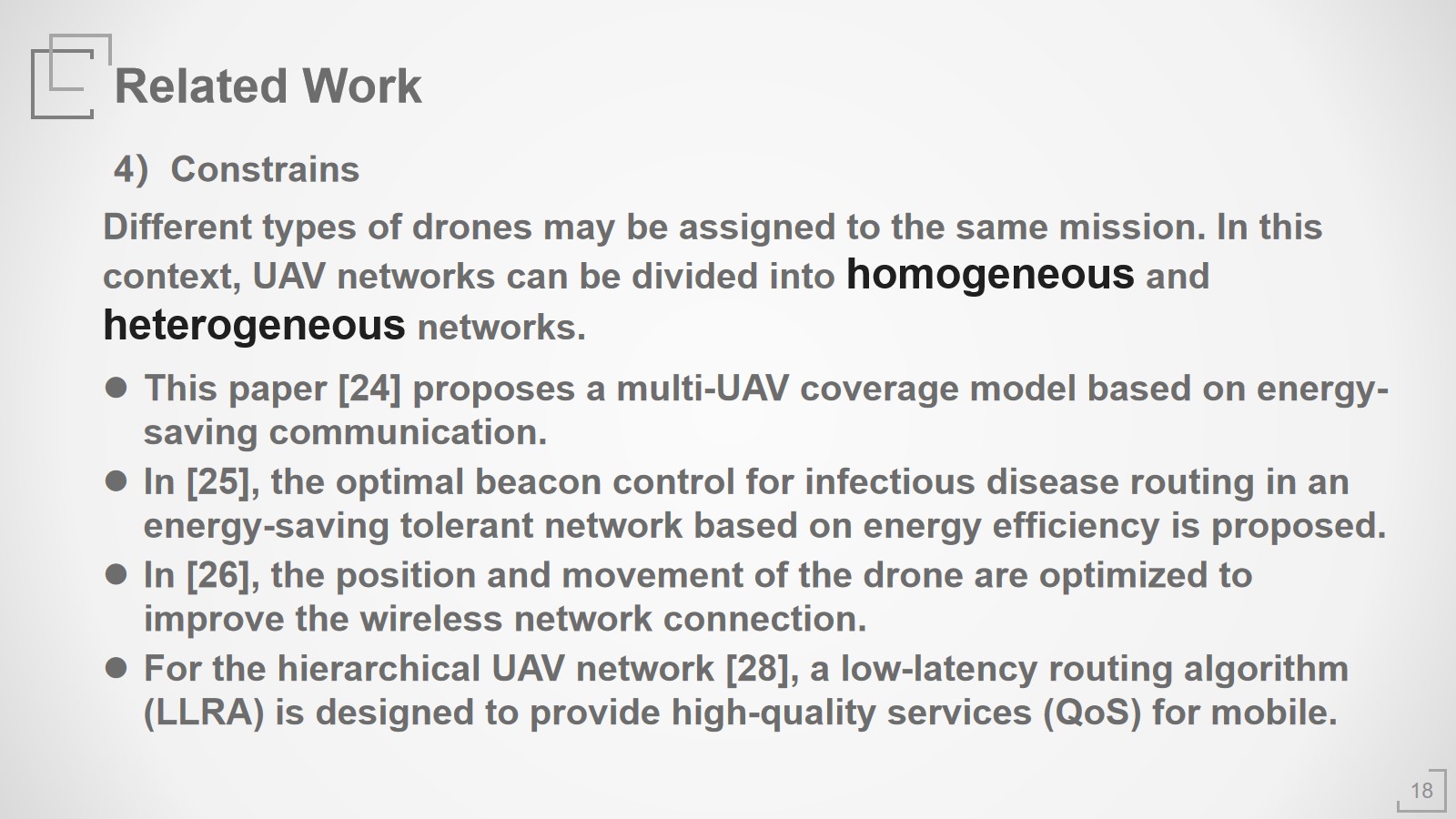 |
No 4. Constraints
Different types of drones may be assigned to the same mission. In this context, UAV networks can be divided into homogeneous and heterogeneous networks.
This paper [24] proposes a multi-UAV coverage model based on energy-saving communication.
In [25], the optimal beacon control for infectious disease routing in an energy-saving tolerant network based on energy efficiency is proposed.
In [26], the position and movement of the drone are optimized to improve the wireless network connection.
For the hierarchical UAV network [28], a low-latency routing algorithm (LLRA) is designed to provide high-quality services (QoS) for mobile.
|
|
ICACT20220090 Slide.17
[Big slide for presentation]
[YouTube] |
Chrome Text-to-Speach Click!! |
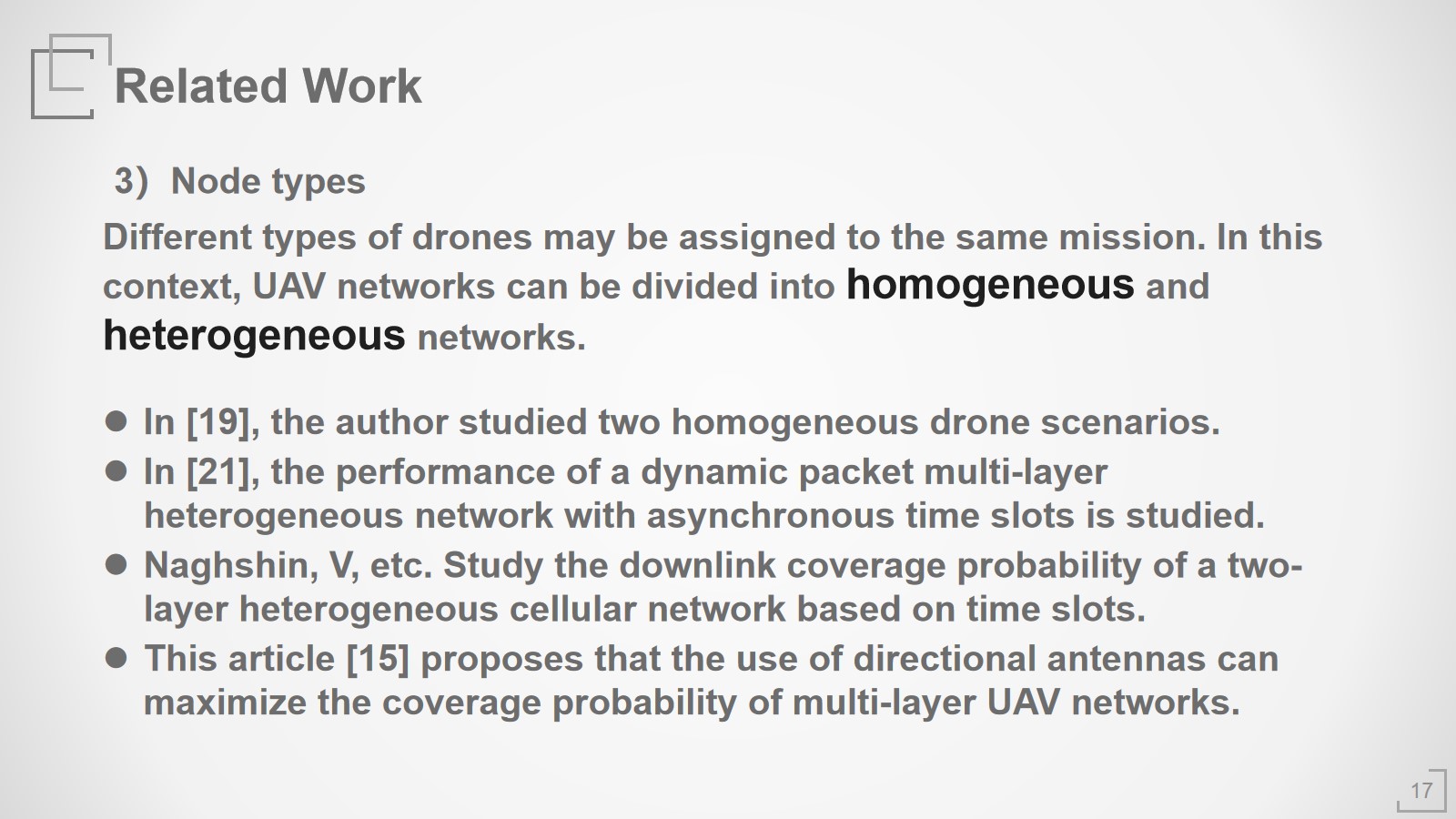 |
No 3. Node types
Different types of drones may be assigned to the same mission. In this context, UAV networks can be divided into homogeneous and heterogeneous networks.
In [19], the author studied two homogeneous drone scenarios.
In [21], the performance of a dynamic packet multi-layer heterogeneous network with asynchronous time slots is studied.
Naghshin, V, etc. Study the downlink coverage probability of a two-layer heterogeneous cellular network based on time slots.
This article [15] proposes that the use of directional antennas can maximize the coverage probability of multi-layer UAV networks.
|
|
ICACT20220090 Slide.16
[Big slide for presentation]
[YouTube] |
Chrome Text-to-Speach Click!! |
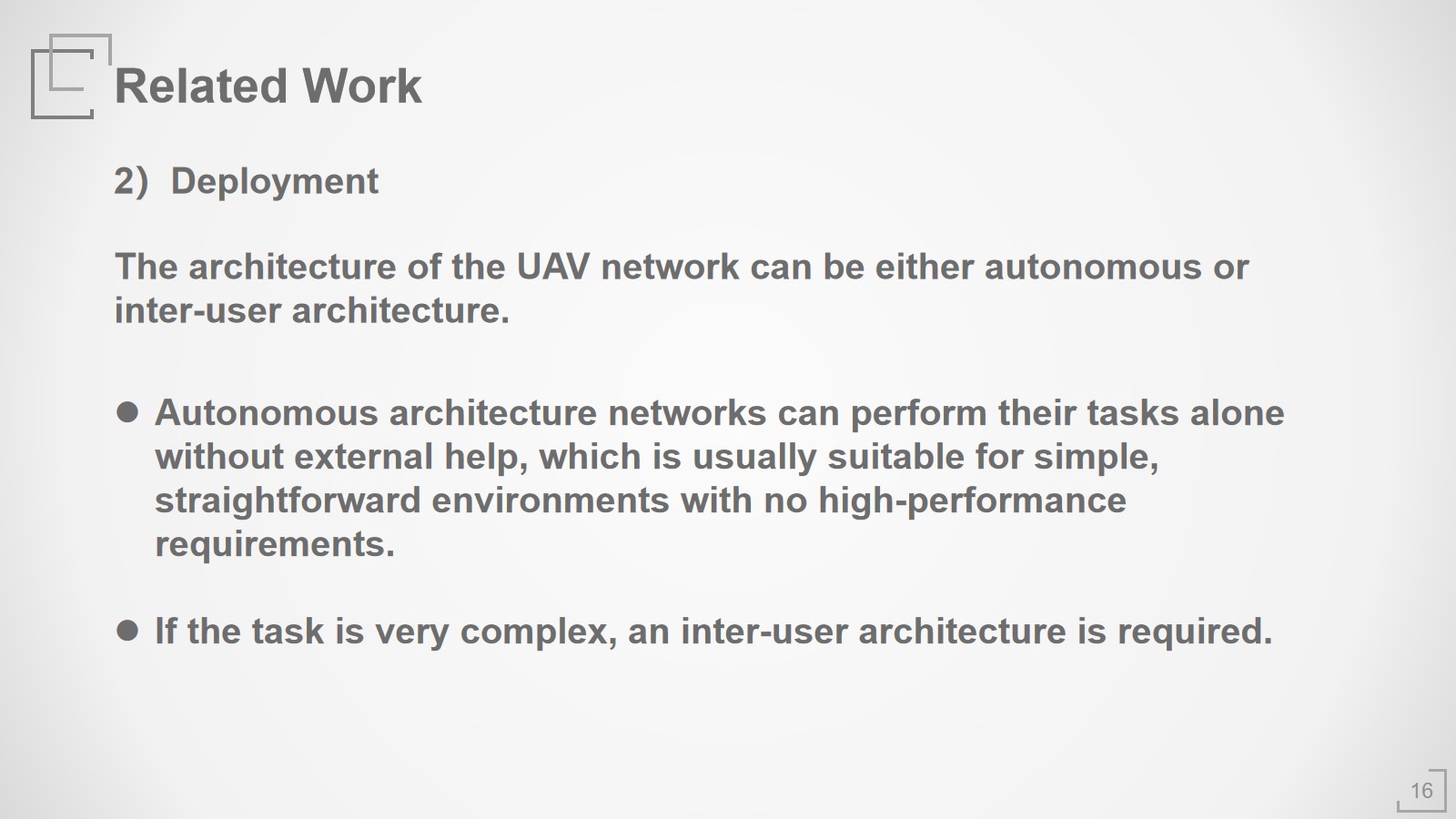 |
No 2. Deployment
The architecture of the UAV network can be either autonomous or inter-user architecture.
Autonomous architecture networks can perform their tasks alone without external help, which is usually suitable for simple, straightforward environments with no high-performance requirements.
If the task is very complex, an inter-user architecture is required.
|
|
ICACT20220090 Slide.15
[Big slide for presentation]
[YouTube] |
Chrome Text-to-Speach Click!! |
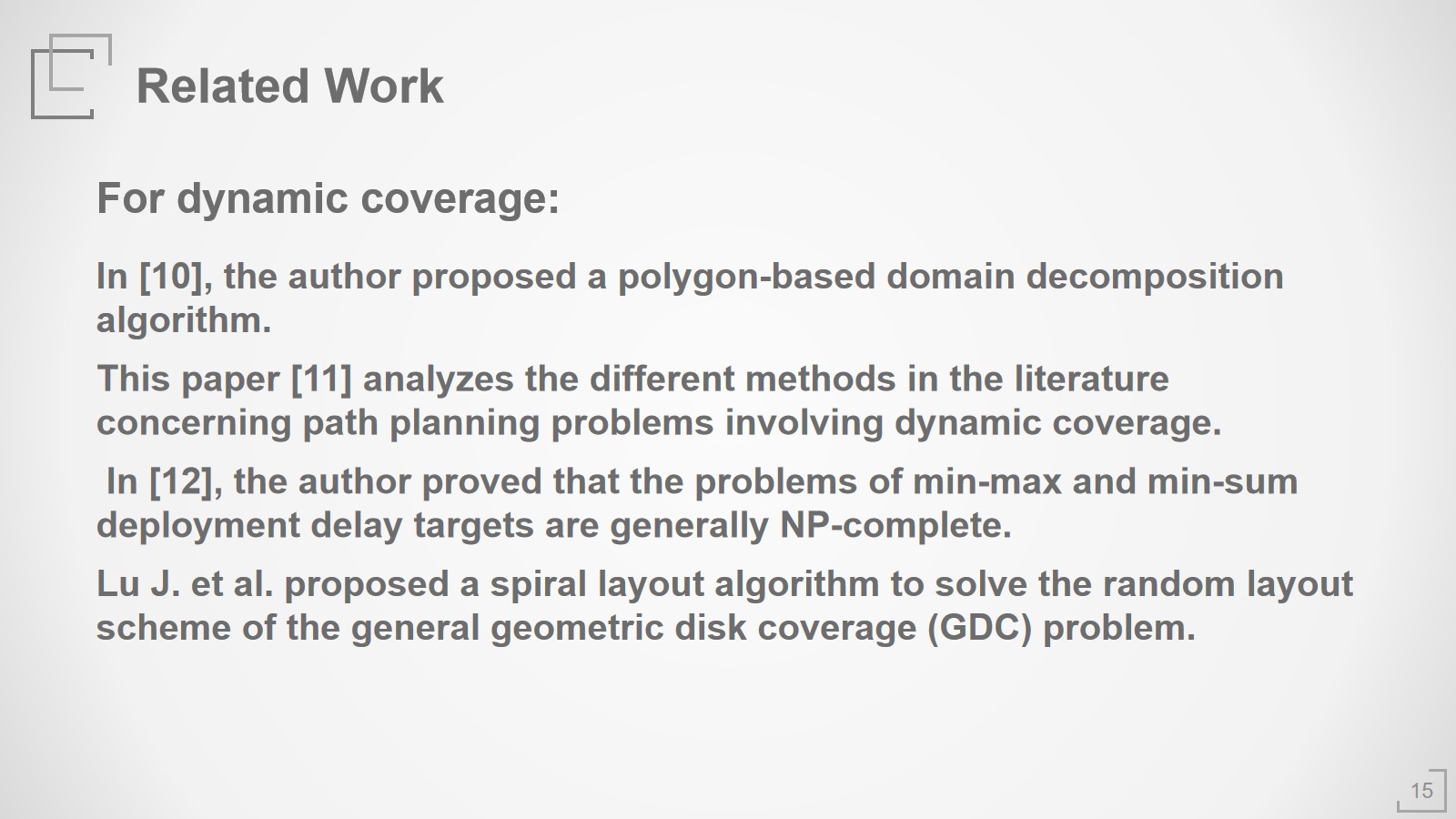 |
For dynamic coverage:
In [10], the author proposed a polygon-based domain decomposition algorithm.
This paper [11] analyzes the different methods in the literature concerning path planning problems involving dynamic coverage.
In [12], the author proved that the problems of min-max and min-sum deployment delay targets are generally NP-complete.
Lu J. et al. proposed a spiral layout algorithm to solve the random layout scheme of the general geometric disk coverage (GDC) problem.
|
|
ICACT20220090 Slide.14
[Big slide for presentation]
[YouTube] |
Chrome Text-to-Speach Click!! |
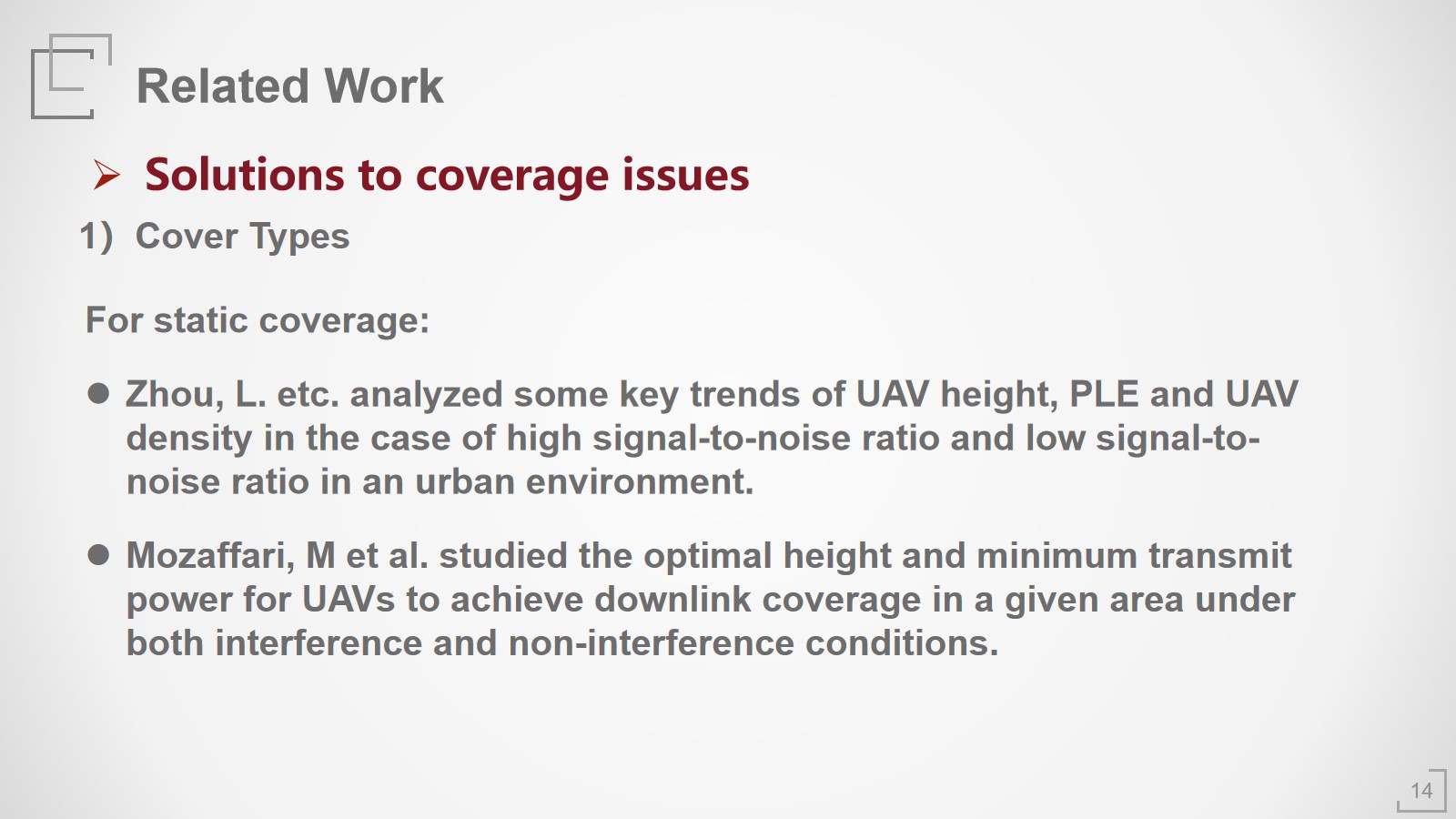 |
No 1. Cover types
For static coverage:
Zhou, L. etc. analyzed some key trends of UAV height, PLE and UAV density in the case of high signal-to-noise ratio and low signal-to-noise ratio in an urban environment.
Mozaffari, M et al. studied the optimal height and minimum transmit power for UAVs to achieve downlink coverage in a given area under both interference and non-interference conditions.
|
|
ICACT20220090 Slide.13
[Big slide for presentation]
[YouTube] |
Chrome Text-to-Speach Click!! |
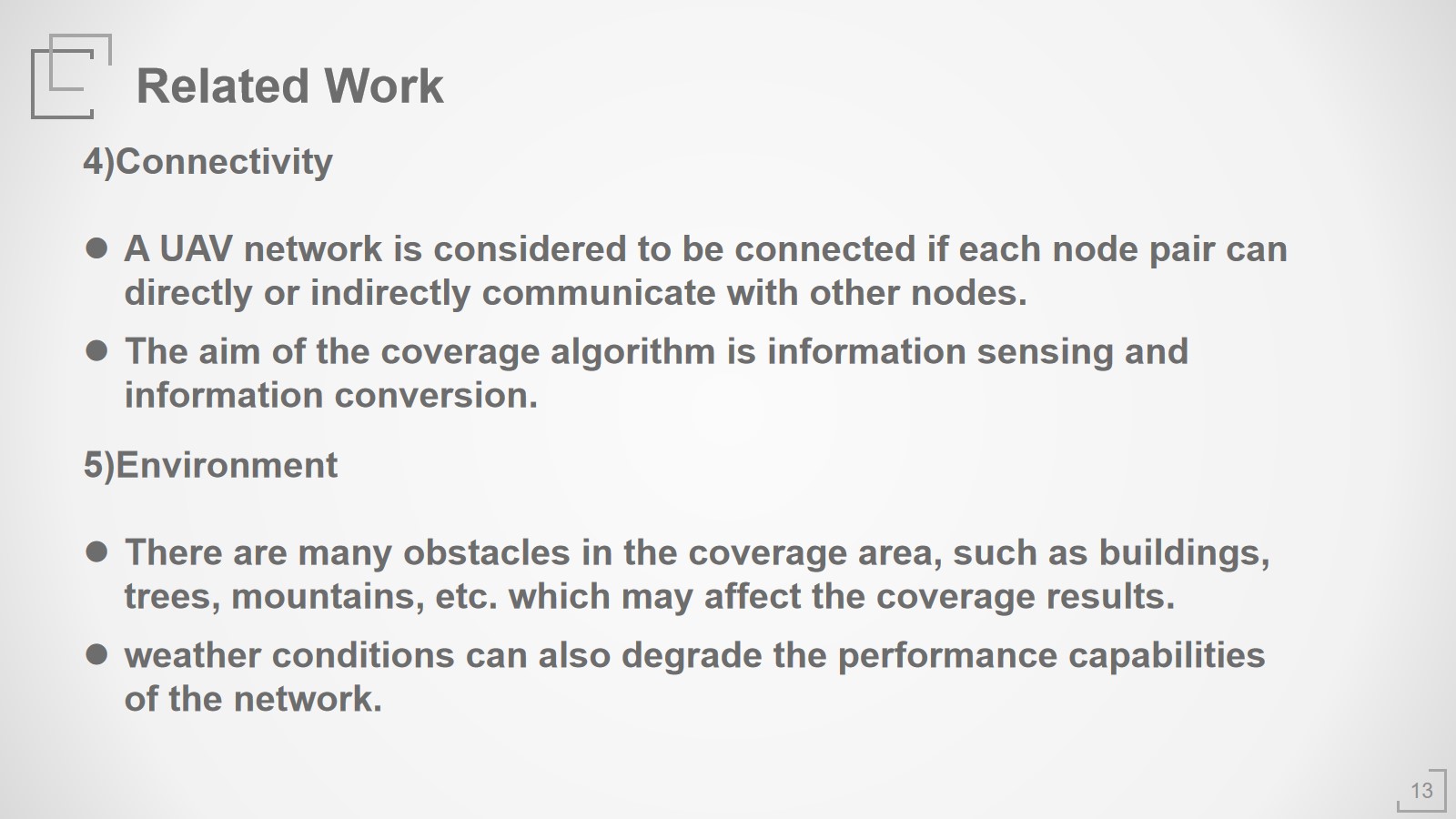 |
A UAV network is considered to be connected if each node pair can directly or indirectly communicate with other nodes. The aim of the coverage algorithm is information sensing and information conversion.
In addition, there are many obstacles in the coverage area, such as buildings, trees, mountains, etc. which may affect the coverage results. Weather conditions can also degrade the performance capabilities of the network.
Next, we classify and briefly introduce the researches related to UAV network coverage.
|
|
ICACT20220090 Slide.12
[Big slide for presentation]
[YouTube] |
Chrome Text-to-Speach Click!! |
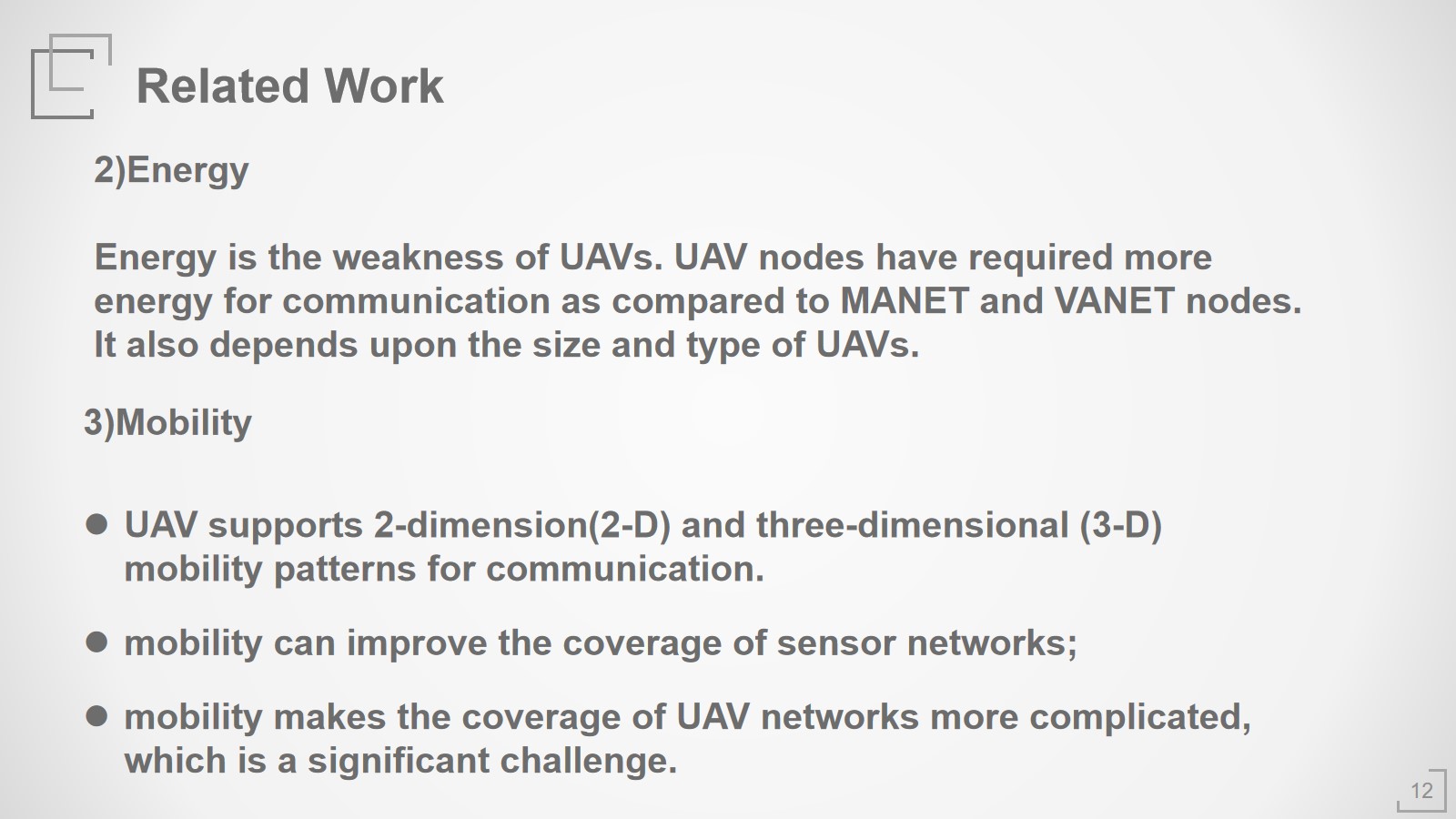 |
Energy is the weakness of UAVs. UAV nodes have required more energy for communication as compared to MANET and VANET nodes. It also depends upon the size and type of UAVs.
UAV supports 2-dimension(2-D) and three-dimensional (3-D) mobility patterns for communication. Mobility can improve the coverage of sensor networks. Mobility makes the coverage of UAV networks more complicated, which is a significant challenge.
|
|
ICACT20220090 Slide.11
[Big slide for presentation]
[YouTube] |
Chrome Text-to-Speach Click!! |
 |
The ratio of coverage area and given area is a measurement of the coverage ability of the UAV network. The goal of a coverage algorithm is to monitor and perceive environmental information, so the coverage ability is an important factor that must be considered.
|
|
ICACT20220090 Slide.10
[Big slide for presentation]
[YouTube] |
Chrome Text-to-Speach Click!! |
 |
The area coverage problem is the vary base of many UAV applications, which is usually interpreted as the monitoring degree of a sensor network to a given area. So how to achieve monitoring the given area with a reasonable number of UAVs is a research highlight. Unfortunately, the UAVs face some challenging issues in the UAV coverage problem。
When solving the problem of UAV network coverage, some characteristics of UAV need to be considered. Such as coverage, environment, mobility, connectivity and energy.
|
|
ICACT20220090 Slide.09
[Big slide for presentation]
[YouTube] |
Chrome Text-to-Speach Click!! |
 |
related work
|
|
ICACT20220090 Slide.08
[Big slide for presentation]
[YouTube] |
Chrome Text-to-Speach Click!! |
 |
UAVs can take along a wireless sensor while carrying out missions, so solutions of coverage problems in wireless sensor networks sometimes can also fit in UAV networks.
However, a UAV network has its features, and that leads to many new solutions.
First of all, due to the mobility characteristics of UAVs, the existing coverage algorithms are mostly static coverage which is difficult to apply. Secondly, when developing coverage algorithms, it is necessary to consider the constraints of limited energy and communication distance. Finally, the robustness and delay of the coverage algorithm are also factors that must be considered.
|
|
ICACT20220090 Slide.07
[Big slide for presentation]
[YouTube] |
Chrome Text-to-Speach Click!! |
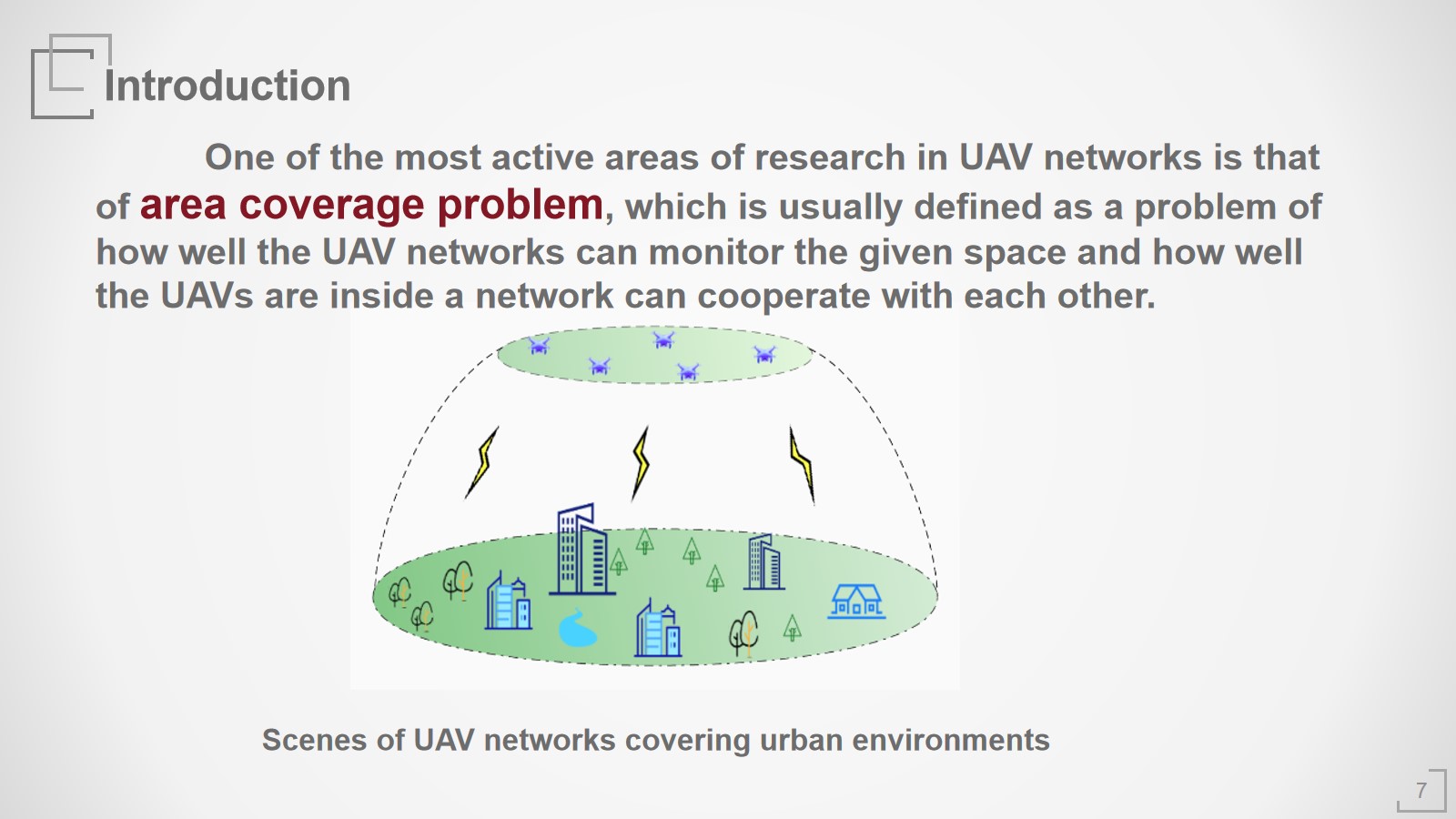 |
The area coverage problem is a classic problem in wireless sensor networks. It is worthwhile mentioning that a lot of works so far have been focused on the area coverage problem because most mission-driven UAV communication technologies can eventually convert into the practical application under the area coverage problem. Hence, under the circumstance of cooperative UAV control coverage, missions such as investigation, communication, and mapping can be well accomplished.
|
|
ICACT20220090 Slide.06
[Big slide for presentation]
[YouTube] |
Chrome Text-to-Speach Click!! |
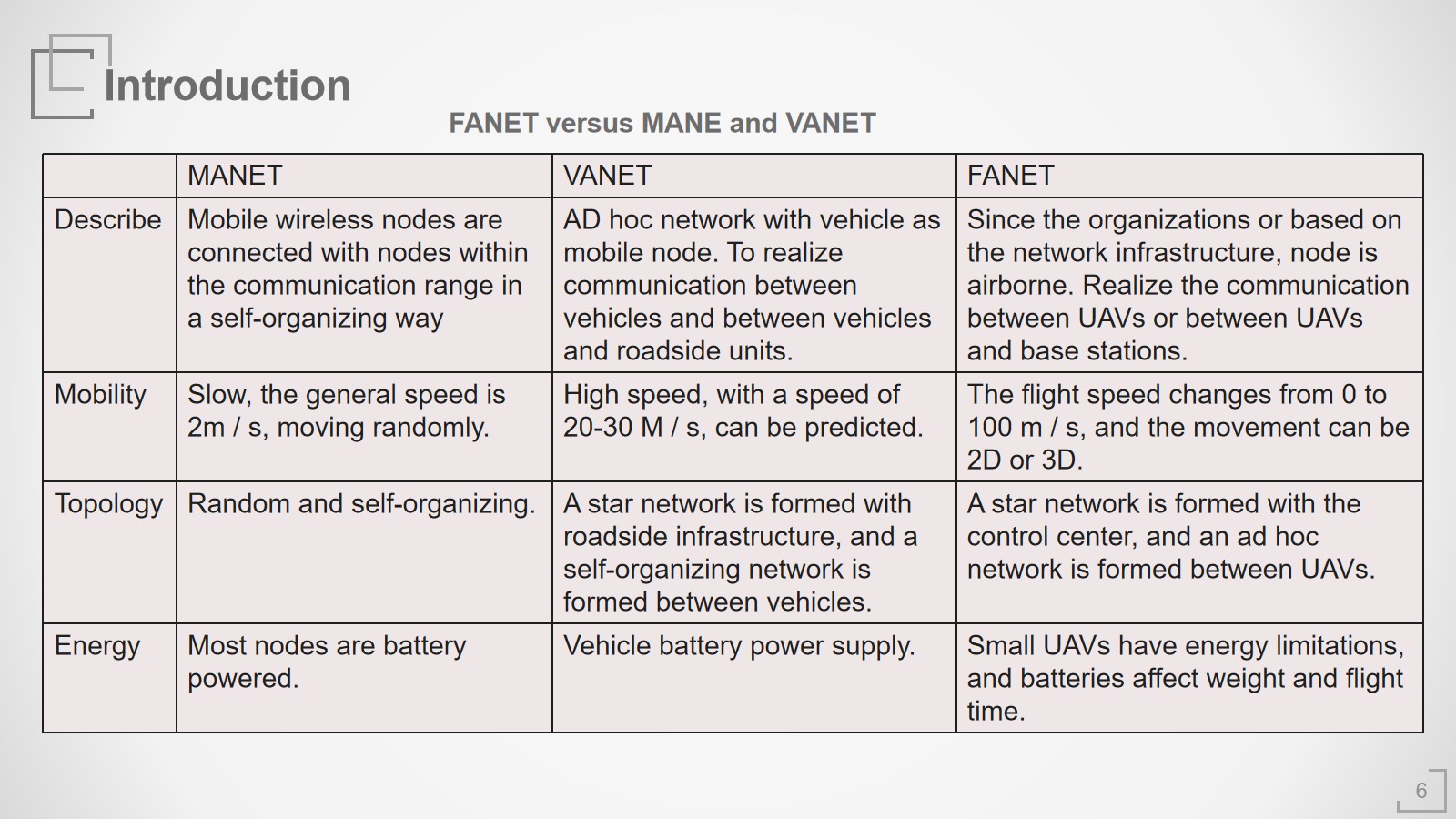 |
Compared to traditional manned aerial vehicles, UAVs have been widely used in many aspects of military and civilian applications due to their small size, low cost, and ease of deployment. UAVs can perform missions such as environmental monitors, real-time surveillance, automated tracking, search, emergency rescue, and relay transmission.
|
|
ICACT20220090 Slide.05
[Big slide for presentation]
[YouTube] |
Chrome Text-to-Speach Click!! |
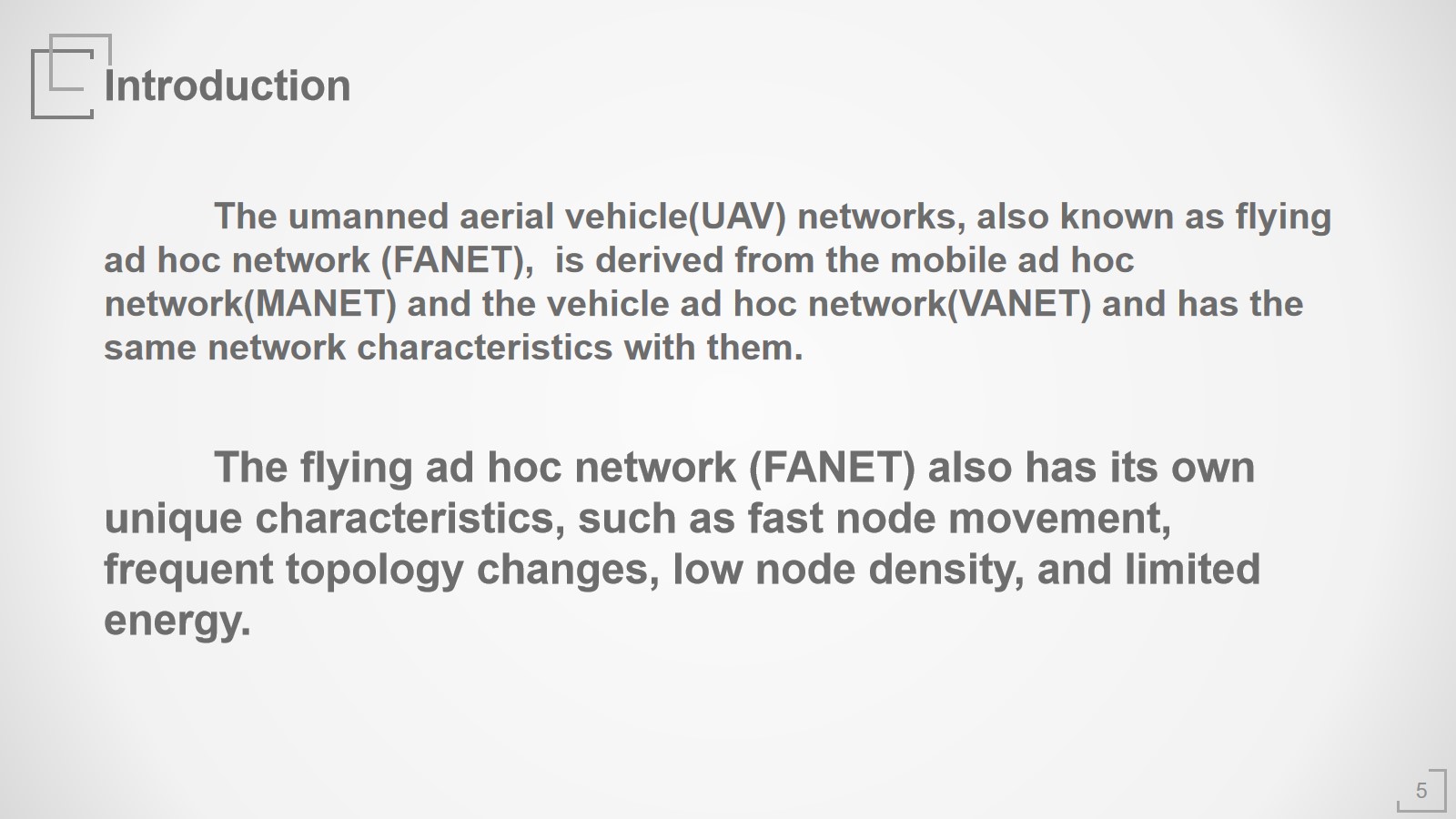 |
The unmanned aerial vehicle networks, also known as flying ad hoc network, is derived from the mobile ad hoc network and the vehicle ad hoc network and has the same network characteristics with them: each flight node has both the functions of a router and a terminal; these nodes can automatically complete the establishment of the entire network structure through various communication protocols and communication mechanisms, relying on the nodes themselves for organization, management, and configuration. The flying ad hoc network (FANET) also has its own unique characteristics, such as fast node movement, frequent topology changes, low node density, and limited energy.
|
|
ICACT20220090 Slide.04
[Big slide for presentation]
[YouTube] |
Chrome Text-to-Speach Click!! |
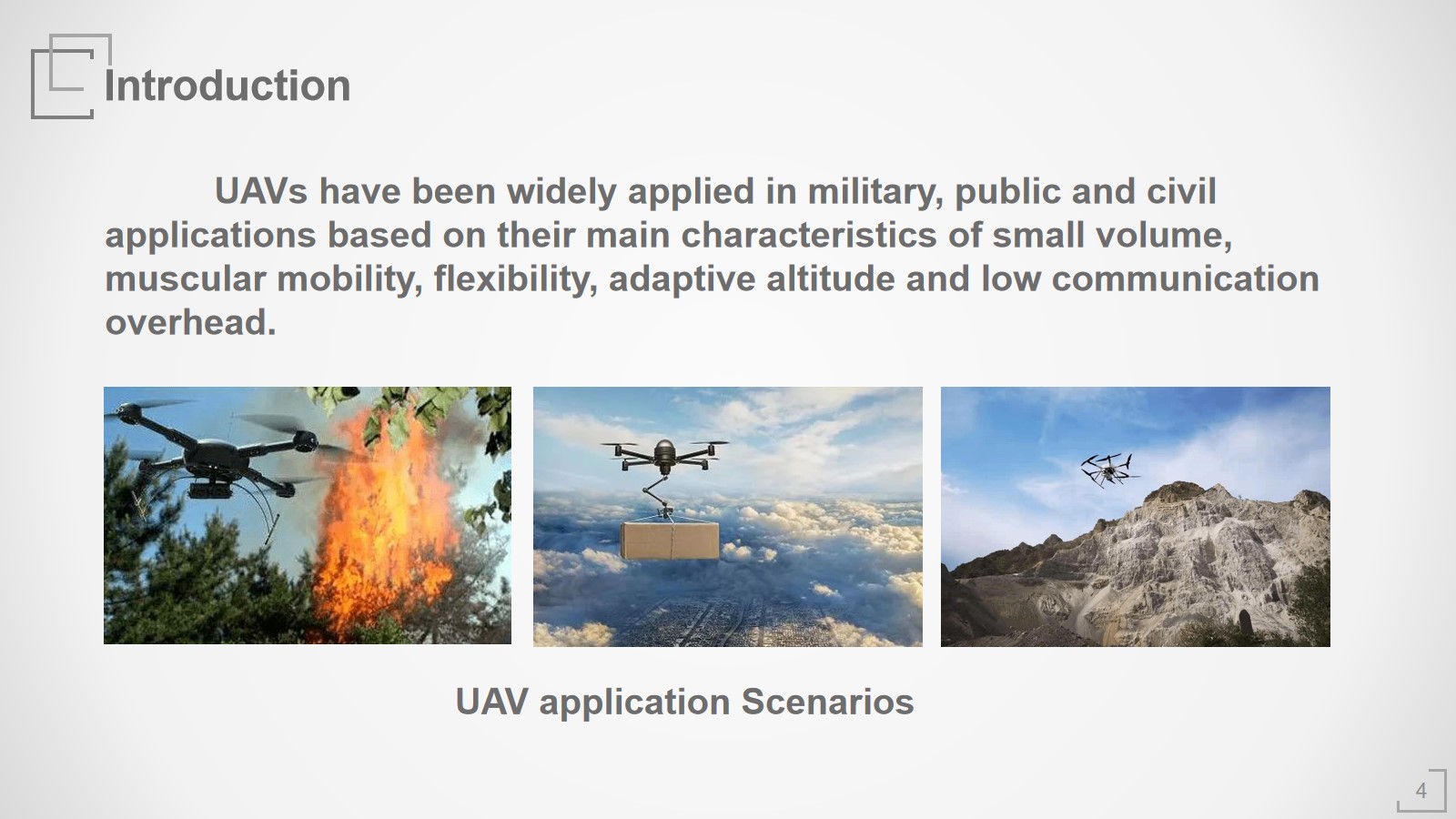 |
UAVs have been widely applied in military, public and civil applications based on their main characteristics of small volume, muscular mobility, flexibility, adaptive altitude and low communication overhead.
|
|
ICACT20220090 Slide.03
[Big slide for presentation]
[YouTube] |
Chrome Text-to-Speach Click!! |
 |
First of all, I start with the background of the article and the introduction of the topic.
|
|
ICACT20220090 Slide.02
[Big slide for presentation]
[YouTube] |
Chrome Text-to-Speach Click!! |
 |
I mainly report on my paper in the following four aspects: introduction, related work, discussion and conclusion.
First of all, I start with the background of the article and the introduction of the topic.
|
|
ICACT20220090 Slide.01
[Big slide for presentation]
[YouTube] |
Chrome Text-to-Speach Click!! |
 |
Hello everyone, I am very honored to participate in this conference. I will report on my thesis《A Survey of Coverage Issues in UAV networks》.
|
















