 ICACT20240022 Slide.18
[Big slide for presentation]
[YouTube] |
Chrome Text-to-Speach Click!! |
 |
Thank you for your attention! The floor is now open for questions and comments. I welcome any inquiries or feedback you may have.
|
|
ICACT20240022 Slide.17
[Big slide for presentation]
[YouTube] |
Chrome Text-to-Speach Click!! |
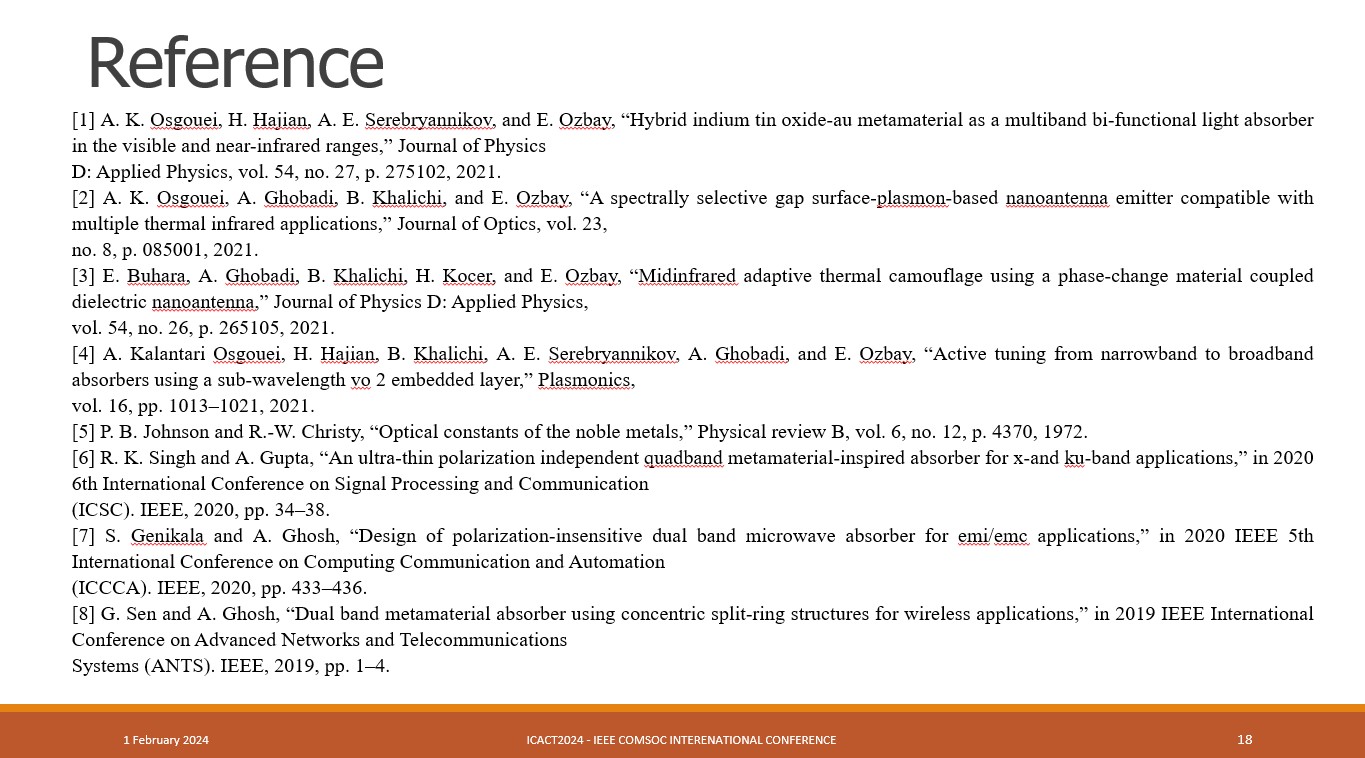 |
References
|
|
ICACT20240022 Slide.16
[Big slide for presentation]
[YouTube] |
Chrome Text-to-Speach Click!! |
 |
further exploration and development of multiband metamaterial absorbers in medical imaging hold immense promise for advancing the capabilities of imaging devices, ultimately leading to improved patient care and outcomes.
|
|
ICACT20240022 Slide.15
[Big slide for presentation]
[YouTube] |
Chrome Text-to-Speach Click!! |
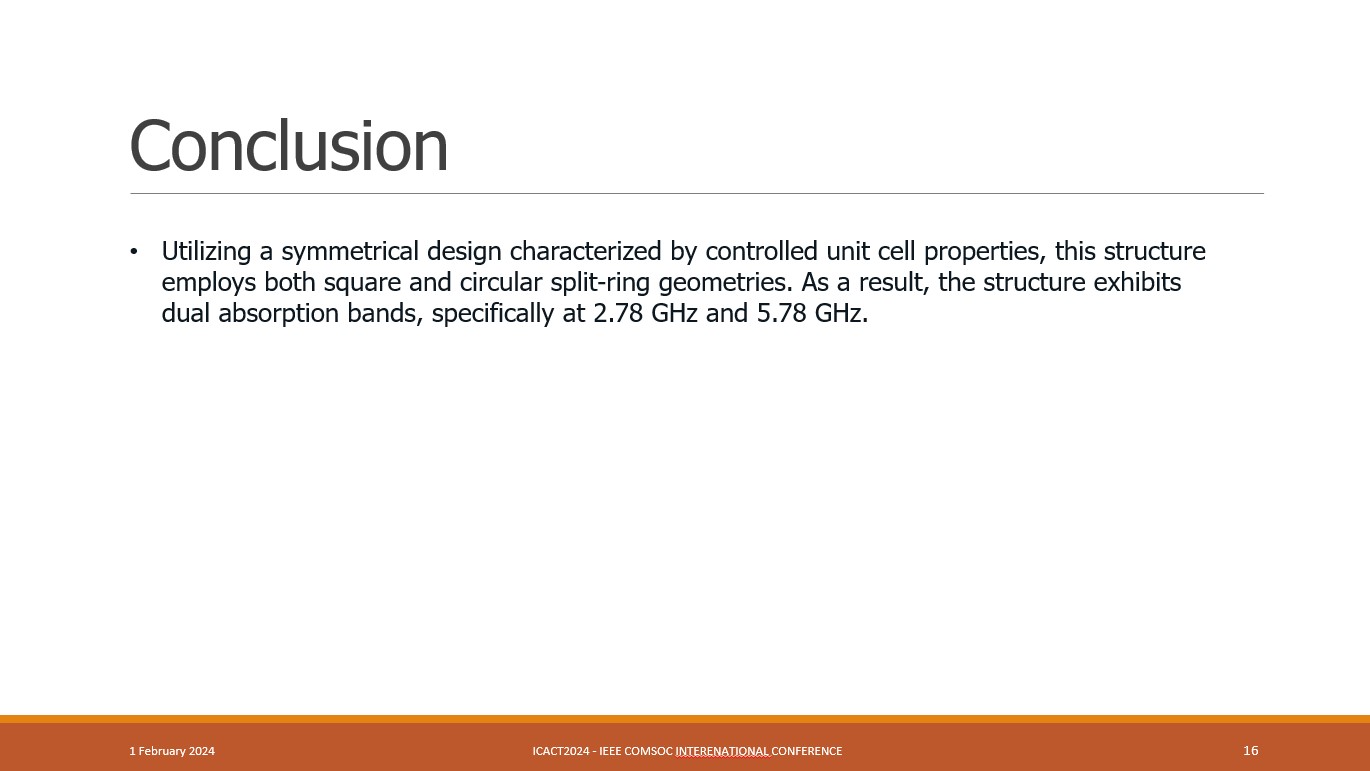 |
In conclusion, the symmetrical design having regulated unit cell features, integrating both square and circular split-ring geometries, proved to be a flexible solution. This design shows twin absorption bands, especially at 2.78 GHz and 5.78 GHz, exhibiting its capabilities to successfully absorb electromagnetic waves across numerous frequencies.
|
|
ICACT20240022 Slide.14
[Big slide for presentation]
[YouTube] |
Chrome Text-to-Speach Click!! |
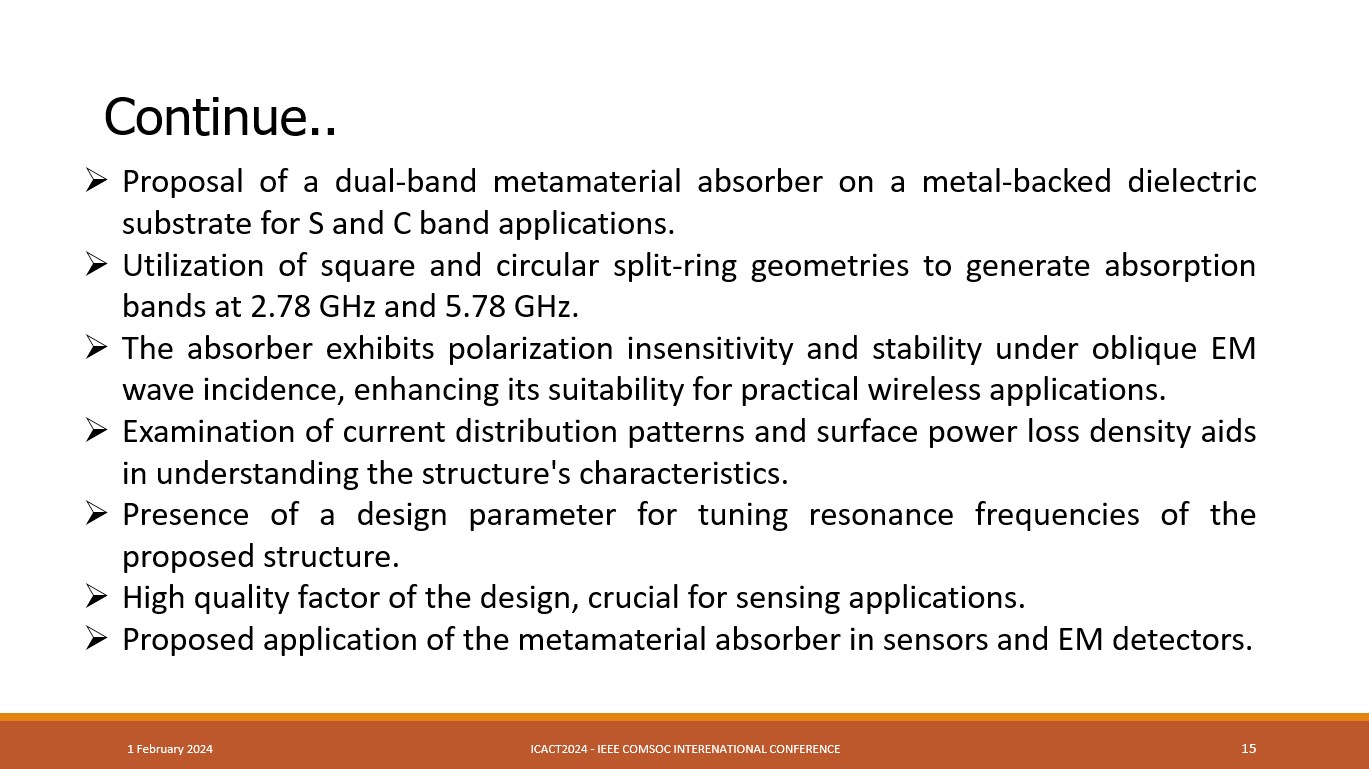 |
Proposing a dual-band metamaterial absorber designed for S and C band applications on a metal-backed dielectric substrate. The design incorporates square and circular split-ring geometries to induce absorption bands at 2.78 GHz and 5.78 GHz. Notably, the absorber showcases polarization insensitivity and robust stability against oblique electromagnetic wave incidence, bolstering its practical utility in wireless applications. Analysis of current distribution patterns and surface power loss density provides insights into the structural attributes. Moreover, the presence of a design parameter allows for tuning the resonance frequencies of the structure. The design boasts a high quality factor, which is essential for sensing applications. Finally, the proposed metamaterial absorber finds potential applications in sensors and electromagnetic detectors.
|
|
ICACT20240022 Slide.13
[Big slide for presentation]
[YouTube] |
Chrome Text-to-Speach Click!! |
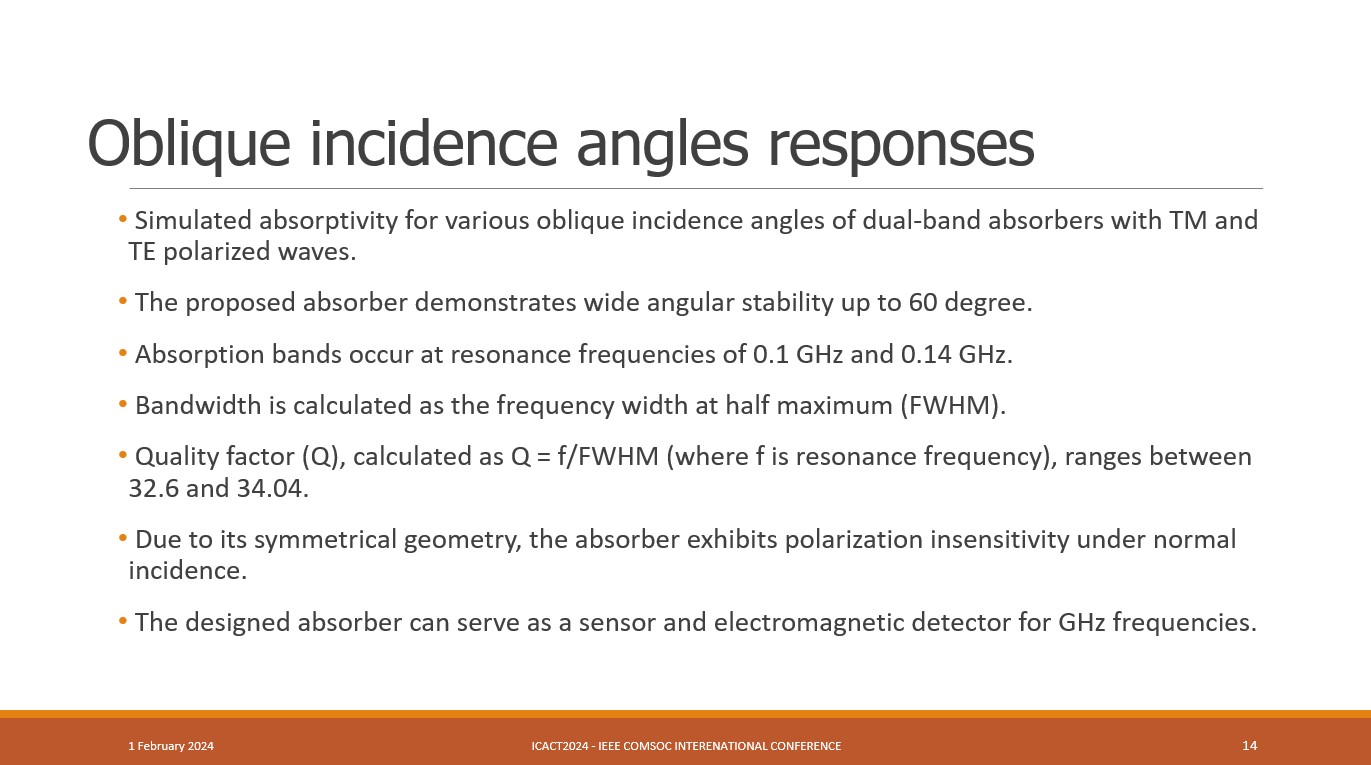 |
The absorption band occurs at two resonance frequencies: 0.1 GHz and 0.14 GHz. The bandwidth is determined by the frequency width at half maximum (FWHM). The resulting quality factor (Q = f/FWHM, where f represents the resonance frequency) ranges between 32.6 and 34.04. Additionally, owing to its symmetrical geometry, the absorber demonstrates polarization insensitivity under normal incidence. Consequently, the designed effective absorber holds promise for applications as a sensor and electromagnetic detector for GHz frequencies.
|
|
ICACT20240022 Slide.12
[Big slide for presentation]
[YouTube] |
Chrome Text-to-Speach Click!! |
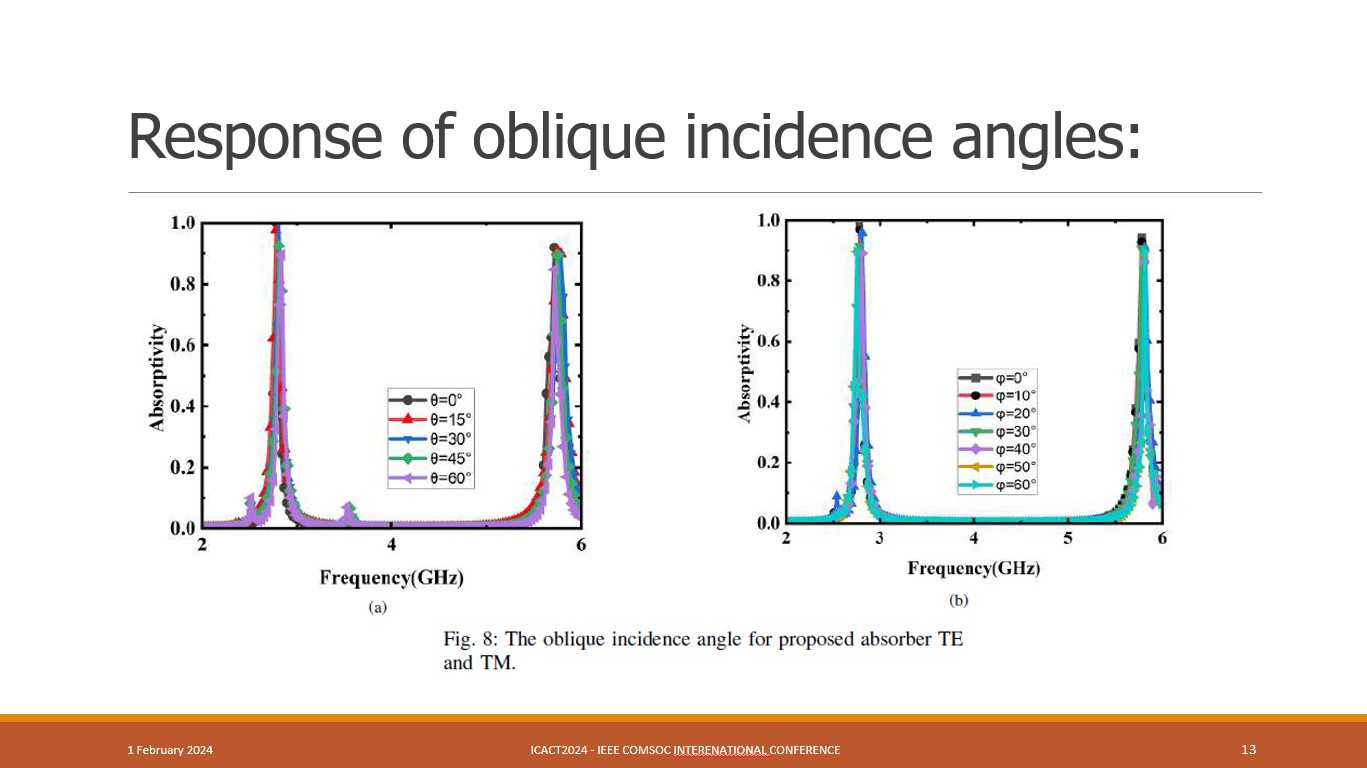 |
the simulated reflection coefficients of dual-band absorbers for both TM-polarized waves and TE-polarized waves. The figures reveal that the proposed absorber exhibits a broad angular stability of 60 degrees.
|
|
ICACT20240022 Slide.11
[Big slide for presentation]
[YouTube] |
Chrome Text-to-Speach Click!! |
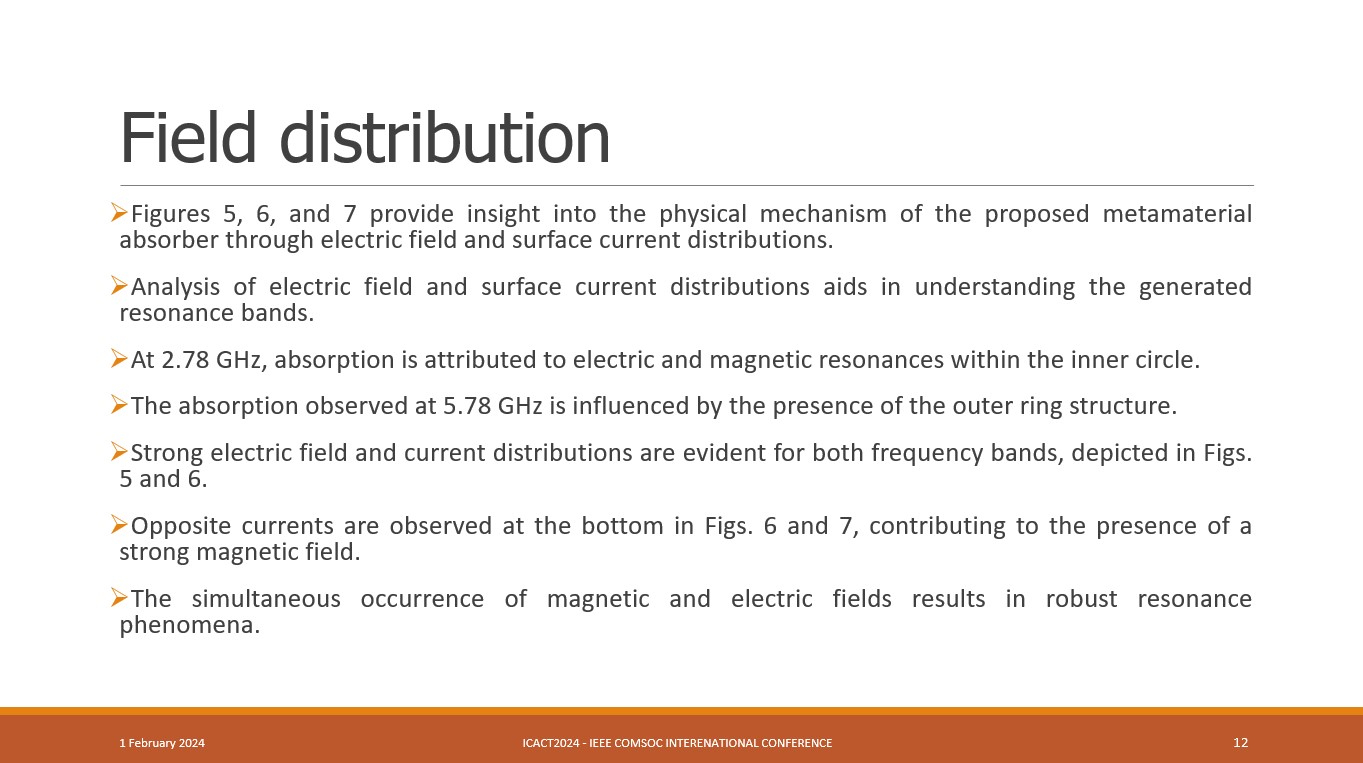 |
The simultaneous occurrence of magnetic and electric fields results in robust resonance phenomena.
|
|
ICACT20240022 Slide.10
[Big slide for presentation]
[YouTube] |
Chrome Text-to-Speach Click!! |
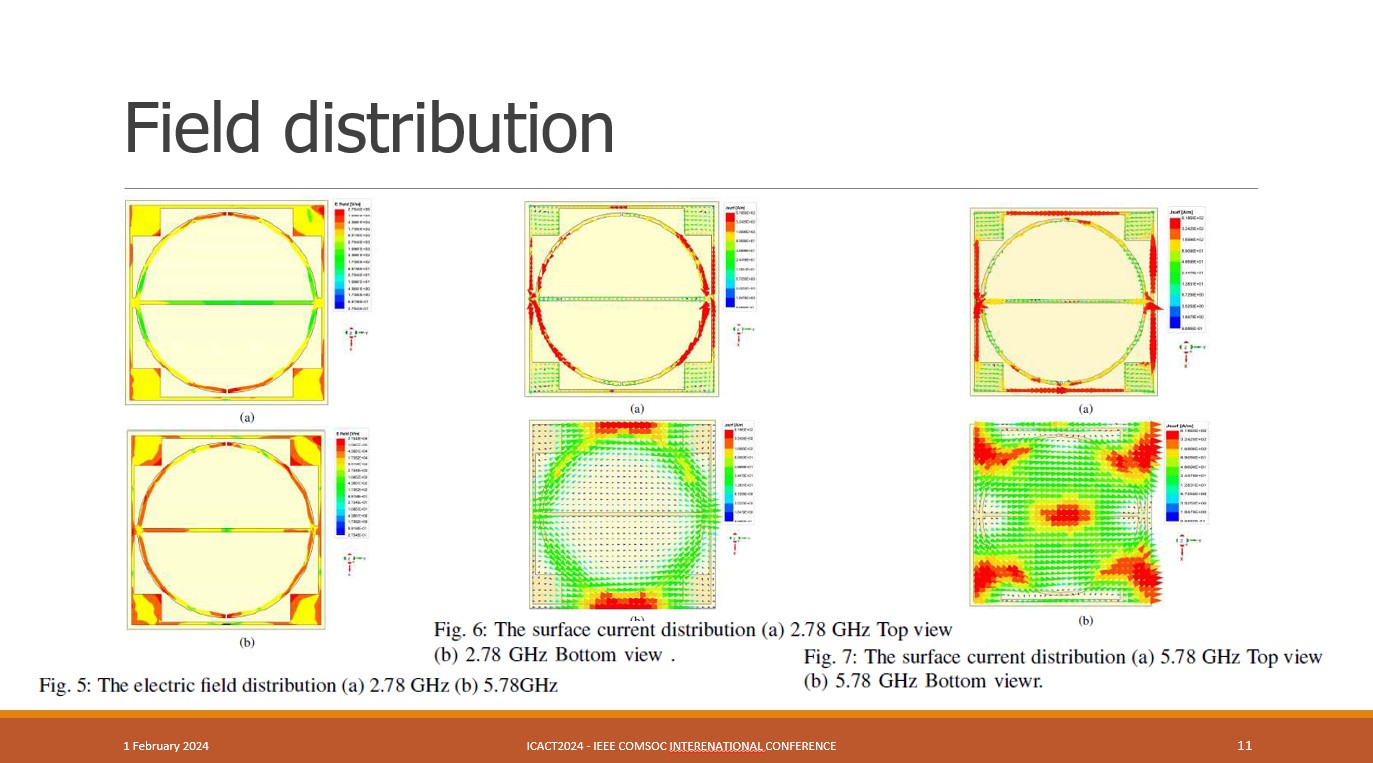 |
the physical mechanism underlying the proposed metamaterial absorber, elucidating the electric field distribution and surface current distribution. These distributions are scrutinized to unravel the resonant bands generated. Specifically, at 2.78 GHz, the absorption is attributed to the electric and magnetic resonances of the inner circle, while at 5.78 GHz, it is facilitated by the outer ring structure. The figures showcase the robust electric field and current distributions for both frequency bands. Additionally, Figures 6 and 7 highlight an opposing current at the bottom, contributing to the presence of a potent magnetic field. Consequently, a concurrent magnetic and electric field arise, precipitating strong resonance.
|
|
ICACT20240022 Slide.09
[Big slide for presentation]
[YouTube] |
Chrome Text-to-Speach Click!! |
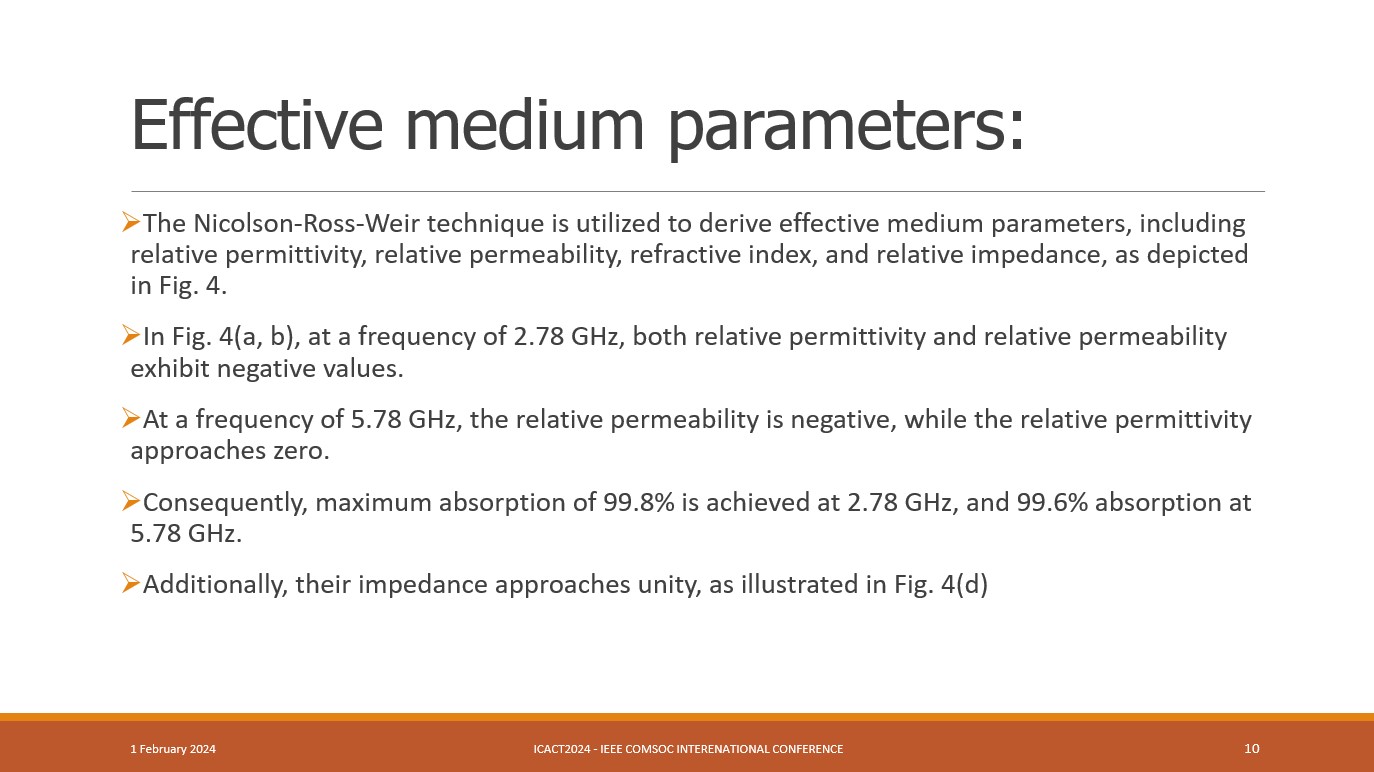 |
At 5.78 GHz, the relative permeability is negative, while the relative permittivity tends toward zero. As a result, maximum absorption of 99.8% is attained at 2.78 GHz, with absorption reaching 99.6% at 5.78 GHz.
|
|
ICACT20240022 Slide.08
[Big slide for presentation]
[YouTube] |
Chrome Text-to-Speach Click!! |
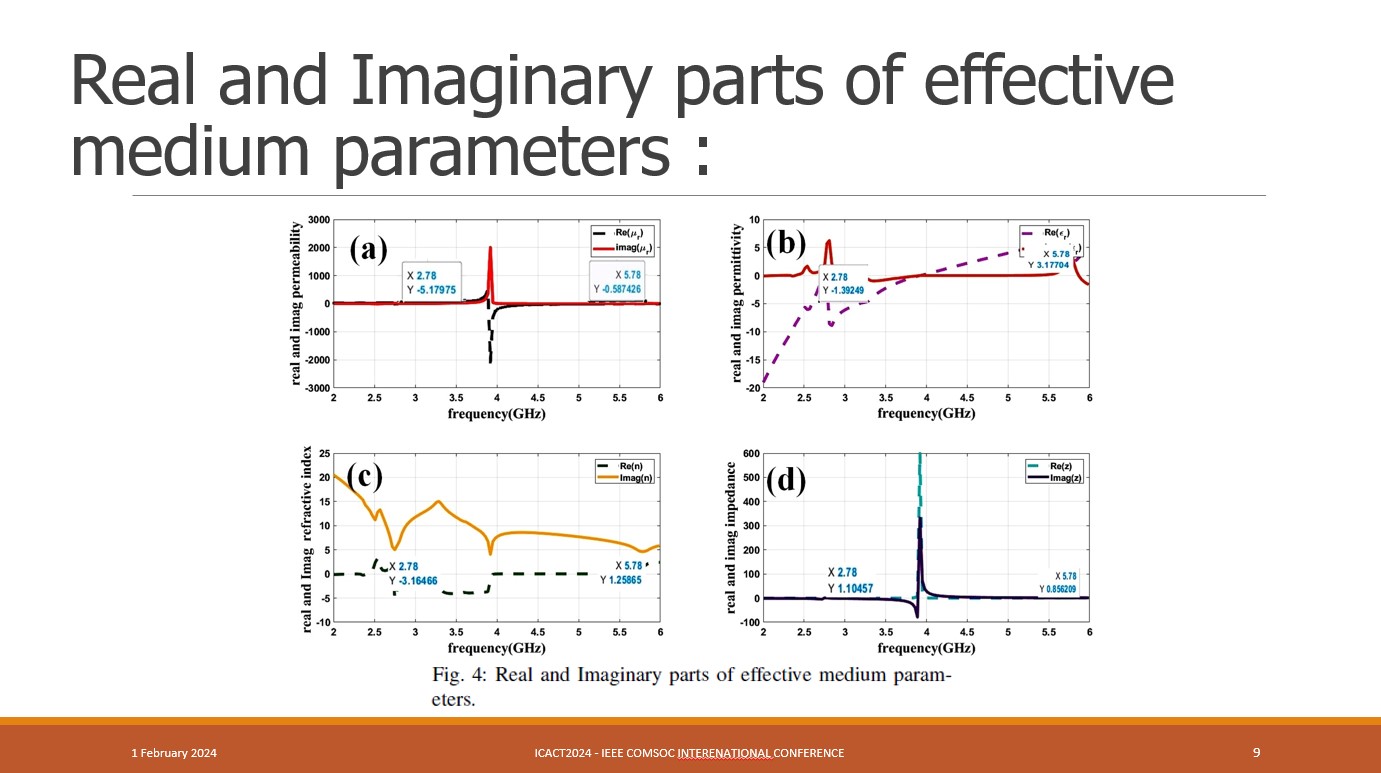 |
From the simulation results, the Nicolson-Ross-Weir technique is employed to extract effective medium parameters such as relative permittivity, relative permeability, refractive index, and relative impedance, as illustrated in Figure 4.
|
|
ICACT20240022 Slide.07
[Big slide for presentation]
[YouTube] |
Chrome Text-to-Speach Click!! |
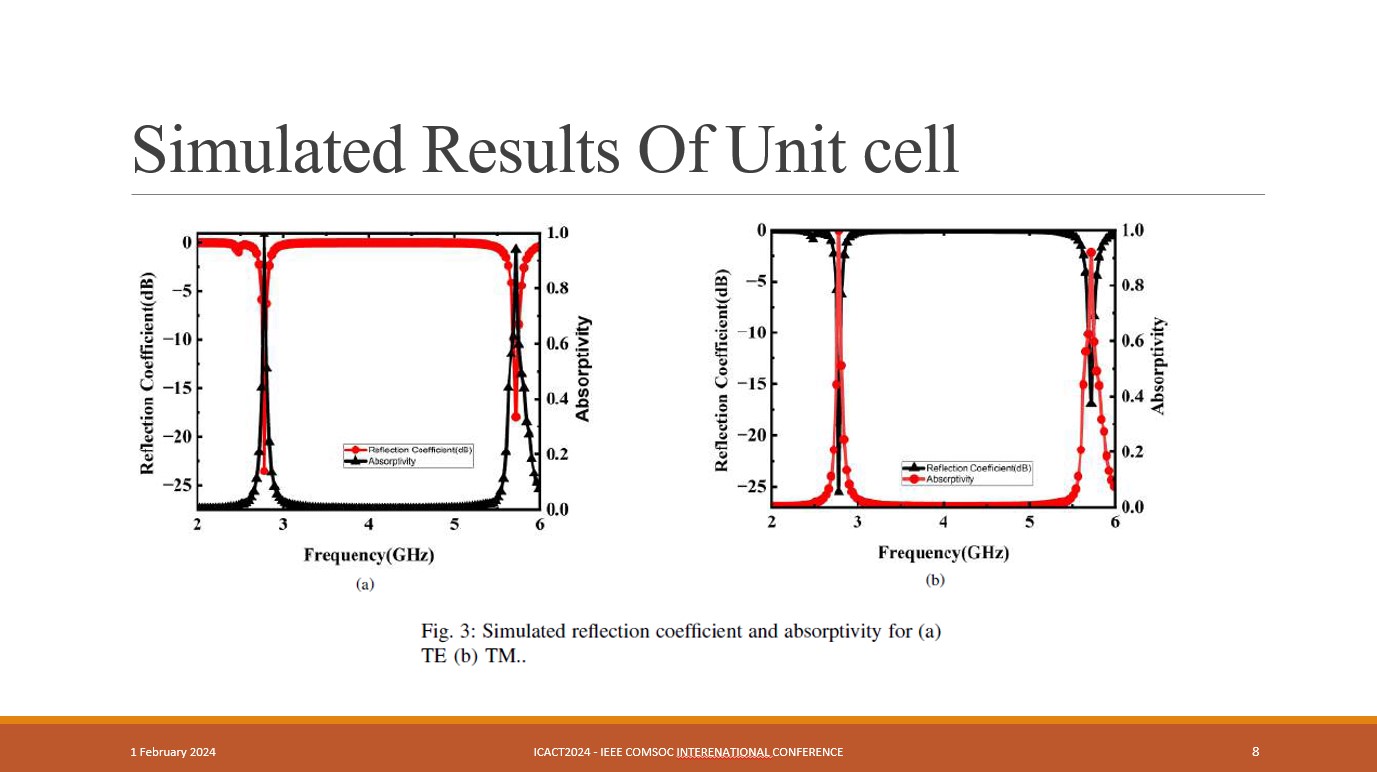 |
The simulated unit cell geometry yields absorptivity results at both 2.78 GHz and 5.78 GHz for propagation.
|
|
ICACT20240022 Slide.06
[Big slide for presentation]
[YouTube] |
Chrome Text-to-Speach Click!! |
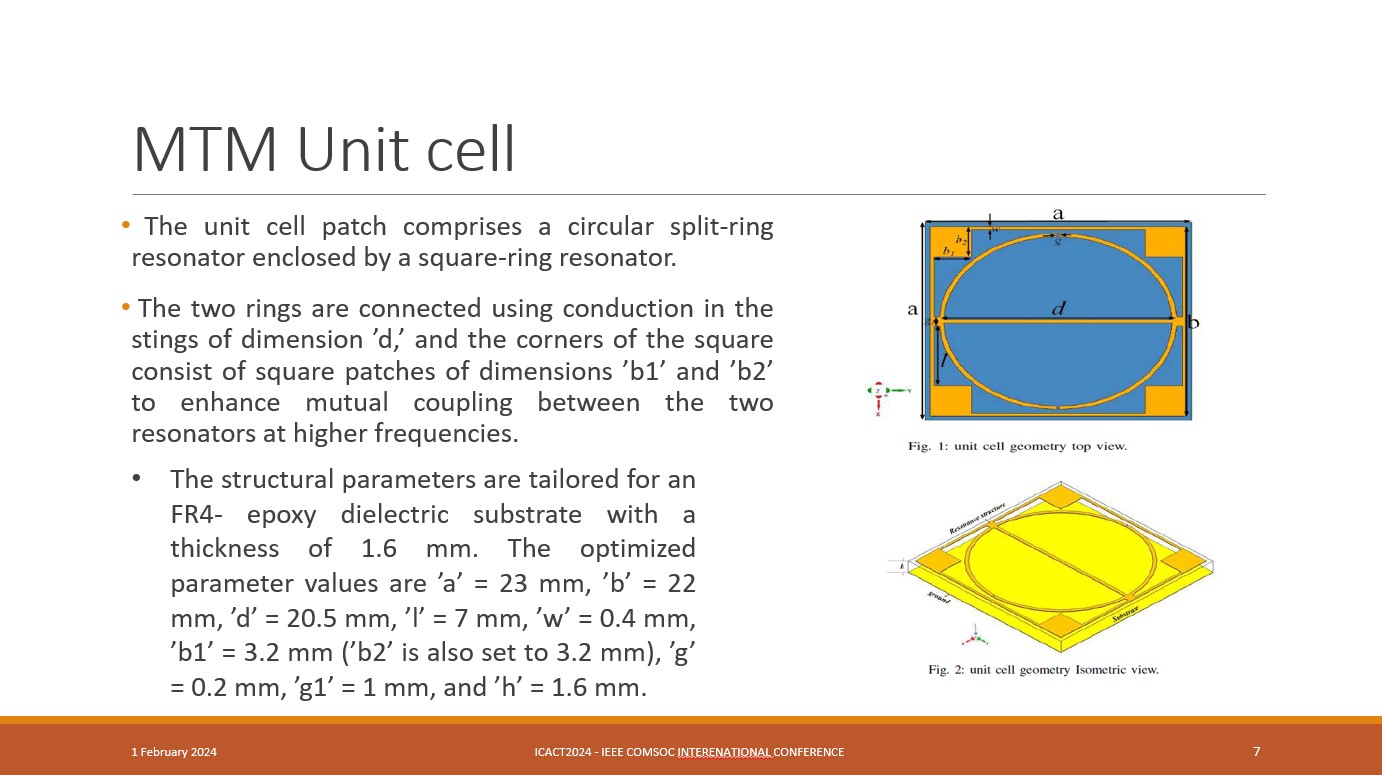 |
the unit cell geometry, top view, isometric view, and design values
|
|
ICACT20240022 Slide.05
[Big slide for presentation]
[YouTube] |
Chrome Text-to-Speach Click!! |
 |
This design not only achieves double negative values at desired frequencies but also offers enhanced absorption performance and polarization insensitivity.
|
|
ICACT20240022 Slide.04
[Big slide for presentation]
[YouTube] |
Chrome Text-to-Speach Click!! |
 |
The primary objective of this presentation is to address the rarity of achieving near-unity absorption bands with a high quality factor (Q-factor) and polarization insensitivity in microwave metamaterial absorbers.
|
|
ICACT20240022 Slide.03
[Big slide for presentation]
[YouTube] |
Chrome Text-to-Speach Click!! |
 |
Despite their potential benefits, metamaterial absorbers face significant challenges that hinder their widespread adoption in practical applications. Two key limitations stand out prominently:
Thickness and Weight Constraints and Sensitivity to Incident Angle
Addressing these challenges is crucial for advancing the practical utility and effectiveness of metamaterial absorbers across a wide range of applications.
|
|
ICACT20240022 Slide.02
[Big slide for presentation]
[YouTube] |
Chrome Text-to-Speach Click!! |
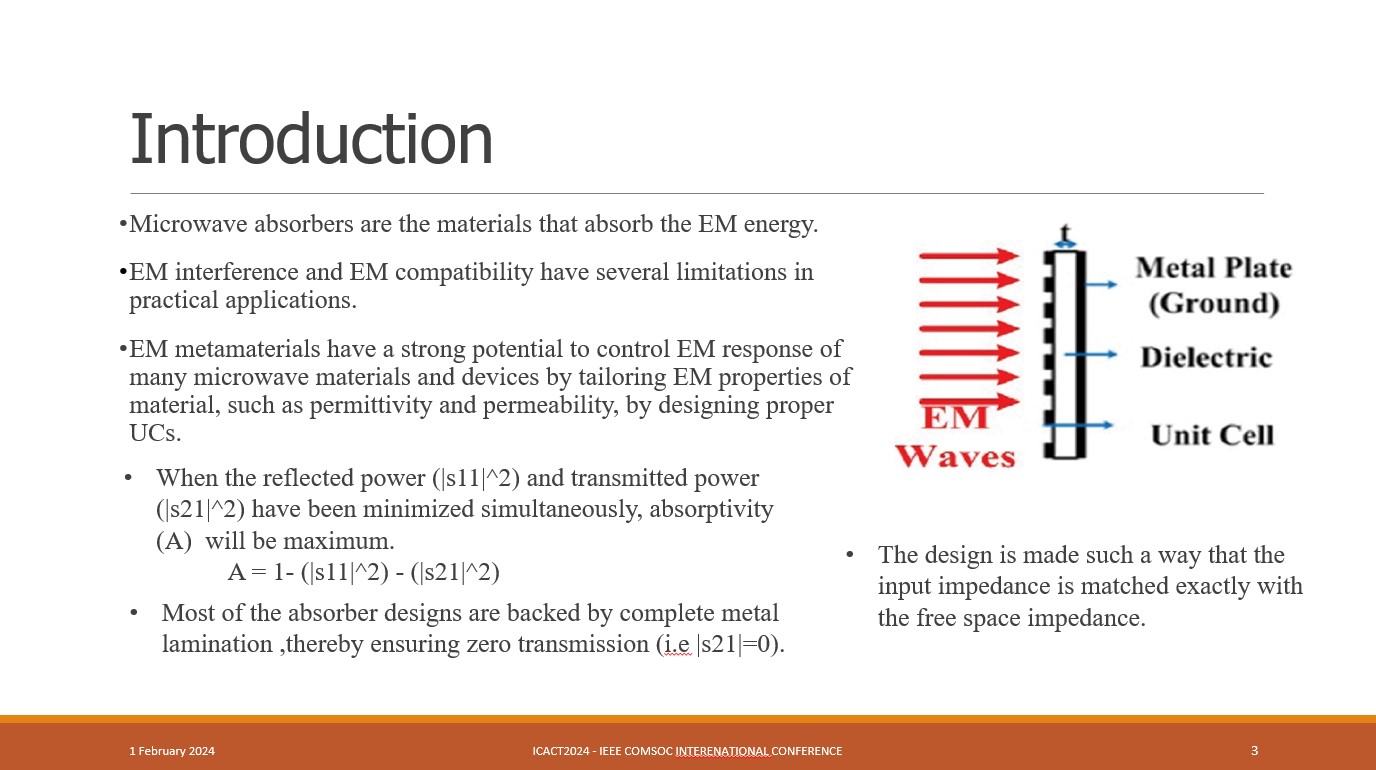 |
In recent years, the emergence of electromagnetic metamaterials has opened up new avenues for controlling the EM response of microwave materials and devices. Metamaterials give us a lot more control and flexibility over electromagnetic (EM) interactions than ever before. They do this by precisely engineering the electromagnetic properties of materials, like their permittivity and permeability, through the design of unique unit cells (UCs). and follows basic equations.
|
|
ICACT20240022 Slide.01
[Big slide for presentation]
[YouTube] |
Chrome Text-to-Speach Click!! |
 |
Here's an outline for a presentation.
Introduction
Problem Statement
Objective
State of Art
Methodology
Simulation Results
Conclusion
Future work, and finally, I will conclude with
References
|
|
ICACT20240022 Slide.00
[Big slide for presentation]
[YouTube] |
Chrome Text-to-Speach Click!! |
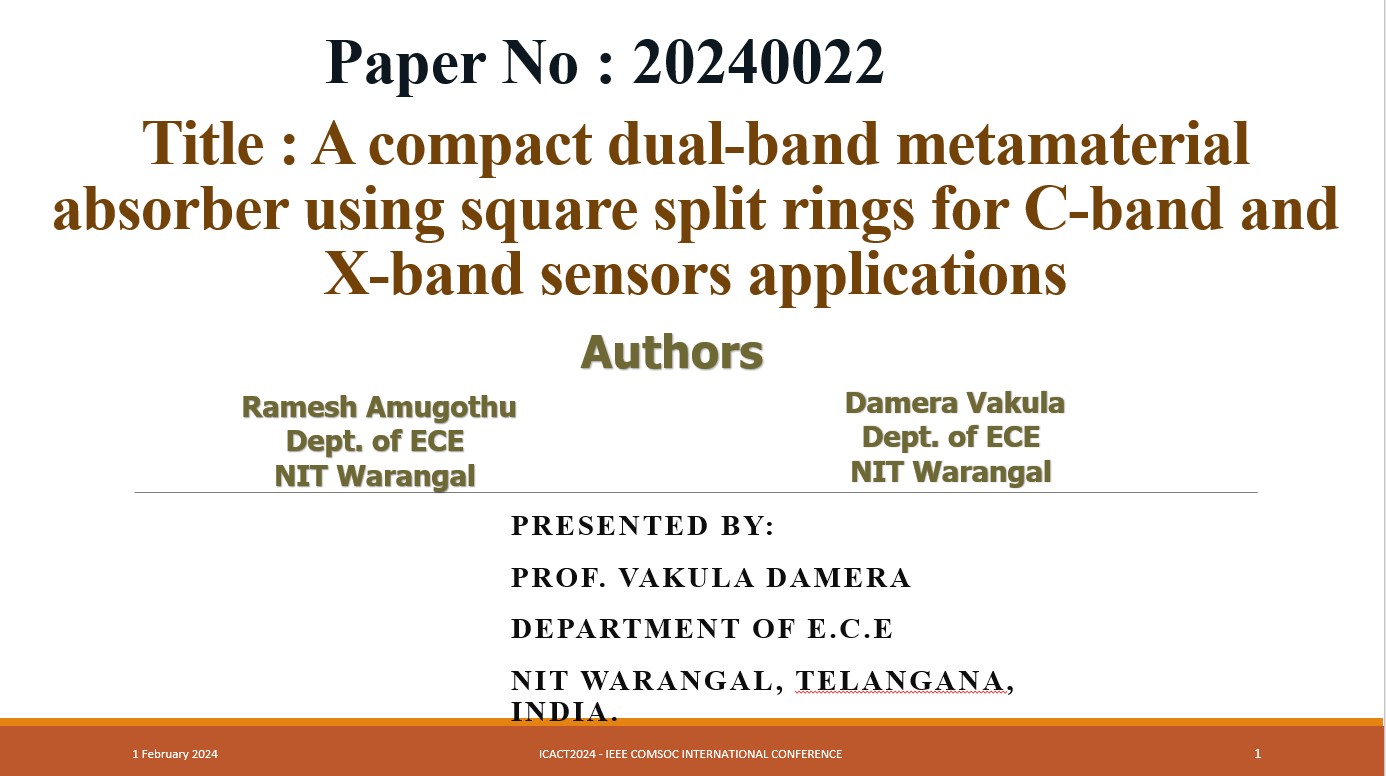 |
Hi everybody, esteemed colleagues and fellow researchers. I am Prof Damera Vakula presenting author It is with great pleasure that I stand before you today to present our latest research findings on the development of dual-band metamaterial absorbers tailored for wireless applications. This presentation is the result of dedicated and determined efforts to advance absorber technology in order to meet the changing requirements of contemporary wireless communication systems.
https://youtu.be/Pk4XMGUHG40
|
















