 ICACT20230185 Slide.20
[Big slide for presentation]
[YouTube] |
Chrome Text-to-Speach Click!! |
 |
End of Presentation
Thank you
|
|
ICACT20230185 Slide.19
[Big slide for presentation]
|
Chrome Text-to-Speach Click!! |
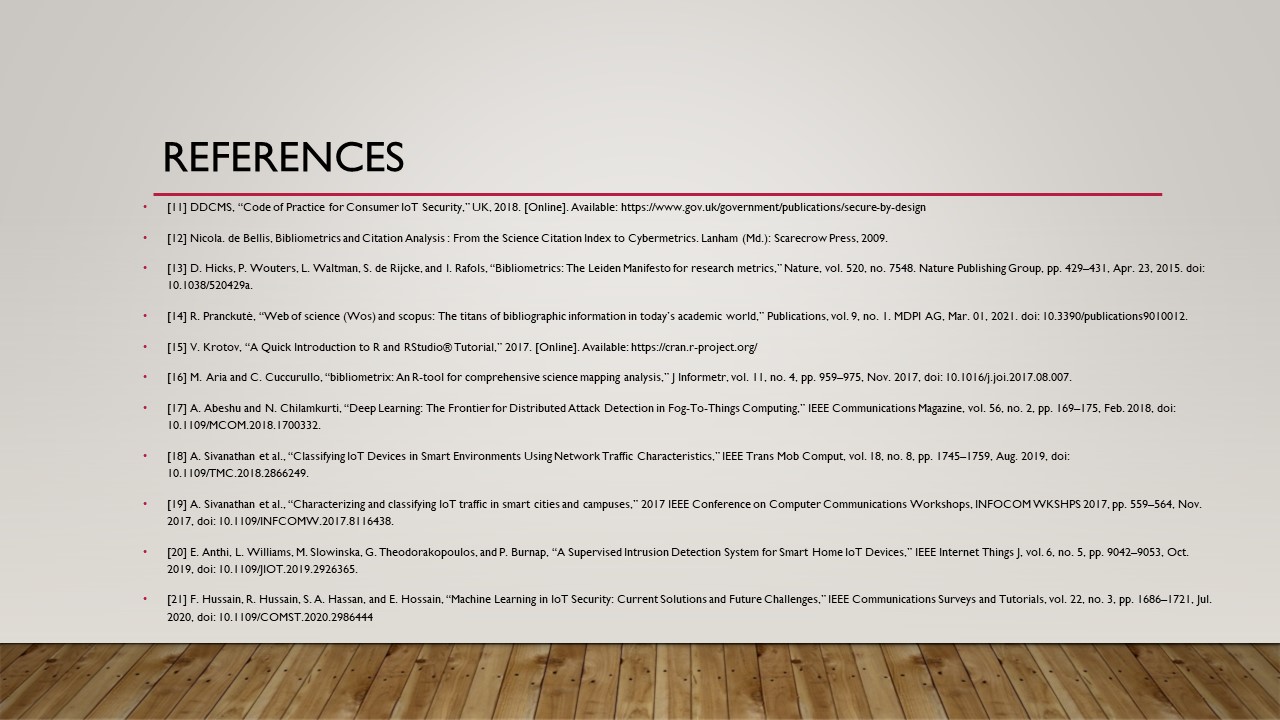 |
References
|
|
ICACT20230185 Slide.18
[Big slide for presentation]
|
Chrome Text-to-Speach Click!! |
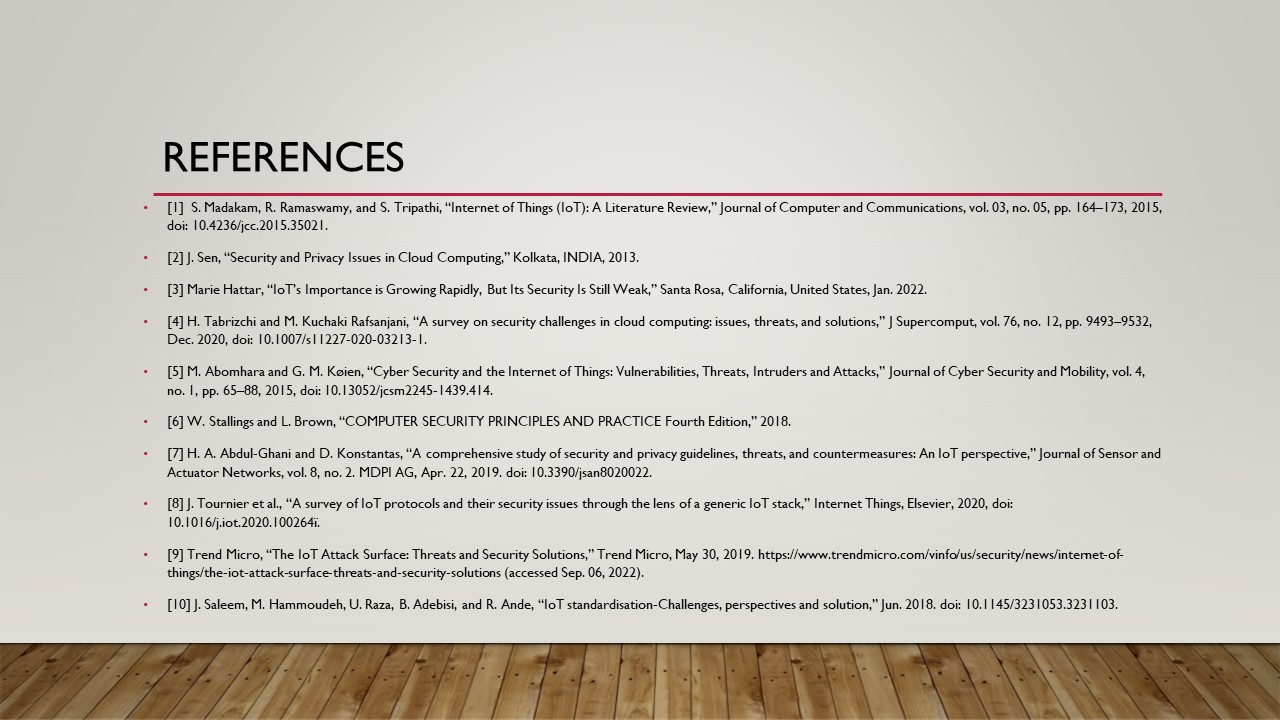 |
References
|
|
ICACT20230185 Slide.17
[Big slide for presentation]
|
Chrome Text-to-Speach Click!! |
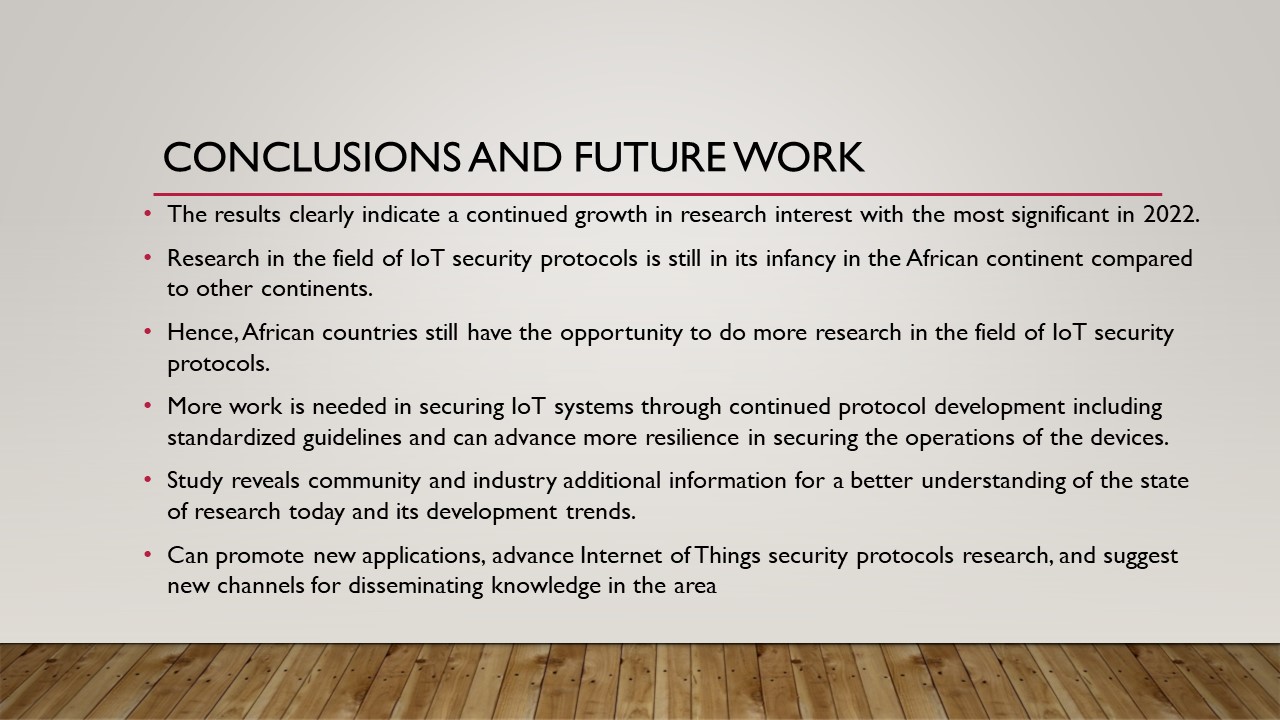 |
The results clearly indicate a continued growth in research interest with the most significant in 2022. These results are an indication that research in the field of IoT security protocols is still in its infancy in the African continent compared to other continents. Hence, African countries still have the opportunity to do more research in the field of IoT security protocols. Hence, identifying and finding ways to fill these gaps is the main contribution of this paper.
More work is need in securing IoT systems through continued protocol development including standardized guidelines and can advance more resilience in securing the operations of the devices.
The findings of this study will be significant and instructive, giving the community and industry additional information and a better understanding of the state of research today and its development trends. The current study can promote new applications, advance Internet of Things security protocols research, and suggest new channels for disseminating knowledge in the area
|
|
ICACT20230185 Slide.16
[Big slide for presentation]
|
Chrome Text-to-Speach Click!! |
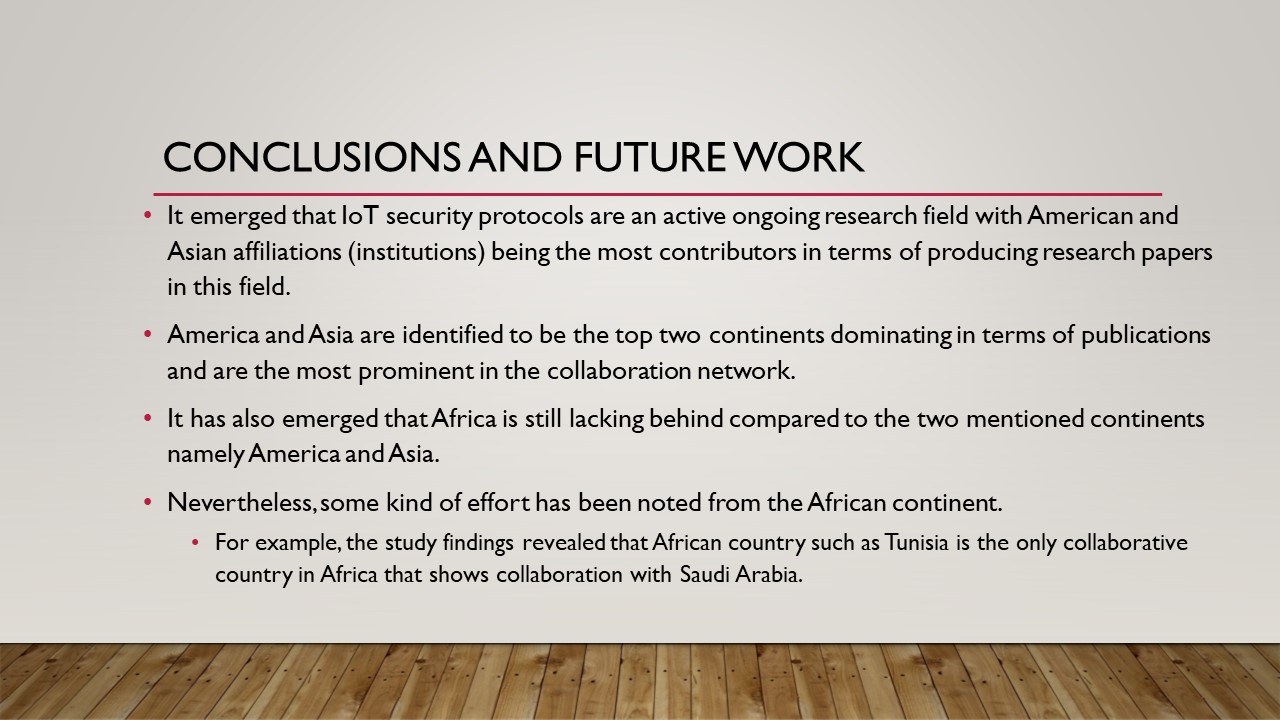 |
CONCLUSIONS AND FUTURE WORK
To better understand the research trends on IoT security protocols, a review study that entailed assessing the status of the existing research in the field of IoT security protocols was conducted. This was achieved through a bibliometric analysis of scientific publications (i.e. articles, books, book chapters, and conference papers) for the period between 2016 and 2022. It emerged that IoT security protocols are an active ongoing research field with American and Asian affiliations (institutions) being the most contributors in terms of producing research papers in this field. In addition, America and Asia are identified to be the top two continents dominating in terms of publications and are the most prominent in the collaboration network. It has also emerged that Africa is still lagging behind compared to the two mentioned continents, namely America and Asia. Nevertheless, some kind of effort has been noted from the African continent. For example, the study findings revealed that Tunisia is the only collaborative country in Africa that shows collaboration with Saudi Arabia.
|
|
ICACT20230185 Slide.15
[Big slide for presentation]
|
Chrome Text-to-Speach Click!! |
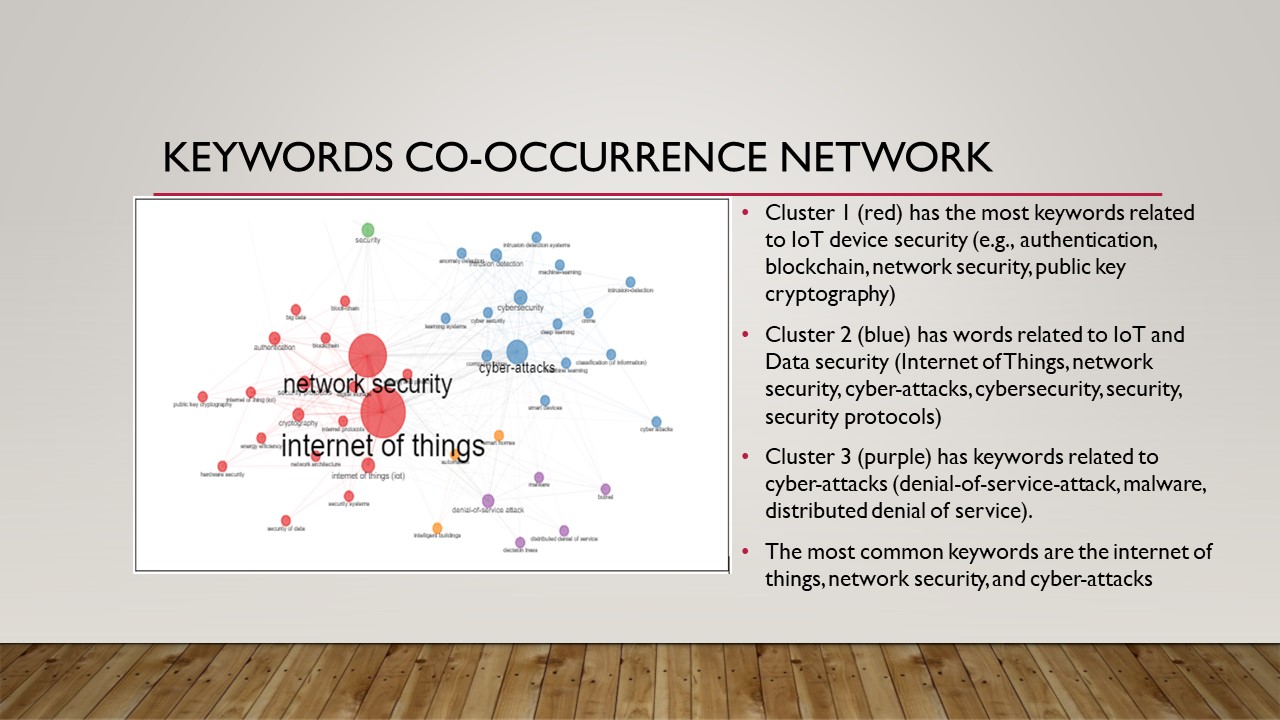 |
Keywords co-occurrence network
Keywords co-occurrence network is illustrated in three clusters. A keyword co-occurrence network is about identifying the appearance of the most frequently used keywords in a document such as a research paper, an article, a book, etc. In other words, it is about checking the number of times the keywords appear in a document during bibliometric analysis. In the context of this review study, a maximum of 50 keywords were extracted from bibliometrix, with 3 as the minimum number of occurrences. Therefore, in this review study, the keywords were separated into 3 clusters and these 3 clusters were further analysed by means of the strength association method.
Cluster 1 (red) has the most keywords related to IoT device security (e.g., authentication, blockchain, network security, public key cryptography), whereas Cluster 2 (blue) has words related to IoT and Data security (Internet of Things, network security, cyber-attacks, cybersecurity, security, security protocols), and Cluster 3 (purple) has keywords related to cyber-attacks (denial-of-service-attack, malware, distributed denial of service). The most common keywords are the internet of things, network security, and cyber-attacks.
|
|
ICACT20230185 Slide.14
[Big slide for presentation]
|
Chrome Text-to-Speach Click!! |
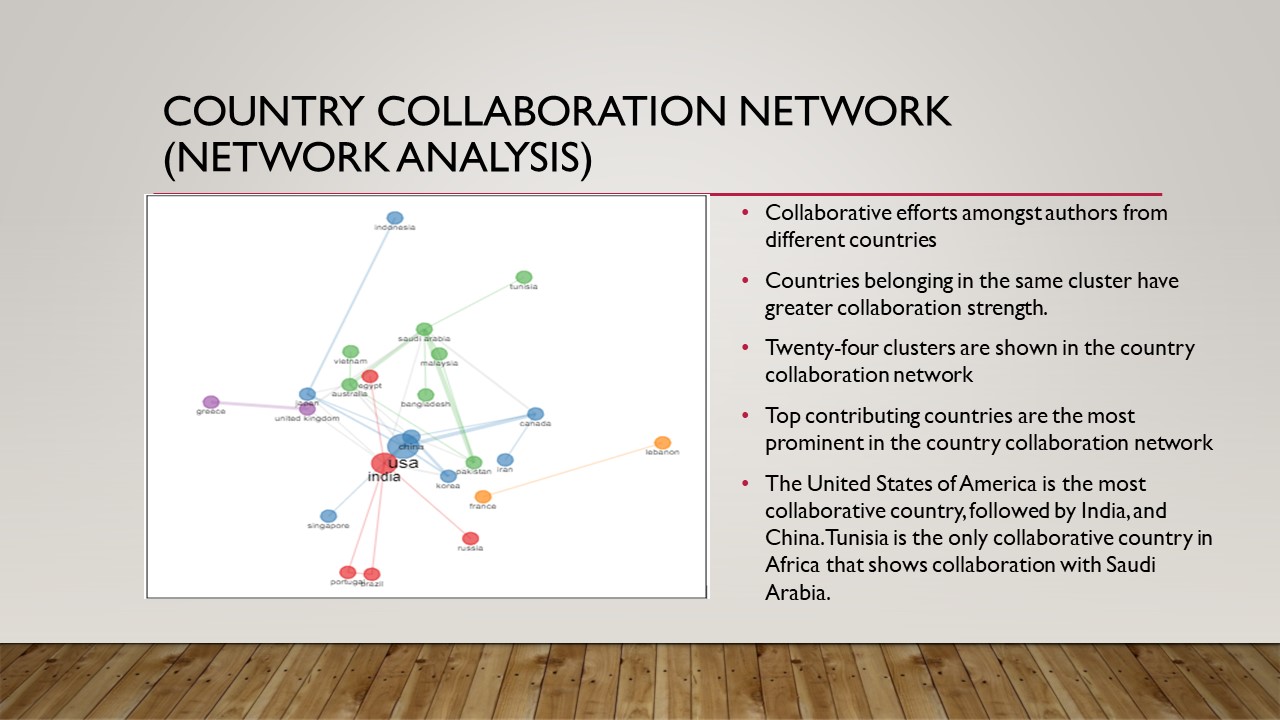 |
Country Collaboration Network (Network Analysis)
There have been collaborative efforts amongst authors from different countries in an effort to contribute to the publication of papers in the field of IoT security protocols. The figure illustrates a record of networking circles of collaboration to identify countries that are actively collaborating. Countries belonging in the same cluster have greater collaboration strength. Twenty-four clusters are shown in the country collaboration network. Amongst the 24 clusters, only 10 of them, each having only one country. Furthermore, it is noted that the top contributing countries are also the most prominent in the country collaboration network. The United States of America is the most collaborative country, followed by India, and China. Tunisia is the only collaborative country in Africa that shows collaboration with Saudi Arabia.
|
|
ICACT20230185 Slide.13
[Big slide for presentation]
|
Chrome Text-to-Speach Click!! |
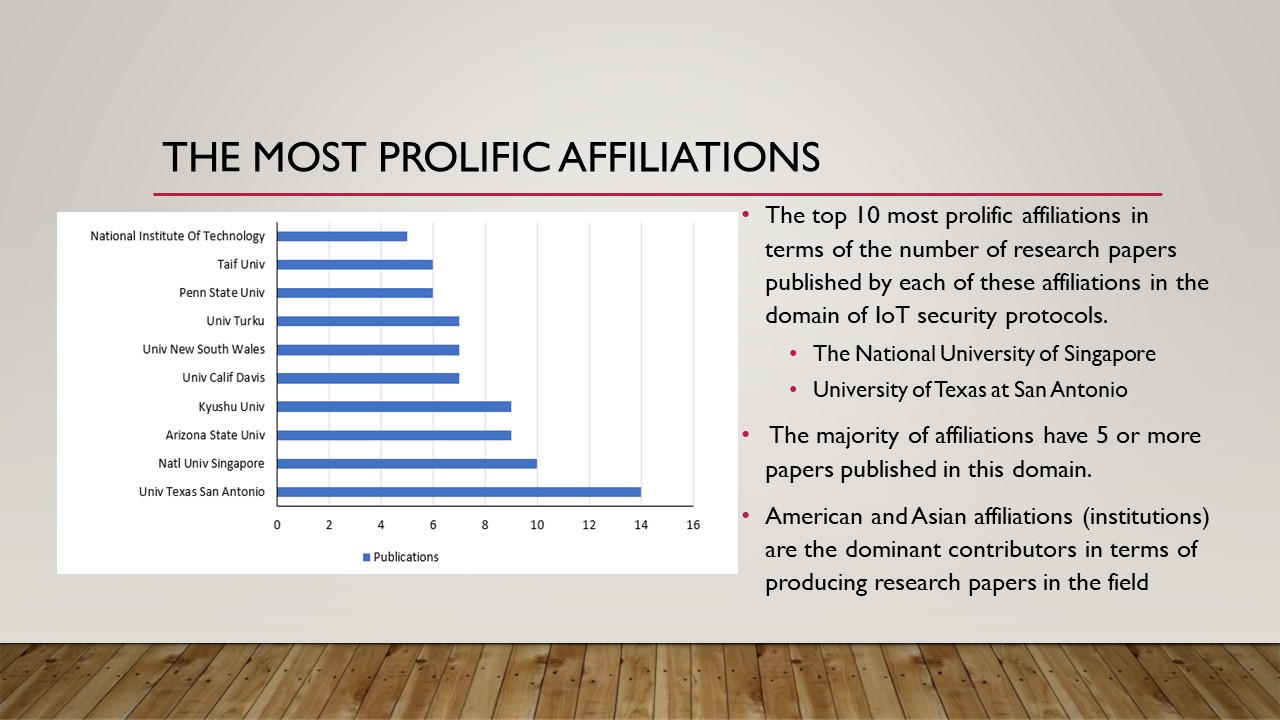 |
The most prolific affiliations.
Additionally, in Figure 6 the top 10 most prolific affiliations are presented. This is presented in terms of the number of research papers published by each of these affiliations in the domain of IoT security protocols. The results indicate that the National University of Singapore and the University of Texas at San Antonio have 10 publications in this field. The majority of affiliations have 5 or more papers published in this domain. From data patterns in displayed in the figure, it can be deduced that American and Asian affiliations (institutions) are the dominant contributors in terms of producing research papers in the field of IoT security protocols.
|
|
ICACT20230185 Slide.12
[Big slide for presentation]
|
Chrome Text-to-Speach Click!! |
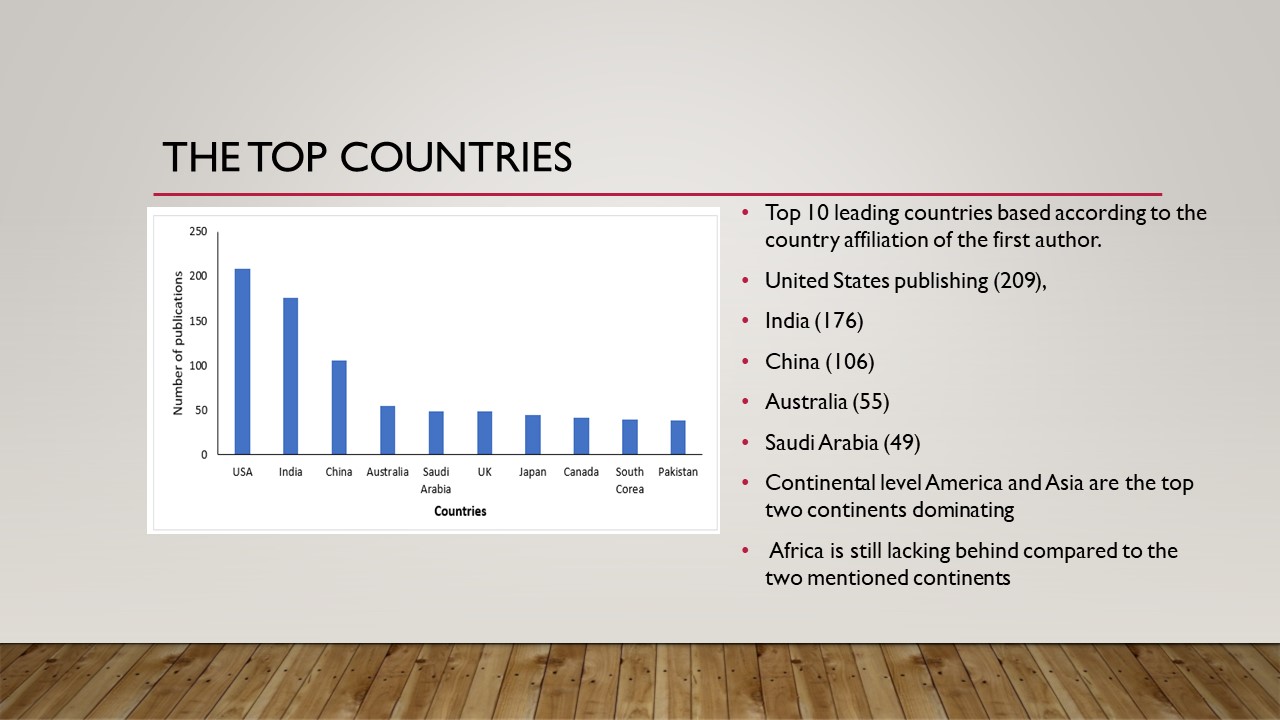 |
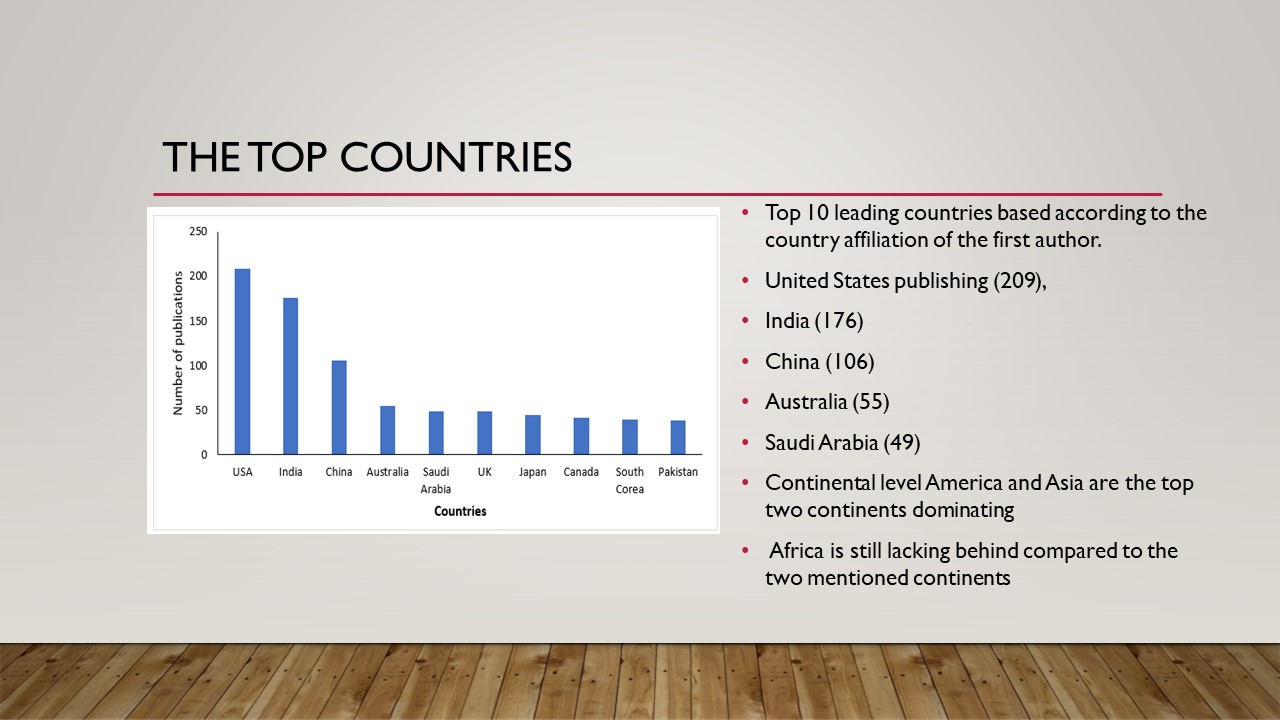
The top countries.
It is well known that authors from various countries are publishing their research works in the field of IoT security protocols. However, in the context of this study, the emphasis was only on the top 10 leading countries. Furthermore, data about the 10 top countries as shown in the Figure was based according to the country affiliation of the first author.
Data displayed in the Figure, revealed that the most contributing country in publications to the field of IoT security protocols research is the United States publishing the most papers (209), followed by India with 176 publications, then China, Australia, and Saudi Arabia with 106, 55, and 49 publications, respectively. Based on this data, it can be deduced that at the continental level America and Asia are the top two continents dominating in terms of publications in the field of IoT security protocols. It can be noted that Africa is still lacking behind compared to the two mentioned continents
|
|
ICACT20230185 Slide.11
[Big slide for presentation]
|
Chrome Text-to-Speach Click!! |
 |
The Most Relevant Sources (Publishers).
IoT security protocols research topics have been published by different kinds of publishers,but only the top 10 publishers that publish research papers on the topic of IoT security protocols were considered in this review. Looking at the data displayed in the figure, The IEEE Internet of Things Journal has the most publications (33), followed by Sensors (28), IEEE Access (24), ACM International Conference Proceeding Series (17), and Lecture Notes in Computer Science (15)
|
|
ICACT20230185 Slide.10
[Big slide for presentation]
|
Chrome Text-to-Speach Click!! |
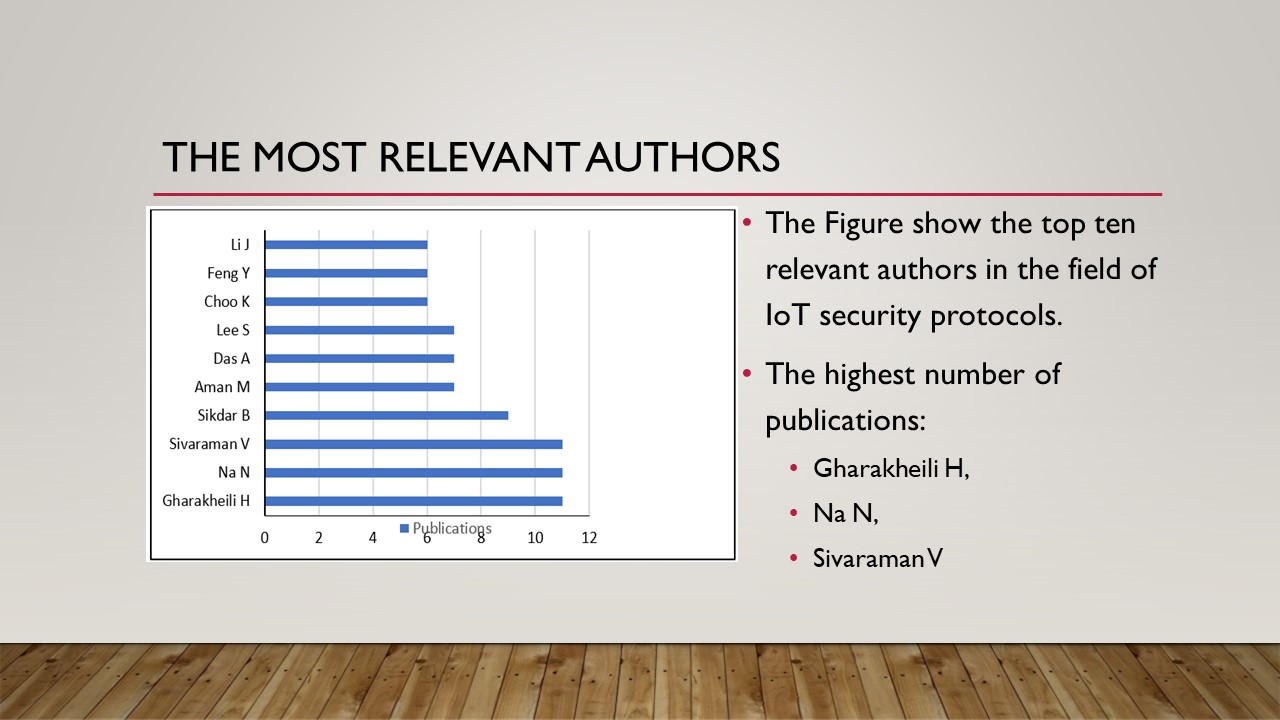 |
The most relevant authors
Various authors have written on the topics of IoT security protocols around the world. Nevertheless, the comparison graphs shown in the Figure only show the top ten relevant authors in the field of IoT security protocols.
Referring back to Figure, it can be noted that Gharakheili H, Na N, and Sivaraman V have the highest number of publications, while the rest of the authors have 6 and 7 respectively.
|
|
ICACT20230185 Slide.09
[Big slide for presentation]
|
Chrome Text-to-Speach Click!! |
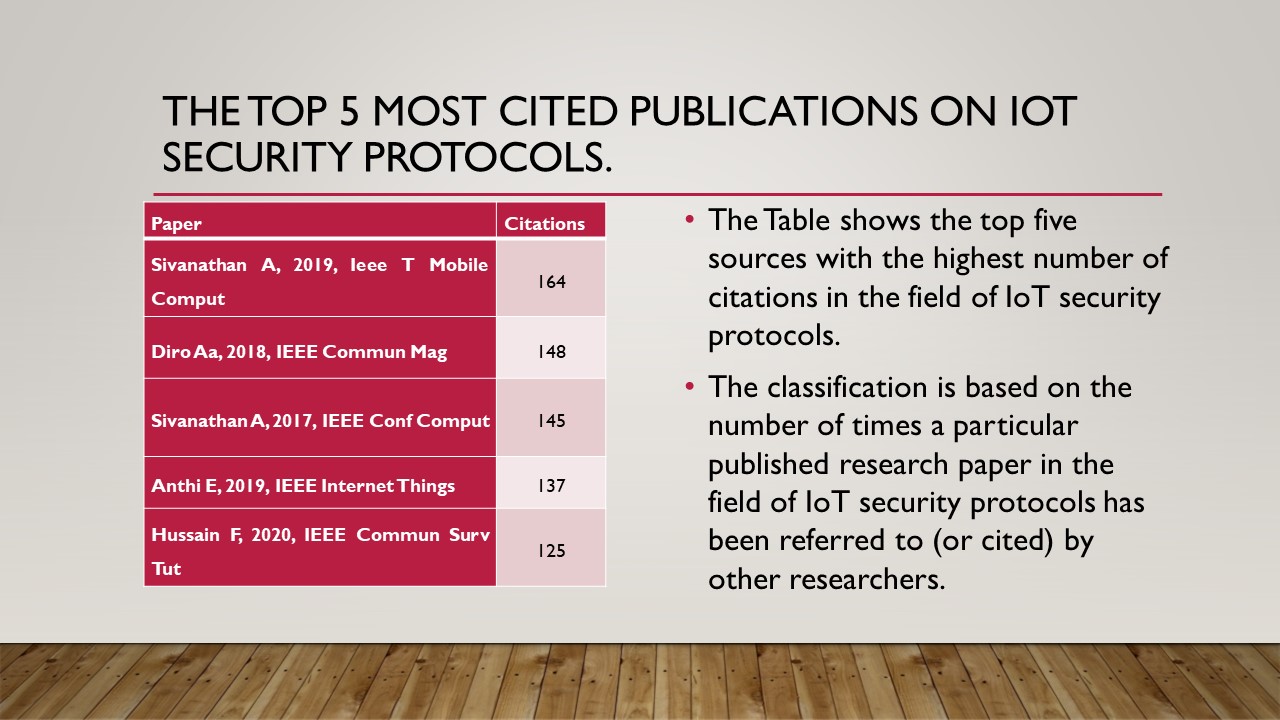 |
The top 5 most cited publications on IoT security protocols.
The Table shows the top five sources with the highest number of citations in the field of IoT security protocols. The classification shown is based on the number of times a particular published research paper in the field of IoT security protocols has been referred to (or cited) by other researchers.
|
|
ICACT20230185 Slide.08
[Big slide for presentation]
|
Chrome Text-to-Speach Click!! |
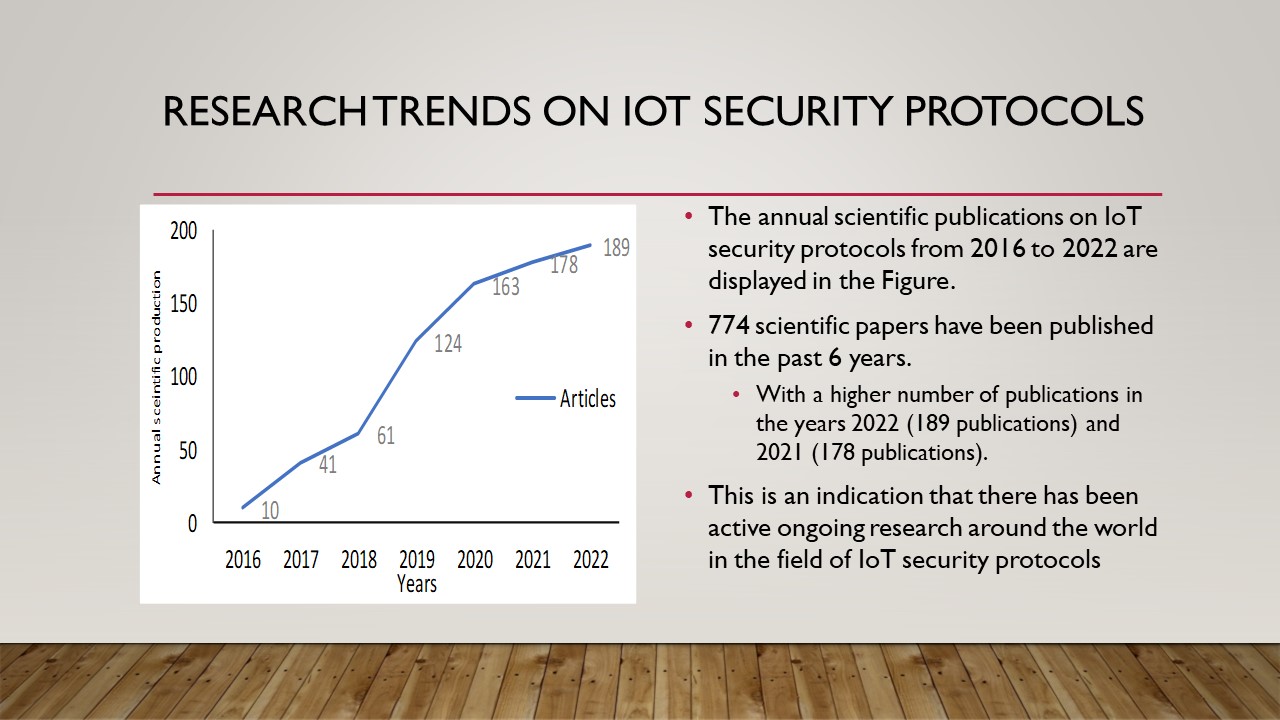 |
Annual Scientific Production
The annual scientific publications on IoT security protocols from 2016 to 2022 are displayed in the Figure. 774 scientific papers have been published in the past 6 years. With a higher number of publications in the years 2022 (189 publications) and 2021 (178 publications). This is an indication that there has been active ongoing research around the world in the field of IoT security protocols.
|
|
ICACT20230185 Slide.07
[Big slide for presentation]
|
Chrome Text-to-Speach Click!! |
 |
The overall objective of IoT network security is to offer protection by preserving integrity, availability, and confidentiality of system resources.
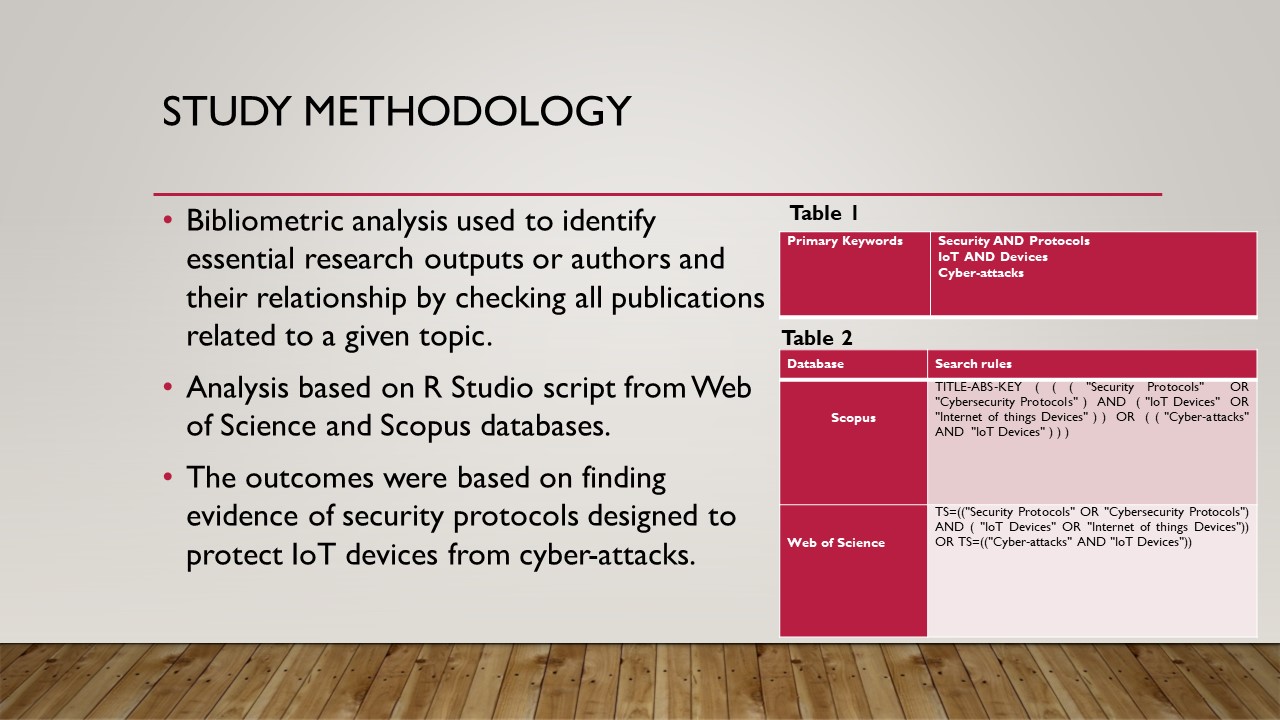
IoT architecture allows diverse connectivity platforms and technologies such as the Radio-Frequency Identification (RFID), Wireless Sensor Networks (WSN), Machine-to-machine; making it more challenging in the provision of reliable and secure solutions.
Depending on the nature of network topologies, each connected device would work with some protocol such as UDP or TCP. However, it is through these protocols that vulnerabilities can be exploited by threat actors.
Although industry experts develop specific protocols to address these vulnerabilities, there are still inadequate in dealing with ever emerging security threats. Examples of specific protocols developed and being used are OS4I, Bluetooth Low Energy (BLE), Zigbee, Z-Wave, Wireless Hart, Sigfox and LoRaWAN.
|
|
ICACT20230185 Slide.06
[Big slide for presentation]
|
Chrome Text-to-Speach Click!! |
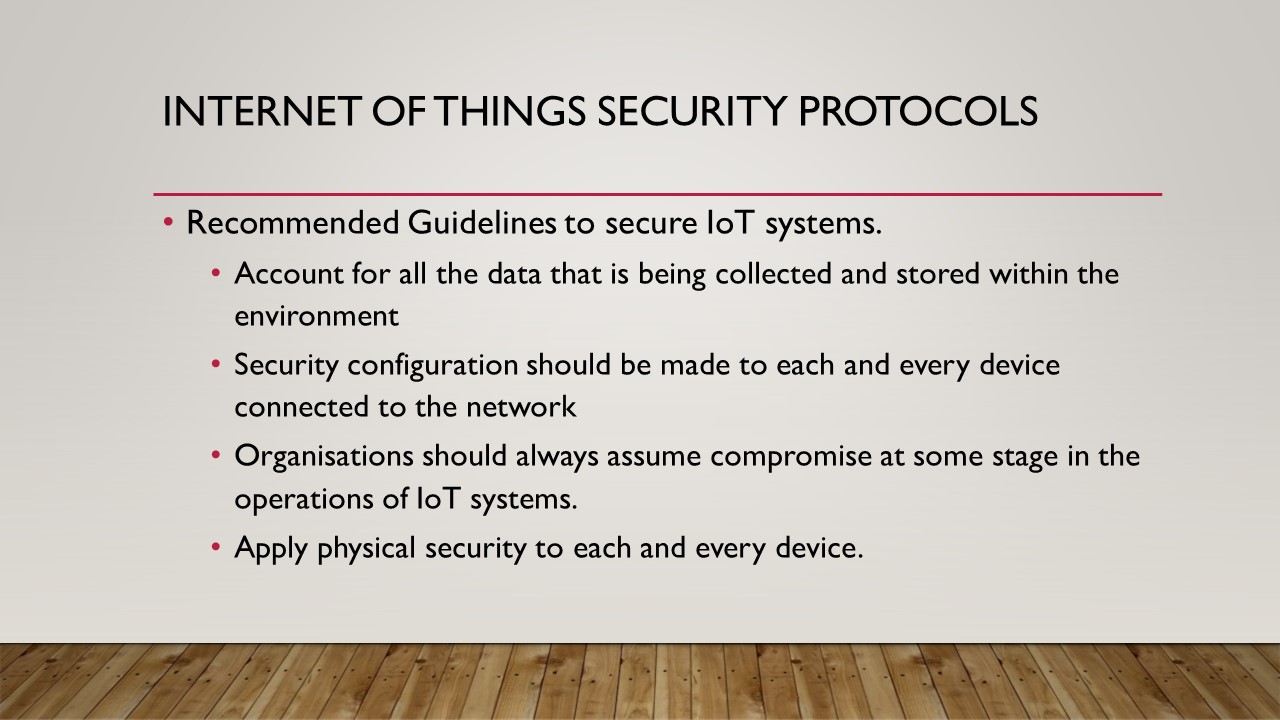 |
The following guidelines are recommended as a way to secure IoT systems:
• Account for all the data that is being collected and stored within the environment
• Security configuration should be made to each and every device connected to the network
• Organisations should always assume compromise at some stage in the operations of IoT systems.
• Apply physical security to each and every device.
However, despite guidelines, there are still new cyber-attacks that are emerging everyday.
Clearly, IoT has become ubiquitous and pervasive within most of our daily lives such as home, cars, hospitals etc. although it has come with associated security and privacy issues.
Despite many efforts, it is interesting to note that there is still lack of standardised security and privacy guidelines for reliable and secure utilisation of IoT systems and services.
|
|
ICACT20230185 Slide.05
[Big slide for presentation]
|
Chrome Text-to-Speach Click!! |
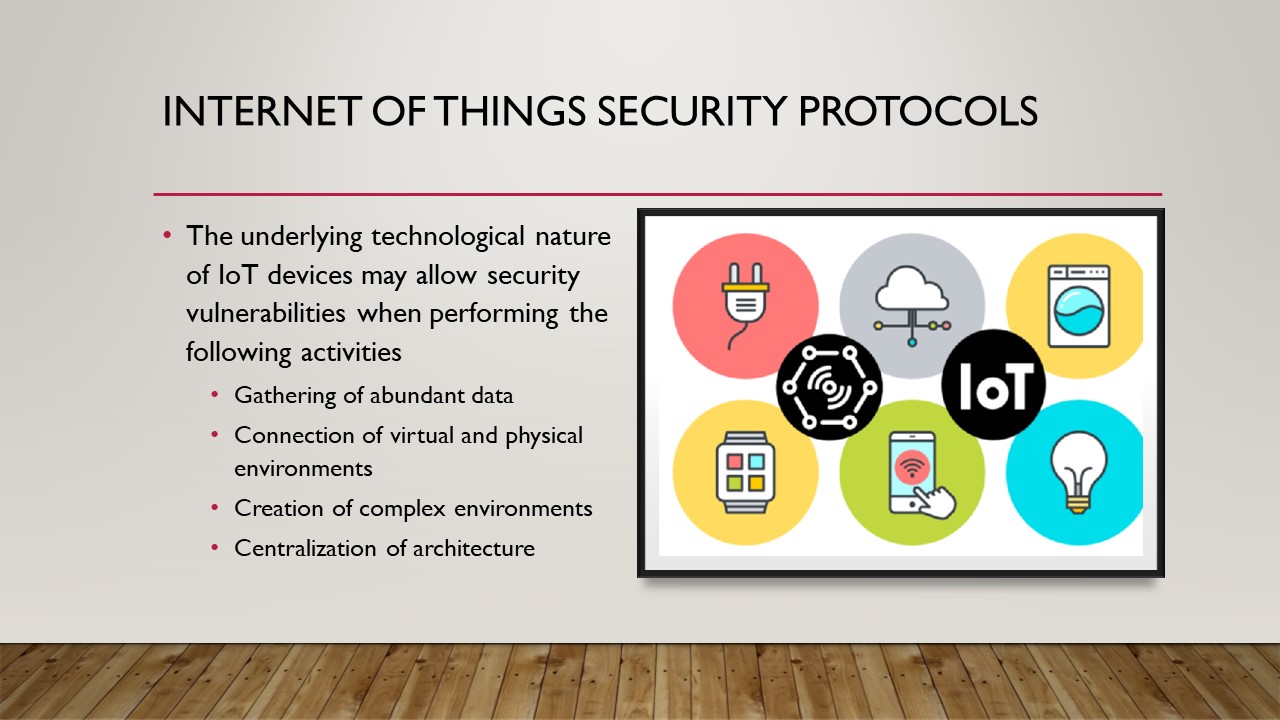 |
The underlying technological nature of IoT devices may allow security vulnerabilities when performing the following activities
• Gathering of abundant data – IoT devices and sensors normally collect large scale data, detailed in nature within their environments and users. This data, of which some of it is necessary for their own operation is vulnerable to attacks if not properly secured.
• Connection of virtual and physical environments – A greater impact on attacks is created due to shortened distance created between the virtual and physical systems.
• Creation of complex environments – the complexity and dynamic interactions within the environment in which a single IoT operates increases the attack surface.
• Centralization of architecture – the traditional approach that requires IoT devices and sensors to collect data and send to a base station can have a detrimental effect of security.
|
|
ICACT20230185 Slide.04
[Big slide for presentation]
|
Chrome Text-to-Speach Click!! |
 |
The overall objective of IoT network security is to offer protection by preserving integrity, availability, and confidentiality of system resources.
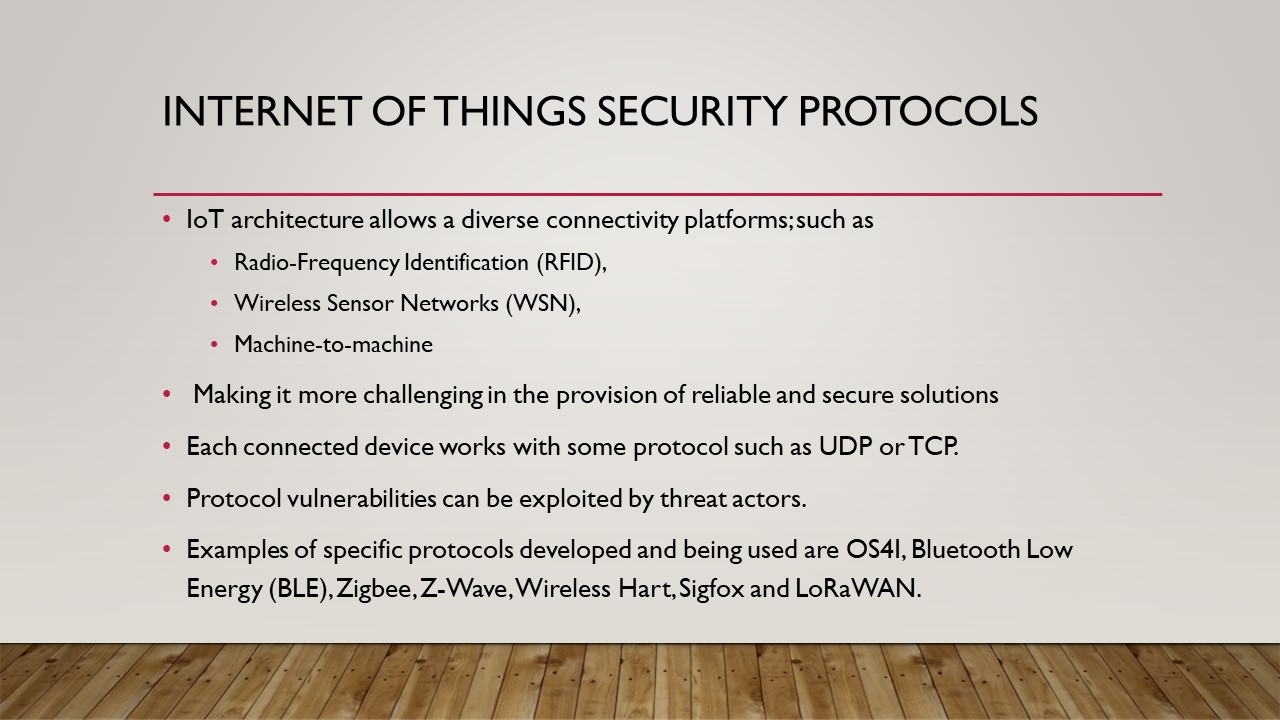
IoT architecture allows diverse connectivity platforms and technologies such as the Radio-Frequency Identification (RFID), Wireless Sensor Networks (WSN), Machine-to-machine; making it more challenging in the provision of reliable and secure solutions.
Depending on the nature of network topologies, each connected device would work with some protocol such as UDP or TCP. However, it is through these protocols that vulnerabilities can be exploited by threat actors.
Although industry experts develop specific protocols to address these vulnerabilities, there are still inadequate in dealing with ever emerging security threats. Examples of specific protocols developed and being used are OS4I, Bluetooth Low Energy (BLE), Zigbee, Z-Wave, Wireless Hart, Sigfox and LoRaWAN.
|
|
ICACT20230185 Slide.03
[Big slide for presentation]
|
Chrome Text-to-Speach Click!! |
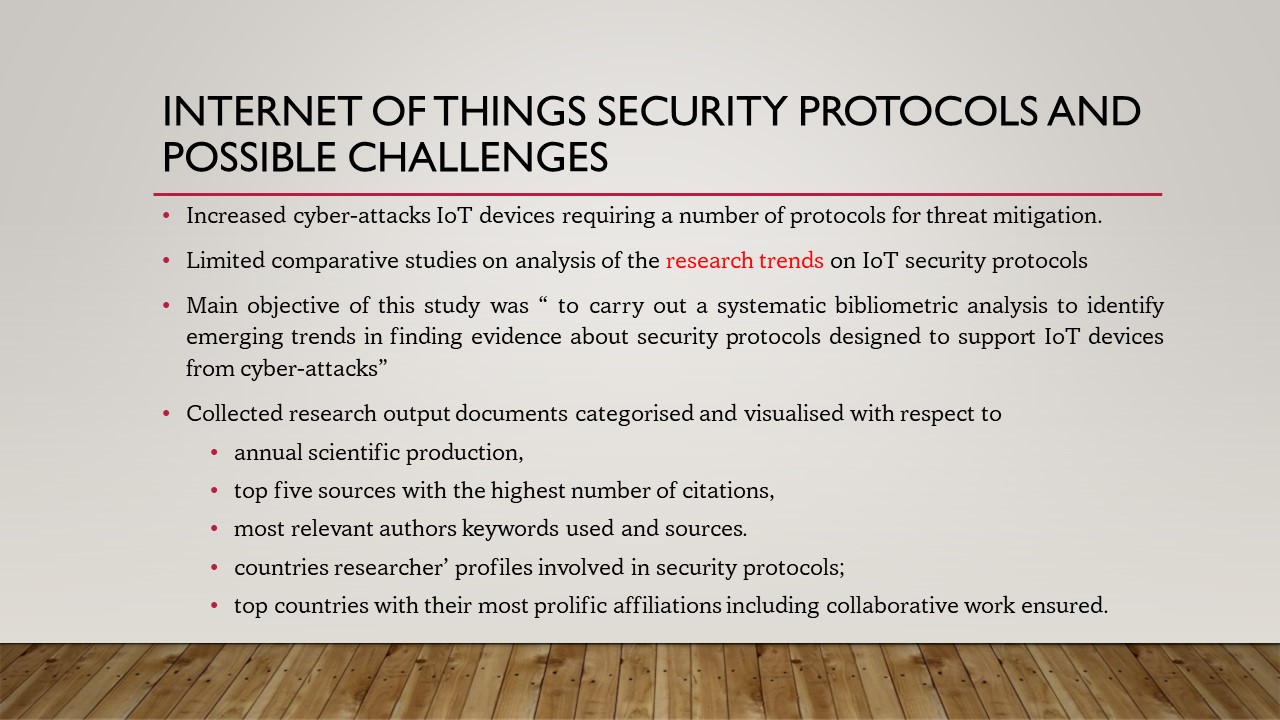 |
The rate at which cyber-attacks are exploiting IoT device vulnerabilities has been increasing while the IoT services remain pervasive.
In order to secure data and mitigate threats, a number of protocols, technologies, tools and techniques are involved.
Hence, a constant review and analysis of effectiveness of IoT associated security protocols is critical for their secure operation.
There has been limited comparative studies on analysis of the research trends on IoT security protocols.
The main objective of this paper was to carry out a systematic bibliometric analysis to identify emerging trends in finding evidence about security protocols designed to support IoT devices from cyber-attacks and to accomplish this goal, a systematic literature review of articles about publisher¡¯s performance, collaboration patterns, and research constituents was conducted, along with an investigation of the intellectual structure of Internet of Things security protocols in the existing literature
Further, in realising this, the study categorised and visualised collected research output documents with respect to annual scientific production, top five sources with the highest number of citations, most relevant authors, keywords used and sources. the analysis also considered top countries with their most prolific affiliations including collaborative work ensured.
|
|
ICACT20230185 Slide.02
[Big slide for presentation]
|
Chrome Text-to-Speach Click!! |
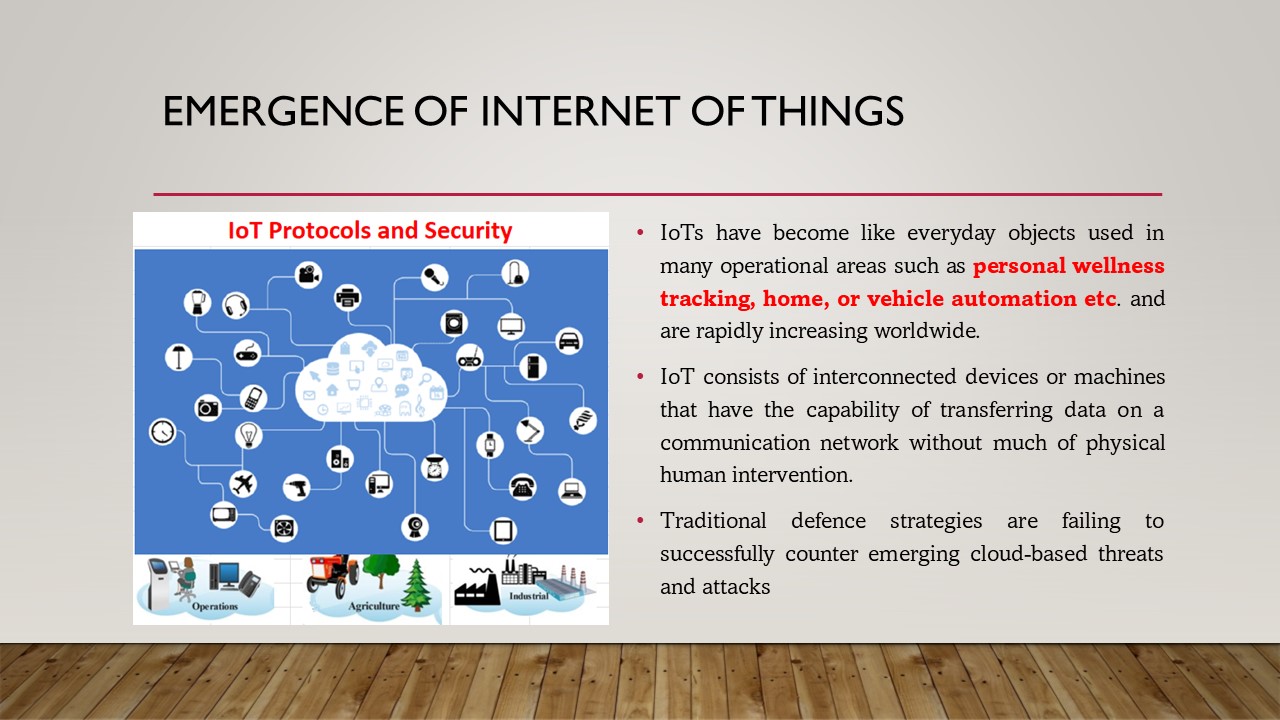 |
The upsurge of the fourth industrial revolution brings about an emergence of cloud-based technologies such as the Internet of Things (IoT). By design, these devices and systems are bound to operate in complex environments that require secure assurances at the same time the need for mechanisms to achieve resilience in an event of threats or attacks.
IoTs have become like everyday objects used in many operational areas such as personal wellness tracking, home, or vehicle automation etc. and are rapidly increasing worldwide.
IoT consists of interconnected devices or machines that have the capability of transferring data on a communication network without much of physical human intervention.
However, Traditional defense strategies are failing to successfully counter emerging cloud-based threats and attacks.
We have also observed that little attention has been paid to finding evidence about security protocols designed to support IoT devices from cyber-attacks.
To accomplish this, however, would require a literature review study on current trends, concerns, and ongoing research in the field of Internet of Things security protocols.
This is the gap that this study is aimed to fill through an analysis of scientific paper publications.
|
|
ICACT20230185 Slide.01
[Big slide for presentation]
|
Chrome Text-to-Speach Click!! |
 |
Good day everyone, my name is Gardner Mwansa, a lecturer at Walter Sisulu University in South Africa. I will be making a presentation on a paper namely Review of Internet of Things security protocols – A Bibliometric Analysis. This study was done in collaboration with Ntima Mabanza of Central University of Technology in Bloemfontein also based in South Africa
YouTube link is https://www.youtube.com/watch?v=k1Mq6tNirhw
|
|
ICACT20230185 Slide.00
[Big slide for presentation]
[YouTube] |
Chrome Text-to-Speach Click!! |
 |
COVER/START PAGE
|
















