ICACT20220371 Slide.18
[Big slide for presentation]
[YouTube]
ICACT20220371 Slide.18
[Big slide for presentation]
[YouTube] |
Chrome Text-to-Speach Click!! Click!! |
 |
Thanks alot for your time and attention! you are so welcome to ask any question or add any comment. Thanks again.
https://youtu.be/Sn8A0GEYScY
|
|
ICACT20220371 Slide.17
[Big slide for presentation]
[YouTube] |
Chrome Text-to-Speach Click!! |
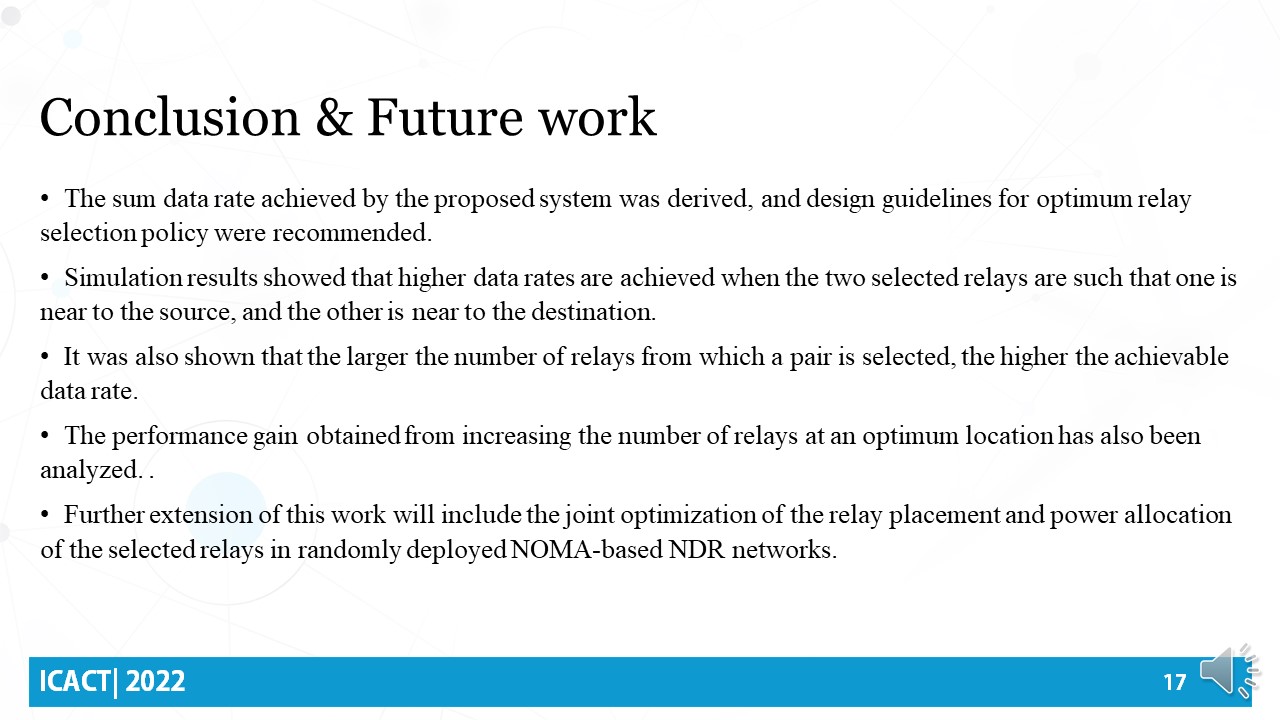 |
Motivated by the benefits of non-orthogonal multiple access and relay selection, the considered model can result in higher achievable data rates than those achieved by each alone. The sum data rate achieved by the proposed system was derived, and design guidelines for optimum relay selection policy were recommended. Simulation results showed that higher data rates are achieved when the two selected relays are such that one is near to the source, and the other is near to the destination. It was also shown that the larger the number of relays from which a pair is selected, the higher the achievable data rate. It was shown that such gains diminish with a higher number of relays. Further extension of this work will include the joint optimization of the relay placement and power allocation of the selected relays in randomly deployed NOMA-based NDR networks.
|
|
ICACT20220371 Slide.16
[Big slide for presentation]
[YouTube] |
Chrome Text-to-Speach Click!! |
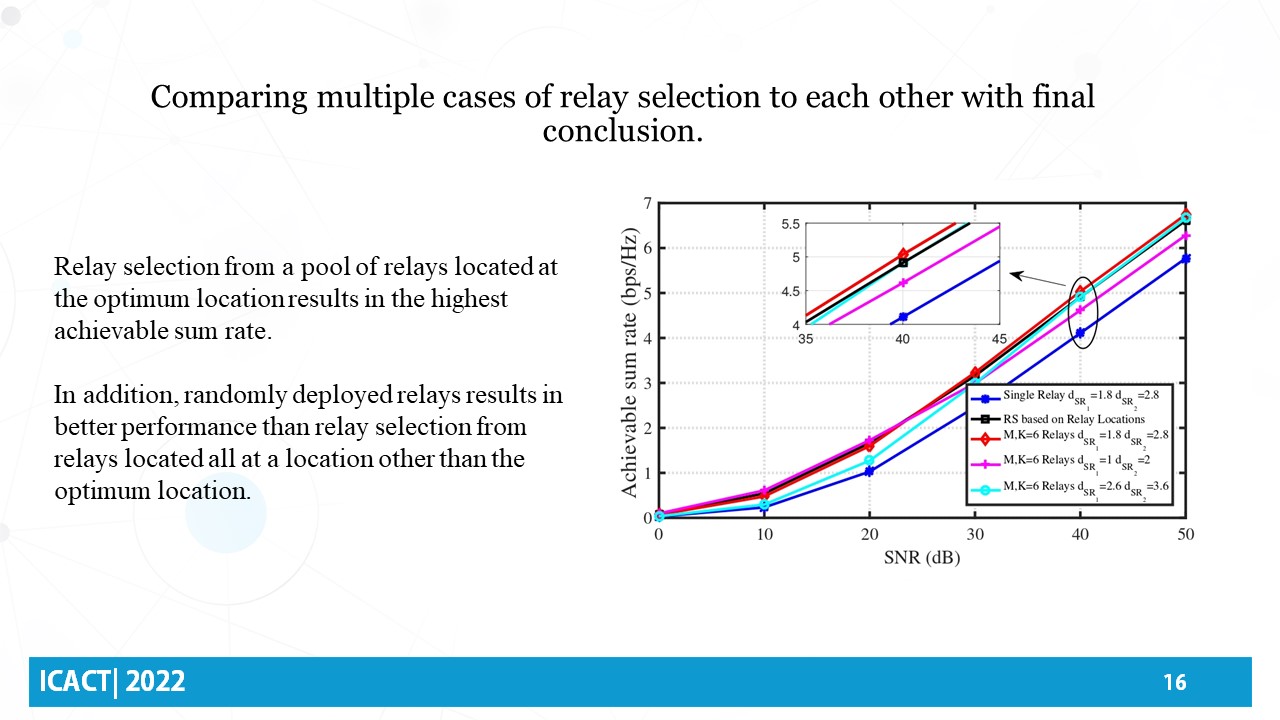 |
Multiple cases of relay selection are compared to each other to emphasize the previous observation. It can be observed that relay selection from a pool of relays located at the optimum location results in the highest achievable sum rate. In addition, randomly deployed relays results in better performance than relay selection from relays located all at a location other than the optimum location. In practical systems, randomly deployed relayed can be used with relay selection to maximize the benefit of NOMA-based diamond relay networks.
|
|
ICACT20220371 Slide.15
[Big slide for presentation]
[YouTube] |
Chrome Text-to-Speach Click!! |
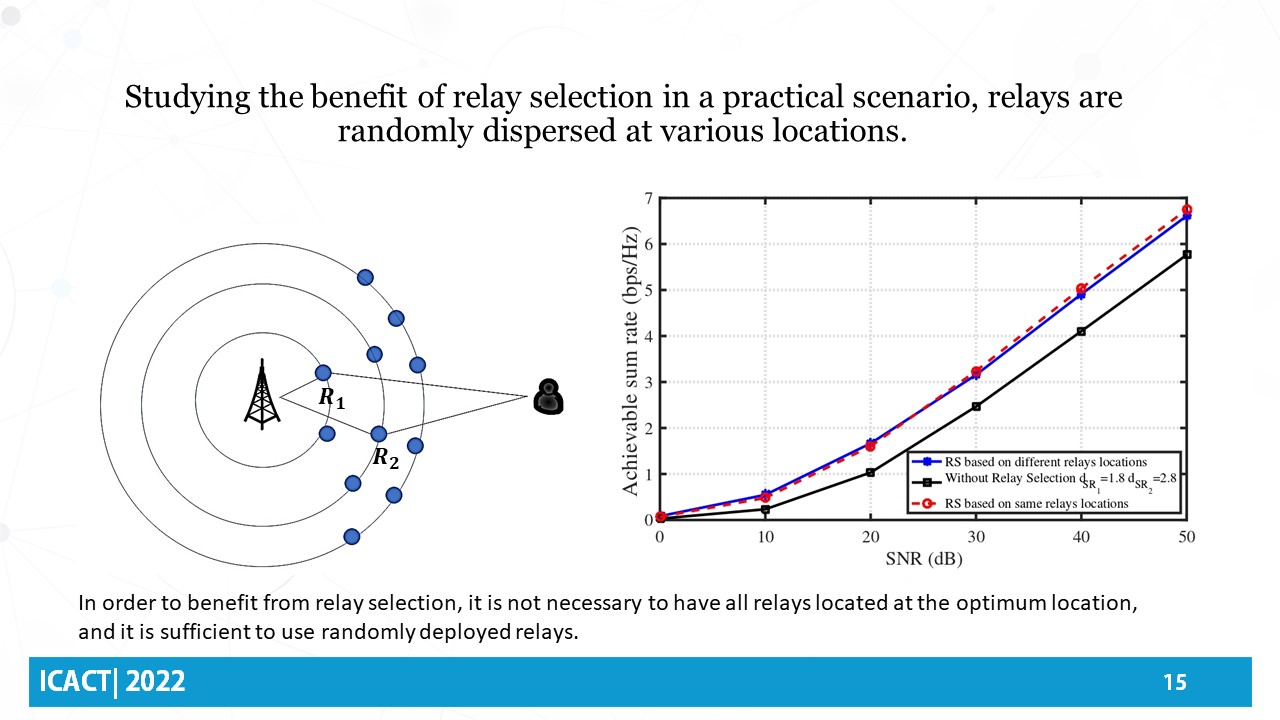 |
A more practical scenario is investigated. In this scenario, the available relays are randomly dispersed at various locations, and the relay selection scheme selects the optimal relay location. It can be seen from the figure that the achievable sum rate for a single pair of relays located at the optimum location between the source and the destination is 2.4 bps/Hz. However, when relay selection is performed from six pairs of relays randomly deployed at various locations, the achievable sum rate increases to 3.1 bps/Hz. Similarly, if six pairs of relays are all located around the optimum location, the improvement in the data rate is the same as that achieved by randomly deployed relays .
|
|
ICACT20220371 Slide.14
[Big slide for presentation]
|
Chrome Text-to-Speach Click!! |
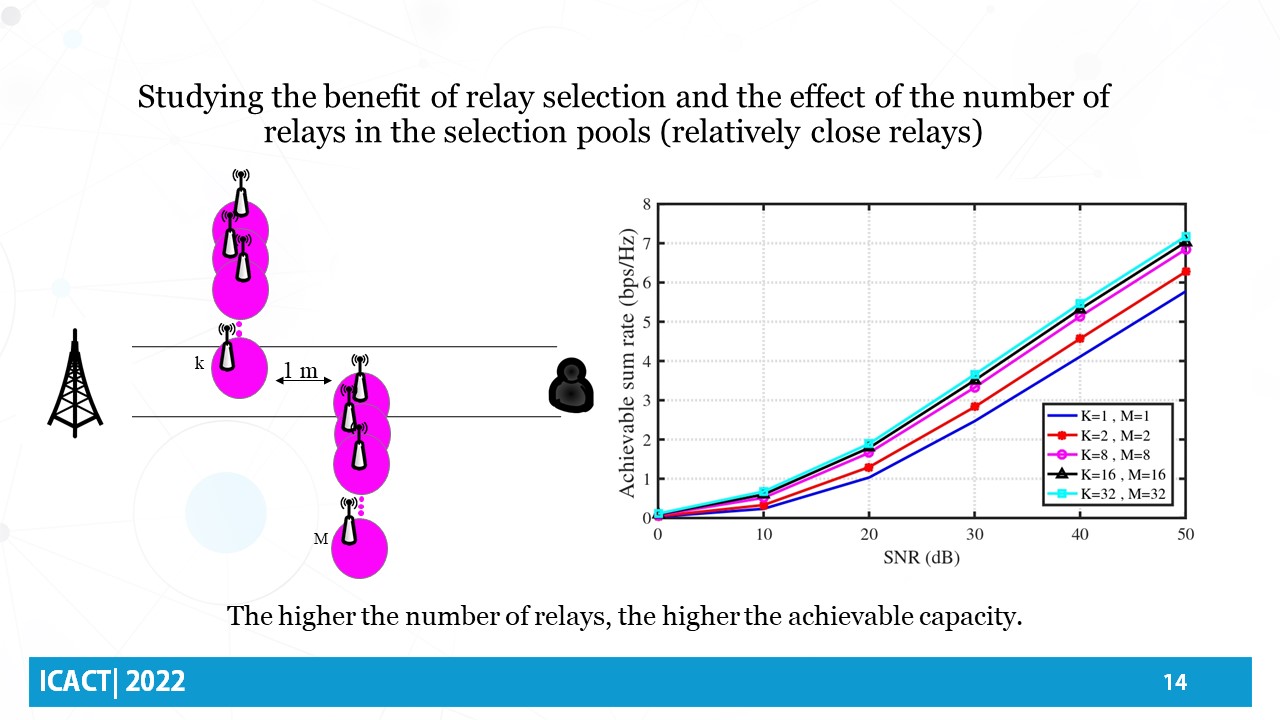 |
A comparison of the achievable sum rate based on the number of available relays is introduced. These relays are clustered relatively close together towards the midpoint between the source and the destination. The pair of relays that achieve the highest ergodic capacity is selected according to the relay selection scheme mentioned earlier. As can be observed, the higher the number of relays, the higher the achievable capacity. It can also be observed that while the achievable capacity improves with the number of relays in the selection pool, the amount of improvement diminishes for a larger number of relays.
|
|
ICACT20220371 Slide.13
[Big slide for presentation]
[YouTube] |
Chrome Text-to-Speach Click!! |
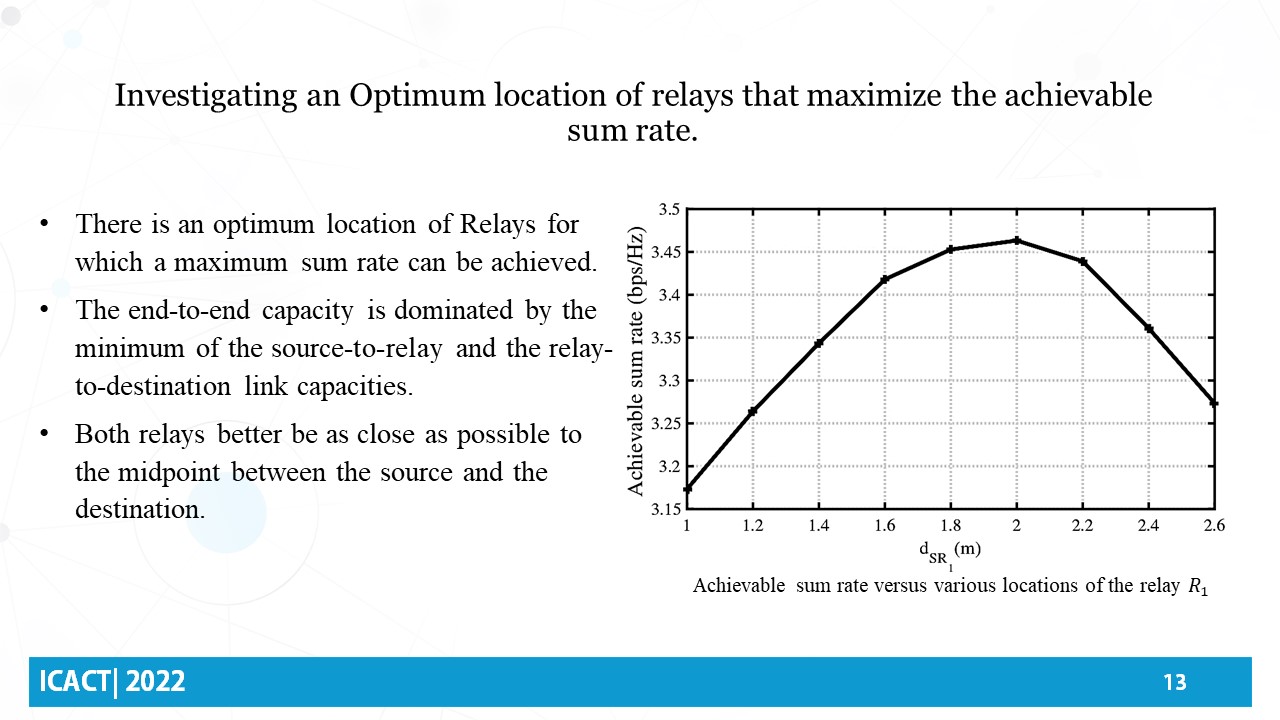 |
It can be then conjectured that there are optimum locations for that result in the maximum possible sum ergodic capacity. Results show that there is an optimum location of Relay 1 for which a maximum sum rate can be achieved at 1.8 meter. It should be concluded that both relays better be as close as possible to the midpoint between the source and the destination.
|
|
ICACT20220371 Slide.12
[Big slide for presentation]
[YouTube] |
Chrome Text-to-Speach Click!! |
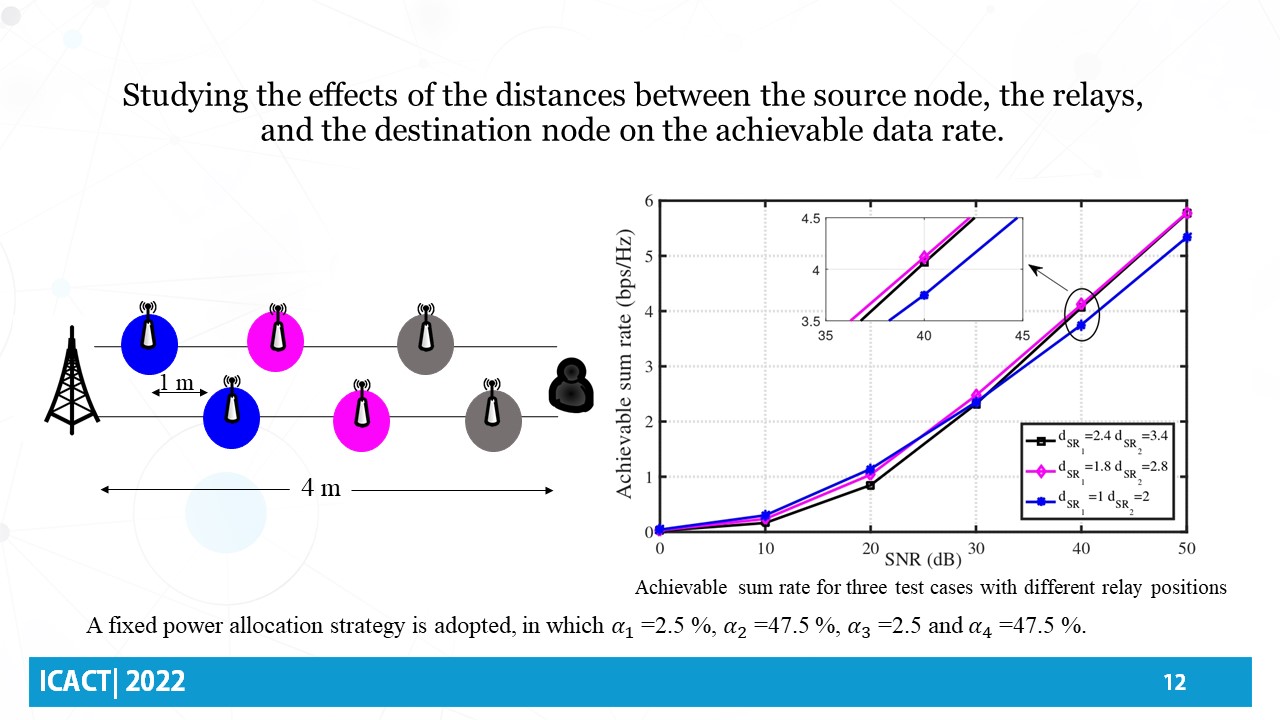 |
The effect of the positions of the selected relays are examined. Three placement scenarios are assessed, with the sum of the distance of the source-to-relay and the distance of the relay-to-destination link fixed. In order to maintain the diamond relay topology, it is also assumed that distance from source to relay 1 is one meter less the distance from source to relay 2. The scenario in which both relays are near the midpoint between the source and the destination achieves a higher sum data rate than the other two scenarios. This occurs because the end-to-end capacity is dominated by the minimum of the source-to-relay and the relay-to-destination link capacities.
|
|
ICACT20220371 Slide.11
[Big slide for presentation]
[YouTube] |
Chrome Text-to-Speach Click!! |
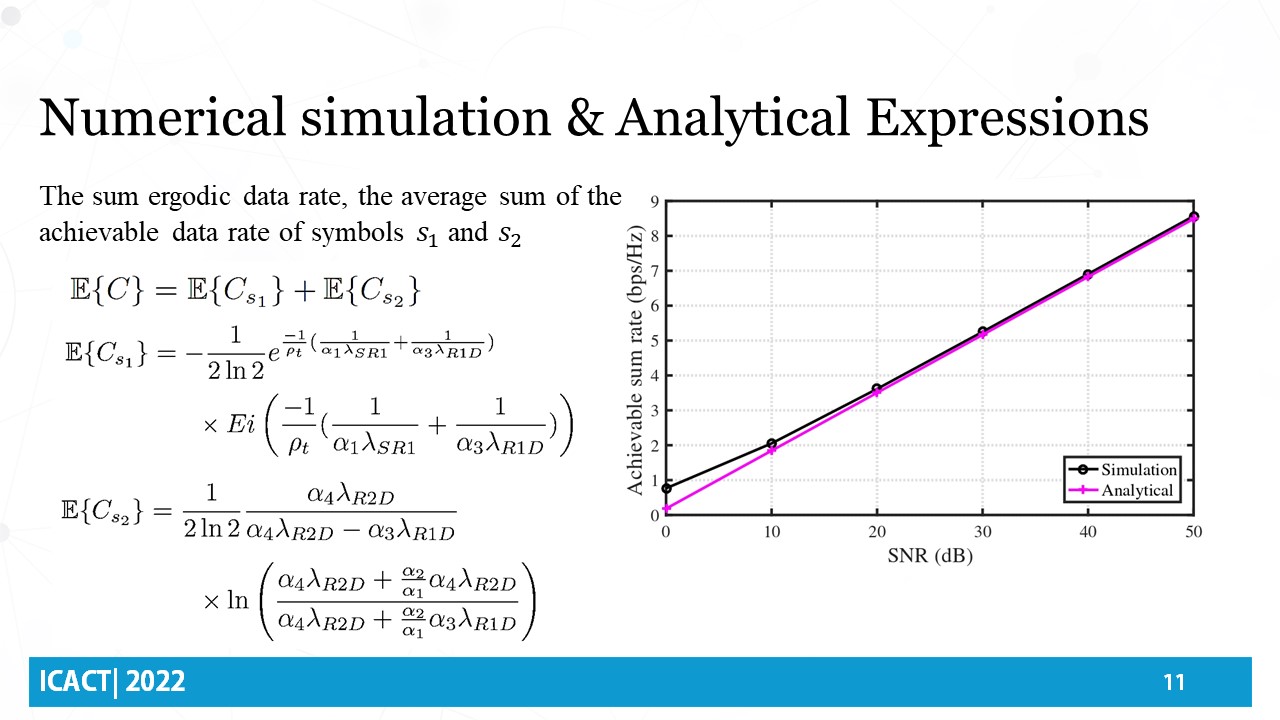 |
The system performance in terms of the sum ergodic rate is discussed. The sum ergodic data rate is the average sum of the achievable data rate of symbols symbol 1 and symbol 2. Closed-form and asymptotic expressions for the ergodic capacities of both symbols s1 and s2 are derived. Monte Carlo simulations are used to verify the obtained analytical expressions of the ergodic capacity. As can be seen, analytical results are in agreement with the Monte Carlo simulation results at high SNR values. The slight difference between the analytical results and the simulation results at low SNR values is a consequence of using the asymptotic expression.
|
|
ICACT20220371 Slide.10
[Big slide for presentation]
[YouTube] |
Chrome Text-to-Speach Click!! |
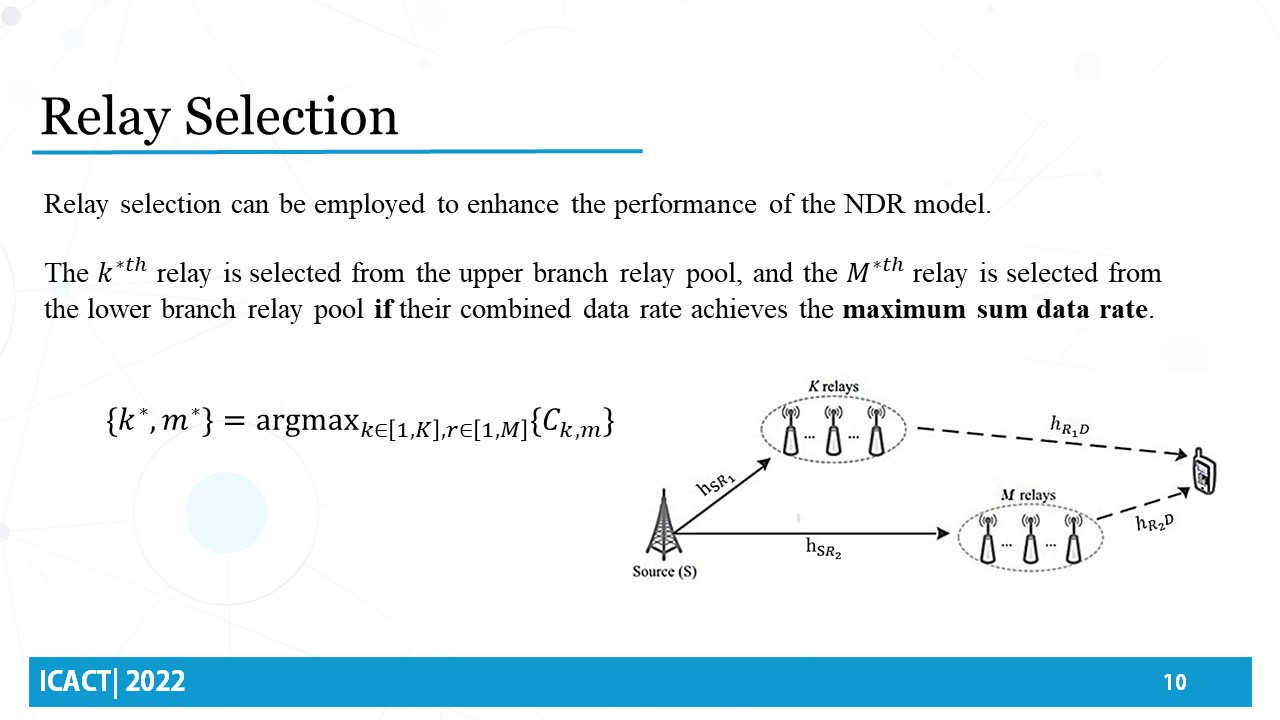 |
Relay selection can be employed to enhance the performance of the NDR model. The proposed model adopts a direct strategy in which the highest end-to-end sum achievable data rate is sought. The two relays from the two pools of relays in the upper and lower branches are selected if their combined data rate achieves the maximum sum data rate.
|
|
ICACT20220371 Slide.09
[Big slide for presentation]
[YouTube] |
Chrome Text-to-Speach Click!! |
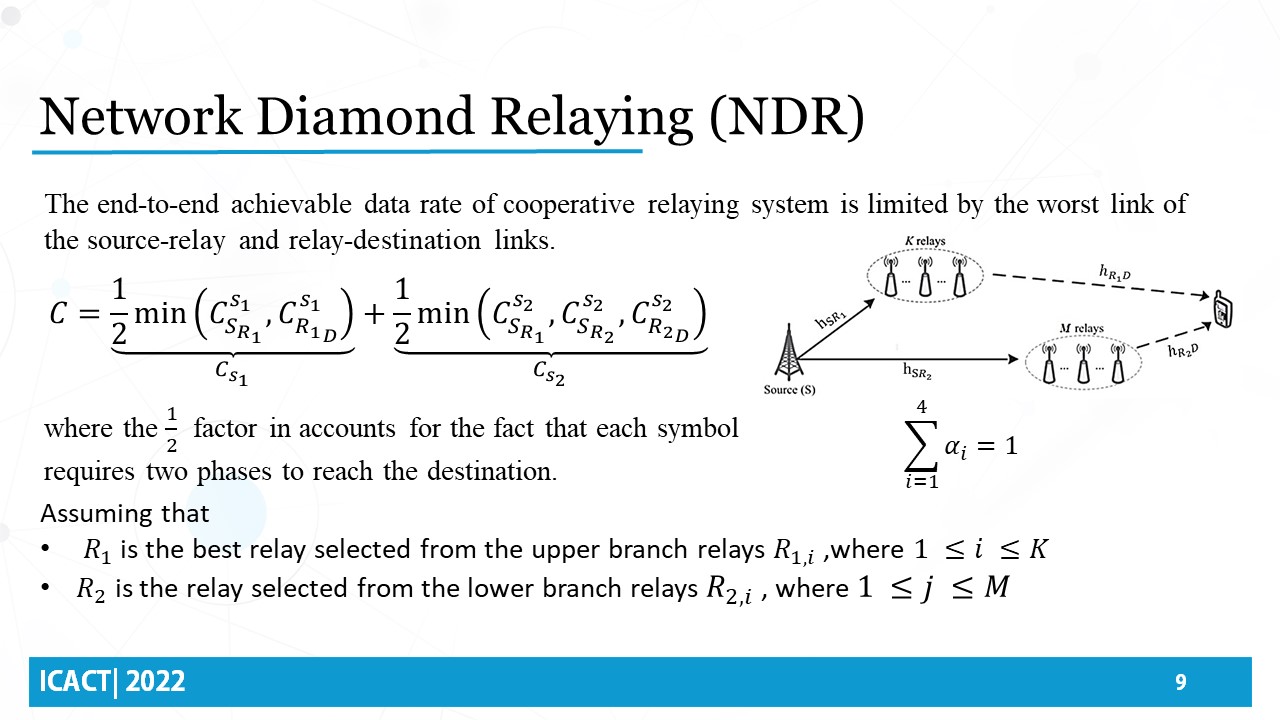 |
For NDR, with the two transmission phases, The end-to-end achievable data rate of the cooperative relaying system is limited by the worst link of the source-relay and relay-destination links. Hence it could be represented with the shown equation. Assuming that both relay 1 and relay 2 are the best-selected relays from two pools of relays in the upper and lower branches.
|
|
ICACT20220371 Slide.08
[Big slide for presentation]
|
Chrome Text-to-Speach Click!! |
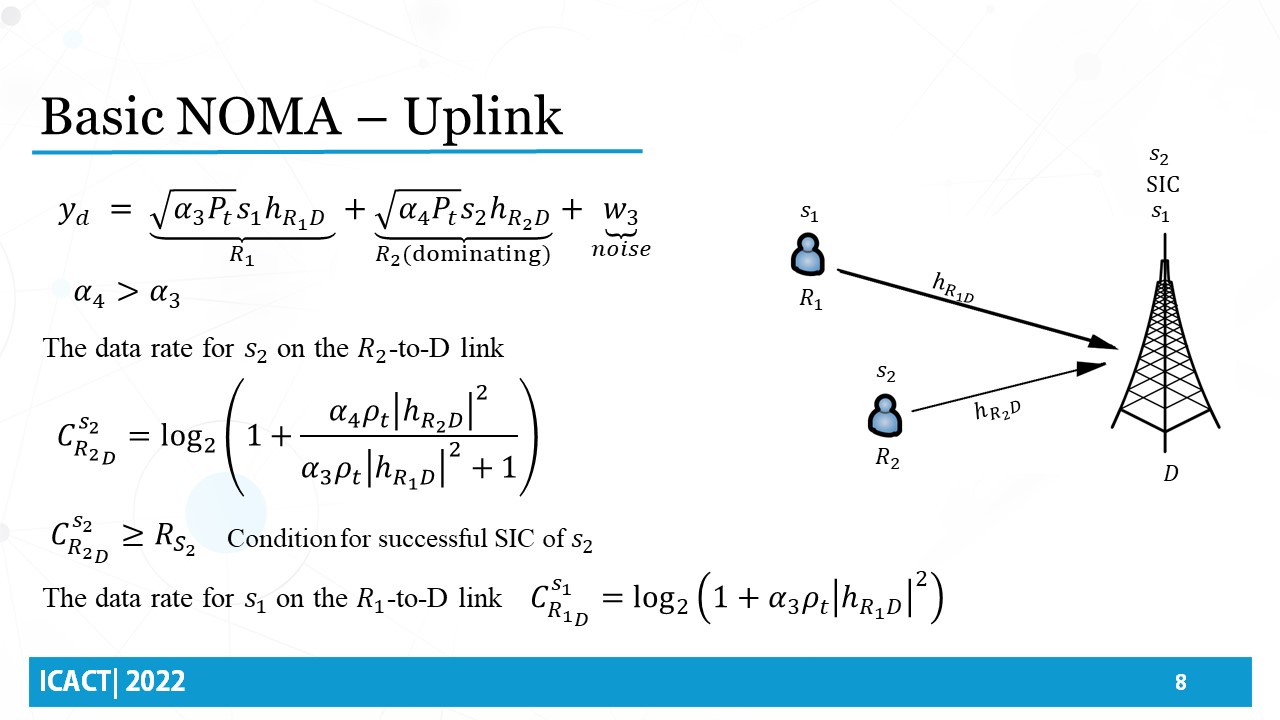 |
Following the uplink NOMA, each of the two relays, forwards the decoded symbols to the destination node. The relay 2 is closer to the destination than the relay 1, implying a higher channel gain for the relay to destination link. With appropriate power allocation of alpha 4 greater than alpha 3, the signal received at the destination is dominated by the signal sent from relay 2. The destination directly decode symbol 2, the stronger component, treating symbol 1 as noise. Then SIC is performed to decode symbol Symbol, under the condition of successfully decoding of Symbol 2.
|
|
ICACT20220371 Slide.07
[Big slide for presentation]
[YouTube] |
Chrome Text-to-Speach Click!! |
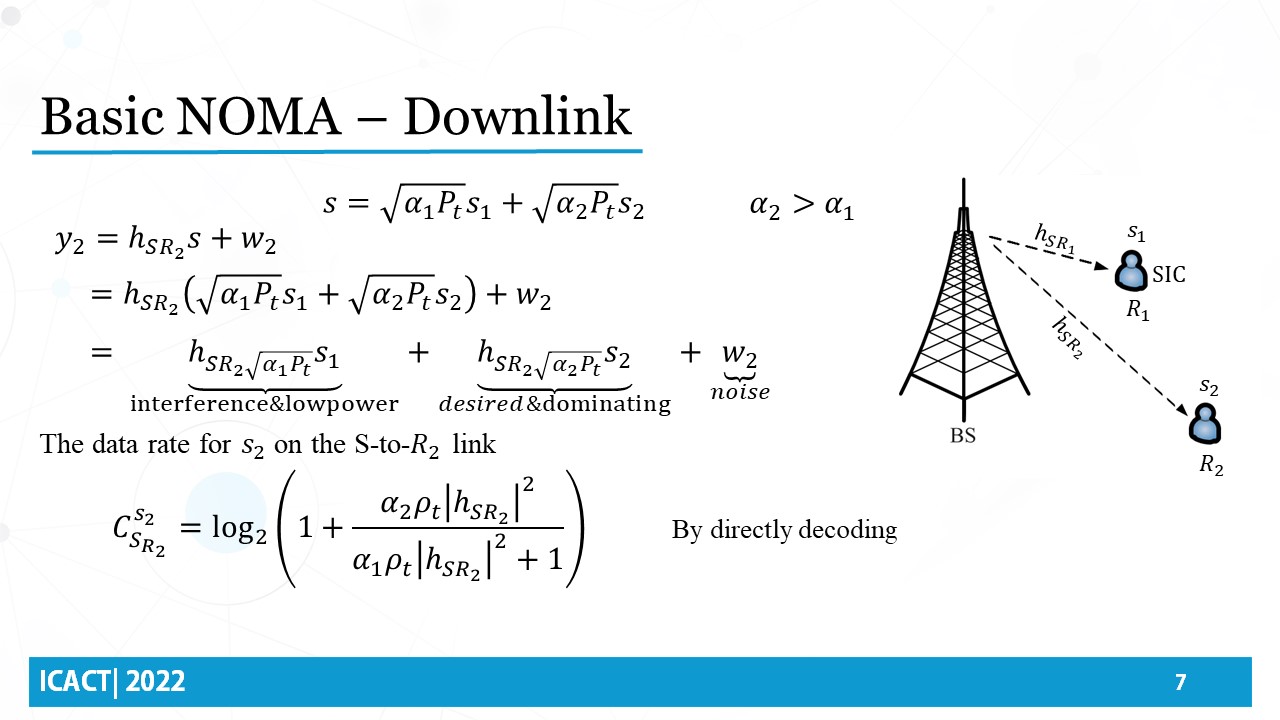 |
Similarly, After relay 2 has decoded symbol 2 directly, The data rate for symbol 2 on source relay 2 link could be computed as the written equation.
|
|
ICACT20220371 Slide.06
[Big slide for presentation]
[YouTube] |
Chrome Text-to-Speach Click!! |
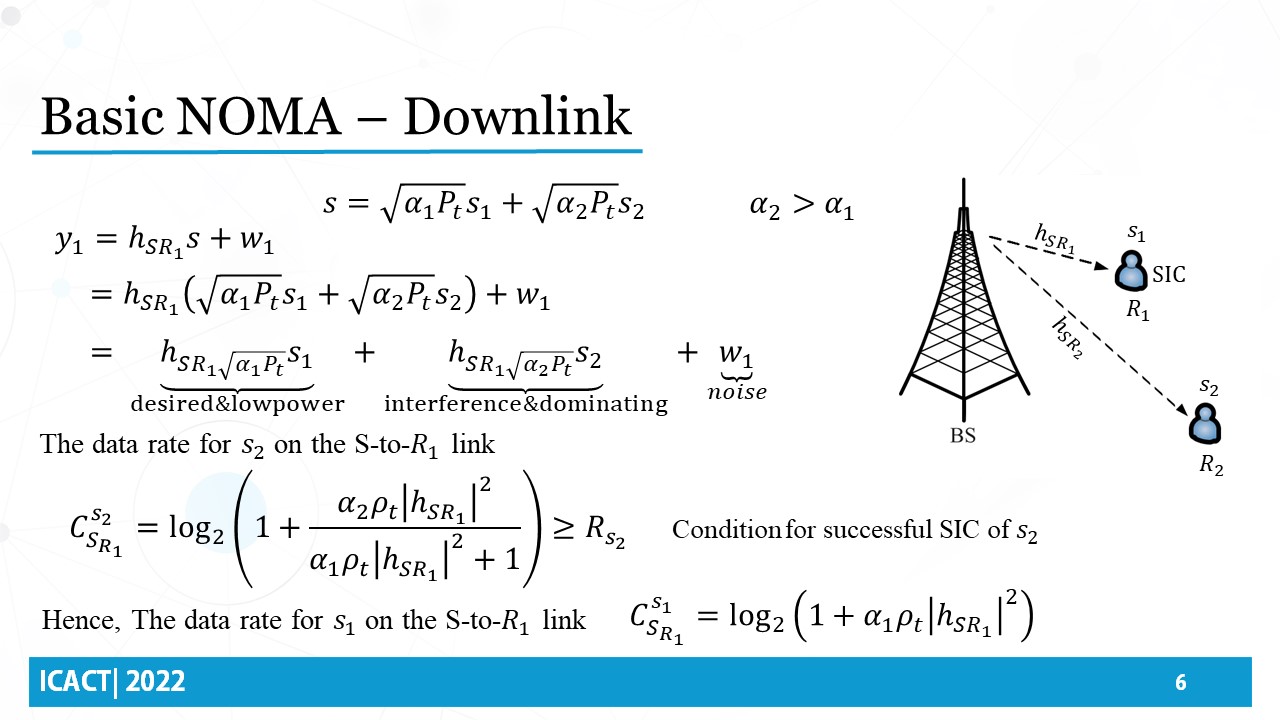 |
In the downlink NOMA phase, the source transmits a signal S representing two superimposed data symbols, s1 and s2. where alpha 1 and alpha 2 are the power allocation coefficients and Pt is the total transmission power from the base station source. It is assumed that the first symbol is to be extracted for forwarding at relay 1, while the second symbol at relay 2. It is also assumed that the first symbol is extracted at relay 1 through applying successive interference cancellation SIC by decoding symbol 2 first, while relay 2 decodes for symbol 2 directly. Hence, the power allocation coefficients must be such that alpha 2 greater than alpha 1. In order to consider symbol 2 successfully decoded at relay 1, the data rate for s2, on the source relay 1 link must be greater than the target data rate. Then, after performing SIC, The data rate for symbol 1 on source relay 1 link could be computed as the written equation.
|
|
ICACT20220371 Slide.05
[Big slide for presentation]
[YouTube] |
Chrome Text-to-Speach Click!! |
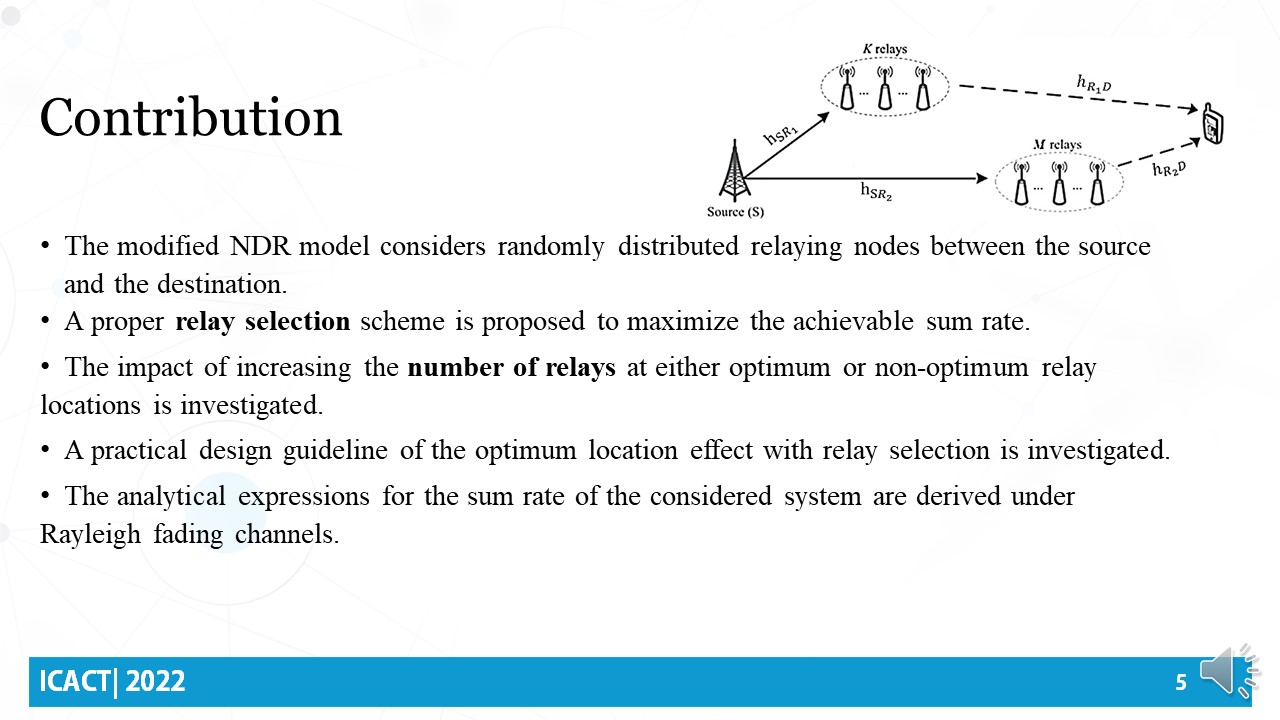 |
The NOMA-based NDR network model has been extended into the IoT network deployment scenario. The modified model considers randomly distributed relaying nodes between the source and the destination and studies the effect of RS on the overall sum rate. A proper relay selection scheme is used for selecting two relays at optimum locations to assess the end-to-end transmission process. Also, the impact of increasing the number of relays at either optimum or non-optimum relay locations is investigated. A practical design guideline of the optimum location-based relay selection for IoT-based networks is investigated. Finally, the analytical expressions for the sum rate of the considered system are derived under Rayleigh fading channels.
|
|
ICACT20220371 Slide.04
[Big slide for presentation]
[YouTube] |
Chrome Text-to-Speach Click!! |
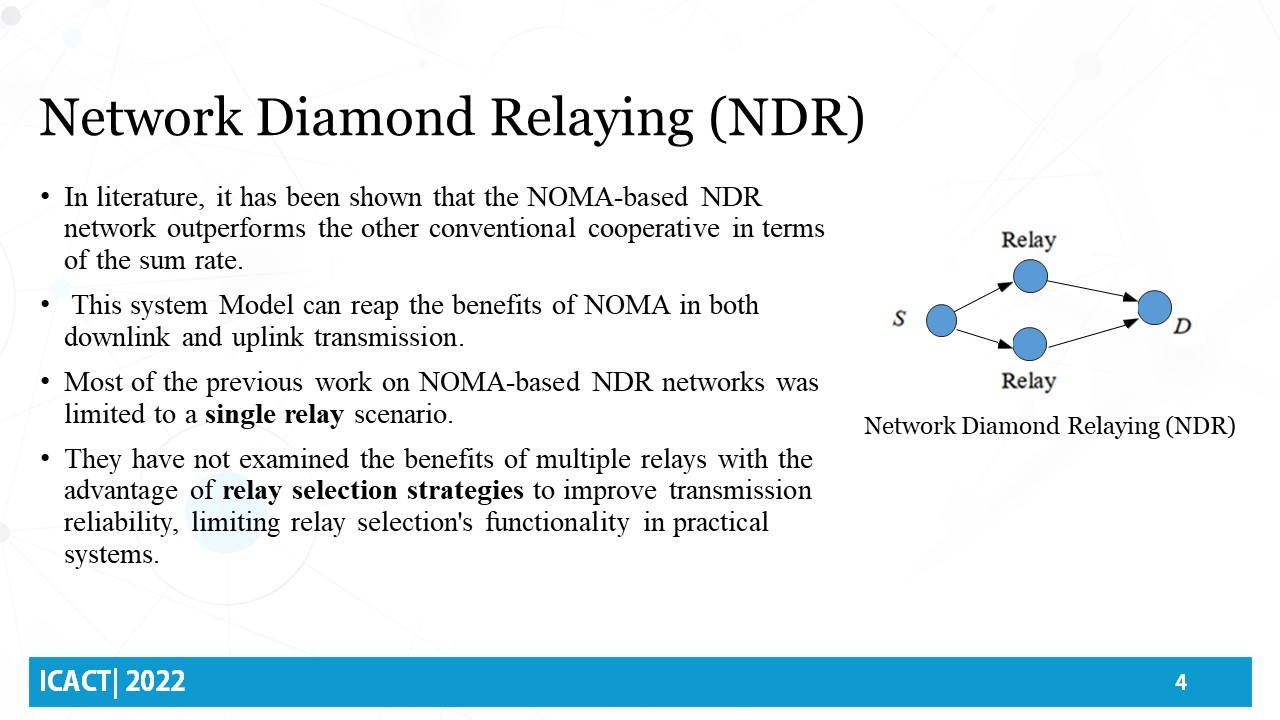 |
Following the downlink NOMA principle, the source transmits two superimposed symbols with different power allocations to two intermediate relays with varying distances from the source. Then, the relays forward the decoded signals to the destination using NOMA in an uplink mode. So, this proposed system can reap the benefits of NOMA in both downlink and uplink transmission. Most of the previous work on NOMA-based NDR networks was limited to a single relay scenario. They have not examined the benefits of multiple relays with the advantage of relay selection strategies to improve transmission reliability, limiting relay selection's functionality in practical systems.
|
|
ICACT20220371 Slide.03
[Big slide for presentation]
[YouTube] |
Chrome Text-to-Speach Click!! |
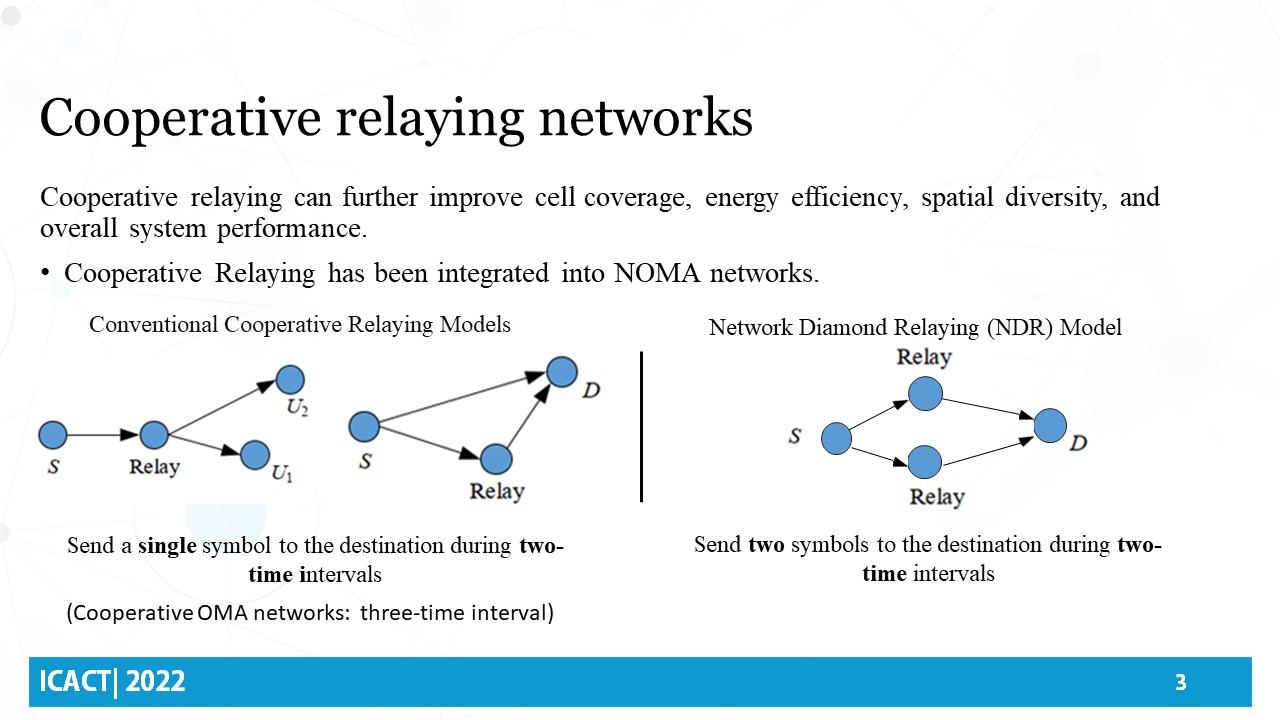 |
Cooperative relaying can further improve cell coverage, energy efficiency, spatial diversity, and overall system performance. The source could transmit data to the unreachable destination with the help of a relay. Recently, Cooperative Relaying has been integrated into NOMA networks. This integration enables transmitting data symbol to destination in only two-time intervals. Unlike conventional cooperative relaying network models, the NOMA-based network diamond relaying (NDR) model could simultaneously convey two symbols to the destination within only two-time transmission phases, thus increasing the multiplexing gain.
|
|
ICACT20220371 Slide.02
[Big slide for presentation]
[YouTube] |
Chrome Text-to-Speach Click!! |
 |
Due to the rapid growth of data traffic and number of connected devices within a network, 5G communication networks and beyond must support fulfilling high connectivity requirements.
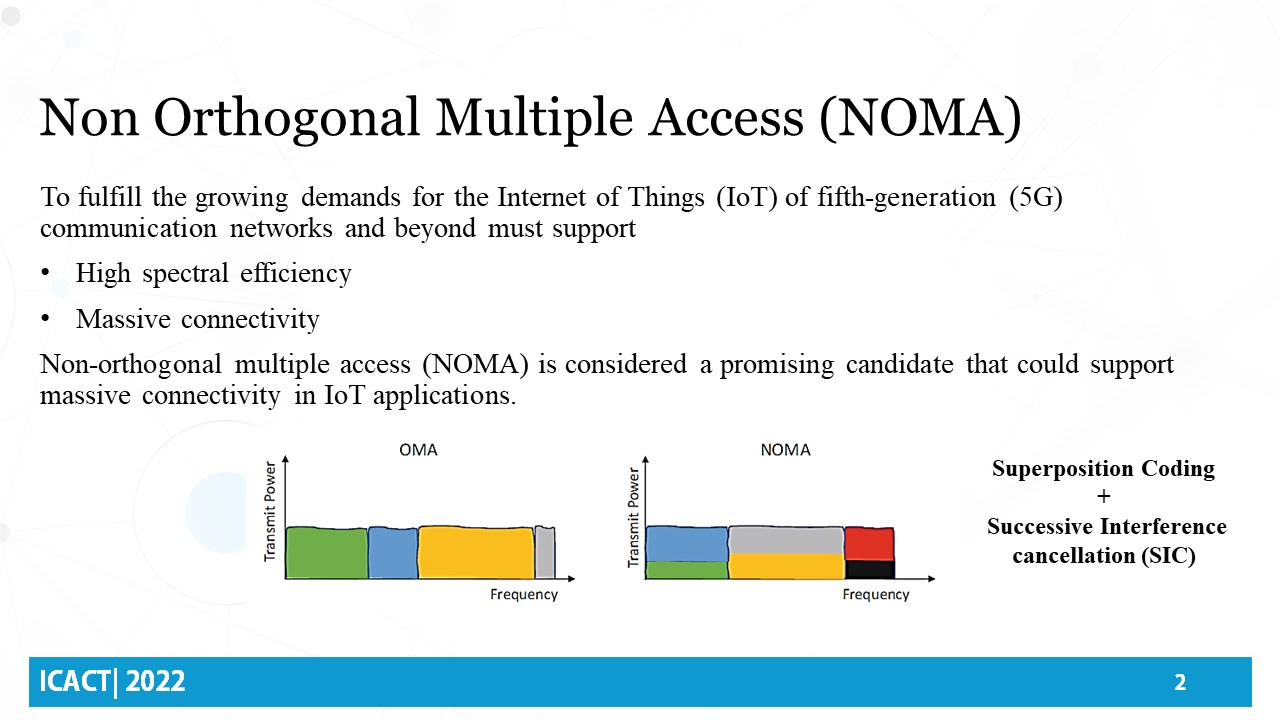
Non-orthogonal multiple access (NOMA) is considered a promising solution due to its potential to support massive connectivity in IoT applications.
In contrast to orthogonal multiple access (OMA), In NOMA, multiple user, with distinct channel gains, can share the same frequency band. This could be accomplished using superposition coding at the transmitter with different power coefficients assigned to different data symbols. At the receiver, successive interference cancellation (SIC) is used to extract the desired data symbol by eliminating unwanted information of other users according to the allocated power.
|
|
ICACT20220371 Slide.01
[Big slide for presentation]
[YouTube] |
Chrome Text-to-Speach Click!! |
 |
Hi everybody, my name is Noha Hany Khattab. I am pleased to present our work here in ICACT 2022. This work has been done with Dr. Samy Soliman, Dr Saeed Darweesh, and Dr Amr A. El-Sherif. Our presentation today is about Relay Selection in NOMA-Based Diamond Relaying Networks.
|