 ICACT20250142 Slide.20
[Big slide for presentation] |
Chrome Text-to-Speach Click!! |
 |
Thank You
|
|
ICACT20250142 Slide.19
[Big slide for presentation]
|
Chrome Text-to-Speach Click!! |
 |
References
|
|
ICACT20250142 Slide.18
[Big slide for presentation]
|
Chrome Text-to-Speach Click!! |
 |
Conclusion
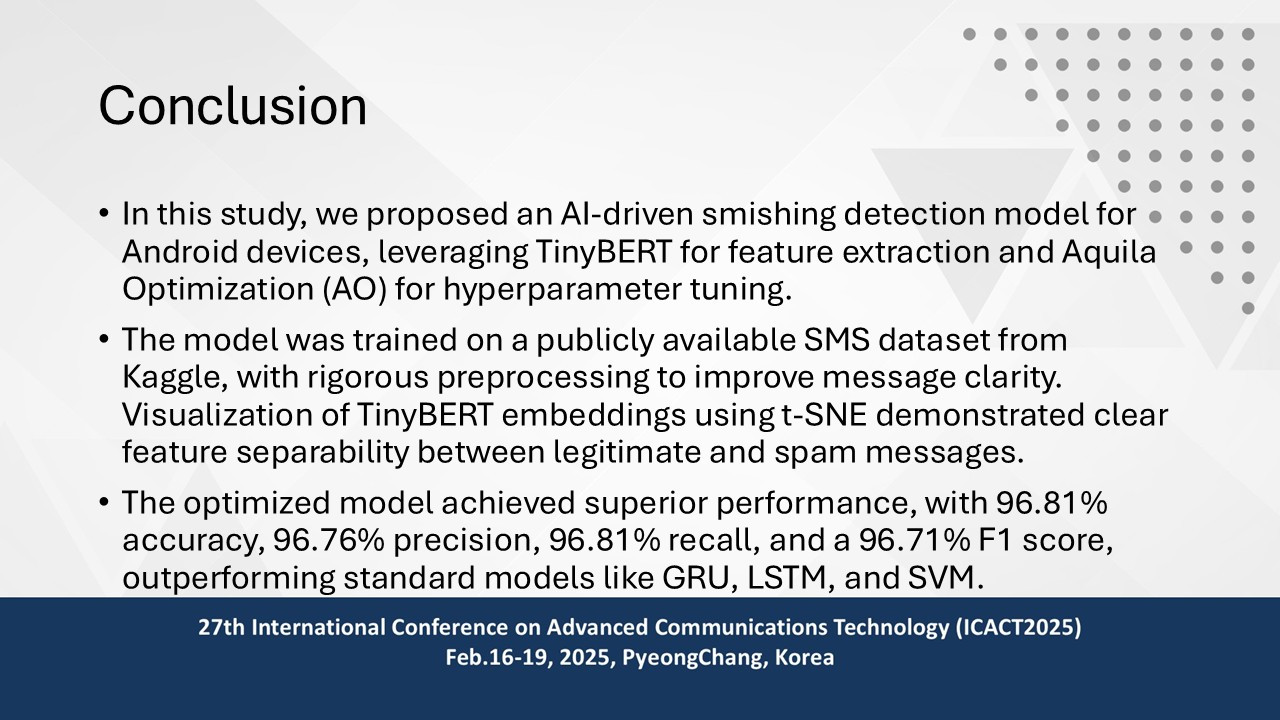
In this study, we proposed an AI-driven smishing detection model for Android devices, leveraging TinyBERT for feature extraction and Aquila Optimization (AO) for hyperparameter tuning.
The model was trained on a publicly available SMS dataset from Kaggle, with rigorous preprocessing to improve message clarity. Visualization of TinyBERT embeddings using t-SNE demonstrated clear feature separability between legitimate and spam messages.
The optimized model achieved superior performance, with 96.81% accuracy, 96.76% precision, 96.81% recall, and a 96.71% F1 score, outperforming standard models like GRU, LSTM, and SVM.
|
|
ICACT20250142 Slide.17
[Big slide for presentation]
|
Chrome Text-to-Speach Click!! |
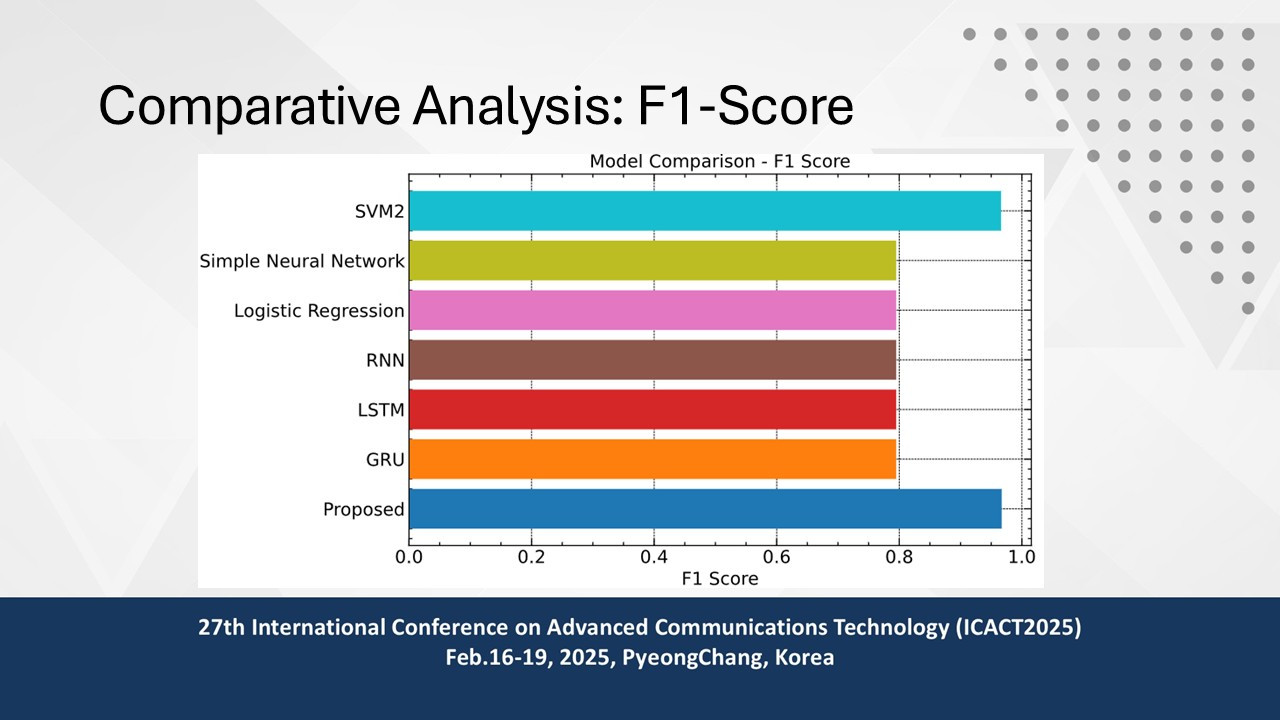 |
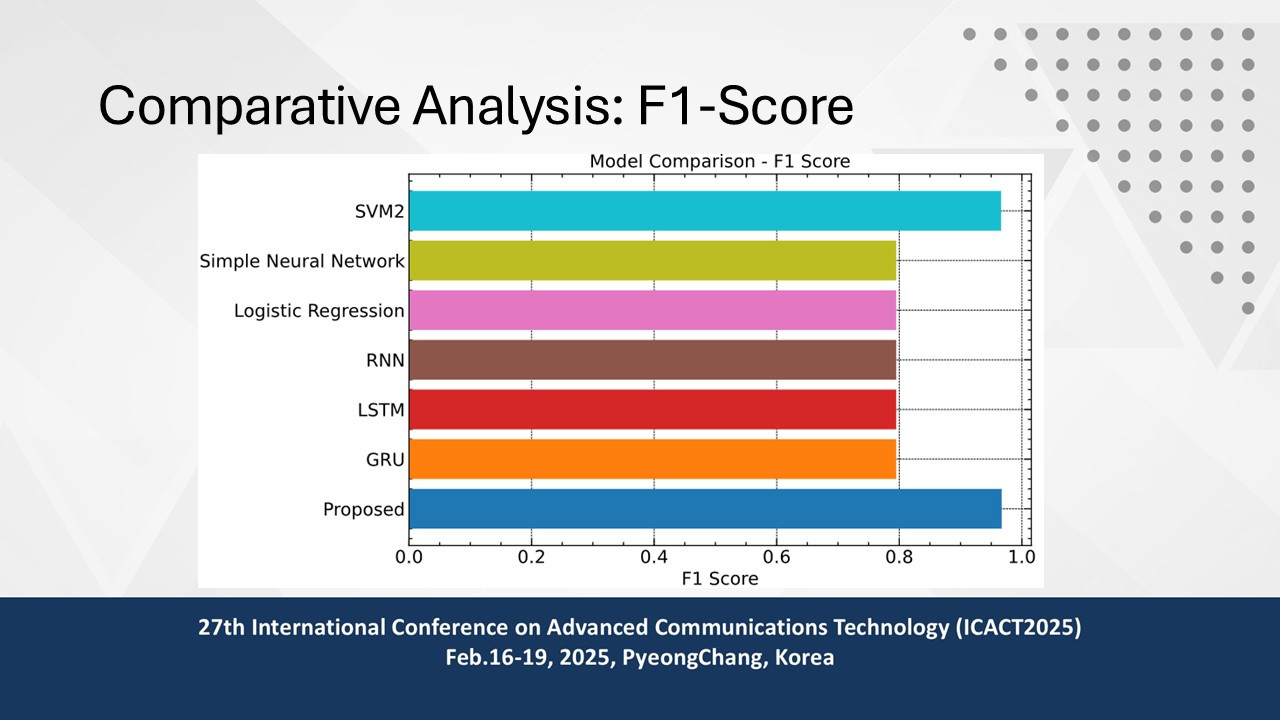
F1 Score Comparison : The comparison of the F1 scores shows the harmony between recall and accuracy. With an F1 score of 96.71\%, our suggested model somewhat exceeded SVM (96.61\%), and far above other models (around 79.49%)
|
|
ICACT20250142 Slide.16
[Big slide for presentation]
|
Chrome Text-to-Speach Click!! |
 |
Recall Comparison: While other models scored roughly 85.98\%, the suggested model reached 96.81\% recall, same to SVM at 96.61%.
|
|
ICACT20250142 Slide.15
[Big slide for presentation]
|
Chrome Text-to-Speach Click!! |
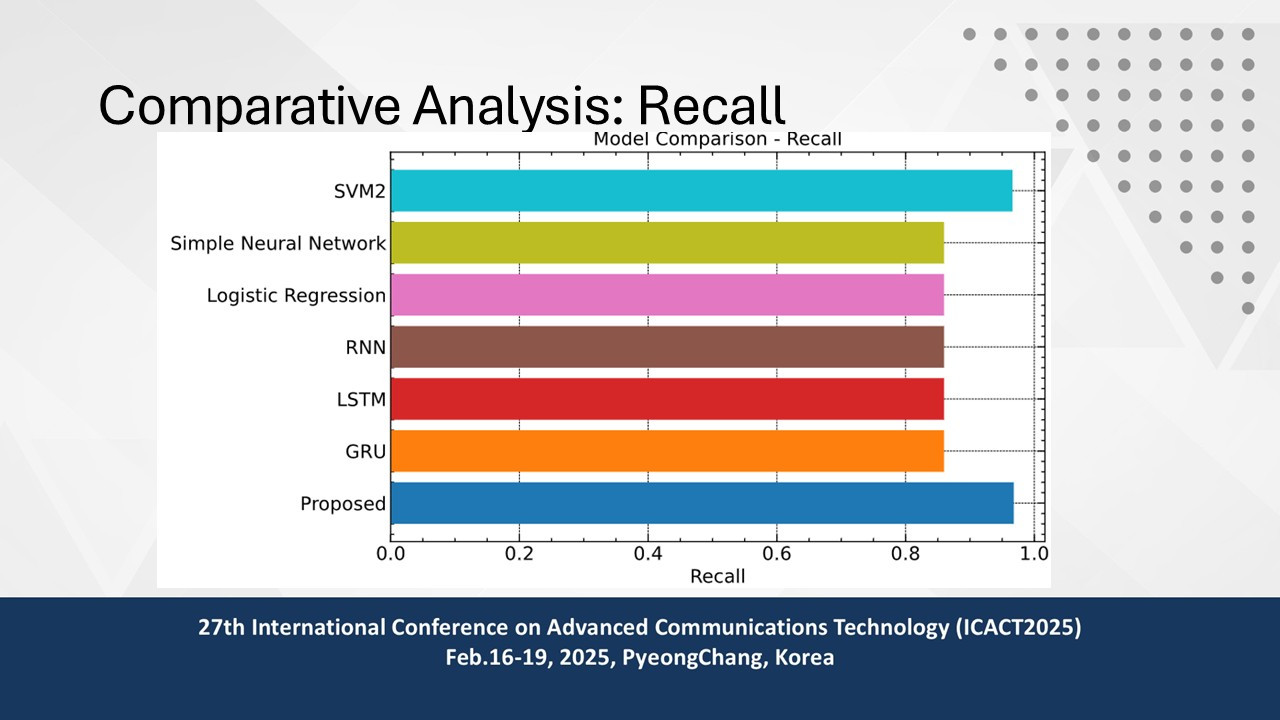 |
Figure presents precision comparison whereby our suggested model attained a precision of 96.76\%, closely followed by SVM with 96.61\%. Other models display a less than 73.92\% precision.
|
|
ICACT20250142 Slide.14
[Big slide for presentation]
|
Chrome Text-to-Speach Click!! |
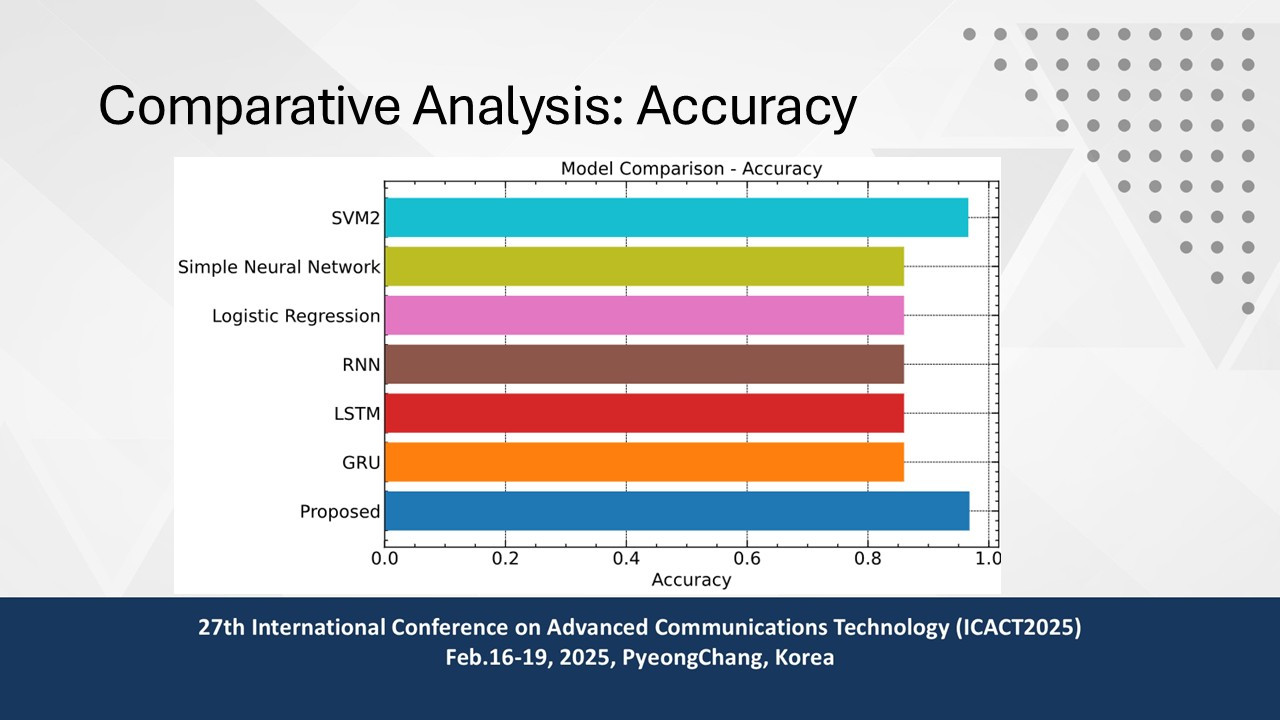 |
The accuracy numbers for every model show that our suggested model attained an accuracy of 96.81\%, which is equivalent to SVM (96.61\%), and much higher than other models (all obtaining roughly 85.98\%).
|
|
ICACT20250142 Slide.13
[Big slide for presentation]
|
Chrome Text-to-Speach Click!! |
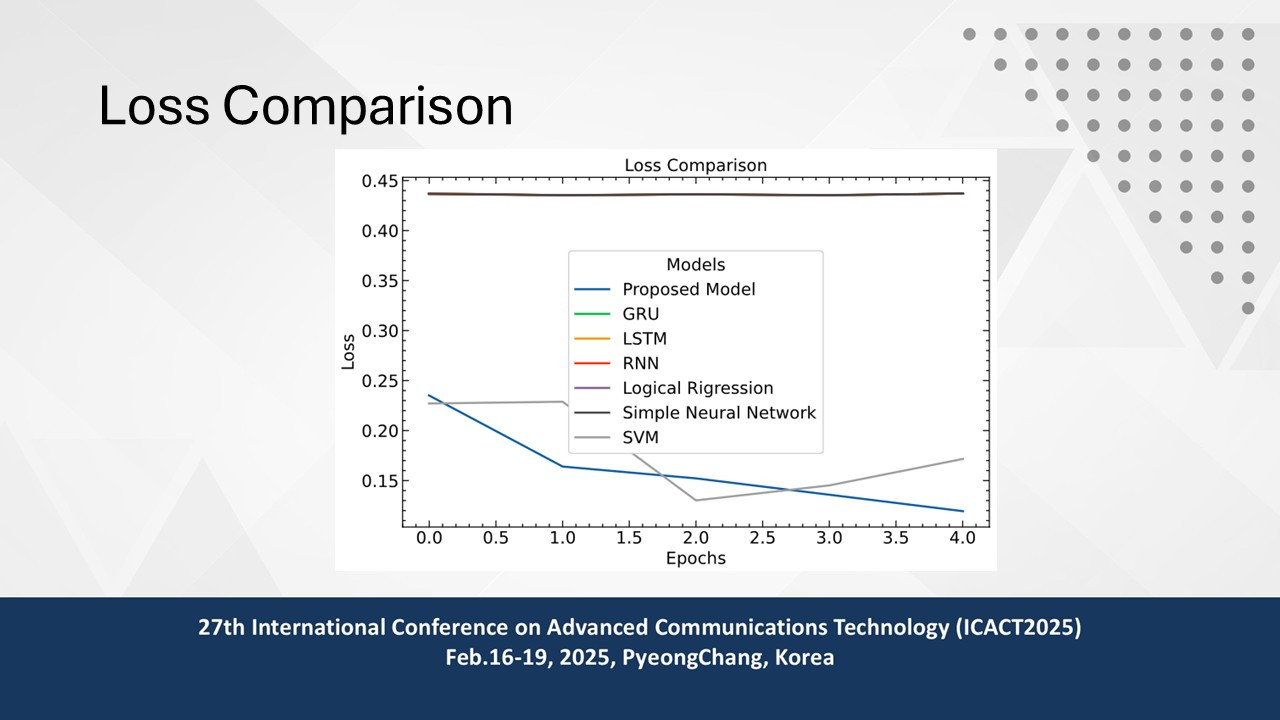 |
Loss comparison.
|
|
ICACT20250142 Slide.12
[Big slide for presentation]
|
Chrome Text-to-Speach Click!! |
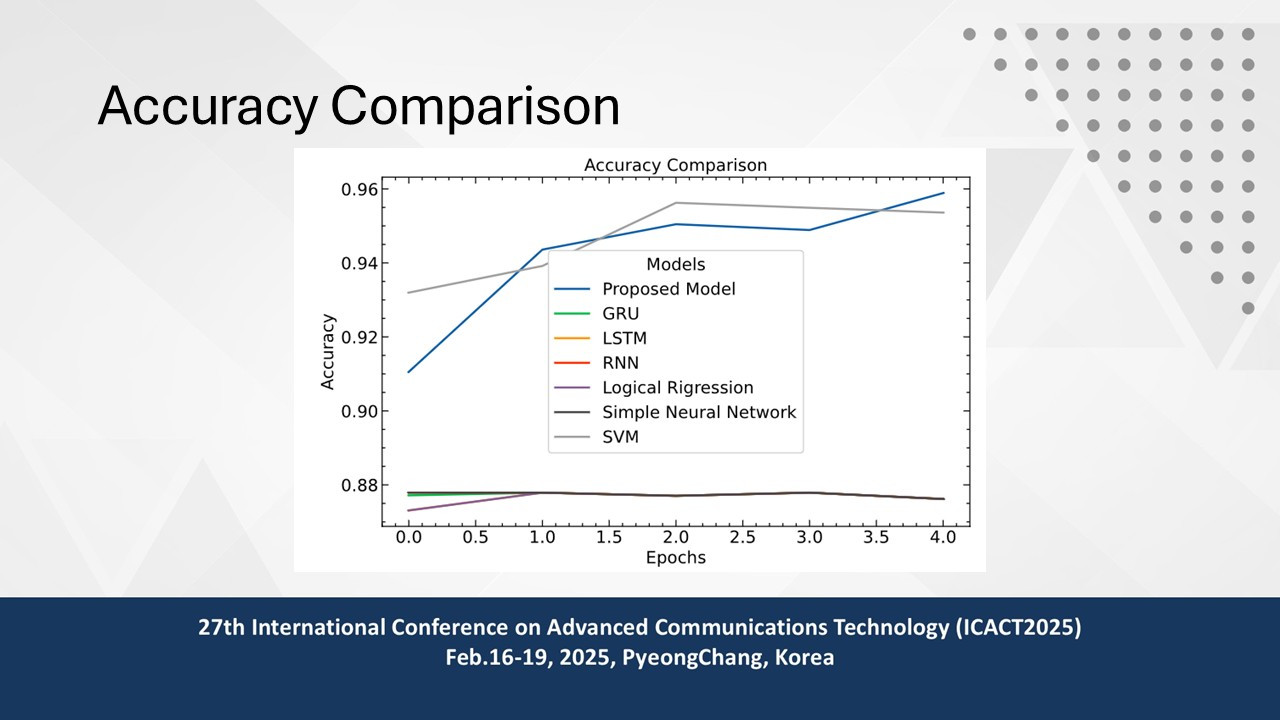 |
Accuracy Comparison
|
|
ICACT20250142 Slide.11
[Big slide for presentation]
|
Chrome Text-to-Speach Click!! |
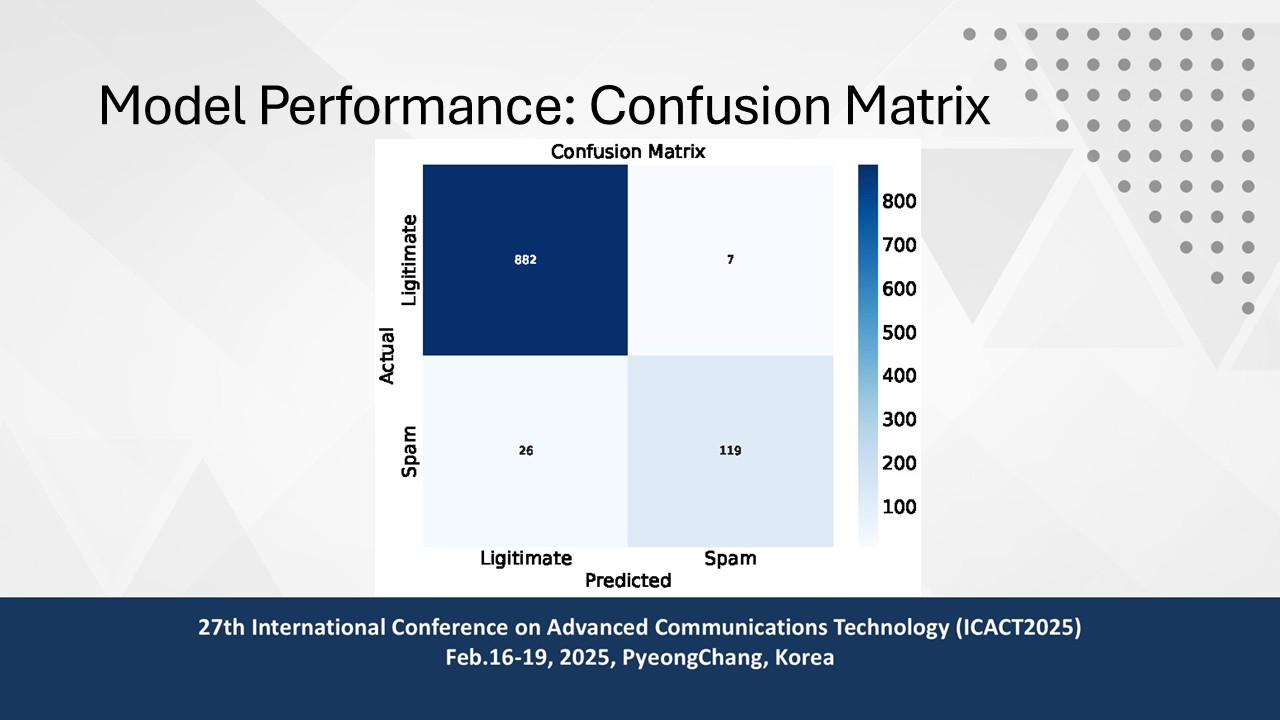 |
Figure presents the confusion matrix. The model appropriately found 119 spam messages and 882 valid (ham) messages in this matrix. Still, there were 26 false negatives—spam mails misclassified as legitimate—and 7 false positives—legitimate messages misclassified as spam. With appropriate performance for spam detection as well, the great number of accurate classifications—especially in the genuine class—indicate the model's robustness in spotting ham messages.
|
|
ICACT20250142 Slide.10
[Big slide for presentation]
|
Chrome Text-to-Speach Click!! |
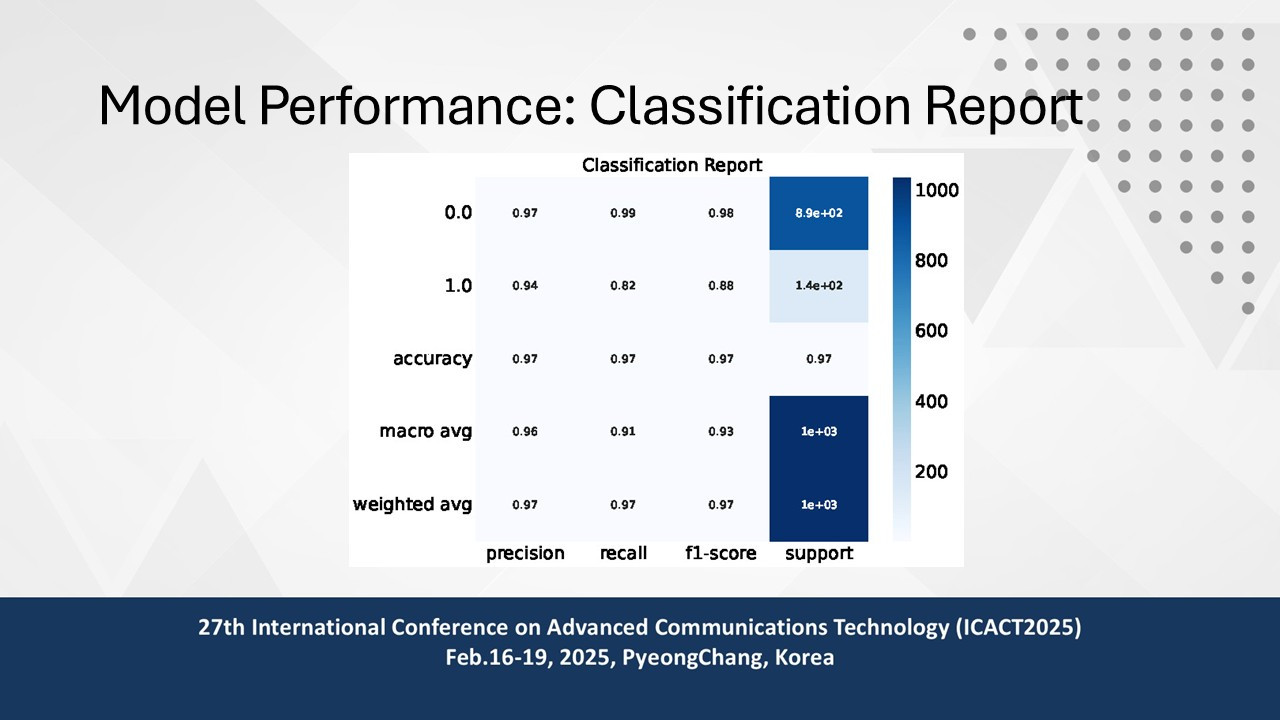 |
Classification Report For every class is presented in Figure, the classification report offers comprehensive measures including F1-score, recall, and precision. The model minimizes false positives in both classifications rather well: 97\% for authentic messages and 94\% for spam. At 82\%, the recall for spam messages was rather lower, suggesting some space for development in terms of all spam occurrence capture. With an F1-score of 0.98 for valid communications and 0.88 for spam, the model's overall accuracy—which shows a strong mix between precision and recall—was 97\%.
|
|
ICACT20250142 Slide.09
[Big slide for presentation]
|
Chrome Text-to-Speach Click!! |
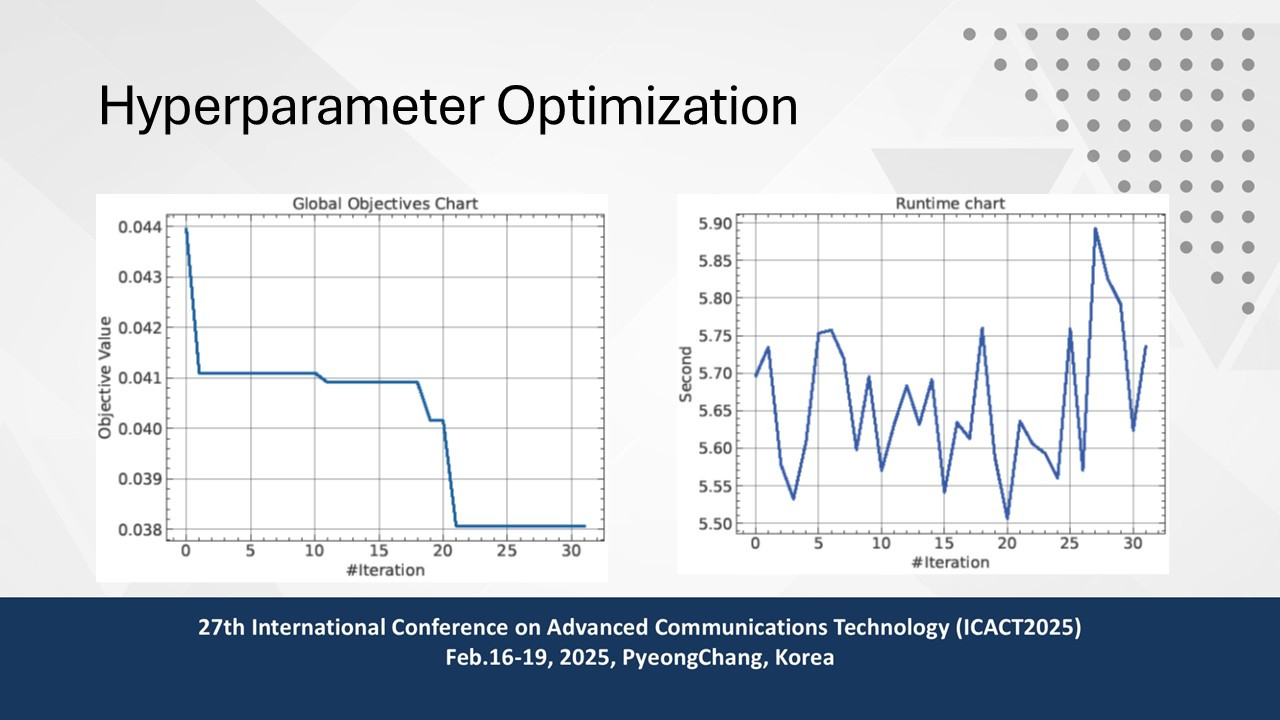 |
Global Objectives Chart Across iterations, this chart shows the objective function values. The declining trend shows AO's achievement in reducing the objective function, thereby obtaining ever better hyperparameter values. The stabilization at the end indicates that AO has most likely attained ideal or almost ideal conditions for the deep learning model.\end{itemize}
The runtime chart displaying in seconds the time taken for every iteration of AO. The differences in runtime show the computing load AO needs to investigate and use various hyperparameter settings. The runtime stays rather constant, with small variations as the method tries to optimally balance stages of exploration and exploitation.
|
|
ICACT20250142 Slide.08
[Big slide for presentation]
|
Chrome Text-to-Speach Click!! |
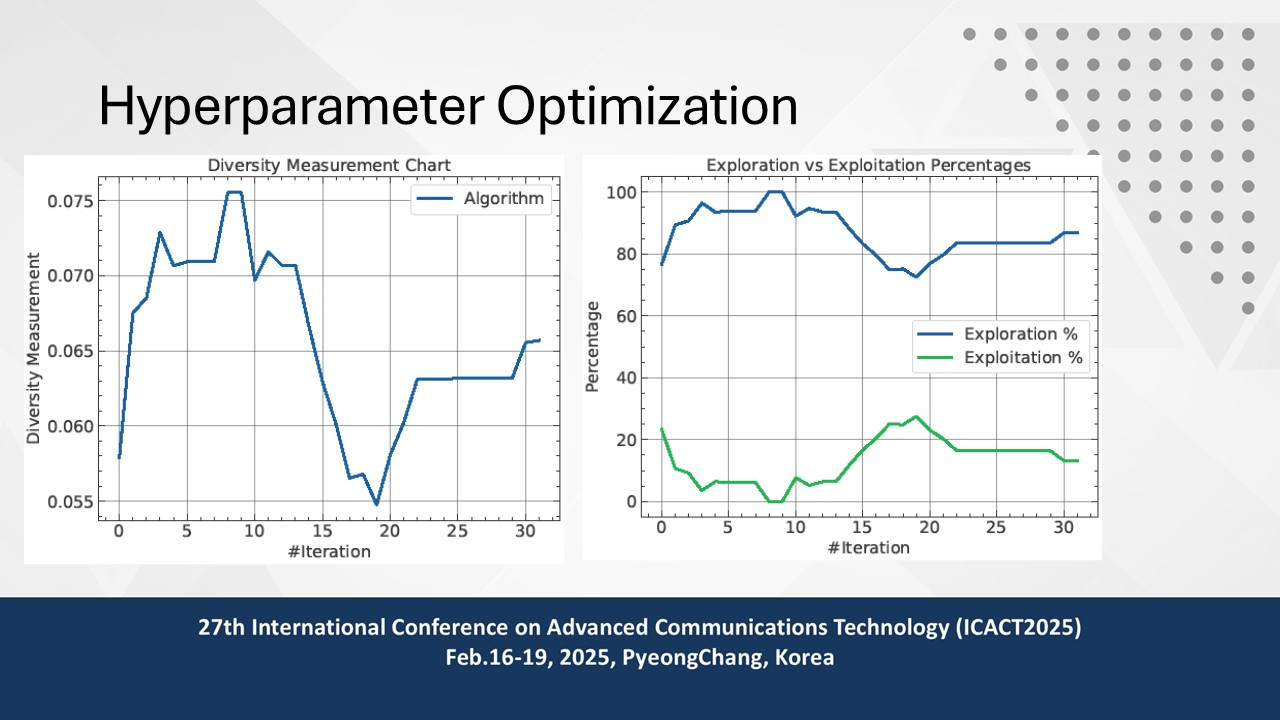 |
Diversity Measurement Chart Tracking the variety of solutions over iterations, the diversity measurement chart offers understanding of the search space exploration. The variety is first more reflective of the exploratory phase of the algorithm. Diversity reduces as AO advances, suggesting a concentration on exploitation; AO then narrows down on likely areas of the solution space to hone the ideal parameters.
\Percentage of Exploration vs. Exploitation chart shows how to strike the balance between exploitation and discovery. AO gives exploration top priority early in the optimization process in order to cover a large spectrum of feasible solutions. As the algorithm converges, the focus moves to exploitation, guaranteeing that the best solutions are polished further for highest accuracy in hyperparameter choice.
|
|
ICACT20250142 Slide.07
[Big slide for presentation]
|
Chrome Text-to-Speach Click!! |
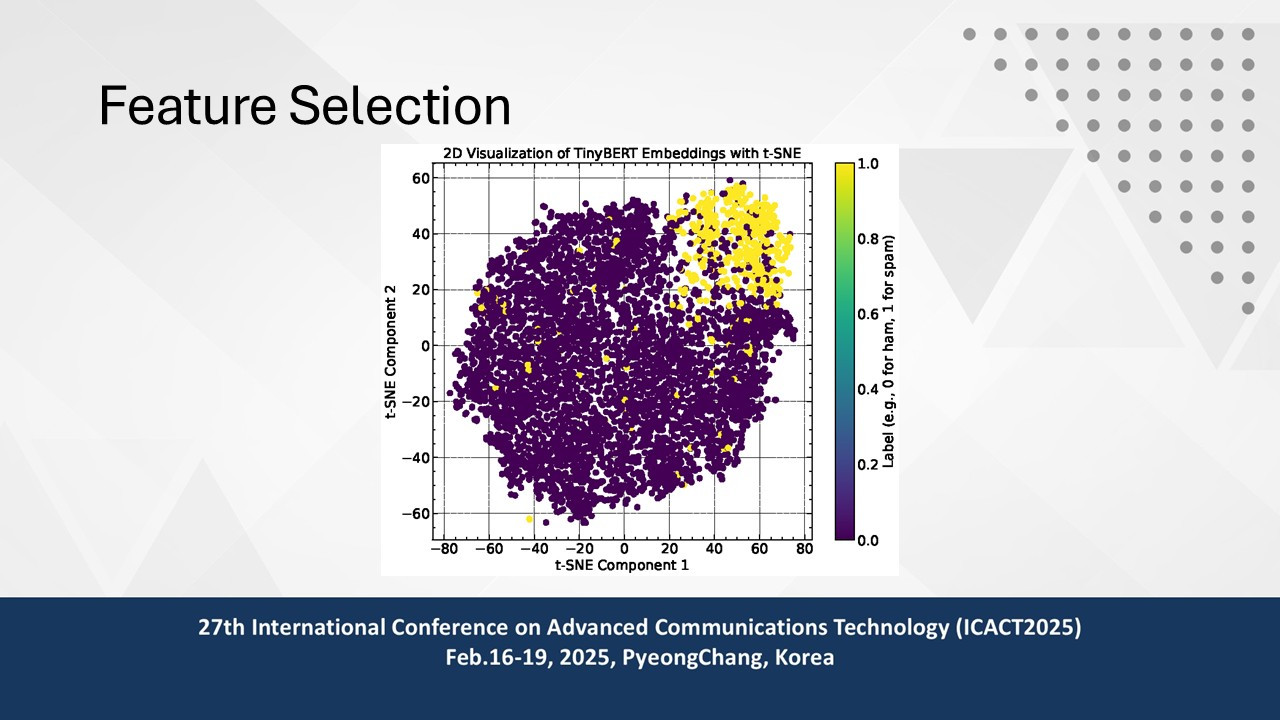 |
We produced embeddings from the SMS texts using TinyBERT in the feature extraction phase. Essential for differentiating between smishing (spam) and legal (ham) messages, TinyBERT, a lightweight and efficient variation of the BERT paradigm, detects contextual elements of the text. We project the high-dimensional TinyBERT embeddings into a 2D space using t-Distributed Stochastic Neighbour Embedding (t-SNE), a dimensionality reduction method, so visually evaluating the separability of these features.
Each point in the resulting t-SNE visualization denotes each SMS message, hence displaying clusters of data points. The colors signal the message labels; yellow denotes spam and purple denotes ham. The division of spam and ham clusters in some regions implies that the TinyBERT embeddings effectively capture important variations between the two classes, therefore offering a strong basis for our smishing detection system. This animation shows how well TinyBERT codes elements that might distinguish smishing efforts from official SMS material.
|
|
ICACT20250142 Slide.06
[Big slide for presentation]
|
Chrome Text-to-Speach Click!! |
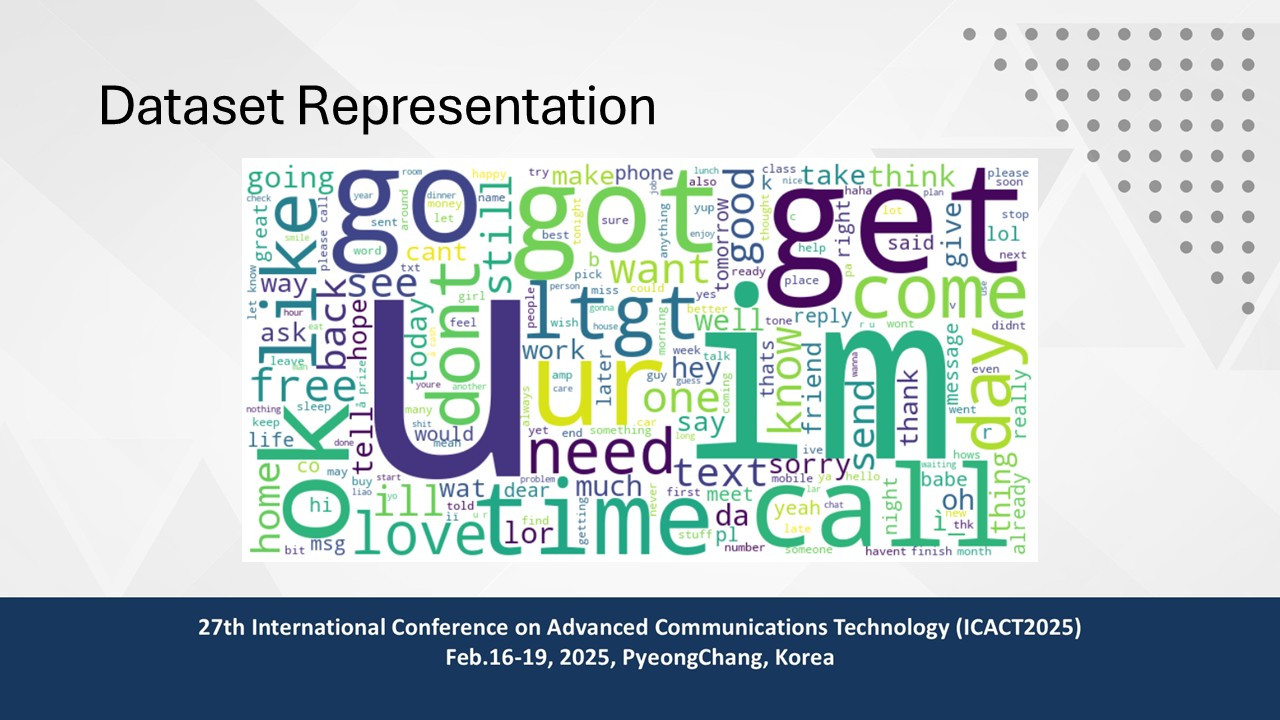 |
Widely utilized for SMS spam detection research, the SMS Spam Collection dataset used for this study came from Kaggle. There are 5,574 English SMS messages altogether, tagged as either "ham," (legal) or "spam." Two columns—"v1" for the label and "v2" for the SMS contents—represent every communication. The dataset combines messages coming from many sources: 425 spam messages extracted from the Grumbletext website, a UK-based forum where users report SMS spam; 3,450 legitimate messages from the NUS SMS Corpus, mostly contributed by students at the National University of Singapore; 450 legitimate messages sourced from Caroline Tag's PhD thesis; and 1,424 messages (1,002 legitimate and 322 spam) from the SMS Spam Corpus v.0.1 Big, previously used in academic research. Training and testing smishing detection algorithms can be based on this extensive collection of SMS data with dependability.
|
|
ICACT20250142 Slide.05
[Big slide for presentation]
|
Chrome Text-to-Speach Click!! |
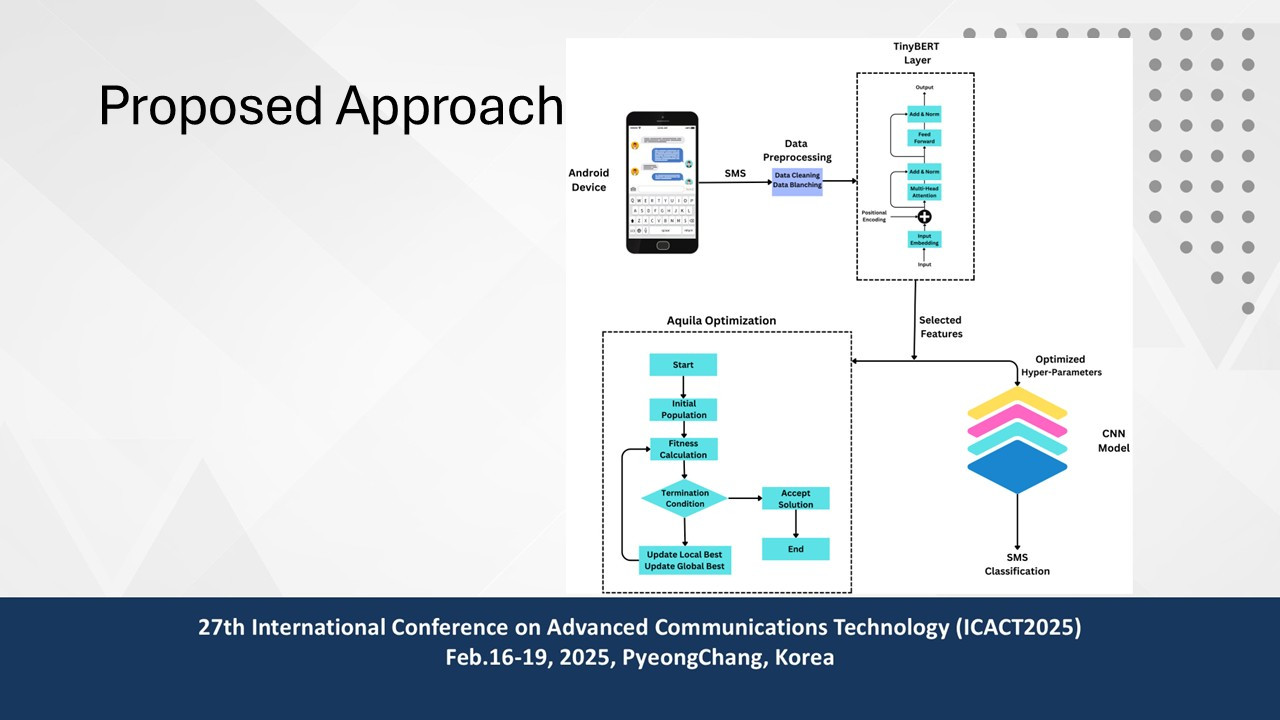 |
Our proposed smishing detection method (Figure) first gathered labeled valid and spam texts from a publicly available Kaggle SMS dataset. We cleaned, standardized the data by removing special characters, digits, and punctuation, translating text to lowercase, eliminating stopwords, and applying lemmatization in the step of data preprocessing. Using a lightweight transformer model, TinyBERT, we extracted contextual embeddings of SMS messages. T-SNE visualization of these embeddings confirmed good feature separation. By balancing exploration and exploitation in the hyperparameter search space, the Aquila Optimization (AO) method helped us to finally maximize the hyperparameters of our deep learning model, hence producing excellent smishing detection results.
|
|
ICACT20250142 Slide.04
[Big slide for presentation]
|
Chrome Text-to-Speach Click!! |
 |
Contribution
In this paper, we propose an AI-driven smishing detection approach using TinyBERT for feature extraction and Aquila Optimization (AO) to optimize a deep learning model.
With AO-tuned hyperparameters, the proposed model achieved an accuracy of 96.81%, outperforming standard models like GRU, LSTM, and SVM.
Our approach offers a robust, efficient solution for Android smishing detection.
|
|
ICACT20250142 Slide.03
[Big slide for presentation]
|
Chrome Text-to-Speach Click!! |
 |
Introduction
The proliferation of smartphones has significantly transformed communication and information access, leading to an increased vulnerability to various cybersecurity threats, particularly smishing (SMS phishing) attacks.
Smishing attacks exploit the convenience of SMS, a communication method that is widely used for personal, financial, and business purposes. Research indicates that these attacks have surged, with reports showing that a substantial percentage of organizations have encountered smishing attempts
|
|
ICACT20250142 Slide.02
[Big slide for presentation]
|
Chrome Text-to-Speach Click!! |
 |
Table of Contents
|
|
ICACT20250142 Slide.01
[Big slide for presentation]
[YouTube] |
Chrome Text-to-Speach Click!! |
 |
Title Slide
|
















