 ICACT20250196 Slide.18
[Big slide for presentation] |
Chrome Text-to-Speach Click!! |
 |
Thank you for your attention. I appreciate your time and interest in our research. I would be happy to take any questions you may have.
|
|
ICACT20250196 Slide.17
[Big slide for presentation]
|
Chrome Text-to-Speach Click!! |
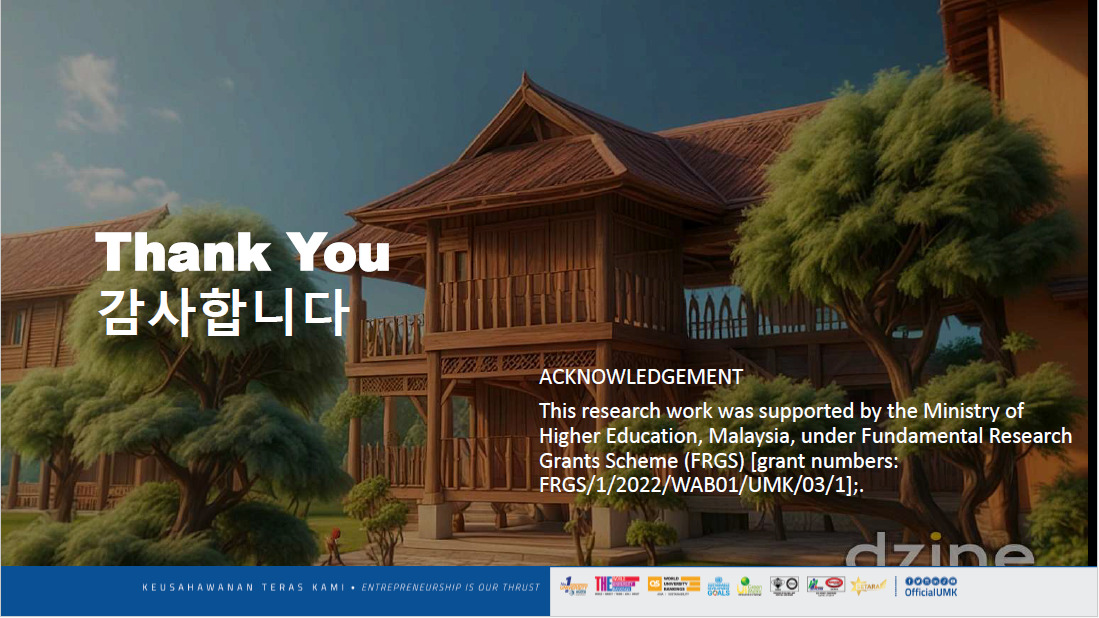 |
We would like to acknowledge the support provided by the Ministry of Higher Education, Malaysia, under the Fundamental Research Grants Scheme (FRGS) [grant number: FRGS/1/2022/WAB01/UMK/03/1]. We also extend our gratitude to our colleagues, participants, and institutions who contributed to this research.
|
|
ICACT20250196 Slide.16
[Big slide for presentation]
|
Chrome Text-to-Speach Click!! |
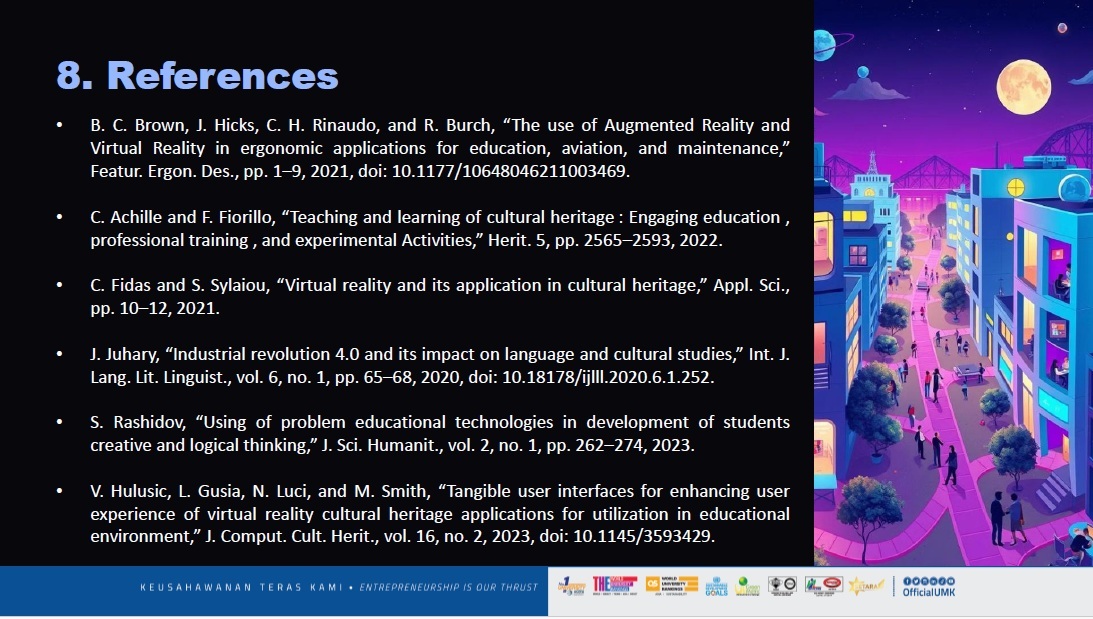 |
This slide contains a list of references that support the theoretical and methodological frameworks utilized in this study.
|
|
ICACT20250196 Slide.15
[Big slide for presentation]
|
Chrome Text-to-Speach Click!! |
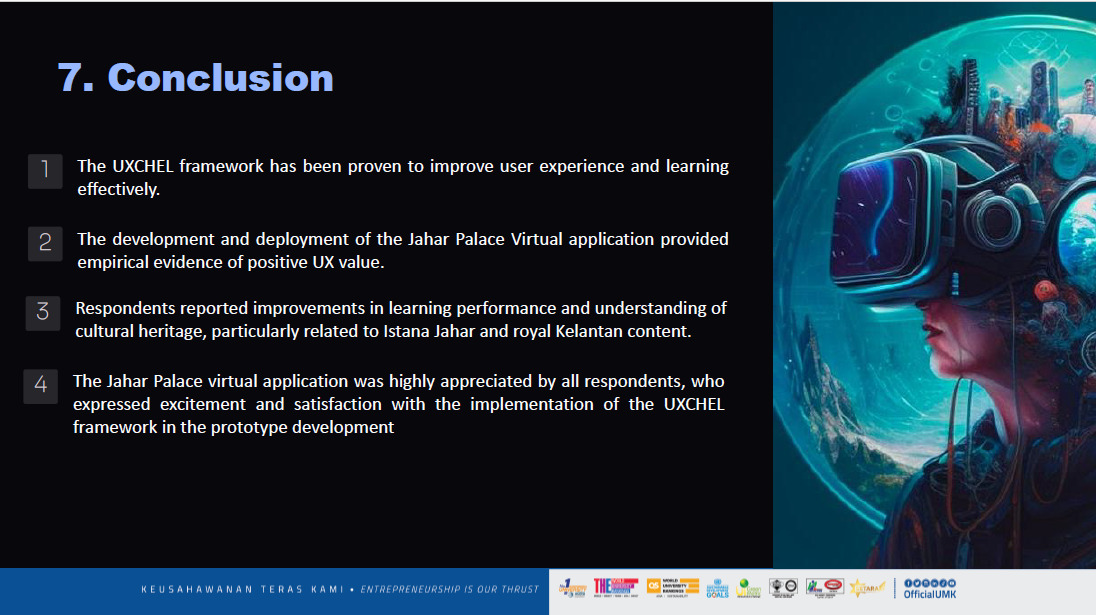 |
In conclusion, the UXCHEL framework has proven to be an effective model for improving user experience and engagement in VR-based cultural heritage learning. The development of the Jahar Palace Virtual Application provides empirical evidence that integrating UX factors with learning theories enhances digital cultural heritage education. Participants reported higher learning performance and deeper engagement with cultural heritage content. This study underscores the importance of UX evaluation in VR applications and highlights the potential for future research in this area.
|
|
ICACT20250196 Slide.14
[Big slide for presentation]
|
Chrome Text-to-Speach Click!! |
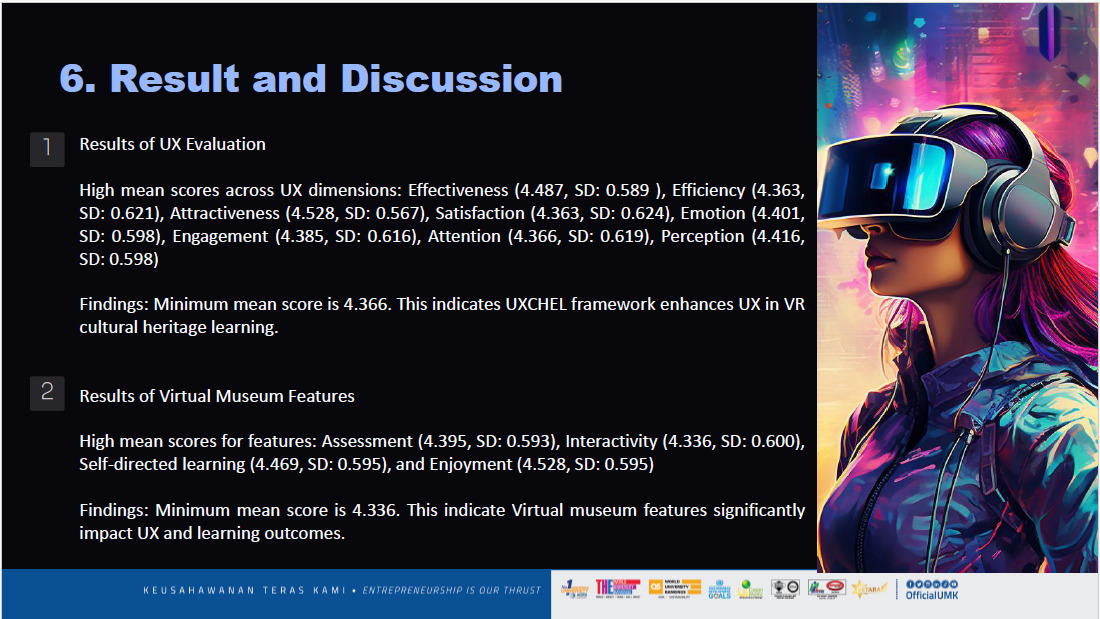 |
Our findings indicate high mean scores across multiple UX dimensions. Effectiveness received a mean score of 4.487, efficiency scored 4.363, attractiveness was rated 4.528, and satisfaction scored 4.363. Other key dimensions, including emotion, engagement, attention, and perception, also received high ratings. These results confirm that our proposed UXCHEL framework significantly enhances user experience in VR cultural heritage learning. Additionally, features such as assessment, interactivity, self-directed learning, and enjoyment play crucial roles in improving UX and learning outcomes.
|
|
ICACT20250196 Slide.13
[Big slide for presentation]
|
Chrome Text-to-Speach Click!! |
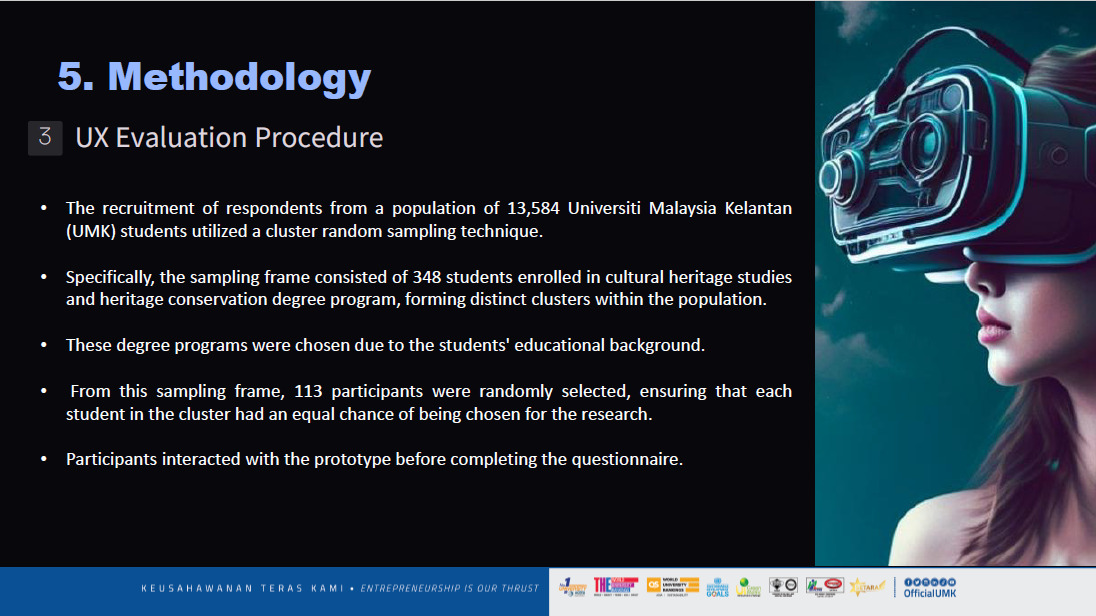 |
Participants were recruited from Universiti Malaysia Kelantan (UMK) using cluster random sampling. A total of 113 students engaged with the VR prototype before completing a UX questionnaire.
|
|
ICACT20250196 Slide.12
[Big slide for presentation]
|
Chrome Text-to-Speach Click!! |
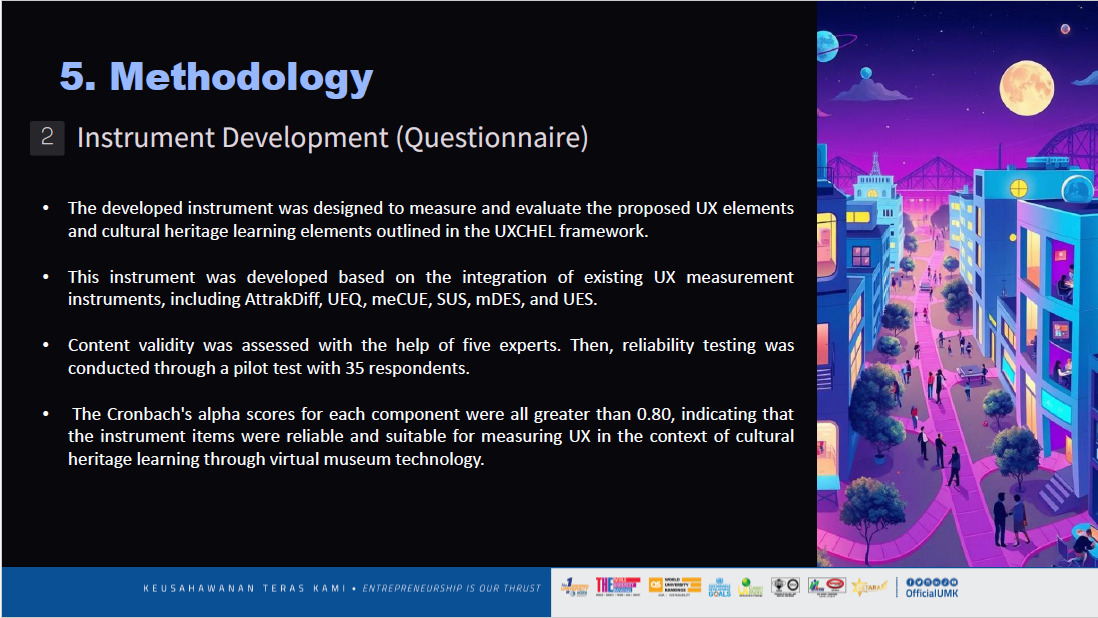 |
This questionnaire, adapted from validated UX instruments, was used to measure engagement, effectiveness, and overall user satisfaction. Reliability testing confirmed its validity, with Cronbach’s alpha exceeding 0.80.A total of 35 students have were participating in this pilot test.
|
|
ICACT20250196 Slide.11
[Big slide for presentation]
|
Chrome Text-to-Speach Click!! |
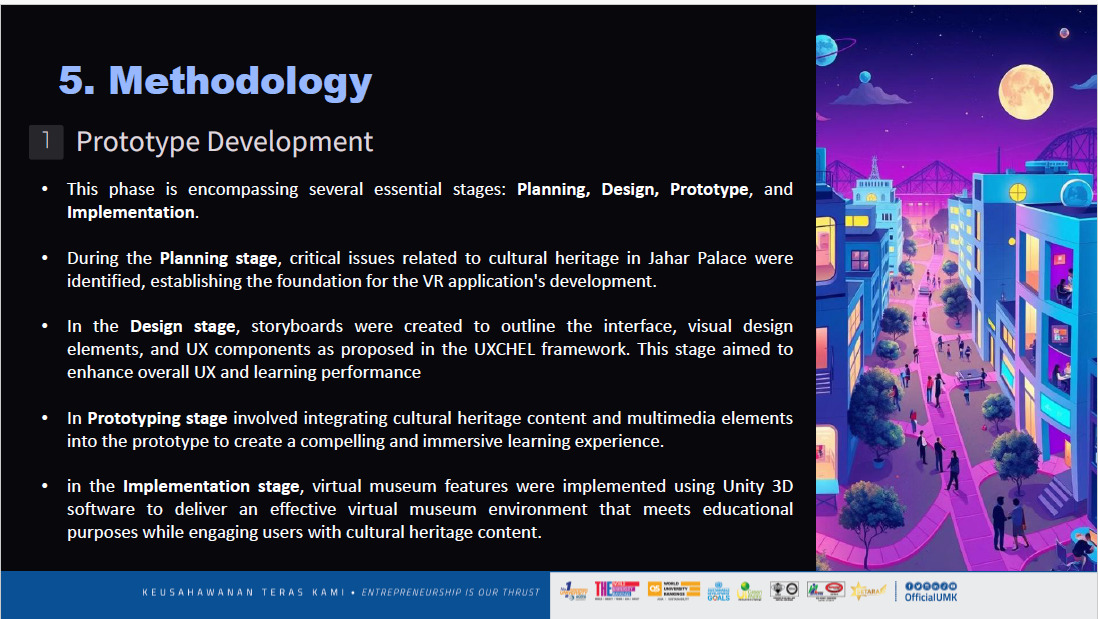 |
This study is conducted in four phases: Planning, Design, Prototyping, and Implementation. The planning phase identifies key challenges in cultural heritage learning. The design phase develops UX parameters and storyboards. The prototyping phase integrates cultural heritage content into an interactive VR museum created using Unity 3D. Finally, the implementation phase evaluates the prototype’s effectiveness through expert reviews and a pilot study with 35 respondents.
|
|
ICACT20250196 Slide.10
[Big slide for presentation]
|
Chrome Text-to-Speach Click!! |
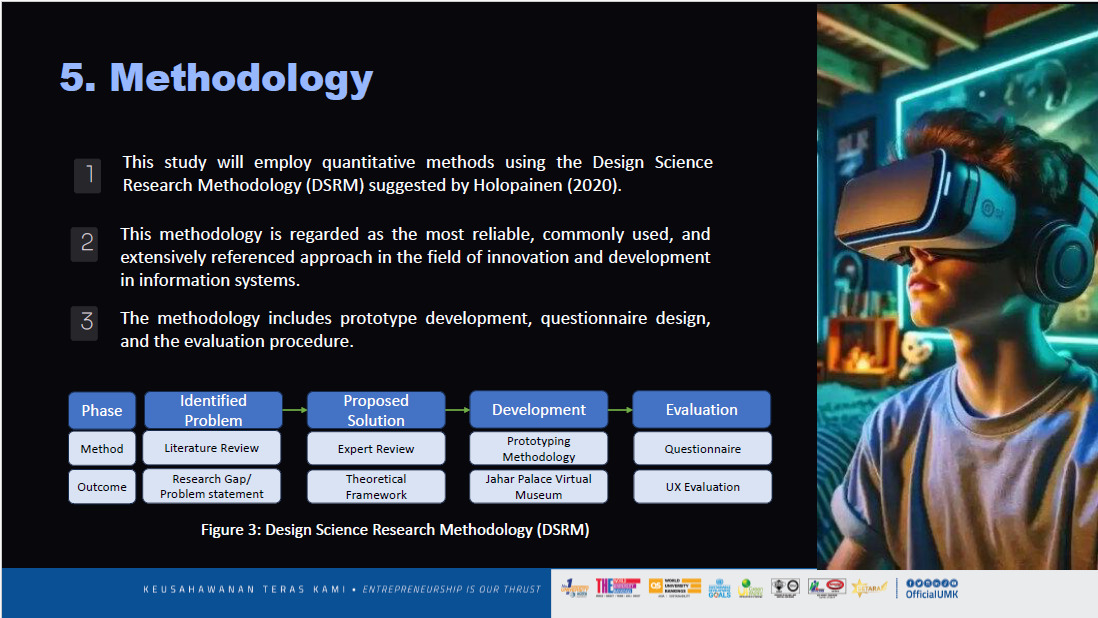 |
Our research follows the Design Science Research Methodology (DSRM), a widely recognized approach in information systems research.
|
|
ICACT20250196 Slide.09
[Big slide for presentation]
|
Chrome Text-to-Speach Click!! |
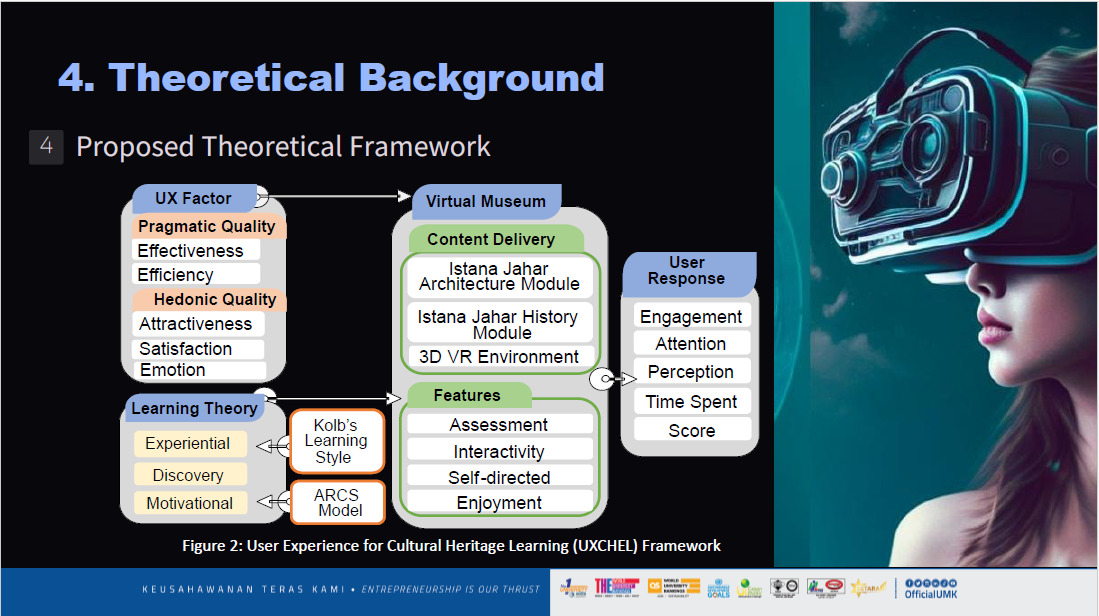 |
so, this is the proposed framework that could increase the user experience that tailored based on cultural heritage settings
|
|
ICACT20250196 Slide.08
[Big slide for presentation]
|
Chrome Text-to-Speach Click!! |
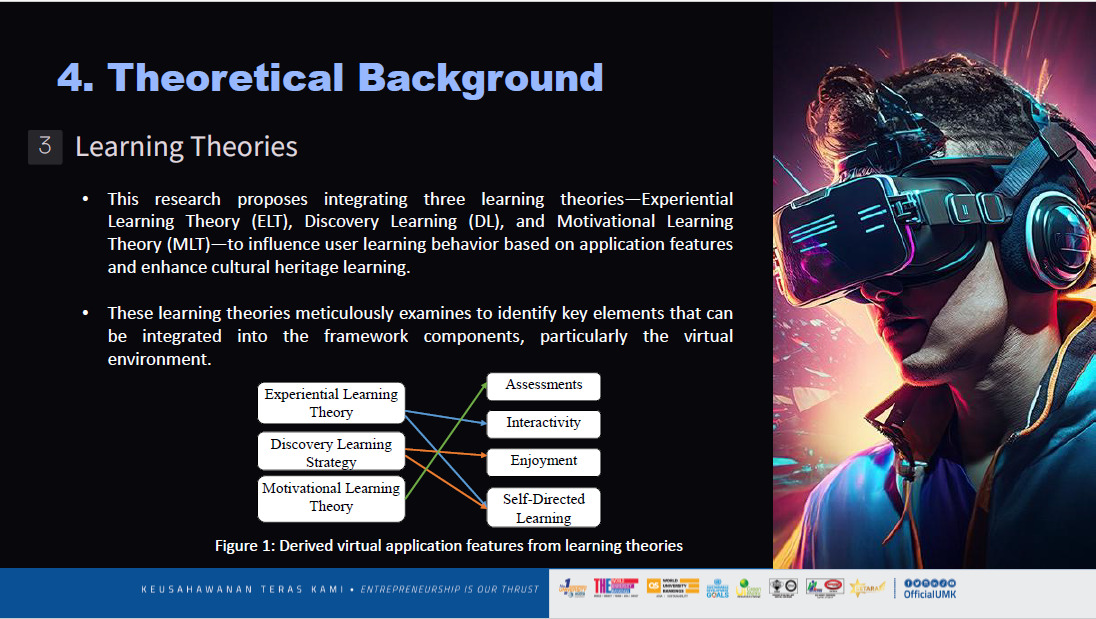 |
To address this, we propose integrating three learning theories: Experiential Learning Theory (ELT), Discovery Learning (DL), and Motivational Learning Theory (MLT). These theories enhance user engagement and learning outcomes in virtual museums.
|
|
ICACT20250196 Slide.07
[Big slide for presentation]
|
Chrome Text-to-Speach Click!! |
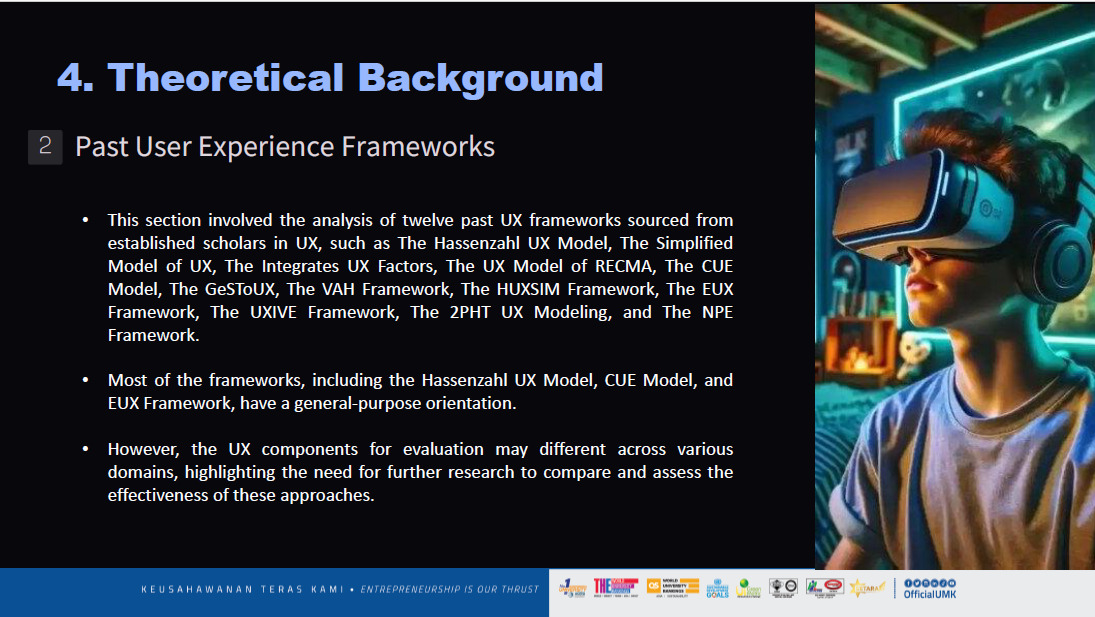 |
Our research analyzes twelve UX frameworks and finds that none explicitly integrate learning theories into UX assessment.
|
|
ICACT20250196 Slide.06
[Big slide for presentation]
|
Chrome Text-to-Speach Click!! |
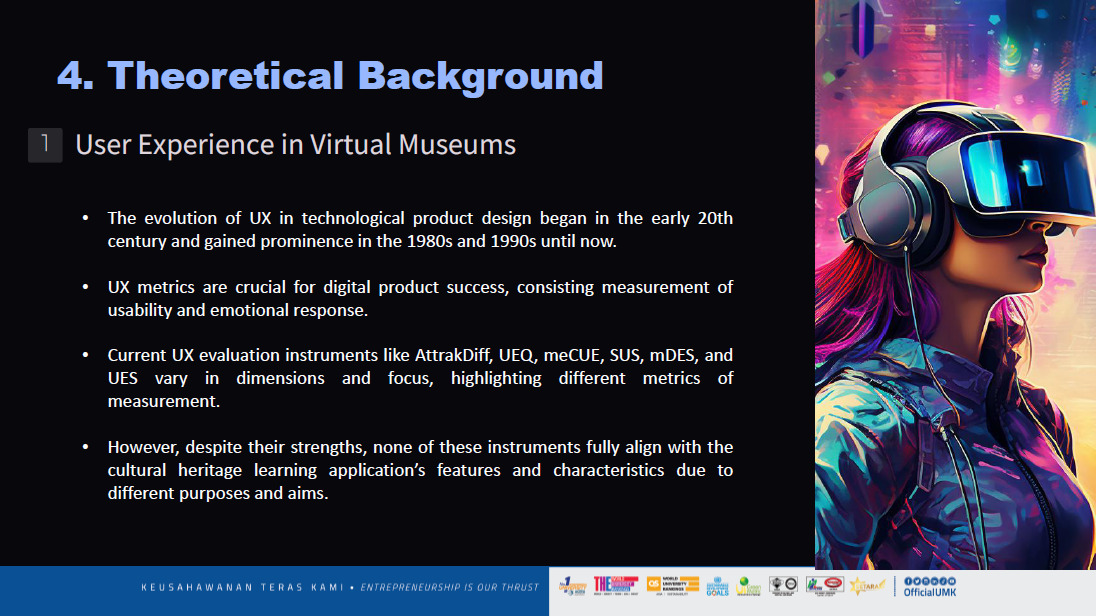 |
User Experience (UX) has evolved significantly in technology and product design. Various UX evaluation instruments, such as AttrakDiff, UEQ, SUS, mDES, and UES, exist, but none are fully customized for cultural heritage learning applications.
|
|
ICACT20250196 Slide.05
[Big slide for presentation]
|
Chrome Text-to-Speach Click!! |
 |
The objectives of this research are as follows: First, to explore the various dimensions of user experience in VR cultural heritage applications. Second, to develop a VR application for Jahar Palace using proposed UX parameters. Third, to evaluate the effectiveness of this application in enhancing user experience and engagement in cultural heritage learning.
|
|
ICACT20250196 Slide.04
[Big slide for presentation]
|
Chrome Text-to-Speach Click!! |
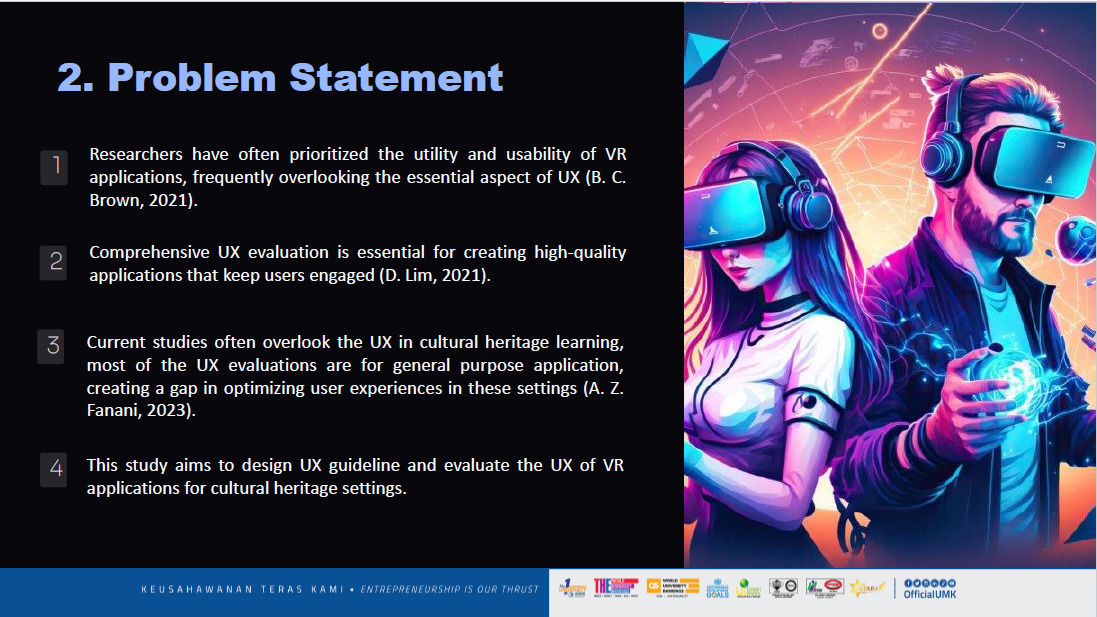 |
While many VR applications focus on usability and functionality, they often overlook User Experience (UX). A comprehensive UX evaluation is necessary to develop high-quality applications that keep users engaged. However, existing research on UX in cultural heritage learning remains limited. Most UX evaluations are general-purpose, leaving a gap in optimizing user experiences specifically for cultural heritage learning. This study aims to design UX guidelines and evaluate VR applications in cultural heritage contexts to bridge this gap.
|
|
ICACT20250196 Slide.03
[Big slide for presentation]
|
Chrome Text-to-Speach Click!! |
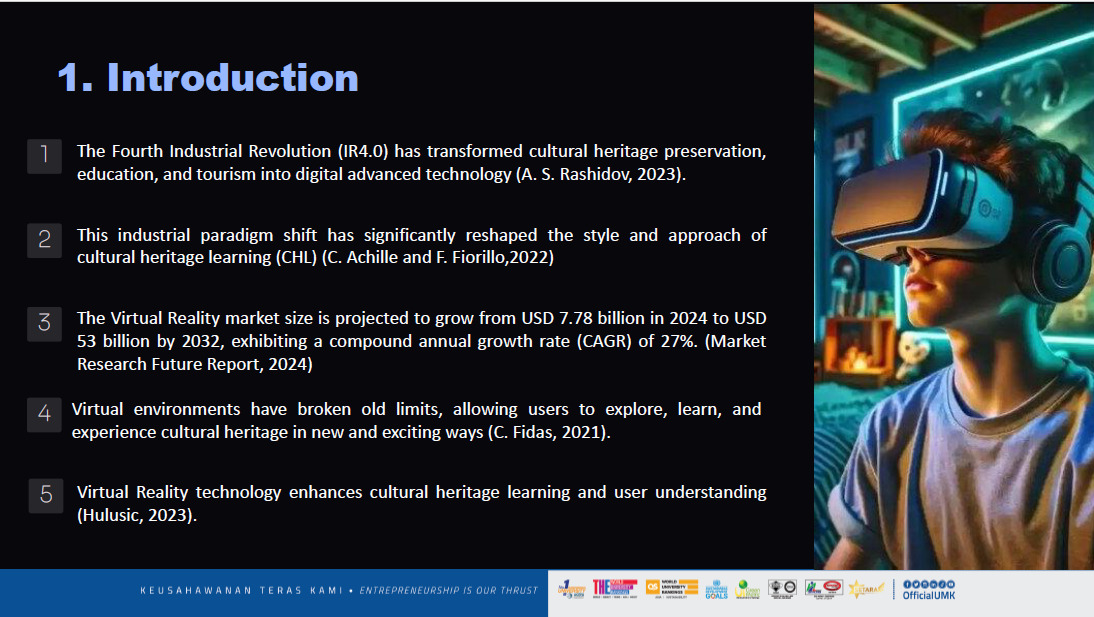 |
The Fourth Industrial Revolution (IR4.0) has significantly transformed cultural heritage preservation, education, and tourism through advanced digital technologies. This shift has led to new ways of learning and engaging with cultural heritage. Virtual Reality (VR) has emerged as a powerful tool that allows users to explore, interact with, and experience cultural heritage in immersive ways. Research shows that VR enhances learning and engagement, making it an ideal medium for cultural heritage education. Given the rapid growth of the VR market, it is crucial to understand its impact on cultural heritage learning and user experience.
|
|
ICACT20250196 Slide.02
[Big slide for presentation]
|
Chrome Text-to-Speach Click!! |
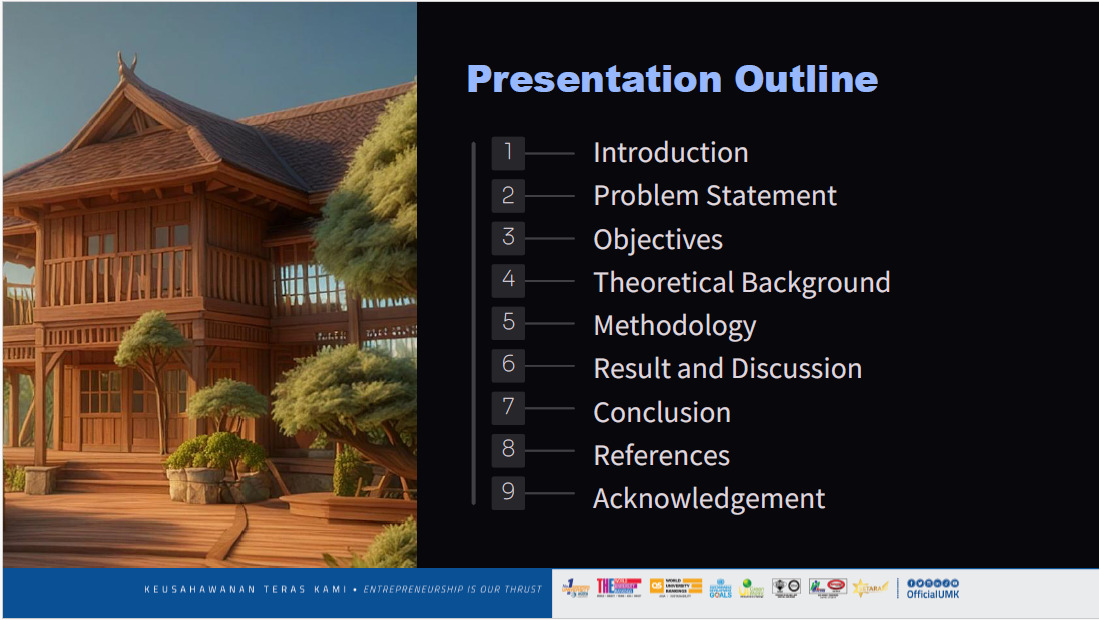 |
Our presentation today will cover several key sections. We will begin with an introduction, followed by a discussion on the problem statement that led to this study. We will then outline our research objectives before diving into the theoretical background that informs our approach. Next, we will describe our research methodology, followed by a discussion of our results. Finally, we will conclude with our findings, references, and acknowledgements. Let’s begin with the introduction.
|
|
ICACT20250196 Slide.01
[Big slide for presentation]
|
Chrome Text-to-Speach Click!! |
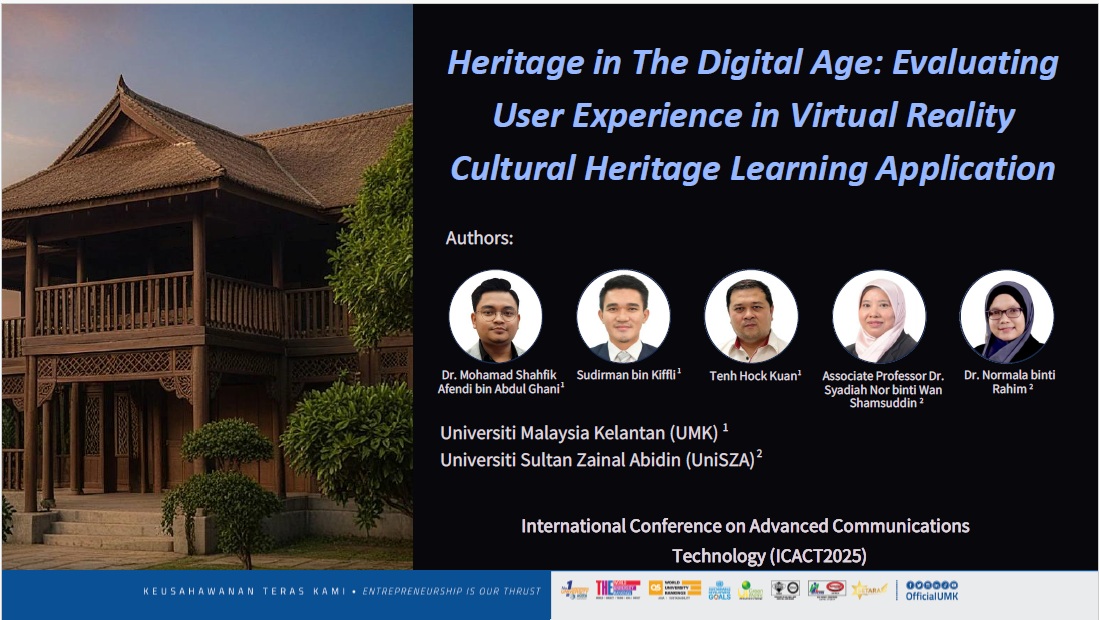 |
hi everyone. It is a pleasure to be here at ICACT 2025. Today, I will be presenting our research titled 'Heritage in the Digital Age: Evaluating User Experience in Virtual Reality Cultural Heritage Learning Applications.' This study is a collaboration between Universiti Malaysia Kelantan (UMK) and Universiti Sultan Zainal Abidin (UniSZA). My name is Dr. Mohamad Shahfik Afendi, and I am honored to present this research on behalf of my co-authors.
|
















