 ICACT20210171 Slide.01
[Big Slide]
[YouTube] |
Chrome  Click!! |
 |
Hi everybody, my name is Heng WU. For ICACT 2021, I have cooperated with five partners from Sichuan Chuanjiao Road and Bridge Co., Ltd Mr.Hou Xiaojun, and Chang'an University, Peng ting, Zhou taoyan, Yang kesheng. Our presentation today is about that IoT based Construction Site Monitoring System for Highway Engineering. |
| ICACT20210171 Slide.02
[Big Slide]
[YouTube] |
Chrome Click!! |
 |
Internet of things today is a famous research topic. Internet of things is made up of interconnected electronic equipment, the electronic equipment information could be sent through the Internet or other communication protocols as well as control instruction, as a result of the highway infrastructure in the process of the real-time monitoring, it will produce large amounts of data, so the information into the human-computer interaction and artificial intelligence is used to analyse the data processing. IoT can provide the processed data by analysing the traffic condition and predict user-required information by adopting a deep search in the present colossal data volume.IoT technologies are increasingly being deployed to support the operation and maintenance of complex highway infrastructure assets. IoT provides an effective way of interactions among the web devices with the traffic embedded sensors, services, actuators, and other interconnected networks.
Embedded Linux is an operating system that simplifing and modifing the Linux operating system so that it can run on an embedded computer system. Embedded Linux system not only has the characteristics of infinite open source code, but also integrates the characteristics of embedded operating system, which makes its performance excellent and portability good. It is very efficient in collecting, analysing and processing data, and can guarantee the real-time performance of information.
|
| ICACT20210171 Slide.03
[Big Slide]
[YouTube] |
Chrome Click!! |
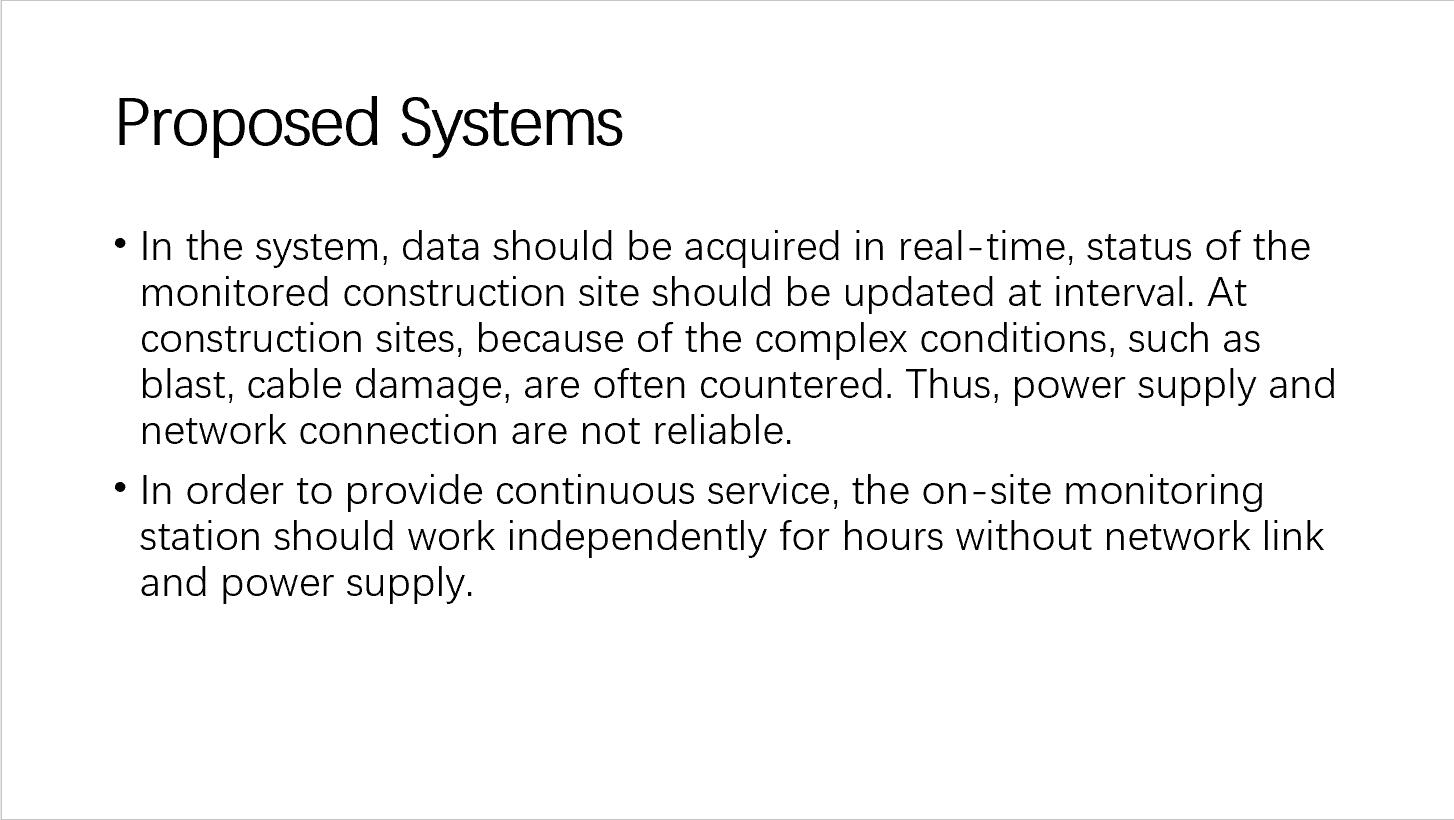 |
In the system, data should be acquired in real-time, status of the monitored construction site should be updated at interval. At construction sites, because of the complex conditions, such as blast, cable damage, are often countered. Thus, power supply and network connection are not reliable.
In order to provide continuous service, the on-site monitoring station should work independently for hours without network link and power supply. |
| ICACT20210171 Slide.04
[Big Slide]
[YouTube] |
Chrome Click!! |
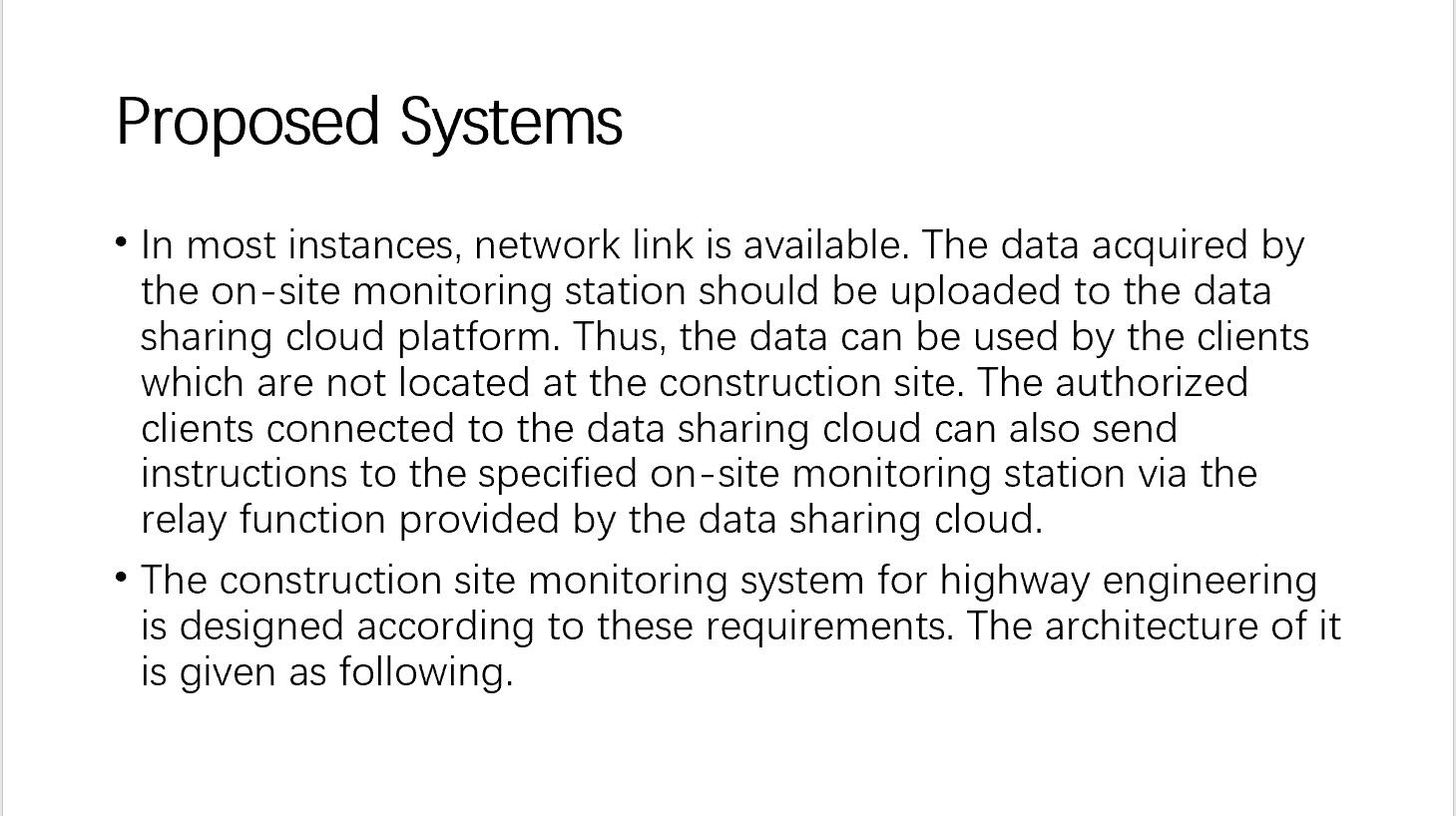 |
In most instances, network link is available. The data acquired by the on-site monitoring station should be uploaded to the data sharing cloud platform. Thus, the data can be used by the clients which are not located at the construction site. The authorized clients connected to the data sharing cloud can also send instructions to the specified on-site monitoring station via the relay function provided by the data sharing cloud.
The construction site monitoring system for highway engineering is designed according to these requirements. The architecture of it is given as following.
|
| ICACT20210171 Slide.05
[Big Slide]
[YouTube] |
Chrome Click!! |
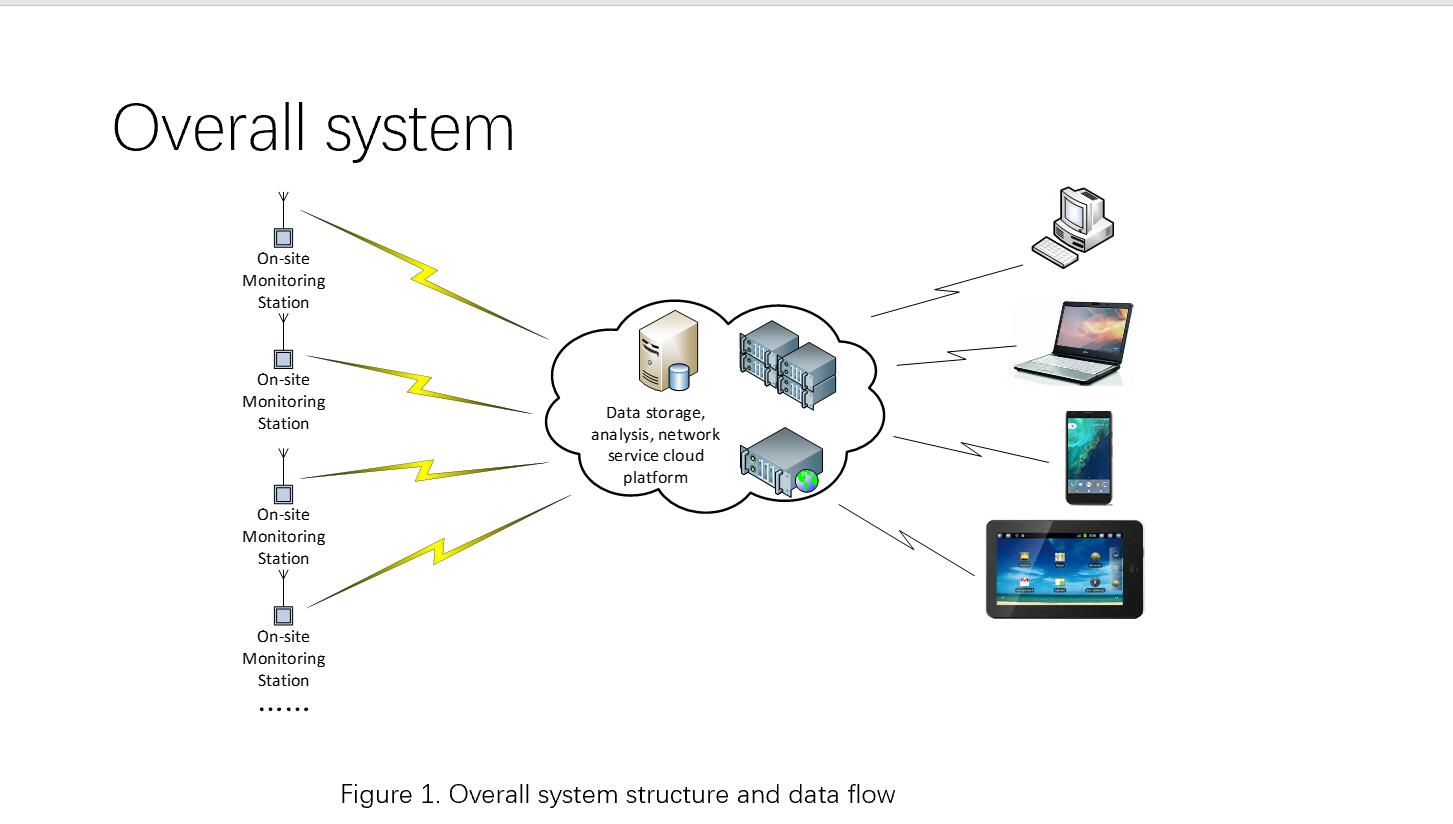 |
The proposed system comprises on-site monitoring station, cloud platform and clients. Each monitoring station is located at a specified construction site. Multiple on-site monitoring stations can be connected to the same cloud platform. Data storage, analysis and network service are implemented at the cloud platform. The structure of the overall system is show in Figure. PC clients and mobile clients connect to the cloud platform. Original acquired data and analyzed results can be accessed in this way. Data storage service is located at the cloud, historical monitoring data are stored in the cloud.
Data analyzing service is also available at the cloud platform, thus, engineering condition varying trend can be figured out. These results are available to the authorized clients. |
| ICACT20210171 Slide.06
[Big Slide]
[YouTube] |
Chrome Click!! |
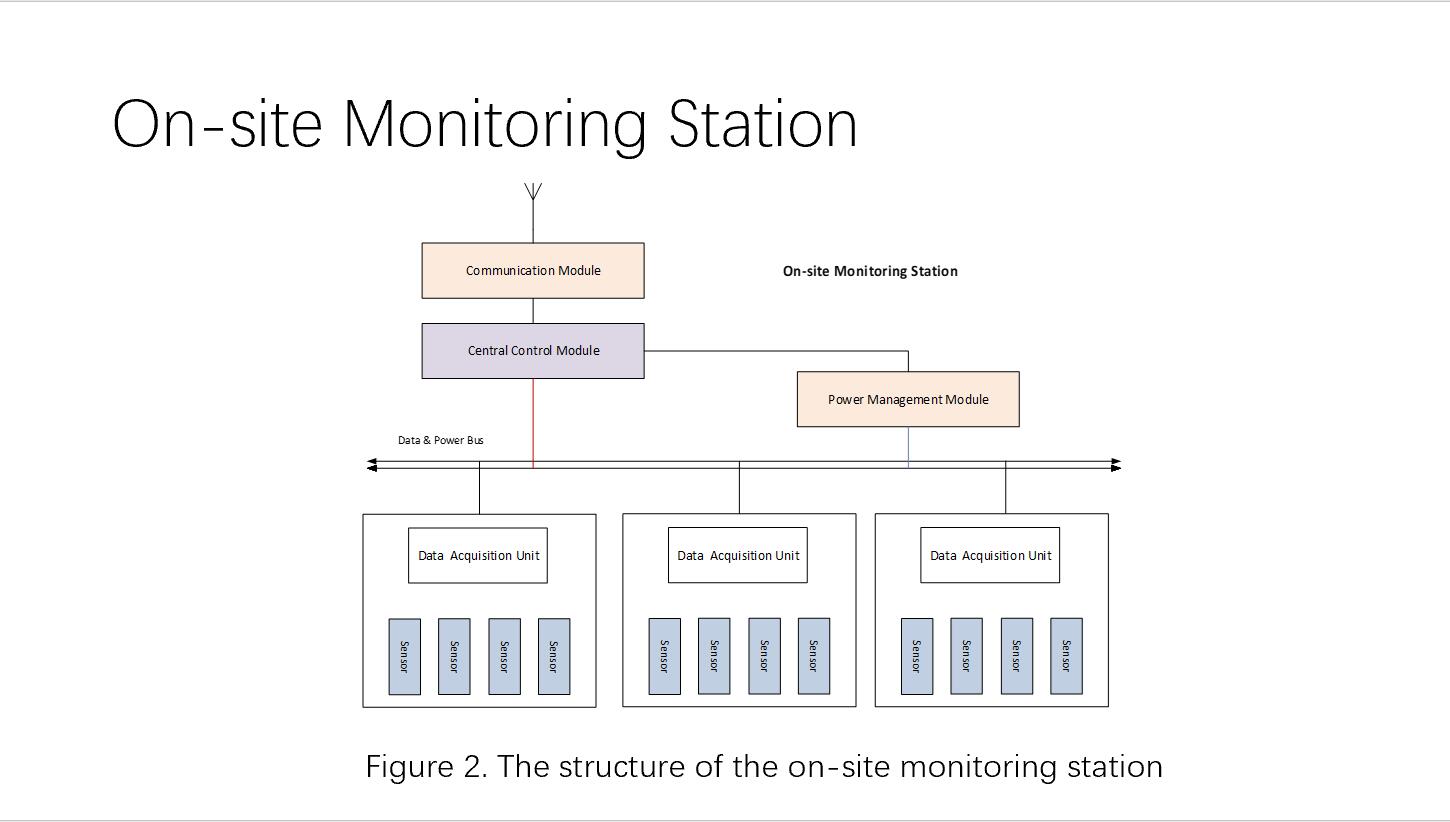 |
At the on-site monitoring station, data acquisition, power management and communication module are integrated. Their work is conducted by the central control module. The structure of the on-site monitoring station is shown in Figure 2.
Sensors at the construction site are connected to a corresponding data acquisition unit. Data acquisition commands are sent to the sensors by the data acquisition unit, the latest values are returned to the data acquisition unit from the sensors.
All the data acquisition units are connected to the data and power bus. They receive commands from the bus and send acquired data back to the bus.
The central control module is connected to the data and bus also. It sends data acquisition commands to the data acquisition units and receives the acquired data via the bus. The power management module which control the power supply of the power bus is also connected to the central control module. Its work is conducted by the central control module. Thus, data acquisition and power supply of the on-site monitoring system are both controlled by the central control module. |
| ICACT20210171 Slide.07
[Big Slide]
[YouTube] |
Chrome Click!! |
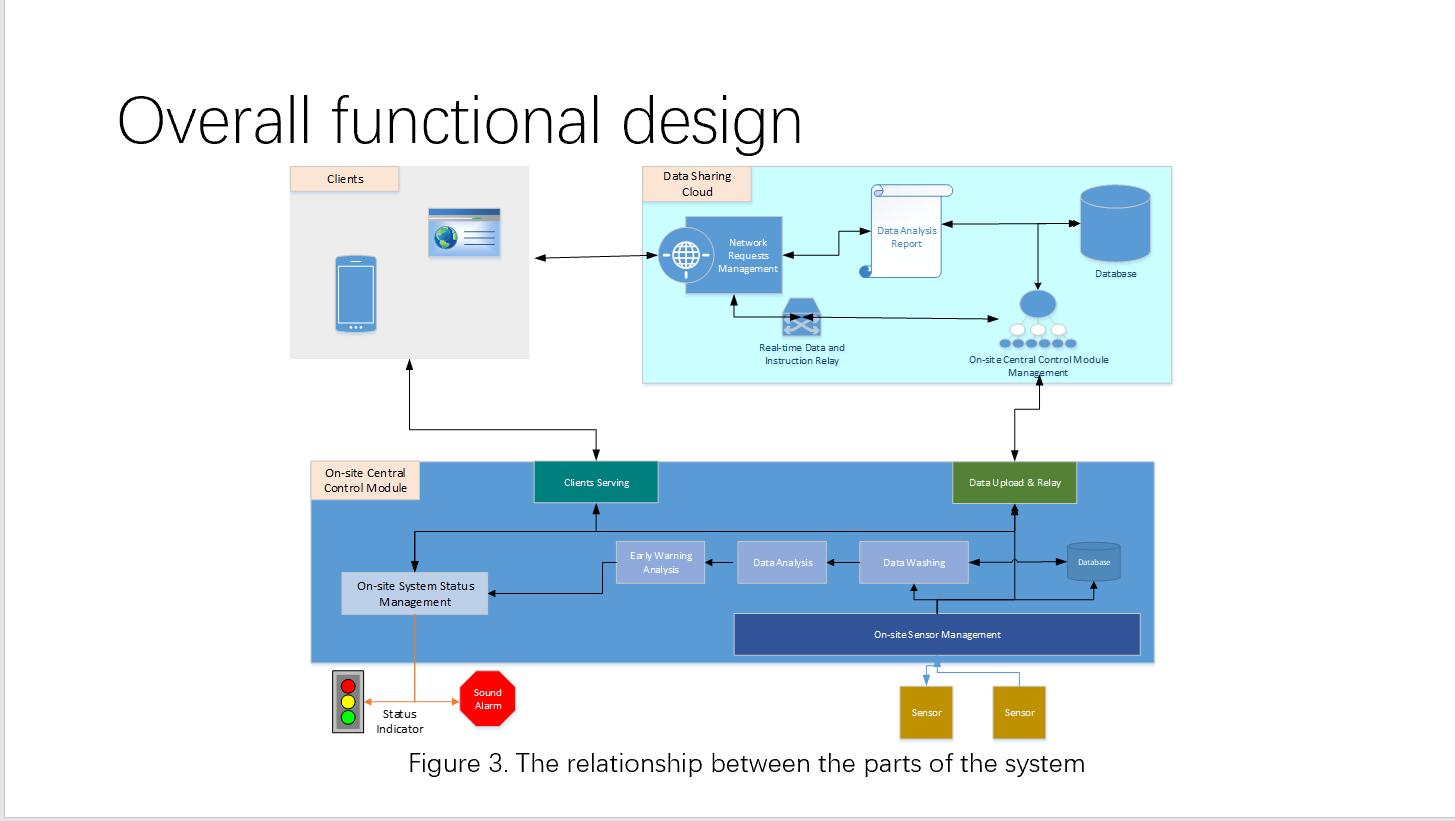 |
According to the requirements, the system is implemented according to Figure 3. In this approach, both data sharing cloud and on-site central control module provide client service.
When network is not available, clients can connect directly to the on-site central control module and access the latest acquired data. With the support of the computing power of the on-site central control module, data washing, analysis and early warning algorithms are implemented. The status of the construction site is maintained by the on-site system status management process according to the algorithms in real-time. The latest result status is shown via the status indicator, which use lamps with different color to indicate different status of the system. If the status is danger, both sound alarm and status indicator are used to inform the managers at the construction site. Database is also used to store the acquired data and the status of the on-site monitoring station.
|
| ICACT20210171 Slide.08
[Big Slide]
[YouTube] |
Chrome Click!! |
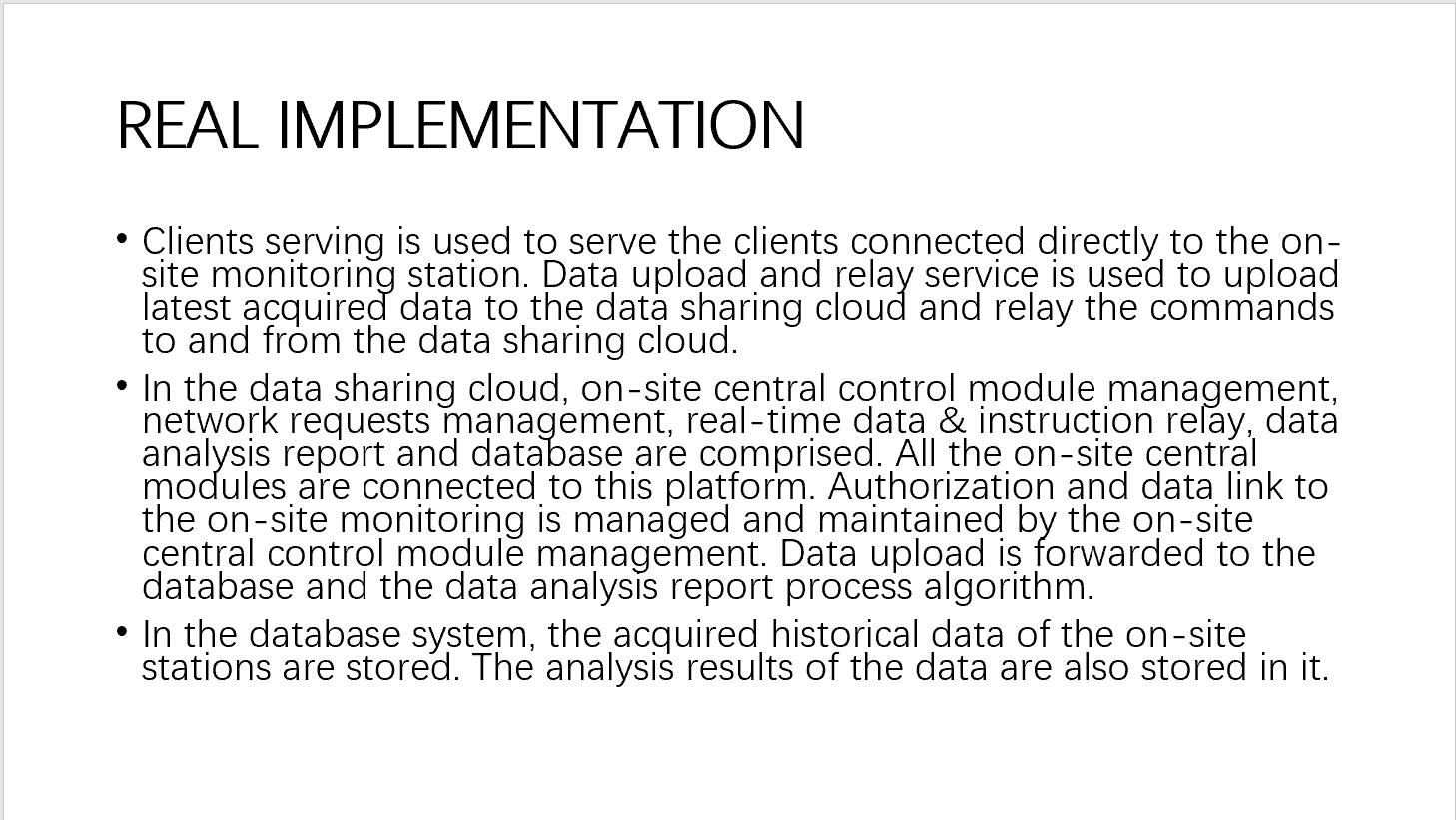 |
Clients serving is used to serve the clients connected directly to the on-site monitoring station. Data upload and relay service is used to upload latest acquired data to the data sharing cloud and relay the commands to and from the data sharing cloud.
In the data sharing cloud, on-site central control module management, network requests management, real-time data & instruction relay, data analysis report and database are comprised. All the on-site central modules are connected to this platform. Authorization and data link to the on-site monitoring is managed and maintained by the on-site central control module management. Data upload is forwarded to the database and the data analysis report process algorithm.
In the database system, the acquired historical data of the on-site stations are stored. The analysis results of the data are also stored in it.
|
| ICACT20210171 Slide.09
[Big Slide]
[YouTube] |
Chrome Click!! |
 |
Real-time data and instruction relay function is also implemented in the data sharing cloud. Then, if the clients send instructions to an on-site central control module, it is relayed to the specified central control muddle instantly. The data from any on-site control module can be relayed to the clients in real-time.
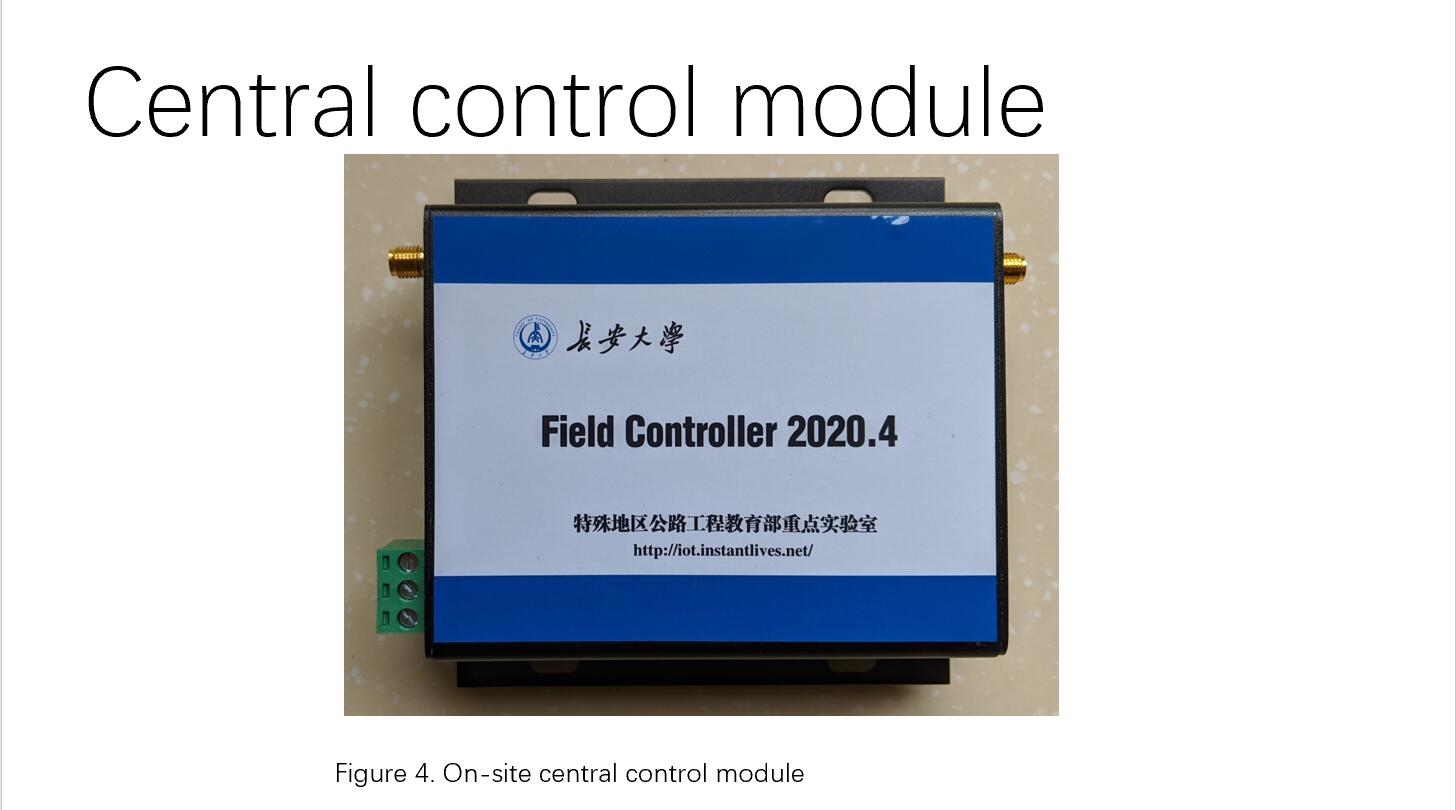
In the on-site monitoring station, the central control module serves as the heart. It is show in Figure 4, with the model name is Field Controller 2020.4. |
| ICACT20210171 Slide.10
[Big Slide]
[YouTube] |
Chrome Click!! |
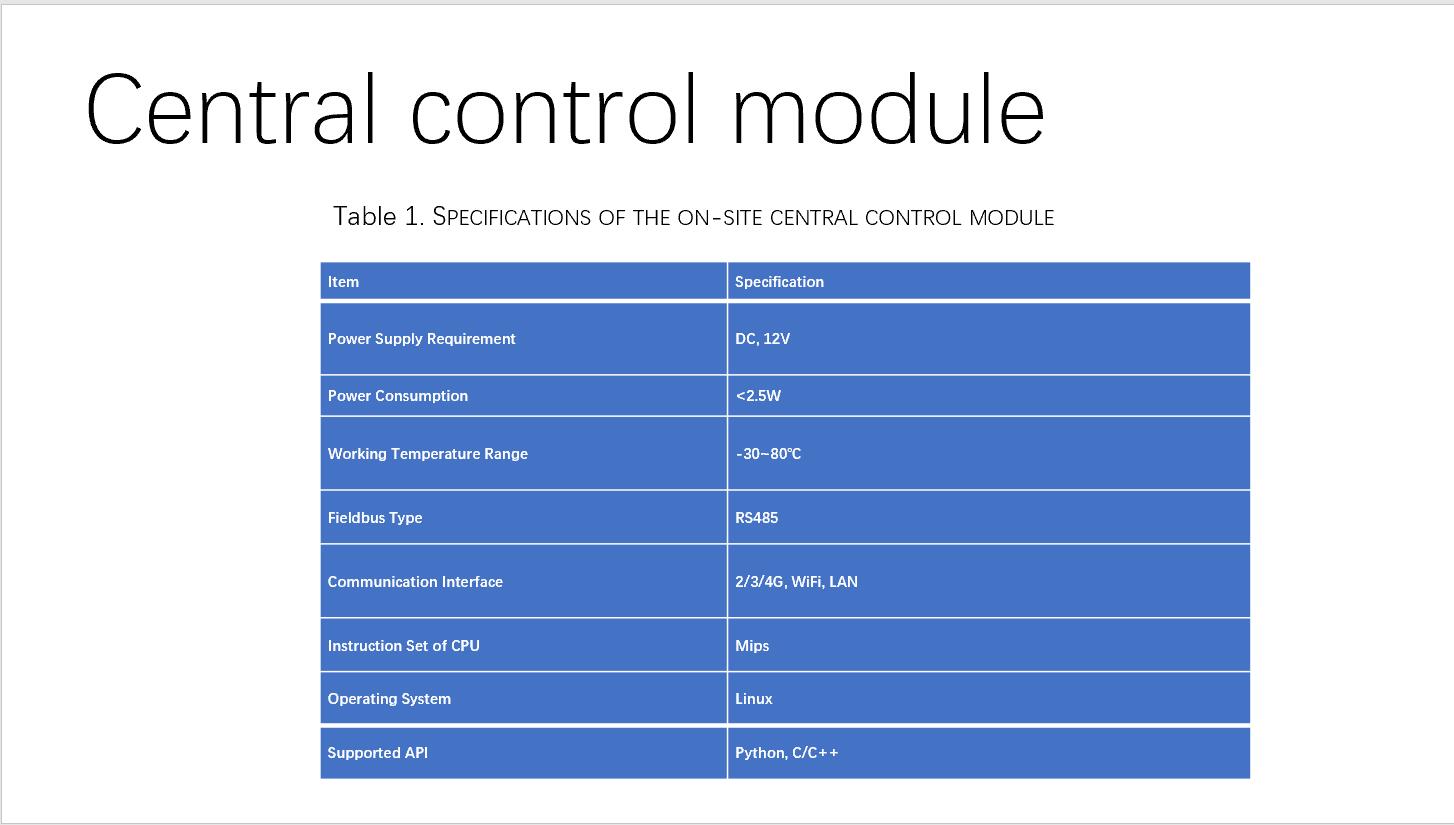 |
The specification of it is listed in TABLE 1. The size of module is small the power consumption is low. Thus, it can be conveniently mounted to the on-site system and operate for a long period time without consume much energy.
|
| ICACT20210171 Slide.11
[Big Slide]
[YouTube] |
Chrome Click!! |
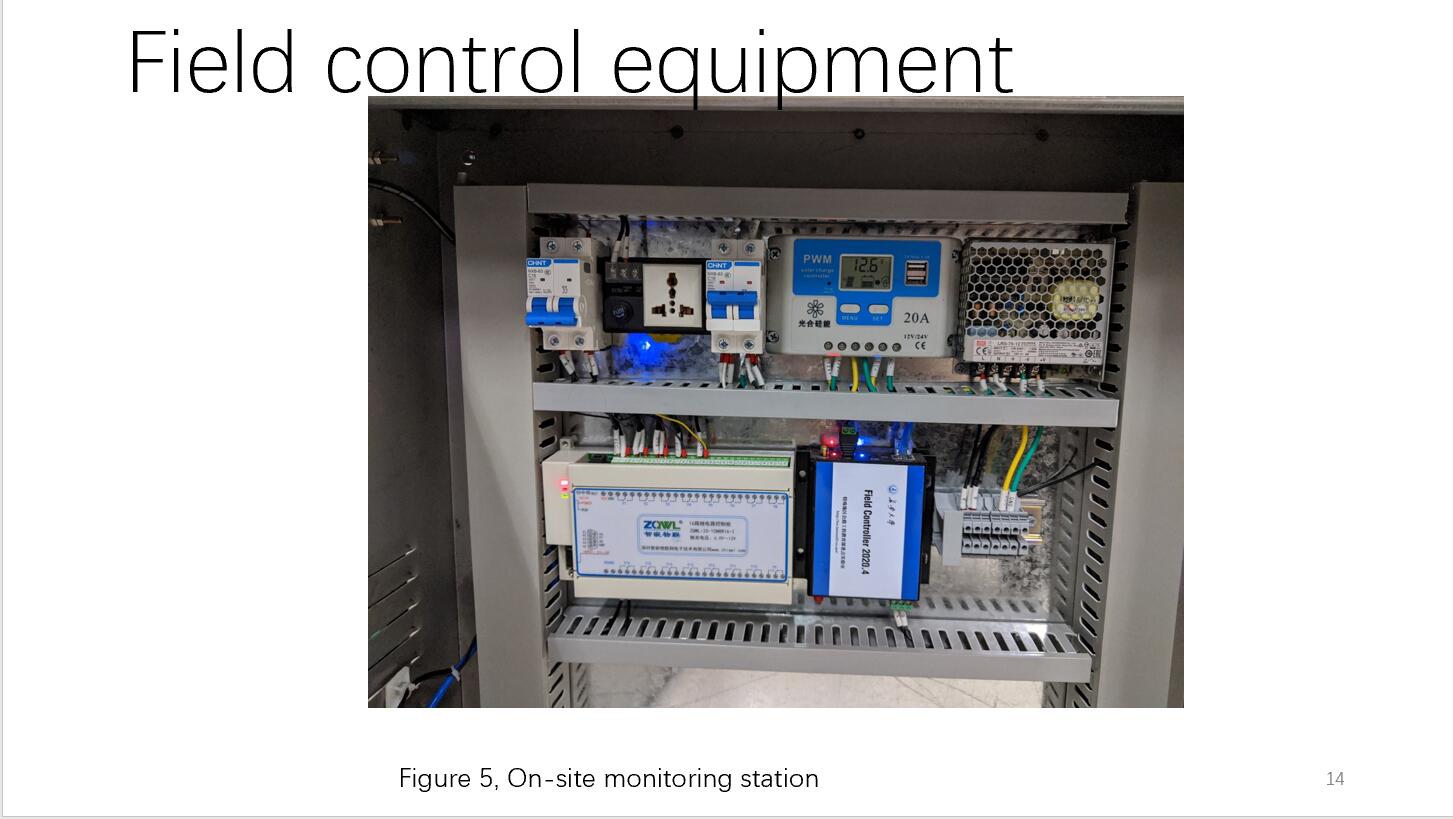 |
In the on-site monitoring station, the central control module is connected with auxiliary devices such power management system, execution system, communication antenna. The configured on-site monitoring station is shown in Figure 5.
|
| ICACT20210171 Slide.12
[Big Slide]
[YouTube] |
Chrome Click!! |
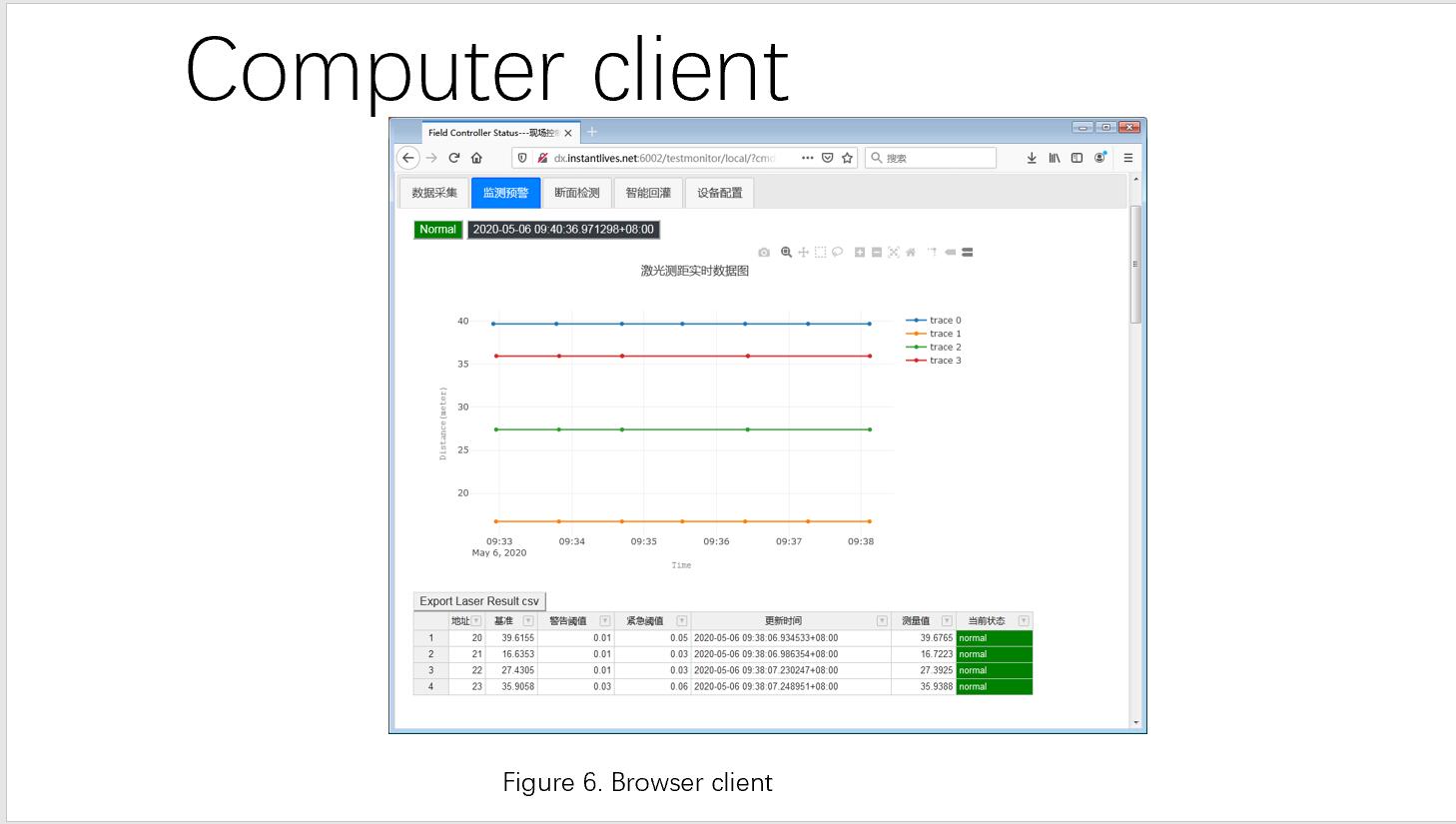 |
The data sharing cloud platform is running at the cloud, which is implemented with Django and Redis. Http server and WebSocket are both implemented for communication purpose.
Browsers connected to the cloud can access the data in real-time. The original data and charts are given visually. The running effect of browser client is shown in Figure 6.
|
| ICACT20210171 Slide.13
[Big Slide]
[YouTube] |
Chrome Click!! |
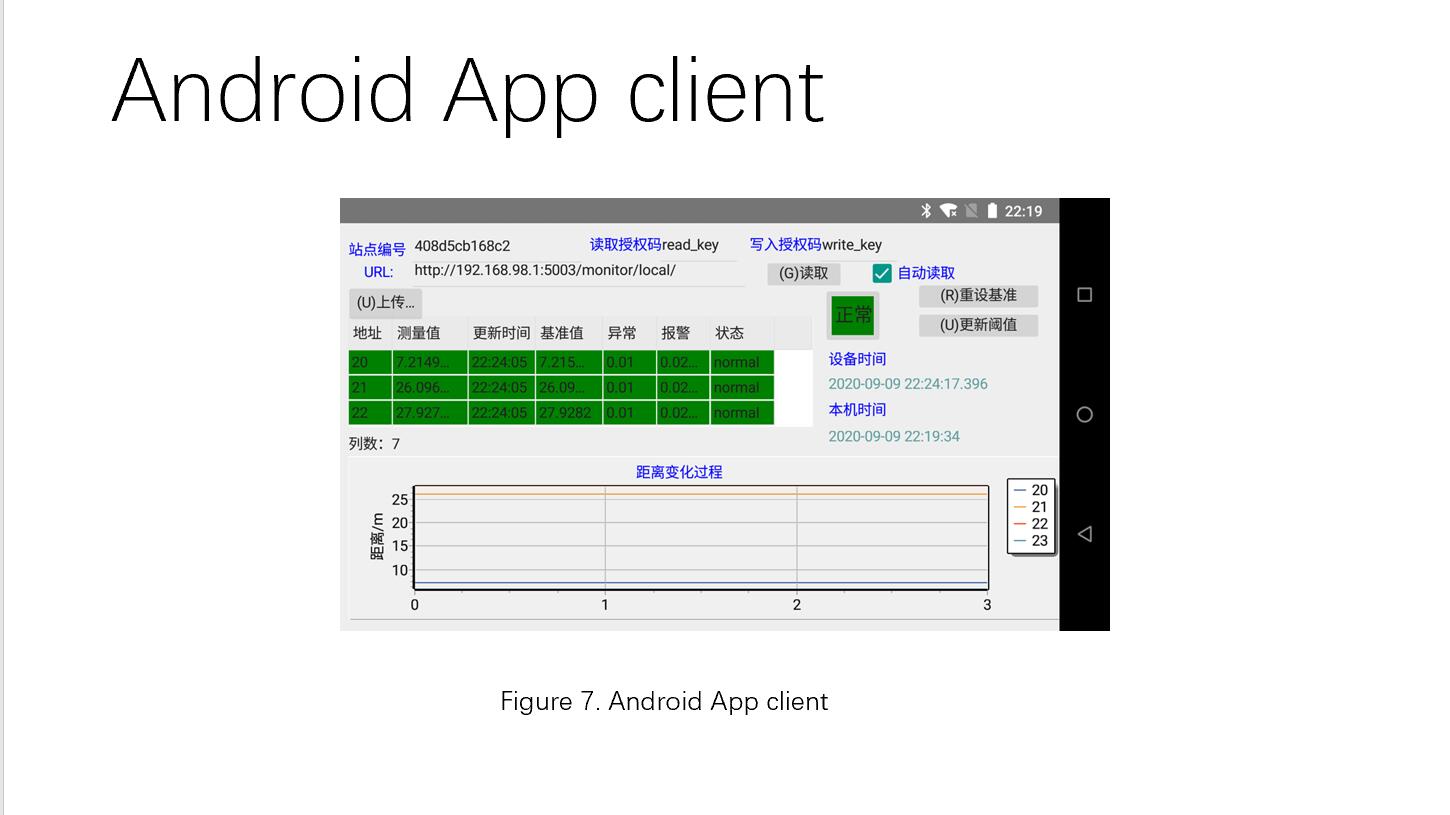 |
Android App client is also implemented. Acquired data, status of the monitoring station and historical chart are shown on the user interface. If it is authorized, threshold, status of the station can also be updated. The Android App client is shown in Figure 7.
|
| ICACT20210171 Slide.14
[Big Slide]
[YouTube] |
Chrome Click!! |
 |
In this research, based on data sharing cloud and on-site monitoring station, all the engineering data corresponding to the sensors can be acquired remotely. With the help of instruction relay service of the cloud service, the devices connected to the on-site monitoring station can be controlled remotely in real-time. The on-site central controller module has powerful processing capabilities, can make actual judgments of the construction site based on acquired sensor data, and can work independently without relying on the data sharing cloud platform. Browser client and Android App clients are implemented, thus, the on-site monitoring stations can be accessed and controlled conveniently.
|
| ICACT20210171 Slide.15
[Big Slide]
[YouTube] |
Chrome Click!! |
 |
Thank you! |
| ICACT20210171 Slide.16
[Big Slide]
[YouTube] |
Chrome Click!! |
 |
Thank you! |















