 ICACT20210198 Slide.01
[Big Slide] |
Chrome  Click!! |
 |
Title: Bayesian Network and Semidefinite Programming Based Wireless Power Transfer Manufacturing System State Estimation and Regulation
Paper ID: 20210198
Authors: Md Masud Rana and Narendra Dahotre
College of Information Science
University of North Texas, Denton, Texas, USA
Presenter: Dr. Masud Rana |
| ICACT20210198 Slide.02
[Big Slide]
|
Chrome Click!! |
 |
Presentation outlines are:
Introduction
Contributions
Wireless power transfer systems
Proposed Bayesian algorithmic for state estimation
Proposed feedback controller
Simulation parameters
Simulation results
Summary
|
| ICACT20210198 Slide.03
[Big Slide]
|
Chrome Click!! |
 |
The Internet of Things (IoT) is the global information and communication platform which can connect the digital and physical things effectively for diverse emerging applications and services.
Basically, it consists of softwares, network level heterogeneity, sensing and actuating capabilities backed by the internet infrastructure to sense, collect and exchange information for a common goal.
In order to supply energy to the smart objects such as electric vehicles and smart phones using wireless power transfer (WPT) framework, the IoT embedded sensors and actuators can play critical roles for sensing, monitoring and regulating the WPT system states.
|
| ICACT20210198 Slide.04
[Big Slide]
|
Chrome Click!! |
 |
Specifically, the smart sensors are used to transmit sensing state information to the control center, where the state estimation program runs to know the operating and health conditions of WPT system.
This study proposes a Bayesian network based WPT system state estimation algorithm. This scheme can estimate the WPT system states in a distributed way using the Bayesian tree structure.
Afterwards, the semidefinite programming based optimal feedback control scheme is proposed to regulate the system states.
Simulations results show that the proposed approach provides significant performance improvement compared with the existing scheme.
|
| ICACT20210198 Slide.05
[Big Slide]
|
Chrome Click!! |
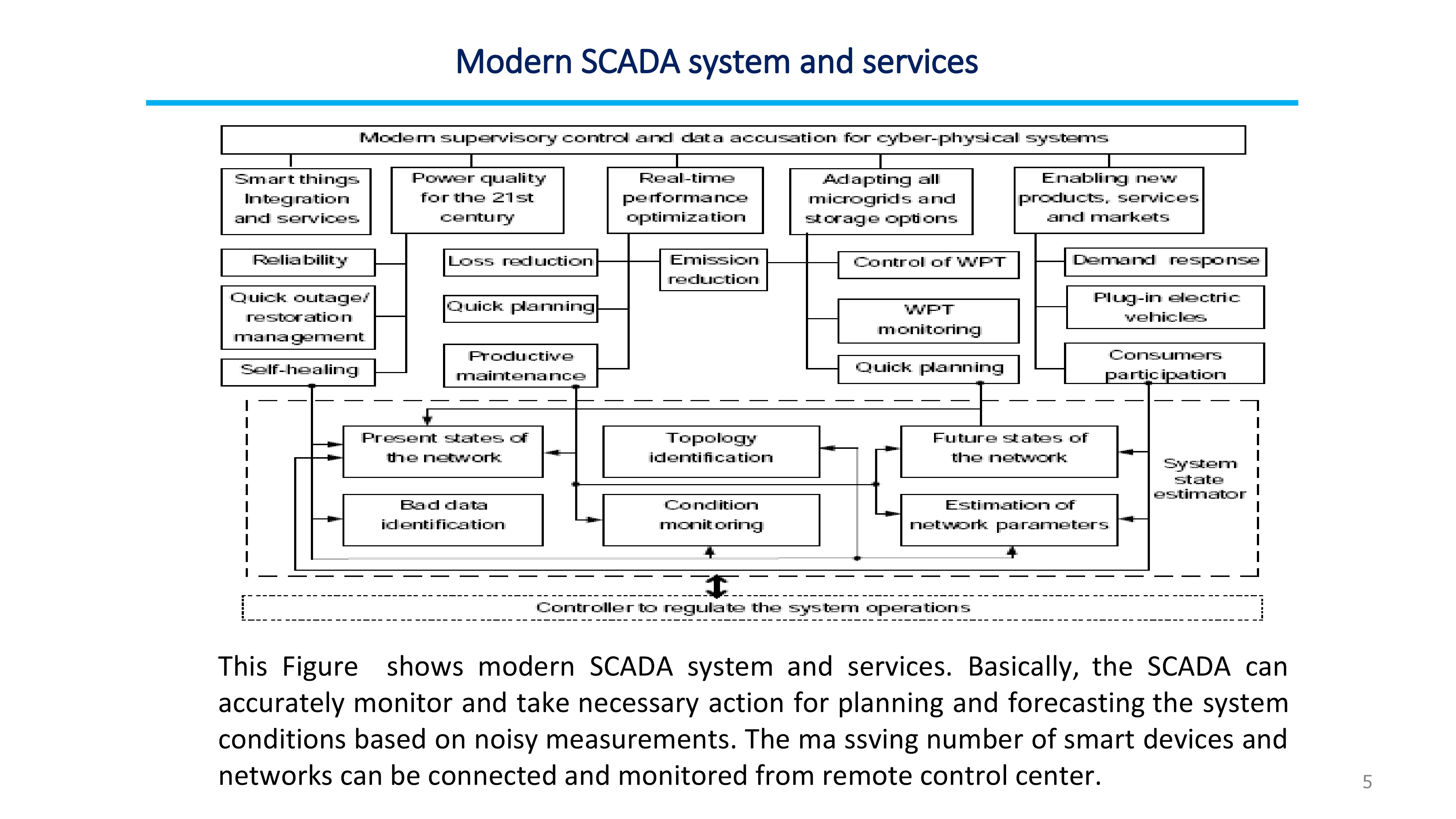 |
This Figure shows modern SCADA system and services. Basically, the SCADA can accurately monitor and take necessary action for planning and forecasting the system conditions based on noisy measurements. The ma ssving number of smart devices and networks can be connected and monitored from remote control center.
|
| ICACT20210198 Slide.06
[Big Slide]
|
Chrome Click!! |
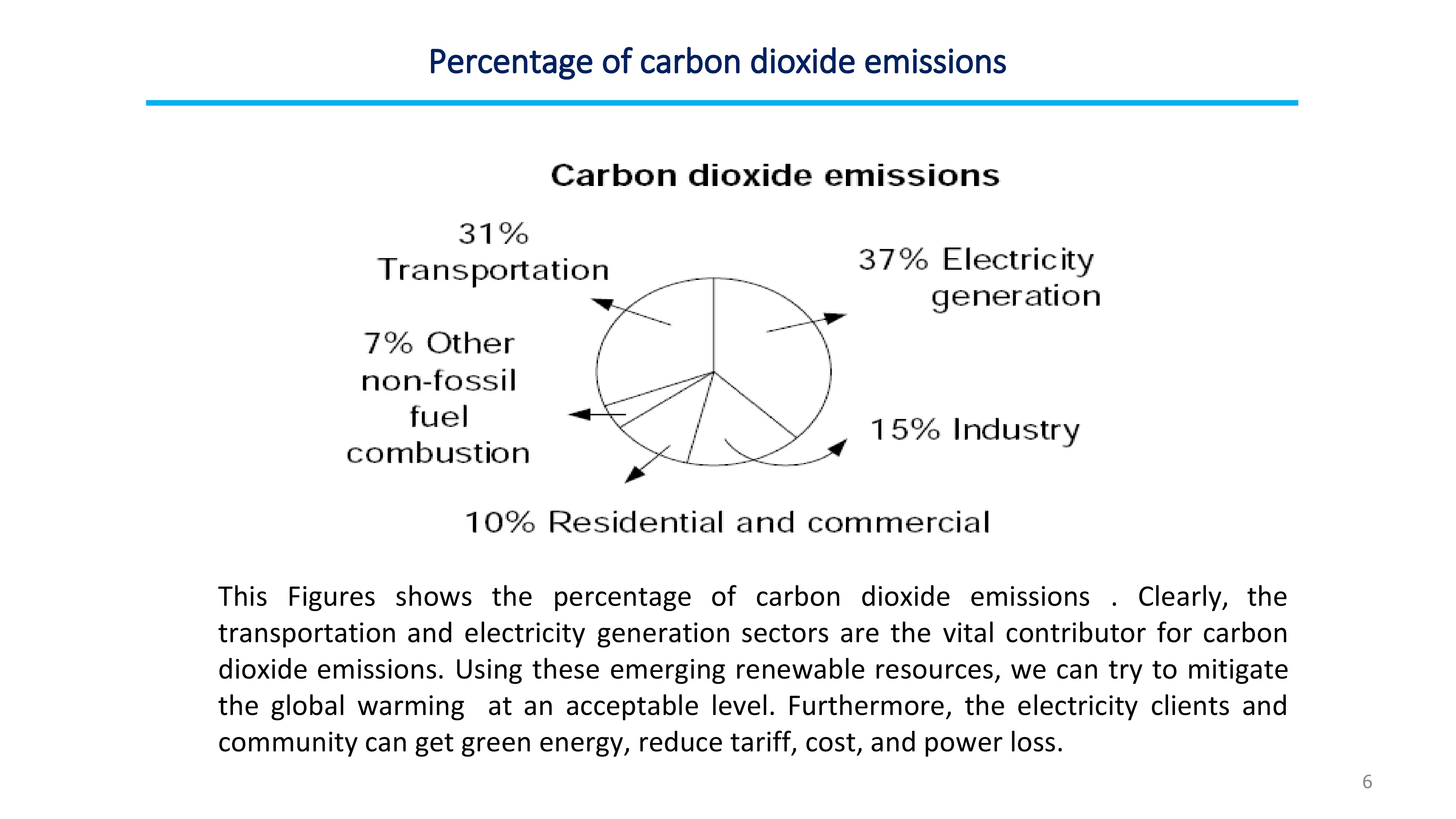 |
This Figures shows the percentage of carbon dioxide emissions . Clearly, the transportation and electricity generation sectors are the vital contributor for carbon dioxide emissions. Using these emerging renewable resources, we can try to mitigate the global warming at an acceptable level. Furthermore, the electricity clients and community can get green energy, reduce tariff, cost, and power loss.
|
| ICACT20210198 Slide.07
[Big Slide]
|
Chrome Click!! |
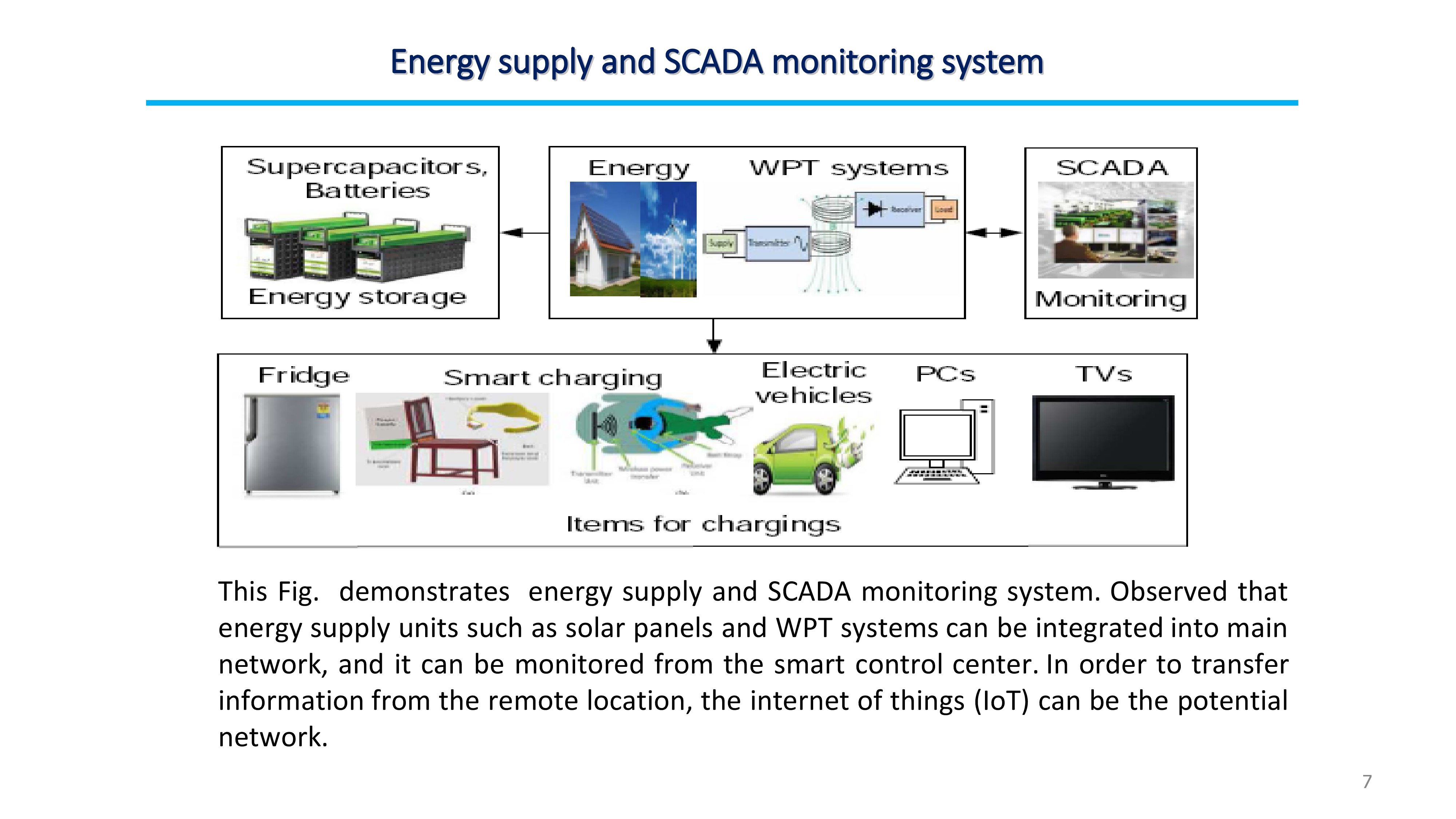 |
This Fig. demonstrates energy supply and SCADA monitoring system. Observed that energy supply units such as solar panels and WPT systems can be integrated into main network, and it can be monitored from the smart control center. In order to transfer information from the remote location, the internet of things (IoT) can be the potential network.
|
| ICACT20210198 Slide.08
[Big Slide]
|
Chrome Click!! |
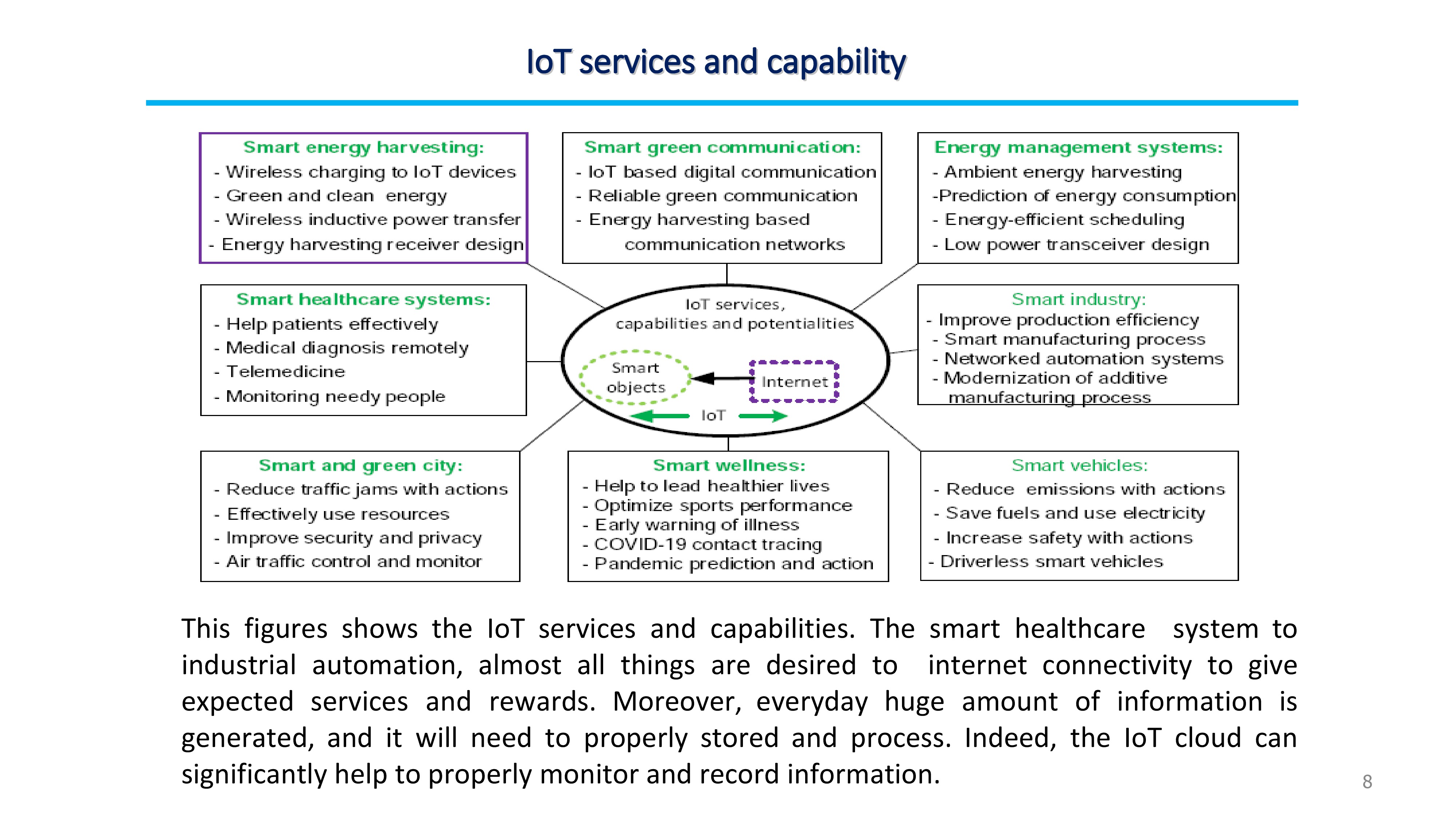 |
This figures shows the IoT services and capabilities. The smart healthcare system to industrial automation, almost all things are desired to internet connectivity to give expected services and rewards. Moreover, everyday huge amount of information is generated, and it will need to properly stored and process. Indeed, the IoT cloud can significantly help to properly monitor and record information.
|
| ICACT20210198 Slide.09
[Big Slide]
|
Chrome Click!! |
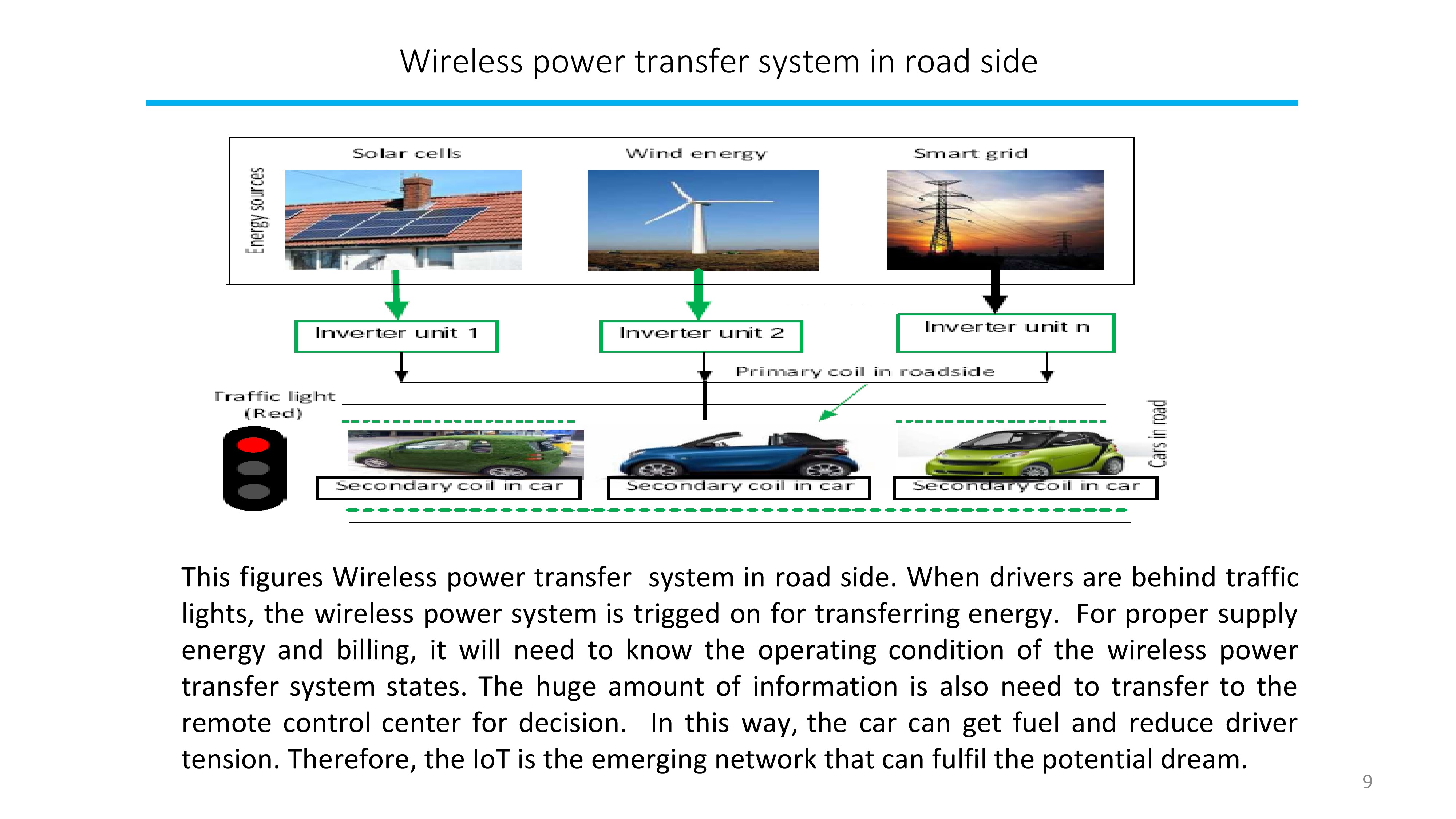 |
This figures Wireless power transfer system in road side. When drivers are behind traffic lights, the wireless power system is trigged on for transferring energy. For proper supply energy and billing, it will need to know the operating condition of the wireless power transfer system states. The huge amount of information is also need to transfer to the remote control center for decision. In this way, the car can get fuel and reduce driver tension. Therefore, the IoT is the emerging network that can fulfil the potential dream.
|
| ICACT20210198 Slide.10
[Big Slide]
|
Chrome Click!! |
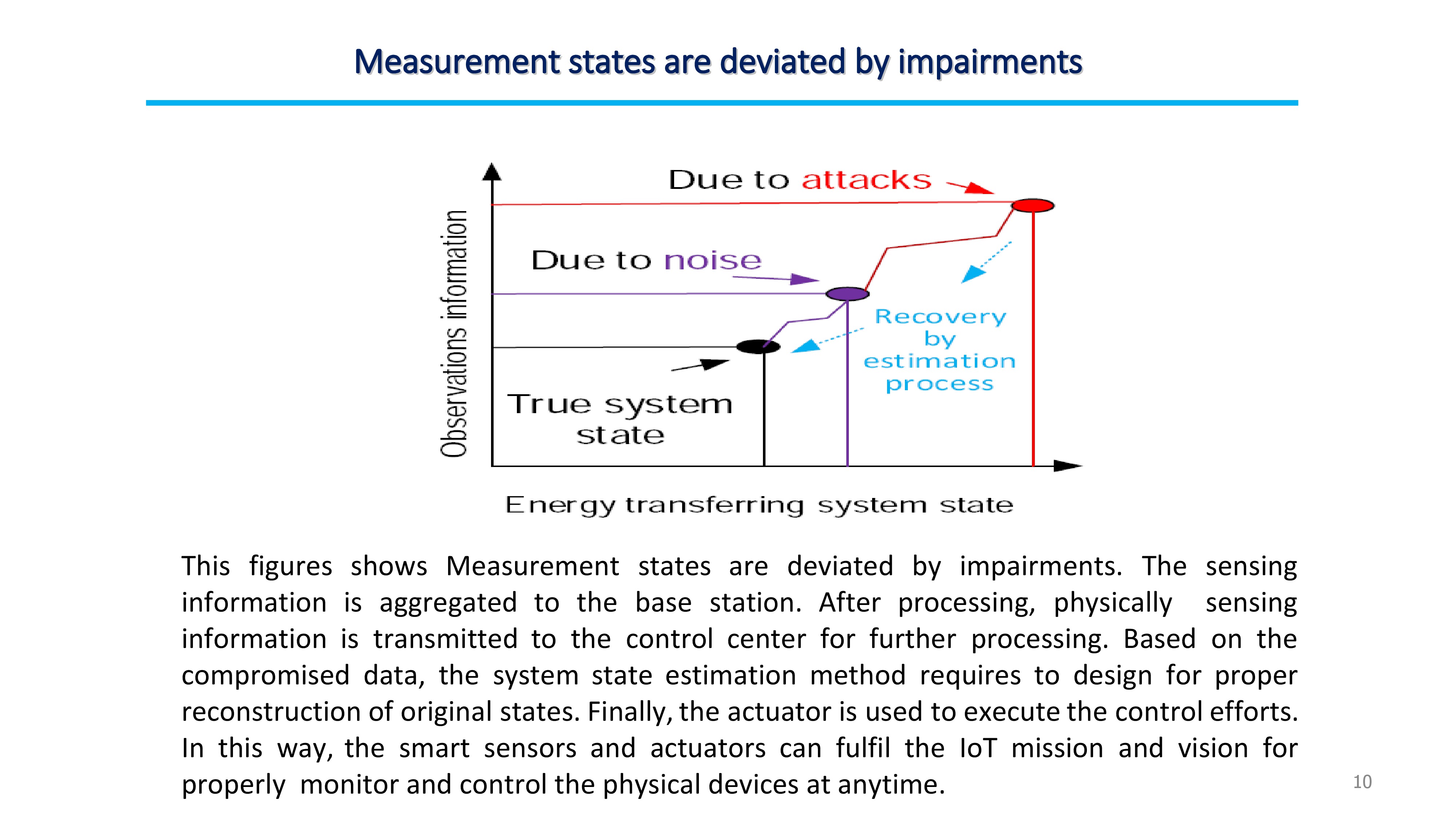 |
Energy in our smart device is the most important part for communication, information transmission and action. Sometimes charge in these devices are finished, and it creates many problems in real-time. When the transportation systems and devices are adopted the cutting-edge technology for charging, it is very helpful to get connection, transmission, sustainable and smart city. This figures shows the high-level block diagram of a modern charging system where energy can transfer through induction. When the smart cars or devices are required energy, it can be transferred through induction within range.
|
| ICACT20210198 Slide.11
[Big Slide]
|
Chrome Click!! |
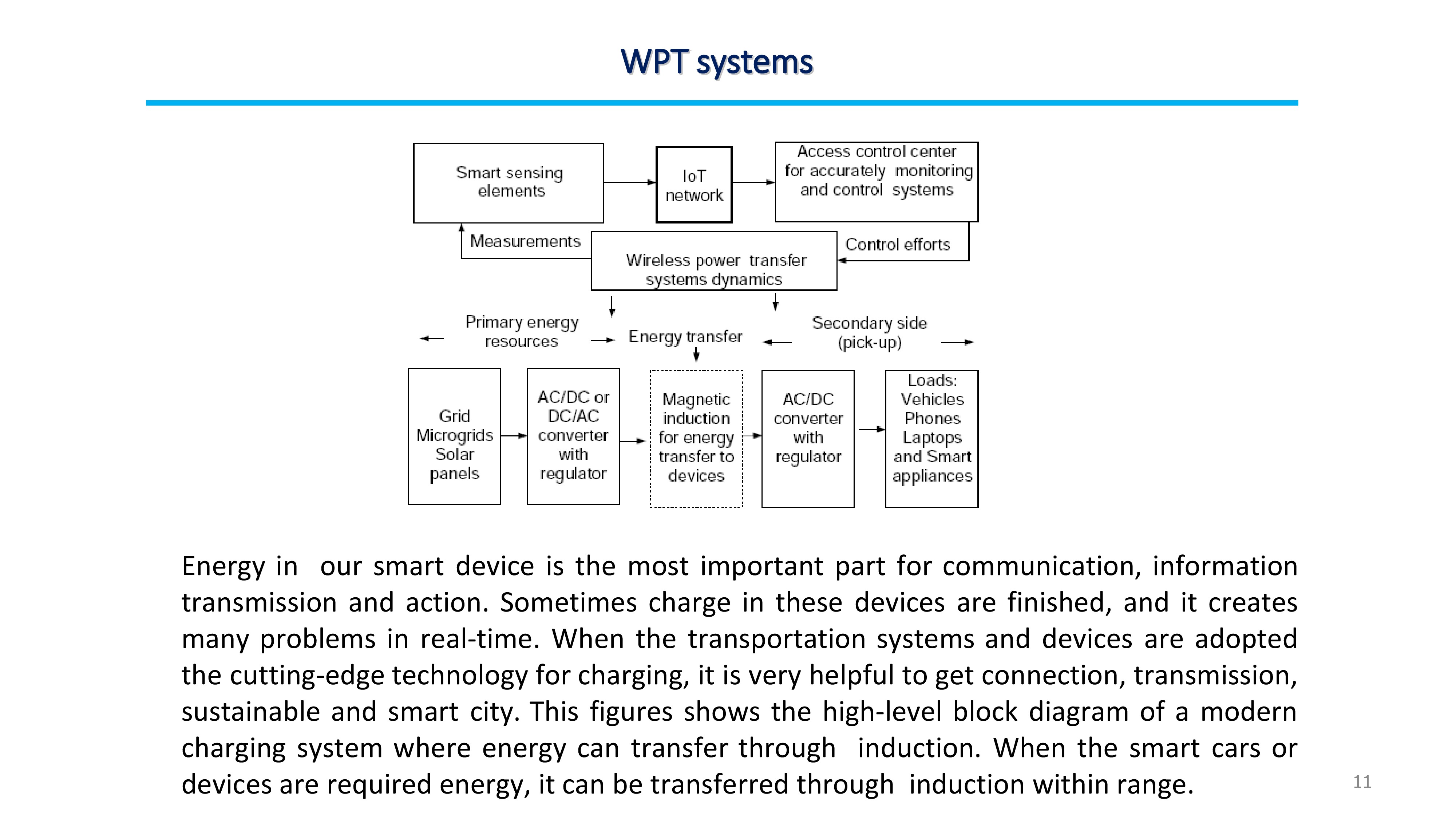 |
Energy in our smart device is the most important part for communication, information transmission and action. Sometimes charge in these devices are finished, and it creates many problems in real-time. When the transportation systems and devices are adopted the cutting-edge technology for charging, it is very helpful to get connection, transmission, sustainable and smart city. This figures shows the high-level block diagram of a modern charging system where energy can transfer through induction. When the smart cars or devices are required energy, it can be transferred through induction within range.
|
| ICACT20210198 Slide.12
[Big Slide]
|
Chrome Click!! |
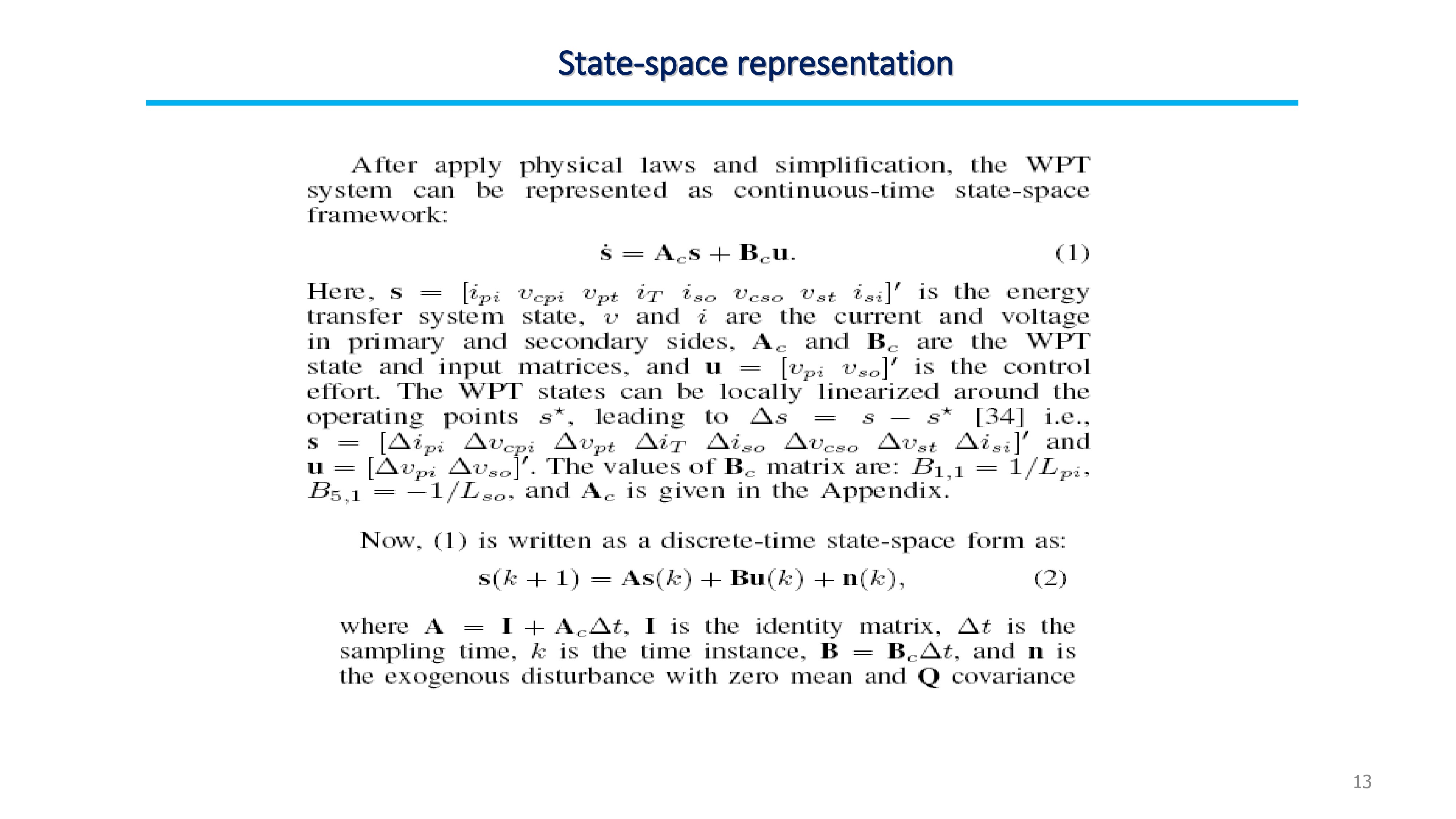 |
This figures shows system-level block diagram of a typical energy transfer system. When the primary side and secondary unit are in transferring mode then the devices get charge for an example. The primary energy source can be renewable microgrid, solar panels, power grid and turbines. The secondary unit can be hybrid electric vehicles, phones and appliances. The whole transfer systems can be represented by dynamics with physical laws and circuit theory.
|
| ICACT20210198 Slide.13
[Big Slide]
|
Chrome Click!! |
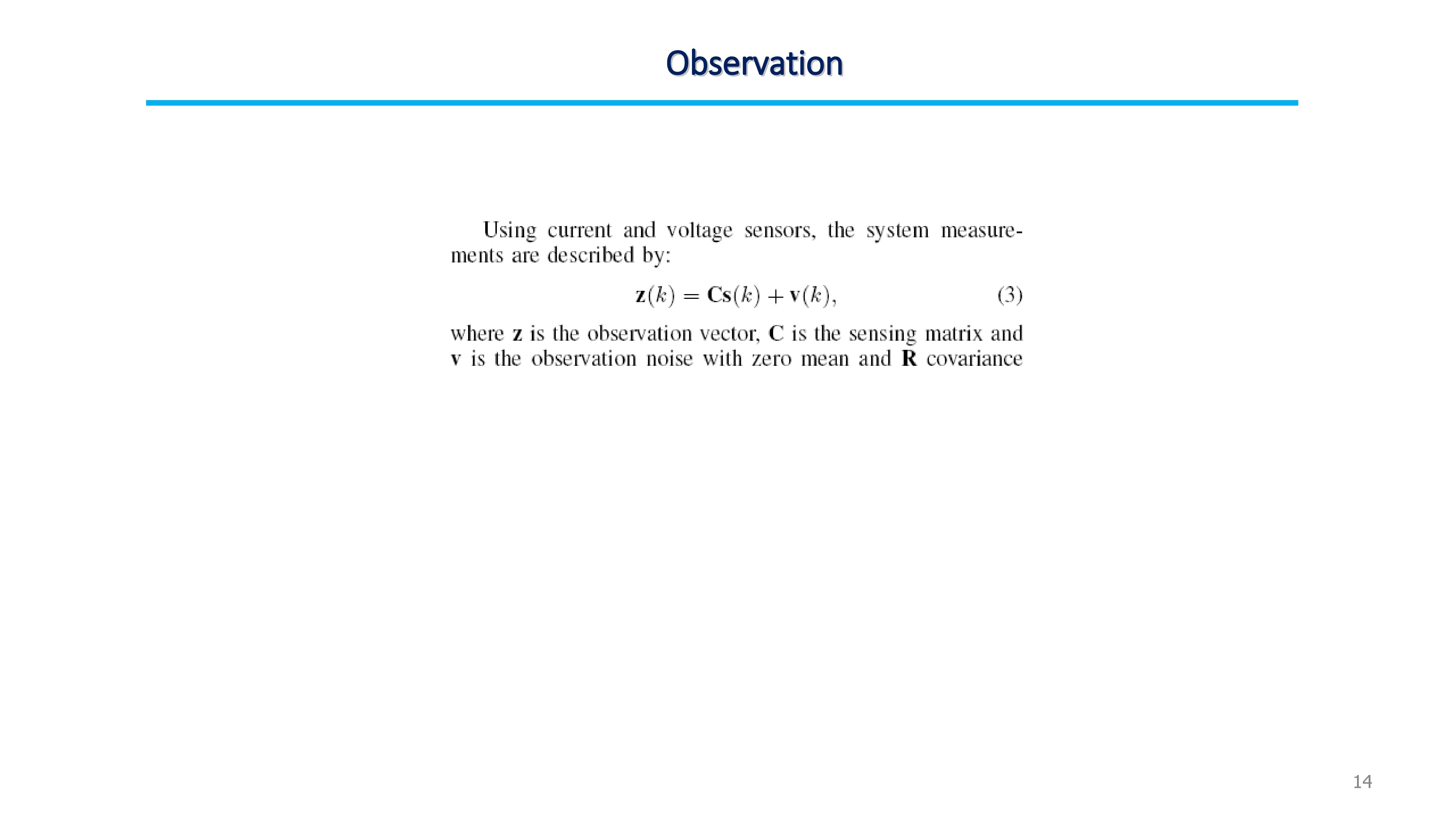 |
Using current and voltage sensors, the system measurements are described by: |
| ICACT20210198 Slide.14
[Big Slide]
|
Chrome Click!! |
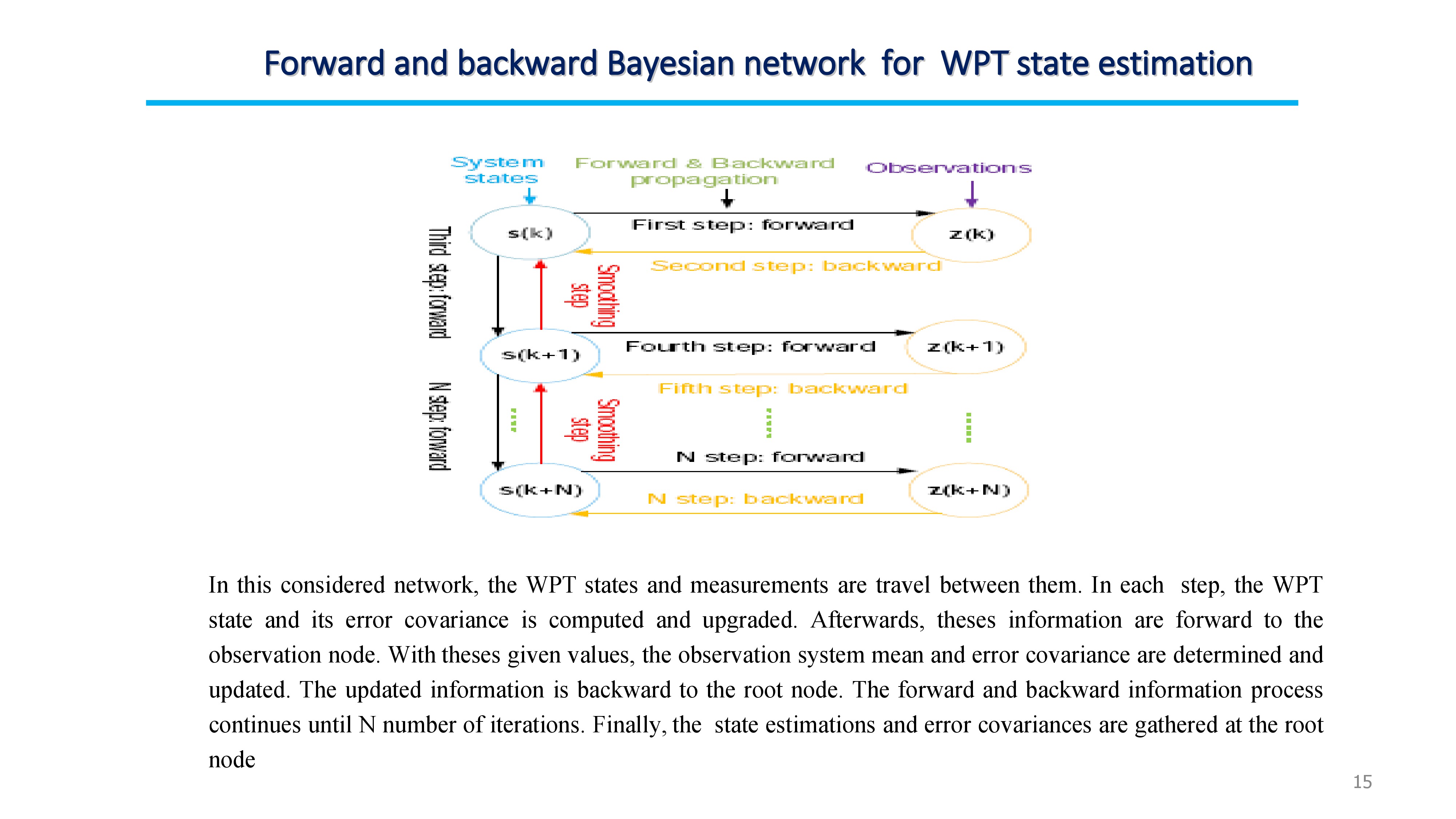 |
In this considered network, the WPT states and measurements are travel between them. In each step, the WPT state and its error covariance is computed and upgraded. Afterwards, theses information are forward to the observation node. With theses given values, the observation system mean and error covariance are determined and updated. The updated information is backward to the root node. The forward and backward information process continues until N number of iterations. Finally, the state estimations and error covariances are gathered at the root node
|
| ICACT20210198 Slide.15
[Big Slide]
|
Chrome Click!! |
 |
Proposed Controller
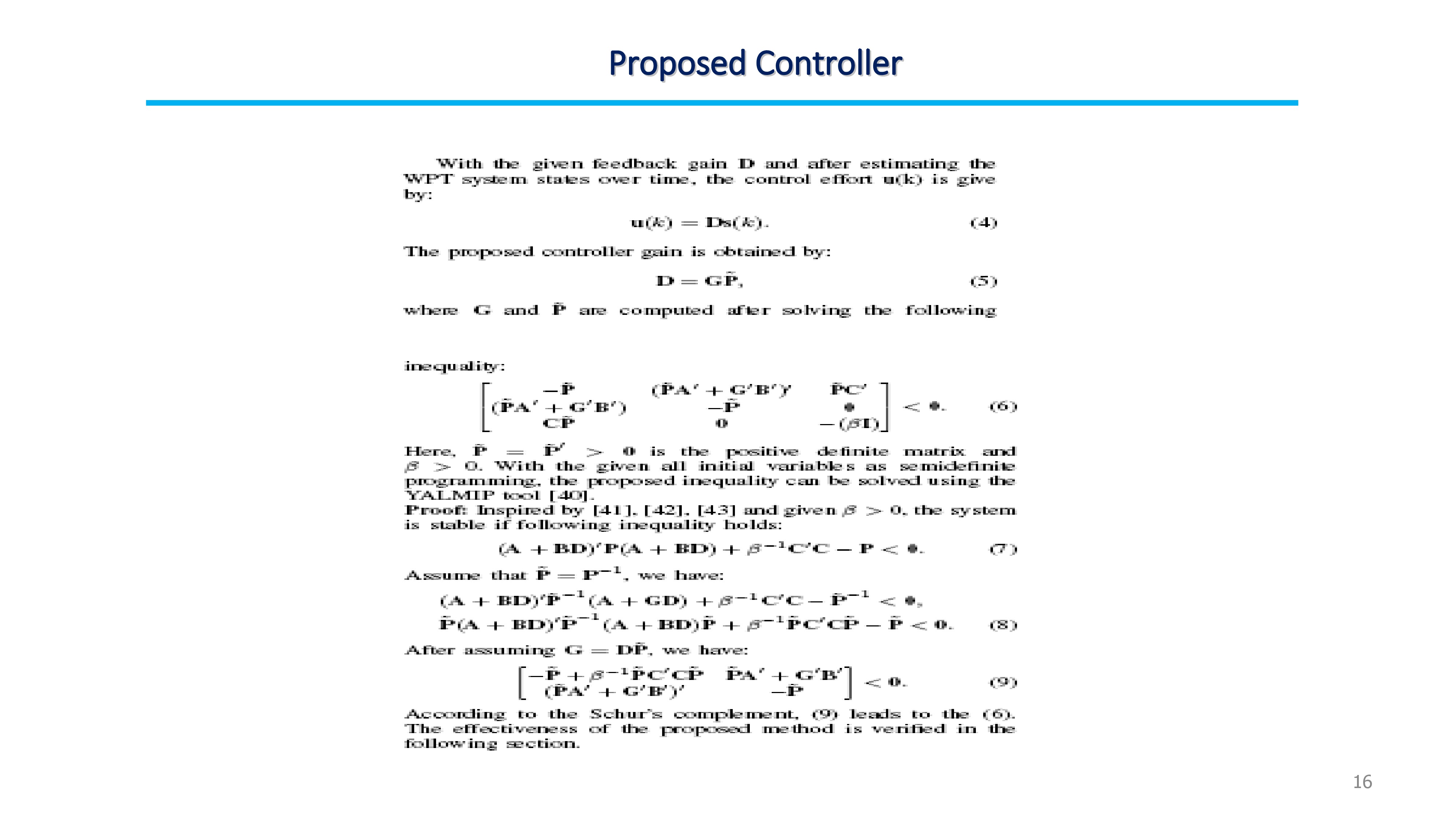
With the given feedback gain D and after estimating the WPT system states over time, the control effort u(k) is give by
After soling this equation we will get controller gain.
|
| ICACT20210198 Slide.16
[Big Slide]
|
Chrome Click!! |
 |
SIMULATION Parameters
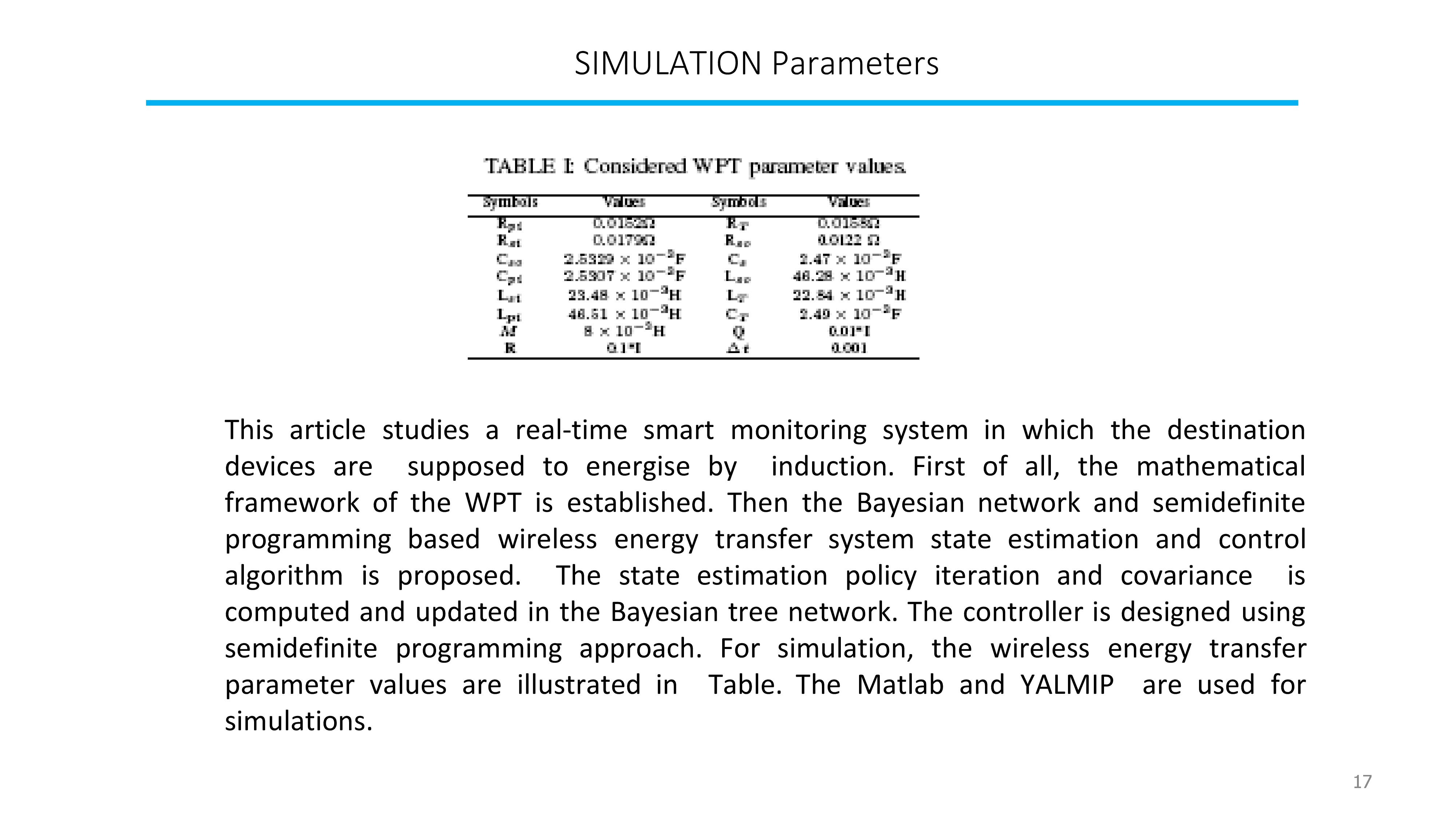
This article studies a real-time smart monitoring system in which the destination devices are supposed to energise by induction. First of all, the mathematical framework of the WPT is established. Then the Bayesian network and semidefinite programming based wireless energy transfer system state estimation and control algorithm is proposed. The state estimation policy iteration and covariance is computed and updated in the Bayesian tree network. The controller is designed using semidefinite programming approach. For simulation, the wireless energy transfer parameter values are illustrated in Table. The Matlab and YALMIP are used for simulations.
|
| ICACT20210198 Slide.17
[Big Slide]
|
Chrome Click!! |
 |
SIMULATION Results
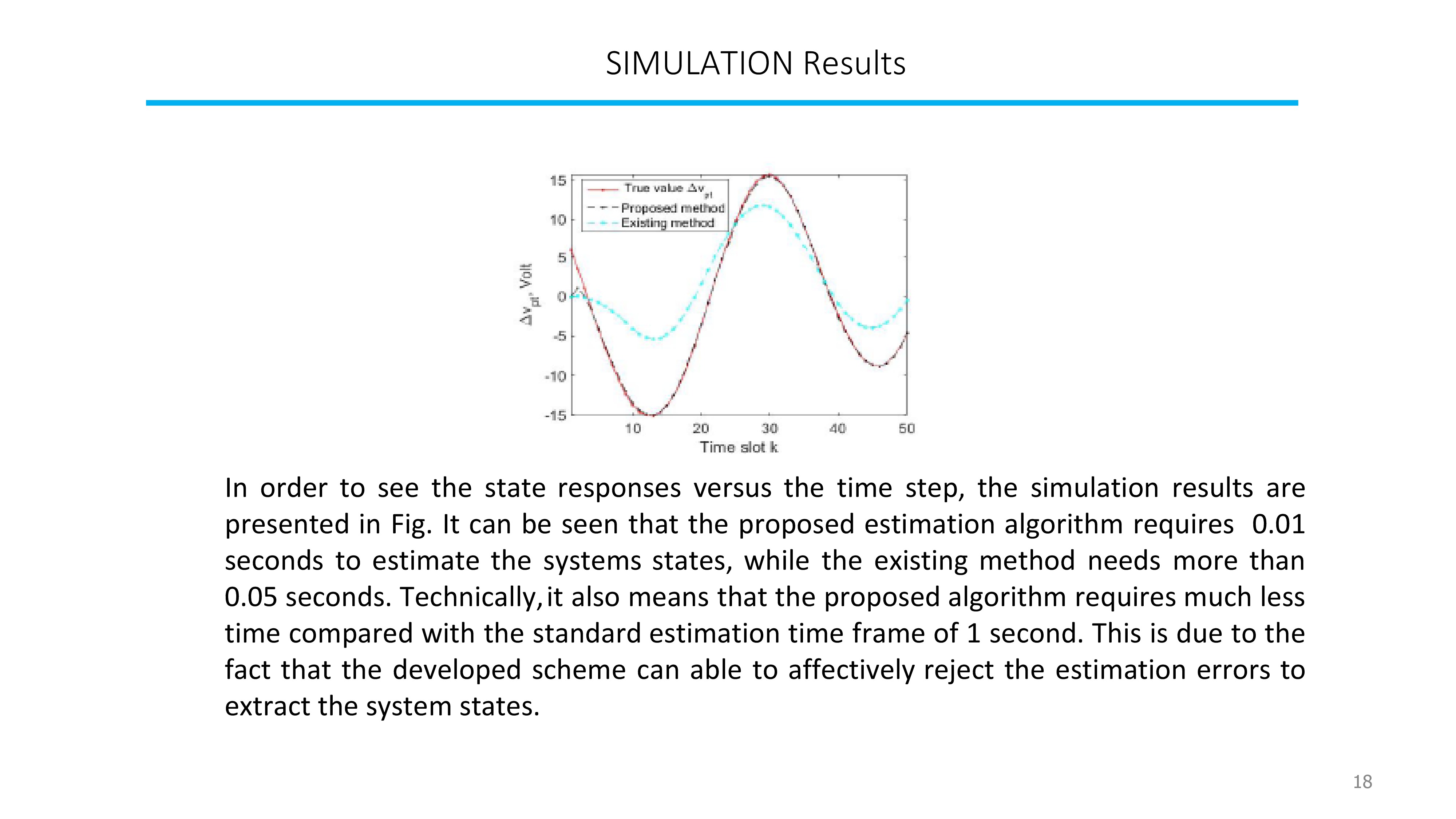
In order to see the state responses versus the time step, the simulation results are presented in Fig. It can be seen that the proposed estimation algorithm requires 0.01 seconds to estimate the systems states, while the existing method needs more than 0.05 seconds. Technically, it also means that the proposed algorithm requires much less time compared with the standard estimation time frame of 1 second. This is due to the fact that the developed scheme can able to effectively reject the estimation errors to extract the system states.
|
| ICACT20210198 Slide.18
[Big Slide]
|
Chrome Click!! |
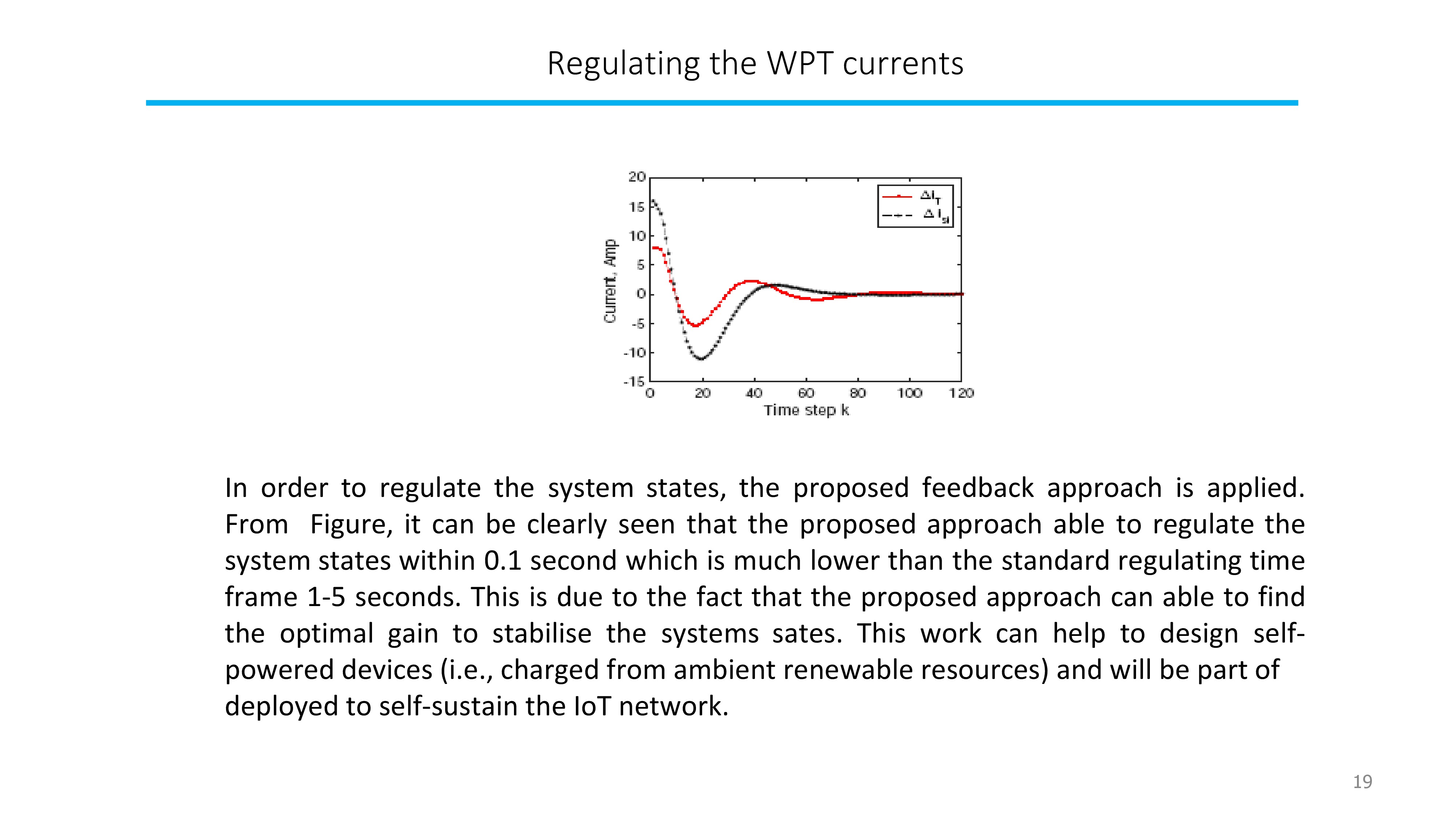 |
In order to regulate the system states, the proposed feedback approach is applied. From Figure, it can be clearly seen that the proposed approach able to regulate the system states within 0.1 second which is much lower than the standard regulating time frame 1-5 seconds. This is due to the fact that the proposed approach can able to find the optimal gain to stabilize the systems sates. This work can help to design self-powered devices (i.e., charged from ambient renewable resources) and will be part of deployed to self-sustain the IoT network.
|
| ICACT20210198 Slide.19
[Big Slide]
|
Chrome Click!! |
 |
Summary
Based on the circuit theory, the induction model of wireless energy transfer system is designed and simulated. This model can be widely used in various applications such as
vehicles charging, wireless lighting, and biomedical implants.
This paper proposes the Bayesian network based state estimation algorithm for monitoring the wireless power transfer system states.
Simulation results depict that the proposed method improves the estimation accuracy compared with the existing method.
In order to regulate the system states, the feedback controller is proposed. The simulation result illustrates that the developed scheme can properly regulate the system states. Consequently, this work is valuable to design the smart control center for wireless power transfer and energy
|
| ICACT20210198 Slide.20
[Big Slide]
|
Chrome Click!! |
 |
Thank you for listening to my speech
If you have any question please email me
|















