 ICACT20210221 Slide.01
[Big Slide] |
Chrome  Click!! |
 |
Hello everyone, my name is Shazwani Salleh. For ICACT 2021, I have coauthored with six co-authors.The title of our presentation is "Lightweight Denial of Service (DOS) Detection System Algorithm (LIDSA). |
| ICACT20210221 Slide.02
[Big Slide]
|
Chrome Click!! |
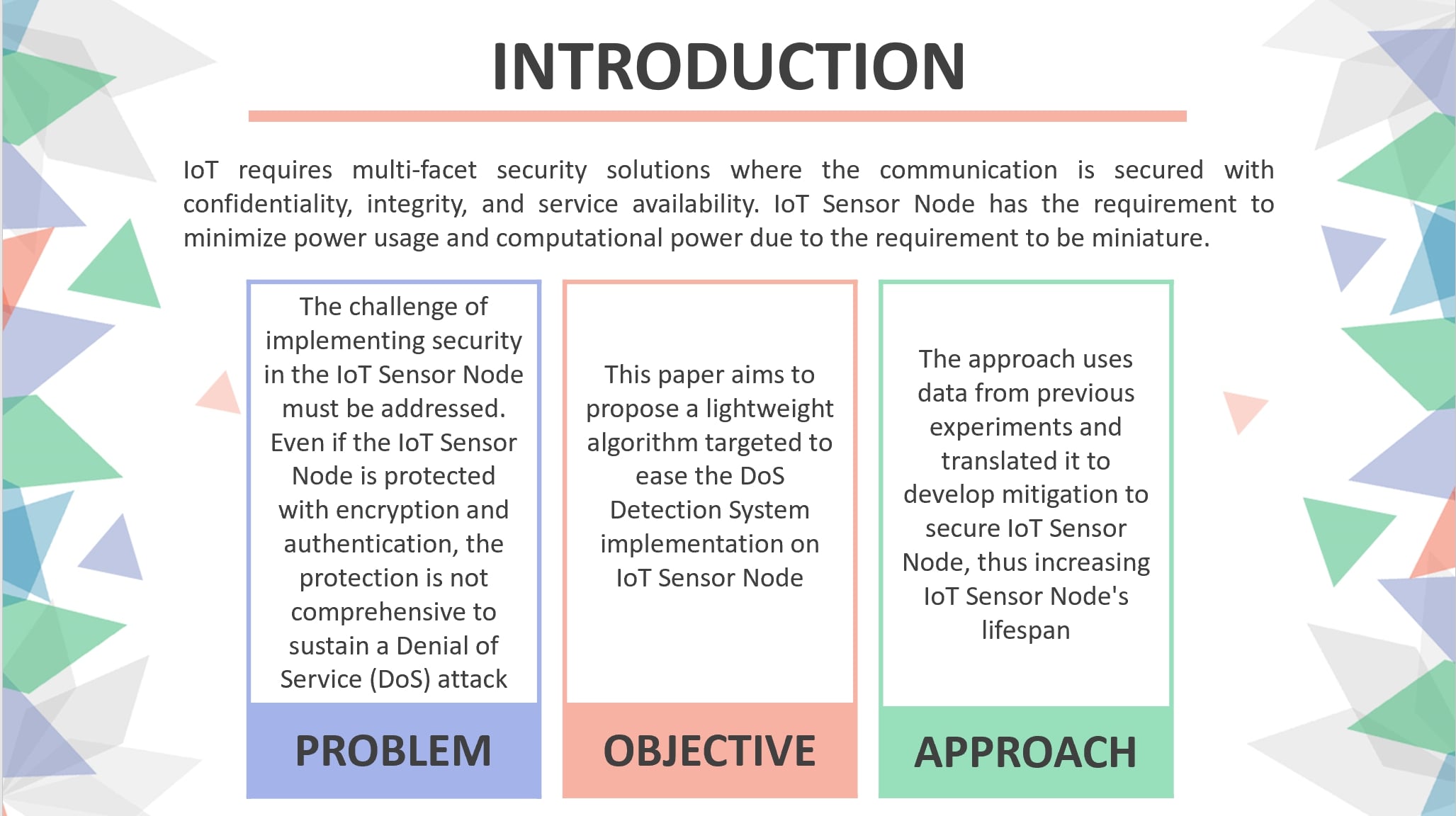 |
The Internet of Things (IoT) is becoming an increasingly growing topic. IoT encompasses everything connected to the internet. IoT requires multi-facet security solutions
where the communication is secured with confidentiality, integrity, and service availability. Since the Internet of Things (IoT) ecosystem will consist of a complex
infrastructure from Sensors to Cloud, the challenge to cybersecurity is to choose which area to be secure first and worth investing. Any approach taken should consists
and cover all angles of IoT components, and the most important is that the approach is easy to implement. If the developed security approach is too complicated,
it will be challenging to implement it. Therefore, this paper proposed a lightweight algorithm targeted to ease the DoS Detection
System implementation on IoT Sensor Node by using data obtained from previous experiments and then testing it on an actual environment without relying on simulated data
|
| ICACT20210221 Slide.03
[Big Slide]
|
Chrome Click!! |
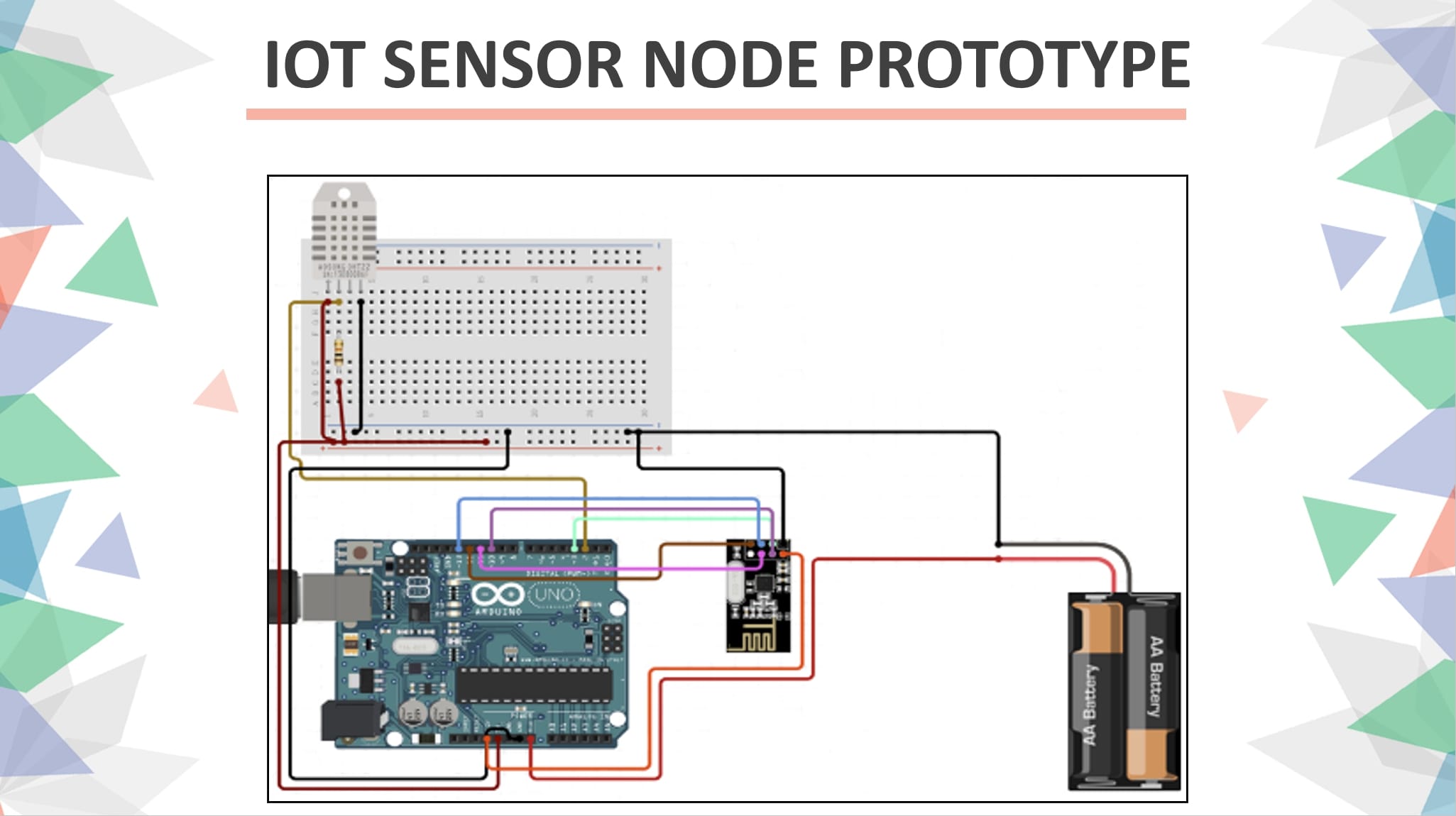 |
The IoT Sensor Node used in the Smart Monitoring System was designed in minimal weight, miniature form-factor, limited processing power using 2 AA batteries, storage,
nRF24L01 operating on 2.4GHz ISM (Industry Scientific and Medical) bandwidth and standard-based interface protocols
|
| ICACT20210221 Slide.04
[Big Slide]
|
Chrome Click!! |
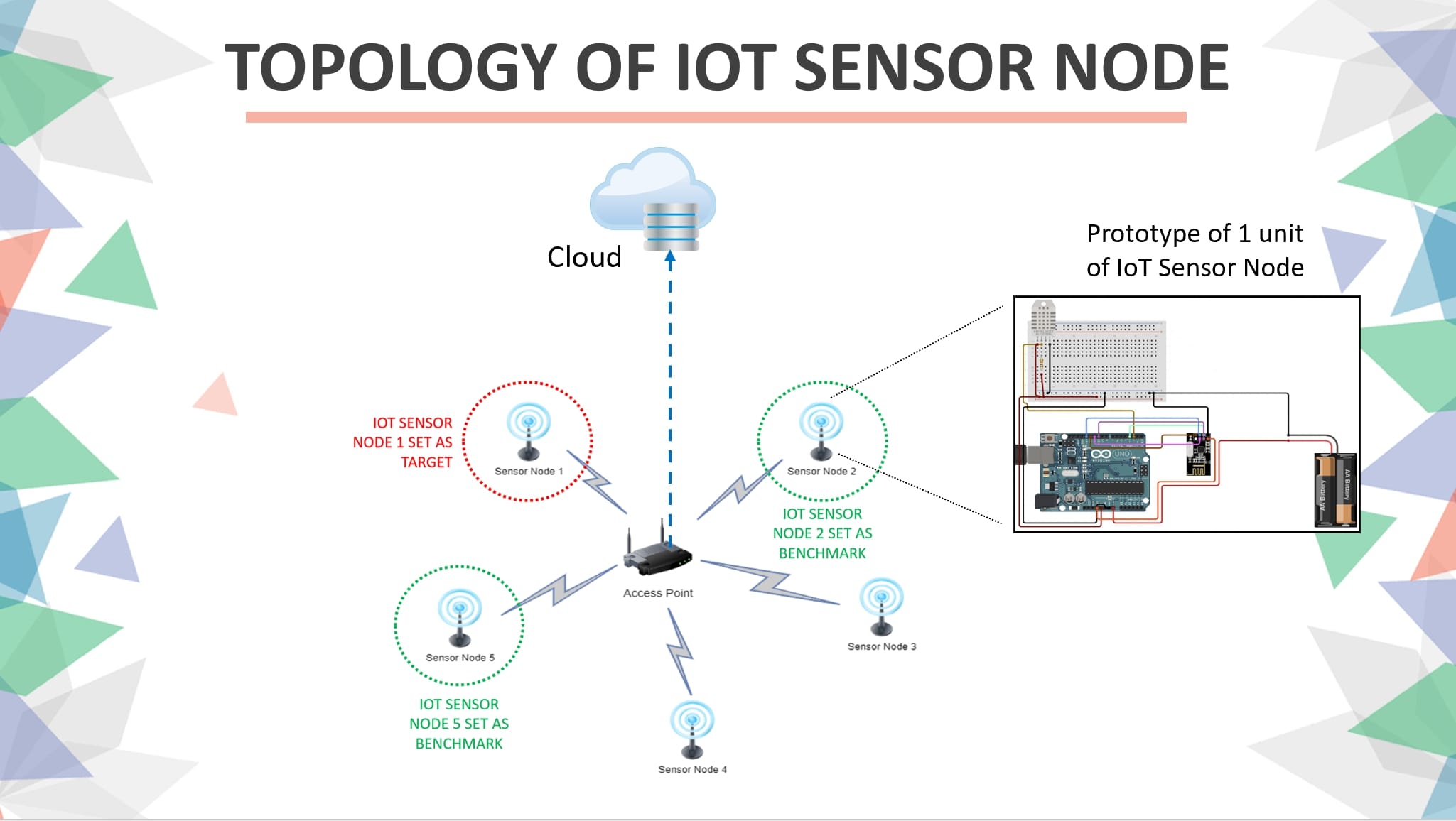 |
There are 5 units of IoT Sensors that has been used in this study. The Cloud was set up just to receive data without any optimization or security installed and configured
since the testbed's approach is to measure the energy consumption of sensor to cloud without any optimization.
Sensor Node 1 was configured as the DoS victim (can also be referred to as a malicious node). The impact of the attack causes Sensor Node 1 to be defective, and no data sent to the
Cloud after the attack. Since there is no data received from Sensor Node 1 to the Cloud during the DoS attack, data from Sensor Node 2 and Sensor Node 5 are the nearest neighbors is used as a benchmark for the algorithm.
|
| ICACT20210221 Slide.05
[Big Slide]
|
Chrome Click!! |
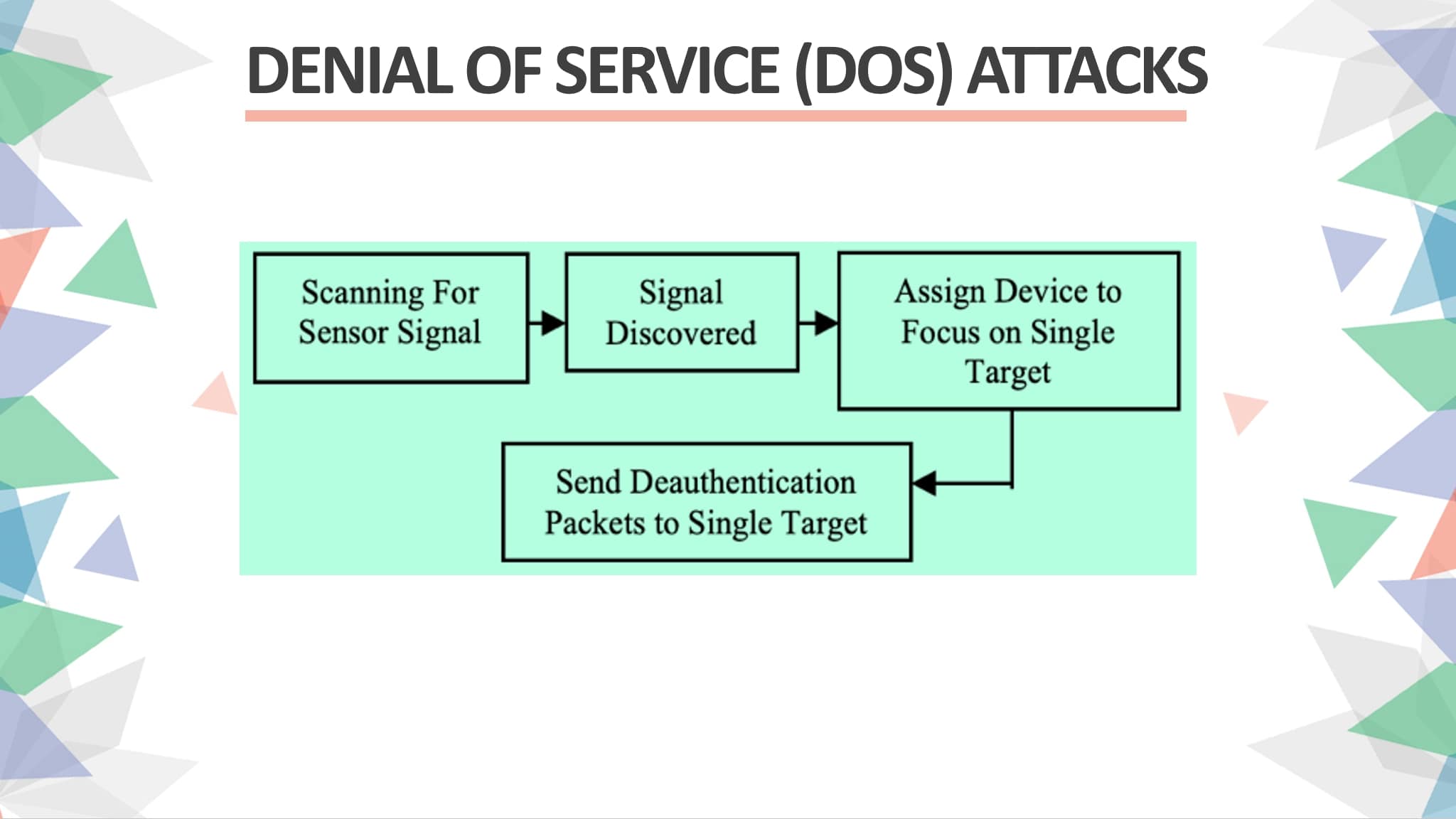 |
DoS is an activity to make assets of the IoT Sensor Node unavailable to its intended user. In this study, DoS is an activity to make the IoT Sensor Node unavailable and unable to transmit its
signal towards the Cloud. A vulnerable sensor node may become victim of a DoS attack only by receiving too much of the malicious packets. An attacker may craft malicious packets
known as Deauthentication packets in an attempt to flood the network.
|
| ICACT20210221 Slide.06
[Big Slide]
|
Chrome Click!! |
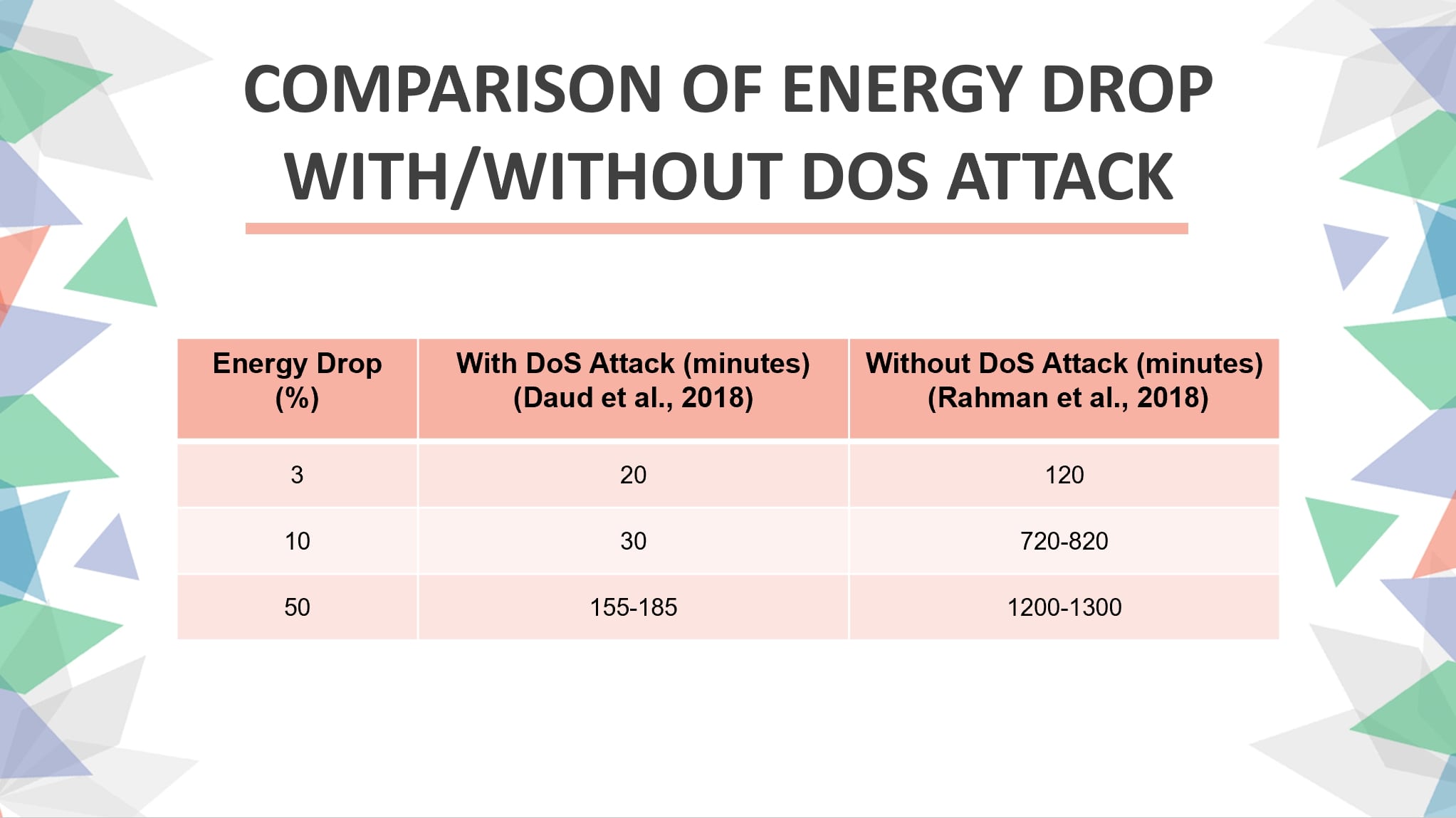 |
The table compares the time taken for the power to drop to a certain percentage during normal operation and during DoS attack. These values are then used to set the threshold in the
algorithm. In normal situation, it takes up to 120 minutes for energy of IoT sensor node to drop to 3 %, while when attacked by DoS, the 3 % energy drop occurred within 20 minutes.
While for 720-820 minutes the energy of IoT sensor Node drop 10% and when it has been attacked by DoS, the 10 % energy drop occurred within 30 minutes. Whereas for 1200-1300
minutes, the energy drop 50% and when it has been attacked by DoS, the 50% energy drop occurred within 155-185 minutes.
|
| ICACT20210221 Slide.07
[Big Slide]
|
Chrome Click!! |
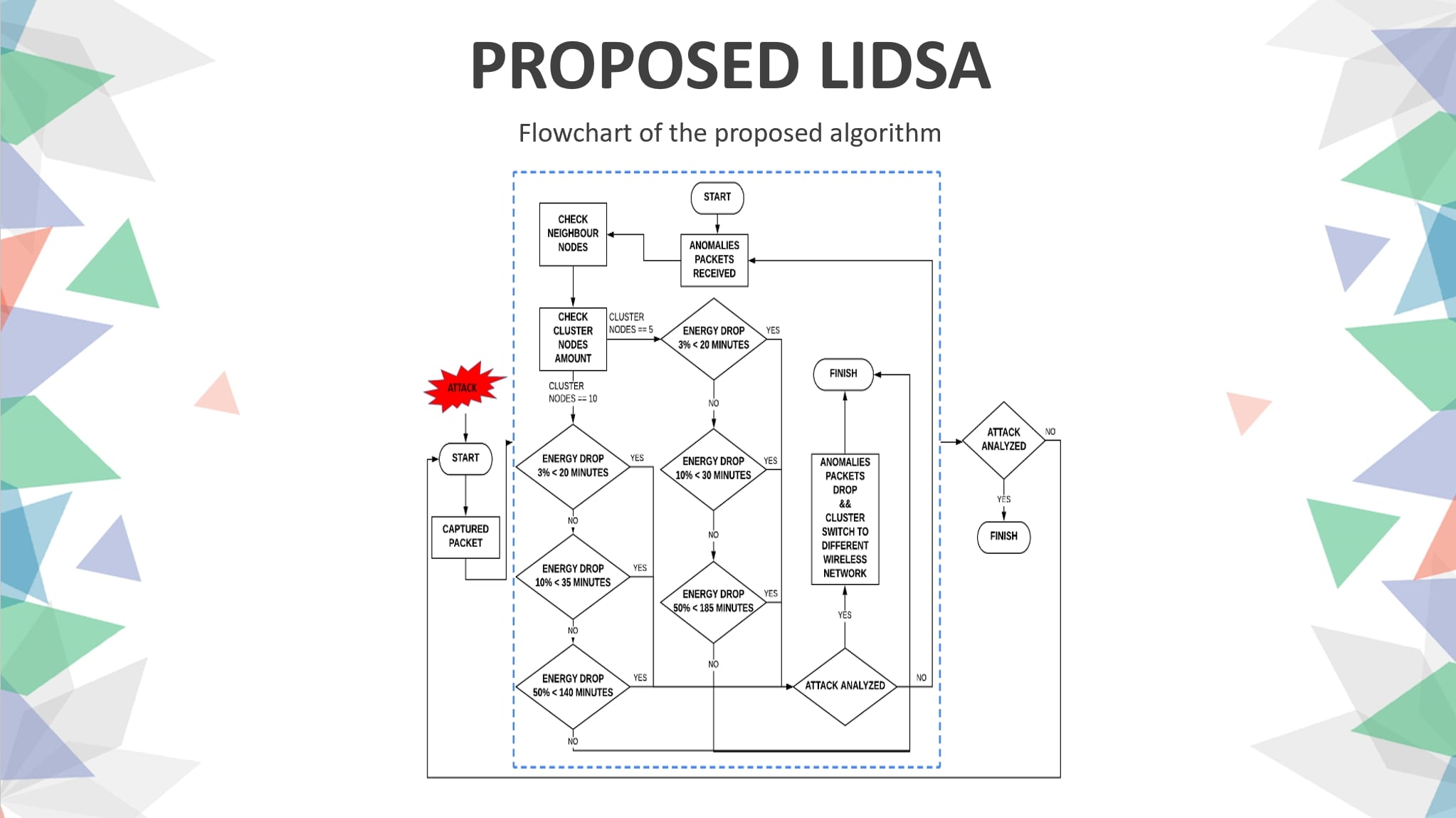 |
The lightweight algorithm shall be lightweight to adhere to IoT Sensor Node low computational power and low energy consumption. The lightweight algorithm was designed specifically for mitigating a DoS attack on IoT Sensor Node. The proposed algorithm for IoT Sensor Node shall prevents the abnormal energy consumption by monitoring, calculating and evaluating energy drop from each cluster nodes based on few condition.
In abnormal cluster node behavior, if energy drop reaches 3% in less than 20 minutes anomalies packet will be analyzed, and abnormality is classified as an attack. Anomalies packets will be dropped, and the affected cluster will switch to a different wireless network to terminate the outbreak. There are following conditions after that. If the voltage drop is less than 3% within
20 minutes, packets will be transmitted as usual. If there is energy drop reaches 10% in less than 30 minutes, the abnormal is classified as an attack, so the anomalies packet
will be dropped, and the cluster will switch to a different wireless network. If not, the testbed operates as usual. Then, if the energy drop reached 50% in less than 185 minutes, the
algorithm will detect the situation as abnormal behavior. The anomalies packets will be dropped, and the IoT Sensor Node will switch to a different wireless network
|
| ICACT20210221 Slide.08
[Big Slide]
|
Chrome Click!! |
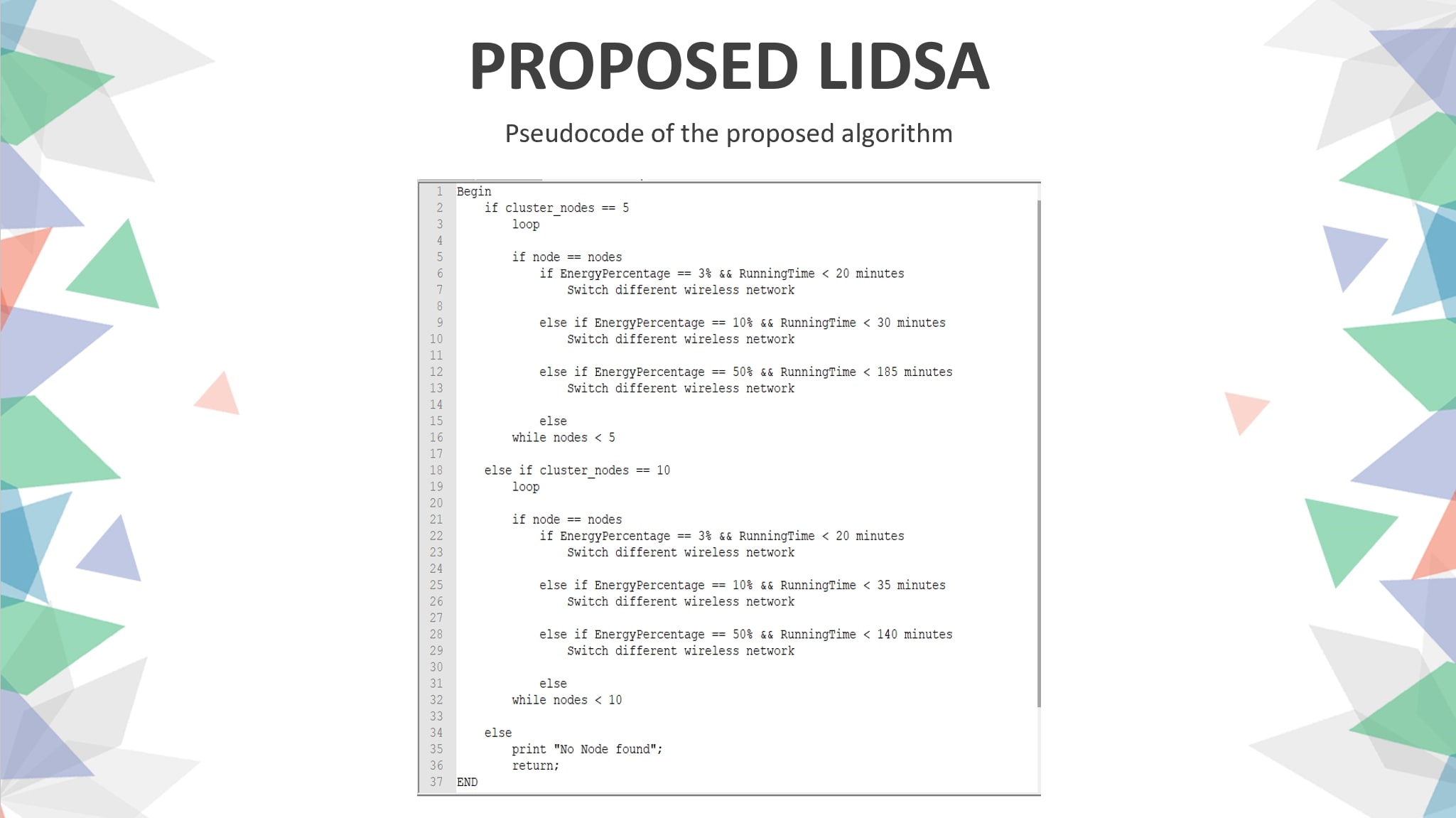 |
A pseudocode was developed based on the flow chart. The algorithm in the pseudocode helps programmers or nonprogrammers determine the step-by-step actions a program must take to complete a required or desired action. Programming languages are difficult to read for most people, but pseudocode allows nonprogrammers, such as business analysts, to review the steps to confirm the proposed code matches the coding specifications. This provides a handy reference during coding. The development of pseudocode for this paper is to assists different language programmers to adopt the algorithm in their coding. So that the algorithm shall benefit to more programmers rather than a single programming language |
| ICACT20210221 Slide.09
[Big Slide]
|
Chrome Click!! |
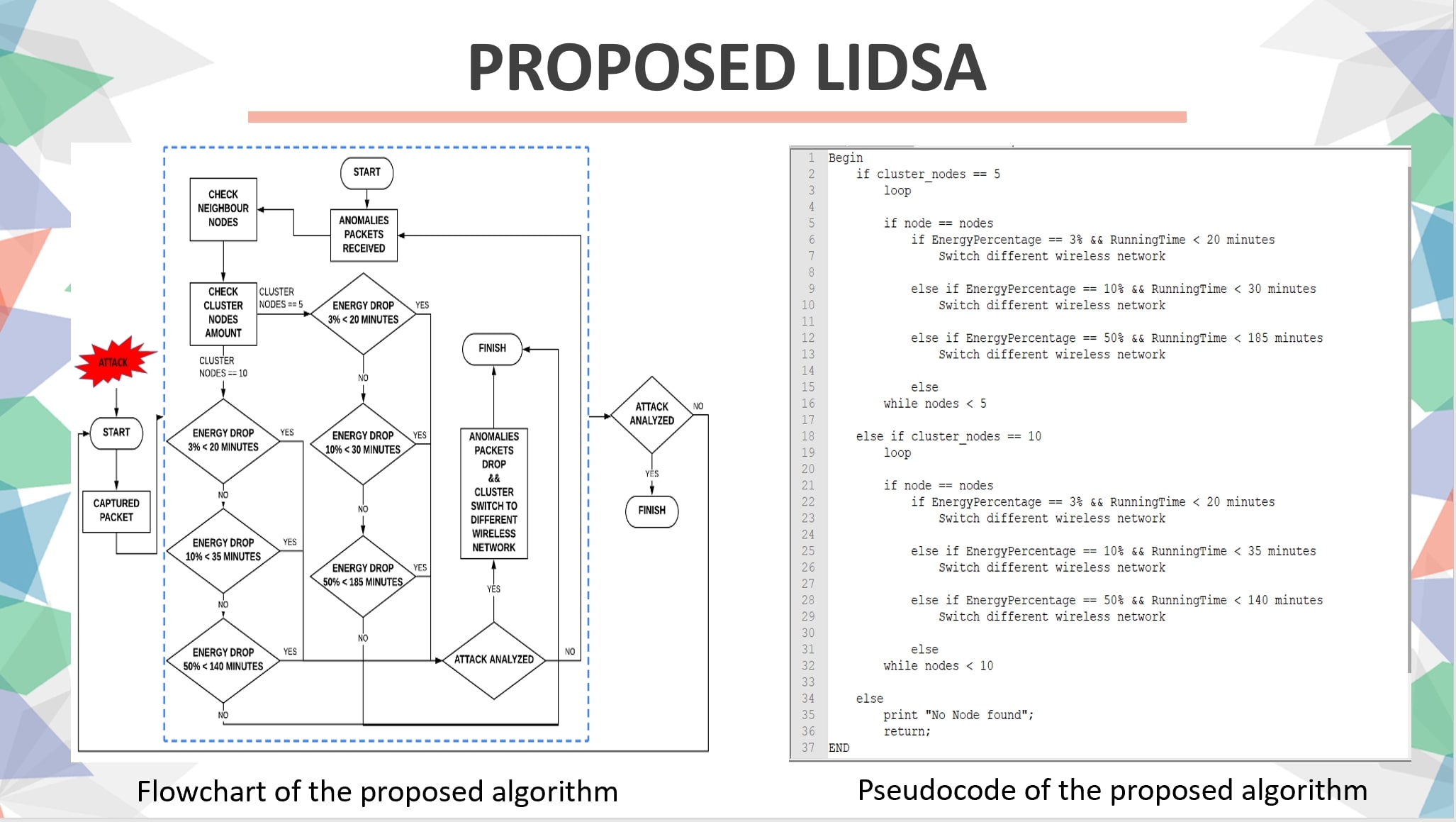 |
An algorithm can be described in several ways. One way is to give it a graphical form of notation, known as a flowchart, that places each processing step in a box and uses arrows to indicate the next step. Another way is with pseudocode. The pseudocode is an implementation of an algorithm in the form of annotations and informative text written in plain English
without strict programming language syntax. Both flowchart and pseudocode are developed to assist the process of developing the lightweight algorithm
|
| ICACT20210221 Slide.10
[Big Slide]
|
Chrome Click!! |
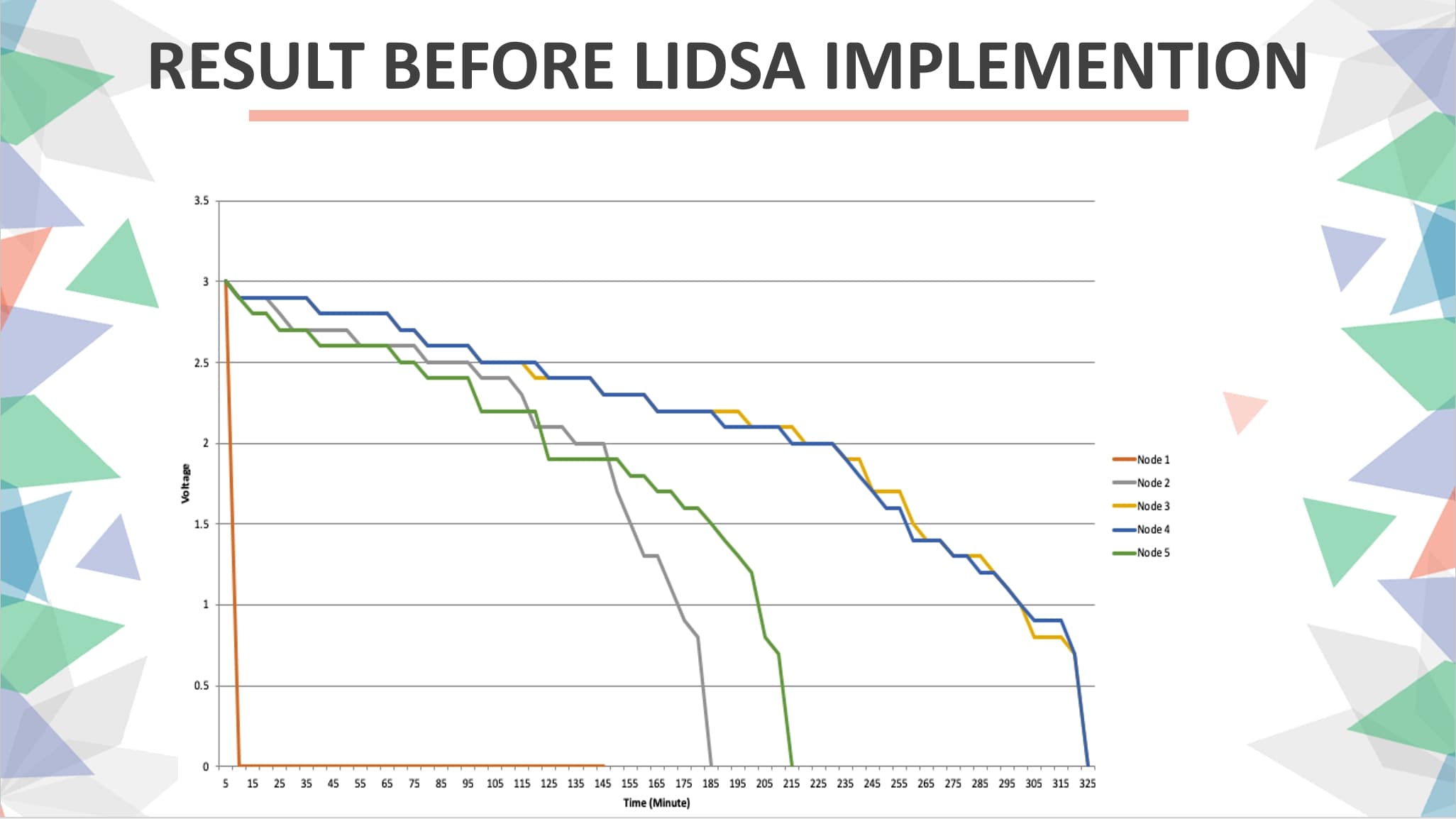 |
The graph shows that the DoS attack towards IoT Sensor Node is feasible. For reference, Sensor Node 1 was configured as the DoS victim can also be referred to as a malicious node. The
impact of the attack causes Sensor Node 1 to be defective, and no data sent to the Cloud after the attack. There is 12.5 percent (12.5%) of data loss within five (5) minutes, and after the fifth minutes of testing, no data reading is received on the Cloud. The node is still alive, but due to the attack, it was unable to operate correctly |
| ICACT20210221 Slide.11
[Big Slide]
|
Chrome Click!! |
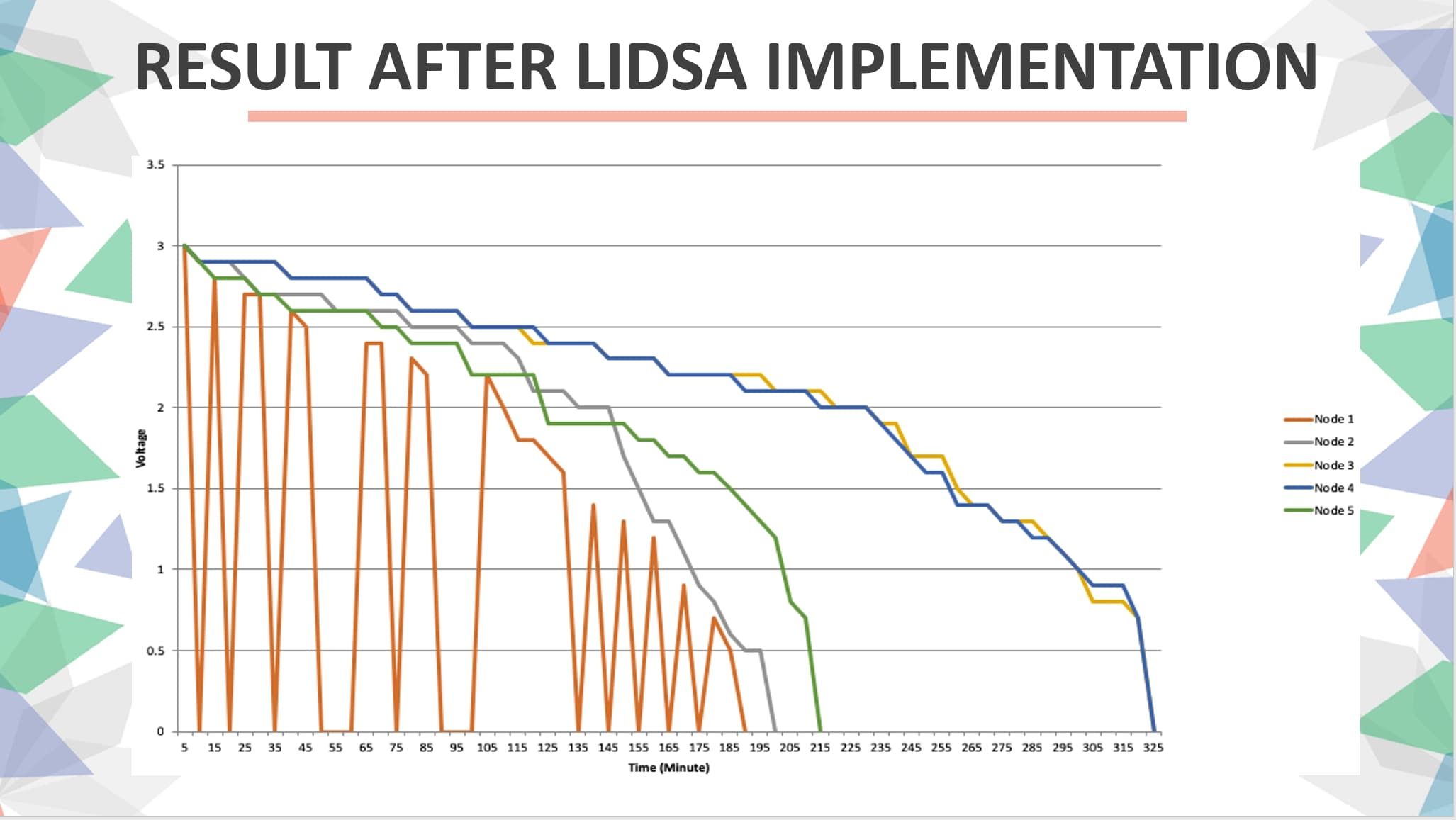 |
The graph shows an irregular pattern. Once the DoS attack launched, the Sensor Node 1 voltage reading has a sharp, sudden drop off to zero voltage at tenth minutes.
Five minutes after that, the node operated and sent data to Cloud with a voltage a little bit lower than 3V before it was disabled again. The pattern was repeated until the note was
completely shut off after 190 minutes. The longest time it was able to operate without being interrupted is during minute 105 until 135 (30 minutes).
However, due to the DoS attack, the voltage has decreased to 2.8V. The DoS attack occurred again in minute-20, causing the node to be temporarily defective. The situation met the
algorithm's first condition, so the packet was dropped, and Sensor Node 1 switched to another wireless network. The pattern was repeated whenever the conditions of the algorithm
matched. If the conditions do not match, the packets will be transmitted as usual, which means the IoT Sensor Node will be able to send data to the cloud without interruption. If that
is the case, the graph line will be one with slow and steady voltage drops. However, despite the irregular pattern, the figure proves that Sensor Node 1 can send data to Cloud
during the DoS attack and with an improved lifespan with the implementation of the proposed algorithm.
|
| ICACT20210221 Slide.12
[Big Slide]
|
Chrome Click!! |
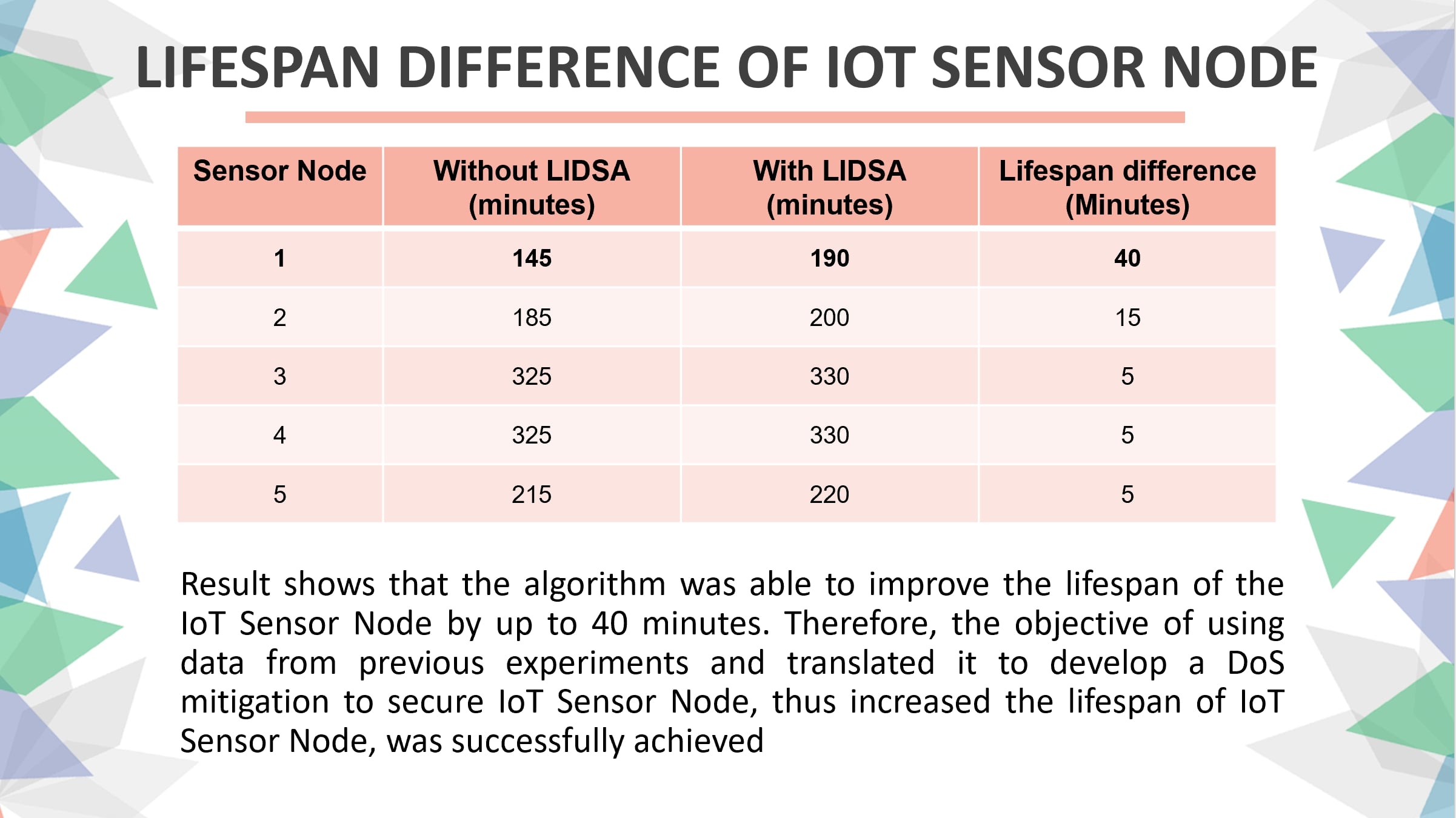 |
Analysis of the implementation of LIDSA on the testbed shows a significantly improved lifespan of IoT Sensor Node. The lifespan of Sensor Node 1, which was configured as the DoS victim, is less than 150 minutes which is 145 minutes. However, after the implementation of the proposed algorithm, the lifespan of Sensor Node 1 was increased up to 190 minutes.
The result shows that the algorithm was able to improve the lifespan of the IoT Sensor Node by up to 40 minutes.
Therefore, the objective of using data from previous experiments and translated it to develop a DoS mitigation to secure IoT Sensor Node, thus increased the lifespan of IoT
Sensor Node, was successfully achieved.
|
| ICACT20210221 Slide.13
[Big Slide]
|
Chrome Click!! |
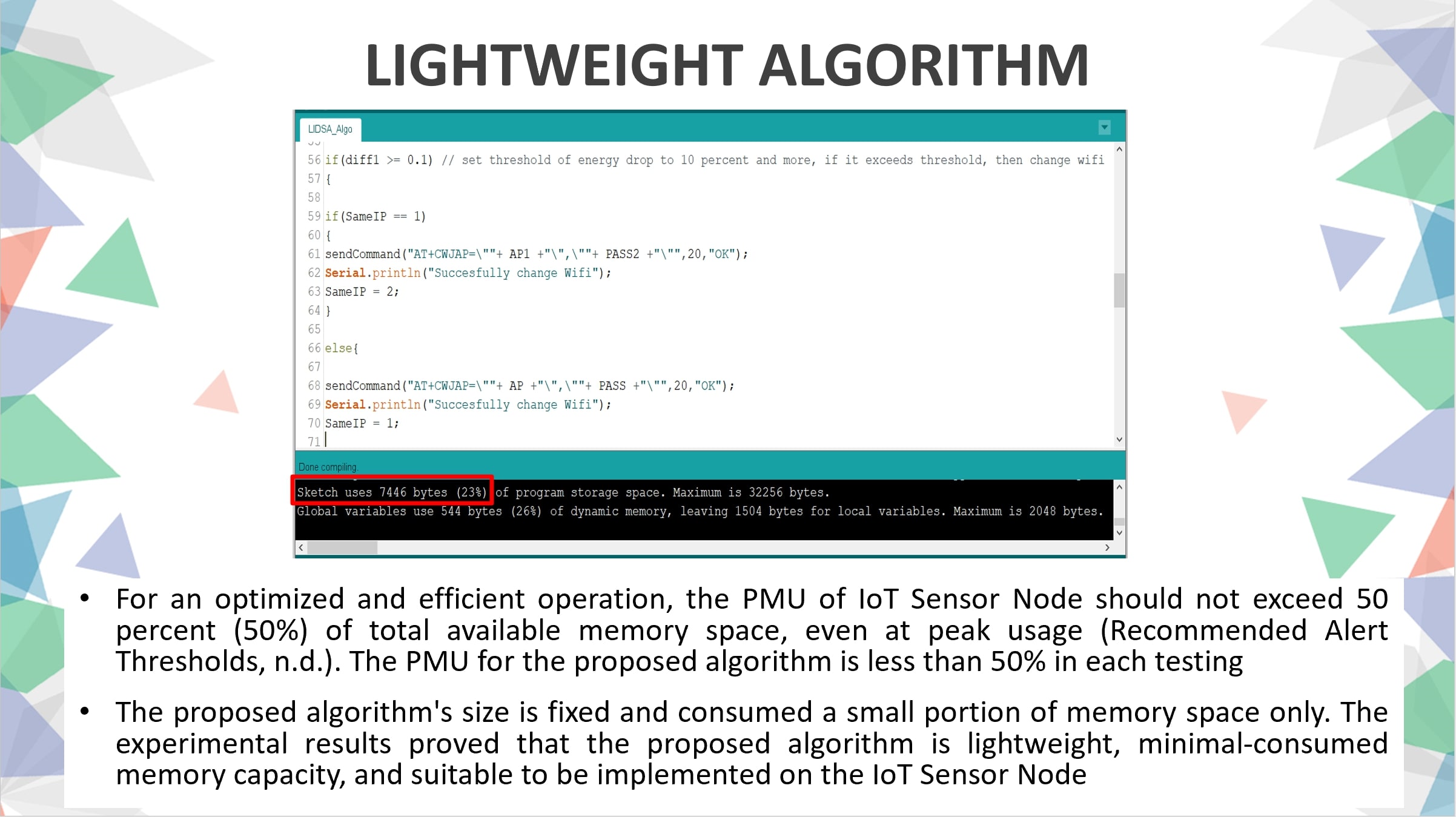 |
Based on the red box as shown in the figure, the algorithm consumes 7446 bytes of program storage space out of a maximum 32KB. This data means the algorithm takes about only
23 percent (23%) of the flash memory.
For an optimized and efficient operation, the PMU of IoT Sensor Node should not exceed 50 percent (50%) of total available memory space, even at peak usage. The PMU for the proposed
algorithm is less than 50% in each testing. The proposed algorithm's size is fixed and consumed a small portion of memory space only. The experimental results proved that the proposed
algorithm is lightweight, minimal-consumed memory capacity, and suitable to be implemented on the IoT Sensor Node
|
| ICACT20210221 Slide.14
[Big Slide]
|
Chrome Click!! |
 |
This study suggested that the proposed lightweight algorithm is essential to secure the IoT Sensor Node from DoS attacks. The algorithm can equip any sensor with the capability of
preventive and detective mechanisms. Further enhancement on the lightweight algorithm is a must to keep pace with the rapid technology development. For suggestions, the improvement may also include cryptography or Encryption mechanism in the algorithm.
|
| ICACT20210221 Slide.15
[Big Slide]
|
Chrome Click!! |
 |
QnA session |















