Now 5508 visitors
Today:0 Yesterday:0
Total: 148240
212S 50P 4R
2026-10-20, Week 43 |
| Member Login |
| TACT Journal Homepage |
| Call for Paper |
| Committee |
| Find My Paper |
| Author Homepage |
| Statistics & History |
| Welcome Message |
| Paper Procedure |
| FAQ |
| Paper Archives |
| Outstanding Papers |
| Author Homepage |
| - Paper Procedure |
| - Journal Procedure |
| - Presentation Tips |
|
| Program & Proceedings |
| Program with Papers |
| Plenary Session |
| Tutorial Session |
|
| Presentation Platform |
| Hotel & Travel Info |
| About Korea |
| Accommodation |
| Transportation |
| VISA |
| Other Infomation |
|
| Photo Gallery |
| Scheduler Login |
| Seminar |
| Archives Login |
|
| Sponsors |

|

|

|

|

|

|

|

|

|

|
|
|
|
|
 ICACT20210233 Slide.01
[Big Slide] |
Chrome  Click!! |
 |
Hi, everyone. Then, I will start presenting the poster for the ICACT 2021 Conference. The title of the presentation is’ A Study on Multi-media Disaster Information Contents to provide Disaster Alert Service to the Public’, and it is a study on various media-based disaster information contents to solve the pan-national thirst for more information on disasters that have occurred. I am Beom-Jun CHO of KIT Valley who will be in charge of the presentation. |
| ICACT20210233 Slide.02
[Big Slide]
|
Chrome Click!! |
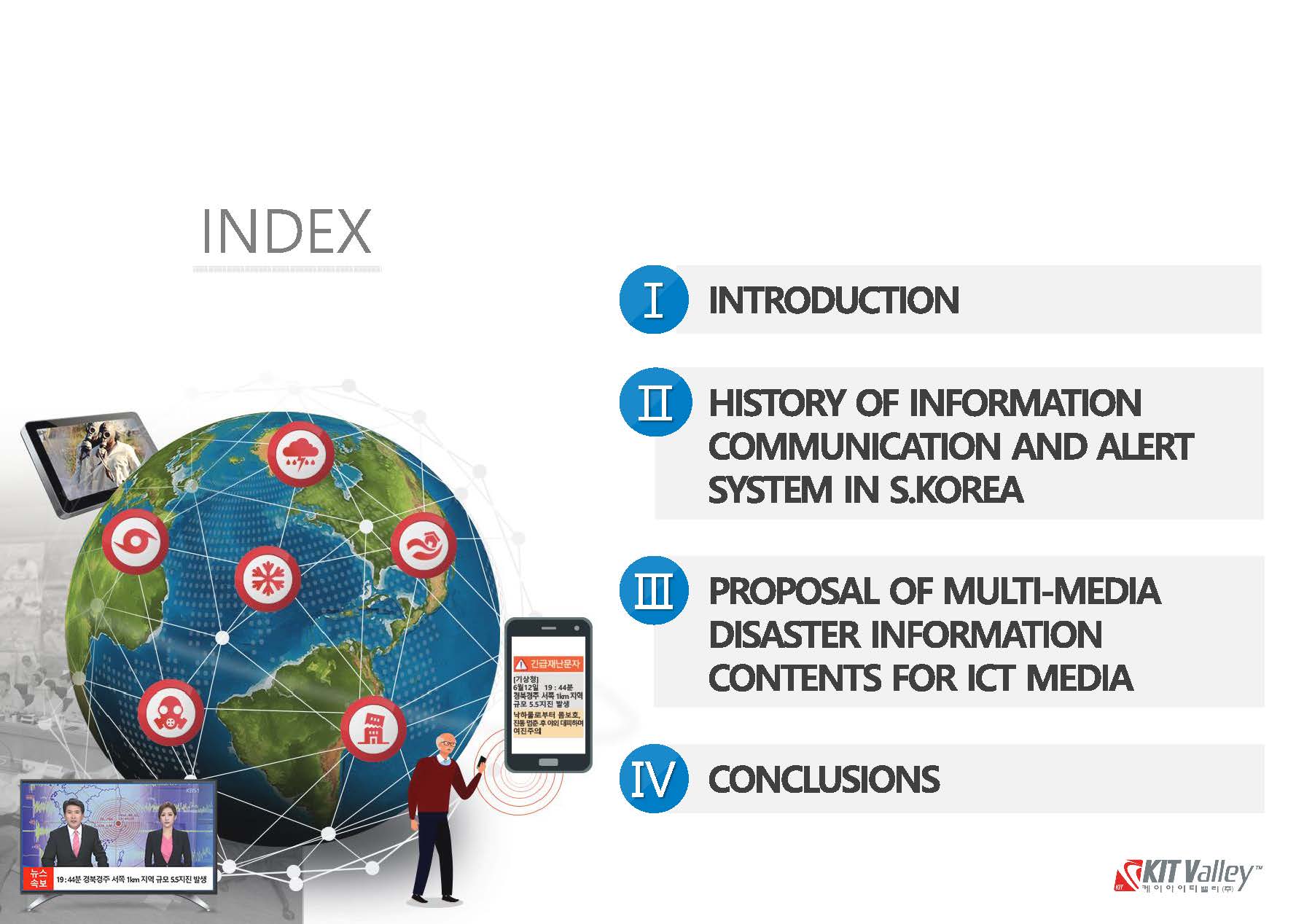 |
The contents to be presented will be ‘Introduction’, ‘History of information communication and alert system in south Korea’, ‘Proposal of multi-media disaster information contents for ICT media’ and ‘Conclusions’.
|
| ICACT20210233 Slide.03
[Big Slide]
|
Chrome Click!! |
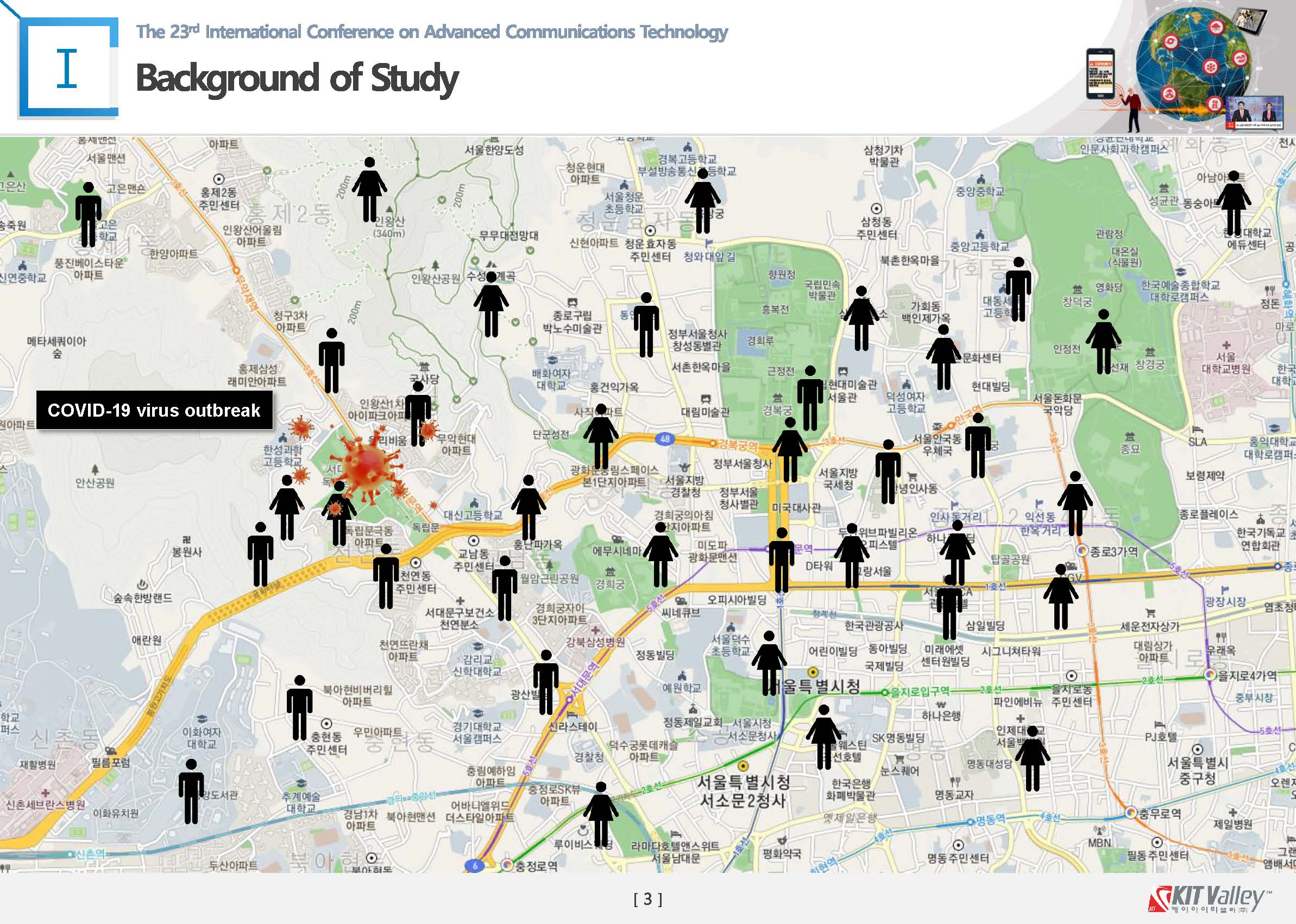 |
First is the study background. Currently, in Korea and around the world, we are suffering a lot from the unprecedented virus called “COVID-19”. In particular, COVID-19 is highly contagious and fatal, so it is spreading to many people around it due to only one infected person.
|
| ICACT20210233 Slide.04
[Big Slide]
|
Chrome Click!! |
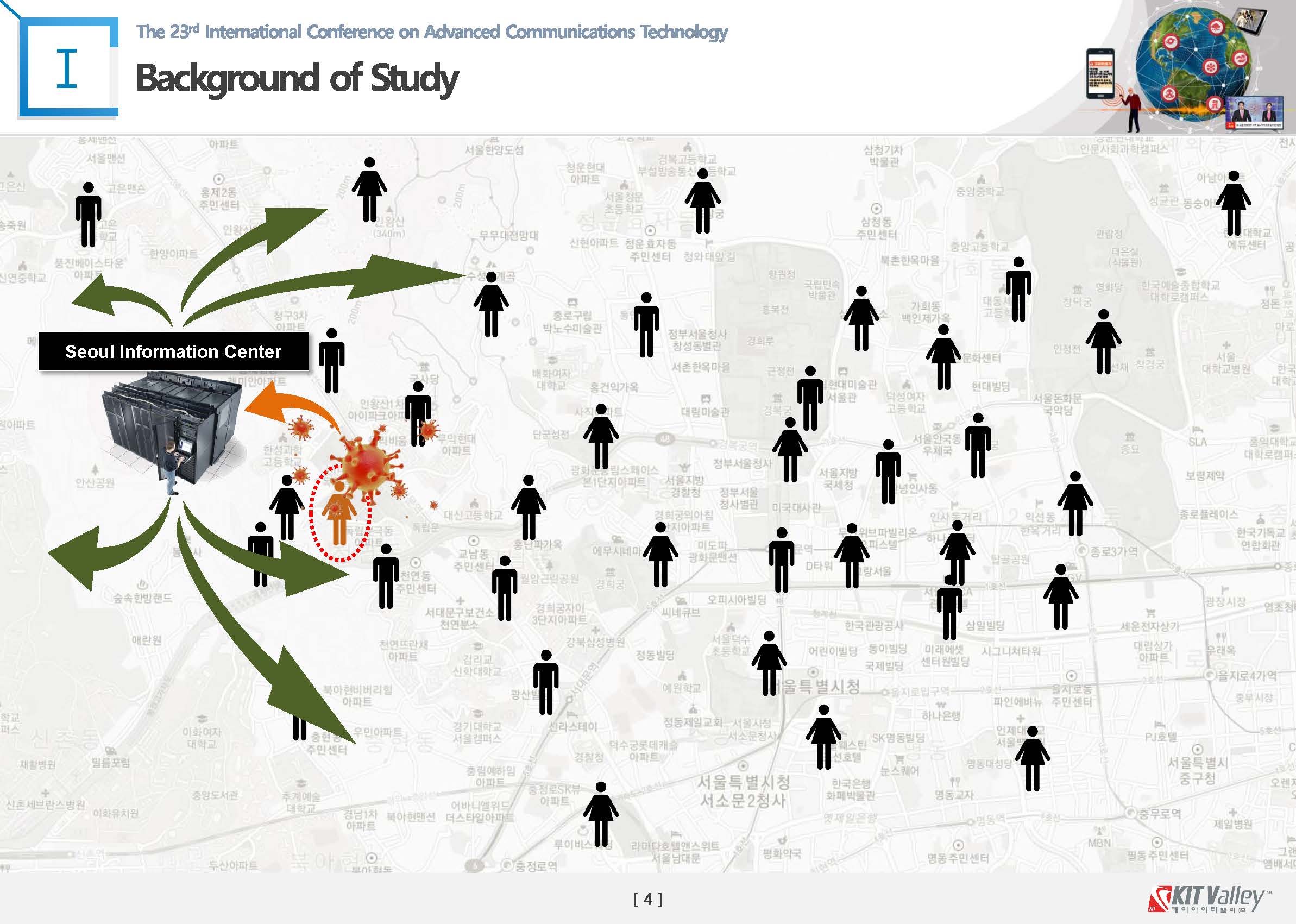 |
In this process, governments, including local governments, provide real-time relevant information to the public. In addition, in order to reduce the damage caused by infected people as much as possible, we provide a lot of information different from existing disaster warnings to nearby citizens, such as the location of the infected person and the route of travel.
|
| ICACT20210233 Slide.05
[Big Slide]
|
Chrome Click!! |
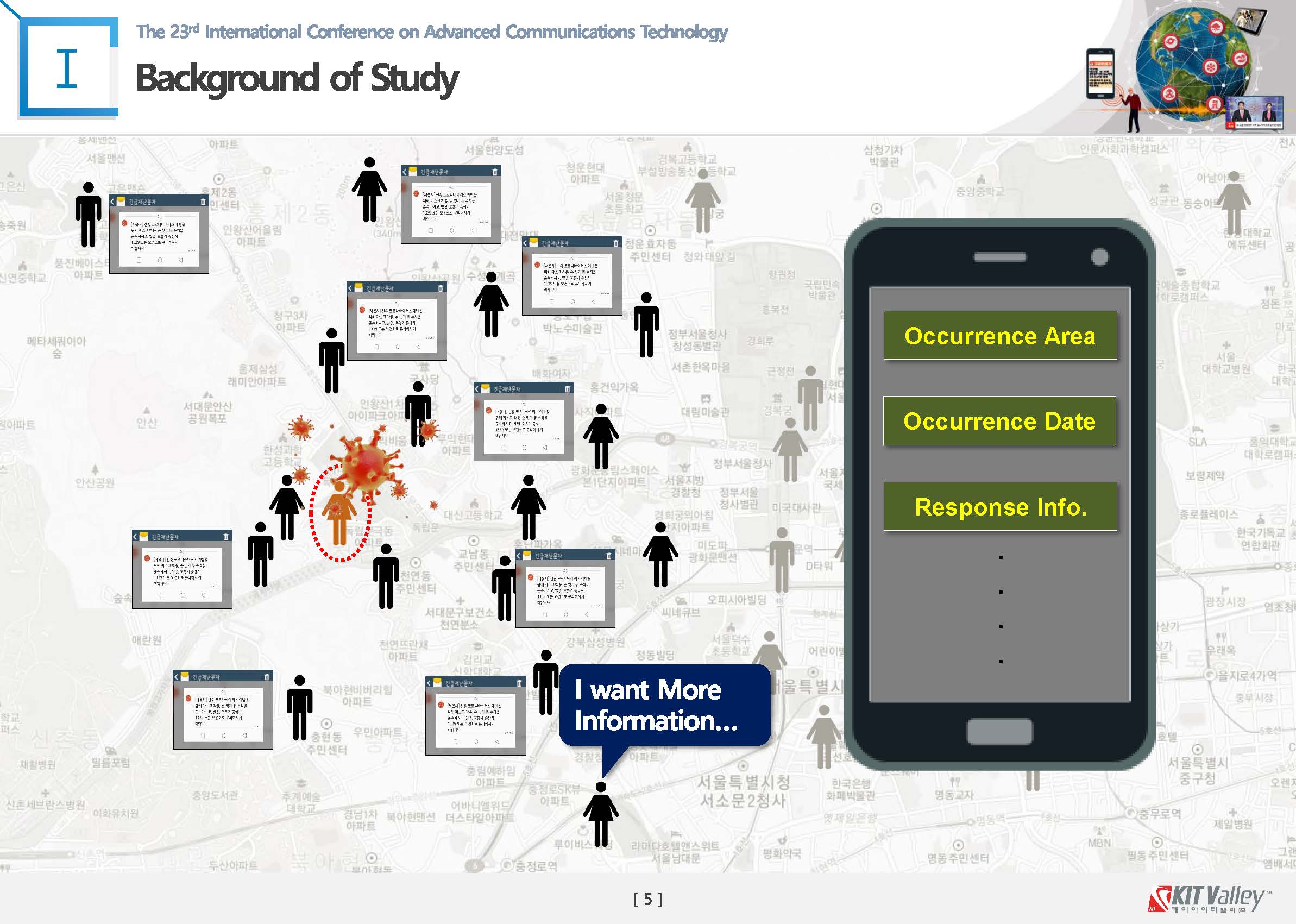 |
This has become possible because information can be provided through personal mobile terminals according to the development of information and communication. Nevertheless, the people want to be able to respond to themselves through more information and more detailed information.
|
| ICACT20210233 Slide.06
[Big Slide]
|
Chrome Click!! |
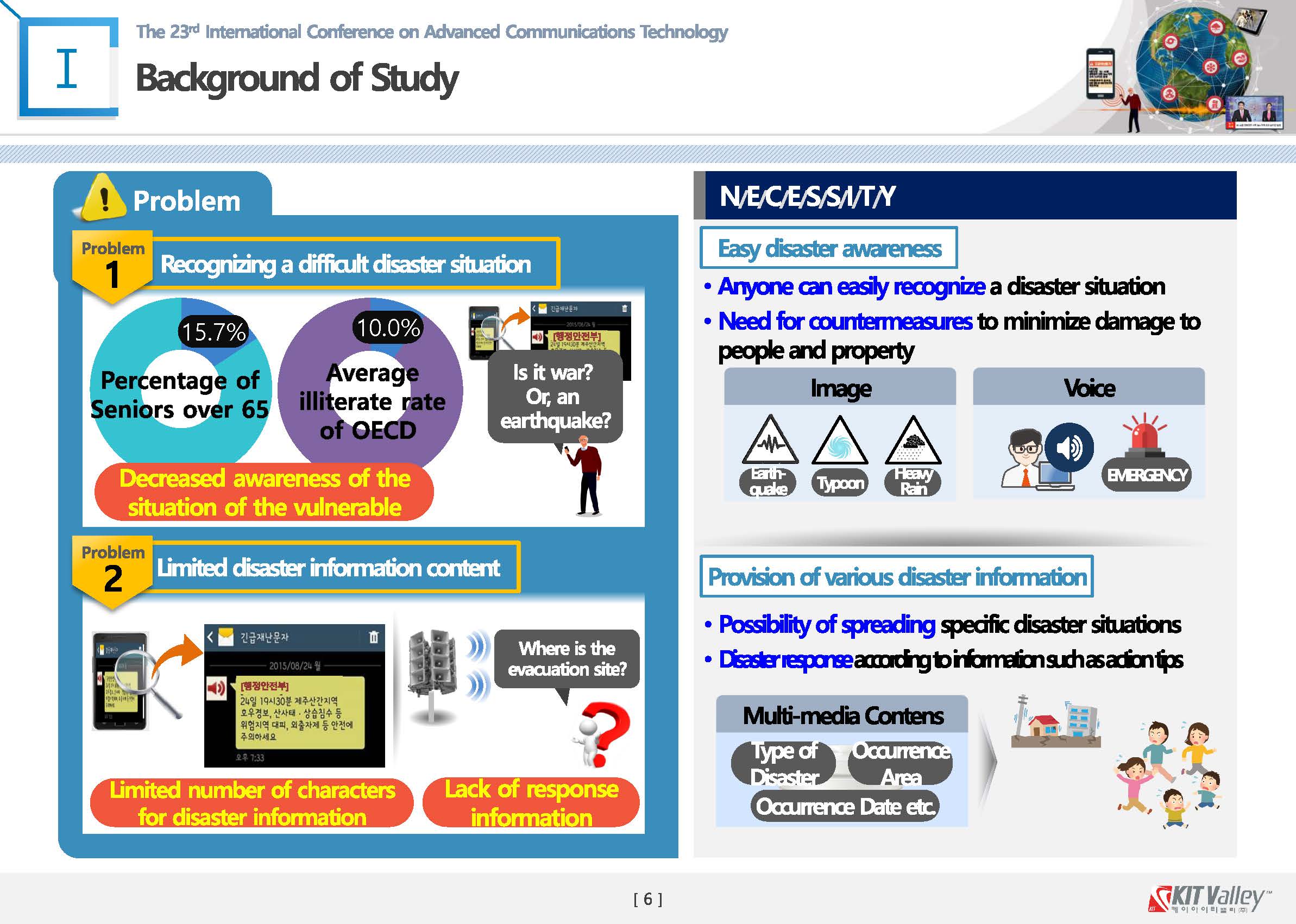 |
In light of this current situation, let's take a brief look at the status of disaster alerts. Currently, in Korea, disaster information is delivered through broadcasts, including emergency disaster messages, in case of disasters related to earthquakes, typhoons, and infectious diseases such as COVID-19. However, the awareness of the situation is falling a lot for the elderly over 65 years old, the illiterate, and the vulnerable in disaster situations such as foreigners. In addition, due to limited disaster information, it is difficult to respond to disaster situations. In order to overcome this problem, there is a need for research on disaster information so that anyone can easily recognize the disaster situation and provide more information to quickly respond to the disaster situation.
|
| ICACT20210233 Slide.07
[Big Slide]
|
Chrome Click!! |
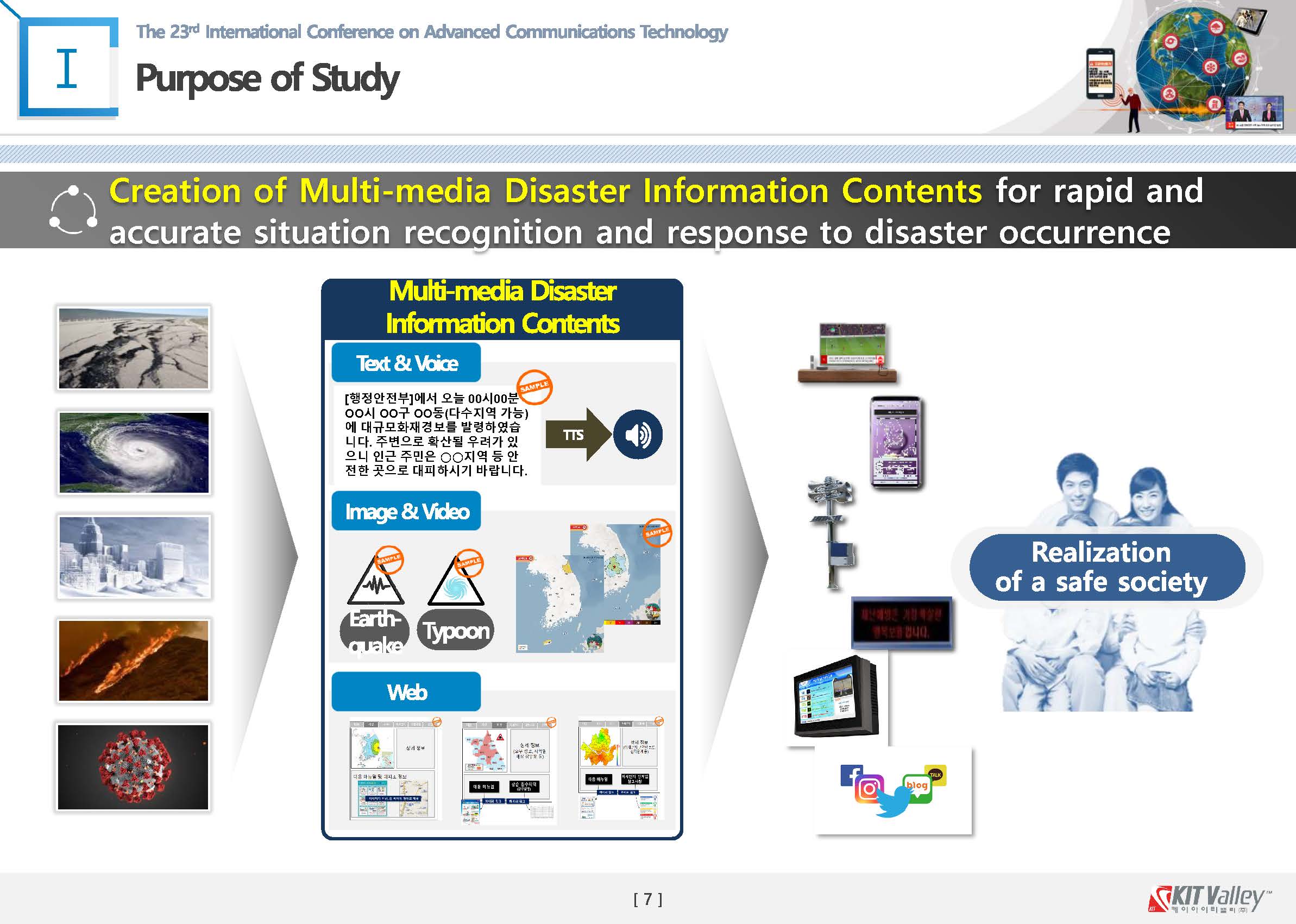 |
Against this background, I would like to introduce a study on multi-media disaster information contents for rapid and accurate situation recognition and response to disaster occurrence. The purpose of this study is to collect observation and analysis data through a system operated by the ‘Korea Meteorological Administration’ and the ‘Ministry of Public Administration and Security’ when disasters such as earthquakes and typhoons occur. This is a basic study to create multi-media disaster information contents. Through this, we aim to realize a safe Republic of Korea by distributing disaster information through multi-media operated by central ministries, local governments and the private sector.
|
| ICACT20210233 Slide.08
[Big Slide]
|
Chrome Click!! |
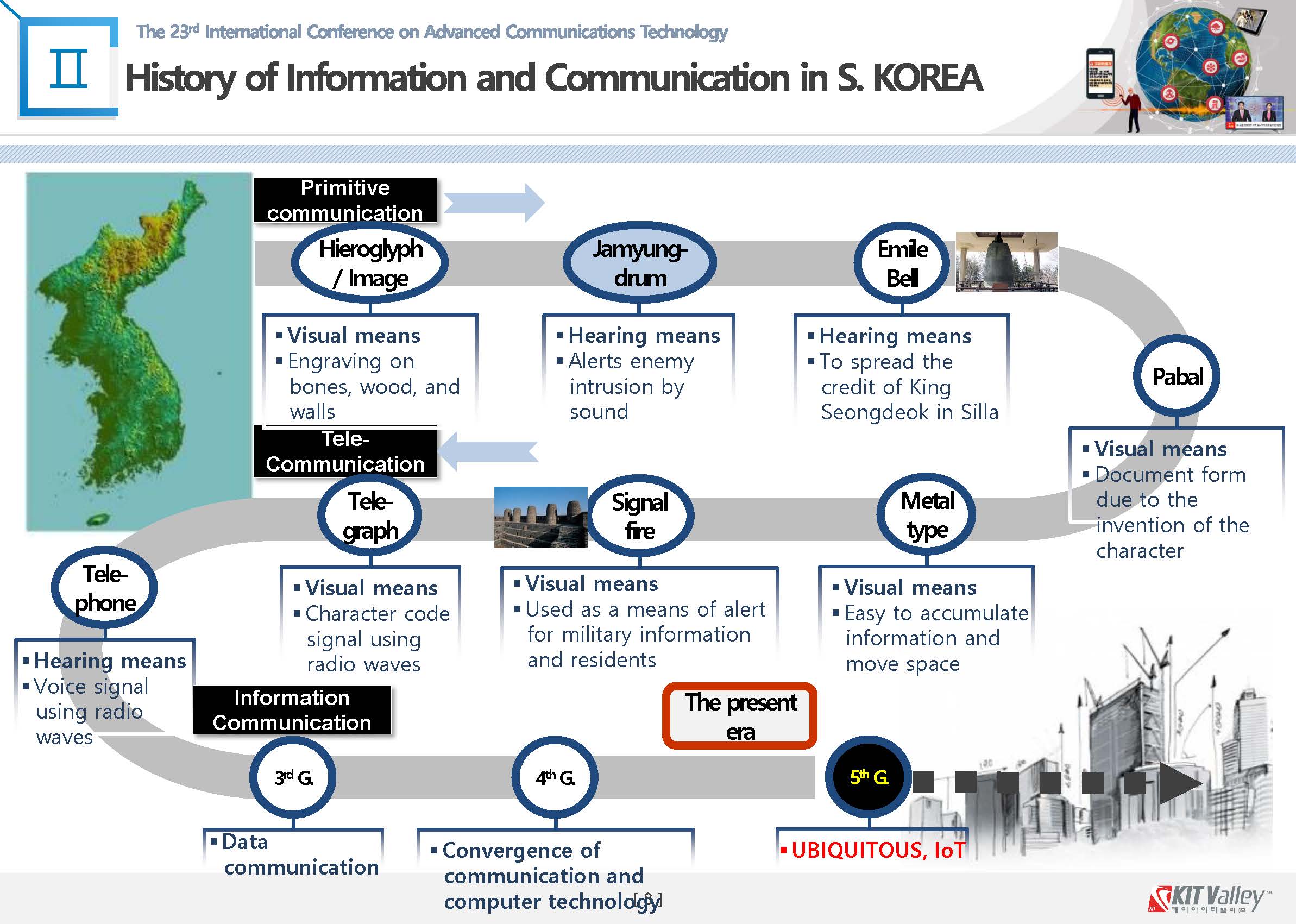 |
Before the contents of the study, I will briefly look at the history of information communication and alert in Korea.
As mentioned earlier, various types of information, including alerts, are highly related to the development of communication. Korea has also been developing various communications since similar times.
Until the beginning of the “telecommunications” era in 1885, it was referred to as “primitive communication,” and even at this time, much effort was made to deliver information faster and more accurately by mobilizing “visual” and “hearing” means. In particular, due to the invention of the letter, its meaning has become more accurate.
As it entered the era of “telecommunications”, we entered a period of full-scale communication using radio waves such as “telegraphy” and “telephone”. From this time on, as more and more information could be communicated more and more rapidly, the speed of industrial development also progressed rapidly.
As it entered the “third generation”, which can be called full-scale information communication, it has evolved from “person-to-person communication” to “person-to-machine communication”.
Now, it has been developed into the “5th generation” that can communicate “machine-to-machine”, allowing more information to be communicated quickly. Along with the development of information and communication, the development of “alert” is also accelerating.
|
| ICACT20210233 Slide.09
[Big Slide]
|
Chrome Click!! |
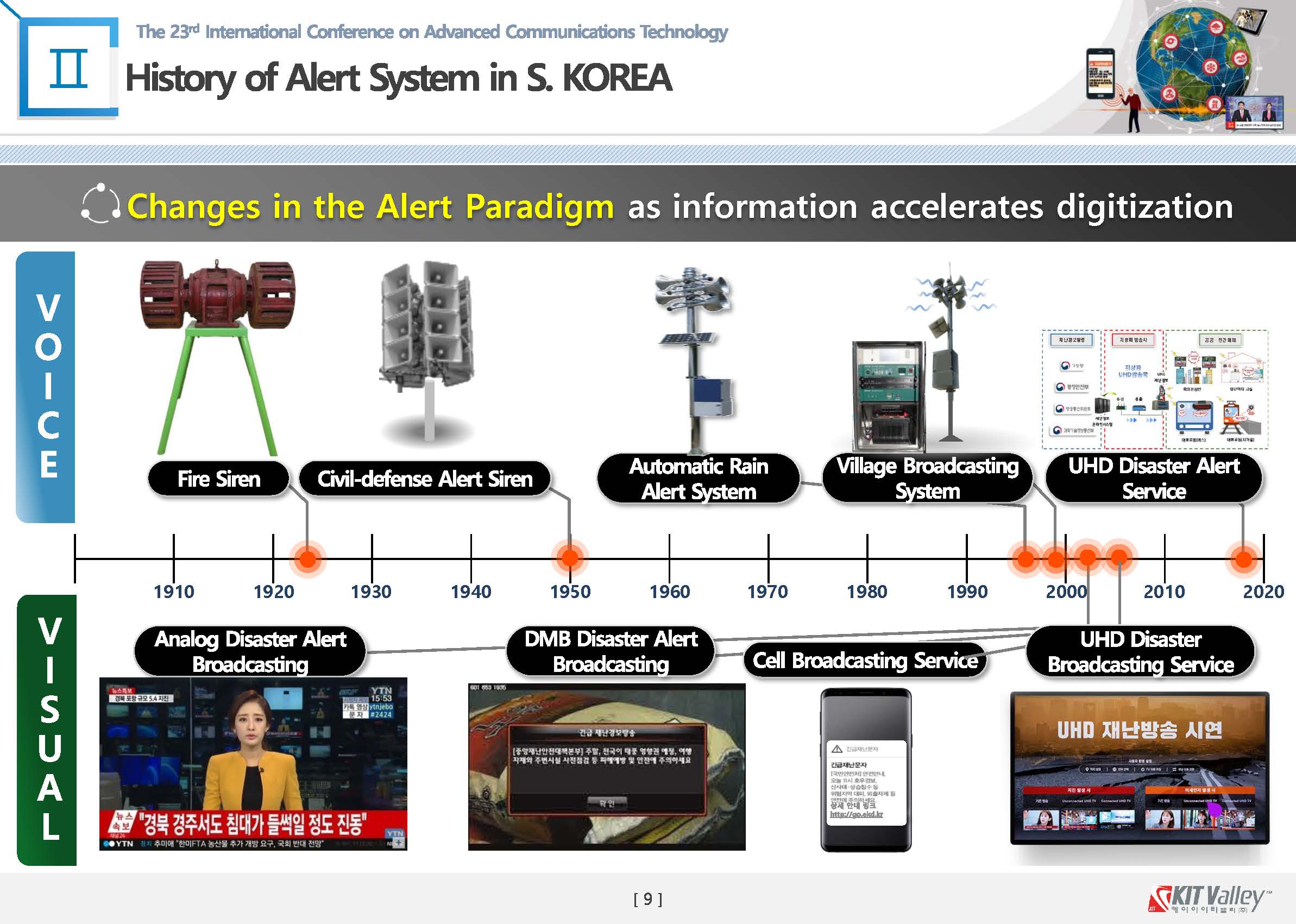 |
As such, the paradigm of alert is changing as information is accelerated in digitization. Alert can be divided into 'voice type' and 'visual type', and i will briefly look at how the alert system is changing with the development of information and communication in Korea.
In the modern era, the first alert of a disaster in Korea was caused by fire, including the siren installed at the Namdaemun Fire Station in 1924. Since then, sirens for civil air defense situations have been created before and after the Korean War, and various disaster forecasting and alert systems have been established until 2000.
However, all of the alert systems up to this point provided "voice type" alert like sirens. Since 2002, starting with the analog disaster warning broadcasting service through TV, the “visual type” has been provided in earnest. As it is gradually becoming digital, a new type of alert system is emerging with a shorter time gap than ever. The point to note here is that with the digitalization of information and communication, the form of alerts is gradually changing to be provided as a 'visual media'. Also, movements have been made to provide a one-way disaster alert service from the government to the people before, but now a two-way system of disaster warning service.
|
| ICACT20210233 Slide.10
[Big Slide]
|
Chrome Click!! |
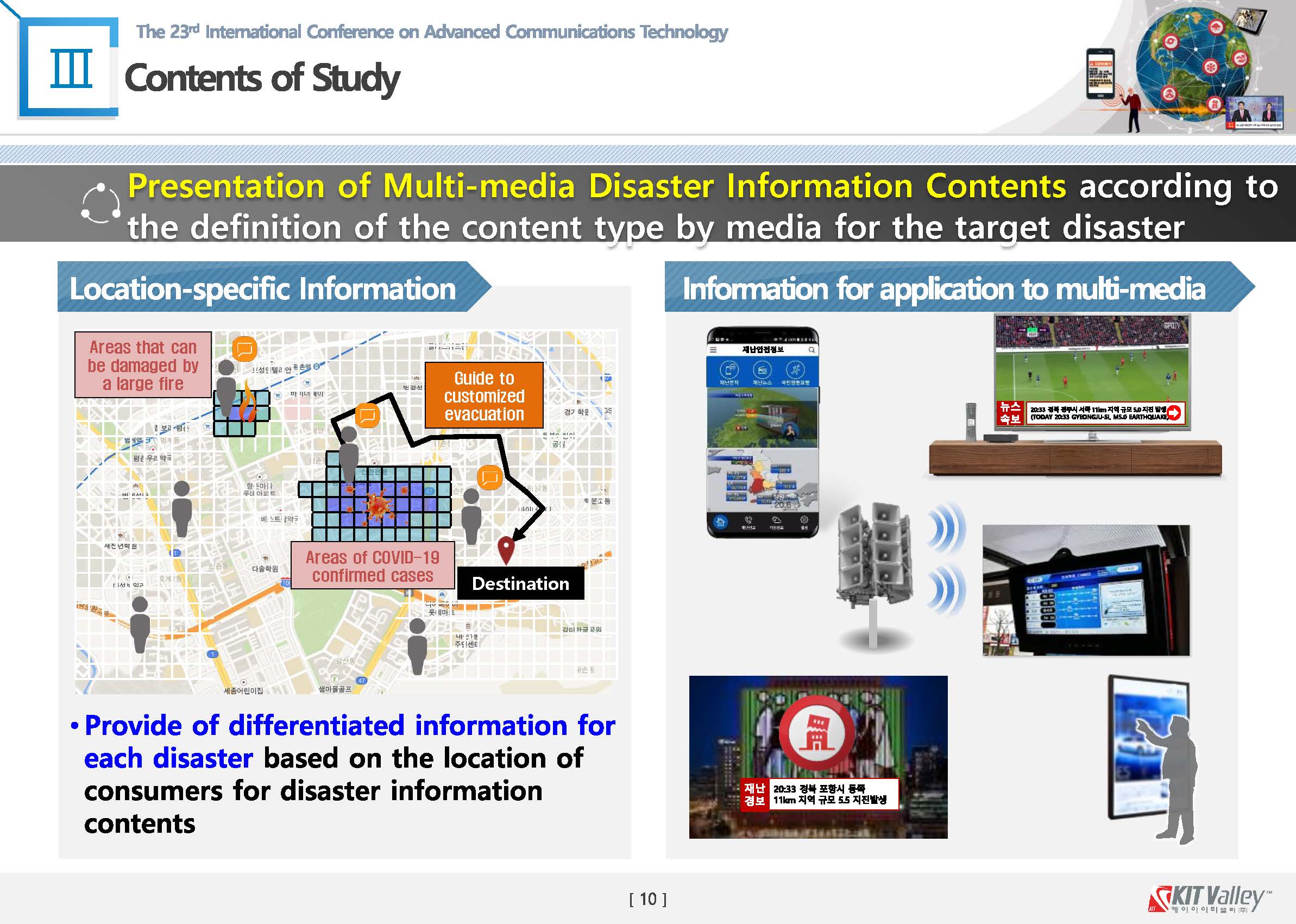 |
Then, I will talk about the contents and results of the research being conducted based on the contents previously introduced. Based on the developed information and communication, it is possible to enable the people to quickly and accurately recognize the disaster situation. The main issues to be addressed in this disaster alert service are ‘Location-specific information' and ‘Multi-media customized information’.
'Location-specific information' is to provide differentiated information for each disaster based on the location of consumers about the provided disaster information contents. Through this, it will be possible to relieve fatigue of various information by preventing indiscreet misuse of disaster information. In order to do this, it is necessary to know the location information of the media in which disaster information is expressed.
In addition, ‘Multi-media customized information' is the provision of optimized disaster information through various media that currently provide visual information. To this end, content should be provided based on the purpose and operation of multi-media.
|
| ICACT20210233 Slide.11
[Big Slide]
|
Chrome Click!! |
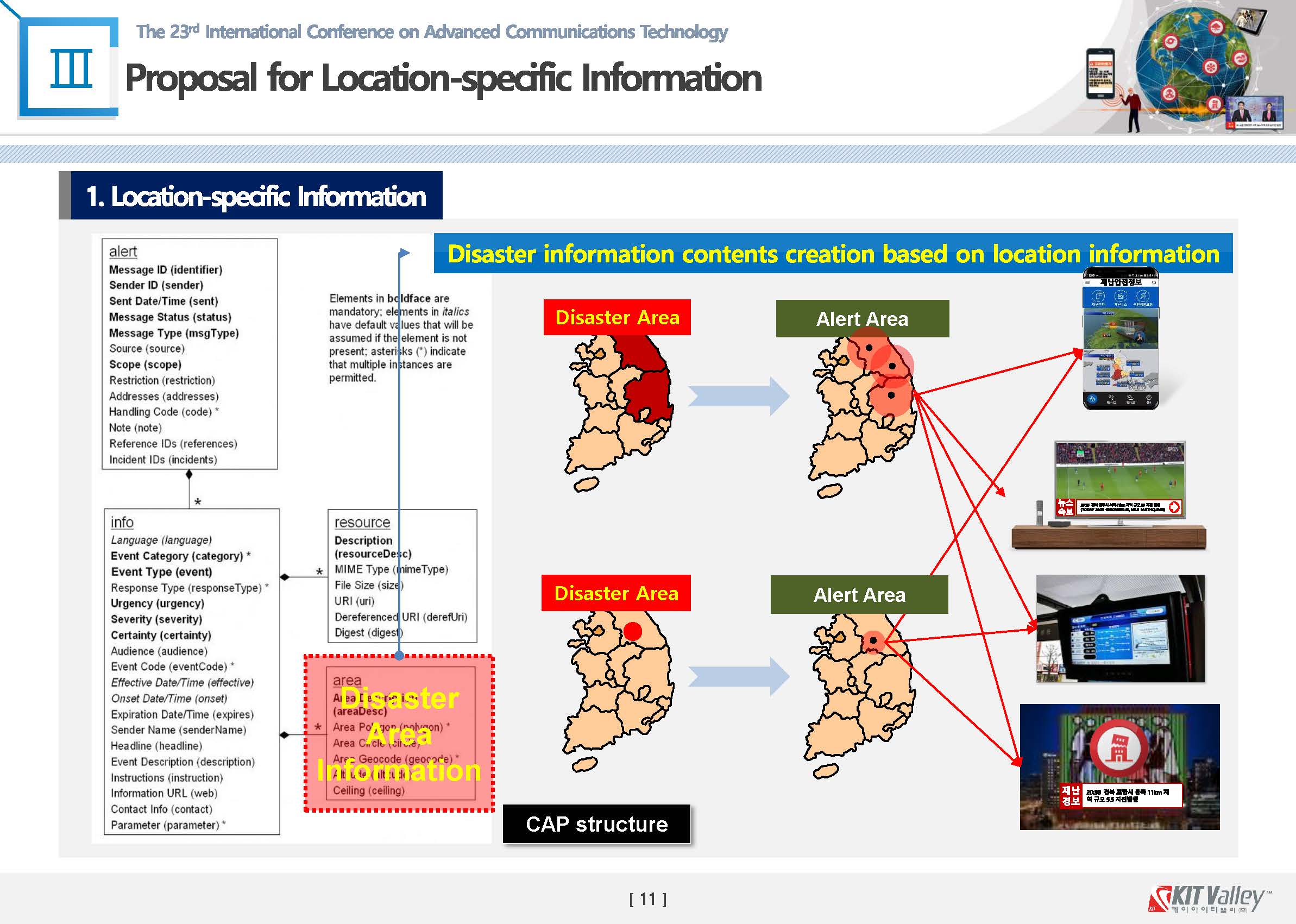 |
First, i will talk about 'location-specific information'. In order to provide location-specific information, it is also necessary to know the location information of the user, that is, the media, based on the disaster area information. Here, in order to check the information on the disaster area, it is possible to check through the area information included in the alert protocol called ‘CAP’. Through this, it is possible to provide customized disaster information based on the location information of various media within the area by selecting an alert issuing area.
|
| ICACT20210233 Slide.12
[Big Slide]
|
Chrome Click!! |
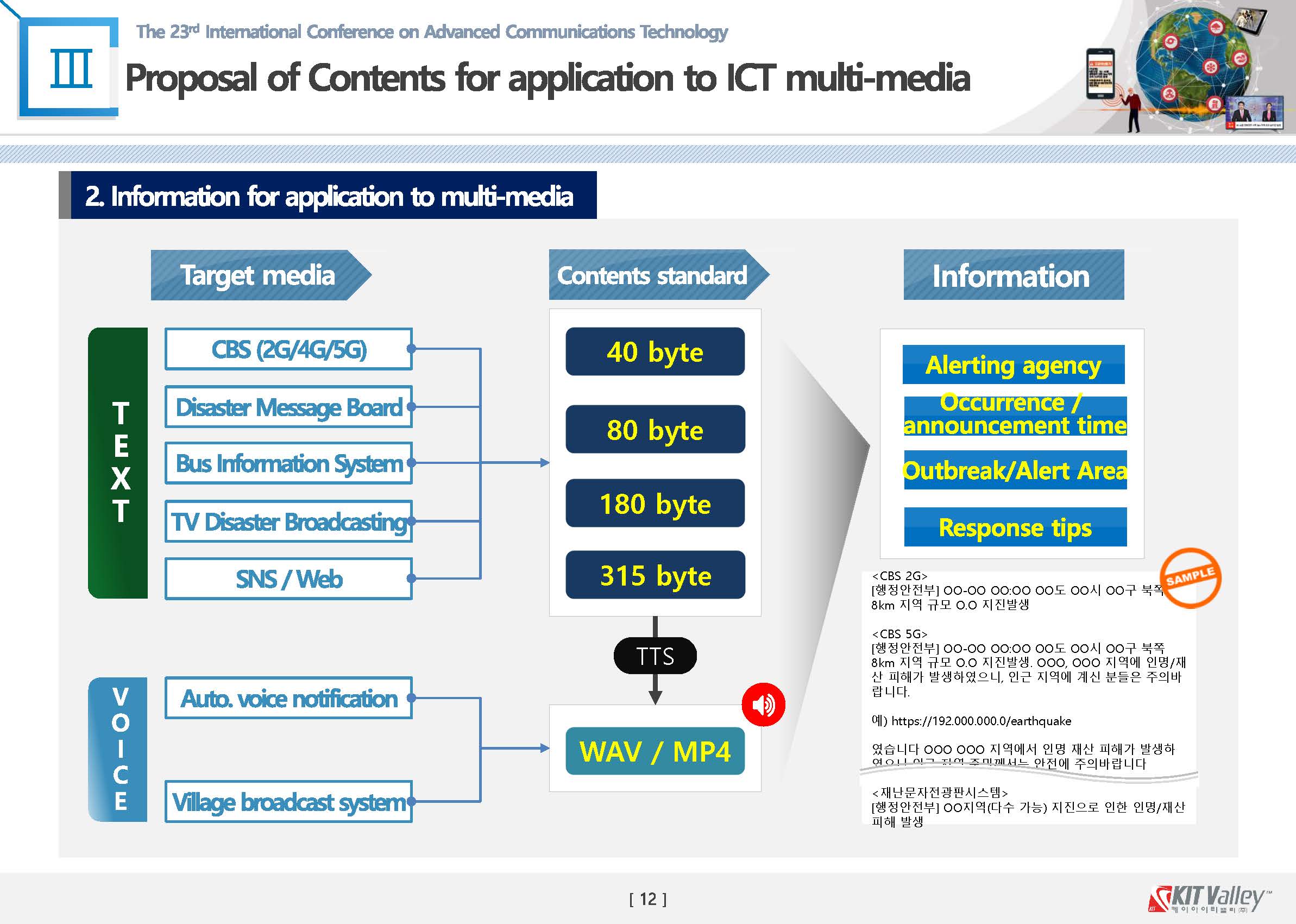 |
Next, i will talk about multi-media customized information. Standardized and designed multi-media content types for disaster information include text, voice, image, and web.
First, text and voice specifications were defined slightly differently depending on the target media. In the case of text, it had to be standardized and created differently due to the limitation of the number of characters that can be provided depending on the type of media.
As for the voice, the generated text is converted into a ‘wave file’ and an ‘MP4 file’ through TTS so that it can be played on the corresponding media. In this standardized disaster information, ‘the issuing agency’, ‘the time of occurrence/announcement’, ‘the area of occurrence/significance’, and ‘disaster response instructions’ are basically installed, and it is possible to provide slightly different information depending on the disaster.
|
| ICACT20210233 Slide.13
[Big Slide]
|
Chrome Click!! |
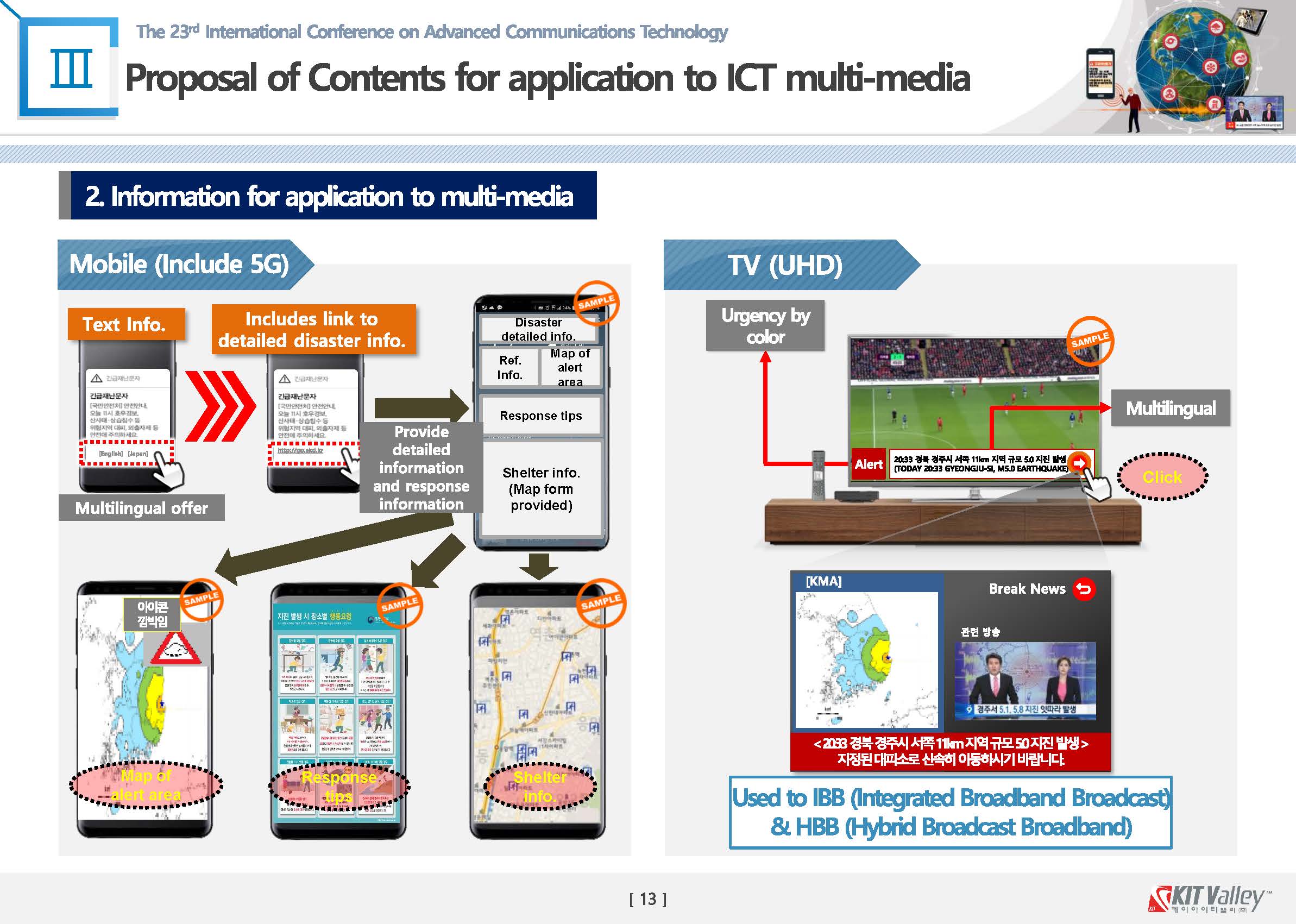 |
In addition, the image media mainly dealt with in this study include personal mobile terminals, TVs, digital signage, urban electronic signs and bus information systems.
First, looking at the form of multi-media contents suitable for a personal mobile terminal, there are text information and links that can be used in multiple languages through emergency disaster messages. Of course, there is still a limit to the number of texts that can be included in emergency messages, but standardization to overcome the limitations of emergency messages applied to 5G is being promoted in Korea through TTA. Through this, by providing web-based multimedia content, it is possible to check response tips and shelter information, including a map of the disaster area.
In the case of TV, only text information in the form of closed captioning has been provided until now, but as UHD gradually spreads, disaster information contents suitable for this needs to be prepared. For example, through ATSC 3.0 and AEAT, which are standard UHD standards, it is possible to utilize not only the broadcasting network but also the communication network, and through the provision of links, disaster information in a different form than before can be accessed. Furthermore, disaster information contents applying IBB and HBB, which is more scalable than AEAT, will be possible.
|
| ICACT20210233 Slide.14
[Big Slide]
|
Chrome Click!! |
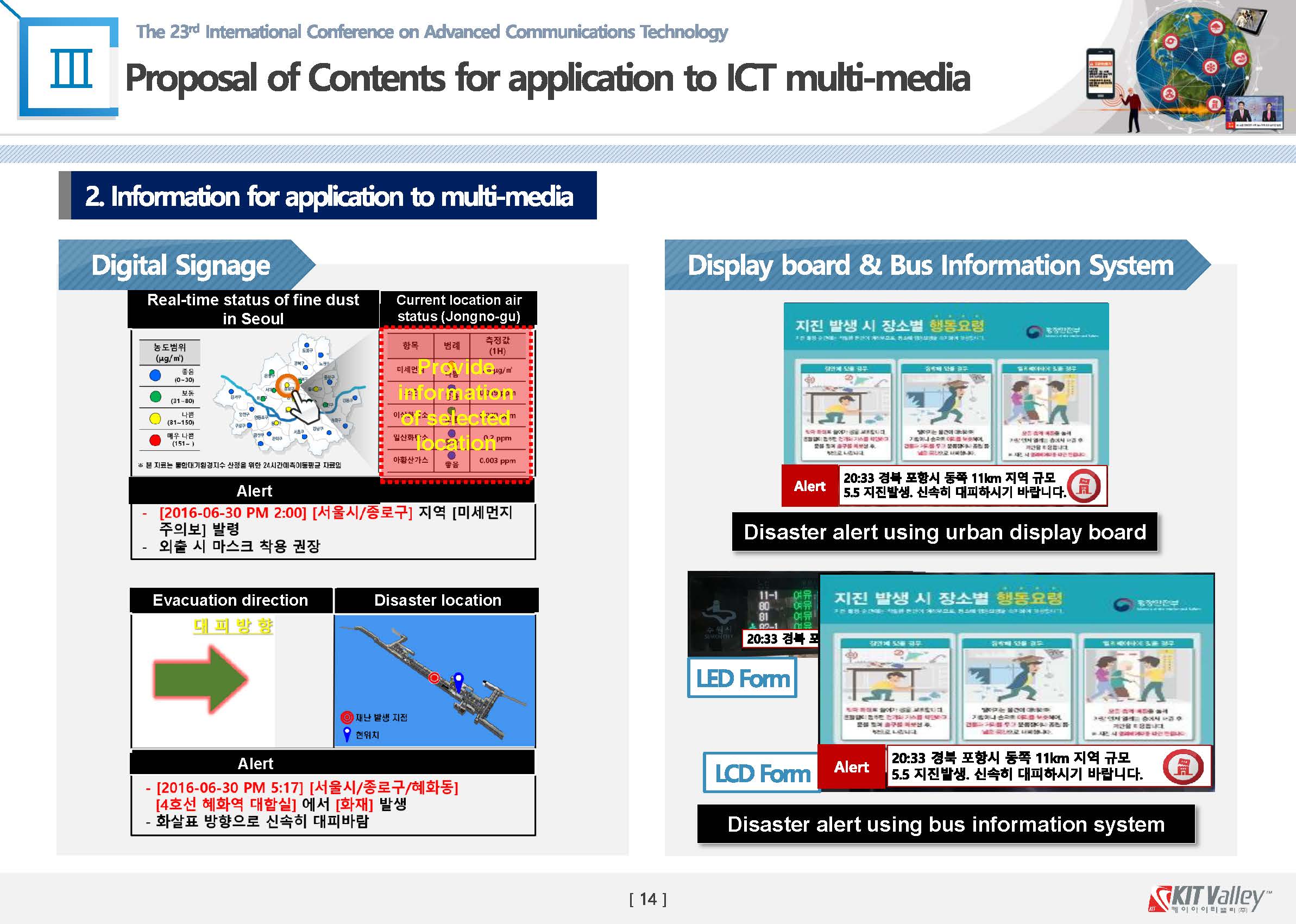 |
Most of the digital signage is currently operated by private organizations, and it is installed and operated in various spaces such as large buildings, convenience stores, and subways, so many people can easily access it. However, as it is still used as an advertisement media rather than as an alert media, legal provisions for providing disaster warning should be preceded. In particular, it is possible to check the information of the location I selected through the open screen that can be touched, and it is also possible to provide disaster information that can guide the evacuation direction from my location.
Like digital signage, urban electronic display boards and bus information systems do not have a legal basis for providing disaster information, so they need to be resolved quickly. In the case of the bus information system, there are ‘LED type’ and ‘LCD type’, but through the LED type, it is possible to provide only in text form. On the other hand, the LCD type can provide multi-media contents in the form of images as well as text.
|
| ICACT20210233 Slide.15
[Big Slide]
|
Chrome Click!! |
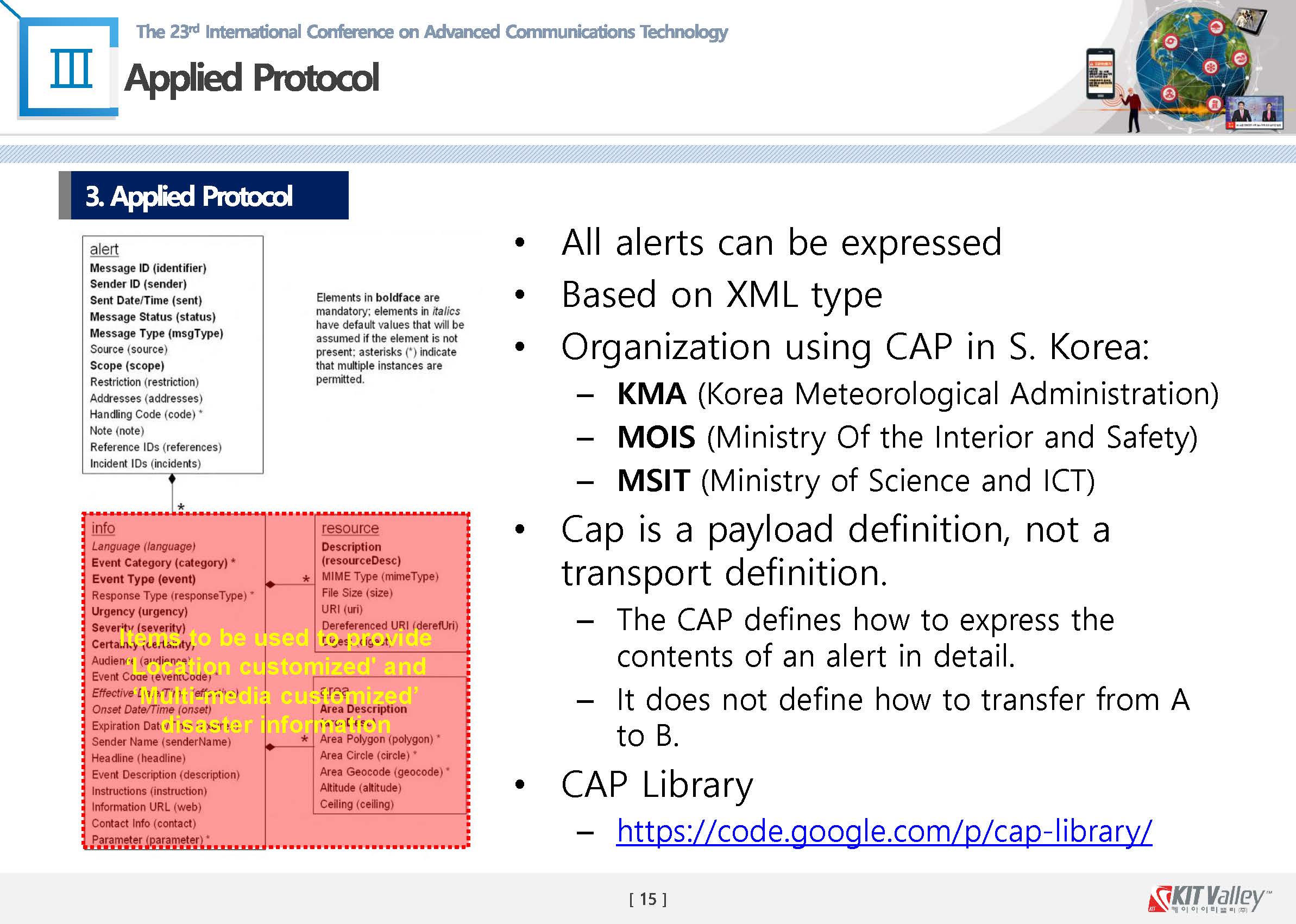 |
The above-mentioned contents became possible by applying an alert protocol called 'CAP'. There is a lot to say about CAP, but I'll keep it simple. CAP was first developed in the United States in 2003 and is a standardized alert protocol, and in Korea, it was introduced and used in the process of researching an appropriate alert protocol for an earthquake early warning system by the Korean Meteorological Administration in 2013. CAP is designed to be able to express all alerts based on XML format. In Korea, it is currently being used by the Korea Meteorological Administration, the Ministry of Public Administration and Security, and the Ministry of Science and ICT.
The multimedia disaster information contents presented above can be applied to the items presented in 'INFO’, 'RESOURCE’, and 'AREA' in the CAP, and alerts can be delivered to various media. However, CAP does not define alert delivery. |
| ICACT20210233 Slide.16
[Big Slide]
|
Chrome Click!! |
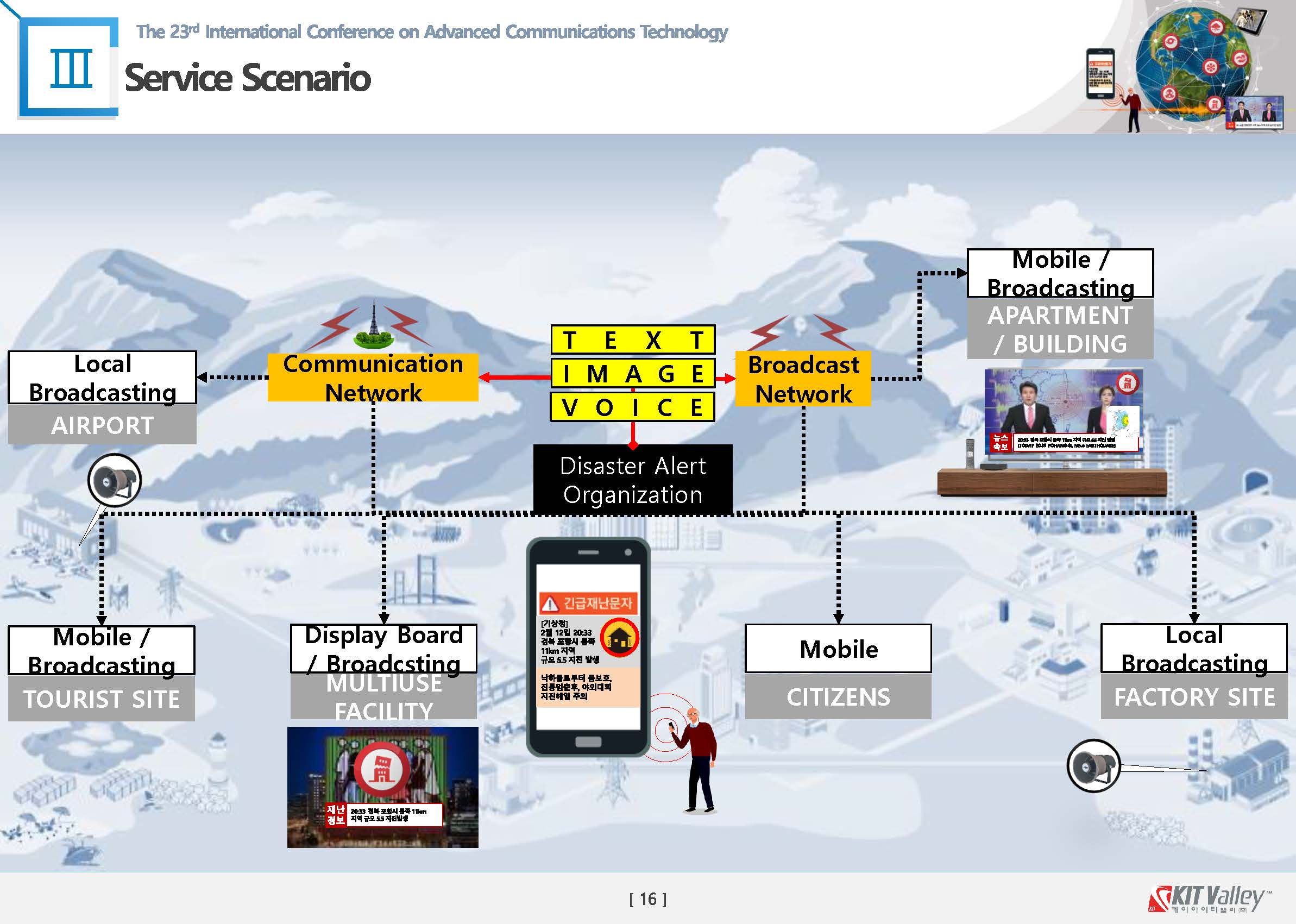 |
The Multi-media disaster information contents studied in this way is intended to establish a future research direction so that a system can be established based on the following service scenarios.
|
| ICACT20210233 Slide.17
[Big Slide]
|
Chrome Click!! |
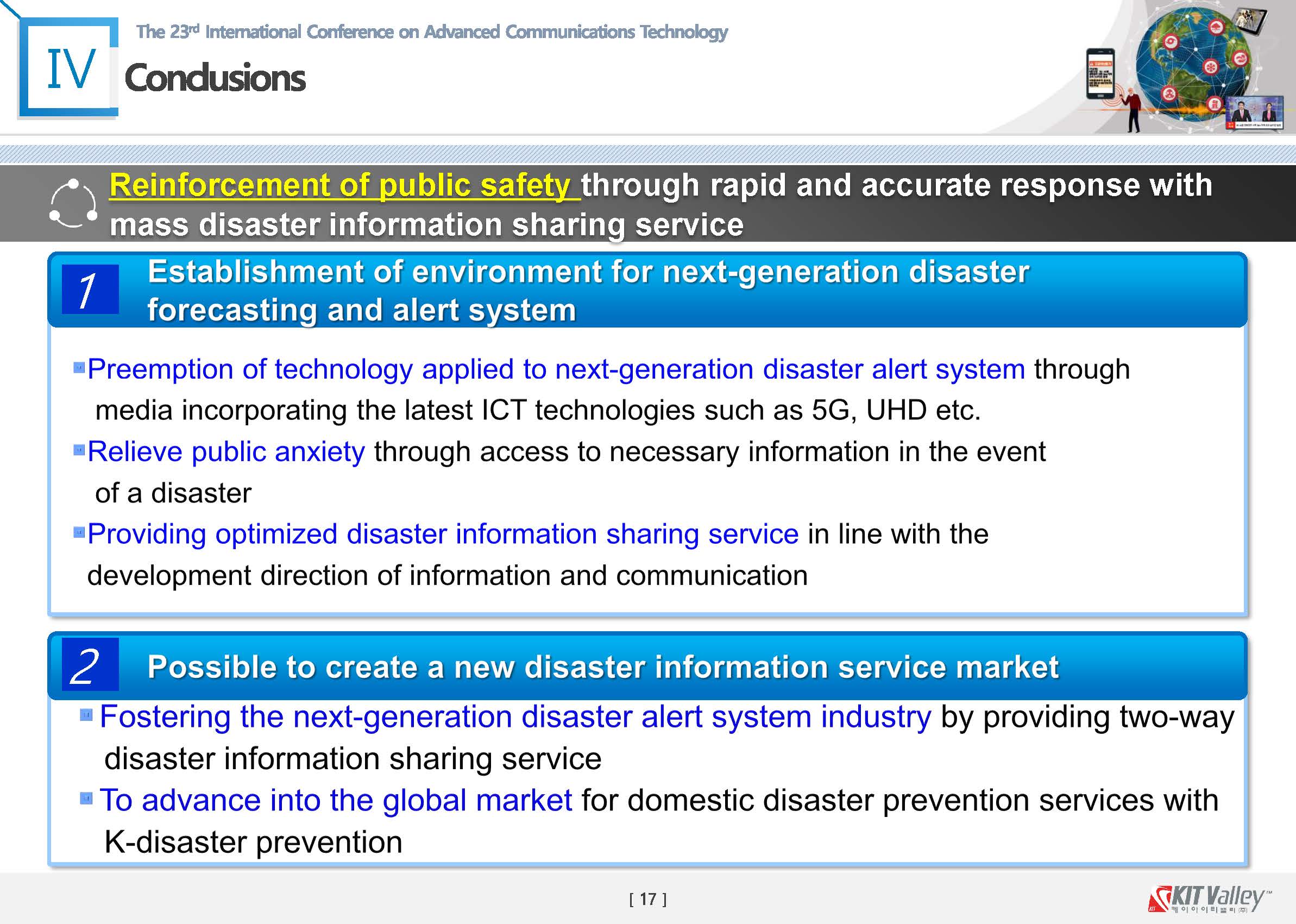 |
Finally, the result. Through this research, we intend to ultimately build an environment for the next-generation disaster alert system based on advanced ICT technology. In addition, by creating a new disaster information service market, we are trying to enter the market not only in Korea but also in the world. Through this, we aim to create a safer society for the people through quick and accurate responses to disasters.
|
| ICACT20210233 Slide.18
[Big Slide]
|
Chrome Click!! |
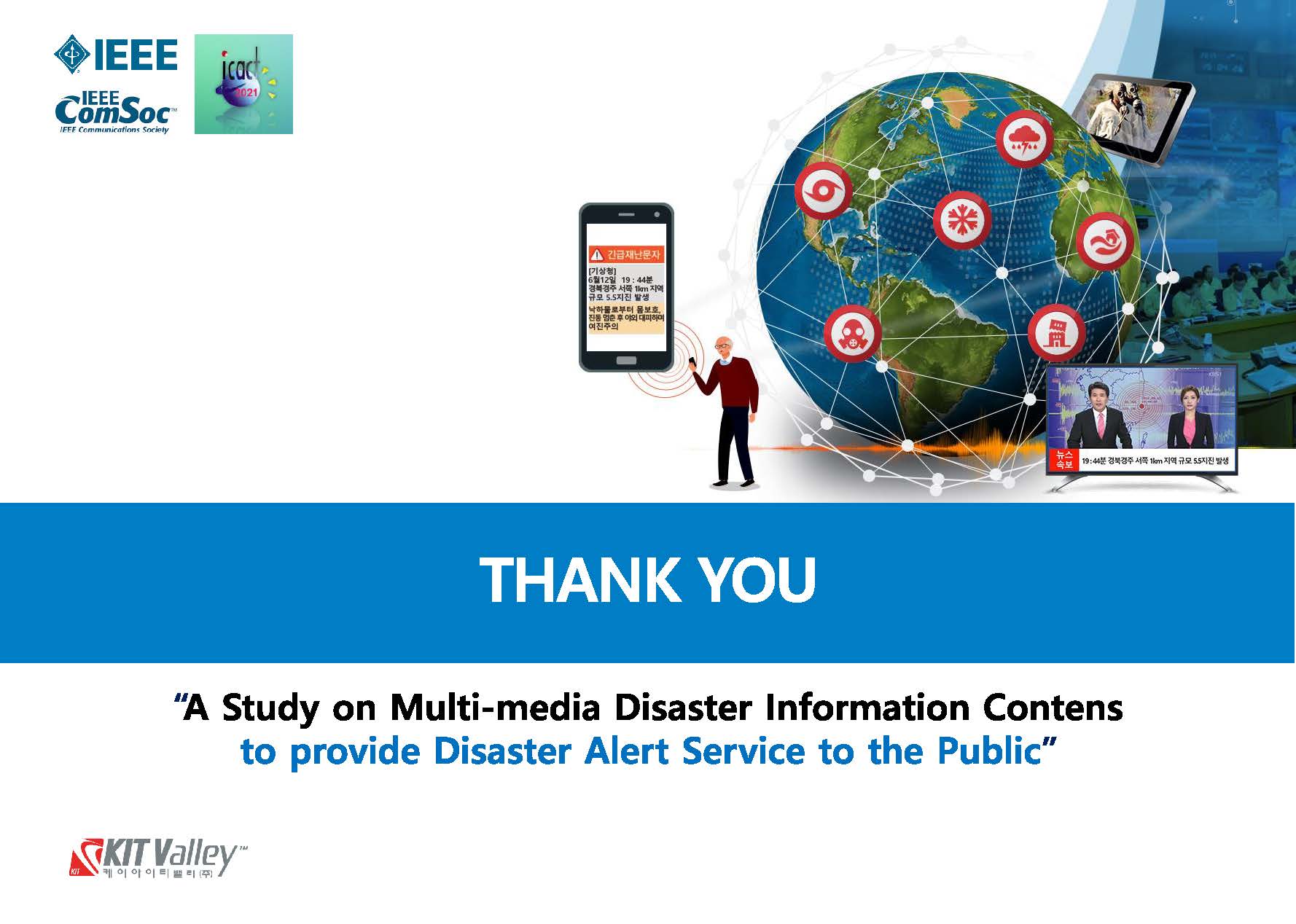 |
Then I will conclude my presentation on this study. If you have any questions, please let us know.
Thank you.
|
| |





