Now 6842 visitors
Today:0 Yesterday:0
Total: 153890
212S 50P 4R
2026-10-20, Week 43 |
| Member Login |
| TACT Journal Homepage |
| Call for Paper |
| Committee |
| Find My Paper |
| Author Homepage |
| Statistics & History |
| Welcome Message |
| Paper Procedure |
| FAQ |
| Paper Archives |
| Outstanding Papers |
| Author Homepage |
| - Paper Procedure |
| - Journal Procedure |
| - Presentation Tips |
|
| Program & Proceedings |
| Program with Papers |
| Plenary Session |
| Tutorial Session |
|
| Presentation Platform |
| Hotel & Travel Info |
| About Korea |
| Accommodation |
| Transportation |
| VISA |
| Other Infomation |
|
| Photo Gallery |
| Scheduler Login |
| Seminar |
| Archives Login |
|
| Sponsors |

|

|

|

|

|

|

|

|

|

|
|
|
|
|
 ICACT20220120 Slide.00
[Big Slide] |
Chrome  Click!! |
 |
Good Afternoon Dr. satyabrata aich
Good Afternoon everyone!
I am Hong-Lam Le representing the group presenting the team's research results on the Fall Detection System.
Coming to this conference, we would like to report on Applying PSO to improve the pedestrian fall detection rate using wearable sensor data.
In the following, I would like to present the main contents of our research.
|
| ICACT20220120 Slide.01
[Big Slide]
|
Chrome Click!! |
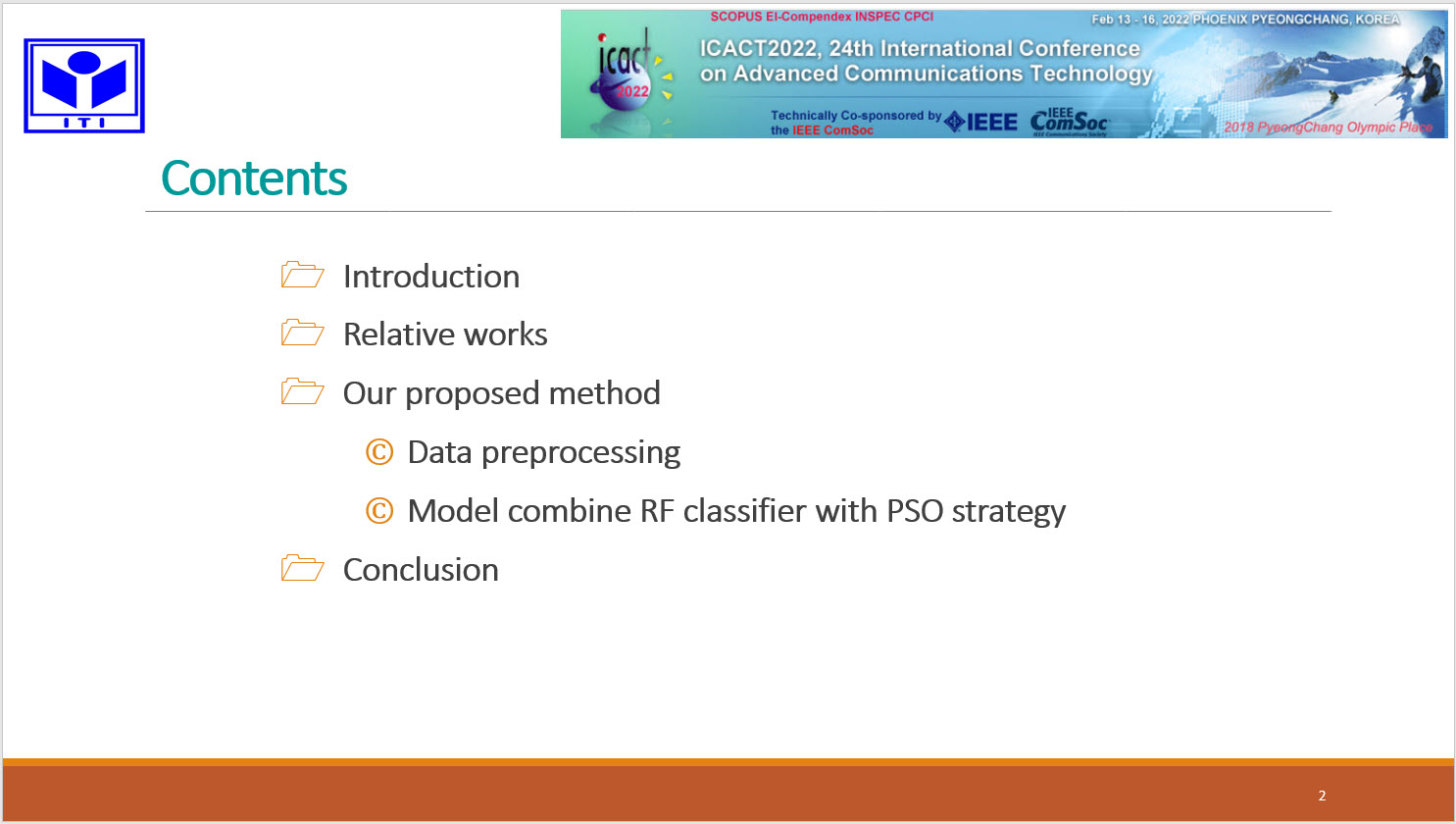 |
the main contents in this paper:
Introduction section, presenting approaches to fall detection.
In Related works, introduce some recent research on the MobiAct dataset
In this paper, we have proposed and used three solutions for fall detection: Data preprocessing, and Model combine RF classifier with PSO strategy
Finally, we draw conclusions
|
| ICACT20220120 Slide.03
[Big Slide]
|
Chrome Click!! |
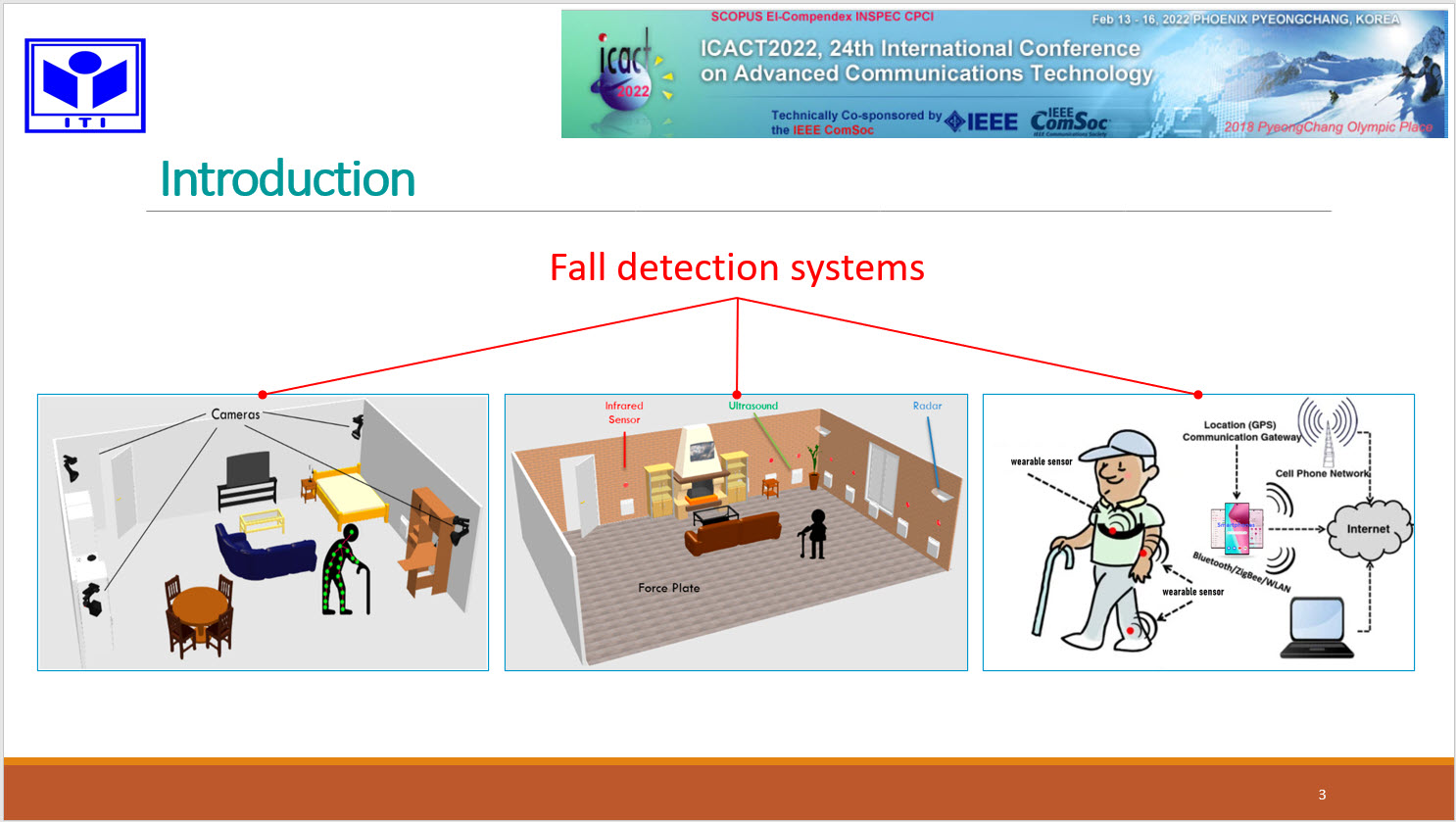 |
Fall detection systems are classified into three categories: camera-based systems, ambiance sensor device, and wearable device.
Computer vision uses cameras for device motion tracking. The drawbacks of this approach are that they are limited to a given region and do not guarantee confidentiality and are expensive.
Ambiance-based equipment can be mounted around an area that can be sensed with pressure sensors, PIR (Passive Infrared Sensor), Doppler, microphone. Drawbacks consisting of the range and environmental conditions may lead to low precision.
Wearable devices that are attached to the user: an accelerometer and a gyro. Such devices have the benefits of being compact, affordable, and easy to use.
Advantages of wearable devices: Not limited by space, easy to adjust the hardware system, less susceptible to environmental interference, low cost.
|
| ICACT20220120 Slide.04
[Big Slide]
|
Chrome Click!! |
 |
To improve the detection performance of activities, including falls, current research often:
Build system of multi-class classification, using the combined data of multiple sensor types, or
Build system of binary classification (falling or not falling), or
Build system of multi-class classification, using the data of a sensor
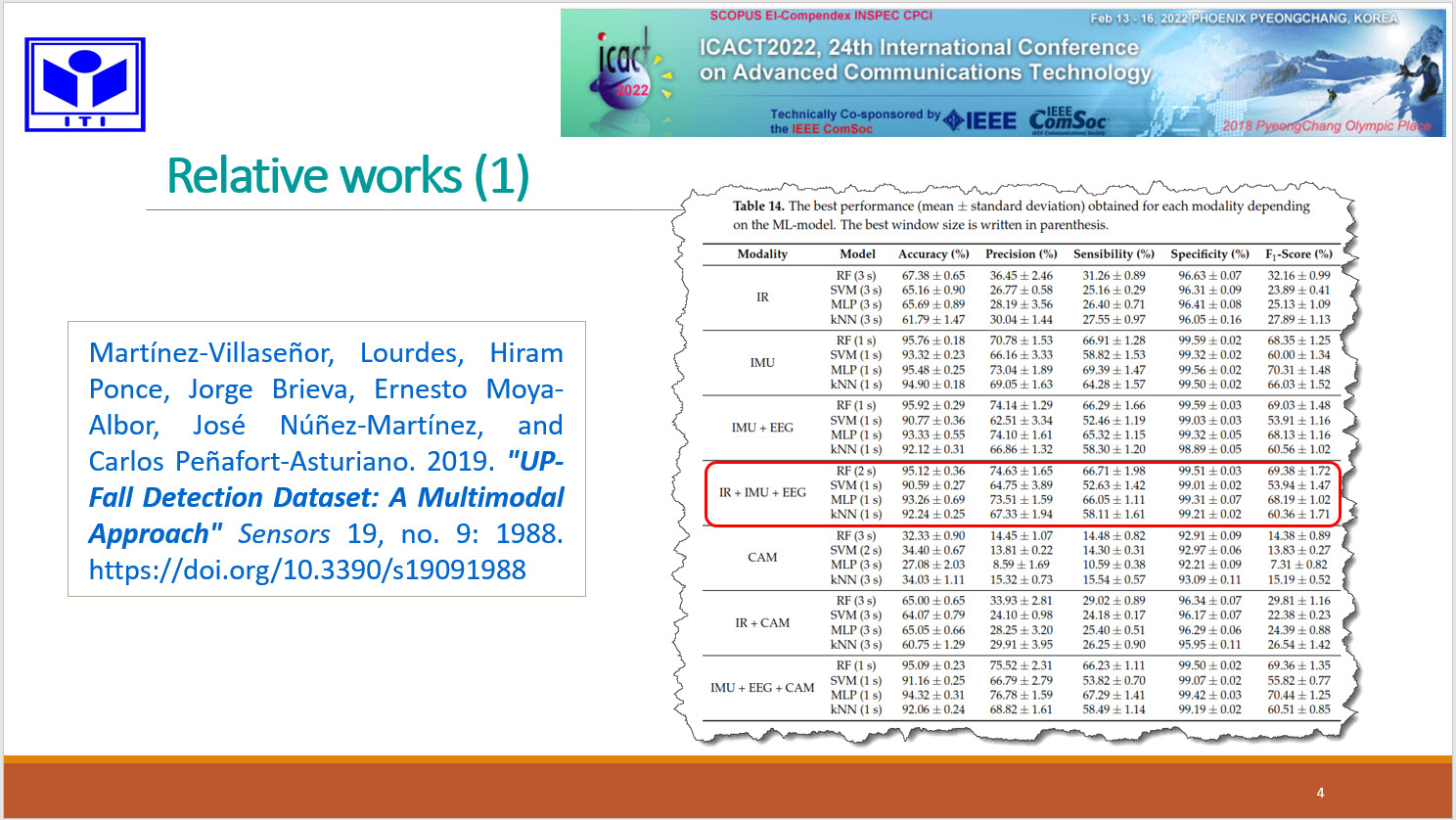
Martínez-Villaseñor et al collected and made public the UP-Fall dataset. They did many experiments to examine the performance of fall detection system based on variable data types.
They concluded, the best fall detection when combining the data of the three types of sensors IR+IMU+EEG.
However, their model has poor detection performance.
|
| ICACT20220120 Slide.05
[Big Slide]
|
Chrome Click!! |
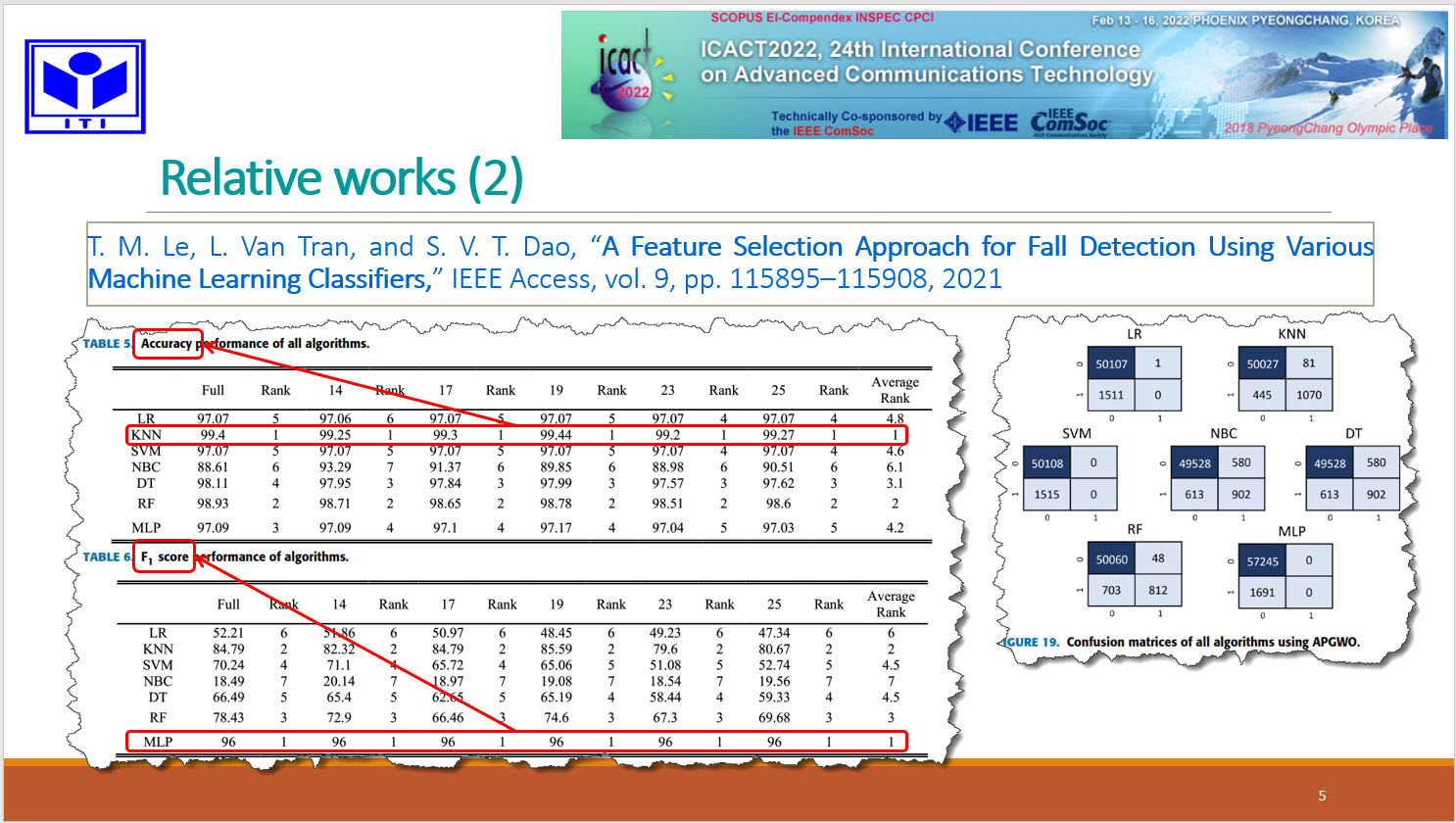 |
Also on this UP-Fall dataset, to increase fall detection, Le et al built a binary classification model.
On the other hand, this reseach uses a combination of many different types of sensor data, so it is not suitable for practical implementation.
The detection results in the Accuracy metric are very good.
However, the results on the F1-Score metric are much lower.
|
| ICACT20220120 Slide.06
[Big Slide]
|
Chrome Click!! |
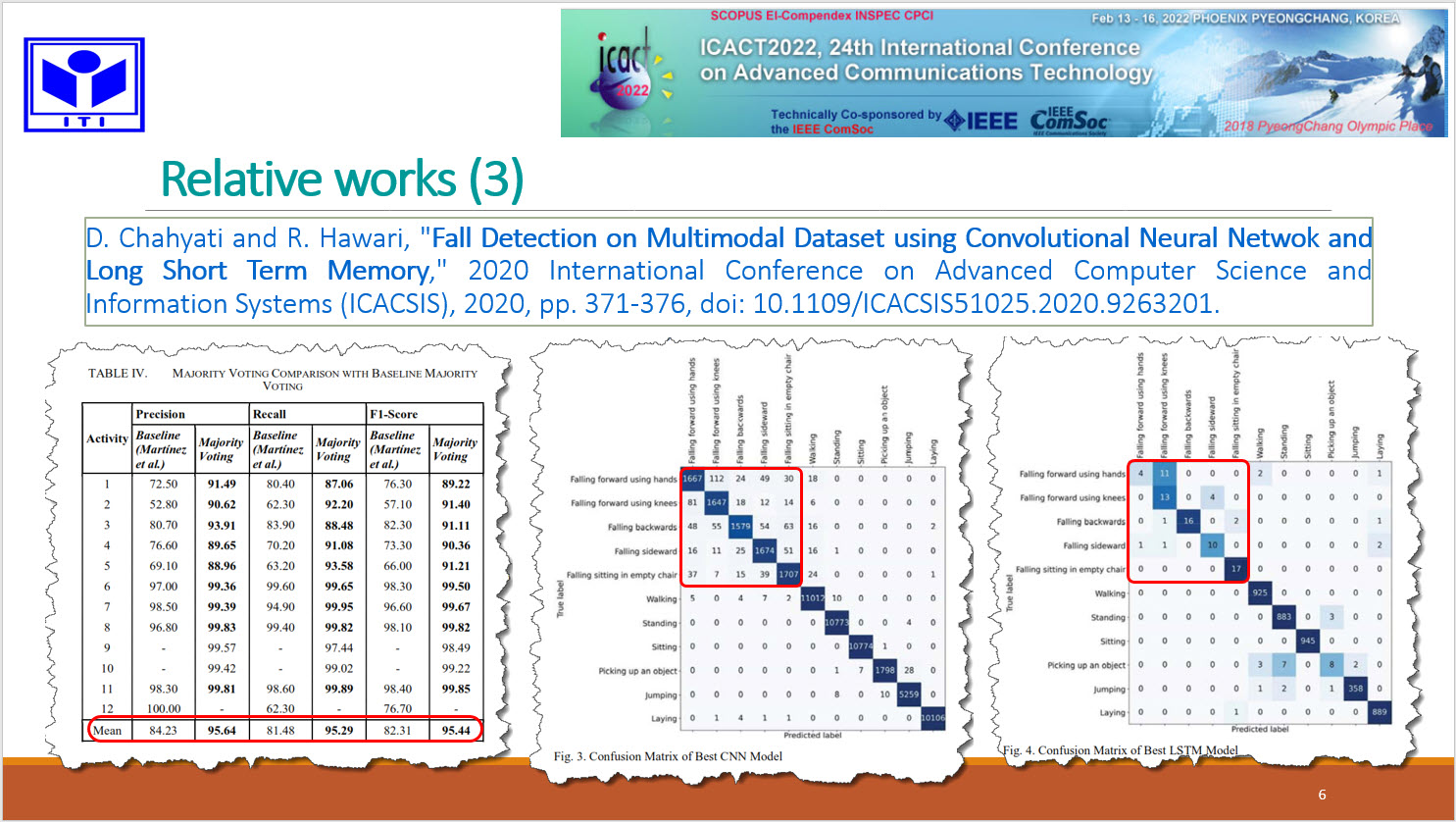 |
This study also used data from multi-sensors.
Dina Chahyati et al. try to detect falling activity using Convolutional Neural Network and Long Short-Term Memory approaches. CNN is used to detect spatial information from image data, while LSTM is used to exploit temporal information from signal data. Then, the results of the two models are combined with the majority voting strategy.
In general, studies of fall detection systems often use data collected from a variety of sensors to improve performance.
In our study, although using only one type of sensor and a simple machine learning model, the fall detection performance is still better than previous studies.
|
| ICACT20220120 Slide.07
[Big Slide]
|
Chrome Click!! |
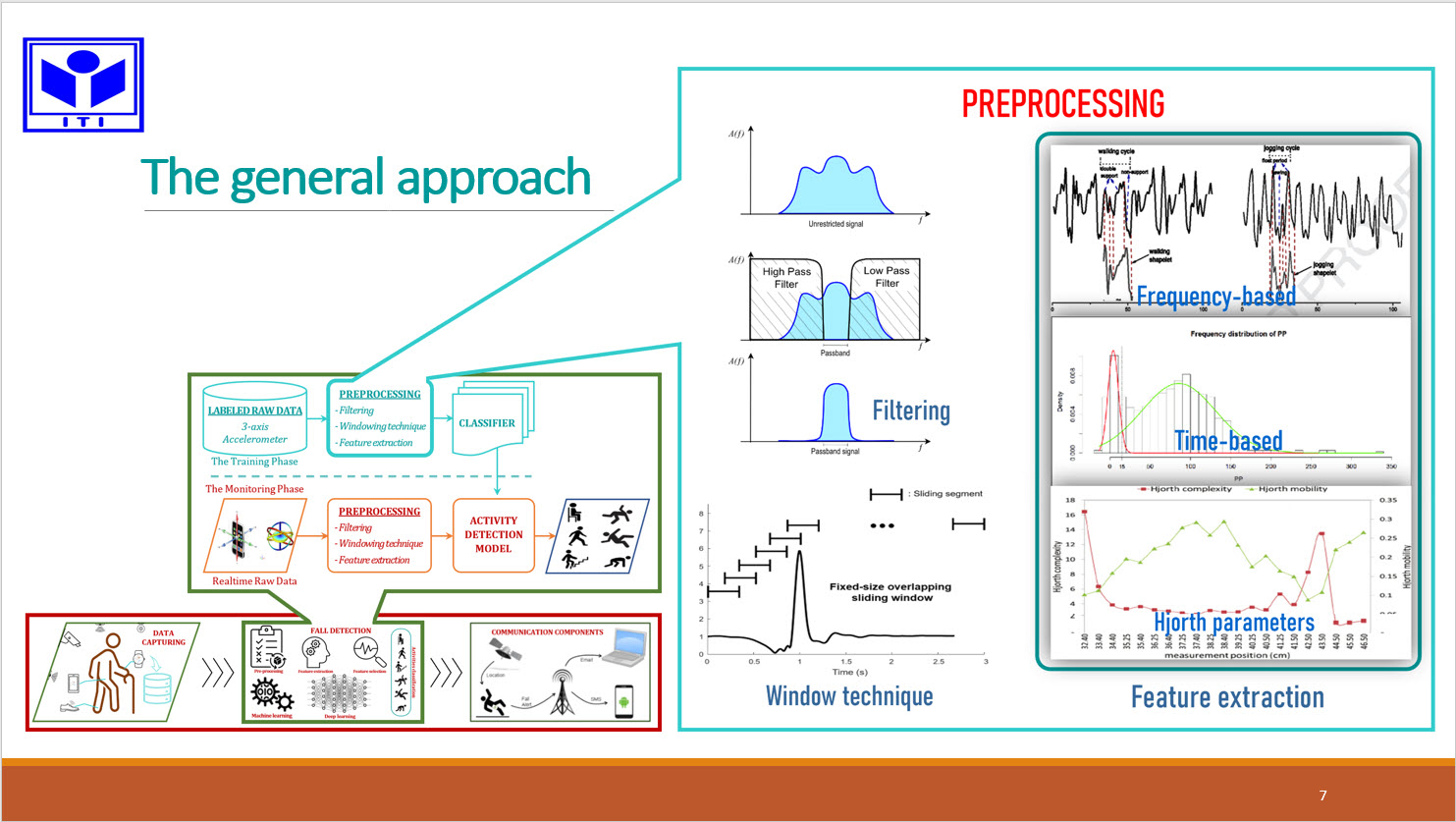 |
A typical fall detection system (FDS) is shown in Figure, which consists of three main components: data capturing, fall detection, and communication components. The fall detection component is the most important in the system that requires high accuracy and reliability and real-time processing ability.
The daily activities including abnormal behaviors such as falls are commonly recognized in a framework, namely Human Activity Recognition (HAR),
In this study, we focus on data preprocessing and Apply PSO to improve pedestrian fall detection rate using wearable sensor data.
We propose a data extraction method based on the time domain, frequency domain, and Hjorth parameter to build a dataset of 44 features of accelerometer data.
|
| ICACT20220120 Slide.08
[Big Slide]
|
Chrome Click!! |
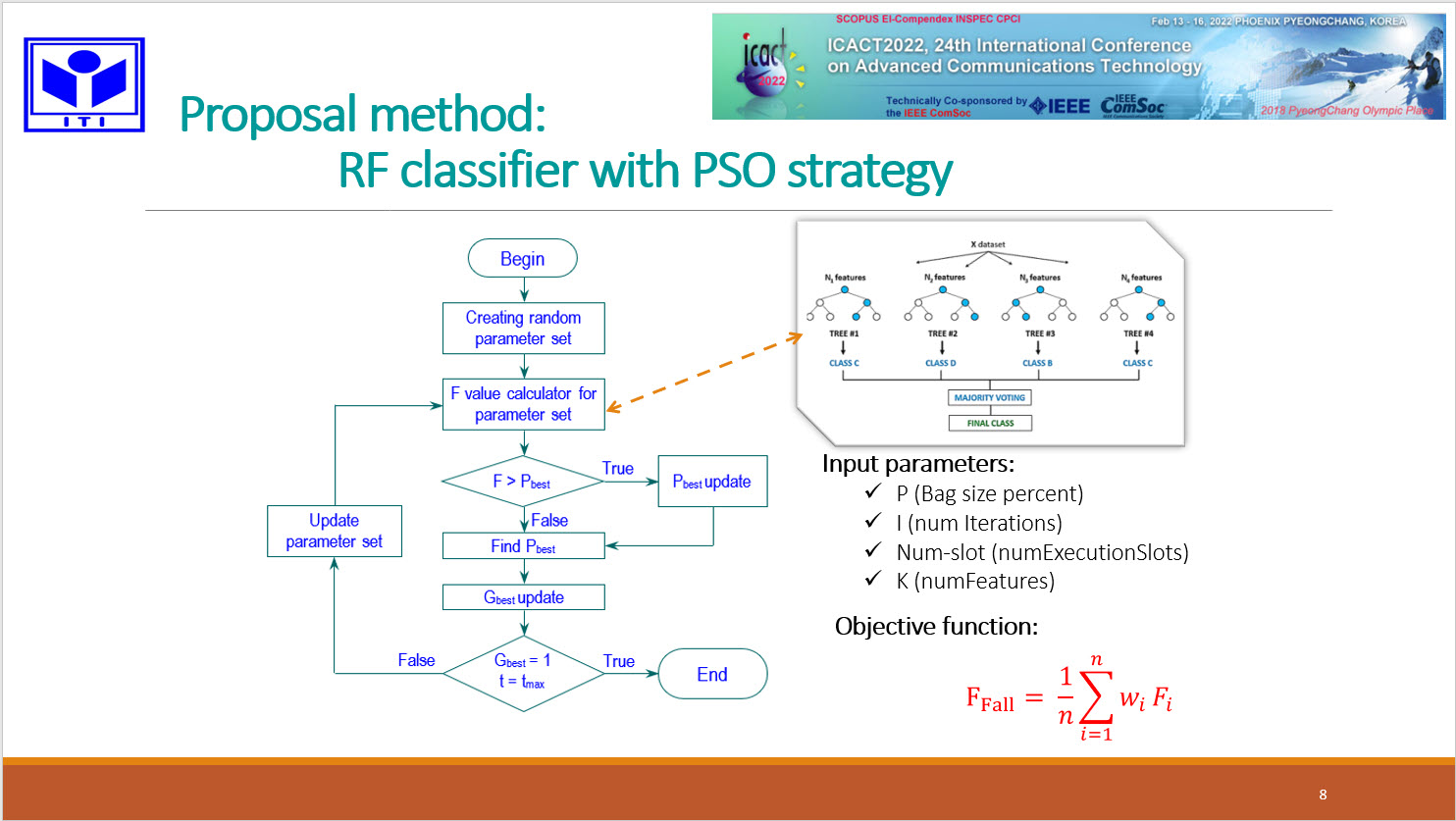 |
In this paper, we propose a method to use RF classifier with PSO strategy to improve fall detection performance.
We use the input parameters for the PSO algorithm, which are:
P (Bag size percent)
I (num Iterations)
Num-slot (num Execution Slots)
K (num Features)
The objective function, we focus on the F-measure weights of fall activities (A01-Forward using hands, A02-Forward using knees, A03-Backward, A04-Sideward, and A05-Attempting to sit in an empty chair) to build a parameter optimization algorithm for RF classifiers.
|
| ICACT20220120 Slide.09
[Big Slide]
|
Chrome Click!! |
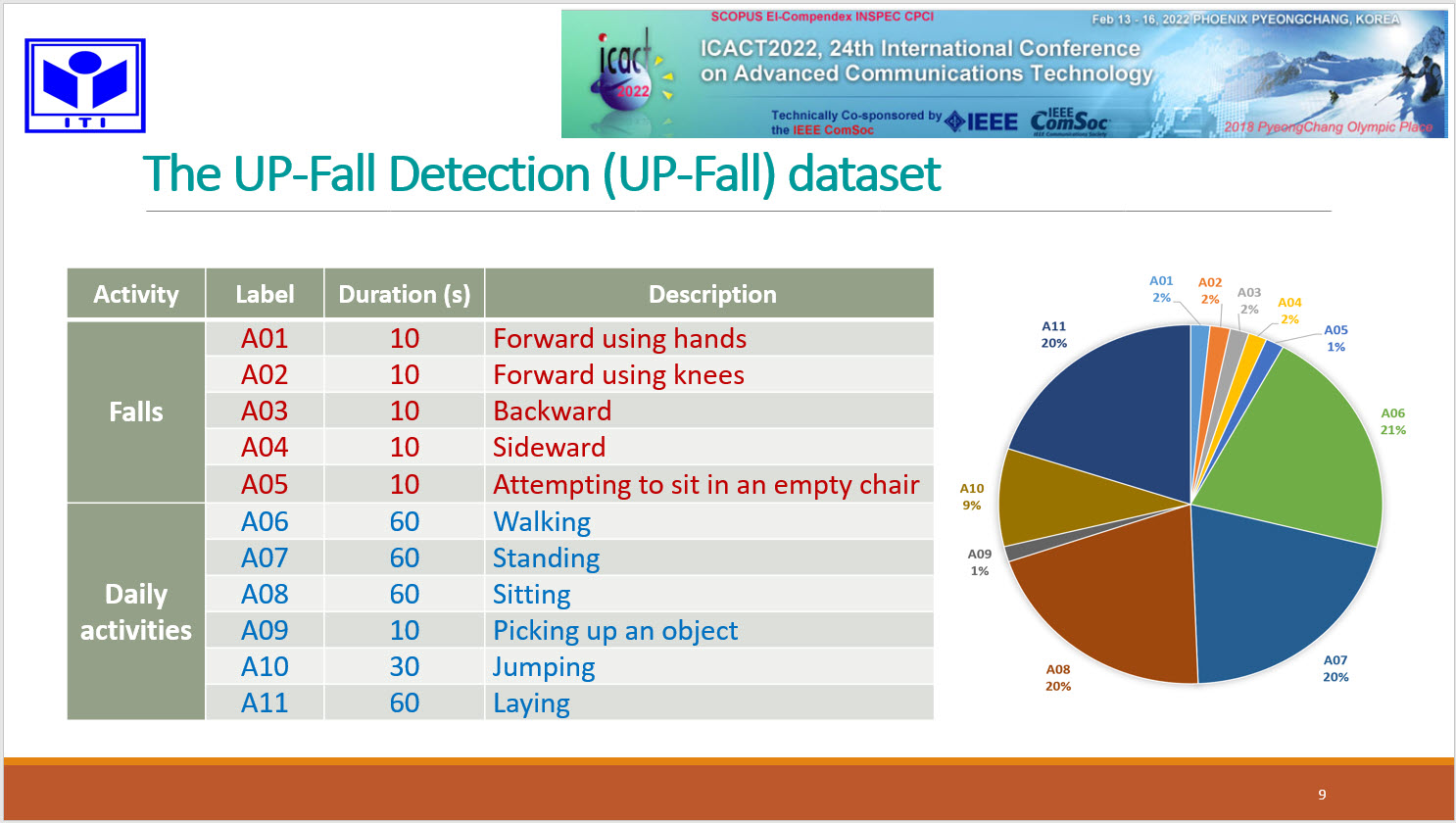 |
We used the UP-Fall dataset to conduct this study.
This dataset was collected by Martínez-Villaseñor et al. and made it available to the research community.
They use five wearable sensors to collect accelerometer, gyroscope and ambient light data. In addition, they acquired data from one electroencephalograph (EEG) headset, six infrared sensors, and two cameras.
The pie chart shows the data distribution ratio of the UP-Fall dataset. The number of samples of the five fall activities represented only 9% of the total samples. Six basic daily activities such as Walking (W), Standing (ST), Sitting (SI), Jumping (J), Lying (L) accounted for 90% of the sample. Hence, Up-Fall is both unbalanced datasets that contain very small portion of fall activities.
With unbalanced datasets like UP-Fall, the ability to detect fall activities is a big challenge.
|
| ICACT20220120 Slide.10
[Big Slide]
|
Chrome Click!! |
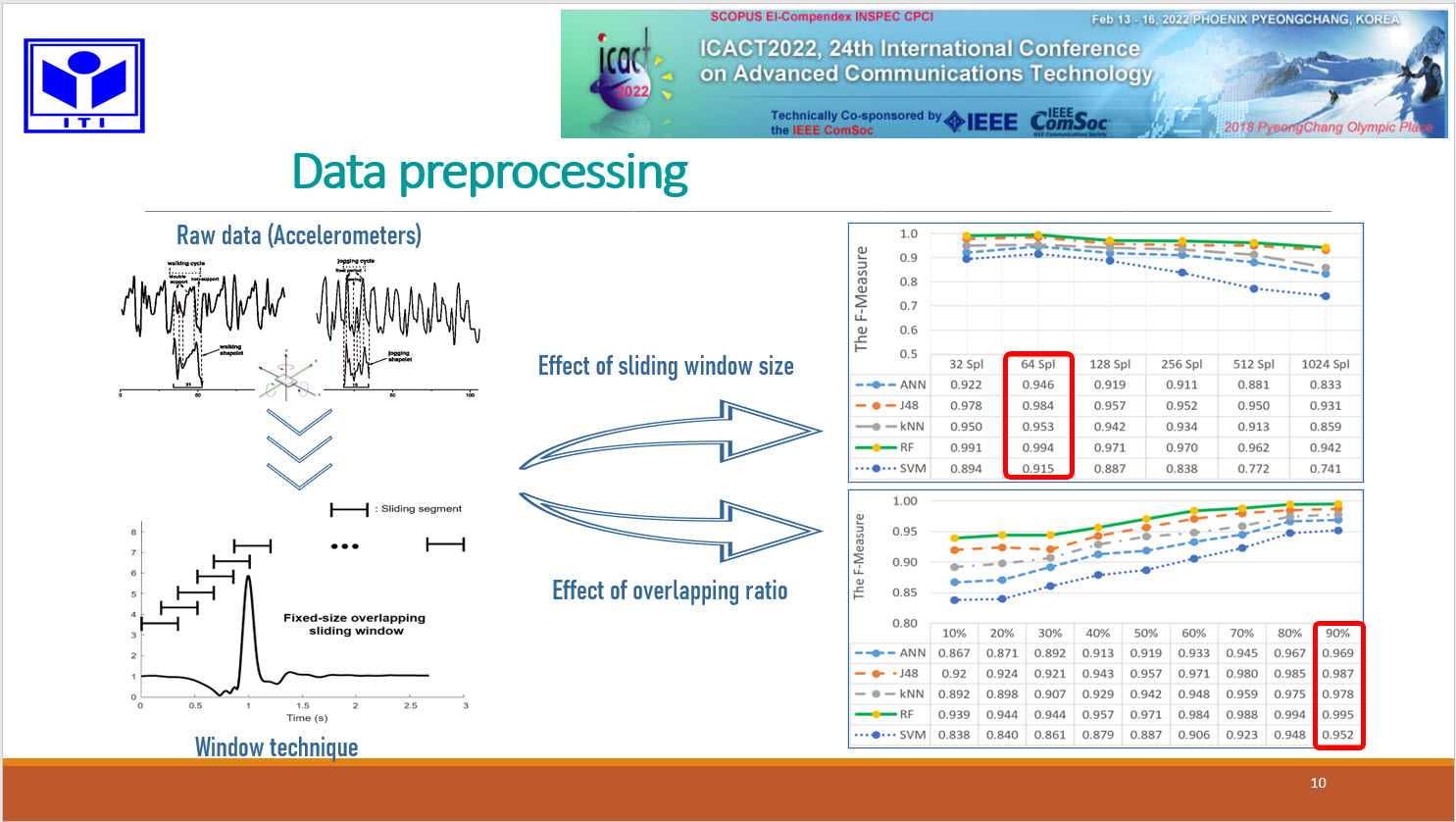 |
In the data preprocessing section, we use window (têch-nit-z) techniques for time series data. Those (têch-nit-z) techniques are: sliding window, data window size, and overlapping ratio.
======Click======
We have (ích-pi-rơ-men-tớt) experimented with these (têch-nit-z) techniques, and the (re-dốt) results are shown in the (fi-gi-ơ) figure.
This (ích-pi-rơ-men-tồ) experimental (re-dốt) result shows the effect of sliding window size and data overlaping rate.
The detection performance is stable and best at 64 sample window size and 90% overlapping ratio
|
| ICACT20220120 Slide.11
[Big Slide]
|
Chrome Click!! |
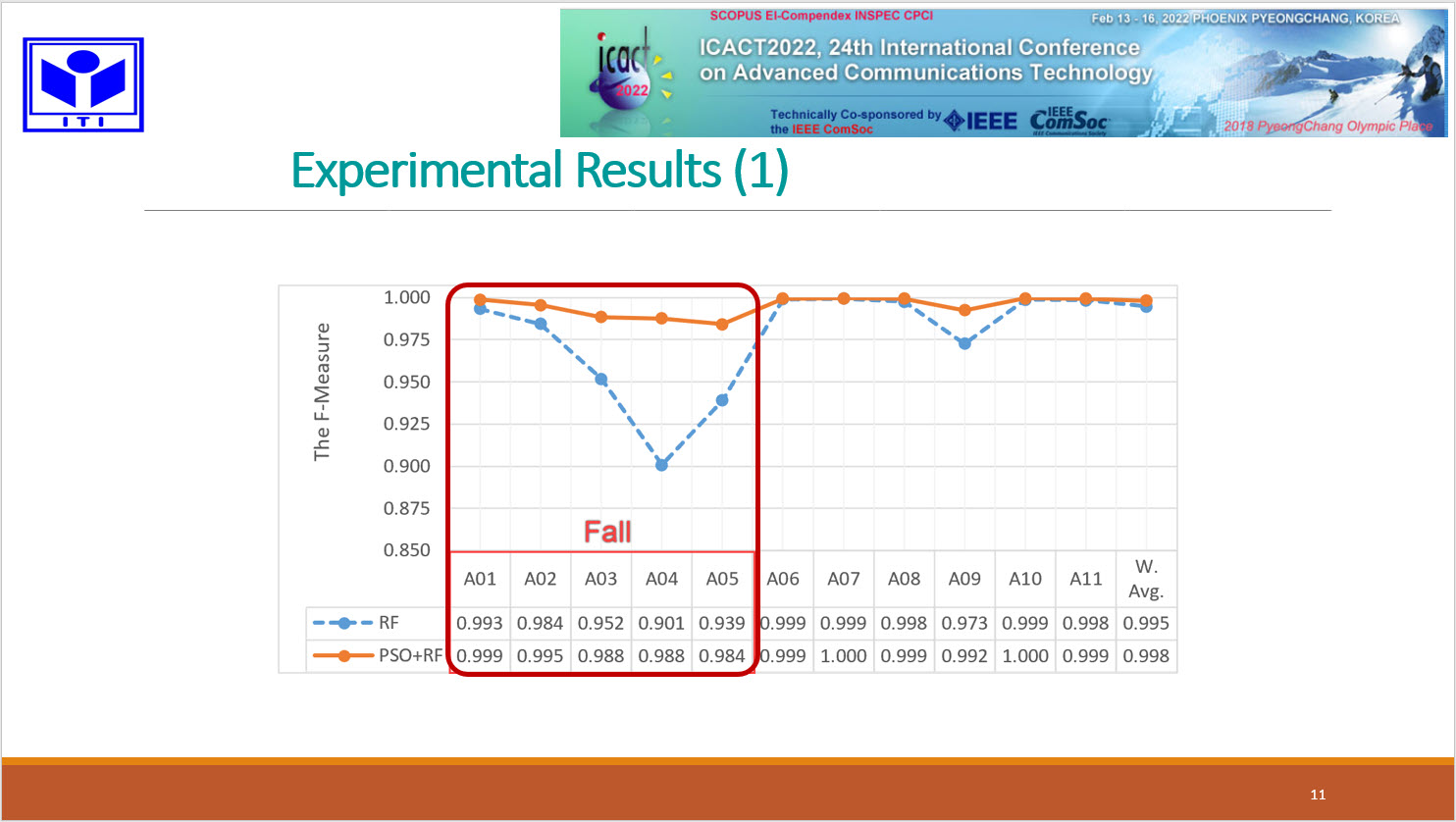 |
Experimental results show that when using the PSO algorithm in combination with the RF classifier, the activities detection performance is better and more stable than the basic RF classifier.
In particular, the fall detection performance is significantly improved.
|
| ICACT20220120 Slide.12
[Big Slide]
|
Chrome Click!! |
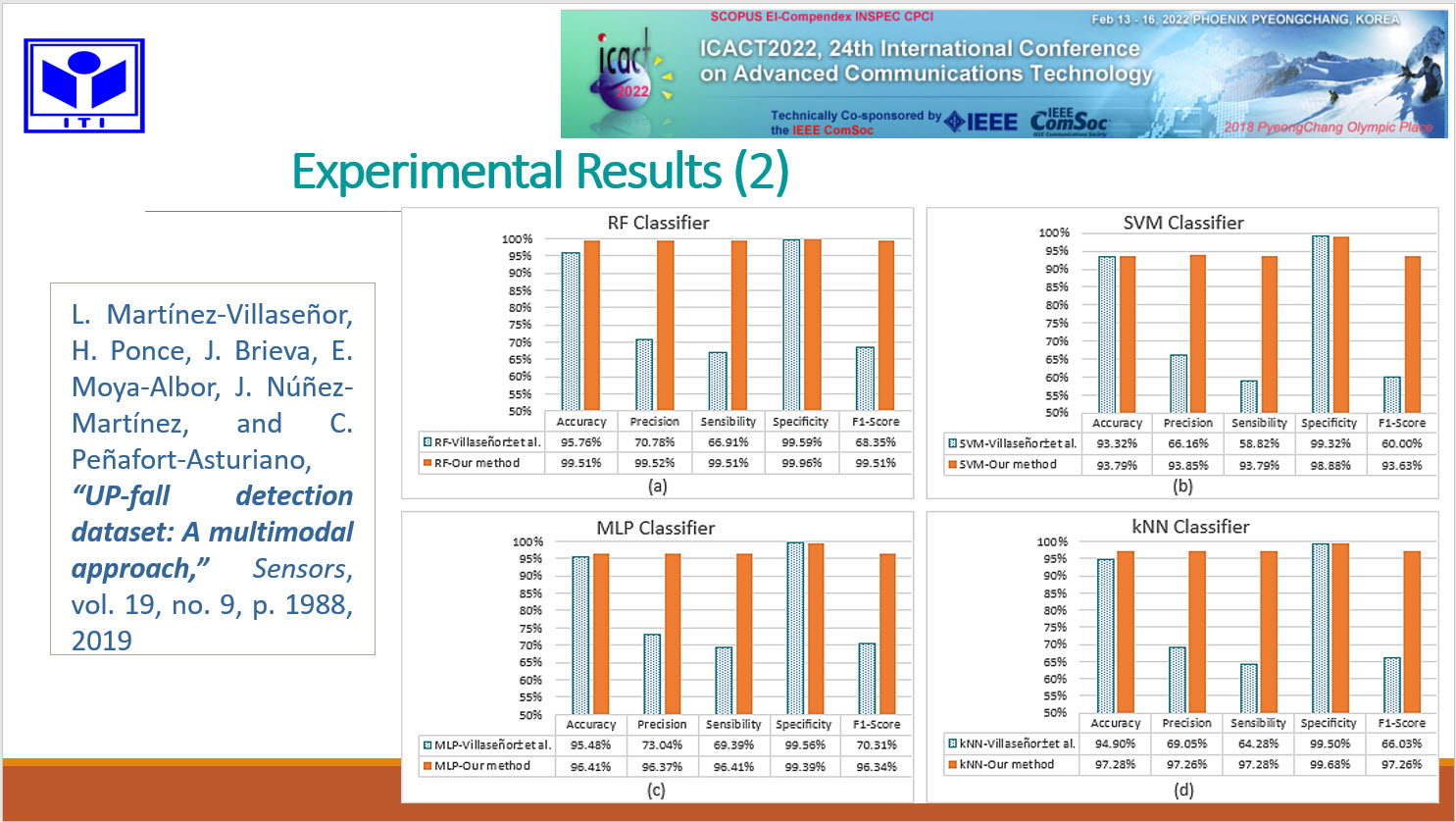 |
With our proposed model, the results on the Accuracy and Specificity metrics are equivalent to those of Martínez et al.
However, on the Precision, Sensibility, and F1-Score metrics, our results are much better.
That proves, our model solves the problem of unbalanced data better than the model of Martínez et al.
|
| ICACT20220120 Slide.13
[Big Slide]
|
Chrome Click!! |
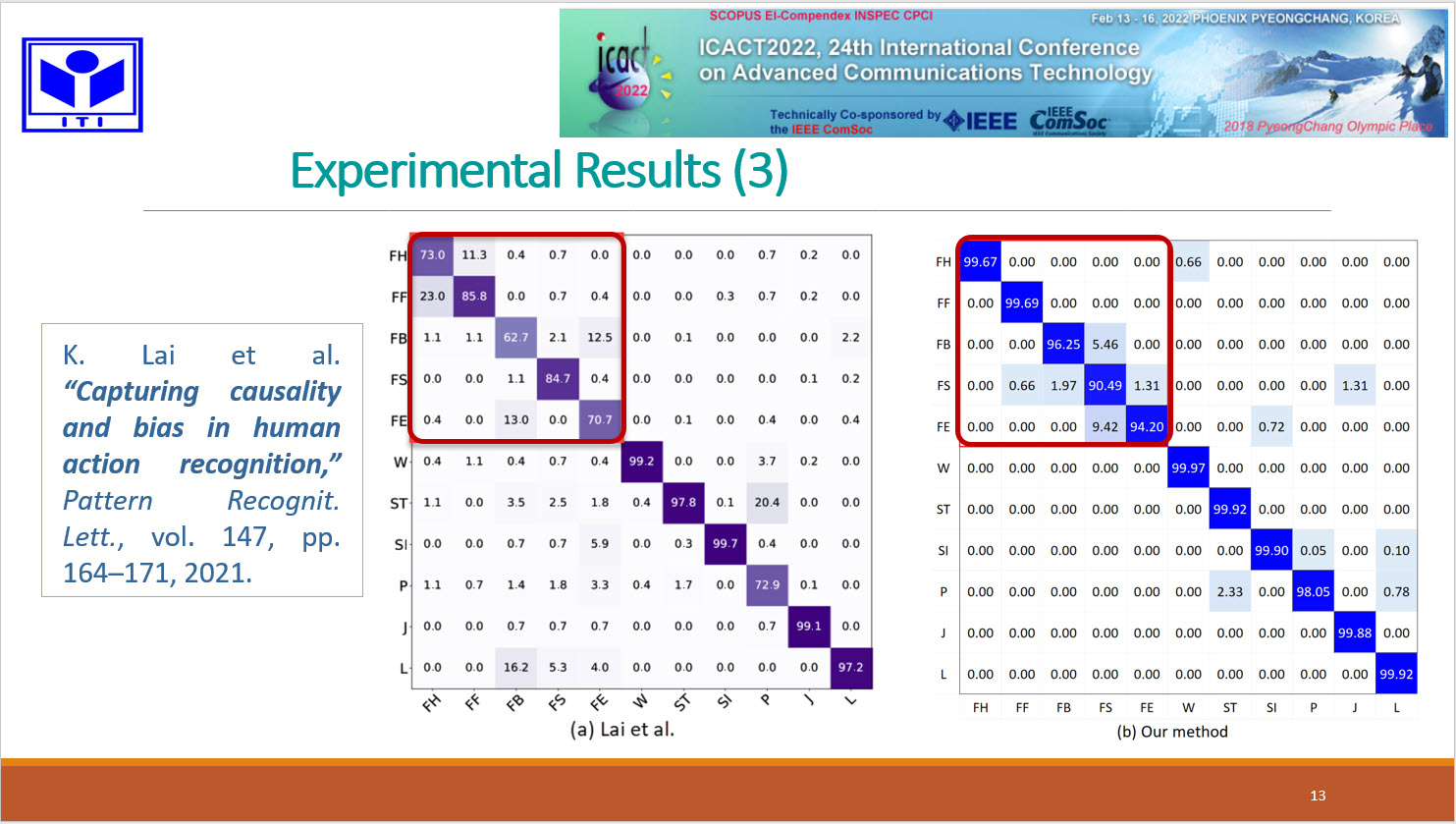 |
In the research of Lai et al. [10], confusion matrix data appears to be split into two clusters grouped based on performed actions: fall and non-fall. Their model is capable of classifying non-fall activities almost perfectly. However, our model still gives better clas-sification performance in this group of activities.
In the group of fall activities, the model of Lai et al. [10] has decent recognition per-formance. Example: Falling backward (Column 3, FB) only correctly classified 62.7%. Our model gives an almost perfect performance in recognizing fall activities. It is even better than the model [10] when it comes to detecting non-falling activities.
With the proposed feature set, our model has good recognition ability in all activities in the UP-Fall dataset. All activities are over 90% detectable. In particular, the ability to detect activities such as walking, standing, sitting, Jumping, Laying achieved excellent performance, 99.8% or more.
|
| ICACT20220120 Slide.14
[Big Slide]
|
Chrome Click!! |
 |
To propose an extracted dataset consisting of Time, Frequency and Hjorth parameters domain.
To propose an ranking function and it learning methods based on PSO strategy for improving the efficiency of RF classifier.
|
| ICACT20220120 Slide.15
[Big Slide]
|
Chrome Click!! |
 |
Sincere thanks to the Chairman and everyone who listened attentively! |
| |





