 ICACT20220178 Slide.01
[Big Slide]
[YouTube] |
Chrome  Click!! |
 |
Hello everyone!I’m honor to speak here! Today I will introduce you a paper, which is called:“An analytical model of MANET single-path and multi-path load balancing routing protocol based on Markov model”. In this paper, a new analytical model is presented to analyze and compare the superiority of multi-path algorithm over single-path algorithm in self-organizing networks. |
| ICACT20220178 Slide.02
[Big Slide]
[YouTube] |
Chrome Click!! |
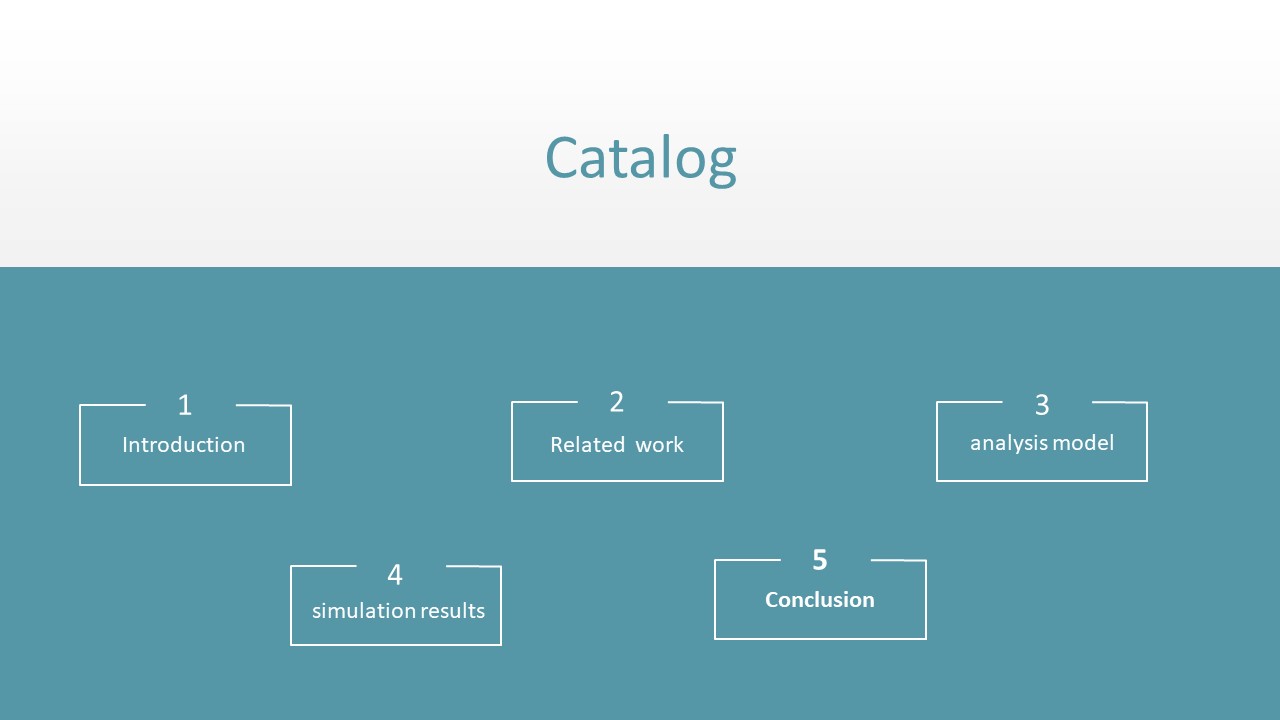 |
Catalogue |
| ICACT20220178 Slide.03
[Big Slide]
[YouTube] |
Chrome Click!! |
 |
introduction |
| ICACT20220178 Slide.04
[Big Slide]
[YouTube] |
Chrome Click!! |
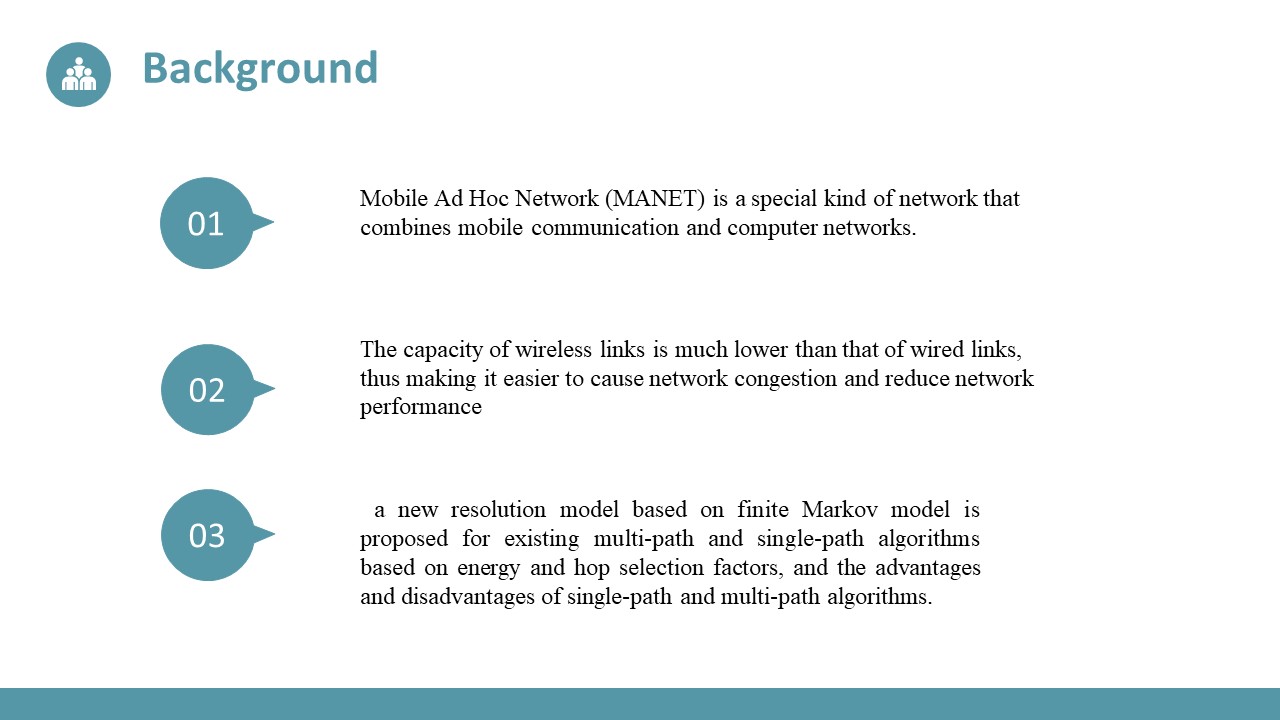 |
Mobile Ad Hoc Network (MANET) is a special kind of network that combines mobile communication and computer networks, it does not need to rely on a fixed network architecture. The capacity of wireless links is much lower than that of wired links, thus making it easier to cause network congestion and reduce network performance,which is the biggest challenge in mobile self-organizing networks. To cope with these problems, a series of routing algorithm have been developed for network communication to improve the performance, but different routing protocols have different advantages and disadvantages. Compared with the single-path algorithm, the multi-path algorithm has many advantages in fault tolerance, route reliability, QoS routing, etc. In this paper, a new resolution model based on finite Markov model is proposed for existing multi-path and single-path algorithms based on energy and hop selection factors, and the advantages and disadvantages of single-path and multi-path algorithms in wireless communication are analyzed in four aspects: energy consumption, stability probability, throughput and delay. |
| ICACT20220178 Slide.05
[Big Slide]
[YouTube] |
Chrome Click!! |
 |
related work |
| ICACT20220178 Slide.06
[Big Slide]
[YouTube] |
Chrome Click!! |
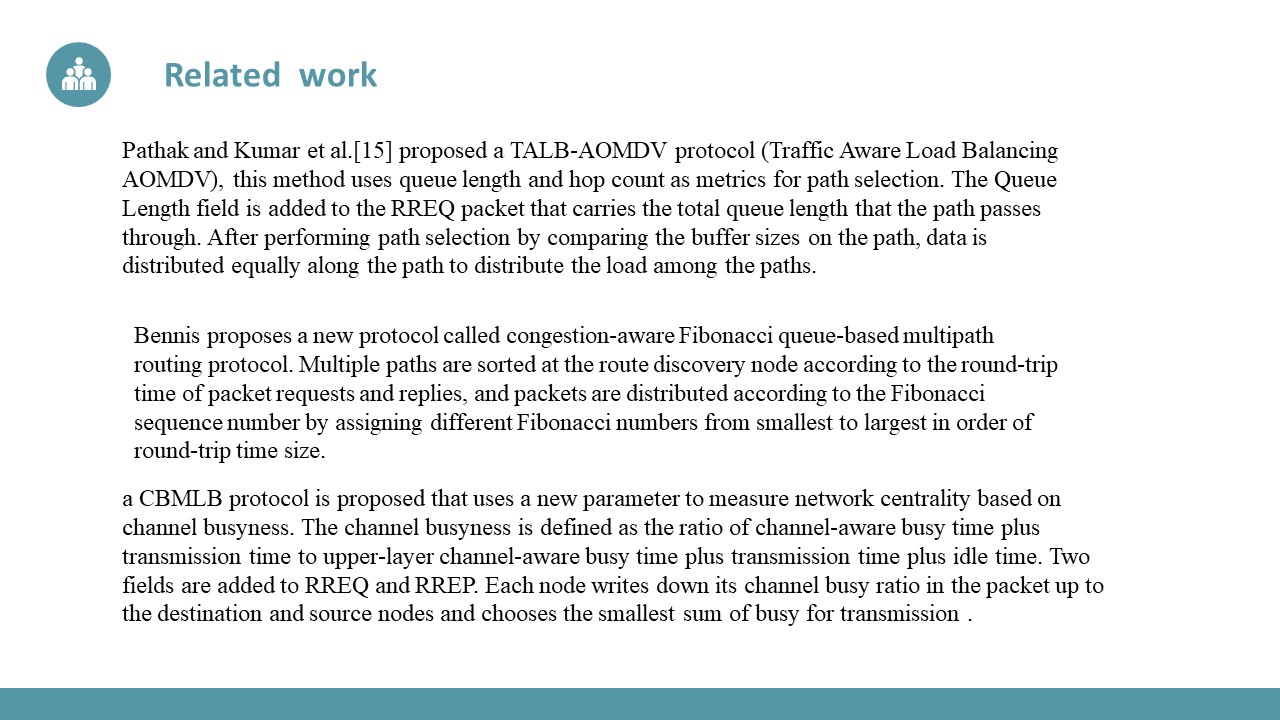 |
The second part is the research of this paper. |
| ICACT20220178 Slide.07
[Big Slide]
[YouTube] |
Chrome Click!! |
 |
analysis model |
| ICACT20220178 Slide.08
[Big Slide]
[YouTube] |
Chrome Click!! |
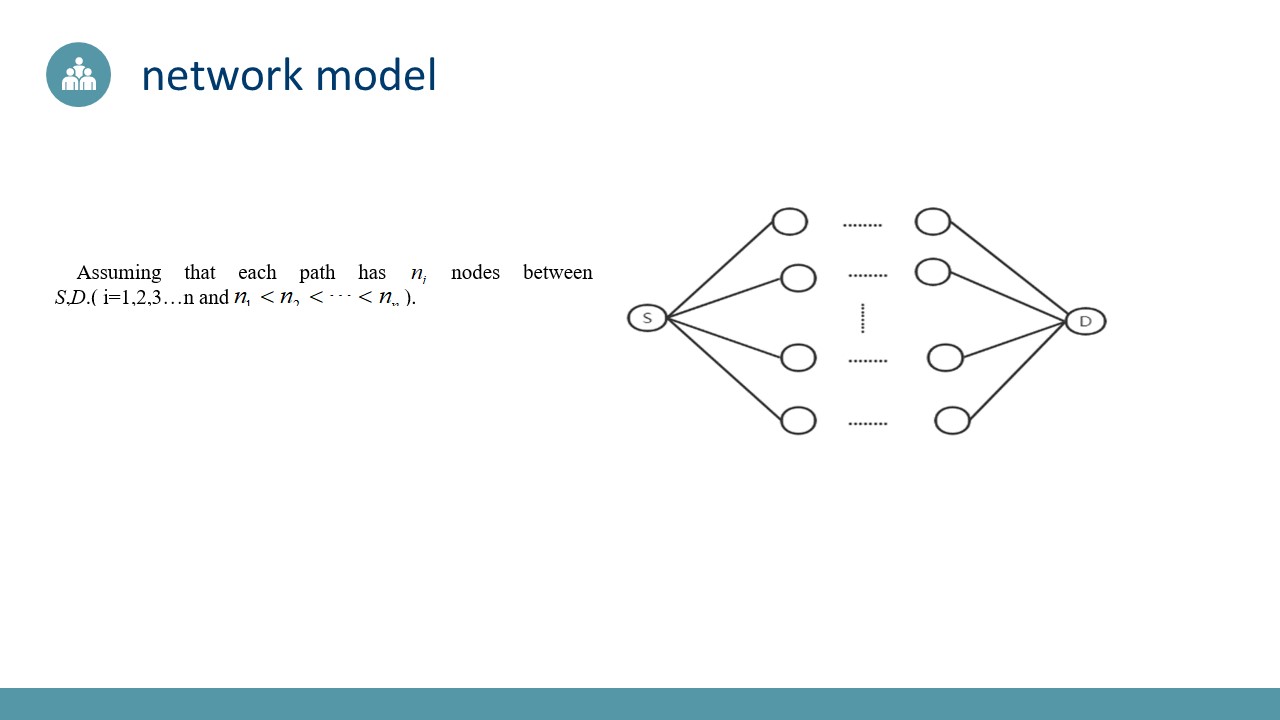 |
The Figure shows a stochastic network topology model where node S and node D want to communicate and there are paths from source node S to destination node D. These paths are considered to be disjoint paths. |
| ICACT20220178 Slide.09
[Big Slide]
[YouTube] |
Chrome Click!! |
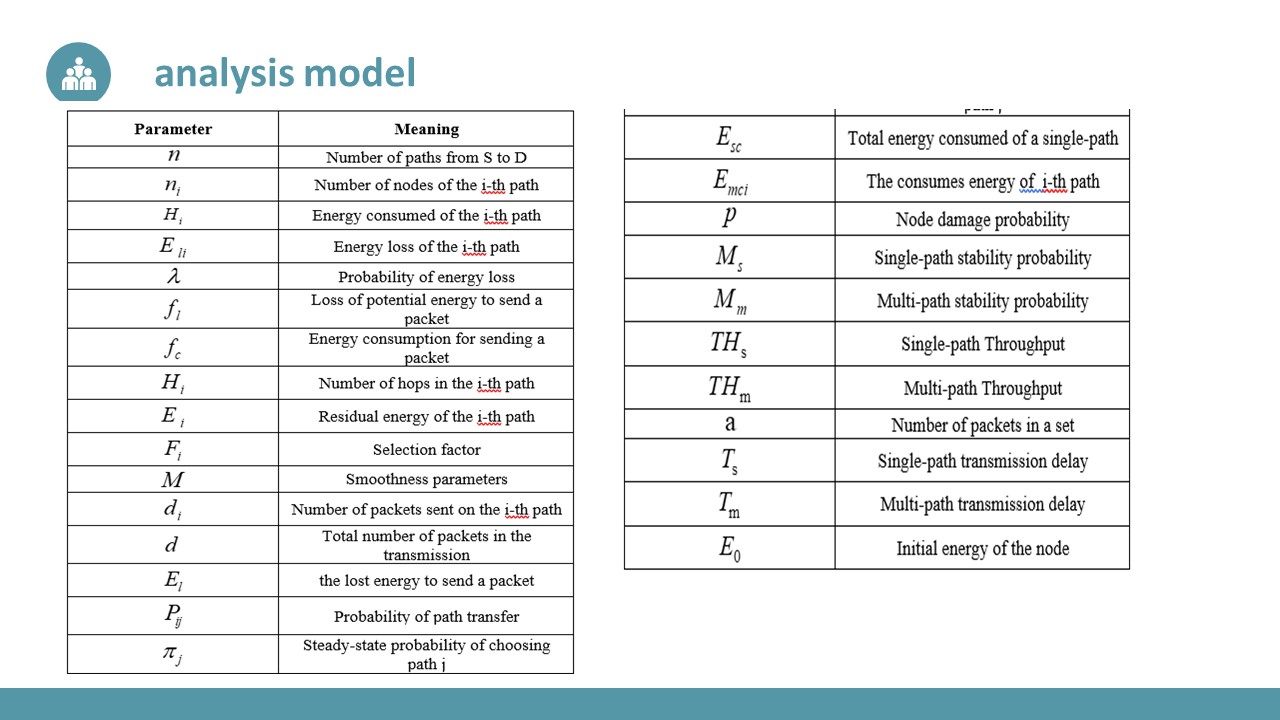 |
Most of the previous routing models only consider a part of the factors that affect the delivery of data packets, for example, only a single factor such as the number of hops is considered, and the energy consumption and routing selection during the data transmission process are not considered. In this paper, we propose a new analytical model that takes into account the residual energy and hop count to set up the path selection factor, and the packet sending path is selected by the established Markov model. The summary of the parameters used in this chapter is given in the table .
|
| ICACT20220178 Slide.10
[Big Slide]
[YouTube] |
Chrome Click!! |
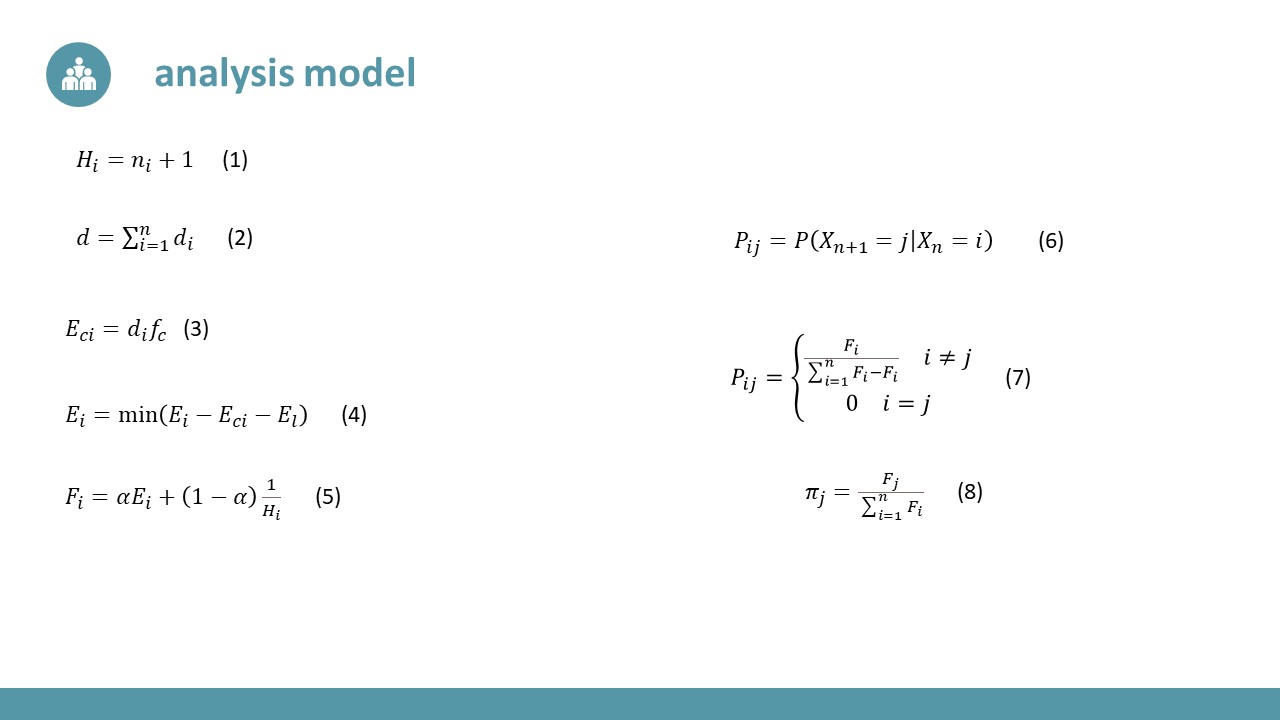 |
Using formula (1) to calculate the number of hops of path i.
In formula 2 ,Assuming that there are d packets waiting to be sent during a transmission from S to D. The packets sent each path are .
The residual energy of the i-th path is defined as follows 3 ,4
The path selection factor is defined as 5
We defined a path selection factor and proved that this model conforms to the path selection model of the finite Markov chain, as shown in equations 6,7
the probability of choosing the j-th path as 8
|
| ICACT20220178 Slide.11
[Big Slide]
[YouTube] |
Chrome Click!! |
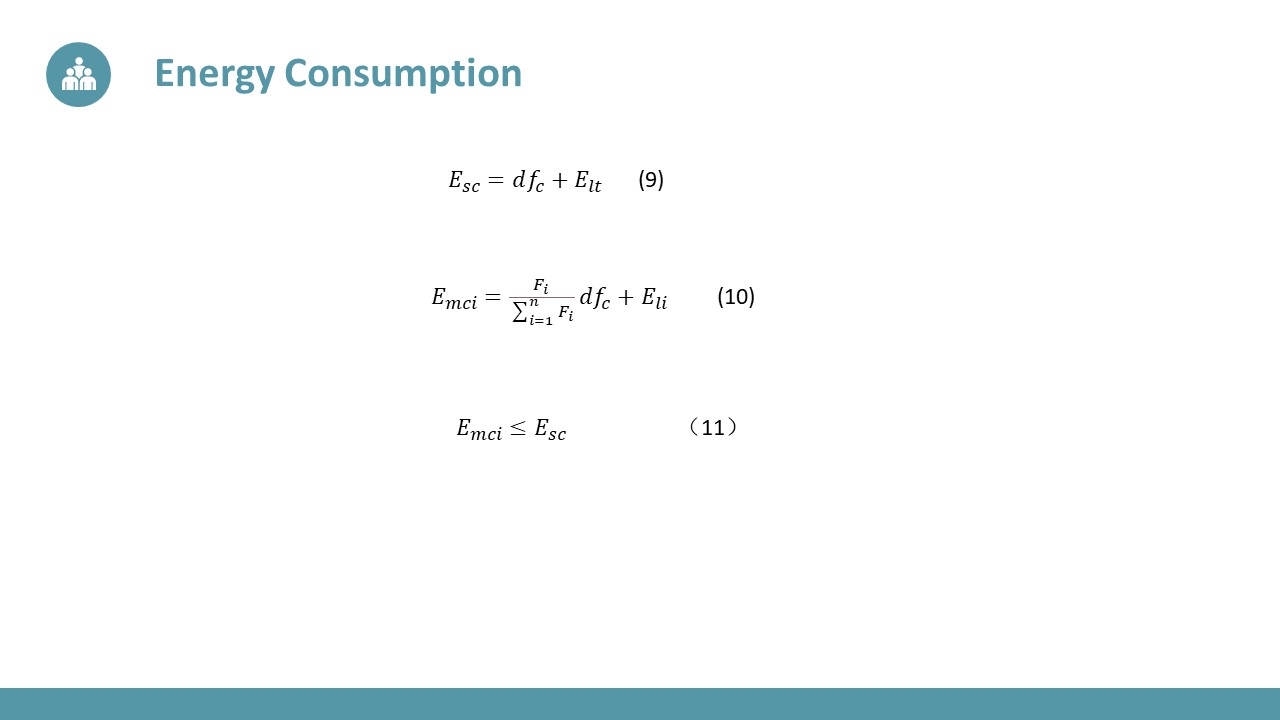 |
The single-path selects the t-th of path for transmission and the energy consumption is calculated as 9
The i-th path on the multi-path consumes energy as 10
From equations 9 and 10, without considering the occurrence of congestion, it can be concluded that each path in the multi-path algorithm consumes less energy for transmission than the single-path algorithm
|
| ICACT20220178 Slide.12
[Big Slide]
[YouTube] |
Chrome Click!! |
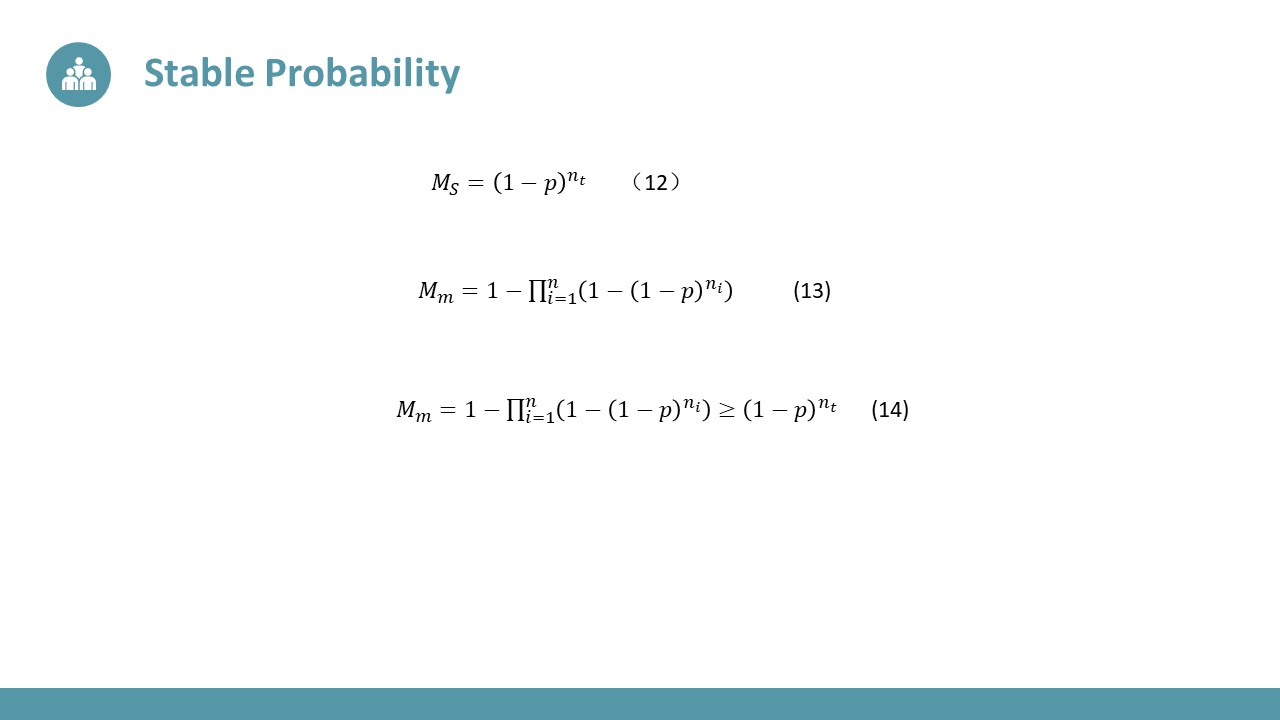 |
Stable probability is defined as the probability of successfully completing a data transfer process without interruption. Assuming that the probability of damage for each node is p (0 |
| ICACT20220178 Slide.13
[Big Slide]
[YouTube] |
Chrome Click!! |
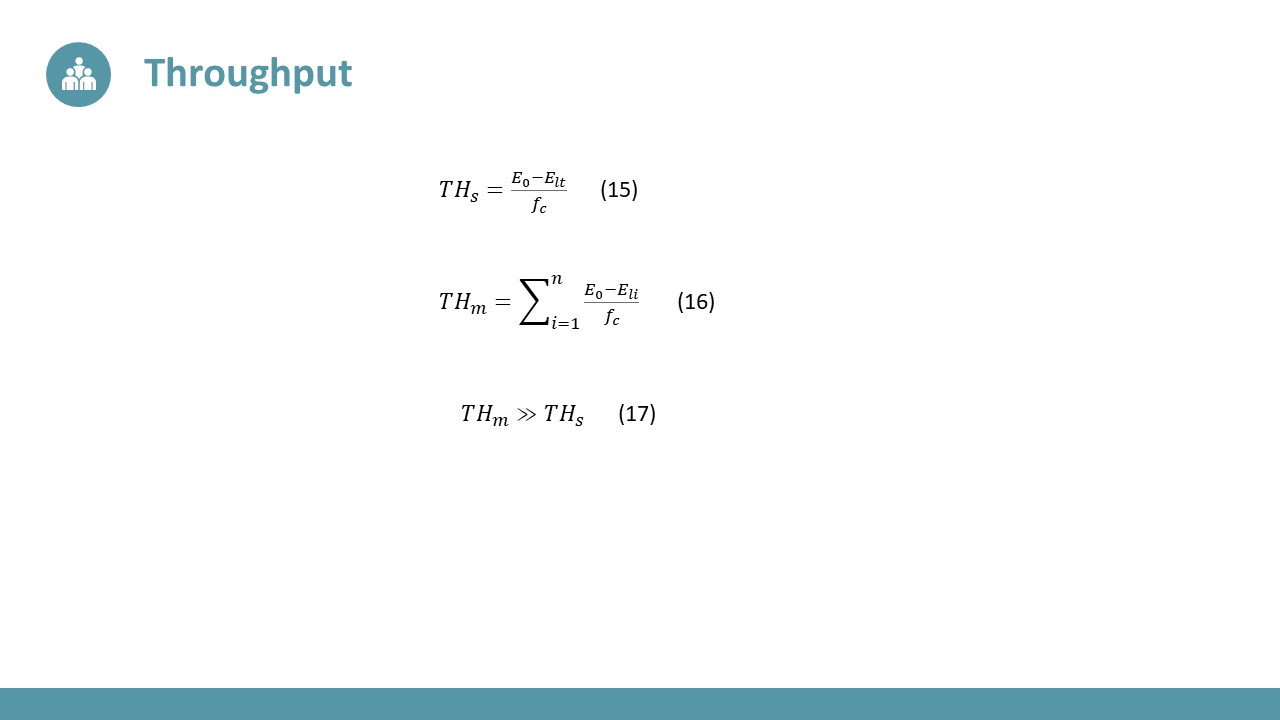 |
Assuming that during the transmission process, as long as the path does not break down, it will continue to send data packets until the path energy is exhausted. We assume that each packet has the same size, then the throughput can be expressed as THS and THM。
It can be shown multi-path algorithm have better throughput than single-path algorithm. In the same situation, the multi-path algorithm can send more data than the single-path algorithm.
|
| ICACT20220178 Slide.14
[Big Slide]
[YouTube] |
Chrome Click!! |
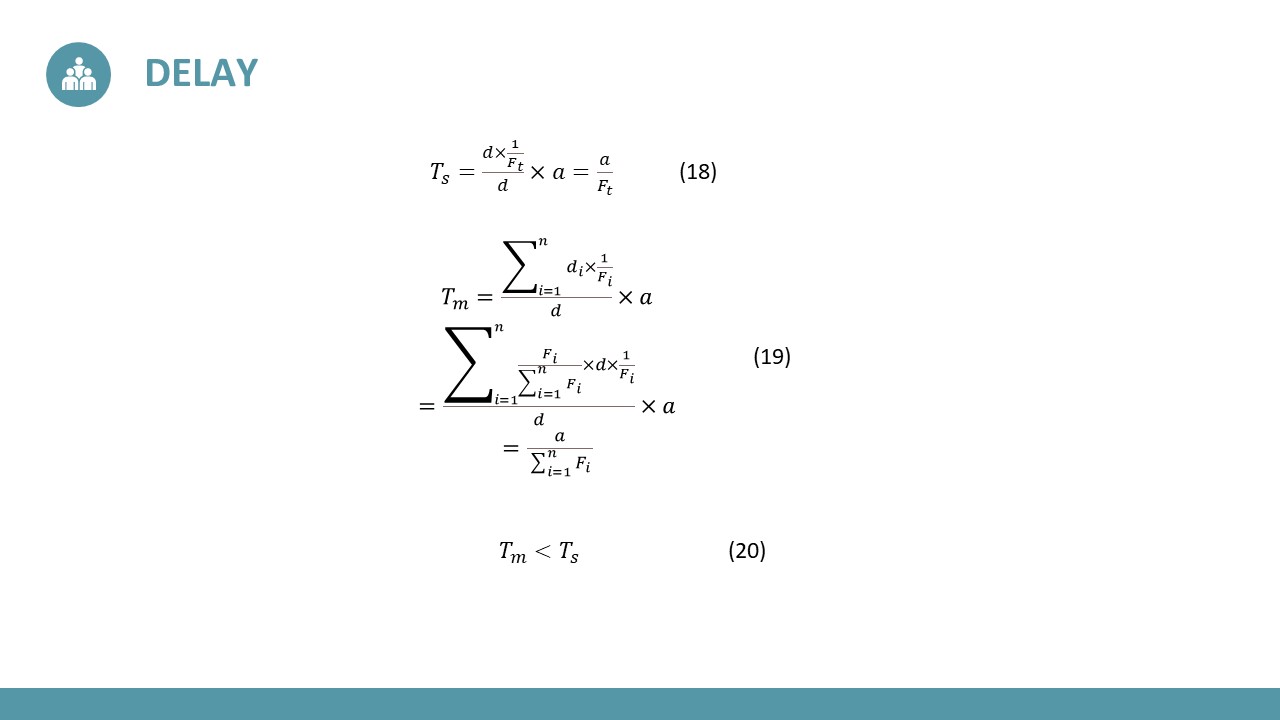 |
The data transmission delay is related to the processing power of the node and the number of node hops. There are d data packets waiting to be transmitted during one transmission. Single-path and multi-path delay is calculated as Ts and TM.
If the same packets are sent without regard to blocking, the multi-path algorithm transmission delay is less than the single-path algorithm transmission delay.
|
| ICACT20220178 Slide.15
[Big Slide]
[YouTube] |
Chrome Click!! |
 |
simulation result |
| ICACT20220178 Slide.16
[Big Slide]
[YouTube] |
Chrome Click!! |
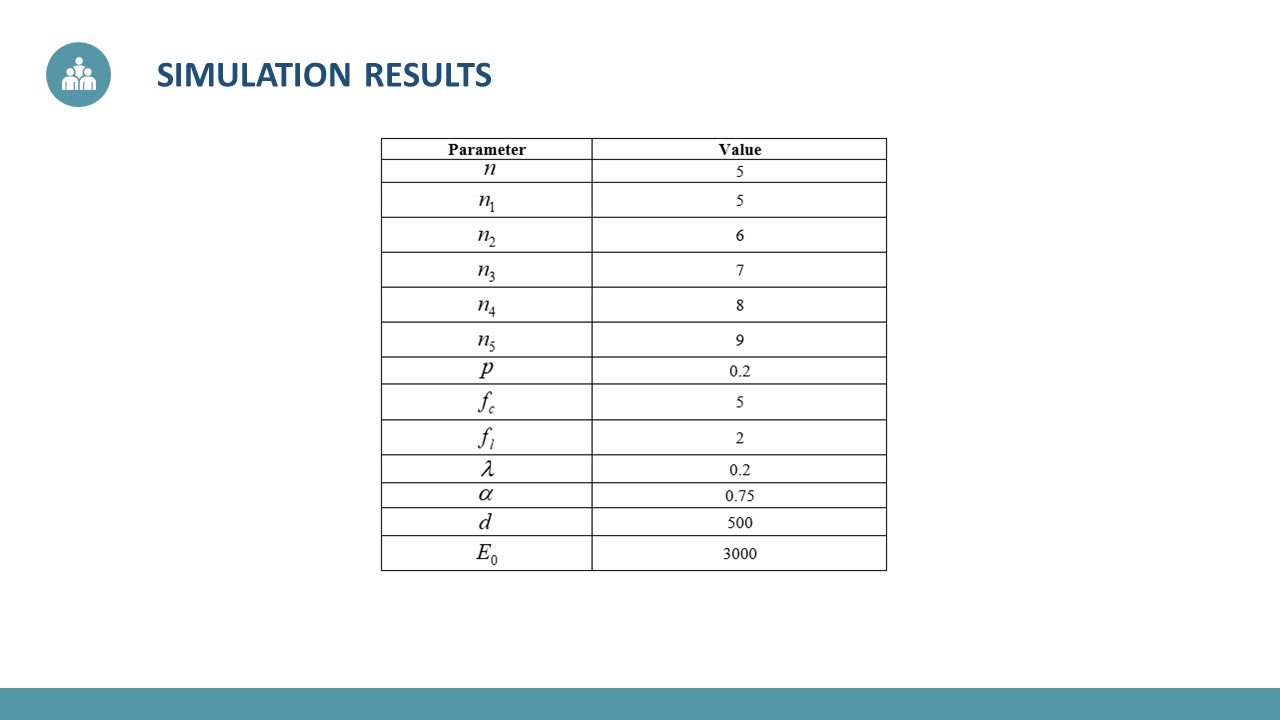 |
The values of the simulation parameters are defined in Table. |
| ICACT20220178 Slide.17
[Big Slide]
[YouTube] |
Chrome Click!! |
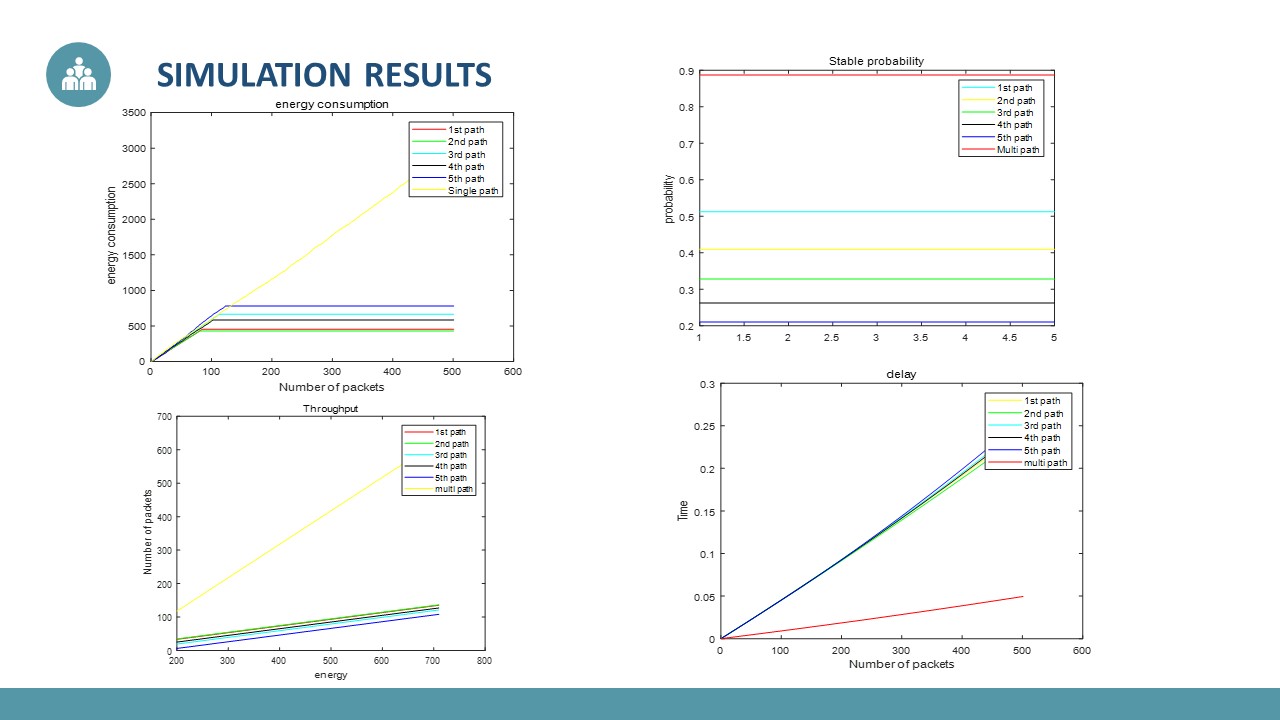 |
The above model is simulated using Matlab and the four metrics for comparing performance were defined as follows.
Energy consumption: the amount of energy consumed to execute a complete transmission process.
Stable probability: the probability of successfully completing a data transfer process without interruption.
Throughput: the number of packets that can be sent if energy is depleted.
Delay: the time required to send a set of data packets.
The values of the simulation parameters are defined in Table.
|
| ICACT20220178 Slide.18
[Big Slide]
[YouTube] |
Chrome Click!! |
 |
conclusion |
| ICACT20220178 Slide.19
[Big Slide]
[YouTube] |
Chrome Click!! |
 |
conclusion |
| ICACT20220178 Slide.20
[Big Slide]
[YouTube] |
Chrome Click!! |
 |
Thank for your listening. |















