 ICACT20230028 Slide.00
[Big Slide]
[YouTube] |
Chrome  Click!! |
 |
Cloud and Edge Computing Based Movable 3D Dynamic Image Recognition and Analysis Layer System for Remote Biological Laboratory
Presenter: Ting-Yu Lai
|
| ICACT20230028 Slide.01
[Big Slide]
[YouTube] |
Chrome Click!! |
 |
In recent years, Covid-19 has widely affected our lives. Human beings urgently need vaccines and drugs to resist the virus's invasion and to develop related medical or biotechnology products.
It is often necessary to verify the effectiveness and safety of the products through animal experiments. To reduce the contamination of animal laboratories, the use of mechanical auxiliary equipment is a viable solution.
|
| ICACT20230028 Slide.02
[Big Slide]
[YouTube] |
Chrome Click!! |
 |
Introduction |
| ICACT20230028 Slide.03
[Big Slide]
[YouTube] |
Chrome Click!! |
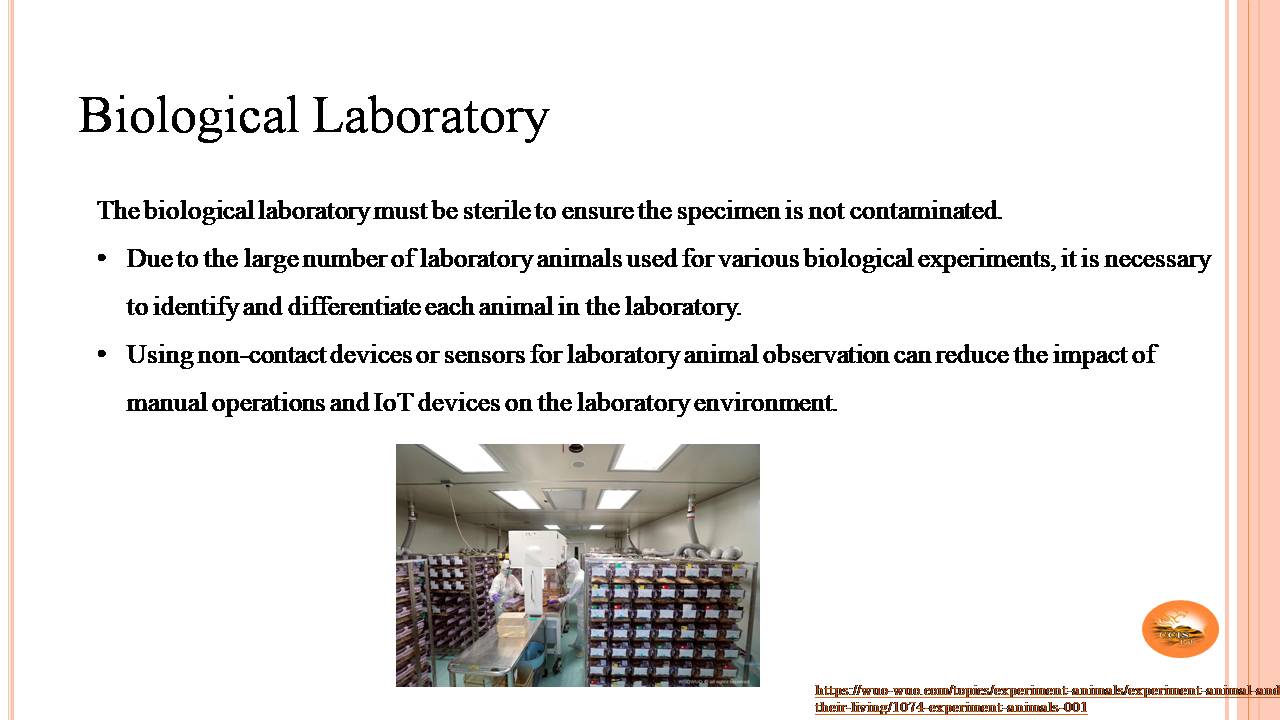 |
The biological laboratory must be sterile to ensure the specimen is not contaminated.
Due to the large number of laboratory animals used for various biological experiments, it is necessary to identify and differentiate each animal in the laboratory.
Using non-contact devices or sensors for laboratory animal observation can reduce the impact of manual operations and IoT devices on the laboratory environment.
|
| ICACT20230028 Slide.04
[Big Slide]
[YouTube] |
Chrome Click!! |
 |
The objects in the captured image are segmented through the network and artificial intelligence algorithm.
Objects can be identified or identified individually, and some studies use artificial intelligence algorithms to distinguish and recognize the face.
According to the identification result, the management and safety of the operator can be enhanced.
Based on the features, each object or face can be recognized.
|
| ICACT20230028 Slide.05
[Big Slide]
[YouTube] |
Chrome Click!! |
 |
Genetic algorithms are commonly used to generate high-quality optimization and search problem solutions.
Relying on biologically inspired operators such as :
Initiate
Crossover
Mutation
Selection
|
| ICACT20230028 Slide.06
[Big Slide]
[YouTube] |
Chrome Click!! |
 |
Proposed System |
| ICACT20230028 Slide.07
[Big Slide]
[YouTube] |
Chrome Click!! |
 |
In the limited space or room of a biological laboratory, the layer system can move according to programs and routes defined on demand.
Each animal observation box can be monitored through the layer system with cameras and IoT sensors.
Without manual operation, remote monitoring and management can be realized with little environmental impact.
|
| ICACT20230028 Slide.08
[Big Slide]
[YouTube] |
Chrome Click!! |
 |
The endpoint camera and IoT sensors can capture images and surround view or 360 degrees to detect data of the environment.
Based on various IoT sensors, researchers can obtain information about the tested animal and the environment of a laboratory.
According to a sensor, 3D scanned can use to monitor the animal.
Researchers can have more information about animals and tests.
|
| ICACT20230028 Slide.09
[Big Slide]
[YouTube] |
Chrome Click!! |
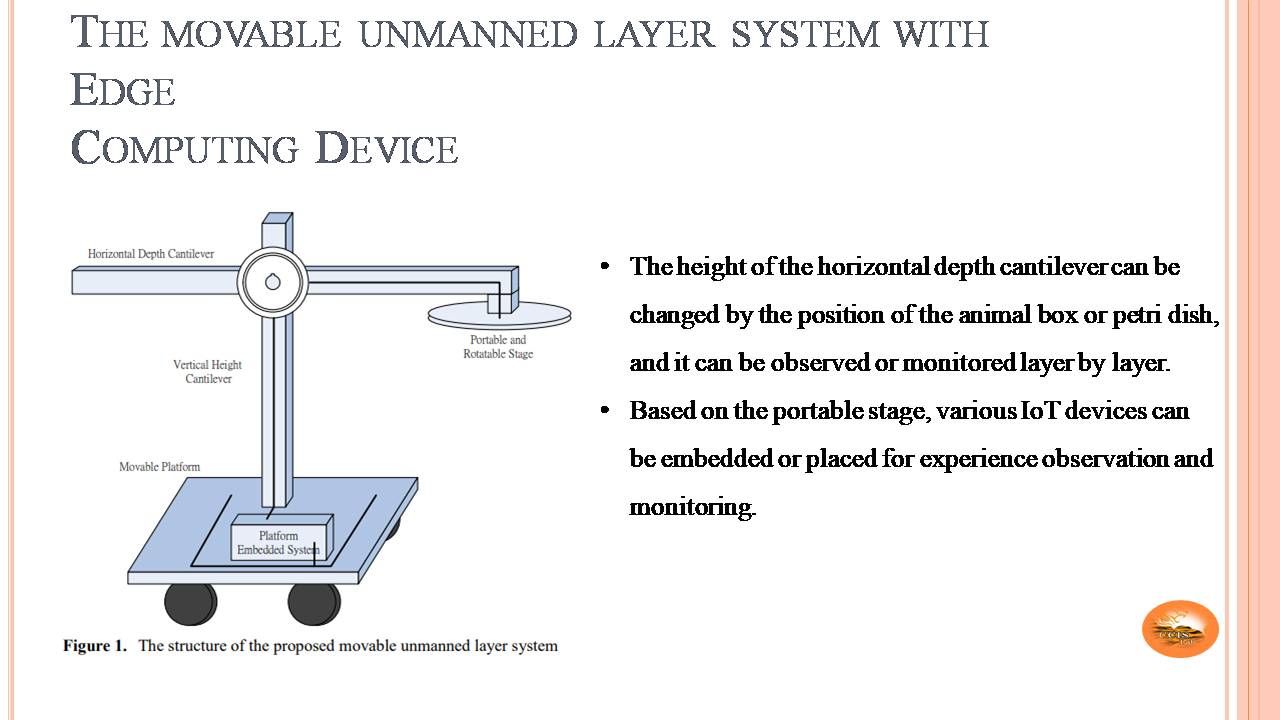 |
The height of the horizontal depth cantilever can be changed by the position of the animal box or petri dish, and it can be observed or monitored layer by layer.
Based on the portable stage, various IoT devices can be embedded or placed for experience observation and monitoring.
|
| ICACT20230028 Slide.10
[Big Slide]
[YouTube] |
Chrome Click!! |
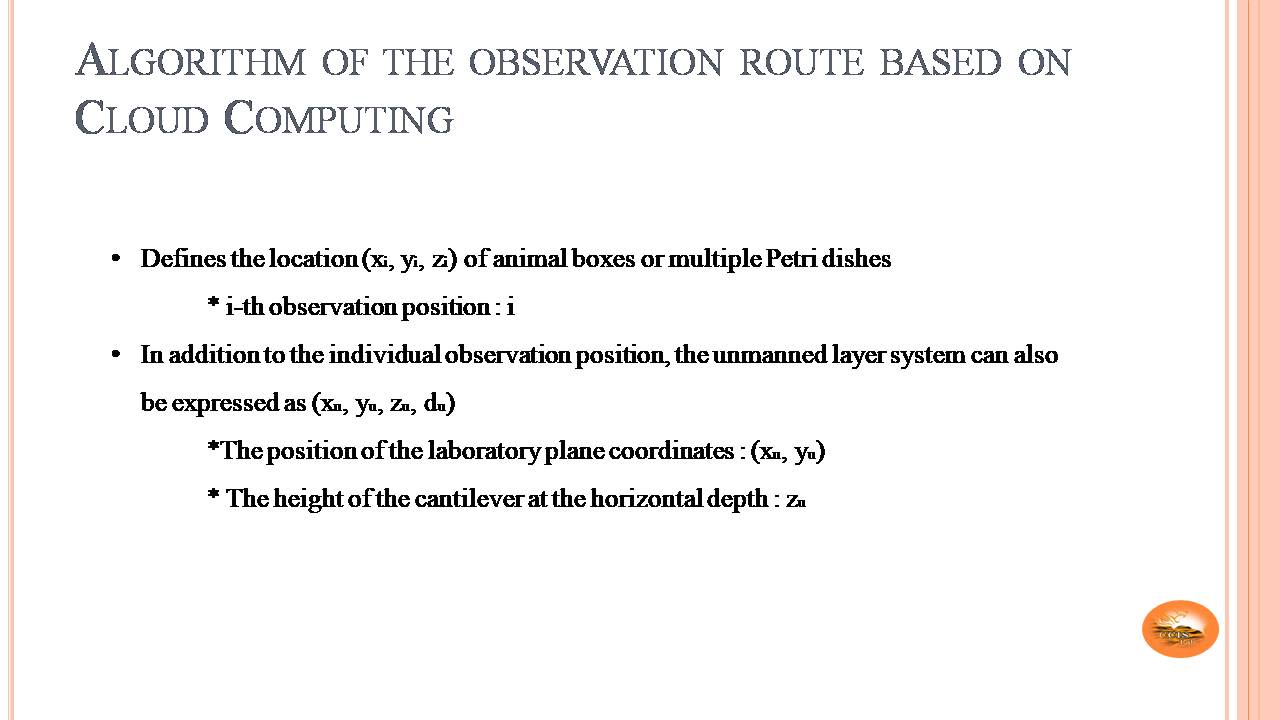 |
Defines the location (xi, yi, zi) of animal boxes or multiple Petri dishes
* i-th observation position : i
In addition to the individual observation position, the unmanned layer system can also be expressed as (xu, yu, zu, du)
*The position of the laboratory plane coordinates : (xu, yu)
* The height of the cantilever at the horizontal depth : zu
|
| ICACT20230028 Slide.11
[Big Slide]
[YouTube] |
Chrome Click!! |
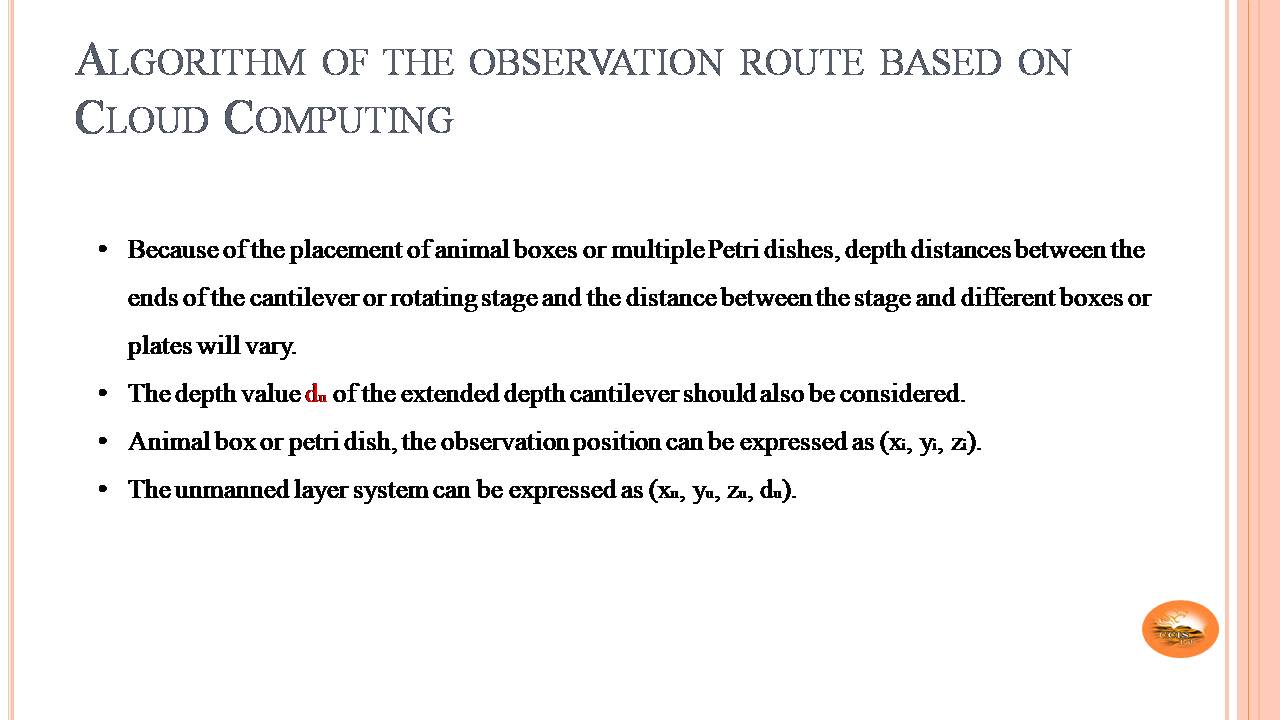 |
Because of the placement of animal boxes or multiple Petri dishes, depth distances between the ends of the cantilever or rotating stage and the distance between the stage and different boxes or plates will vary.
The depth value du of the extended depth cantilever should also be considered.
Animal box or petri dish, the observation position can be expressed as (xi, yi, zi).
The unmanned layer system can be expressed as (xu, yu, zu, du).
|
| ICACT20230028 Slide.12
[Big Slide]
|
Chrome Click!! |
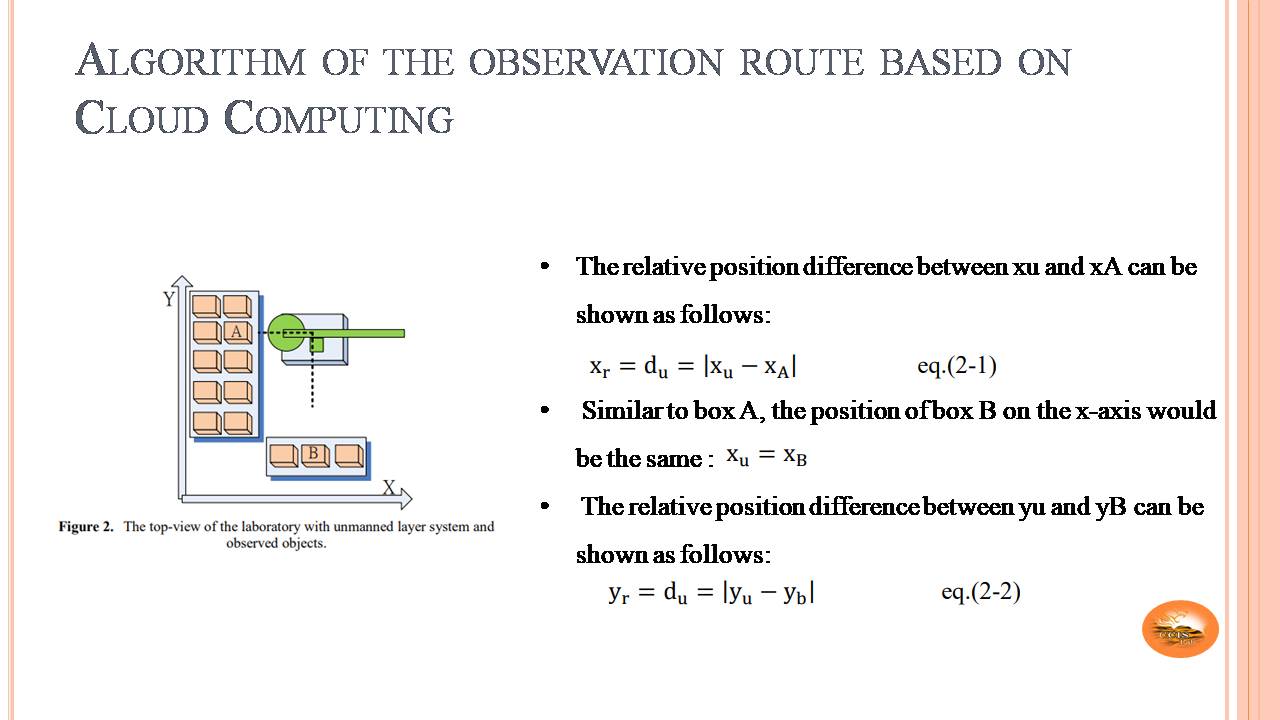 |
The relative position difference between xu and xA can be shown as follows:
Similar to box A, the position of box B on the x-axis would be the same :
The relative position difference between yu and yB can be shown as follows:
|
| ICACT20230028 Slide.13
[Big Slide]
[YouTube] |
Chrome Click!! |
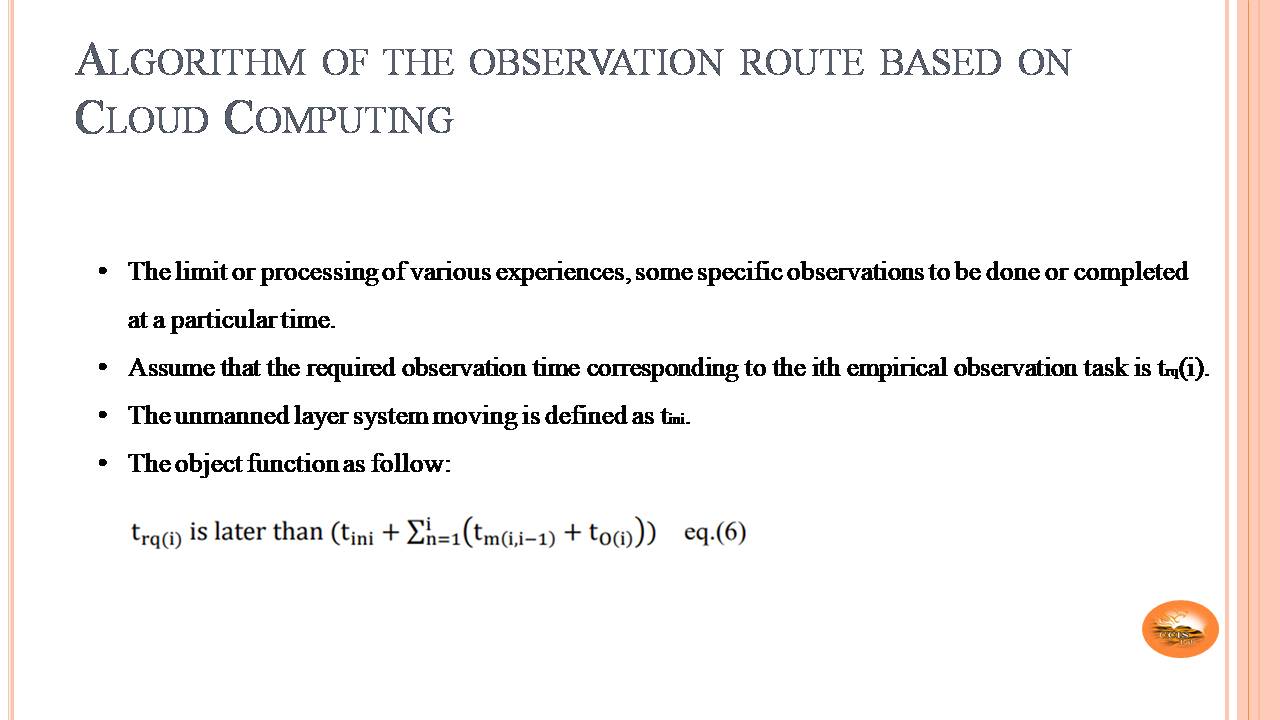 |
The limit or processing of various experiences, some specific observations to be done or completed at a particular time.
Assume that the required observation time corresponding to the ith empirical observation task is trq(i).
The unmanned layer system moving is defined as tini.
The object function as follow:
|
| ICACT20230028 Slide.14
[Big Slide]
[YouTube] |
Chrome Click!! |
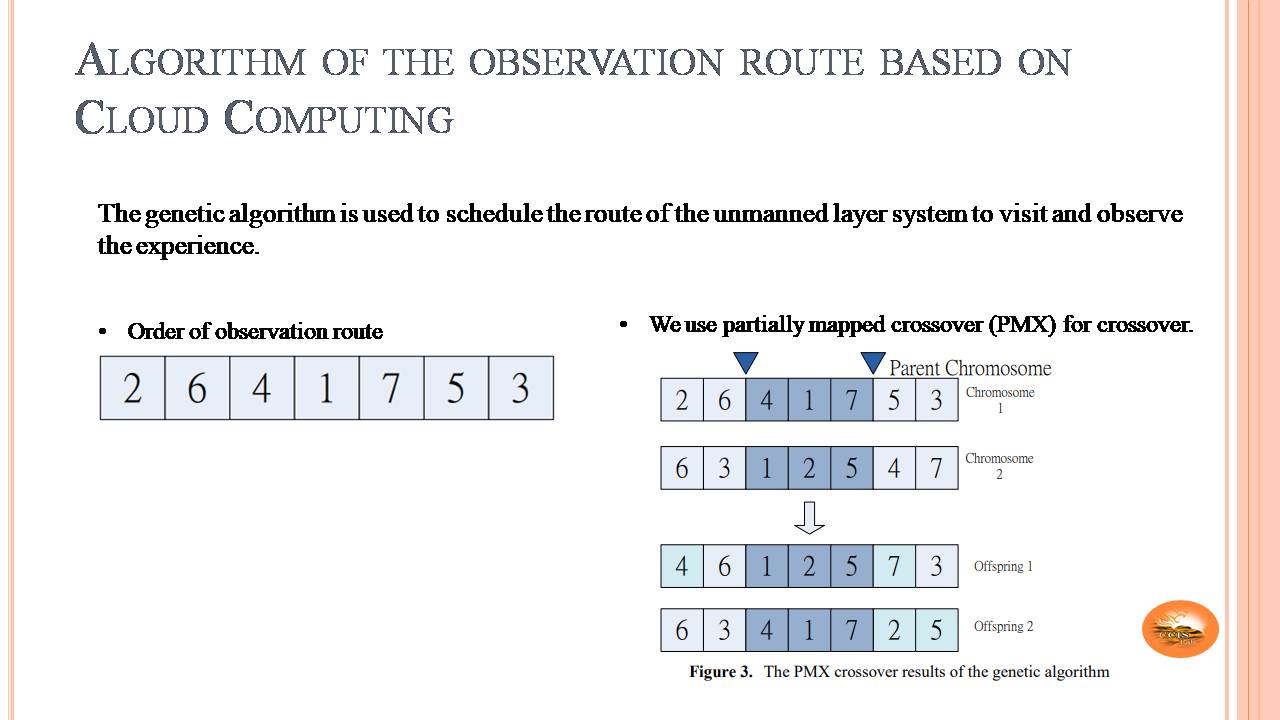 |
The genetic algorithm is used to schedule the route of the unmanned layer system to visit and observe the experience.
|
| ICACT20230028 Slide.15
[Big Slide]
[YouTube] |
Chrome Click!! |
 |
System Implementation and Verification |
| ICACT20230028 Slide.16
[Big Slide]
[YouTube] |
Chrome Click!! |
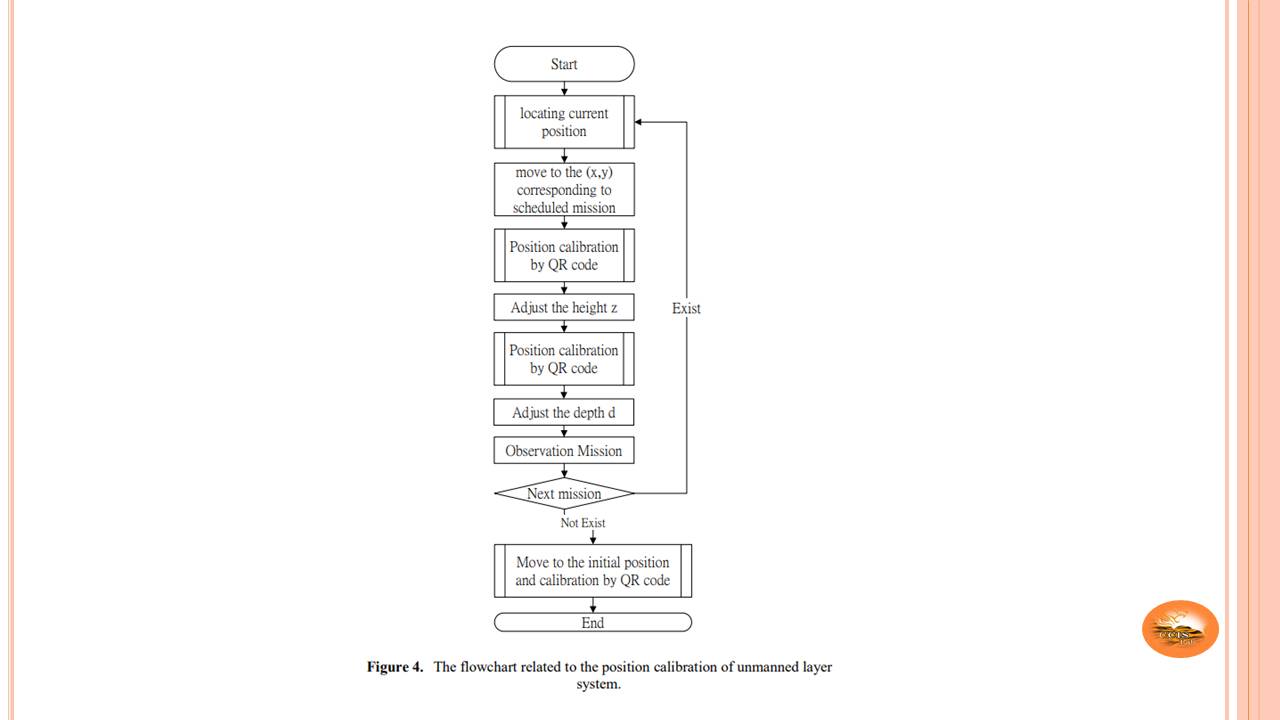 |
This is the flowchart of proposed system |
| ICACT20230028 Slide.17
[Big Slide]
[YouTube] |
Chrome Click!! |
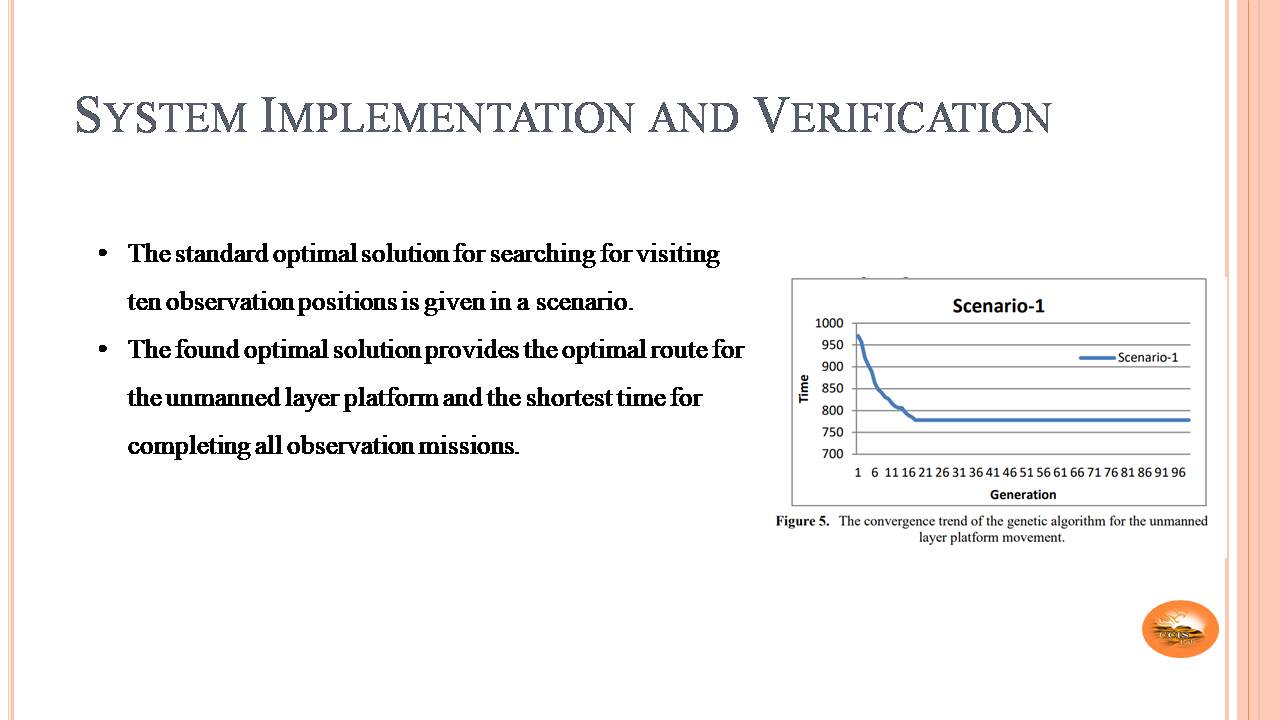 |
The standard optimal solution for searching for visiting ten observation positions is given in a scenario.
The found optimal solution provides the optimal route for the unmanned layer platform and the shortest time for completing all observation missions.
|
| ICACT20230028 Slide.18
[Big Slide]
[YouTube] |
Chrome Click!! |
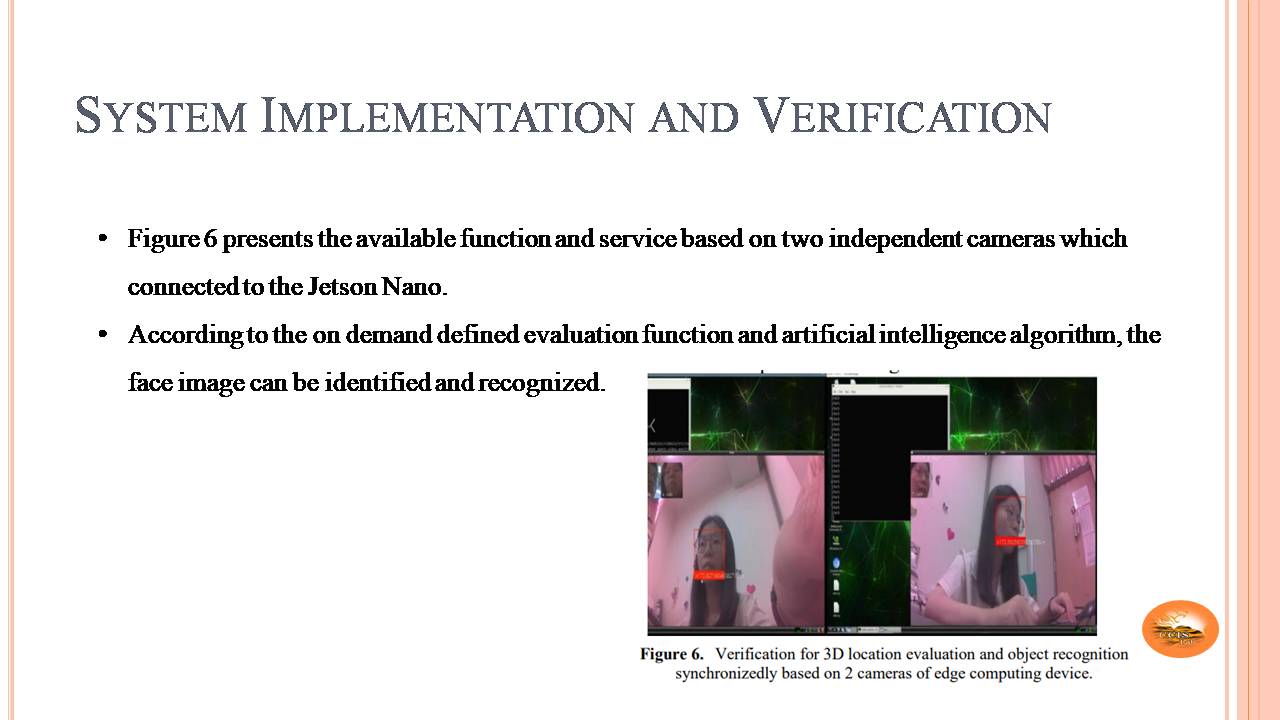 |
Figure 6 presents the available function and service based on two independent cameras which connected to the Jetson Nano.
According to the on demand defined evaluation function and artificial intelligence algorithm, the face image can be identified and recognized |
| ICACT20230028 Slide.19
[Big Slide]
[YouTube] |
Chrome Click!! |
 |
The observation missions of the remote biological laboratory could be completed without or with less manual operation.
In addition, an algorithm based on cloud computing could provide the optimal route for multiple observation missions.
The edge computing device can support the artificial intelligence algorithm for object segmentation and recognition with 3D position evaluation.
|















