 ICACT20230058 Slide.01
[Big Slide]
[YouTube] |
Chrome  Click!! |
 |
Good afternoon everyone, first of all, I wanna introduce myself, My name is Yi-Hao Tu, as a one of the authors in this paper. In this opportunity, I would like to present our paper which has a title “Security Assist Mechanisms for Industrial Control Systems with Authentication” |
| ICACT20230058 Slide.02
[Big Slide]
[YouTube] |
Chrome Click!! |
 |
N/A |
| ICACT20230058 Slide.03
[Big Slide]
[YouTube] |
Chrome Click!! |
 |
N/A |
| ICACT20230058 Slide.04
[Big Slide]
[YouTube] |
Chrome Click!! |
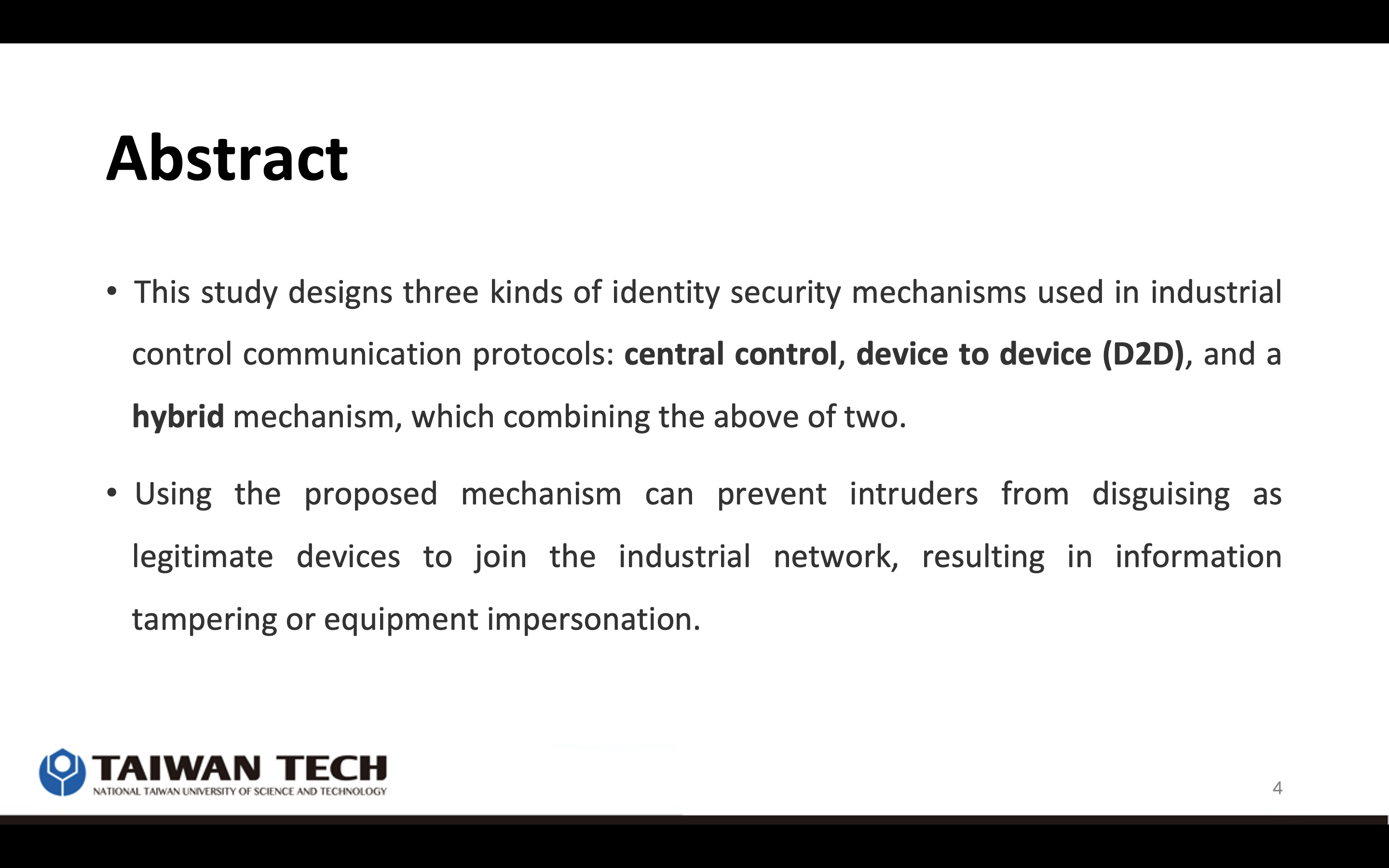 |
Due to the fact that communication protocols in industrial control systems don't have identification and authentication, which makes ICS less secure, this study creates three identity security mechanisms for industrial control communication protocols: central control, device-to-device (D2D), and hybrid. By doing these three things, you can make sure that people who try to get into the industrial network by pretending to be real equipment can't do so. |
| ICACT20230058 Slide.05
[Big Slide]
[YouTube] |
Chrome Click!! |
 |
N/A |
| ICACT20230058 Slide.06
[Big Slide]
[YouTube] |
Chrome Click!! |
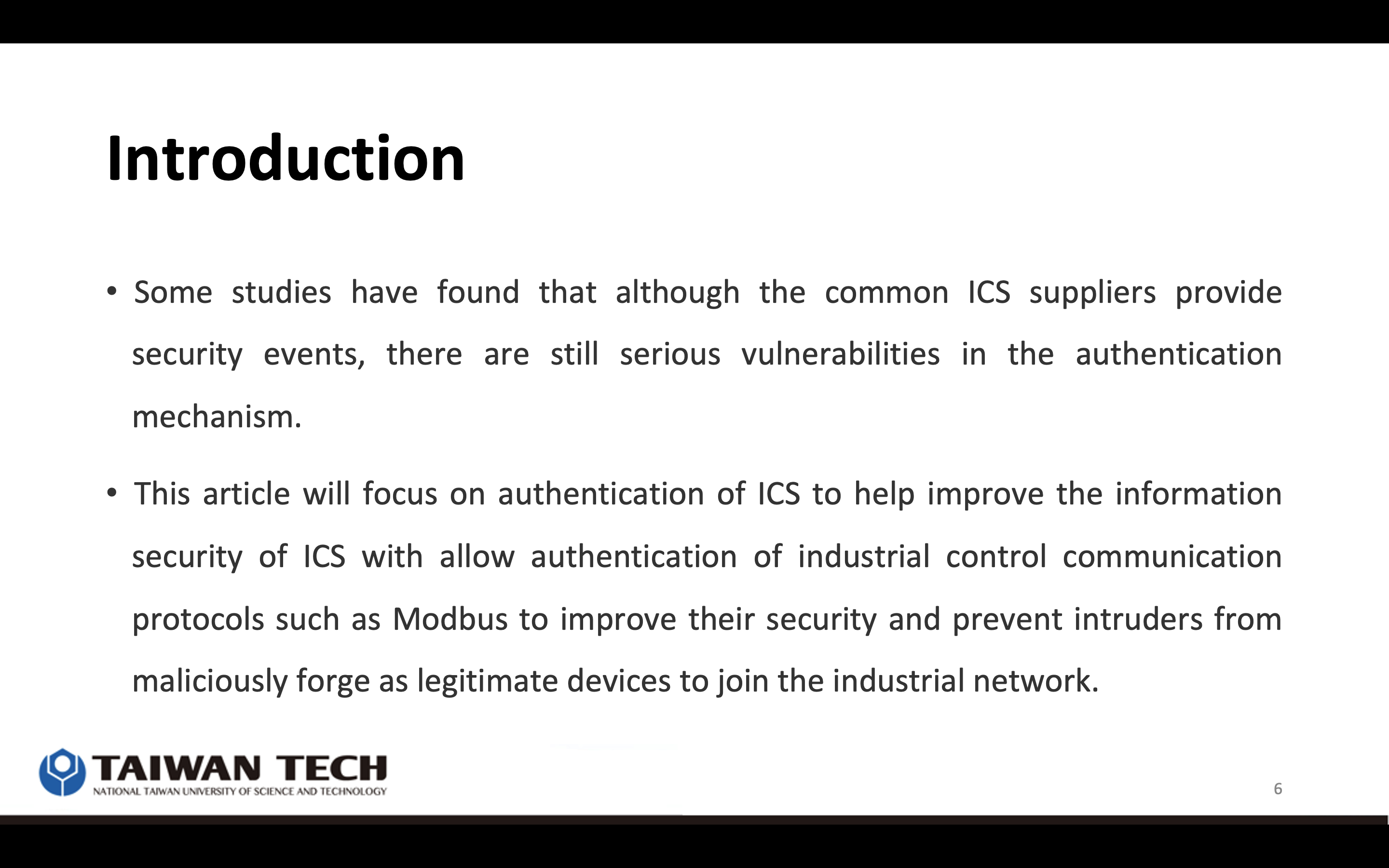 |
Industrial control systems and their communication protocols are used in almost every industry and critical infrastructure, such as manufacturing, power, transportation, etc. Recent studies, on the other hand, have shown that even though most ICS vendors have recently added security features, there are still serious holes in the authentication system. This has made many researchers worried. So, this article will be about ICS authentication to help improve the security of ICS information.
This study proposes a way to authenticate industrial control communication protocols like Modbus to make them more secure and stop people from joining industrial networks by pretending to be real devices, which could lead to information theft or tampering. |
| ICACT20230058 Slide.07
[Big Slide]
[YouTube] |
Chrome Click!! |
 |
N/A |
| ICACT20230058 Slide.08
[Big Slide]
[YouTube] |
Chrome Click!! |
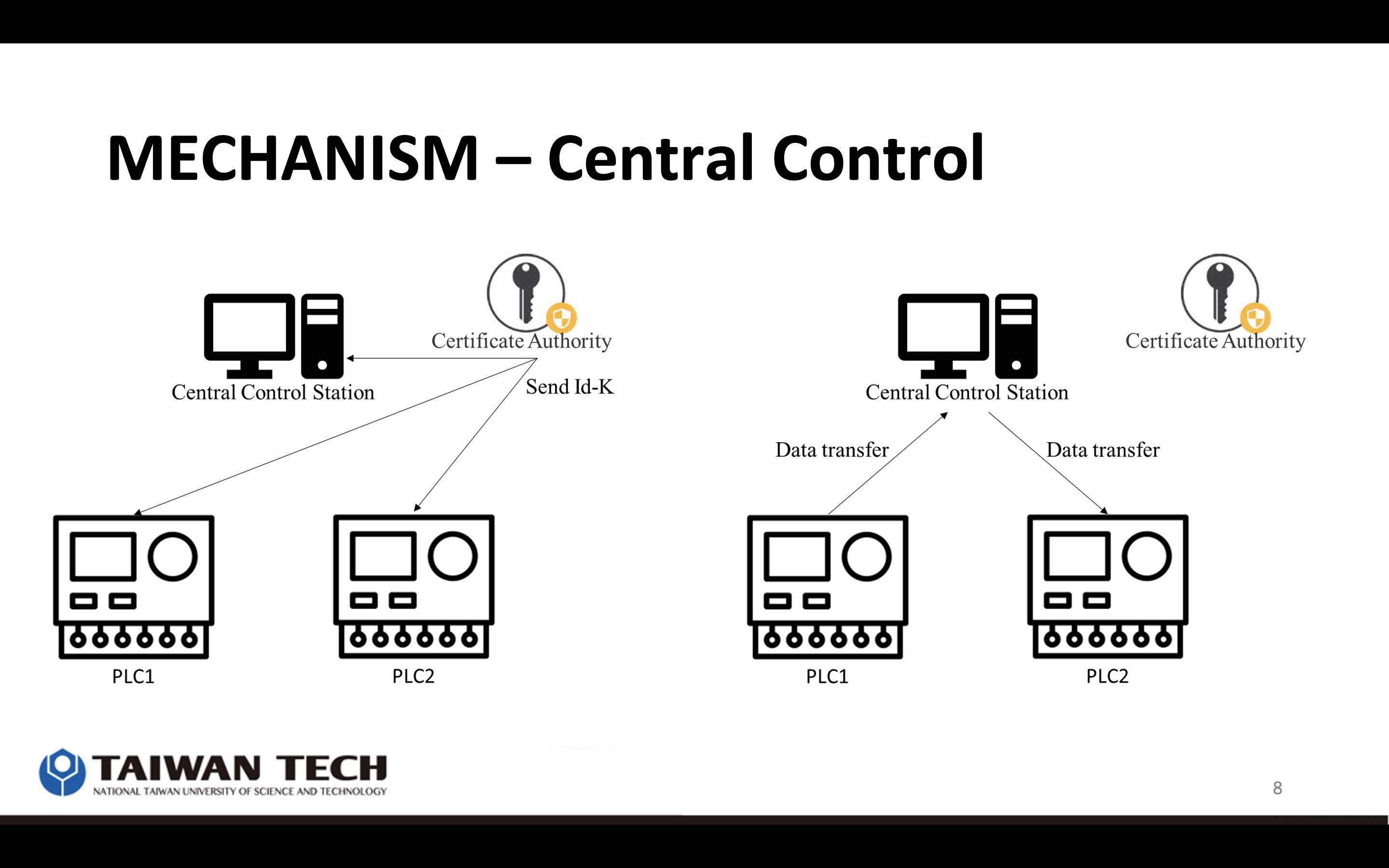 |
This study suggests three ways that things might work. The first is central control, which means that all equipment is verified by the central control station and data is sent through it, as shown in the figure below. This method avoids double validation, which is a plus, but it also needs a central control device and increases latency because the data has to be sent more than once. |
| ICACT20230058 Slide.09
[Big Slide]
[YouTube] |
Chrome Click!! |
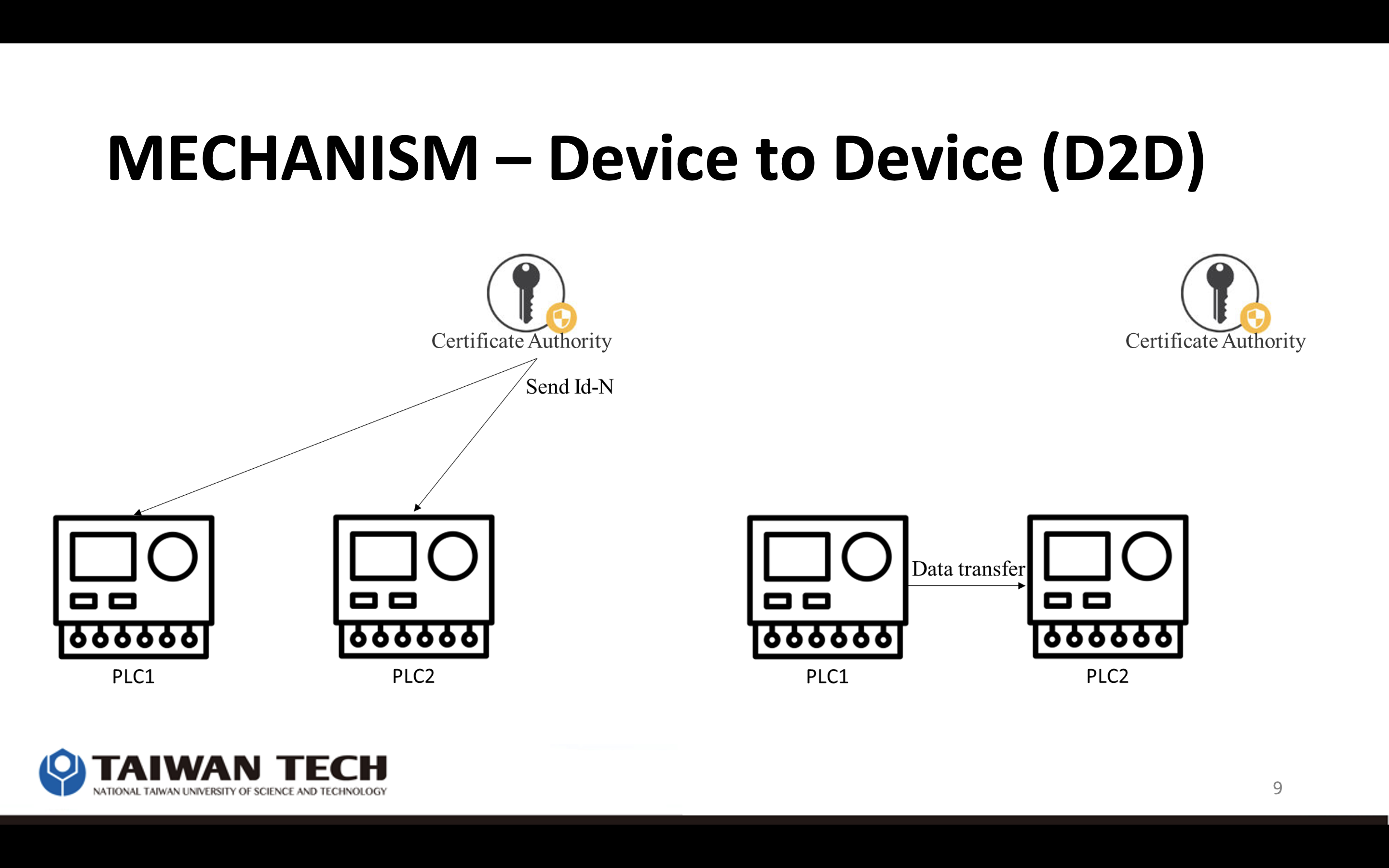 |
The second is Device to Device, in which devices verify each other's trustworthiness by authenticating each other. The pros of this method are that it saves resources and cuts down on latency, but the cons are that each device has to be authenticated, and if there are n devices, each device will have to go through n combinations of two authentications. |
| ICACT20230058 Slide.10
[Big Slide]
[YouTube] |
Chrome Click!! |
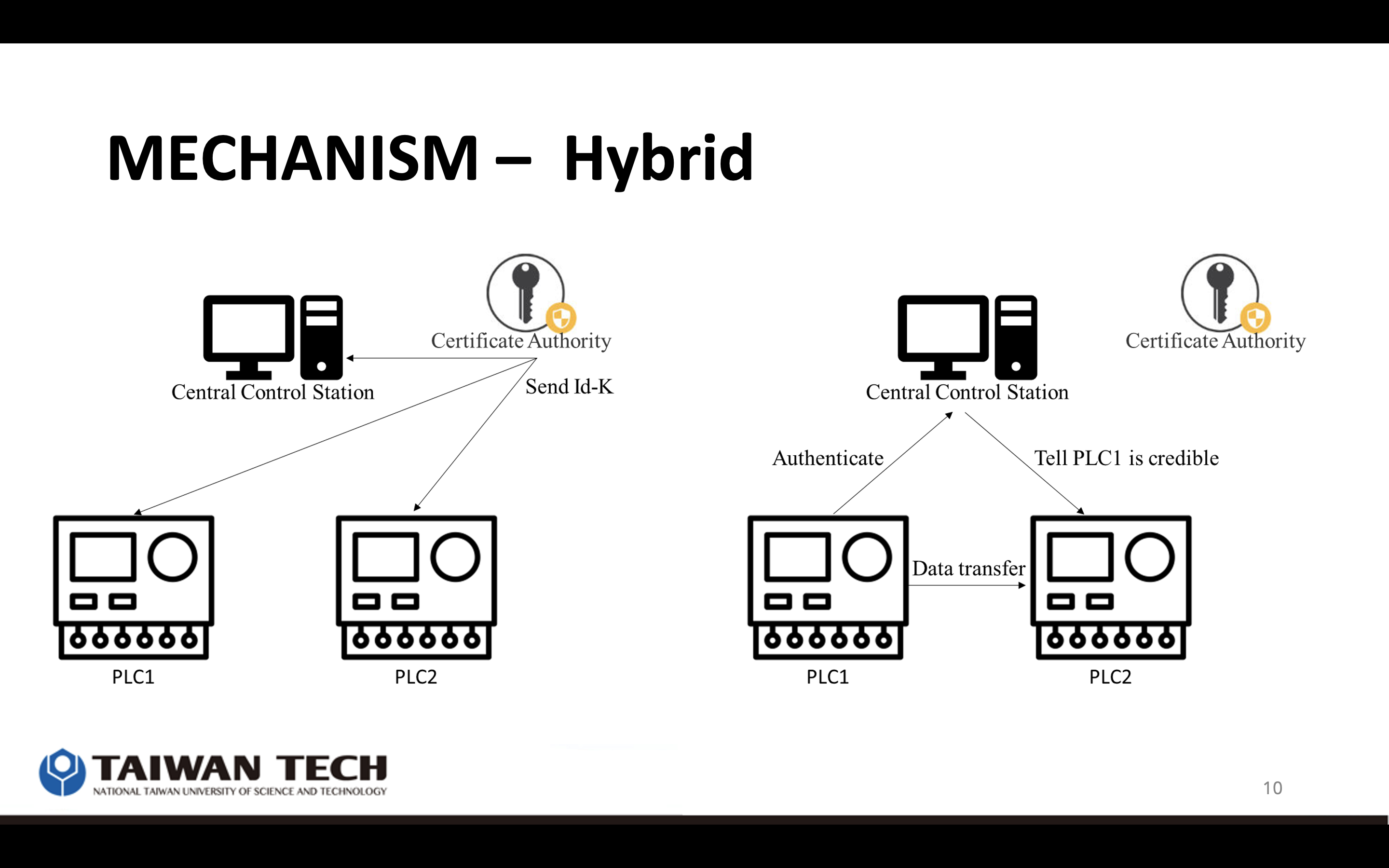 |
The third thing is a hybrid. As shown in the figure, once the device has proven itself to the central control station, the central control station tells other devices that the device can be trusted. The benefit of this method is that it avoids double authentication, but the downside is that it needs a central control device, and the delay is slightly longer because the other devices have to wait for the central control station to tell others. |
| ICACT20230058 Slide.11
[Big Slide]
[YouTube] |
Chrome Click!! |
 |
N/A |
| ICACT20230058 Slide.12
[Big Slide]
[YouTube] |
Chrome Click!! |
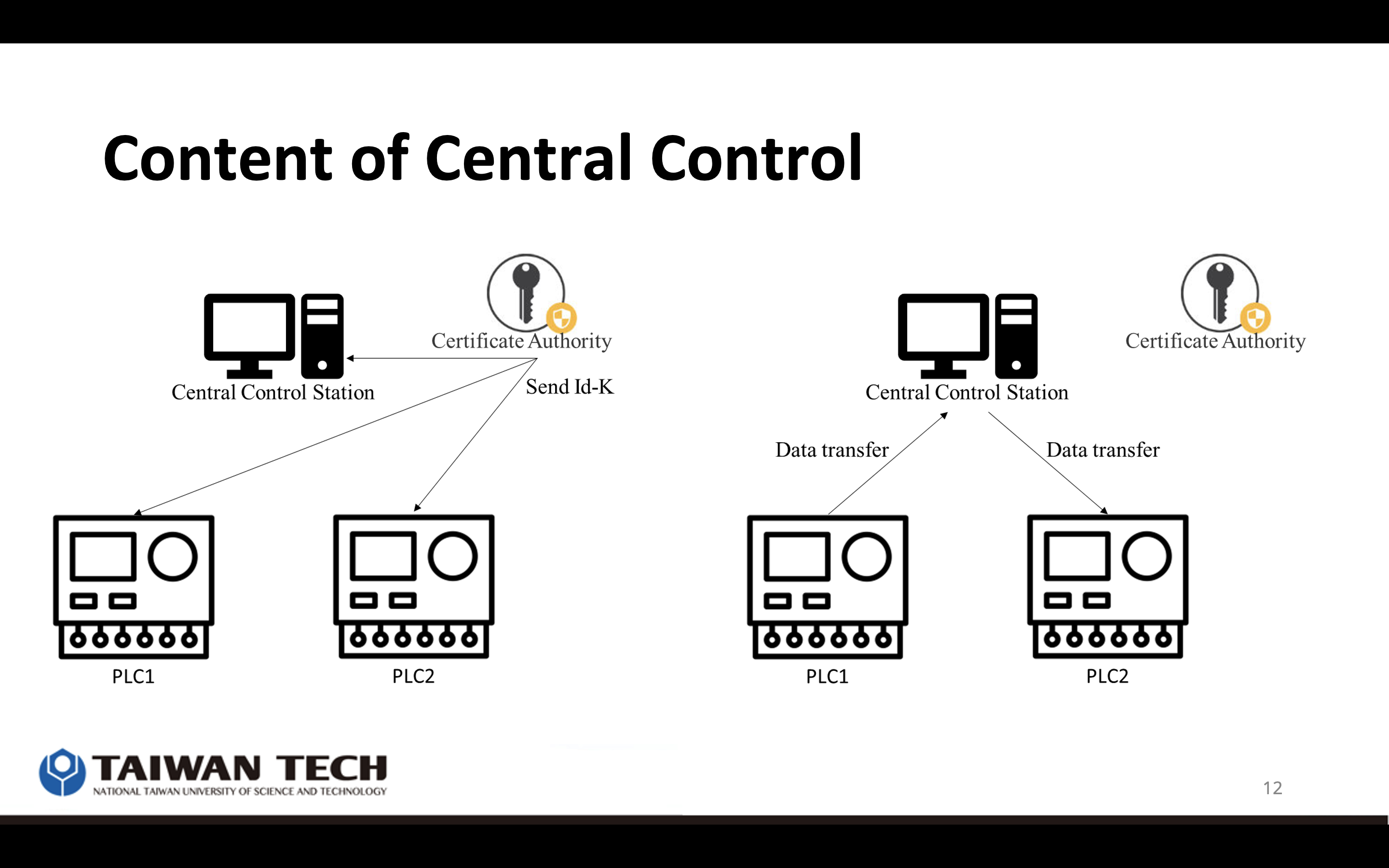 |
Central control: At initialization, embed the same Identification Key (Id-K) across all devices through the Certificate Authority (CA)
- Device A encrypts the Id-K using the public key and sends it to the central control station.
- Central control decrypts with a private key.
- If the decrypted data is the same as the Id-K issued by the CA, Device A is authenticated.
- The central control station requests data from Device A to be sent to Device B.
- The central control station updates the public and private keys and broadcasts the public keys to all devices.
- The central control station requires Device B to encrypt the Id-K with the public key and send it to the central control station.
- Central control decrypts with a private key.
- If the decrypted data is the same as the Id-K issued by the CA, Device B is authenticated. The central control station sends the data sent by Device A to Device B. |
| ICACT20230058 Slide.13
[Big Slide]
[YouTube] |
Chrome Click!! |
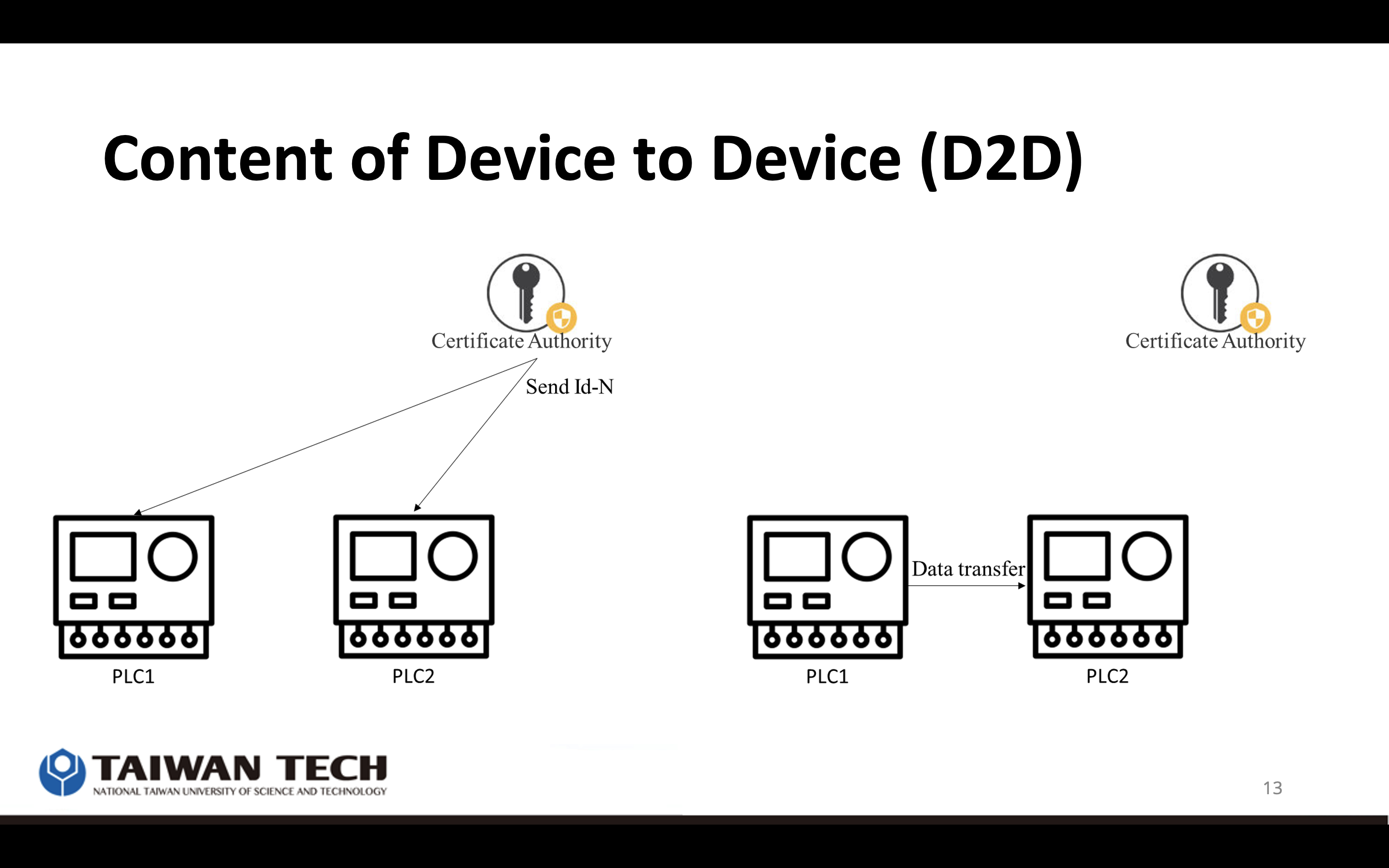 |
During initialization, an Identification Number(Id-N) is embedded in all devices through the CA. Each Id-N in a device is different. After any two ids are hashed, the same string can be obtained, which will also be stored on all devices.
- Device A requests Device B to communicate with Device A.
- Device B requests Device A to send its Id-Nsend.
- Device B hashes the Id-N of Device A and the Id-N of Device B to obtain a hash value.
- If the hash value is equal to the string stored in the Device, Device A passes the authentication of Device B.
Device B requires Device A to send data.
The hash function is A one-way function. It can be a simple function, such as a plus B mod, but using a simple function will reduce security. |
| ICACT20230058 Slide.14
[Big Slide]
[YouTube] |
Chrome Click!! |
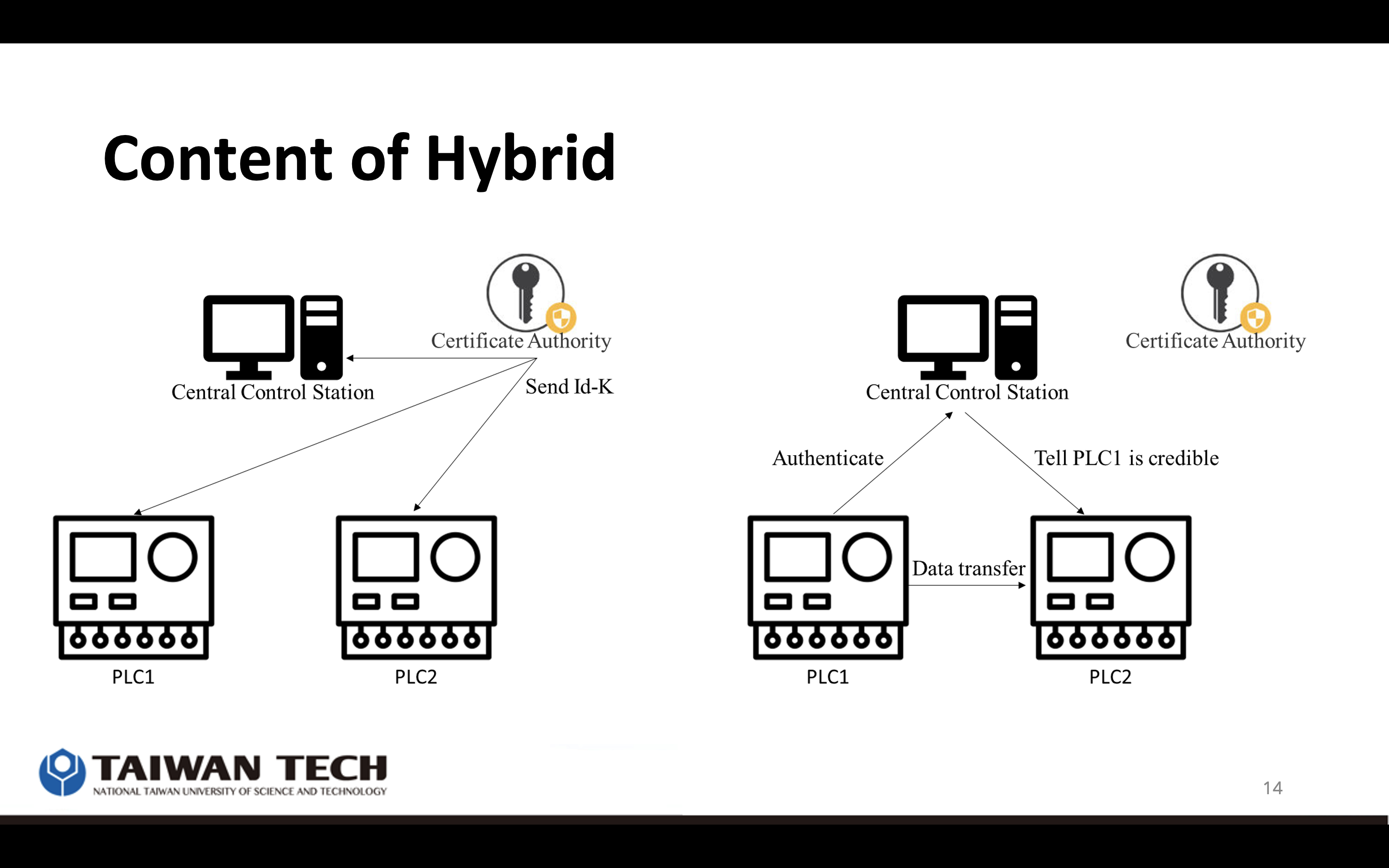 |
Hybrid: The same Identification Key (Id-K) is embedded in all devices through the CA during initialization.
- Device A encrypts the Id-K using the public key and sends it to the central control station.
- Central control decrypts with a private key.
- If the decrypted data is equal to the Id-K issued by the CA, the central control station tells Device B that Device A is trusted.
- Device B requires Device A to send data. |
| ICACT20230058 Slide.15
[Big Slide]
[YouTube] |
Chrome Click!! |
 |
N/A |
| ICACT20230058 Slide.16
[Big Slide]
[YouTube] |
Chrome Click!! |
 |
Based on cryptography, this paper proposes three verification methods (central control, D2D, mixed) to solve the problem of the lack of verification mechanism in the original industrial control protocol. It can improve defense capabilities and ultimately improve the security of industrial control protocols. |
| ICACT20230058 Slide.17
[Big Slide]
[YouTube] |
Chrome Click!! |
 |
N/A |















