 ICACT20240444 Slide.01
[Big Slide]
[YouTube] |
Chrome  Click!! |
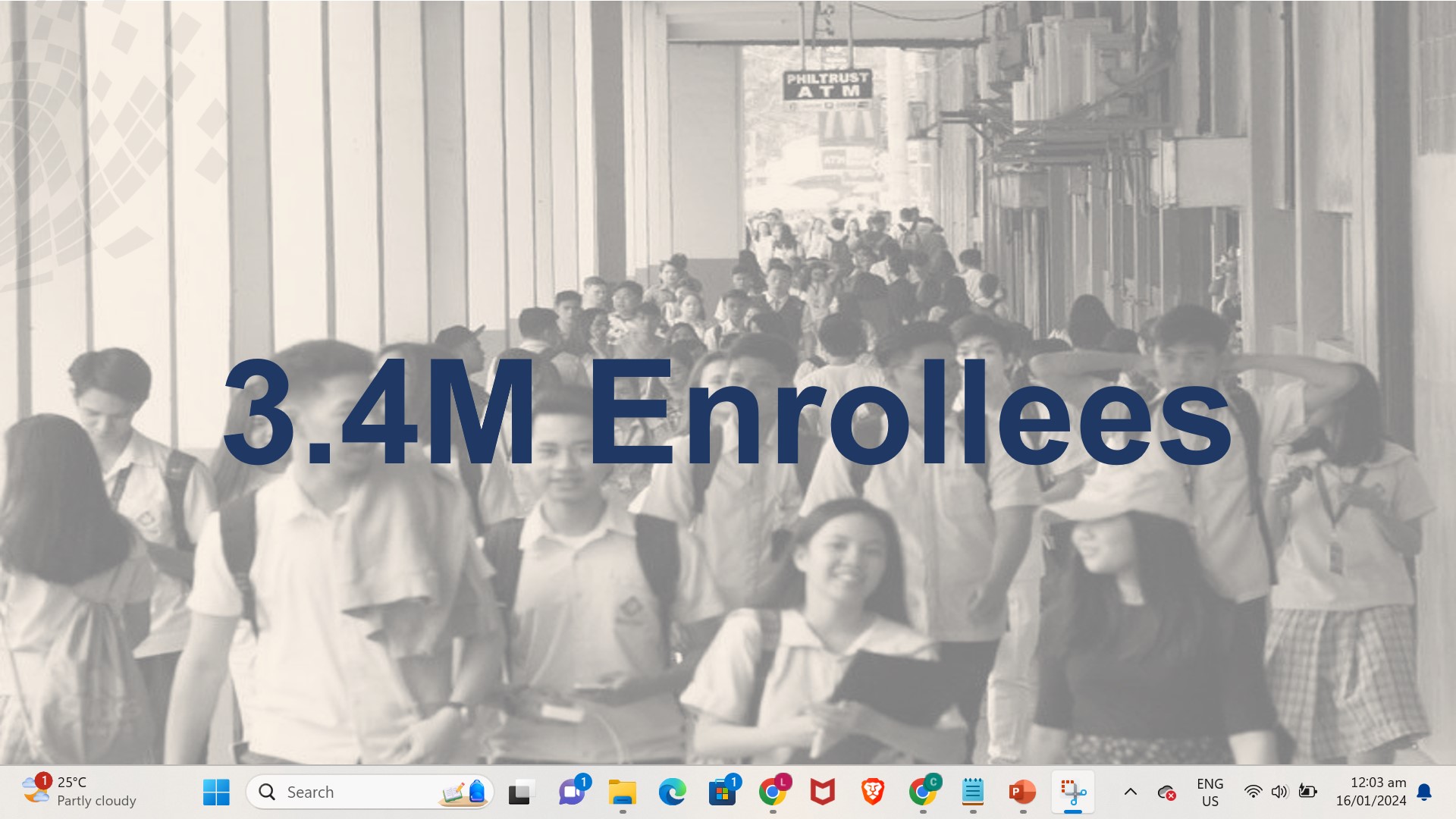 |
In today's session, we shine a spotlight on the current state of higher education in the Philippines, drawing attention to the remarkable number of college enrollees, which stands at approximately 3.4 million. This significant figure is not merely a number; it represents the burgeoning youth population seeking higher education and the country's commitment to fostering an educated workforce. According to the 2020 report from the Commission on Higher Education, these numbers reflect the scale of our educational institutions' responsibility and the collective ambition of our nation's students.
|
| ICACT20240444 Slide.02
[Big Slide]
[YouTube] |
Chrome Click!! |
 |
To address the surge in enrollment, with approximately 3.4 million Filipino students seeking tertiary education, the Philippine government took decisive action by introducing transformative legislation. In 2018, President Duterte ratified Republic Act 10931, a landmark bill that guarantees free tertiary education to Filipino students. This pivotal move aims to remove financial barriers to higher education, thereby increasing access and opportunities for students across the nation.
|
| ICACT20240444 Slide.03
[Big Slide]
[YouTube] |
Chrome Click!! |
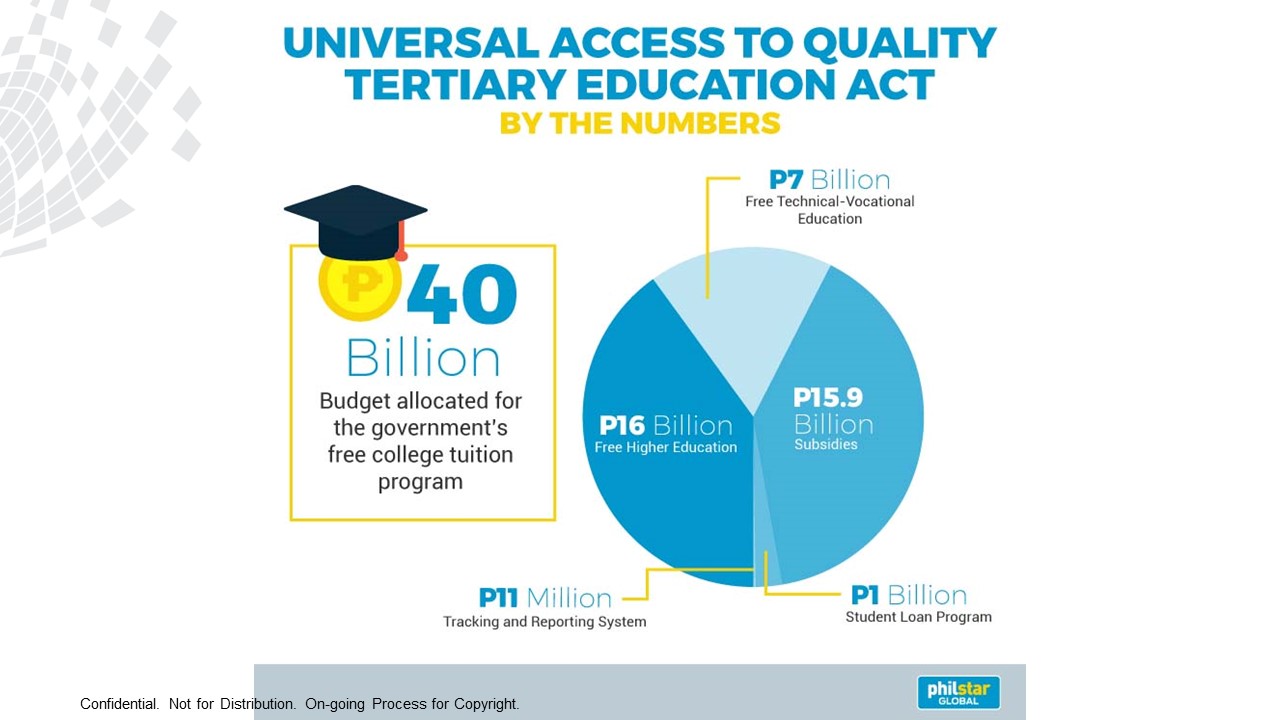 |
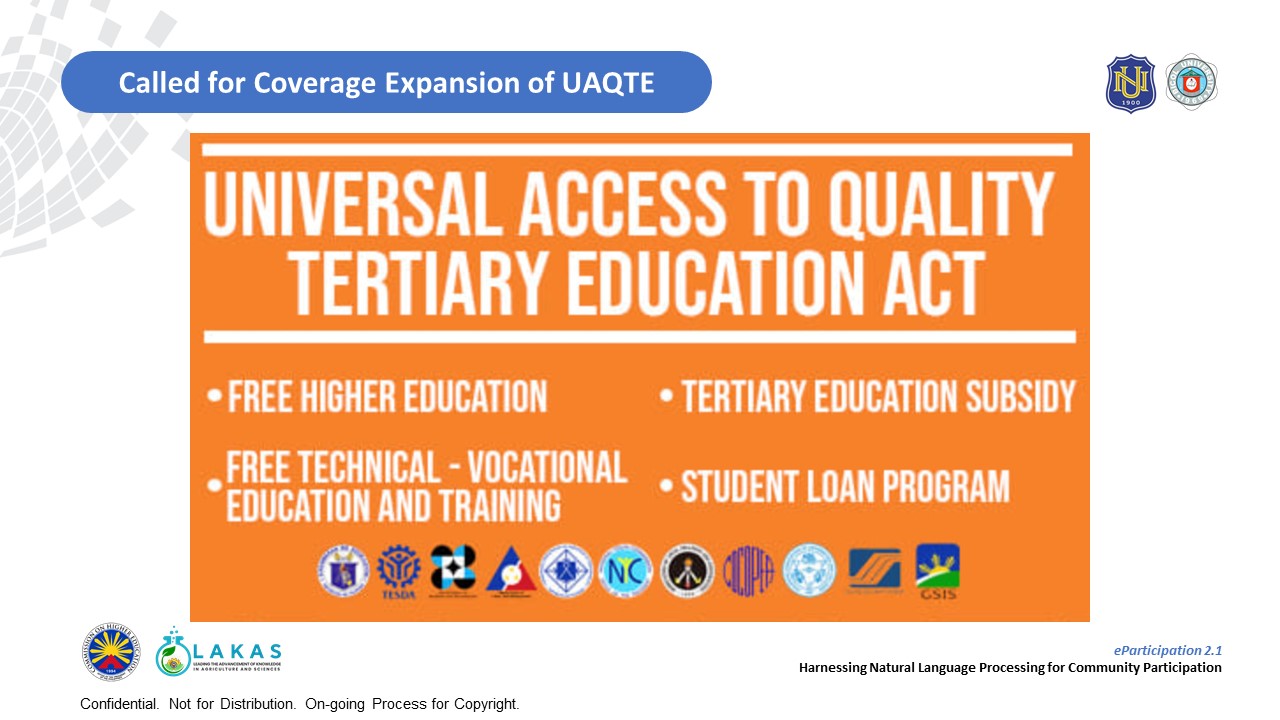
To give substantial context to the enactment of Republic Act 10931, the Philippine government earmarked a substantial budget of approximately 40 billion Philippine pesos to support its implementation. This allocation is strategically distributed across various sectors of education, ensuring a comprehensive approach to educational reform. Specifically, 7 billion pesos have been designated for the enhancement of free technical-vocational education, recognizing the critical role of vocational skills in the modern economy. An allocation of 11 million pesos is dedicated to developing a robust tracking and reporting system, which is essential for monitoring the progress and effectiveness of the education programs. A significant portion of the budget, amounting to 16 billion pesos, is invested directly into free higher education, ensuring that tertiary-level institutions are accessible to all. Additionally, 1 billion pesos is reserved for a student loan program, offering financial assistance that bridges the gap for students who might still face monetary challenges despite the provision of free education. This comprehensive funding underscores the government's commitment to not only making education accessible but also to maintaining its quality and relevance in the Philippines.
|
| ICACT20240444 Slide.04
[Big Slide]
[YouTube] |
Chrome Click!! |
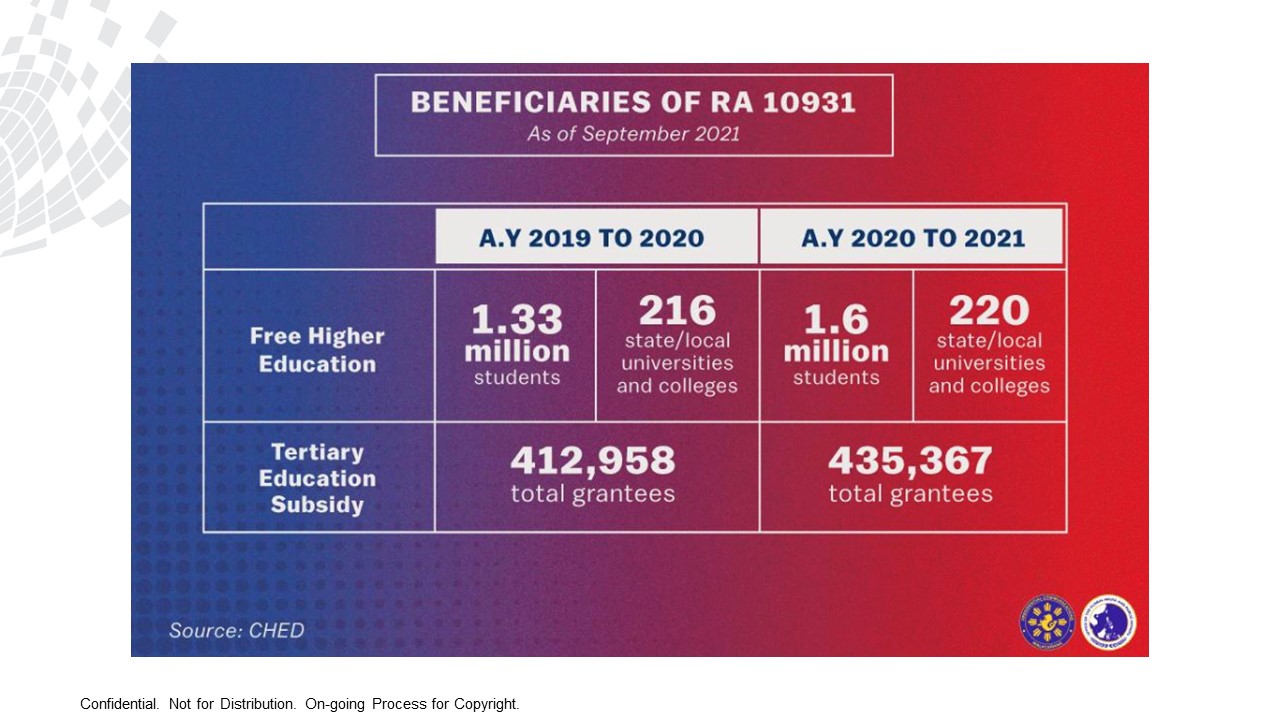 |
According to the latest available data, the impact of Republic Act 10931 on the educational landscape of the Philippines has been substantial and growing. In 2020, a total of 1.33 million students across 216 state universities and colleges benefited from the government's free education initiative. This number experienced a notable rise, reaching 1.6 million beneficiaries in 2021, indicative of the program's expanding reach and the increasing demand for tertiary education. When it comes to the tertiary education subsidy, which extends to private higher education institutions (HEIs), the growth is similarly encouraging. Approximately 412,958 students received financial aid in 2020, with this figure slightly increasing to 435,367 in 2021. These numbers not only reflect the government's commitment to education but also highlight the consistent upward trend in students availing themselves of these essential educational subsidies.
|
| ICACT20240444 Slide.05
[Big Slide]
|
Chrome Click!! |
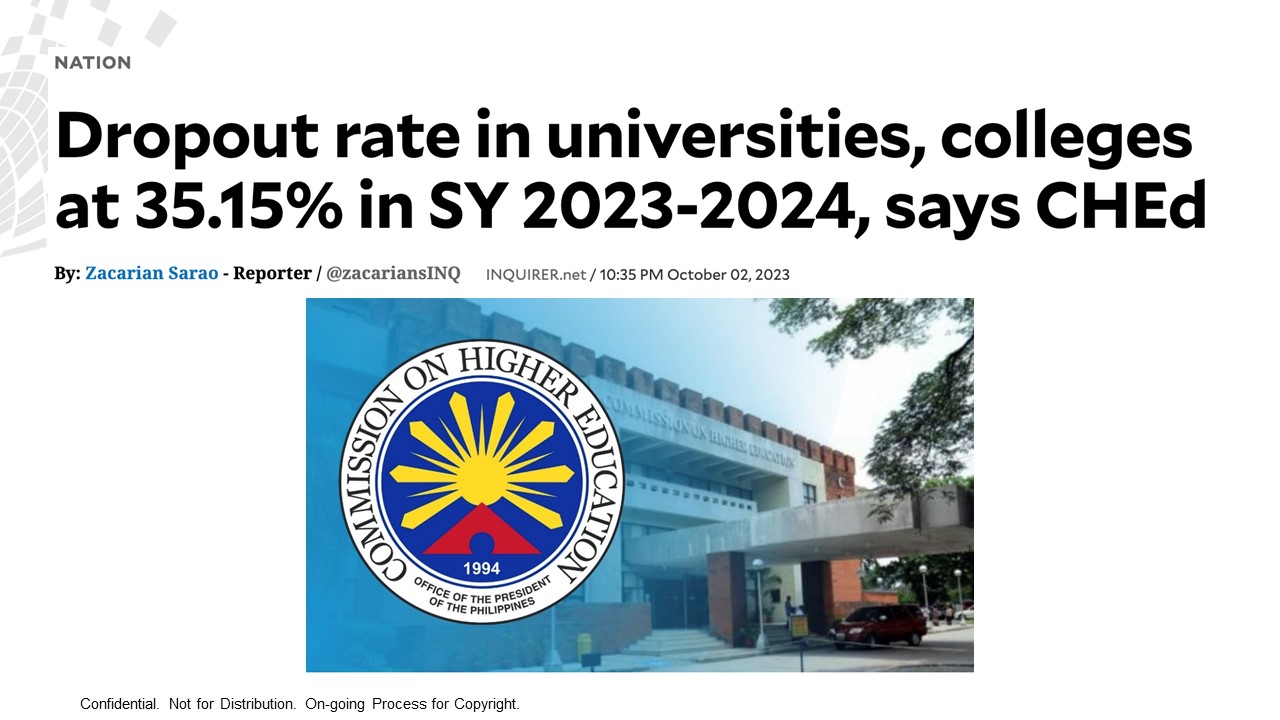 |
Nevertheless, even with the nationwide implementation of the Universal Access to Quality Tertiary Education Act (RA 10931), there remains a significant challenge to be addressed: university dropout rates have remained notably high. In the academic year 2023-2024, the dropout rate reached 35.15%. This figure underscores the complexity of educational attainment and indicates that while access to education has broadened, there are still underlying factors contributing to student attrition that need to be identified and addressed to ensure that students not only enroll but also succeed in completing their tertiary education
|
| ICACT20240444 Slide.06
[Big Slide]
|
Chrome Click!! |
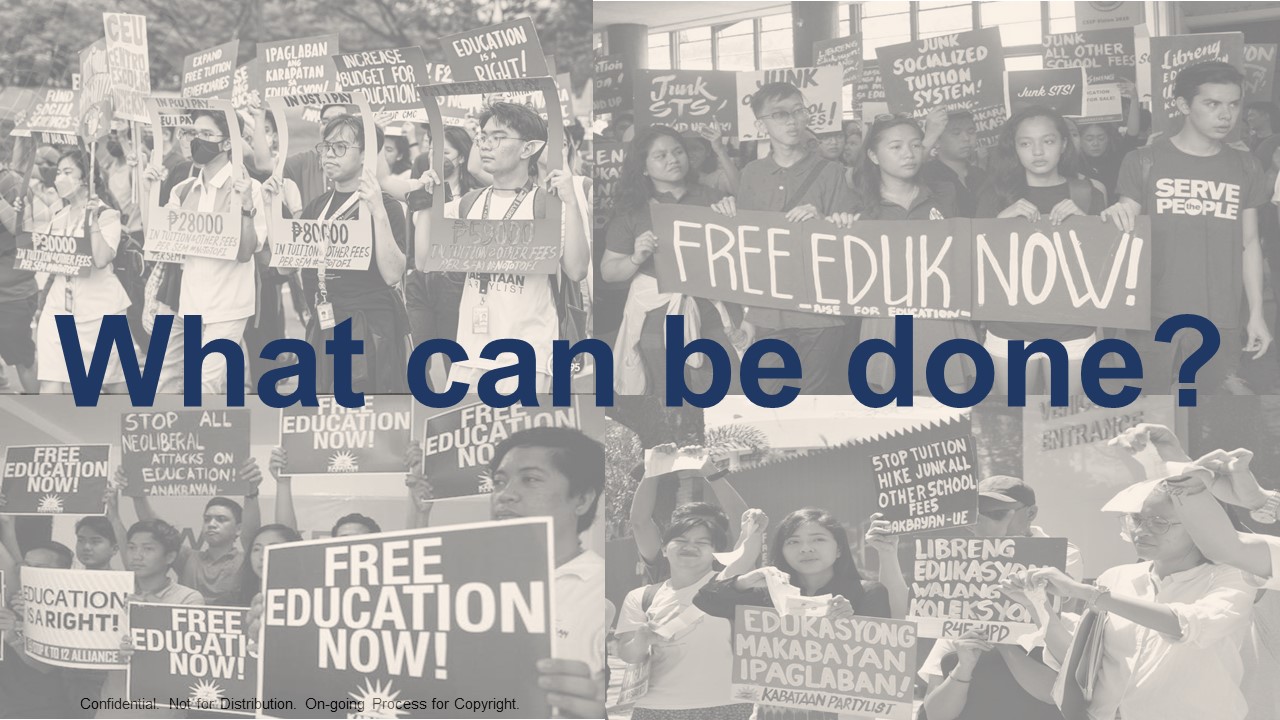 |
In light of these challenges, our team is compelled to ask: What proactive measures can we implement? This question opens the floor for a dialogue on innovative solutions and strategic interventions that could support students throughout their educational journey, ensuring that enrollment progress is matched by retention and graduation success.
|
| ICACT20240444 Slide.07
[Big Slide]
|
Chrome Click!! |
 |
In collaboration with the Commission on Higher Education, our team is actively participating in the 'Leading the Advancement of Knowledge in Agriculture and Sciences' (LAKAS) Program. This initiative, in conjunction with esteemed institutions such as Bicol University and National University, propels us to conduct a thorough assessment of the current implementation of RA 10931 in the Philippines. Our joint effort is aimed at evaluating the effectiveness of this legislation and identifying areas for enhancement to ensure its objectives are fully realized.
|
| ICACT20240444 Slide.08
[Big Slide]
|
Chrome Click!! |
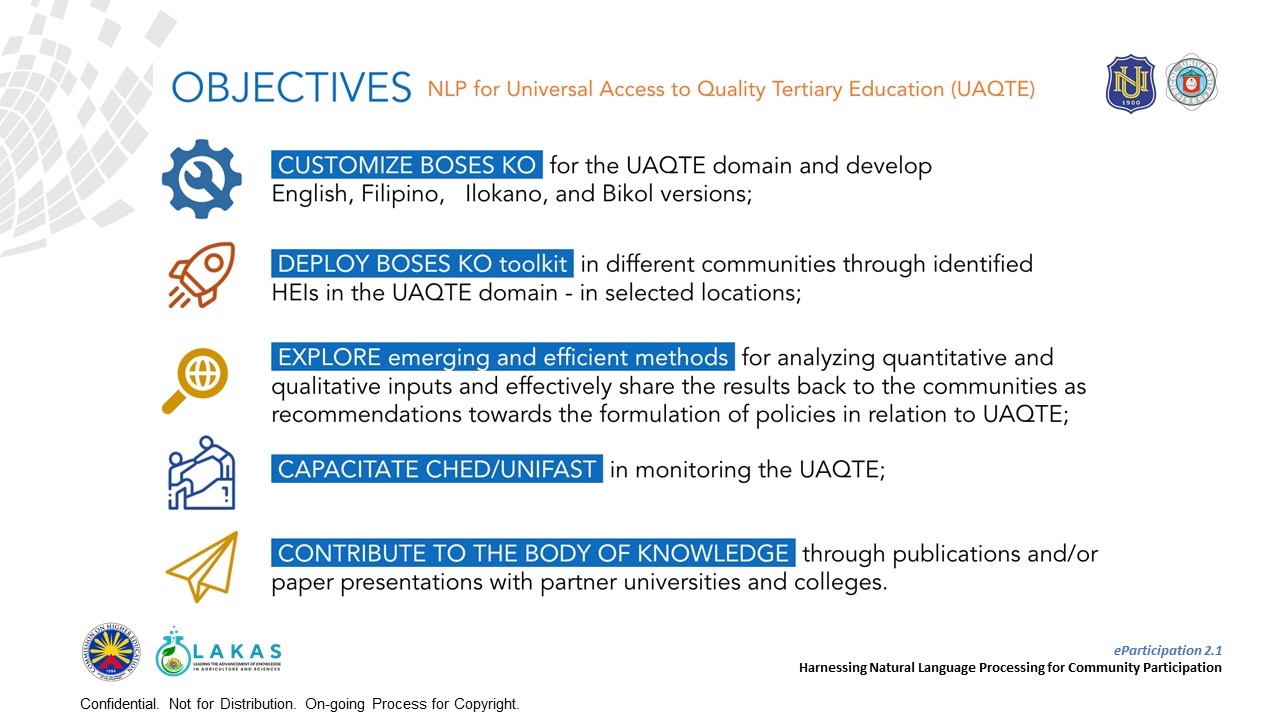 |
We are proud to present 'BOSES KO,' an innovative project financed through the CHED-LAKAS program. This project is designed to create a unique Universal Access to Quality Tertiary Education (UAQTE) domain that embraces the rich linguistic diversity of the Philippines. By integrating various Filipino dialects into a comprehensive toolkit, 'BOSES KO' is set to be deployed across multiple regions within the country. The core objective of this initiative is to directly gather and scrutinize feedback from UAQTE beneficiaries. Moreover, it aims to empower Philippine agencies with the necessary tools to actively oversee the UAQTE's implementation. This approach not only ensures that the voices of beneficiaries are heard but also enhances the capacity of agencies to foster continuous improvement in the quality of tertiary education.
|
| ICACT20240444 Slide.09
[Big Slide]
|
Chrome Click!! |
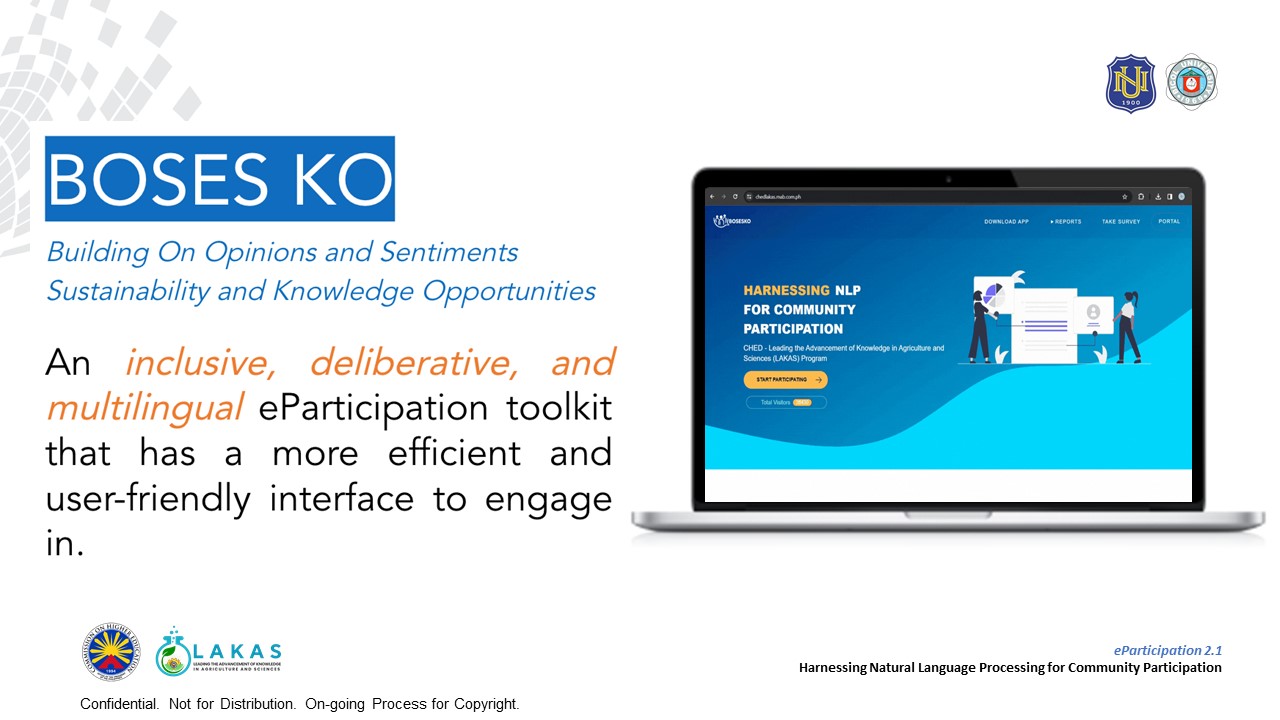 |
BOSES KO,' an acronym for 'Building On Opinions, Sentiments, Sustainability, and Knowledge Opportunities,' represents an advanced eParticipation toolkit designed to be inclusive, deliberative, and multilingual. This platform features a user-friendly interface that facilitates efficient engagement, allowing for the seamless collection and analysis of stakeholder opinions and feedback. Its multilingual capabilities ensure that participants from diverse linguistic backgrounds can interact with ease, making it an indispensable tool for broad-based and democratic participation in educational development.
|
| ICACT20240444 Slide.10
[Big Slide]
|
Chrome Click!! |
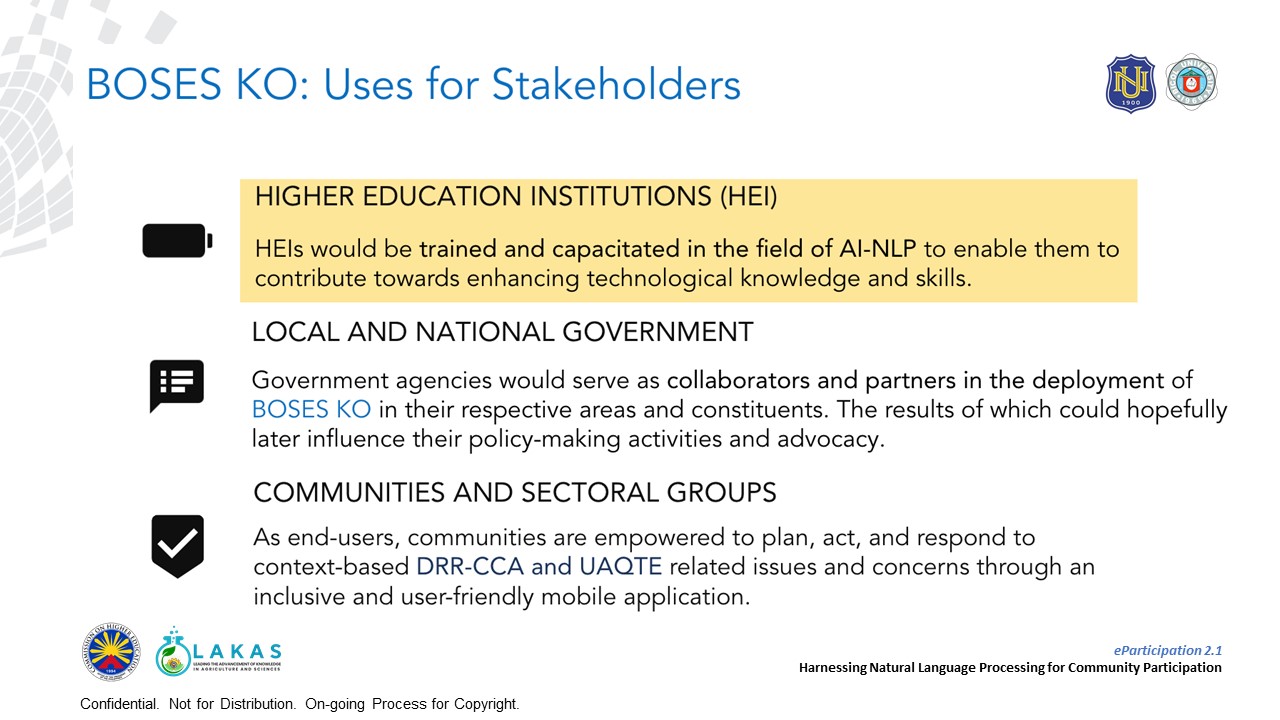 |
Our current initiative concentrates on engaging stakeholders from Higher Education Institutions, diligently gathering and synthesizing their feedback regarding the Universal Access to Quality Tertiary Education (UAQTE). This effort is pivotal in capturing the insights and experiences of those directly influenced by UAQTE policies and programs.
|
| ICACT20240444 Slide.11
[Big Slide]
|
Chrome Click!! |
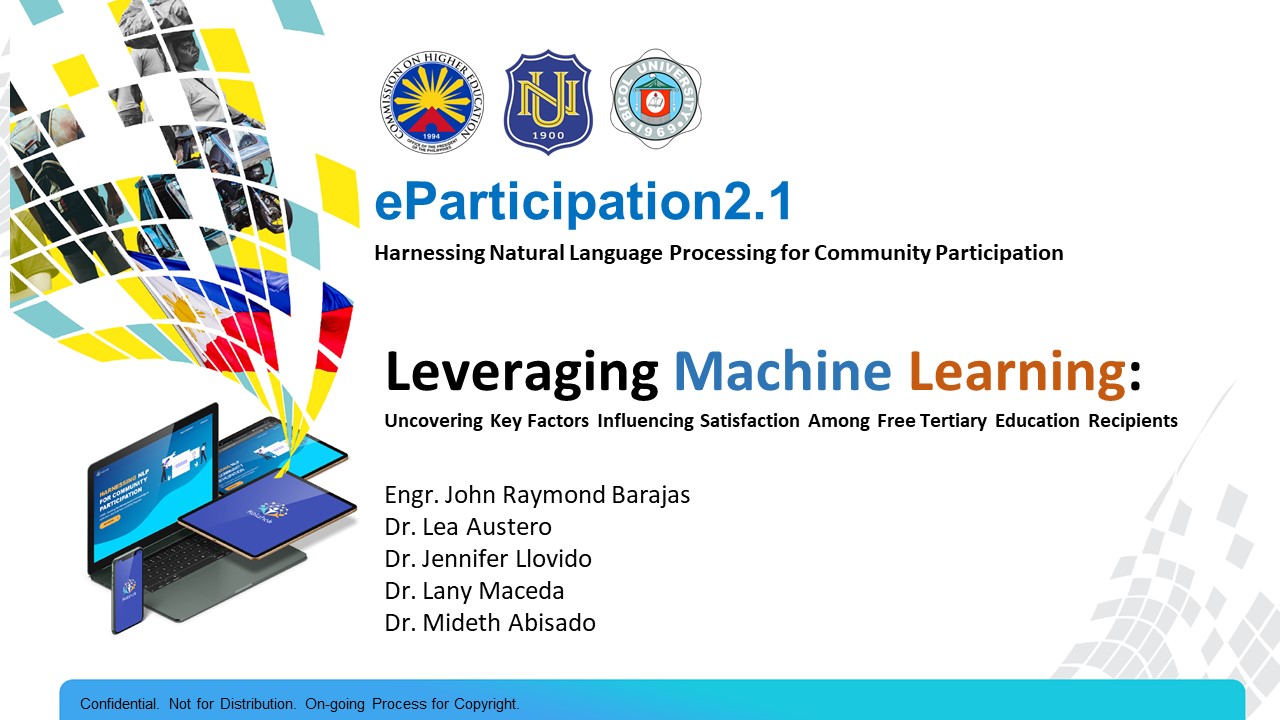 |
Collaborating closely with my esteemed colleagues - Engineer Barajas, Dr. Llovido, Dr. Maceda, Dr. Abisado, and myself - we are excited to unveil our latest research entitled: 'Leveraging Machine Learning: Uncovering Key Factors Influencing Satisfaction Among Free Tertiary Education Recipients'. This work represents a significant stride in utilizing advanced machine learning techniques to delve into the factors that shape the satisfaction levels of beneficiaries under the Free Tertiary Education program.
|
| ICACT20240444 Slide.12
[Big Slide]
|
Chrome Click!! |
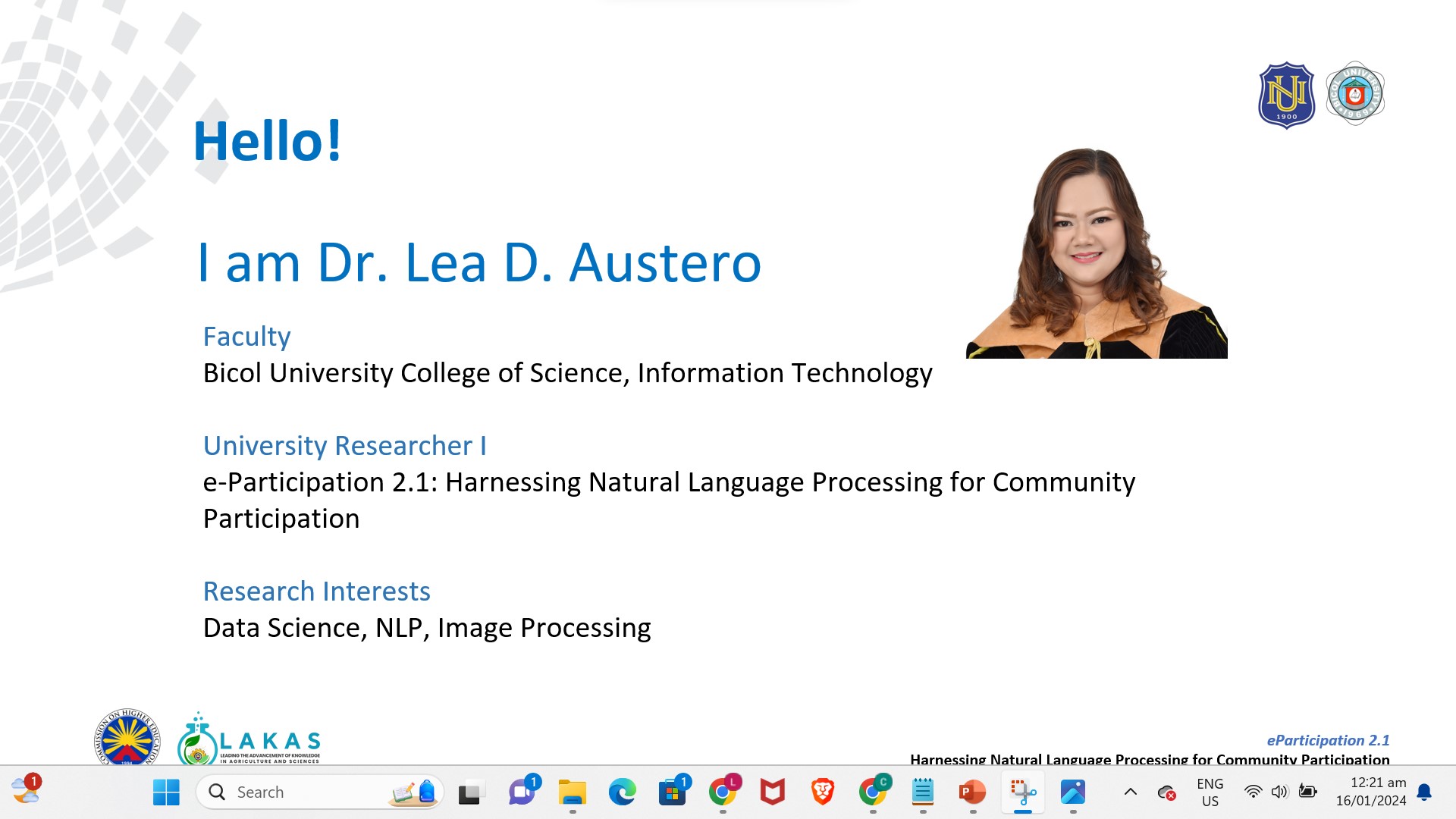 |
Hi, I am Dr. Lea Austero, a faculty of Bicol University College of Science Information Technology Department and I am here today to discuss to you our findings.
|
| ICACT20240444 Slide.13
[Big Slide]
|
Chrome Click!! |
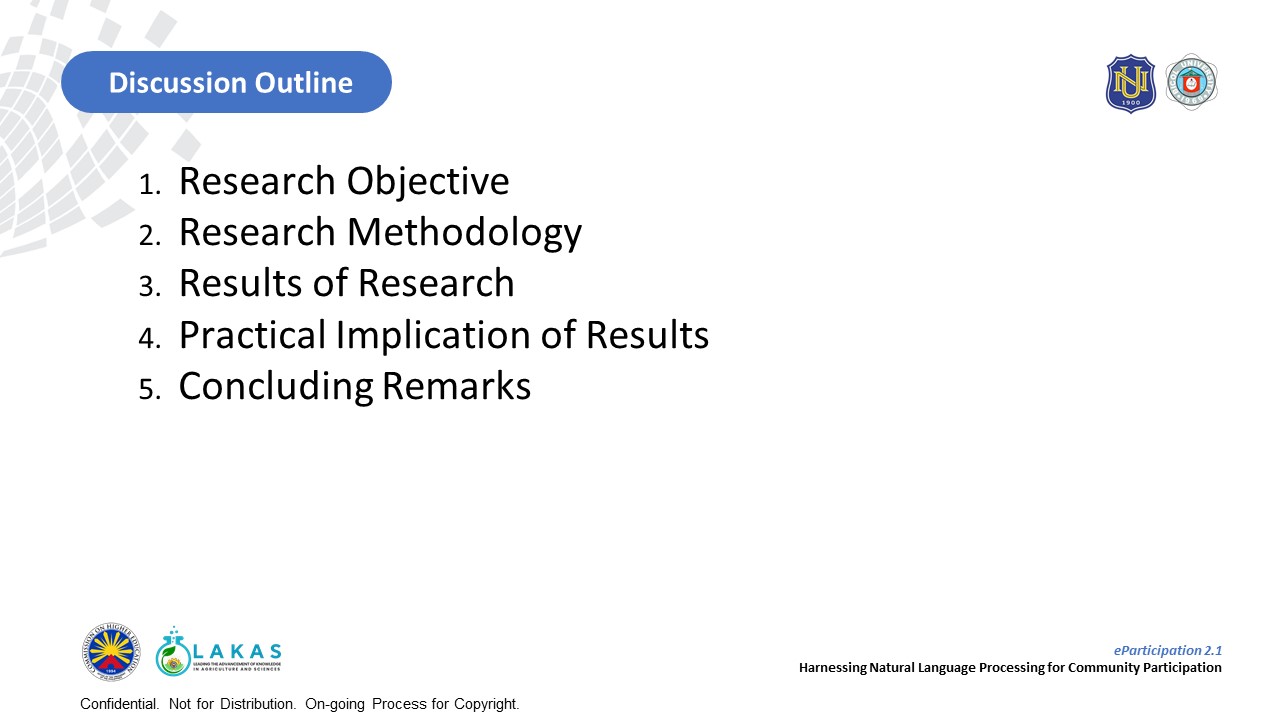 |
For the discussion outline, I will start with the research objective, research methodology, then results of research, the practical implications of our findings then finally the concluding remarks.
|
| ICACT20240444 Slide.14
[Big Slide]
|
Chrome Click!! |
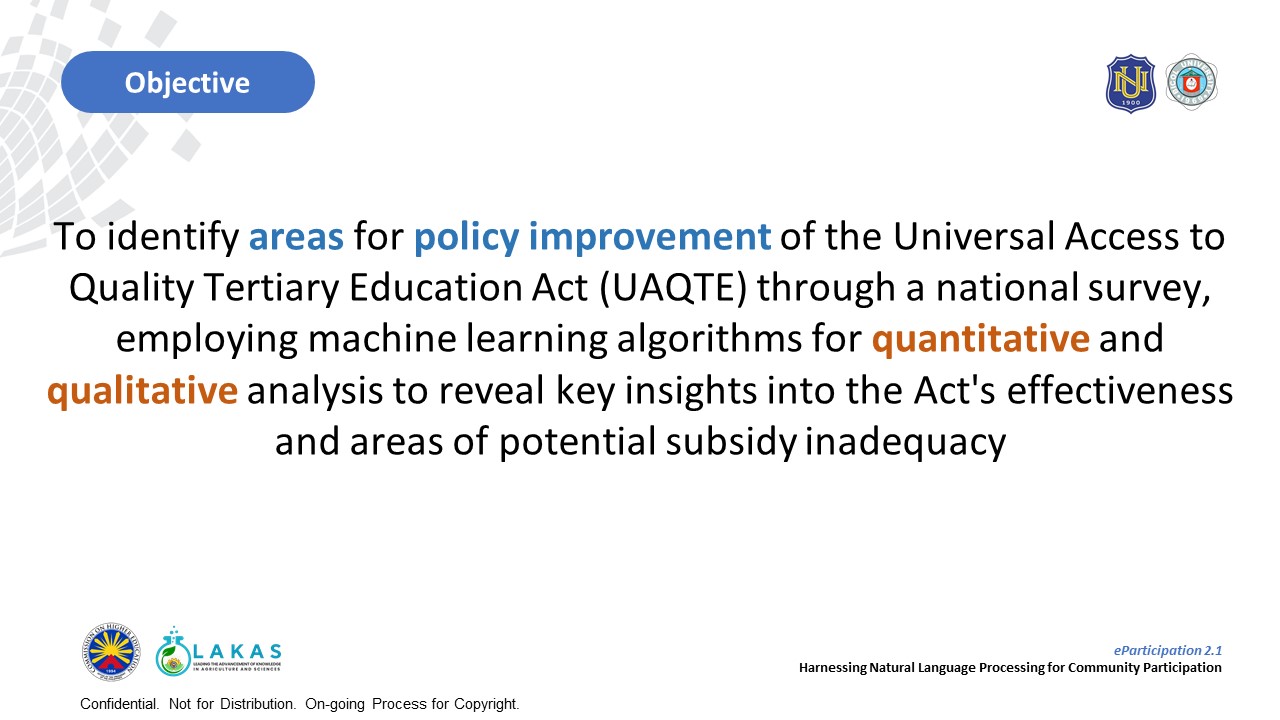 |
For our research objective, we identified areas for policy improvement of the UAQTE through a national survey, employing machine learning algorithms for quantitative and qualitative analysis to reveal key insights into the Act's effectiveness and areas of potential subsidy inadequacy
|
| ICACT20240444 Slide.15
[Big Slide]
|
Chrome Click!! |
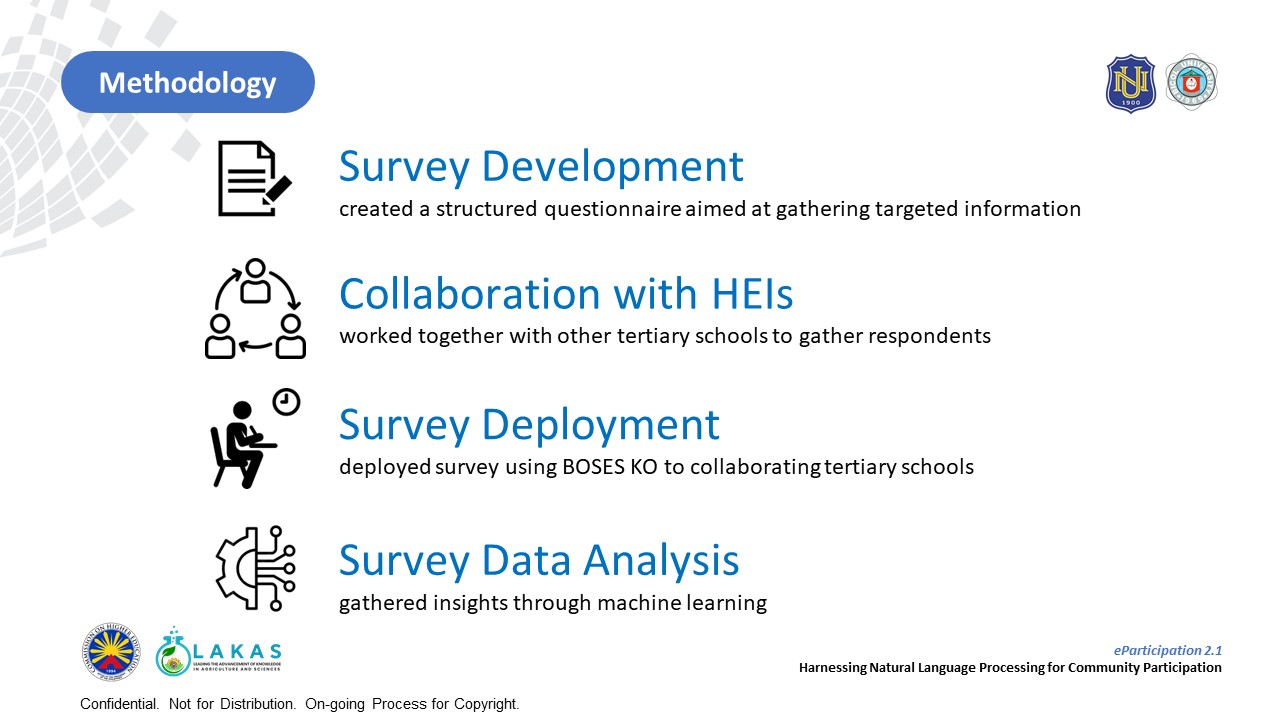 |
Our methodology is systematically divided into four distinct phases. The first phase focuses on the development of the survey, meticulously designed to capture comprehensive data relevant to our research objectives. The second phase involves collaboration with Higher Education Institutions (HEIs) to systematically and responsibly gather respondents, ensuring full compliance with the Data Privacy Act of 2012. The third phase is dedicated to deploying our survey through the BOSES KO platform, an approach that guarantees efficient and widespread participation. Finally, in the fourth phase, we analyze the collected questionnaire data utilizing explainable machine learning techniques. This allows us to extract meaningful insights and patterns that support our analysis of the UAQTE's impact and effectiveness.
|
| ICACT20240444 Slide.16
[Big Slide]
|
Chrome Click!! |
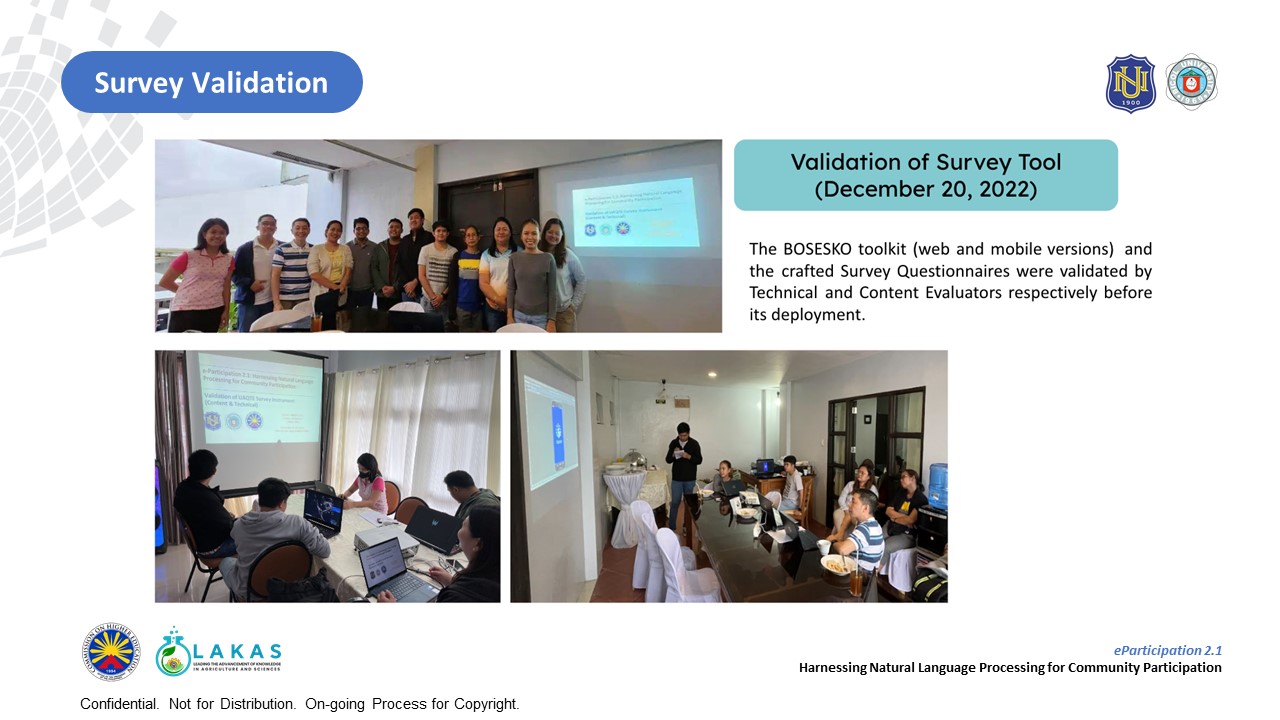 |
For the validation of our survey, we engaged in extensive consultations with a diverse array of stakeholders. This group included students, faculty members, administrative officials, and even parents, ensuring a comprehensive perspective. Their input was instrumental in shaping the questionnaire, enabling us to formulate relevant and impactful questions that accurately capture the experiences and views of UAQTE beneficiaries.
|
| ICACT20240444 Slide.17
[Big Slide]
|
Chrome Click!! |
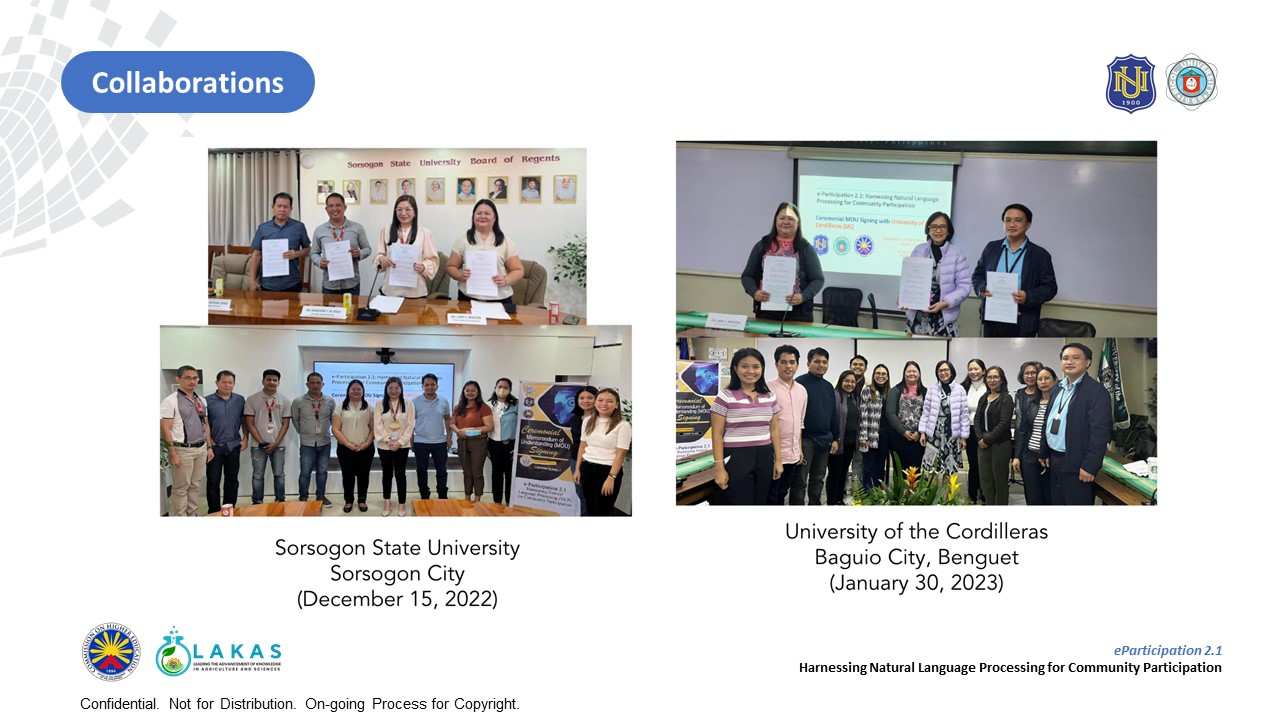 |
One of the most significant challenges we encountered was the deployment of the survey. Although we had developed our BOSES KO toolkit, systematically gathering respondents while strictly adhering to the guidelines of the Data Privacy Act of 2012 posed a complex task. To effectively navigate this challenge, we opted for a strategic solution: formalizing our efforts through collaborations with Higher Education Institutions (HEIs). This approach was solidified through the execution of Memorandums of Understanding (MOUs) with these institutions, thereby ensuring a systematic and compliant process for survey deployment.
|
| ICACT20240444 Slide.18
[Big Slide]
|
Chrome Click!! |
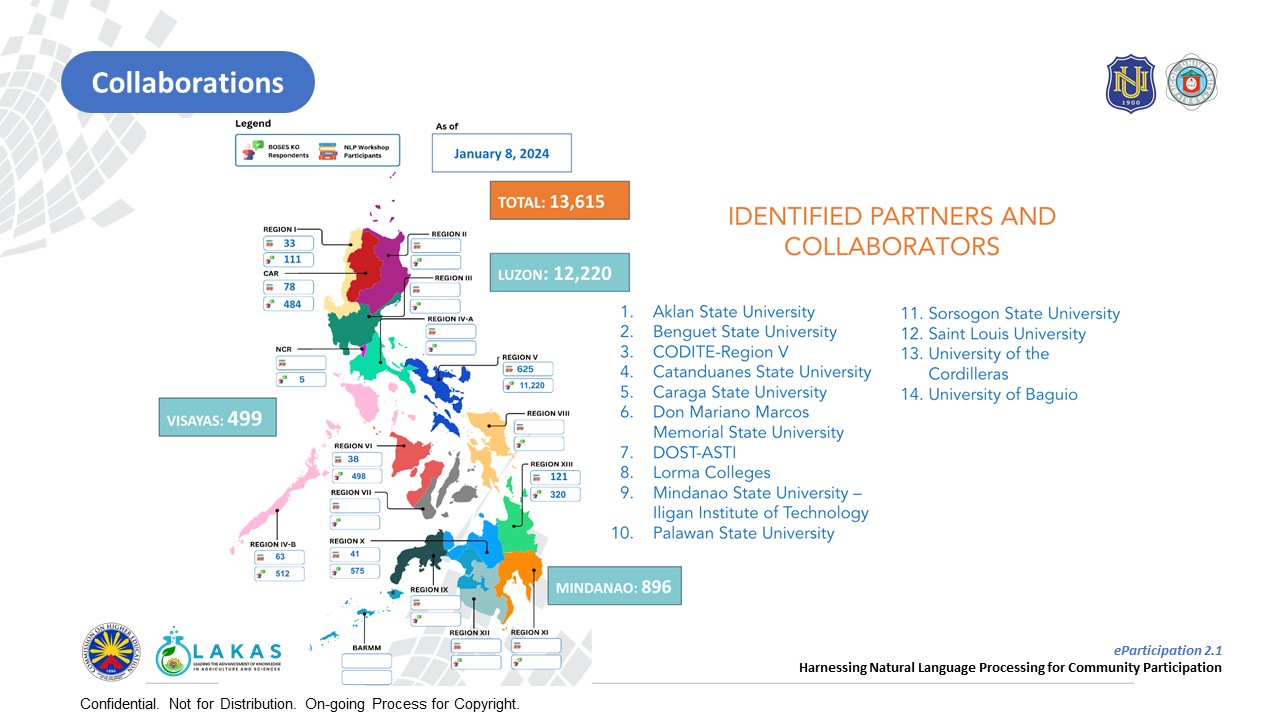 |
To provide a snapshot of our progress: as of January 8, 2024, our concerted efforts have successfully engaged approximately 13,615 respondents across 14 collaborating institutions. This achievement not only reflects the breadth of our reach but also underscores the collaborative nature and effectiveness of our approach in gathering valuable data for our study.
|
| ICACT20240444 Slide.19
[Big Slide]
|
Chrome Click!! |
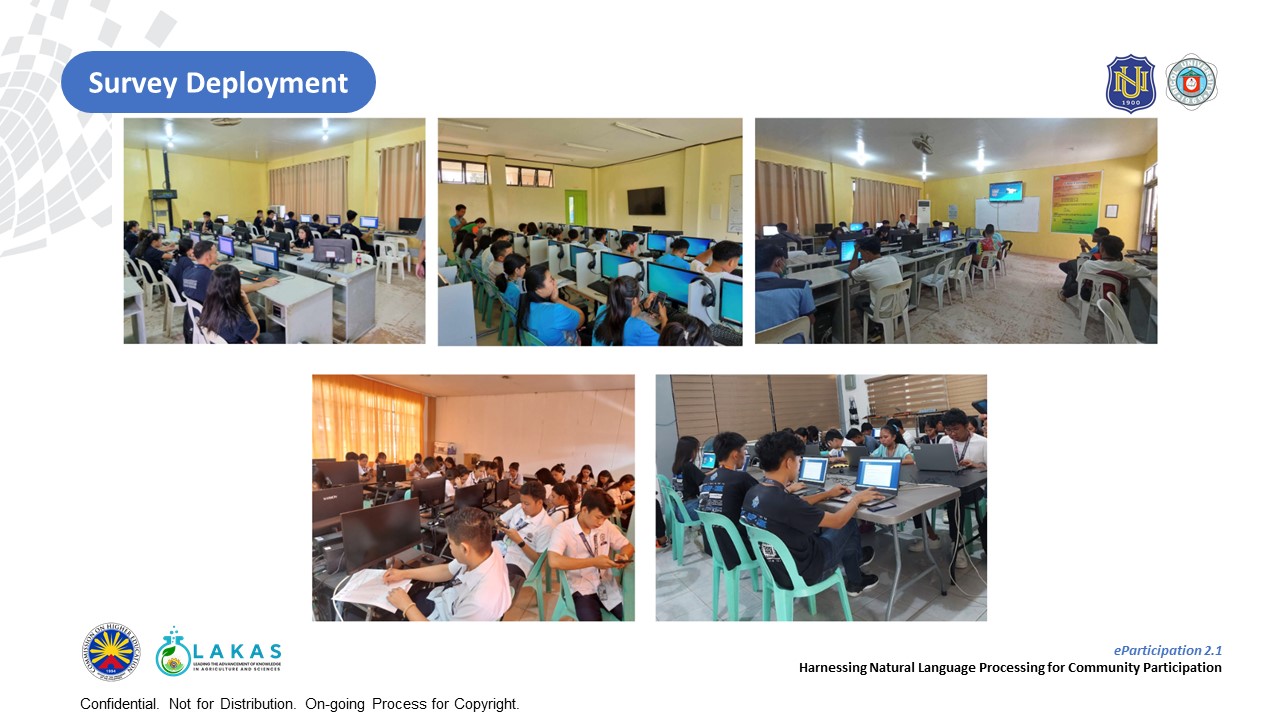 |
The deployment of the survey was relatively smooth, thanks to the robust infrastructure provided by the BOSES KO toolkit. However, acknowledging the digital divide and the varying levels of internet access among stakeholders, we also implemented a more inclusive approach. To ensure no one was left out, hard copies of the survey were distributed alongside the digital version. This dual-method strategy allowed us to reach a broader and more diverse range of respondents, enhancing the representativeness and reliability of our data.
|
| ICACT20240444 Slide.20
[Big Slide]
|
Chrome Click!! |
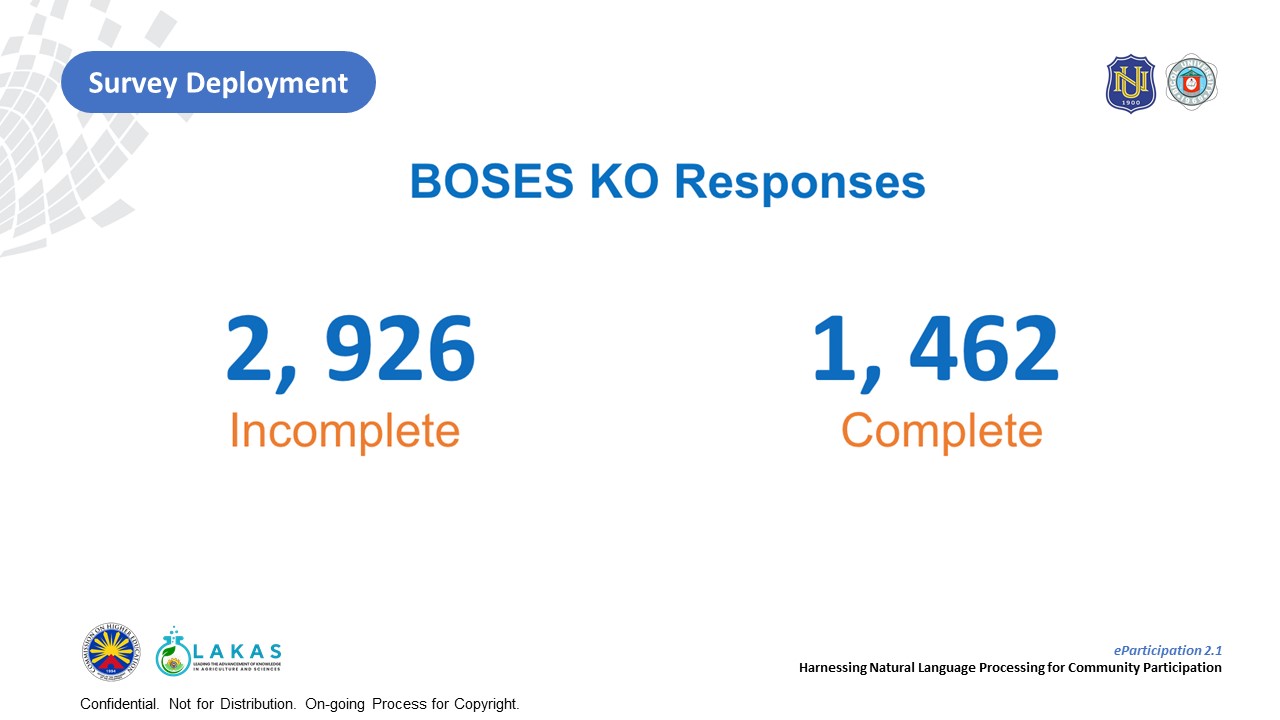 |
In this study, the 13,615 respondents we reached are divided across two distinct surveys: those entering the UAQTE program ('Entry to UAQTE') and those exiting it ('Exit to UAQTE'). Focusing on the scope of our discussion, out of the 2,926 individuals who participated in the 'Exit to UAQTE' survey, we found that only 1,462 respondents provided complete responses. This distinction is crucial for understanding the depth and reliability of the data we gathered, particularly from those who have experienced the full cycle of the UAQTE program.
|
| ICACT20240444 Slide.21
[Big Slide]
|
Chrome Click!! |
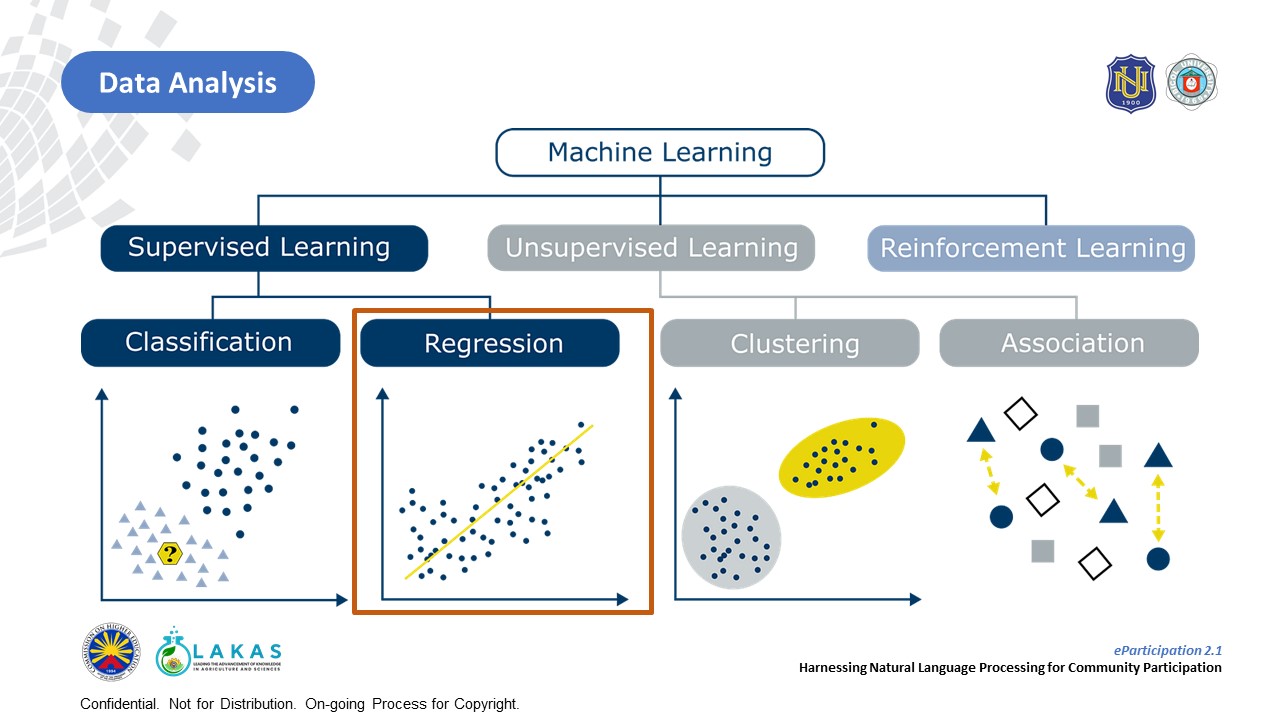 |
To derive intuitive and insightful interpretations from our survey data, we employed a comprehensive approach using five distinct machine learning regression models. These included k-Nearest Neighbors, Linear Regression, Decision Tree, Random Forest, and Gradient Boosting Machines. Each of these models offers unique strengths and perspectives, allowing us to analyze the data from multiple angles and ensure a robust and thorough understanding of the survey results.
|
| ICACT20240444 Slide.22
[Big Slide]
|
Chrome Click!! |
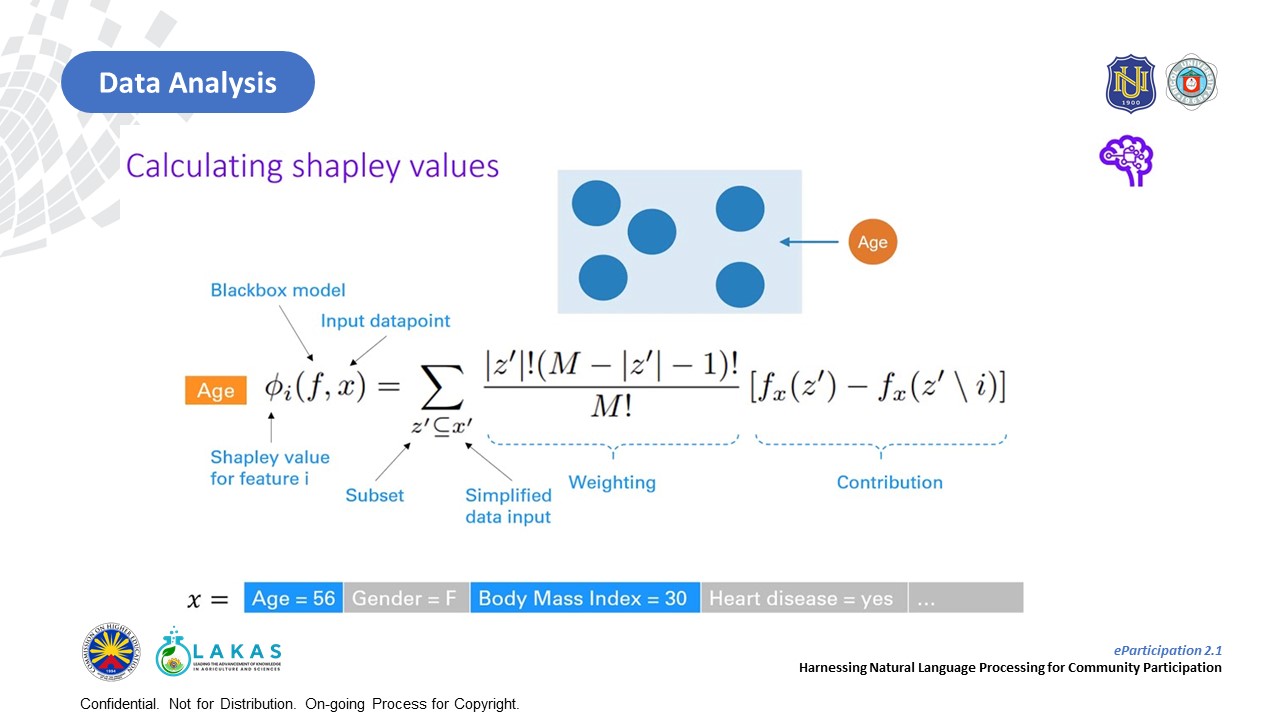 |
Our primary objective in this analysis is not to predict stakeholder satisfaction with the Universal Access to Quality Tertiary Education (UAQTE) program. Instead, we aim to utilize the most effective machine learning model from our set to elucidate the key factors that influence stakeholder satisfaction. To achieve this, we employed Shapley values, a method renowned for its ability to provide clear and interpretable explanations of model outputs. This approach will enable us to dissect and understand the drivers of satisfaction among stakeholders, offering valuable insights for policy and program improvements.
|
| ICACT20240444 Slide.23
[Big Slide]
|
Chrome Click!! |
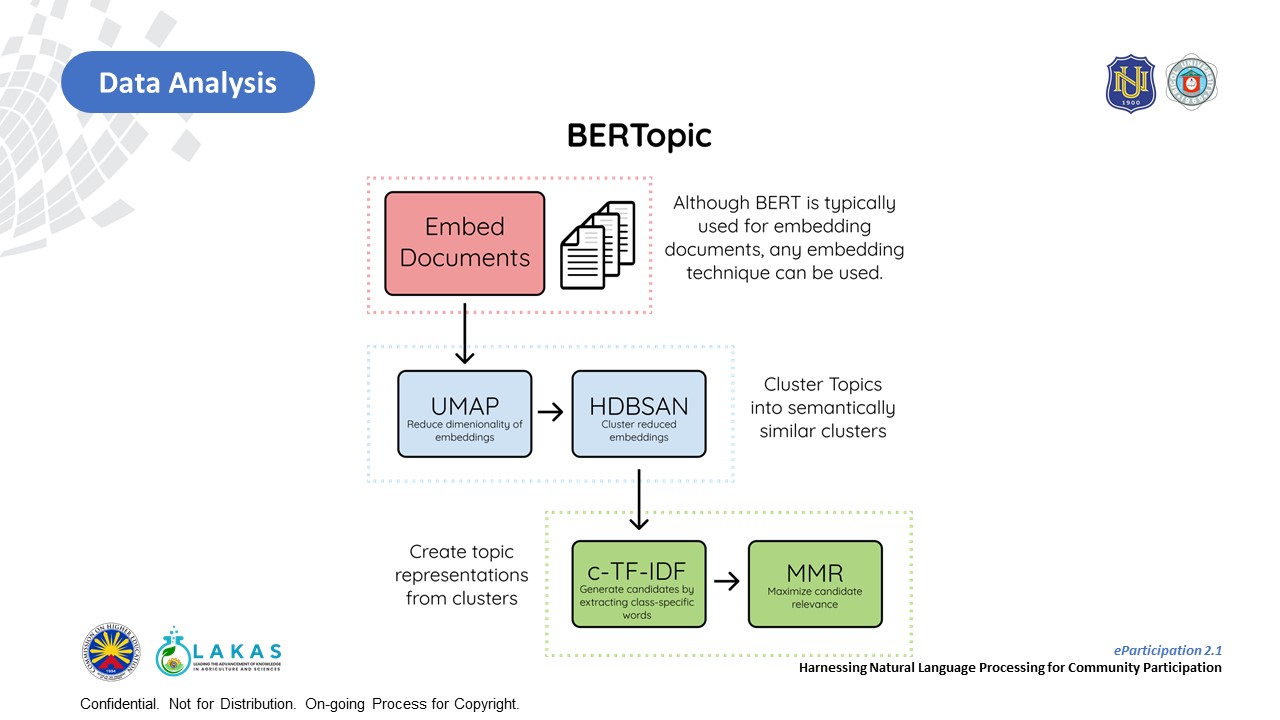 |
To corroborate the explanations obtained from the calculated Shapley values, we further scrutinized the open-ended questions in our survey through Topic Modeling. This additional layer of analysis was crucial to ensure the alignment and validity of our findings. Our objective was to ascertain whether the insights gleaned from the Shapley value explanations were consistent with the themes derived from Topic Modeling using the BERT algorithm. By doing so, we sought to create a holistic understanding, integrating both quantitative and qualitative data, to validate the factors influencing stakeholder satisfaction with the UAQTE program.
|
| ICACT20240444 Slide.24
[Big Slide]
|
Chrome Click!! |
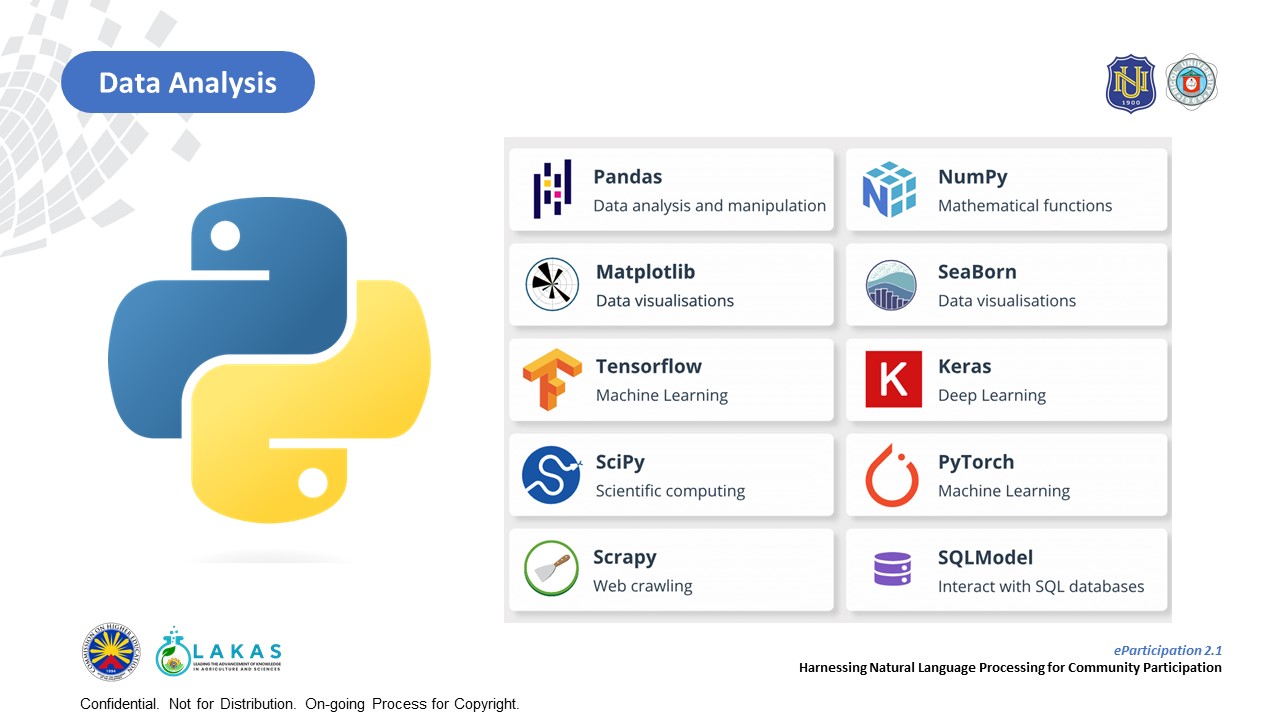 |
Of course, the implementation of our analytical methods was facilitated through Python, leveraging its robust and readily available libraries. This choice of technology not only streamlined our analysis process but also ensured precision and efficiency in handling complex algorithms like Topic Modeling with BERT and computing Shapley values. Python's versatility and the power of its libraries were instrumental in successfully executing our multifaceted approach to data analysis.
|
| ICACT20240444 Slide.25
[Big Slide]
|
Chrome Click!! |
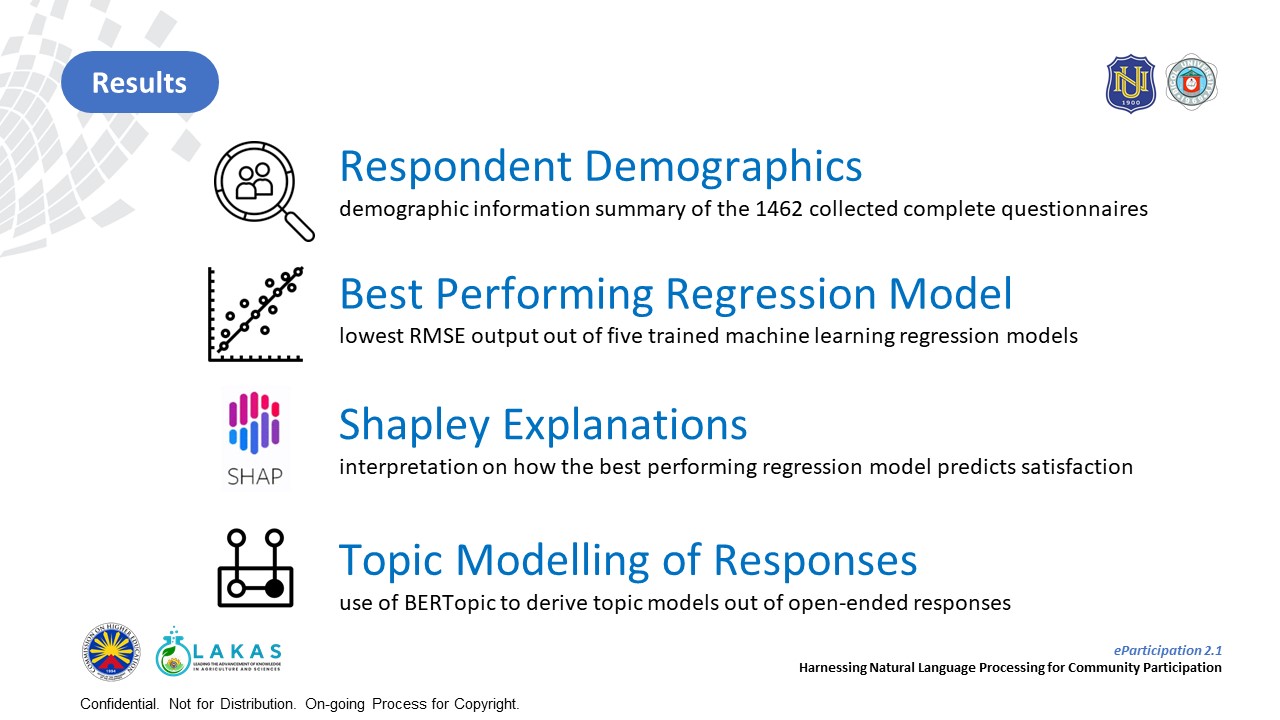 |
In presenting our results, we have methodically organized them into four distinct sections. The first section delves into 'Respondent Demographics', providing a detailed overview of the characteristics of our survey participants. This sets the stage for understanding the context of the responses. The second section focuses on the 'Best Performing Regression Model', where we identify and discuss the most effective machine learning model used in our analysis. The third section, 'Results of Shapley Explanations', offers an in-depth look at the factors driving stakeholder satisfaction, as revealed by the Shapley value analysis. Lastly, the fourth section, 'Topic Modelling of Open-Ended Responses', presents the qualitative insights derived from our topic modeling using BERT, providing a comprehensive narrative of the themes and opinions expressed by the respondents.
|
| ICACT20240444 Slide.26
[Big Slide]
|
Chrome Click!! |
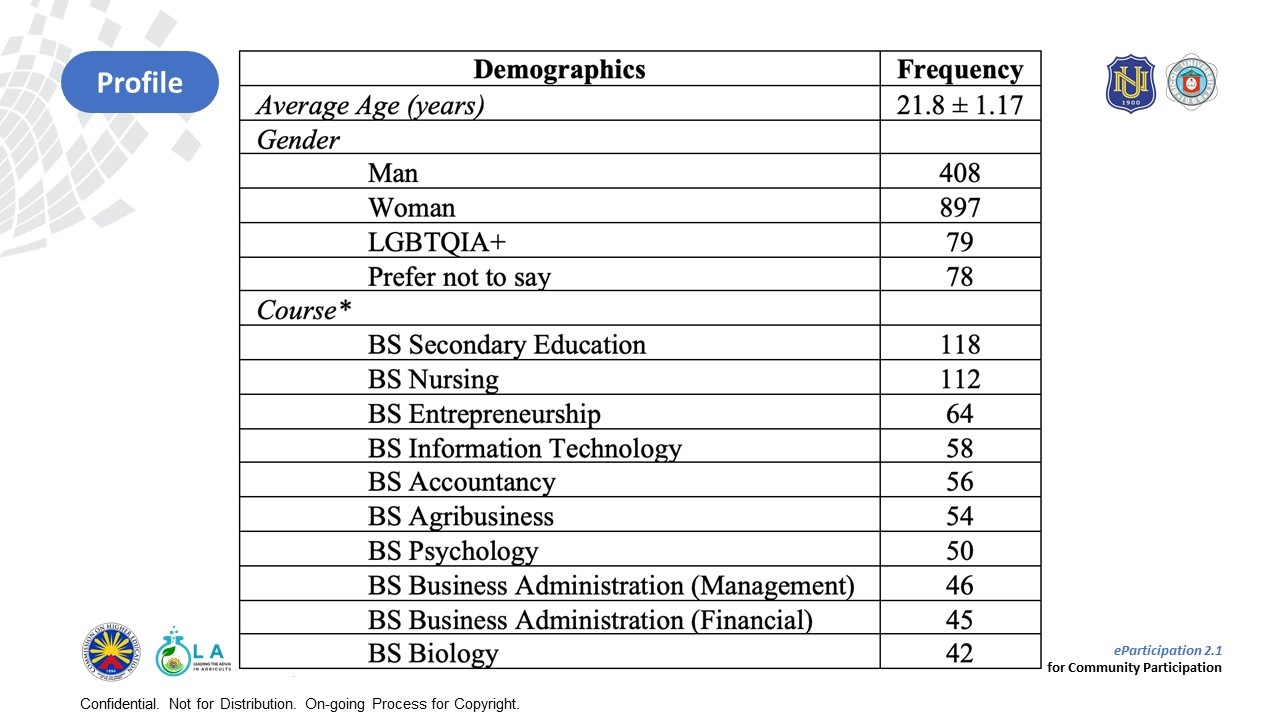 |
Our survey demographics revealed that the average age of respondents was 21.8 years, with a standard deviation of 1.17, indicating a young and relatively homogeneous age group. The gender distribution of participants was predominantly female, accounting for more than double the number of male respondents. We also included representation from LGBTQIA+ individuals and those who preferred not to disclose their gender. Notably, the majority of respondents were enrolled in Bachelor of Secondary Education and Bachelor of Nursing programs, highlighting a strong inclination towards these fields within our surveyed population. Other significant courses of study included Entrepreneurship, Information Technology, Accountancy, and Agribusiness, which reflect a diverse range of academic interests among the participants.
|
| ICACT20240444 Slide.27
[Big Slide]
|
Chrome Click!! |
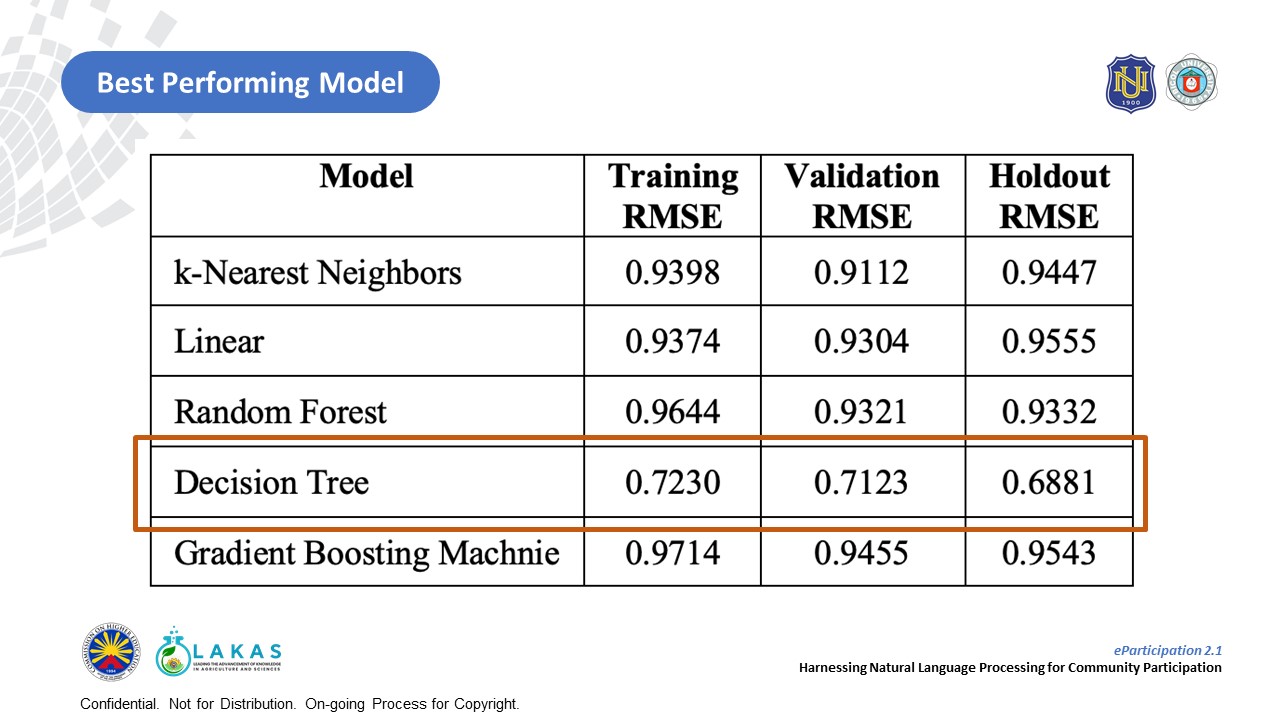 |
Our analysis revealed that the Decision Tree model yielded the most accurate results, with the lowest holdout root-mean-square error (RMSE) of 0.6881. Remarkably, this model outperformed the typically more complex and robust algorithms such as Random Forest and Gradient Boosting Machines, which had holdout RMSEs of 0.9332 and 0.9543, respectively. The simplicity of the Decision Tree model, coupled with its high level of interpretability, proved to be highly effective in this context.
|
| ICACT20240444 Slide.28
[Big Slide]
|
Chrome Click!! |
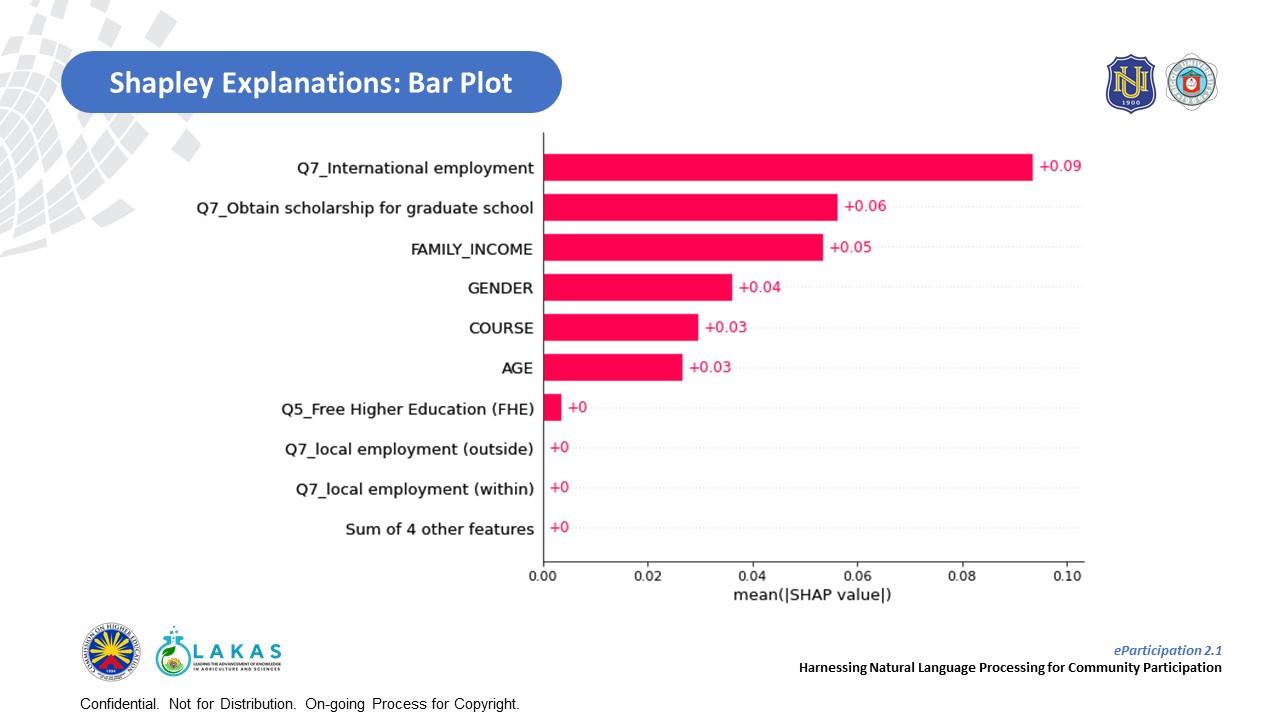 |
With the determination of the best performing regression model, we proceeded to calculate the Shapley values to understand the contribution of different factors to stakeholder satisfaction within the UAQTE program. The results revealed that the aspect with the highest positive impact on satisfaction was the students' aspiration for international employment, followed by their desire for scholarship opportunities for graduate studies. These findings suggest a clear correlation between students' future employment goals and their satisfaction with the UAQTE, indicating that students value the program's ability to open doors to global job markets and advanced educational opportunities.
|
| ICACT20240444 Slide.29
[Big Slide]
|
Chrome Click!! |
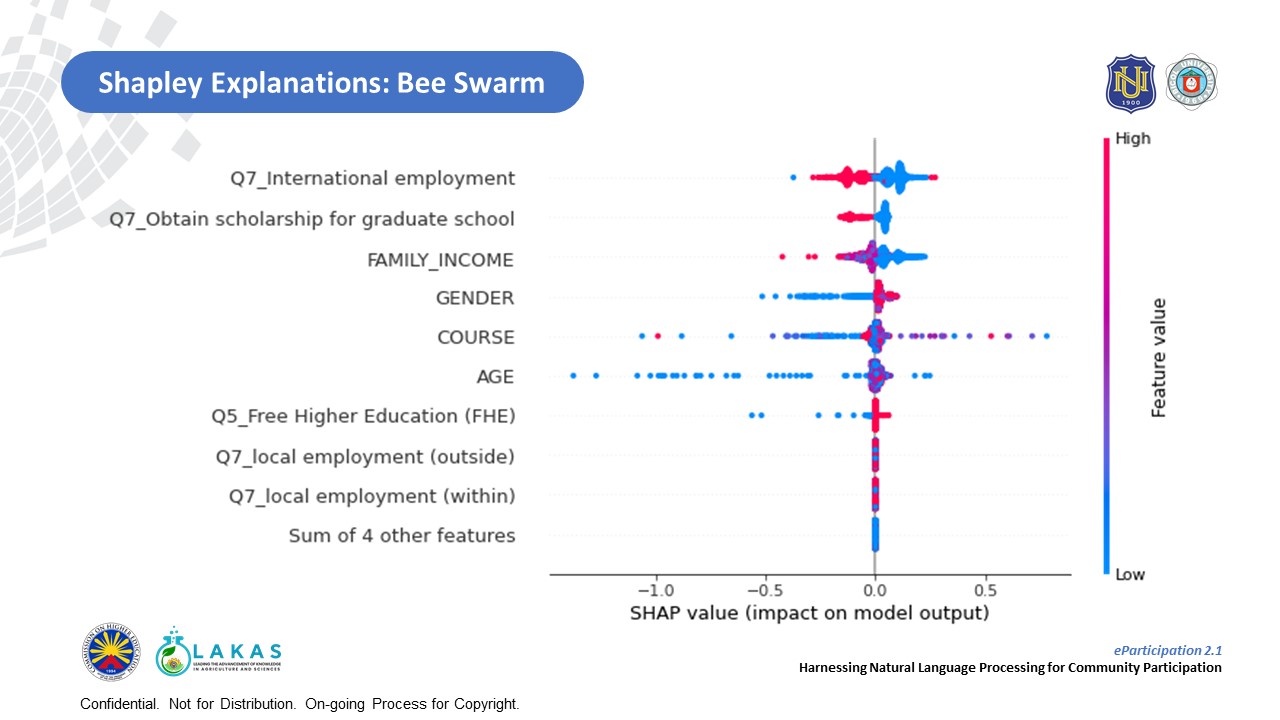 |
The beeswarm plot elucidates the diverse factors contributing to satisfaction levels with the UAQTE program. There is a discernible trend indicating that students with ambitions for international employment are less satisfied with the UAQTE's current provisions, as evidenced by the dense aggregation of data points towards the negative spectrum of the plot. This suggests that their expectations may not be fully met by the program¡¯s scope or resources aimed at facilitating global career opportunities. On the other hand, those students without international work aspirations are depicted as being more content with UAQTE, shown by the concentration of positive data points. This contrast may reflect a contentment with the domestic opportunities and support that UAQTE offers.
|
| ICACT20240444 Slide.30
[Big Slide]
|
Chrome Click!! |
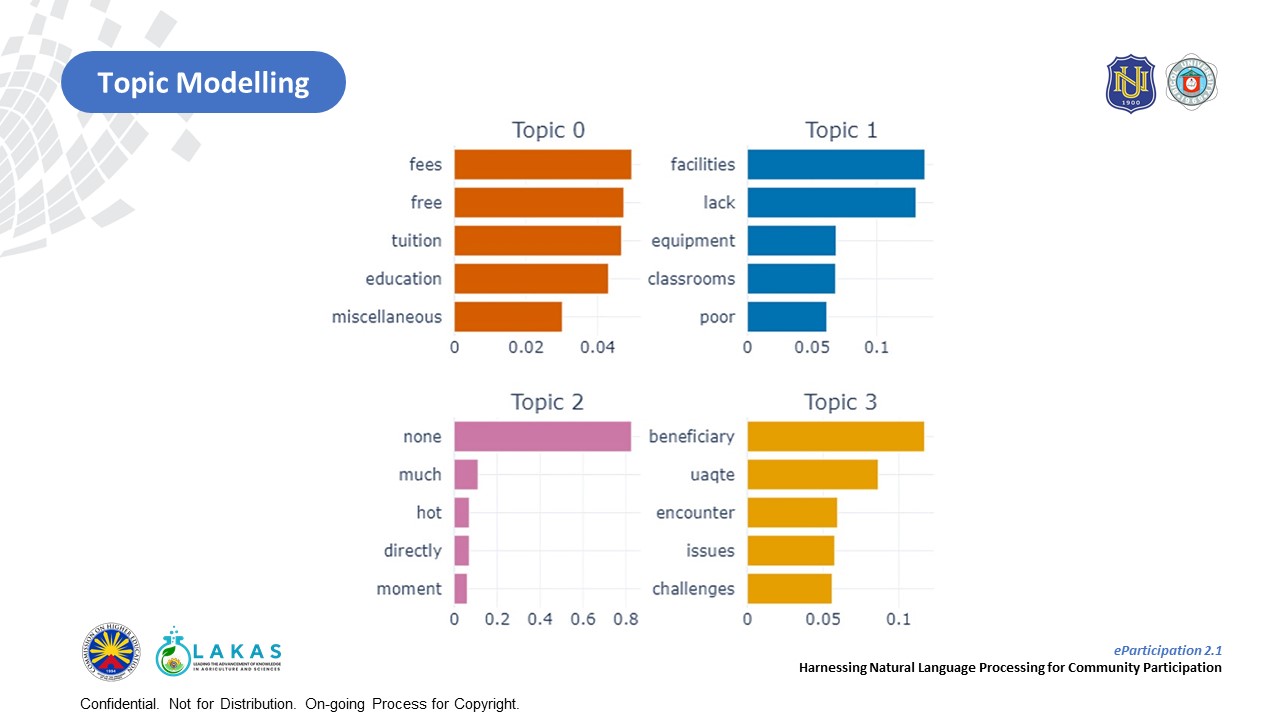 |
Recognizing that Shapley explanations alone may not fully capture the range of insights required, our team sought to validate these findings by analyzing the sentiments expressed by the beneficiaries. To this end, we conducted Topic Modeling on the open-ended responses.
|
| ICACT20240444 Slide.31
[Big Slide]
|
Chrome Click!! |
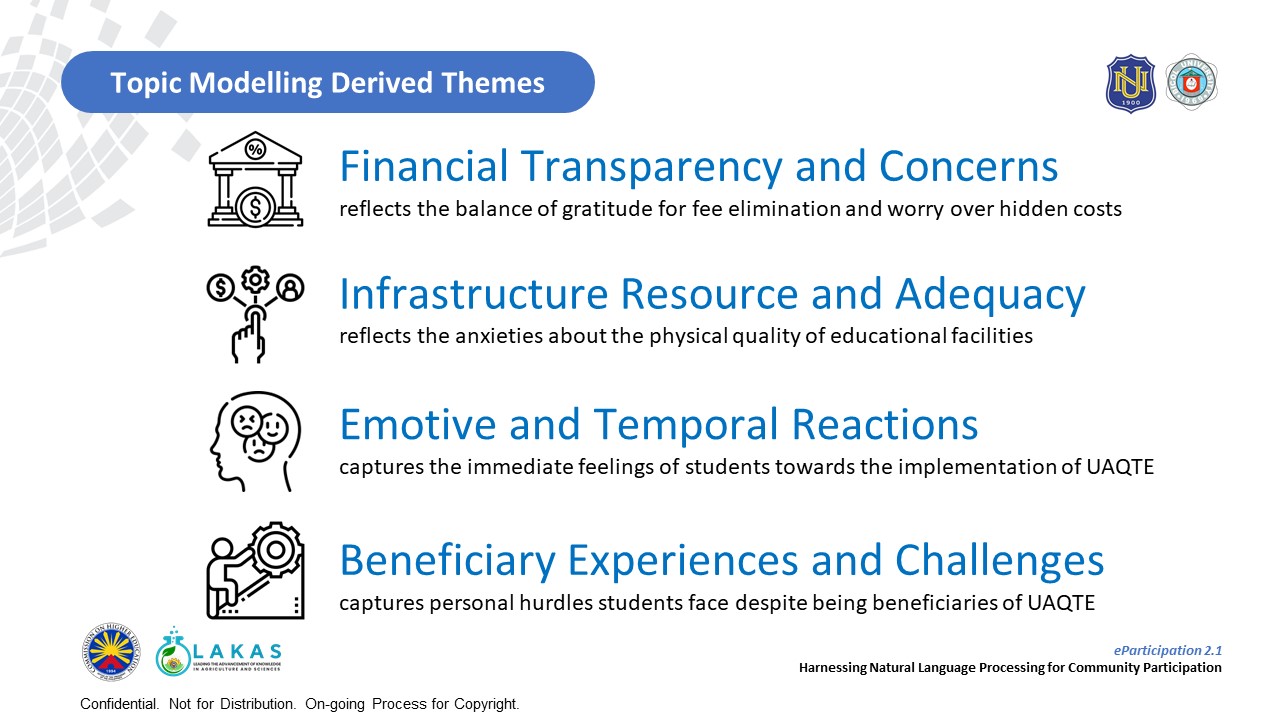 |
Our topic modeling analysis distilled the feedback from UAQTE beneficiaries into four core themes. These themes resonate with the Shapley explanations, particularly aligning with the finding that aspirations for international employment significantly influence satisfaction with UAQTE. The concern over financial transparency may reflect the broader ambitions of students seeking global opportunities who are acutely aware of the economic realities they will face abroad. Similarly, the emphasis on infrastructure adequacy aligns with the aspirations of students who understand that world-class facilities are a prerequisite for international competitiveness. The emotive reactions and personal challenges highlight the immediate and individual impact of the program, further contextualizing the quantitative data. Together, these themes and the Shapley analysis paint a cohesive picture of the factors affecting beneficiary satisfaction with UAQTE, emphasizing the need for a holistic approach to education policy that considers both aspirations and ground realities.
|
| ICACT20240444 Slide.32
[Big Slide]
|
Chrome Click!! |
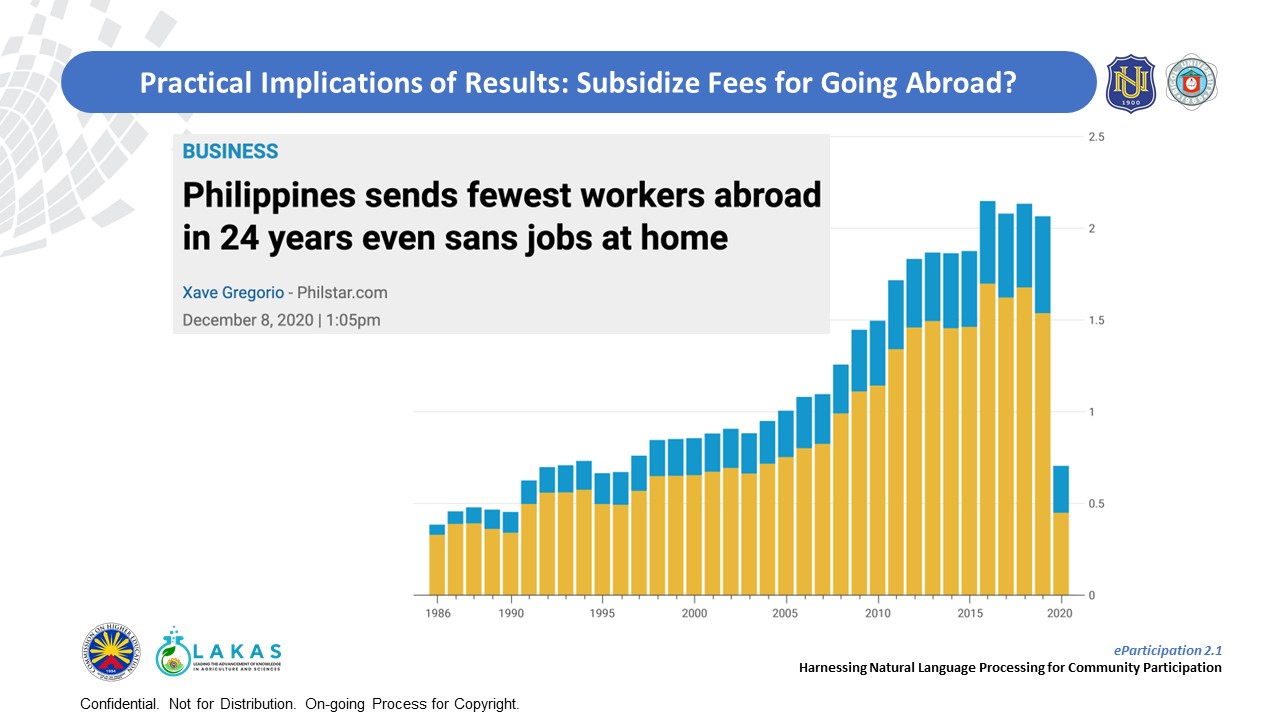 |
The decline in overseas employment from the Philippines, as highlighted in the article, suggests that Filipino students are increasingly hesitant to pursue international employment, potentially due to pandemic-related uncertainties. This shift in international employment aspirations could affect the satisfaction of UAQTE beneficiaries. Furthermore, the challenges in the local job market reinforce the importance of the "Financial Transparency and Concerns" theme in UAQTE feedback, as students become more concerned about the financial aspects of their education. This situation underscores the need for a holistic approach to education policy that adapts to changing economic conditions and shifting aspirations, as the declining number of overseas Filipino workers prompts policymakers and educators to reconsider tertiary education strategies. |
| ICACT20240444 Slide.33
[Big Slide]
|
Chrome Click!! |
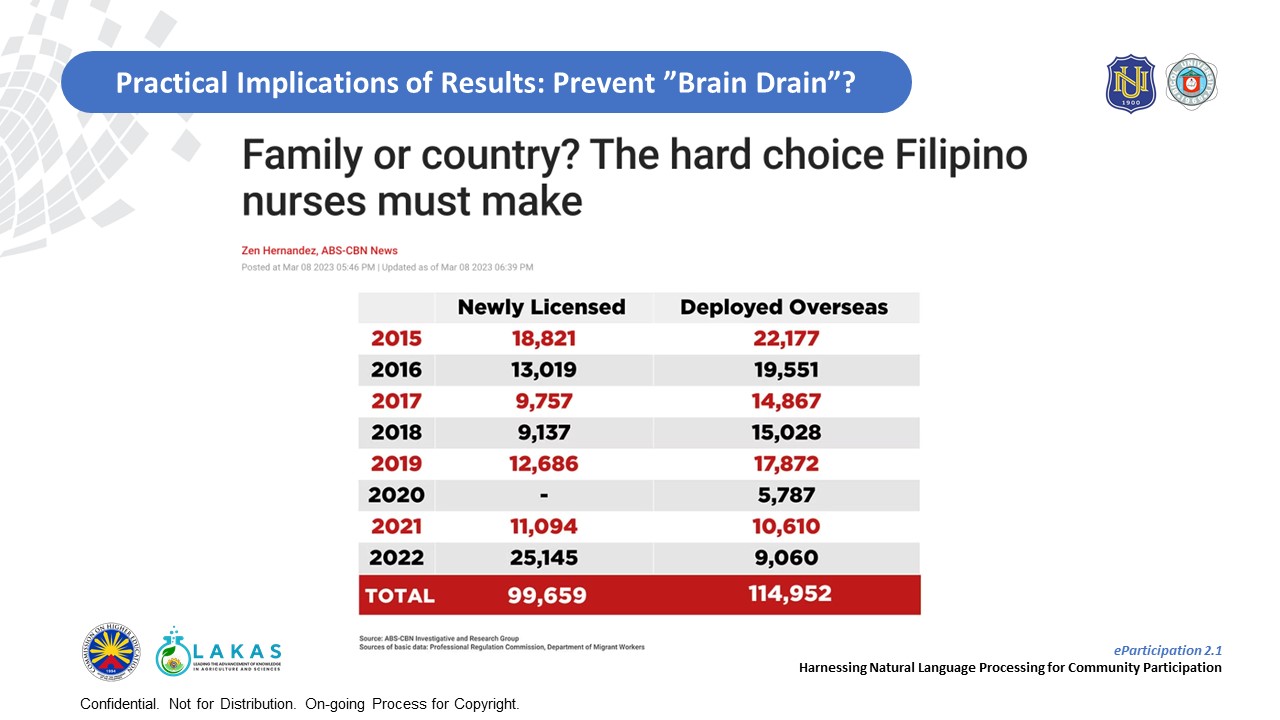 |
The preference of BS Nursing graduates to work overseas rather than in the Philippines adds another layer to the discussion about aspirations for international employment and the impact of education policies like UAQTE. This preference reflects the ongoing trend of healthcare professionals seeking better opportunities abroad due to factors such as higher salaries and improved working conditions. While the choice to work abroad can be financially beneficial for individuals and their families, it also raises questions about their loyalty to their home country and the availability of opportunities locally. The UAQTE program and similar initiatives need to acknowledge these dynamics, recognizing that different professions and sectors may have varying patterns of international employment aspirations. Policymakers should consider these nuances when crafting education policies to ensure they align with the diverse career goals and realities of students.
|
| ICACT20240444 Slide.34
[Big Slide]
|
Chrome Click!! |
 |
In conclusion, addressing the challenge of students aspiring to work abroad within the context of UAQTE requires a multifaceted strategy. Firstly, it's imperative to diversify the domestic job market by investing in various sectors, including technology, engineering, and entrepreneurship. Creating attractive opportunities with competitive salaries and favorable working conditions can help retain the nation's talented workforce.
Secondly, education policies should prioritize equipping students with globally relevant skills and competencies. This entails enhancing curricula to emphasize skills in demand worldwide, such as digital literacy, critical thinking, and intercultural communication. Encouraging students to pursue internationally recognized certifications and qualifications can enhance their prospects in the global job market.
Lastly, nurturing a sense of patriotism and community engagement is pivotal. Educational institutions should instill values of social responsibility and the significance of contributing to the local community. By promoting participation in community service and fostering a strong connection to the Philippines, individuals are more likely to consider local employment options, aligning their aspirations with the nation's overall development and progress. In essence, addressing this issue necessitates not only sector-specific improvements but also a holistic approach to education, economic growth, and values education.
|
| ICACT20240444 Slide.35
[Big Slide]
|
Chrome Click!! |
 |
Once more, our team wishes to extend our heartfelt appreciation to the Commission on Higher Education for their generous funding through the LAKAS program. We would also like to express our profound gratitude to Bicol University and National University for their invaluable support, which has been instrumental in successfully achieving the goals of this endeavor.
|
| ICACT20240444 Slide.36
[Big Slide]
|
Chrome Click!! |
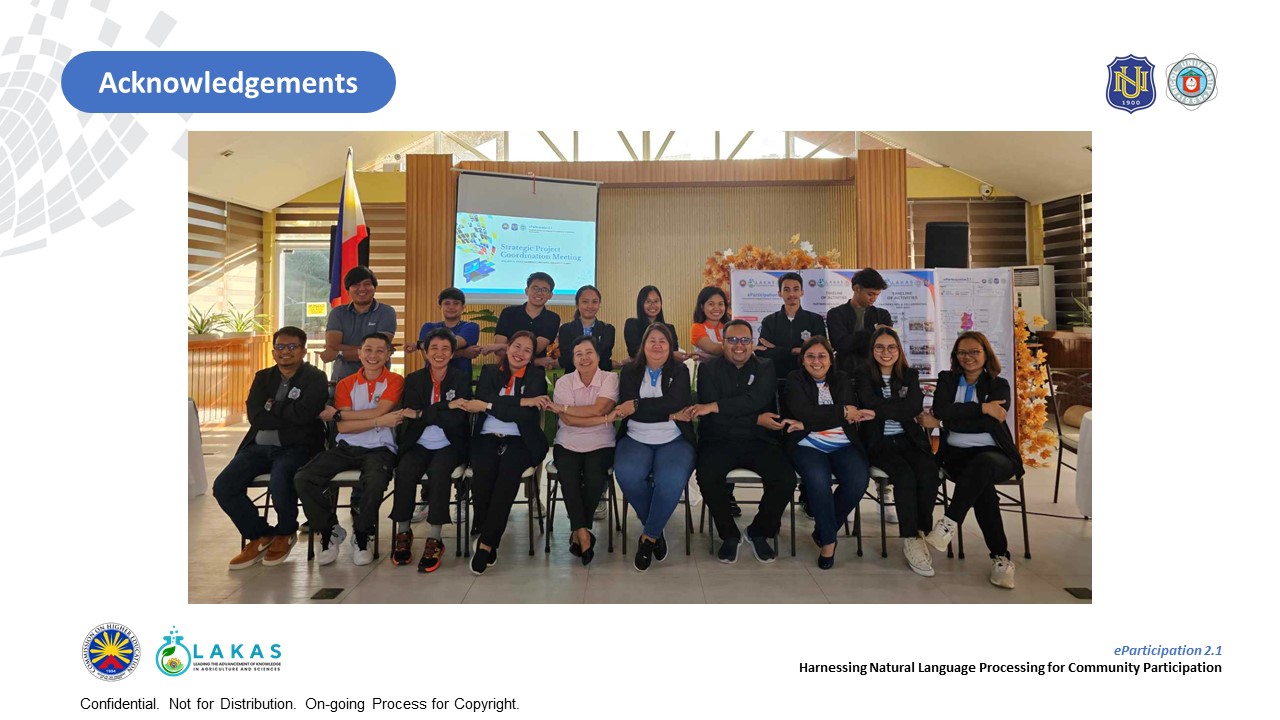 |
Furthermore, we extend our gratitude to all those individuals who have played a pivotal role in helping us reach heights we never once dared to imagine. Their support and contributions have been indispensable to our success.
|
| ICACT20240444 Slide.37
[Big Slide]
[YouTube] |
Chrome Click!! |
 |
Initiating positive policy changes for the betterment of society goes beyond the scope of this study. Let's join forces and collaborate! You can reach out to me via the email displayed on your screen. Once again, thank you for listening!
|















