 ICACT20240475 Slide.00
[Big Slide] |
Chrome  Click!! |
 |
Hello everyone, I am Ruofei Ding from South China Normal University. The title of my research paper is "An Enhanced Topic Modeling Method in Educational Domain by Integrating LDA with Semantic" This paper presents a method to enhance the effectiveness of topic modeling in the field of education. In the following discussion, I will introduce my approach. |
| ICACT20240475 Slide.01
[Big Slide]
|
Chrome Click!! |
 |
Here are my contents. |
| ICACT20240475 Slide.02
[Big Slide]
|
Chrome Click!! |
 |
Firstly, let's delve into the background of this idea. In China, the online learning landscape has flourished, giving rise to numerous platforms brimming with a wealth of data. |
| ICACT20240475 Slide.03
[Big Slide]
|
Chrome Click!! |
 |
Among these platforms, the China MOOC stands out as the most popular online learning forum. With over 1000 courses encompassing a diverse array of subjects like literature, history, and philosophy, it serves as a hub for stimulating discussions between teachers and students. |
| ICACT20240475 Slide.04
[Big Slide]
|
Chrome Click!! |
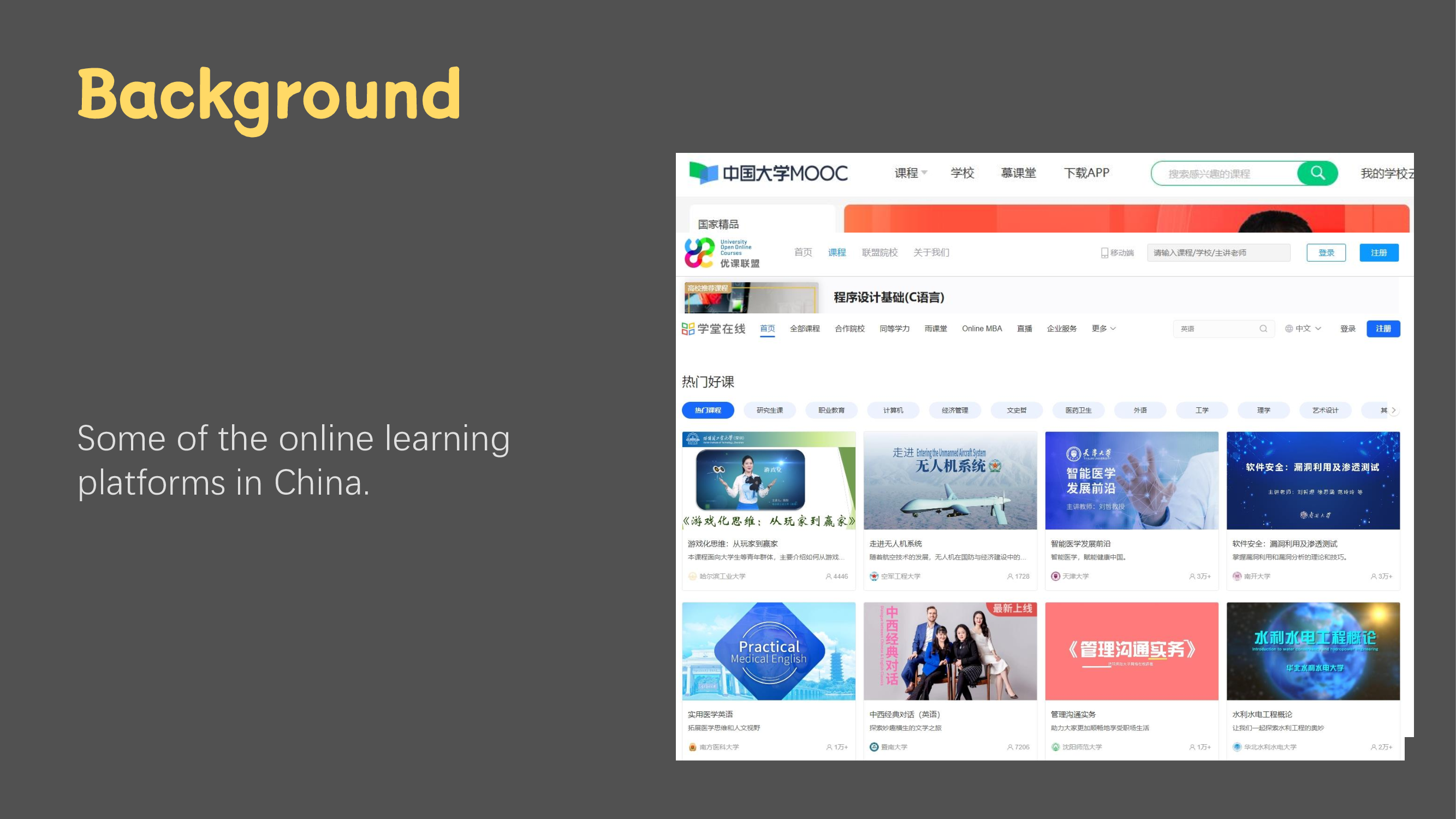 |
Here are examples of courses on these platforms. |
| ICACT20240475 Slide.05
[Big Slide]
|
Chrome Click!! |
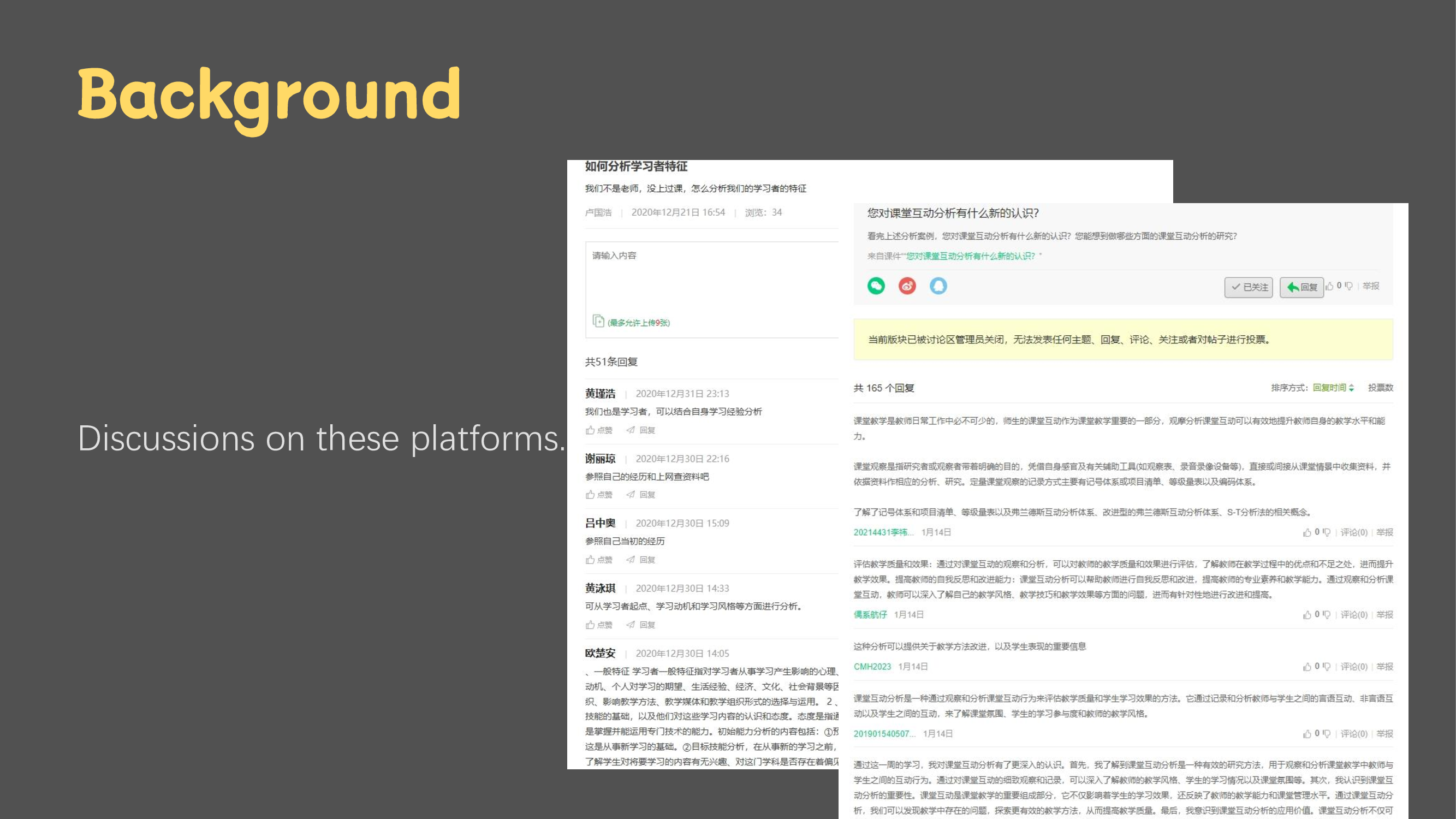 |
Here are examples of discussions on these platforms. |
| ICACT20240475 Slide.06
[Big Slide]
|
Chrome Click!! |
 |
The second aspect concerns the necessity of our approach. |
| ICACT20240475 Slide.07
[Big Slide]
|
Chrome Click!! |
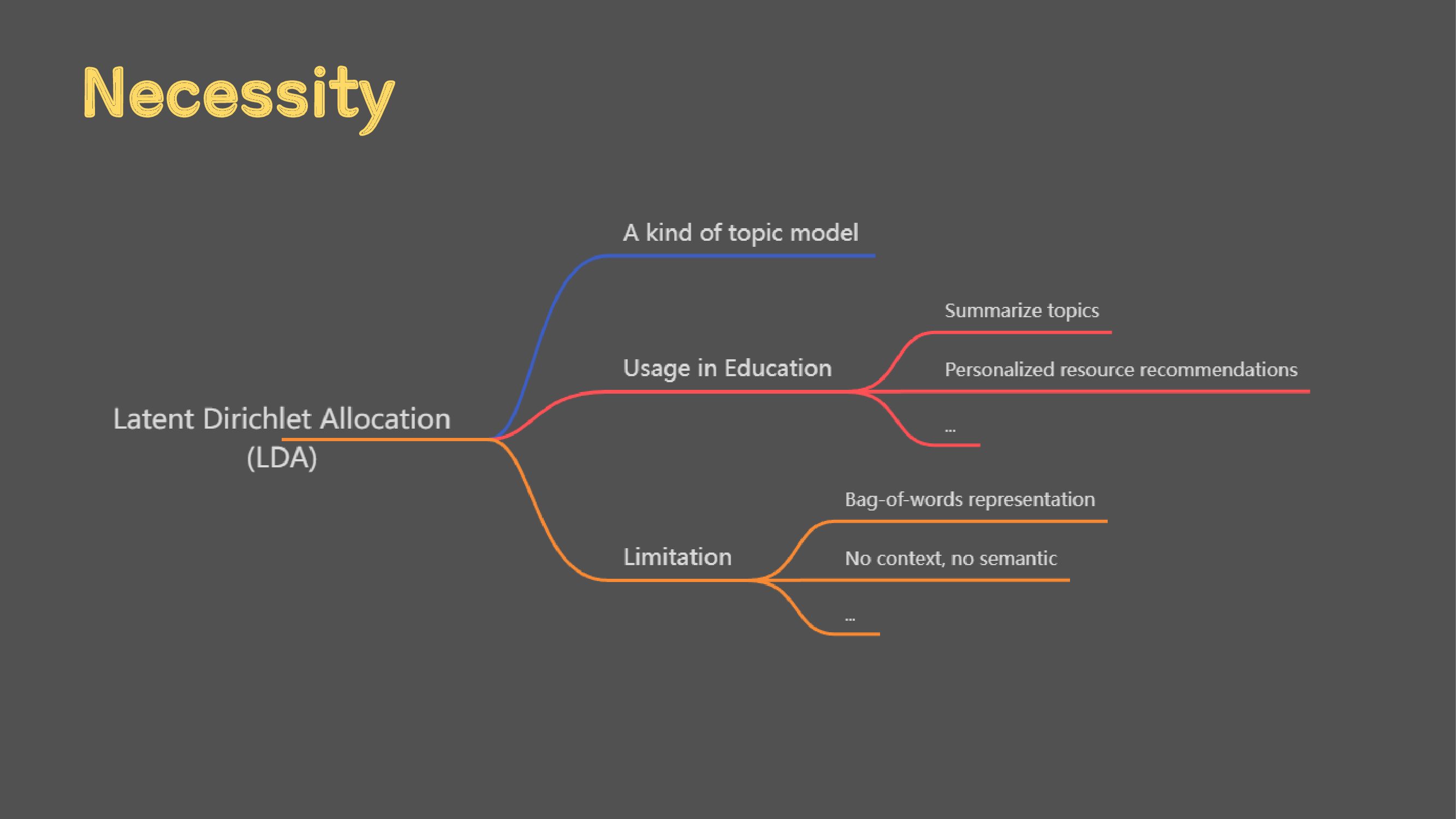 |
In the field of education, Latent Dirichlet Allocation (LDA) is frequently employed as a topic modeling technique to summarize subjects and provide personalized resource recommendations. However, there are certain limitations that restrict its wider application. LDA relies on a Bag-of-Words representation, which, although simple and effective, lacks contextual and semantic information. This limitation presents an opportunity for enhancing its effectiveness. Within the realm of education, there remains a dearth of research on combining semantic information with LDA for topic modeling and text clustering analysis |
| ICACT20240475 Slide.08
[Big Slide]
|
Chrome Click!! |
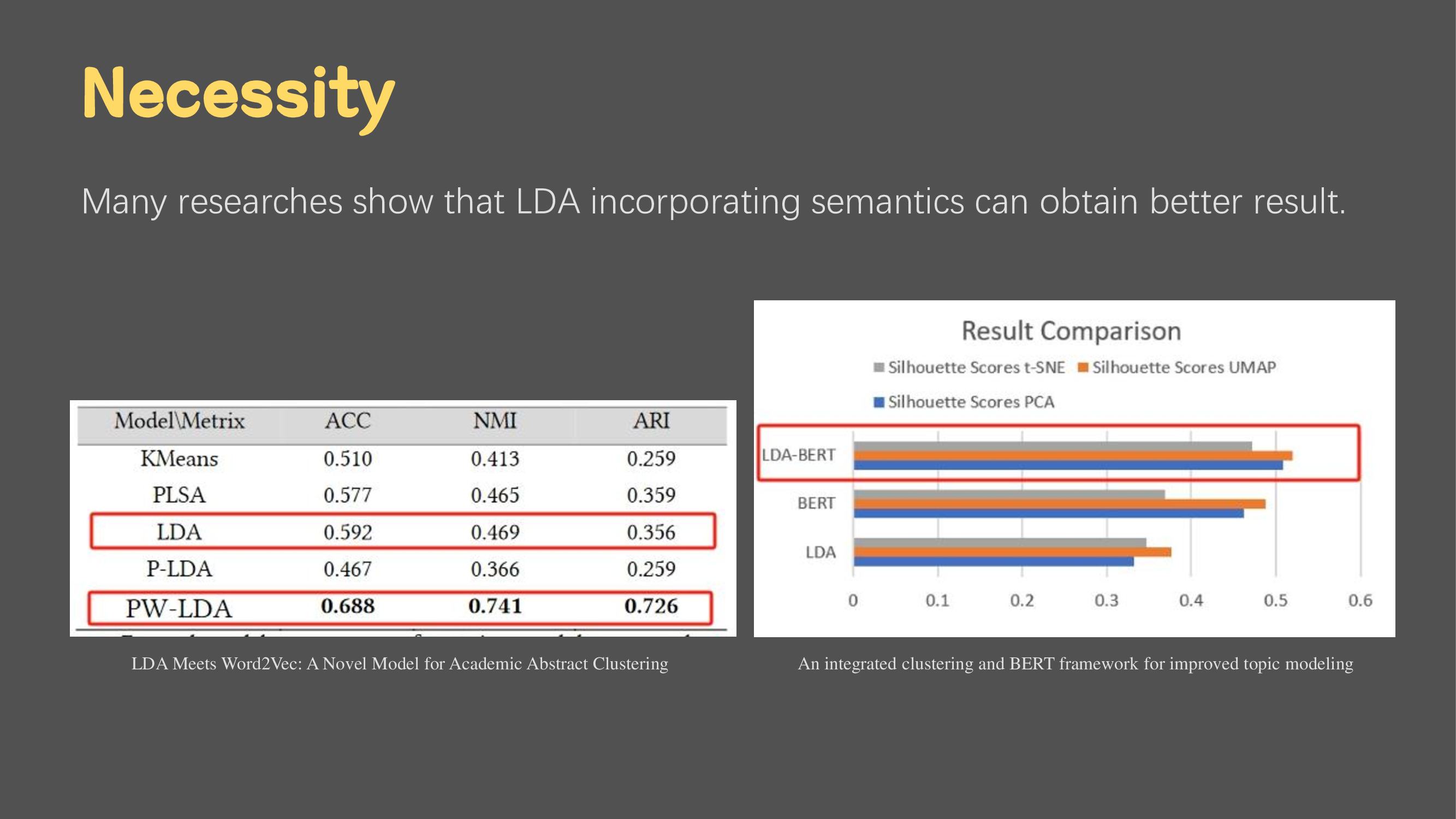 |
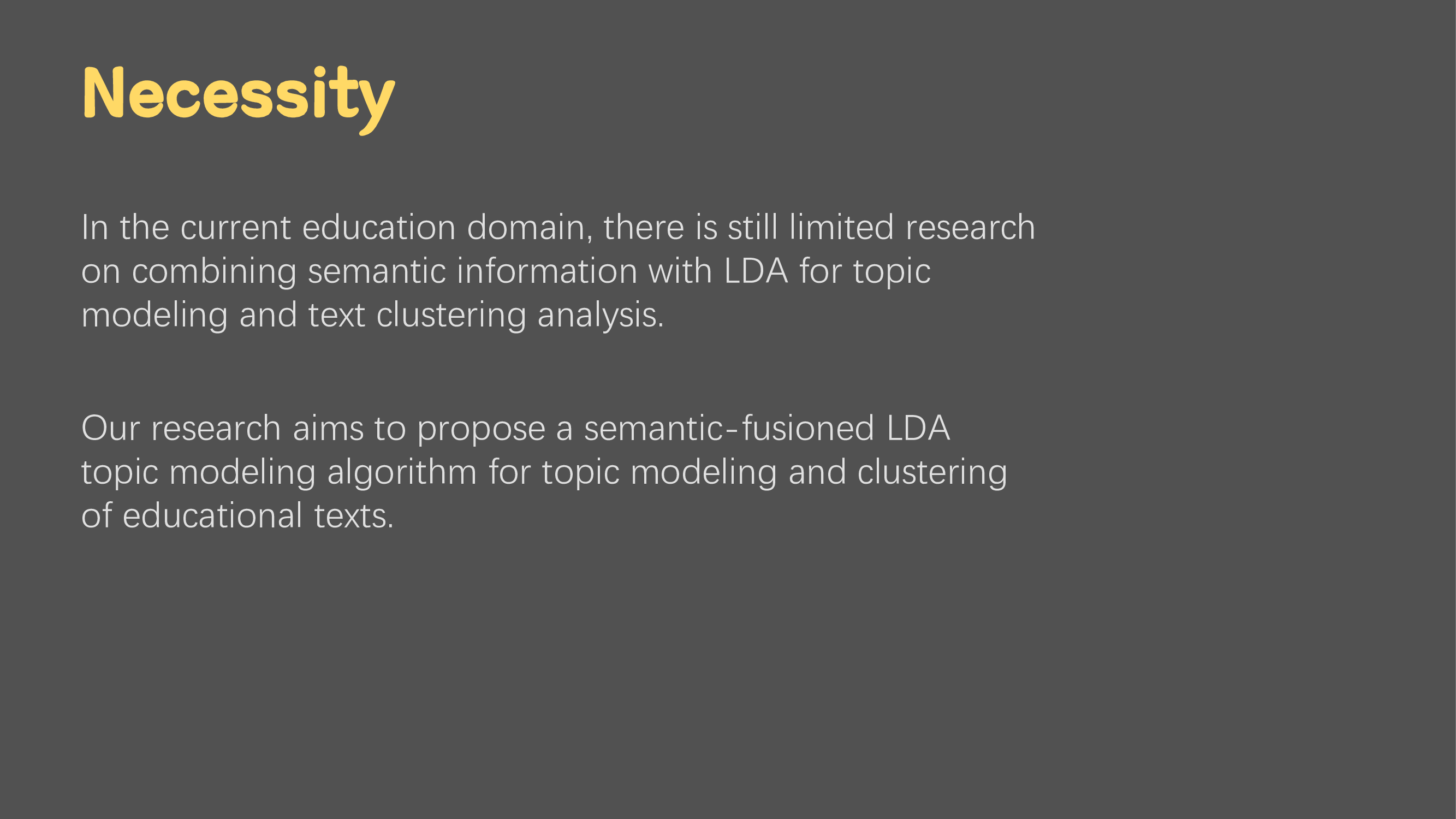
Numerous studies have demonstrated that incorporating semantics into LDA yields superior results. Hence, our research endeavors to introduce a novel approach: a semantic-fused LDA topic modeling algorithm for educational texts, facilitating more accurate topic modeling, clustering, and adaptation for downstream tasks. |
| ICACT20240475 Slide.09
[Big Slide]
|
Chrome Click!! |
 |
|
| ICACT20240475 Slide.10
[Big Slide]
|
Chrome Click!! |
 |
Moving forward, let's proceed to introduce our methodology. |
| ICACT20240475 Slide.11
[Big Slide]
|
Chrome Click!! |
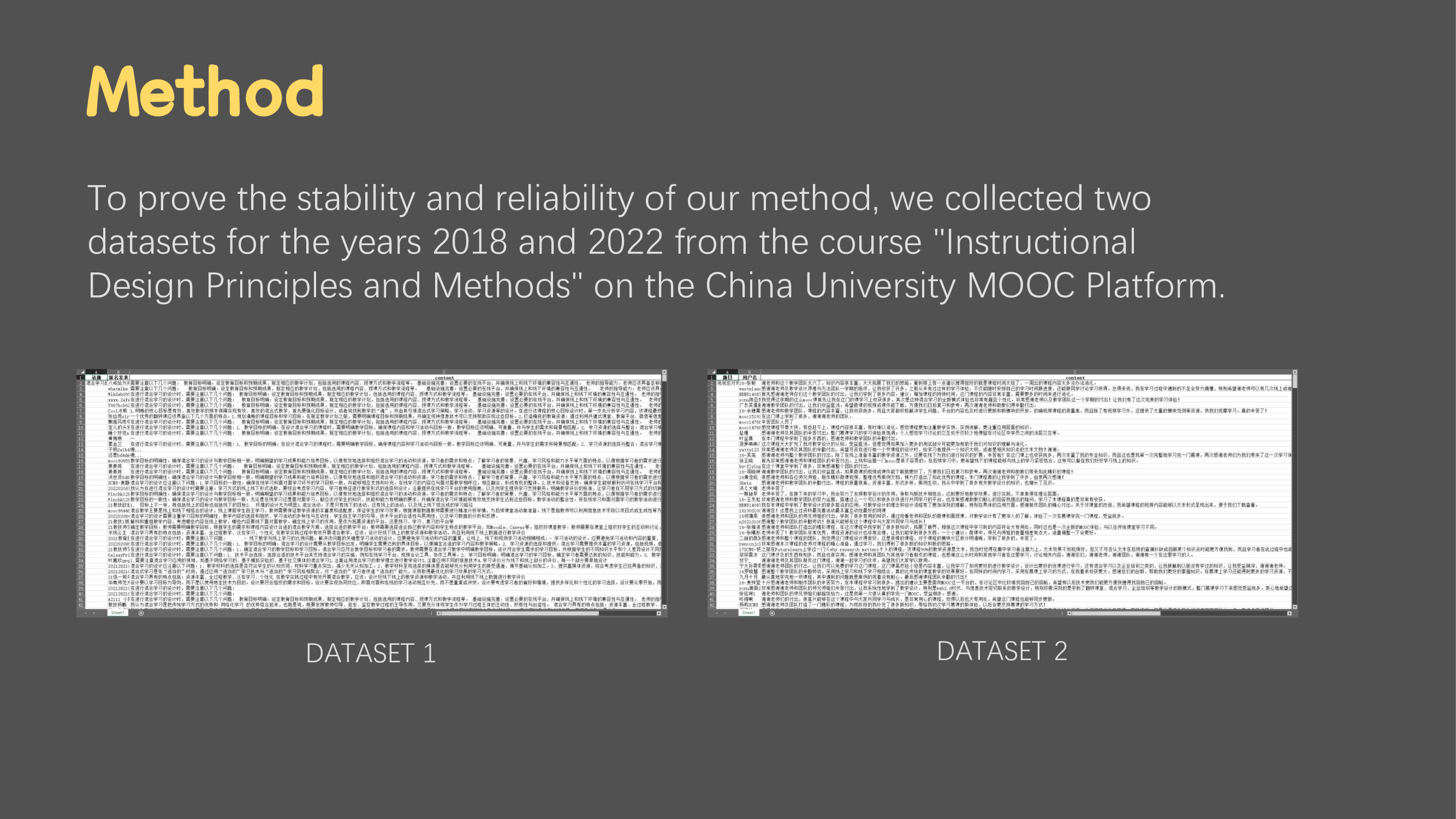 |
Our datasets were obtained from the "Instructional Design Principles and Methods" course on the China MOOC platform. Initially, we employed web crawling techniques to extract the discussion data from the forums. |
| ICACT20240475 Slide.12
[Big Slide]
|
Chrome Click!! |
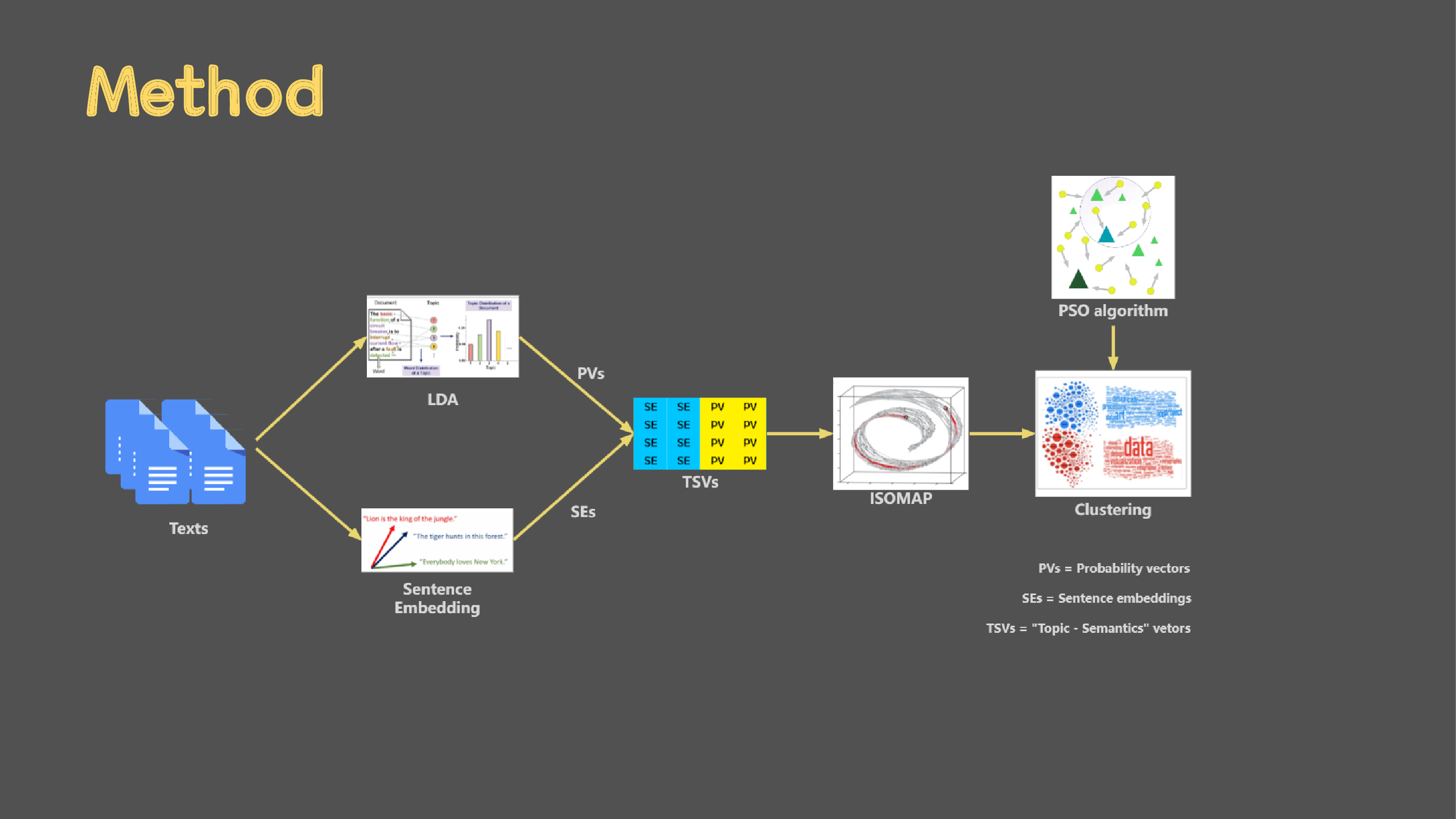 |
Subsequently, we applied both Latent Dirichlet Allocation (LDA) and sentence embedding techniques to analyze and process the data. By fusing the results of LDA and sentence embedding, we created a combined matrix. To further refine the matrix, we utilized the ISOMAP downscaling technique, which reduced its dimensionality and enhanced its efficiency. |
| ICACT20240475 Slide.13
[Big Slide]
|
Chrome Click!! |
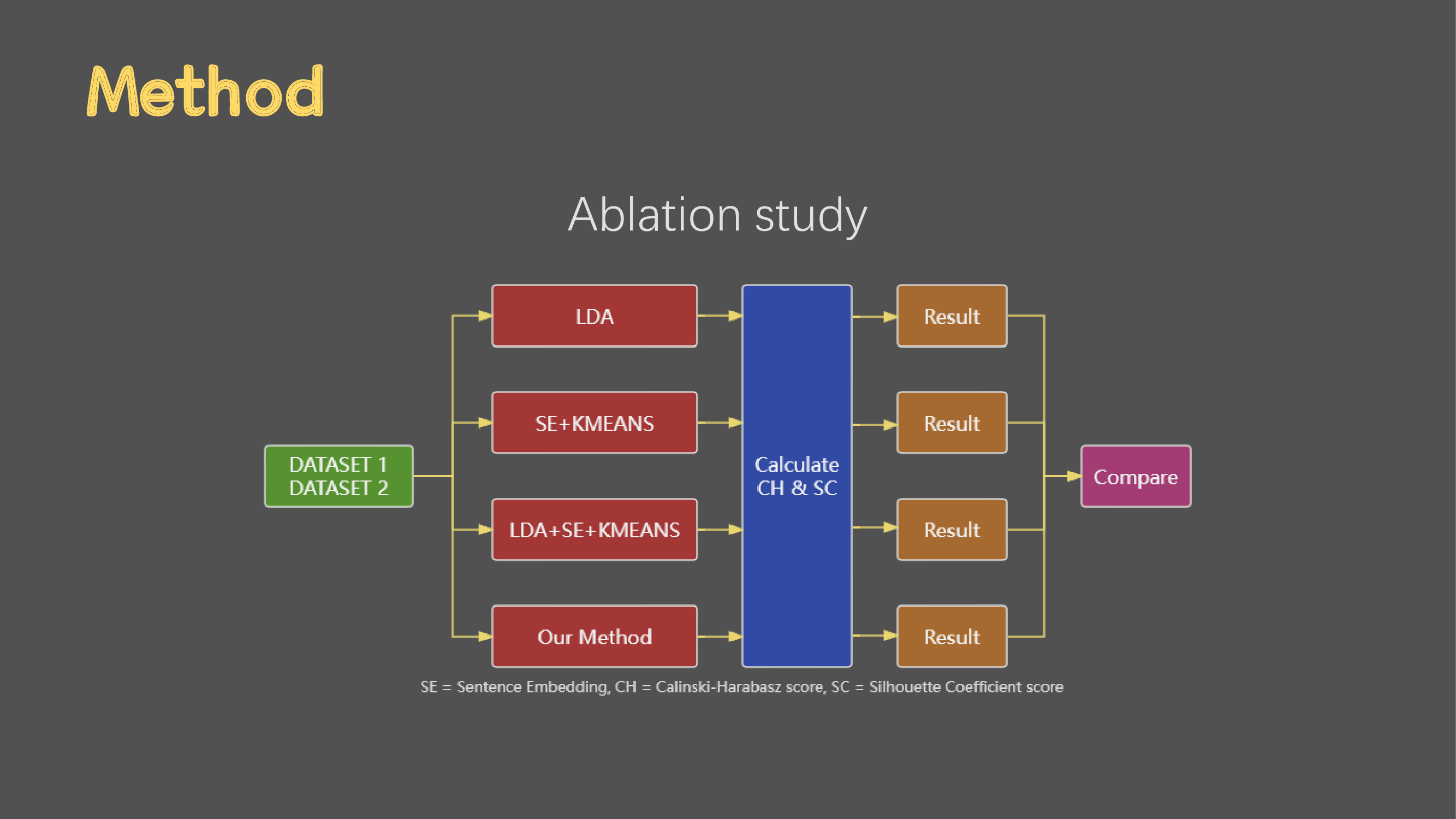 |
We employed CH (Calinski-Harabasz) and SC (Silhouette Coefficient) scores as evaluation metrics for our method. These scores served as our indices to assess the quality of the clustering. |
| ICACT20240475 Slide.14
[Big Slide]
|
Chrome Click!! |
 |
|
| ICACT20240475 Slide.15
[Big Slide]
|
Chrome Click!! |
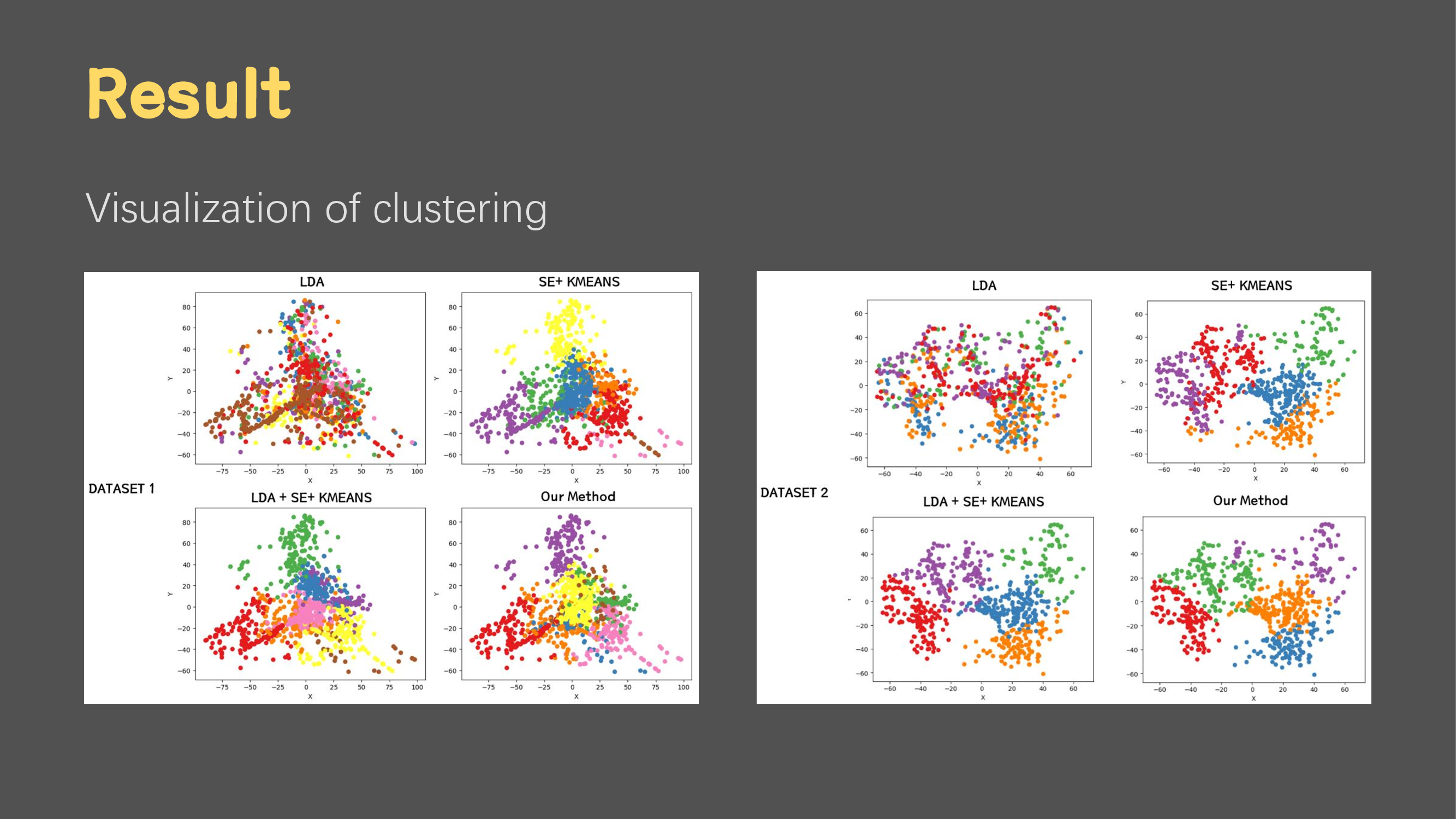 |
The clustering results were visually presented through intuitive visualizations. |
| ICACT20240475 Slide.16
[Big Slide]
|
Chrome Click!! |
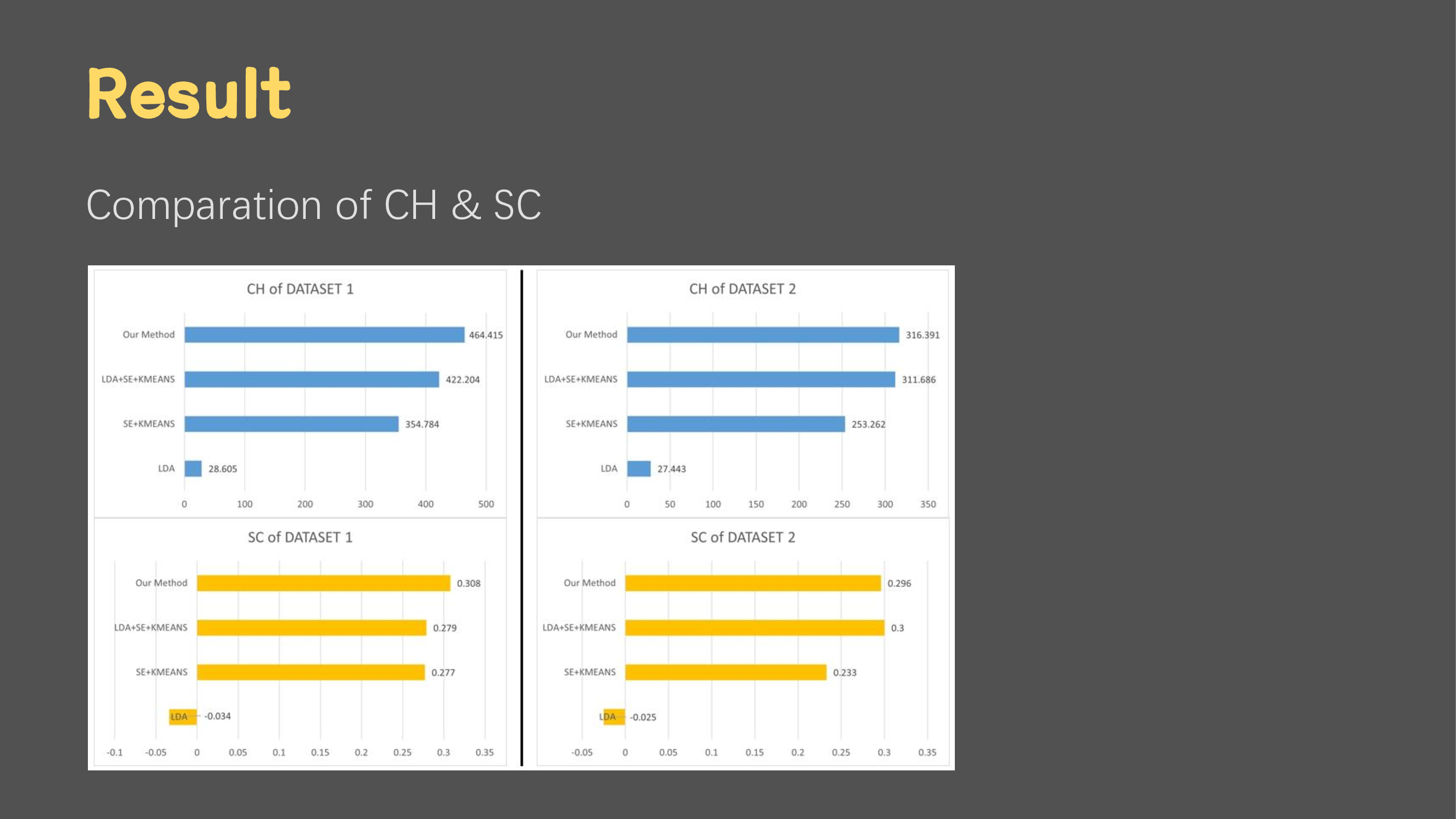 |
Notably, our method consistently outperformed others in both Dataset 1 and Dataset 2, as demonstrated by the superior results achieved. To provide further insight, we present topic word clouds from both Dataset 1 and Dataset 2 as examples, showcasing the effectiveness of our approach. |
| ICACT20240475 Slide.17
[Big Slide]
|
Chrome Click!! |
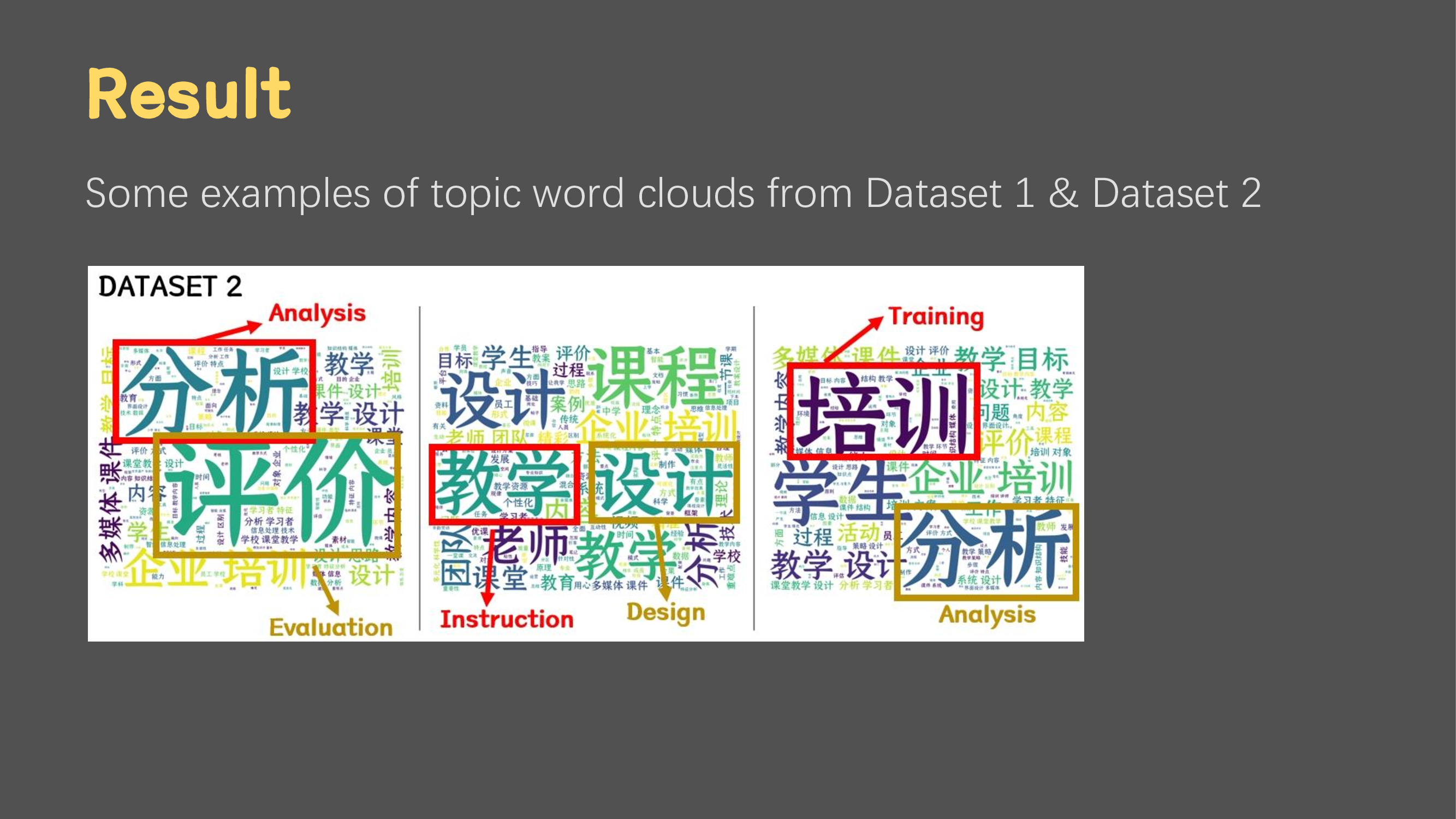 |
Notably, our method consistently outperformed others in both Dataset 1 and Dataset 2, as demonstrated by the superior results achieved. To provide further insight, we present topic word clouds from both Dataset 1 and Dataset 2 as examples, showcasing the effectiveness of our approach. |
| ICACT20240475 Slide.18
[Big Slide]
|
Chrome Click!! |
 |
|
| ICACT20240475 Slide.19
[Big Slide]
|
Chrome Click!! |
 |
In this study, we proposed a novel model that integrates semantic information with LDA for educational topic modeling. To validate the effectiveness of our approach, we collected two MOOC datasets for testing purposes. Through an ablation study, we utilized the SC value and CH score as evaluation criteria. The results demonstrated the scientific feasibility and superiority of our method over traditional LDA in the field of educational topic modeling. The innovation of our approach lies in the incorporation of semantic information into the LDA topic model specifically tailored for educational purposes. We further validated the feasibility and effectiveness of our method through performance evaluations. In our future research, we aim to investigate whether the topic model incorporating semantic information can effectively reflect students' cognition and analyze the results at a more granular level. |
| ICACT20240475 Slide.20
[Big Slide]
|
Chrome Click!! |
 |
|
| ICACT20240475 Slide.21
[Big Slide]
|
Chrome Click!! |
 |
While our study presents promising findings, we acknowledge certain limitations that should be addressed in future research. Firstly, the data used in this study was derived from a single course, which may limit the generalizability of our findings. To enhance the robustness of our conclusions, it would be beneficial to collect data from diverse courses for analysis. Additionally, the model proposed in this study may have limitations when applied to sparser data, and further optimization is necessary to improve its performance in such scenarios. These areas present opportunities for future research and refinement of our approach. |















