 ICACT20250024 Slide.01
[Big Slide]
[YouTube] |
Chrome  Click!! |
 |
Video of my presentation on
Universal access to education based on Software
Defined Radio (SDR): The case of Mali
|
| ICACT20250024 Slide.02
[Big Slide]
|
Chrome Click!! |
 |
SUMMARY
Motivation
Key Works
Our Approach
Results/discussions and Conclusion
|
| ICACT20250024 Slide.03
[Big Slide]
|
Chrome Click!! |
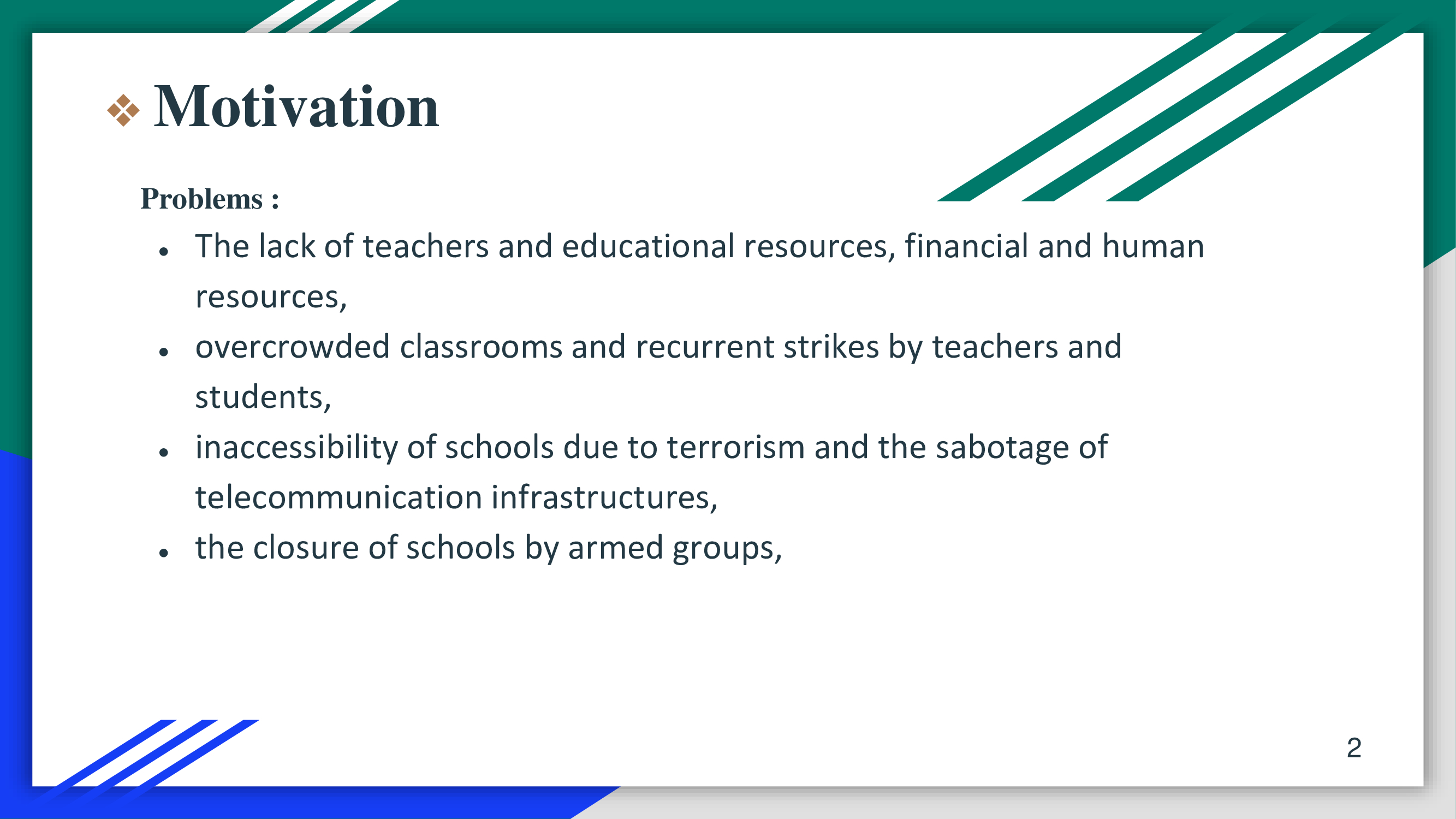 |
Motivation
Problems :
The lack of teachers and educational resources, financial and human resources,
overcrowded classrooms and recurrent strikes by teachers and students,
inaccessibility of schools due to terrorism and the sabotage of telecommunication infrastructures,
the closure of schools by armed groups,
|
| ICACT20250024 Slide.04
[Big Slide]
|
Chrome Click!! |
 |
INTRODUCTION
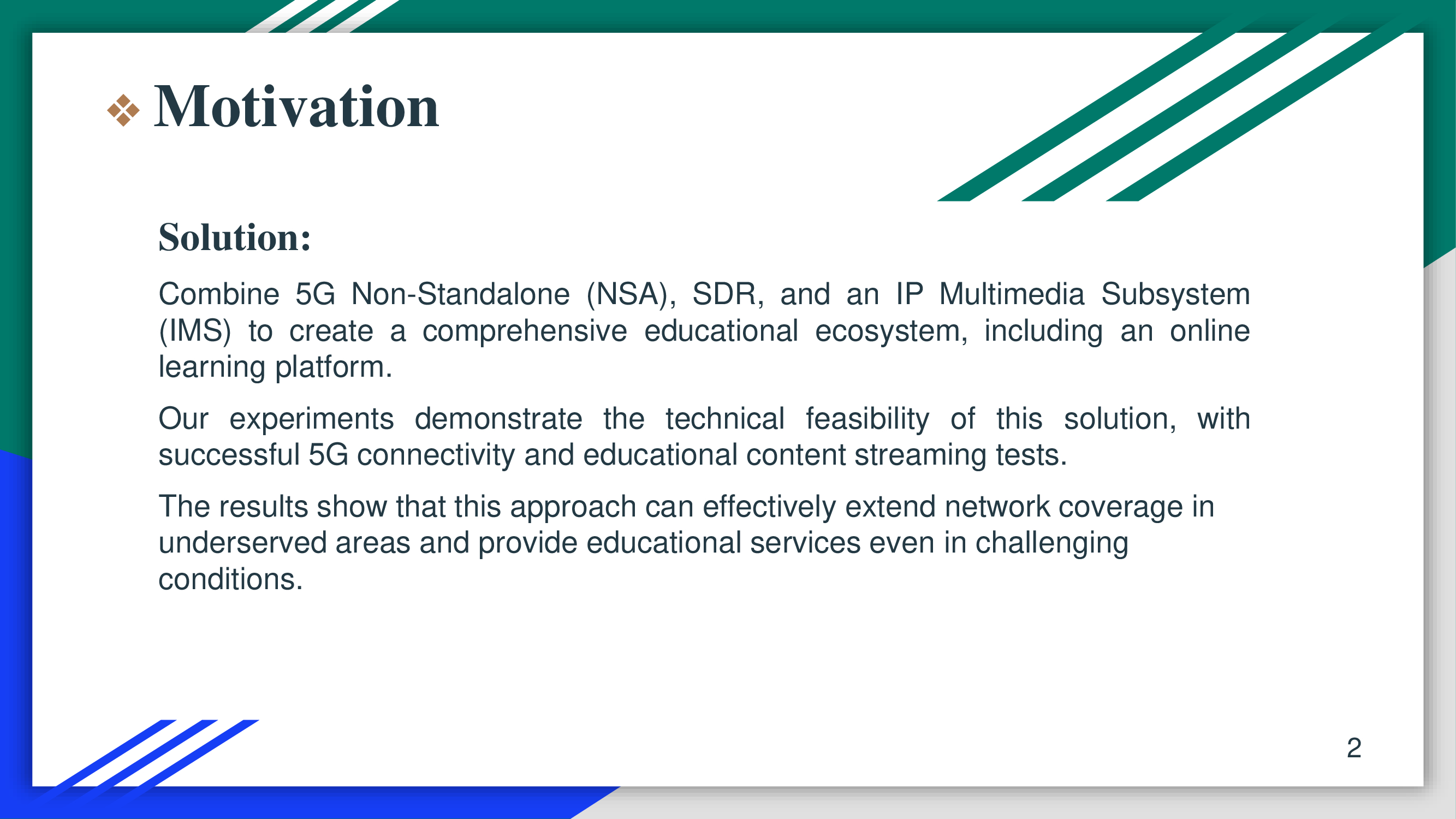
Solution:
Combine 5G Non-Standalone (NSA), SDR, and an IP Multimedia Subsystem (IMS) to create a comprehensive educational ecosystem, including an online learning platform.
Our experiments demonstrate the technical feasibility of this solution, with successful 5G connectivity and educational content streaming tests.
The results show that this approach can effectively extend network coverage in underserved areas and provide educational services even in challenging conditions.
|
| ICACT20250024 Slide.05
[Big Slide]
|
Chrome Click!! |
 |
Approach :
Cutting-edge technologies to offer a resilient and flexible alternative
Chalenges :
Some challenges remain in terms of scalability and security
|
| ICACT20250024 Slide.06
[Big Slide]
|
Chrome Click!! |
 |
Previous scientific studies that have explored the potential contribution of digital technologies to distance learning for acquiring skills :
Access to information in rural areas of sub-Saharan Africa is hampered by geographical and linguistic barriers, leading to proposals for using embedded 5G mobile networks and Software-Defined Radio (SDR) infrastructures to broadcast content in local languages
However, 5G deployment remains primarily concentrated in urban areas, as shown by studies conducted in Indonesia and Brazil, risking an increase in the digital divide
|
| ICACT20250024 Slide.07
[Big Slide]
|
Chrome Click!! |
 |
Beyond economic aspects, technical challenges emerge in specific applications such as connected and automated mobility in Europe or smart grid monitoring, requiring innovative solutions in dimensioning, edge computing, and radio spectrum management
SDR technology proves particularly suitable for connectivity needs in rural and remote environments
These limitations emphasize the need to develop innovative and adapted solutions to improve connectivity and access to education in nderserved areas of developing countries like Mali.
|
| ICACT20250024 Slide.08
[Big Slide]
|
Chrome Click!! |
 |
Our Approach
|
| ICACT20250024 Slide.09
[Big Slide]
|
Chrome Click!! |
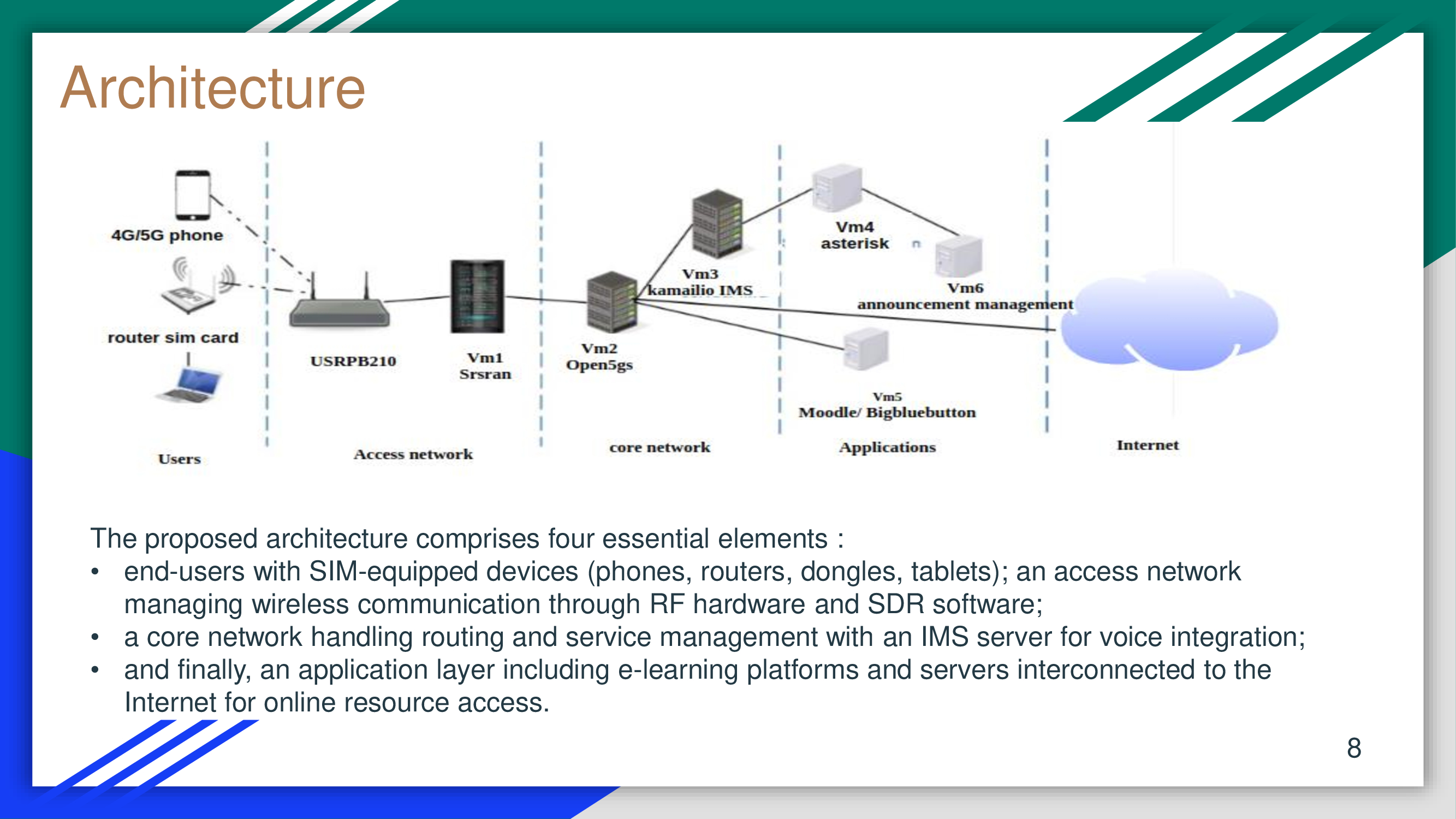 |
The proposed architecture comprises four essential elements :
end-users with SIM-equipped devices (phones, routers, dongles, tablets); an access network managing wireless communication through RF hardware and SDR software;
a core network handling routing and service management with an IMS server for voice integration;
and finally, an application layer including e-learning platforms and servers interconnected to the Internet for online resource access.
|
| ICACT20250024 Slide.10
[Big Slide]
|
Chrome Click!! |
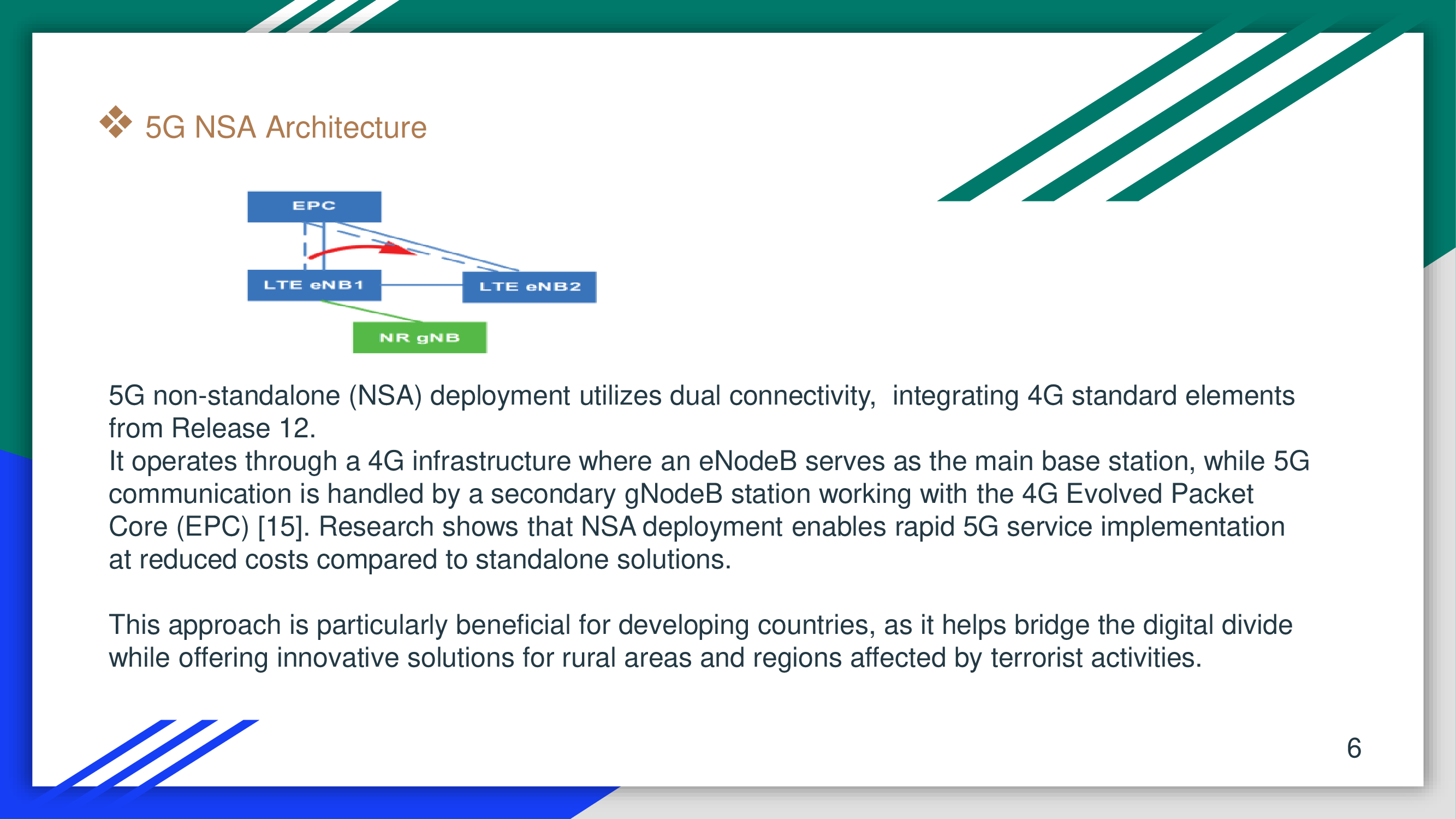 |
5G non-standalone (NSA) deployment utilizes dual connectivity, integrating 4G standard elements from Release 12.
It operates through a 4G infrastructure where an eNodeB serves as the main base station, while 5G communication is handled by a secondary gNodeB station working with the 4G Evolved Packet Core (EPC) [15]. Research shows that NSA deployment enables rapid 5G service implementation
at reduced costs compared to standalone solutions.
This approach is particularly beneficial for developing countries, as it helps bridge the digital divide while offering innovative solutions for rural areas and regions affected by terrorist activities.
|
| ICACT20250024 Slide.11
[Big Slide]
|
Chrome Click!! |
 |
Software-Defined Radio
Software-Defined Radio (SDR) is a technology that allows the use of various wireless communication protocols without
hardware or software modifications. The complete dematerialization of the radio interface, from hardware to software,
brings significant benefits for cellular communications in terms of flexibility, portability, efficiency, and simplified deployment costs in 4G and beyond mobile networks.
This architecture enables the management of multiple protocols and frequency bands from a single device. This
facilitates the implementation of multi-service networks and the use of different communication technologies to cover white
areas and localities in need.
|
| ICACT20250024 Slide.12
[Big Slide]
|
Chrome Click!! |
 |
1) Hardware and Software:
The USRP B210 was chosen for its versatility (70 MHz to 6 GHz), its essential 2x2 MIMO support for 4G/5G networks, and its fast USB 3.0 connectivity. Its moderate cost, compatibility with open-source software, and portability make it an ideal solution for the development of low-cost private networks in constrained environments like Mali.
|
| ICACT20250024 Slide.13
[Big Slide]
|
Chrome Click!! |
 |
1) Hardware and Software:
The USRP B210 was chosen for its versatility (70 MHz to 6 GHz), its essential 2x2 MIMO support for 4G/5G networks, and its fast USB 3.0 connectivity. Its moderate cost, compatibility with open-source software, and portability make it an ideal solution for the development of low-cost private networks in constrained environments like Mali.
|
| ICACT20250024 Slide.14
[Big Slide]
|
Chrome Click!! |
 |
(b) Software
The software subsystem of the SDR is a digital part that processes the baseband signals. This processing is carried out via a Field Programmable Gate Array (FPGA), a type of digital signal processor used in conventional computers. The transmitter also has a digital-to-analog converter, while the receiver has an analog-to-digital converter, enabling the conversion between the analog and digital domains within the SDR architecture.
2) USRP B210: The GNU Radio project has designed the USRP B210 model, which has a digital interface for a computer’s USB 3.0 port and an analog interface for an SDR device. This USRP B210 device provides radio access with a frequency coverage ranging from 70 MHz to 6 GHz, and can also operate as a 5G NSA (4G-5G) base station, thus offering an integrated solution for wireless communications.
|
| ICACT20250024 Slide.15
[Big Slide]
|
Chrome Click!! |
 |
DISCUSSIONS/ CONCLUSION/FUTURE PERSPECTIVES
|
| ICACT20250024 Slide.16
[Big Slide]
|
Chrome Click!! |
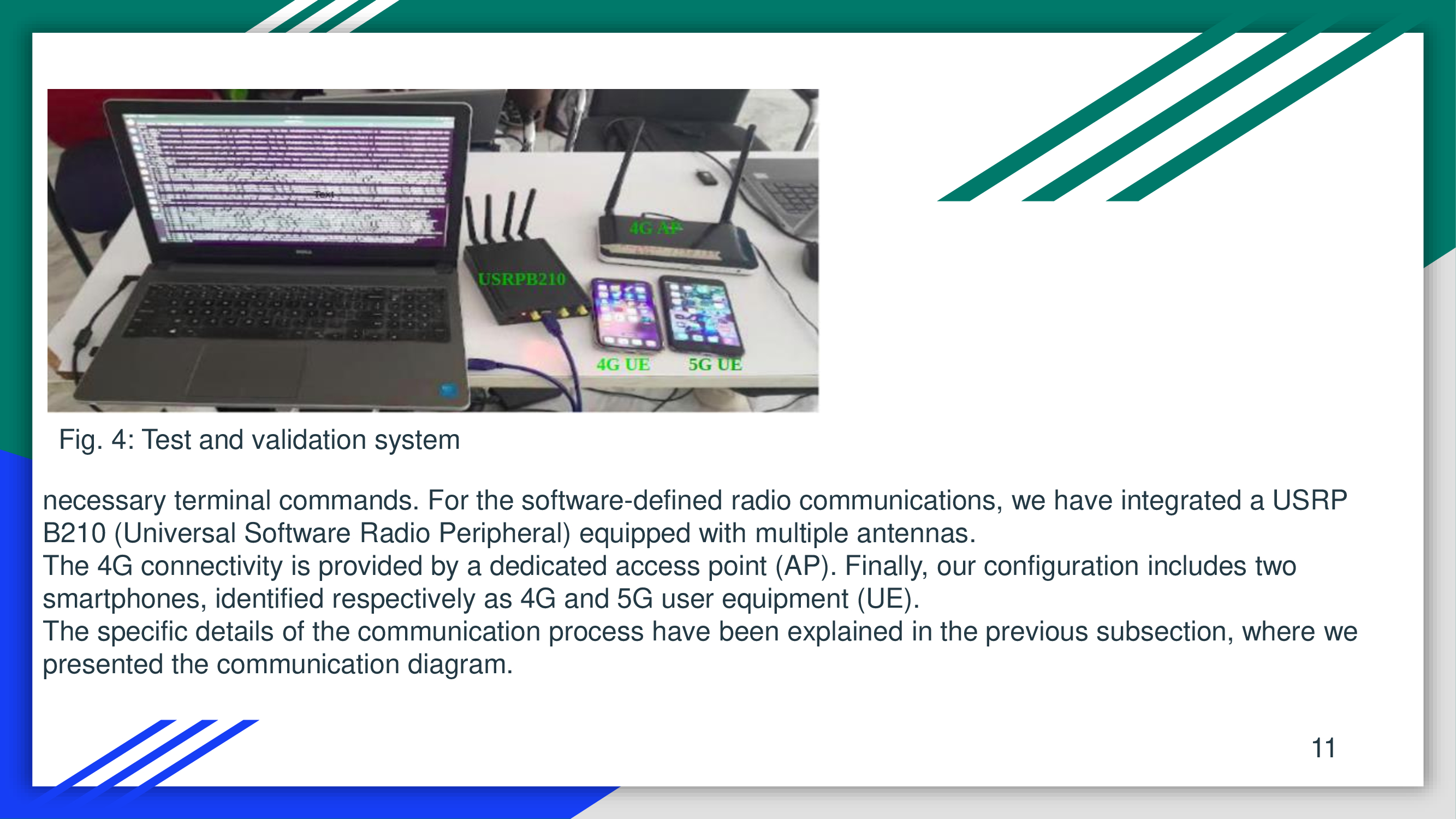 |
Necessary terminal commands. For the software-defined radio communications, we have integrated a USRP B210 (Universal Software Radio Peripheral) equipped with multiple antennas.
The 4G connectivity is provided by a dedicated access point (AP). Finally, our configuration includes two smartphones, identified respectively as 4G and 5G user equipment (UE).
The specific details of the communication process have been explained in the previous subsection, where we presented the communication diagram.
|
| ICACT20250024 Slide.17
[Big Slide]
|
Chrome Click!! |
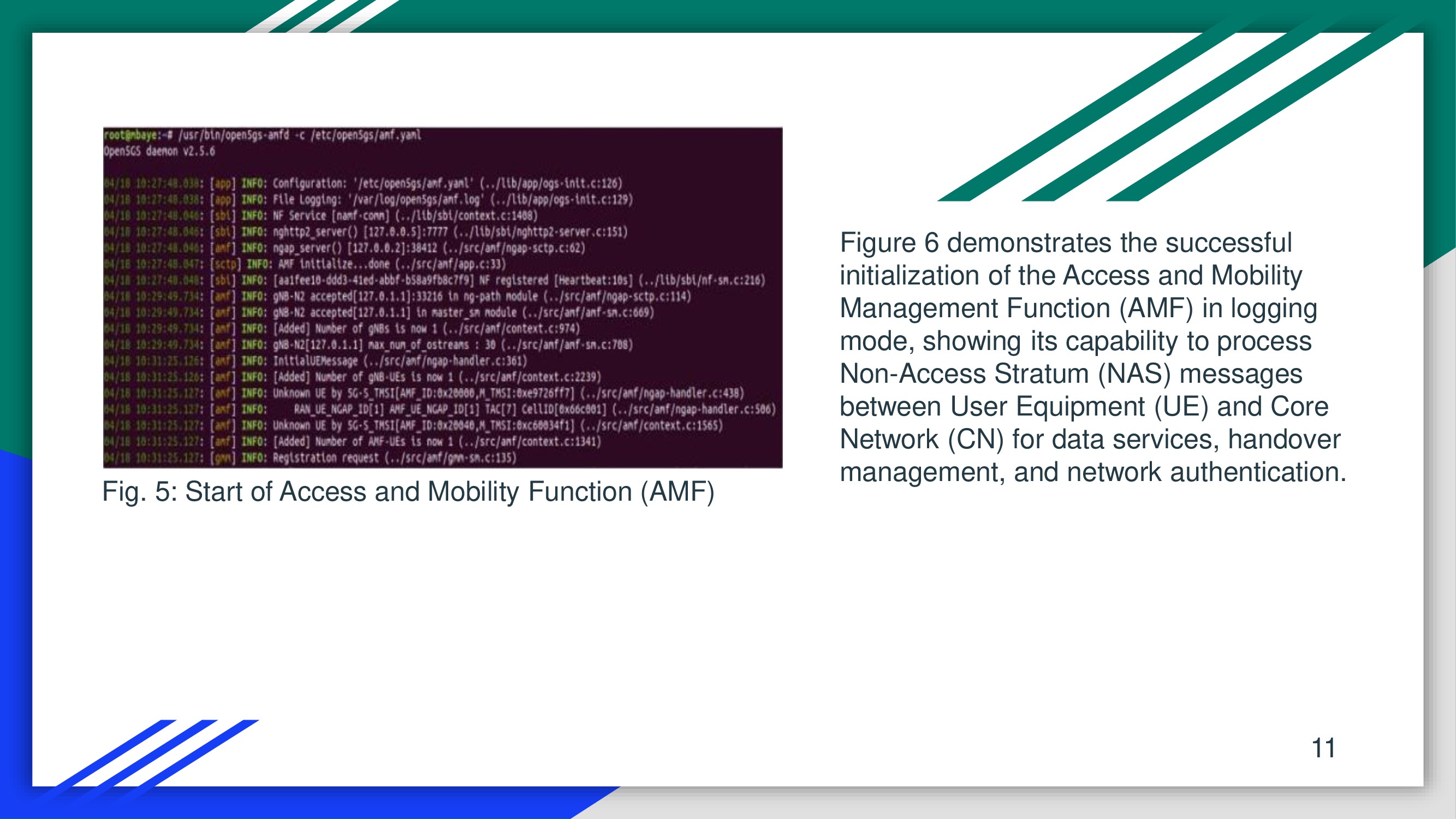 |
Figure 6 demonstrates the successful initialization of the Access and Mobility Management Function (AMF) in logging
mode, showing its capability to process Non-Access Stratum (NAS) messages between User Equipment (UE) and Core Network (CN) for data services, handover management, and network authentication |
| ICACT20250024 Slide.19
[Big Slide]
|
Chrome Click!! |
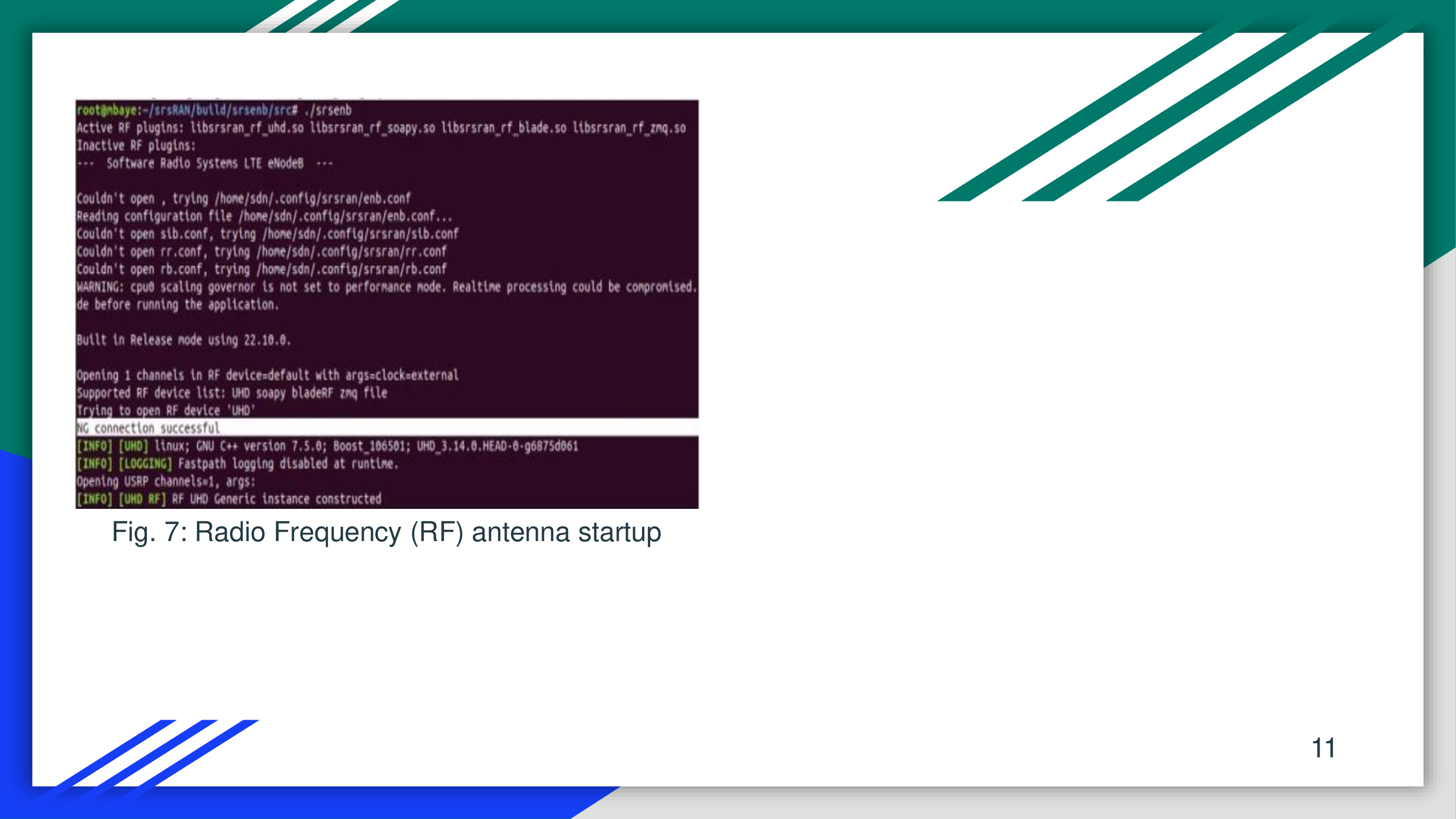 |
Fig. 7: Radio Frequency (RF) antenna startup
|
| ICACT20250024 Slide.20
[Big Slide]
|
Chrome Click!! |
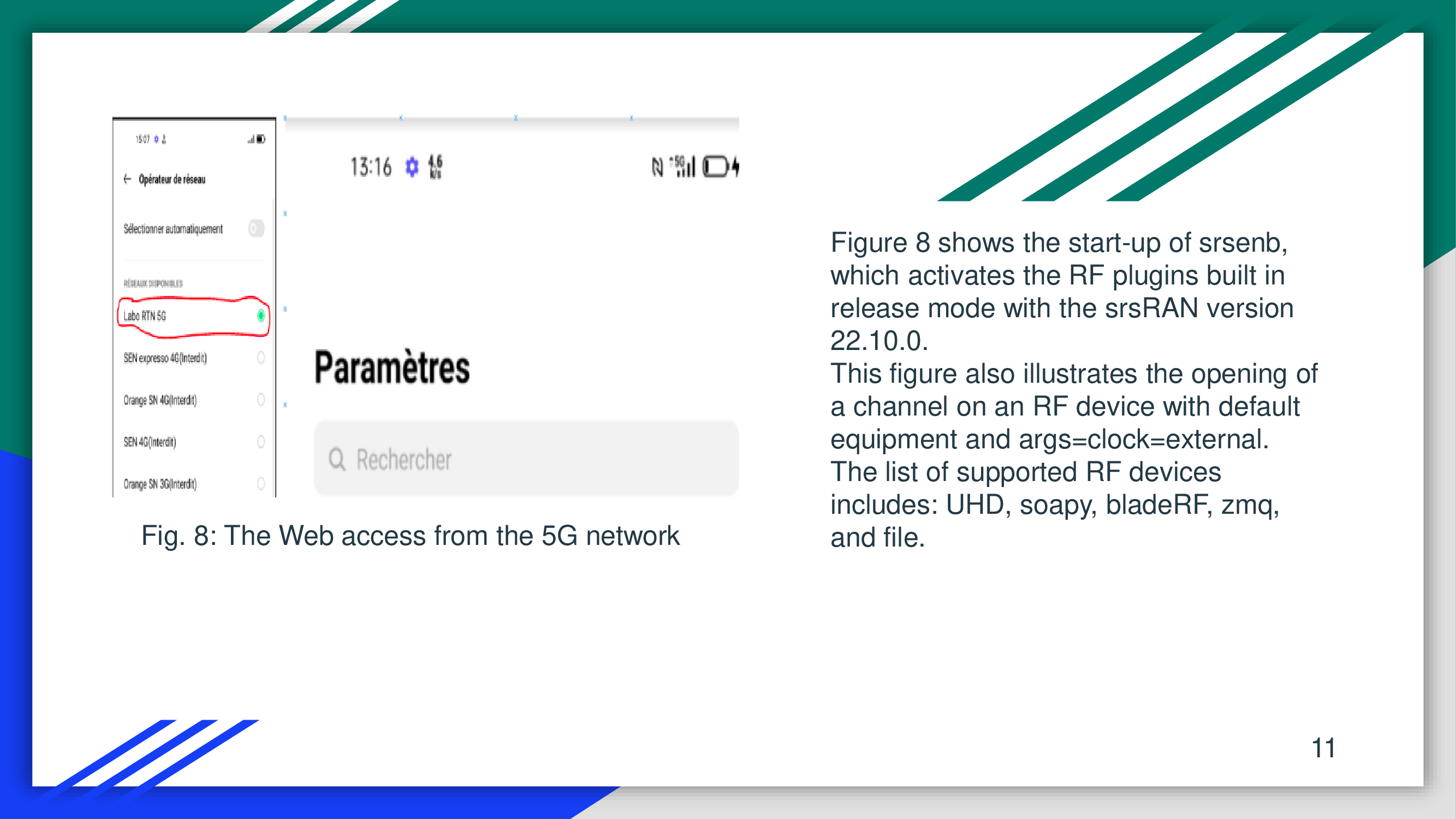 |
Figure 8 shows the start-up of srsenb, which activates the RF plugins built in release mode with the srsRAN version 22.10.0.
This figure also illustrates the opening of a channel on an RF device with default equipment and args=clock=external. The list of supported RF devices includes: UHD, soapy, bladeRF, zmq, and file.
|
| ICACT20250024 Slide.21
[Big Slide]
|
Chrome Click!! |
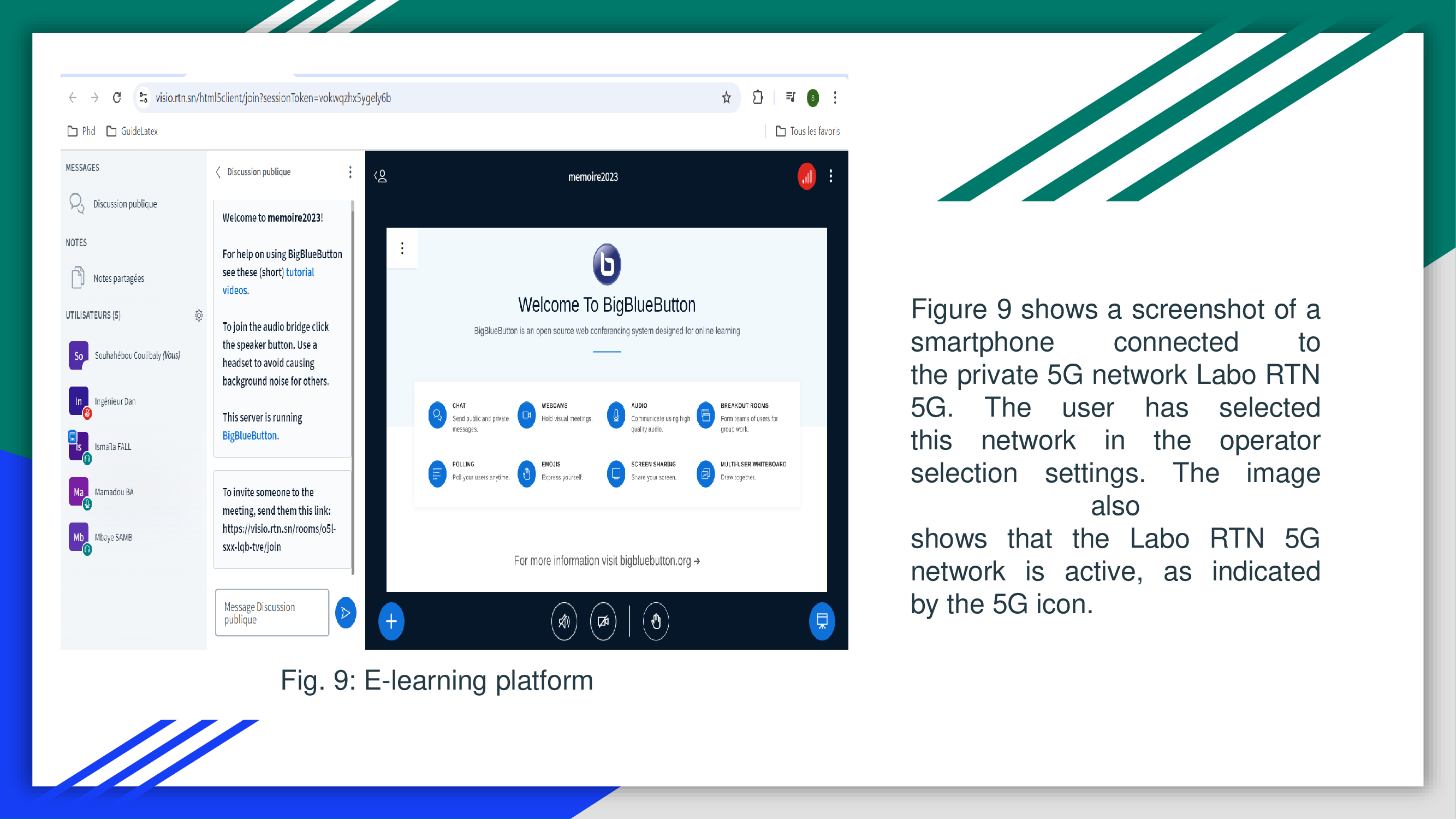 |
Figure 9 shows a screenshot of a smartphone connected to�the private 5G network Labo RTN 5G.
The user has selected�this network in the operator selection settings. The image also�shows that the Labo RTN 5G network is active, as indicated�by the 5G icon. |
| ICACT20250024 Slide.22
[Big Slide]
|
Chrome Click!! |
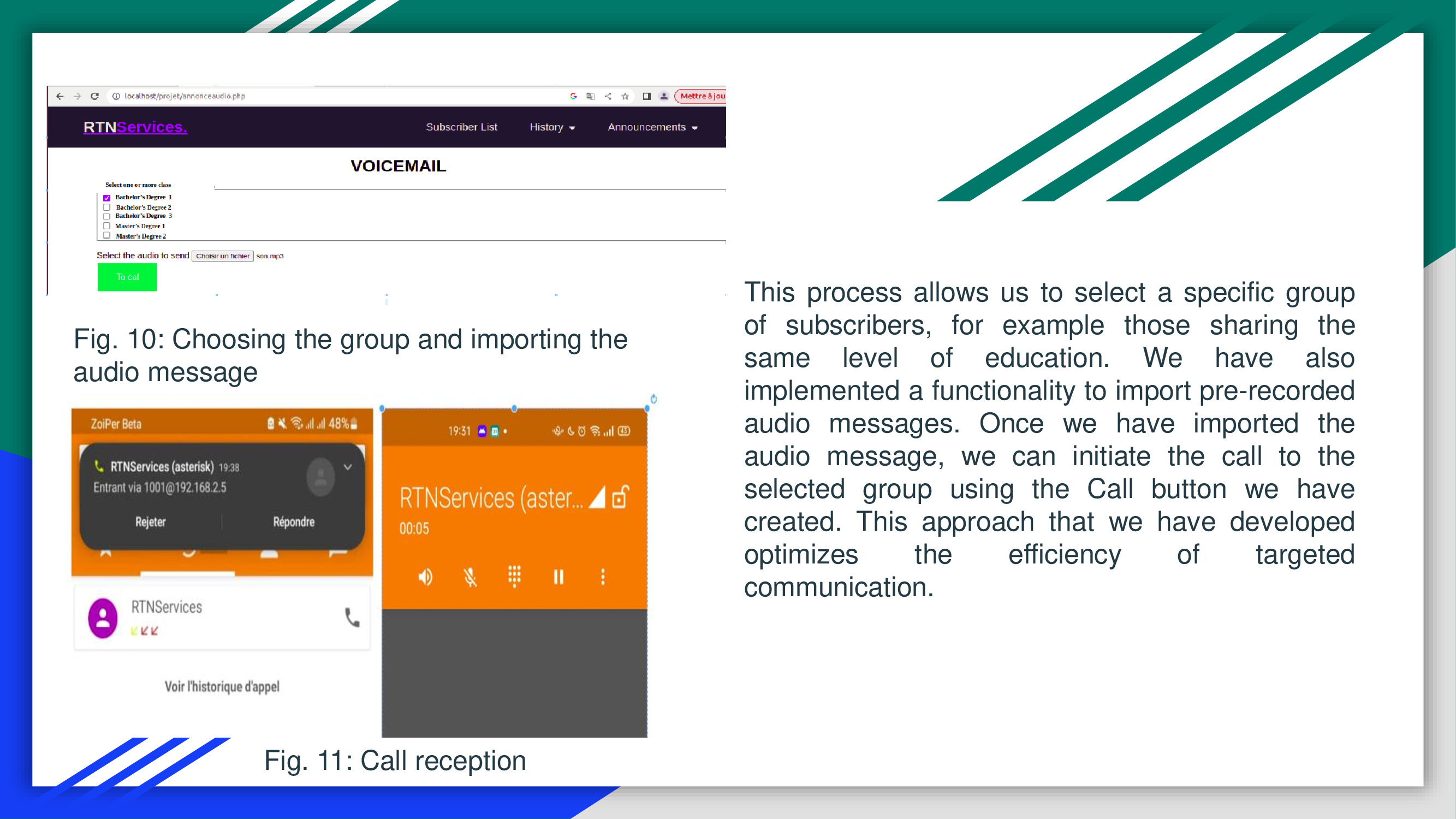 |
This process allows us to select a specific group of subscribers, for example those sharing the same level of education. We have also implemented a functionality to import pre-recorded audio messages. Once we have imported the audio message, we can initiate the call to the selected group using the Call button we have created. This approach that we have developed optimizes the efficiency of targeted communication.
|
| ICACT20250024 Slide.23
[Big Slide]
|
Chrome Click!! |
 |
Advantages:
lower deployment costs than conventional approaches,
Give remote access to education
Protect more education’s actors.
Provides a resilient solution to educational challenges;
Providing connectivity and educational services in underserved areas, with an architecture notable for its flexibility in vulnerable environments;
establishes strategies for reducing the digital divide and could serve as a model for other developing countries
|
| ICACT20250024 Slide.24
[Big Slide]
|
Chrome Click!! |
 |
Limitations :
address large-scale evaluation, educational integration, and long-term economic viability
Perspectives:
deeply explore regulatory implications, and our energy consumption analysis highlighted as crucial
examine large-scale deployment, data security, and long-term economic viability to strengthen our approach’s relevance for developing countries.
|
| ICACT20250024 Slide.25
[Big Slide]
|
Chrome Click!! |
 |
Thank you for your attention ! |















