 ICACT20250032 Slide.01
[Big Slide]
[YouTube] |
Chrome  Click!! |
 |
Hello, We are pleased to present our paper entitled 'FogHealth: Leveraging Fledge for Real-Time Urban Health Data Managements' at the 27th International Conference on Advanced Communication Technologies. This work is the fruit of a team composed of Mamadou BA, Ibrahima NGOM, Thierry KONDENGAR and Samuel OUYA. Mamadou BA will present the work. |
| ICACT20250032 Slide.02
[Big Slide]
|
Chrome Click!! |
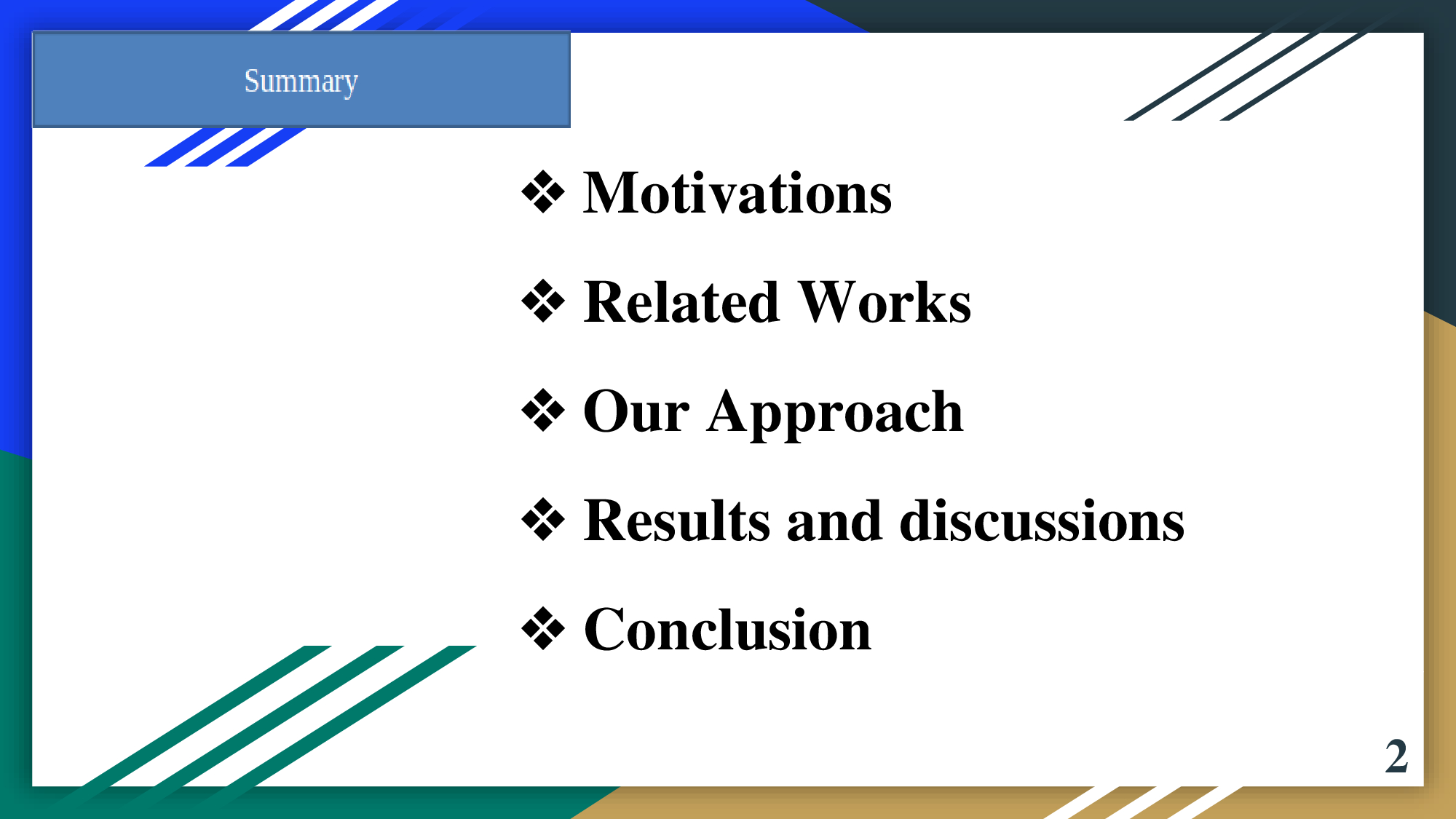 |
Our presentation will follow a logical structure, starting with Motivations, followed by Related Works, then Our Approach, before presenting Results and Discussions, and finally Conclusion. |
| ICACT20250032 Slide.03
[Big Slide]
|
Chrome Click!! |
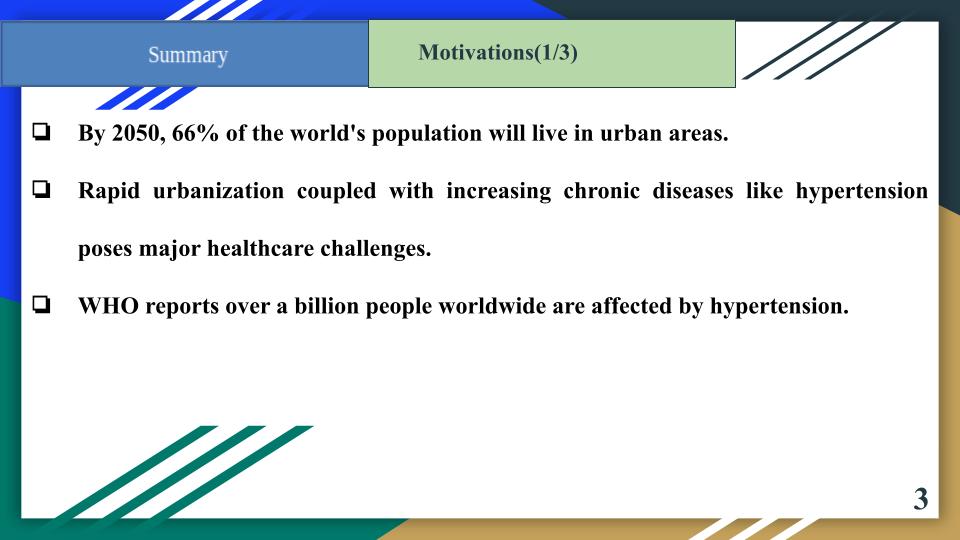 |
By 2050, 66% of the world's population will live in urban areas.
Rapid urbanization coupled with increasing chronic diseases like hypertension poses major healthcare challenges.
WHO reports over a billion people worldwide are affected by hypertension.
|
| ICACT20250032 Slide.04
[Big Slide]
|
Chrome Click!! |
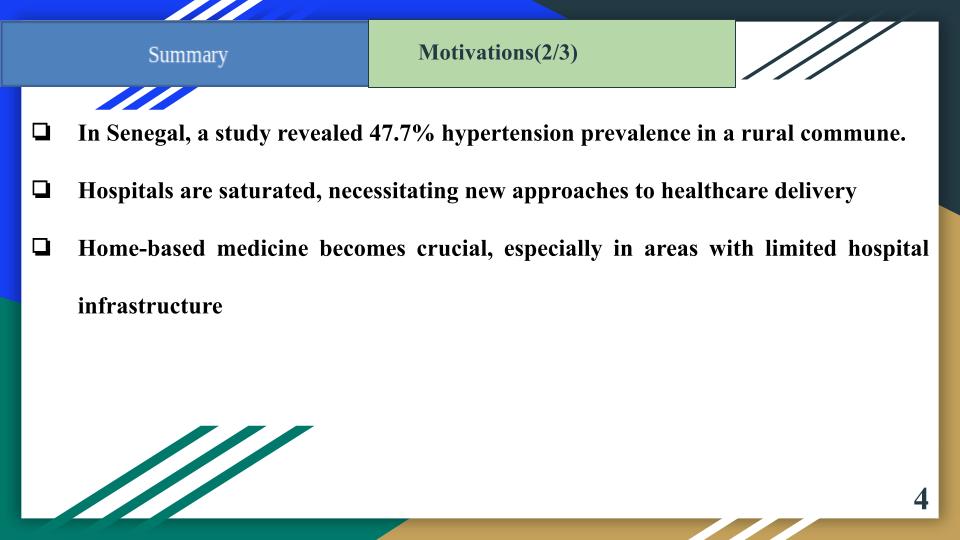 |
In Senegal, a study revealed 47.7% hypertension prevalence in a rural commune.
Hospitals are saturated, necessitating new approaches to healthcare delivery
Home-based medicine becomes crucial, especially in areas with limited hospital infrastructure |
| ICACT20250032 Slide.05
[Big Slide]
|
Chrome Click!! |
 |
How can Fog Computing technologies (and in particular the Fledge platform) be used to improve the collection, processing and security of health data in real time, particularly in the context of urban healthcare and the monitoring of chronic diseases?
|
| ICACT20250032 Slide.06
[Big Slide]
|
Chrome Click!! |
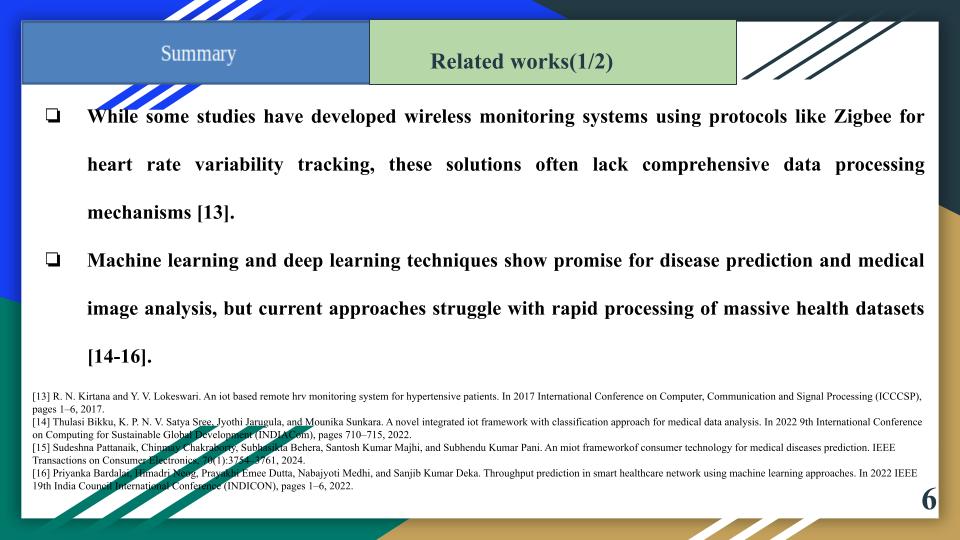 |
While prior research has explored wireless monitoring systems for tracking heart rate variability (HRV) using protocols like Zigbee—a low-power, short-range communication technology—these systems often fall short in integrating robust data processing frameworks. For instance, many existing solutions focus primarily on real-time data transmission but neglect advanced analytics, such as noise filtering, anomaly detection, or long-term trend analysis, limiting their clinical utility [13]. Concurrently, advancements in machine learning (ML) and deep learning (DL) have demonstrated significant potential in applications like disease prediction and medical image classification (e.g., identifying tumors in radiology scans). However, current methodologies face challenges in efficiently handling the volume, velocity, and complexity of modern healthcare datasets. Issues such as computational bottlenecks, slow inference times, and scalability constraints hinder their deployment in time-sensitive clinical environments, where rapid analysis of large-scale data (e.g., high-resolution imaging or continuous physiological signals) is critical [14–16] |
| ICACT20250032 Slide.07
[Big Slide]
|
Chrome Click!! |
 |
Existing security solutions like blockchain offer robust data protection, yet they impose significant computational overhead that may not be suitable for resource-constrained IoT devices [17,18].
|
| ICACT20250032 Slide.08
[Big Slide]
|
Chrome Click!! |
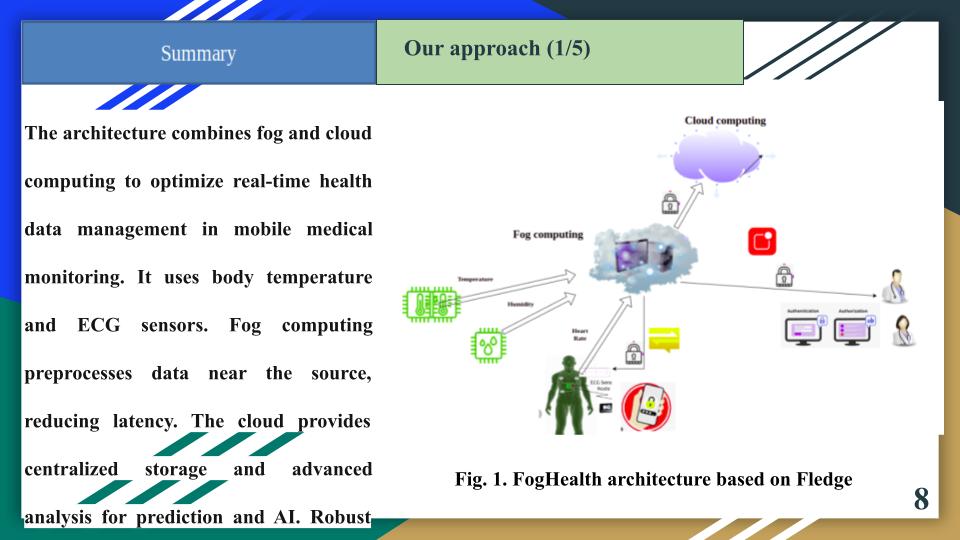 |
The architecture combines fog and cloud computing to optimize real-time health data management in mobile medical monitoring. It uses body temperature and ECG sensors. Fog computing preprocesses data near the source, reducing latency. The cloud provides centralized storage and advanced analysis for prediction and AI. Robust security protocols protect patient data. Healthcare professionals access data through secure interfaces.
|
| ICACT20250032 Slide.09
[Big Slide]
|
Chrome Click!! |
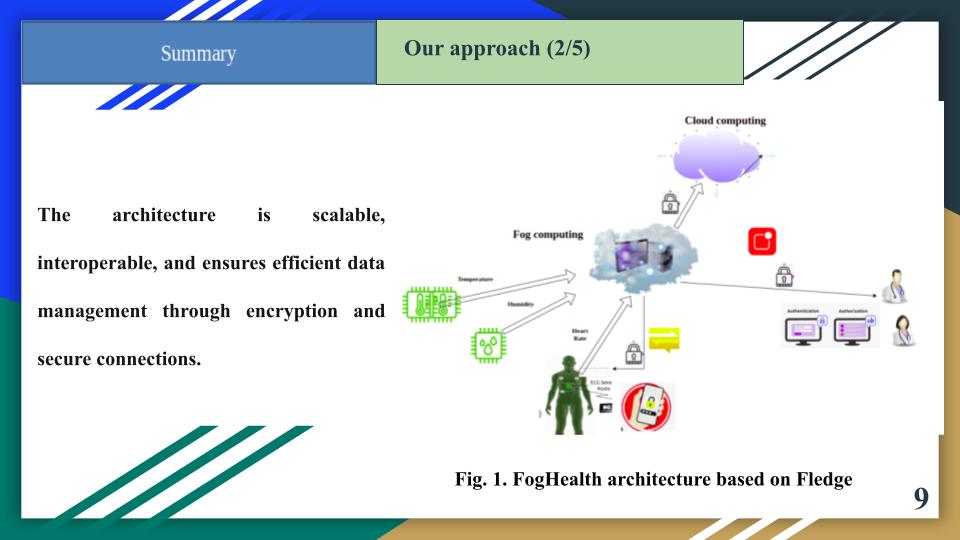 |
The architecture is scalable, interoperable, and ensures efficient data management through encryption and secure connections.
|
| ICACT20250032 Slide.10
[Big Slide]
|
Chrome Click!! |
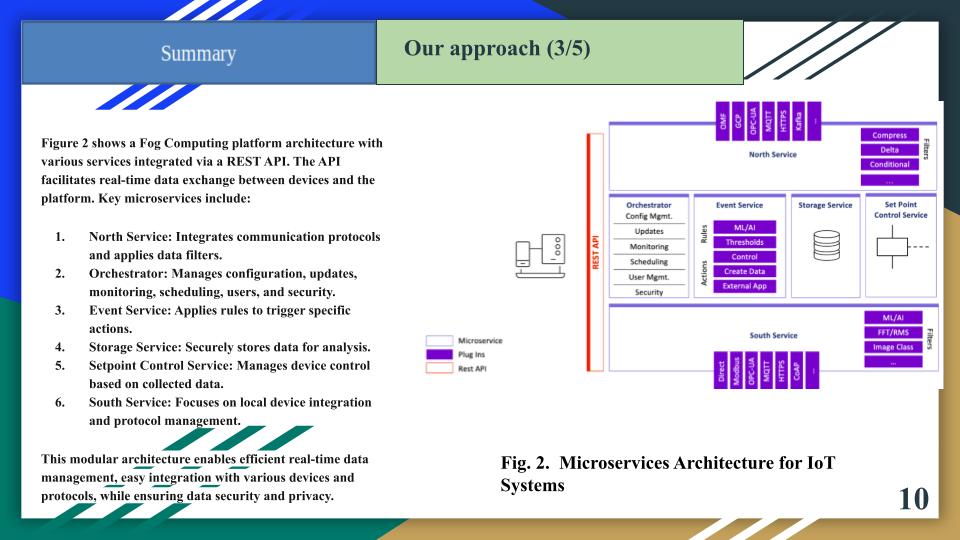 |
Figure 2 shows a Fog Computing platform architecture with various services integrated via a REST API. The API facilitates real-time data exchange between devices and the platform. Key microservices include:
North Service: Integrates communication protocols and applies data filters.
Orchestrator: Manages configuration, updates, monitoring, scheduling, users, and security.
Event Service: Applies rules to trigger specific actions.
Storage Service: Securely stores data for analysis.
Setpoint Control Service: Manages device control based on collected data.
South Service: Focuses on local device integration and protocol management.
This modular architecture enables efficient real-time data management, easy integration with various devices and protocols, while ensuring data security and privacy.
|
| ICACT20250032 Slide.11
[Big Slide]
|
Chrome Click!! |
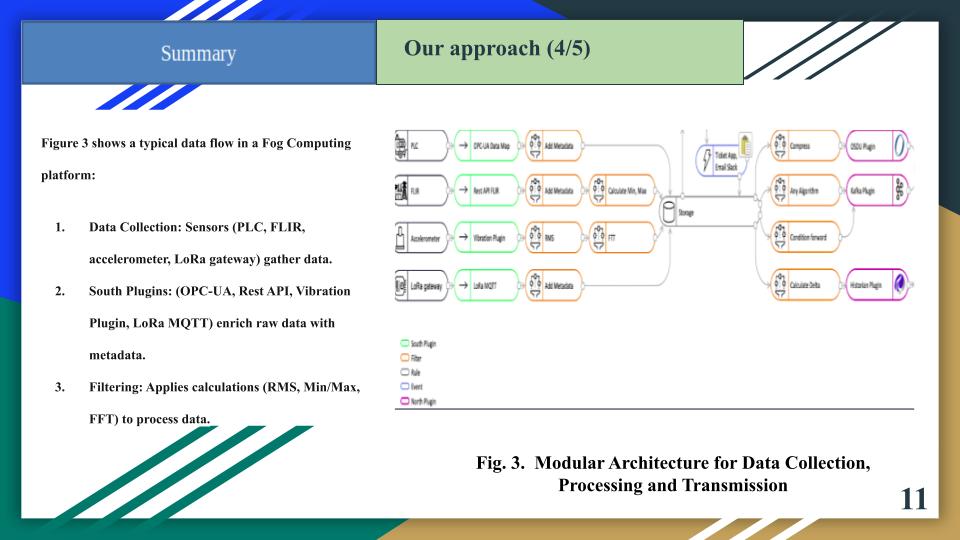 |
Figure 3 shows a typical data flow in a Fog Computing platform:
Data Collection: Sensors (PLC, FLIR, accelerometer, LoRa gateway) gather data.
South Plugins: (OPC-UA, Rest API, Vibration Plugin, LoRa MQTT) enrich raw data with metadata.
Filtering: Applies calculations (RMS, Min/Max, FFT) to process data.
|
| ICACT20250032 Slide.12
[Big Slide]
|
Chrome Click!! |
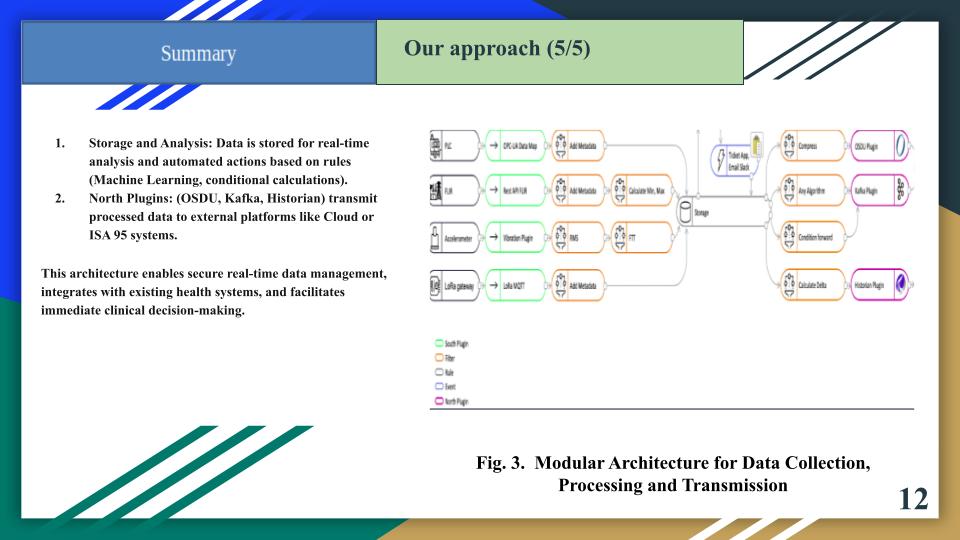 |
Storage and Analysis: Data is stored for real-time analysis and automated actions based on rules (Machine Learning, conditional calculations).
North Plugins: (OSDU, Kafka, Historian) transmit processed data to external platforms like Cloud or ISA 95 systems.
This architecture enables secure real-time data management, integrates with existing health systems, and facilitates immediate clinical decision-making.
|
| ICACT20250032 Slide.13
[Big Slide]
|
Chrome Click!! |
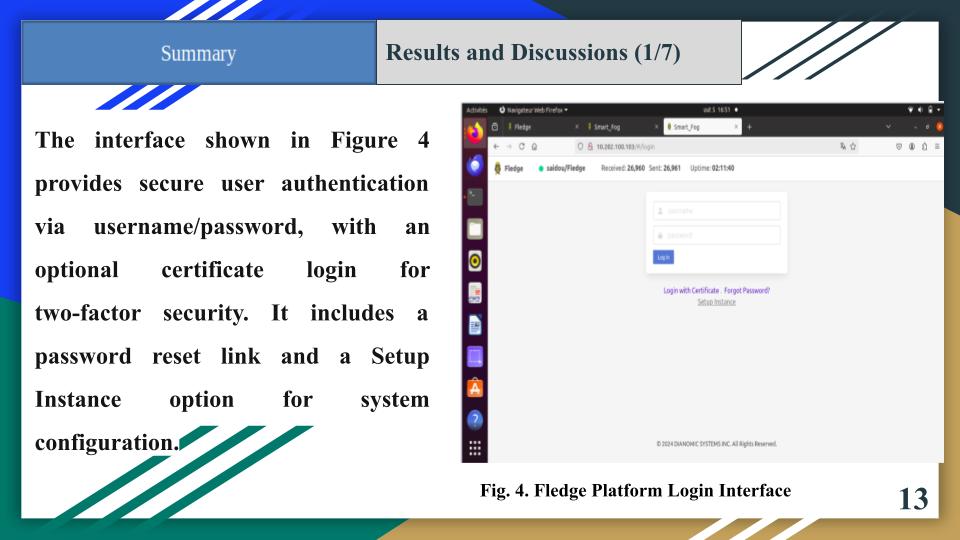 |
The interface shown in Figure 4 provides secure user authentication via username/password, with an optional certificate login for two-factor security. It includes a password reset link and a Setup Instance option for system configuration.
|
| ICACT20250032 Slide.14
[Big Slide]
|
Chrome Click!! |
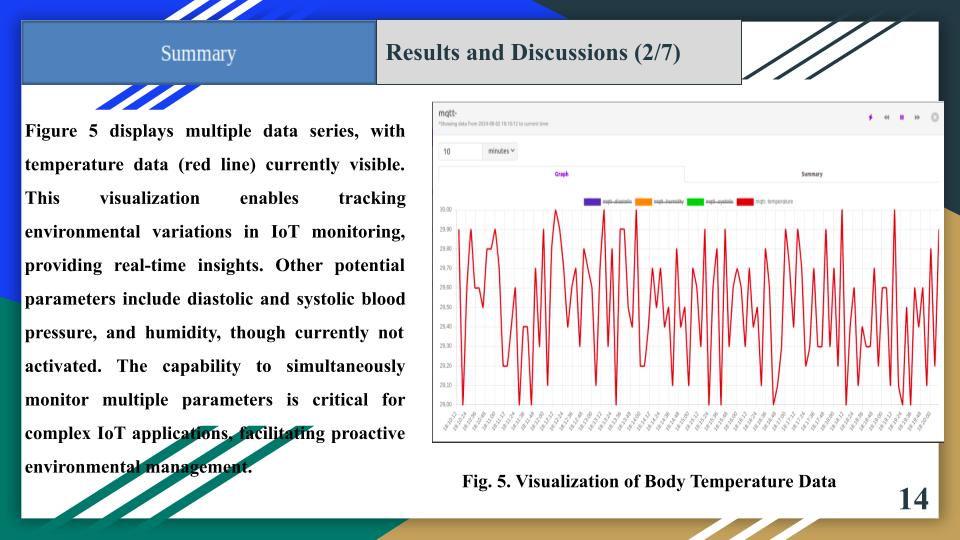 |
Figure 5 displays multiple data series, with temperature data (red line) currently visible. This visualization enables tracking environmental variations in IoT monitoring, providing real-time insights. Other potential parameters include diastolic and systolic blood pressure, and humidity, though currently not activated. The capability to simultaneously monitor multiple parameters is critical for complex IoT applications, facilitating proactive environmental management.
|
| ICACT20250032 Slide.15
[Big Slide]
|
Chrome Click!! |
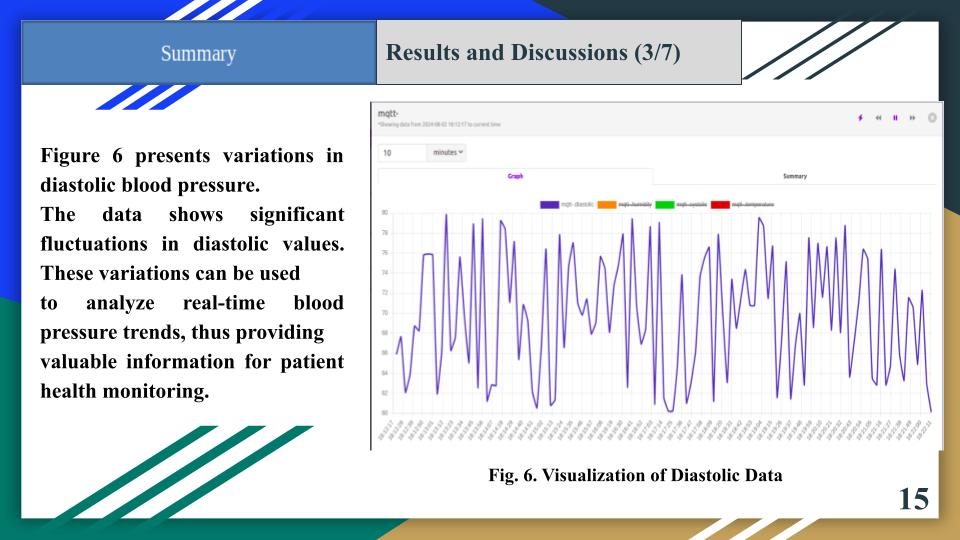 |
Figure 6 presents variations in diastolic blood pressure.
The data shows significant fluctuations in diastolic values. These variations can be used
to analyze real-time blood pressure trends, thus providing
valuable information for patient health monitoring.
|
| ICACT20250032 Slide.16
[Big Slide]
|
Chrome Click!! |
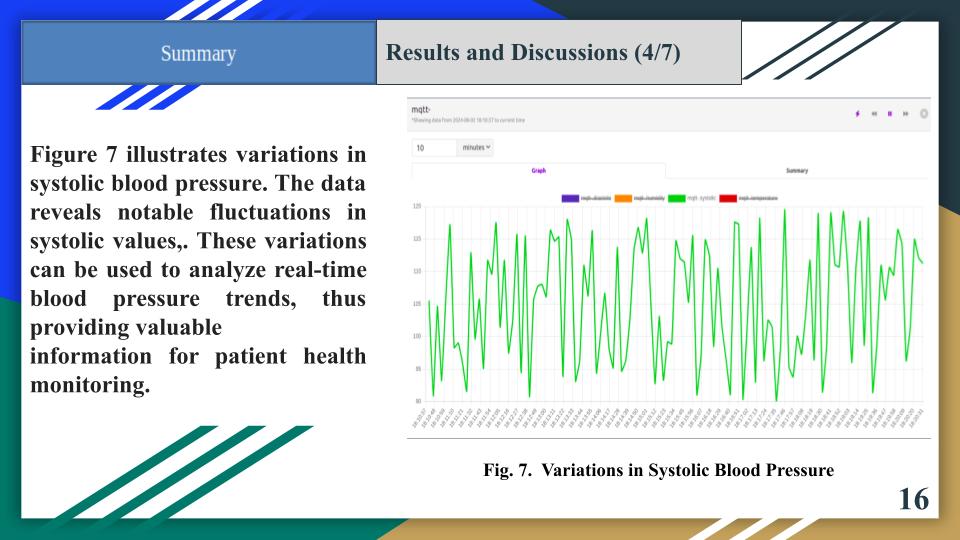 |
Figure 7 illustrates variations in systolic blood pressure. The data reveals notable fluctuations in systolic values,. These variations can be used to analyze real-time blood pressure trends, thus providing valuable
information for patient health monitoring.
|
| ICACT20250032 Slide.17
[Big Slide]
|
Chrome Click!! |
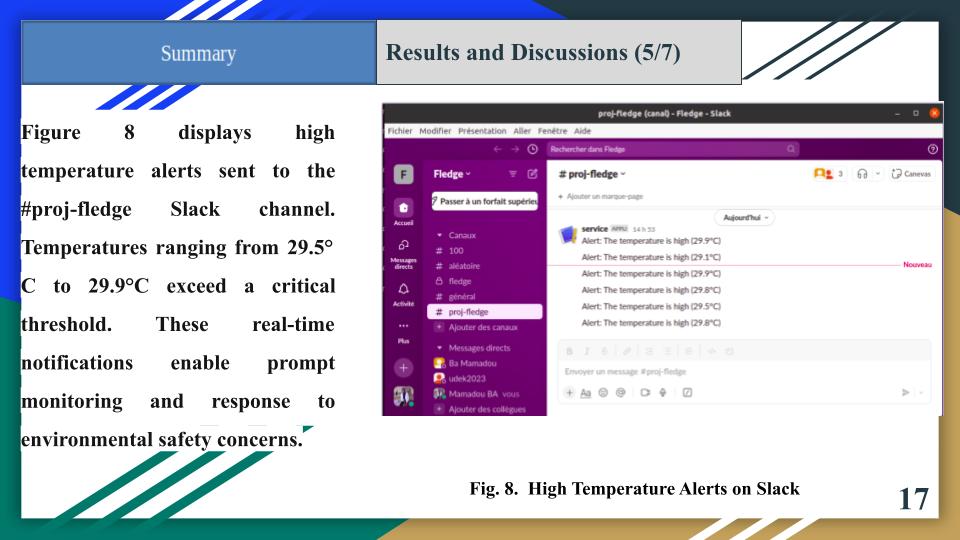 |
Figure 8 displays high temperature alerts sent to the #proj-fledge Slack channel. Temperatures ranging from 29.5°C to 29.9°C exceed a critical threshold. These real-time notifications enable prompt monitoring and response to environmental safety concerns.
|
| ICACT20250032 Slide.18
[Big Slide]
|
Chrome Click!! |
 |
Our Fledge-based health monitoring platform demonstrates significant advancements in urban healthcare data management compared to existing solutions like [13], [15], and [17].
Faster and more reliable real-time data collection, improving upon wireless monitoring systems' limitations.
|
| ICACT20250032 Slide.19
[Big Slide]
|
Chrome Click!! |
 |
Lower resource consumption compared to existing machine learning techniques
Robust security mechanisms adaptable to IoT devices
Flexible architecture supporting multiple sensors and protocols
|
| ICACT20250032 Slide.20
[Big Slide]
|
Chrome Click!! |
 |
The article highlights Fledge's strong potential as an innovative solution for real-time health data management in urban environments.
Integrating Fog Computing with Fledge's platform enhances medical data collection, processing, and monitoring capabilities in resource-constrained settings.
The system outperforms traditional IoT health monitoring approaches in data collection speed, security, and resource efficiency.
|
| ICACT20250032 Slide.21
[Big Slide]
|
Chrome Click!! |
 |
Though promising, the research needs further validation through longitudinal studies and expanded sample sizes.
Future research should explore advanced AI algorithm integration, extend Fledge's interoperability with existing health systems, and assess the long-term impact on urban healthcare delivery and patient outcomes.
|
| ICACT20250032 Slide.22
[Big Slide]
|
Chrome Click!! |
 |
Thank you for the opportunity to present my work at this conference. I very much appreciate the insightful questions and constructive comments, which will greatly contribute to my research. |















