Now 5753 visitors
Today:0 Yesterday:0
Total: 148520
212S 50P 4R
2026-10-20, Week 43 |
| Member Login |
| TACT Journal Homepage |
| Call for Paper |
| Committee |
| Find My Paper |
| Author Homepage |
| Statistics & History |
| Welcome Message |
| Paper Procedure |
| FAQ |
| Paper Archives |
| Outstanding Papers |
| Author Homepage |
| - Paper Procedure |
| - Journal Procedure |
| - Presentation Tips |
|
| Program & Proceedings |
| Program with Papers |
| Plenary Session |
| Tutorial Session |
|
| Presentation Platform |
| Hotel & Travel Info |
| About Korea |
| Accommodation |
| Transportation |
| VISA |
| Other Infomation |
|
| Photo Gallery |
| Scheduler Login |
| Seminar |
| Archives Login |
|
| Sponsors |

|

|

|

|

|

|

|

|

|

|
|
|
|
|
 ICACT20250047 Slide.01
[Big Slide] |
Chrome  Click!! |
 |
Hello, everyone. I am Jang Jeong-hyun, a research professor at Kyonggi University.
It is an honor to present today. |
| ICACT20250047 Slide.02
[Big Slide]
|
Chrome Click!! |
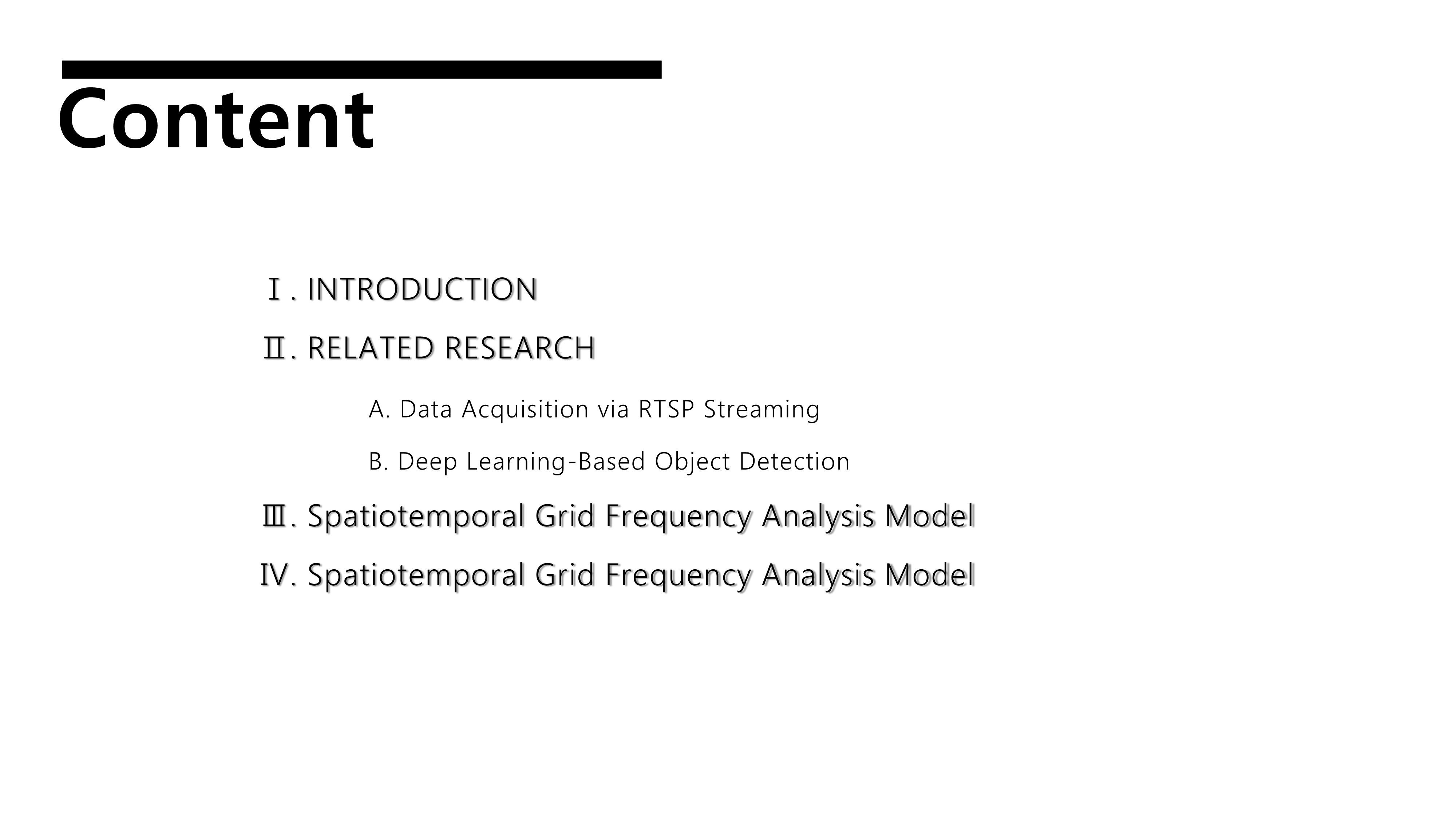 |
I will proceed with today's presentation in the following order:
Ⅰ. Introduction
Ⅱ. Related Research
A. Data Acquisition via RTSP Streaming
B. Deep Learning-Based Object Detection
Ⅲ. Spatiotemporal Grid Frequency Analysis Model
Ⅳ. Spatiotemporal Grid Frequency Analysis Model |
| ICACT20250047 Slide.03
[Big Slide]
|
Chrome Click!! |
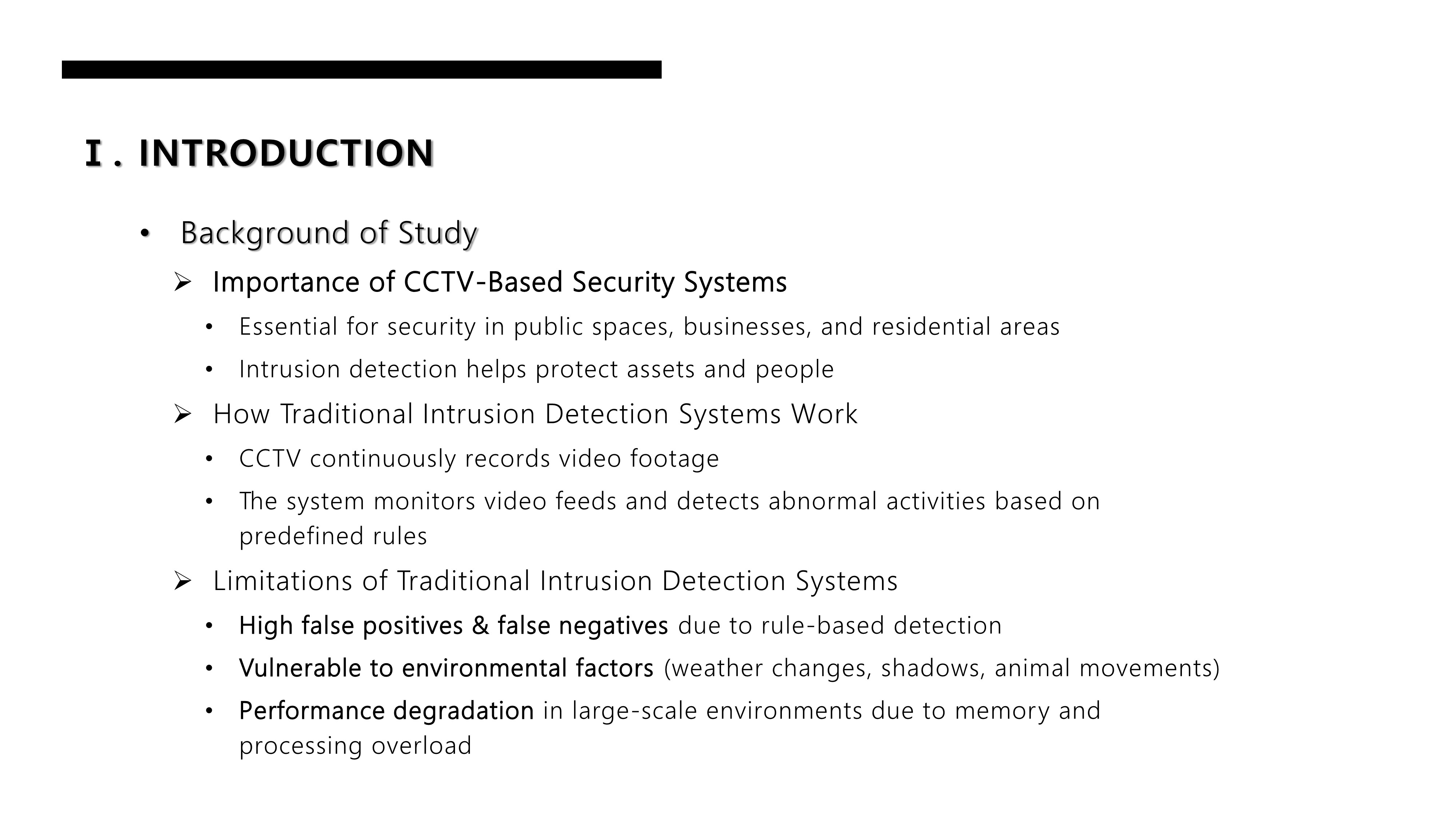 |
I will introduce our research on improving CCTV-based intrusion detection systems. CCTV plays a crucial role in protecting public spaces, businesses, and residential areas by continuously monitoring activities and detecting potential threats.
Security is a key concern in various sectors. CCTV surveillance is widely used to ensure safety by detecting unauthorized activities in real time. Intrusion detection helps protect both assets and individuals by providing timely alerts and enabling quick responses.
Traditional intrusion detection systems rely on CCTV footage, continuously monitoring and analyzing video feeds based on predefined rules. When an activity matches a programmed pattern, an alert is triggered. While this method provides basic security, it has notable limitations.
Despite their widespread use, rule-based detection systems have major challenges. They often suffer from high false positives and false negatives, leading to unreliable alerts. Additionally, environmental factors such as weather changes, shadows, or animal movements can cause misinterpretations. Finally, in large-scale environments, processing vast amounts of video data from multiple cameras can degrade system performance, making real-time monitoring inefficient.
To overcome these challenges, our research introduces an AI-driven intrusion detection model that improves accuracy and efficiency. In the following sections, I will explain our proposed approach in detail. |
| ICACT20250047 Slide.04
[Big Slide]
|
Chrome Click!! |
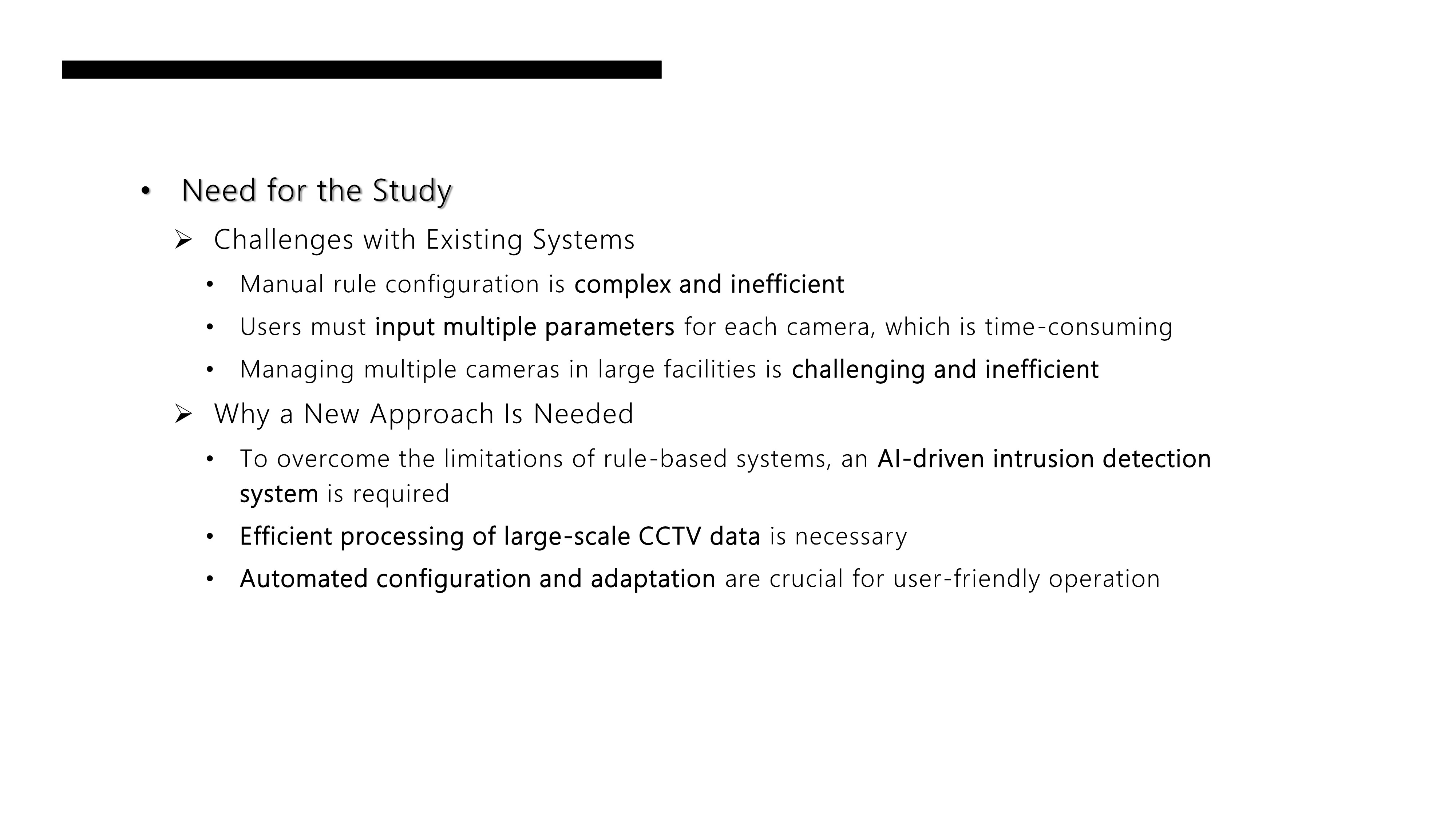 |
While traditional CCTV intrusion detection systems provide a basic level of security, they come with several limitations.
First, manual rule configuration is complex and inefficient, requiring significant effort from security teams.
"Second, users must input multiple parameters for each camera, making setup and maintenance time-consuming.
Lastly, in large-scale environments, managing multiple cameras simultaneously is challenging and inefficient, leading to operational bottlenecks.
To address these limitations, a more advanced solution is required.
An AI-driven intrusion detection system can automate rule configuration and improve detection accuracy.
Efficient processing of large-scale CCTV data is essential for real-time surveillance in complex environments.
Automated configuration and adaptive learning will make the system more user-friendly, eliminating the need for manual intervention while ensuring optimal security performance.
In the next section, I will introduce our proposed approach that leverages AI and deep learning for enhanced intrusion detection.
|
| ICACT20250047 Slide.05
[Big Slide]
|
Chrome Click!! |
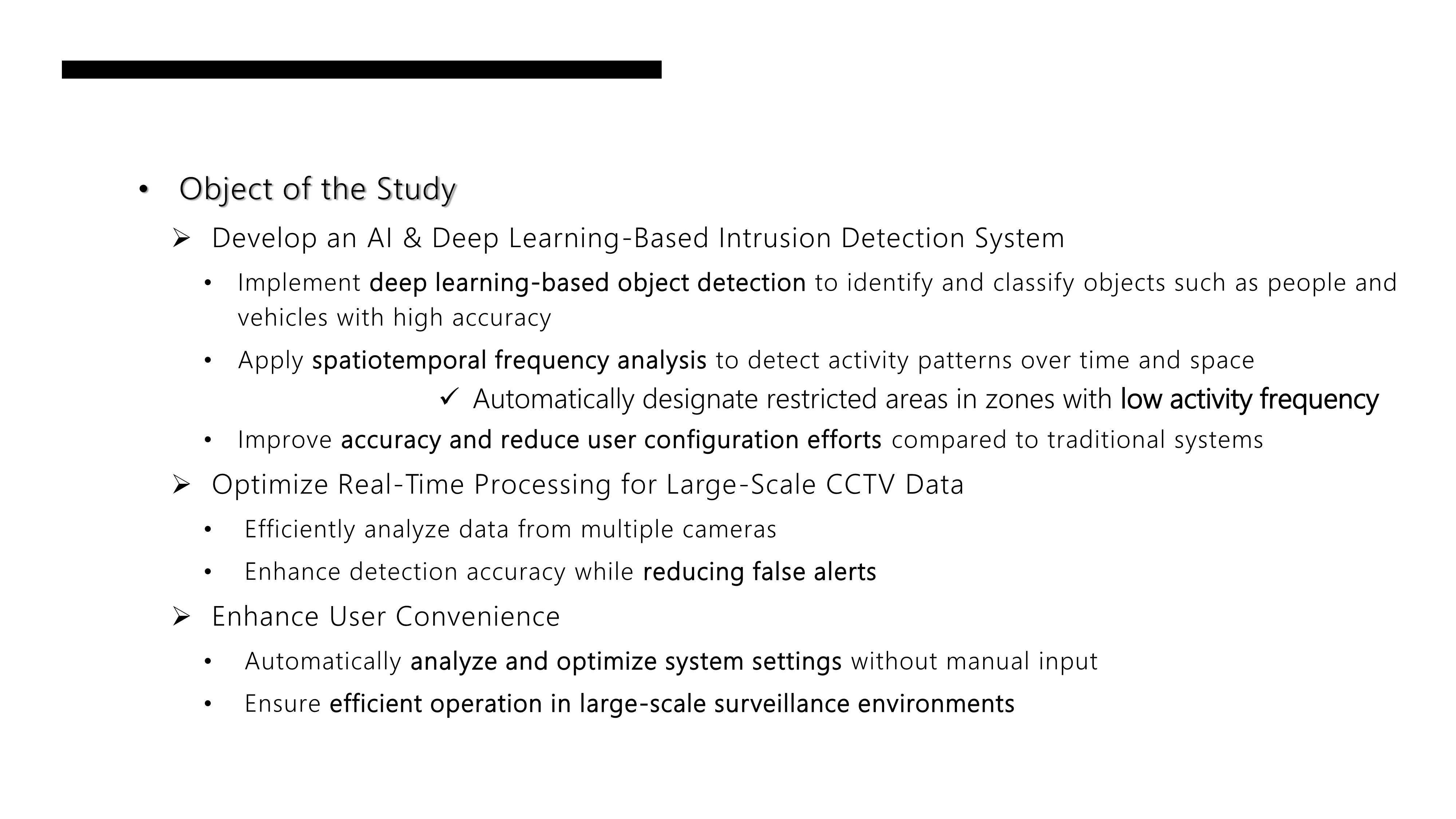 |
To address the challenges of traditional CCTV intrusion detection, our study proposes an advanced AI-driven approach.
We implement deep learning-based object detection to accurately identify and classify objects such as people and vehicles in surveillance footage.
Additionally, we apply spatiotemporal frequency analysis to detect activity patterns over time and space.
Restricted areas are automatically designated in zones with low activity frequency, reducing manual configuration efforts and improving accuracy.
In large-scale environments with multiple cameras, real-time processing efficiency is crucial.
Our system is designed to efficiently analyze data from multiple CCTV feeds simultaneously.
By improving processing speed, we enhance detection accuracy while minimizing false alerts.
Beyond accuracy, our system focuses on user-friendly operation.
The system automatically analyzes and optimizes settings without the need for manual input.
This ensures seamless operation in large-scale surveillance environments, making security monitoring more effective and less labor-intensive.
Through this approach, we aim to develop a more reliable, scalable, and adaptive intrusion detection system that meets the demands of modern surveillance environments.
|
| ICACT20250047 Slide.06
[Big Slide]
|
Chrome Click!! |
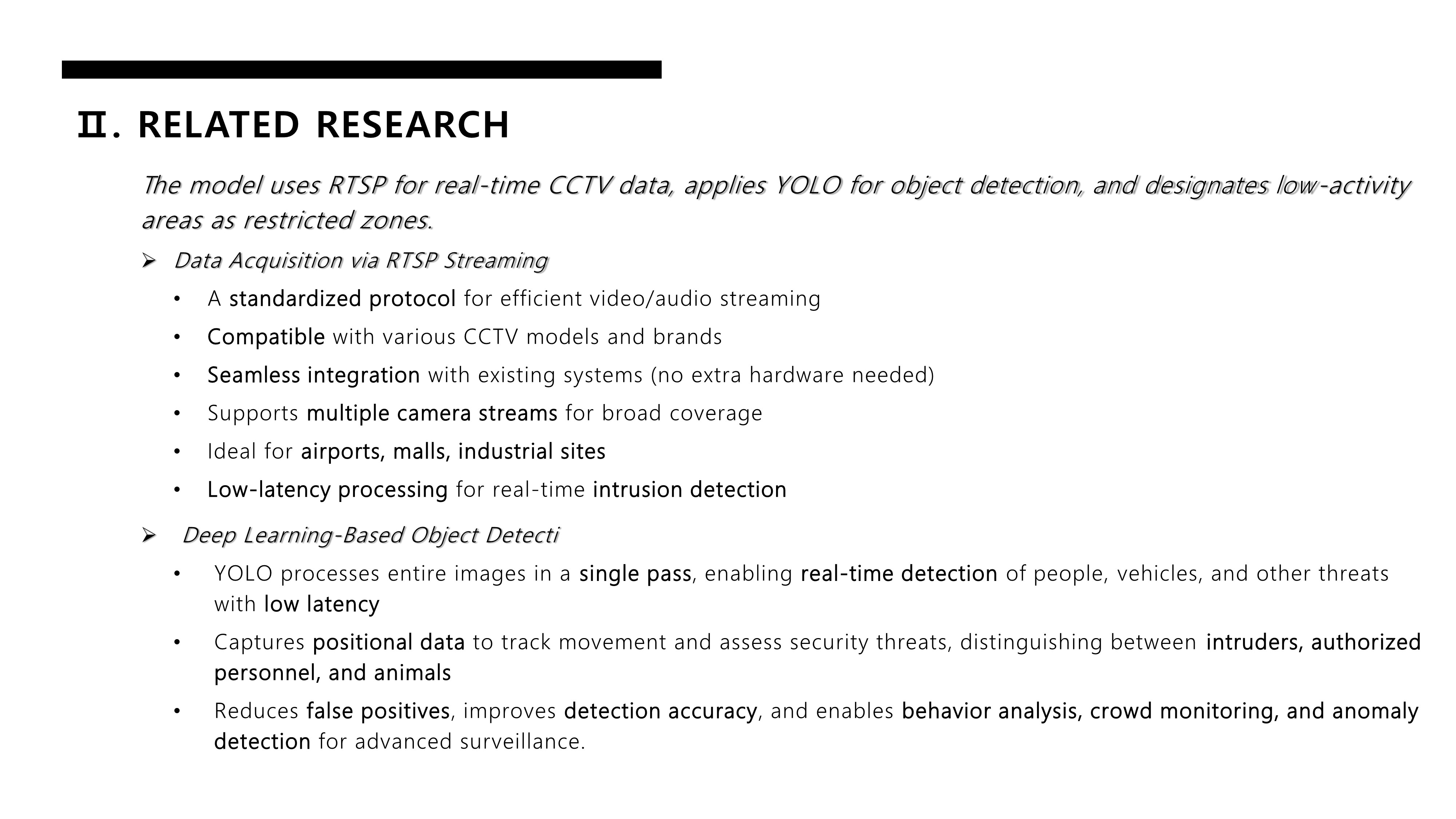 |
Our proposed model integrates real-time data acquisition with AI-based object detection to improve intrusion detection accuracy and efficiency.
The system uses RTSP for real-time CCTV data streaming, applies YOLO for object detection, and automatically designates low-activity areas as restricted zones.
First, we use the Real-Time Streaming Protocol (RTSP) to efficiently acquire video data from CCTV cameras.
RTSP is a standardized protocol designed for efficient video and audio streaming.
It is compatible with various CCTV models and brands, allowing seamless integration with existing security systems without additional hardware.
The system supports multiple camera streams, making it ideal for large-scale environments like airports, malls, and industrial sites.
Additionally, low-latency processing ensures real-time intrusion detection, which is critical for immediate threat response.
To enhance detection accuracy, we implement YOLO (You Only Look Once), a deep learning-based object detection algorithm.
Unlike traditional detection methods, YOLO processes entire images in a single pass, allowing real-time identification of objects such as people, vehicl.
Positional data is captured to track movement and assess security threats, distinguishing between intruders, authorized personnel, and animal.
This approach reduces false positives and improves detection accuracy while enabling behavior analysis, crowd monitoring, and anomaly detection for advanced surveillance capabilities.
By integrating real-time streaming with deep learning, our model enhances security operations by reducing manual effort and improving detection precision. Next, I will discuss how the system analyzes activity patterns over time and space to optimize surveillance further.
|
| ICACT20250047 Slide.07
[Big Slide]
|
Chrome Click!! |
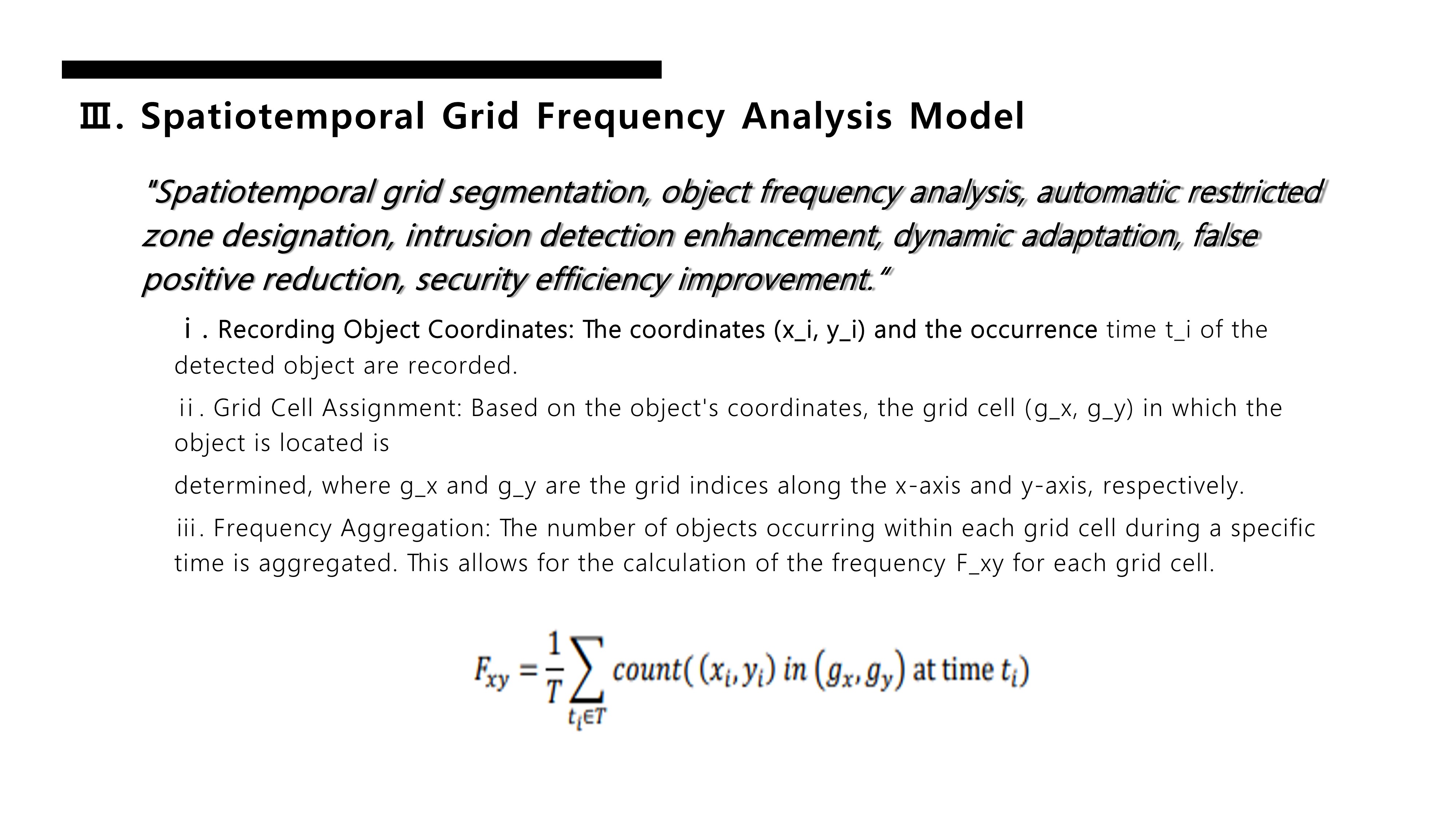 |
To enhance intrusion detection accuracy, our system utilizes a spatiotemporal grid segmentation approach. This method enables object frequency analysis and automatic restricted zone designation, improving security efficiency while reducing false positives.
The system first records the coordinates (xᵢ, yᵢ) and occurrence time (tᵢ) of each detected object.
This data allows us to track movement patterns over time, which is essential for detecting unusual activities.
Next, each object is mapped to a specific grid cell (gₓ, gᵧ) based on its location within the surveillance area.
These indices represent the object’s position along the x-axis and y-axis, helping segment the surveillance footage into manageable spatial regions.
The system then aggregates the number of objects detected within each grid cell over a specific time frame.
This allows us to calculate the frequency (Fₓᵧ) of object occurrences, which is crucial for identifying patterns of activity and potential security threats.
By continuously analyzing object frequency, our system can dynamically adapt to changes in the environment, improving intrusion detection, reducing false positives, and enhancing overall security efficiency.
Next, I will discuss how this model helps designate restricted zones automatically based on real-time surveillance data.
|
| ICACT20250047 Slide.08
[Big Slide]
|
Chrome Click!! |
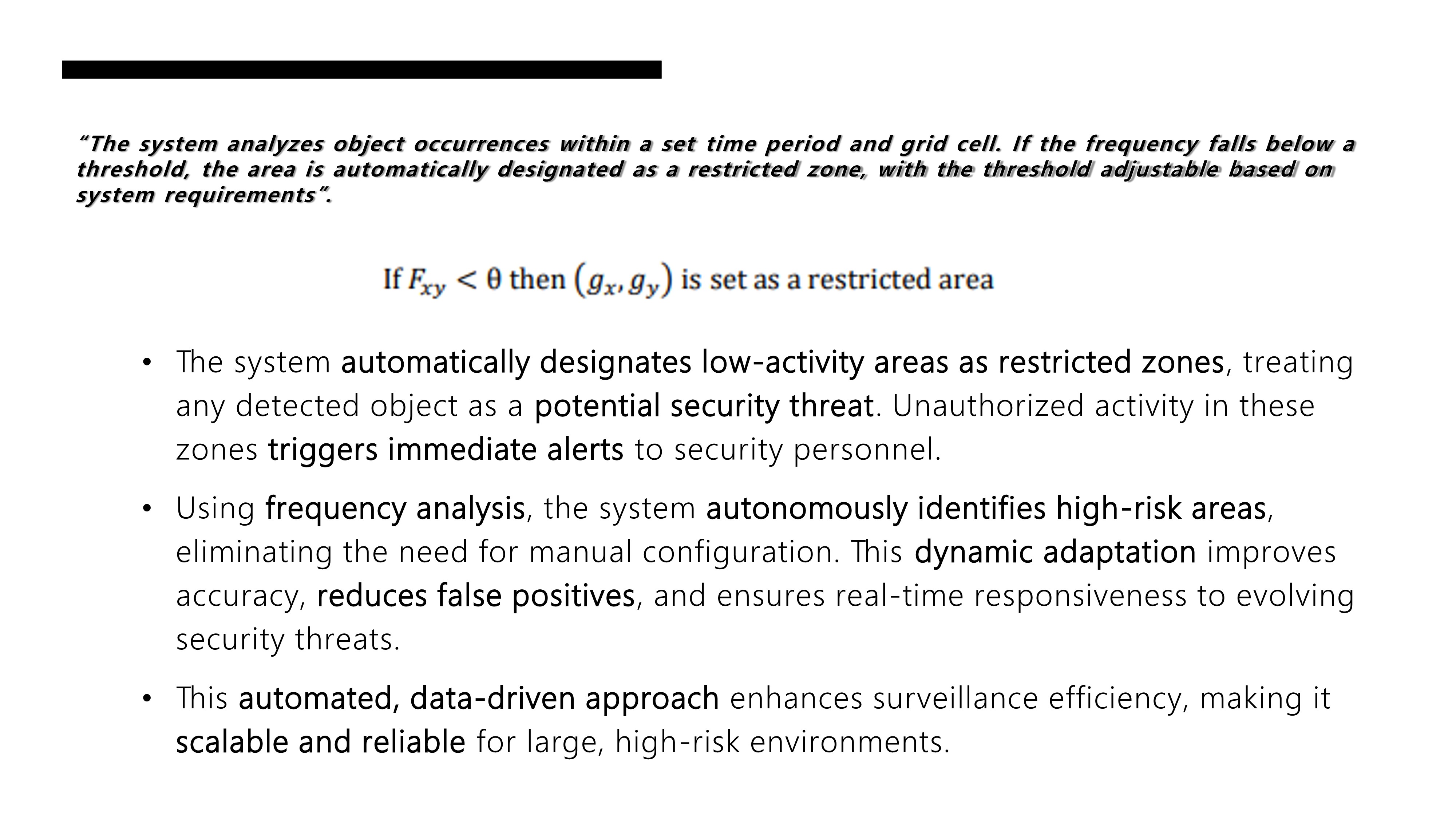 |
Our system enhances security by automatically designating low-activity areas as restricted zones. Any object detected in these areas is considered a potential security threat and triggers immediate alerts to security personnel.
The system continuously analyzes object occurrences within a set time period and grid cell.
If the frequency falls below a predefined threshold, the area is automatically marked as restricted.
This threshold can be adjusted based on system requirements, making it adaptable to different environments.
By leveraging frequency analysis, the system can autonomously identify high-risk areas without requiring manual configuration.
This dynamic adaptation allows the system to adjust in real-time, ensuring accurate and efficient surveillance.
Compared to traditional rule-based systems, this approach significantly reduces false positives, ensuring that alerts are only triggered by genuine security threats.
The system’s real-time responsiveness makes it effective in detecting evolving threats.
This automated, data-driven model enhances surveillance efficiency, making it scalable for large, high-risk environments such as airports, industrial sites, and city-wide surveillance networks.
|
| ICACT20250047 Slide.09
[Big Slide]
|
Chrome Click!! |
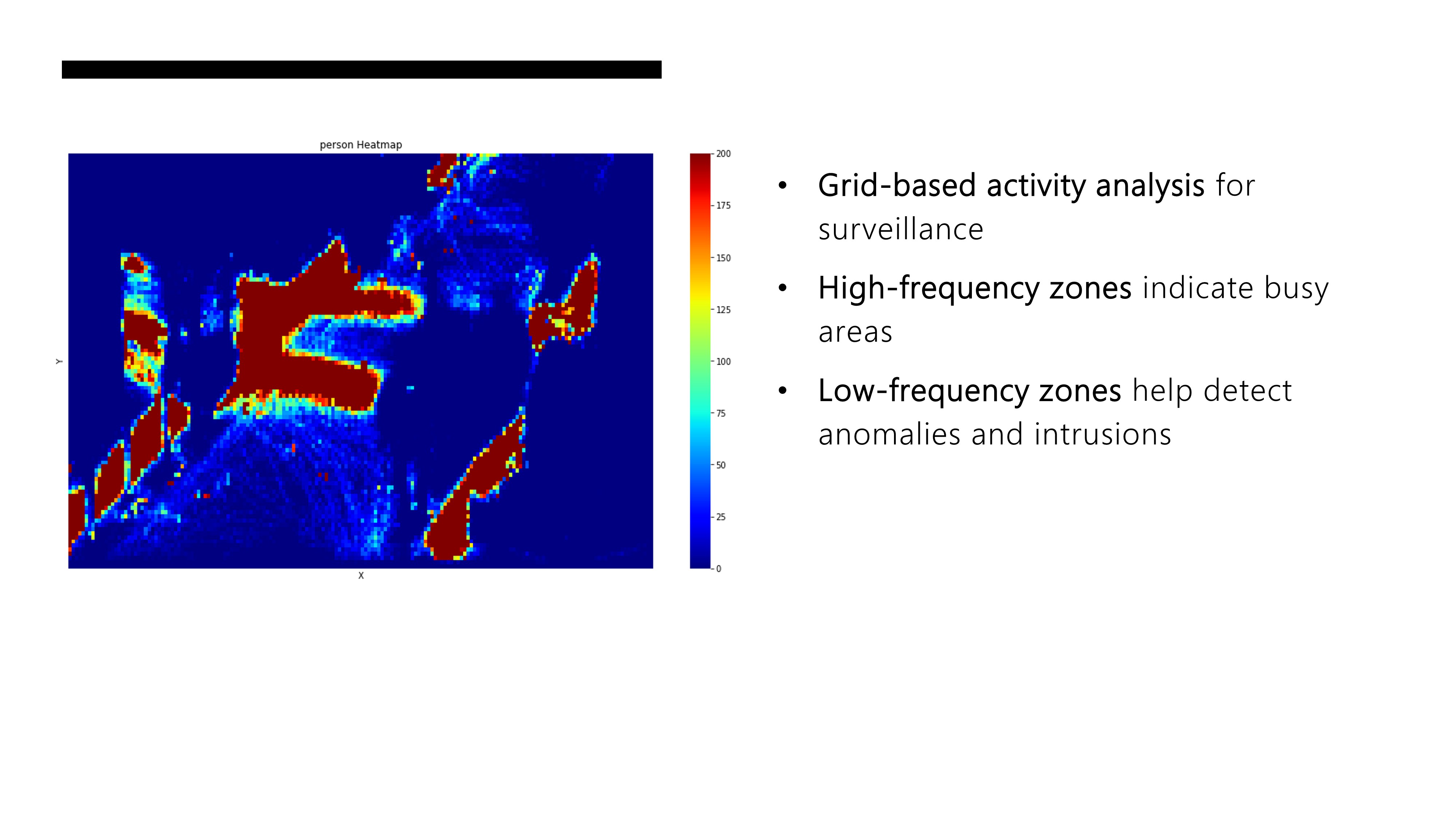 |
Our system utilizes a grid-based activity analysis method to enhance surveillance and intrusion detection.
By dividing the surveillance area into a grid structure, we can analyze activity levels in different sections.
This approach provides clear insights into movement patterns, helping security teams focus on critical areas.
Grid cells with high object frequency indicate areas with frequent activity, such as main entrances, roads, or crowded spaces.
These zones generally require standard monitoring but may also help in detecting unusual congestion or suspicious gatherings.
In contrast, low-frequency zones represent areas with minimal movement.
Unexpected activity in these zones can indicate potential intrusions, unauthorized access, or security breaches.
By automatically detecting anomalies, the system can trigger real-time alerts to security personnel.
This grid-based approach enhances surveillance efficiency by dynamically identifying and adapting to activity patterns. Next, I will explain how our system integrates AI-driven analytics to improve detection accuracy further.
|
| ICACT20250047 Slide.10
[Big Slide]
|
Chrome Click!! |
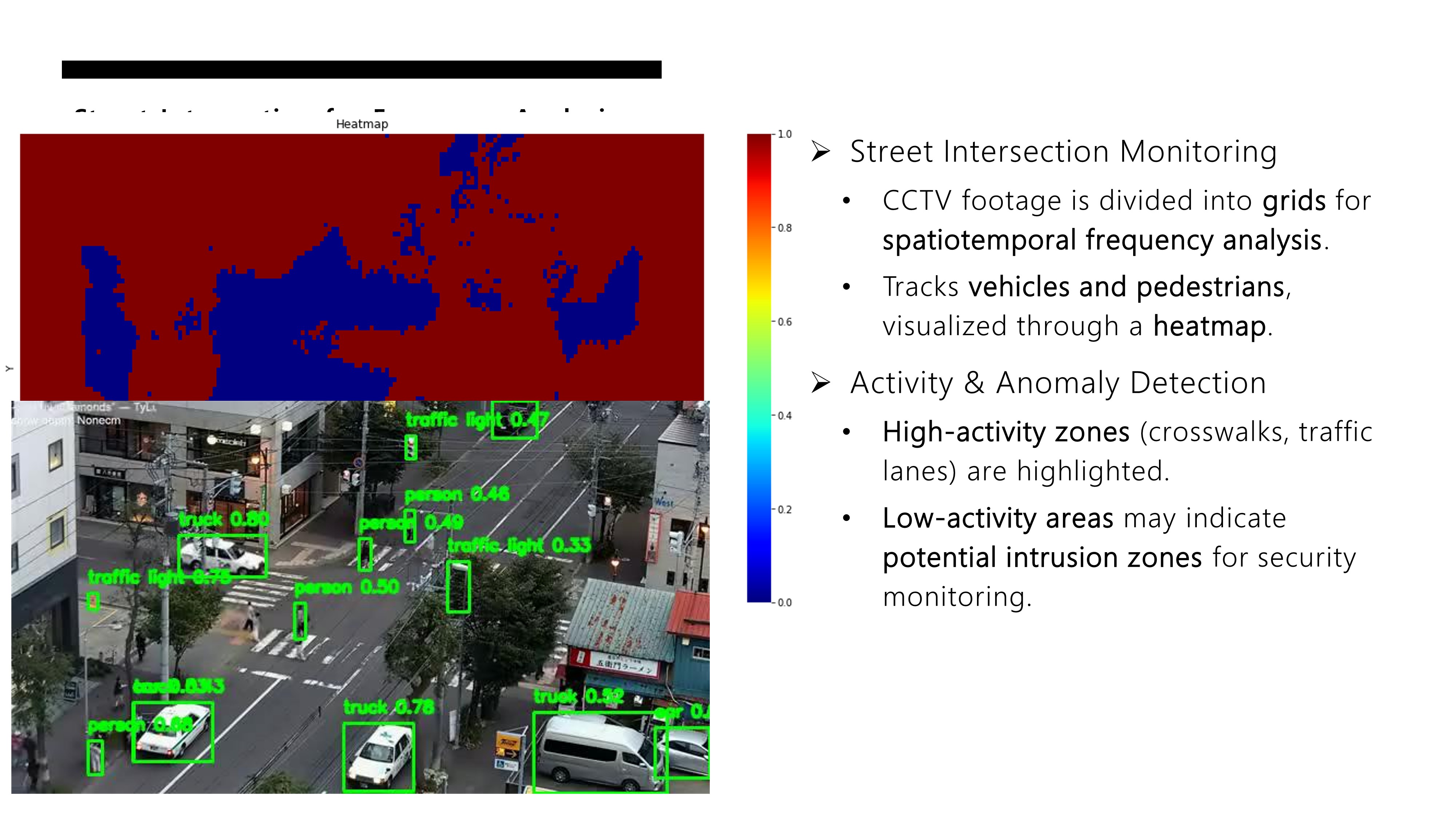 |
To enhance security and traffic monitoring, our system applies spatiotemporal frequency analysis to CCTV footage from street intersections.
The system segments video footage into grids, enabling precise spatiotemporal frequency analysis of traffic and pedestrian movement.
Each grid cell represents a specific area and time frame, allowing us to track changes in activity patterns dynamically.
The system continuously monitors and tracks vehicles and pedestrians, generating a heatmap visualization to highlight movement density.
This provides valuable insights into traffic congestion, pedestrian flow, and potential security threats.
Areas such as crosswalks and traffic lanes typically show high activity levels and are highlighted in the heatmap.
These zones are crucial for traffic control, pedestrian safety, and congestion management.
Conversely, low-activity areas may indicate potential intrusion zones, such as restricted areas or unexpected pedestrian movement in unauthorized zones.
By continuously analyzing these patterns, the system helps security personnel respond proactively to potential risks.
Through this advanced monitoring system, we can enhance urban safety by improving surveillance efficiency, detecting anomalies in real-time, and ensuring a proactive security approach. Next, I will explain how our system adapts to evolving environmental conditions.
|
| ICACT20250047 Slide.11
[Big Slide]
|
Chrome Click!! |
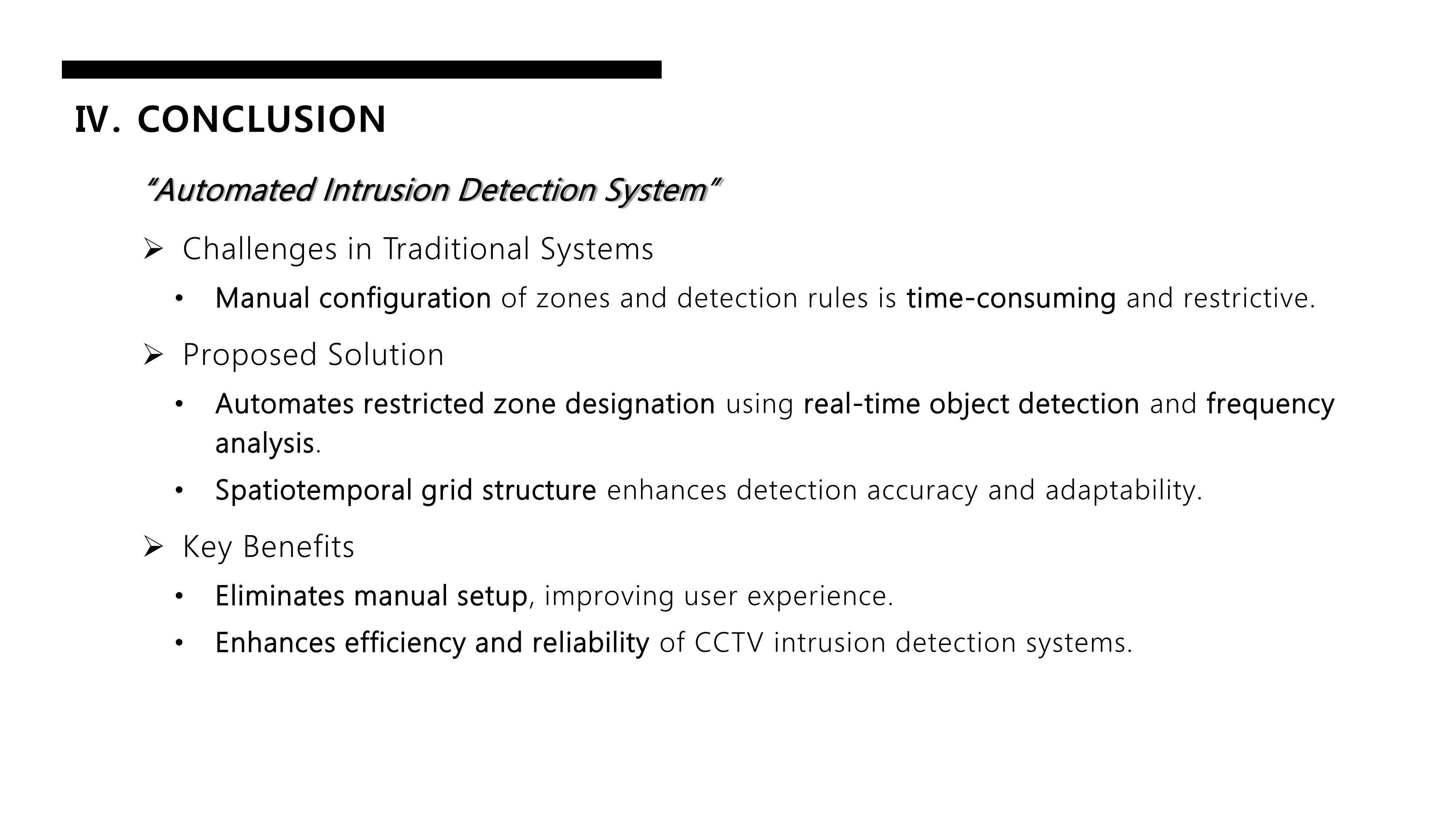 |
Traditional intrusion detection systems require manual configuration of zones and detection rules, which is time-consuming and restrictive.
Our approach automates restricted zone designation by integrating real-time object detection with frequency analysis.
Using a spatiotemporal grid structure, the system enhances detection accuracy and adapts dynamically to environmental changes.
Eliminates manual setup, improving user experience and ease of operation.
Enhances efficiency and reliability of CCTV-based intrusion detection, making security monitoring more effective.
With this automated, AI-driven approach, we provide a scalable, adaptable, and high-precision intrusion detection system. Thank you!
|
| ICACT20250047 Slide.12
[Big Slide]
|
Chrome Click!! |
 |
Thank you very much. |
| ICACT20250047 Slide.13
[Big Slide]
[YouTube] |
Chrome Click!! |
 |
Record video on youtube.
https://youtu.be/A4nQvX-s6BQ |
| |





