 ICACT20250193 Slide.01
[Big Slide]
[YouTube] |
Chrome  Click!! |
 |
Skin Cancer Detection Using Transfer Learning Models and an Ensemble Approach to Enhanced Diagnostic Accuracy.
BY Arif |
| ICACT20250193 Slide.02
[Big Slide]
|
Chrome Click!! |
 |
Content
Introduction
Methodology
Results
Conclusion
|
| ICACT20250193 Slide.03
[Big Slide]
|
Chrome Click!! |
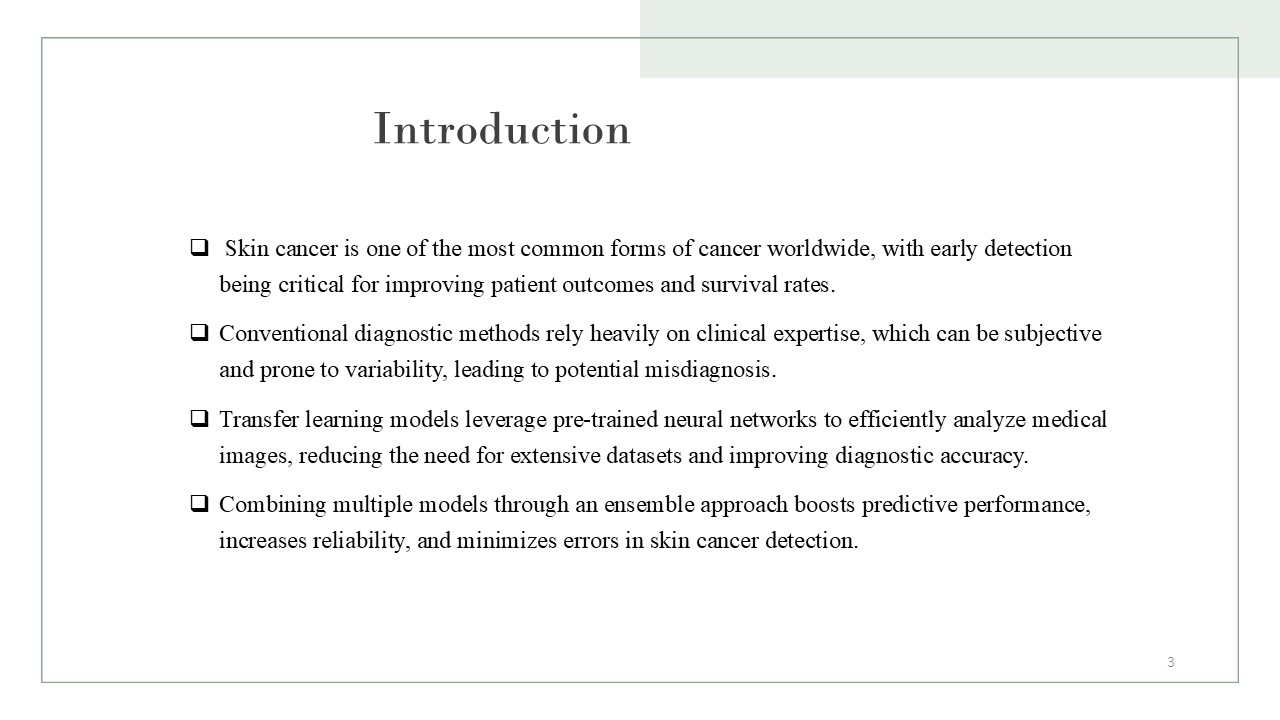 |
Introduction: -
Skin cancer is one of the most common forms of cancer worldwide, with early detection being critical for improving patient outcomes and survival rates.
Conventional diagnostic methods rely heavily on clinical expertise, which can be subjective and prone to variability, leading to potential misdiagnosis.
Transfer learning models leverage pre-trained neural networks to efficiently analyze medical images, reducing the need for extensive datasets and improving diagnostic accuracy.
Combining multiple models through an ensemble approach boosts predictive performance, increases reliability, and minimizes errors in skin cancer detection.
|
| ICACT20250193 Slide.04
[Big Slide]
|
Chrome Click!! |
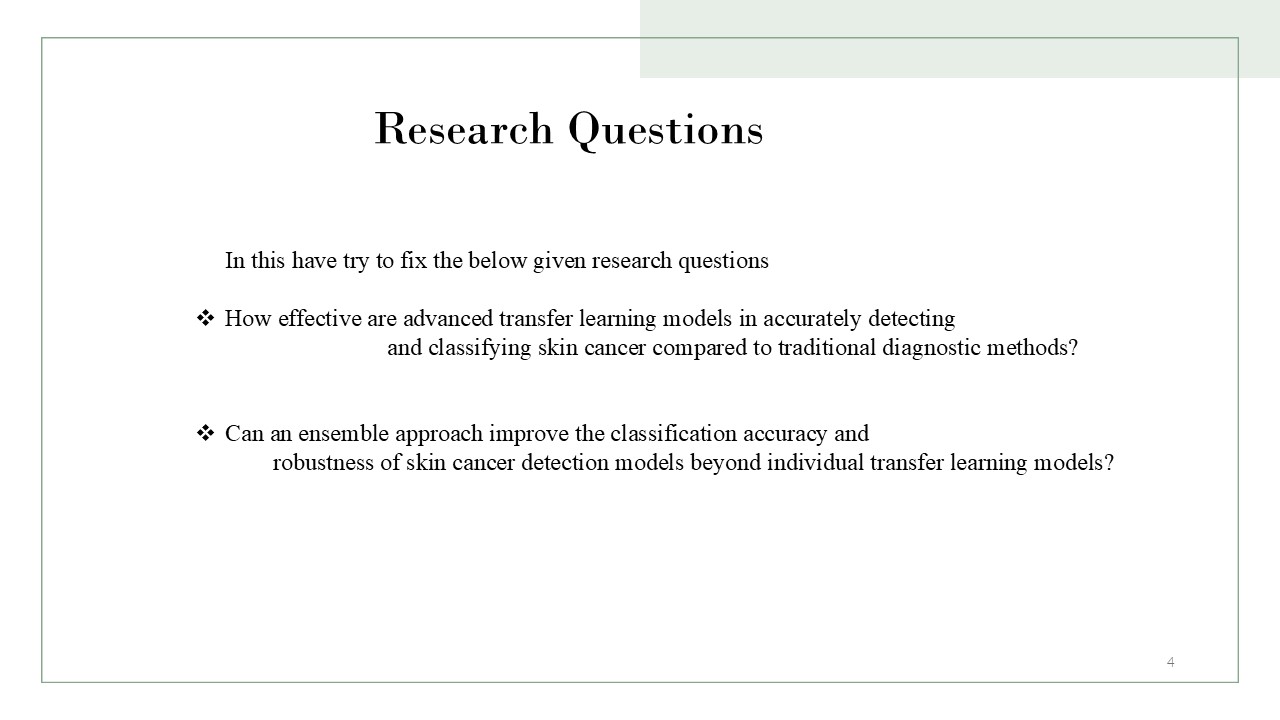 |
Research Questions
In this have try to fix the below given research questions
How effective are advanced transfer learning models in accurately detecting
and classifying skin cancer compared to traditional diagnostic methods?
Can an ensemble approach improve the classification accuracy and
robustness of skin cancer detection models beyond individual transfer learning models?
|
| ICACT20250193 Slide.05
[Big Slide]
|
Chrome Click!! |
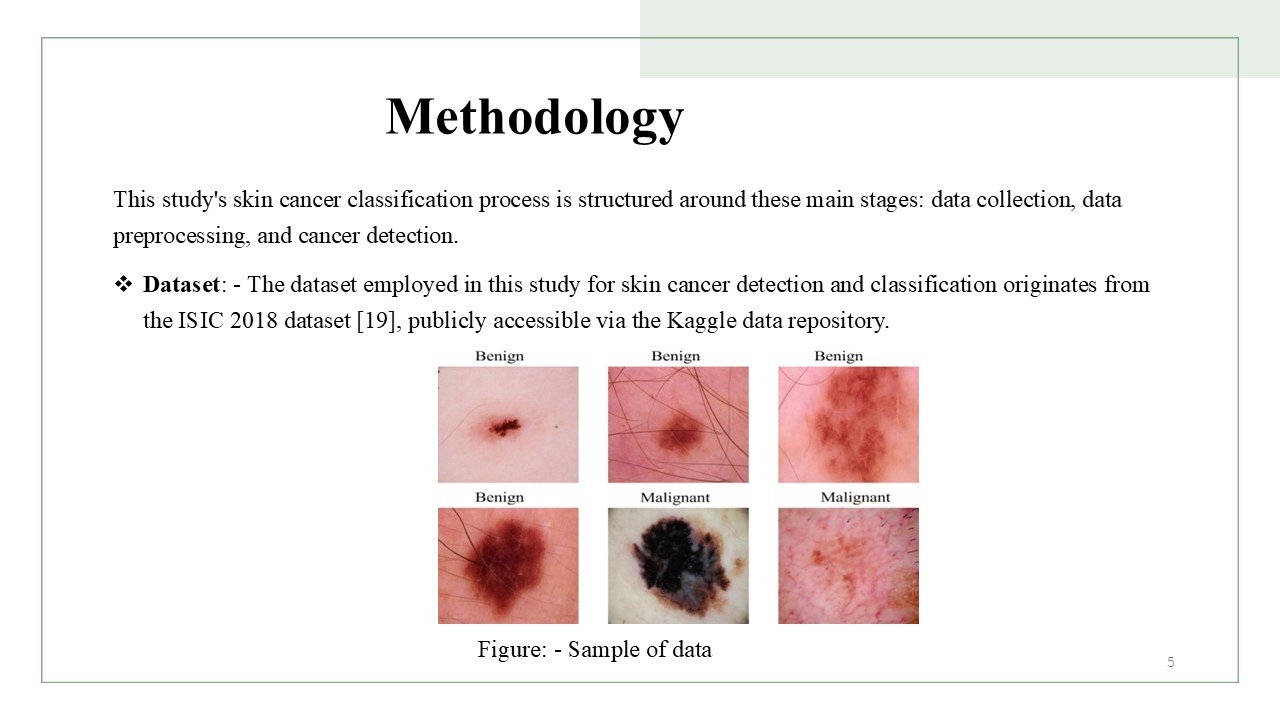 |
Dataset: -
This study's skin cancer classification process is structured around these main stages: data collection, data preprocessing, and cancer detection.
Dataset: - The dataset employed in this study for skin cancer detection and classification originates from the ISIC 2018 dataset [19], publicly accessible via the Kaggle data repository.
|
| ICACT20250193 Slide.06
[Big Slide]
[YouTube] |
Chrome Click!! |
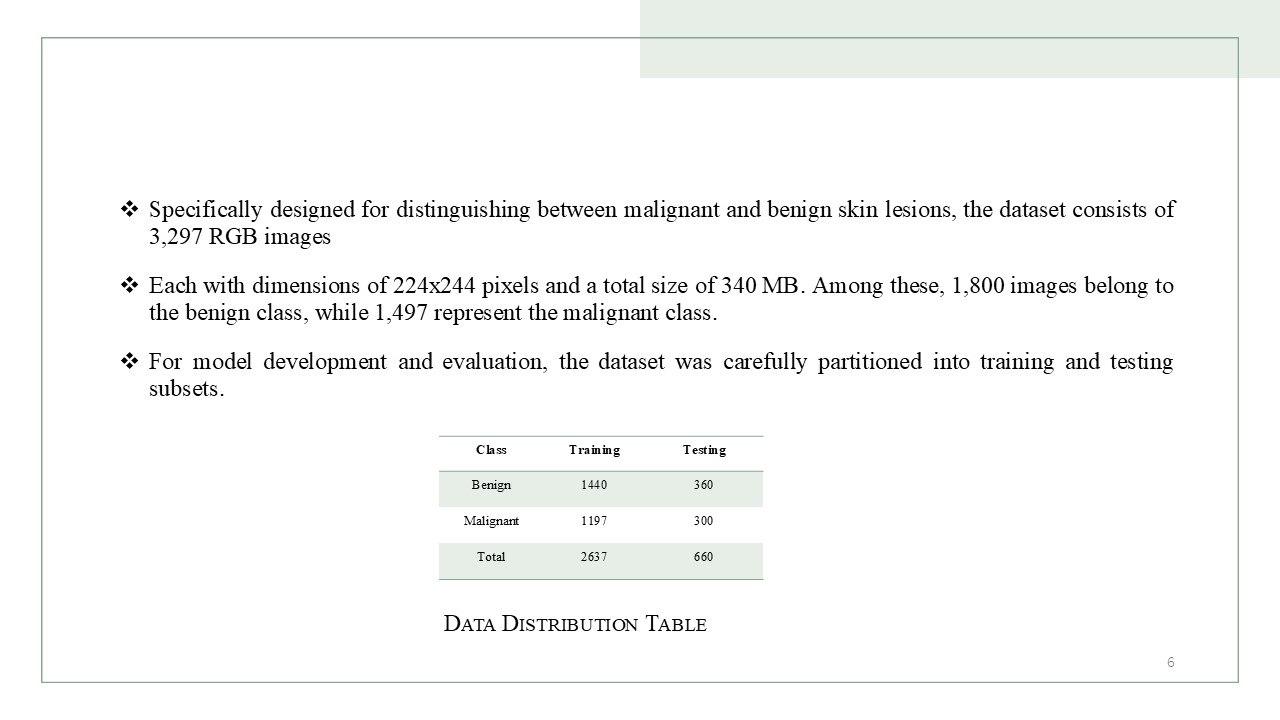 |
Specifically designed for distinguishing between malignant and benign skin lesions, the dataset consists of 3,297 RGB images
Each with dimensions of 224x244 pixels and a total size of 340 MB. Among these, 1,800 images belong to the benign class, while 1,497 represent the malignant class.
For model development and evaluation, the dataset was carefully partitioned into training and testing subsets.
Data Distribution Table
|
| ICACT20250193 Slide.07
[Big Slide]
[YouTube] |
Chrome Click!! |
 |
Data Prepressing
The data augmentation strategy enhances dataset diversity and robustness to improve model performance.
Techniques like rotation, translation, Gaussian blur, multiplication, and flipping address data imbalance and reduce overfitting.
Original images are retained for comparison, with augmented samples boosting classification accuracy.
|
| ICACT20250193 Slide.08
[Big Slide]
[YouTube] |
Chrome Click!! |
 |
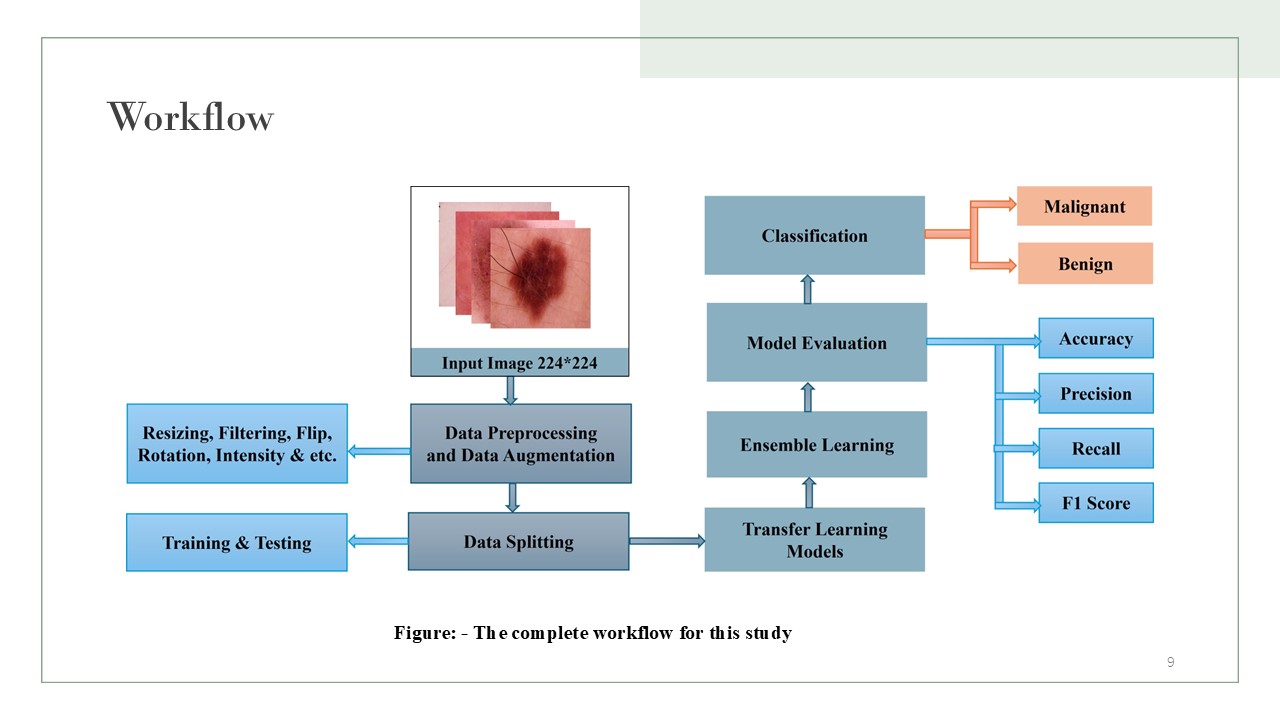
Complete Workflow
The skin cancer classification workflow starts with acquiring and preprocessing skin lesion images (resized to 224x224 pixels) using techniques like noise filtering, flipping, and rotation.
The dataset is split for training and testing, with transfer learning models (Inception, Xception, VGG19, ResNet50) fine-tuned for classification.
An ensemble approach combines model predictions to improve accuracy, while metrics like precision, recall, and F1 score evaluate performance. This workflow tackles data scarcity, class imbalance, and overfitting, ensuring robust skin cancer detection.
|
| ICACT20250193 Slide.09
[Big Slide]
|
Chrome Click!! |
 |
Complete Workflow |
| ICACT20250193 Slide.10
[Big Slide]
[YouTube] |
Chrome Click!! |
 |
Ensemble Approach
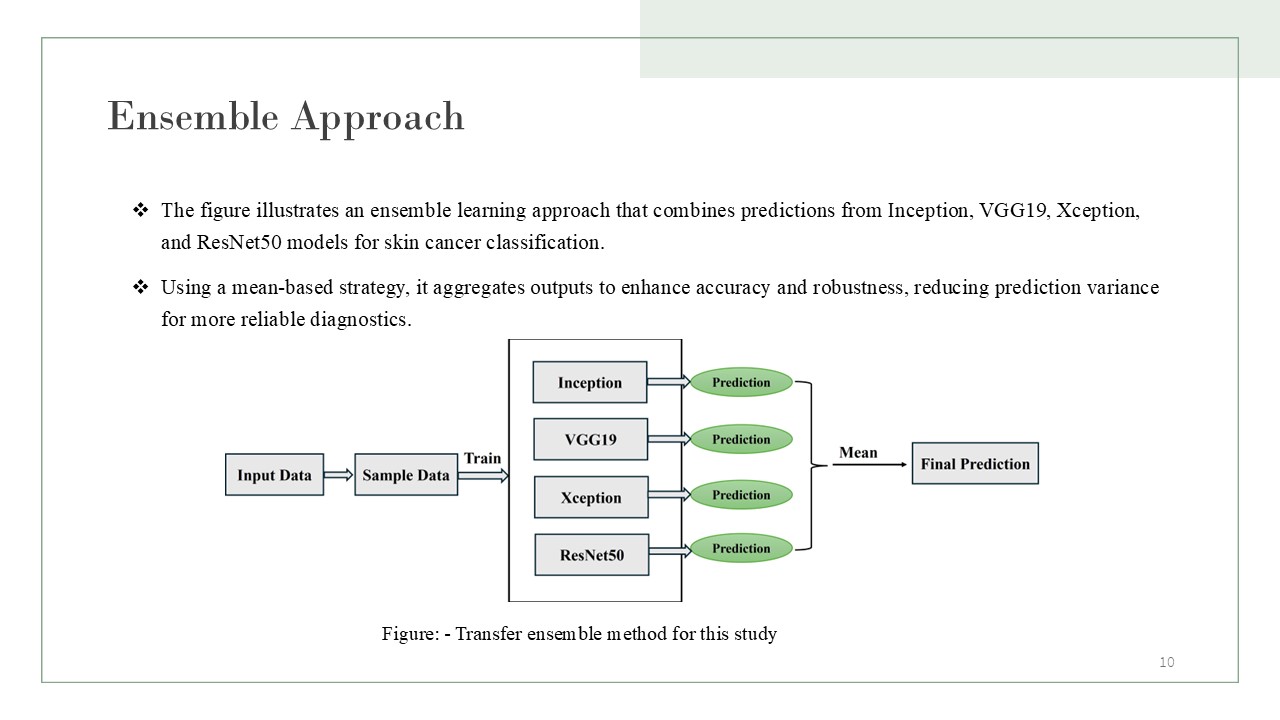
The figure illustrates an ensemble learning approach that combines predictions from Inception, VGG19, Xception, and ResNet50 models for skin cancer classification.
Using a mean-based strategy, it aggregates outputs to enhance accuracy and robustness, reducing prediction variance for more reliable diagnostics.
|
| ICACT20250193 Slide.11
[Big Slide]
|
Chrome Click!! |
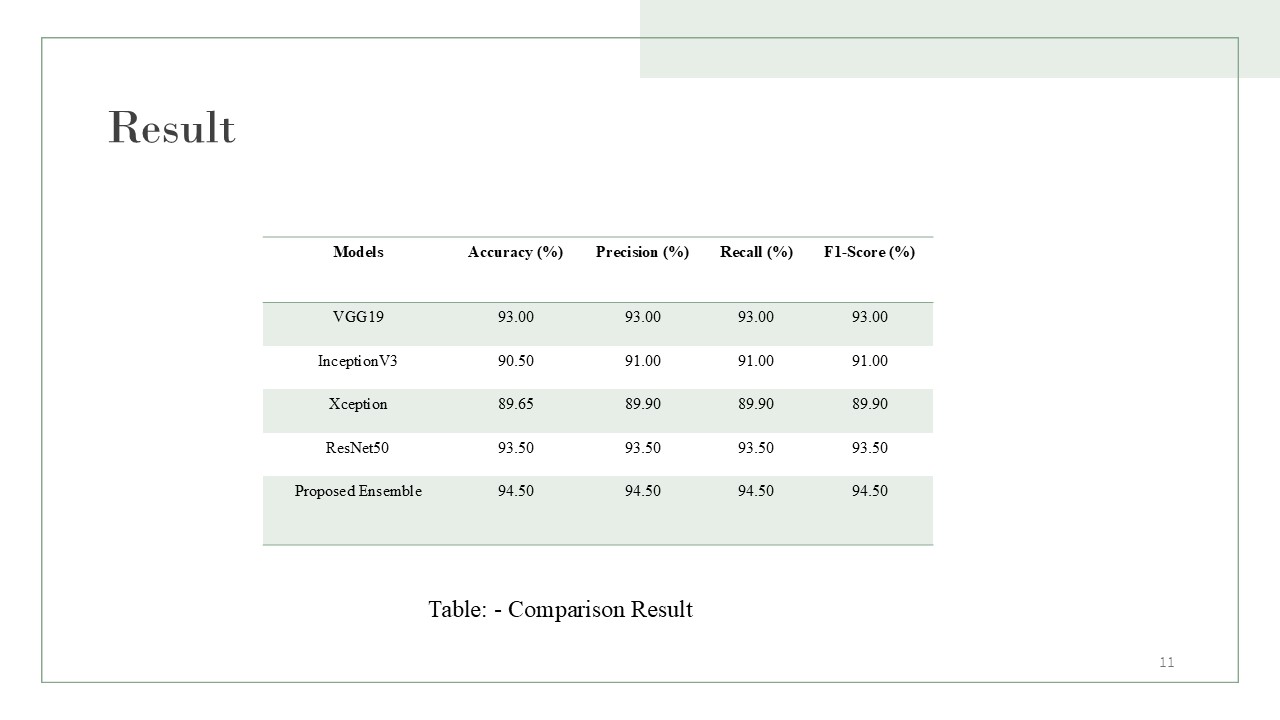 |
Comparison Result Table |
| ICACT20250193 Slide.12
[Big Slide]
|
Chrome Click!! |
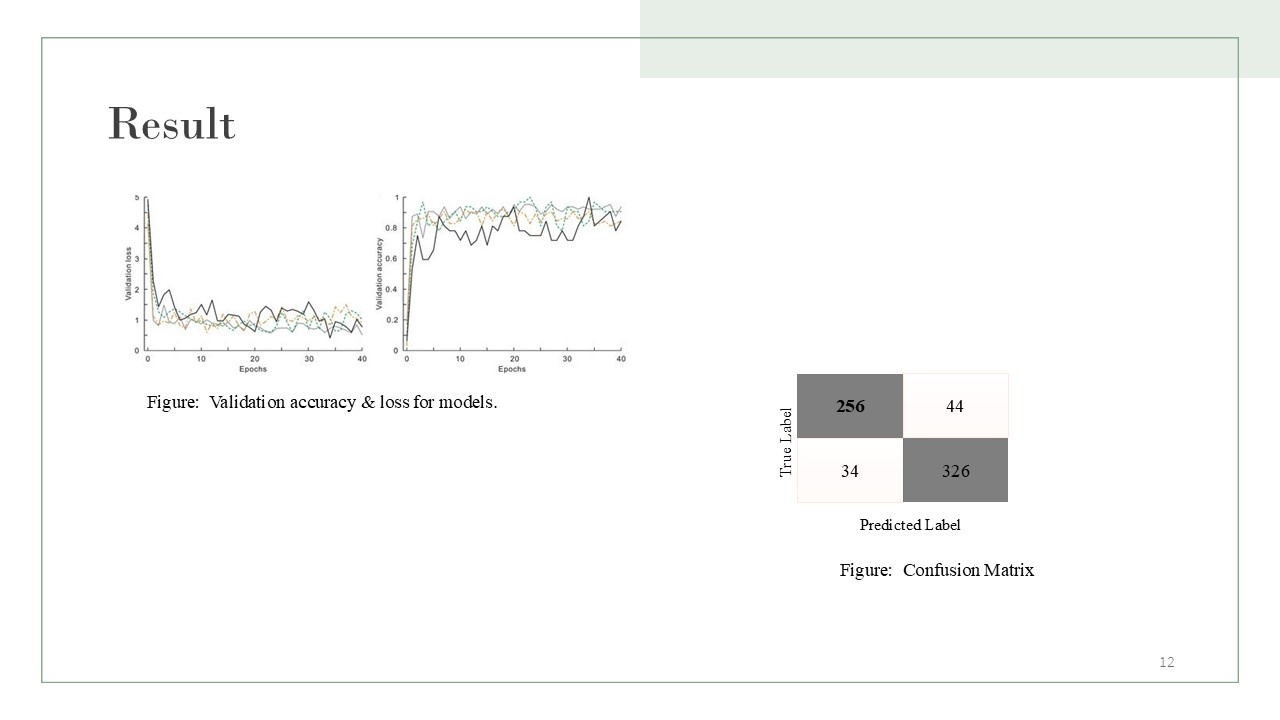 |
Results |
| ICACT20250193 Slide.13
[Big Slide]
[YouTube] |
Chrome Click!! |
 |
Conclusion
This study showcases the effectiveness of an ensemble learning approach using transfer learning models for accurate skin cancer classification.
By leveraging pre-trained weights, fine-tuning models, and applying a consensus-based ensemble method, the system achieves high accuracy in distinguishing malignant and benign lesions.
The approach offers a non-invasive, reliable diagnostic tool, highlighting the potential of AI-driven solutions to support early skin cancer detection and assist healthcare professionals in dermatology.
|
| ICACT20250193 Slide.14
[Big Slide]
[YouTube] |
Chrome Click!! |
 |
Future Work
we aim to enhance skin cancer detection by integrating advanced AI techniques, particularly foundation models, to improve feature extraction and diagnostic accuracy.
We will also explore self-supervised and federated learning to address data scarcity and privacy concerns.
Additionally, incorporating explainable AI (XAI) will enhance interpretability and trust in automated diagnosis.
|
| ICACT20250193 Slide.15
[Big Slide]
[YouTube] |
Chrome Click!! |
 |
Thank You.
Ask me in youtube. |















