Now 5087 visitors
Today:0 Yesterday:0
Total: 147102
212S 50P 4R
2026-10-20, Week 43 |
| Member Login |
| TACT Journal Homepage |
| Call for Paper |
| Committee |
| Find My Paper |
| Author Homepage |
| Statistics & History |
| Welcome Message |
| Paper Procedure |
| FAQ |
| Paper Archives |
| Outstanding Papers |
| Author Homepage |
| - Paper Procedure |
| - Journal Procedure |
| - Presentation Tips |
|
| Program & Proceedings |
| Program with Papers |
| Plenary Session |
| Tutorial Session |
|
| Presentation Platform |
| Hotel & Travel Info |
| About Korea |
| Accommodation |
| Transportation |
| VISA |
| Other Infomation |
|
| Photo Gallery |
| Scheduler Login |
| Seminar |
| Archives Login |
|
| Sponsors |

|

|

|

|

|

|

|

|

|

|
|
|
|
|
 ICACT20260013 Slide.01
[Big Slide]
[YouTube] |
Chrome  Click!! |
 |
Machine Learning–Based Job Recommendation Systems, Techniques and Approaches for Bangladesh
A Data-Driven, Skill-Aware Matching Framework
|
| ICACT20260013 Slide.02
[Big Slide]
[YouTube] |
Chrome Click!! |
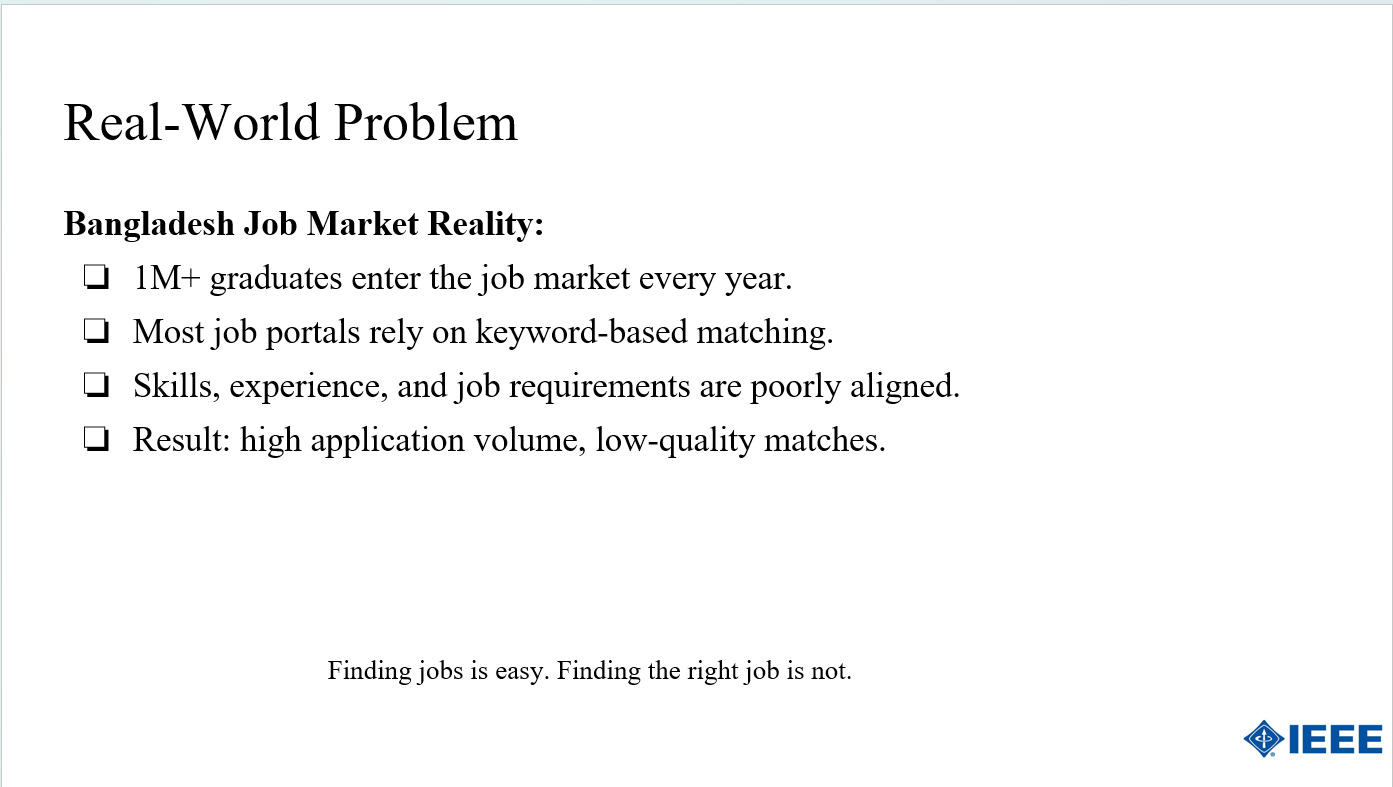 |
Real-World Problem
Bangladesh Job Market Reality:
1M+ graduates enter the job market every year.
Most job portals rely on keyword-based matching.
Skills, experience, and job requirements are poorly aligned.
Result: high application volume, low-quality matches.
|
| ICACT20260013 Slide.03
[Big Slide]
[YouTube] |
Chrome Click!! |
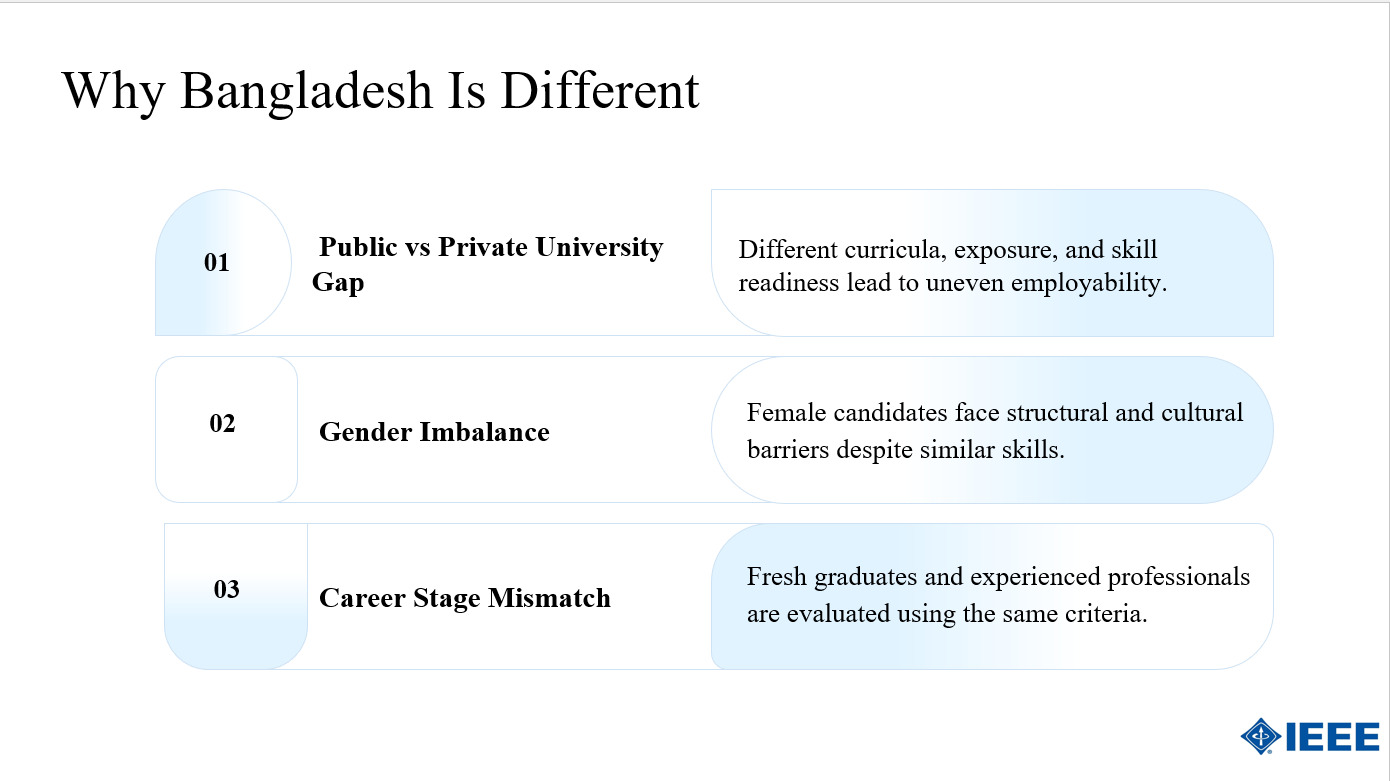 |
This slide explains why Bangladesh is different in terms of employability challenges.
First, there is a clear gap between public and private universities. Differences in curriculum, academic exposure, and skill-based training result in unequal job readiness among graduates, which directly affects employability.
Second, gender imbalance remains a major issue. Female candidates often face cultural and structural barriers in the job market, even when they possess similar qualifications and skills as male candidates.
Finally, there is a career stage mismatch in recruitment practices. Fresh graduates and experienced professionals are often evaluated using the same criteria, which creates unrealistic expectations for early-career candidates and limits fair assessment.
Together, these factors highlight the need for context-specific reforms to improve equity and effectiveness in Bangladesh’s employment system.
|
| ICACT20260013 Slide.04
[Big Slide]
[YouTube] |
Chrome Click!! |
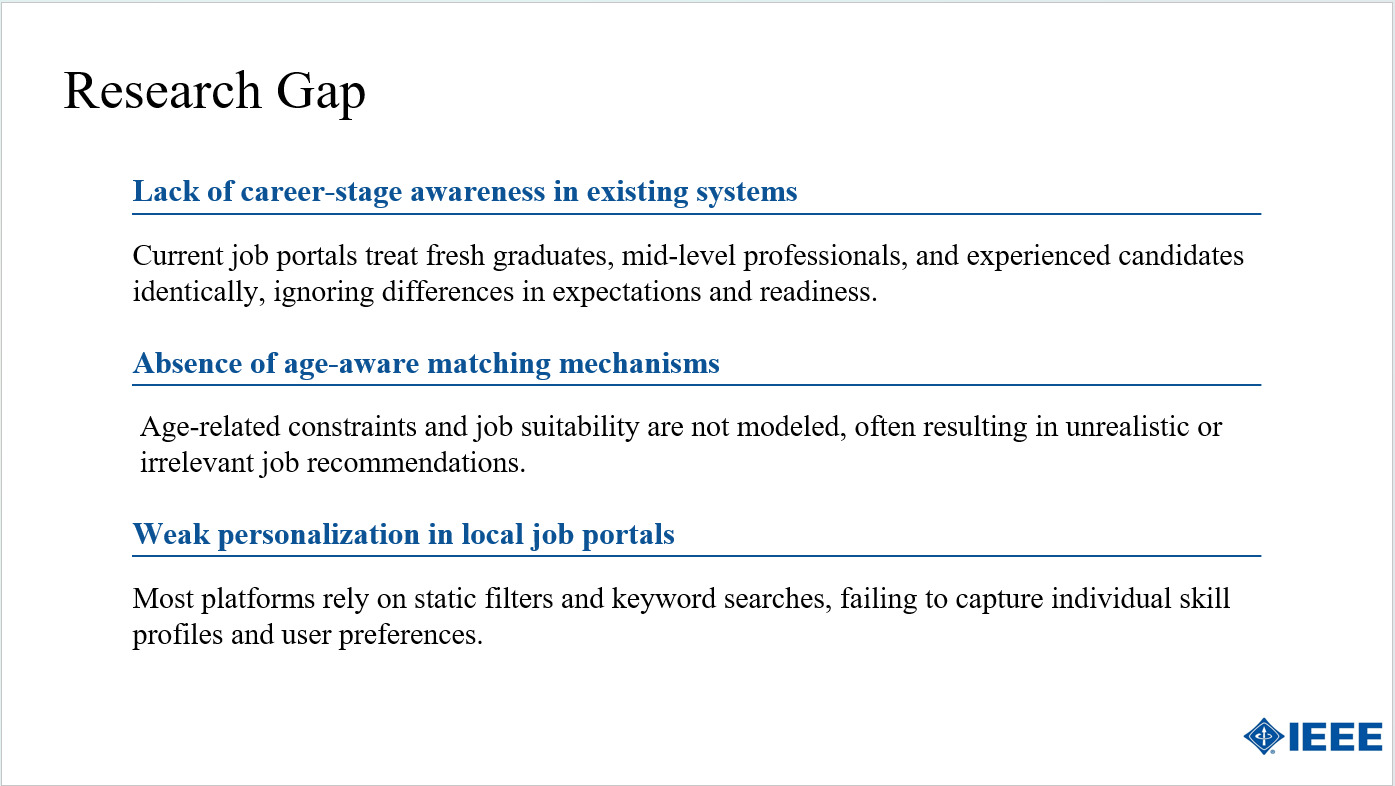 |
This slide highlights the key research gaps identified in existing job-matching systems.
First, there is a lack of career-stage awareness in current platforms. Most job portals treat fresh graduates, mid-level professionals, and experienced candidates in the same way, without considering differences in expectations, skills, or job readiness.
Second, there is an absence of age-aware matching mechanisms. Age-related constraints and job suitability are not modeled, which often leads to unrealistic or irrelevant job recommendations for users.
Finally, personalization in local job portals remains weak. Most systems rely on static filters and keyword-based searches, failing to capture individual skill profiles, career goals, and user preferences.
These gaps collectively motivate the need for a more intelligent, personalized, and context-aware job recommendation framework. |
| ICACT20260013 Slide.05
[Big Slide]
[YouTube] |
Chrome Click!! |
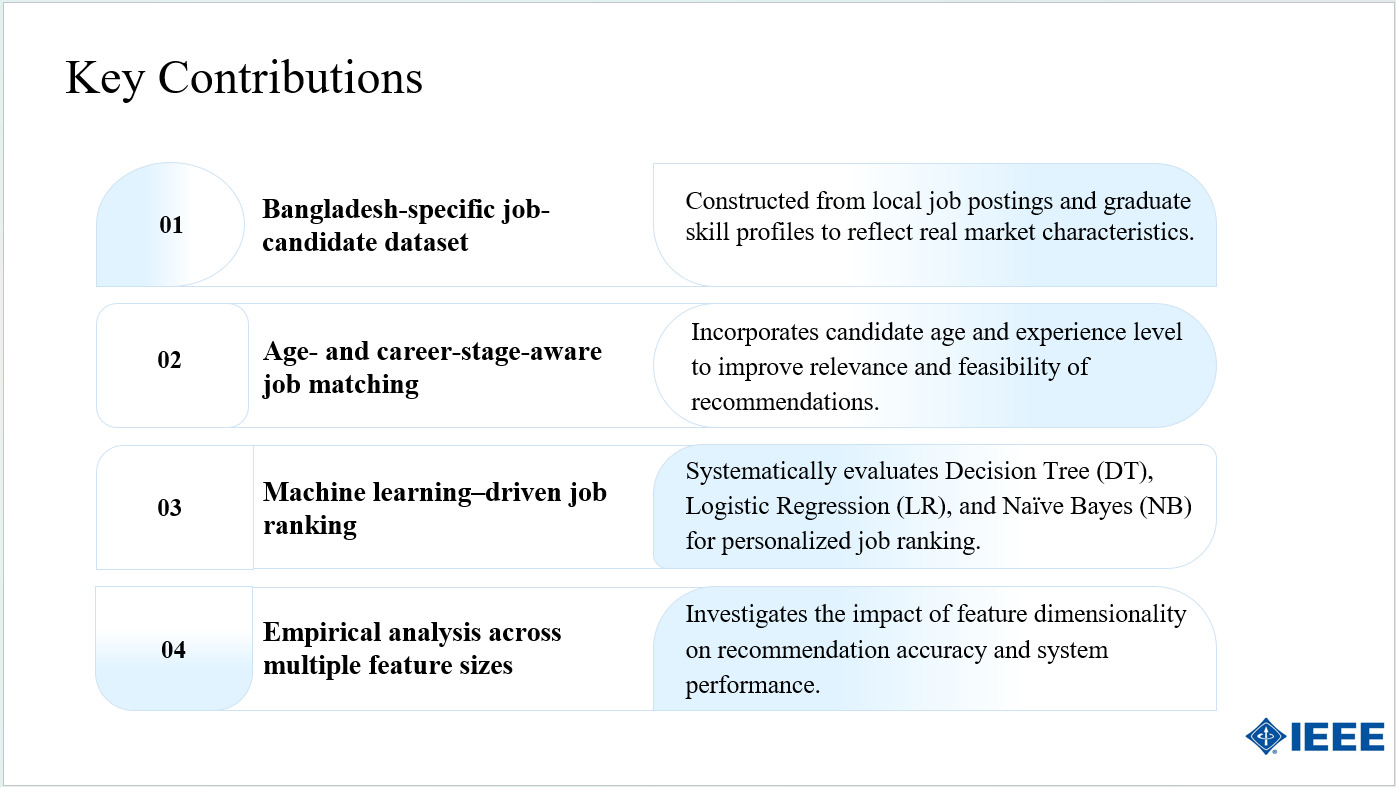 |
This slide summarizes the key contributions of our work.
First, we develop a Bangladesh-specific job–candidate dataset constructed from local job postings and graduate skill profiles, ensuring that the data accurately reflects real market characteristics.
Second, we introduce an age- and career-stage-aware job-matching approach. By incorporating candidate age and experience level, the system improves the relevance and practical feasibility of job recommendations.
Third, we apply a machine-learning-driven job-ranking framework. We systematically evaluate Decision Tree, Logistic Regression, and Naïve Bayes models to generate personalized job rankings.
Finally, we conduct an empirical analysis across multiple feature sizes to examine how feature dimensionality affects recommendation accuracy and overall system performance. |
| ICACT20260013 Slide.06
[Big Slide]
[YouTube] |
Chrome Click!! |
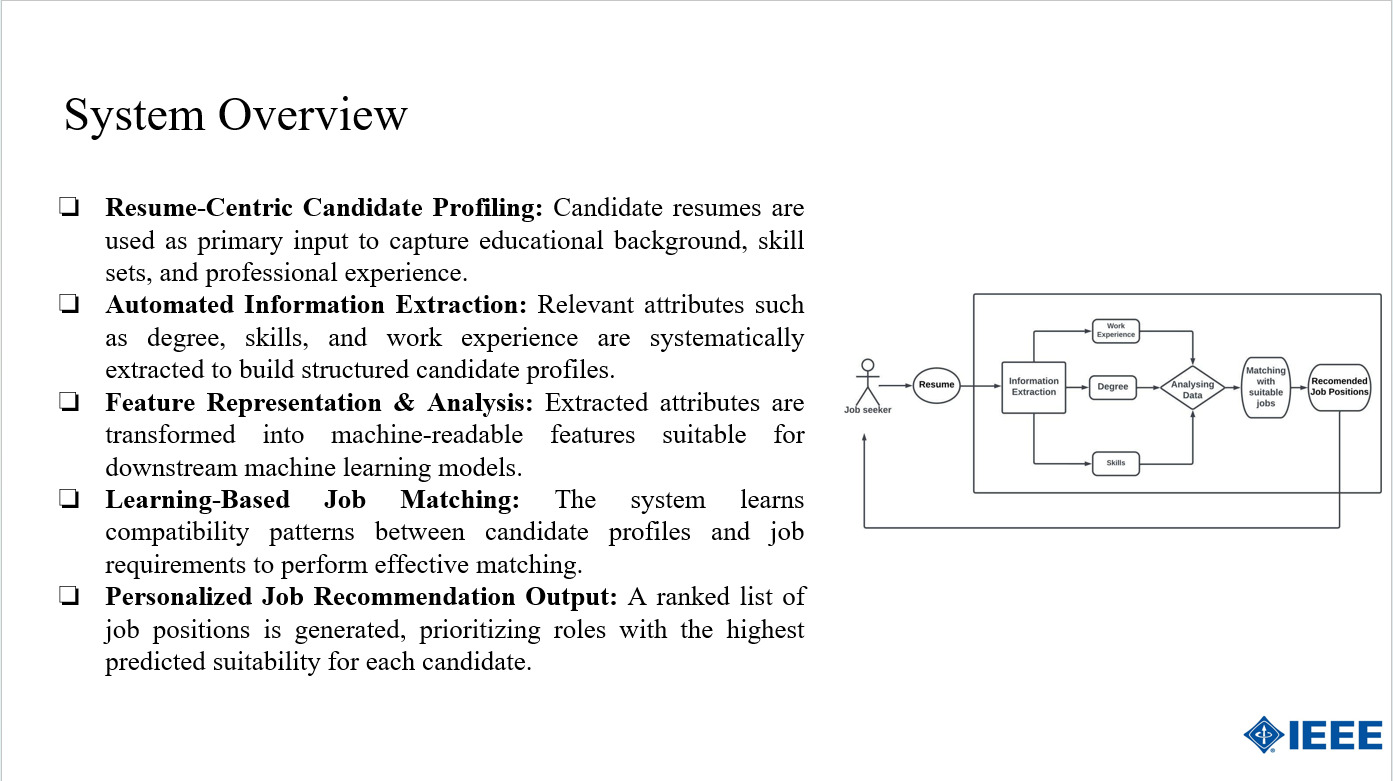 |
This slide presents an overview of the proposed system architecture.
First, the system follows a resume-centric candidate profiling approach, where candidate resumes are used as the primary input to capture educational background, skill sets, and professional experience.
Next, automated information extraction is applied to systematically extract relevant attributes such as degrees, skills, and work experience, forming structured candidate profiles.
These extracted attributes are then transformed into machine-readable features through feature representation and analysis, making them suitable for downstream machine learning models.
Based on these features, the system performs learning-based job matching by identifying compatibility patterns between candidate profiles and job requirements.
Finally, the system generates a personalized job recommendation output in the form of a ranked list of job positions, prioritizing roles with the highest predicted suitability for each candidate. |
| ICACT20260013 Slide.07
[Big Slide]
[YouTube] |
Chrome Click!! |
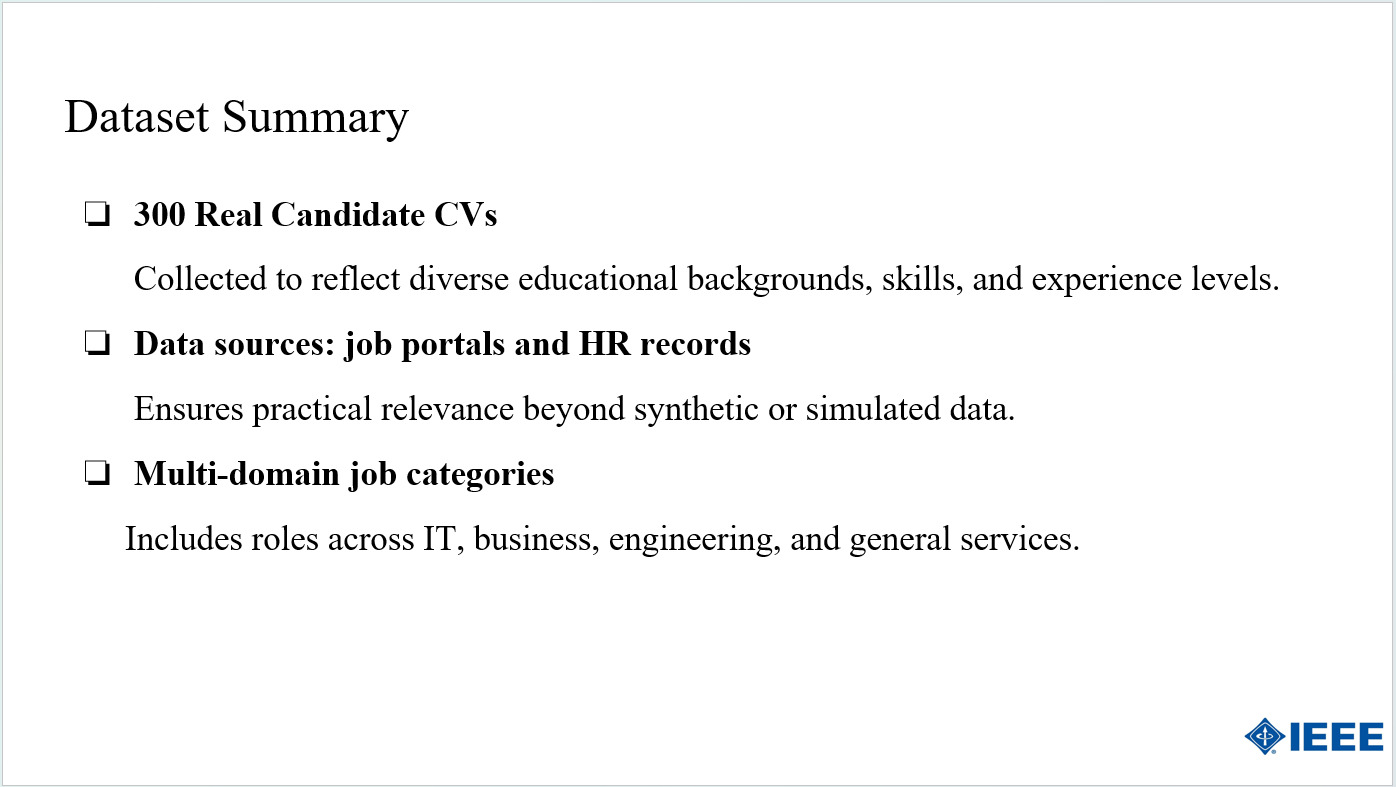 |
This slide provides a summary of the dataset used in this study.
The dataset consists of three hundred real candidate CVs, collected to represent diverse educational backgrounds, skill sets, and levels of professional experience.
The data were sourced from local job portals and HR records, ensuring practical relevance beyond synthetic or simulated datasets.
Additionally, the dataset covers multiple job domains, including information technology, business, engineering, and general service roles, allowing the model to be evaluated across a broad range of employment categories. |
| ICACT20260013 Slide.08
[Big Slide]
[YouTube] |
Chrome Click!! |
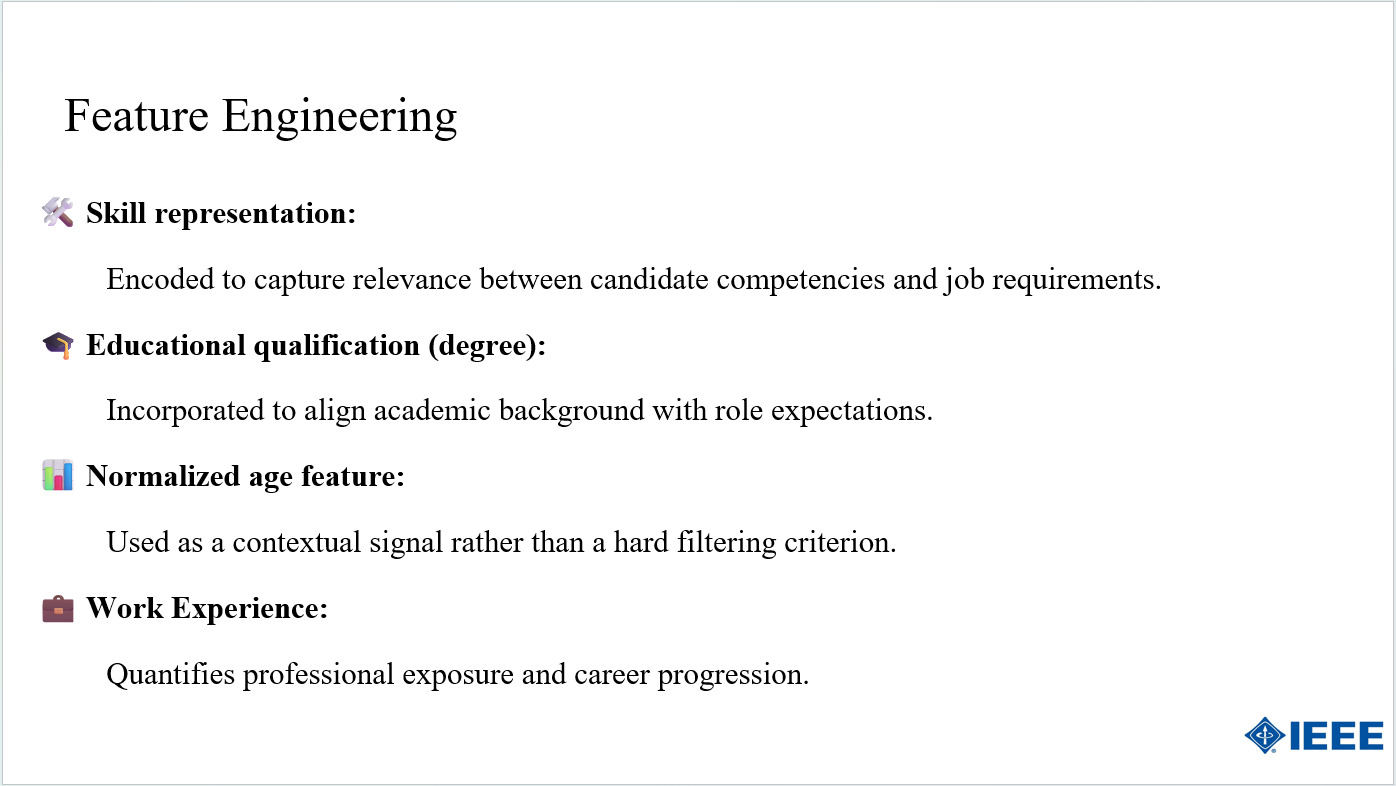 |
This slide explains the feature engineering strategy used in our system.
First, skills are represented in a way that captures the relevance between candidate competencies and job requirements.
Second, educational qualification, specifically the degree, is incorporated to align a candidate’s academic background with role expectations.
Third, age is included as a normalized feature and is used as a contextual signal rather than a strict filtering criterion.
Finally, work experience is encoded to quantify professional exposure and career progression, allowing the model to distinguish between different career stages. |
| ICACT20260013 Slide.09
[Big Slide]
[YouTube] |
Chrome Click!! |
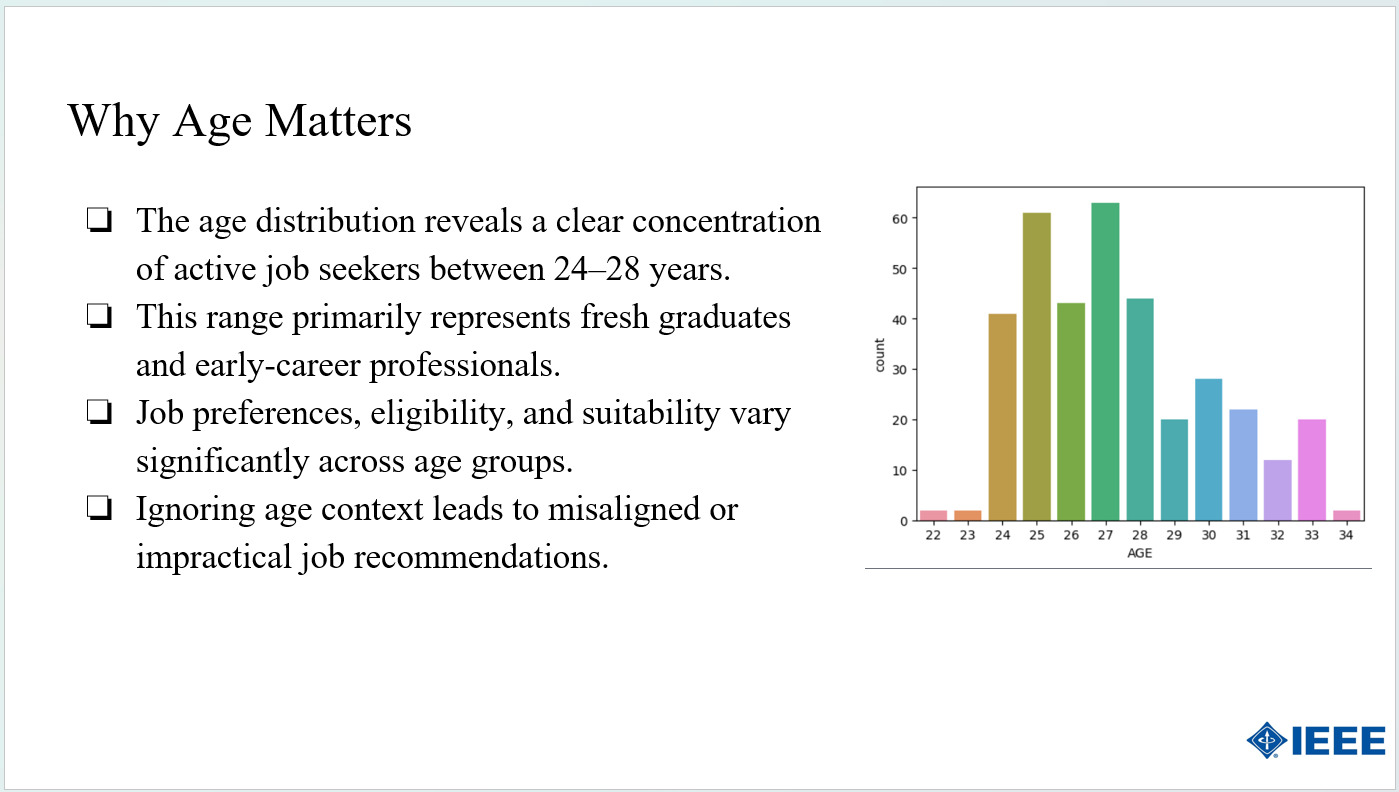 |
This slide explains why age is an important factor in job recommendation systems.
The age distribution shows a clear concentration of active job seekers between twenty-four and twenty-eight years.
This range primarily represents fresh graduates and early-career professionals who have distinct expectations and limitations in the job market.
Job preferences, eligibility criteria, and role suitability vary significantly across different age groups.
Therefore, ignoring age as contextual information often results in misaligned or impractical job recommendations. |
| ICACT20260013 Slide.10
[Big Slide]
[YouTube] |
Chrome Click!! |
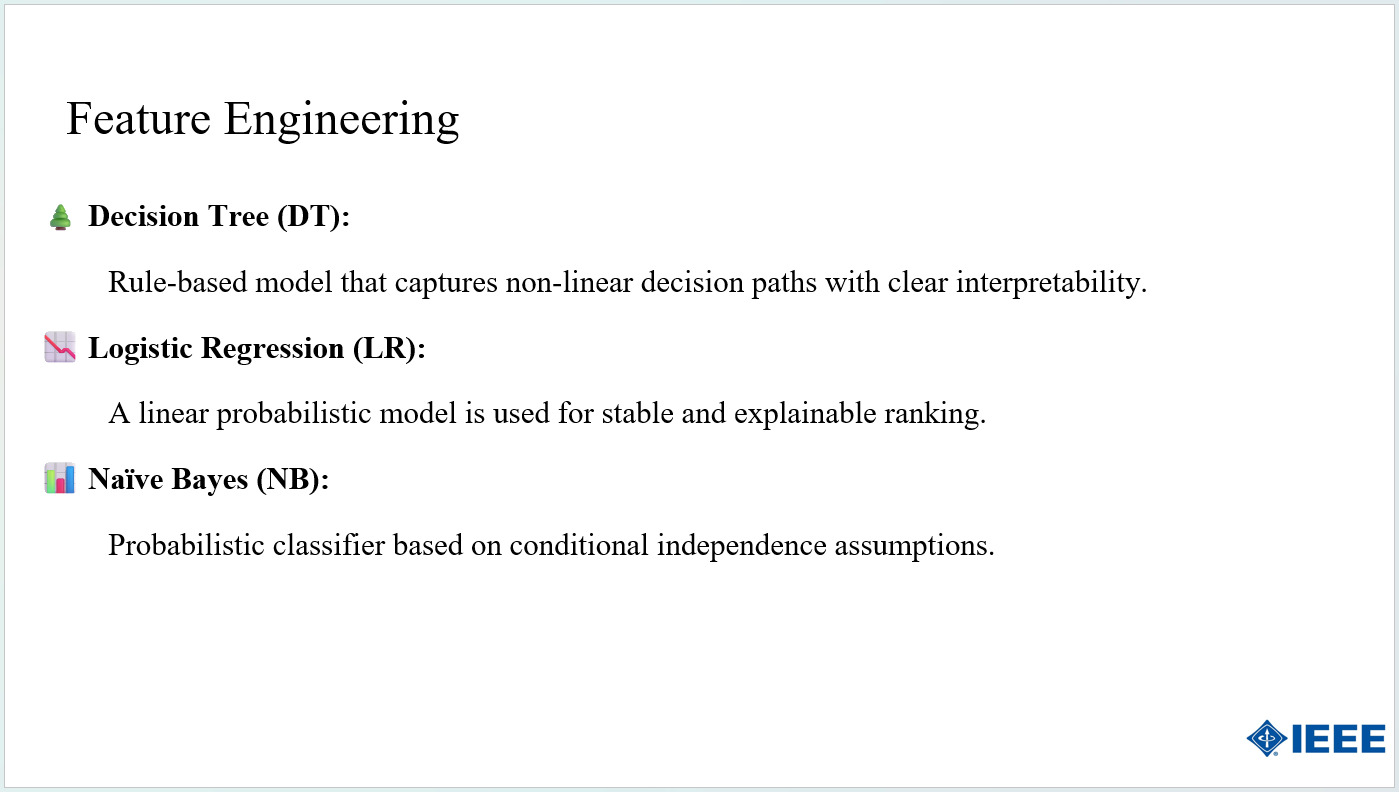 |
This slide describes the machine learning models used for job ranking.
First, we use a Decision Tree model, which is a rule-based approach capable of capturing non-linear decision paths while maintaining clear interpretability.
Second, Logistic Regression is applied as a linear probabilistic model that provides stable, consistent, and explainable job ranking.
Finally, we use a Naïve Bayes classifier, which is a probabilistic model based on the assumption of conditional independence among features.
Together, these models allow us to compare interpretability, stability, and probabilistic reasoning in personalized job recommendation. |
| ICACT20260013 Slide.11
[Big Slide]
[YouTube] |
Chrome Click!! |
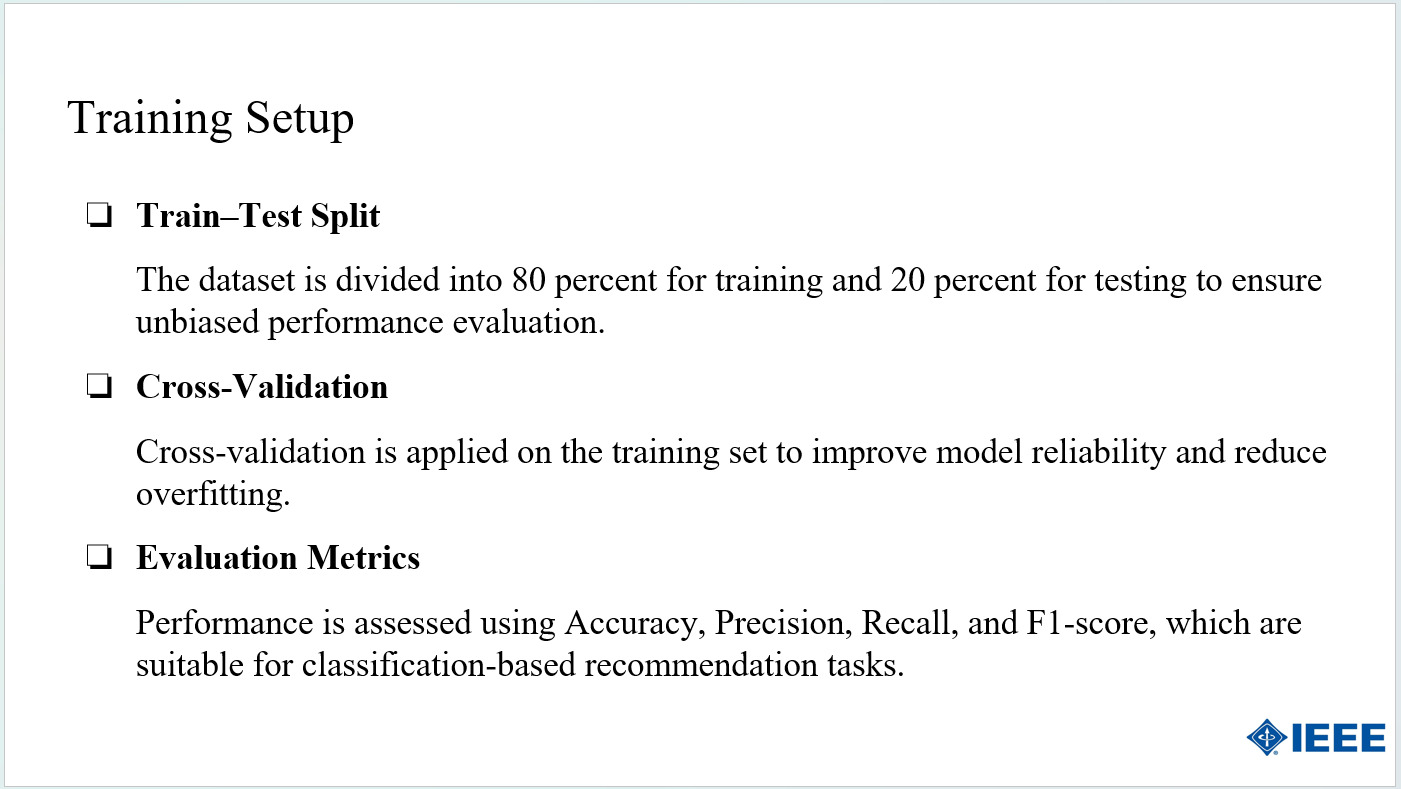 |
This slide describes the training setup used in our experiments.
First, the dataset is split into eighty percent for training and twenty percent for testing to ensure unbiased performance evaluation.
Next, cross-validation is applied on the training set to improve model reliability and to reduce the risk of overfitting.
Finally, model performance is evaluated using accuracy, precision, recall, and F1-score, which are well-suited metrics for classification-based job recommendation tasks. |
| ICACT20260013 Slide.12
[Big Slide]
[YouTube] |
Chrome Click!! |
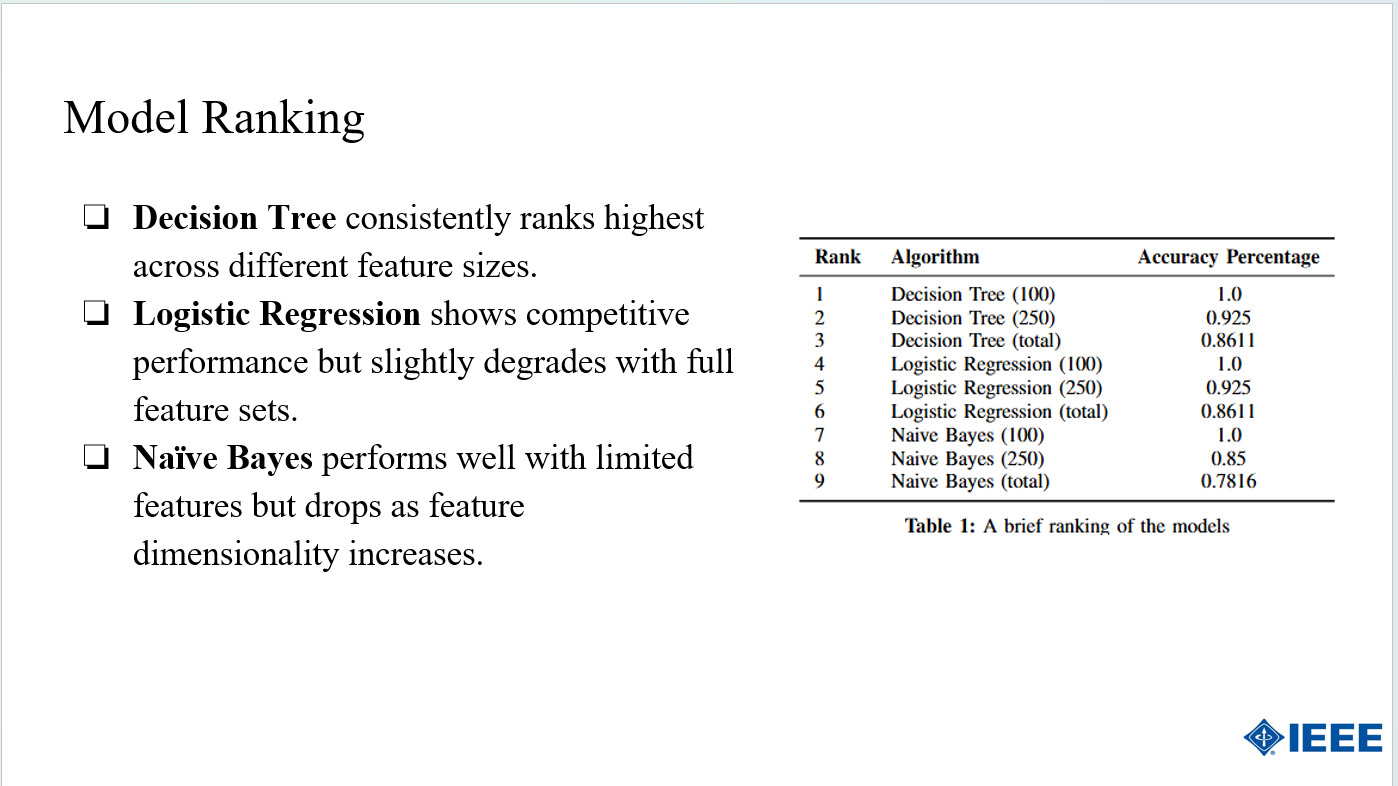 |
This slide presents the comparative ranking of the evaluated machine learning models.
The Decision Tree model consistently ranks highest across different feature sizes, demonstrating strong performance and robustness to feature dimensionality.
Logistic Regression shows competitive performance; however, its accuracy slightly degrades when the full feature set is used.
Naïve Bayes performs well when the feature set is limited, but its performance declines as feature dimensionality increases.
Overall, these results indicate that Decision Tree provides the most reliable and scalable performance for personalized job ranking in this study. |
| ICACT20260013 Slide.13
[Big Slide]
[YouTube] |
Chrome Click!! |
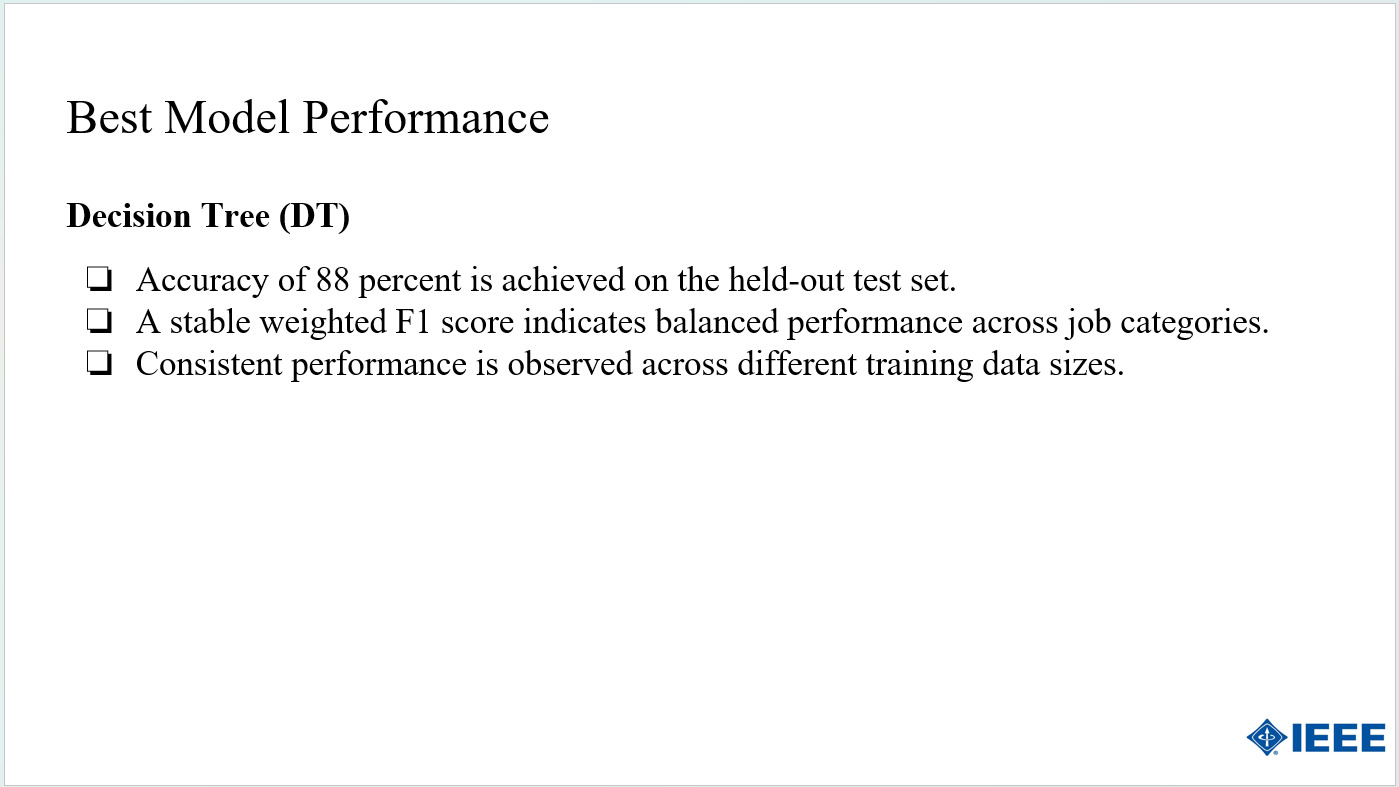 |
This slide highlights the performance of the best-performing model in our study.
The Decision Tree model achieves an accuracy of eighty-eight percent on the held-out test set.
A stable weighted F1-score indicates balanced performance across different job categories.
Additionally, the model demonstrates consistent performance across varying training data sizes, showing robustness and reliability. |
| ICACT20260013 Slide.14
[Big Slide]
[YouTube] |
Chrome Click!! |
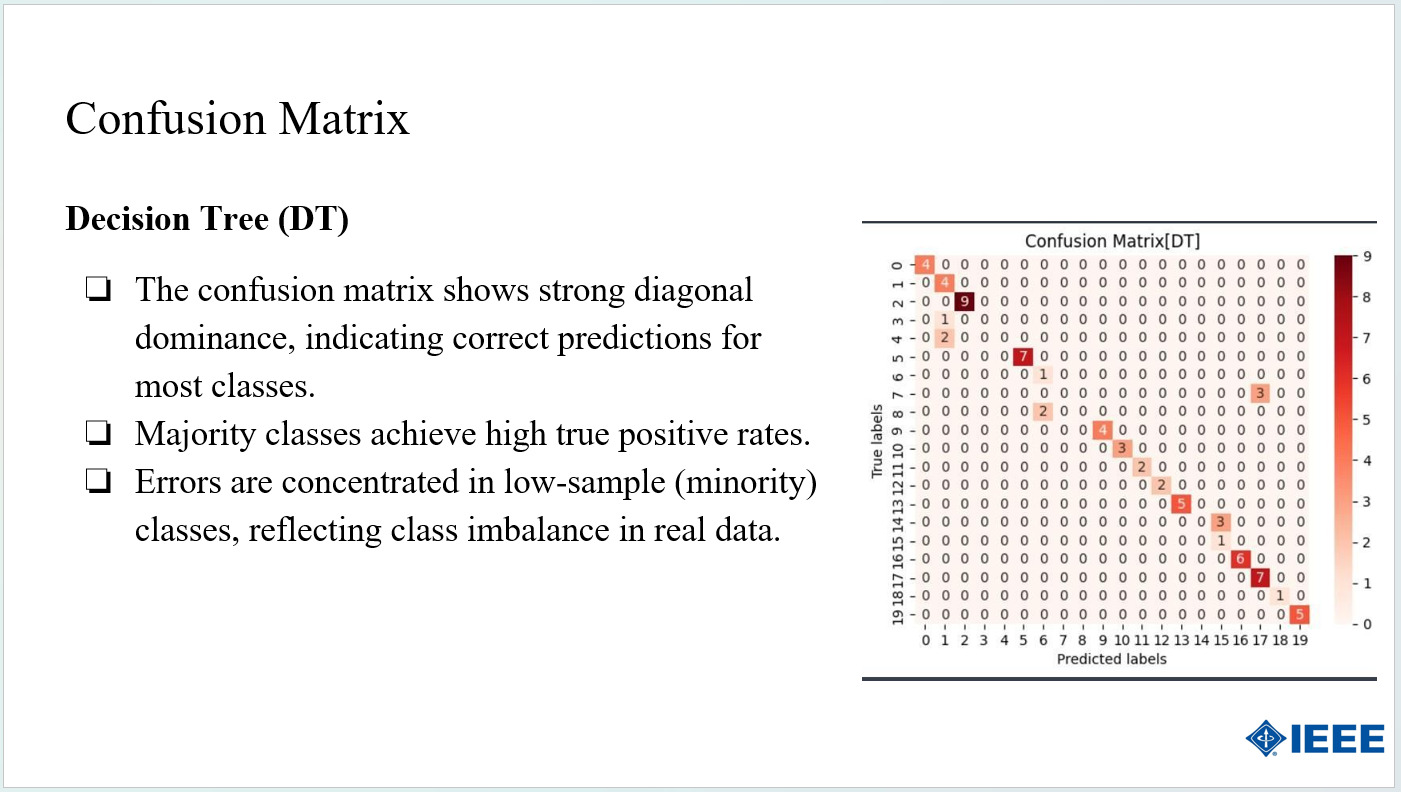 |
This slide presents the confusion matrix for the Decision Tree model.
The confusion matrix shows strong diagonal dominance, indicating that the model correctly classifies most job categories.
The majority classes achieve high true positive rates, reflecting strong predictive performance where sufficient training data are available.
Most misclassifications are concentrated in low-sample, or minority, classes, which reflects the natural class imbalance present in real-world job market data. |
| ICACT20260013 Slide.15
[Big Slide]
[YouTube] |
Chrome Click!! |
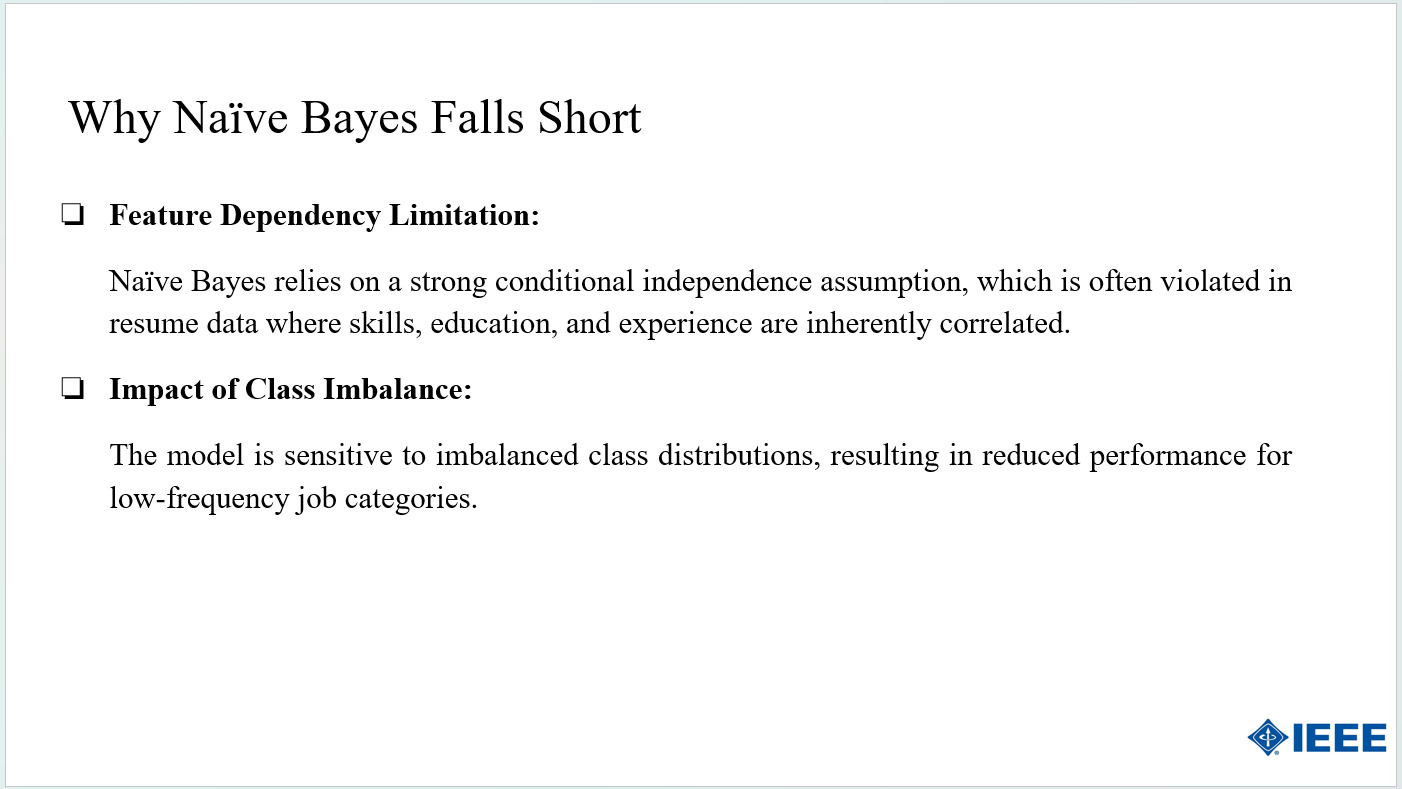 |
This slide explains why the Naïve Bayes model underperforms in our task.
Naïve Bayes relies on a strong conditional independence assumption, which is often violated in resume data where skills, education, and work experience are naturally correlated.
As a result, the model struggles to capture meaningful relationships among features.
In addition, Naïve Bayes is sensitive to class imbalance, leading to reduced performance for low-frequency job categories.
These limitations explain the observed decline in accuracy as feature dimensionality increases. |
| ICACT20260013 Slide.16
[Big Slide]
[YouTube] |
Chrome Click!! |
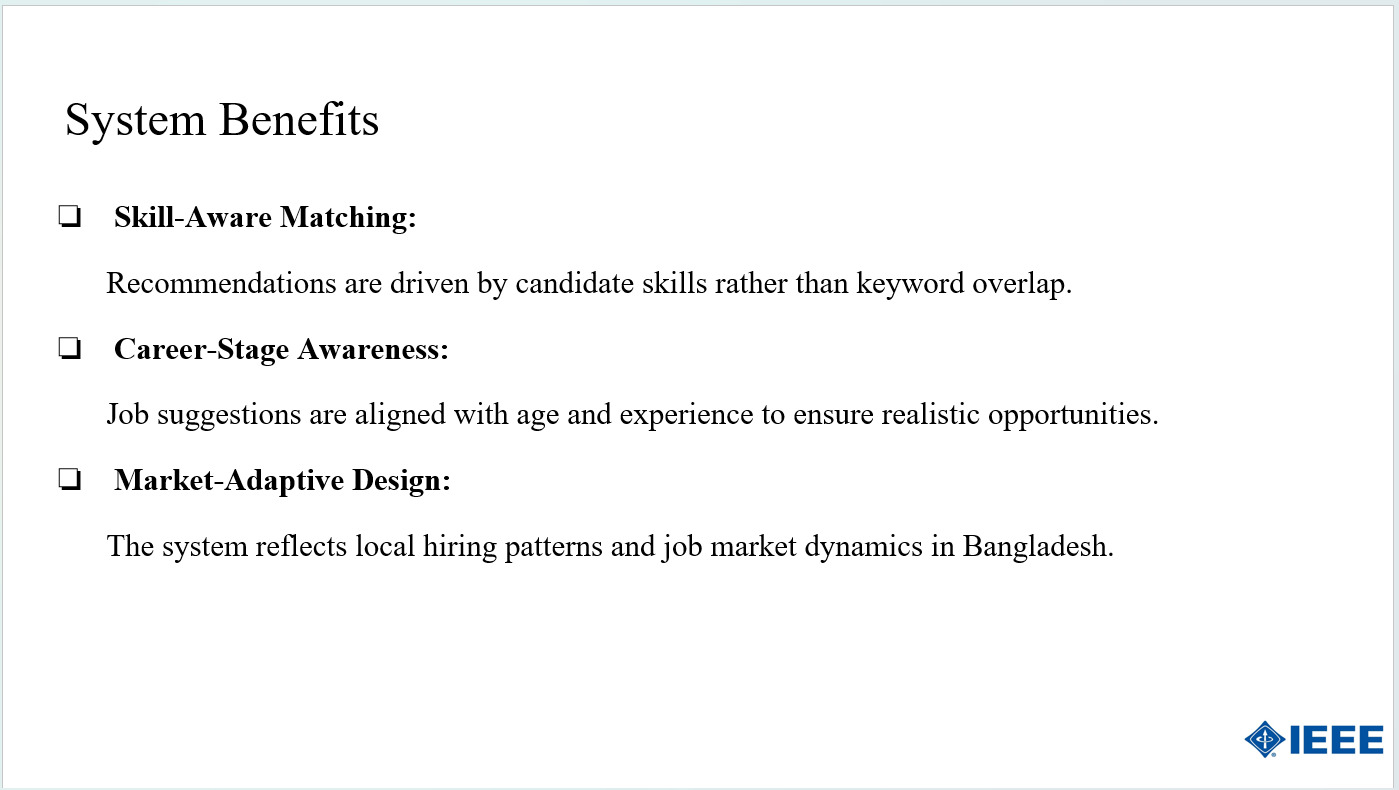 |
This slide summarizes the key benefits of the proposed system.
First, the system enables skill-aware matching, where job recommendations are driven by candidate skills rather than simple keyword overlap.
Second, the system incorporates career-stage awareness by aligning job suggestions with a candidate’s age and work experience, ensuring that recommended opportunities are realistic and achievable.
Finally, the system follows a market-adaptive design, reflecting local hiring patterns and job market dynamics specific to Bangladesh.
Together, these benefits make the proposed approach more relevant, practical, and effective for real-world job matching. |
| ICACT20260013 Slide.17
[Big Slide]
[YouTube] |
Chrome Click!! |
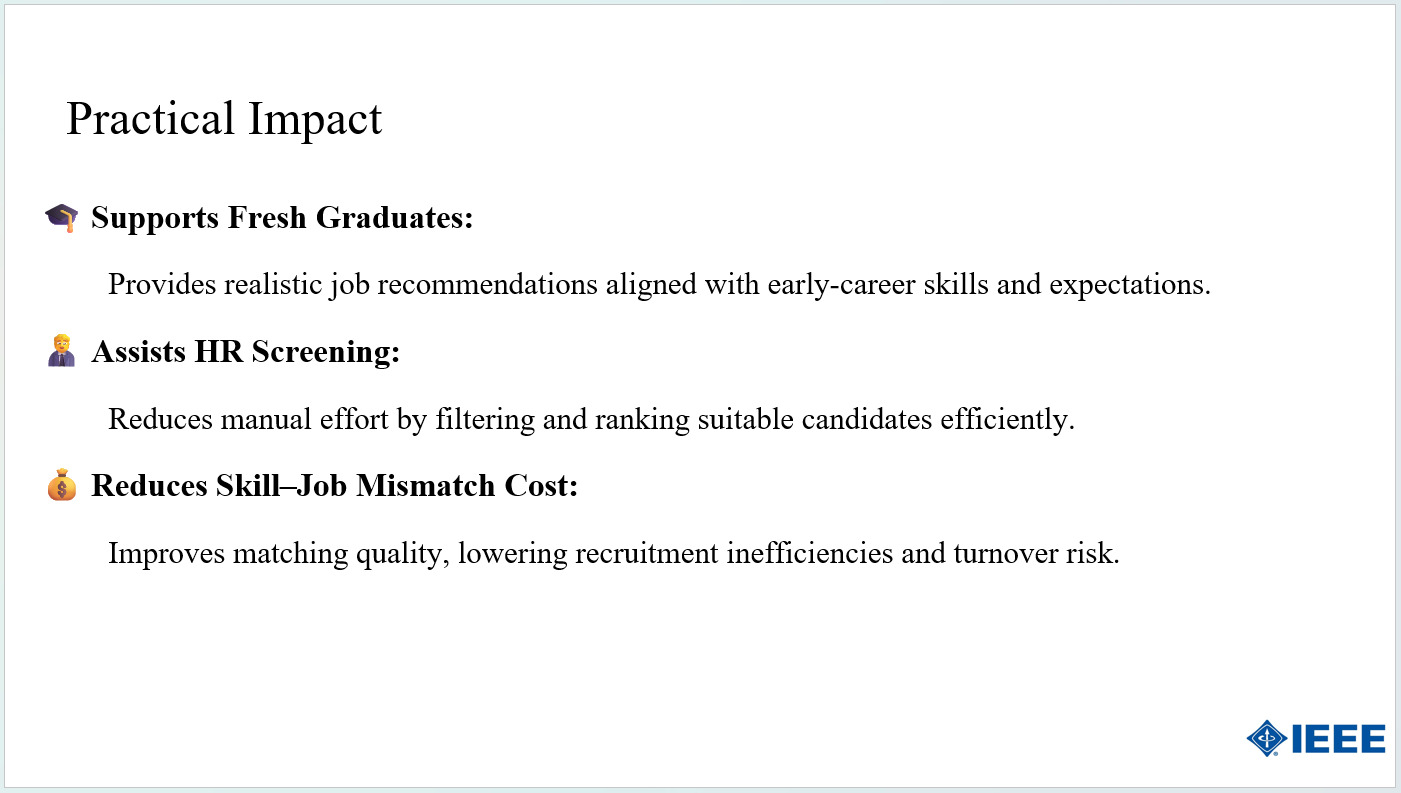 |
This slide highlights the practical impact of the proposed system.
First, the system supports fresh graduates by providing realistic job recommendations that are aligned with early-career skills and expectations.
Second, it assists HR screening by reducing manual effort through efficient filtering and ranking of suitable candidates.
Finally, the system helps reduce skill–job mismatch costs by improving matching quality, which lowers recruitment inefficiencies and reduces employee turnover risk.
Overall, the proposed approach delivers tangible benefits for both job seekers and employers. |
| ICACT20260013 Slide.18
[Big Slide]
[YouTube] |
Chrome Click!! |
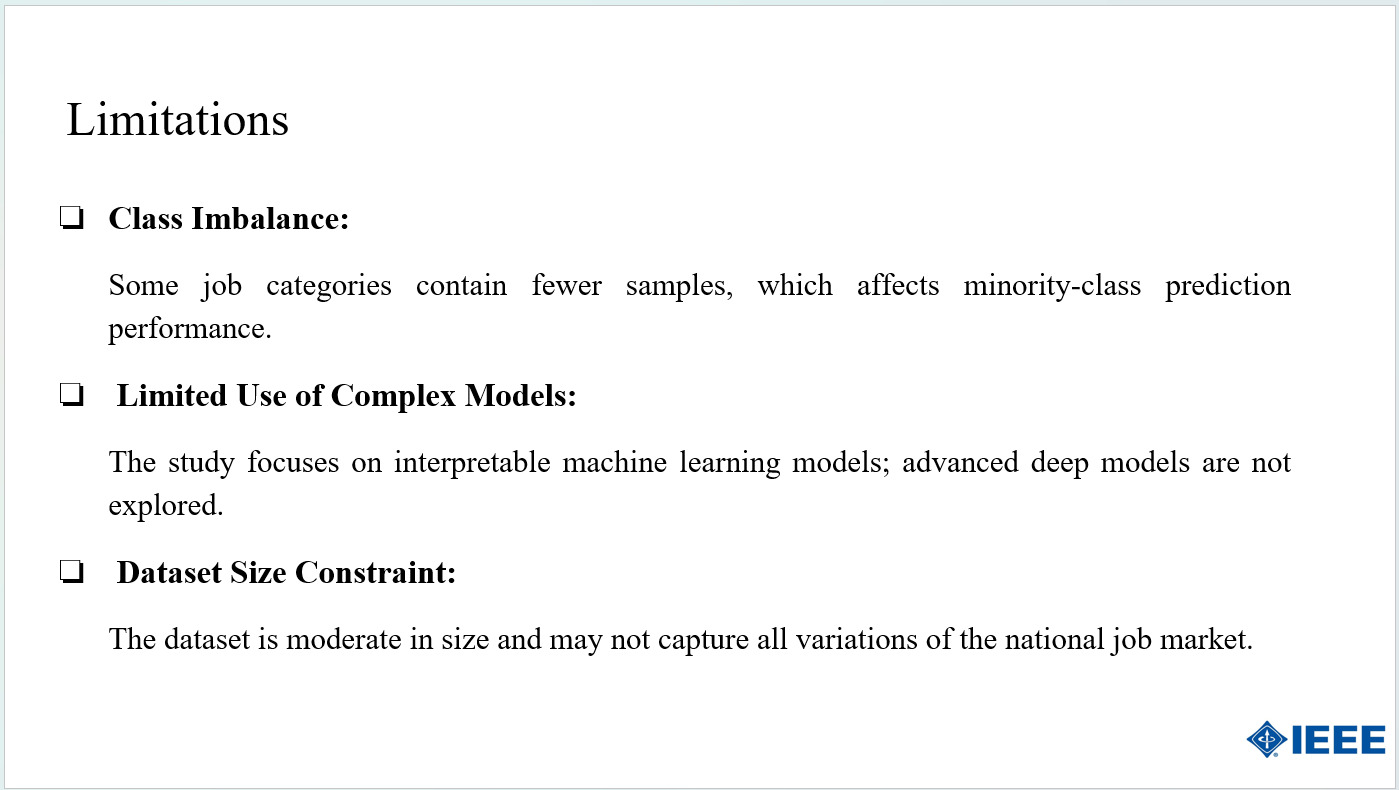 |
This slide outlines the main limitations of the study.
First, class imbalance exists in the dataset, where some job categories contain fewer samples, which affects prediction performance for minority classes.
Second, the study focuses on interpretable machine learning models, and therefore more complex deep learning models are not explored.
Finally, the dataset size is moderate and may not capture all variations present in the national job market.
These limitations highlight important directions for future improvement. |
| ICACT20260013 Slide.19
[Big Slide]
[YouTube] |
Chrome Click!! |
 |
The key takeaway from this work is that job recommendation systems must evolve from simple keyword-based matching to context-aware intelligence.
By incorporating skills, career stage, and age-related context, such systems can provide more realistic, personalized, and effective job recommendations, particularly in emerging job markets like Bangladesh. |
| ICACT20260013 Slide.20
[Big Slide]
[YouTube] |
Chrome Click!! |
 |
Thank you. |
| |





