 ICACT20260148 Slide.01
[Big Slide] |
Chrome  Click!! |
 |
Good morning, everyone. I am Dr. Tae-Gyu Lee from Pyeongtaek University. Today, I am pleased to present our research titled Edge-AI Machine Learning System for Intelligent Customer Face Monitoring, which utilizes Raspberry Pi. |
| ICACT20260148 Slide.02
[Big Slide]
|
Chrome Click!! |
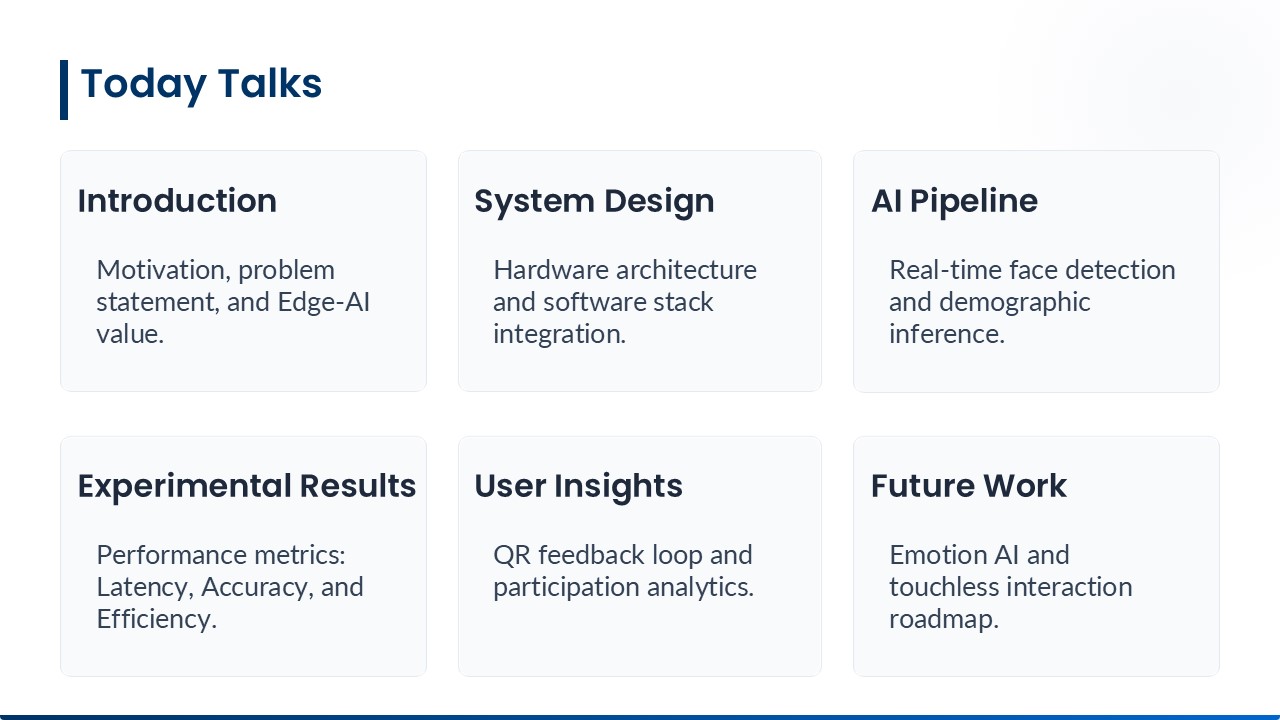 |
My presentation is organized into six main parts. I will begin with the motivation behind this study, followed by our system design and AI pipeline. Then, I will share our experimental results and user insights before concluding with our future roadmap. |
| ICACT20260148 Slide.03
[Big Slide]
|
Chrome Click!! |
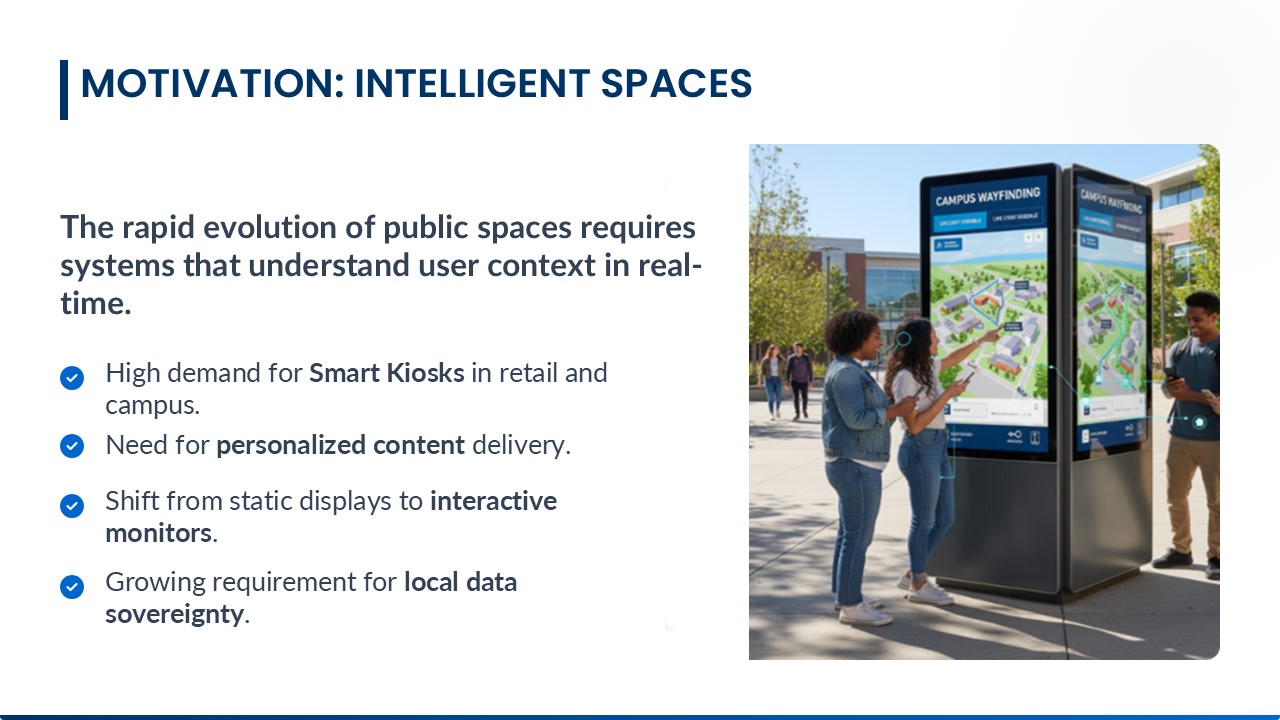 |
In todays smart environments, there is a growing demand for kiosks that can understand user context in real-time. To provide truly personalized content while maintaining local data sovereignty, we need systems that can analyze user demographics instantly at the point of interaction. |
| ICACT20260148 Slide.04
[Big Slide]
|
Chrome Click!! |
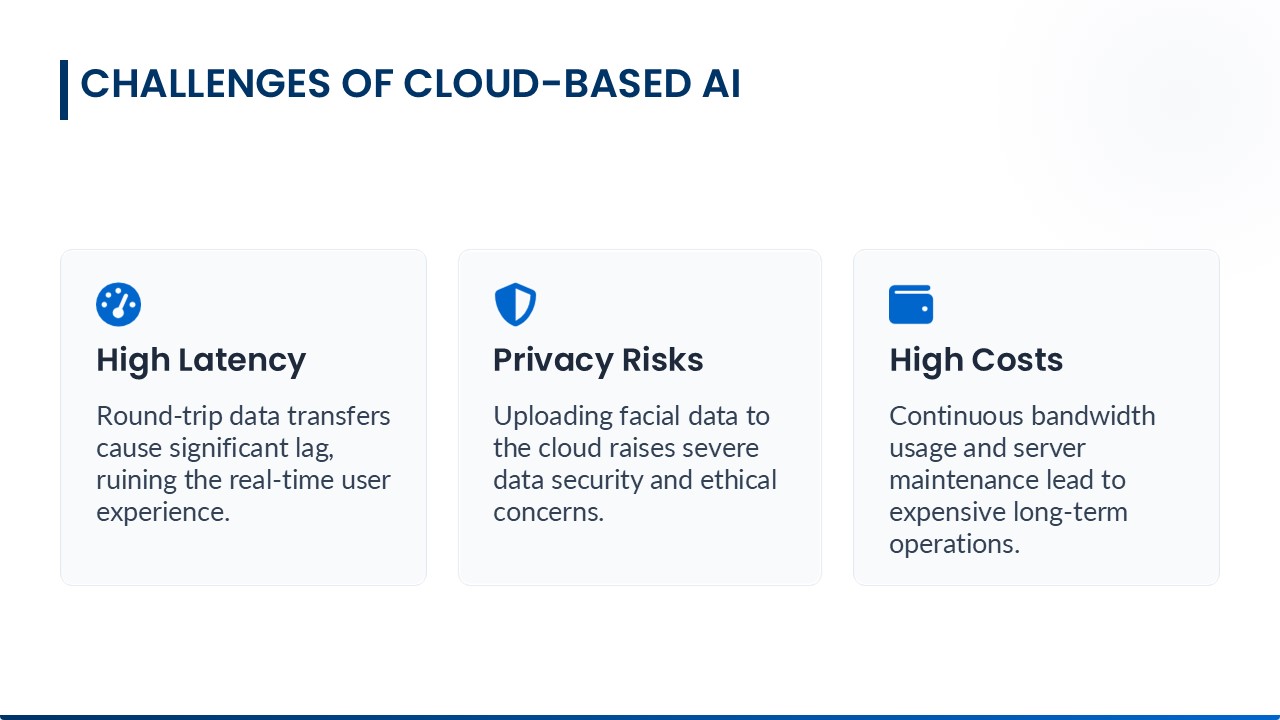 |
Traditional cloud-based AI faces three major hurdles. First, the latency from data transfer ruins the real-time experience. Second, uploading facial data raises serious privacy concerns. And finally, the continuous bandwidth and server costs make long-term operations expensive. |
| ICACT20260148 Slide.05
[Big Slide]
|
Chrome Click!! |
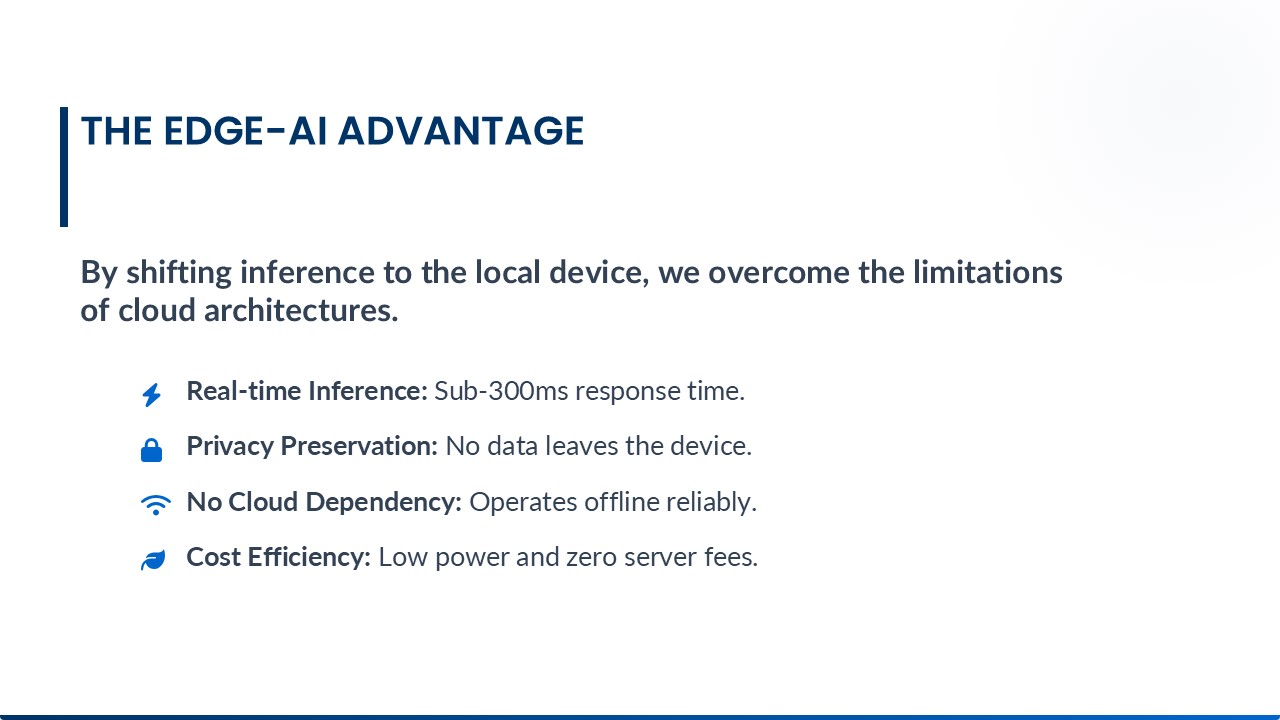 |
To solve these issues, we propose an Edge-AI solution. By processing data locally, we achieve sub-300ms response times, ensure total privacy as no data leaves the device, and significantly reduce operational costs by eliminating cloud dependencies. |
| ICACT20260148 Slide.06
[Big Slide]
|
Chrome Click!! |
 |
Now, lets look at the hardware integration and the software ecosystem that makes this possible. |
| ICACT20260148 Slide.07
[Big Slide]
|
Chrome Click!! |
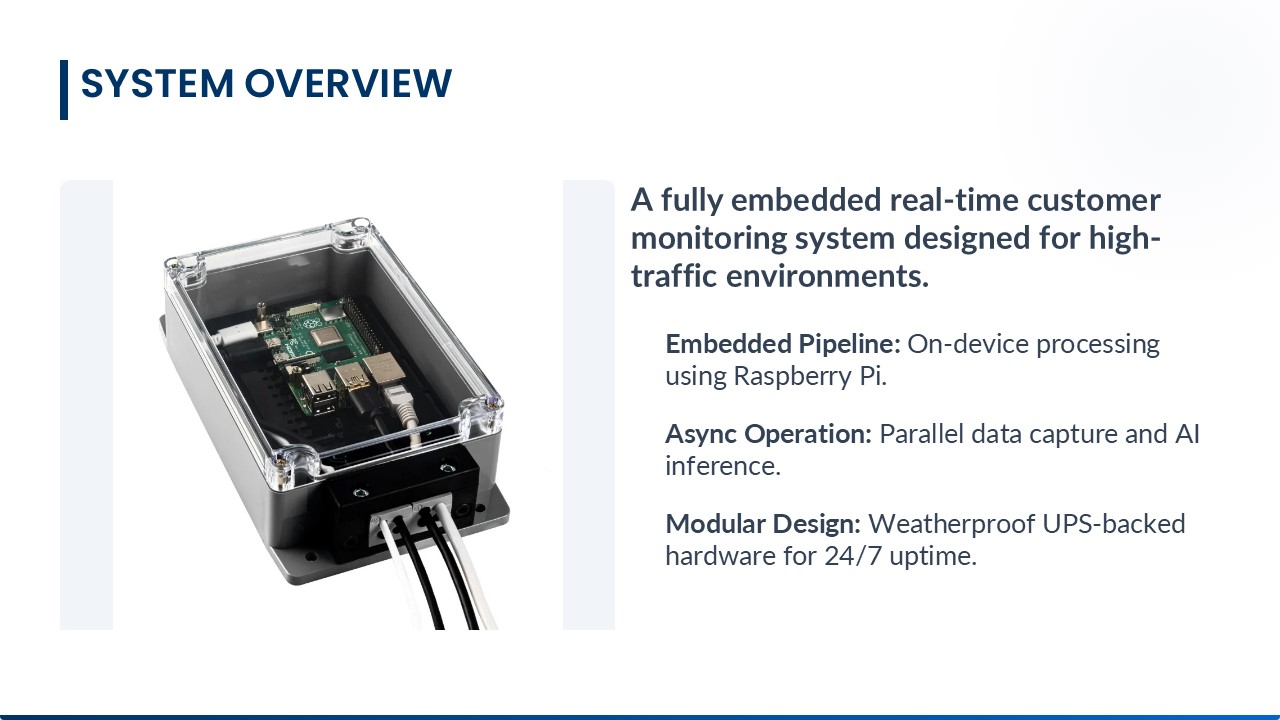 |
Our system is a fully embedded, real-time monitor. It features an asynchronous pipeline that captures data and performs AI inference in parallel, housed in a weatherproof casing designed for 24/7 campus or retail use. |
| ICACT20260148 Slide.08
[Big Slide]
|
Chrome Click!! |
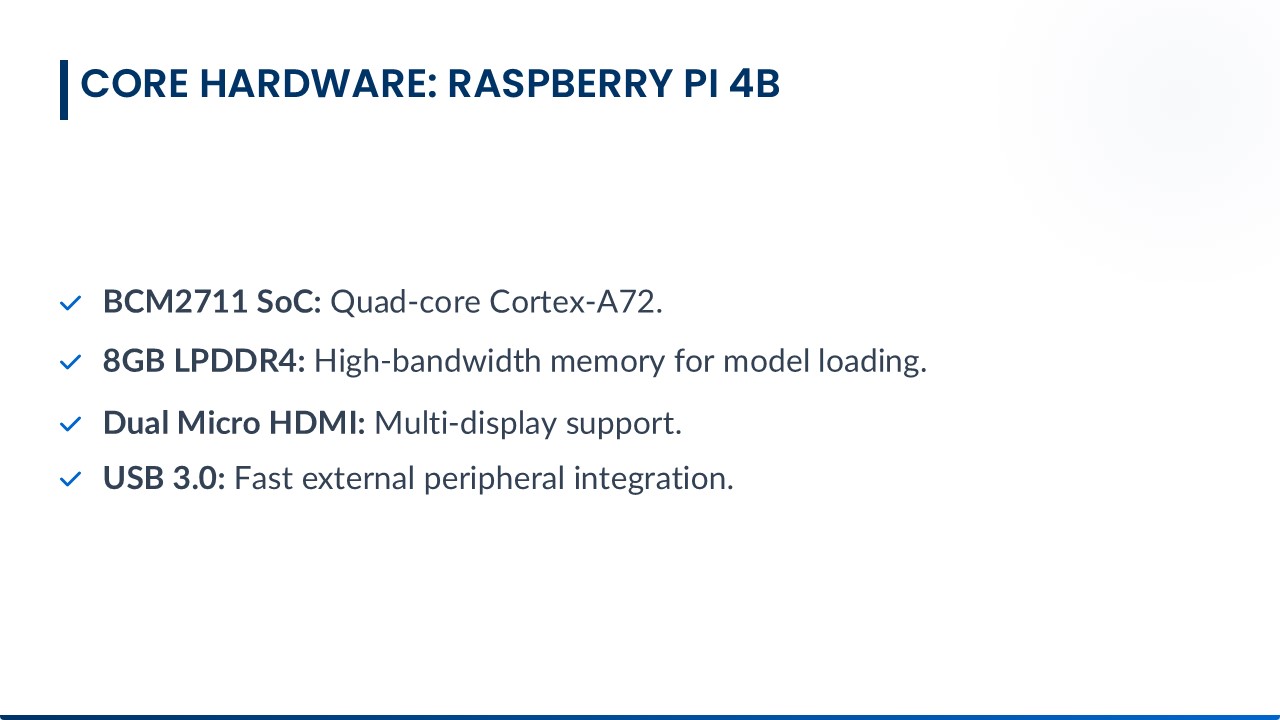 |
At the heart of our system is the Raspberry Pi 4 Model B. We utilized the 8GB version to ensure enough memory bandwidth for loading multiple deep learning models, providing the necessary computing power in a small form factor. |
| ICACT20260148 Slide.09
[Big Slide]
|
Chrome Click!! |
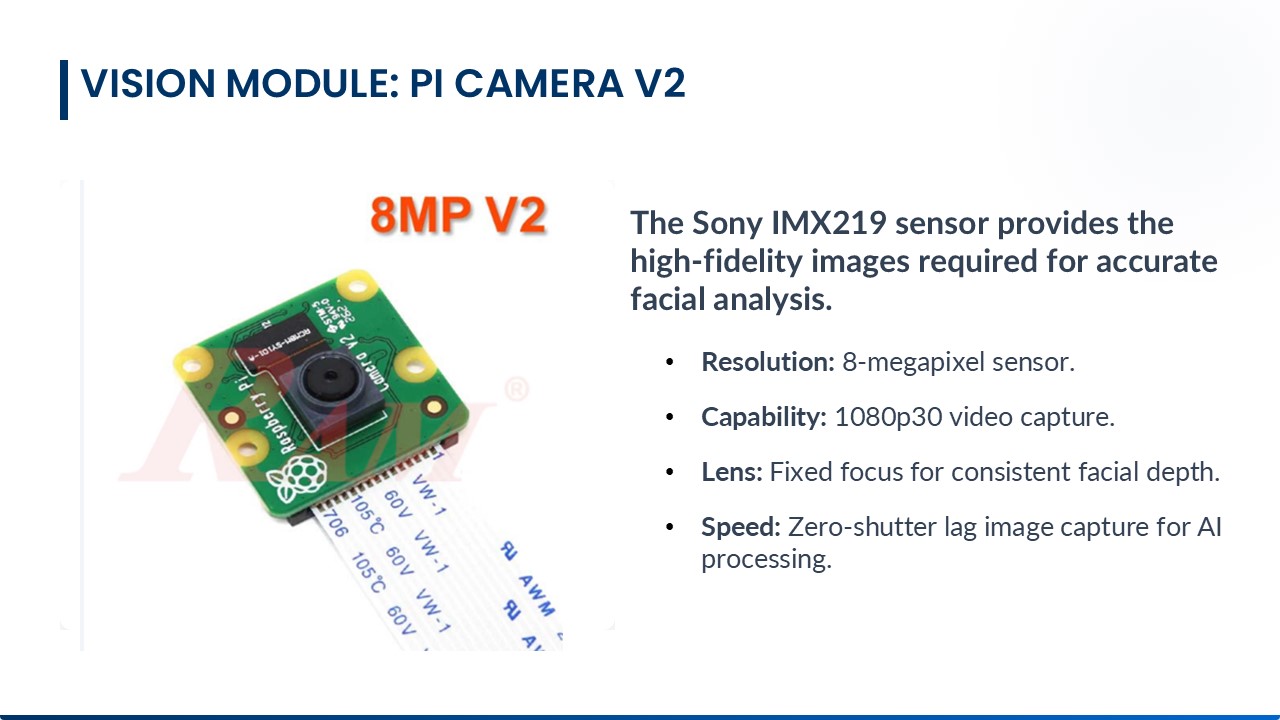 |
For image acquisition, we used the Sony IMX219 sensor. Its 8-megapixel resolution and zero-shutter lag capability are essential for capturing high-fidelity facial images required for accurate AI analysis. |
| ICACT20260148 Slide.10
[Big Slide]
|
Chrome Click!! |
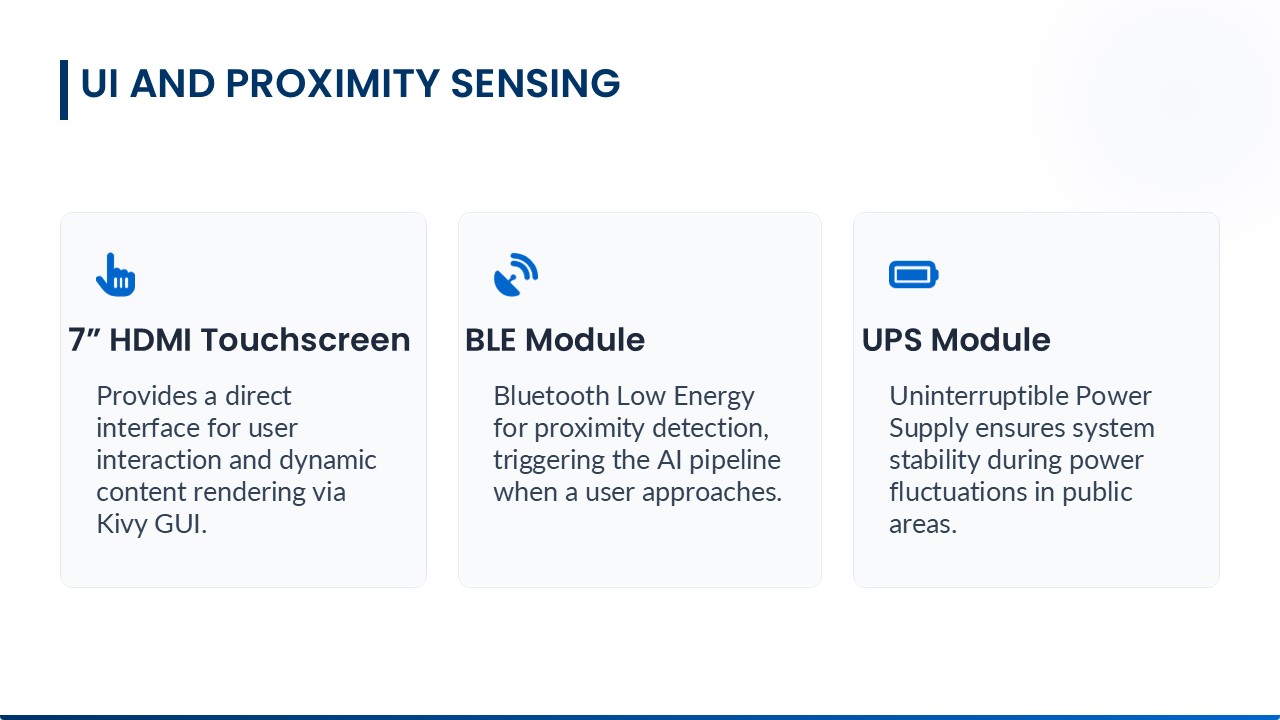 |
The user interface is handled by a 7-inch touchscreen. We also integrated a BLE module for proximity sensing, which acts as a wake-up trigger for the AI pipeline when a user approaches the kiosk. |
| ICACT20260148 Slide.11
[Big Slide]
|
Chrome Click!! |
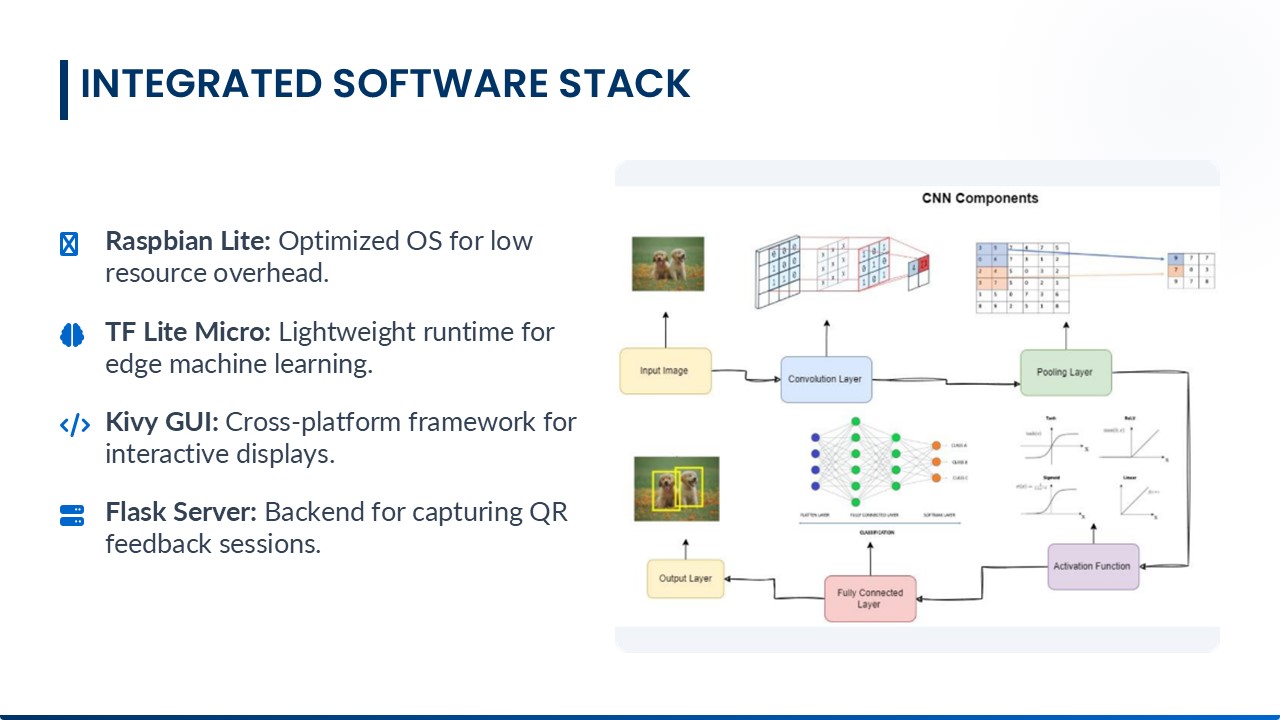 |
On the software side, we run Raspbian Lite for efficiency. We use TensorFlow Lite Micro for the inference engine and Kivy for the GUI. A local Flask server handles the feedback data capture. |
| ICACT20260148 Slide.12
[Big Slide]
|
Chrome Click!! |
 |
Next, I will explain the step-by-step AI inference pipeline, from initial detection to the final feedback loop. |
| ICACT20260148 Slide.13
[Big Slide]
|
Chrome Click!! |
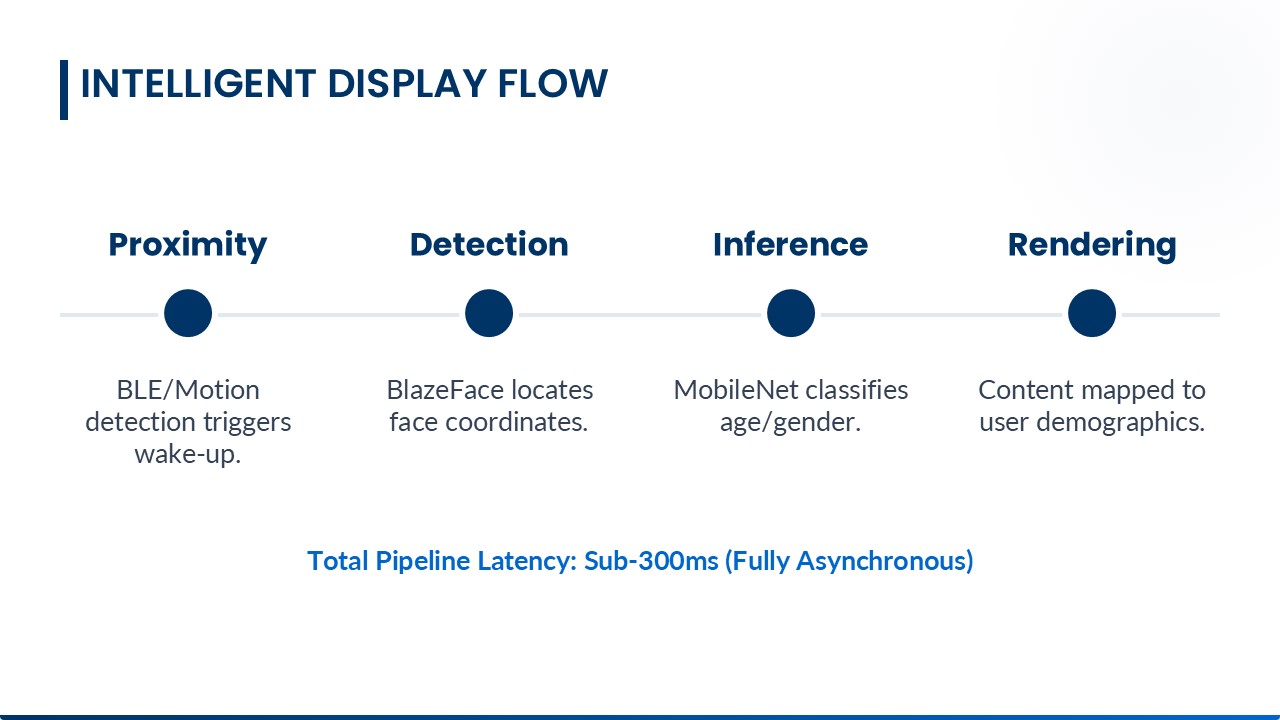 |
The workflow is fully asynchronous. It starts with proximity detection, followed by face localization using BlazeFace, demographic inference via MobileNet, and finally, rendering the targeted content—all within 300 milliseconds.
|
| ICACT20260148 Slide.14
[Big Slide]
|
Chrome Click!! |
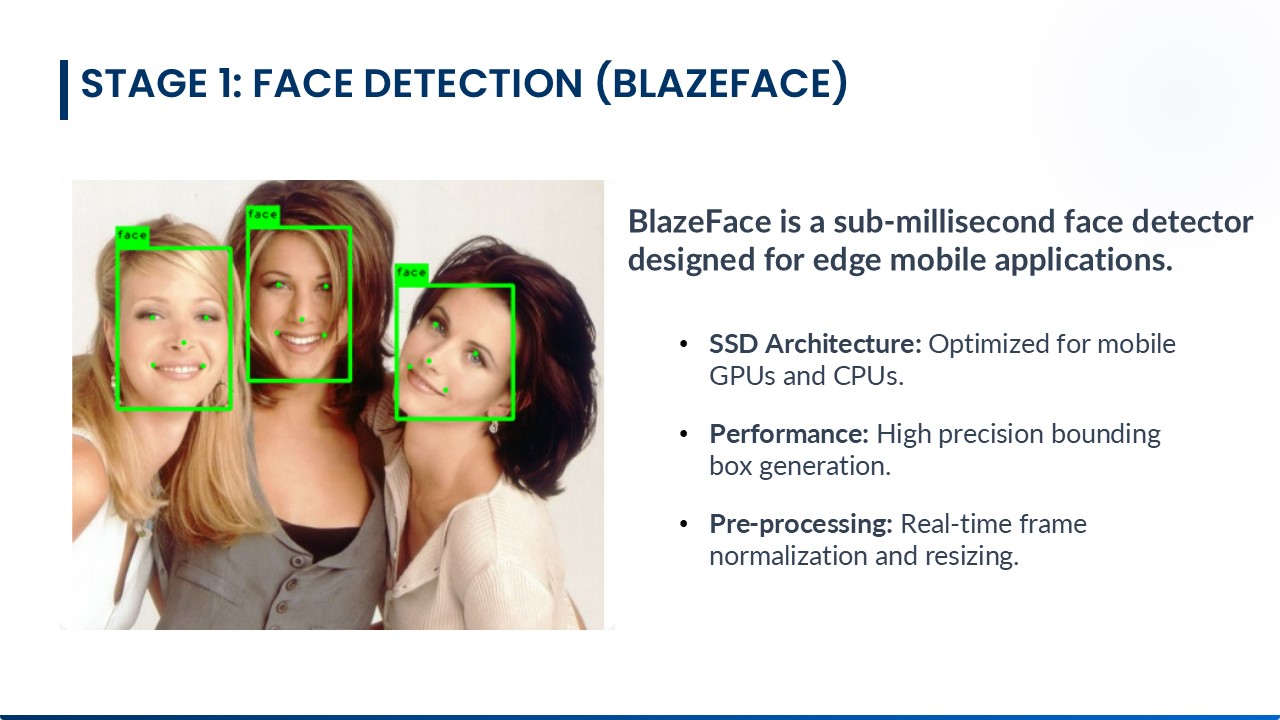 |
For the first stage, we use BlazeFace. Its a sub-millisecond detector optimized for mobile GPUs and CPUs, allowing us to generate precise face bounding boxes almost instantly. |
| ICACT20260148 Slide.15
[Big Slide]
|
Chrome Click!! |
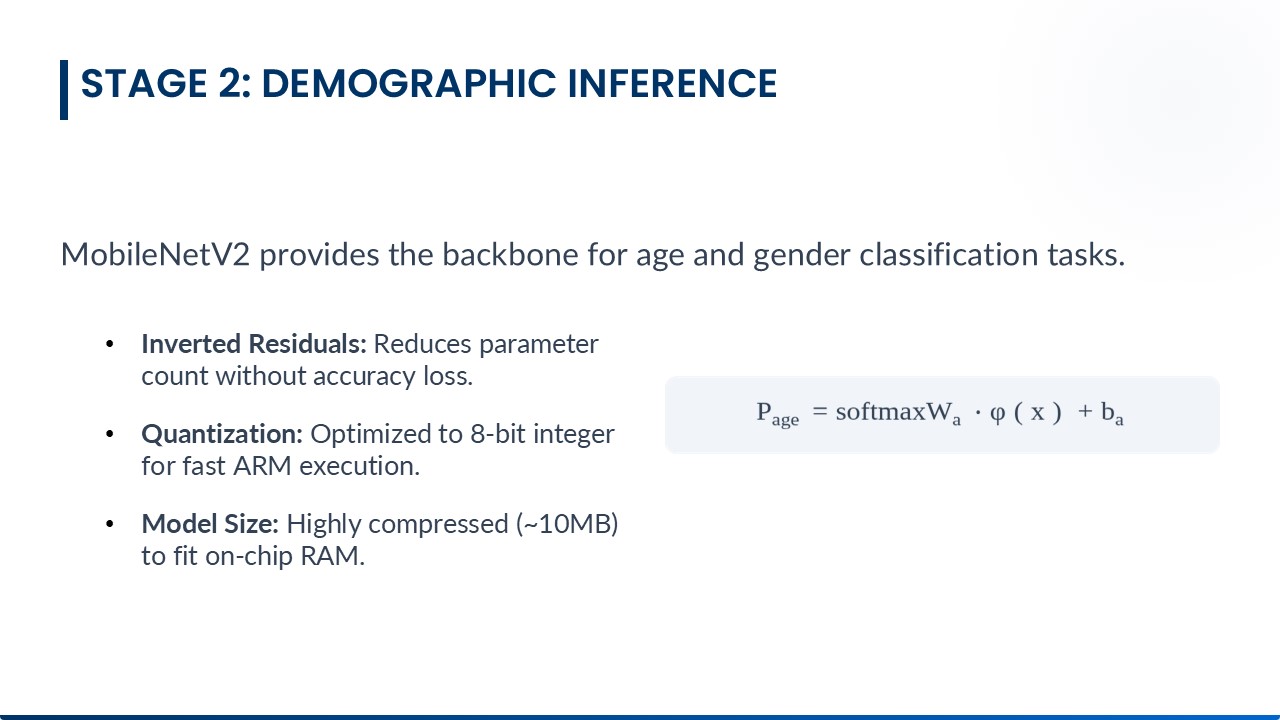 |
Once the face is detected, MobileNetV2 performs age and gender classification. We optimized the model to an 8-bit integer format using quantization, reducing the size to about 10 megabytes to fit our edge devices RAM. |
| ICACT20260148 Slide.16
[Big Slide]
|
Chrome Click!! |
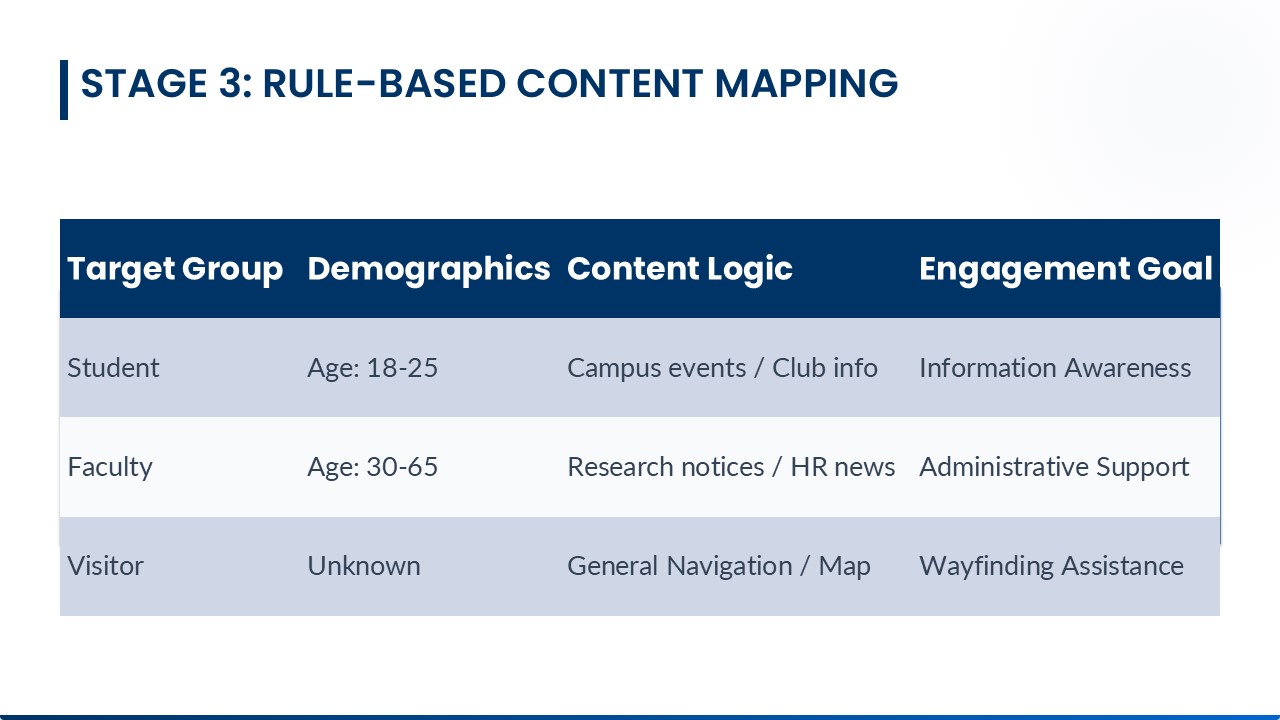 |
Based on the inference results, the system maps the user to a specific group. For instance, students might see campus event info, while faculty members receive administrative notices, ensuring the content is always relevant. |
| ICACT20260148 Slide.17
[Big Slide]
|
Chrome Click!! |
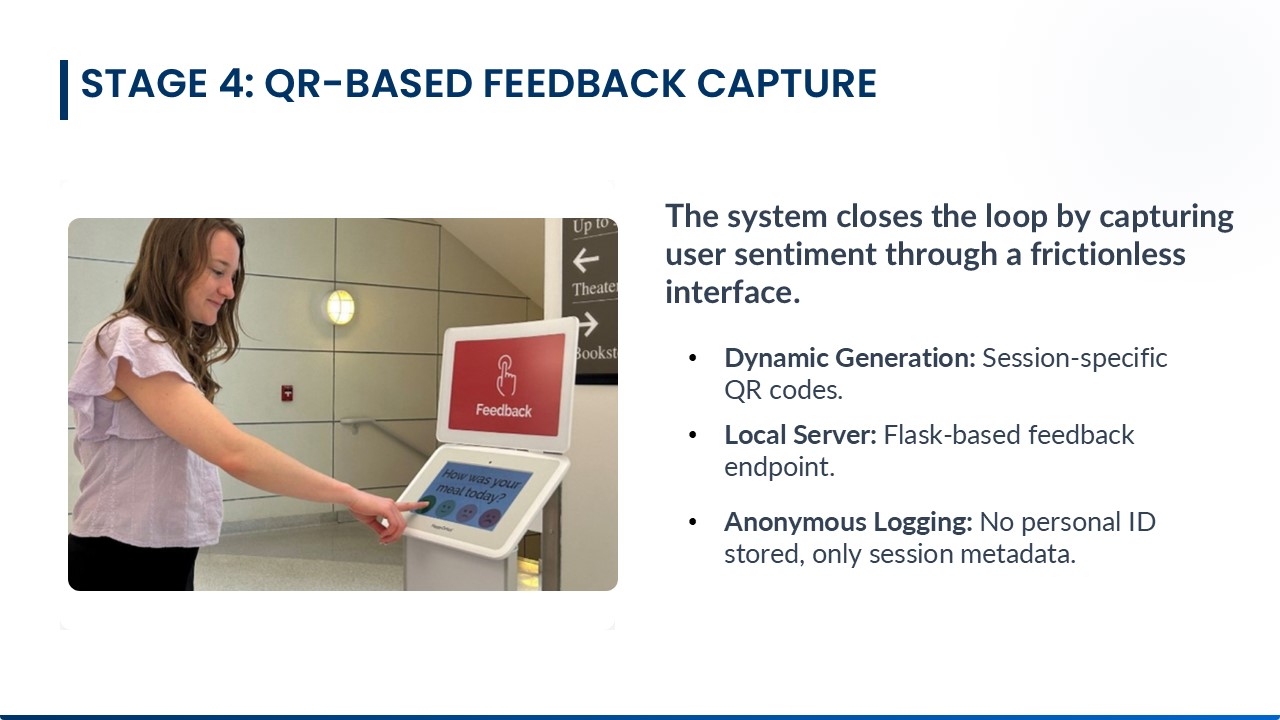 |
To close the loop, we display session-specific QR codes. Users can scan these with their smartphones to provide feedback. This allows us to collect participation metrics anonymously and without physical contact. |
| ICACT20260148 Slide.18
[Big Slide]
|
Chrome Click!! |
 |
We conducted tests with 30 participants across a wide age range. We measured latency, accuracy, and engagement levels within a controlled indoor kiosk environment. |
| ICACT20260148 Slide.19
[Big Slide]
|
Chrome Click!! |
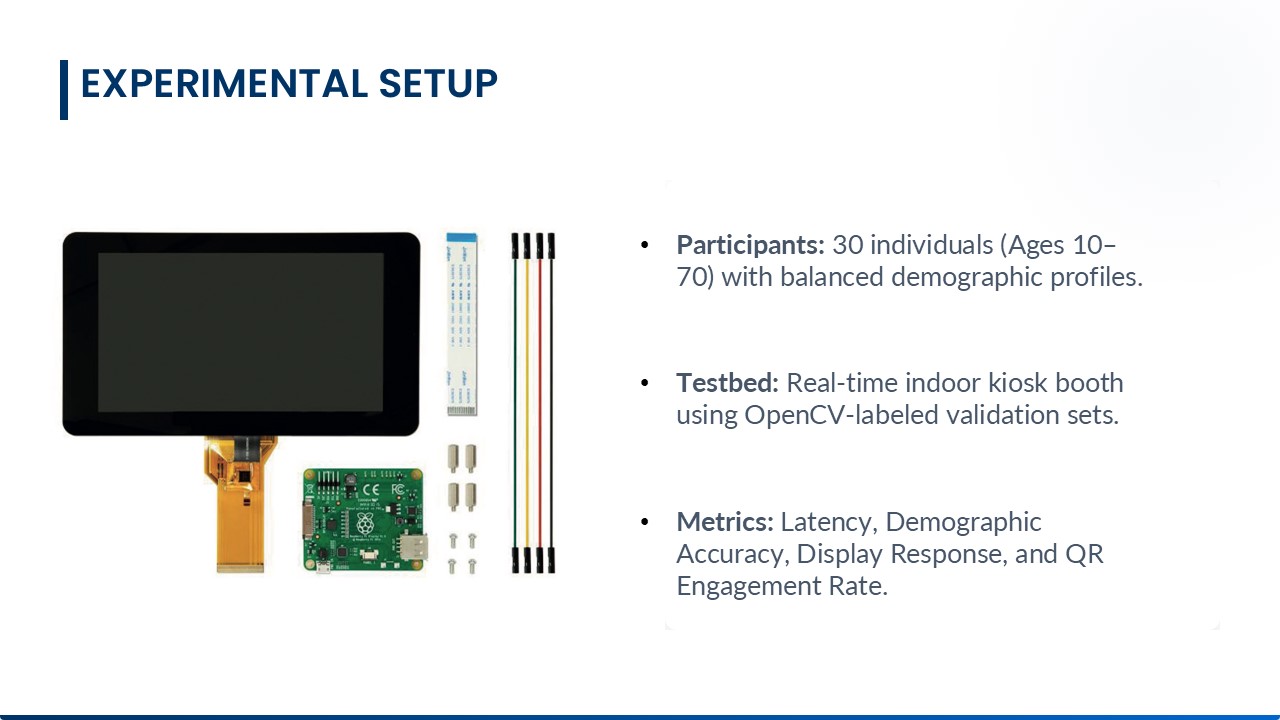 |
We conducted tests with 30 participants across a wide age range. We measured latency, accuracy, and engagement levels within a controlled indoor kiosk environment. |
| ICACT20260148 Slide.20
[Big Slide]
|
Chrome Click!! |
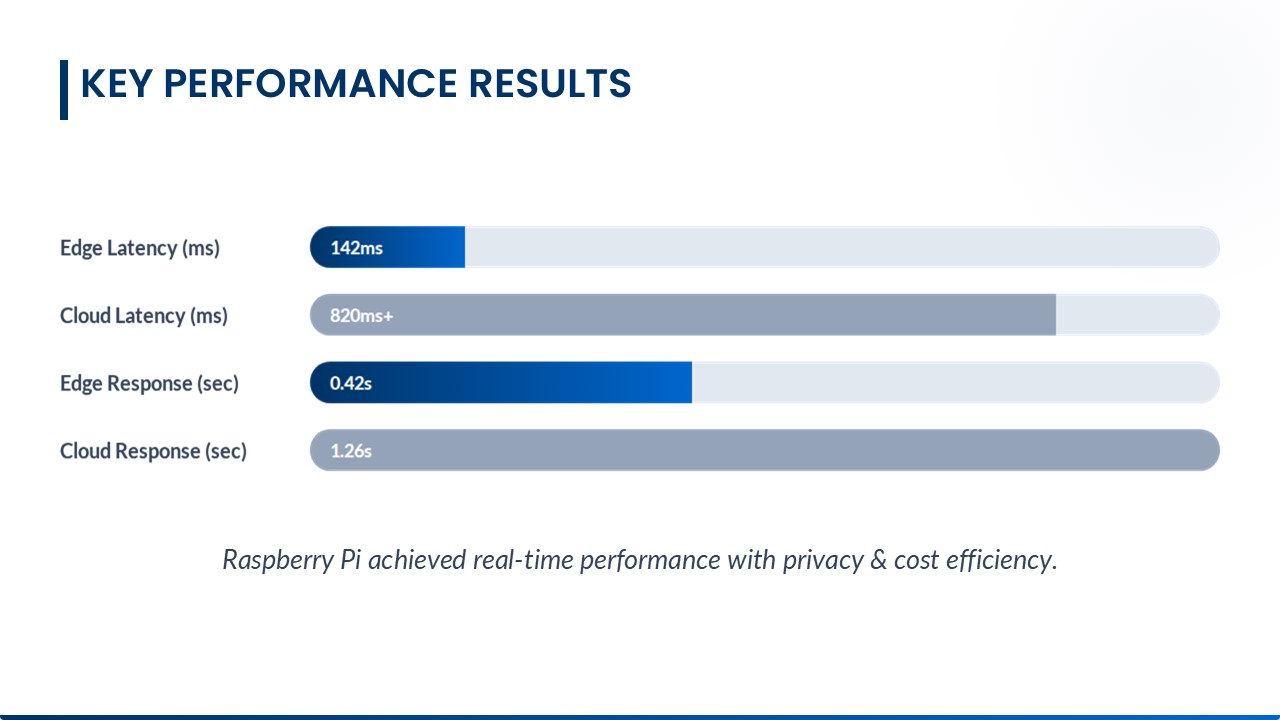 |
The results were compelling. Our Edge-AI system achieved a latency of just 142ms, which is nearly six times faster than typical cloud-based responses. This confirms that Raspberry Pi can handle real-time AI tasks effectively. |
| ICACT20260148 Slide.21
[Big Slide]
|
Chrome Click!! |
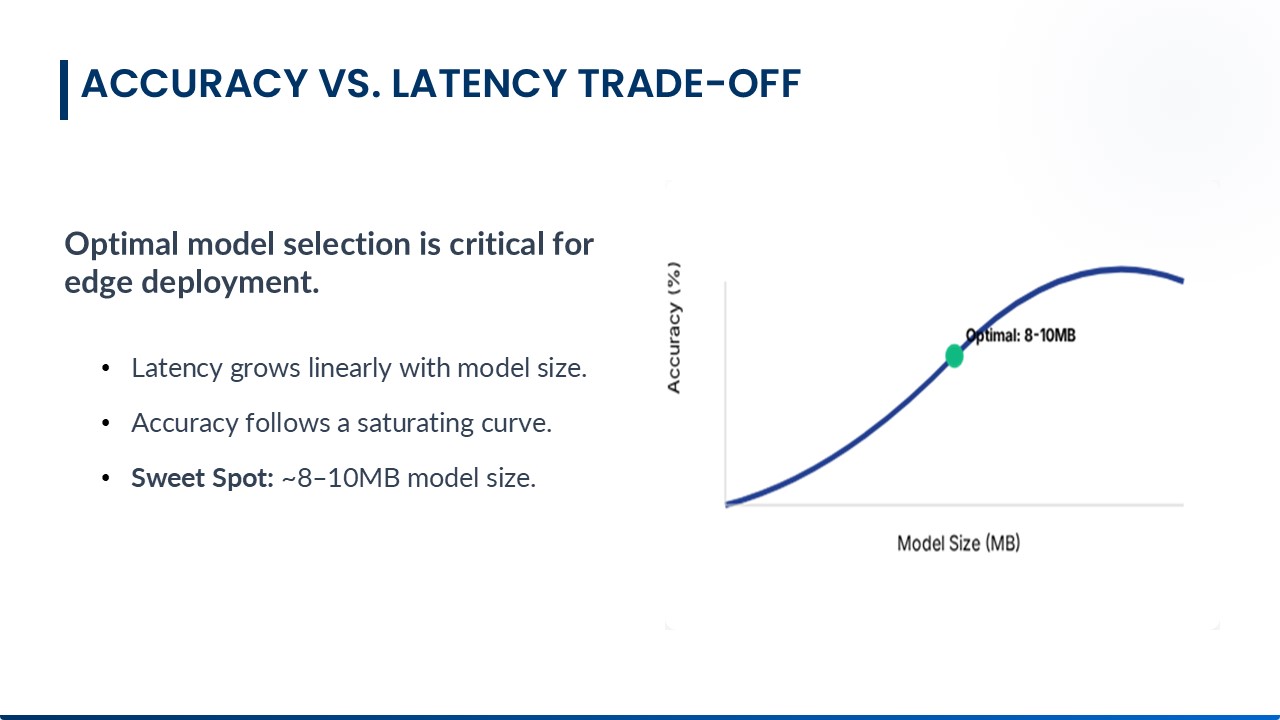 |
We found a sweet spot for edge deployment. A model size of around 8 to 10 megabytes provides the best balance between maintaining high accuracy and keeping latency low enough for a smooth user experience. |
| ICACT20260148 Slide.22
[Big Slide]
|
Chrome Click!! |
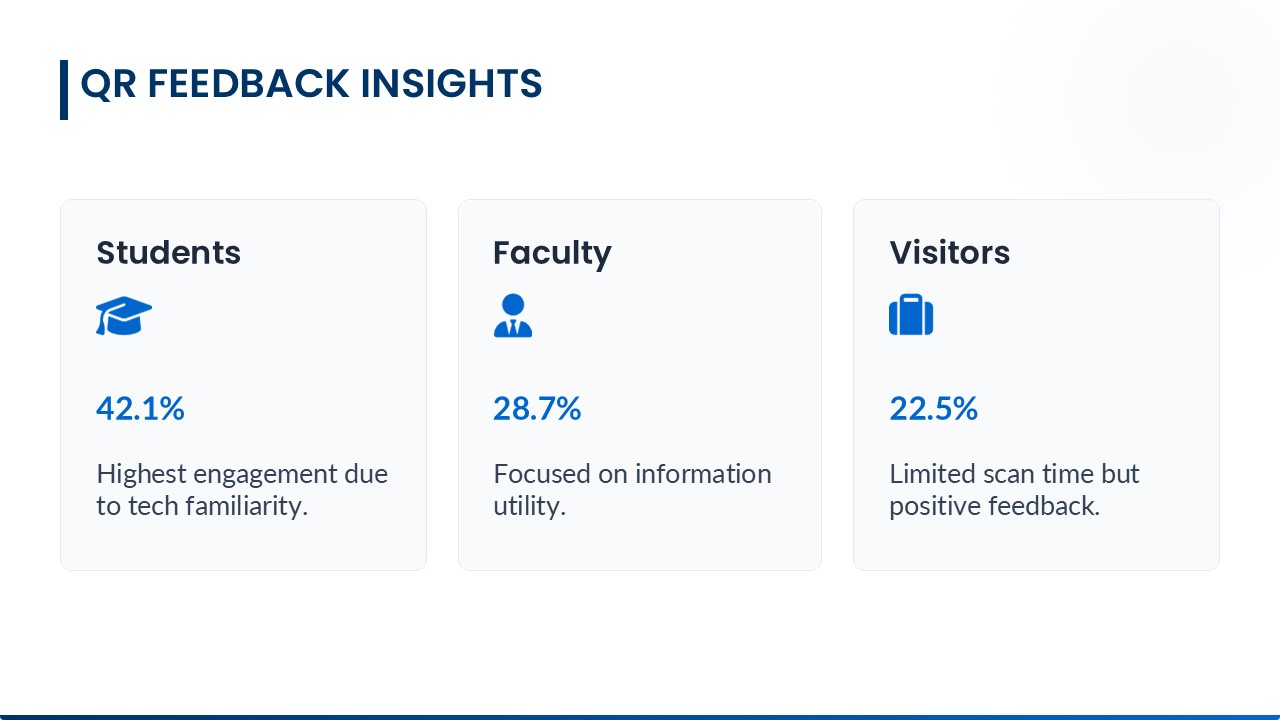 |
Our feedback data showed that students had the highest engagement rate at 42%, while faculty and visitors also showed positive responses, focusing primarily on the utility of the information provided. |
| ICACT20260148 Slide.23
[Big Slide]
|
Chrome Click!! |
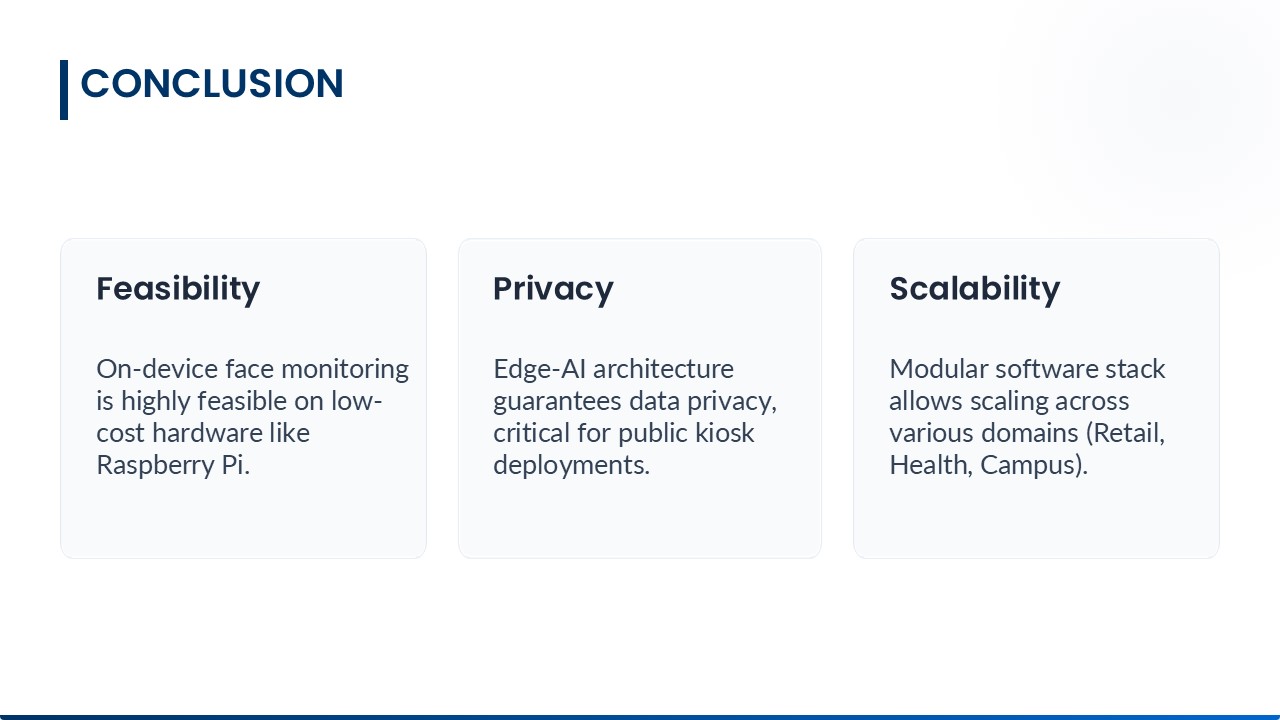 |
In conclusion, our research demonstrates that on-device face monitoring is highly feasible on low-cost hardware. It provides a scalable, privacy-preserving solution for various domains, from retail to campus management. |
| ICACT20260148 Slide.24
[Big Slide]
|
Chrome Click!! |
 |
Moving forward, we plan to implement facial emotion recognition and gesture-based UIs. Thank you for your attention. I am now open to any questions you may have. |















