Now 5070 visitors
Today:0 Yesterday:0
Total: 147078
212S 50P 4R
2026-10-20, Week 43 |
| Member Login |
| TACT Journal Homepage |
| Call for Paper |
| Committee |
| Find My Paper |
| Author Homepage |
| Statistics & History |
| Welcome Message |
| Paper Procedure |
| FAQ |
| Paper Archives |
| Outstanding Papers |
| Author Homepage |
| - Paper Procedure |
| - Journal Procedure |
| - Presentation Tips |
|
| Program & Proceedings |
| Program with Papers |
| Plenary Session |
| Tutorial Session |
|
| Presentation Platform |
| Hotel & Travel Info |
| About Korea |
| Accommodation |
| Transportation |
| VISA |
| Other Infomation |
|
| Photo Gallery |
| Scheduler Login |
| Seminar |
| Archives Login |
|
| Sponsors |

|

|

|

|

|

|

|

|

|

|
|
|
|
|
 ICACT20260190 Slide.01
[Big Slide] |
Chrome  Click!! |
 |
Good morning, everyone. Thank you for the opportunity to present our work today.
My name is Minsu Kim, and I am presenting on behalf of our research team from Sungkyunkwan University and LS-THiRAUTECH.
Our paper is titled "Unsupervised Learning-Based Defect Detection in PCB Circuit Images for Automated Quality Inspection."
This work is a collaboration between the Department of Smart Factory Convergence at Sungkyunkwan University and the Research and Development Center at LS-THiRAUTECH Co., Ltd. |
| ICACT20260190 Slide.02
[Big Slide]
|
Chrome Click!! |
 |
Here is an overview of our presentation. We will begin with an introduction to the problem, review related work, describe our proposed method, present our experimental results, and conclude with a summary and future directions. |
| ICACT20260190 Slide.03
[Big Slide]
|
Chrome Click!! |
 |
Let us begin with the introduction. |
| ICACT20260190 Slide.04
[Big Slide]
|
Chrome Click!! |
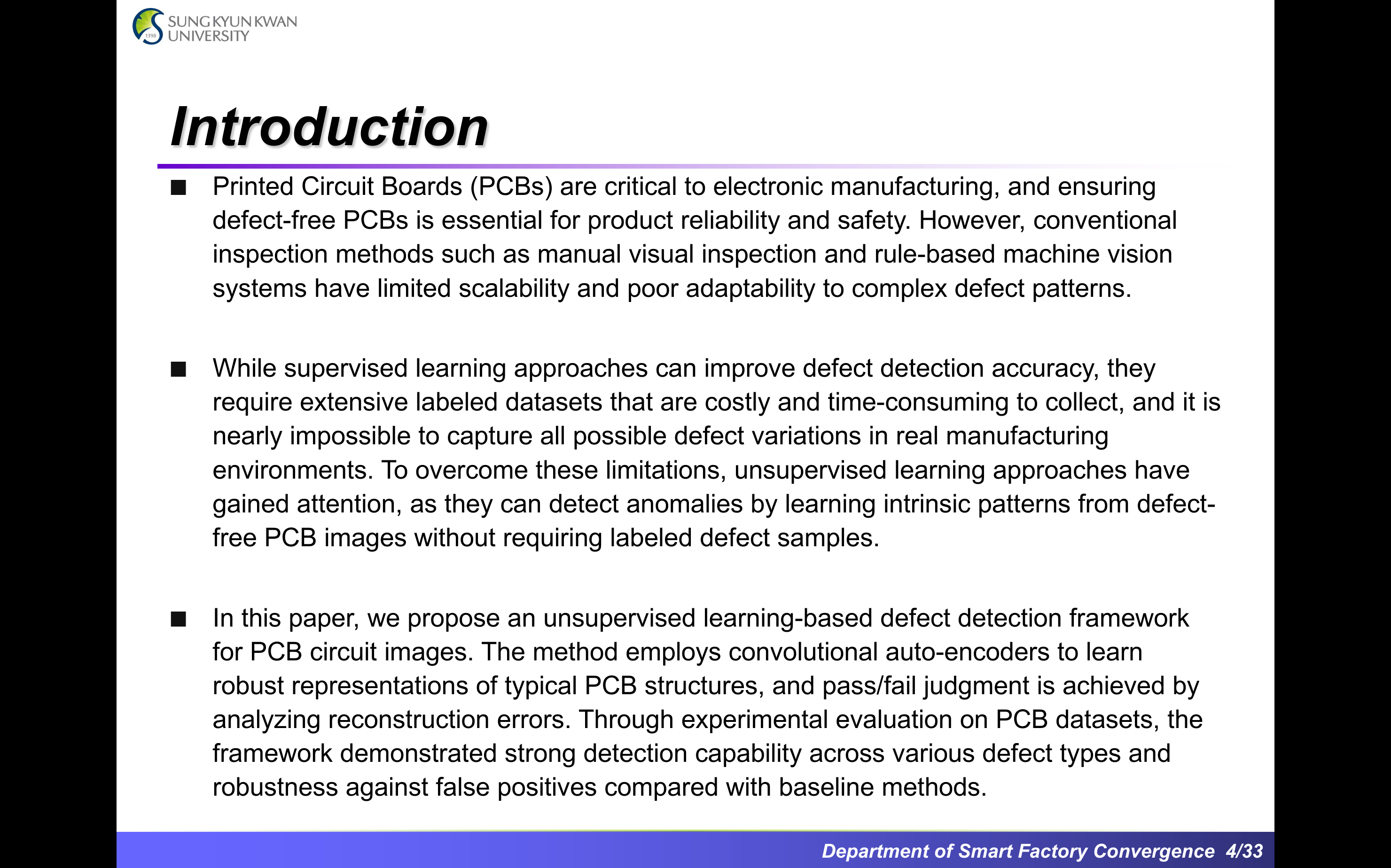 |
Printed Circuit Boards, or PCBs, are fundamental components in modern electronic devices. They serve as the primary platform for electrical connectivity and signal transmission. With the rapid growth of telecommunications, automotive electronics, and consumer devices, PCB designs have become increasingly complex, featuring higher component density and miniaturization.
Ensuring defect-free PCBs is therefore critical. Even minor defects such as missing tracks, short circuits, or surface contamination can significantly compromise product reliability, safety, and cost efficiency.
Conventional inspection methods, including manual visual inspection and rule-based machine vision systems, have limited scalability, subjectivity, and low adaptability to complex defect patterns. While supervised learning approaches can improve accuracy, they require extensive labeled datasets that are costly and time-consuming to collect. In practice, it is nearly impossible to capture every possible defect variation that may occur on real manufacturing lines.
To overcome these limitations, we propose an unsupervised learning-based defect detection framework. This approach leverages convolutional autoencoders to learn standard pattern representations from defect-free PCB images, enabling anomaly detection through reconstruction error analysis without requiring labeled defect data. |
| ICACT20260190 Slide.05
[Big Slide]
|
Chrome Click!! |
 |
Now, let us review the related work in this area. |
| ICACT20260190 Slide.06
[Big Slide]
|
Chrome Click!! |
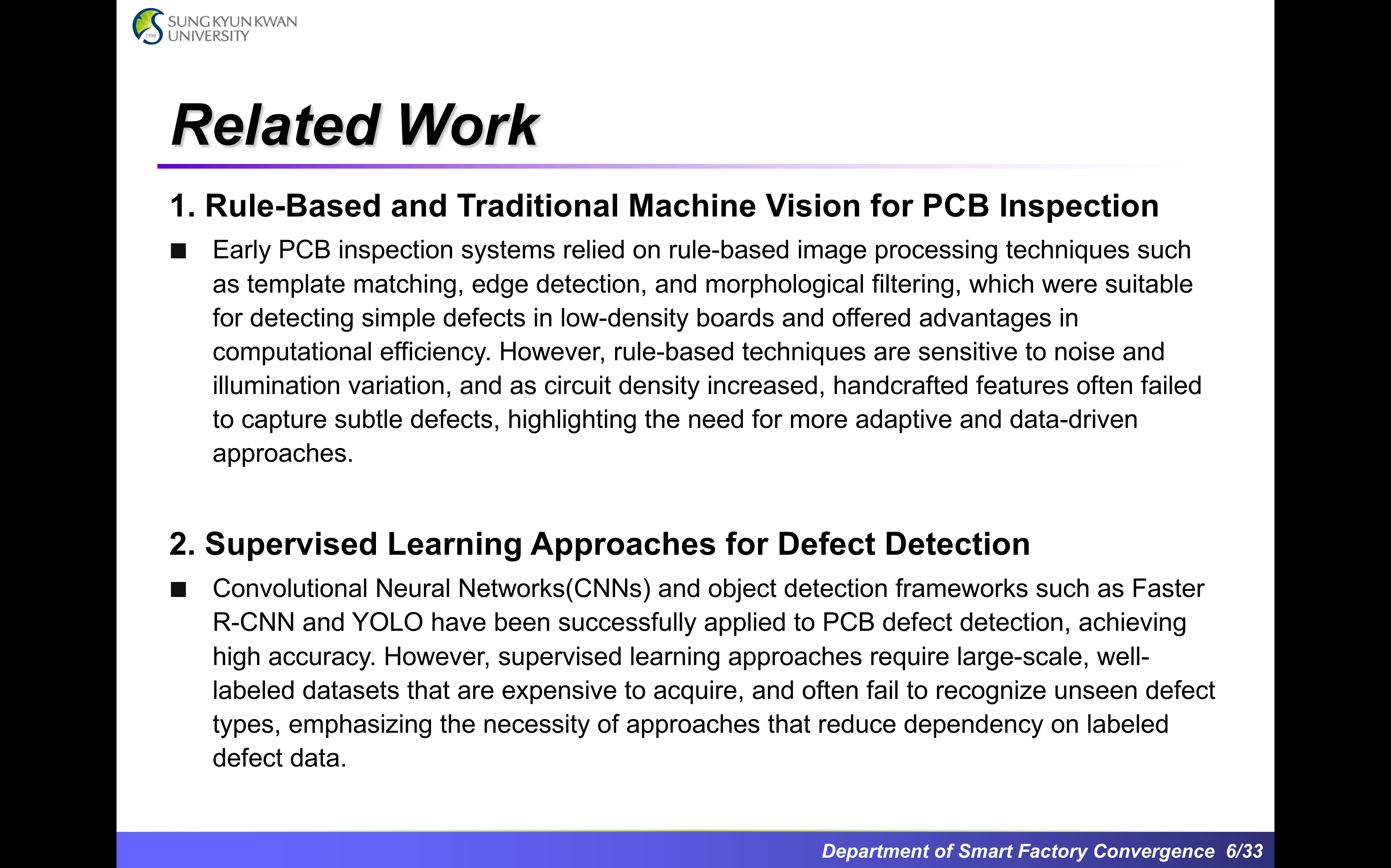 |
First, regarding rule-based and traditional machine vision for PCB inspection: early systems relied on techniques such as template matching, edge detection, and morphological filtering. These methods offered computational efficiency and interpretability and were suitable for detecting simple defects in low-density boards.
However, rule-based techniques are inherently sensitive to noise and illumination variation. As circuit density increased, handcrafted features often failed to capture subtle and irregular defects, resulting in frequent false positives and reduced robustness.
Second, supervised learning approaches using Convolutional Neural Networks and object detection frameworks such as Faster R-CNN and YOLO have been successfully applied to PCB defect detection, achieving high accuracy with sufficient annotated datasets. However, they face significant challenges in industrial adoption due to their reliance on large-scale, well-labeled datasets. Moreover, they often fail to recognize unseen or rare defect types, reducing their robustness in dynamic production environments. |
| ICACT20260190 Slide.07
[Big Slide]
|
Chrome Click!! |
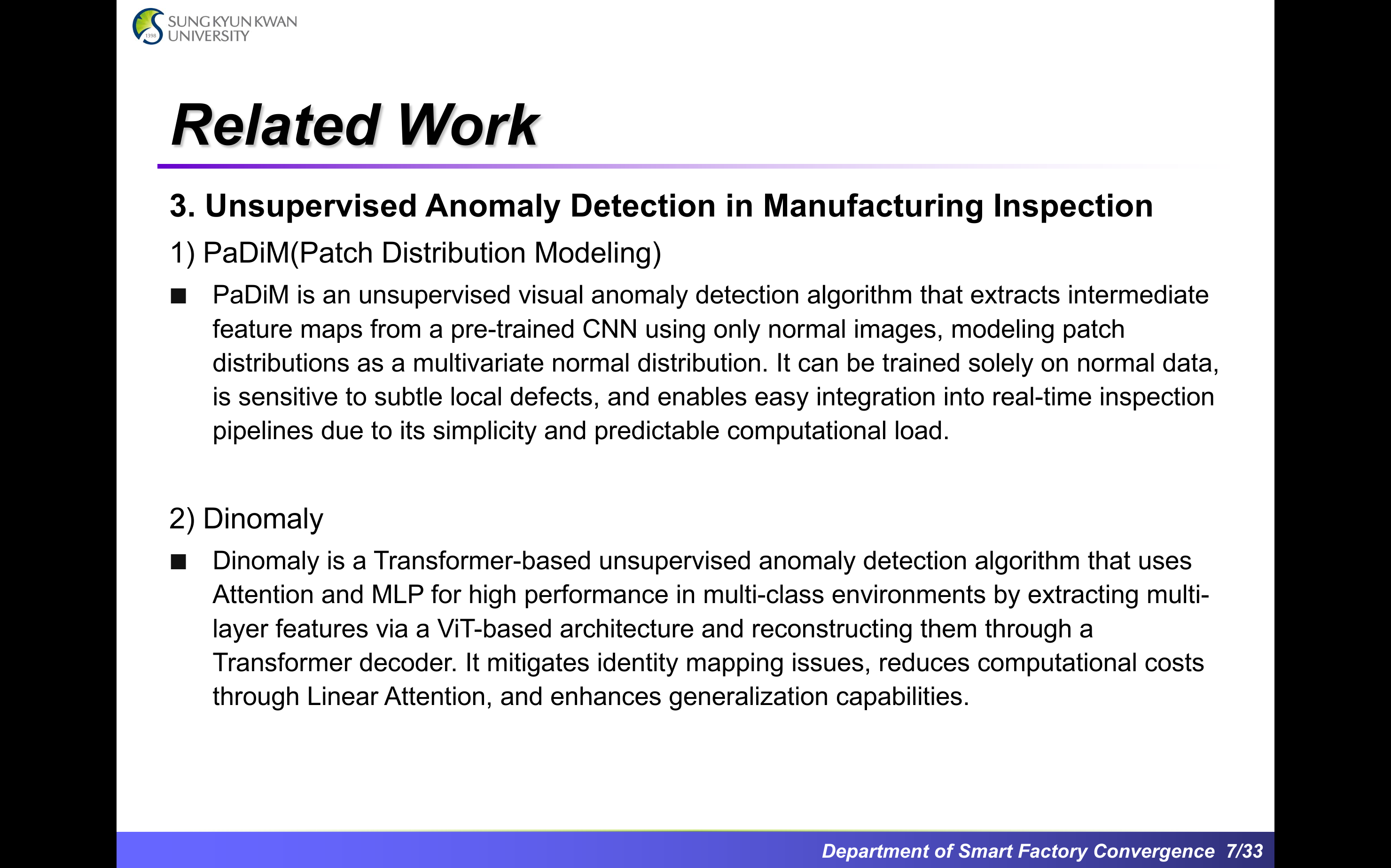 |
For unsupervised anomaly detection, we focus on two specific algorithms.
First, PaDiM, or Patch Distribution Modeling, is an unsupervised visual anomaly detection algorithm. It extracts intermediate feature maps from a pre-trained CNN using only normal images during training. It models the distribution of patches at spatial locations as a multivariate normal distribution, estimating the mean vector and covariance matrix for the normal state at each spatial coordinate. During inference, it calculates an anomaly map based on how much the patch features of the incoming sample deviate from this distribution. PaDiM is simple, stable, and its computational load during inference is predictable, enabling easy integration into real-time inspection pipelines.
Second, Dinomaly is a Transformer-based unsupervised anomaly detection algorithm that aims for high performance in multi-class environments. Its key components include a Foundation Transformer, Noisy Bottleneck utilizing dropout, Linear Attention, and Loose Reconstruction. It extracts multi-layer features using a ViT-based architecture like DINO or DINOv2, passes them through an MLP bottleneck, and reconstructs them via a Transformer decoder. Dinomaly mitigates the identity mapping issue of traditional reconstruction-based methods, reduces memory and computational costs through Linear Attention, and enhances generalization capabilities. |
| ICACT20260190 Slide.08
[Big Slide]
|
Chrome Click!! |
 |
The broader integration of AI technologies into smart manufacturing has transformed quality control systems across industries. Examples include automated defect detection in semiconductors, surface inspection in automotive parts, and pattern analysis in textiles.
Within this context, PCB inspection represents a critical application area. Incorporating unsupervised learning-based methods into quality inspection processes not only improves detection accuracy but also enables adaptive quality assurance, contributing to the realization of smart factories where AI-driven inspection systems continuously optimize manufacturing processes through real-time feedback and data-driven decision-making. |
| ICACT20260190 Slide.09
[Big Slide]
|
Chrome Click!! |
 |
Next, I will describe our proposed method. |
| ICACT20260190 Slide.10
[Big Slide]
|
Chrome Click!! |
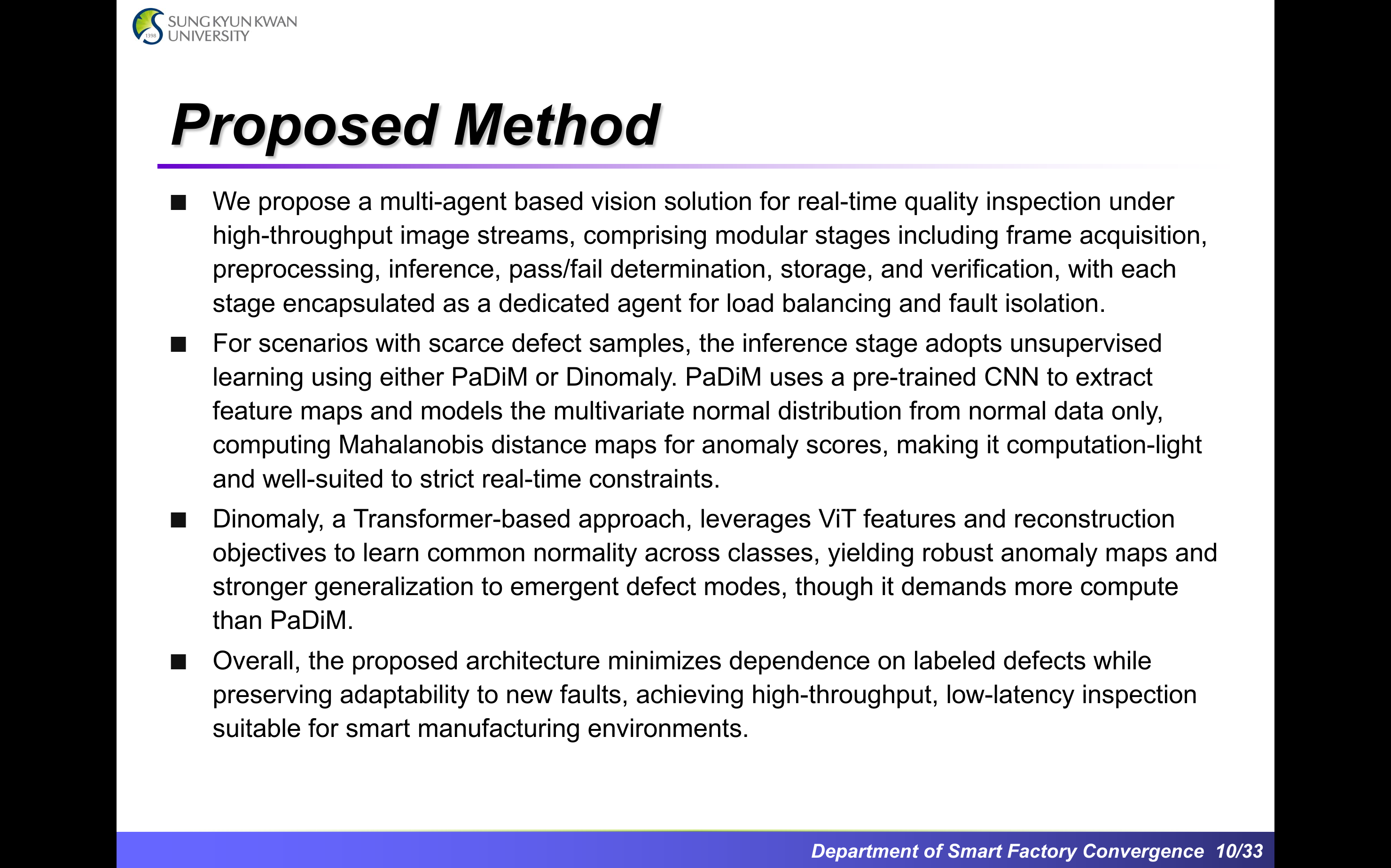 |
We propose a multi-agent based vision solution that enables real-time quality inspection under high-throughput image streams from multiple cameras and line scanners. The system targets production environments with tight bandwidth and latency budgets, ensuring that frames are ingested, processed, and judged without bottlenecks as sources scale.
The solution is modular and comprises six key stages: first, an orchestration agent for high-speed frame acquisition and buffering; second, lightweight preprocessing including ROI selection, resizing, denoising, and illumination normalization; third, delivery to a model-based inference engine; fourth, pass/fail determination using adaptive thresholds and hysteresis; fifth, persistent storage of inspection results and metadata; and sixth, operator-facing verification via a user interface. Each stage is encapsulated as a dedicated agent, enabling load balancing, backpressure control, and automatic CPU/GPU pool scaling.
For the inference stage, we adopt unsupervised learning and select one model per deployment without ensembling: either PaDiM for computation-light, real-time edge deployments, or Dinomaly for stronger generalization to emergent defect modes in multi-class environments. |
| ICACT20260190 Slide.11
[Big Slide]
|
Chrome Click!! |
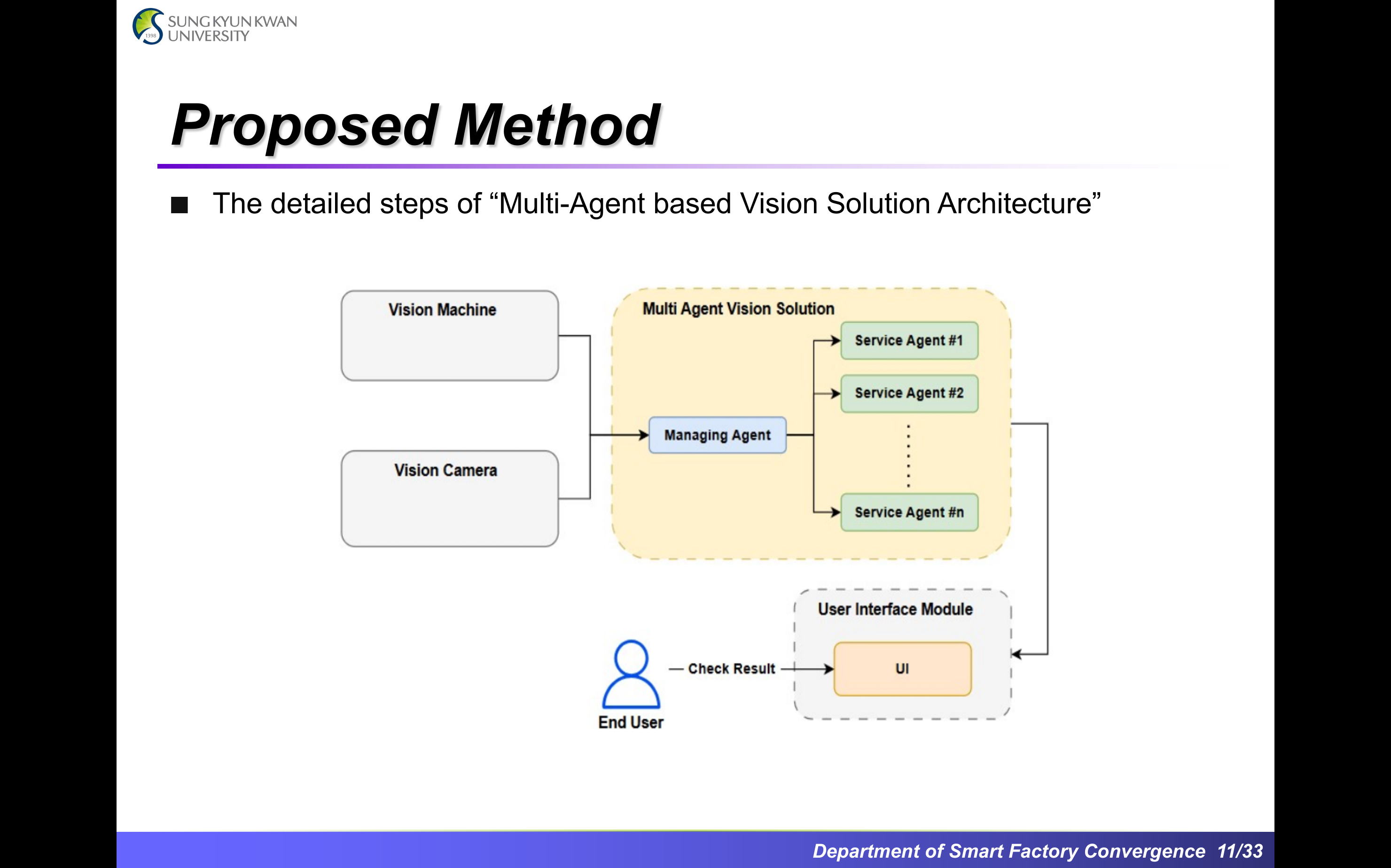 |
As you can see in this architecture diagram, the multi-agent based vision solution connects vision machines and cameras to a managing agent that orchestrates multiple service agents. Each service agent handles a specific processing task in the pipeline. The results are then delivered through a user interface module, where end users can check the inspection results. This design ensures that the pipeline maintains deterministic latency by decoupling ingestion, inference, and decision stages, while isolating faults for easier maintenance. |
| ICACT20260190 Slide.12
[Big Slide]
|
Chrome Click!! |
 |
Now, let me present our experimental setup and results. |
| ICACT20260190 Slide.13
[Big Slide]
|
Chrome Click!! |
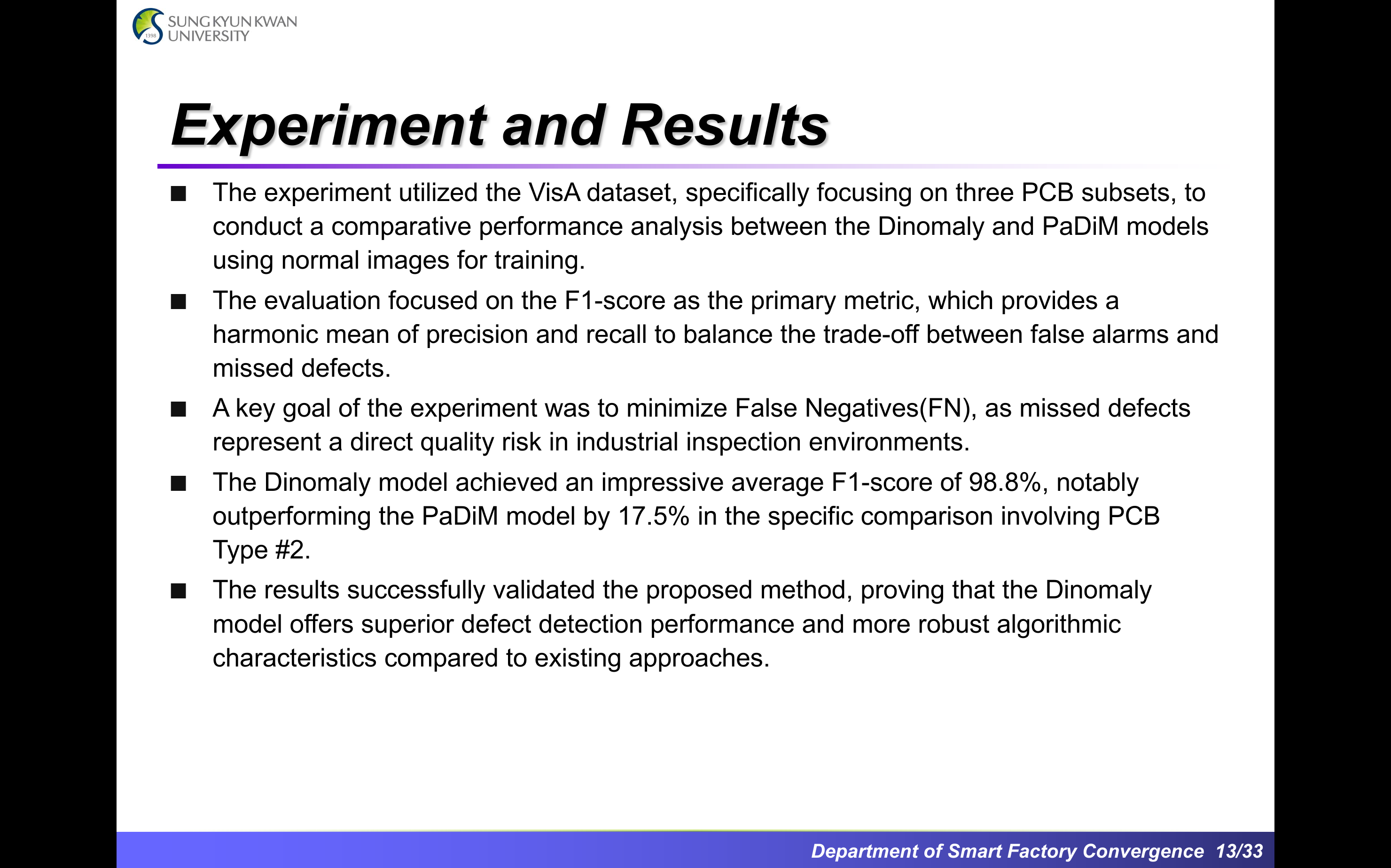 |
To summarize our experimental findings upfront: the experiment utilized the VisA dataset, specifically focusing on three PCB subsets. We conducted a comparative performance analysis between the Dinomaly and PaDiM models. The evaluation focused on the F1-score as the primary metric, and a key goal was to minimize false negatives, as missed defects represent a direct quality risk. The Dinomaly model achieved an impressive average F1-score of 98.8 percent, outperforming the PaDiM model by 17.5 percent on PCB Type number 2. |
| ICACT20260190 Slide.14
[Big Slide]
|
Chrome Click!! |
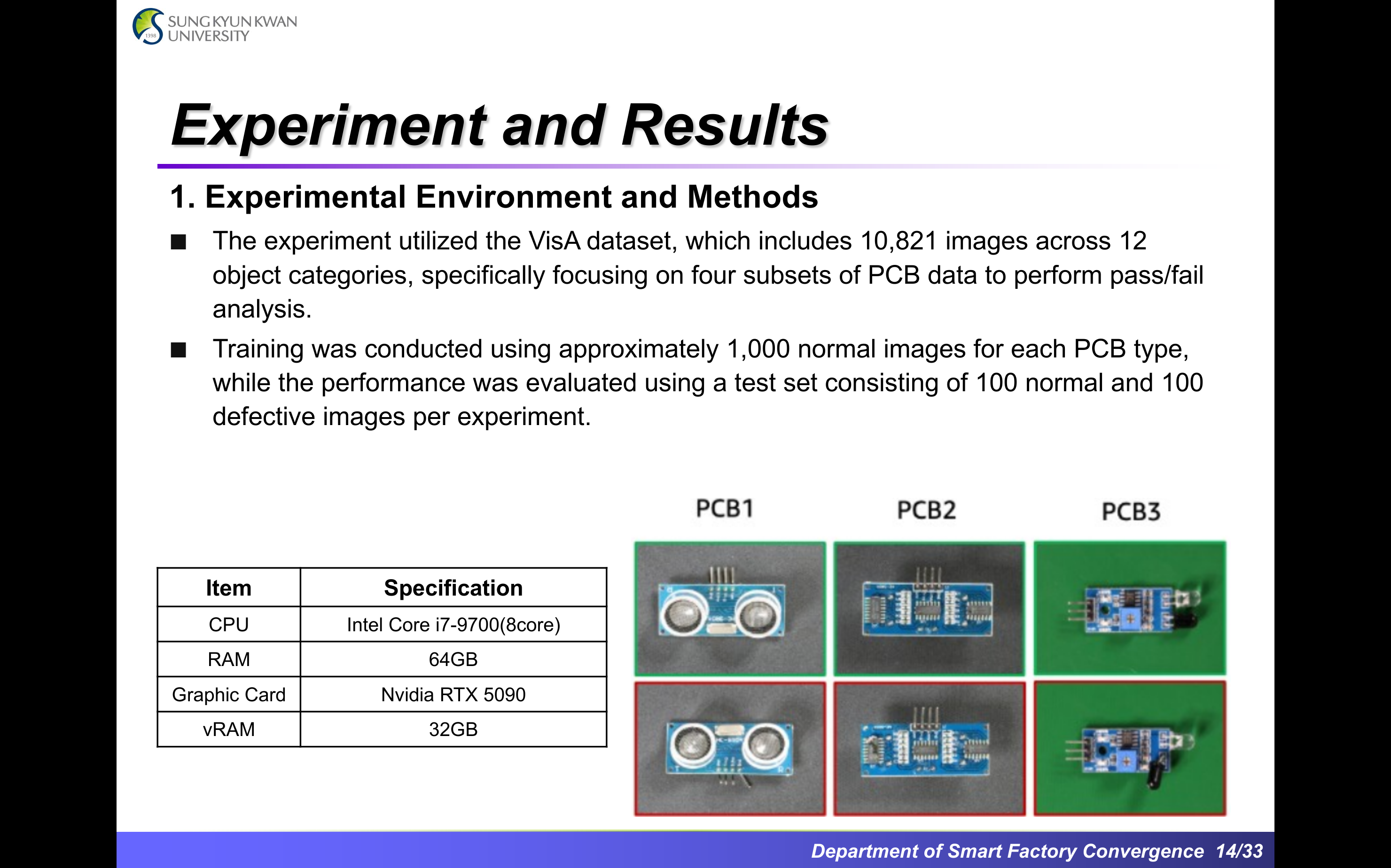 |
Regarding the experimental environment, the hardware consisted of an Intel Core i7-9700 eight-core CPU, 64 gigabytes of RAM, and an NVIDIA GeForce RTX 5090 with 32 gigabytes of vRAM.
The dataset used was the VisA dataset, which is licensed for use and contains 12 subsets corresponding to 12 different objects. It comprises a total of 10,821 images, of which 9,621 are normal samples and 1,200 are abnormal samples. Among these, four sets are of the PCB data type.
For the experiment, training was performed using approximately 1,000 normal images for each PCB type. Specifically, PCB Type number 1 used 1,004 normal images, PCB Type number 2 used 1,001 normal images, and PCB Type number 3 used 1,006 normal images. Each experiment used 100 normal images and 100 defective images for evaluation. |
| ICACT20260190 Slide.15
[Big Slide]
|
Chrome Click!! |
 |
For our evaluation metrics, we used the F1-score, which is the harmonic mean of precision and recall. Recall measures how many actual defects were successfully detected, while precision measures how many predicted defects are truly defective. These two metrics are typically in a trade-off relationship: increasing recall aggressively may raise false positives, whereas pushing precision too high can increase false negatives. In practice, the decision threshold is adjusted to balance the two according to line-specific costs. Because missed defects directly translate to quality risk, reducing false negatives was a key operational goal. |
| ICACT20260190 Slide.16
[Big Slide]
|
Chrome Click!! |
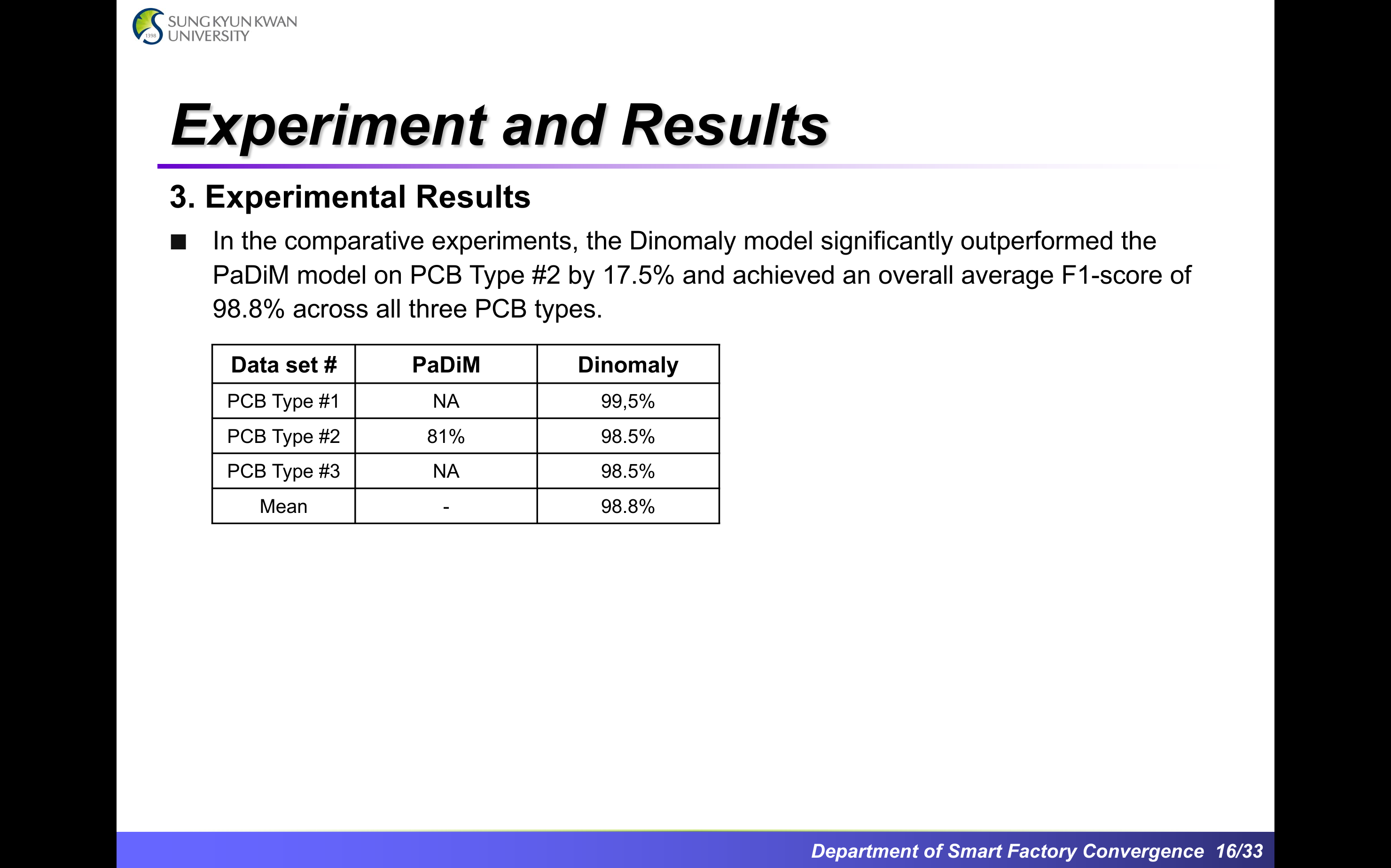 |
As shown in the results table, for each experiment, 13 trials were conducted and the average F1-score was calculated. The first experiment on PCB Type number 2 confirmed that the Dinomaly model outperformed the PaDiM model by over 17.5 percent, achieving an F1-score of 98.5 percent compared to PaDiM¡¯s 81 percent. In the second experiment involving PCB Type number 1 and PCB Type number 3, the Dinomaly model achieved F1-scores of 99.5 percent and 98.5 percent, respectively. The average performance across the three PCB experiments was approximately 98.8 percent. |
| ICACT20260190 Slide.17
[Big Slide]
|
Chrome Click!! |
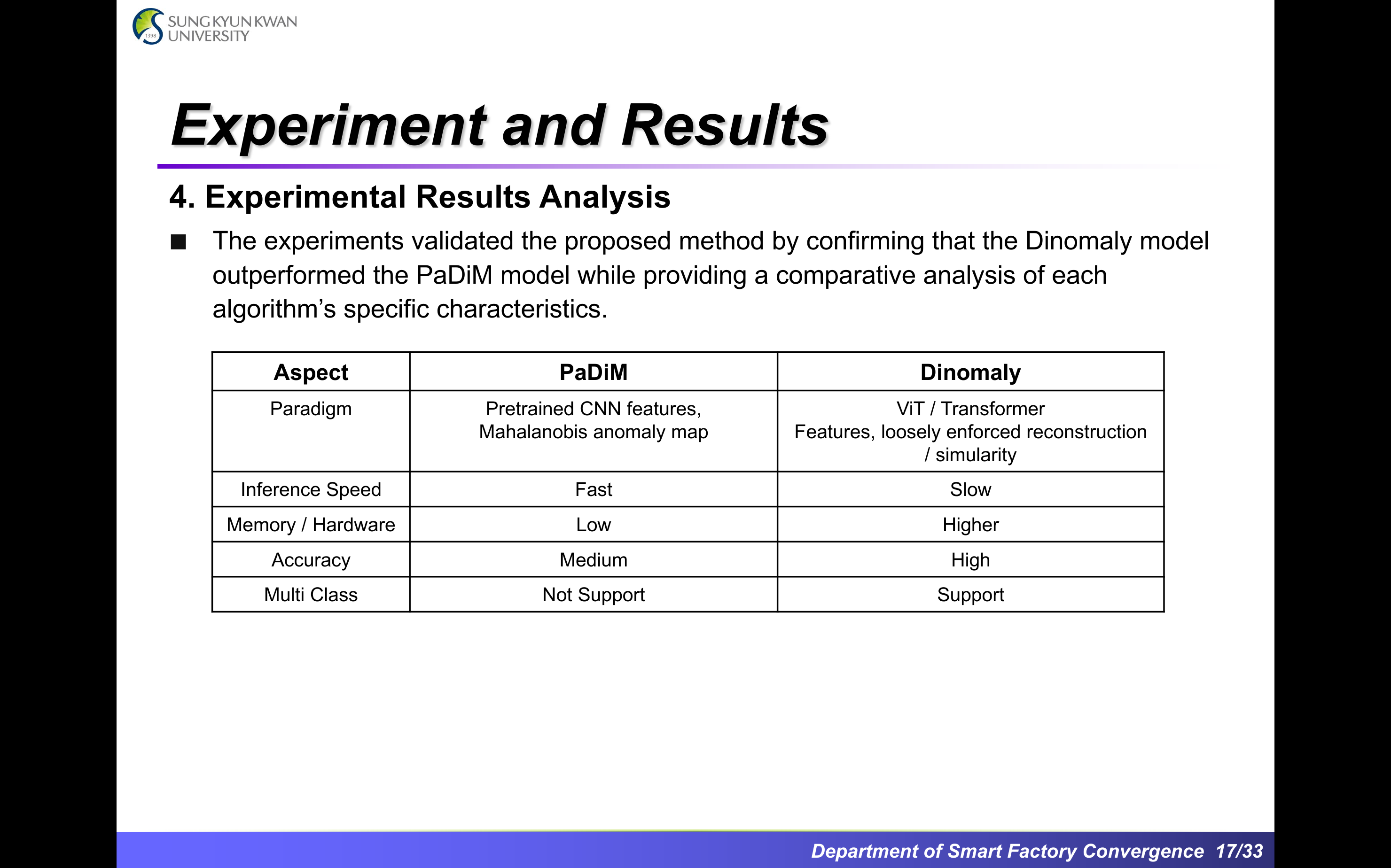 |
Looking at the detailed comparison between the two models: PaDiM uses pre-trained CNN features with a Mahalanobis anomaly map. It offers fast inference speed, low memory and hardware requirements, and medium accuracy. However, it does not support multi-class scenarios. In contrast, Dinomaly uses ViT and Transformer features with loosely enforced reconstruction. While its inference speed is slower and it requires higher memory and hardware resources, it achieves high accuracy and supports multi-class environments, making it more suitable for diverse production lines. |
| ICACT20260190 Slide.18
[Big Slide]
|
Chrome Click!! |
 |
Finally, let me present our conclusions. |
| ICACT20260190 Slide.19
[Big Slide]
|
Chrome Click!! |
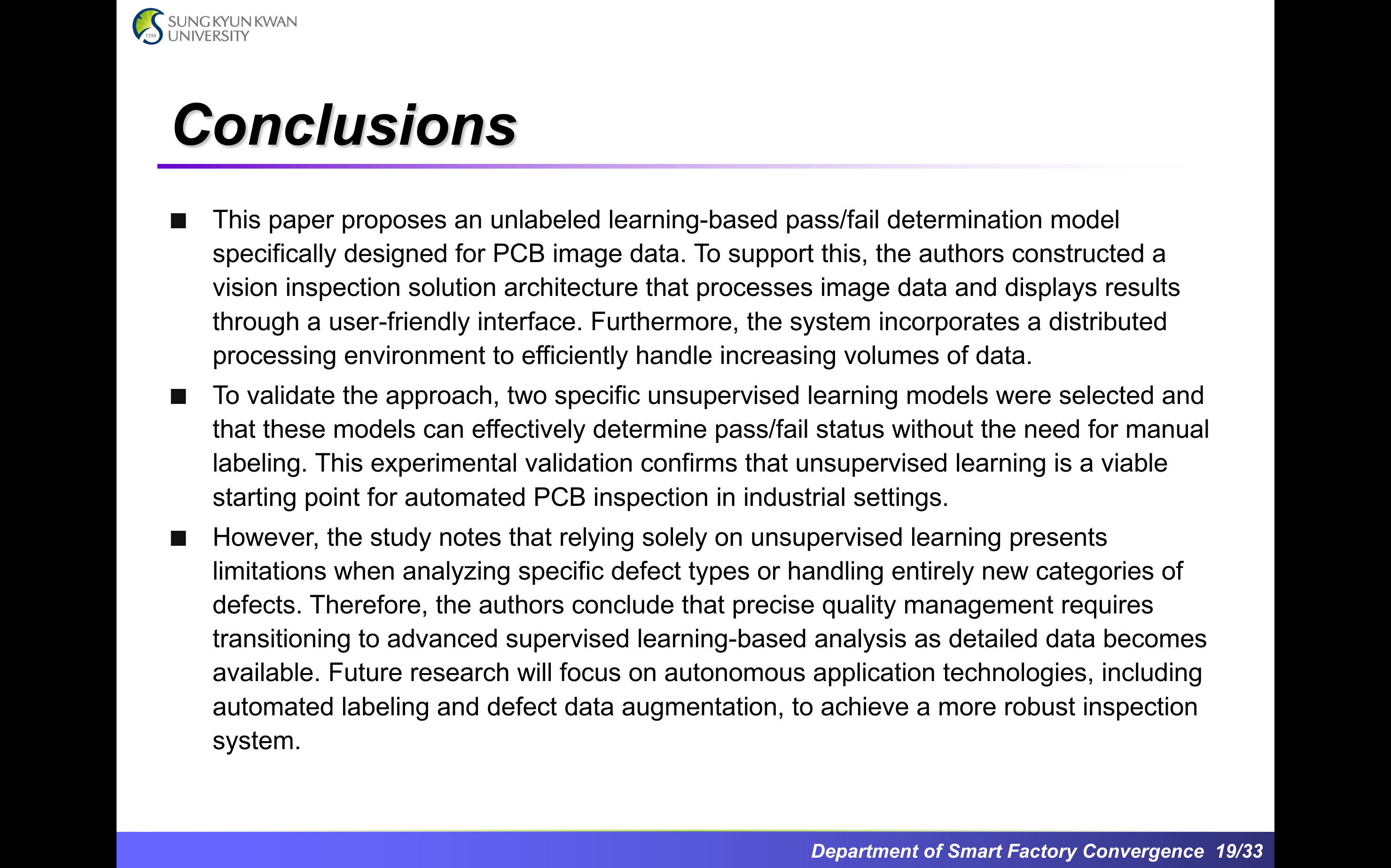 |
The main contribution of this paper is proposing an unsupervised learning-based pass/fail determination model for PCB image data. We constructed a vision inspection solution architecture that accepts image data as input, analyzes it using an artificial intelligence model, allows users to view results on a screen, and incorporates a distributed processing environment to accommodate increasing data volumes.
Two unsupervised learning models were selected and experimentally validated for quality inspection applicability, confirming that Dinomaly significantly outperforms PaDiM with an average F1-score of 98.8 percent.
However, we acknowledge that in actual manufacturing environments, there are limitations to relying solely on unsupervised learning for tasks such as defect type analysis and handling entirely new categories of defects. Therefore, even if unsupervised learning-based pass/fail determination is initially introduced, precise quality management will require advanced, supervised learning-based analysis using detailed data. Consequently, our future research will focus on technologies for autonomous application, including defect data augmentation and automated labeling. |
| ICACT20260190 Slide.20
[Big Slide]
|
Chrome Click!! |
 |
Thank you very much for your attention. |
| |





