 ICACT20260193 Slide.01
[Big Slide] |
Chrome  Click!! |
 |
Good morning, distinguished guests, colleagues. I am [Presenter Name], representing the collaborative research team from Universiti Teknologi Brunei and Universiti Teknologi Malaysia. Today, I am pleased to present our work, Empirical ONU Power Consumption Modeling and Verification for Integrated Optical-Wireless Access Networks |
| ICACT20260193 Slide.02
[Big Slide]
|
Chrome Click!! |
 |
Our presentation is structured as follows: We will begin by outlining the research problem and motivation, followed by our core objectives. I will then detail our innovative methodology, present our key results and validation of our power meter, and explain the derivation of our logarithmic power model. We will then assess the models validity and discuss the significant implications our findings have for integrated networks. Finally, I will share our conclusions and recommendations for future work |
| ICACT20260193 Slide.03
[Big Slide]
|
Chrome Click!! |
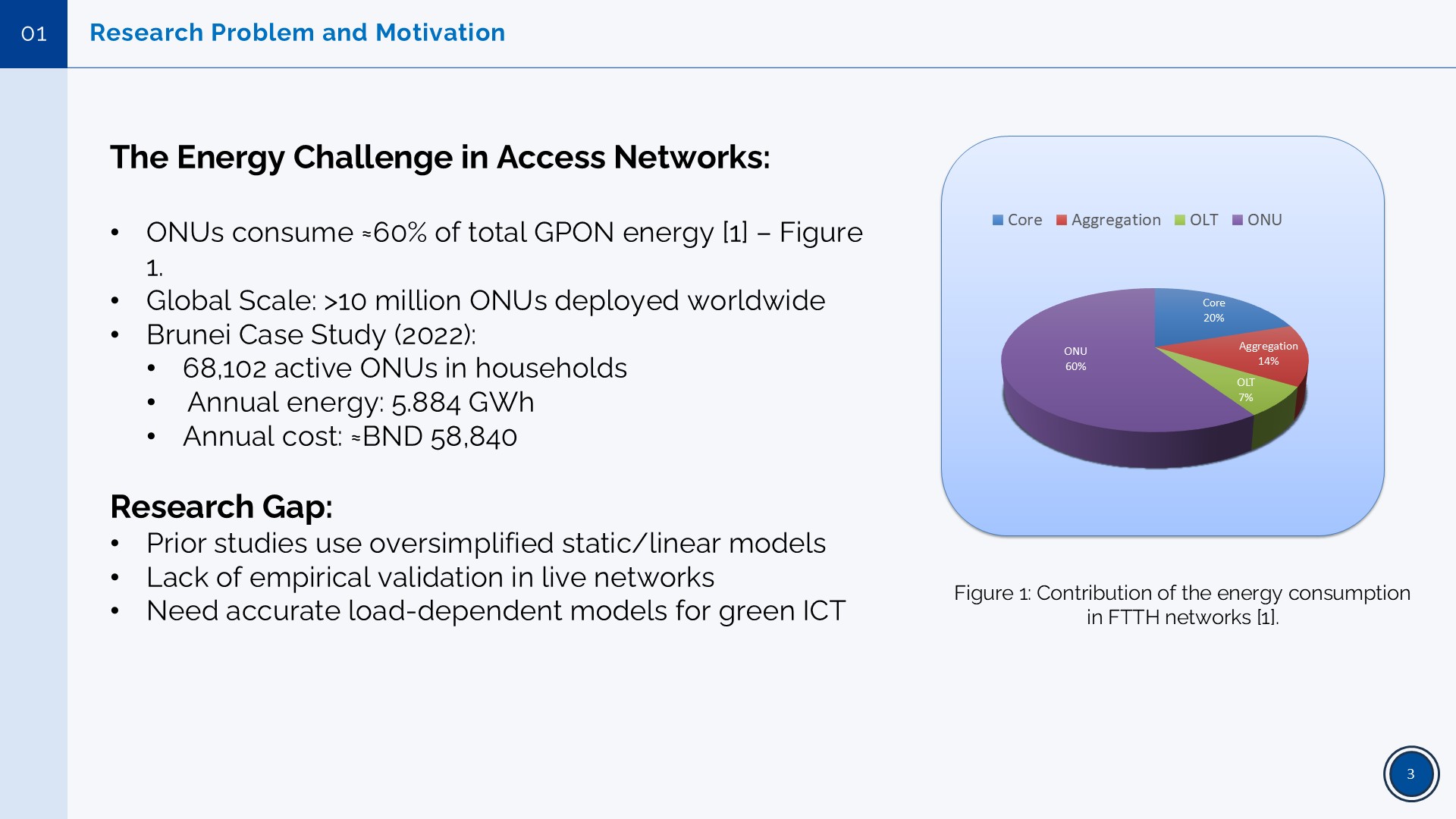 |
The energy consumption of access networks is a critical global challenge. Specifically, Optical Network Units (ONUs) account for approximately 60% of the total GPON energy consumption. With over 10 million ONUs deployed worldwide, the scale is immense. Consider our case study in Brunei: in 2022, over 68,000 household ONUs consumed nearly 6 Gigawatt-hours annually, costing about 58,840 Brunei Dollars. The research gap is clear—prior studies rely on oversimplified static or linear models without empirical validation in live networks. Our work addresses this by developing accurate, load-dependent models essential for green ICT initiatives |
| ICACT20260193 Slide.04
[Big Slide]
|
Chrome Click!! |
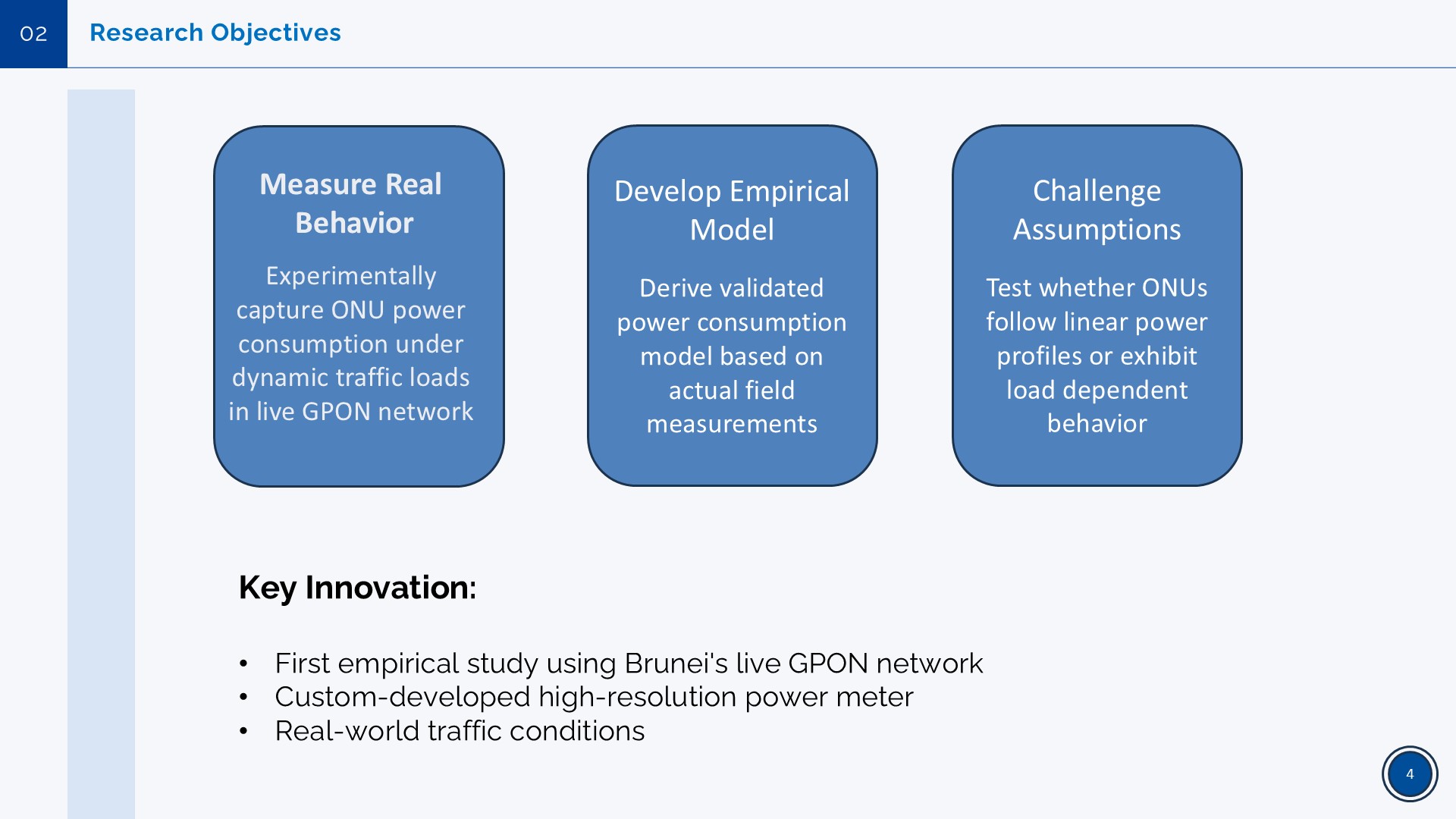 |
Our research introduces a key innovation: the first empirical study using a live, operational GPON network in Brunei. We developed a custom high-resolution power meter to capture data under real-world traffic conditions. Our objectives were threefold: first, to experimentally measure and capture the actual power consumption behaviour of ONUs under dynamic loads. Second, to develop a robust empirical model based on these field measurements. And third, to challenge and test the traditional assumption that ONUs follow linear power profiles |
| ICACT20260193 Slide.05
[Big Slide]
|
Chrome Click!! |
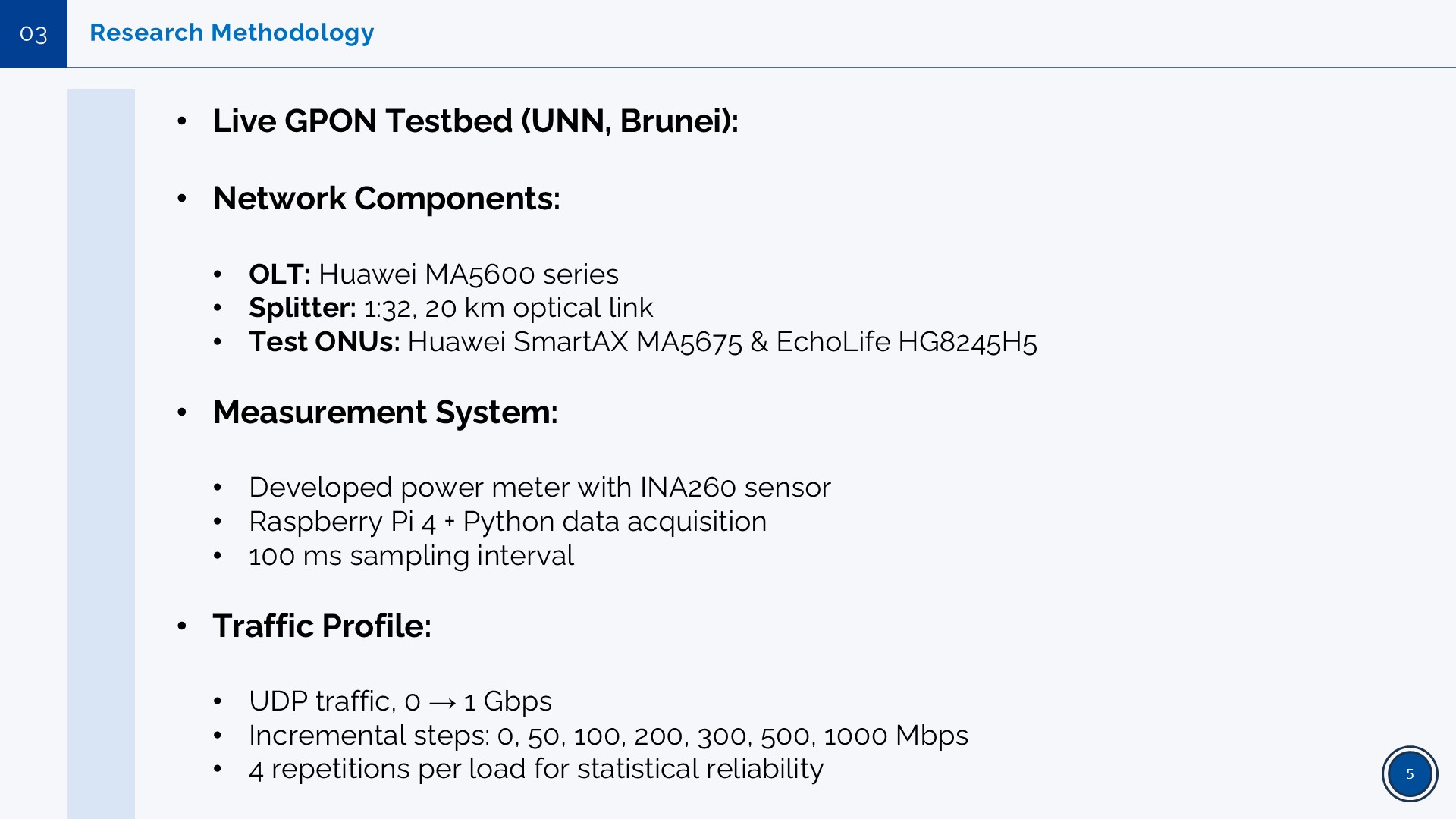 |
Our methodology was built around a live GPON testbed in collaboration with Unified National Networks in Brunei. The network core consists of a Huawei MA5600 OLT, a 1:32 optical splitter, and a 20 km fiber link. We tested two common ONU models: the SmartAX MA5675 and the EchoLife HG8245H5. For measurement, we developed a dedicated system using an INA260 sensor controlled by a Raspberry Pi 4, sampling at 100-millisecond intervals. Our traffic profile used UDP with incremental steps from 0 to 1 Gigabit per second, with four repetitions per load step for statistical reliability |
| ICACT20260193 Slide.06
[Big Slide]
|
Chrome Click!! |
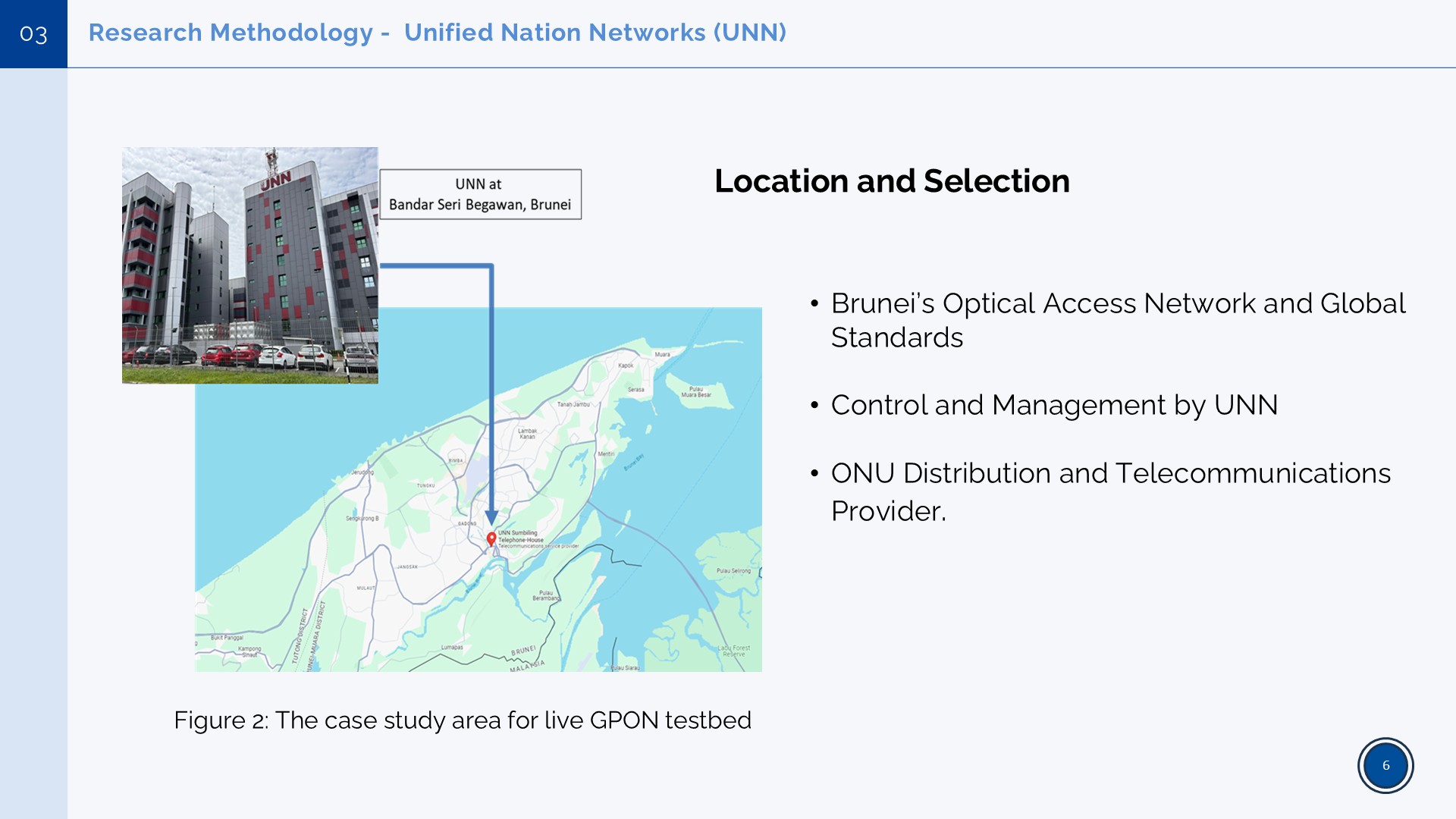 |
his map illustrates our case study area. The control and management of Bruneis optical access network, which adheres to global standards, is handled by Unified National Networks. This partnership was crucial for conducting measurements on a real, in-service network. |
| ICACT20260193 Slide.07
[Big Slide]
|
Chrome Click!! |
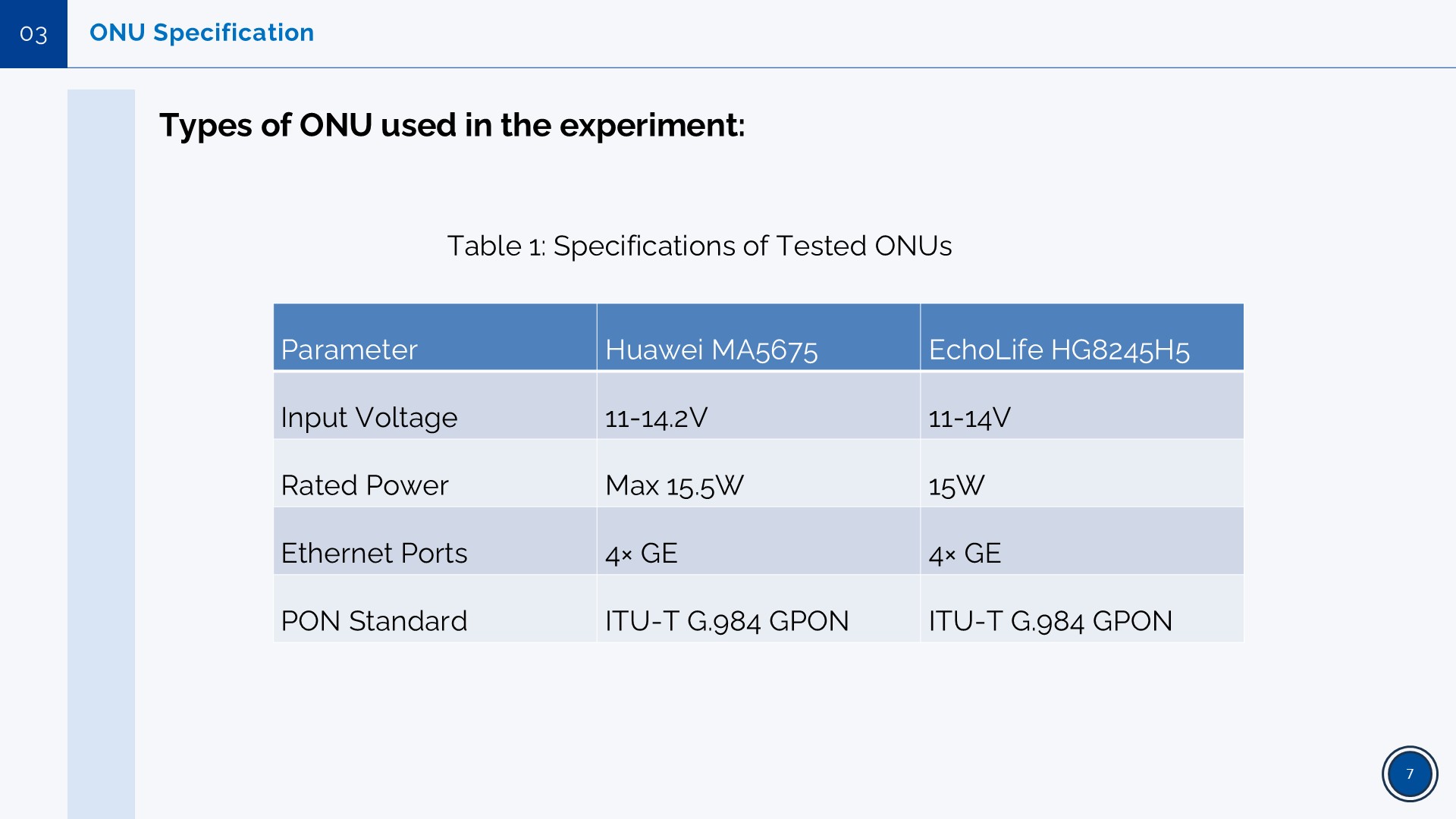 |
The table here details the specifications of the two ONU models we tested, providing the technical context for our comparative analysis |
| ICACT20260193 Slide.08
[Big Slide]
|
Chrome Click!! |
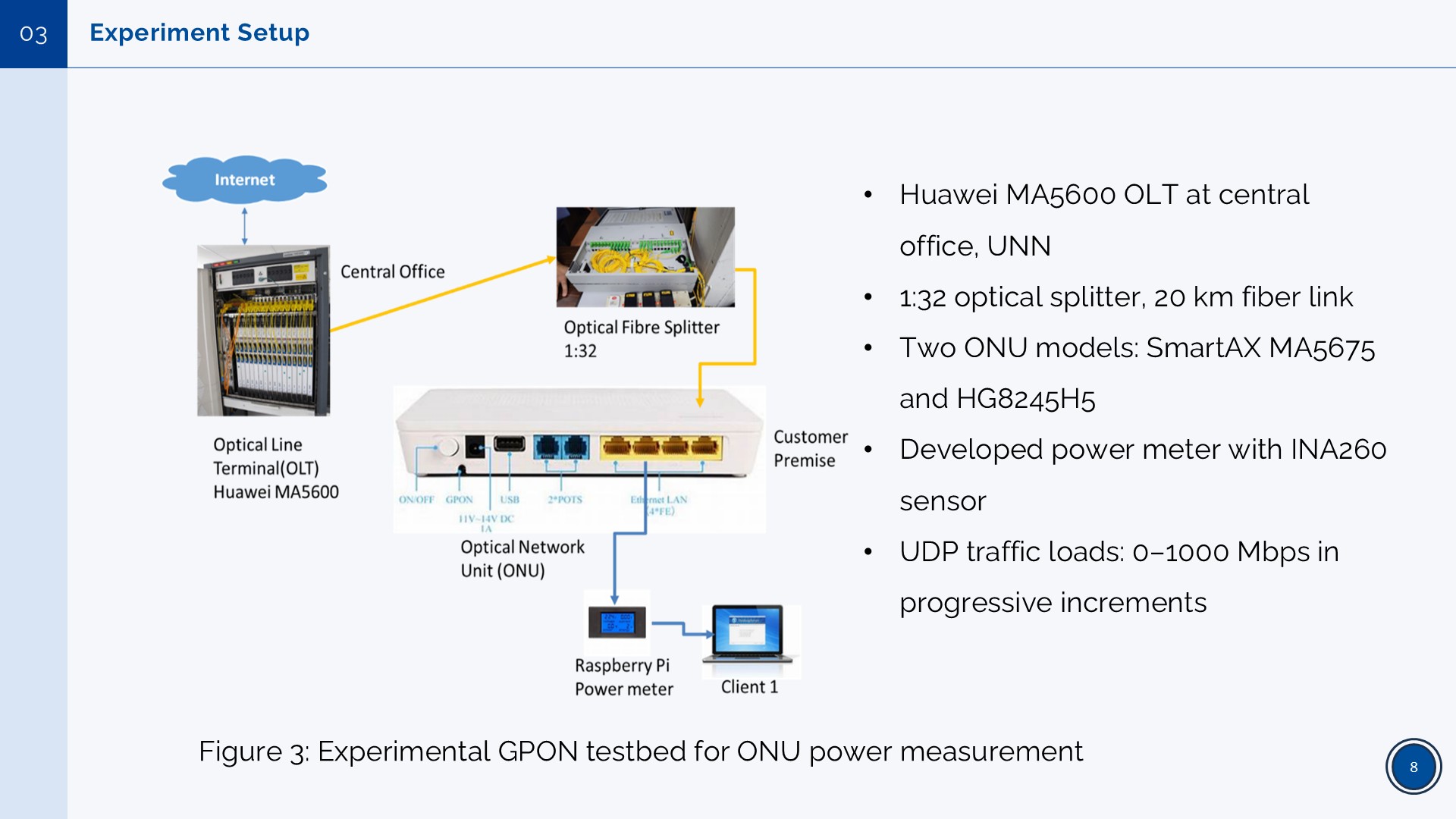 |
This diagram visualises our complete experimental GPON testbed. It shows the OLT at the central office, the 20km fibre link to the splitter, and the connection to our test ONUs and power measurement system, all within the live UNN infrastructure |
| ICACT20260193 Slide.09
[Big Slide]
|
Chrome Click!! |
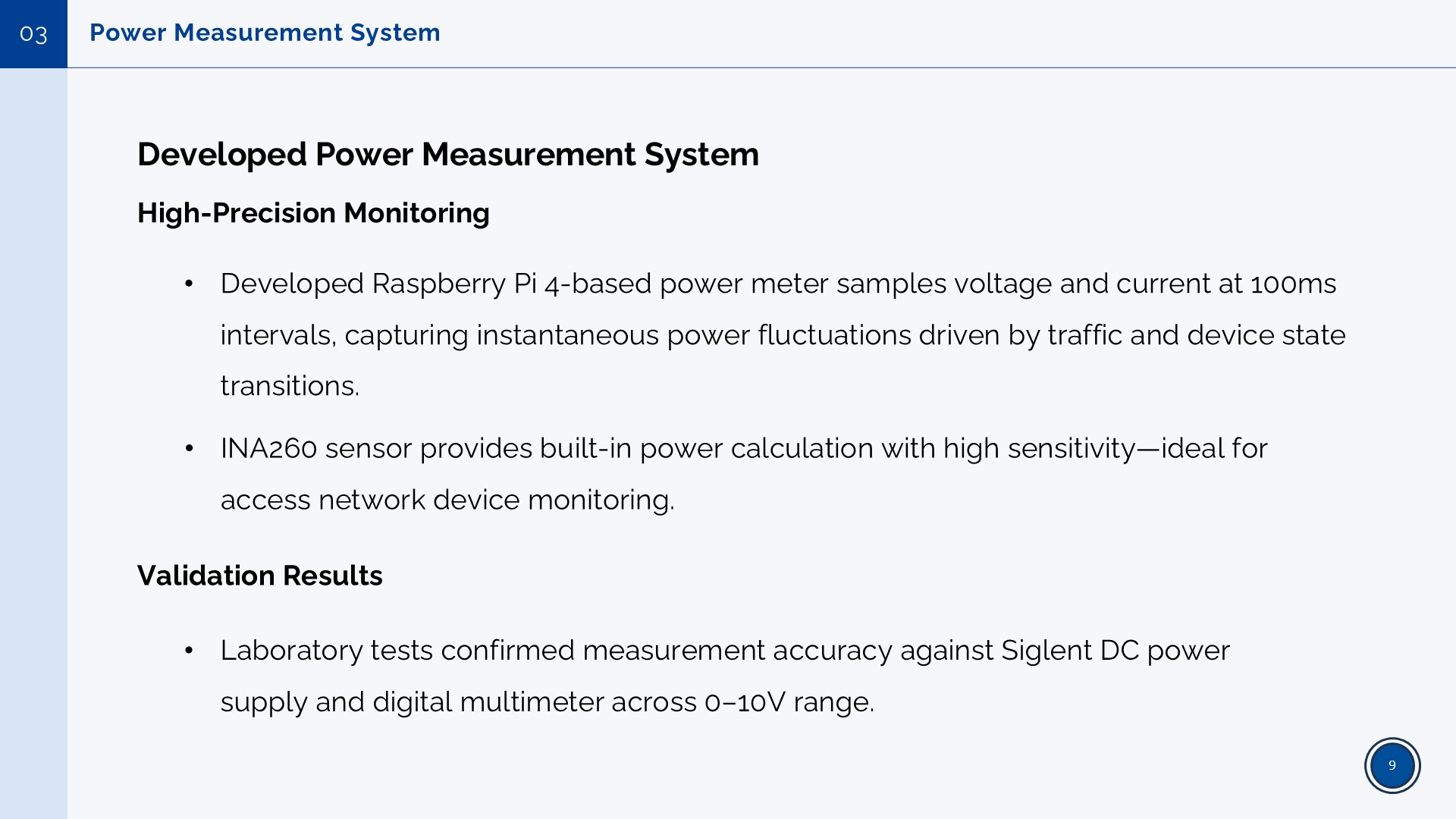 |
For high-precision monitoring, we developed this Raspberry Pi 4-based power meter. It samples voltage and current every 100 milliseconds, capturing instantaneous power fluctuations caused by traffic. The INA260 sensor provides built-in power calculation with high sensitivity. We validated this system in the lab against a Siglent DC power supply and a digital multimeter across a 0 to 10-volt range, confirming its accuracy |
| ICACT20260193 Slide.10
[Big Slide]
|
Chrome Click!! |
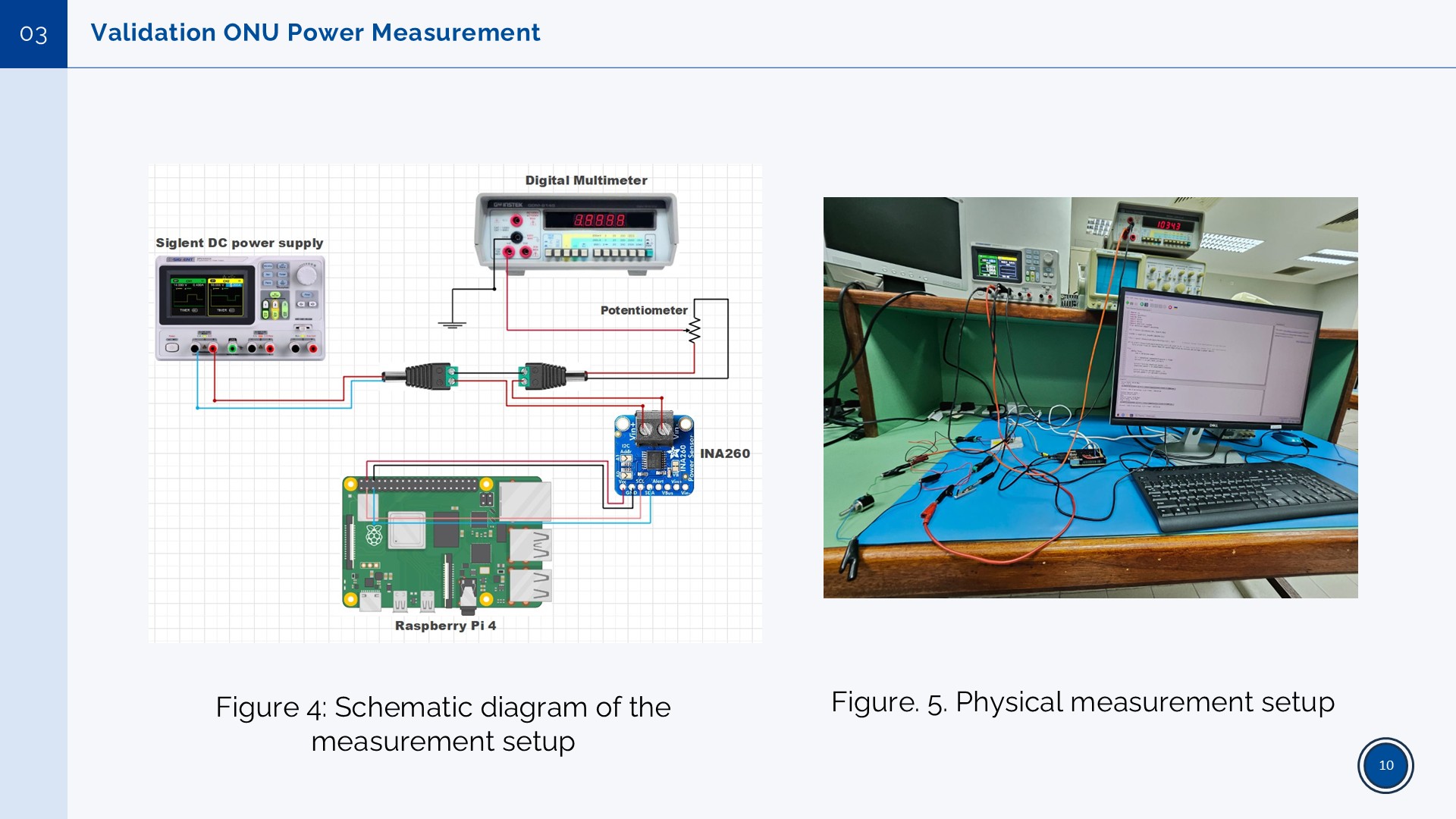 |
On the left, you see the schematic of our measurement setup, and on the right, the physical implementation, showing the validation setup of the developed meter. |
| ICACT20260193 Slide.11
[Big Slide]
|
Chrome Click!! |
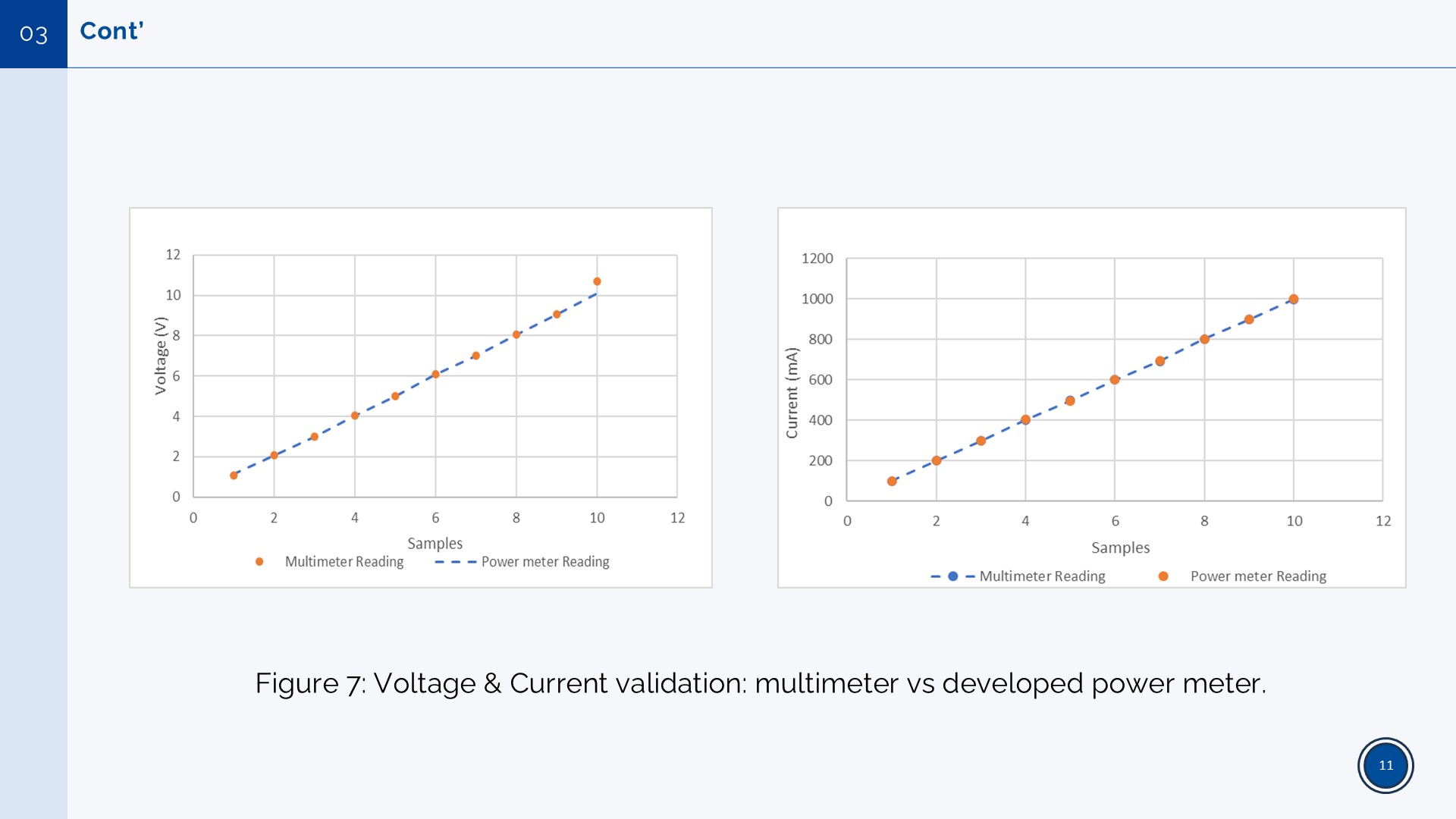 |
This graph presents a key validation step, comparing voltage and current readings from our developed power meter against a standard digital multimeter. The close alignment confirms the reliability of our measurement system |
| ICACT20260193 Slide.12
[Big Slide]
|
Chrome Click!! |
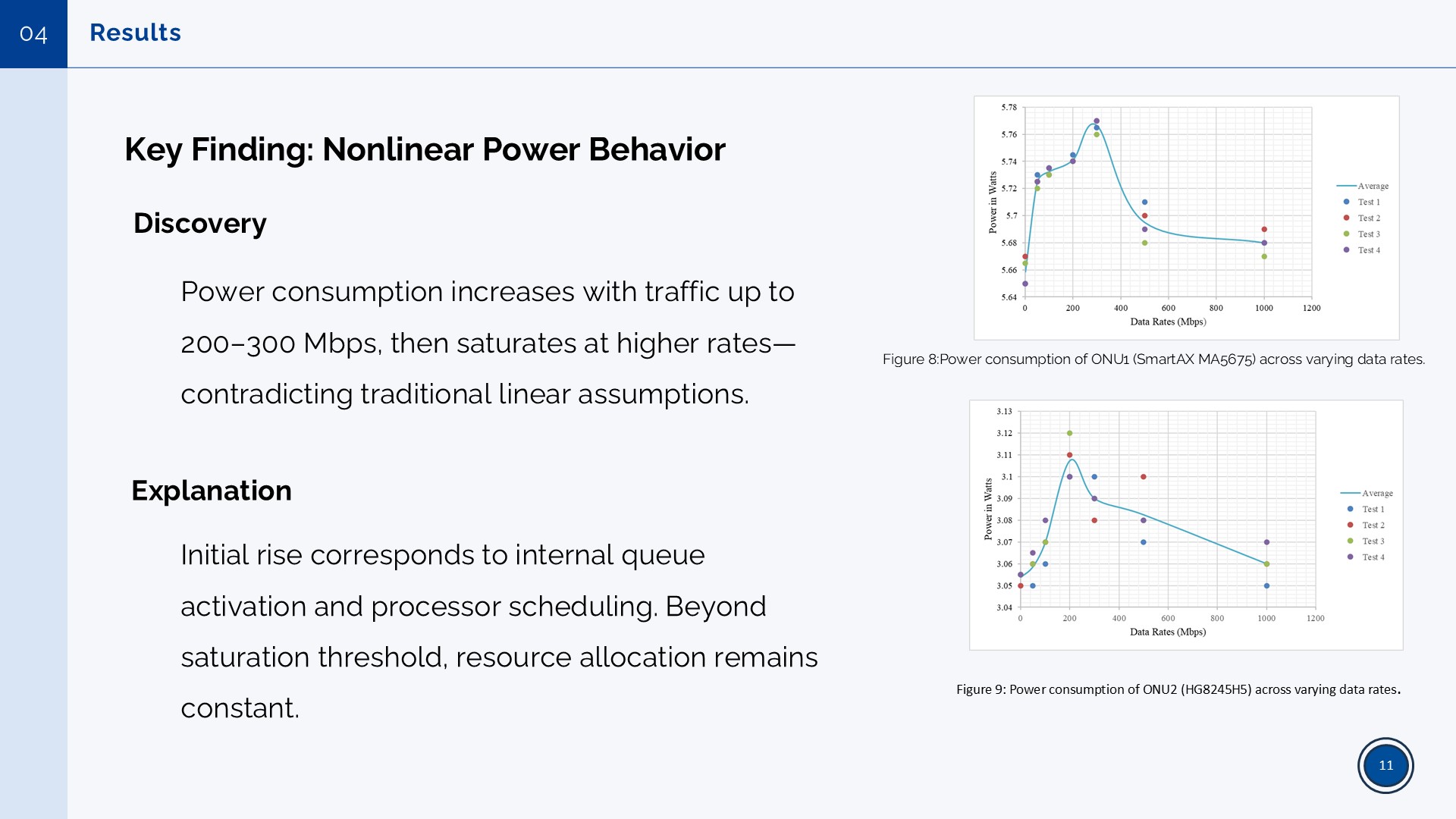 |
Our key finding reveals a nonlinear power behavior. Contrary to traditional linear assumptions, power consumption increases with traffic only up to 200–300 Mbps, after which it saturates at higher data rates. This initial rise corresponds to the activation of internal queues and processor scheduling. Once a saturation threshold is reached, resource allocation remains constant, preventing further significant power increase. These graphs for ONU1 and ONU2 clearly demonstrate this shared hybrid characteristic. |
| ICACT20260193 Slide.13
[Big Slide]
|
Chrome Click!! |
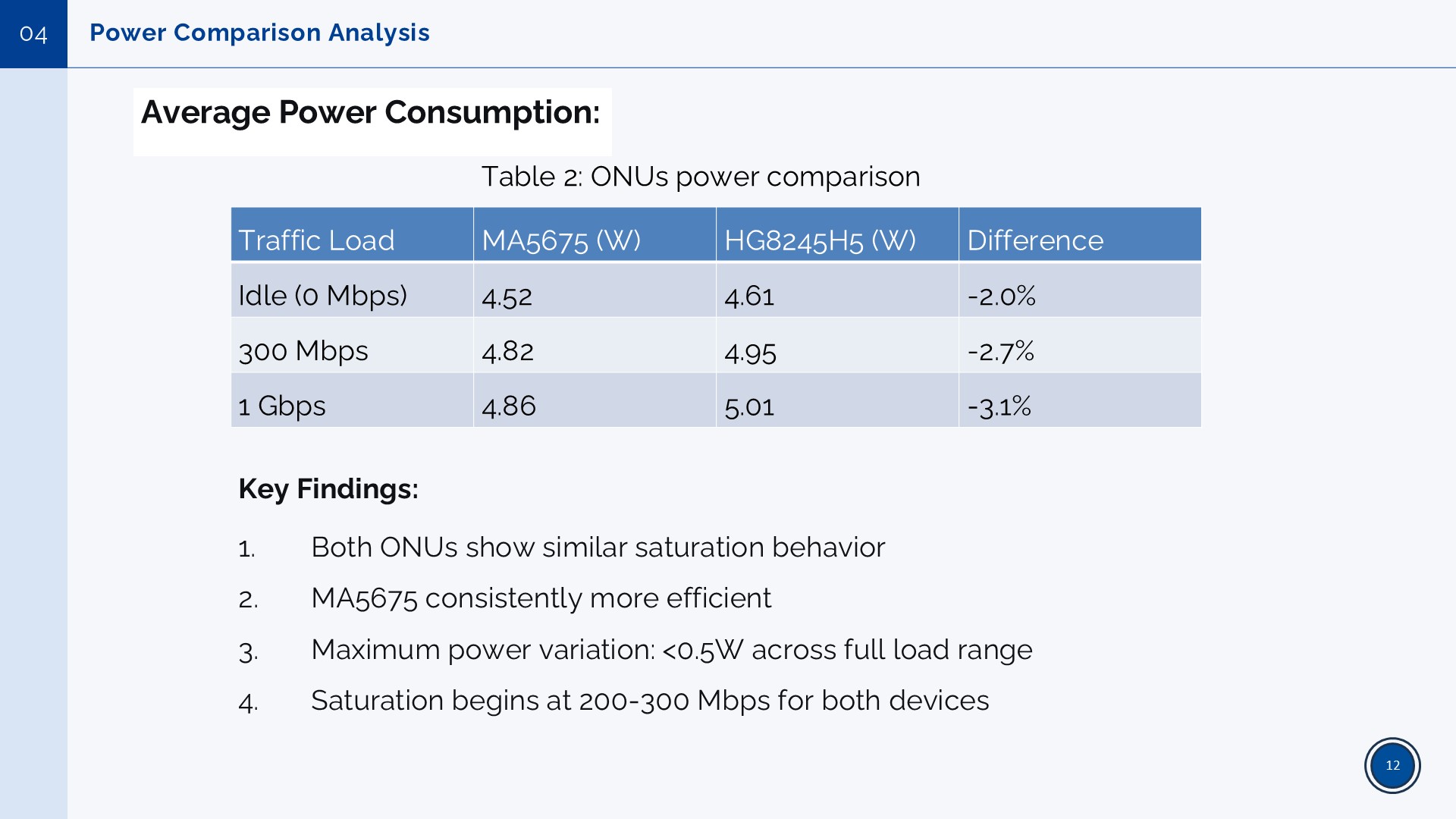 |
This table compares the average power consumption of both ONUs across different data rates. The key findings are: Both ONUs exhibit the same saturation behaviour. The MA5675 model is consistently more power-efficient. The maximum power variation across the full load range is less than half a watt. And saturation consistently begins between 200 and 300 Mbps |
| ICACT20260193 Slide.14
[Big Slide]
|
Chrome Click!! |
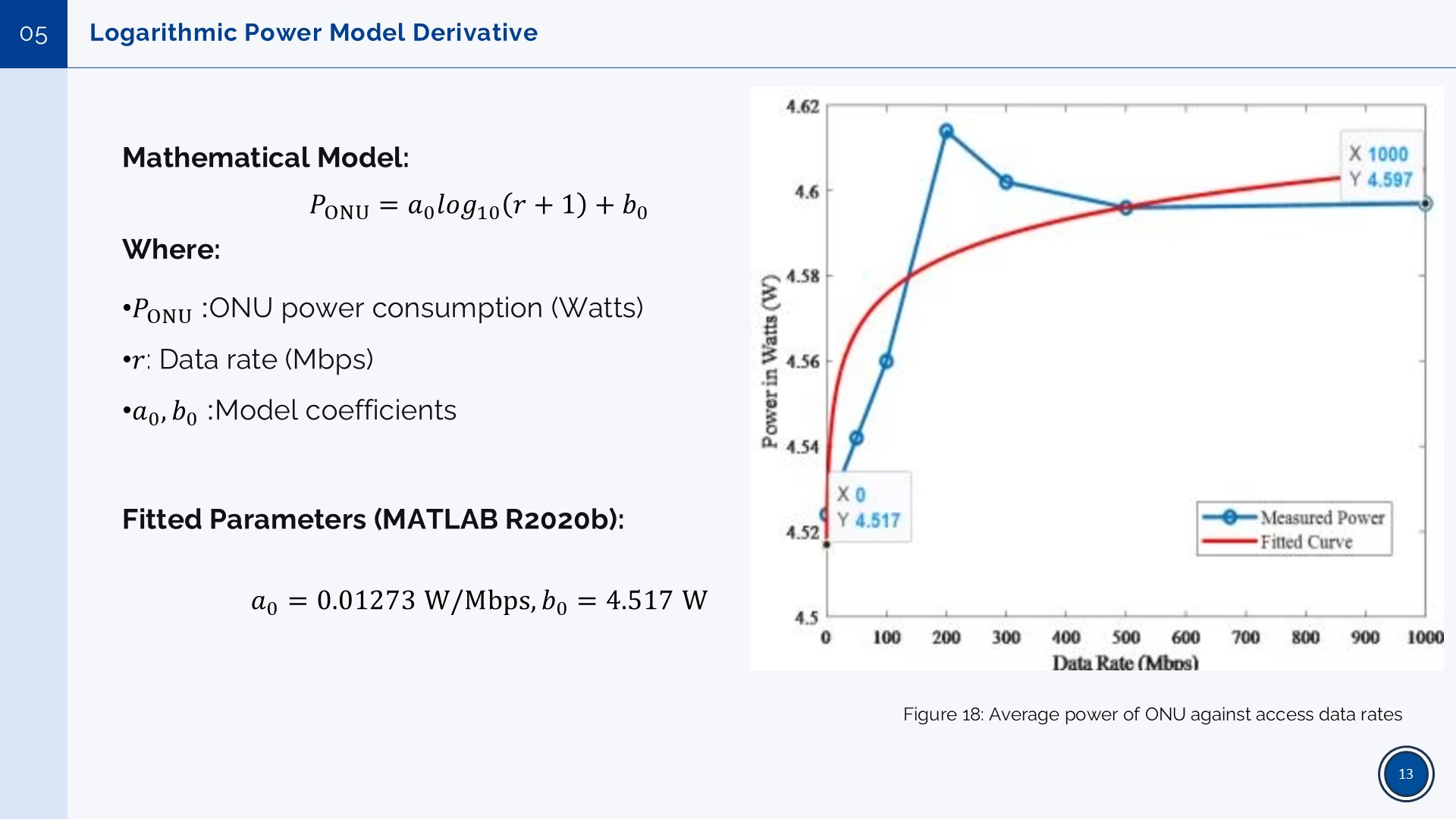 |
Based on the observed nonlinear trend, we derived a logarithmic model to represent the ONUs power consumption behavior. This model effectively captures the initial rise and subsequent saturation, providing a more accurate representation than a simple linear fit |
| ICACT20260193 Slide.15
[Big Slide]
|
Chrome Click!! |
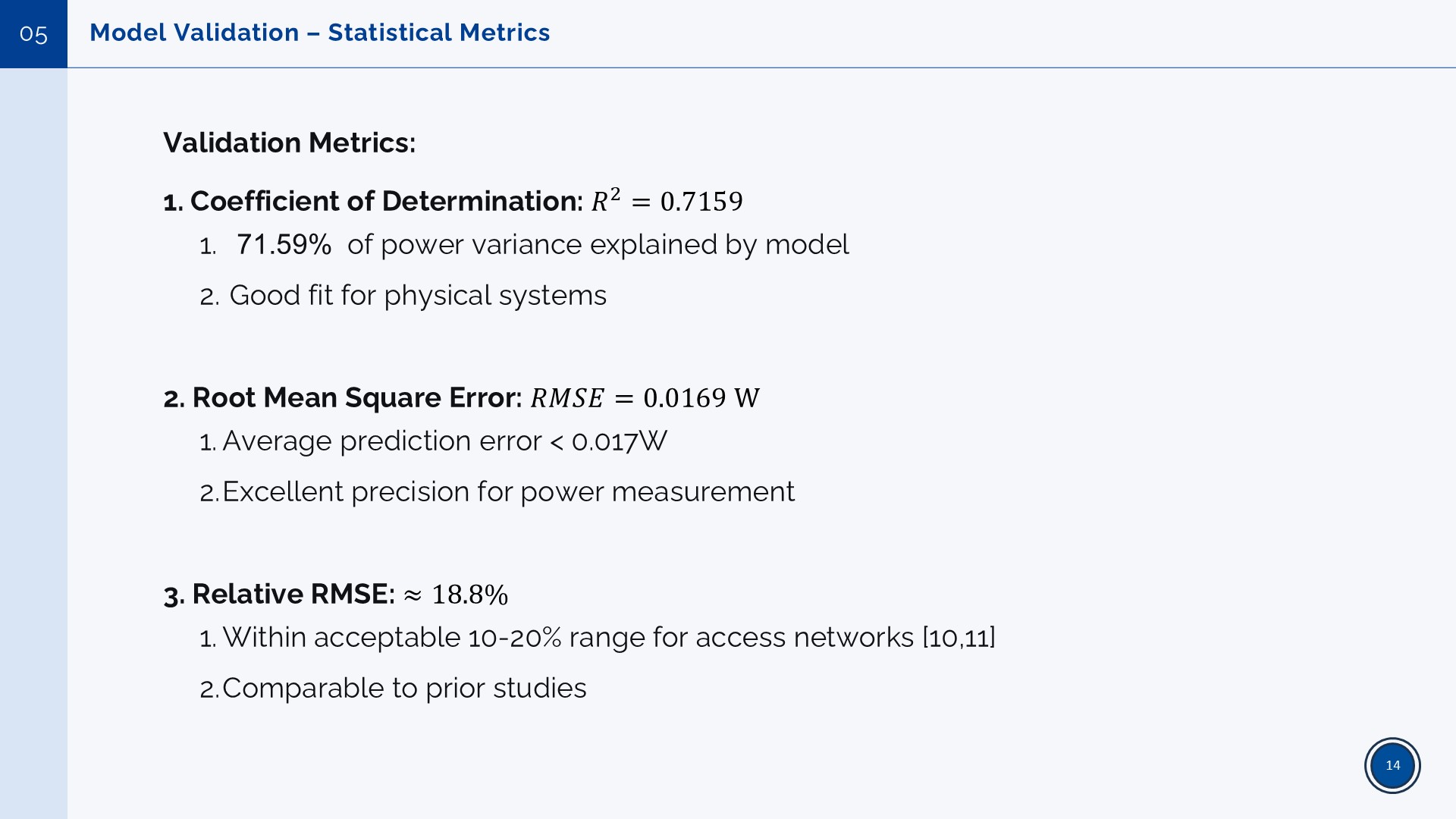 |
We rigorously validated our logarithmic model. The achieved R-squared value of 0.7159 and a low Root Mean Square Error of 0.0169 Watts confirm that the model is statistically suitable for real-world power estimation in these ONUs |
| ICACT20260193 Slide.16
[Big Slide]
|
Chrome Click!! |
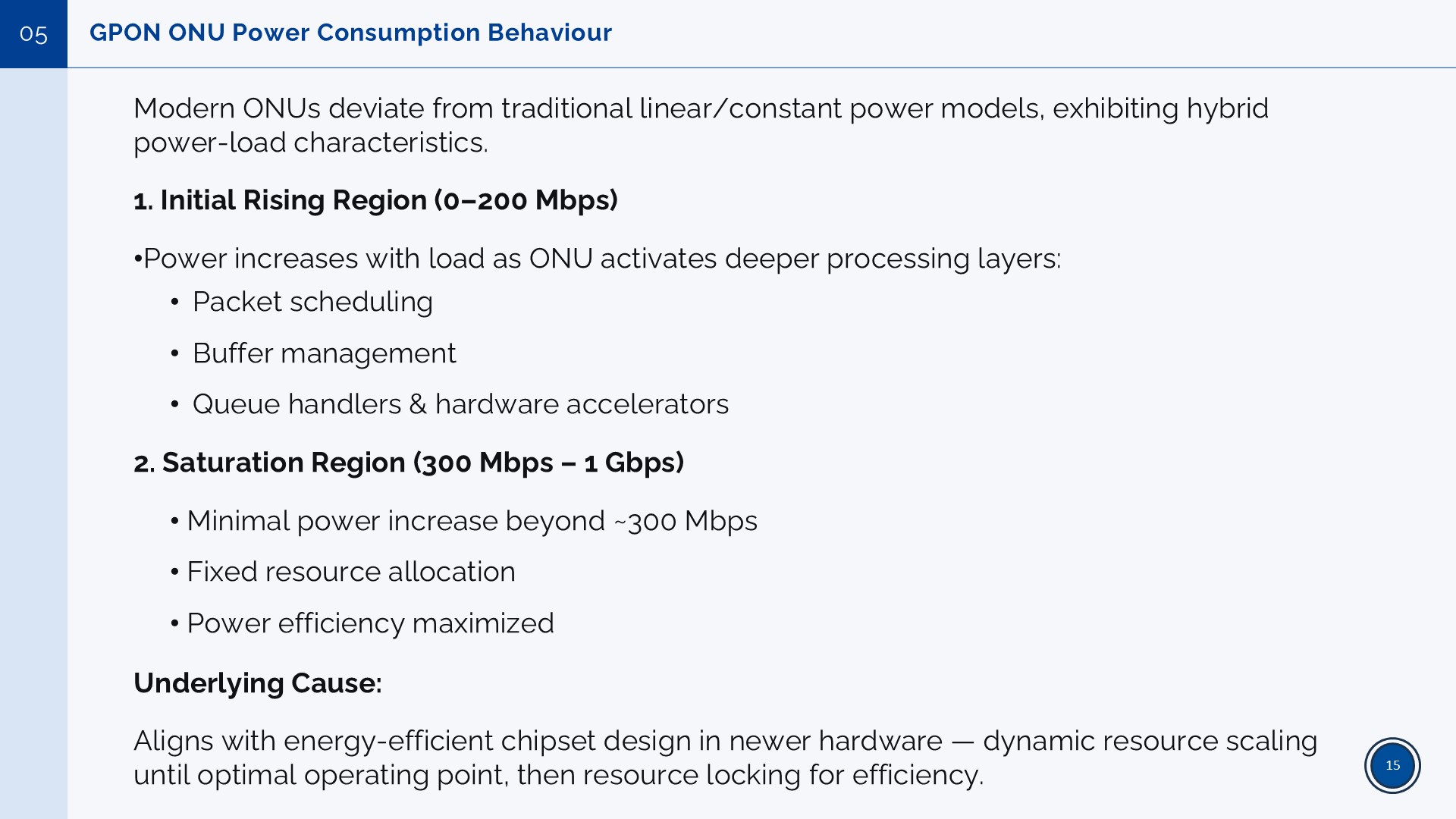 |
To summarize the discovered behavior: Modern ONUs exhibit hybrid power-load characteristics. In the Initial Rising Region, from 0 to 200 Mbps, power increases as the ONU activates deeper processing layers like packet scheduling and buffer management. In the Saturation Region, from 300 Mbps to 1 Gbps, power remains nearly flat due to fixed resource allocation. The underlying cause is energy-efficient chipset design, where hardware dynamically scales resources to an optimal point before locking them for efficiency |
| ICACT20260193 Slide.17
[Big Slide]
|
Chrome Click!! |
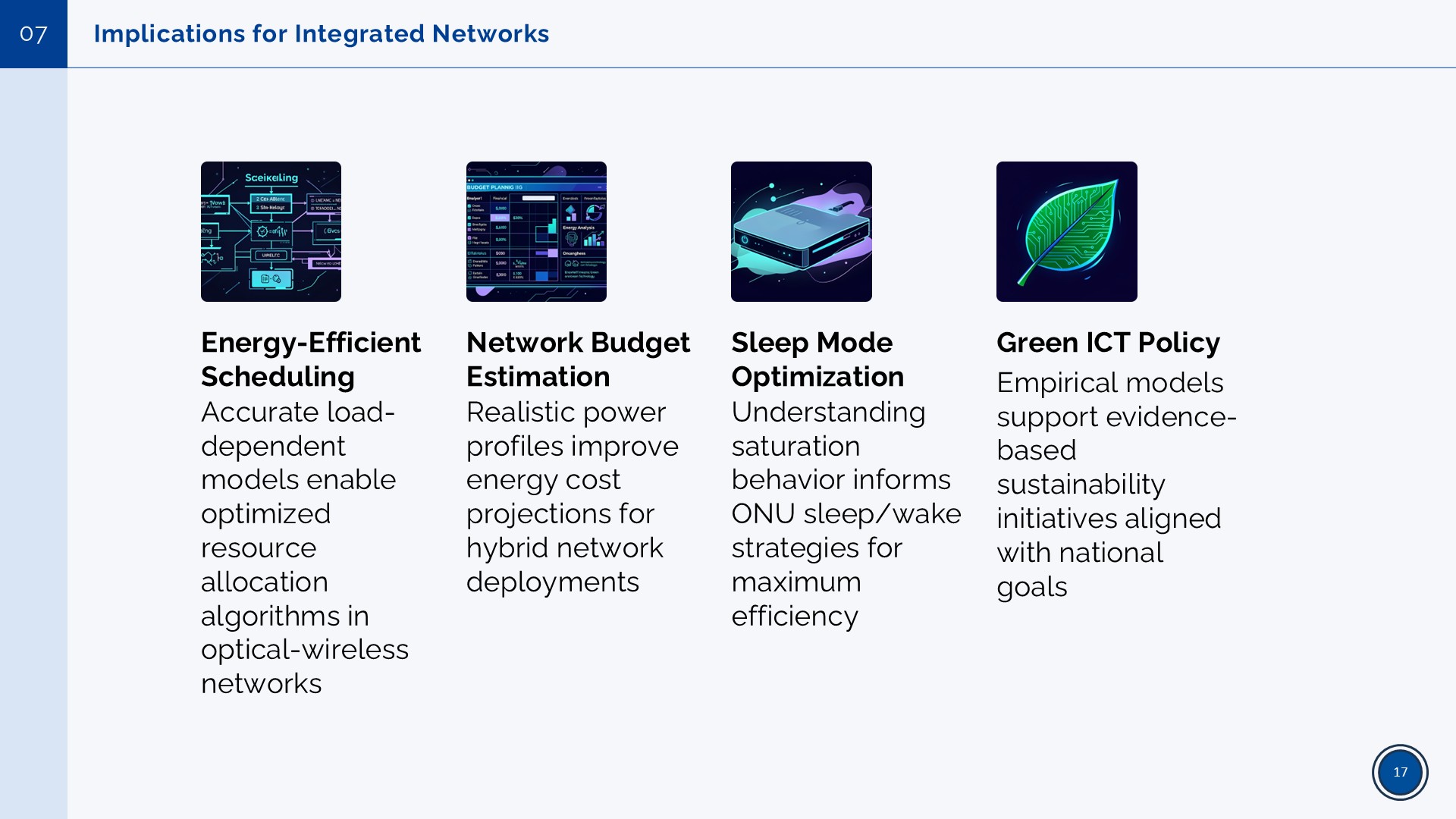 |
Our findings have several important implications. First, for Energy-Efficient Scheduling: accurate load-dependent models enable optimised resource allocation in optical-wireless networks. Second, for Network Budget Estimation: realistic power profiles improve energy cost projections for hybrid deployments. Third, for Sleep Mode Optimisation: understanding saturation informs better ONU sleep and wake strategies. Finally, it supports evidence-based Green ICT Policy aligned with national sustainability goals. |
| ICACT20260193 Slide.18
[Big Slide]
|
Chrome Click!! |
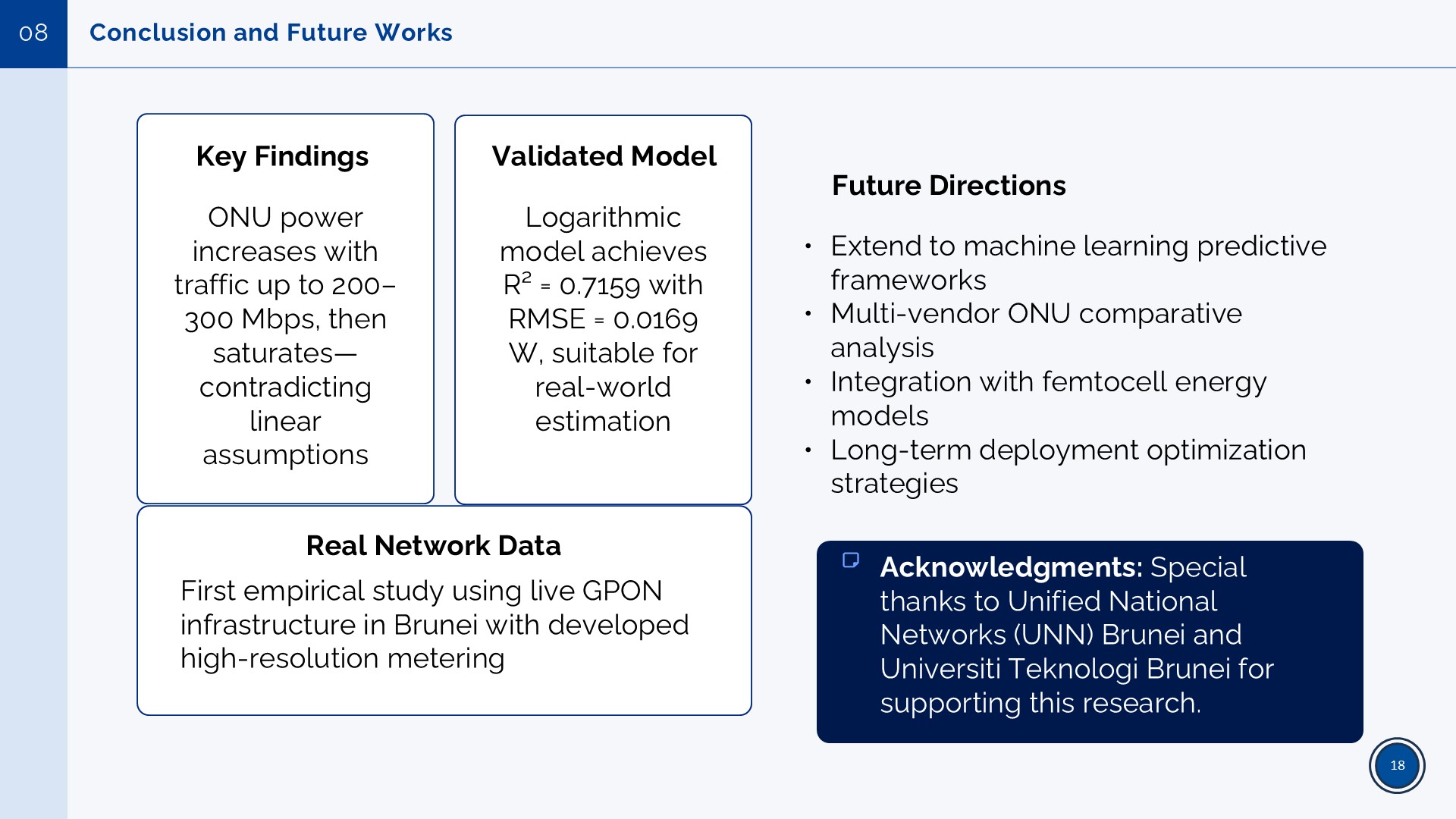 |
In conclusion, we have shown that ONU power increases with traffic only until 200–300 Mbps before saturating, invalidating linear assumptions. We developed and validated a logarithmic model with strong statistical metrics. This is the first empirical study using live GPON infrastructure in Brunei with a custom high-resolution meter. Looking ahead, future work could extend to machine learning predictive frameworks, multi-vendor ONU comparisons, integration with femtocell energy models, and long-term deployment optimization strategies. We extend our sincere thanks to Unified National Networks Brunei and Universiti Teknologi Brunei for their invaluable support |
| ICACT20260193 Slide.19
[Big Slide]
|
Chrome Click!! |
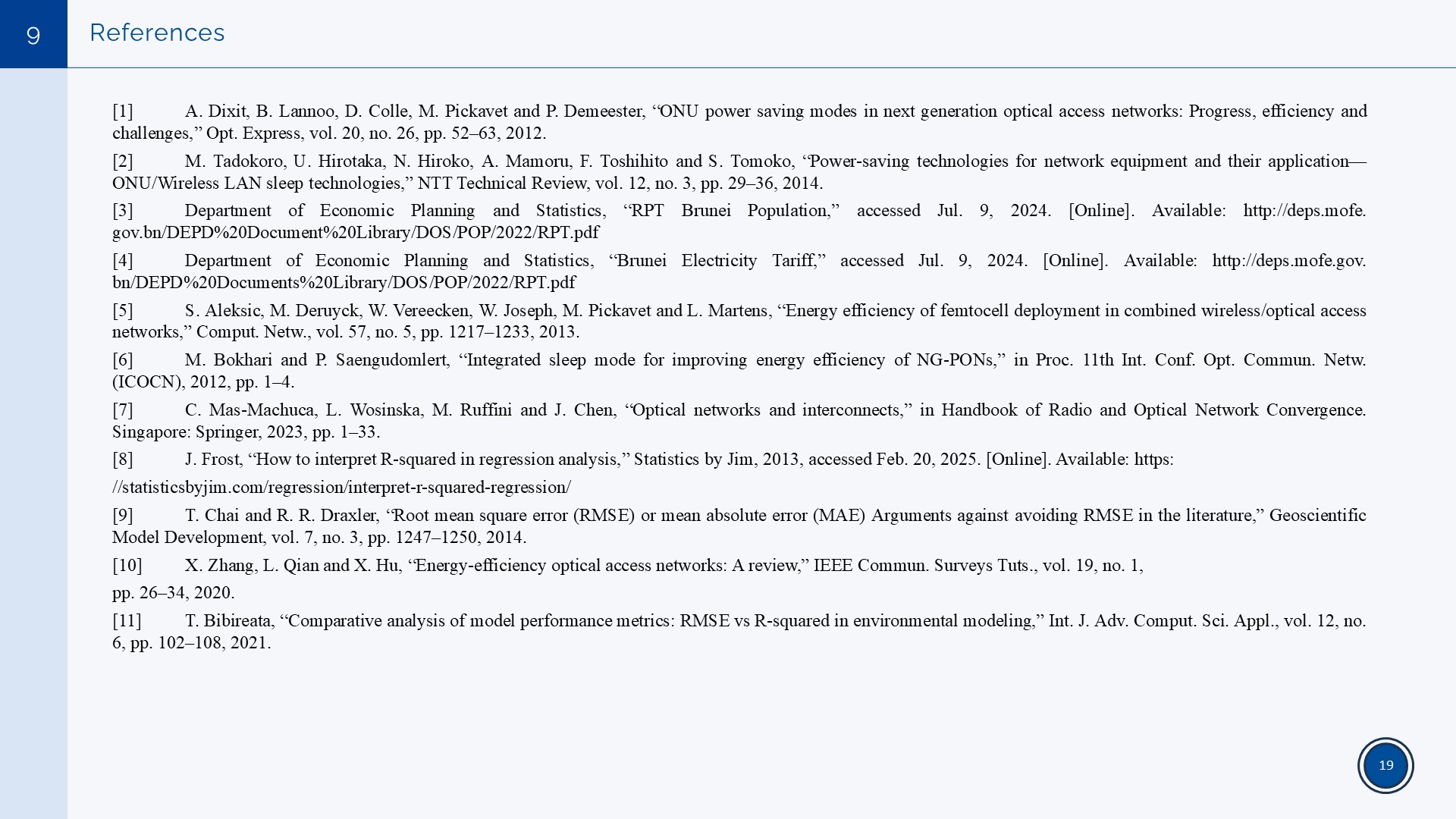 |
Our work builds upon and references key literature in the field, as listed here |
| ICACT20260193 Slide.20
[Big Slide]
|
Chrome Click!! |
 |
Thank you for your attention. We are now open to any questions you may have |















