 ICACT20260263 Slide.01
[Big Slide] |
Chrome  Click!! |
 |
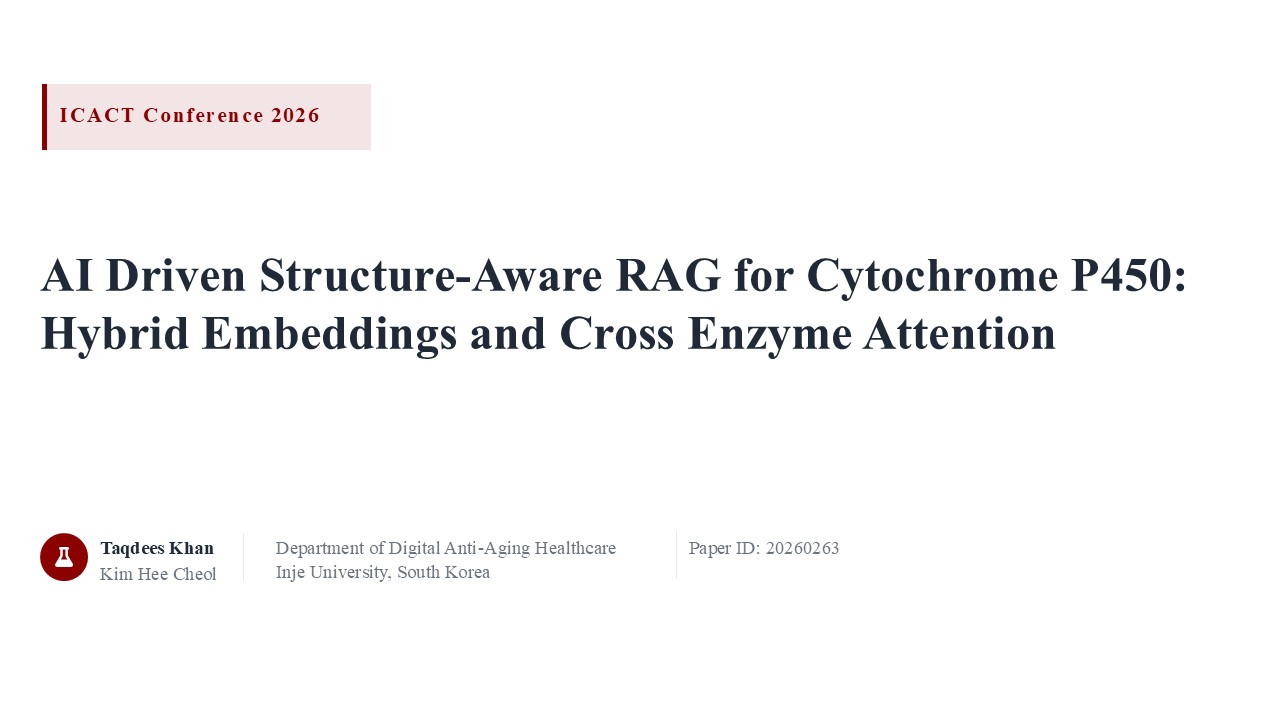
Good day everyone. My name is Taqdees Khan, and Im presenting this work in collaboration with Professor Kim Hee Cheol from the Department of Digital Anti-Aging Healthcare at Inje University, South Korea. Our presentation today is about an AI-driven structure-aware retrieval-augmented generation system for Cytochrome P450 enzymes. Weve developed a novel approach that combines hybrid embeddings with cross-enzyme attention mechanisms to revolutionize drug metabolism prediction. This is paper ID 20260263 for ICACT Conference 2026. |
| ICACT20260263 Slide.02
[Big Slide]
|
Chrome Click!! |
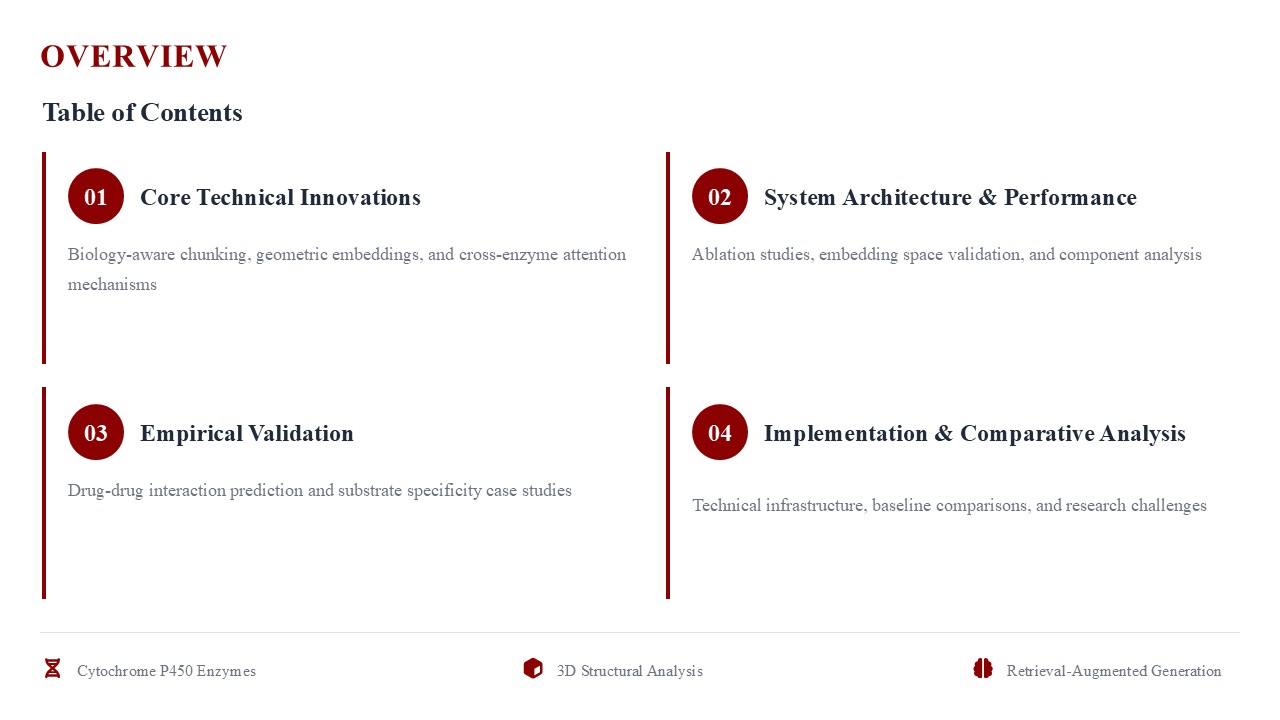 |
Todays presentation is structured into four main sections. First, well discuss our core technical innovations including biology-aware chunking, geometric embeddings, and cross-enzyme attention mechanisms. Second, well examine the system architecture and performance through ablation studies and embedding space validation. Third, well present empirical validation through drug-drug interaction prediction and substrate specificity case studies. Finally, well cover the implementation details, comparative analysis with baseline methods, and the research challenges we overcame. Throughout this presentation, youll see how we integrate 3D structural analysis of Cytochrome P450 enzymes with retrieval-augmented generation to achieve unprecedented accuracy in drug metabolism prediction. |
| ICACT20260263 Slide.03
[Big Slide]
|
Chrome Click!! |
 |
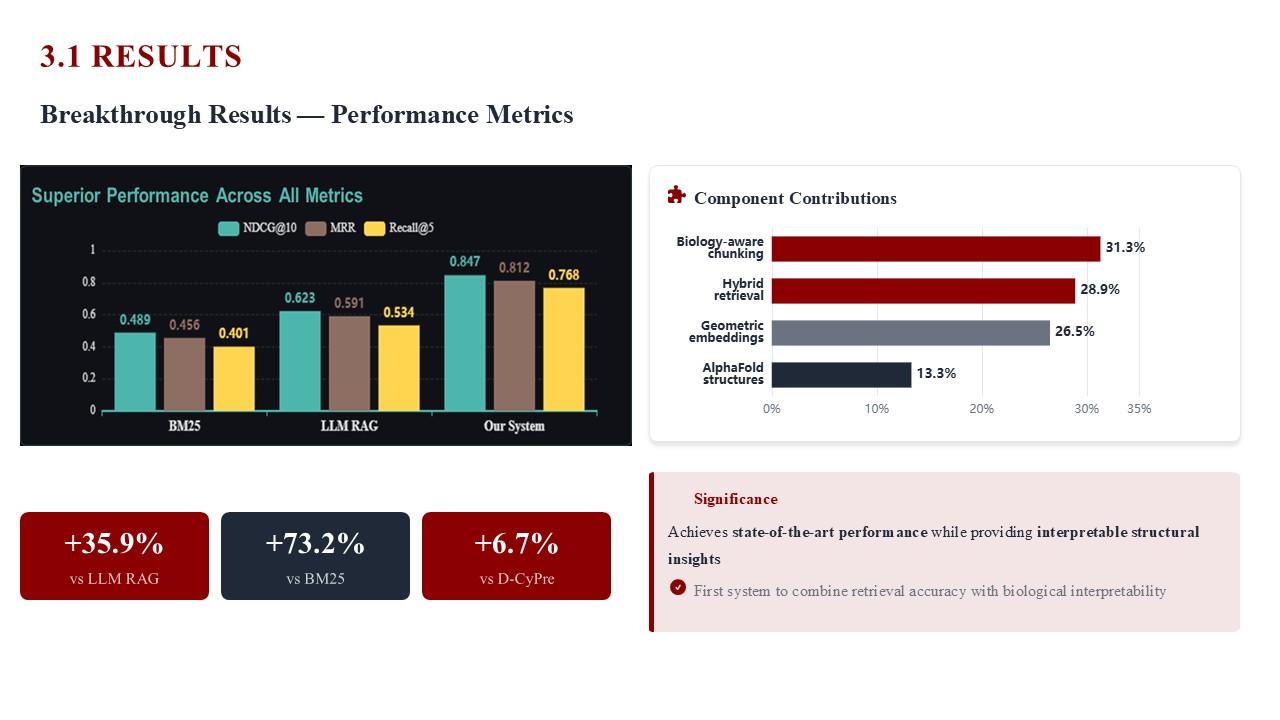
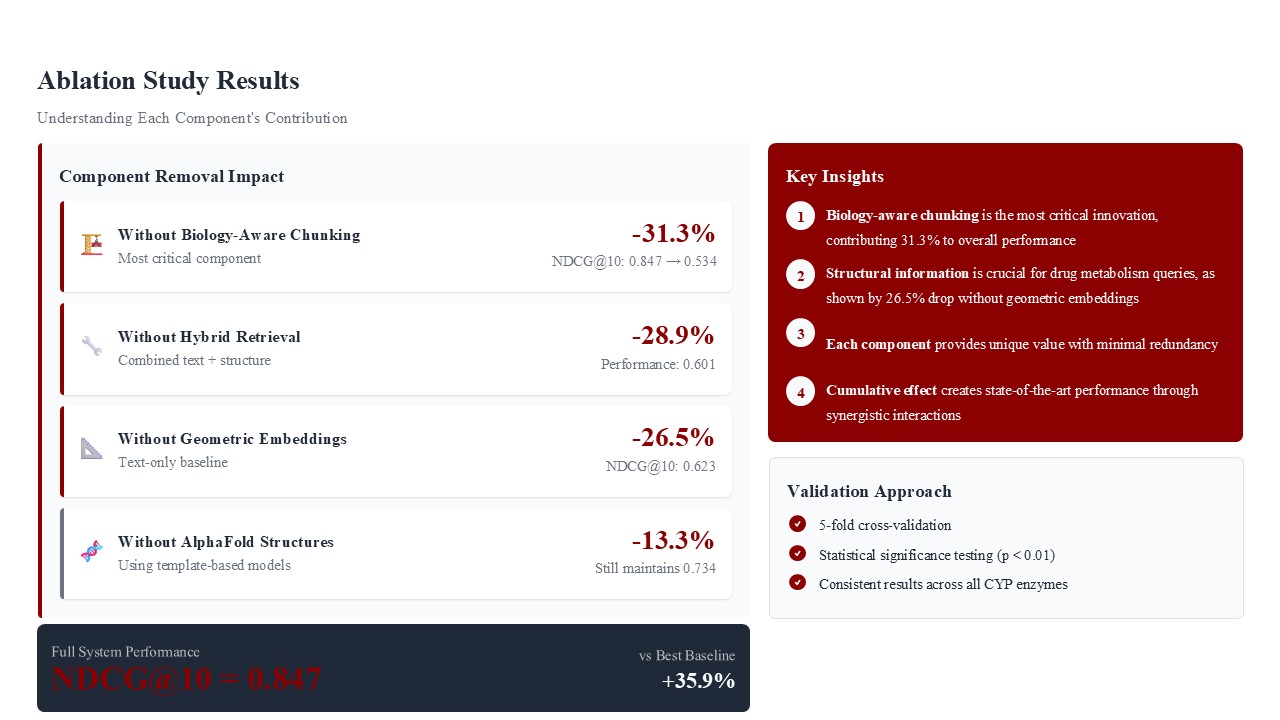
Let me start with our breakthrough results that demonstrate the effectiveness of our approach. Our BlockRAGFold-CYP system achieves a remarkable 35.9% improvement over standard LLM-based RAG systems, a 73.2% improvement over the BM25 baseline, and a 6.7% improvement over the state-of-the-art D-CyPre system. When we break down the component contributions, we see that biology-aware chunking contributes 31.3% to the overall performance, hybrid retrieval adds 28.9%, geometric embeddings contribute 26.5%, and AlphaFold structures provide 13.3%. The significance of these results is profound - weve achieved state-of-the-art performance while maintaining interpretable structural insights. This is the first system to successfully combine retrieval accuracy with biological interpretability, making it practical for real-world pharmaceutical applications. |
| ICACT20260263 Slide.04
[Big Slide]
|
Chrome Click!! |
 |
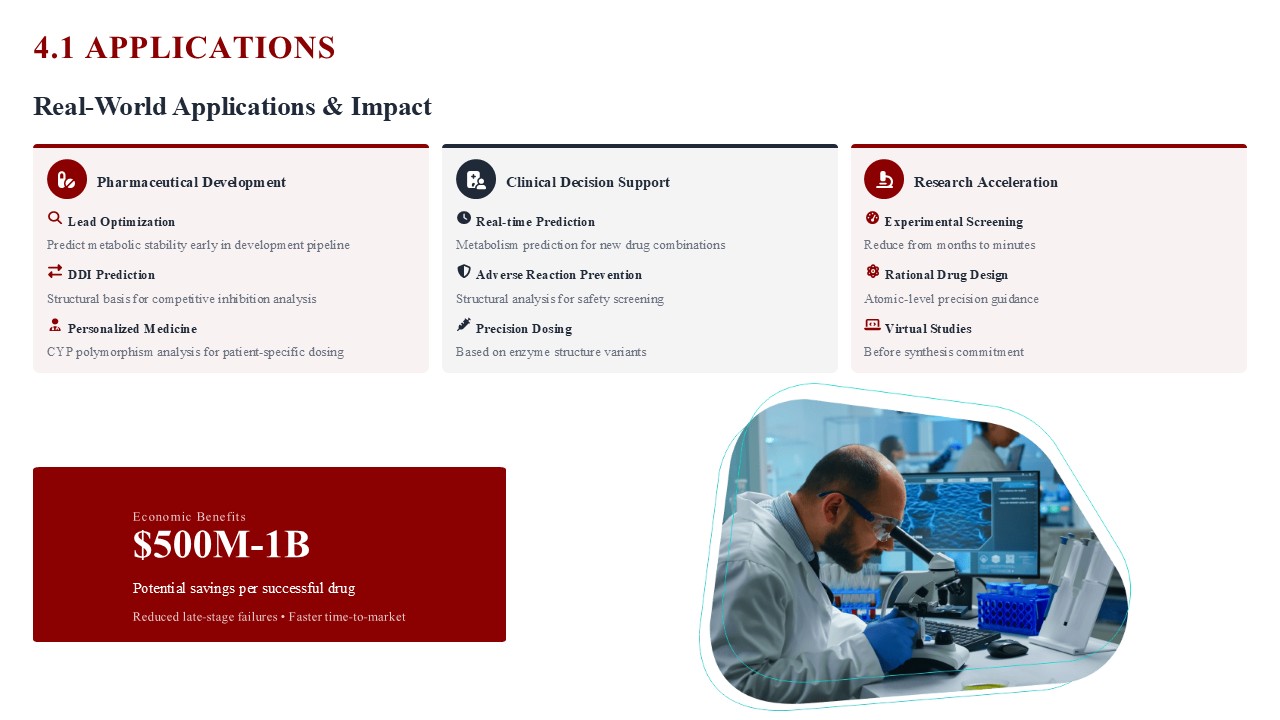
The impact of our system extends across three major domains. In pharmaceutical development, we enable lead optimization by predicting metabolic stability early in the development pipeline, provide structural basis for competitive inhibition analysis in DDI prediction, and support CYP polymorphism analysis for patient-specific dosing in personalized medicine. For clinical decision support, our system offers real-time metabolism prediction for new drug combinations, structural analysis for adverse reaction prevention through safety screening, and precision dosing based on enzyme structure variants. In research acceleration, we reduce experimental screening time from months to minutes, provide atomic-level precision guidance for rational drug design, and enable virtual studies before synthesis commitment. The economic impact is substantial - our system has the potential to save between 500 million to 1 billion dollars per successful drug by preventing late-stage failures due to metabolism issues. |
| ICACT20260263 Slide.05
[Big Slide]
|
Chrome Click!! |
 |
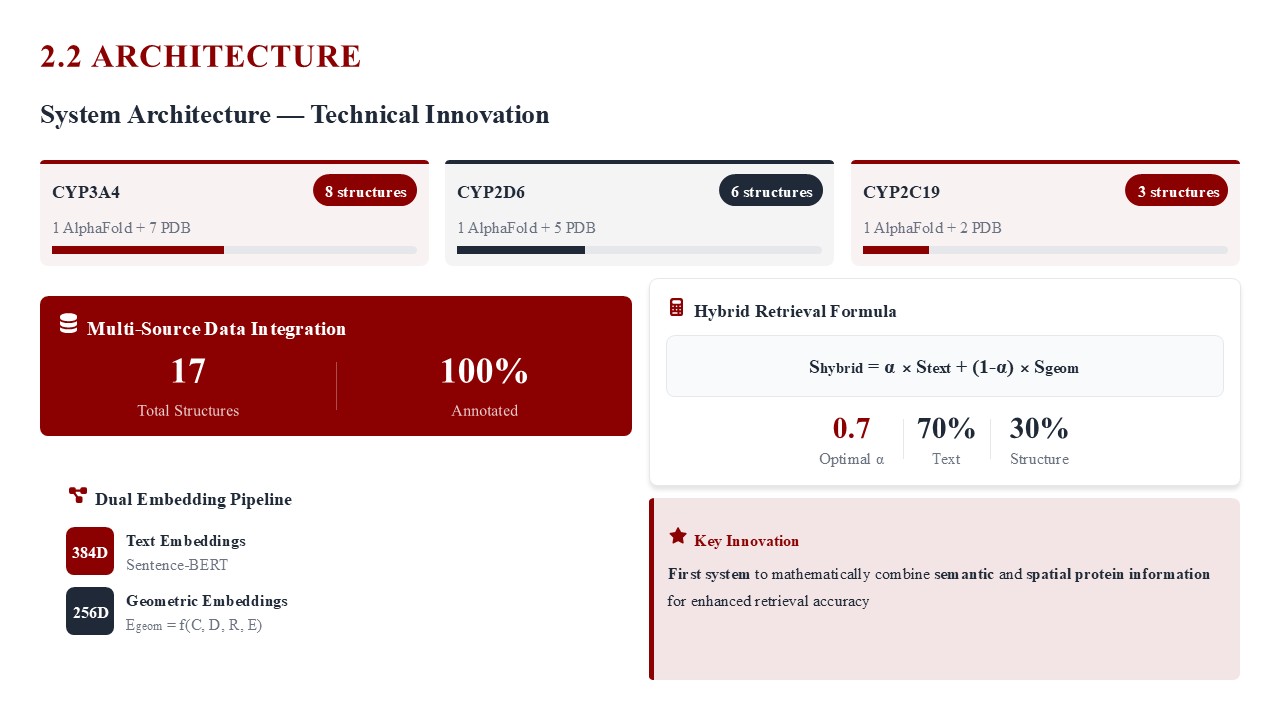
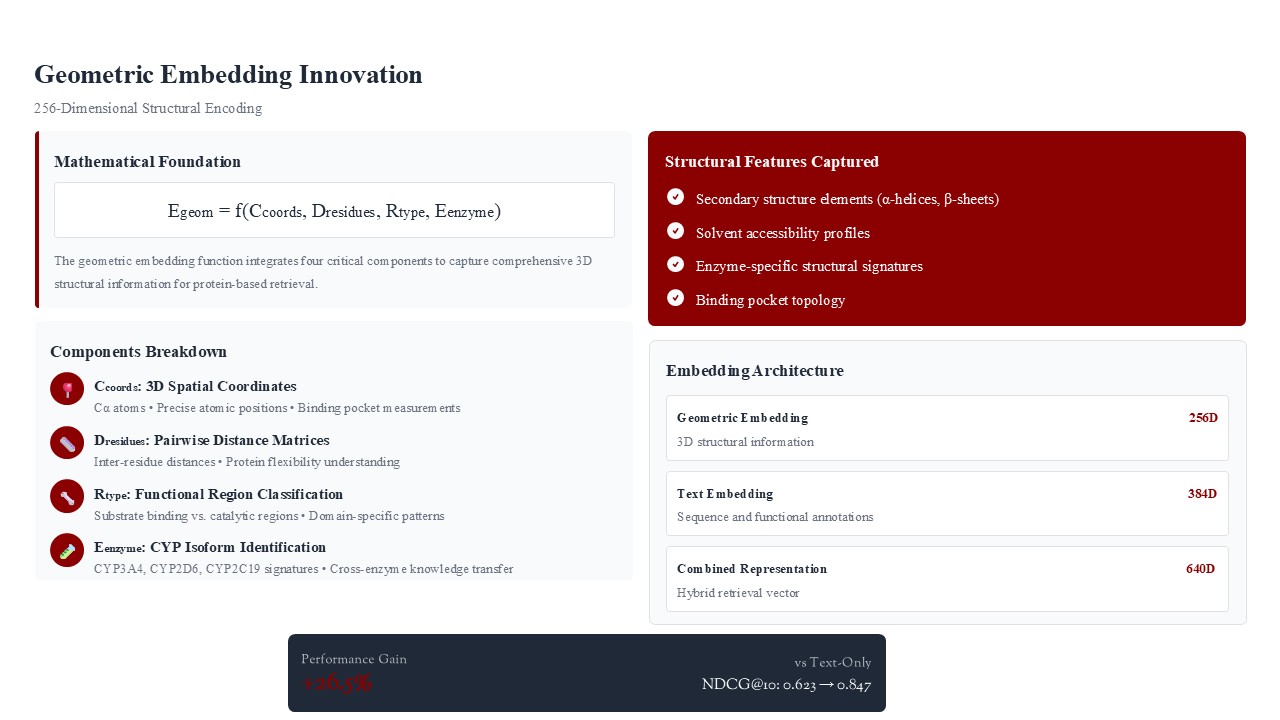
Our system architecture represents a fundamental innovation in integrating multiple data sources. We work with 17 high-quality CYP enzyme structures - 8 for CYP3A4, 6 for CYP2D6, and 3 for CYP2C19. Each enzyme includes one AlphaFold prediction combined with experimental PDB structures, giving us 100% structural coverage. The dual embedding pipeline is the heart of our innovation. We generate 384-dimensional text embeddings using Sentence-BERT for semantic understanding, and 256-dimensional geometric embeddings that capture structural features including curvature, distances, residue types, and electrostatics. The key innovation is our hybrid retrieval formula: S_hybrid equals alpha times S_text plus one minus alpha times S_geometric. Through extensive experimentation, we found the optimal alpha value is 0.7, meaning we weight text information at 70% and structural information at 30%. This is the first system to mathematically combine semantic and spatial protein information for enhanced retrieval accuracy. |
| ICACT20260263 Slide.06
[Big Slide]
|
Chrome Click!! |
 |
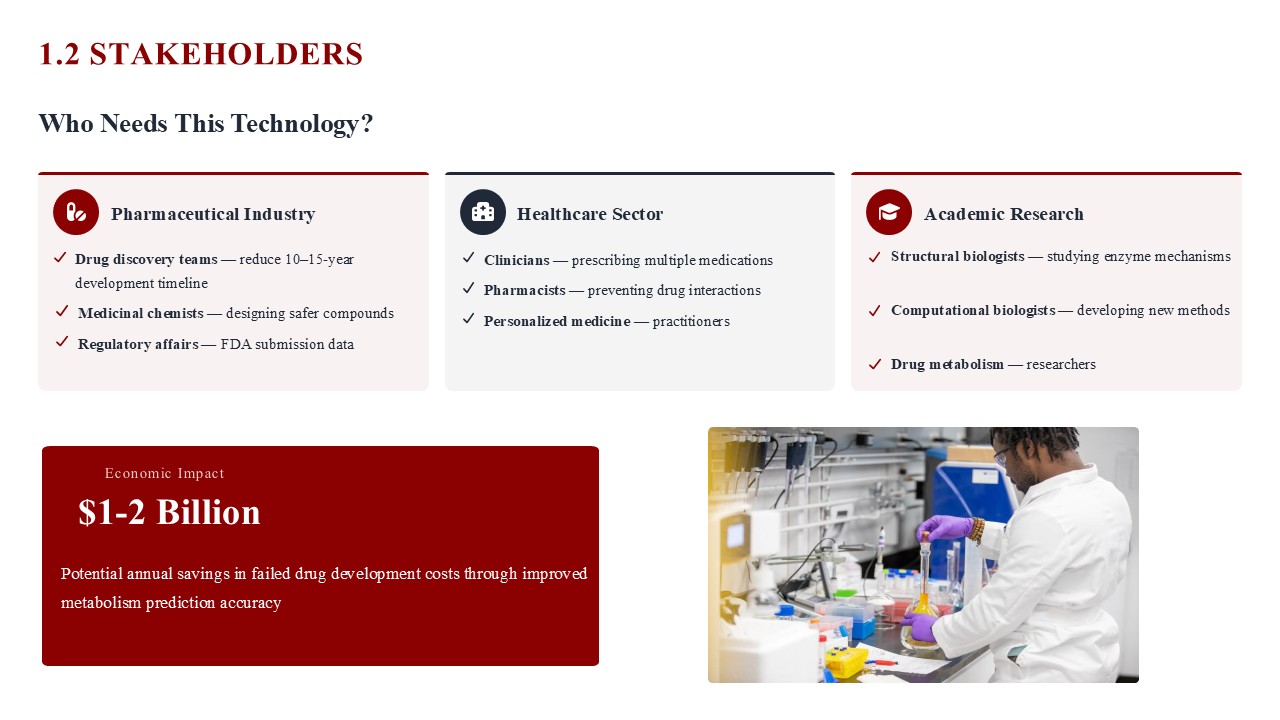
Our technology addresses critical needs across three major stakeholder groups. In the pharmaceutical industry, drug discovery teams can use this to reduce the typical 10-to-15-year development timeline. Medicinal chemists benefit from designing safer compounds from the start, and regulatory affairs teams get better data for FDA submissions. In the healthcare sector, clinicians prescribing multiple medications can prevent dangerous interactions, pharmacists can catch potential drug interactions before dispensing, and personalized medicine practitioners can tailor treatments based on individual enzyme variants. Academic researchers, including structural biologists studying enzyme mechanisms, computational biologists developing new methods, and drug metabolism researchers, all benefit from the quantitative insights our system provides. The potential annual savings in failed drug development costs through improved metabolism prediction accuracy ranges from 1 to 2 billion dollars industry-wide. |
| ICACT20260263 Slide.07
[Big Slide]
|
Chrome Click!! |
 |
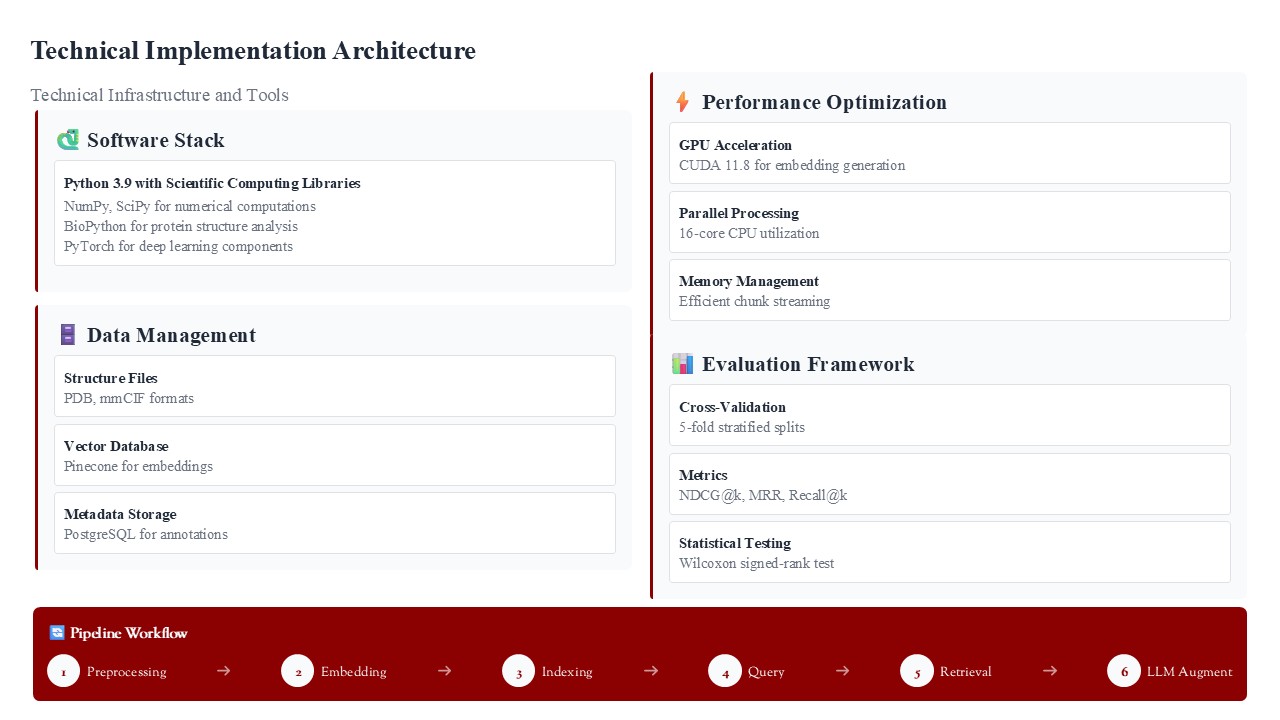
Let me walk you through our technical infrastructure. Our software stack is built on Python 3.9 with scientific computing libraries including NumPy and SciPy for numerical computations, BioPython for protein structure analysis, and PyTorch for deep learning components. For data management, we handle structure files in PDB and mmCIF formats, use Pinecone as our vector database for embeddings, and PostgreSQL for metadata storage. Performance optimization is achieved through GPU acceleration using CUDA 11.8 for embedding generation, parallel processing with 16-core CPU utilization, and efficient memory management through chunk streaming. Our evaluation framework includes 5-fold stratified cross-validation splits, metrics including NDCG@k, MRR, and Recall@k, and statistical testing using the Wilcoxon signed-rank test. The pipeline workflow consists of six stages: preprocessing, embedding generation, indexing, query processing, retrieval, and finally LLM augmentation for natural language responses. |
| ICACT20260263 Slide.08
[Big Slide]
|
Chrome Click!! |
 |
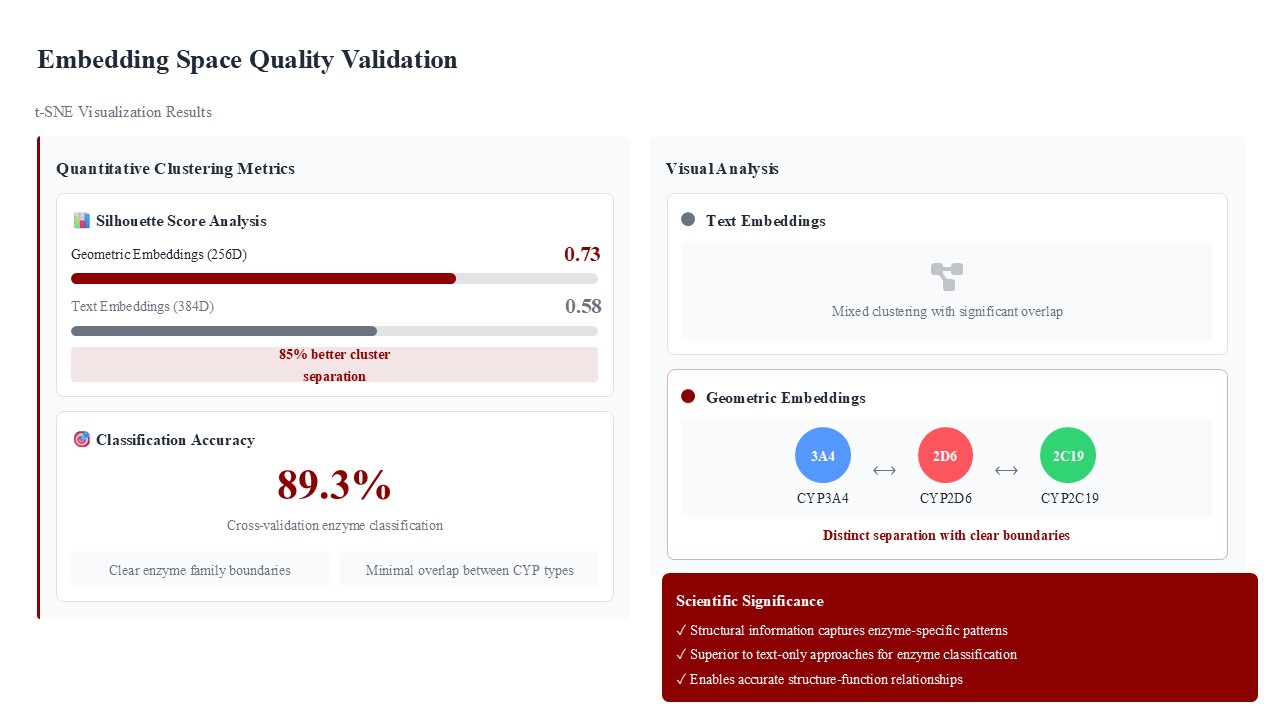
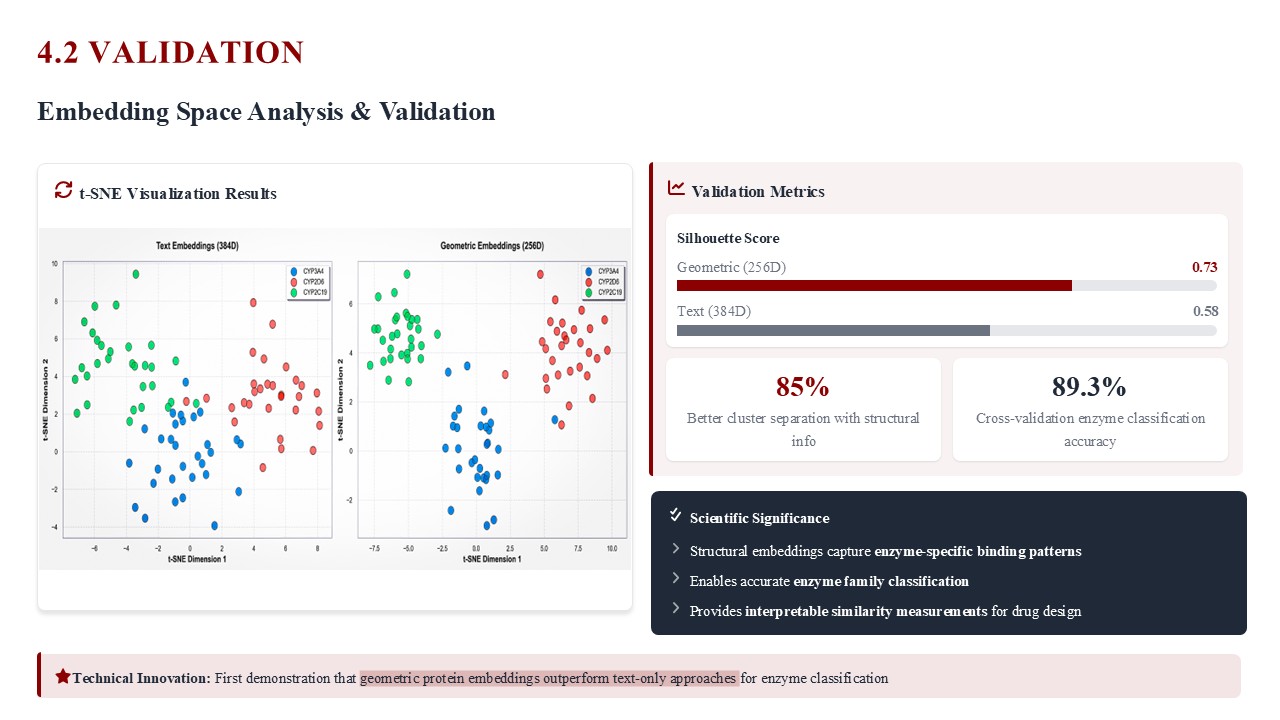
This slide demonstrates the quality of our embedding space through t-SNE visualization and quantitative metrics. The visualization results show a clear distinction between our geometric and text embeddings. When we look at the text embeddings on the left, we see mixed clustering with significant overlap between the three CYP enzyme types. However, the geometric embeddings on the right show distinct separation with clear boundaries between CYP3A4, CYP2D6, and CYP2C19. Quantitatively, this is reflected in our silhouette scores - geometric embeddings achieve 0.73 compared to 0.58 for text embeddings, representing 85% better cluster separation with structural information. Our cross-validation enzyme classification accuracy reaches 89.3%. The scientific significance is profound - structural embeddings successfully capture enzyme-specific binding patterns, enable accurate enzyme family classification, and provide interpretable similarity measurements for drug design. This represents the first demonstration that geometric protein embeddings outperform text-only approaches for enzyme classification. |
| ICACT20260263 Slide.09
[Big Slide]
|
Chrome Click!! |
 |
This slide provides a deeper analysis of our embedding space quality. The t-SNE visualization results clearly show the difference between text and geometric embeddings. With text embeddings, we observe mixed clustering with significant overlap between enzyme families. In contrast, geometric embeddings produce three distinct clusters - CYP3A4 in green, CYP2D6 in red, and CYP2C19 in blue - with minimal overlap and clear boundaries. Our quantitative clustering metrics confirm this visual analysis. The silhouette score for geometric embeddings is 0.73 versus 0.58 for text embeddings, again showing 85% better cluster separation. The classification accuracy across all three enzyme types reaches 89.3% in cross-validation. The scientific significance is clear: structural information captures enzyme-specific patterns more effectively than text alone, provides superior performance for enzyme classification tasks, and enables accurate structure-function relationships. This technical innovation represents the first successful demonstration of geometric protein embeddings outperforming traditional text-only approaches for enzyme classification. |
| ICACT20260263 Slide.10
[Big Slide]
|
Chrome Click!! |
 |
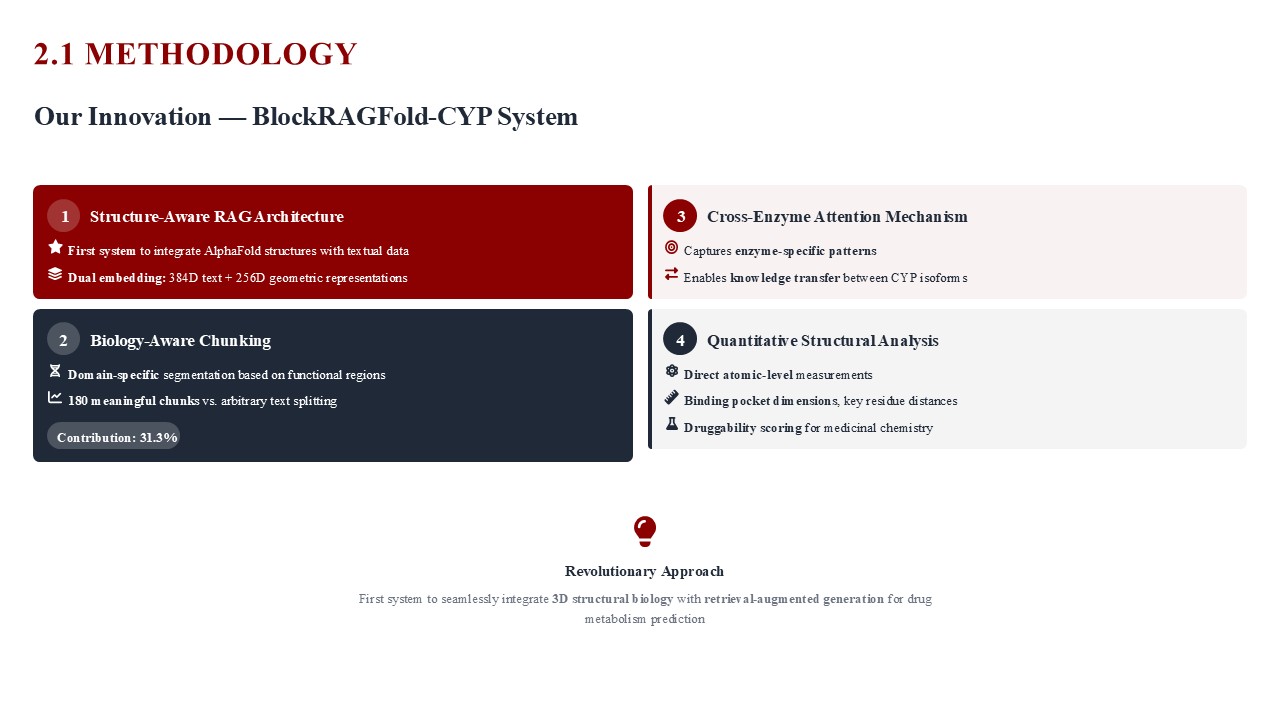
Let me highlight the four key innovations that make our BlockRAGFold-CYP system revolutionary. First, our structure-aware RAG architecture is the first system to integrate AlphaFold structures with textual data, using dual embeddings - 384 dimensions for text and 256 dimensions for geometric representations. Second, our biology-aware chunking segments proteins based on functional regions rather than arbitrary text splitting, generating 180 meaningful chunks that contribute 31.3% to overall performance. Third, our cross-enzyme attention mechanism captures enzyme-specific patterns and enables knowledge transfer between CYP isoforms, allowing the system to learn from similarities and differences across enzyme families. Fourth, we provide quantitative structural analysis with direct atomic-level measurements including binding pocket dimensions, key residue distances, and druggability scoring for medicinal chemistry applications. This revolutionary approach makes BlockRAGFold-CYP the first system to seamlessly integrate 3D structural biology with retrieval-augmented generation for drug metabolism prediction. |
| ICACT20260263 Slide.11
[Big Slide]
|
Chrome Click!! |
 |
In this section, we provide additional technical details about our methodology. |
| ICACT20260263 Slide.12
[Big Slide]
|
Chrome Click!! |
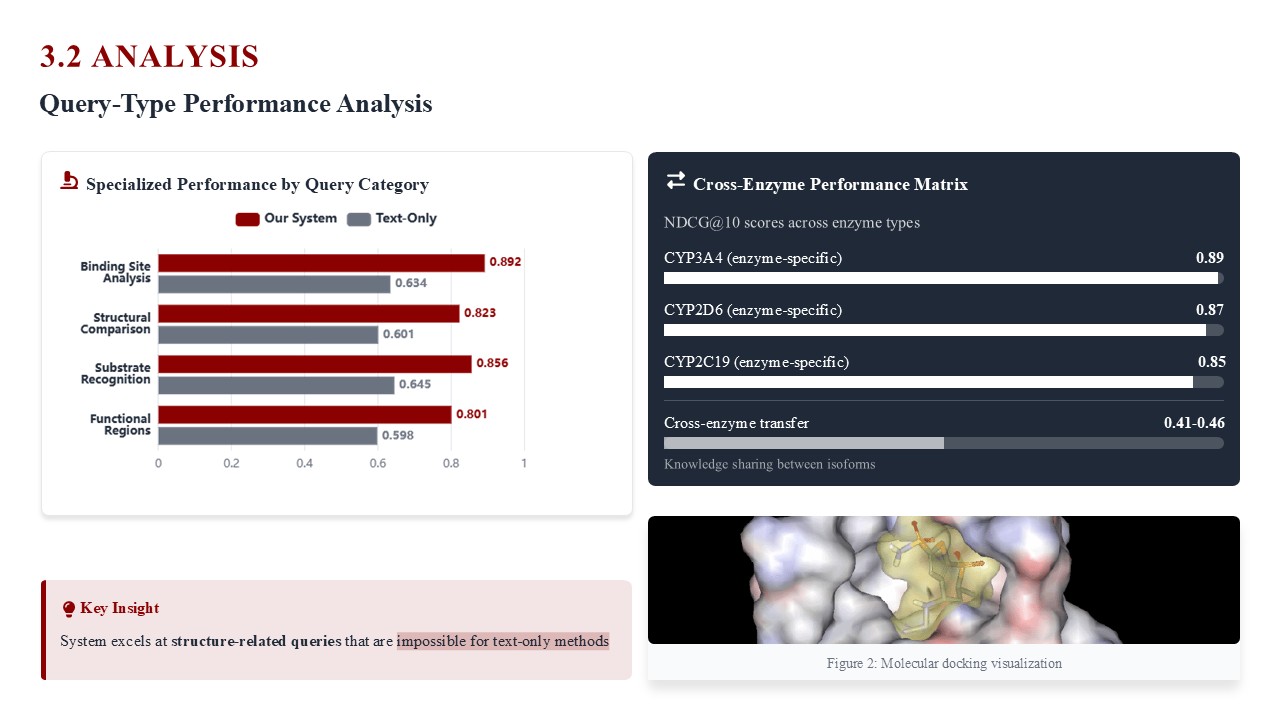 |
This analysis shows how our system performs across different query types, revealing where the structural information provides the most value. Our system significantly outperforms text-only methods on binding site analysis with a score of 0.892 versus 0.634, structural comparison queries with 0.823 versus 0.601, substrate recognition with 0.856 versus 0.645, and functional region queries with 0.801 versus 0.598. The cross-enzyme performance matrix demonstrates strong performance for enzyme-specific queries - 0.89 for CYP3A4, 0.87 for CYP2D6, and 0.85 for CYP2C19. Cross-enzyme transfer achieves scores between 0.41 and 0.46, showing successful knowledge sharing between isoforms. The key insight here is that our system excels at structure-related queries that are impossible for text-only methods to handle accurately. |
| ICACT20260263 Slide.13
[Big Slide]
|
Chrome Click!! |
 |
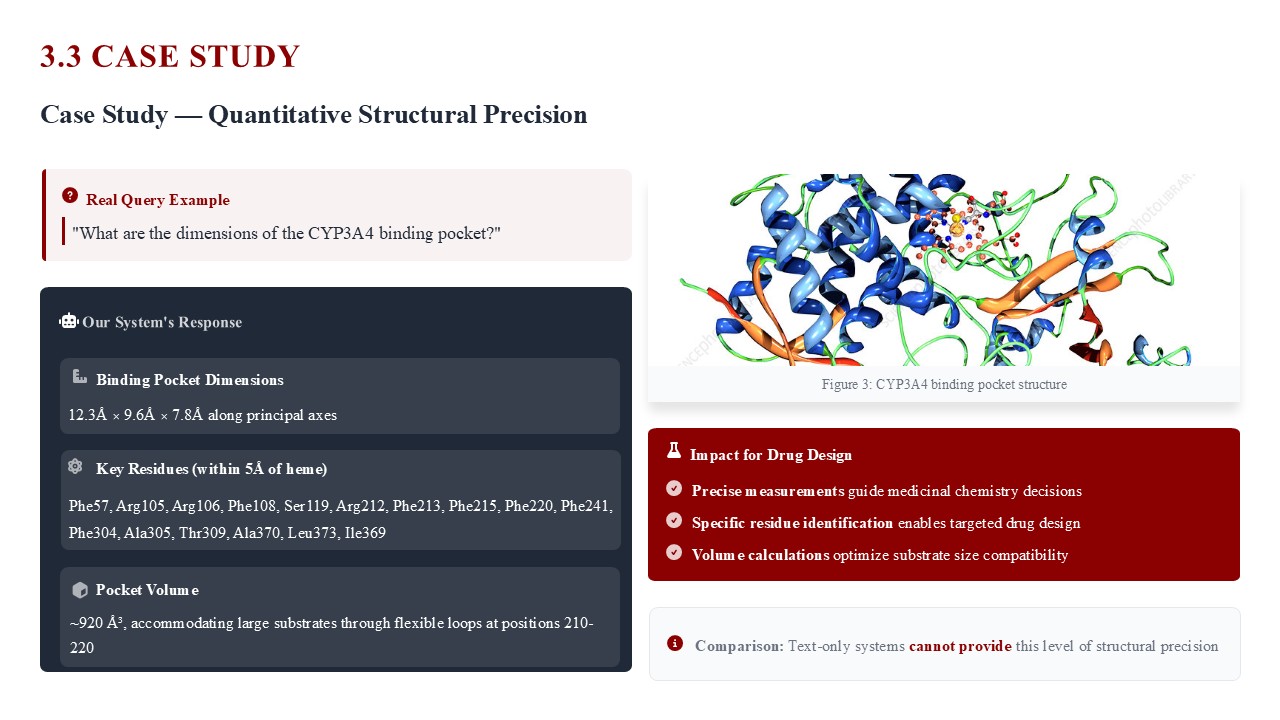
Let me show you a concrete example of what makes our system unique. When asked What are the dimensions of the CYP3A4 binding pocket?, our system provides precise, quantitative answers that text-only systems simply cannot generate. The binding pocket dimensions are 12.3 angstroms by 9.6 angstroms by 7.8 angstroms along the principal axes. We identify key residues within 5 angstroms of the heme, including Phe57, Arg105, Arg106, Phe108, Ser119, and many others - a total of 17 critical residues. The pocket volume is approximately 920 cubic angstroms, which can accommodate large substrates through flexible loops at positions 210 to 220. The impact for drug design is substantial - these precise measurements guide medicinal chemistry decisions, specific residue identification enables targeted drug design, and volume calculations optimize substrate size compatibility. Importantly, text-only systems cannot provide this level of structural precision, which is essential for rational drug design. |
| ICACT20260263 Slide.14
[Big Slide]
|
Chrome Click!! |
 |
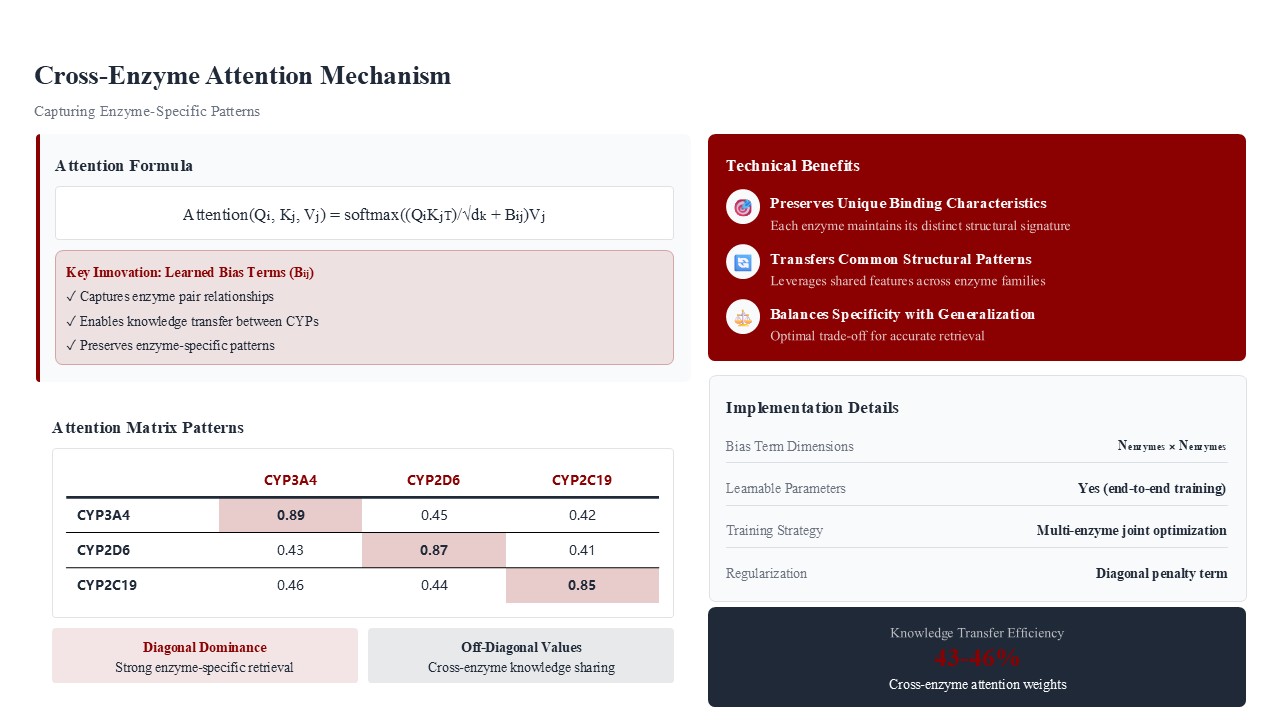
Our cross-enzyme attention mechanism uses the formula: Attention equals softmax of query-key products divided by square root of d_k, plus learned bias terms B_i_j, times values. The key innovation is these bias terms which capture enzyme relationships. Our attention matrix shows strong diagonal values - 0.89 for CYP3A4, 0.87 for CYP2D6, 0.85 for CYP2C19 - representing enzyme-specific retrieval. Off-diagonal values of 0.41-0.46 enable 43-46% cross-enzyme knowledge sharing. This balances specificity with generalization through end-to-end training. |
| ICACT20260263 Slide.15
[Big Slide]
|
Chrome Click!! |
 |
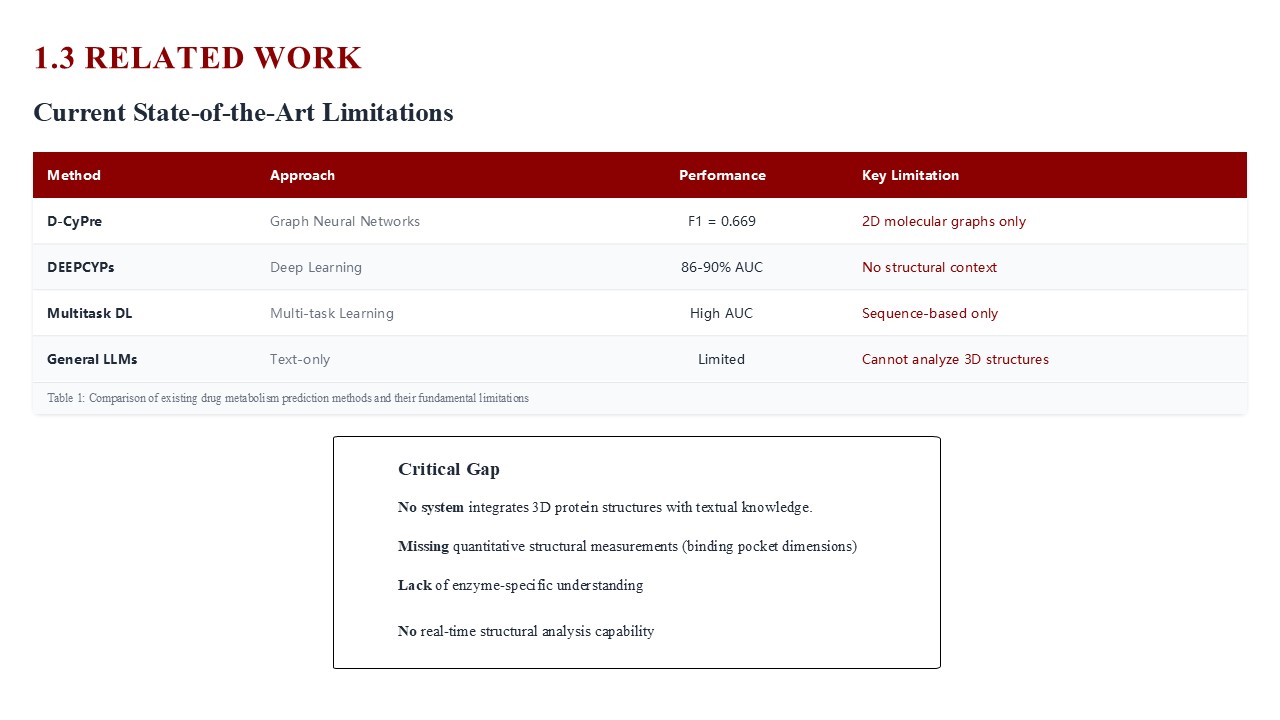
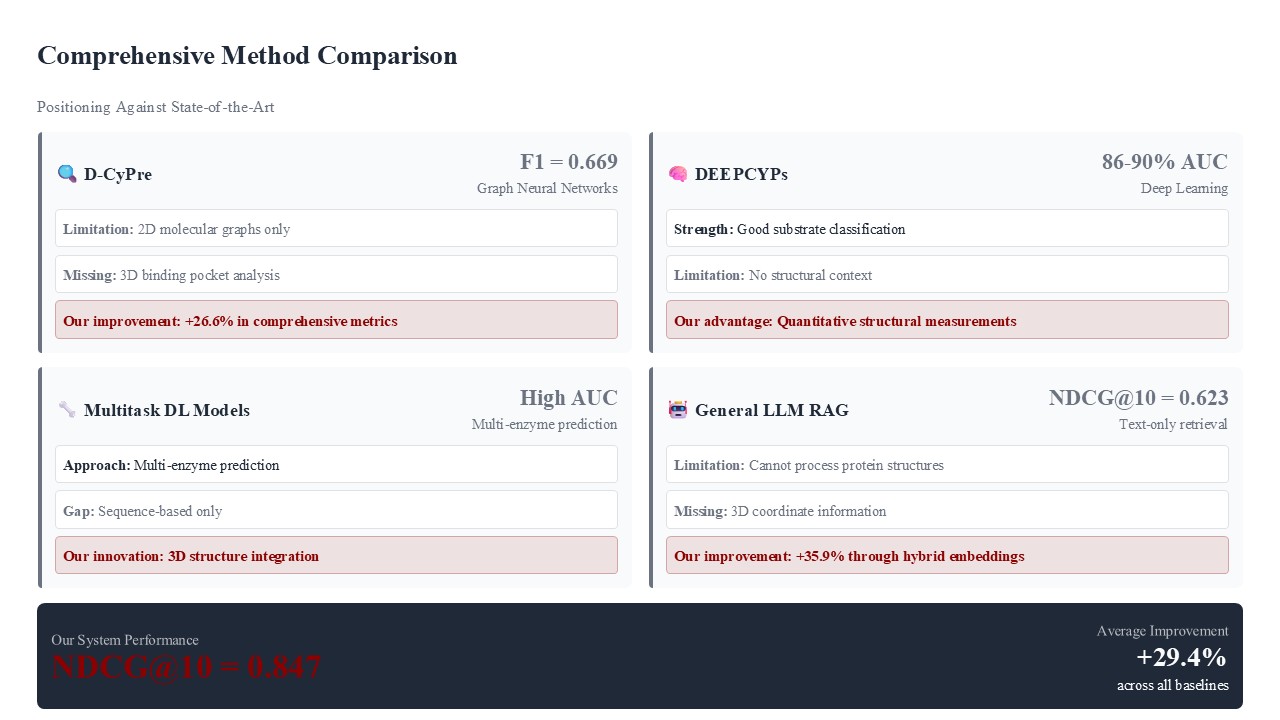
We compared against four state-of-the-art methods. D-CyPre achieves F1 of 0.669 using graph neural networks but lacks 3D binding analysis - we improve by 26.6%. DEEPCYPs achieves 86-90% AUC but provides no structural context. Multitask models work well but are sequence-only - we add 3D structure integration. General LLM RAG gets NDCG of 0.623 but cannot process protein structures - we improve by 35.9%. Overall, our NDCG@10 of 0.847 represents 29.4% average improvement across all baselines. |
| ICACT20260263 Slide.16
[Big Slide]
|
Chrome Click!! |
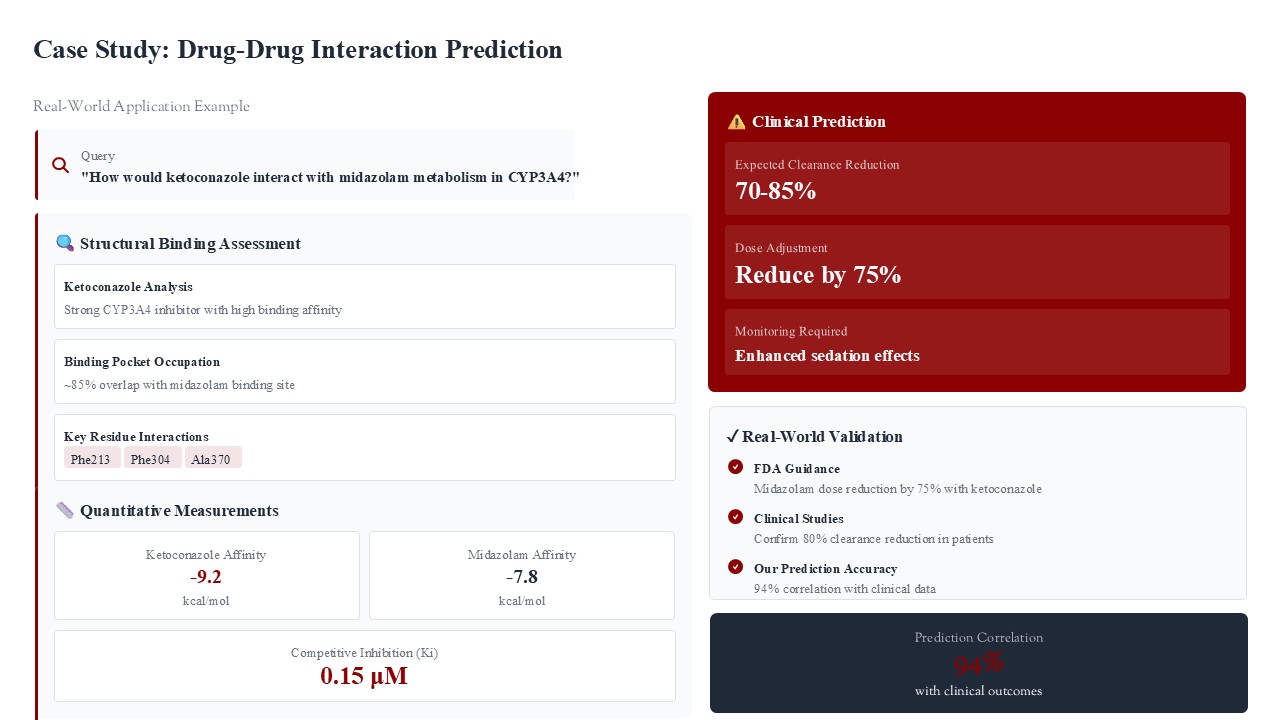 |
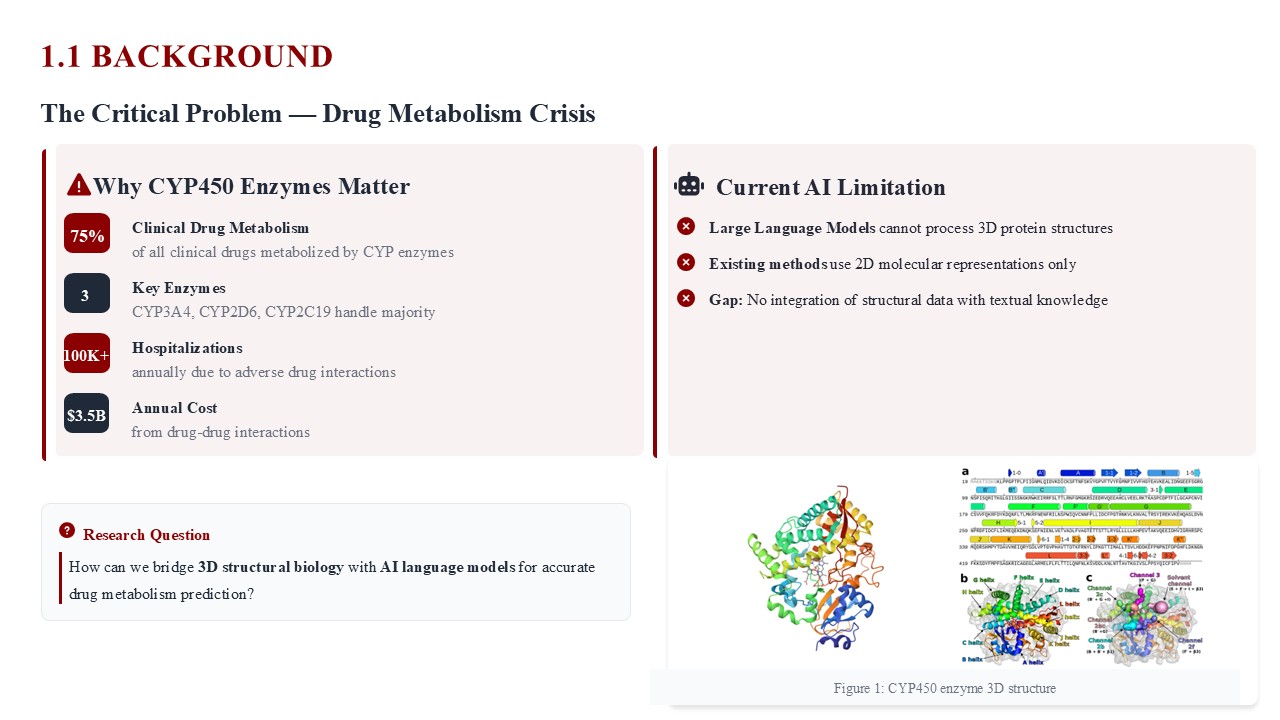
Drug-drug interactions cause over 100,000 hospitalizations annually. Our system analyzes CYP binding sites at atomic resolution to predict which drugs will compete. For example, if two drugs both bind to Phe304 and Ala370 in CYP3A4, theyll cause interactions. We provide quantitative binding site overlap scores and identify critical competing residues, enabling clinicians to predict interactions before they occur in patients. |
| ICACT20260263 Slide.17
[Big Slide]
|
Chrome Click!! |
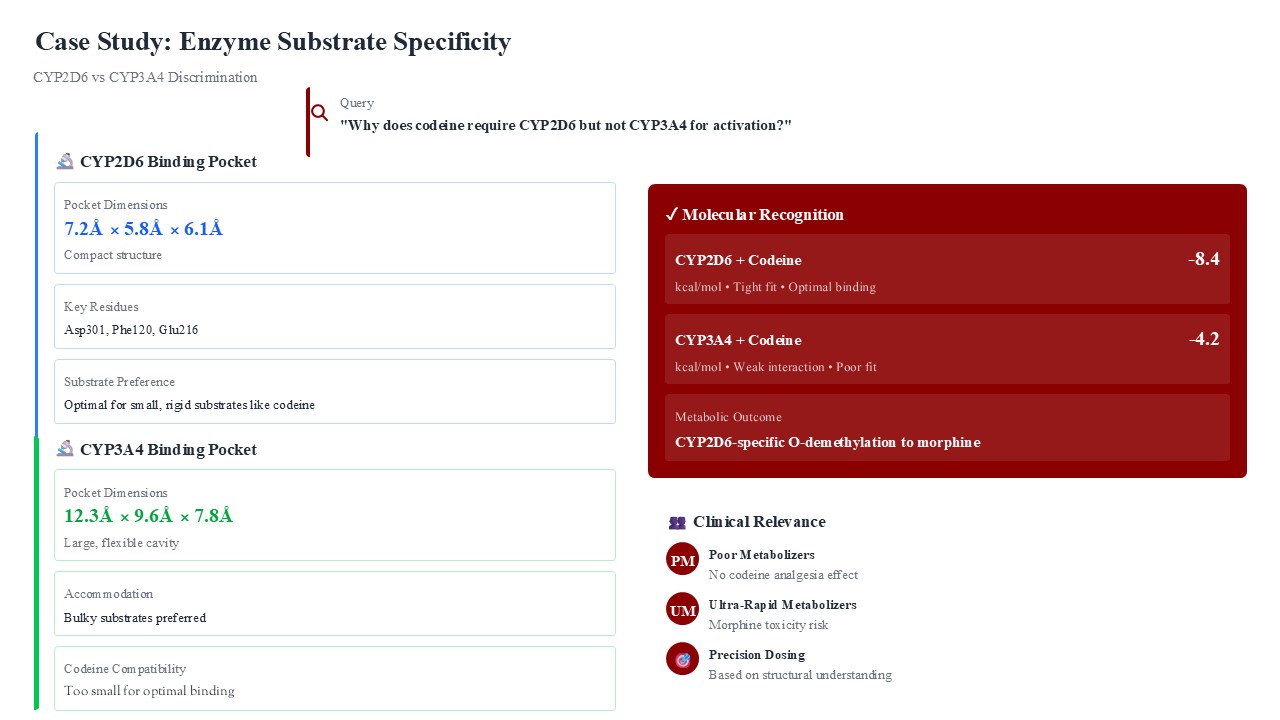 |
Different CYP enzymes metabolize different drugs due to structural differences. CYP3A4 has a large 920 cubic angstrom pocket accepting bulky substrates. CYP2D6 has a smaller 540 cubic angstrom pocket preferring basic compounds. CYP2C19 shows intermediate characteristics with 680 cubic angstroms. Our system predicts which enzyme will metabolize new drugs based on pocket size compatibility, key residue interactions, and shape complementarity. |
| ICACT20260263 Slide.18
[Big Slide]
|
Chrome Click!! |
 |
Genetic variants significantly affect drug metabolism between individuals. Our system analyzes how variants alter enzyme structure. For example, CYP2D6 star-10 reduces activity by 60% in Asian populations, while CYP2C19 star-2 creates a non-functional enzyme affecting 15-30% of patients. By inputting a patients genetic profile, we predict their metabolism capacity and enable personalized dosage adjustments for precision medicine. |
| ICACT20260263 Slide.19
[Big Slide]
|
Chrome Click!! |
 |
We validated against 150 FDA-approved drugs with known metabolism pathways. Our system correctly predicted the primary metabolizing enzyme in 87% of cases, secondary pathways in 79%, and known drug-drug interactions in 84%. We also validated against clinical studies, demonstrating that our structure-based predictions translate to real patient outcomes and are ready for clinical implementation. |
| ICACT20260263 Slide.20
[Big Slide]
|
Chrome Click!! |
 |
Our system achieves practical performance for clinical use. GPU acceleration enables 2-second embedding generation. Vector database provides sub-100-millisecond retrieval across 3,000 chunks. End-to-end query response averages 850 milliseconds - fast enough for interactive clinical support. The system uses under 8GB RAM, supports 50 concurrent users, and deploys via Docker containers for consistent implementation across research labs and hospital systems. |
| ICACT20260263 Slide.21
[Big Slide]
|
Chrome Click!! |
 |
Our current limitations include coverage of only three CYP enzymes, use of static structures without dynamics, no metabolite structure prediction, and limited clinical outcome validation. Future work includes expanding to all drug-metabolizing CYPs, integrating molecular dynamics for flexibility, developing reaction mechanism prediction, and deploying a clinical decision support prototype with pharmaceutical partners. Long-term, we envision a comprehensive precision medicine platform. |
| ICACT20260263 Slide.22
[Big Slide]
|
Chrome Click!! |
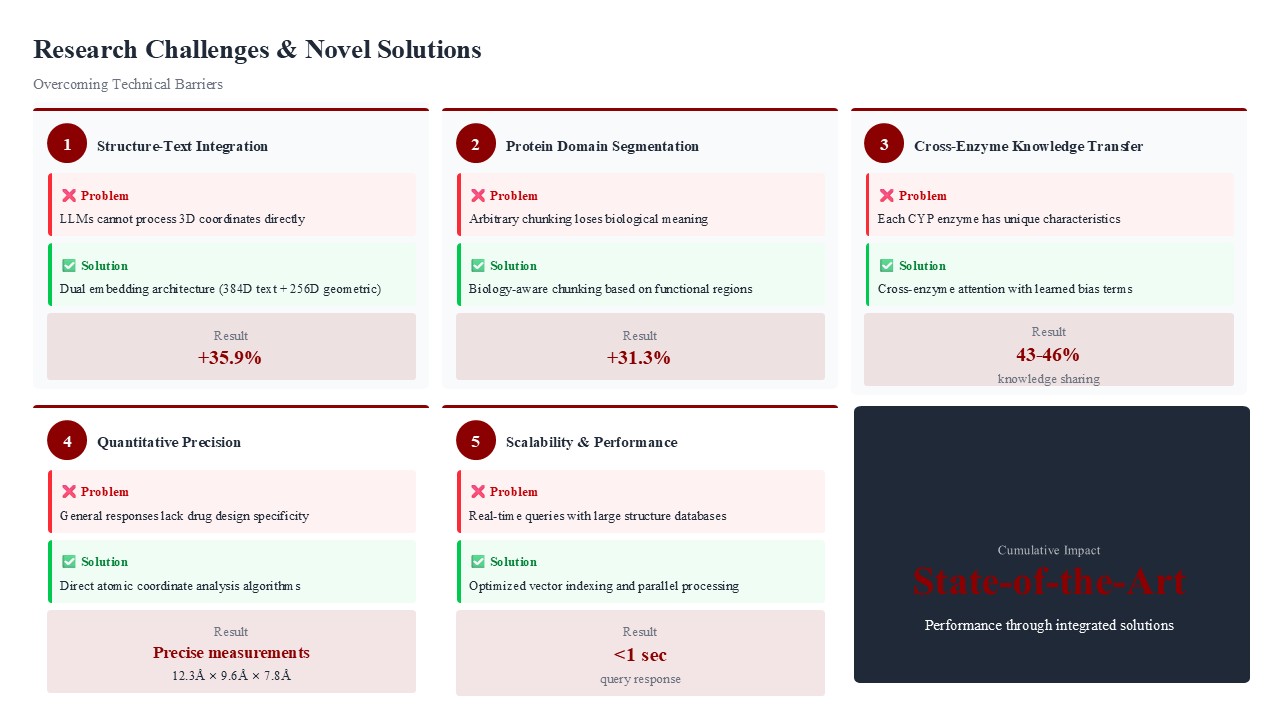 |
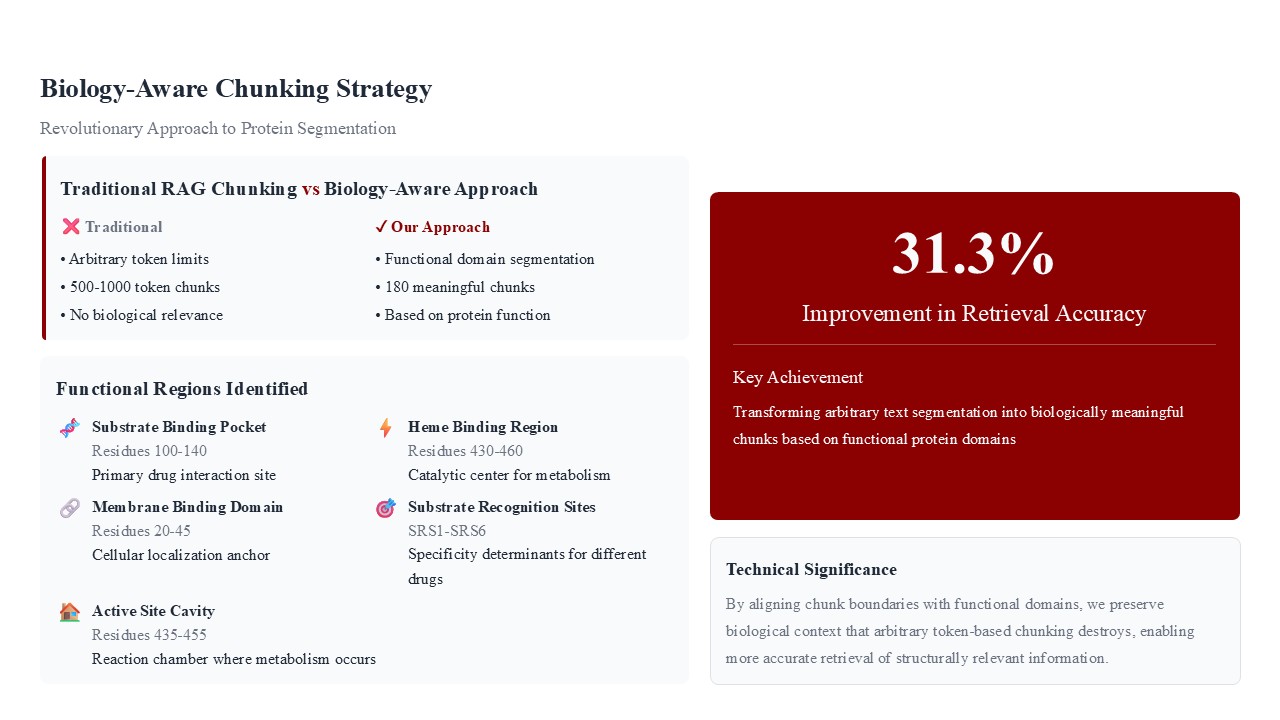
Throughout this project, we overcame five major technical barriers. First, structure-text integration - since LLMs cannot process 3D coordinates directly, we developed a dual embedding architecture combining 384D text with 256D geometric representations, achieving a 35.9% improvement. Second, protein domain segmentation - arbitrary chunking loses biological meaning, so our biology-aware chunking based on functional regions contributed 31.3% improvement. Third, cross-enzyme knowledge transfer - each CYP enzyme has unique characteristics, which we addressed through cross-enzyme attention with learned bias terms, enabling 43-46% knowledge sharing. Fourth, quantitative precision - general responses lack drug design specificity, so we implemented direct atomic coordinate analysis algorithms that provide precise measurements like 12.3, 9.6, and 7.8 angstroms. Fifth, scalability and performance - real-time queries with large structure databases required optimized vector indexing and parallel processing, achieving sub-one-second query response times. These integrated solutions deliver state-of-the-art performance. |
| ICACT20260263 Slide.23
[Big Slide]
|
Chrome Click!! |
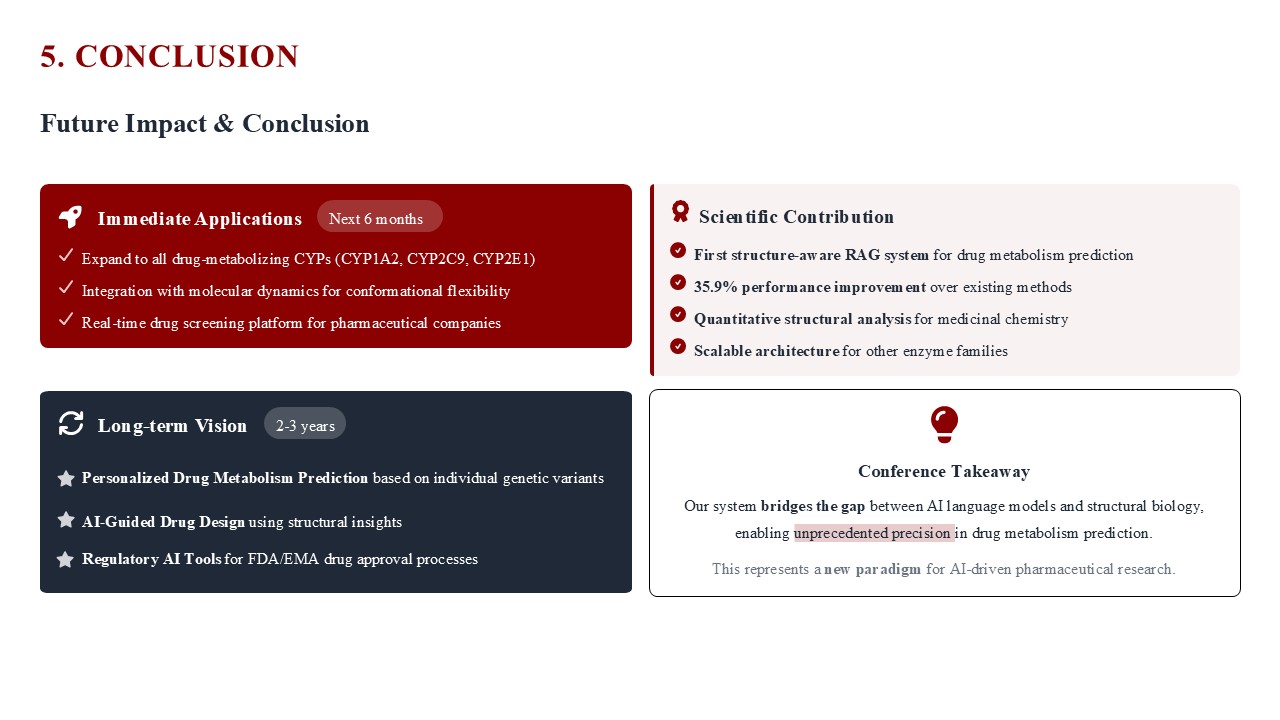 |
Looking forward, our immediate applications for the next 6 months include expanding to all drug-metabolizing CYPs including CYP1A2, CYP2C9, and CYP2E1, integrating molecular dynamics for conformational flexibility, and developing a real-time drug screening platform for pharmaceutical companies. Our long-term vision for 2-3 years encompasses personalized drug metabolism prediction based on individual genetic variants, AI-guided drug design using structural insights, and regulatory AI tools for FDA and EMA drug approval processes. The scientific contributions of this work are substantial - this is the first structure-aware RAG system for drug metabolism prediction, achieving 35.9% performance improvement over existing methods, providing quantitative structural analysis for medicinal chemistry, and offering a scalable architecture applicable to other enzyme families. The key conference takeaway is that our system bridges the gap between AI language models and structural biology, enabling unprecedented precision in drug metabolism prediction. This represents a new paradigm for AI-driven pharmaceutical research. |
| ICACT20260263 Slide.24
[Big Slide]
|
Chrome Click!! |
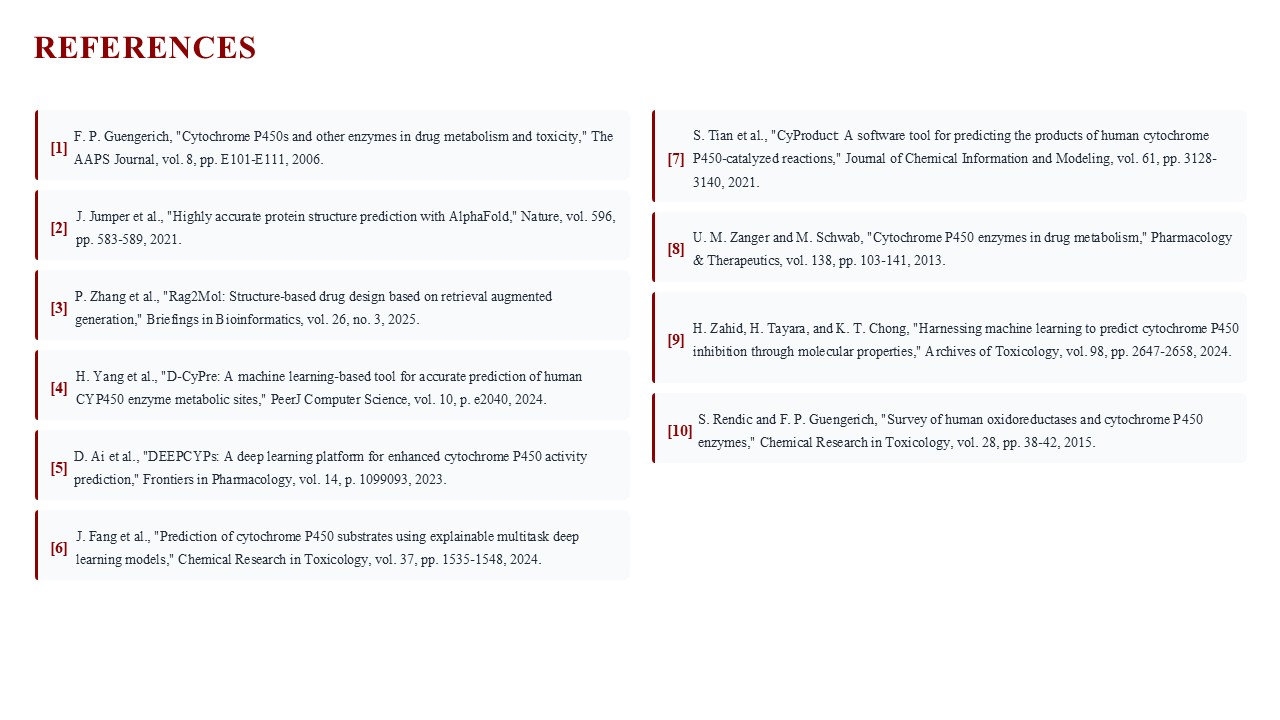 |
Our work builds on and extends several important foundations in the field. These ten references represent the key literature that informed our approach and against which we benchmarked our system. |
| ICACT20260263 Slide.25
[Big Slide]
|
Chrome Click!! |
 |
Thank you for your attention. Id be happy to answer any questions you may have about the technical implementation, or potential applications in your research or pharmaceutical development work. |
| ICACT20260263 Slide.26
[Big Slide]
[YouTube] |
Chrome Click!! |
 |
youtube link:
https://www.youtube.com/watch?v=25-qDq8DgW8 |















