 ICACT20260317 Slide.01
[Big Slide]
[YouTube] |
Chrome  Click!! |
 |
Hello everyone,my name is Pang Bo. Today I’m very happy to present our work at ICACT 2026. The title of our paper is “FRAB-MAC: A Reliable Adaptive Broadcast MAC protocol for Mobile UACNs”. This work was jointly conducted by, Guo Zhichuan, and Liu Yating, and all of us are from Institute of Acoustics, Chinese Academy of Sciences. |
| ICACT20260317 Slide.02
[Big Slide]
[YouTube] |
Chrome Click!! |
 |
I will introduce our work from five aspects. And they are: Background and Contributions, Mathematical Model, Detailed Design of FRAB-MAC, Simulation and Results, and Conclusion. The last part is the Reference. |
| ICACT20260317 Slide.03
[Big Slide]
[YouTube] |
Chrome Click!! |
 |
First, I will start with the background and our main contributions. |
| ICACT20260317 Slide.04
[Big Slide]
[YouTube] |
Chrome Click!! |
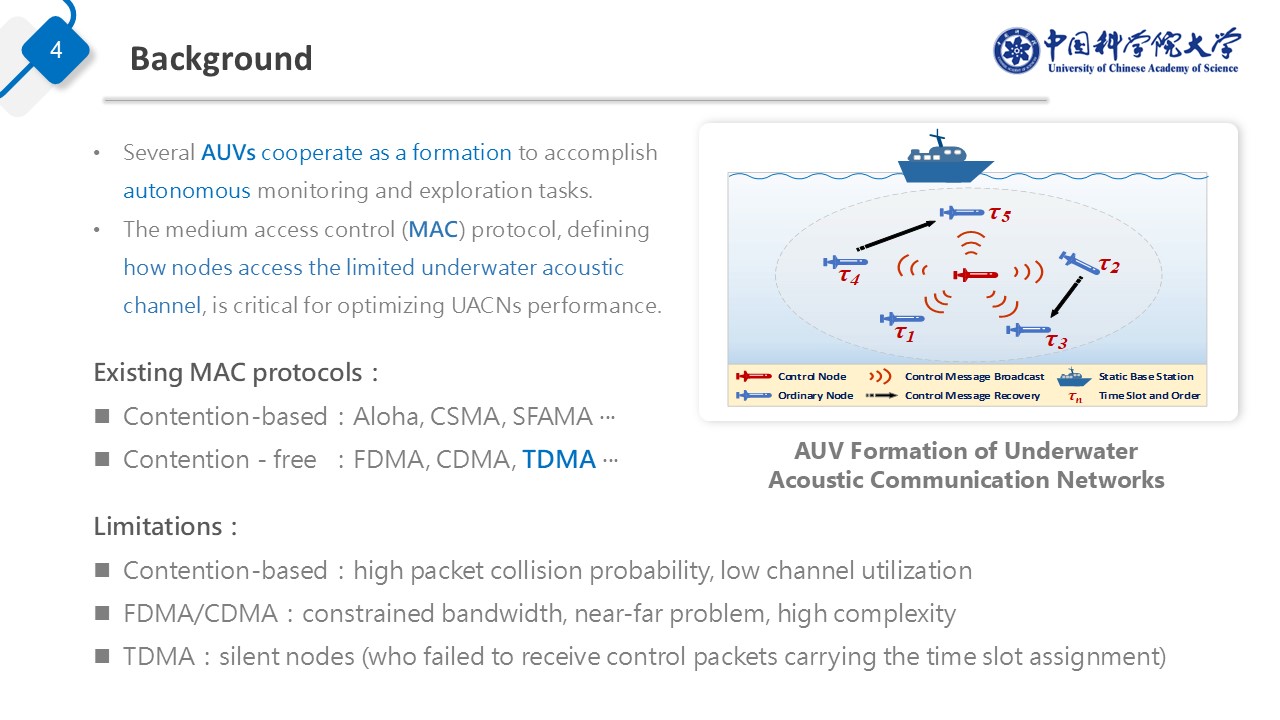 |
In recent years, rapid advances in AUV technology have greatly expanded their applications in ocean exploration, environmental monitoring, and resource inspection. To improve data collection efficiency and expand exploration range, multiple AUVs often cooperate as a formation, making reliable and timely information exchange essential. This places strict requirements on the underlying underwater acoustic communication networks. Among all network layers, the MAC protocol plays a critical role in determining how nodes access the limited acoustic channel and directly affects network performance. Existing underwater MAC protocols can be broadly classified into contention-based and contention-free protocols. However, contention-based protocols suffer from high collision probability, and low channel utilization, while FDMA and CDMA are limited by bandwidth constraints, the near-far problem, and high complexity. As a result, TDMA is widely adopted in underwater acoustic networks due to its simplicity and inherent collision avoidance characteristics. However, TDMA still suffers from the silent node problem caused by unsuccessful reception of control packets. |
| ICACT20260317 Slide.05
[Big Slide]
[YouTube] |
Chrome Click!! |
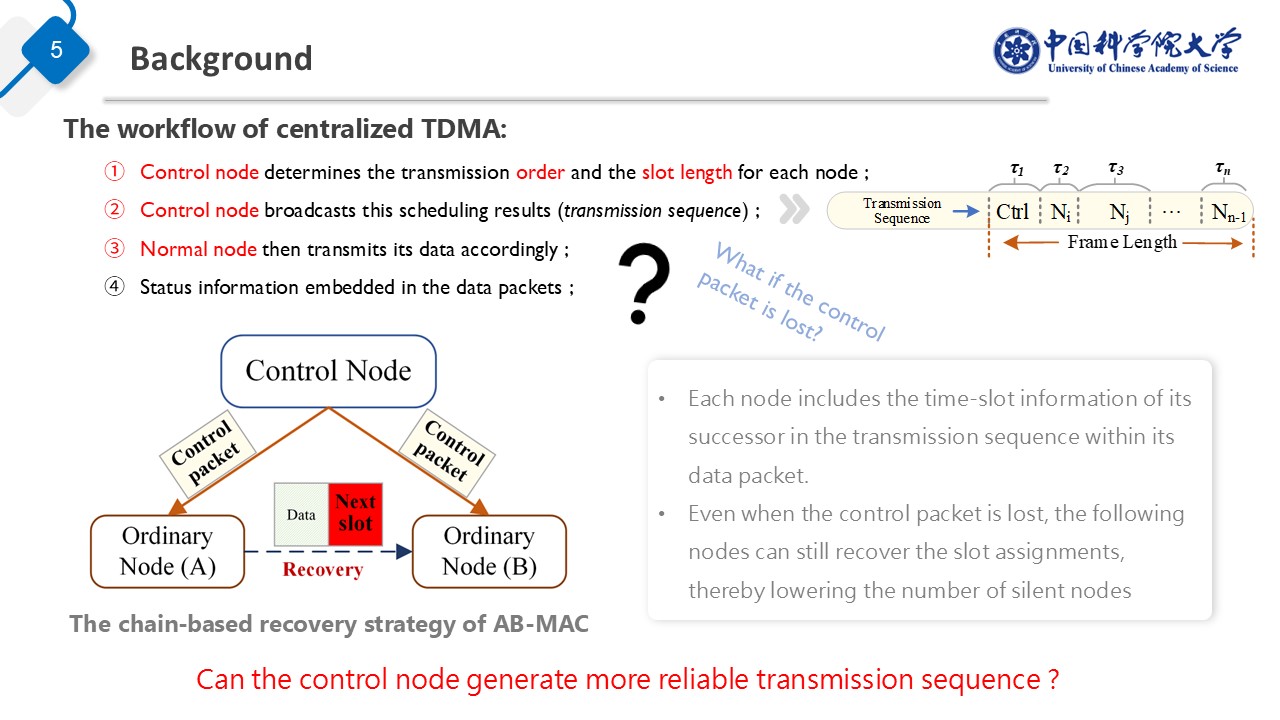 |
The workflow of centralized TDMA MAC protocols consist of several steps: First, Control node determines the transmission order and the slot length for each node ; Second, Control node broadcasts this scheduling results (called transmission sequence) ; Third, Normal node then transmits its data accordingly with status information embedded in the data packets.
If the control packet is lost, normal nodes cannot obtain their slot assignments and therefore remain silent to avoid additional collisions. This is known as the silent node problem.
To address this issue, AB-MAC proposes a chain-based recovery strategy. Each node embeds the time-slot information of its successor in the transmission sequence into its data packet. In this way, even if the control packet is lost, subsequent nodes can still recover their slot assignments, which significantly reduces the number of silent nodes.
Based on this recovery strategy, we raise the following question: can the control node generate a more reliable transmission sequence? |
| ICACT20260317 Slide.06
[Big Slide]
[YouTube] |
Chrome Click!! |
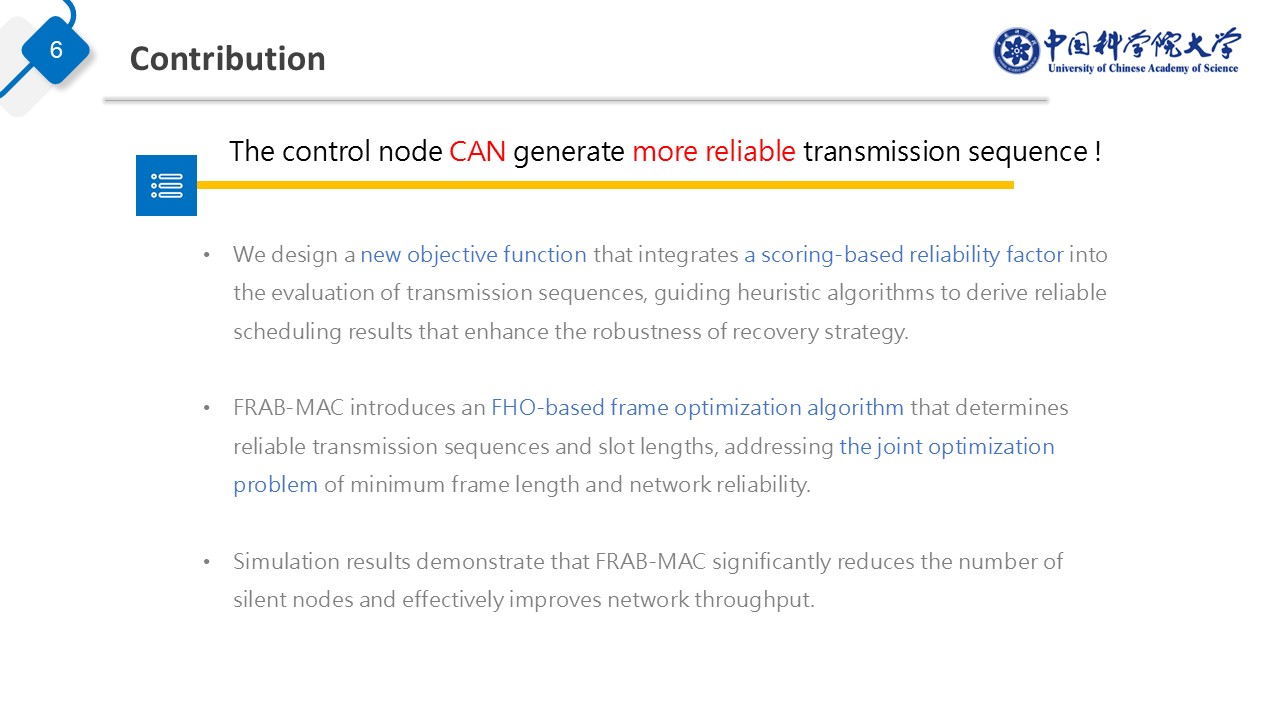 |
In this work, we enable the control node to generate a more reliable transmission sequence. The main contributions of our work are as follows:
We design a new objective function that integrates a scoring-based reliability factor into the evaluation of transmission sequences, guiding heuristic algorithms to derive reliable scheduling results that enhance the robustness of recovery strategy.
FRAB-MAC introduces an FHO-based frame optimization algorithm that determines reliable transmission sequences and slot lengths, addressing the joint optimization problem of minimum frame length and network reliability.
Simulation results demonstrate that FRAB-MAC significantly reduces the number of silent nodes and effectively improves network throughput. |
| ICACT20260317 Slide.07
[Big Slide]
[YouTube] |
Chrome Click!! |
 |
The second part introduces the mathematical models used in this paper. |
| ICACT20260317 Slide.08
[Big Slide]
[YouTube] |
Chrome Click!! |
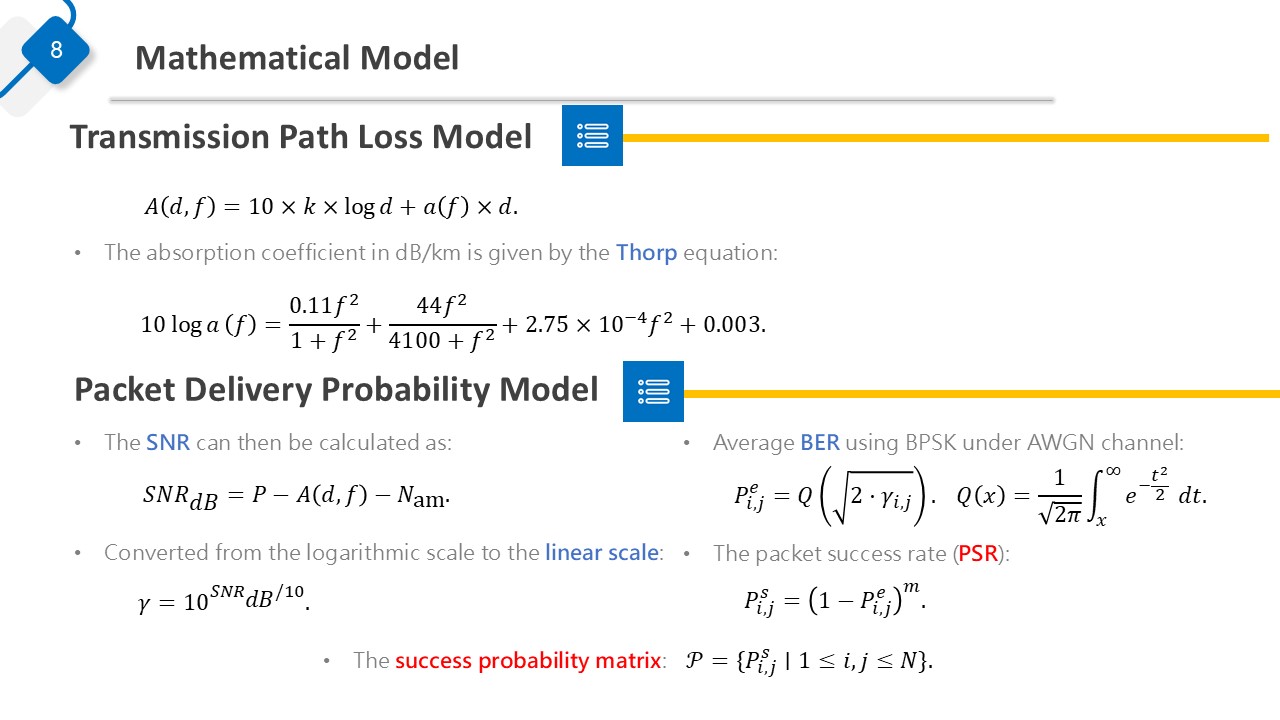 |
First, we describe the transmission path loss model, where the absorption coefficient in dB per kilometer is calculated using the Thorp equation.
Next, we introduce the packet transmission probability model. We first compute the signal-to-noise ratio in linear scale, and then derive the average bit error rate and the packet success rate. By calculating the packet success rate between every pair of nodes, we finally obtain the success probability matrix. |
| ICACT20260317 Slide.09
[Big Slide]
[YouTube] |
Chrome Click!! |
 |
The third part of this presentation introduces the Detail Design of our proposed FRAB-MAC protocol. |
| ICACT20260317 Slide.10
[Big Slide]
[YouTube] |
Chrome Click!! |
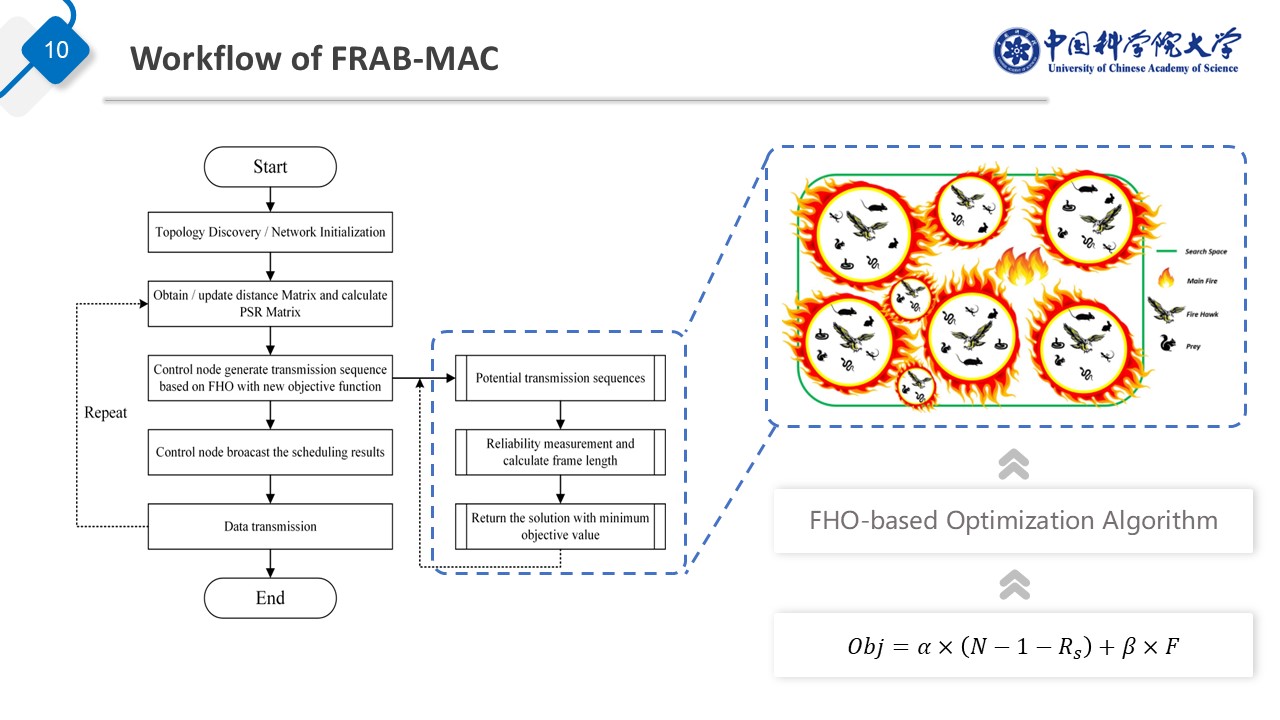 |
The proposed FRAB-MAC protocol is designed for fully connected AUV formation networks with the objectives of reducing silent nodes, avoiding packet collisions, and improving the network throughput. The main workflow is illustrated as follows. After topology discovery, the control node obtains the distance matrix and the PSR matrix.
Based on this information, it generates the transmission sequence using the Fire Hawk Optimizer with a new objective function. The output of the FHO is the transmission sequence with the minimum objective value. The control node then broadcasts the scheduling results. Finally, the ordinary nodes transmit their data according to the assigned schedule. |
| ICACT20260317 Slide.11
[Big Slide]
[YouTube] |
Chrome Click!! |
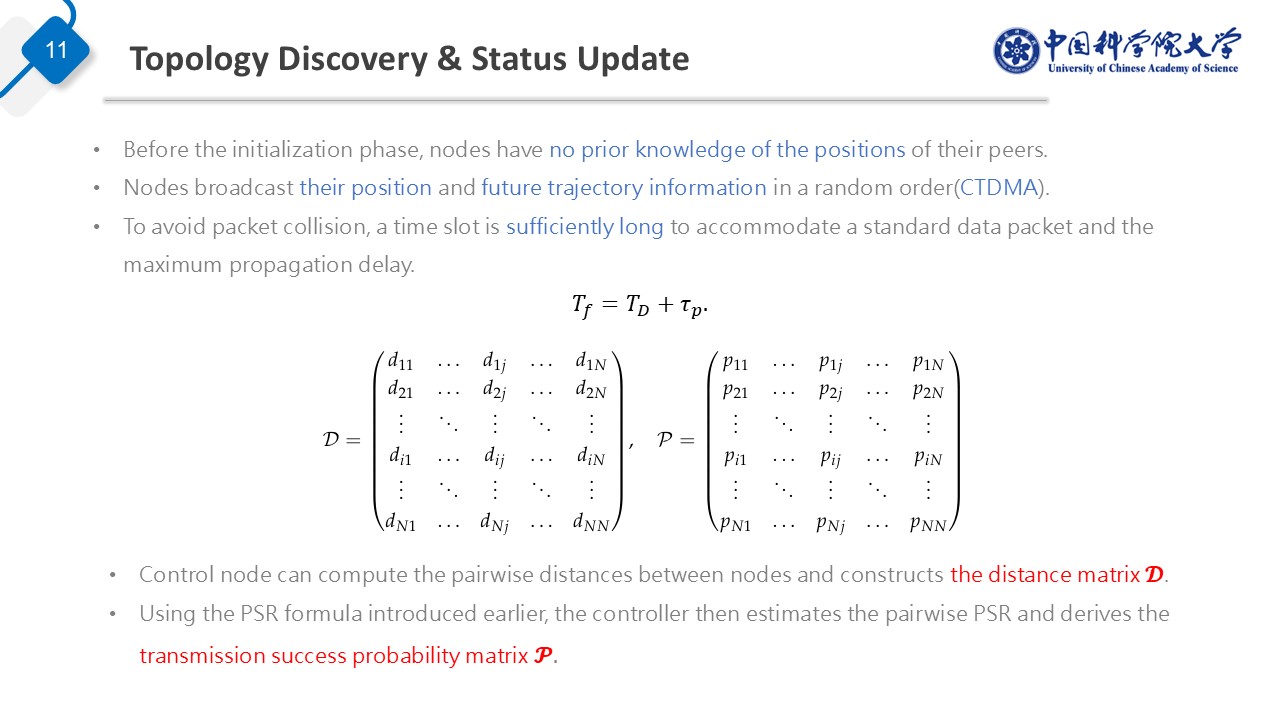 |
Before the initialization phase, nodes have no prior knowledge of the positions of other nodes. During initialization, all nodes broadcast their current positions and future trajectory information in a random order using conventional centralized TDMA. To avoid packet collisions, each time slot is designed to be long enough to accommodate a standard data packet as well as the maximum propagation delay. Based on the received information, the control node computes the pairwise distances between nodes and constructs the distance matrix 𝓓. Using the PSR formula introduced earlier, the control node further estimates the pairwise packet success rates and derives the transmission success probability matrix 𝓟. |
| ICACT20260317 Slide.12
[Big Slide]
[YouTube] |
Chrome Click!! |
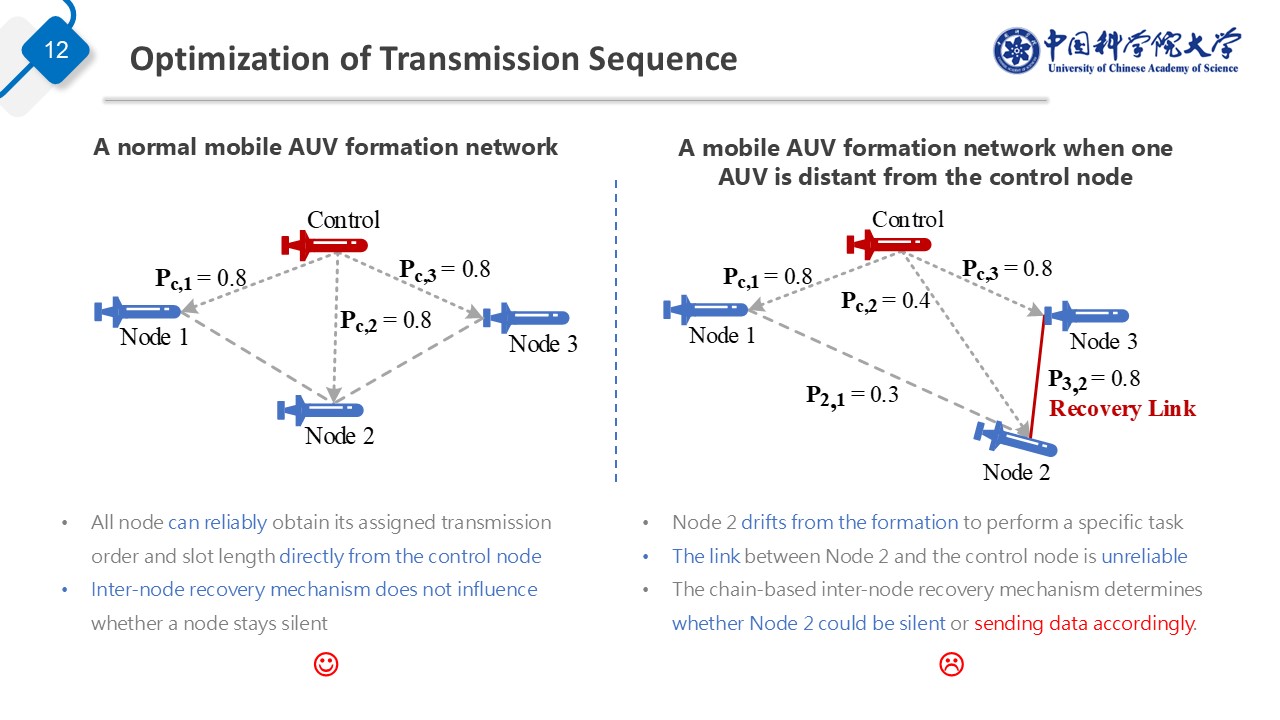 |
In a normal mobile AUV formation network, regardless of the transmission sequence generated by the control node, each node can reliably obtain its assigned transmission order and slot length directly from the control node, and the inter-node recovery mechanism does not influence whether a node stays silent.
However, when Node 2 gradually drifts from the formation to perform a specific task and moves farther away from the control node, as shown in the right figure, the increased distance makes the link between Node 2 and the control node unreliable. Since the relative positions of Node 1 and Node 3 with respect to the control node remain unchanged, the reliability of any transmission sequence is primarily determined by whether Node 2 can successfully receive the control information. |
| ICACT20260317 Slide.13
[Big Slide]
[YouTube] |
Chrome Click!! |
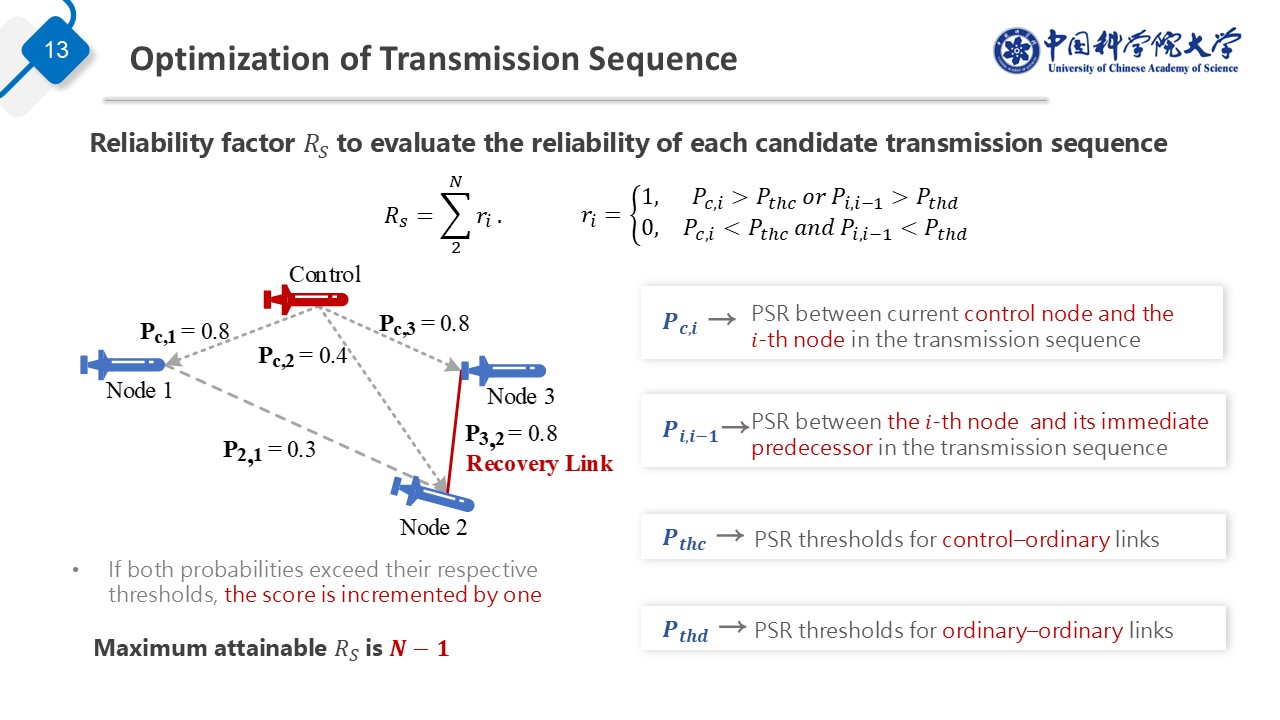 |
The reliability factor is defined as the cumulative score of a transmission sequence, computed based on the estimated PSR between adjacent nodes. If, the PSR between current control node and the i th node, and the PSR between the i th node and its immediate predecessor in the transmission sequence exceed their respective thresholds, the node is able to acquire or reconstruct its slot information from the control node or its predecessor, thereby avoiding silence. In this case, the score is incremented by one. If both fall below their respective threshold, the node is very likely to lose control information and remain silent. Therefore, the gain is zero and the score is unchanged. And the max attainable RS is N minus 1,because the control node must always occupy the first slot of each frame to broadcast the scheduling result. |
| ICACT20260317 Slide.14
[Big Slide]
[YouTube] |
Chrome Click!! |
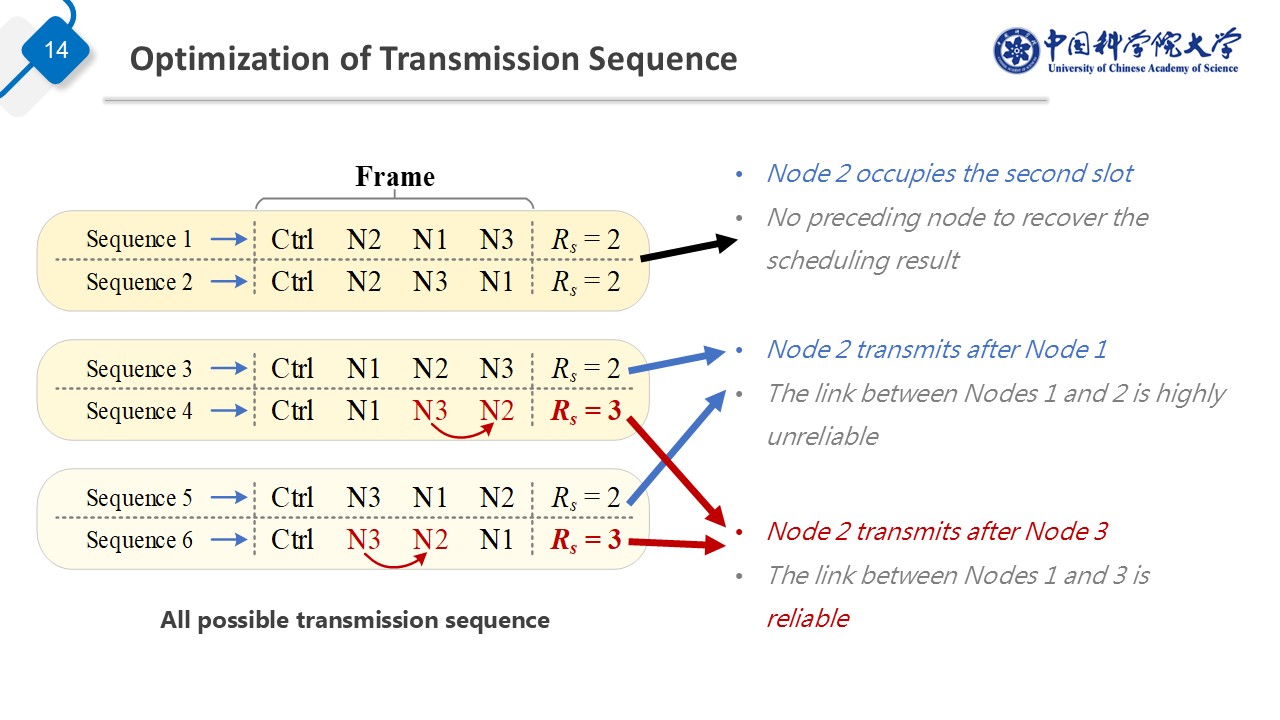 |
Here, we list all possible transmission sequences.
In the first case, Node 2 occupies the second slot. Since there is no preceding node to recover the scheduling result, the reliability factor is 2.
In the second case, Node 2 transmits after Node 1, but the link between Nodes 1 and 2 is highly unreliable. The reliability factor remains 2.
In the third case, Node 2 transmits after Node 3. The link between Nodes 1 and 3 is reliable, so the reliability factor increases to 3.
Sequences 4 and 6 are examples of reliable transmission sequences. |
| ICACT20260317 Slide.15
[Big Slide]
[YouTube] |
Chrome Click!! |
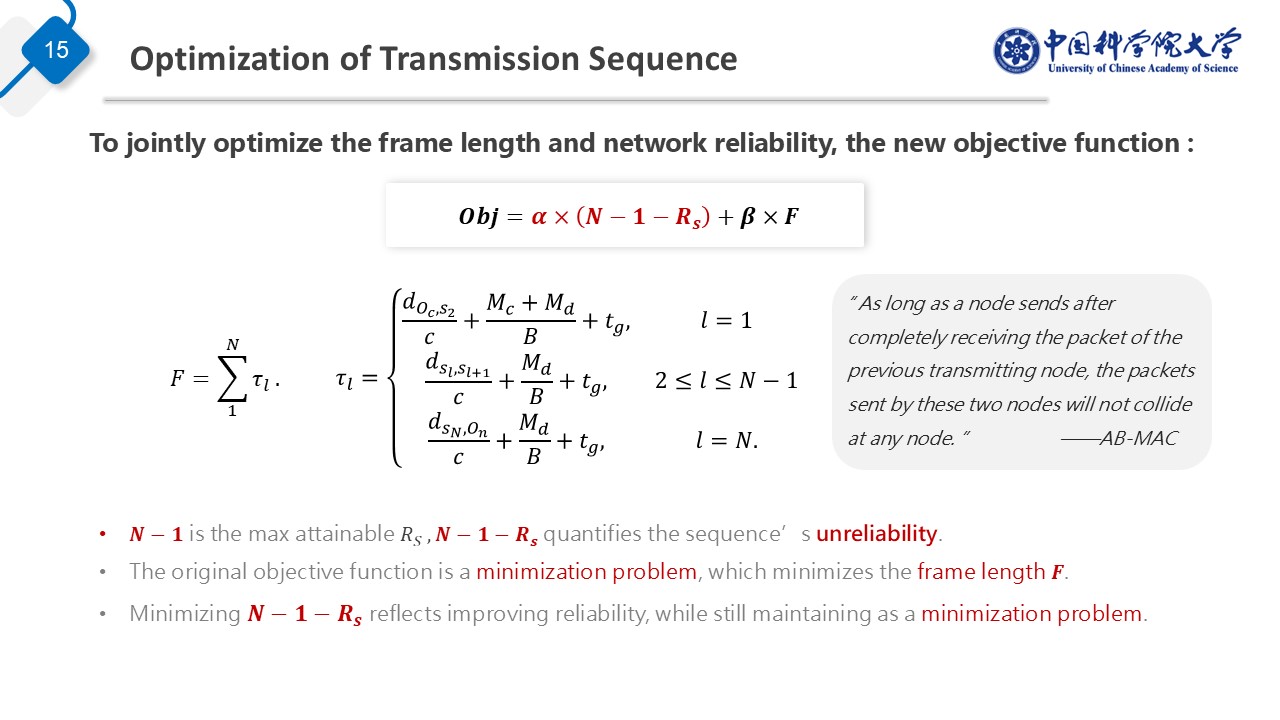 |
To optimize both the frame length and network reliability, we introduced a new objective function based on AB-MACs minimal frame length function. Here, N minus 1 is the maximum reliability factor RS, and N minus 1 minus RS measures how unreliable a sequence is. The original objective function is a minimization problem, which minimizes the frame length F. By minimizing N minus 1 minus RS, we effectively improve the reliability of the sequence while still maintaining as a minimization problem. The frame length is calculated using the same formula as in AB-MAC, following the collision-free conditions proposed in the original work. |
| ICACT20260317 Slide.16
[Big Slide]
[YouTube] |
Chrome Click!! |
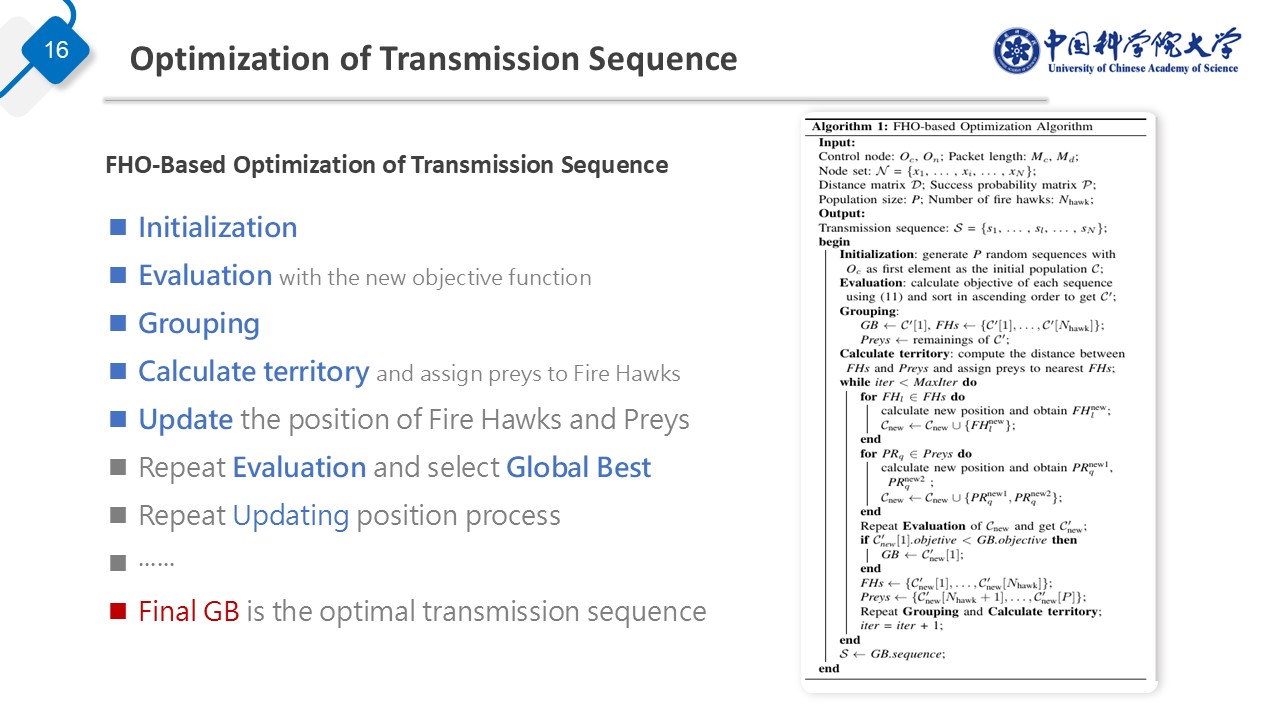 |
The FHO-based optimization process for the transmission sequence includes several main steps. It starts with initialization, generating a random permutation of the N nodes. Then, each candidate sequence is evaluated using our new objective function that considers both frame length and reliability. Then comes the grouping step, where several preys are assigned to each fire hawk. After that, the positions of the fire hawks and preys are updated according to the FHO rules to generate a new population. This process of evaluation and position updating is repeated iteratively, with the global best solution updated continuously. At the end, the final global best solution gives us the optimal transmission sequence. |
| ICACT20260317 Slide.17
[Big Slide]
[YouTube] |
Chrome Click!! |
 |
This part we introduce the Simulation and Results. |
| ICACT20260317 Slide.18
[Big Slide]
[YouTube] |
Chrome Click!! |
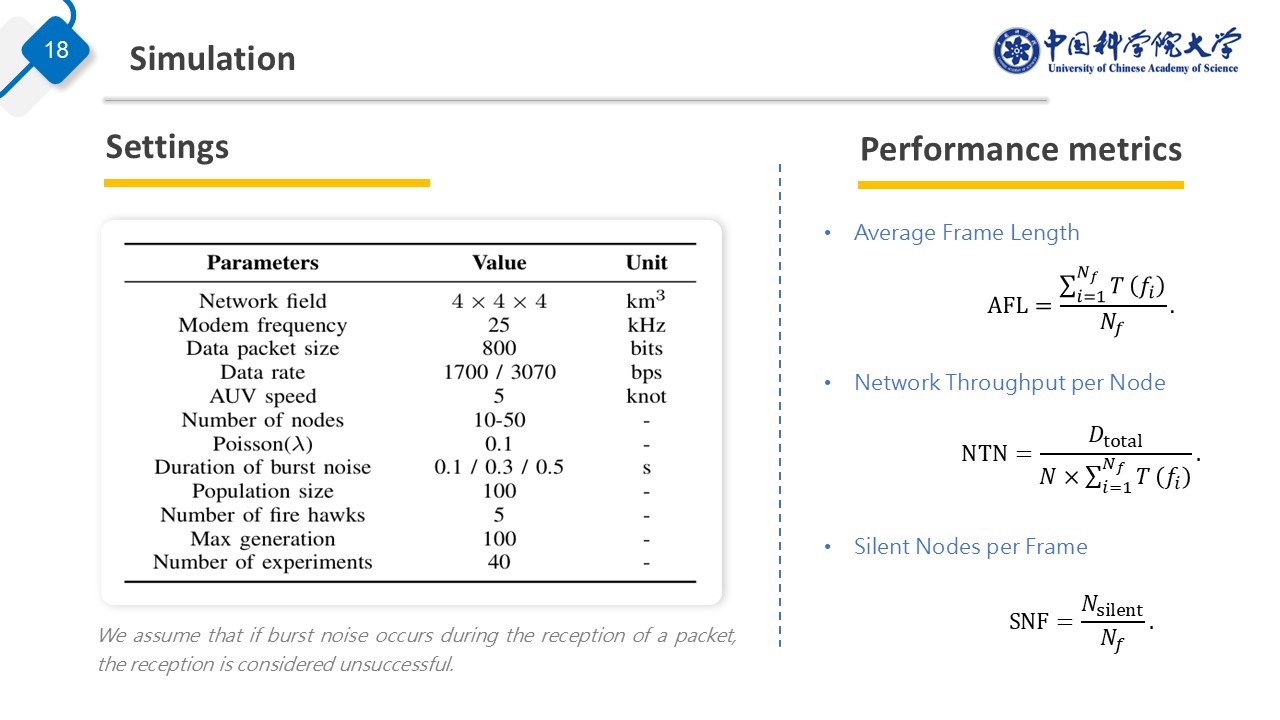 |
We evaluate the performance of proposed FRAB-MAC, AB-MAC and conventional centralized TDMA (C-TDMA) protocols with MATLAB in this part. The AUV nodes are randomly deployed within a 3D underwater area of four by four by four cubic kilometers and maintain the initial random formation while moving linearly at a speed of 5 knots. In addition to ambient noise, burst noise is also considered in the simulation to evaluate its impact on data packet transmission and reception. Burst noise is assumed to obey a Poisson distribution with parameter lambda which indicates the frequency of noise events. We assume that if burst noise occurs during the reception of a packet, the reception is considered unsuccessful. For a fair comparison, both the genetic algorithm and the FHO are initialized with a population size of 100 and run for up to 100 generations. To ensure the robustness of the results, 40 independent trials were conducted for each network size and node density.
Three key metrics are considered in the simulations to compare the performance of different MAC protocols. The first metric is the average frame length, defined as the mean duration of a TDMA cycle, i.e., the sum of all node time slots, measured in seconds. The second metric is the average throughput per node, defined as the ratio of the total amount of data received by all nodes to the product of the simulation duration and the number of nodes. This metric is considered the most critical indicator of MAC protocol performance. Third, the average number of silent nodes per frame, which reflects whether the optimized transmission sequence can reliably guarantee that every node has successfully received the broadcast control packet. |
| ICACT20260317 Slide.19
[Big Slide]
[YouTube] |
Chrome Click!! |
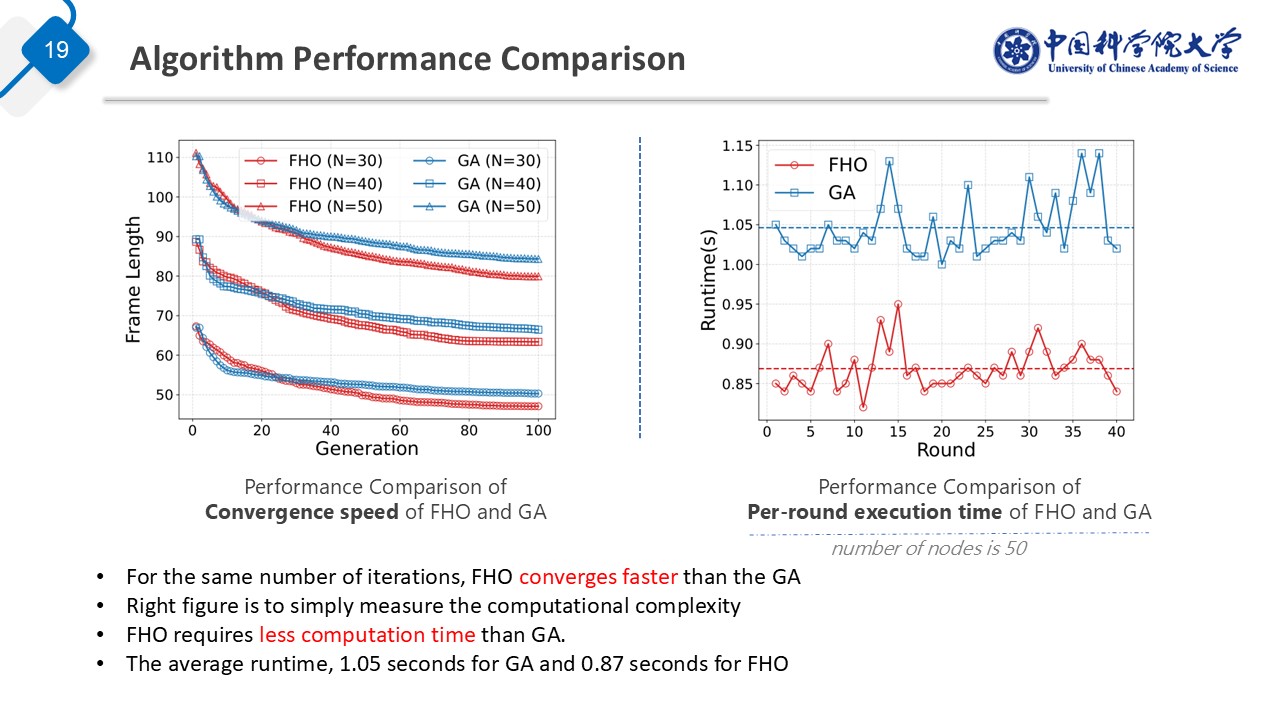 |
From the left figure, it can be observed that, for the same number of iteration, FHO converges faster than the genetic algorithm when solving the frame optimization problems, as reflected by its consistently lower frame lengths. To provide a simple measure of computational complexity, we further compare the runtime of a single execution of each algorithm. FHO also requires less computation time than GA. The dashed lines indicate the average runtime, which is 1.05 seconds for GA and 0.87 seconds for FHO under our experimental settings. Therefore, the proposed FHO-based frame optimization algorithm outperforms the GA-based one in terms of both convergence speed and computational efficiency. |
| ICACT20260317 Slide.20
[Big Slide]
[YouTube] |
Chrome Click!! |
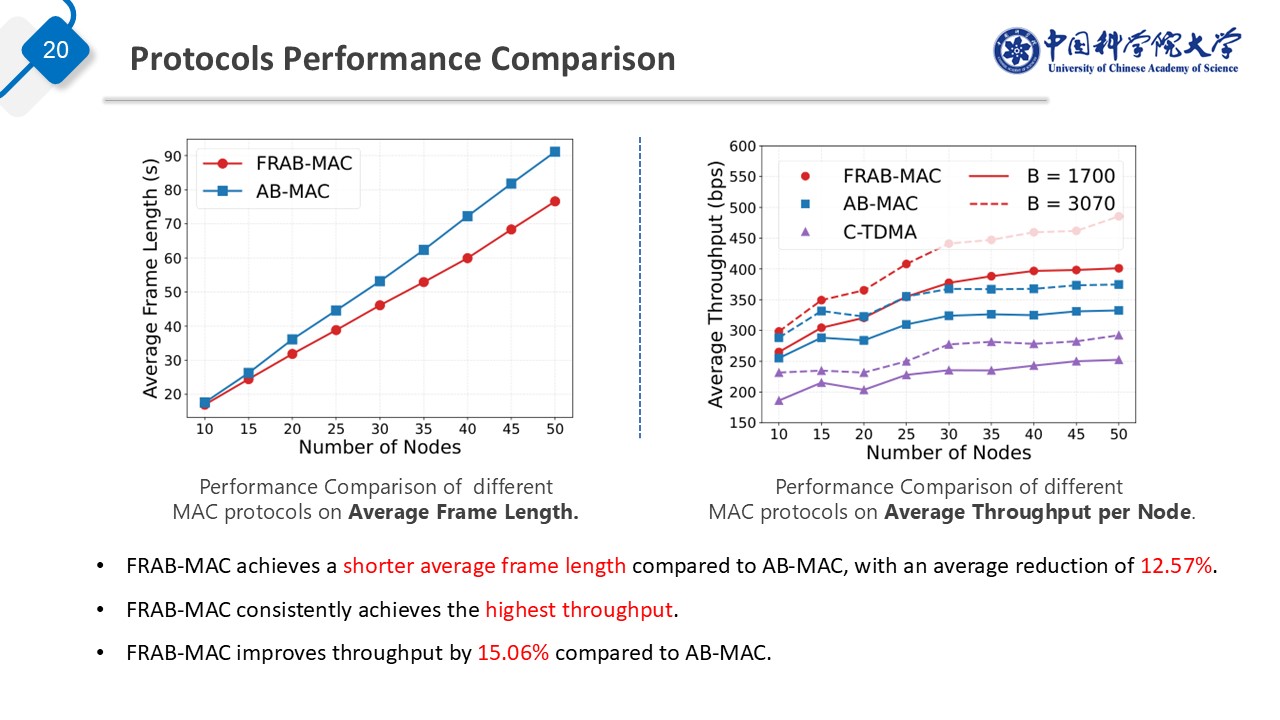 |
The results of the left figure indicate that FRAB-MAC achieves a shorter average frame length compared to AB-MAC, with an average reduction of 12.57 percent. As shown in right figure, FRAB-MAC consistently achieves the highest throughput, followed by AB-MAC and C-TDMA exhibits the lowest, regardless of whether the data rate is 1700 bps or 3070 bps. On average, FRAB-MAC improves throughput by 15.06 percent compared with AB-MAC. Although AB-MAC employs an improved genetic algorithm to derive the transmission sequence, its optimization capability declines as the network size and number of nodes increase, making it difficult to obtain a near-optimal solution within the same number of iterations. In contrast, FRAB-MAC, guided by the FHO and the scoring-based reliability factor, exhibits stronger global search capability under the same iteration conditions, generating shorter and more reliable transmission sequences that lead to the highest network throughput. |
| ICACT20260317 Slide.21
[Big Slide]
[YouTube] |
Chrome Click!! |
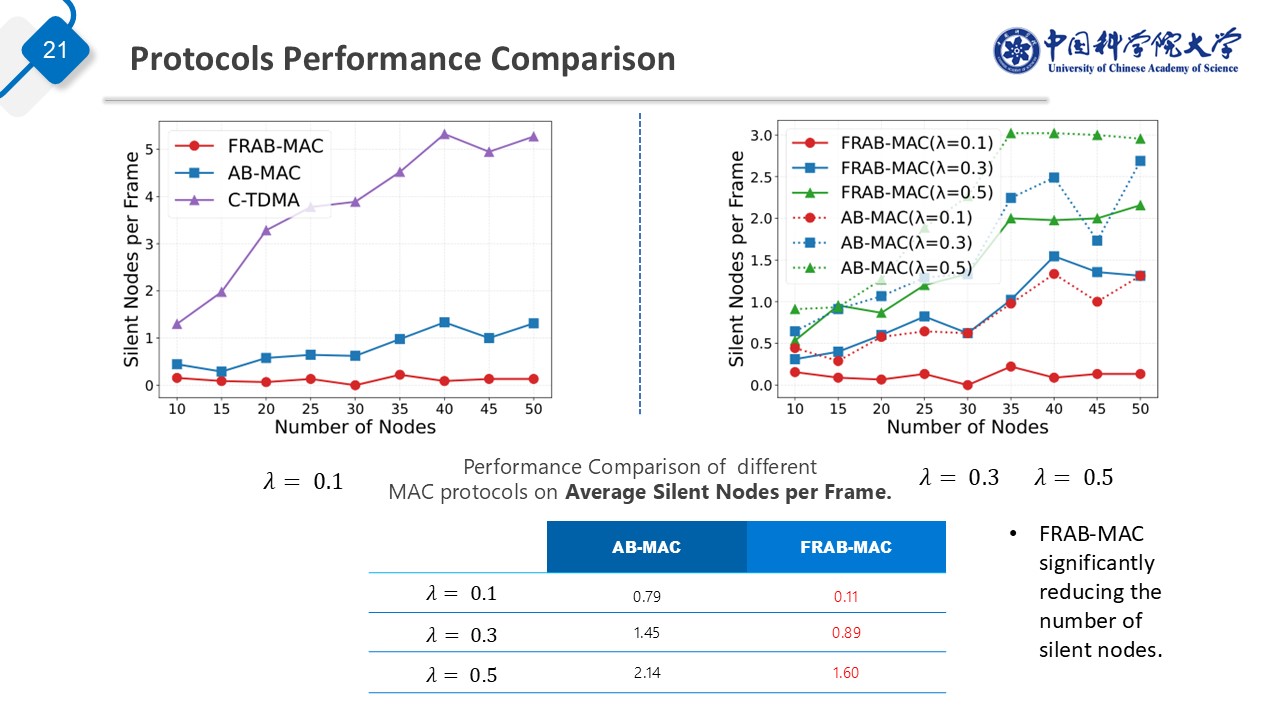 |
It can be seen that, by introducing a new objective function that jointly optimizes throughput and reliability, FRAB-MAC significantly enhances the success rate of the chain-based recovery mechanism, thereby reducing the number of silent nodes. Under lambda is 0.1, the average number of silent nodes per frame is approximately 0.11, compared to 0.79 for AB-MAC and substantially lower than that of C-TDMA. Even under higher burst noise levels, FRAB-MAC consistently maintains fewer silent nodes, for instance, when lambda is 0.3 and 0.5, the averages are 0.89 and 1.45, respectively, both markedly lower than AB-MAC’s 1.60 and 2.14. |
| ICACT20260317 Slide.22
[Big Slide]
[YouTube] |
Chrome Click!! |
 |
Here are the main conclusions of our work. |
| ICACT20260317 Slide.23
[Big Slide]
[YouTube] |
Chrome Click!! |
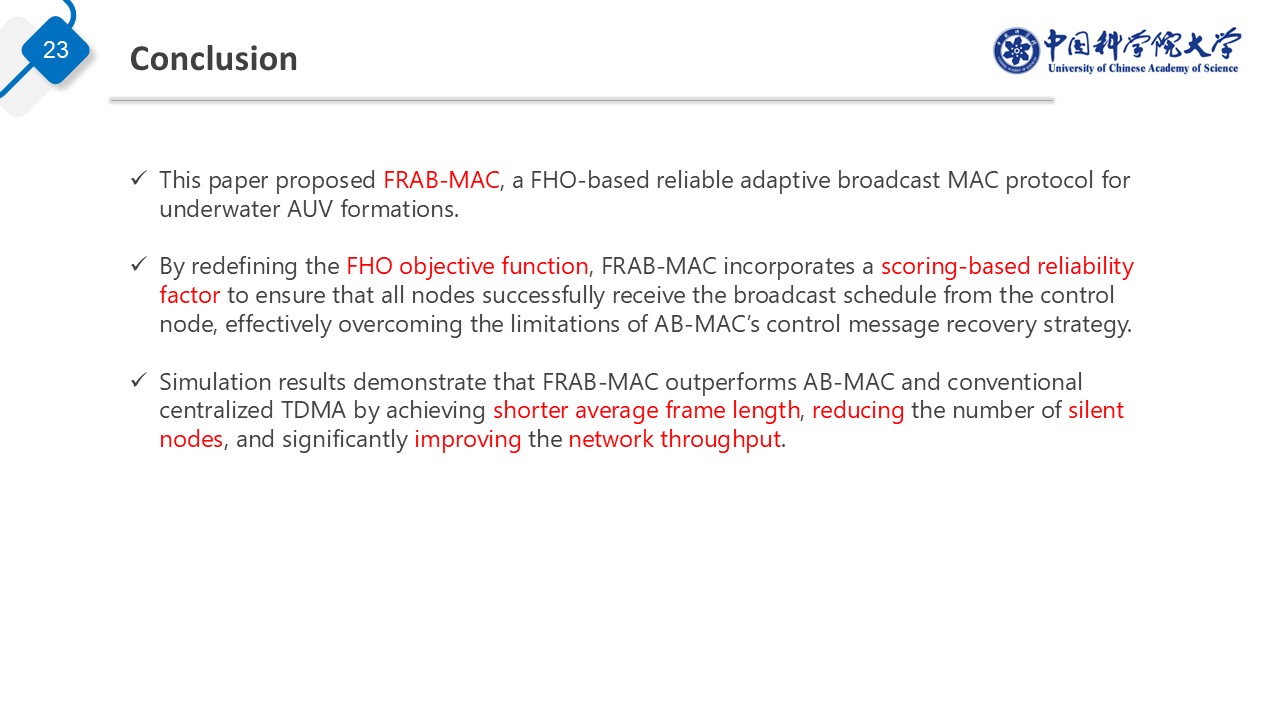 |
This paper proposed FRAB-MAC, a FHO-based reliable adaptive broadcast MAC protocol for underwater AUV formations.
By redefining the FHO objective function, FRAB-MAC incorporates a scoring-based reliability factor to ensure that all nodes successfully receive the broadcast schedule from the control node, effectively overcoming the limitations of AB-MAC’s control message recovery strategy.
Simulation results demonstrate that FRAB-MAC outperforms AB-MAC and conventional centralized TDMA by achieving shorter average frame length, reducing the number of silent nodes, and significantly improving the network throughput. |
| ICACT20260317 Slide.24
[Big Slide]
[YouTube] |
Chrome Click!! |
 |
The rest slides show some references. |
| ICACT20260317 Slide.25
[Big Slide]
[YouTube] |
Chrome Click!! |
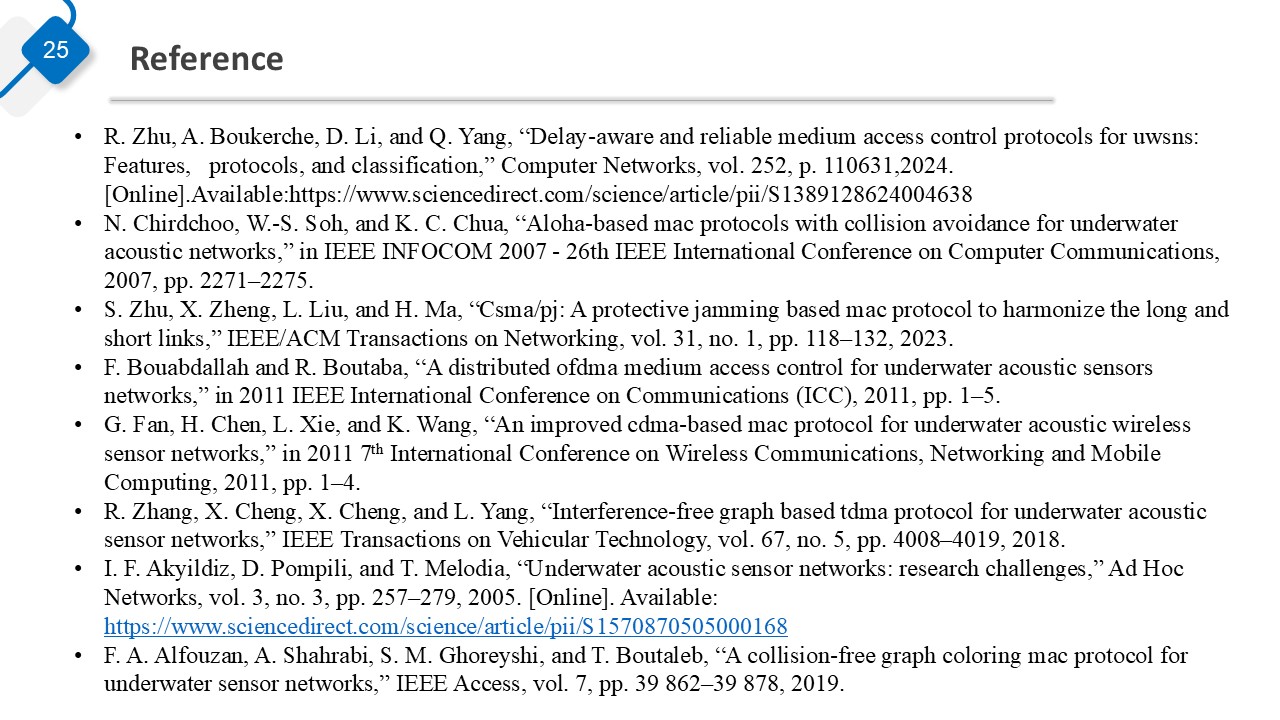 |
This is one part of reference list. |
| ICACT20260317 Slide.26
[Big Slide]
[YouTube] |
Chrome Click!! |
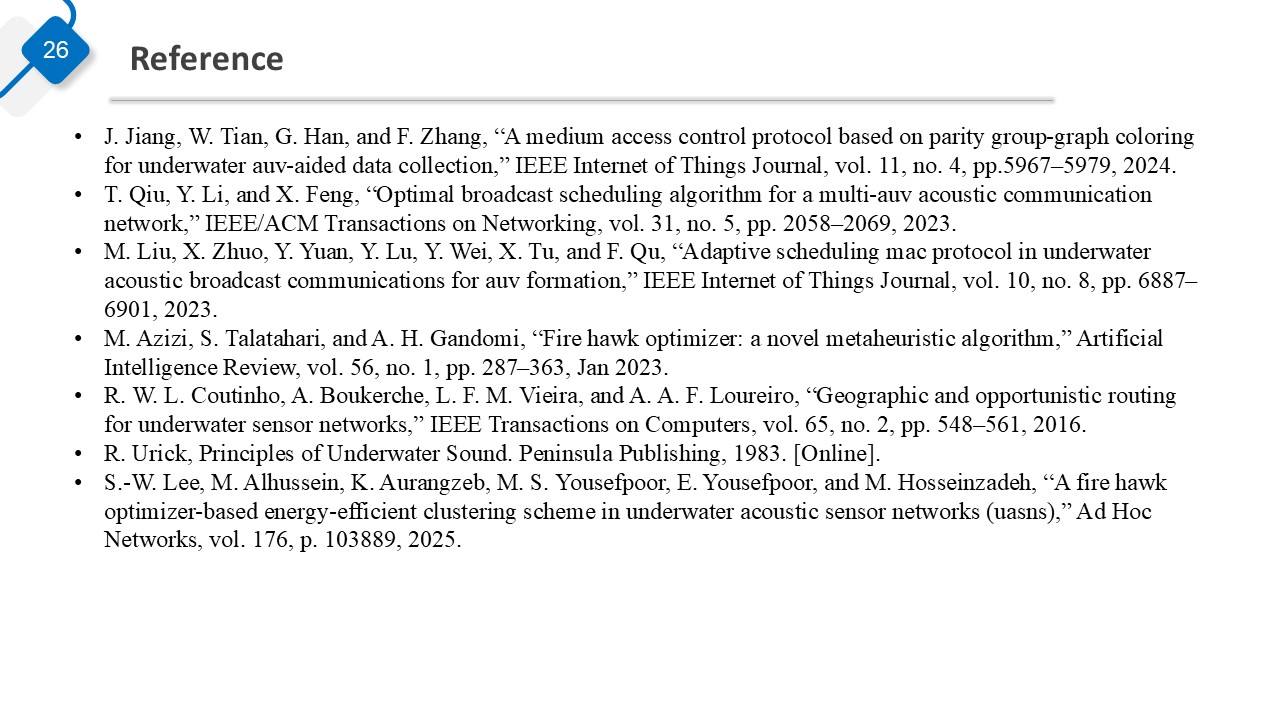 |
This is the other part of reference list. |
| ICACT20260317 Slide.27
[Big Slide]
[YouTube] |
Chrome Click!! |
 |
Thank you all for your attention. |















