Now 5046 visitors
Today:0 Yesterday:0
Total: 147034
212S 50P 4R
2026-10-20, Week 43 |
| Member Login |
| TACT Journal Homepage |
| Call for Paper |
| Committee |
| Find My Paper |
| Author Homepage |
| Statistics & History |
| Welcome Message |
| Paper Procedure |
| FAQ |
| Paper Archives |
| Outstanding Papers |
| Author Homepage |
| - Paper Procedure |
| - Journal Procedure |
| - Presentation Tips |
|
| Program & Proceedings |
| Program with Papers |
| Plenary Session |
| Tutorial Session |
|
| Presentation Platform |
| Hotel & Travel Info |
| About Korea |
| Accommodation |
| Transportation |
| VISA |
| Other Infomation |
|
| Photo Gallery |
| Scheduler Login |
| Seminar |
| Archives Login |
|
| Sponsors |

|

|

|

|

|

|

|

|

|

|
|
|
|
|
 ICACT20260367 Slide.01
[Big Slide] |
Chrome  Click!! |
 |
Hello everyone, I am Mrityunjoy Gain from Networking Intelligence Lab, Kyung Hee University, and today I am going to present our work "Intelligent Traffic Steering in O-RAN: A Deep Proactive Throughput and Resource Co-optimization." |
| ICACT20260367 Slide.02
[Big Slide]
|
Chrome Click!! |
 |
This is our presentation outline
Introduction
System Model
Problem Formulation
Solution Approach
Simulation Settings and Results
Conclusion
|
| ICACT20260367 Slide.03
[Big Slide]
|
Chrome Click!! |
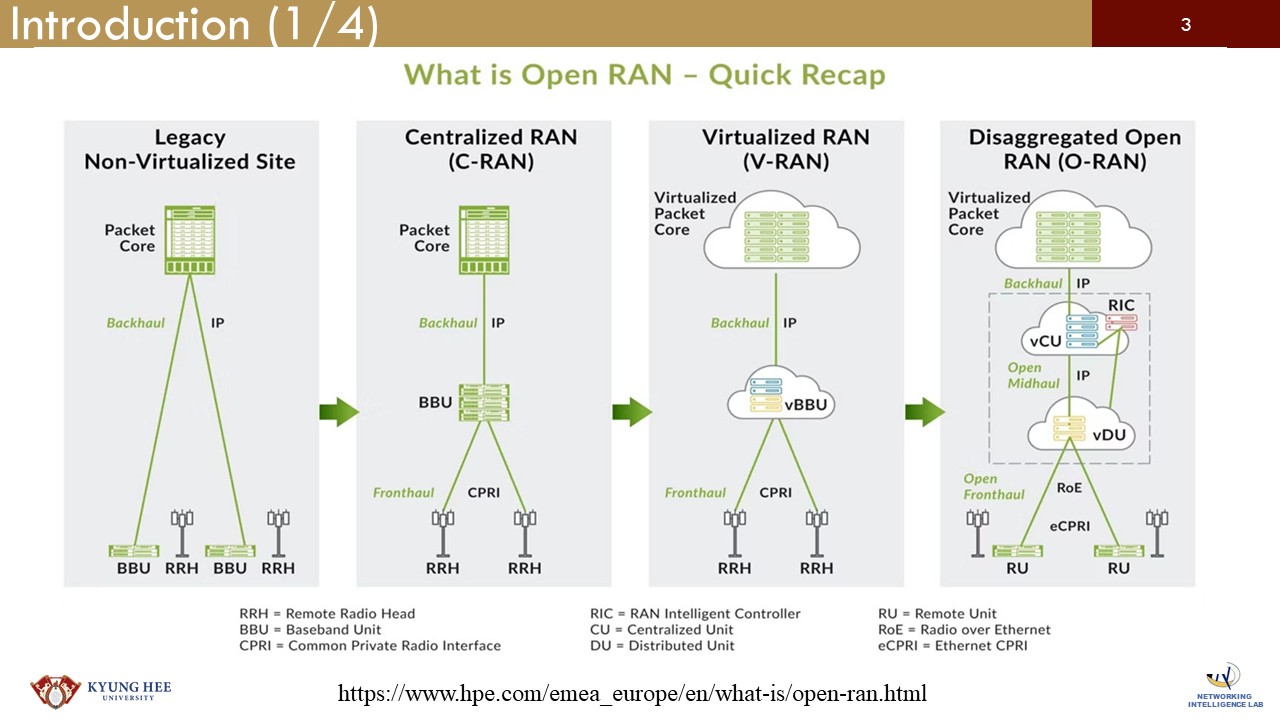 |
Discriminating among legacy non-virtualized sites, C-RAN, vRAN, and O-RAN is essential for understanding their architectural and operational differences. Legacy non-virtualized sites are characterized by monolithic, vendor-locked hardware with tightly integrated baseband and radio units. C-RAN can be identified by centralized baseband pooling and high-capacity fronthaul links, while still relying on mostly proprietary interfaces. vRAN is distinguished by virtualized baseband functions running on general-purpose hardware with software-defined control and elastic resource allocation. O-RAN is further discriminated by its open and standardized interfaces, disaggregated functional blocks, and the presence of RAN Intelligent Controllers (RICs), enabling multi-vendor interoperability and data-driven optimization. |
| ICACT20260367 Slide.04
[Big Slide]
|
Chrome Click!! |
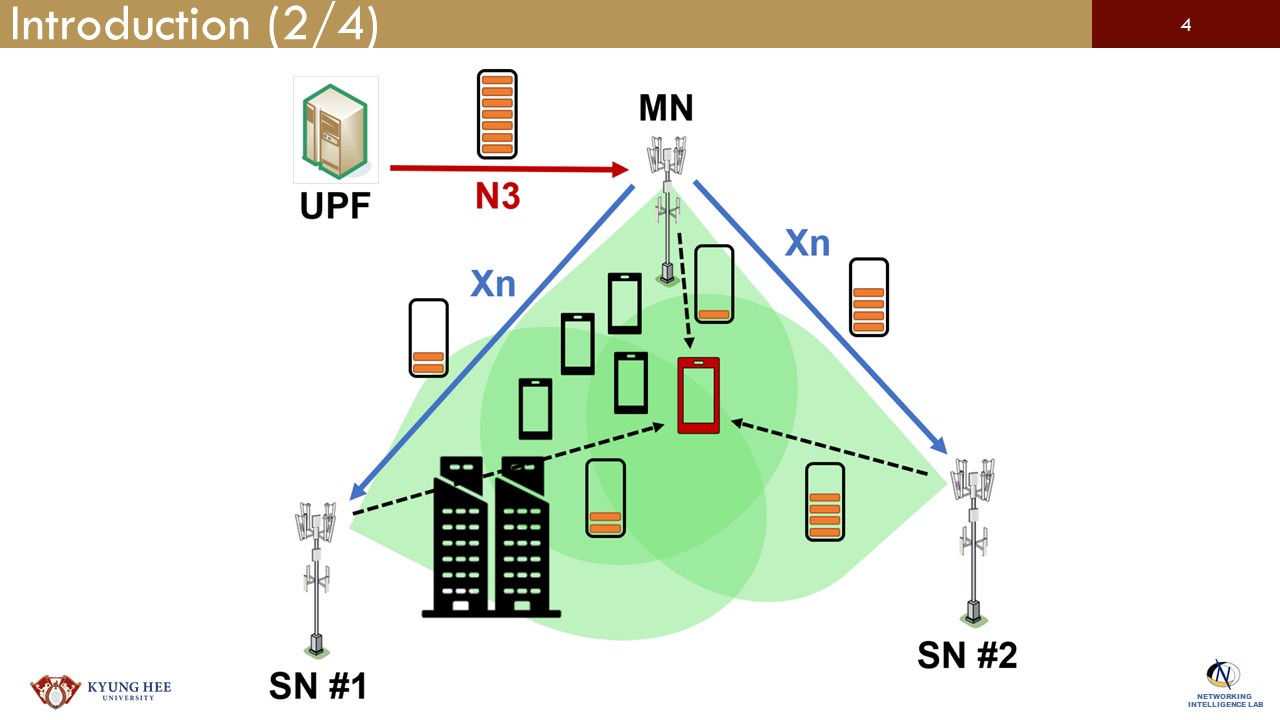 |
Traffic steering refers to the dynamic process of directing user and service traffic across available network resources to optimize performance, reliability, and quality of service. By leveraging real-time network conditions and policy control, traffic steering enables load balancing among cells, frequency bands, and access technologies, reducing congestion and improving user experience. In modern virtualized and O-RAN-based networks, traffic steering is further enhanced through software-defined control and intelligent analytics, allowing adaptive and fine-grained management of heterogeneous traffic demands.
|
| ICACT20260367 Slide.05
[Big Slide]
|
Chrome Click!! |
 |
In this paper, we present a proactive deep learning framework for traffic steering in O-RAN, using next-slot predictions of throughput, RB usage, and BLER.
A BiLSTM model running in the non-real-time RAN intelligent controller (non-RT-RIC) forecasts these indicators to enable adaptive traffic allocation.
We formulate a prediction-informed throughput resource co-optimization problem that maximizes throughput, enhances RB efficiency, and reduces BLER by intelligently distributing traffic across multiple RUs.
We then propose a Gurobi-based linear programming to obtain a near-optimal allocation matrix. The proposed prediction and optimization framework is lightweight, scalable, and deployable within the non-RT-RIC.
Experimental evaluations demonstrate that our proposed method significantly outperforms traditional equal-split and greedy baselines, achieving up to 13-62% higher throughput, 30–32% lower BLER, and 0.20–0.25% better RB utilization efficiency.
|
| ICACT20260367 Slide.06
[Big Slide]
|
Chrome Click!! |
 |
We propose a deep learning–based proactive traffic steering framework for O-RAN architecture that enhances network throughput and efficiency by forecasting critical radio metrics such as RB usage, throughput, and BLER.
To predict the next time slot metrics, we design a lightweight BiLSTM-based model within the non-RT RIC that accurately forecasts RB usage, throughput, and BLER across RUs. These forecasts are then used to optimize traffic steering decisions.
We formulate a throughput-resource co-optimization problem that uses the predicted KPIs to dynamically allocate UE traffic fractions to the most suitable Rus under a multi-connectivity setup, and we propose Gurobi linear programming to solve it.
Extensive experimental results demonstrate that our approach outperforms achieving up to 13-62% higher throughput, reducing BLER by 30-32%, and improving RB utilization efficiency by 0.20-0.25% compared to Greedy and Equal Split baselines.
|
| ICACT20260367 Slide.07
[Big Slide]
|
Chrome Click!! |
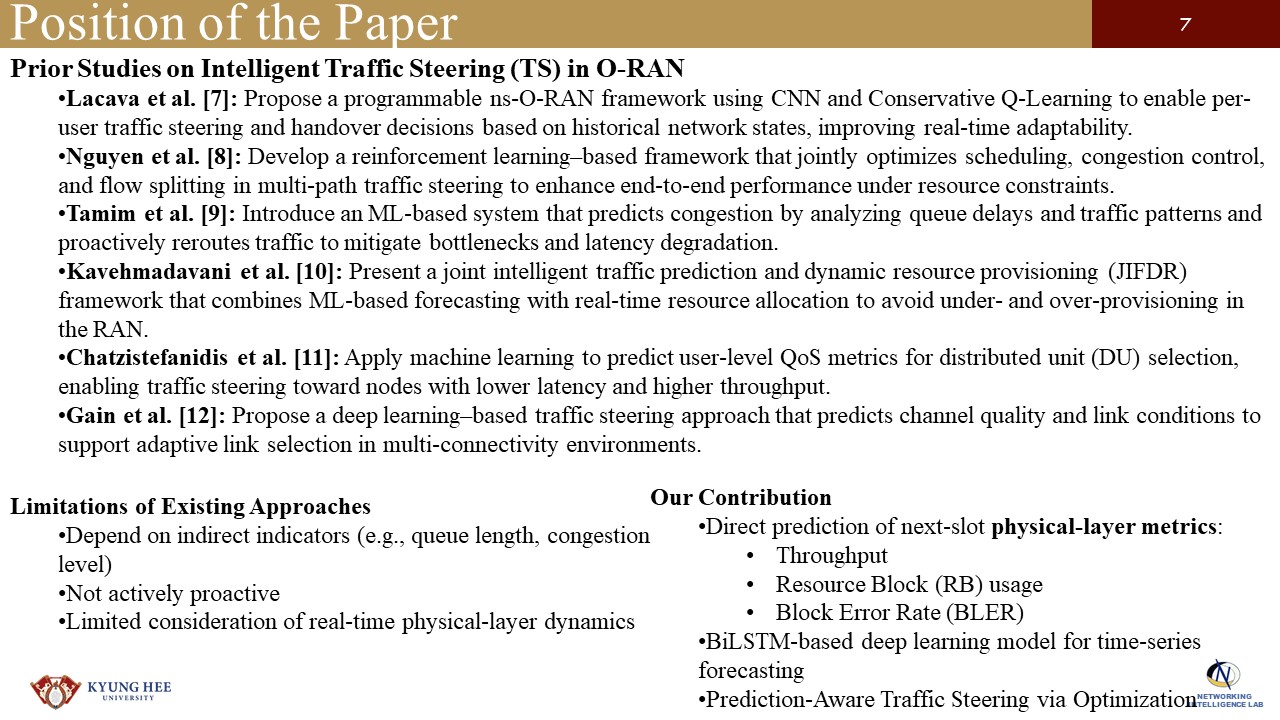 |
Prior Studies on Intelligent Traffic Steering (TS) in O-RAN
Lacava et al. [7]: Propose a programmable ns-O-RAN framework using CNN and Conservative Q-Learning to enable per-user traffic steering and handover decisions based on historical network states, improving real-time adaptability.
Nguyen et al. [8]: Develop a reinforcement learning–based framework that jointly optimizes scheduling, congestion control, and flow splitting in multi-path traffic steering to enhance end-to-end performance under resource constraints.
Tamim et al. [9]: Introduce an ML-based system that predicts congestion by analyzing queue delays and traffic patterns and proactively reroutes traffic to mitigate bottlenecks and latency degradation.
Kavehmadavani et al. [10]: Present a joint intelligent traffic prediction and dynamic resource provisioning (JIFDR) framework that combines ML-based forecasting with real-time resource allocation to avoid under- and over-provisioning in the RAN.
Chatzistefanidis et al. [11]: Apply machine learning to predict user-level QoS metrics for distributed unit (DU) selection, enabling traffic steering toward nodes with lower latency and higher throughput.
Gain et al. [12]: Propose a deep learning–based traffic steering approach that predicts channel quality and link conditions to support adaptive link selection in multi-connectivity environments.
Limitations of Existing Approaches
Depend on indirect indicators (e.g., queue length, congestion level)
Not actively proactive
Limited consideration of real-time physical-layer dynamics
Our Contribution
Direct prediction of next-slot physical-layer metrics:
Throughput
Resource Block (RB) usage
Block Error Rate (BLER)
BiLSTM-based deep learning model for time-series forecasting
Prediction-Aware Traffic Steering via Optimization
|
| ICACT20260367 Slide.08
[Big Slide]
|
Chrome Click!! |
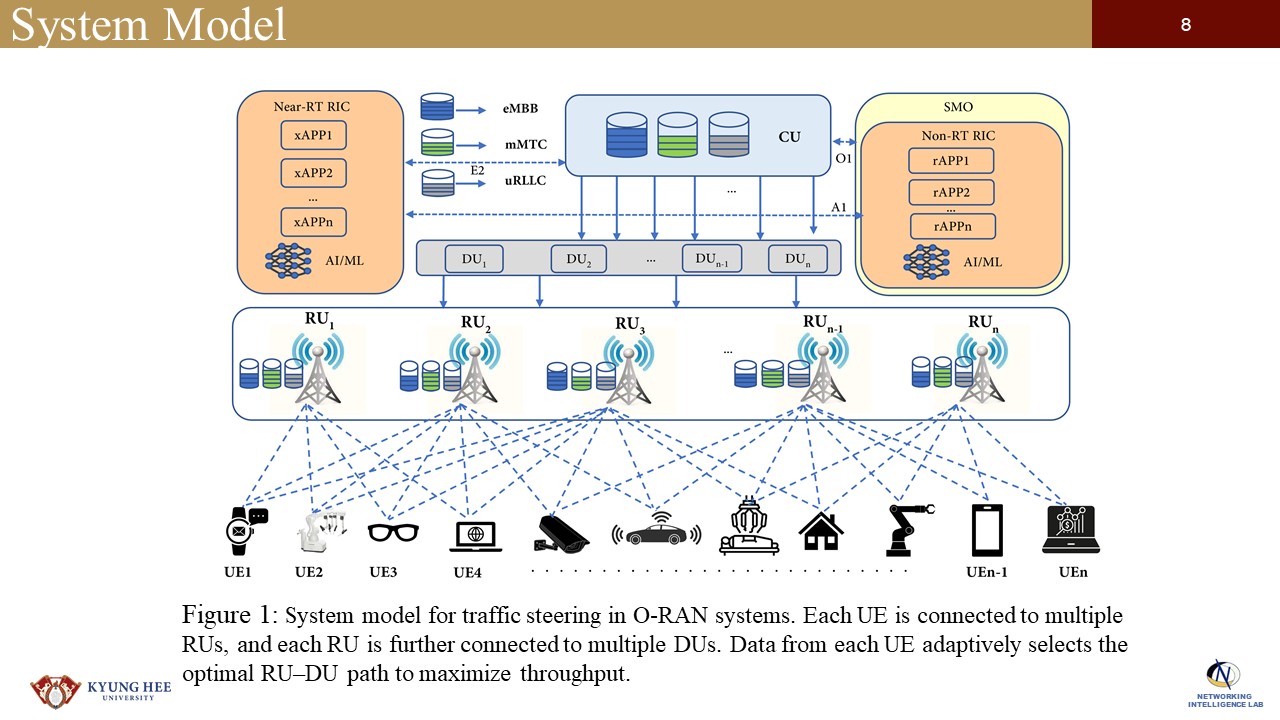 |
Figure 1: System model for traffic steering in O-RAN systems. Each UE is connected to multiple RUs, and each RU is further connected to multiple DUs. Data from each UE adaptively selects the optimal RU–DU path to maximize throughput.
|
| ICACT20260367 Slide.09
[Big Slide]
|
Chrome Click!! |
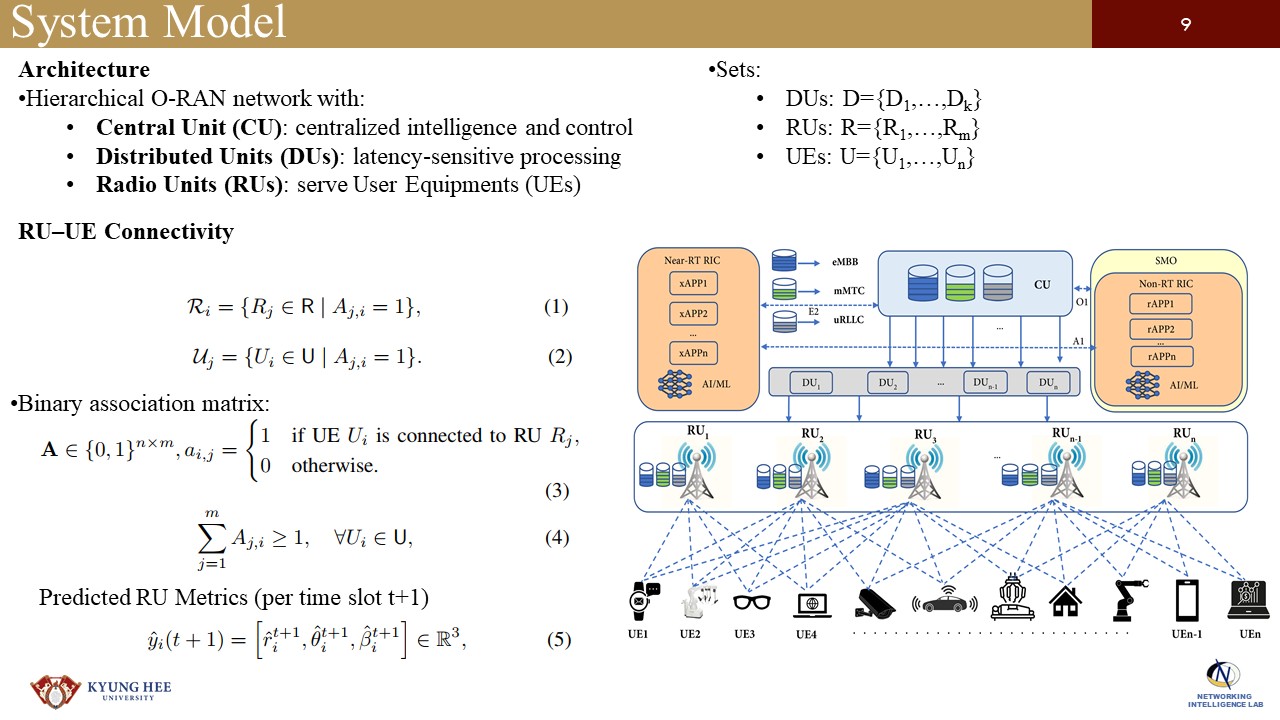 |
We consider a hierarchical O-RAN system consisting of one central unit (CU), multiple distributed units (DUs), and multiple radio units (RUs) that jointly serve a set of user equipments (UEs). Each UE can be connected to one or more RUs through a dynamic association matrix that captures multi-connectivity and may change over time. For every time slot, each RU is characterized by its resource block usage, throughput, and block error rate, which are predicted for the next slot. Using these predictions, the network adaptively steers UE traffic toward the most suitable RU–DU paths, enabling more efficient resource utilization while improving overall throughput and reliability.
|
| ICACT20260367 Slide.10
[Big Slide]
|
Chrome Click!! |
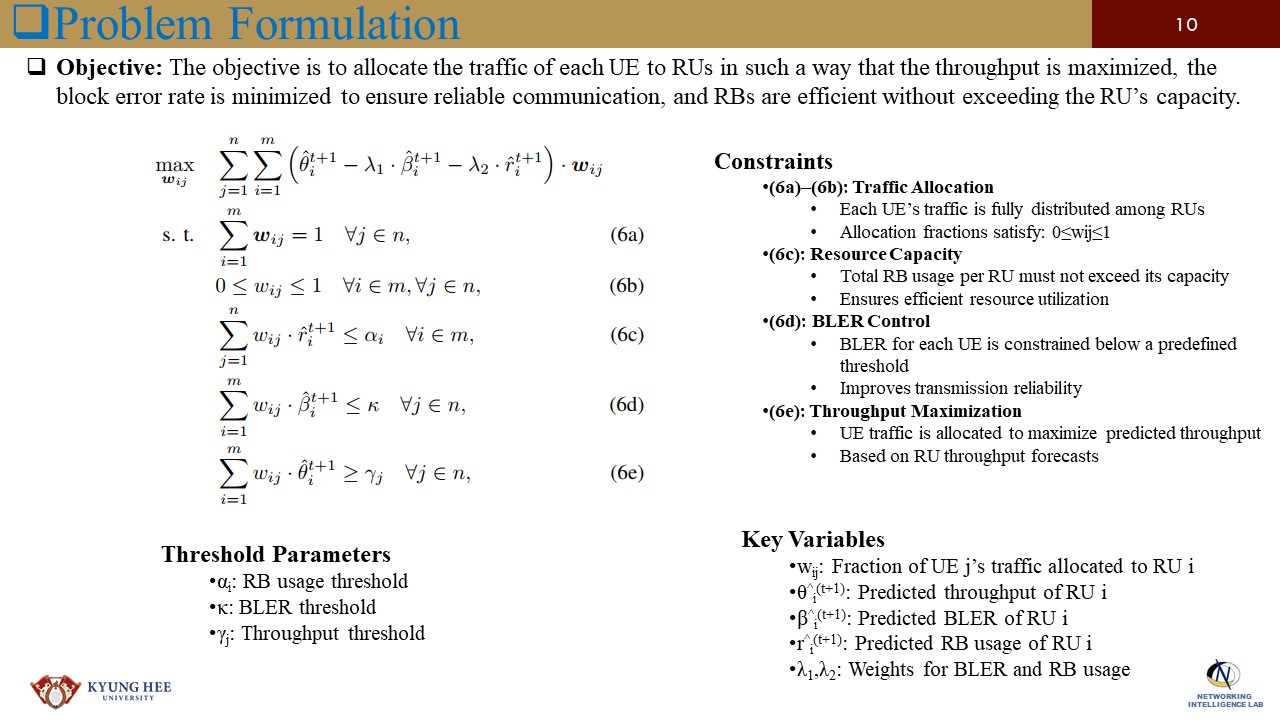 |
The objective is to optimally distribute each UE’s traffic across available RUs to maximize throughput while minimizing block error rate (BLER) and ensuring efficient use of resource blocks (RBs) within RU capacity limits. This is achieved by assigning traffic fractions to RUs based on their predicted throughput, BLER, and RB usage. The formulation guarantees that each UE’s traffic is fully allocated, that allocations remain within valid bounds, and that no RU exceeds its resource capacity. Additional constraints enforce reliability by limiting BLER and ensure quality of service by meeting minimum throughput requirements. Together, these conditions enable adaptive and efficient traffic steering that balances performance and reliability across the network.
|
| ICACT20260367 Slide.11
[Big Slide]
|
Chrome Click!! |
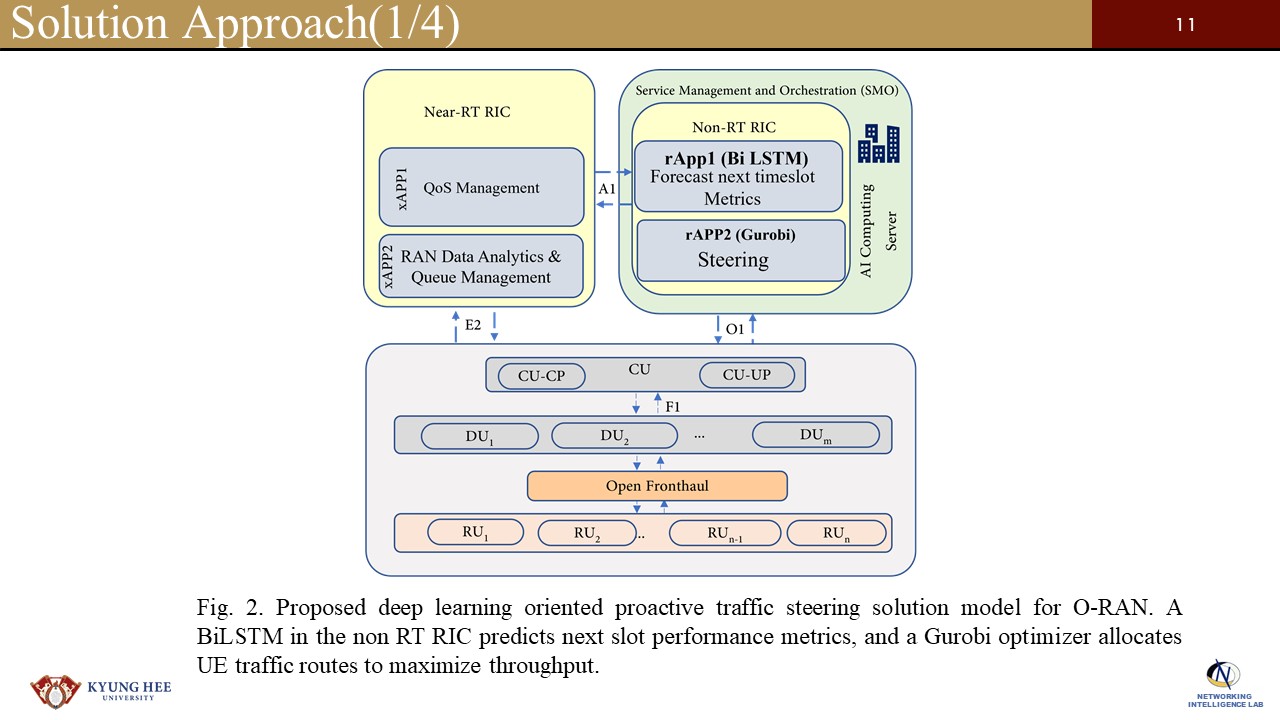 |
Fig. 2. Proposed deep learning oriented proactive traffic steering solution model for O-RAN. A BiLSTM in the non RT RIC predicts next slot performance metrics, and a Gurobi optimizer allocates UE traffic routes to maximize throughput.
|
| ICACT20260367 Slide.12
[Big Slide]
|
Chrome Click!! |
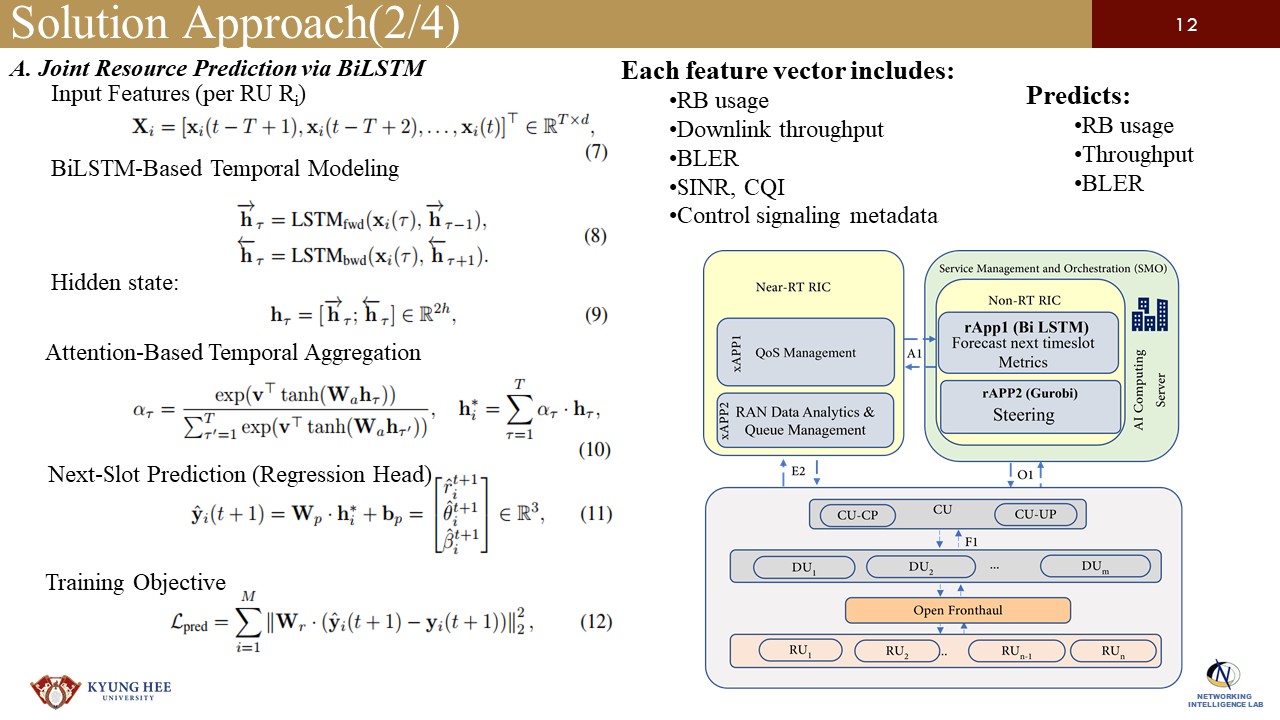 |
To solve the proposed optimization problem, we adopt a proactive traffic steering framework that combines deep learning–based prediction with linear programming optimization. A BiLSTM model is used to forecast each RU’s next-slot performance, including throughput, BLER, and resource block usage, by learning temporal patterns from historical network data. These predicted metrics are then fed into a Gurobi-based optimizer, which allocates UE traffic across RUs to maximize throughput while minimizing BLER and ensuring efficient resource utilization. This joint prediction-and-optimization approach enables intelligent, real-time traffic steering in O-RAN systems.
|
| ICACT20260367 Slide.13
[Big Slide]
|
Chrome Click!! |
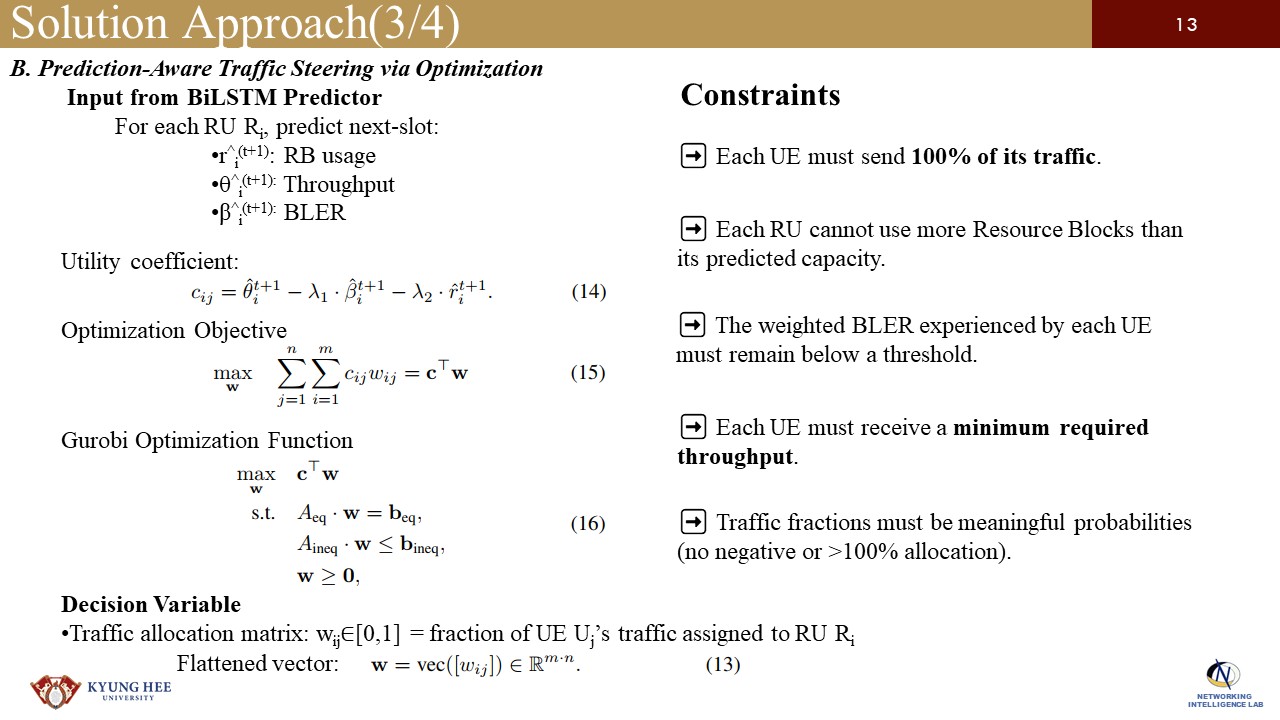 |
After predicting future RU performance metrics (RB usage, throughput, and BLER) with the BiLSTM model, we formulate a linear programming–based traffic steering problem to optimally allocate UE traffic across RUs. Each UE’s traffic is divided among available RUs to maximize a weighted utility that favors high throughput while penalizing BLER and excessive RB usage, subject to constraints on RU capacity, reliability, and minimum throughput requirements. The resulting optimization problem is solved using a Gurobi solver at every time slot with updated predictions, enabling real-time, prediction-aware adaptation of UE–RU assignments for improved network performance.
|
| ICACT20260367 Slide.14
[Big Slide]
|
Chrome Click!! |
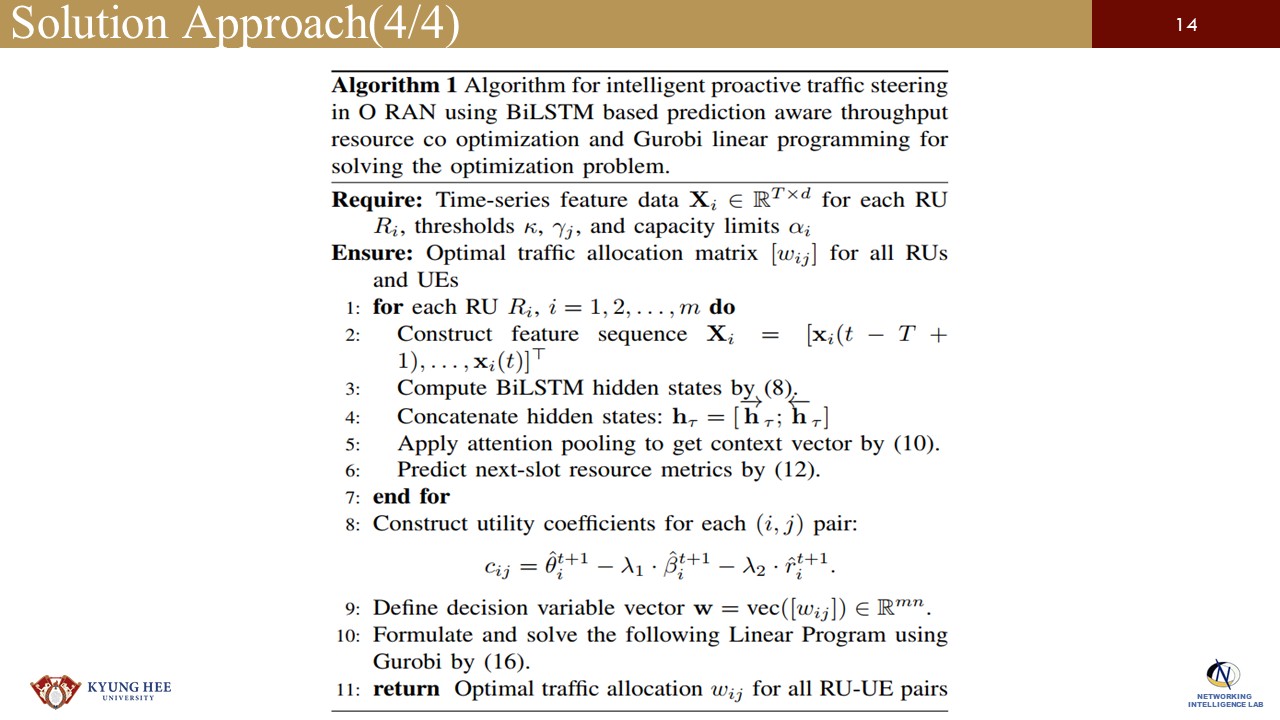 |
The proposed algorithm performs intelligent, proactive traffic steering in O-RAN by combining BiLSTM-based prediction with linear programming optimization. For each RU, a sequence of historical features is processed through a BiLSTM with attention pooling to predict next-slot metrics, including throughput, BLER, and RB usage. These predictions are used to compute utility coefficients for each RU–UE pair, and a Gurobi-based linear program is formulated to optimally allocate UE traffic across RUs while respecting capacity, reliability, and throughput constraints. The output is an optimal traffic allocation matrix that adapts in real time to predicted network conditions.
|
| ICACT20260367 Slide.15
[Big Slide]
|
Chrome Click!! |
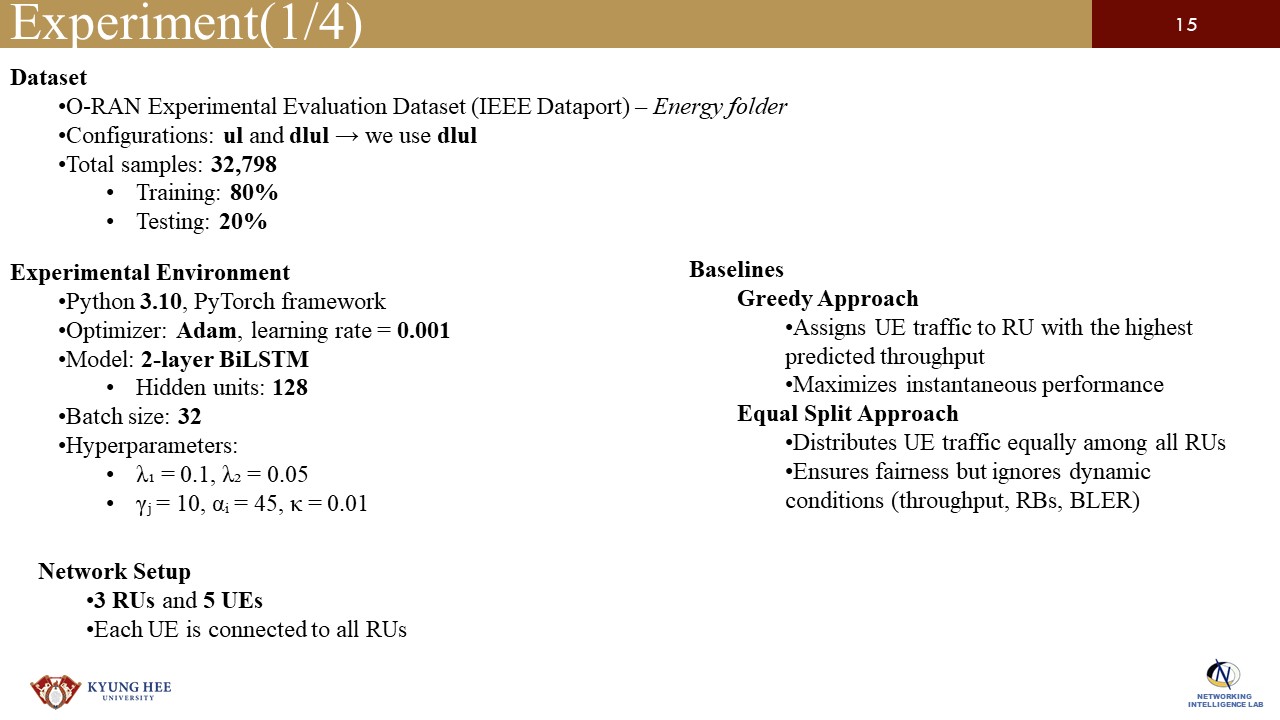 |
For our experiments, we use the O-RAN “dataset dlul” from IEEE Dataport, containing 32,798 traffic samples split 80/20 for training and testing. The model is implemented in Python with PyTorch, using a 2-layer BiLSTM with 128 hidden units, trained with the Adam optimizer (learning rate 0.001) and batch size 32. Three RUs and five UEs are considered, with every UE connected to all RUs. We compare our BiLSTM-based prediction and optimization approach against baseline traffic steering methods—Greedy, which directs all traffic to the RU with highest predicted throughput, and Equal Split, which distributes traffic evenly. The BiLSTM model is also evaluated against FFN, CNN, LSTM, GRU, and Transformer models for next-slot prediction of throughput, BLER, and RB usage. Results show the BiLSTM achieves the lowest training MSE (0.0001), test MSE (0.10), and test MAE (0.05), closely matching ground truth values and outperforming all baselines in accuracy while maintaining reasonable model complexity.
|
| ICACT20260367 Slide.16
[Big Slide]
|
Chrome Click!! |
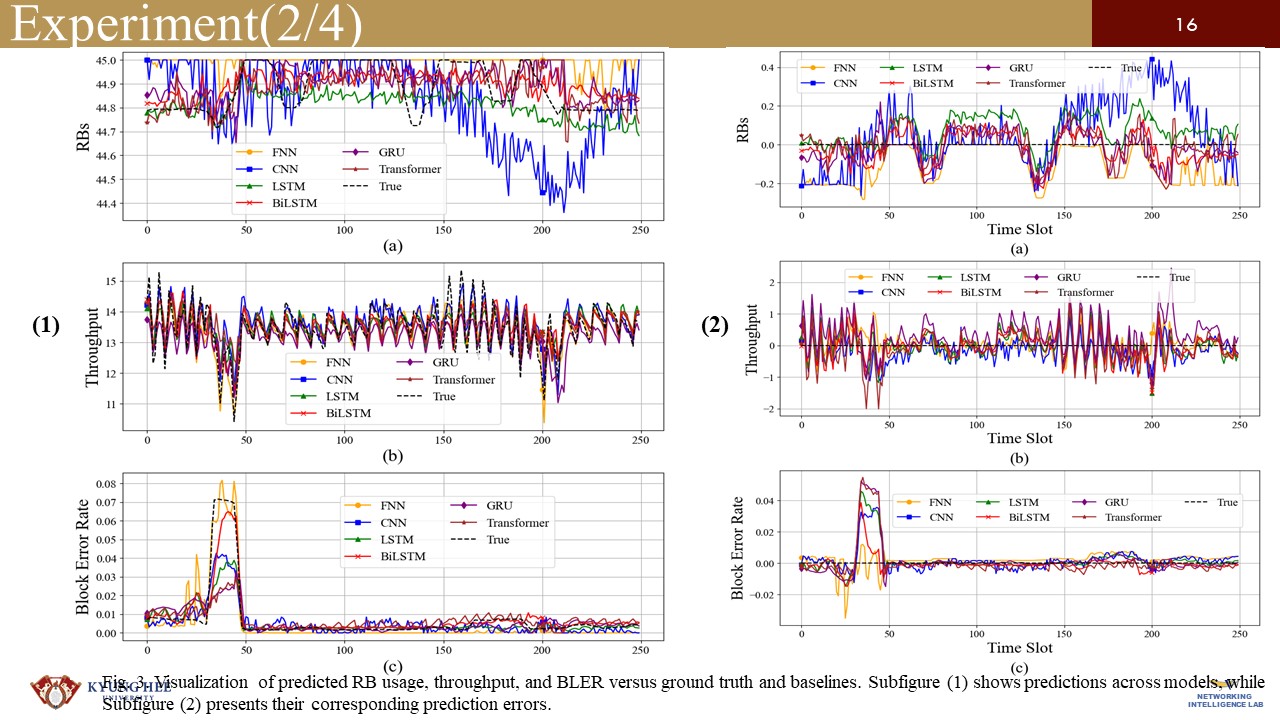 |
In Fig. 3, we present a visual comparison between the
predicted and ground truth values of throughput, RBs usage,
and BLER, along with their corresponding prediction errors.
The left side of the figure displays the predicted values
alongside the actual ground truth, while the right side depicts
the prediction errors. For both sides, subfigures (a), (b), and (c)
represent RBs, throughput, and BLER, respectively. As shown
in Fig. 3(1), the proposed Bi-LSTM model accurately predicts
the required RBs, throughput, and BLER for the next time slot,
closely aligning with the ground truth and outperforming other
baseline models. In Fig. 3(2), the BiLSTM model consistently
outperforms the other models across all three metrics. For RB
prediction (a), BiLSTM closely follows the true trend after the
initial time steps, capturing key fluctuations with relatively
small errors. In throughput prediction (b), it achieves high
accuracy with errors near zero, aside from a few minor spikes
that remain negligible compared to the other methods. For
BLER prediction (c), BiLSTM maintains near-zero error for
most of the time, closely tracking the ground truth. Although
a noticeable spike appears around time steps 40–50, its overall
performance remains superior, highlighting its effectiveness
over baseline models. |
| ICACT20260367 Slide.17
[Big Slide]
|
Chrome Click!! |
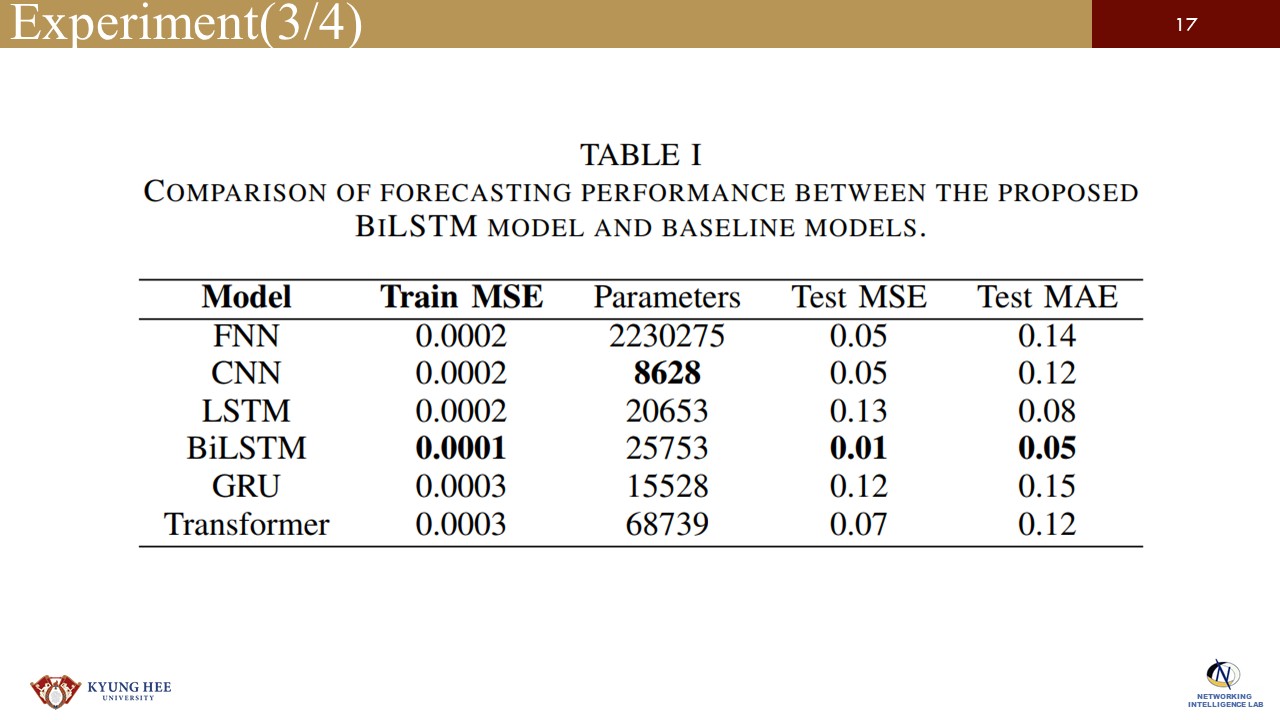 |
In Tab. I, we present the comprehensive results of train
mean squared error (MSE) loss, number of parameters, test
MSE and test mean absolute error (MAE) for our proposed
method compared to the five baselines. From the table we find
among all the models, the BiLSTM achieves the best overall
performance, recording the lowest train MSE (0.0001), lowest
test MSE (0.10), and lowest test MAE (0.05). While the CNN
offers the smallest parameter footprint (8628), it lags behind
BiLSTM in terms of predictive accuracy. Although models
like LSTM and Transformer exhibit strong individual traits
such as the Transformer’s relatively low test MSE (0.07) they
either suffer from higher MAE or require significantly more
parameters. The BiLSTM strikes the optimal balance between
accuracy and model complexity, making it the most suitable
choice for the prediction-aware traffic steering framework in
O-RAN scenarios. |
| ICACT20260367 Slide.18
[Big Slide]
|
Chrome Click!! |
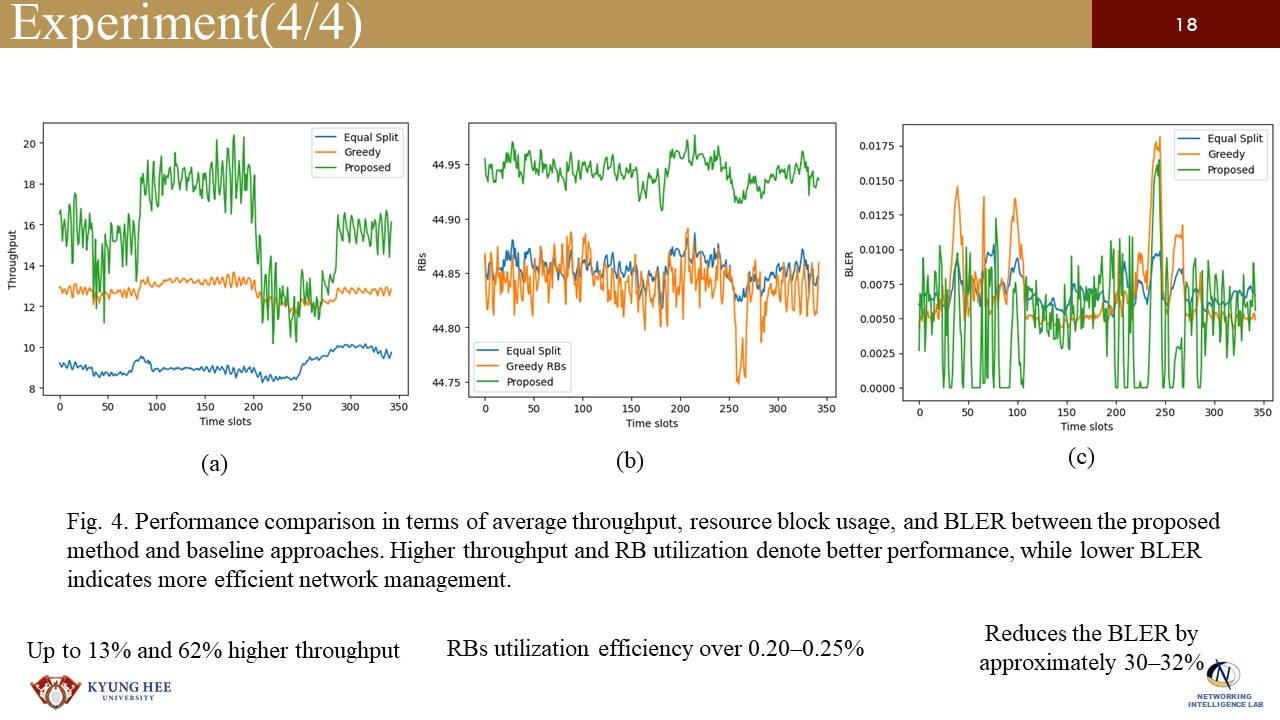 |
In Fig. 4, we evaluate the traffic steering performance of the
proposed method against two baseline strategies, Equal Split
and Greedy, across multiple time slots, using throughput, RB utilization, and BLER as performance metrics. As shown in
Fig. 4(a), the proposed method consistently achieves higher
throughput than both baselines. Equal Split delivers low but
stable performance, while Greedy shows moderate throughput
with notable fluctuations. In Fig. 4(b), our method demonstrates more efficient RB utilization, consistently allocating
maximum usable resources than the baselines. Equal Split
maintains a uniform allocation, and Greedy exhibits variable
usage. Fig. 4(c) shows that our method achieves the lowest
BLER, frequently reaching zero but with occasional spikes,
indicating a highly adaptive though sometimes volatile response to changing conditions. Overall, the proposed strategy
outperforms both Equal Split and Greedy across all key
metrics. |
| ICACT20260367 Slide.19
[Big Slide]
|
Chrome Click!! |
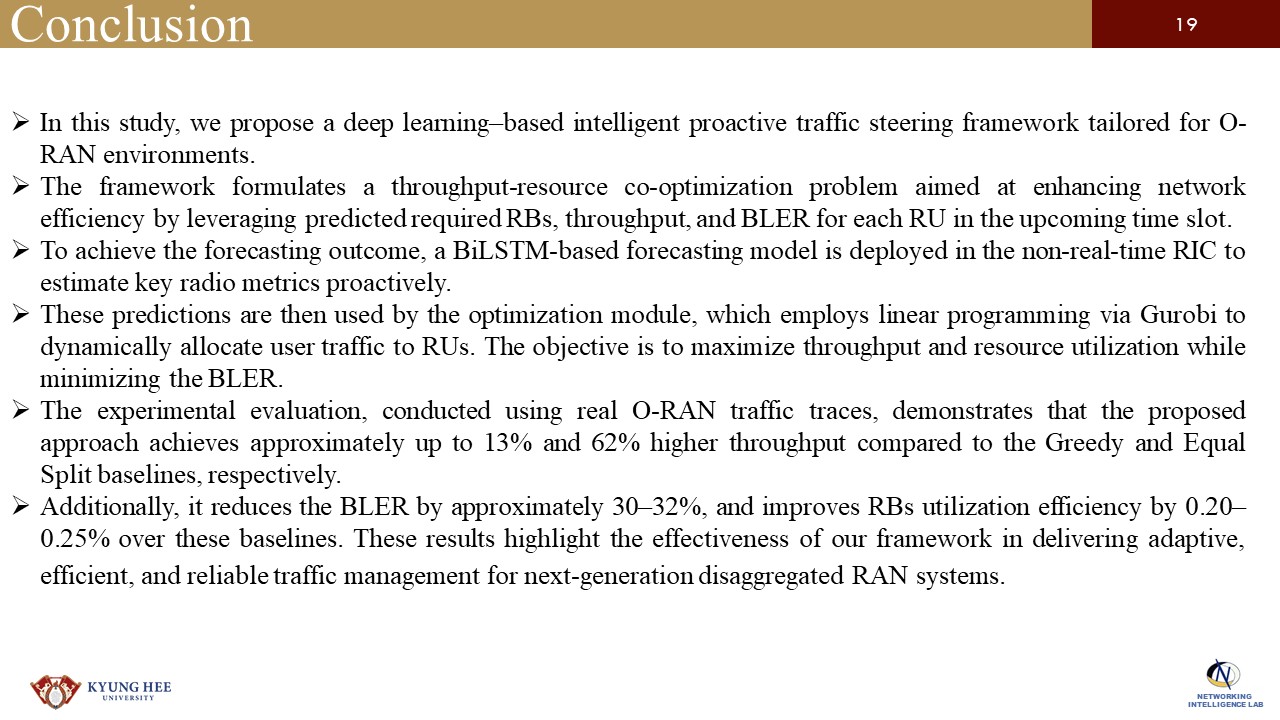 |
In this study, we propose a deep learning–based intelligent proactive traffic steering framework tailored for O-RAN environments.
The framework formulates a throughput-resource co-optimization problem aimed at enhancing network efficiency by leveraging predicted required RBs, throughput, and BLER for each RU in the upcoming time slot.
To achieve the forecasting outcome, a BiLSTM-based forecasting model is deployed in the non-real-time RIC to estimate key radio metrics proactively.
These predictions are then used by the optimization module, which employs linear programming via Gurobi to dynamically allocate user traffic to RUs. The objective is to maximize throughput and resource utilization while minimizing the BLER.
The experimental evaluation, conducted using real O-RAN traffic traces, demonstrates that the proposed approach achieves approximately up to 13% and 62% higher throughput compared to the Greedy and Equal Split baselines, respectively.
Additionally, it reduces the BLER by approximately 30–32%, and improves RBs utilization efficiency by 0.20–0.25% over these baselines. These results highlight the effectiveness of our framework in delivering adaptive, efficient, and reliable traffic management for next-generation disaggregated RAN systems.
|
| ICACT20260367 Slide.20
[Big Slide]
|
Chrome Click!! |
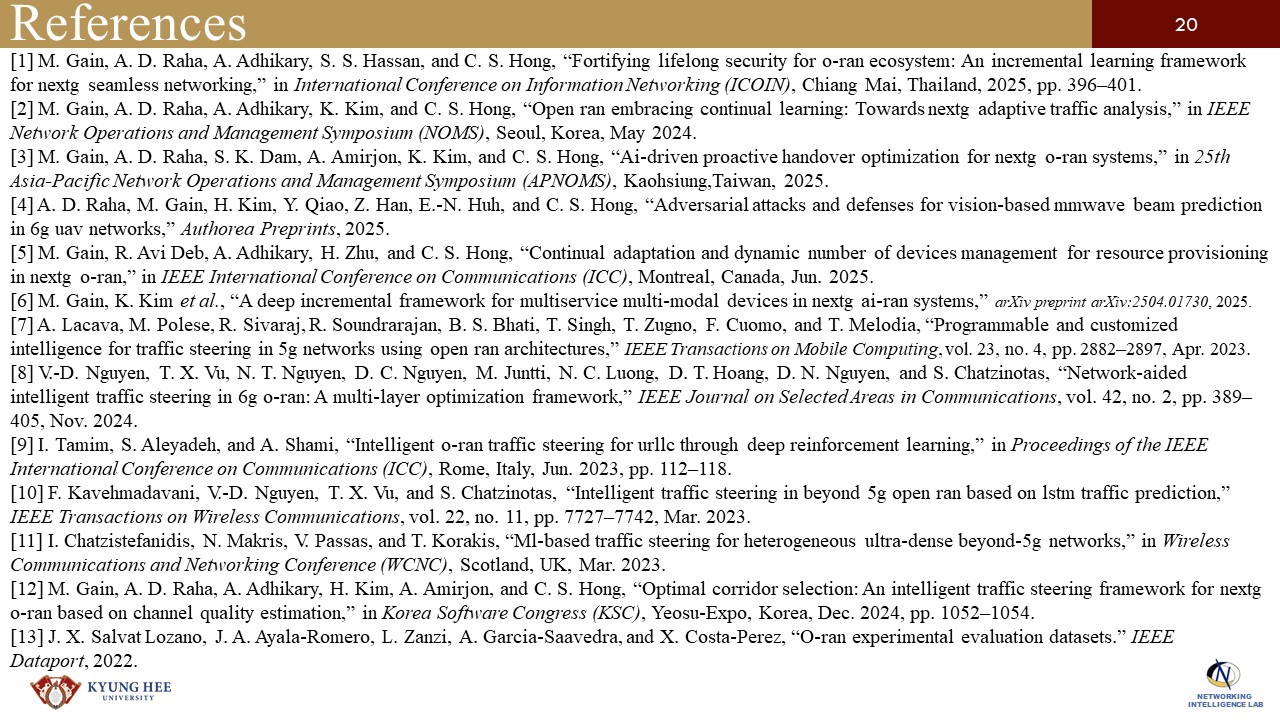 |
Here is the references |
| ICACT20260367 Slide.21
[Big Slide]
|
Chrome Click!! |
 |
Thank You |
| |





