 ICACT20240438 Slide.00
[Big Slide]
[YouTube] |
Chrome  Click!! |
 |
Good day, everyone! On behalf of my colleagues, we are privileged to be here today to present our paper entitled “BOSESKO: Designing A Synoptic Multi-platform Digital System for Citizen Participation” at this 26th International Conference on Advanced Communications Technology. |
| ICACT20240438 Slide.01
[Big Slide]
[YouTube] |
Chrome Click!! |
 |
I'm Dr. Michael Angelo D. Brogada, a faculty member of the CSIT Department at Bicol University, Legazpi City, Philippines. I'm a University Researcher working on a project called "e-Participation 2.1." We're exploring how Natural Language Processing can make community participation more accessible and engaging. My research interests broadly cover NLP, Web Information Systems, and Cloud Computing.
|
| ICACT20240438 Slide.02
[Big Slide]
|
Chrome Click!! |
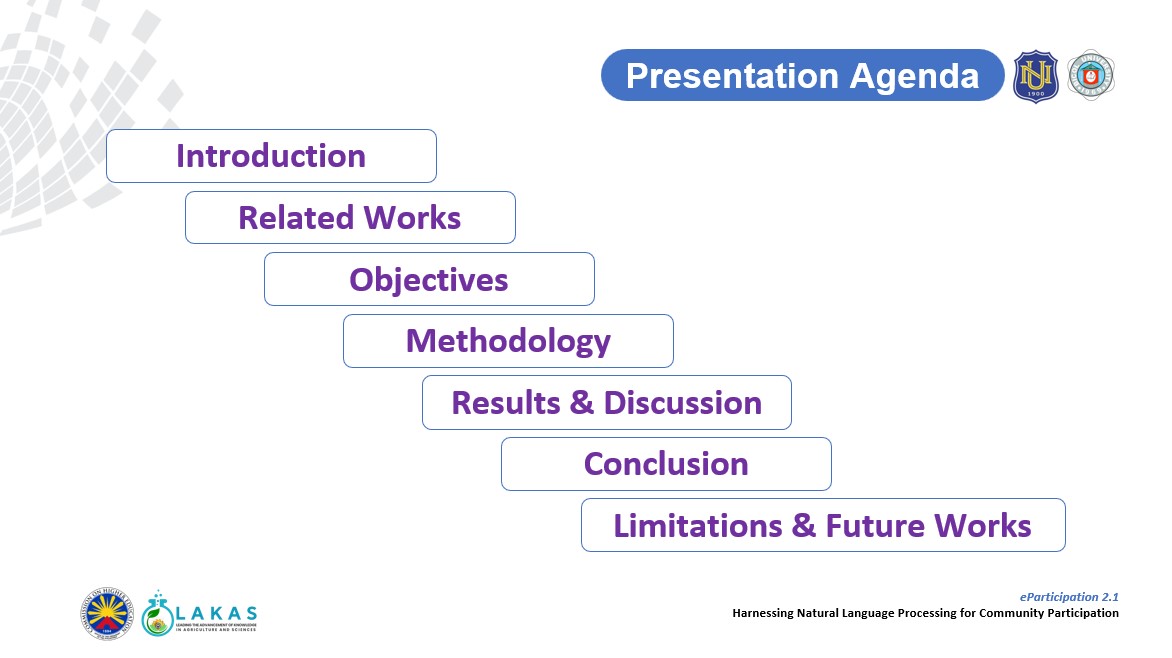 |
My presentation outline will be as follows: Introduction, Related Works, Objectives, Methodology, Results and Discussion, Conclusions and Limitations & Future Works. |
| ICACT20240438 Slide.03
[Big Slide]
|
Chrome Click!! |
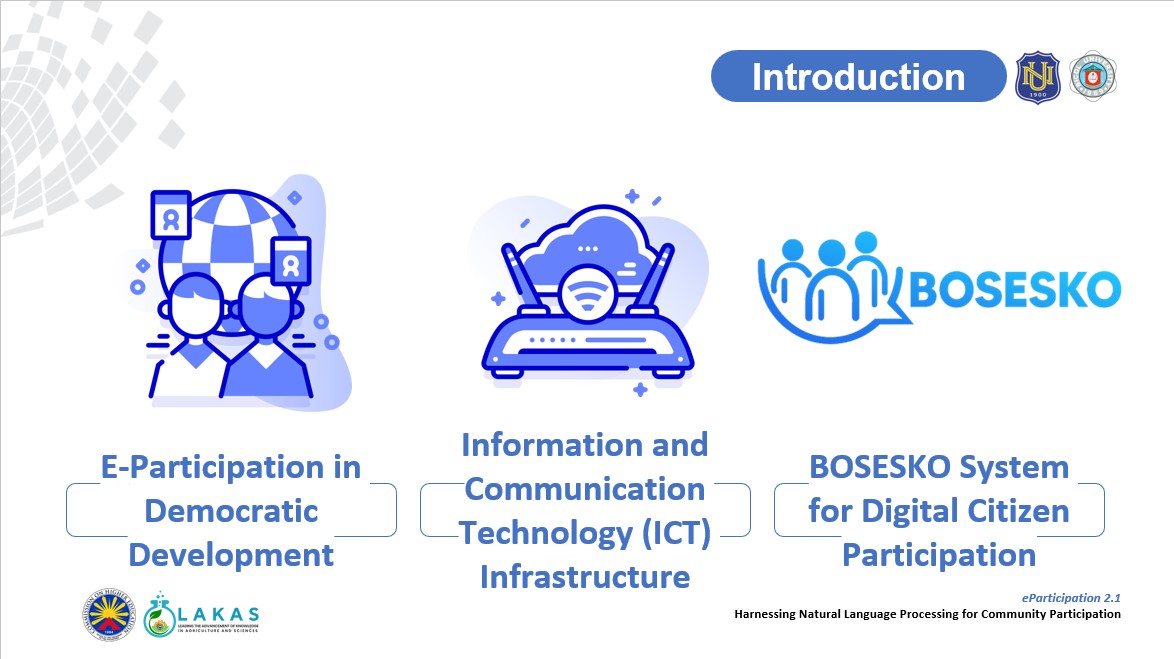 |
E-participation, mirroring citizens' dynamic engagement in governance and ultimately playing a crucial role in influencing public policy, stands at the forefront of today's tech-driven society. This phenomenon is particularly significant because democratic governments highly value inclusive decision-making.
As we delve into the technological backbone sustaining this evolution, ICT Infrastructure emerges as a significant enabler. Digital divides are effectively closed by providing citizens with easy access to government procedures through accessible websites, applications, and various devices.
The spotlight shifts to the BOSESKO System for Digital Citizen Participation, a pioneering effort in this transformative journey. With a clear objective of creating a robust digital platform, BOSESKO underscores the importance of effective development and implementation using suitable technology. Its primary focus is to promote public participation, facilitate the expression of thoughts, and enable knowledge-sharing. Notably, it directs attention to crucial domains such as Universal Access to Quality Tertiary Education (UAQTE). |
| ICACT20240438 Slide.04
[Big Slide]
|
Chrome Click!! |
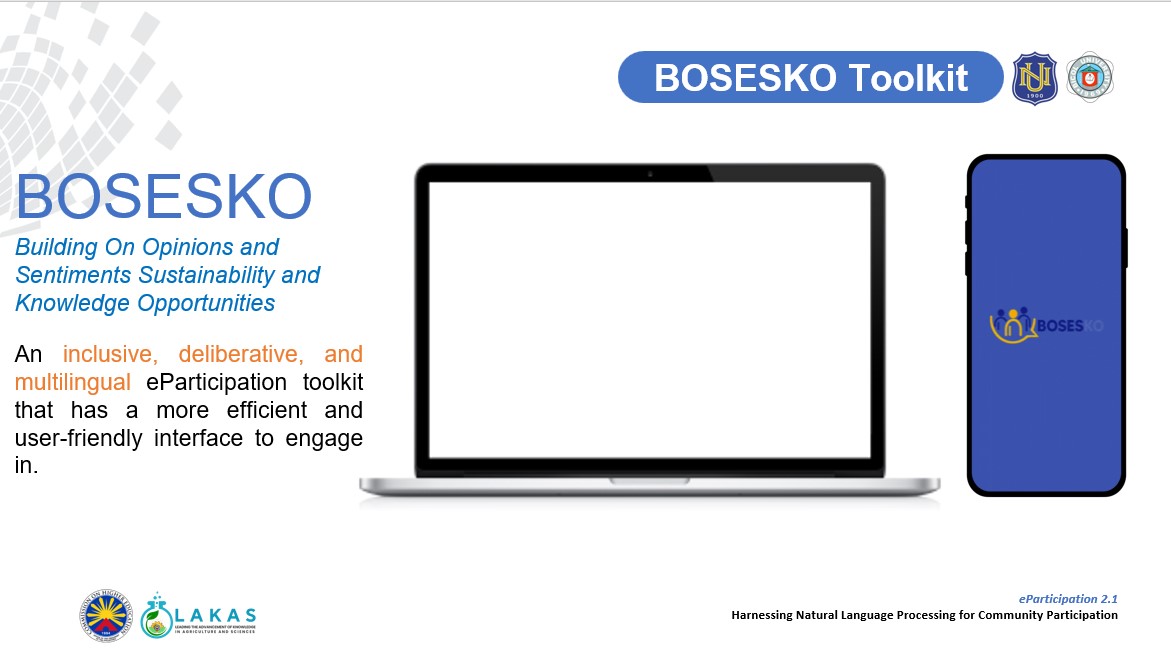 |
WHAT IS BOSESKO? BOSESKO, which stands for Building On Opinions and Sentiments Sustainability and Knowledge Opportunities - is an inclusive, deliberative, and multilingual eParticipation toolkit that streamlines the collection, processing, and analysis of survey responses.
|
| ICACT20240438 Slide.05
[Big Slide]
|
Chrome Click!! |
 |
Recent research underscores the evolution of e-participation into a valuable collection of tools. This transformation not only significantly contributes to the changing political landscape but also highlights the critical role of citizen involvement in shaping comprehensive national policies. These insights collectively emphasize the growing importance of e-participation as a dynamic force in contemporary governance. |
| ICACT20240438 Slide.06
[Big Slide]
|
Chrome Click!! |
 |
The seamless integration of components, including software, hardware, or other systems, is crucial to meeting system objectives. Demonstrated in Higher Education Institutions (HEIs), integrated information systems have proven effective in improving staff management and enhancing student workload efficiency. This highlights the overarching importance of system integration in optimizing operational efficiency and achieving desired outcomes across various domains. |
| ICACT20240438 Slide.07
[Big Slide]
|
Chrome Click!! |
 |
Recent research has highlighted the transformative impact of multi-platform programs on the information technology industry. Multi-platform applications, defined as those running on all operating systems and communication devices, have gained recognition for their adaptability. Moreover, the importance of responsive web design (RWD) has been emphasized, showcasing its dynamic adjustment to various devices. These insights collectively underscore the evolving nature of technology, where adaptability and cross-device compatibility play a pivotal role in shaping the information technology landscape. |
| ICACT20240438 Slide.08
[Big Slide]
|
Chrome Click!! |
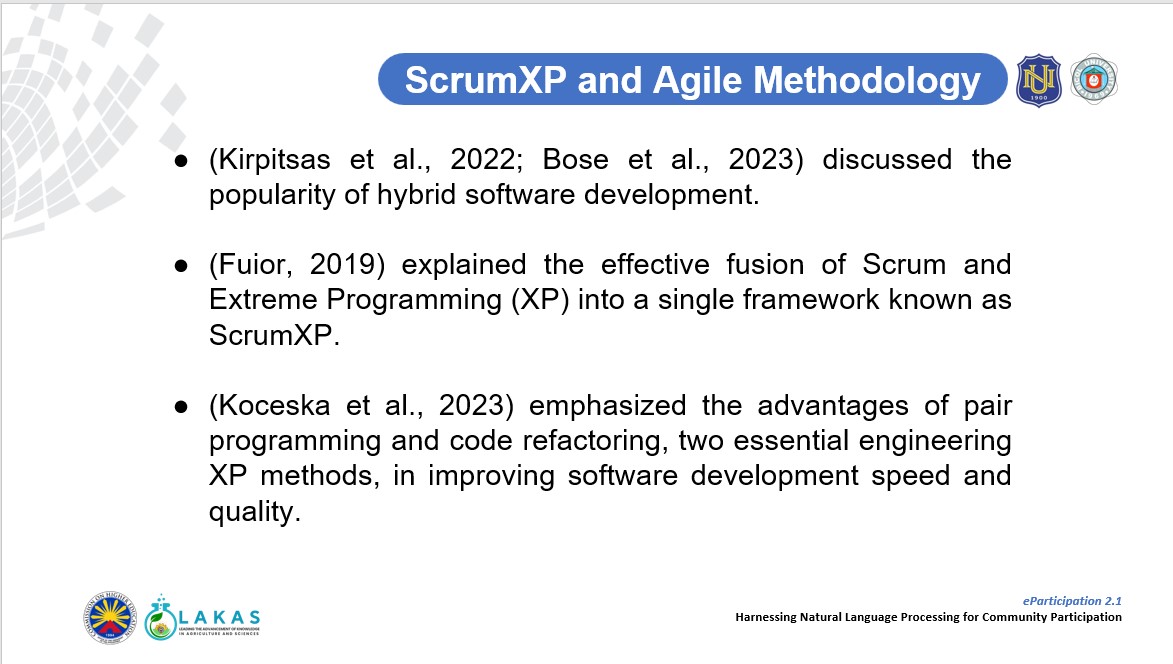 |
The discussions have centered around the popularity of hybrid software development, with a particular focus on the effective fusion of Scrum and Extreme Programming (XP) into a single framework known as ScrumXP. Additionally, the advantages of pair programming and code refactoring, highlighted as essential engineering XP methods by (Koceska et al., 2023), have been emphasized for their positive impact on both software development speed and quality. These collective insights contribute to the ongoing exploration of methodologies enhancing efficiency and quality in software development processes. |
| ICACT20240438 Slide.09
[Big Slide]
|
Chrome Click!! |
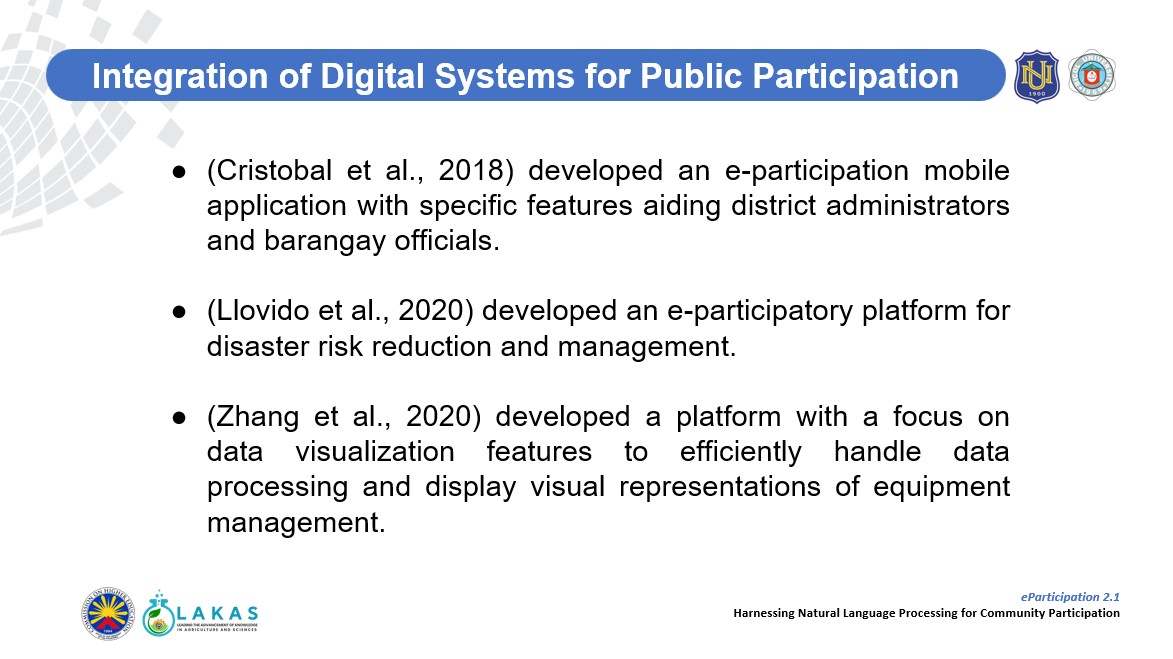 |
Innovative solutions have been created to enhance various aspects of governance. These include the development of an e-participation mobile application tailored for district administrators and barangay officials, the creation of an e-participatory platform designed for disaster risk reduction and management, and the development of a platform with specialized data visualization features for efficient data processing and visual representation of equipment management. These collective efforts signify advancements in technology-driven approaches to facilitate effective governance and decision-making processes. |
| ICACT20240438 Slide.10
[Big Slide]
|
Chrome Click!! |
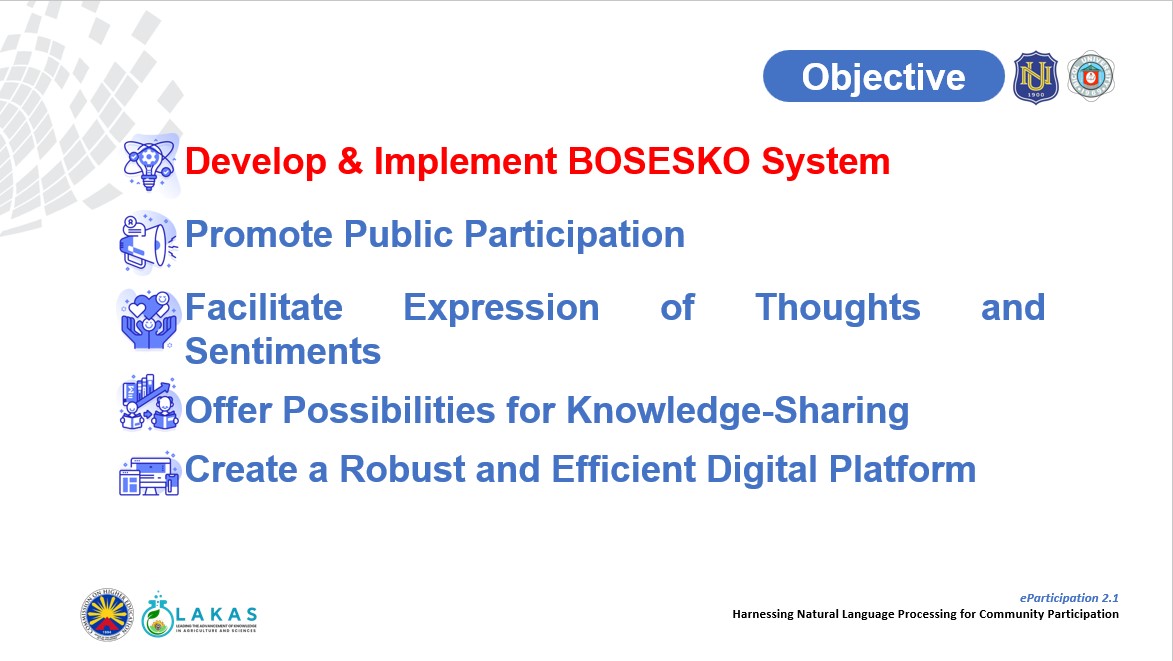 |
The main objective of this study is to effectively develop and implement BOSESKO using carefully chosen and appropriate technology. Through this, it aims to promote public participation, facilitate the expression of thoughts and sentiments on the implementation of Universal Access to Quality Tertiary Education (UAQTE) or other domains, and offer possibilities for knowledge-sharing. |
| ICACT20240438 Slide.11
[Big Slide]
|
Chrome Click!! |
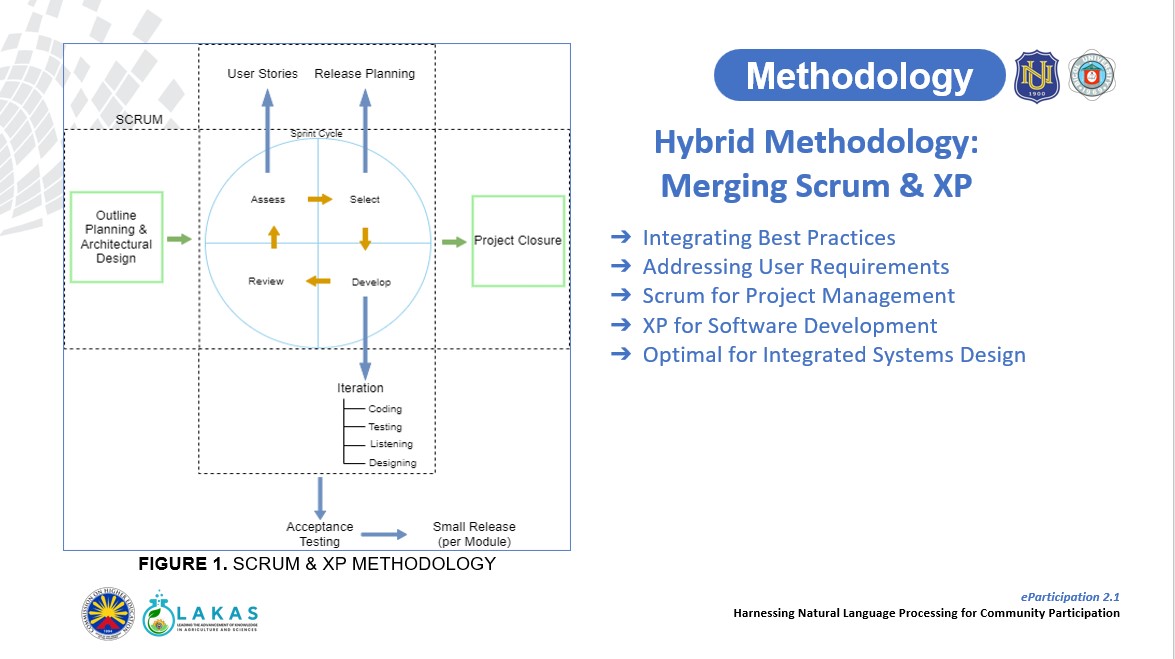 |
In congruence with the approach employed in the study, the researchers utilized a hybrid methodology, as shown in Figure 1, combining the best practices and strengths of Extreme Programming (XP) and Scrum to address user requirements. Scrum and XP are effective methodologies for assisting software teams in their projects. In certain instances, these two strategies complement each other. While Scrum focuses on project management, XP provides useful software development practices. |
| ICACT20240438 Slide.12
[Big Slide]
|
Chrome Click!! |
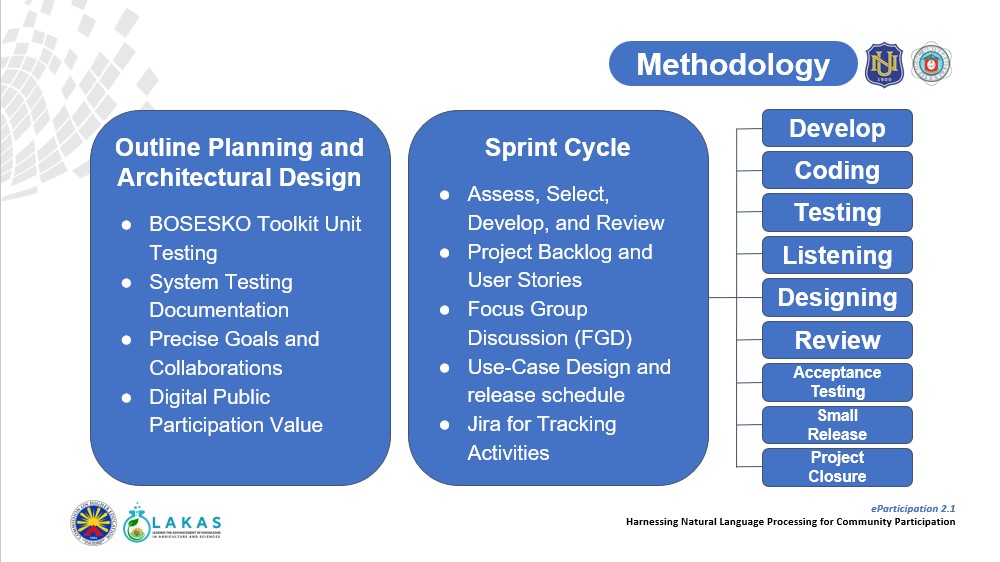 |
BOSESKO, our innovative toolkit, underwent a meticulous development process that began with thorough planning and architectural design. The main components underwent rigorous unit testing, and precise goals were outlined after extensive collaboration with various sectors. The sprint cycle, consisting of assess, select, develop, and review phases, showcased incremental progress, guided by a prioritized project backlog derived from stakeholder suggestions. The development stage involved iterative coding, testing, listening, and designing, focusing on creating a well-designed system architecture. Cutting-edge technologies like TypeScript, React, Next.js, Nest.js, Chart.js, and TailwindCSS were employed for an interactive user experience. System components were subjected to unit and system testing, and stakeholder feedback gathered through meetings and questionnaires drove incremental improvements. The completed work underwent thorough review and acceptance testing. Small releases were made for stakeholder feedback, leading to ongoing refinements. The project culminated in a comprehensive closure featuring user documentation in the form of a manual, brochure, and video tutorial, providing a guide for users navigating the toolkit's features and functionalities. |
| ICACT20240438 Slide.13
[Big Slide]
|
Chrome Click!! |
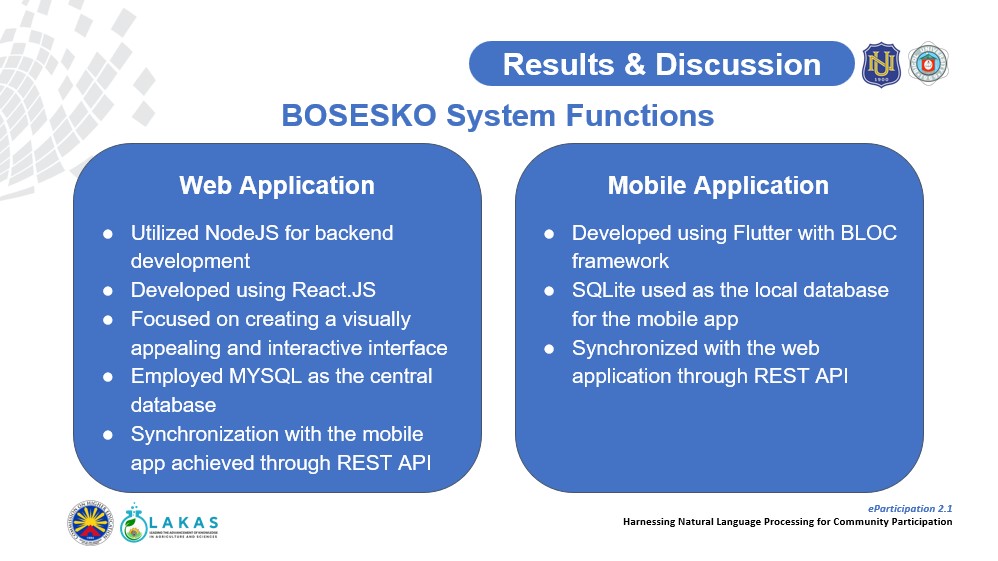 |
The mobile app is developed using Flutter with BLOC framework. SQLite serves as the mobile app's local database. NodeJS was used for the web app's backend development, while React.JS was used for front-end development and visualization. MYSQL is the central database of the web app. Additionally, the synchronization of the mobile and web applications is made possible using the REST application programming interface (API). Python is the primary tool for the data miner / NLP component. Microservices technique prepared the survey raw data for the data miner program and performed data cleaning. The web application and data miner integration uses the FAST application programming interface (API).
|
| ICACT20240438 Slide.14
[Big Slide]
|
Chrome Click!! |
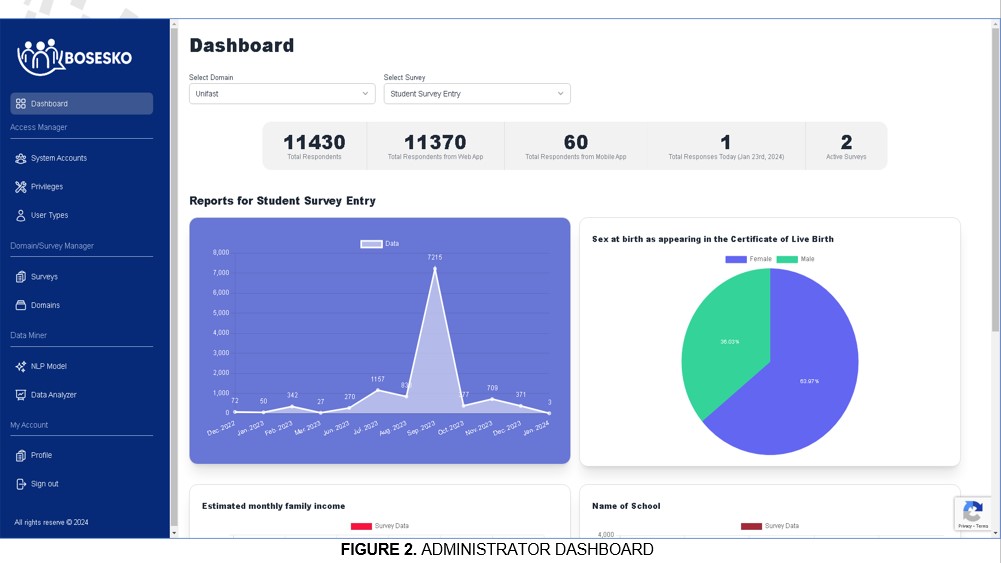 |
The web application is hosted in the cloud server with access to the database server, which serves as the primary data repository of the system. This application provides a responsive layout for multiple platforms and browsers.
This module allows administrators to manage different software system functions. This page, as demonstrated in figure 2, serves as the backend manager of the system accessible in the web application.
|
| ICACT20240438 Slide.15
[Big Slide]
|
Chrome Click!! |
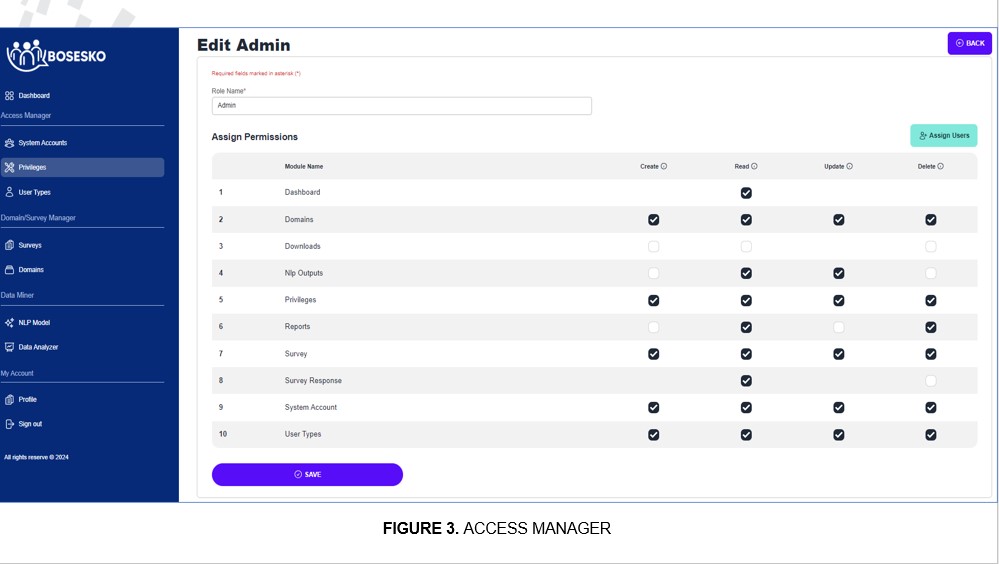 |
This module manages the system accounts, including their types, roles, and privileges. Figure 3 demonstrates that with the access manager, permissions can be read, created, updated, or deleted for a specific system module. |
| ICACT20240438 Slide.16
[Big Slide]
|
Chrome Click!! |
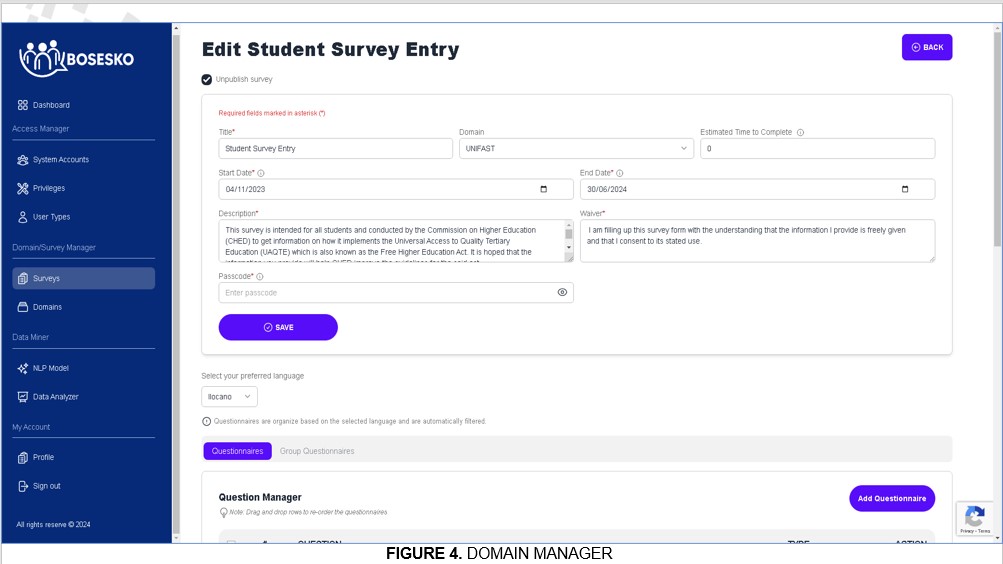 |
BOSESKO is designed to allow customization, creation, and implementation of the toolkit for other e-participation domains, not exclusively for DRRM and UAQTE only. Figure 4 depicts the user interface for the mentioned purpose. |
| ICACT20240438 Slide.17
[Big Slide]
|
Chrome Click!! |
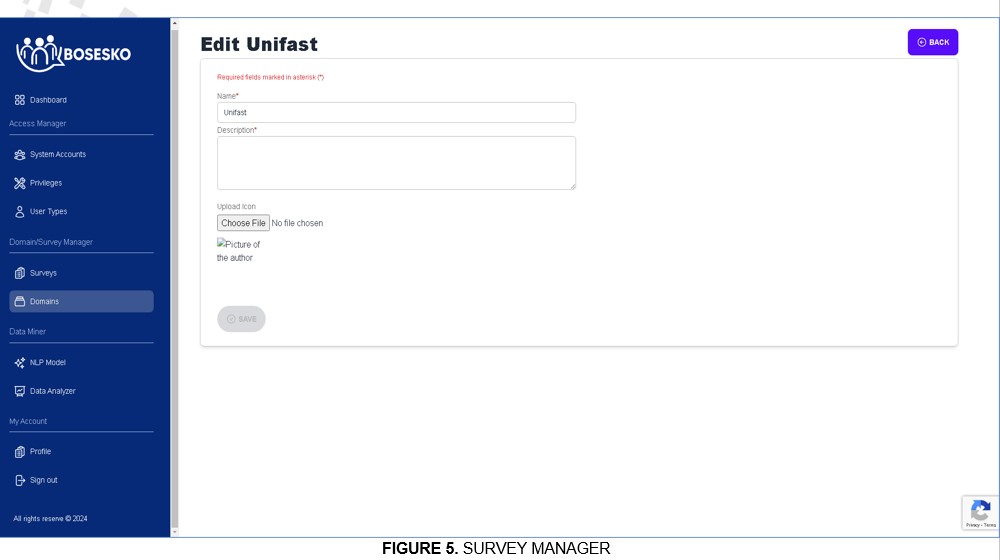 |
This module allows creating, updating, deleting, activating, and deactivating surveys within an active domain. Users can specify the survey's description and start and end dates, as shown in Figure 5.
|
| ICACT20240438 Slide.18
[Big Slide]
|
Chrome Click!! |
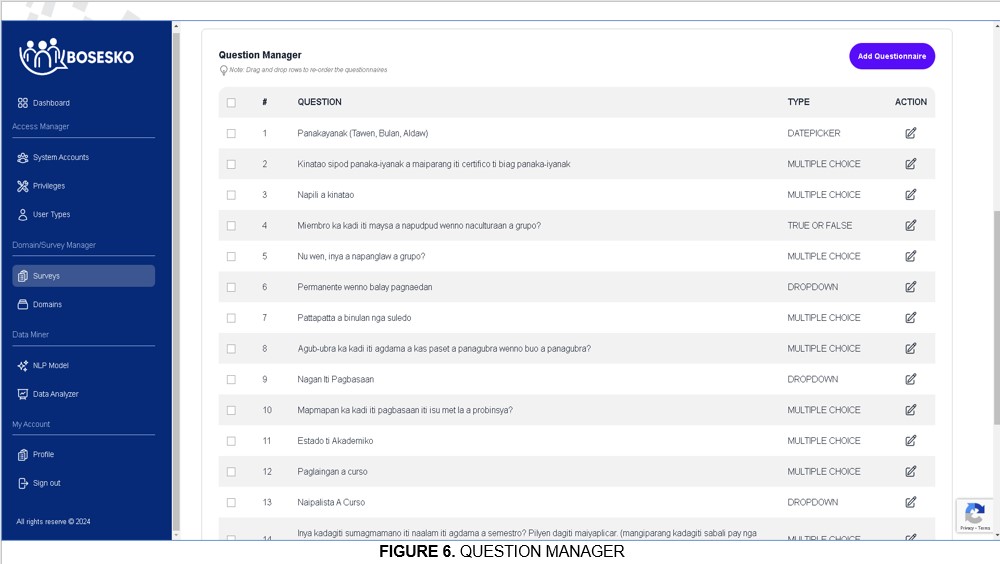 |
Figure 6 is the question manager used to administer questions of an active survey. Question types include multiple choice, open-ended, true or false, drop-down selection, date picker, and rating. Each type has its settings and configuration, like the required answer, audio recording, graph visibility, multiple answers, other answers, maximum and minimum rating values, and follow-up questions.
|
| ICACT20240438 Slide.19
[Big Slide]
|
Chrome Click!! |
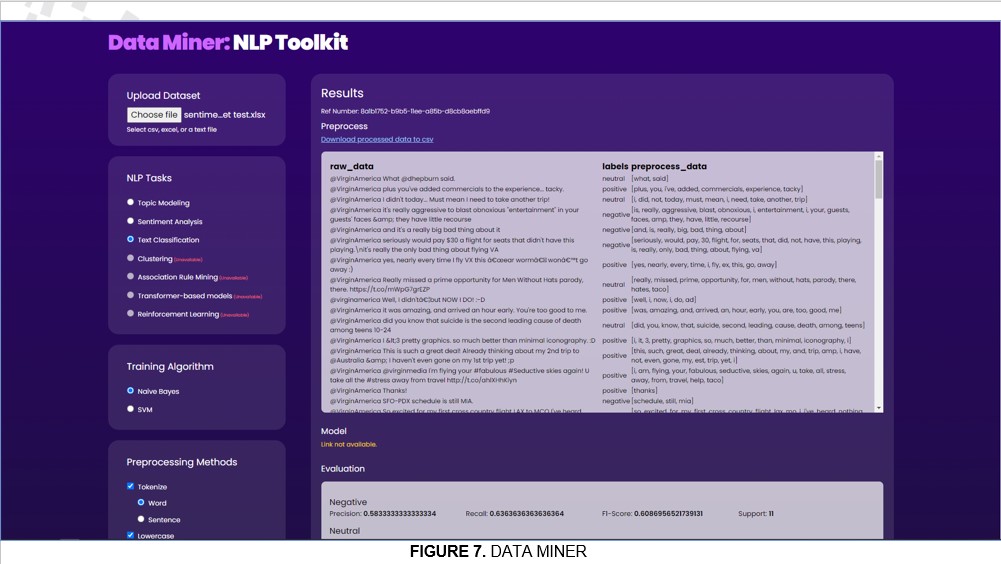 |
As shown in Figure 7, this module performs data searching, cleaning implemented using microservices, and analysis of survey responses via text or voice recording to identify patterns and extract useful information. The toolkit implements pre-processing, feature extraction, model training, and performance evaluation.
|
| ICACT20240438 Slide.20
[Big Slide]
|
Chrome Click!! |
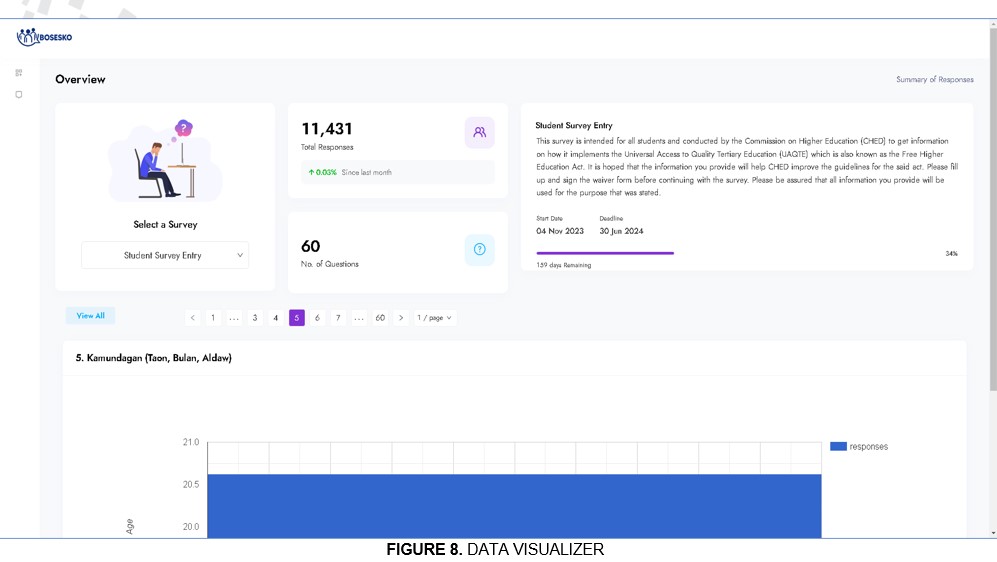 |
The Data Visualizer (Figure 8) is a report-generation tool that creates data visualization of survey responses. It displays a storyboard, charts, graphs, and other visual representations.
|
| ICACT20240438 Slide.21
[Big Slide]
|
Chrome Click!! |
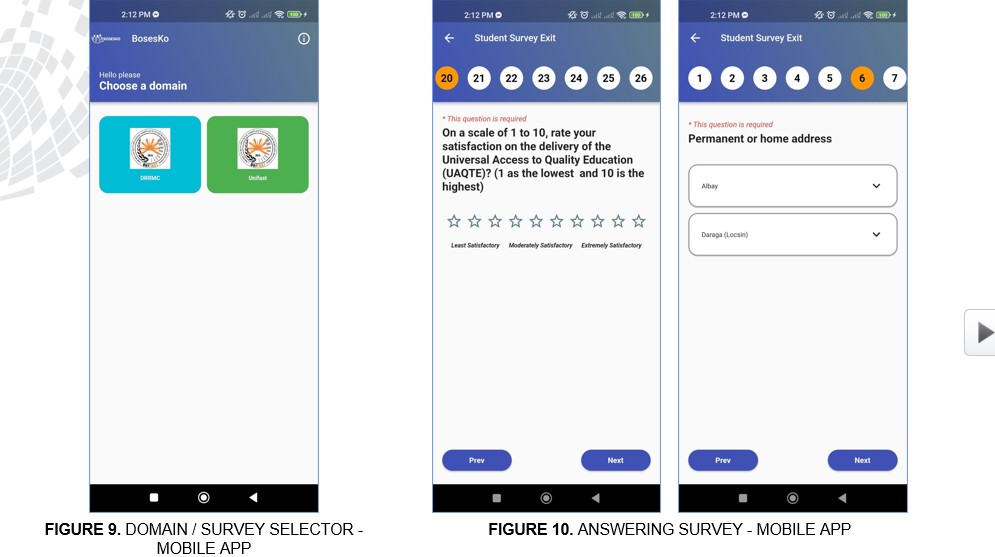 |
This mobile app is a tool for data gathering. It is compatible with Android and IOS devices. It has a local database that temporarily holds the user's data and is synchronized to the web application's database server when a stable WAN network is available.
The Domain/Survey selector allows the respondents to choose their preferred domain and survey. The system can activate multiple domains with multiple surveys in it. This module is also accessible using the web application with a responsive layout.
|
| ICACT20240438 Slide.22
[Big Slide]
|
Chrome Click!! |
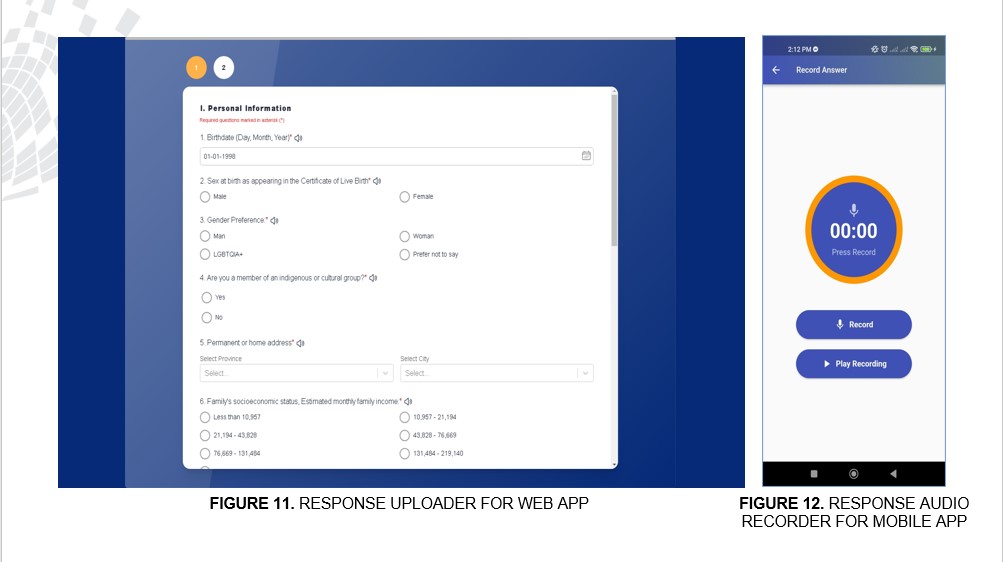 |
This module allows the respondents to actively respond using text input or voice recording. Respondents can also engage in the active survey using the web application. |
| ICACT20240438 Slide.23
[Big Slide]
|
Chrome Click!! |
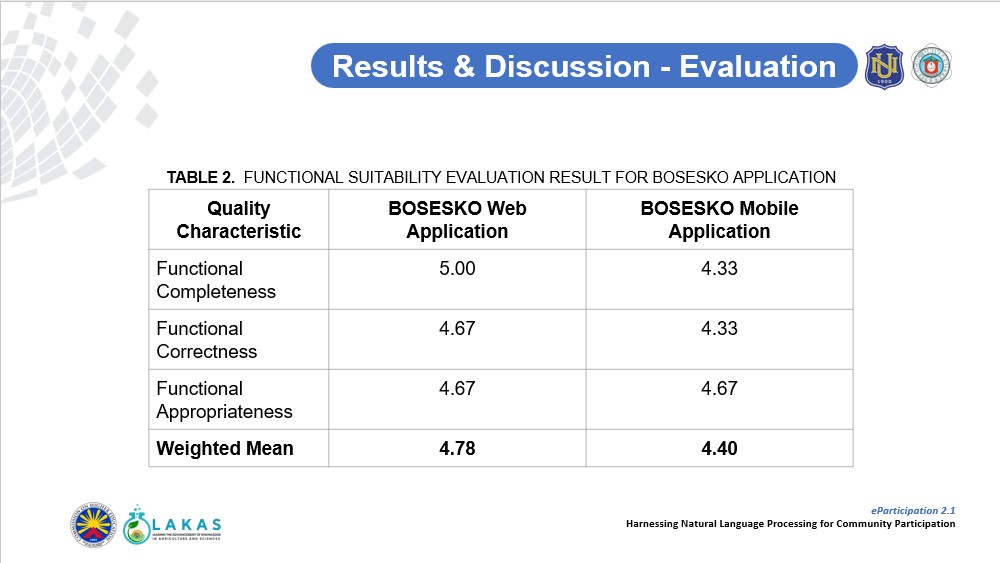 |
Table 2 presents the performance of BOSESKO's web application and mobile application across various functional aspects. The evaluation uses the ISO 25010 software product functional suitability test. The average scores indicate that BOSESKO excels in functional completeness, with a perfect score of 5.00 for the web application and a strong 4.33 for the mobile application. This suggests that the web application is more feature-rich and comprehensive than its mobile counterpart. Furthermore, both versions of BOSESKO exhibit high levels of functional correctness, scoring 4.67 for the web application and 4.33 for the mobile application. This indicates that the functionality of the applications is generally reliable and free from significant errors, with the web application being more consistent in this regard. Regarding functional appropriateness, both the web and mobile applications of BOSESKO received strong scores of 4.67. This suggests that BOSESKO's functionality, whether accessed through a web browser or a mobile device, is well-suited to its intended purpose.
|
| ICACT20240438 Slide.24
[Big Slide]
|
Chrome Click!! |
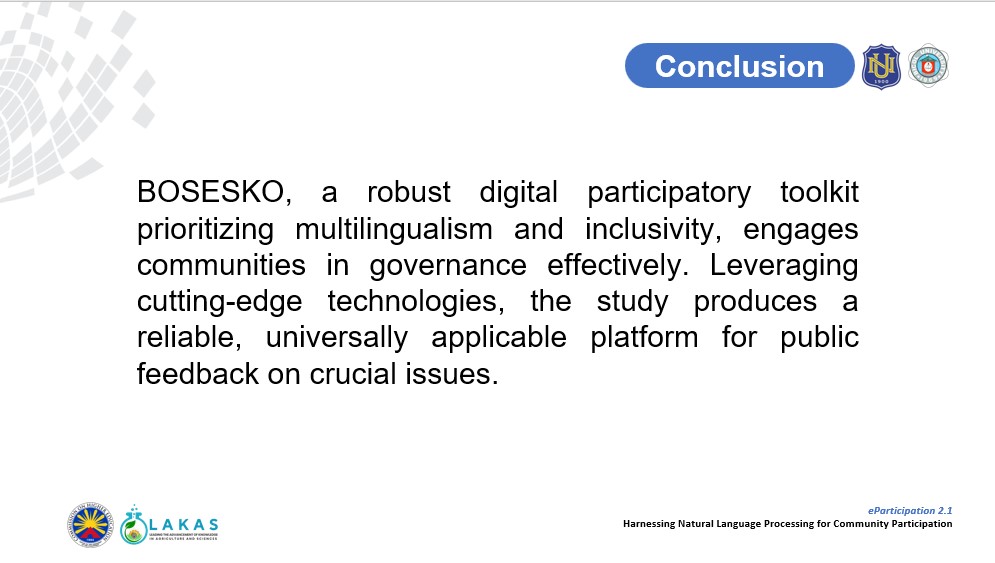 |
The web and mobile applications empower users, achieving high software quality scores (web: 4.78, mobile: 4.40). Emphasizing survey management enhances data handling and user control, contributing to improved usability. As a multiplatform application, BOSESKO ensures consistent and agile user experiences, highlighting its superior features compared to other survey applications.
|
| ICACT20240438 Slide.25
[Big Slide]
|
Chrome Click!! |
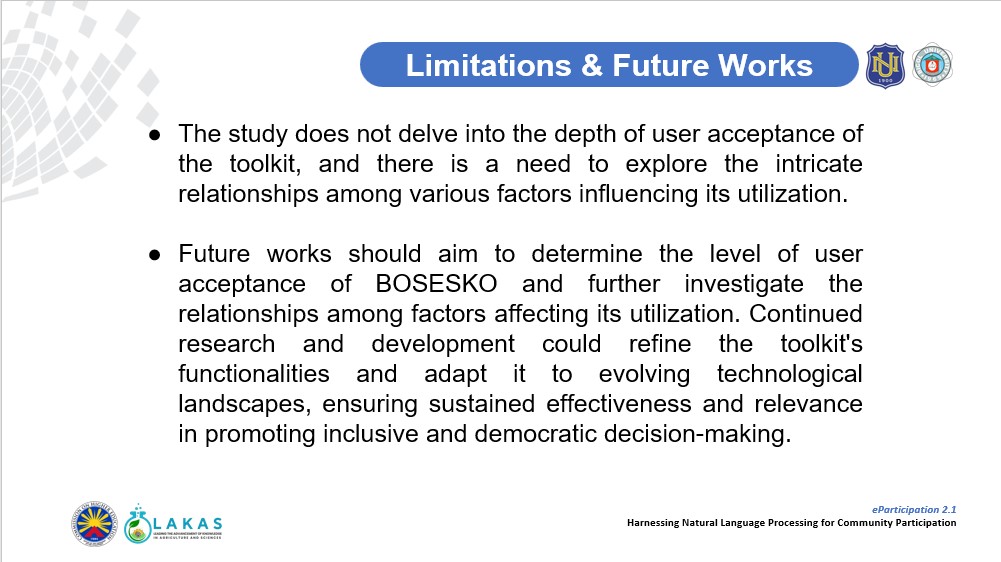 |
In summary, our assessment identified key improvement areas—specifically in search engine and image optimization. Addressing these aspects is vital for the ongoing development of BOSESKO. Looking ahead, future initiatives may delve into evaluating the security and portability of BOSESKO. This step aims to enhance the toolkit's overall robustness and efficiency, contributing to a more effective digital participatory platform. These enhancements ultimately seek to encourage greater civic engagement in the policy-making process within the Philippines.
|
| ICACT20240438 Slide.26
[Big Slide]
|
Chrome Click!! |
 |
Our team would like to extend our heartfelt appreciation to the Commission on Higher Education for their generous funding through the LAKAS program. We would also like to express our profound gratitude to Bicol University and National University for their invaluable support, which has been instrumental in successfully achieving the goals of this endeavor.
|
| ICACT20240438 Slide.27
[Big Slide]
|
Chrome Click!! |
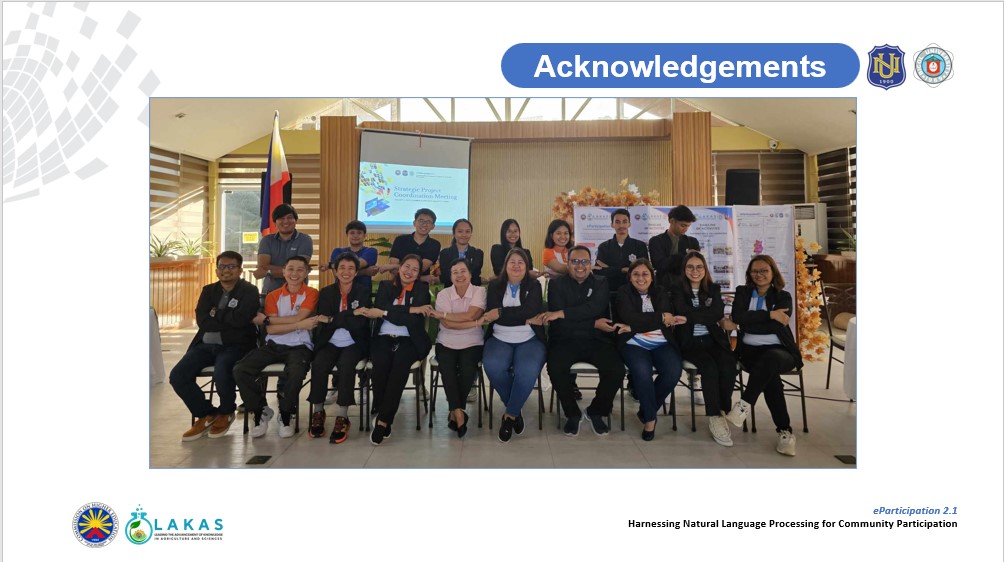 |
Furthermore, we extend our gratitude to all those individuals who have played a pivotal role in helping us reach heights we never once dared to imagine. Their support and contributions have been indispensable to our success.
|
| ICACT20240438 Slide.28
[Big Slide]
|
Chrome Click!! |
 |
Thank you for listening! If you have questions, please send me an email.
|















